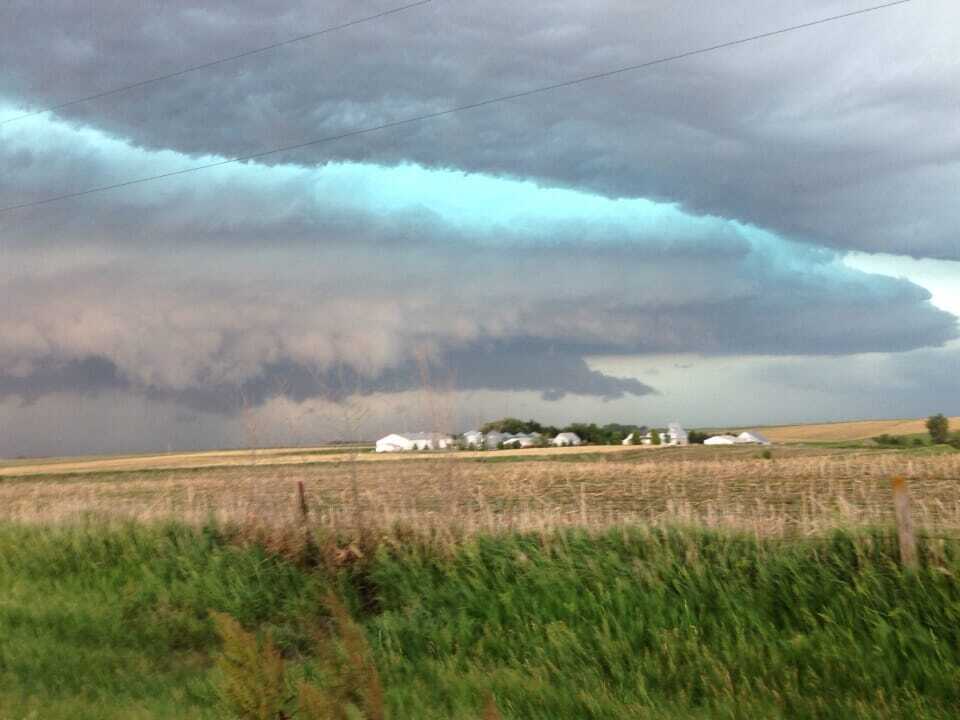
Once again, this week we were reminded just how cruel Mother Nature can be! Crazy late-spring thunderstorms and tornados swept across Latham Country from eastern Nebraska through eastern Iowa on Monday evening. Heavy rains fell early this week across the Dakotas and into Minnesota and Wisconsin, too.
More than six inches of rain fell on Monday night in some areas of Franklin County, Iowa, with an additional 1.5 to 2 inches falling last night. Winds gusting at 70 miles per hour flattened crops, power lines and grain bins alike. The loss of property is disheartening, and our hearts go out to those who are trying to clean up and put the pieces together again. (Click here for tips on talking with consumers about storm damage.)
“The farmer has to be an optimist or he wouldn’t still be a farmer,” said Will Rogers, the cowboy entertainer who was known for his wit and wisdom. So today, we’re going to talk about the silver lining. Our crops needed moisture. Although they got more than they needed this week, the tile lines are running again. Moisture is building in the soil profile. With first crop hay baled, this rain will get the second cutting of alfalfa off to a good start. The warm temperatures and high humidity we’re experiencing will cause crops to grow like weeds!
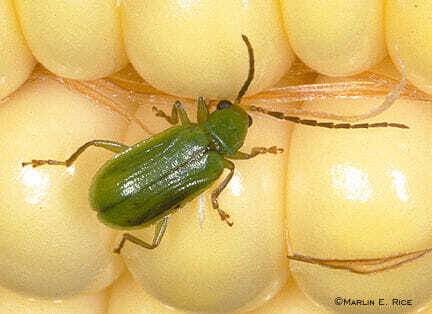
Speaking of weeds, let’s hope the top soil dries enough soon for the corn and soybeans to get sprayed before they get too tall. Volunteer corn is prevalent in some areas this year, and volunteer corn must be treated as a weed. It not only competes with plants for moisture and nutrients, but volunteer corn is a food source for rootworm larvae. Volunteer corn that is not controlled by tasseling attracts corn rootworm beetles for egg laying.
It’s imperative that farmers continue scouting fields at least weekly to stay ahead of weed, insect and disease pressure. For an update on what Latham’s Regional Sales Managers are seeing in their territories, click on “From the Field” and choose a region from the drop-down box on the right-hand side.
The Des Moines Register did it again… the first editorial on the Opinion page of Sunday’s paper fueled another blog post. I’m glad the Register gives me material, but I’d rather these editors would just get the facts straight!
“Farmers must lead, not resist, change” reads the Sunday headline. Further down the article, the copy reads: “Iowa and other Midwest agricultural states should acknowledge changing consumer attitudes and take the lead on improving food safety, livestock conditions and environmental protection.”
Paragraph two reads: “Iowans have grown skeptical of, if not hostile to, some aspects of modern farming, including genetically modified seeds and chemical additives in food. They want to know what is in their food and how livestock is treated.”
I doubt the writers realize their editorial is sending conflicting messages. On one hand, Iowa farmers are asked to be more environmentally responsible. On the other hand, we’re being asked to farm the way we did in the “good old days.” These two trains of thought of incongruent! So, which is it?
The Sunday Register editorial makes it seem so simple… Listen and change to meet consumers’ desires. What these writers (and consumers) don’t understand how complex agriculture is and how many different types of farming operations there are. What works for one farmer may or may not work for his neighbor. What works in one state may not work in another given different climates and practices.
Another consumer outcry is for farmers to raise pigs outside in a more “natural environment.” I used to raise pigs outside. Because I try to eliminate all the stress that I can for my animals, today I raise my hogs inside climate-controlled barns. Disease and death loss has significantly decreased since I have been raising pigs in a climate-controlled environment. On a cold, windy day with wind chills of 45 degrees below zero, the reality is that my pigs are way better off inside. On a night like last night where winds were gusting at 70 mph and rain was pelting down like bullets, the reality is that my pigs are way better off inside.
You see, farmers are leading and farming practices have changed over the years for good reason. The practices I use on my farm are done for a reason, and “the consumer” could at least try to understand. Consumers also must listen to what farmers have to say.
Listening goes both ways! As a farmer, I try to listen but I must do what I believe is right for my livestock and my land. I must use the farming methods that work best for me and my farm. I will keep listening, and speaking about why I do what I do!
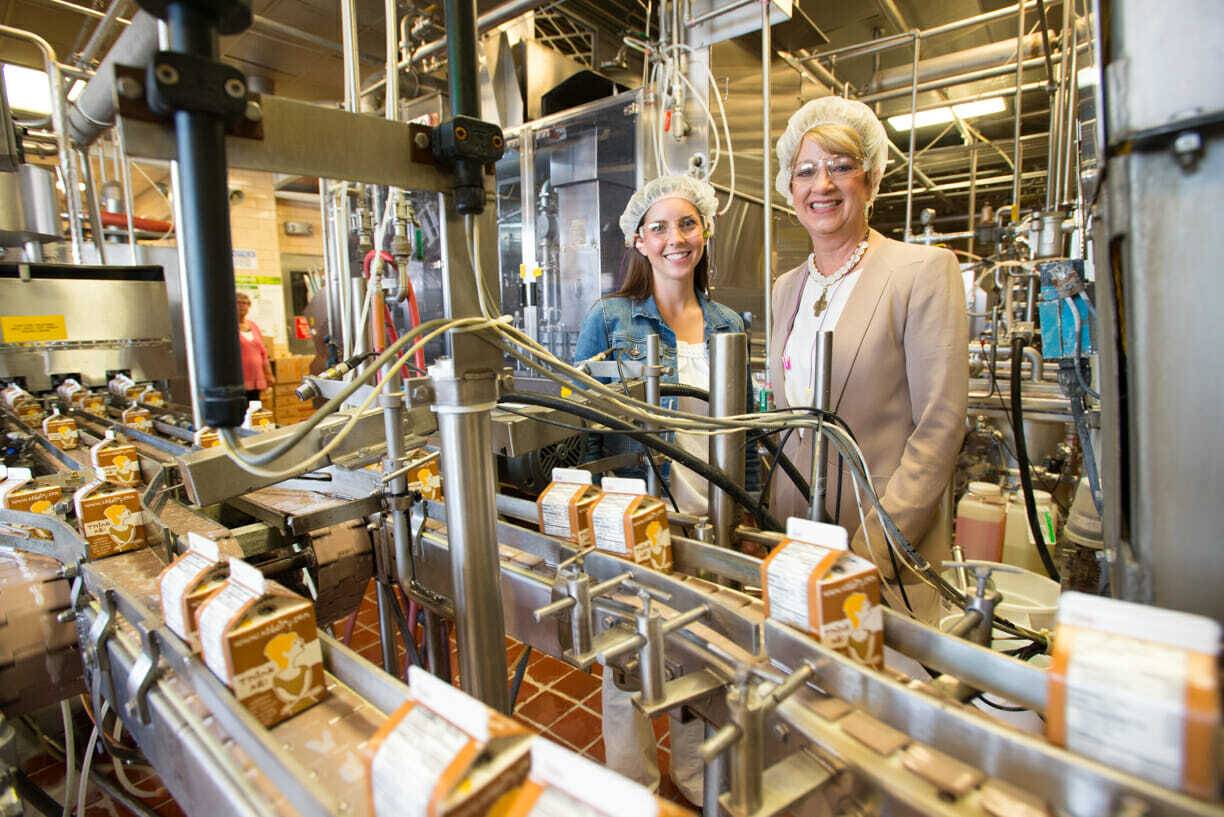
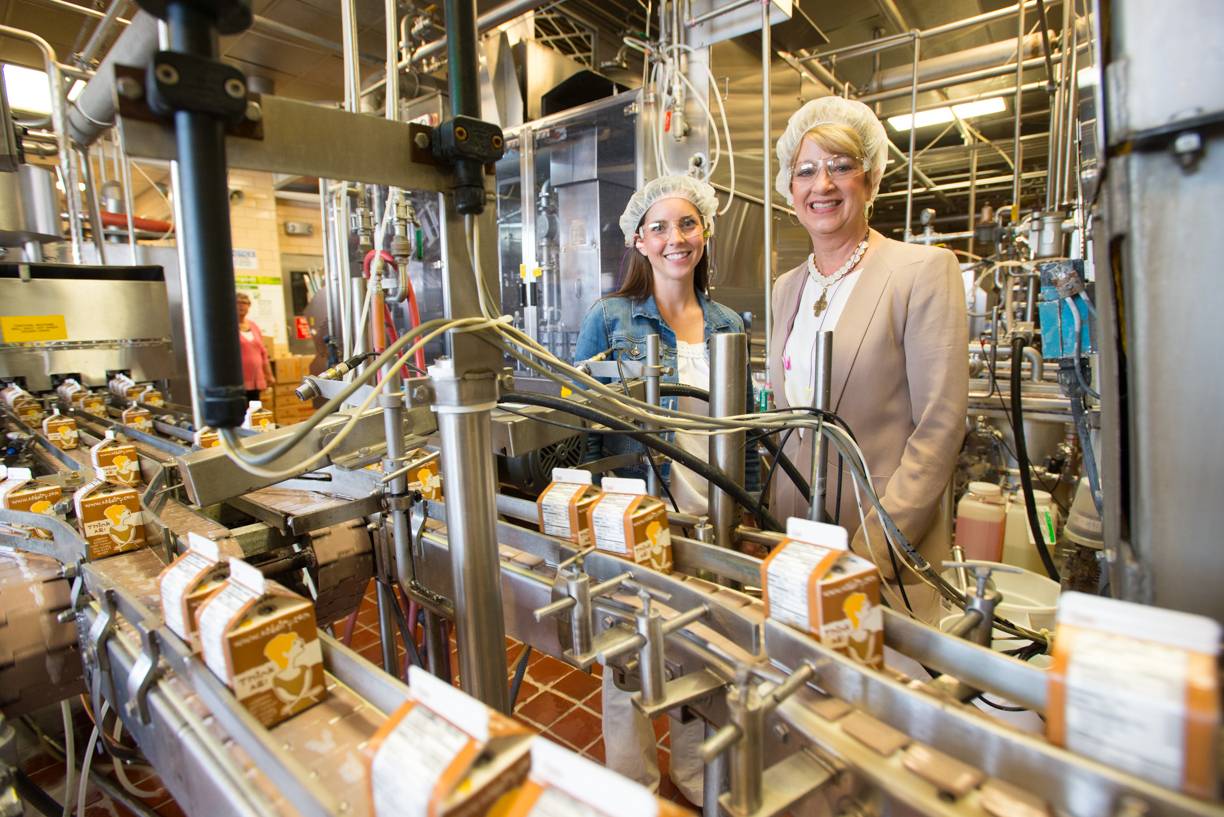
“I went through somewhat of a cottage cheese culture shock from 2005-2008 when I moved to the Twin Cities for a few years and had to fill up on my favorite AE product every time I came home, blogs Kristin. ”Nothing in the grocery stores up there compared to the pure taste and luscious texture of AE’s cottage cheese, which I simply adore, so I was beyond excited to sit down with the president and CEO of the third generation, family-owned business, Miriam Erickson Brown last month to tour the plant and taste some dairy!
Kristin Porter touring the AE Dairy with president and CEO Miriam Erickson Brown.
Great taste is the goal, but Erickson Brown says an unyielding focus on quality is a requirement. All of the raw milk used by AE Dairy comes from Iowa family farms and is tested for purity. The turnaround time from raw milk delivery to grocery store shelves is anywhere from 24 to 48 hours, and the shelf life is relatively short. Other dairies heat their milk to extend shelf life, AE Dairy does because that affects the taste.
Doesn’t this recipe sound perfect for a summer brunch or a picnic in the park? I’m certainly looking forward to trying it! What’s your favorite way to enjoy dairy?
Cooler spring temperatures mean slower egg maturation in 2014 for corn rootworm. Last week Iowa State University entomologists reported the corn rootworm hatch is underway.
Blackcutworm moths migrate from the south in the spring and the moths lay eggs in grassy and broad-leaf weeds. Data from moth flight monitoring traps suggests that cutting activity from black cutworms might be noticeable around May 28 in northeast and north central Iowa.
Scout now for black cutworm, and be a vigilant scout from the time corn plants emerge until plants reach the 6-leaf stage.Newly hatched larvae will chew small, irregular holes in corn leaves. While this early injury does not damage plants significantly, it should be used as an early warning of possible black cutworm infestations. As larvae grow, they are capable of cutting the stems and stalks of corn plants and significantly reducing the stands.
Look for plants with wilting, leaf discoloration and damage, and those that are either missing or are cut off at the soil surface. Note areas with suspected damage and return later to assess further damage. A rescue treatment approach is the best strategy for dealing with this pest.
Another pest of concern is corn rootworm, which has earned the nickname the “billion-dollar bug.” The U.S. Department of Agriculture (USDA) estimates damage caused by this pest and costs associated with controlling it typically total $1 billion annually!
Corn and soybean crops are making excellent progress for the most part now that temperatures have warmed and ample rain has fallen. For a look at local planting progress and crop conditions around our six state territory, click here and select a region from the drop down menu.
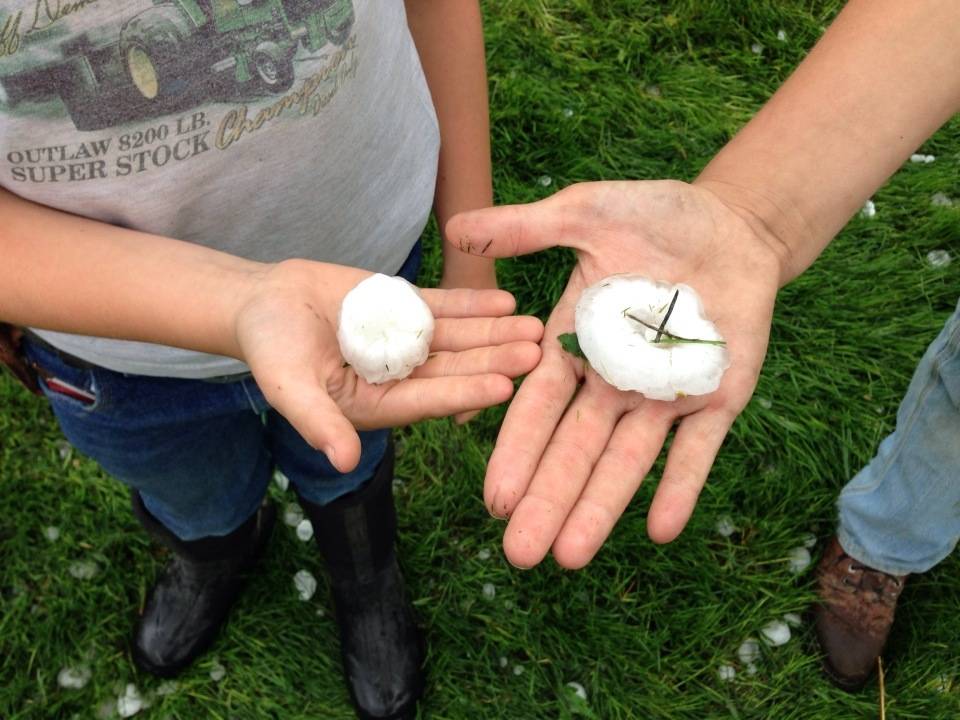
Iowa’s corn emergence rating of 98% is slightly ahead of the five-year average. Soybean emergence is rated 87 percent, which is just over a week ahead of normal. The exception to this week’s positive crop report is southwest Iowa and eastern Nebraska, which was pounded by hail on June 3.
Hailed fields must be watched closely for weed flushes, although weed pressure is a challenge on all acres this spring. Recent rainfalls is making it difficult for the timely application of post-emergence herbicides in some territories across Latham Country. Crops are developing quickly, and many post-herbicides are limited by growth stage and/or crop height. Be sure to check crop development before entering a field, and carefully read all product labels. Also check weed speed and direction to avoid herbicide drift.
This past seven days was one of those weeks when it was difficult to remember if I was coming or going! The week of World Pork Expo is always busy, but this year several speaking engagements made my schedule even tighter. I didn’t want to say no to any of them because I believe each one had merit. Today I’m sharing diary excerpts to give you an idea of what goes on “behind the scenes,” or perhaps I should say “behind the mic,” at an Iowa hog farm.
Barb & I at National Pork Board
Monday I had the opportunity to meet this year’s class of leaders being trained by the National Pork Board as Barb Determan and I were asked to serve on a media panel. Barb shared tips on how to work with “old school media” by conducting radio and TV interviews. I talked about how communicating has changed in recent years and shared why I believe we must tell our stories through social media. No matter the medium, Barb and I agree that farmers must be honest and open with what we do inside our hog barns!
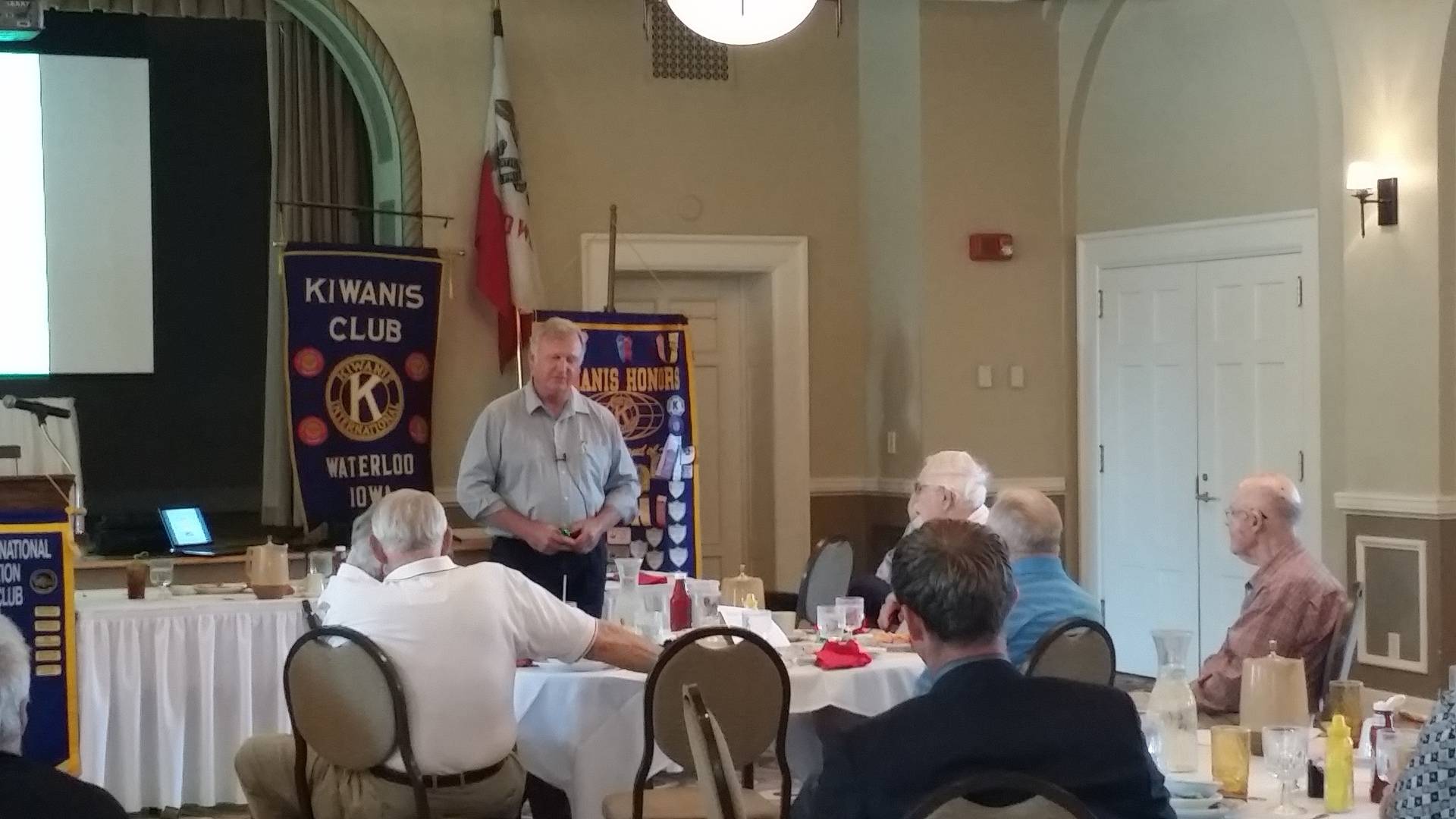
Tuesday I traveled about an hour away from home to meet in person with a group of Kiwanis. They had invited me to their meeting in Waterloo to talk about how raising pigs has changed over the years. I always enjoy meeting face-to-face with curious and interested individuals.
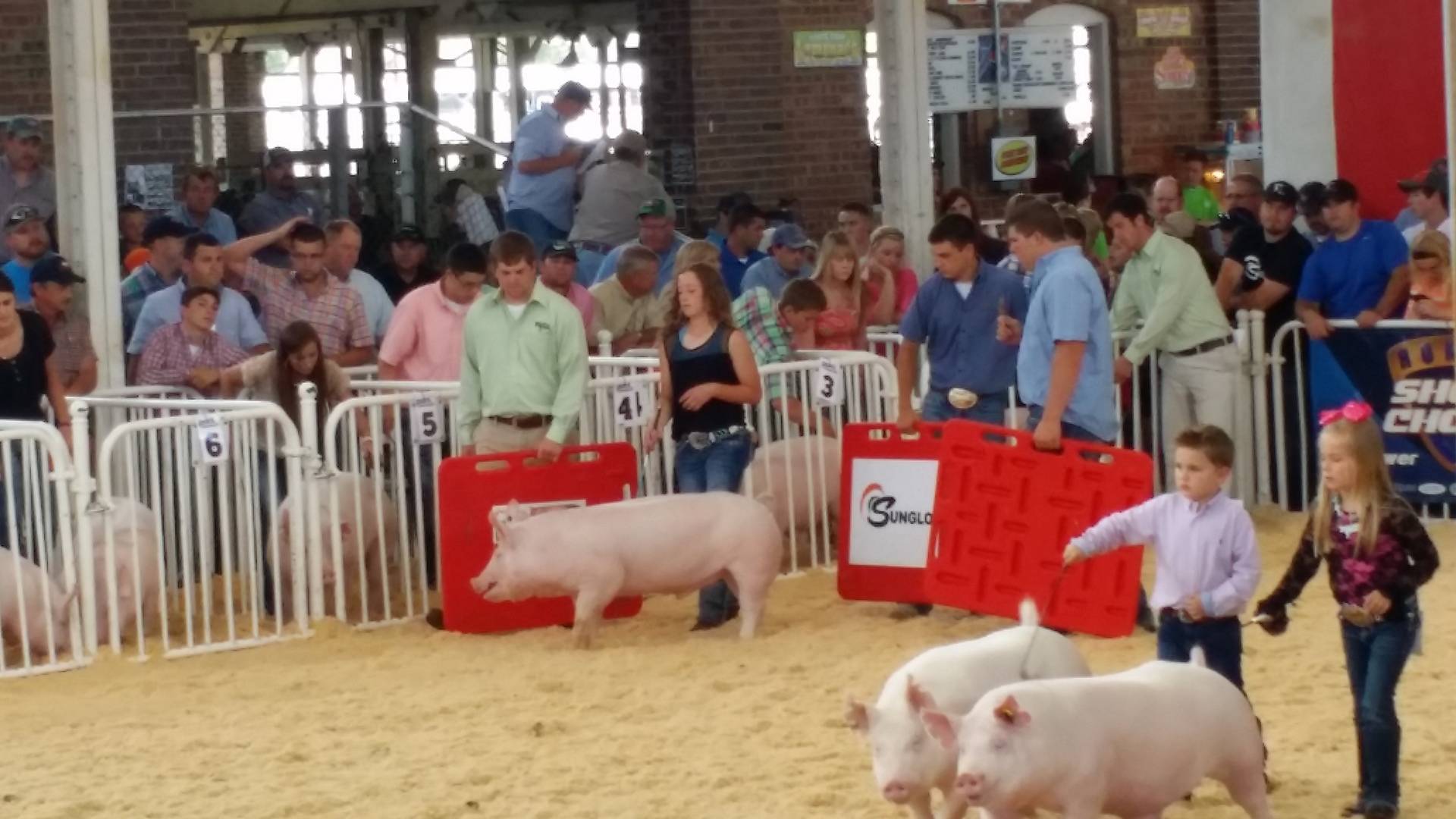
Wednesday began early with a breakfast in Parkersburg where I shared my message about Operation Main Street (OMS) with the Rotary club. Then my wife, Janice, and I made the nearly two-hour trip to Des Moines for the first day of World Pork Expo. We stood in a long line for a pork burger before watching the pig judging.
I love the little kids in the right-hand corner! Trent Loos’ daughter is the older girl in the center.
It’s always great to watch the kids circle their pigs in front of the judge, vying for the perfect spot for him to see their pig. There were so many fantastic looking pigs this year! These judges have a tough job! In the hog barns, we ran into the Loos family from Nebraska. Trent’s wife, Kelli, told us the sad story about a tornado hitting their farm while they were in Des Moines. More about that later…
Also on Wednesday, I attended a meeting to learn what’s new with PEDv. Several industry leaders told of what has been learned about this virus, which has killed more than 7 million baby pigs within the last year. Janice and I returned home after a full day of attending meetings and meeting up with old friends.
Thursday I returned to Des Moines and recorded a video for National Pork Board to use when someone calls in with questions about raising pigs. This is just one more way to get the word out about what I do.
That afternoon I attended more OMS training on how to become a better spokesman. It’s amazing what you can learn when you get out of the hog barn!
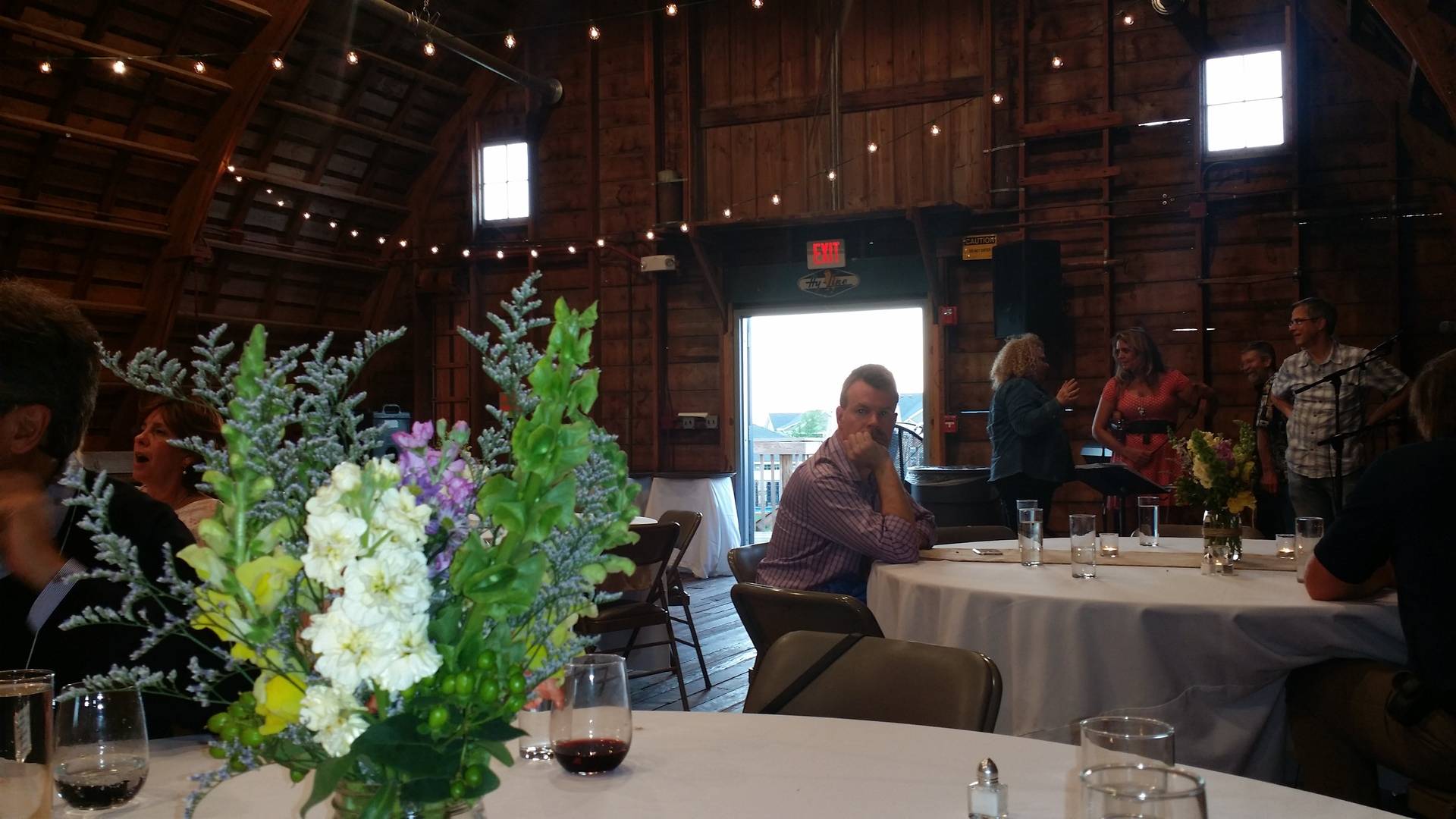
Thursday evening’s reception with food company execs
Thursday evening I was invited to a reception for the International Food Information Council, a group of top executives representing large food companies from around the world. Companies like DuPont Pioneer, which sponsored this event, invited a dozen farmers like me. Can you imagine an old hog farmer explaining to a couple of top executives, from big cities, why and how we dock tails and castrate pigs? The old hog farmer wasn’t even me, but I was fascinated as I listened to this conversation. Watching their facial expressions was priceless! (Click here to read a recount from Dan, an Iowa cattle producer who was also in attendance Thursday evening.)
Honestly, we need more events like this. Great information sharing took place. I talked with executives from Coke, McDonalds, Kraft and Nestlé, General Mills and more. They wanted to learn about farming, and I wanted to hear their concerns. I also made some great connections like Tony Flood, senior director for Food Safety & Defense with the International Food Information Council Foundation in Washington, D.C. He wants to continue our talk, and that’s always a good indicator!
Thursday night I stayed with our son Corey and his kids, who live in Pleasant Hill. Fortunately, they live near the fairgrounds because Friday started early! The fairgrounds were eerily empty at 6:30 AM. As I made my way to breakfast, I ran into Doug Fricke. As director of Trade Show Marketing for National Pork Producers Council, Doug is the top person responsible for making this show great. We talked about the weather, of course! The great weather we experienced last week made a great show even better.
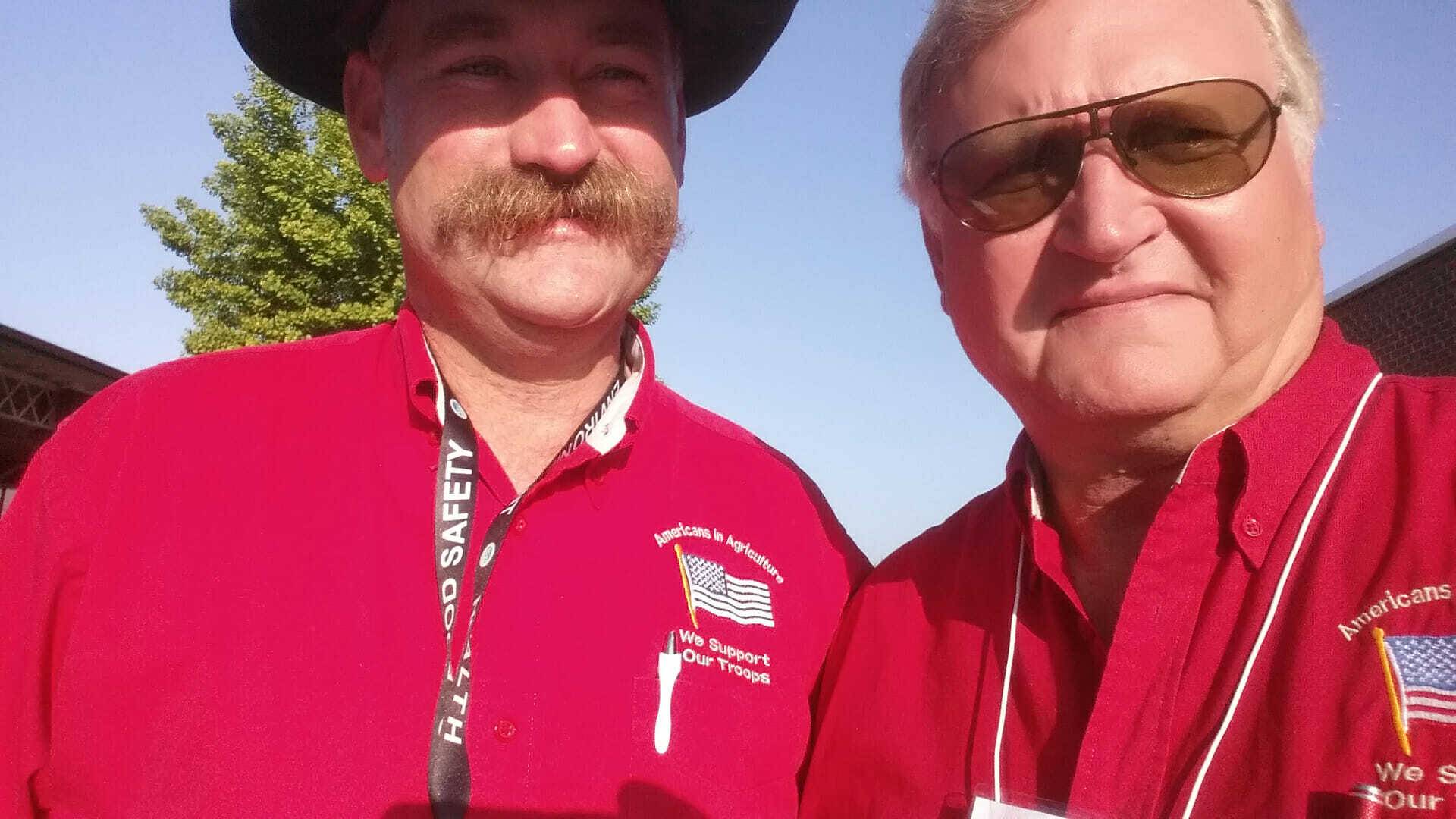
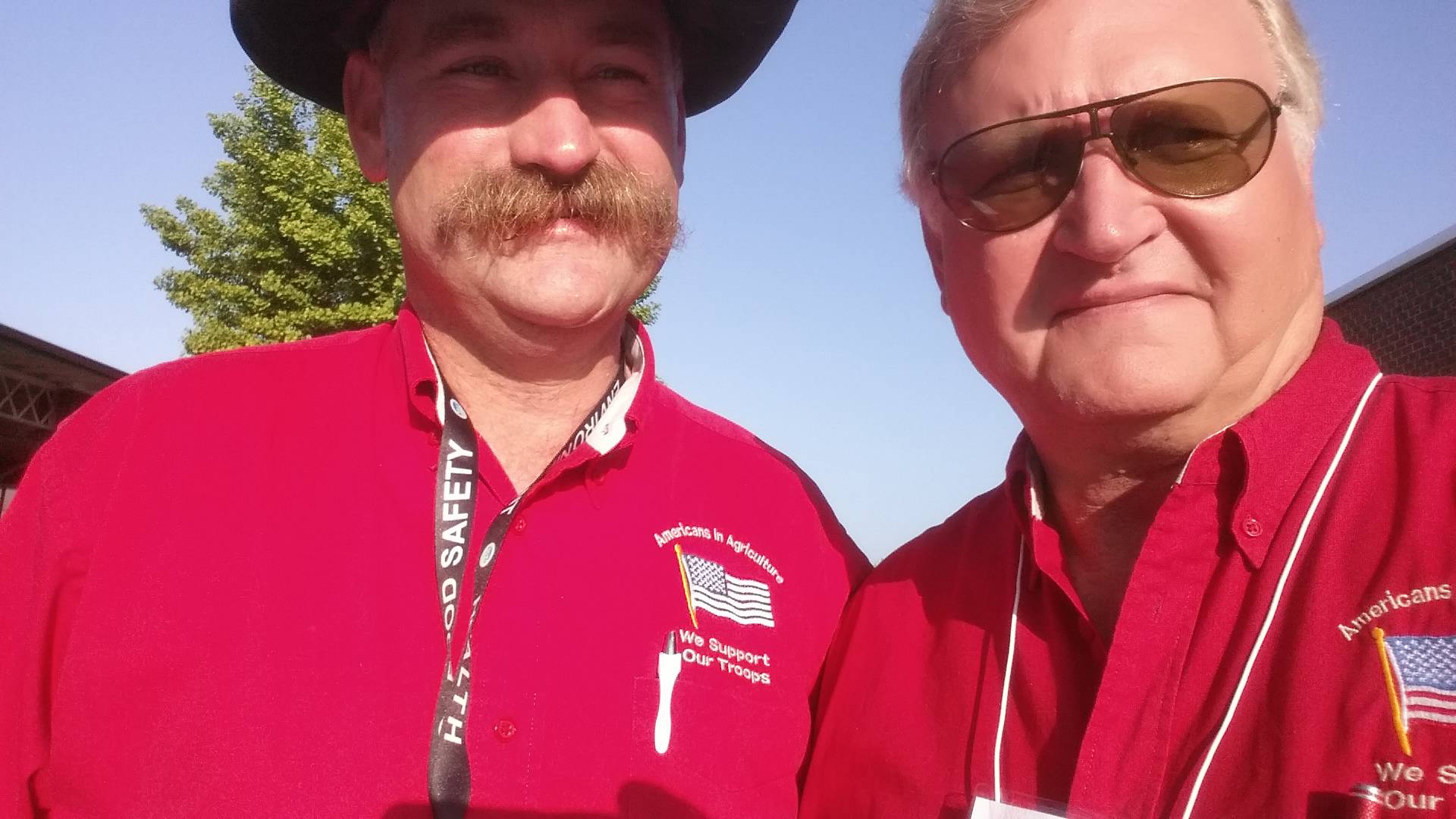
Pig farmer Larry Sailer and farm broadcaster Trent Loos sport red shirts to show appreciation for our nation’s troops, carrying on a tradition that started by the women’s Auxiliary to thank troops returning from WWII.
Next I literally crossed paths unexpectedly with Trent Loos! We were the only two people on the street, and he asked if I had 48 minutes. I thought he needed a ride to the airport and said, “Sure.” I always try to make time for friends. Then I learned Trent really needed a guest for his daily Loos Tales radio show, which is 48 minutes long! What an honor to be a part of that show, celebrating the 70th anniversary of D-day.
During this radio program, I learned the extent of damage from the tornado that Kelli mentioned earlier in the week. Their house is still standing but the roof was 100% damaged, so Trent thought he could just live in a grain bin. It’s always interesting talking to Trent because I never know what direction the conversation is going to take!
Even though I literally took a detour on my path to Friday morning’s OMS training, I got there in time to gain a few tips on how to improve my talks with high school VoAg and culinary classes. Then I finished my day WPX by attending a class on social media. Finally, I had to say “enough is enough!”
Cristen Clark (aka @FoodSwineIowa on Twitter) describes herself as “a born and raised Iowa farm girl with a passion for baking timeless recipes and sharing my love of the kitchen with others. Memories made in the kitchen are some of the most vivid of mine and certainly the most treasured. I am an avid contest cook and baker but most importantly a stay-at-home mom with two children.”
What I love about this description is how modest she is! During the 2013 Iowa State Fair alone, Cristen won the Nostalgic Comfort Food competition and placed First Overall in the King Arthur Yeast Rolls competition. Cristen also won the Sweepstakes honors for most first place entries; she placed first in 5 individual classes of yeast rolls alone! Her most coveted win during last year’s fair, however, was the Kenmore Honored Harvest Time Recipe Contest.
“Growing up and still working on the family farm, I have many food and harvest time memories. My uncle artfully and meticulously maintains our massive family garden and every vegetable in this dish came from it,” wrote Cristen in her contest entry. “This recipe combines the childhood memories of making pasta with my Grandma Madeline, the appreciation of ingredients that are carefully grown and a desire to use them in a thoughtful, simplistic way.
My favorite times in the kitchen with my grandma were making fresh pasta. I loved to watch her make the dough and help her crank the manual machine. She has the hands of a frontier woman, and the humbleness of a woman who had struggled through The Great Depression. It made me see cooking and baking experiences as so much more fun when shared, that in and above all I will write today is the most important thing.
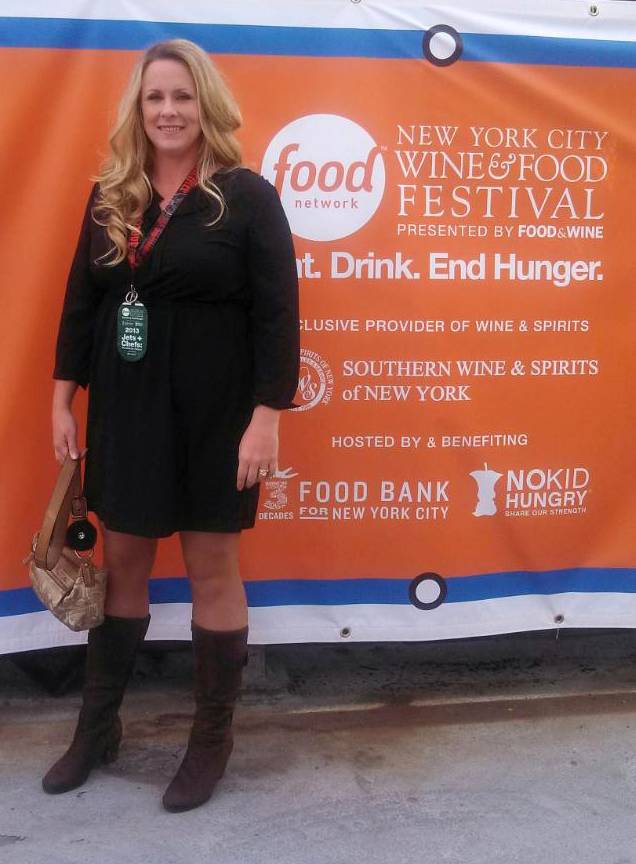
With memories like these, combined with a unique and creative use of fresh vegetables, it’s no wonder Cristen took home first place honors in Kenmore’s cooking contest! She also took home a Kenmore kitchen makeover and earned trip to New York City where last October she joined some of the nation’s top chefs to serve up her award-winning dish at the Food Network New York City Wine & Food Festival.
Five home cooks traveled last October to the Big Apple where their grand prize-winning recipes were served during the New York City Wine & Food Festival. Iowa’s own Cristen Clark is pictured at right with TV personality Ty Pennington, former host of Extreme Home Makeover; Jill Gilber, another grand prize winner, is pictured at left.
This mother of an active 5-year-old daughter and a 2-year-old son also helps her father raise row crops, as well as works with family members to raise pork and cattle. To learn more about pig chores and animal antics, follow Cristen’s Food and Swine blog. She said she started blogging in November 2013 primarily for three reasons: (1) to create an online scrapbook of family memories and farm history for her children; (2) to “force” herself to actually write down the recipes she creates; and (3) and of course, to help provide understanding between farmers and consumers.
Why Merlot Candied Bacon Sliders? Cristen writes, “The recipe I came up with was not without some creativity, mostly due to the parameters that it could only be 5 total ingredients in addition to the beef and the roll it was on. So in essence, 7 total ingredients. The recipe had to be a great reflection of our lovely state of Iowa and fit into a wine-centered event.”
Cristen shares her winning recipe below. Also check out her blog post about the Caesar Sliders, which I plan to make very soon! What’s your favorite way to enjoy sliders?
Post-planting is an ideal time to begin early season crop scouting. Many soilborne pathogens strike as soon as the seed begins to take on water; others strike young seedlings.
While walking fields this spring, I’ve noticed everything from poor stand counts caused by inadequate seedbed preparation, soil compaction or soil crusting. All of these situations can promote seedling diseases. Understanding the symptoms of common diseases and diagnosing the problems will help you manage these diseases in the future.
The first step in combating soybean seedling disease is to choose high quality soybean seed. There’s a reason “quality” is literally stamped on each bag of Latham® High-Tech Soybeans. The Latham family has nearly 70 years of experience, producing the highest quality seed. Also be sure to check disease ratings in the seed product catalogs.
The second step to achieving higher soybean yields is seed treatment. Recently released research results show seed treatment is the best defense against seedling disease. Choose a seed treatment like Latham’s proprietary SoyShield® fungicide and SoyShield Plus, a fungicide-insecticide combination. It’s especially important to protect early-planted soybeans from seedling diseases and insects.
While it stands to reason that earlier-planted soybeans will have more potential for yield due to greater access to sunlight, there are risks associated with early planting. Plant in fit conditions to set up your crop for success. Optimal planting conditions for soybeans include dry soils that are consistently 60 degrees at planting time. Soybeans are a light-sensitive crop, so yields are strongly influenced by the amount of solar radiation the crop receives throughout the growing season.
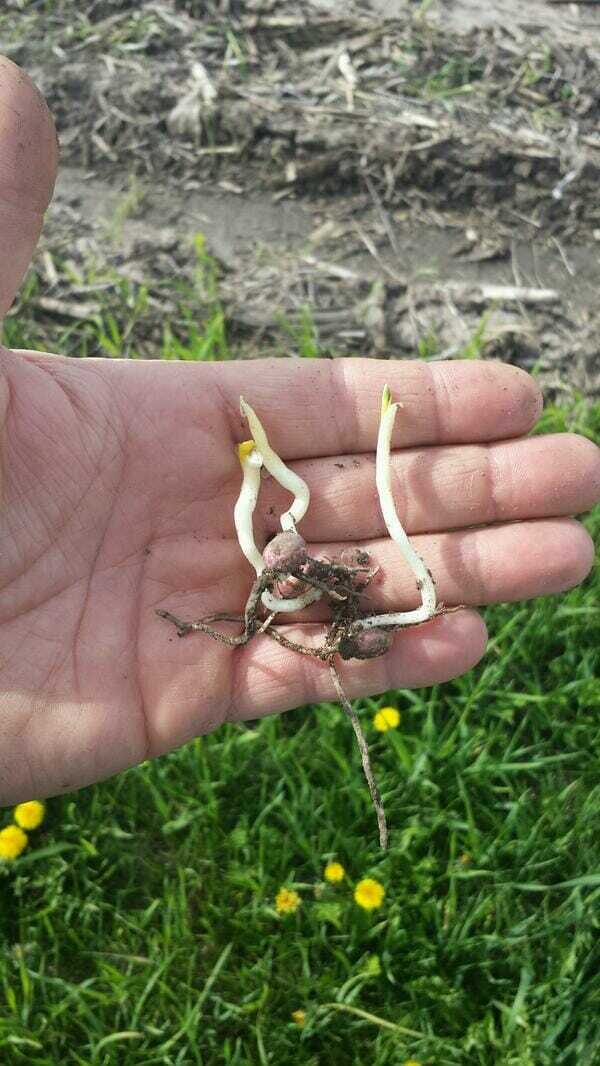
Learn what you can this season to increase soybean yields in the future. If there’s an area where seedlings aren’t emerging, dig into the soils and see what’s happening underground. Some pathogens attack the seed. Some seeds are killed before germination. You may notice rotting seeds. Sometimes “damping off” occurs right before or right after emergence.
There are three main categories of seedling diseases: seed rot, seedling mortality, and root or lower stem decay. Watch for these in 2014:
Seed rot occurs during the VO-VE growth stages and may be caused by three pathogens; Pythium, Phytophthora, and Phomopsis. Typical symptoms are soft decay of seed, missing seedlings in the row or poor emergence.
Seedling Mortality, commonly damping-off or seedling blight, occurs during the VE-V4 growth stages. Pythium, Phytophthora, and Rhizoctonia, can cause seedling mortality.
Root or lower stem decay may take place during the seedling stage or may not be apparent until later reproductive stages (VE-Rn). Pathogens that cause root stem decay during the seedling stage are the same as those that cause seedling mortality.
I had a hard time deciding what to cover in this week’s blog post because there are so many things on my mind. First of all, the #schoollunch program is still being discussed across social media platforms. World Pork Expo, which opens to the public tomorrow on the Iowa State Fairgrounds, is a huge event for pork producers across the globe. Even if you don’t want to show hogs or learn about modern pork production techniques, you should attend just for the great food and entertainment!
Barbecued ribs, smoked loins and grilled pork chops are among my favorite foods. I’ve been known to brake for a good hog roast! However, I can’t head for Des Moines without first stopping to vote in Iowa’s primary election.
Primary elections limit the field of candidates for the general election, and I truly believe this November’s elections will be the most important our country has ever had! Our country has certainly “changed” since 2009. It’s time to return to America’s tried and true system of checks and balances. (If you’ve read any of my past blog posts, you know how I feel about government regulations.) One branch of federal government should not be able to push such a one-sided agenda.
America cannot continue its prosperity if government takes more control. *According to our representative form of government, U.S. elected officials shouldn’t make decisions based on one person’s view of the world. Ideology is great for making goals, but U.S. politicians must exercise common sense and exhibit leadership. America’s position as “world leader” is in jeopardy. Think of being paranoid or overly dramatic? Read on…
Sunday night I saw a Facebook friend post a story about an energy agreement between Russia and China. They have agreed to build hundreds of miles of pipeline to provide cheap oil in to China. Is anyone else scared to death about China and Russia agreeing to a 30-year natural-gas deal? Cheap energy gives cheap political power. Russia has already expanded its borders, and China is on the verge of doing the same. What power does the U.S. have in foreign relations now? We have a serious national security threat when these two countries make agreements like they just did!
Russia is one of the top producers and consumers of electric power in the world
Another conversation I’ve recently had online was about how China –in just 30 years– brought one-half billion people out of poverty. Abject poverty in China was reduced from 85% of their population to 13%. That’s an unbelievable accomplishment, but at what cost? Coal plants and factories spew pollution so intense that no one can see or breathe. Much of China’s farmland is so polluted that it can’t be farmed. More farm ground was lost as dams are built on rivers to generate electricity.
If developing countries continue their path, I’m afraid America could become a third-world nation with no power! I mention this because the U.S. EPA is making rules to control water rights, which WILL damage our economy and limit job growth.
This country needs CHANGE! I encourage you to actually research each candidate running for election; don’t depend on a candidate’s TV commercials to tell you why you should or shouldn’t vote for him or her. Understand each candidate’s position on issues impacting your livelihood. Know the consequences of rules made by bureaucrats. Discuss with your friends, and make your voice heard!
*Footnote to paragraph 4: Democracies did not originate with the founding of the United States. Founders actually preferred the term “REPUBLIC” to “DEMOCRACY.”
P.S. Since I didn’t have enough room to talk more in more detail about the school lunch rule changes, I’m sharing links to recent articles related to it:
To rotary hoe or not to rotary hoe? That is a question worth asking.
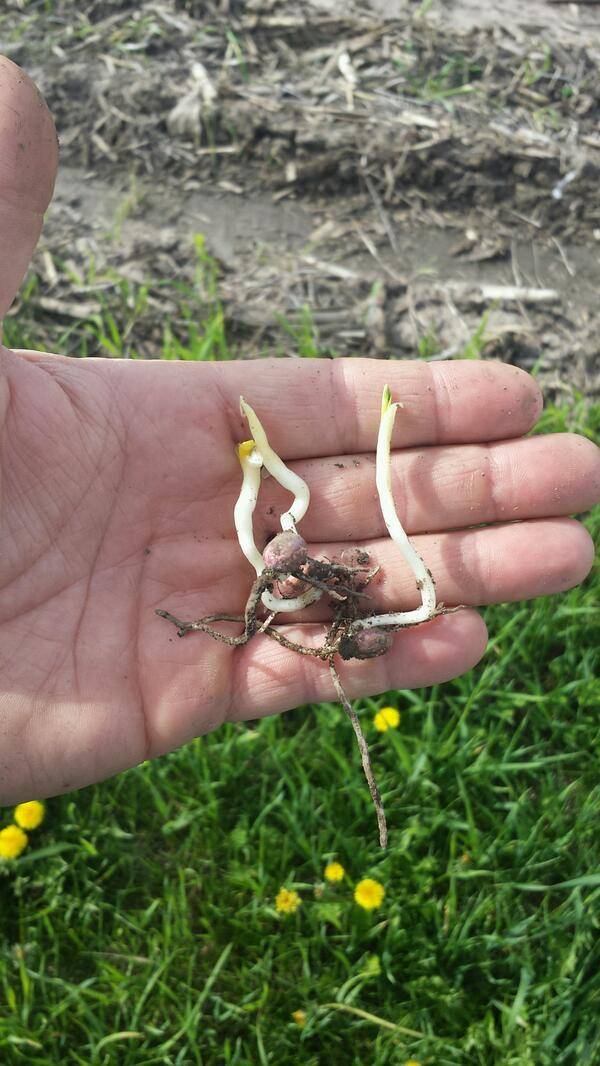
Sunshine and warm temperatures like we’ve experienced for the past week are definitely needed to push along emergence of recently planted seed. However, we’re starting to see some instances where seedlings are struggling to break through the crusted soil surface as a result of either conditions at planting time or heavy rainfalls afterwards.
Wet planting conditions, fine soil textures, intensive tillage, or heavy rains after planting can result in delayed or uniform emergence. Some seedlings may not even emerge at all, which lowers stand counts and may reduce overall yield. Another problem that can result from crusted soils is rootless corn. Roots will take the path of least resistance, which means they might grow out the bottom of the seed furrow.
To help break up the crust and improve seedling emergence, consider using a rotary hoe.Get off the tractor and check for stand loss when starting a field. If loss seems greater than 3 to 5 percent, you may want to slow your travel speed to be less aggressive with the tool. Take care so soybean cotyledons aren’t broken off by the hoe. Expect a minor stand loss from hoeing, but this should be insignificant if your crop is truly having difficulty breaking through a crust.
Be sure to wait until soils have dried before using a hoe, so you don’t exacerbate the situation with soil compaction. Use a quick field test to check soil moisture. Simply mold a length of soil between your index finger and thumb, or roll it into a ball in your hand. Observe whether the soil breaks apart as you work it. If you toss the ball of soil into the air and it shatters or cracks upon falling to the ground, then conditions are likely suitable for tillage.

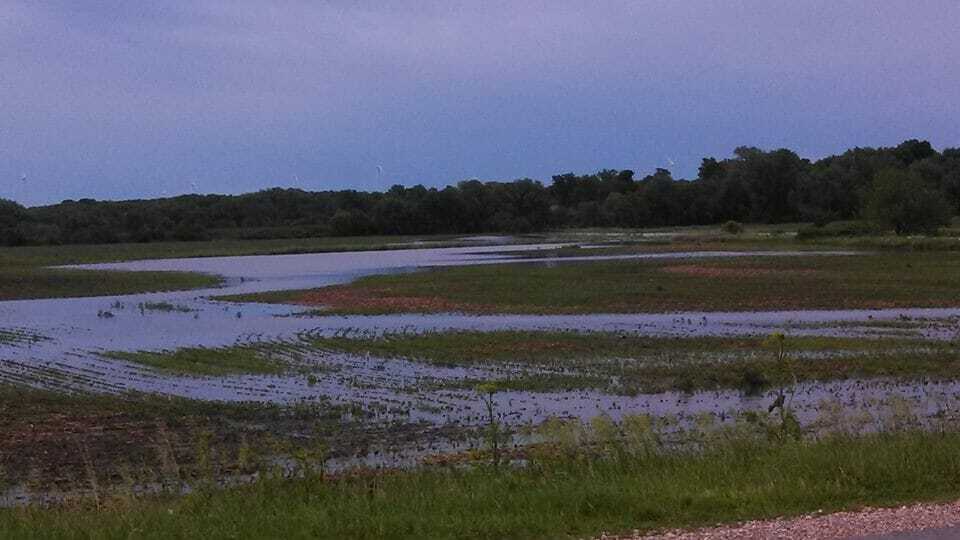
 Once again, this week we were reminded just how cruel Mother Nature can be! Crazy late-spring thunderstorms and tornados swept across Latham Country from eastern Nebraska through eastern Iowa on Monday evening. Heavy rains fell early this week across the Dakotas and into Minnesota and Wisconsin, too.