Latham Hi-Tech Seeds

(641) 692-3258

  • Home
  • Performance
  • Products
    • Corn
    • Soybeans
    • Soybean Blends
    • Alfalfa
    • Corn Silage
    • Seed Guide
  • Find a Rep
  • Media
    • Blog
    • News
    • Videos
    • Podcasts
    • TECHTalk
  • About Us
    • Company History
    • Our Mission
    • Careers
    • Become a Rep
    • Sowing Seeds of Hope
  • Contact Us
  • Latham Hi‑Tech Seeds

    Jayson Lusk Urges Farmers to Tell their Stories: Part 1

    Jayson Lusk c
    Jayson Lusk The Food Police
    “The Food Police: A Well-Fed Manifesto About the Politics of Your Plate” by Jayson Lusk

    When it comes to countering criticism of conventional agriculture, a noted food economist and farm advocate said last week that the most powerful thing farmers can do is tell their stories.

    “The research shows that guys like me, academics like me, can get up and give people all kinds of statistics and people roll their eyes, and that statistics do not convince people,” Jayson Lusk told a group of producers and ag advocates during a presentation July 8 at Iowa State University. “Often logic doesn’t convince people. What really convinces people are stories.”

    Jayson Lusk, a food and agricultural economist and author, was in Iowa to speak to an invited crowd at Iowa State before traveling to speak to the Iowa Grocers Iowa Grocery Industry Association Convention in Okoboji on July 9. Latham was among the sponsors of Lusk’s Iowa State appearance.

    Lusk’s book “The Food Police: A Well-Fed Manifesto About the Politics of Your Plate” debunks many criticisms of modern agriculture — from claims of environmental plunder and cruelty to animals to recklessly using GMO crops and creating a “toxic food environment” — and warns against the rise of what he calls the “food police” and “food elite” who seek to use government power to damage consumers’ freedom of food choice and farmers’ freedom to operate.

    Lusk, who is a professor in the Department of Agricultural Economics at Oklahoma State University, advised farmers and their representative organizations to “get in the game” and use the stories of their operations as a way to communicate the many benefits modern agriculture brings to consumers, such as:

    • Because of innovations in farming in the last 100 years, farmers produce dramatically more crops on less land than in 1900.
    • The American food supply is the largest, most diverse, safest and cheapest in the world.
    • The average American spends just 10% of his or her disposable income on food (including restaurant food), the lowest of any country in the world.  “That means we other 90% of our income to spend on things that make our lives easier and more enjoyable.”

    “Those of you involved in production agriculture are a lot more credible and a lot more compelling than I am,” he said. “The things  you can say, even if you haven’t read all he things I have, you know more about production agriculture than I do and you can talk about why you do the things you do, and the research shows that matters (when persuading others).”

    Tune in this coming Thursday for Part 2 of our recap on Jayson Lusk’s advice to farmers on how to counter criticism of conventional agriculture.

    Team Latham

    July 14, 2014
    Agriculture, General, Industry News
  • Latham Hi‑Tech Seeds

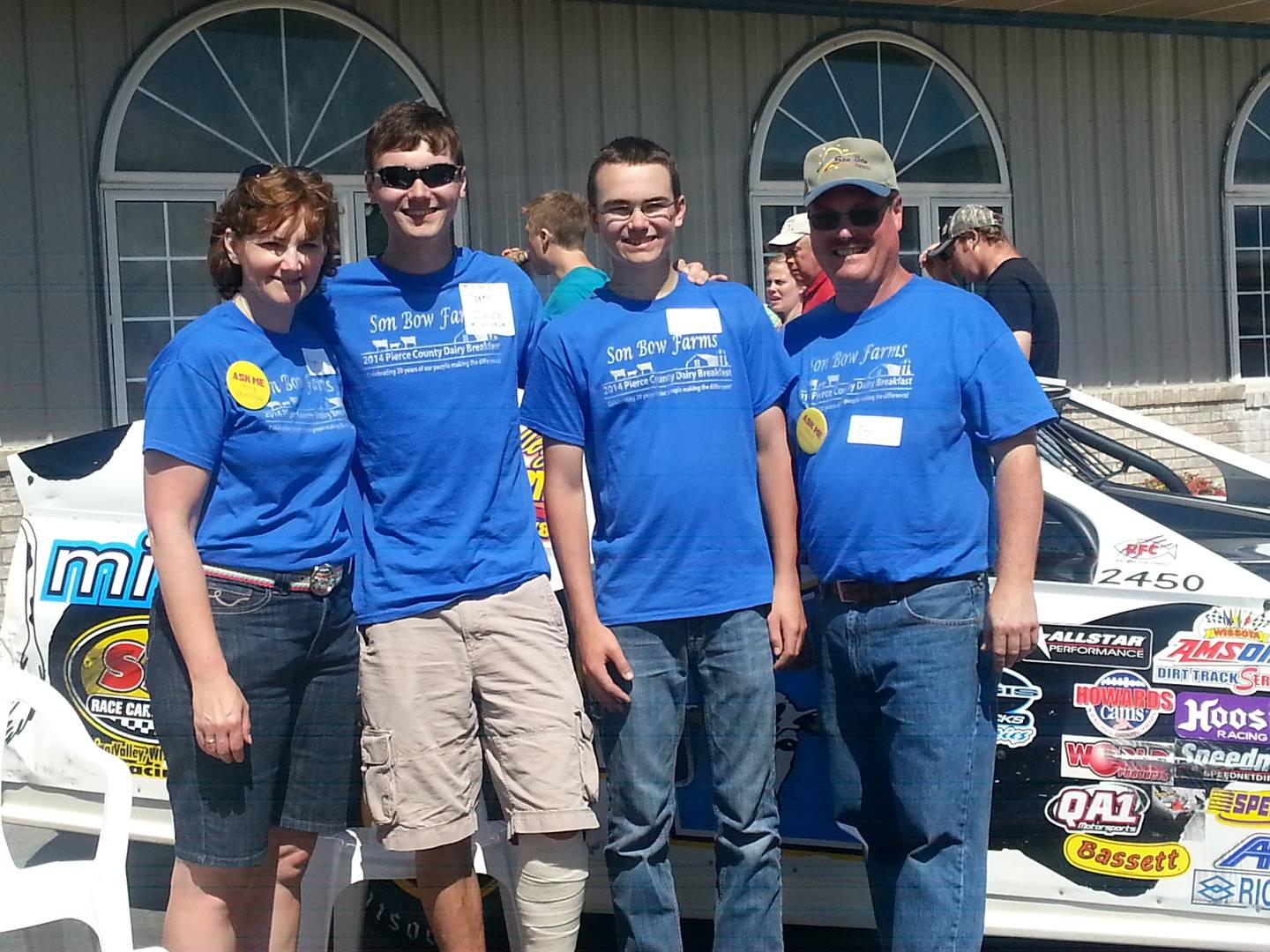
    Son-Bow Farms Celebrates 20 Years of Dairying

    20140621 104214
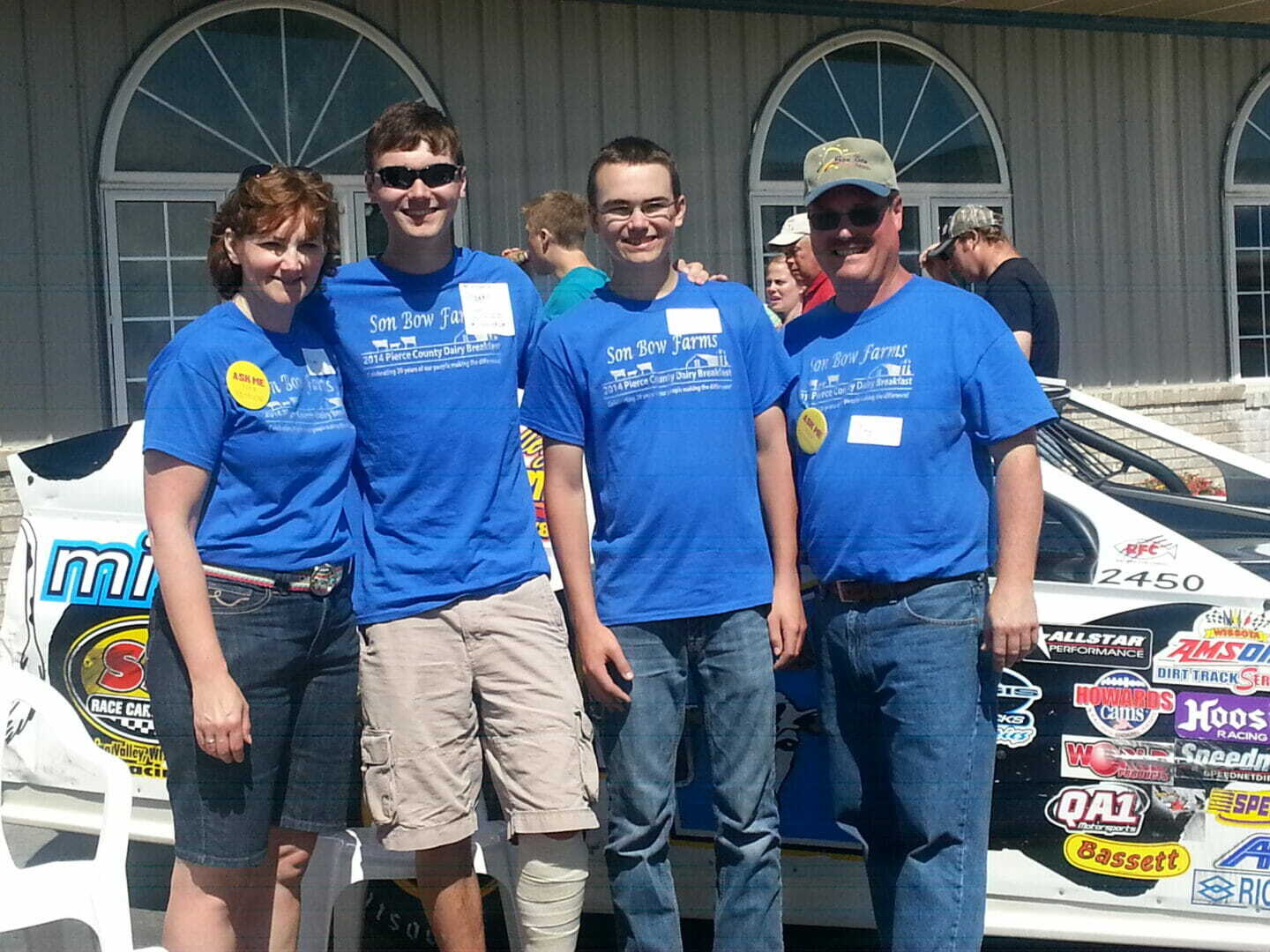
    Whether they’re on the farm or at the track, the Richardson family is promoting dairy. Pictured from left to right: Kristi, Jacob, Jason and Jay.
    Whether they’re on the farm or at the track, the Richardson family is promoting dairy. Pictured from left to right: Kristi, Jacob, Jason and Jay.

    Traditionally, 20-year anniversaries are celebrated with China. Son-Bow Farms near Plum City, Wisconsin, recently celebrated its 20th year of business with Chinet.

    Approximately 2,000 people – from as far away as Green Bay and as nearby as Plum City – gathered for breakfast during Pierce County’s Dairy Breakfast. Guests enjoyed Dad’s Belgium Waffles topped with fresh, Real® butter and whipped cream plus sides of fresh fruit and sausage links.

    Wagon tours were given of the 1,000-cow dairy. Guests learned that cows’ tails were docked to keep their udders clean, and the daily average milk production of this highly productive farm is 90 pounds per cow. The rolling herd average is 32,000+ pounds and the somatic cell count (SCC) is under 150,000.

    A sprinkler system could be seen showering the cows with cool water for 3 minutes every 12 minutes; these 15-minute cycles help keep cows comfortable, and comfortable cows produce more milk. Comfortable cows were seen throughout the barn, chewing their cud as they lounged in the sand bedding.

    Tents were set up like a trade show, featuring everything from a Rethink Your Drink presentation about hidden sugar sources in common sports drinks to a demonstration on Hands Only CPR by Latham Forage Products Manager Corey Catt and his emergency service colleagues.

    Son-Bow Farms celebrated its 20th year of business by hosting an on-farm breakfast.

    “What a great day!” said Jay Richardson, who along with his wife, Kristi, started Son-Bow Farms in 1994 as a 50-cow tie stall dairy operation. The dairy enterprise was attractive to the young couple, who was interested in adding value to their crops by feeding them to livestock.

    Three years later, the Richardson’s expanded to a 120-cow free-stall barn and remodeled to a flat barn parlor. Also that year, they hired John Freund to manage the cows and Jeff Coss to manage the crops. Freund and Coss have become partners in the business. Gabe Weix, who became Agronomy Manager last year, also is a partner. Kristi puts her banking degree to work by doing payroll and bookkeeping for the operation. An accountant by trade, Jay keeps a close watch on the financials.

    “Our mission is to be the premier employer of people, cows and agronomic practices,” adds Jay. “Our employees are dedicated day in and day out, embodying this mission statement. We’re also grateful for the support we’ve received from members of the community and local businesses throughout the years.”

    When the Richardsons aren’t at work, you’re likely to find them at the track. Kristi has work in the pit office for more than 20 years. Jay started racing when he was 16 years old and continues to make circles with his Dirt Modified. Their 16-year-old son, Jason, is in his third year of racing Dirt Midwest Modified, lower-class primarily at the Red Cedar Speedway in Menomonie and at Eagle Valley Speedway in Jim Falls. Their 19-year-old son, Jacob, enjoys helping at the track when he can and loves music.

    Whether they’re on the track or at a family gathering, the Richardsons are promoting Wisconsin’s dairy industry. Today they’re sharing a family favorite recipe for Cheesy Potatoes, which are perfect for holiday gatherings and potlucks.

    Team Latham

    July 12, 2014
    General, Recipes, Sides
  • Latham Hi‑Tech Seeds

    Water Has the Power to Give and to Take

    Larrys wet field

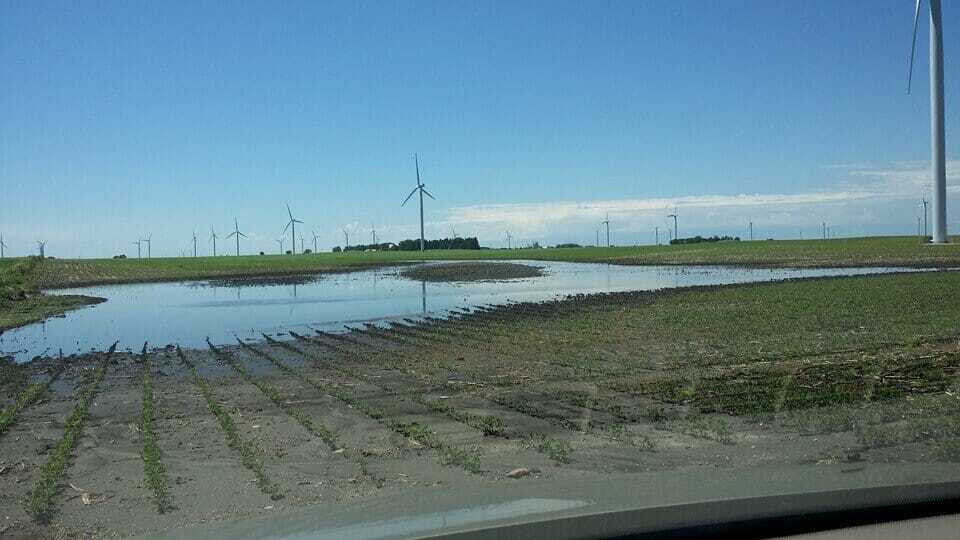
    Larrys wet fieldJune 2014 was the wettest on record for many portions of the Midwest, and my farm is no exception. Soils have been saturated for a good portion of the past month, making it a challenge to control weeds and apply plants foods (aka fertilizer).

    Plants need a well-balanced diet for optimal performance, so that’s why we “spoon feed” our corn by side dressing nitrogen. Fortunately, I finished applying nitrogen and the next day a 3-inch rain fell! Usually, getting “rained out” isn’t a big deal because the fields dry out and you go back taking care of your crops. This season’s series of rain events has made it difficult to walk through the fields to see what crop care is needed.

    Heavy rains have caused damage to everything from crops and buildings to the soil. Erosion is a concern, but there is a great deal of misunderstanding by the general public. I overhear comments like, “Those d@!# farmers should do a better job of taking care of the soil. They’re letting it all wash away with all that fertilizer, polluting our water.”

    Sometimes there is little that can be done. I have watched water ravage my crops during the past couple weeks with awesome power! When it rains three or more inches in just a couple of hours, that water must go somewhere because it cannot soak into the soil when it rains that fast and hard. The water builds force as it through the fields. It flows deeper and faster – and nothing can stop it.

    Such force of nature is evident as videos surface of bridges and roads being washed away. Many town’s storm sewers have been so overwhelmed that raw sewage is dumping straight into rivers, which is something farmers cannot do. Isn’t it interesting the same standards don’t apply to farmers and cities? There is a zero tolerance for livestock manure, so producers must build structures large enough to contain the biggest rain.

    Water improvements are occurring in Iowa. In an article published yesterday by The Des Moines Register, farmer and writer Darcy Maulsby does a great job explaining these improvements being made by farmers in her area:

    • Stream bank stabilization
    • Livestock nutrient management
    • Conservation farming

    Conservation farming – buffer strips, waterways – and even tile help make my flat, mucky soil farmable, as well as contain big rains and keep top soil from washing off the fields. Many improvements have been made in the 50 years that I’ve been farming, and new ways are being developed all the time.

    For example, we’re hearing more and more about using cover crops to help hold fertilizer where it is needed. Certain cover crops, with their huge root systems, make channels in the soil so more water seeps into the ground. Wetlands are being developed to filter out sediment, just like a coffee filter keeps grounds out of your morning cup of Joe. No till, made possible by biotechnology, has been a huge tool on my farm.

    While these practices have made strides in the right direction, we understand that we must practice continual improvement. Iowa farmers are leading change because it’s the right thing to do!

    Larry Sailer, Musings of a Pig Farmer

    July 8, 2014
    Agriculture, General, Industry News
  • Latham Hi‑Tech Seeds

    Stress Increases Pressure from Pests and Pathogens

    NickB July2 2

    NickB-July2-2Scouting was going to be critical throughout the growing season, even if we hadn’t received record-setting rains or devastating natural events including tornadoes and flooding. That’s because seed corn planted into wet soils is prone to problems throughout the growing season such as: stunted plant growth; slow infiltration of water and/or ponding; high surface runoff; poor root system development, or rootless corn; and even nutrient deficiency.

    Recent rain events “add insult to injury” because plants that are stressed are more susceptible to additional injury from pests and pathogens. Lengthy periods of wet soils increase the likelihood of blight and disease like Crazy Top and Goss’ Wilt.

    Warm, moist soils also are great breeding grounds for weeds. Crops have a better chance of reaching optimal yield when they’re not competing with weeds for sunlight, water and nutrients. The best management practice for achieving weed control is still a diversity of tactics: cultural, mechanical and herbicide. Research shows that weeds represent the most important and economic damaging pest that Iowa corn and soybean farmers face every year!

    Webspec Admin

    July 7, 2014
    Agronomics, Corn, Crop, Fungicide, General, Insects
  • Latham Hi‑Tech Seeds

    Go “Hog Wild” this Holiday

    11.22.13 Rachel Deployment Ceremony Sisters 2

    What comes to mind when you hear someone say, “Fourth of July celebration”? My mind automatically thinks about boating at the lake (more like wishful thinking on my part!), potlucks with friends, campfires, and big fireworks that fill the night sky.

    The Fourth of July is certainly a time for Americans to relax, unwind and celebrate all of the joys of summer. But, we would be remiss if we didn’t take a moment to reflect upon our nation’s history and to remember those who preserve our freedoms. My heart goes out to all of my friends who have family members deployed this holiday. How selfless they are to put our country first!

    Amanda, Rachel and Val. A sister picture at Rachel's deployment ceremony for Kosovo in November 2014.
    Amanda, Rachel and Val. A sister picture taken at Rachel’s deployment ceremony for Kosovo in November 2014.

    Did you know that 40% of our service men and women come from rural America, yet only 16% of the U.S. population lives in rural America?

    Perhaps more “farm kids” volunteer to serve our great country because they were active in 4-H, pledging their hands to larger service for their community and their world. Perhaps they learned to recite the FFA creed, believing that it’s more honorable to serve the public interest than one’s own self-interest. Both youth organizations emphasize community service.

    Posted from KFOR Multinational Battle Group-East
    Posted from KFOR Multinational Battle Group-East

    Perhaps nurturing livestock or caring for crops helps develop a worth ethic and compassion, so more rural residents feel compelled to enter the military.  After all, “if you grow up in rural America, you know you just can’t take from the land. You have to give something back.” — Keeping it Real through the Lens of Farm Girl

    Whatever their reasons, we owe the men and women in uniform a great deal of thanks. Their service allows us to enjoy freedoms including “choice.” For the most part, we can farm the way we want. American farmers can choose the seeds they want to plant, and they can choose to farm with Big Red Power or take a ride in a Big Green Tractor.

    This holiday weekend, as we picnic with family and friends, I’ll #thankafarmer for the many food choices available! I’m looking forward to preparing – and tasting – Sweet & Spicy Hog Wild Baked Beans. What can be more “all American” than a recipe that combines apple pie filling and pork? I’ve been intrigued by this recipe ever since Franklin County farmer Val Plagge told me about it.

    Team Latham

    July 4, 2014
    General, Recipes, Sides
  • Latham Hi‑Tech Seeds

    Potential Impact of Saturated Soils on #Crop14

    NickB July2 1

    NickB-July2-1Heavy rain has caused localized ponding and flooding across much of Latham Country. Now farmers are wondering how long corn will survive in saturated soils, what impact of prolonged flooding or ponding will have, and what options they have if crops drowned out.

    Injury level is determined by several factors including: (1) plant stage of development, (2) duration of ponding and (3) air/soil temperatures. Prior to the 6-leaf collar stage or when the growing point is at or below the soil surface, corn can usually survive only 2 to 4 days of flooded conditions. Soybeans can generally handle flooded conditions for 6 to 8 days, research shows.

    NickB-July2-2Temperatures greater than 77° lessen the amount of time that plants can survive ponds and floods as oxygen levels are depleted more quickly. When oxygen is depleted, roots stop growing and plants stop taking up water.

    To predict a plant’s ability to survive, check the color of the growing point. The growing point should be white to cream colored; a darkening and/or softening of the growing point usually precedes plant death. Also check the plants about 3 to 5 days after the water drains for new leaf growth.

    When ponding or flooding happens early in the growing season – say before June 10 – farmers have the option of replanting corn. Later in the season, farmers still have the option of replanting soybeans. Key soybean replanting dates are:

    Southern Iowa July 10-12
    Central Iowa July 8-10
    Northern Iowa July 6-8
    Southern MN July 3-4

    After the first part of July, options are pretty much limited to planting cover crops. Cover crops help prevent essential nutrients like water and nitrogen from running off into rivers and lakes.  Cover crops also help control weeds and overcome erosion, which can result when fields are left fallow. Click here for tips on how to determine whether cover crops are right for our situation.

    RELATED POSTS:

    • Impact of Mid-Season Flooding on Ear Fill
    • Signs of Crazy Top Corn
    • Protect Your Crop from In-Season Nitrate Loss

    Webspec Admin

    July 3, 2014
    General, Season, Summer
  • Latham Hi‑Tech Seeds

    Largest U.S. Soybean Crop in the Ground

    Jones beans
    Latham® dealer Ben Jones of Clay County Iowa shares this beautiful looking field of L2253R2
    Latham® dealer Ben Jones of Clay County Iowa shares this beautiful looking field of L2253R2

    U.S. farmers planted the largest soybean crop on record and the smallest corn crop since 2010, according to the June 30th crop report by the U.S. Department of Agriculture. Farmers planted 84.8 million acres of soybeans, which was nearly 11 percent more than last year. Corn was planted on 91.6 million acres, which is the fifth-largest corn acreage planted since 1944.

    Unfortunately, record seed in the ground may not equate to a record harvest in the bin. On Monday, Ron Dreher of rural Adair endured the worst storm in 40 years of farming. Large hail, coupled with 6 inches of rain in 20 minutes and winds in excess of 80 miles per hour, decimated about two-thirds of his soybean acreage. Stories like his continue to be told.

    For an update on what Latham’s Regional Sales Managers are seeing in their territories, click on “From the Field” and choose a region from the drop-down box on the right-hand side. Be sure to read tomorrow’s post on TheFieldPosition as we’ll cover effects of this season’s extremely wet weather on plant health.

    Team Latham

    July 2, 2014
    Crop, General, Soybeans
  • Latham Hi‑Tech Seeds

    WHO Radio’s Tractor Ride Rolls through Franklin County

    DadRide14.jpg
    Tyden Farm #6, owned and preserved by Ted and Judi Pitzenberger of Dougherty, was the first stop last Tuesday during the WHO tractor ride. Read more here: http://bit.ly/VkPmGh
    Tyden Farm #6, owned and preserved by Ted and Judi Pitzenberger of Dougherty, was the first stop last Tuesday during the WHO tractor ride. Read more here: http://bit.ly/VkPmGh

    After spending recent weeks writing about ongoing debates over modern farming practices and biased media sources, I really wanted to post a fun blog this week. Old tractors is a fun topic – at least to an old farmer!

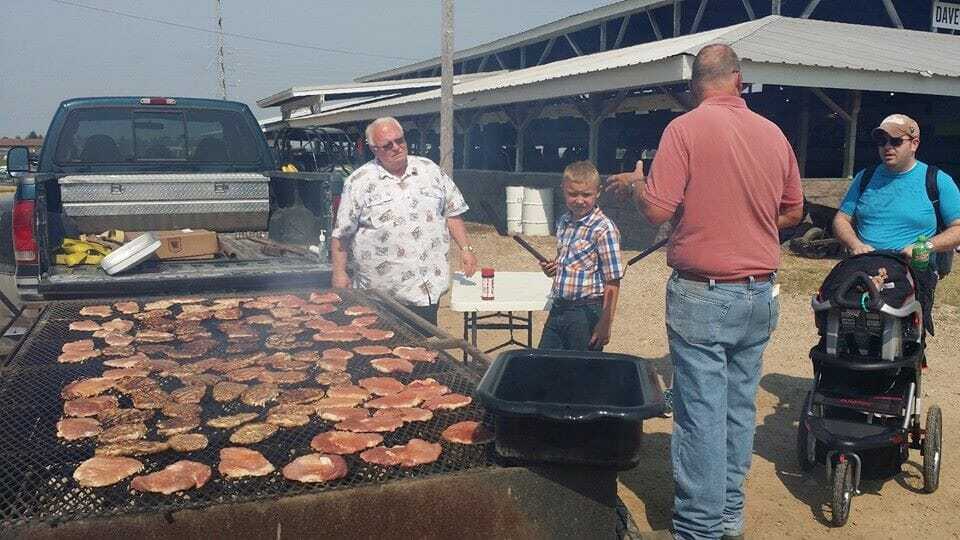
    Why are old tractors top of mind? Last week WHO Radio hosted its 19th annual tractor ride across North Central Iowa, and one week ago today those riders made a stop in my home county! A steady stream of tractors paraded through the northern Franklin County town of Sheffield from about 10:30 AM until 3 PM. And these drivers came to town hungry, which is where I fit into the story…

    The Franklin County Pork Producers were asked to serve a noon meal. Since I’m the guy with the grill, I got the call.  I have a lot of practice grilling hundreds of pork burgers during the Franklin County Fair each July and the Franklin County 4-H Foundation Fundraiser each October.

    So what’s a guy to do when he needs nearly 600 patties? I called my favorite supplier, Fareway in Hampton. Walt is meat manager extraordinaire, and I’ve had the pleasure of working with him for many years. Fortunately, he knows meat and he keeps a strong supply on hand!

    During the tractor ride, Larry Sailer was live on “The Big Show” with WHO Radio farm broadcaster Mark Dorenkamp
    During the tractor ride, Larry Sailer was live on “The Big Show” with WHO Radio farm broadcaster Mark Dorenkamp

    The menu was rounded out, thanks to a great Franklin County restaurant. Mother’s Place from Latimer catered baked beans, potato salad and chocolate brownies. Plus, their staff did a fantastic job serving the food. We received many compliments, and some folks even said this was the best food served during the ride.

    To make the day even better, I didn’t have to spend all of my time flipping burgers. I think it’s the first time ever that I didn’t flip one burger thanks to great help including: Ron and Cody from the Iowa Pork Producers Association; Cory and Zach Greiman from Latham Hi‑Tech Seeds; fellow pig farmer, Paul; my wife, Janice; and two of our grandkids, Darin and Carlie. What a crew!

    They hard work freed up my time, so I was able to be interviewed live by WHO Radio’s “The Big Show” with Mark Dorenkamp, who was broadcasting from Ridge Stone Golf Club in Sheffield where the lunch was served. It’s always fun to talk live on WHO Radio! We talked about my weekly blog and the beautiful weather we were having that day. We even talked about a few of the tractors.

    There were more than 450 tractors, and I saw many brands that I hadn’t seen in years. Most of these tractors came from quite a distance. Some were trucked in from several states away just so these drivers could take in the scenic beauty of North Central Iowa!

    All in all, we couldn’t have asked for a better day. The WHO Tractor Ride visited Franklin County on a dry day when the sky was blue and the breeze was gentle. We hope folks from far and away will return again someday to visit our museums, golf at our local courses and shop our main streets. And if they ever have any questions about pork production, I hope they’ll ask me!

    Larry Sailer, Musings of a Pig Farmer

    July 1, 2014
    Agriculture, General, Industry News
  • Latham Hi‑Tech Seeds

    Sweet or Spicy Summer Salads… Why Choose?

    Family Nov 2013

    It’s not uncommon for a dairy farmer to begin milking at 5 AM and then again at 5 PM, but Beth Ingli of Spring Valley, Wisconsin, isn’t your typical dairy farmer. She rises at 5 AM to take care of calves and dry cows. Once the chores are done, she gets ready to work as Store Supervisor and Advertising Director for the Ellsworth Cooperative Creamery. After work, she heads back to the barn for evening chores.

    “Dairying is in my blood,” says Beth, who has been living on a dairy farm for 49 years. For the past 29 of those years, she’s been working alongside her husband, Craig. The couple is the second generation to live on the family farm, which was purchased in 1957 by Beth’s father-in-law.

    Celia holding Amelia- Husband Brady in green Shirt, Me and Craig, Kay holding Joel- husband Tom in blue shirt, Son Rick and daughter Erin.
    The Ingli family from left to right: Celia holding Amelia; Celia’s husband, Brady, is in the green shirt; Beth and Craig; Kay is holding Joel; Kay’s husband, Tom, is wearing a blue shirt; Rick and Erin.

    Beth and Craig’s four children – Kay, Celia, Rick and Erin – were active in 4-H. Beth credits that youth organization for helping her kids learn the value of keeping records and setting goals. She has served as a 4-H leader in Pierce County for the past 28 years. She started as a Foods project leader with the Olivet Otters 4-H club, which is the same 4-H club to which she belonged as a youth. Beth then became the club’s general leader. She’s currently serving on the Adult Advisor Council.

    “I know from experience that 4-H teaches youth and families how to work together,” says Beth. “The county fair serves as a deadline to get projects, which you’ve been thinking about doing, actually completed. Kids learn to set goals and make a plan to achieve them. Plus, living on a farm teaches work ethic. You have to make sure the animals and crop are taken care of, and that’s a huge responsibility.”

    At one time, the Ingli family had 250 entries at the Pierce County Fair! They showed cattle and hogs, as well as exhibited items like foods, photography, field crops, and ceramics. This year Beth is celebrating her 40th year as an exhibitor by “cutting back” to about 10-15 food and photography exhibits.

    Beth started showing cattle in 1974. Now her 4-year-old nephew is taking over the Raleigh show box and showing a calf in the “Little Dairyman” class this fall. She also has been bringing the same brownie recipe to the fair for the past 40 years. She has yet to receive a Champion ribbon on the brownies, but all of her children have! Guess Beth can take great pride in being a good teacher. J

    In her “free time,” you’ll find Beth whipping up blue-ribbon recipes using dairy products. She’s created many of the recipes featured on the Ellsworth Creamery’s website. (SIDE BAR: My husband’s favorite appetizer is Bacon Wrapped Curds. Give them a try and let me know what you think! Be sure to also check out this recipe for Cheese Curd Apple Pie, which sounds perfectly patriotic and fitting for a Fourth of July picnic.)

    Last fall Beth developed an apple turnover, which she says is just too good not to share! She’s sharing that recipe with us today on The Field Position. She’s also sharing links to a few summer picnic ideas, which she recently demonstrated during a television interview on Twin Cities Live:

    • Grilled Chicken Taco Salad with Seared Cheese Curds
    • Couscous and Mandarin Orange Salad with Havarti Cheese

    Team Latham

    June 27, 2014
    General, Recipes, Sides
  • Latham Hi‑Tech Seeds

    Ear Size and Number of Kernels Being Determined Now

    CornFact

    CornFactJust as diet and nutrition play a key role in how well an athlete performs, corn plants need a well- balanced diet for optimal performance. We’re at a critical point in the growing season as ear size is being determined, so the slightest nutritional deficiency now can cost you yield in the end. Take a plant tissue analysis to assess where your fertility program is, and then make plans to protect your crop from in-season nitrate loss. In a wet spring like this one, it’s common for nitrate leaching to occur. However, there’s still time to remedy the situation. Nitrogen is a mobile nutrient, so the timing of fertilizer application is critical to meet a plant’s needs. Nitrogen management, spoon feeding the plant when it needs it, unquestionably affects total yield. Once you’ve fed the crop, you control weeds to maximize plant health. Early-season weeds rob yields you cannot see at harvest. Crops have a better chance of reaching optimal yield when they’re not competing with weeds for sunlight, water and nutrients. Weeds should be controlled with tillage, herbicides, or a combination of tactics so the crop can become well established under weed-free conditions. By following 5 small steps, farmers will make giant strides toward weed control:

      1. Closely monitor problem areas for tough-to-control weeds.
      2. Apply herbicides correctly.  Follow guidelines for proper application methods and rates.  And, remember, timing of application is critical.
      3. Don’t be satisfied with “economic thresholds” for weed control.  Remain vigilant in your fight against weeds all season long.
      4. Clean your equipment to prevent the spread of weeds.
      5. Lastly, surviving weeds must not be allowed to set seed.

    Rotating between various herbicide traits is important from the standpoint of reducing weed resistance.  Rotating traits, especially insect resistance traits in corn, is especially important for the same reasons – to decrease the risk of insects becoming resistant to those traits and also to improve overall trait performance. We need to be good stewards of these traits and rotate them whenever possible!

    Webspec Admin

    June 26, 2014
    Agronomics, Corn, Crop, General, Growth Stages
Previous Page
1 … 63 64 65 66 67 … 160
Next Page

Latham Hi‑Tech Seeds

131 180th Street | Alexander, IA 50420

(641) 692-3258

SIGNUP FOR OUR NEWSLETTER
  • Contact
  • Legal
  • Dealer Center
  • Seedware Login
  • Latham Gear

© 2025 Latham Hi‑Tech Seeds. All rights reserved. | Iowa Web Design by Webspec | Privacy Policy

Latham® Hi-Tech Seeds is a trademark of M.S. Technologies, L.L.C., 103 Avenue D, West Point, IA 52656.