Latham Hi-Tech Seeds

(641) 692-3258

  • Home
  • Products
    • Corn
    • Soybeans
    • Alfalfa
    • Corn Silage
    • Seed Guide
  • Performance
  • Find a Rep
  • Media
    • Blog
    • News
    • Videos
    • Podcasts
    • TECHTalk
  • About Us
    • Company History
    • Our Mission
    • Careers
    • Become a Rep
    • Sowing Seeds of Hope
  • Contact Us
  • Latham Hi‑Tech Seeds

    “Food for Thought” after a Week of Advocating

    20151113 092406 resized1

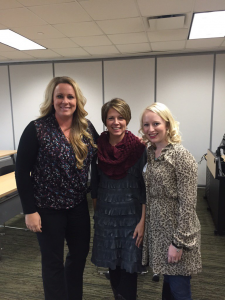
    Last week was a banner week for me. I spent the first three days in Kansas City, meeting with industry peers on the Communications Committee for the American Seed Trade Association (ASTA). Thursday I had the pleasure of speaking with “Musings of a Pig Farmer” author Larry Sailer to Iowa Agri-Women about using social media to influence public policy. Then last Friday I had the honor of representing Latham Hi‑Tech Seeds while serving on a panel with Cristen Clark of Food & Swine fame and Crystal Blin, aka Crystal Cattle.
    Share Your Story
    Cristen Clark, Shannon Latham and Crystal Blin served on a blogger panel last Friday at the inaugural “Grow by Future FarmHer” conference in Ankeny, Iowa. For everything from recipes to beauty tips, follow along at foodandswine.com, TheFieldPosition.com and crystalcattle.com.

    All week long I was surrounded by groundbreakers in agriculture: Greg Peterson of the Peterson Farm Bros, whose parody videos allow them to reach millions – literally millions and millions – of consumers with positive images and fun facts about agriculture; Dr. Robb Fraley, the Father of Biotechnology and 2013 World Food Prize Laureate; and Lexi Marek, an Iowa State University student and intern who pulled off the amazing feat of planning an inaugural, sold out “Grow by Future FarmHer” conference for 250 young women in agriculture.

    FarmHer was created to empower and recognize women in agriculture. “It is by no means an attack against men,” says founder Marji Guyler-Alaniz. “It’s not about taking anything away from men. [FarmHer] is about recognizing women.”

    During Friday’s closing session, Marji shared how the “God Made a Farmer” commercial that aired during the 2013 Super Bowl inspired her to make a career change. As a photographer, Marji realized that the beautiful photography featured in that popular video did little to show the important role that women play in agriculture. So she went on a mission to document the lives of women in agriculture:

    “Women play many important roles in agriculture as scientists, researchers, ranchers, care takers, and producers, just to name a few. At FarmHer shining a light on these women is our mission and we know it is important that they are celebrated for their accomplishments, are given a platform to share their stories and are able to inspire others through connection.”
    mePetersonFarmbros
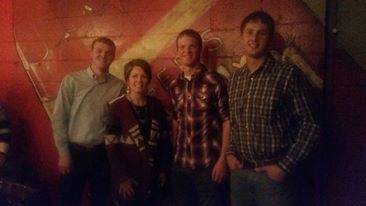
    Last week Shannon had the honor of meeting the Peterson Farm Bros, who have gained worldwide attention for their parody videos that explain what they do on their family farm. Be sure to check out their new video, “Farmers Feed the World, which launches Nov. 16!

    The need for female leaders in agriculture to mentor the next generation of leaders was a consistent theme in every meeting I attended this week. A comment Dr. Robb Fraley made about women needing to have a louder voice in agriculture got me thinking about how blessed to have strong female role models in agriculture, beginning with my mom and my grandma.

    As an 8-year-old, I wanted to show lambs at the county fair. Although we raised sheep, my parents said they didn’t know the first thing about showing them. Fortunately, many kind people in my community stepped forward and taught me everything from how to pick your best stock from the lot to showing and fitting. My 4-H leader, Sandy Ruby, and her husband both spent time on our acreage. Other sheep industry leaders of the time, including Jennifer Heeren and Charles Steere, shared great advice and words of encouragement.

    None of these people made any reference to me that I was “a girl.” No wonder told me to scale back my big dreams because I was a female, and I honestly didn’t see “gender” when I was the only girl in my high school that chartered our school’s FFA chapter. When I was a senior, my FFA advisor took me on a campus visit to Iowa State and made me aware that Agricultural Journalism and Public Service & Administration in Ag were majors. Without Mr. Jorgenson’s influence, I might never have discovered my love of communicating about agriculture.

    IMG_2547
    Some of my favorite memories are with most important FarmHer role models I have, my mom and grandma!

    Fast forward about 25 years and the agricultural landscape has changed greatly! Nationwide 47% of FFA members are female, and women hold approximately 50% of state FFA leadership positions. For the first time in history, there are more females than males enrolled in the ISU College of Agriculture & Life Sciences. In November 2014, Joni Ernst became the first woman to serve in federal elected office from Iowa. She also is the first female combat veteran elected to serve in the United States Senate.

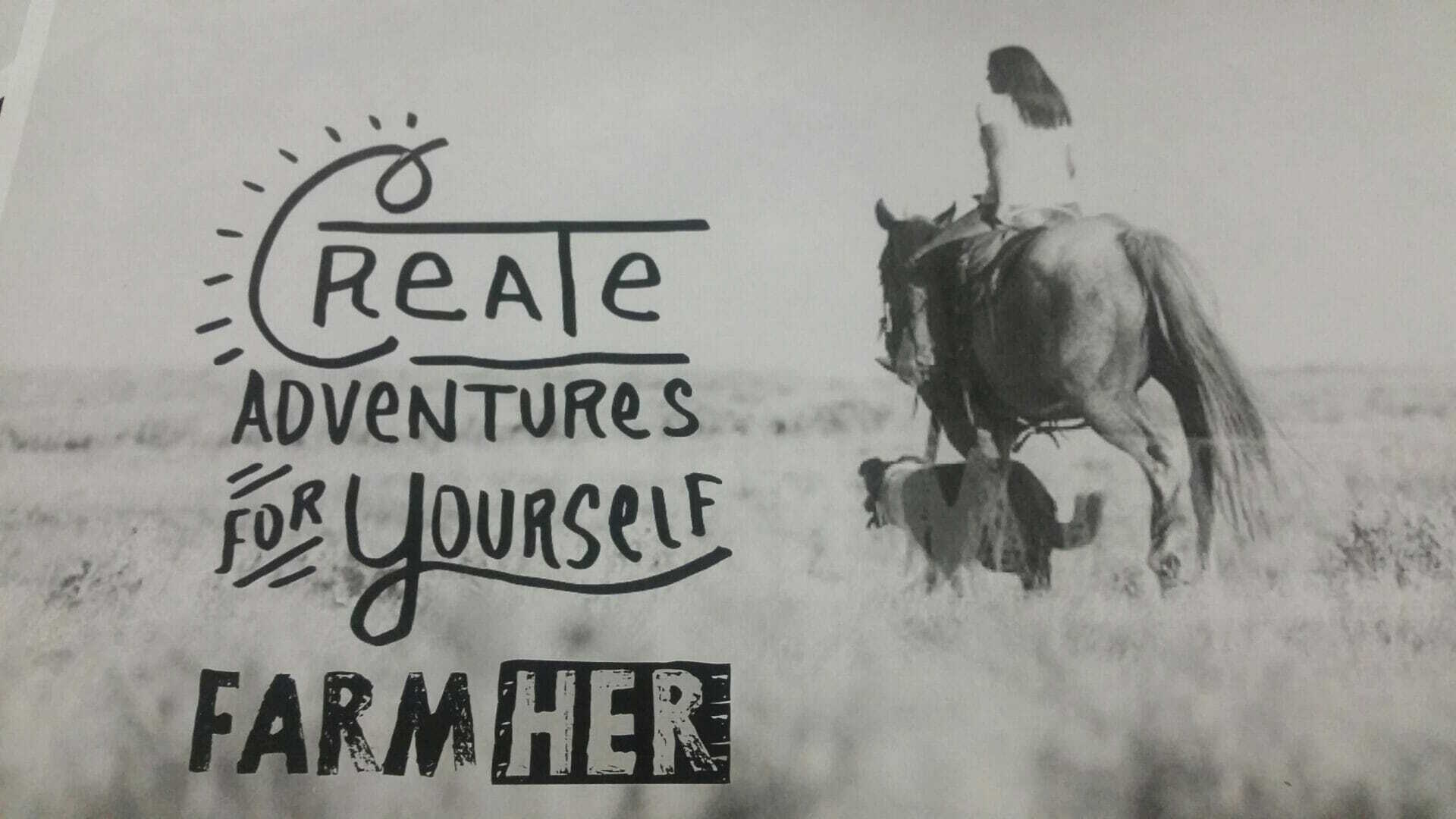
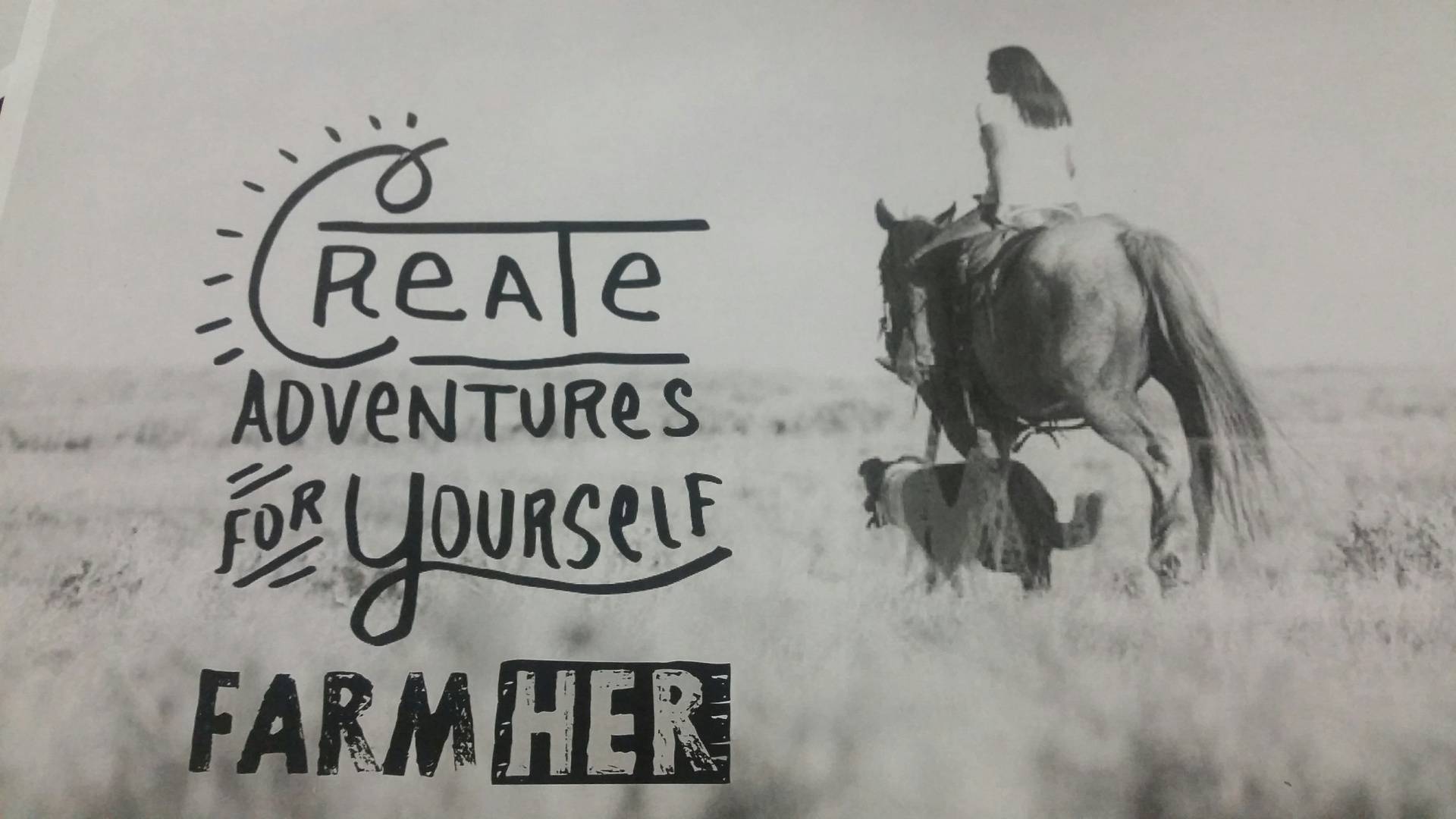
    Honestly, I’m happy for the young women who are growing up today with such great role models. My daughter, who has developed so much confidence through her 4-H horse project, has a wonderful female role model who’s a successful horse trainer and an accomplished rider. And even if she doesn’t desire to manage a seed company or operate a pumpkin patch, I hope my daughter will be inspired to “create adventures” for herself.

    In honor of the amazing farm women – like Annette Sweeney and 2011 Midwest Farm Mom of the Year and 2015 FarmHer Hall of Famer April Hemmes – who have blazed trails before us, today I’m sharing a recipe courtesy of the Iowa Beef Industry Council.

    20151113_092406_resized

    Shannon Latham

    November 16, 2015
    Agriculture, Beef, General, Industry News, Recipes
  • Latham Hi‑Tech Seeds

    Never Underestimate a Woman in Boots

    IMG 8656 4

    By Kilah Hemesath, Marketing Intern, Latham Hi‑Tech Seeds

    “Being a woman in agriculture means being a minority in an industry I am passionate about. It means proving that I am just as hardworking, dedicated and experienced as the next guy,” says Danisha Pladsen, from Shellsburg, Iowa.

    Founded in 2013 to update the image of agriculture to include women through imagery, FarmHer has become a multi-faceted source of inspiration and connection for women in all types of agriculture. FarmHer gives women in agriculture the chance to connect, inspire, communicate and gain knowledge, while becoming successful leaders in agriculture.

    Agriculture is built on the foundation of farmers around the world filled with hard work, persistence and determination. I grew up on a grain and livestock farm with four brothers. My brothers and parents served as role models while I was growing up and they continue to do so. They helped me discover my interest in agriculture and taught me to never let the “status quo” affect my goals.

    While attending Iowa State, I’ve been able to meet and become close friends with students who share my same interest. It is rewarding to meet other females who share my love for agriculture as I do. I would classify these ladies as FarmHer’s ready to achieve their goals.

    FarmHer is hosting an inaugural “Grow by Future” event on Friday, October 13, at the FFA Enrichment Center in Ankeny. The event will include a variety of topics including STEM, producer’s perspectives and international agenda. The agenda includes presentations by several Iowa women who have blazed trails in agriculture include: Dr. Wendy Wintersteen, Endowed Dean of the College of Agriculture and Life Sciences at Iowa State University: Iowa Lt. Governor Kim Reynolds; and Franklin County (Iowa) farmer April Hemmes, who has been a full-time farmer in Franklin County for more than 30 years.

    In honor of tomorrow’s #Grow15 event, I found it appropriate to share the story of two FarmHers I have met at Iowa State University. Andee Hammen, a junior at Iowa State University majoring in Agricultural Communications, shares a similar passion for agriculture. She says, “I am blessed to have the opportunity to grow up on a farm and someday I hope to transition into operating the family farm alongside my father.”

    Being a FarmHer has given Hammen the chance to find her passion and strive to turn her dream into a reality. She has been actively involved in her farming operation back home in Jolley, Iowa, ever since she was young. Involvement in 4-H and FFA helped further her interest and provided her with opportunities to reach her goals as a FarmHer.

    Pladsen has a goal of returning to her family farm, raising cattle and starting a soil sampling business. It’s easy to see Pladsen’s passion for agriculture when she talks about her new heifer.

    “Most students might want a new car or house accessory for their graduation gift,” Pladsen said. “When I received my registered shorthorn heifer, I was overwhelmed with excitement. This is my chance to start my herd and live the dream.”

    For more information on FarmHer, visit the group’s Facebook page and get involved!

    IMG_8656 4

    Webspec Admin

    November 12, 2015
    Agriculture, General, Industry News
  • Latham Hi‑Tech Seeds

    Reward for Black Labrador Reaches $10,000

    11010582 1616780395253309 4860585598226545539 n

    WANTED: ARMY OF PEOPLE TO SEARCH FOR LOST SERVICE DOG        

    Faith. Family. Farming. Friends.

    These aren’t just words on plaques that hang in the homes of many rural America residents. These are values that embody rural America. They’re the values that prompt friends and neighbors to gather and harvest the crops of a sick farmer. They’re the values that bond a community, whether community is defined as the people who live in one town or a group of people from a region who share similar interests like hunting or farming.

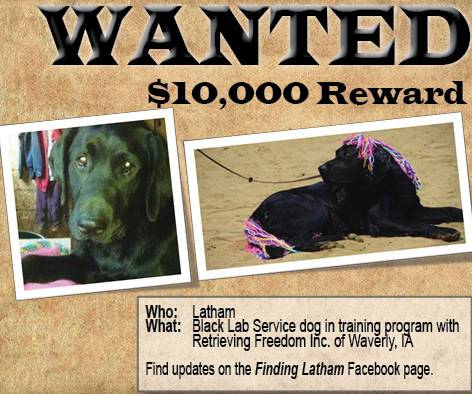
    That’s why today, on Veteran’s Day, I’m making a heartfelt plea that extends to everyone in the Upper Midwest. We need everyone to be on the lookout for Latham, the black Labrador Retriever that is part of the program at Retrieving Freedom Inc. (RFI) in Waverly, Iowa.

    Veteran’s Day, as you know, was established for Americans to publicly honor U.S. veterans. For the volunteers and staff at RFI, however, Veterans Day is every day. They work tirelessly to train dogs to provide veterans with a new sense of freedom. In many cases, a trained service dog makes it possible for veterans to feel safe again in public settings. Service dogs also help open doors, turn on lights and perform tasks for veterans with mobility challenges. Dogs trained by RFI also aid children with autism, as well as children and adults with diabetes.

    image2
    Bailey, pictured above, was 7 1/2 weeks old when Broders brought her home. She is still all puppy at 7 1/2 months!
    We first introduced you to the puppy named Latham last December when we posted, “Help Freedom Ring for Those Who Fought to Defend Ours.” Donated by Craig Christians, Territory Sales Manager for Latham Hi‑Tech Seeds, our namesake puppy will become part of the RFI’s breeding program. We’ve all been eagerly awaiting the day when Latham could father pups from Bailey, the Labrador pup purchased by Latham Regional Manager Jerry Broders and his wife. 
    Latham the Lab has a legacy to create. He has a mission and a purpose in life, but first he needs to come home! Latham went missing from his foster family’s farm near Parkersburg in Butler County, Iowa. Sadly, Latham went missing shortly after his foster mom, Jenna, was diagnosed with Multiple Sclerosis. 
    Because MS causes nerves in the body to deteriorate or become permanently damaged, it has been inaccurately reported that Latham would become Jenna’s personal service dog. “We’ve said that Latham acted like a service dog through the trying times of Jenna’s diagnosis,” says Scott Dewey, founder of Retrieving Freedom in Iowa. “That dog was literally at her bed side and providing her with comfort while she was in the hospital this fall, but I’d like to set the record straight. Latham was going to be a breeding dog that stayed with Jenna as her companion, not her service dog.”
    You can just imagine how concerned Jenna – and everyone associated with the RFI organization – is about this dog! An army of concerned citizens has spent countless hours over the past 10 days searching for Latham. Local media has been aiding in the search by issuing updates and reports. A Facebook page, Finding Latham, has been created to keep everyone up-to-date on the search. Generous people have anonymously donated $10,000 as a reward for Latham’s return.

    We simply need to expand our search outside of the Iowa borders. Please share this page with friends and family members. Any and all help we can get will be greatly appreciated! If anyone has a lead on an approximately 1-year-old, male Black Labrador please contact 319-493-2046. ‪#‎BringLathamHome

    Finding Latham Ad

    Team Latham

    November 11, 2015
    Agriculture, General, Industry News
  • Latham Hi‑Tech Seeds

    Ban the Box… Why not Ban Bad Behavior?

    AuthorLarrySailer lg

    In last week’s blog post, I expressed my concern that Americans are no longer encouraged to accept “personal responsibility.” I referenced an article in The Des Moines Sunday Register about a women who said she was having a hard time finding a job due to a felony conviction. Today I need to revisit this issue because there is a movement to remove the consequences of inappropriate behavior.

    President Obama is directing federal agencies to “ban the box,” prohibiting them from asking prospective government employees about their criminal histories on job applications. This week The Des Moines Register ran an editorial, stating that Iowa needs to “ban the box.” An excerpt from this editorial reads:

     
    Over the past 20 years, government authorities have made 250 million arrests. The Federal Bureau of Investigation has more than 77 million individuals in its master criminal database and adds about 10,000 names each day. 

     
    Here’s the deal… I’ve been listening to the sermons lately as I have been attending church on Sundays. Saul, a very nasty man who was totally against Christians, became Paul, the man that started our tradition of organized churches. Talk about second chances!

    I truly believe in second chances, but I believe being clear and transparent is the best way to start again. People make mistakes. If that person who made the mistake really wants to turn his life around, hiding his criminal record is not a good start!

    We can’t all have a transformation such as Paul, but we should at least try. Making excuses or hiding information doesn’t make a person responsible for his actions. Lowering our standards and expectations doesn’t empower people nor motivate them to try harder or become better. This society has been going the wrong direction for quite some time, and it’s time to take personal responsibility!

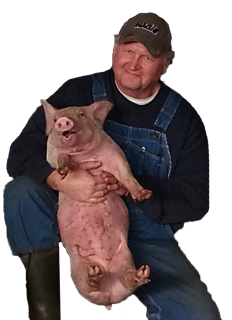
    Larry Sailer, Musings of a Pig Farmer

    November 10, 2015
    Agriculture, General, Industry News
  • Latham Hi‑Tech Seeds

    Harvest Brings Back Childhood Memories

    20151028 145304 resized

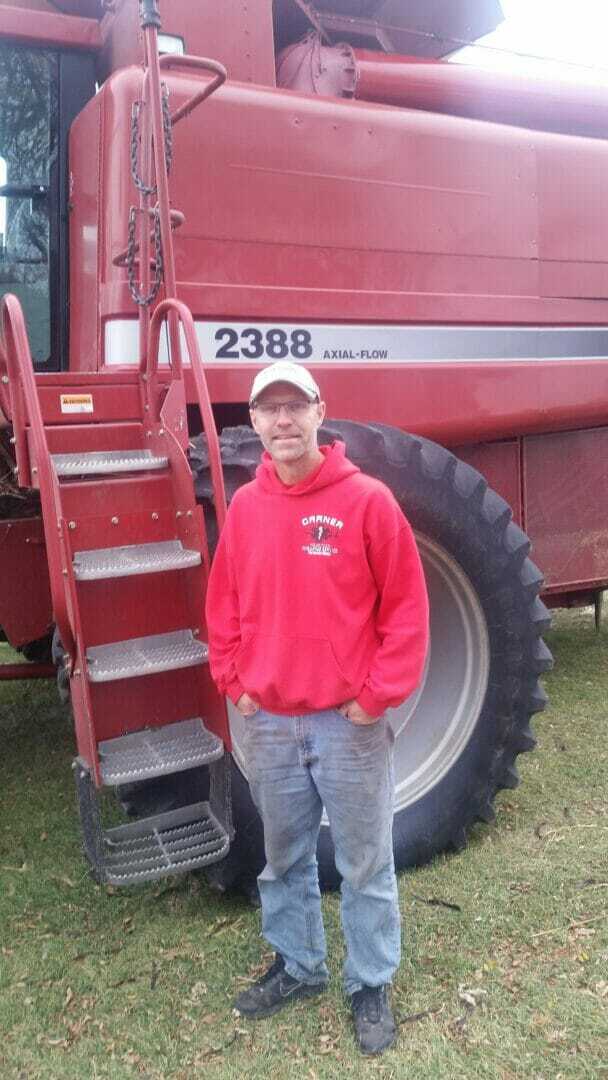
    Dan Goll of Garner feels blessed that he and his wife, Traci, are raising their three children in the house where he grew up in rural Garner.

    “I always knew that I wanted to farm, but I started farming full time even sooner than I thought,” says Dan, who graduated from high school in 1987. He attended North Iowa Area Community College20151028_145304_resized (NIACC) for two years and started farming full time in 1990 due to his father’s health issues.

    “I love putting in crops in the ground and watching them grow,” says Dan. “My favorite time of the year is when you just see the rows appear in the fields. It’s the same with livestock. I love it when calves and pigs are first born. You have to make sure that calf gets up and nurses and that the pigs get dried off and get something to eat. These times are what I love about farming.”

    Dan grew up raising cattle and hogs still enjoys feeding them. He and his children also raise crossbred show pigs and Boer goats.

    “Our kids have learned to accept responsibility at a young age,” says Dan, a proud father of three. The Goll’s oldest son, Alek, is a senior in high school. Erik is a freshman in high school, and Emma is a fifth grader. “They have to manage their time. They have school activities, extracurricular activities like sports, 4-H and FFA plus homework. They also have animals that require their time and attention, so they have to figure out how to find time to get everything done.”

    Raising livestock teaches kids a lot about life. On the day before the Golls were supposed to leave for the Iowa State Fair, Alek’s barrow died. Any loss is tough, but it’s especially tough when a kid has spent countless hours working with an animal and preparing it for the show ring. Alek was disappointed, of course, but he also knew these types of things can happen. He told his dad, “That’s part of having livestock.”

    Another advantage of being involved in 4-H and FFA is the opportunity to develop leadership skills. Alek has served as secretary and vice president of his FFA chapter. He has also served on the Junior 4-H county council and now on the Senior 4-H county council. Erik has been vice president of his 4-H group. He’s also been very active with First LEGO League, where youth in 3rd through 8th grades build and program robots out of Legos that perform multiple tasks, and with First Tech Challenge (FTC), a more advanced robotic program. Both Lego League and FTC are interests Erik developed through 4-H. Emma served as Hancock County Fair Princess in 2014. She enjoyed showing livestock for the first time at the 2015 county fair and is looking forward to her second year as a member of the Concord Challengers 4-H Club.

    “The relationships you form through 4-H and FFA are so important,” says Dan. “You get to know people. You travel to places you might not otherwise go. And you learn to think about others and to get involved in your community.”

    Giving back to his community remains important to Dan. He has served as an EMT on the volunteer ambulance crew for 22 years. He’s also very active in his church and has served as Sunday school superintendent, trustee, vice chairman, and chairman. He and his wife also led the senior youth for the past five years until a fulltime DCE (Director of Christian Ed) was hired this fall. In addition, Dan has traveled to Haiti on a mission trip where he helped build homes through the Global Compassion Network.

    “Traveling to a place like Haiti really reminds a person just how blessed we are to live where we do,” says Dan. “I loved growing up on a farm. Even though my wife grew up in town and has worked her entire career as a nurse, she says she can’t think of a better place to raise a family than on a farm. I hope our children have fond memories of the time we’ve spent working together.”

    One of the fondest memories Dan has from his youth is silage harvest with his father and cousins. They took turns eating at one another’s house, depending on where the fields they were harvesting were located. When it was her turn to provide the harvest meal, Dan’s mom always made Scalloped Eggplant. You might say it was her signature dish, so today Dan is sharing that treasured family recipe on TheFieldPosition.


    Team Latham

    November 6, 2015
    General, Recipes, Sides
  • Latham Hi‑Tech Seeds

    We care every day. Do you?

    AuthorLarrySailer lg

    I’d like to talk about personal responsibility, which can cover anything I have ever talked about in this blog! Personal responsibility relates to how I take care of pigs and how I treat the people I work with. It includes what I choose to eat, as well as my actions and behaviors.

    Let’s bring it back to what I love to do for a living and that’s taking care of pigs. Rather than doing chores daily as I have for more than 50 years, my new job has me taking care of pigs by taking care of the facilities where pigs are raised.

    “We care every day” is the theme in our livestock vote_button_largeoperation. I take pride and ownership in what I do; doing anything less wouldn’t be right. Does this mean I get everything done perfectly and on time? Of course not! I admit that I try to do too much. I see such a need to volunteer that I stretch myself much too thin. I’ve given up many jobs I am still passionate about: volunteering with hospice, speaking for the National Pork Board and grilling pork burgers in Franklin County. These volunteer opportunities were all very important, but trying to do all at a high level was taking a toll.
    Why do some people see a need to help others while others look for ways to help only themselves? I believe the American culture is changing, and personal responsibility is being taken away from us. Government entitlement programs are building a class of citizens that has no sense of responsibility.

    Some people have learned they can make a better living off the government than they can by earning a living. This is why I have a problem with the minimum wage and food stamps (SNAP). The Supplemental Nutrition Assistance Program (SNAP) cost almost $80 billion in 2012 – twice the amount it cost just five years prior!

    Making Americans dependent on social programs and using taxpayer money to advertise welfare programs won’t lead to government efficiency or to a more productive society. Socially equality reduces the will to work. I can see the point of such government programs like minimum wage for entry-level jobs, whether by a young person or by someone getting back on their feet. When a job turns in to a career, however, a person should be paid what he or she is worth to that business!

    How can we teach work ethic and empathy when today’s kids receive ribbons and awards just because they participate? Does giving them an award for “showing up” teach them to try their very best, or does America’s trophy culture teach kids that working hard doesn’t matter because everyone gets treated equally?

    Today’s kids must develop critical thinking skills. 4-H and FFA have been fantastic training grounds, and these programs are not only for kids who grow up on farms! Learning the process of setting goals, planning, executing, and finishing a project are lessons that will serve these kids all their lives.

    Government regulations have gotten to the point where everything Americans do is regulated. We have so many rules that 37 cents of every dollar we spend pays for those regulations! If Americans would accept personal responsibility to understand what foods are good and which aren’t, would we need all the extra health care regulations and added expenses? If people researched what they’re buying, would we need so much regulation? If parents held kids responsible for their actions, would we have the problems we have in schools?

    I read an article Sunday in The Des Moines Register about a lady who is having trouble getting a job due to a felony on her record. She admitted to making some bad decisions in the past that are now keeping her from getting the job she wants. Do you think employers should not hold her personally responsible? She may very well be the best person for the job, but how does the HR department know that? There was even talk that that type of question shouldn’t be on the employment form. Is that really being responsible?

    Our founding fathers developed a system of government that would give opportunity to everyone without guaranteeing everyone would be treated equally. The U.S. government was created to be a representative democracy, not a communist government in which all members of that society are treated equally.

    Life is not fair, people! Rather than taking everything so personally, Americans must take personal responsibility. Part of accepting responsibility, in my opinion, is exercising your right to vote. Today is Election Tuesday. Remember, whom we elect makes a difference!

    Larry Sailer, Musings of a Pig Farmer

    November 3, 2015
    Agriculture, General, Industry News
  • Latham Hi‑Tech Seeds

    Planning a Halloween Party with Purpose

    IMG 13171

    There aren’t many things that will prompt a farmer to leave the field early on an October evening. But many Northwest Minnesota farmers will park their equipment for the Kasin’s 4th Annual Halloween Party.

    “Mark wanted to have an appreciation party for our seed customers in the fall, and I had always wanted a Halloween Costume party,” explain Karen Kasin, who has helped teach special education for 17 years at Rossman Elementary in Detroit Lakes. Her husband, Mark, farms and has been a seed dealer since 2005. “We decided to combine the two ideas. Our first party was a great success, so we’ve continued the idea ever since.”

    The Kasin’s annual Halloween costume IMG_1317party raises funds for local charities and/or local families in need. “We have hosted five benefits for local families,” says Karen. “We ask for free-donations at our Halloween party, and all the money raised goes to a family in need in our community.”

    Each year the number of guests at the party seems to grow as word spreads throughout the area, and people who attended in the past invite other friends to join them. While the prospect of feeding hundreds of people seems daunting to many, Karen says “many hands make light work.” Many of the couple’s friends help decorate and prepare the food.

    “The decorating is the best part!” says Karen. “Our friends and neighbors spend a night, helping us decorate both the inside of our barn and the yard with lots of orange lights and decorations!”

    In addition to their annual Halloween party, each May the Kasins host the Hawley Lion Club’s Breakfast on the Farm. Similar to Wisconsin’s Dairy Days of Summer events, “Breakfast on the Farm” brings farmers and consumers together to foster greater understanding of how food gets from the farmer’s field to a family’s dinner table. Last year an estimated 4,500 attended Breakfast on the Farm!

    IMG_1316Planning for a big event begins months in advance, says Karen. She booked the band for the Halloween party months ago. Decorating and food prep begins a few days in advance, so that way everyone is able to enjoy the party.

    Today on TheFieldPosition, Karen has agreed to share her simply delicious chili recipe. Whip up a pot this weekend, and stir up some good family memories!

    If you want to get into the spirit of the upcoming holiday, you might also be interested in these past blog posts:

    • Simple Tricks for Making Halloween Treats
    • Enjoy Spook-tacular Halloween Goodies
    • Celebrating a Merry (Not Scary) Halloween

    Team Latham

    October 30, 2015
    Beef, General, Recipes
  • Latham Hi‑Tech Seeds

    See a Common Denominator with Problems Facing the U.S.?

    CSBBQswVAAAe0DM

    It’s so difficult to choose a topic each week for this blog. Honestly, it’s tough for me to pick just one! That’s why this week I’m going to touch on several subjects:

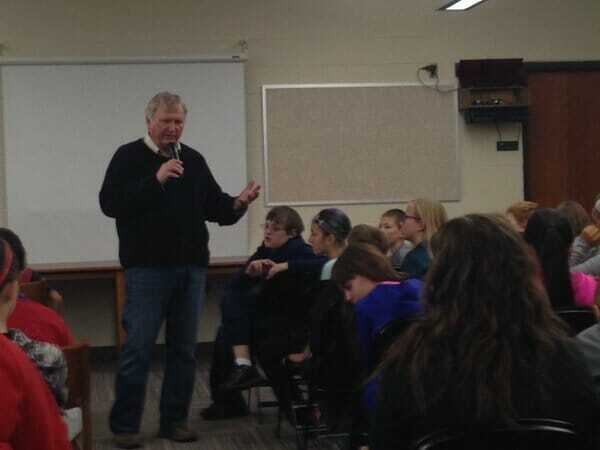
    First… Ag in the Classroom. Do you know what your children or grandchildren are really learning in school? You might be shocked to learn The Omnivore’s Dilemma is being used as a textbook for all subjects – even art – for sixth graders in the Mason City public schools! Not only is this book very critical of modern farming, but Omnivore’s Dilemma is filled with half-truths and misinformation.

    Last September I found myself facing a dilemma: CSBBQswVAAAe0DMShould I combine my soybeans or head into the classroom to try and dispel the myths and correct the misinformation contained in that so-called “text book”? I whole-heartedly believe that concerned citizens, including farmers, must get involved in classroom education. So last fall, and again last Friday, I joined staff from North Iowa’s Ag in the Classroom program to meet with Mason City sixth grade students.

    Ag in the Classroom does such a great job of getting into schools throughout the region that most of these kids were very familiar with our program, and many students recognized Linda and Brenda right away. The students asked great questions again this year. One question stood out this year. One young lady asked if I’m lonely out there on my farm. I couldn’t help but wonder if she’s seen a television commercial for that “Farmers Only” dating site!

    I had a great time talking with the kids, and I’m encouraged that this school system will consider using “No More Food Fights!” as a textbook in the future. Written by food and farm advocate Michele Payn-Knoper’s (pronounced “Pain – Ka-nope-r”), “No More Food Fights!” is the first-ever book to speak to all sides of the food movement in an attempt to bridge the divide between farmers and consumers.

    Second… Empty pews in Iowa churches. In last Sunday’s The Des Moines Register was an article about empty pews in rural Iowa. The number of people who said they patronize a local church or place of worship declined in 96 of Iowa’s 99 counties from 1994 to 2014!

    The country church my wife and I attend is experiencing just the opposite of what this article reports. In fact, we’re in the process of finishing a new addition to handle all the people! Growth is truly a great “problem” to have.

    Our youngest granddaughter was baptized on 12065558_10205472814122207_6618194444485332624_nSunday, Oct. 25. During the service, the kids performed a song with the bell choir and sang two more songs. The front of the church was almost wall-to-wall kids! I’m not going to even guess how many kids were in attendance under one year of age, but let me just say, it was a noisy service! But believe me, I’m not complaining about such joyful noise. After all, “If you don’t hear crying, your church is dying.”
    So why is it that so many churches are quiet? The percentage of Americans who identify themselves as “Christian” dropped from 78.4 percent in 2007 to 70.6 percent in 2014, according to the latest survey on religion by the Pew Research Center. During this same time period, however, the number of American unaffiliated with any organized religion rose from 16.1 percent to 22.8 percent. Non-Christian faiths rose slightly, too.

    I wonder if some of the problems this country is facing today are are related to those empty pews. If I were a betting man, I’d bet there is a direct correlation!

    Third… The World Health Organization (WHO) made a claim that processed meat “definitely” causes cancer and red meat “probably” causes cancer! People really need to read more than just the headlines of these stories! While this WHO claim sounds alarming, it’s important to distinguish how confident the International Agency for Research on Cancer (IARC) is that red and processed meat cause cancer, not how much cancer they actually cause. To really understand what this means (and doesn’t mean), a blog posted yesterday by the Cancer Research UK advises us to understand the categories of risk.

    For example, salami, sausage and smoking all received a “1” level of risk for causing cancer. However, 86% of all lung cancers have been linked to smoking while 21% of bowel cancers have been linked to eating processed and red meats. (It makes me wonder how low the risk really is when “processed” is separated from “red” meats. Yes, even data can be interpreted to influence public opinion!

    Linking bacon to smoking is really absurd! What nutrition is there in smoking?

    “Research has continuously shown that beef can and should be part of a healthy balanced diet,” posted agvocate Ryan Goodman on I Am Agriculture Proud. The available scientific evidence simply does not support a cause and effect relationship between any type of red or processed meat and any type of cancer.”

    Healthy humans need to consume many kinds of food, and eating red meat definitely has nutritional benefits. I will definitely write more about this topic in the future!

    Fourth… Climate Change. An Oct. 24th article by Richard Oswald in Iowa Farmer Today outlines how climate change will affect family farmers! As I have always said, “The climate is always changing!”

    Although Osward makes it sound like all change is bad, I don’t view it this way. Warmer temperatures help plants emerge from the ground quicker, and later frost dates can help more plants reach full maturity before harvest. A longer growing season could lead to higher yields, which are needed to #feedthe9. With our world population predicted to hit 9 billion people by 2050, how will there be enough food unless yields increase so we’re able to produce more food on less farm land?

    Farming practices have evolved over time, and changes will continue because technology is always evolving. Remember the so-called “good old days” when farming required lots of manual labor from lots of family members because we didn’t have modern technology? Plowing the ground black was somewhat a source of pride as you were considered doing a bad job of farming if there was a corn stalk showing after you plowed! Lots of manure was spread back then, and most of it was spread close to the barns because it took too much time with horses or slow tractors to haul it to fields that were further away. No manure management plans were written. We needed lots and lots of tillage to control weeds because there weren’t herbicides and pesticides.

    By revisiting the past, we can gain appreciation for the future. Change – and adapting to change – is a constant. We must change with it. For the governments of the world to break many great businesses or force entire industries out of existence because their computer model says certain thing might happen is ludicrous!

    There’s a lot of information out there. Sort through it, question it, and do some research. Most importantly, use common sense when making decisions for yourself and your family!

    Larry Sailer, Musings of a Pig Farmer

    October 27, 2015
    Agriculture, General, Industry News
  • Latham Hi‑Tech Seeds

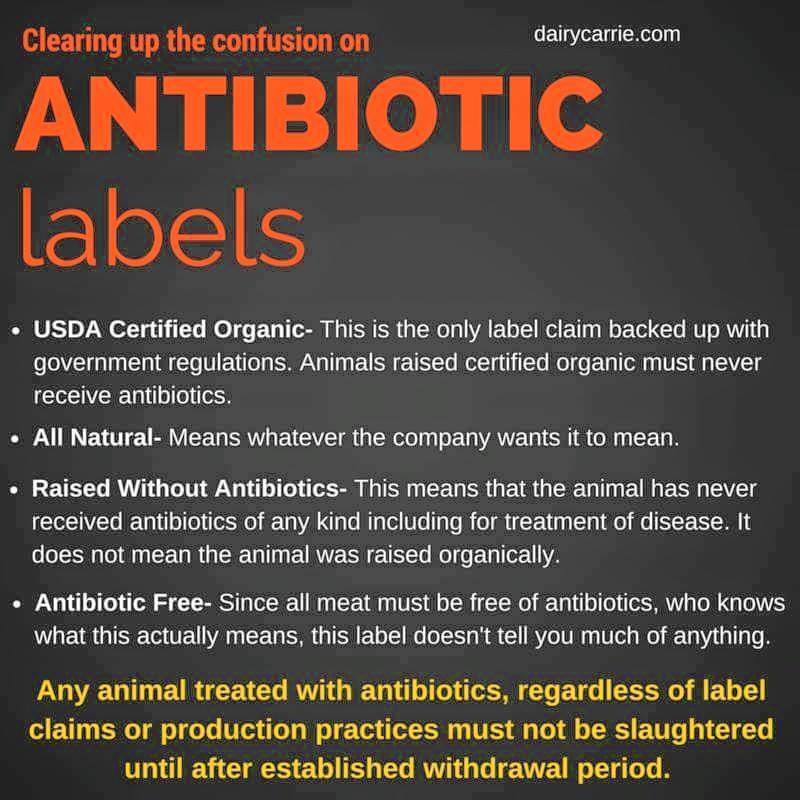
    Subway Decides to Give Antibiotics a Fair Shot

    Antiobiotics labels

    As I sat in front of my computer in an attempt to put thoughts together about last Tuesday’s announcement by Subway to source meat from animals that have never received any antibiotics, irony struck me. That same day my son was home sick because he had a sore throat. The soreness worsened and he developed a fever, so my husband took him to the doctor. Our son was diagnosed with strep throat. Obviously, a prescription was in order to get him on the mend.

    The safety and wellbeing of their children is the #1 priority for parents. Because you can empathize with other parents, you want to quickly stop the risk of your child spreading the illness. The same feelings are shared by livestock producers, who strive to be the responsible caretakers of their herds and flocks.

    Raising crops and livestock is something we take personally! My earliest memories include wrapping newborn lambs in blankets and placing them under heat lamps when they got chilled on a cold Iowa winter’s day. We’d sometimes bring sick lambs into the porch, so we could nurse them back to health.

    Last fall my favorite doeling became deathly ill, so I called the vet. Although I gave her medicine and prayed for her to get better, Bambi’s life didn’t have a storybook ending. I’ll admit that I cried when my dad buried her. Again this spring, one of my daughter’s newborn goats caught pneumonia. We treated her the best we could and we willed her to get better.

    When you spend that much time and energy taking care of something, you’re bound to be personally invested. That’s why when farmers’ motives or priorities are questioned – when their methods are criticized by non-farmers who haven’t even engaged in a conversation – advocacy is in order!

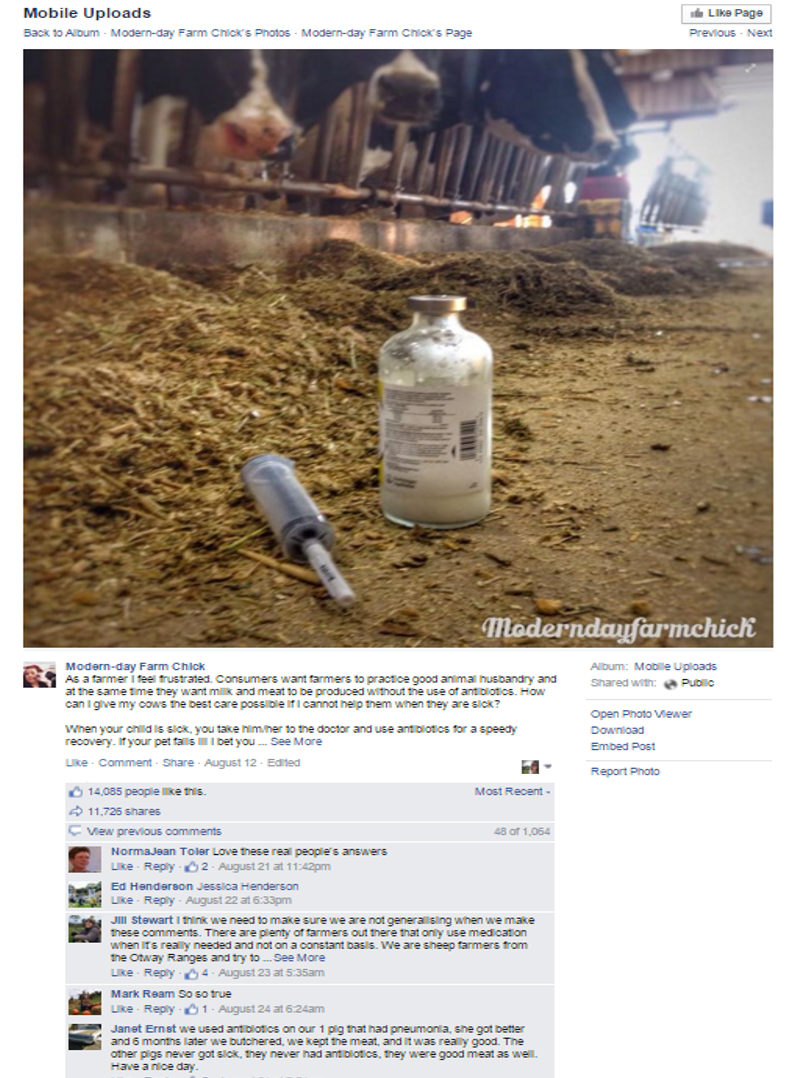
    My Facebook news feed last Tuesday (Wednesday, Thursday and Friday) was filled with personal experiences of my farmer friends, as well as related blog posts from industry advocates. Here are just a few posts that recap the situation and give personal insights into family farming operations:

    • 5 Things Subway Customers Need to Know
    • Following Up on Subway and Subway Announces Bullet is Their Treatment of Choice
    • Subway Updates Its Statement on Antibiotic Use and Subway Removing Antibiotics and Facebook Comments

    Modern Day Farm ChickAfter receiving public comments, Subway issued a revised policy:

    Our goal is to reduce and eliminate the use of antibiotics in the food we serve. Elimination of antibiotics use in our supply chain will take time, but we are working diligently with our suppliers to find quality solutions that also ensure our high quality and food safety standards are upheld and not compromised in any way. Our plan is to eliminate the use of antibiotics in phases with the initial focus on the poultry products that we serve in the U.S…

    That said, we recognize that antibiotics are critical tools for keeping animals healthy and that they should be used responsibly to preserve their effectiveness in veterinary and human medicine. Our policy is that antibiotics can be used to treat, control and prevent disease, but not for growth promotion of farm animals …”

    I can support Subway’s revised policy, which basically requests its suppliers to follow the U.S. Food and Drug Administration’s guidelines. It also requires their suppliers to consult with a veterinarian before implementing antibiotic treatments, as well as keep accurate medical records. Subway can “save face,” but even nine-year-old 4-H members are taught to follow withdrawal periods before animals are sold for meat, and “recordkeeping” is a paramount on a farm of any size.

    antiobiotics labels

    Food Labels & Other Marketing Tactics

    Subway’s recent announcement certainly isn’t the first time that shrinking margins, declining sales or a need to keep a company’s marketing campaign “fresh,” prompted a food company to succumb to pressure from activists. Last spring you might recall Chipotle implemented a few scare tactics of its own. A series of distasteful videos called into question how to humanely raise animals. In the spring of 2015, Chipotle made a misstep when it announced its ingredient list would no longer include GMO ingredients. That anti-GMO campaign led to a lawsuit for misleading claims.

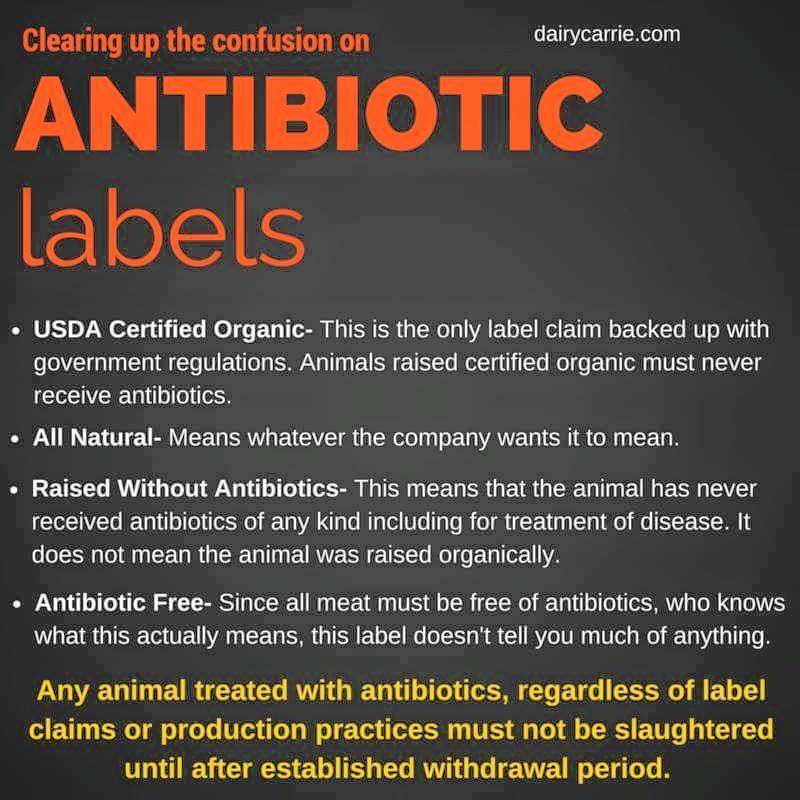
    Food scares and food labeling confusion made headlines in 2013 when Panera Bread Company ran its “All natural, antibiotic free” poultry campaign. As Dairy Carrie wrote in response, “The problem isn’t [Panera] using chicken raised without the use of antibiotics; the problem is using a marketing campaign that uses fear to sell sandwiches.”

    There has been – and continues to be – so many food-related marketing tactics that even farmers are becoming confused by all of the food labels, says sixth generation North Iowa farmer Kody Trampel. “To help you choose nutritious food for your family, Kansas Pork Farmers published “How to Decode Dinner.” They teamed up with Janeal Yancey, who has a Ph.D. in meat science and authors the Mom at the Meat Counter blog. I encourage you to share this particular post with friends who want to feel confident the pork they’re feeding their families is really nutritious.

    In an attempt to help calm mothers’ fears, last fall I published “Tips for Choosing Safe, Healthy Foods for Your Family.” Realizing that consumers have questions about the food they’re feeding their families, more farmers are sharing their personal farming stories. I regularly read blog posts by farmers who raise type of livestock that I don’t, and I find their stories fascinating.

    Engage in conversations about food and farming with groups like CommonGroundTM, AgChat and the Iowa Food & Family Project.

    Team Latham

    October 26, 2015
    Agriculture, General, Industry News
  • Latham Hi‑Tech Seeds

    Trampel Celebrates October Pork and Pumpkin Month Year-Round on His 6th Generation Farm

    Kody Trampel, 6th Generation North Iowa Farmer
    Kody Trampel, 6th Generation North Iowa Farmer

    October is both National Pumpkin Month and National Pork Month, so it’s only fitting that we feature Kody Trampel on TheFieldPosition because he produces both! Kody is proud to be to be the sixth generation to farm his family’s land northeast of Klemme, Iowa, in Cerro Gordo County. This year he grew 160 acres of corn and another 5 acres of pumpkins in addition to raising show pigs, which he sells primarily to 4-H and FFA members.

    “I really enjoy raising hogs and working with youth,” says Kody, who learned how important mentors can be when he was a member of both 4-H and FFA. He showed pigs and entered his horse in games at the county fair. He also competed in high school rodeo and made it to the High School National Finals in team roping and steer wrestling.

    As an intern with MaxYield Cooperative and now as a full-time agronomy specialist with MaxYield Seed, he also understands how important it is for developing young professionals to have good mentors. That’s why he makes it a point to speak to high school classes two or three times each year.

    “The anti-ag crowd is becoming more vocal,” says Kody. “Food labels are getting so confusing that even people who were raised on a farm are getting confused! That why I believe it’s more important than ever to do what we can to help prepare students to be great advocates for agriculture. It’s also important that farmers of all ages are able to explain their production practices, be proud of the products they raise and to help educate consumers.”

    While attending a barbecue recently, Kody overhead one North Iowa woman say she buys only cage-free eggs because they’re better. Recently a gentleman asked me if my hens are free range because he heard those eggs are fresher. I explained the difference between the two production terms. I also made the point that eggs can’t get any fresher than “farm fresh,” whether the hens are cage-free or free-range.

    Pork production can be equally confusing for people not familiar with production agriculture. “One thing consumers need to understand about modern pork production is that the animals benefit from being raised in a climate-controlled facility,” says Kody. “Today’s hog barns are clean. There are fewer problems with disease and health issues. Plus, U.S. pork producers are now able to produce a leaner and more consistent product for consumers.”

    Regardless of whether a producer is raising pigs for the meat case or the show ring, Kody says depth and length of body are important characteristics. “You need to raise hogs with correct structure to be successful in the industry. That’s true for seed stock, as well,” he says.

    So how did this Iowa livestock producer and seed seller end up growing pumpkins, too? One of his friends was looking to expand his wholesale pumpkin operation but needed more land.

    “This was my first year growing pumpkins and I planted 5 acres,” said Kody. “That may not sound like much, but trust me, that’s a lot of pumpkins! It was a huge learning experience. I never imagined how labor-intensive pumpkins would be, but I have to say, I was blessed with good help.”

    We couldn’t find a better recipe to celebrate October Pork and Pumpkin month than Crockpot Pork and Pumpkin Chili. Crockpot recipes are always a winner, especially during the busy harvest season!

    Kody says one of his all-time favorite meals featuring pork is Specken Decken, a type of German pancake made with bacon or side-pork. His grandmother always makes when the family gathers around Christmas or New Year’s and again around Easter.

    Traditionally, Specken Decken is served on New Year’s Eve or New Year’s Day. Recipes vary. Some call for rye graham flour, whole wheat flour or white flour. Some recipe include anise flavoring, raisins and heavy syrup. But regardless of the nuances, these pancakes always feature bits of bacon or sausage and are served with warm maple syrup.

    Team Latham

    October 23, 2015
    General, Recipes, Sides
Previous Page
1 … 39 40 41 42 43 … 159
Next Page

Latham Hi‑Tech Seeds

131 180th Street | Alexander, IA 50420

(641) 692-3258

SIGNUP FOR OUR NEWSLETTER
  • Contact
  • Legal
  • Dealer Center
  • Seedware Login
  • Latham Gear

© 2025 Latham Hi‑Tech Seeds. All rights reserved. | Iowa Web Design by Webspec | Privacy Policy

Latham® Hi-Tech Seeds is a trademark of M.S. Technologies, L.L.C., 103 Avenue D, West Point, IA 52656.