Latham Hi-Tech Seeds

(641) 692-3258

  • Home
  • Products
    • Corn
    • Soybeans
    • Alfalfa
    • Corn Silage
    • Seed Guide
  • Performance
  • Find a Rep
  • Media
    • Blog
    • News
    • Videos
    • Podcasts
    • TECHTalk
  • About Us
    • Company History
    • Our Mission
    • Careers
    • Become a Rep
    • Sowing Seeds of Hope
  • Contact Us
  • Latham Hi‑Tech Seeds

    Lathams Participate in Seed Industry Legislative Fly-in

    20160315 142831

    John and I were among the 55 seed industry representatives, who gathered last week in Washington, D.C., to “Storm the Hill.” Hosted by the American Seed Trade Association (ASTA), “Storm the Hill” provides a unique opportunity for seed-industry partners from every sector across the nation to join together as a unified voice on Capitol Hill.

    Approximately 90 visits were made to U.S. senators and 20160315_142831representatives about a number of issues that will impact the future of the seed industry, including the efficient movement of seed across state lines and country borders. We had the pleasure of attending a Spring Break Reception (#IAinDC) where we thanked Senators Grassley and Ernst for supporting a national solution for the labeling of foods made with GMO ingredients. We also visited each Iowa congressman’s office to thank them for supporting this issue, as well as other issues that impact the livelihood of Iowa farmers and small business owners.
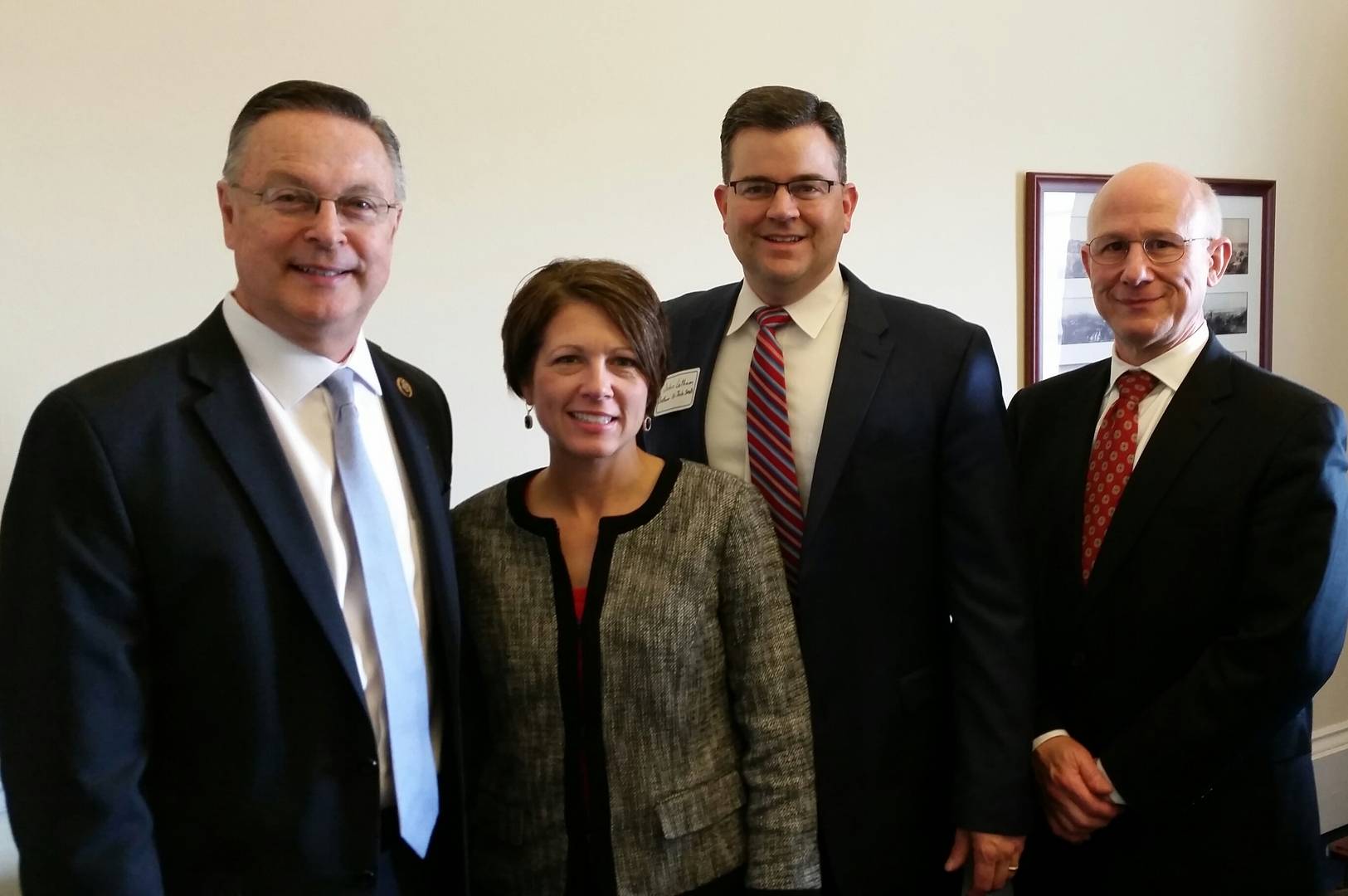
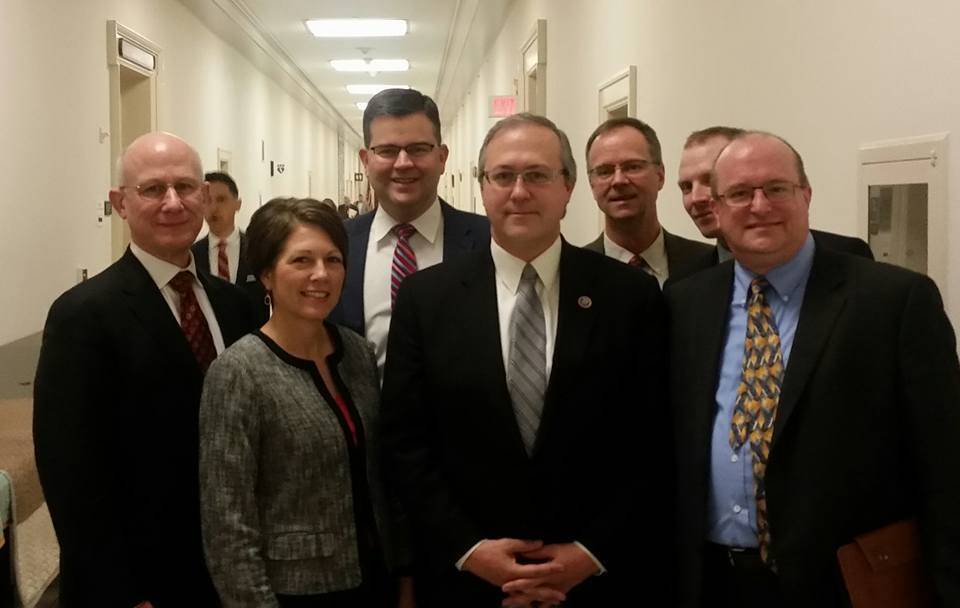
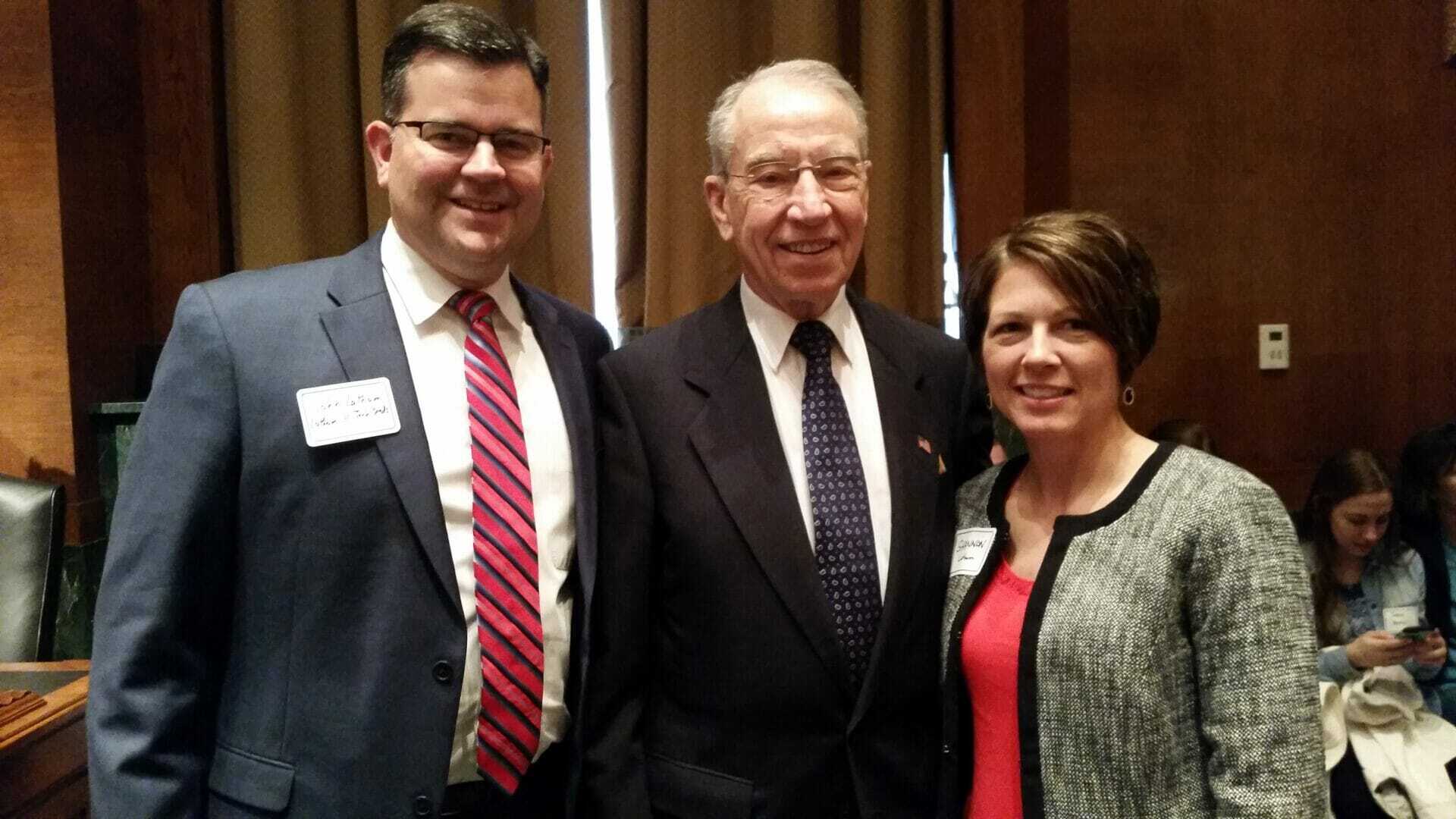
    John and Shannon Latham joined seed company representatives from the state – and the nation – last week on Capitol Hill. They met with both Iowa senators and all four representatives including Rod Blum (R–Dubuque), who is pictured here on the left.
    John and Shannon Latham joined seed company representatives from the state – and the nation – last week on Capitol Hill. They met with both Iowa senators and all four representatives including Rod Blum (R–Dubuque), who is pictured here on the left.

    Last week’s congressional visits couldn’t have been better timed as they were made the day before the Senate was scheduled to debate the GMO labeling bill. Seed industry representatives called upon elected officials to prevent a costly and confusing patchwork of state labeling laws by passing a uniform, voluntary labeling bill. We encouraged them to vote “yes” for science and “no” for anti-GMO standards.

    U.S. Senator Pat Roberts, Chairman of the Senate Committee on Agriculture, Nutrition and Forestry on March 16 released a statement regarding the Senate’s failure to invoke cloture on the Biotechnology Labeling Solutions Bill:

    “For more than a year, I have called on my colleagues across the aisle to come to the negotiating table to address the problems facing the nation’s marketplace should states continue to mandate confusing and differing biotechnology labeling standards… “My approach to labeling acknowledges what many American consumers forget: our food is abundant, affordable and safe. We must continue our reliance on science and technology to ensure our continued prosperity.”

    The Senate failed to invoke cloture on the bill with a vote of 48-49. However, there is still hope that negotiations will continue after the Easter break. You can bet that we’ll be following this issue, as well as several others that impact the seed industry’s shared commitment to producing better seed for a better quality of life.
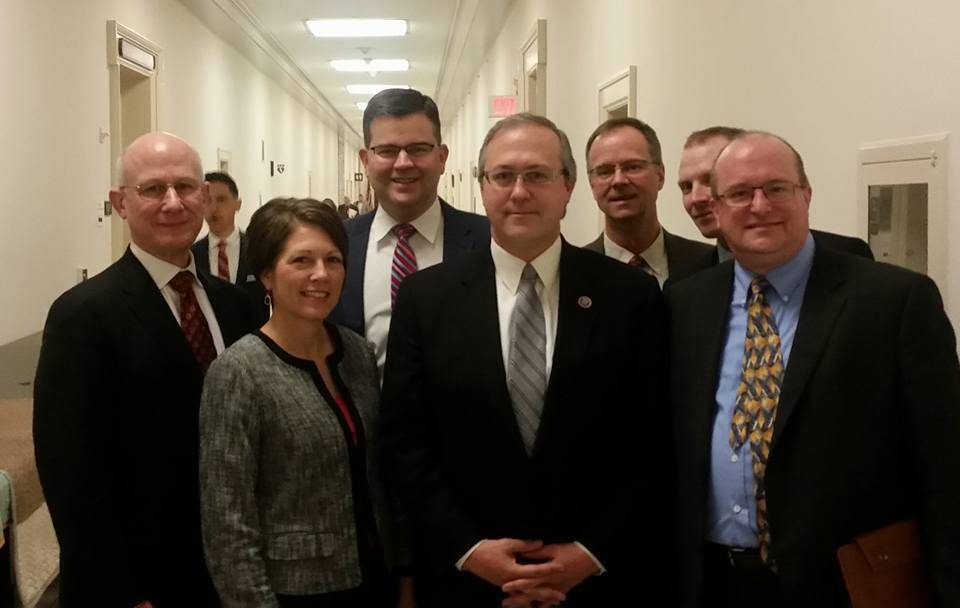
    Seed industry reps spent ‪#‎AgDay2016‬ on Capitol Hill, meeting with elected officials including Congressman David Young (R-Iowa-03).
    Seed industry reps spent ‪#‎AgDay2016‬ on Capitol Hill, meeting with elected officials including Congressman David Young (R-Iowa-03).

    A diverse array of genetic resources are the building blocks of better seed.  Sophisticated breeding programs allow the seed industry to help meet the need for a wide variety of nutritious and high quality products, while supporting sustainable agriculture practices that preserve our environment’s natural resource and biodiversity.  To ensure full access to the plant materials needed for continued innovation, ASTA members last week called on Congress to pass the International Treaty on Plant Genetic Resources for Food and Agriculture and increase funding for the National Plant Germplasm System and Germplasm Enhancement Maize (GEM) Project.

    Seed plays an important role in preserving, rehabilitating and reclaiming fragile lands, as well as maintaining habitat for wild species. As chair of ASTA’s Legislative & Legal Affairs Committee, John also advocated for a number of priority issues related to conservation and the environment including: Congressional oversight in the implementation of the National Seed Strategy; the importance of close collaboration between the U.S. Department of Agriculture (USDA), Department of Interior and the seed industry on pollinator strategies; continued investment in USDA Farm Service Agency and Natural Resources Conservation Service (NRCS) Programs; and full funding for the USDA-NRCS Plant Material Centers.

    Click here for more information on national seed industry legislative priorities.
    Team Latham

    March 21, 2016
    Agriculture, General, Industry News
  • Latham Hi‑Tech Seeds

    GMO Label Will Impact Every American

    Storm the hill

    Food labels and GMO foods have been making headlines again as new legislation was introduced last week into Congress and today the Senate is expected to vote. Honestly, the headlines are misleading because this isn’t just a big food company nor a big agribusiness issue.

    GMO food labeling will impact every single American. Our family-owned seed company will feel the effects, and U.S. farmers will have fewer seed options in every product guide. Mandatory food labels will impact American consumers, as well. Grocery bills are expected to increase by $1,050 annually for a family of four!

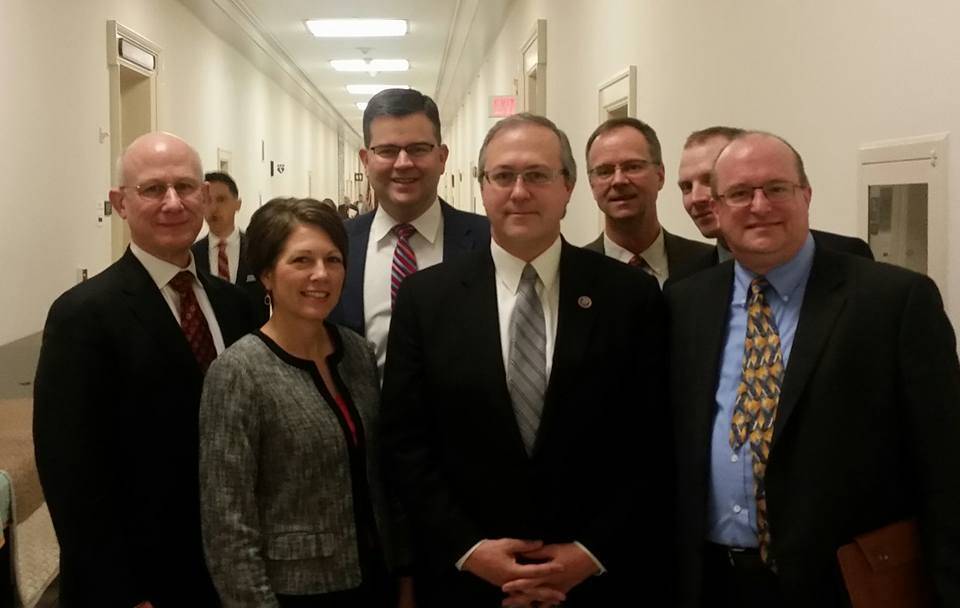
    We spent National Ag Day on Capitol Hill, meeting with elected officials like Congressman David Young about issues of importance to the seed industry.
    We spent National Ag Day on Capitol Hill, meeting with elected officials like Congressman David Young about issues of importance to the seed industry.

    People who buy Wal-Mart brand products will be hit with even higher prices than they’re accustomed to paying since they’ll be forced to buy name brand, rather than the store brand, products. Executives from major supermarkets and Wal-Mart have already said they won’t carry their own private label foods in Vermont if that state’s GMO labeling law takes effect on July 1.

    In an attempt to pre-empt the Vermont law – and to prevent additional states from enacting similar laws – yesterday my husband and I were among 55 seed industry representatives who made approximately 90 visits to congressional offices in Washington, D.C.

    Our message to elected officials was clear: We support a uniform, national food labeling standard. Vote “no” for the alternative bill that was introduced last week to protect state-level GMO laws. This alternative bill is backed by Sens. Jeff Merkley (D-Ore.), Patrick Leahy (D-Vt.), Jon Tester (D-Mont.) and Dianne Feinstein (D-Calif.). Vote “yes” to Senator Roberts’ bill, which would create a voluntary USDA labeling standard for GMO foods and prevent states from creating their own labeling standards.

    Can you believe that day some elected officials yesterday actually said they don’t care if people are starving because they’re being denied GMO foods? They’d rather people starve than be “subjected to GMO foods.” (This sounds like American lawmakers are taking notes from Zimbabwe government officials who would rather see people starve than eat genetically modified foods.) Say what?! Not one person has died from eating GMO foods but about 2 million deaths could be prevented annually if Golden Rice were available to those living in poverty stricken countries!

    If there are no known hazards —after 20+ years of study—and a host of benefits including lower food prices for Americans, why is there so much controversy around GMO food labels? I believe America’s food fights stem from “fear of the unknown.” Here’s what I’d like Americans to know:

    • Foods derived from GMO crops pose no threat to human health, and they’ve been studied by virtually every scientific and regulatory agency.
    • GMO crops also have a positive impact on the environment, allowing farmers to fight soil erosion by planting high-yield crops that grow more food on less land while using less water.
    • GMOs can improve the quality of life for Americans, as well as for people around the globe. Better life comes from science, innovation and caring hands. Better life begins with better seed.

    P.S. I am not losing sleep over feeding my family foods derived from GMO crops, but I do have “Mommy Guilt” over not feeding my family enough fruits and vegetables. Click here for tips from a registered dietician on tips for making healthy food choices.

    Team Latham

    March 16, 2016
    Agriculture, General, Industry News
  • Latham Hi‑Tech Seeds

    Celebrate Diversity during National Ag Week

    AG DAY

    As I write this blog on National Ag Day, I’m thinking about more than my farm. Agriculture is more thanAG DAY one small farm. Agriculture’s importance in providing food, fiber and fuel is being greatly overlooked in this country. Farmers here are doing such a great job of producing food and keeping grocery prices cheap that most people just take it for granted!


    Traveling across the U.S. and even to other countries really opens one’s eyes to the challenges of feeding a growing world population. It also opens one’s eyes to the diversity of agriculture. I’ve witnessed farming in Eastern Europe. I spend a lot of time traveling the Midwest for my job, and over the weekend, I drove to Oklahoma. What strikes me most is the diversity in agriculture! In Ukraine, I saw everything from backyard farms to a farm that covered one million acres! The political climate was the most limiting factor for Ukrainian farmers because one-size-fits-all rules and regulations did not fit such diverse farms.

    The amount of regulation coming down on U.S. farms from the federal government is also staggering. I have farming friends in all 50 states, and no two farms are the same. Farming operations are even diverse within our own county. My farm, for example, is surrounded by other farms that raise corn and soybeans. Some of my neighbors also raise hogs and cattle. Others have chickens. Pumpkins, apples, sheep and goats are also raised in this county.

    Each crop and livestock operation has its unique qualities, but the difference doesn’t stop there. There are thousands of different soil types. Different soil types create different challenges. I have deep black and clay soils, so I am challenged with “puddle farming.” The ground is fairly flat, so ponding is common. Without tile to drain away excess water, crop yields would be very poor. But with proper management, however, we can raise fantastic crops.

    Ten miles away, there are very sandy soils. This means the soil particles are very large, while mine are very small. This type of soil cannot hold water in reserve as well as mine, but these farms can also grow terrific crops if managed properly. Farmers with sandy soils use different methods than I do, even though our farms are very close together.

    Now imagine a farm a couple states away… They grow crops different than mine. They might grow wheat, rice, cotton or peanuts. In other areas of the country, agriculture is dominated by nut trees and vegetable crops like potatoes or onions. The climate is totally different across our nation, and some places are made just right to graze cattle. Their soils are very different. The landscape is very different. This again takes different management! As a result, conservation practices must be very different.

    My point is that not one type of farming works across one county, the nation or even across the world. The same goes for regulations and farm programs! One size does not fit all.

    During National Ag week, let’s celebrate the diversity that feeds our world. Let’s not regulate ourselves into starvation!

    RELATED BLOG POSTS:

    • Ag Week 2015 Showcases Sustainability
    • Celebrate Ag Week in a Big Borlaug Way
    • Help Us Celebrate National Ag Week
    • Kicking off National Ag Week

    Larry Sailer, Musings of a Pig Farmer

    March 15, 2016
    Agriculture, General, Industry News
  • Latham Hi‑Tech Seeds

    5 things I wish I Would’ve Known before Attending ISU

    Campanile

    By Kilah Hemesath, Latham Hi‑Tech Seeds Marketing Interncampanile

    There is a college fit for everyone, and I can confidently say I found mine. Because I’ll be graduating in May, I find myself appreciating my experiences at Iowa State University a little bit more every day.

    Looking back on the last four years, there are a few things I wish I would have known earlier:

    1. Buy proper attire for ALL seasons.

    There are countless joys to living in Iowa, including the weather. There’s no denying that Iowa experiences weather as hot as Texas and as cold as Alaska. You’ll be a lot more comfortable if you prepare for it all! Buy a winter coat, boots, umbrella and comfortable walking shoes. With those options in your closet, you will be set!

    1. The Parking Division is pitiless.

    Nothing is more disappointing than walking to your car and finding a little yellow envelope with a ticket in it. The parking division is fierce! Parking on campus is very limited, and the parking division offers no pity when writing tickets. My best advice is to take advantage of the CyRide Service, and avoid parking on campus.

    1. Study abroad early.

    Because you get busier each year, study abroad during your first two years of college. I will be studying abroad for the first time in May after graduation! I couldn’t be more excited to do so. So many times I’ve wished that I had given it a chance in my first year of college. Time goes quickly, so live in the moment.

    1. ISU Campus is not as big as it appears.

    Attending a school that is 4.5 times bigger than my hometown was most intimidating! Once you know your way around campus, it makes the experience a lot more comfortable. This year ISU has a record enrollment of 36,001. View this number as an opportunity instead of a scare; that is 36,000 other people you can interact with and learn from! Once your major is declared, you’ll meet more people who share your same interests. Campus clubs are another great way to create a smaller environment.

    1. Campus dining is the ticket to quick and tasty meals.

    There is a smorgasbord of both dining centers to choose from, as well as options inside each dining center. My favorite dining hall is Conversations. It is a smaller scale dining center that usually features meals that are made right in front of you! Even with the smallest dining package, I still had ample amount of meals left over! After freshman year, you’ll have the chance to cook for yourself. Think about simple meals you and your roommates could make together!

    My time at Iowa State has served me well. I’ve formed so many relationships and have had so many great experiences. I’m grateful for the opportunities I’ve had, and I’m especially grateful that attending ISU helped me find my career path. I’m really looking forward to starting full-time in May with Latham Hi‑Tech Seeds!

    Webspec Admin

    March 10, 2016
    Agriculture, General, Industry News
  • Latham Hi‑Tech Seeds

    Is USDA Sticking a Fork in Pork?

    Pork

    Pig farmers from across the U.S. met March 3-5 in Indianapolis for the Pork Industry Forum. Elected representatives for our grassroots organization get together annually to make pig farming better. Like any organization, not everyone agrees all the time. Last week, however, there absolute agreement by all delegates on one issue.

    Let me first provide a little background information…Pork

    When you hear, “pork,” chances are that you think, “The Other White Meat.” A study conducted by Northwestern University found The Other White Meat to be the fifth most memorable promotional tagline in the history of contemporary marketing. This tagline successfully positioned pork as a healthy, lean protein that is versatile and easy to prepare. Six common cuts of fresh pork are leaner today than they were 15 years ago. In fact, a 3-ounce serving of pork tenderloin contains only 2.98 grams of fat and a 3-ounce serving of skinless chicken breast contains 3.03 grams of fat.

    This sounds like a great success story that should be included in textbooks, right? Unfortunately, the success of this marketing campaign drew unwanted attention from the Humane Society of the United States. HSUS announced in September 2012 that it was suing the USDA over the payments the National Pork Producers Council (NPPC) receives via the national pork checkoff.

    Why sue? Checkoff money is collected by a board, and the USDA oversees the collection and spending of checkoff funds to provide programs that will increase demand for farmers’ products. Checkoff monies can fund marketing tools such as promotion, research and new product development.

    Increasing pork consumption is just the opposite of what HSUS wants to see happen. Truth be known, HSUS would like to end animal agriculture. HSUS also wants to end hunting and animal circus acts, as well as close zoos. Anyone who thinks the $18 per month he or she donates will help save cute little puppies or kitties is sadly mistaken. Only one half of one percent of HSUS funds raised go toward animal care! (Donate to local pet shelters instead.) Most HSUS donations are used to influence political agendas and the media, and HSUS is trying to trap the pork industry in a web of activities.

    You see, the National Pork Board (NPB) and the National Pork Producers Council (NPPC) used to be one entity. Checkoff dollars were being used for “The Other White Meat” campaign, so the NPB leased the other white meat tagline to NPPC. After several years, it was agreed that NPPC should buy the tagline instead of leasing it. Appraisals were done. The necessary approvals – including from the USDA – were granted. This arrangement worked well until HSUS filed a lawsuit against the USDA.

    Instead of defending what it had approved, the USDA appears to be caving to a special interest group. Sec. Vilsack, during a U.S. House Agriculture Committee held last week, said the decision to settle the lawsuit was made with pork industry officials. During the annual pork industry forum, however, not one pork industry representative says he or she was contacted by the USDA about the settlement. As a result, pork industry officials cried foul over the USDA’s move.

    Every delegate to the Pork Forum wants this lawsuit fought to the fullest extent of the government’s power. Not one single delegate agreed with Sec. Vilsack!

    “In an action for the record books, delegates of the NPB — appointed by the USDA — not only unanimously approved the advisement but also unanimously co-sponsored the petition [of Secretary Vilsack to preserve and defend National Pork Board statutory authority and independence]. One strong voice with true grit signaled the industry is prepared to fight against any entity trying to damage the ability to exercise its judgment in marketing pork.” writes Cheryl Day on the National Hog Farmer blog.

    We must keep an eye on government agencies, even if they’ve been given the power to oversee us! As with all government agencies, look for connections. Connect the dots. Follow the money. Consider the source. Find the motive.

    There is an election on the horizon. Read. Learn the issues. Talk to people who actually farm and learn how they take care of livestock. We want to share what we do every day, and we can explain why we care!


    Larry Sailer, Musings of a Pig Farmer

    March 9, 2016
    Agriculture, General, Industry News
  • Latham Hi‑Tech Seeds

    Industry Visits Emphasize Importance of Networking

    IMG 3465 2

    By Kilah Hemesath, Latham Hi‑Tech Seed’s Marketing Intern

    If you don’t live for the here & now, what are you living for?

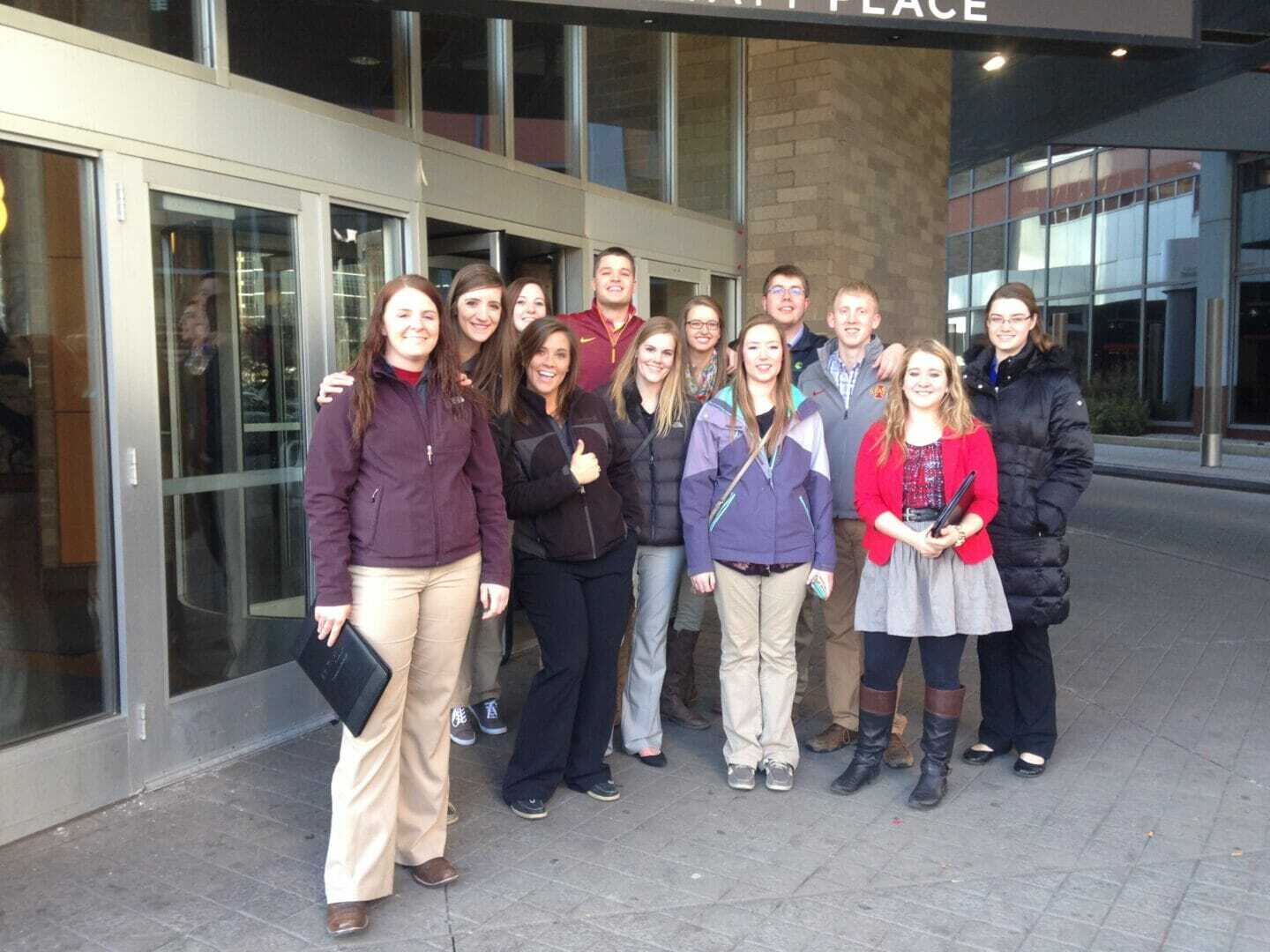
    Last week I had the opportunity visit the Twin Cities with fellow members of the ISU National Agri-Marketing Association club. After the vans were packed and we had our Casey’s breakfast pizza, we were off! In addition to traveling with a fun group of people, I got the chance to meet people in the industry who have interests similar to mine.

    We started off Thursday by visiting CHS Inc. in St. Paul.IMG_3450 CHS encompasses all parts of agriculture: energy, grains and food. I enjoyed hearing about the coordination between these three area and CHS’ strategies to serve its members while increasing stakeholder value. The importance of thorough communication was highly emphasized as the millennial generation finds it too easy to stay behind a screen. Communicating virtually often times relates in simplicity, but it lacks the irreplaceable value of face-to-face communication.
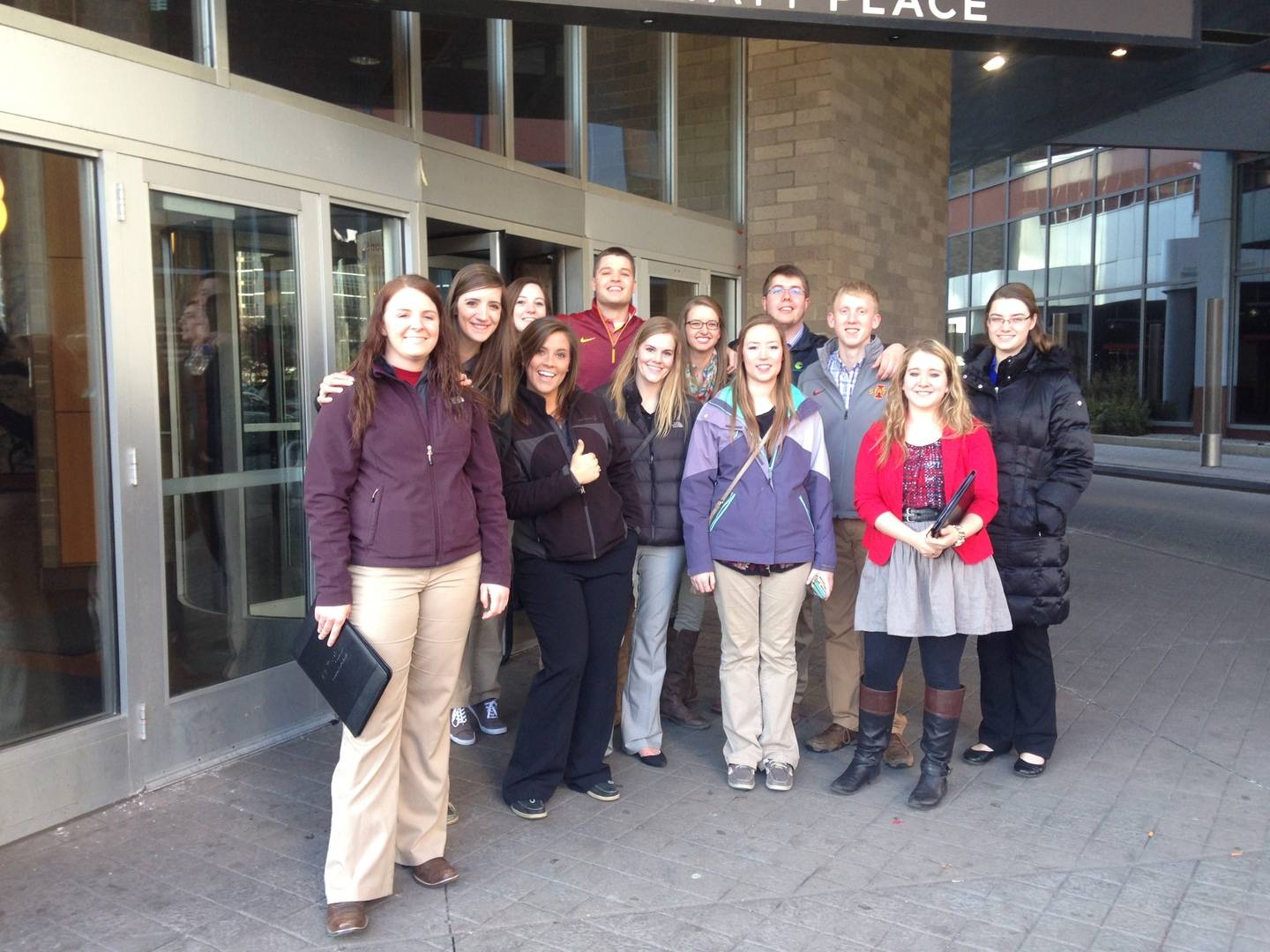


    Next up was a General Mills Inc. tour and presentation. A former ISU NAMA member hosted us at General Mills, which was great! He kept the conservation relatable and light hearted. Plus he’s a Marketing Associate for the baking division, so we got to take home some baking treats. J I was amazed by the General Mills facility, as every floor was a different division: baking, cereal, yogurt, etc. We also toured General Mills’ in-house kitchen spaces for testing and photography.

    Friday kicked off with a visit to Martin Williams Advertising in Minneapolis. There was a panel of about six employees from different departments. It was interesting to see how an agency runs, as well as experience the creative thinking environment! We connected with the Martin Williams Adverting agency through a member of the ISU NAMA, which confirms the importance of networking.

    Our last stop was a USBank Stadium Marketing tour. Our tour guide worked with SMG, a worldwide entertainment and convention management business. I was amazed by the infrastructure of the new USBank Stadium; I had never seen anything like it! Secondly, it was intriguing to hear about SMG’s role in managing events and marketing the space.

    As a senior in college, this trip to Minneapolis was a fulfilling experience because of the applicable advice I received from all business professionals. I am looking forward my full-time position with Latham Hi‑Tech Seeds and being on the other end of the table!

    IMG_3465-2

    Webspec Admin

    March 3, 2016
    Agriculture, General, Industry News
  • Latham Hi‑Tech Seeds

    Young Farmer Asks Iowa Senate to Do the Right Thing for Iowans

    12717840 10103085990447370 2154128766628821779 n

    As farmers, we hear over and over how important it is to be involved in the political process, talk to legislators and tell our story. Finding the time to commit to that effort is the hard part with livestock, day jobs and families to care for. If you own a business, farm, or teach in the classroom the time has come for you to join in the conversation!

    At the close of December 2015, small business owners and farmers across the nation breathed a sigh of relief as the federal government passed a bill to permanently provide for Section 179 small business expensing and Bonus Depreciation. We now had certainty in two key planning tools for making capital improvements to our businesses. Step two of the process when the feds finish their work, is to wait for Iowa to follow suit and “couple” those tax provisions into the Iowa code.

    What nobody saw coming was our state leader, a long-time supporter of small business and agriculture, recommending that Iowa leave these essential tools out of the Iowa code for 2015 taxes. (Yes- 2015. The fiscal year that’s already passed!) That means a year of consistently monitoring financials, carefully planning purchases and doing all we could to keep our business in the black on a down year was for naught. I felt like the rug had been pulled right out from under me. A bit dramatic? Here’s why it matters to me this year in particular:

    In 2014 we suffered a fire on the farm. Our grain dryer went up in flames totaling the entire unit. We waited months for the insurance company to make their evaluation and deem the fire an accident. Meaning our purchase for this critical piece of equipment had to fall in the 2015 crop year whether it was a good year to purchase it or not. (If you haven’t been following ag economy lately- the answer is NOT!) Our purchase and rebuild of our grain dryer is done, but now we must figure out how to come up with funds to cover an extra $60,000 in tax liability. Yes, with the exclusion of this tax code, the governor just asked us to write a check to the state of Iowa for just over that amount. This means we either take out a loan to pay Iowa, OR sell stored grain at an extremely depressed price just to cover this bill. Neither of which we had planned to do at this point in 2016! (Did I mention we just rebuilt the dryer that prepares our grain to be stored until we ARE ready to sell it?)

    So why am I asking my Senator to help? Let’s first rewind to January 28th.  The House of Representatives Ways and Means Committee put together a proposal to get Section 179 expensing back into Iowa’s Tax Code- House File 2092. On January 28th the Iowa House of Representatives passed the plan with overwhelming BI-PARTISON vote of 82-14. This bill is important to Iowa Farmers, but also includes provisions of support to other groups including:

    • Deductions up to $250 for out-of-pocket expenses for teachers
    • Tuition and Fees deductions for high education expenses
    • Nontaxable IRA transfers to eligible charities

    Laura Cunningham Farmer Nora Springs IowaLast week I was asked to take part in a press conference to share my story about how Section 179 affects my small (farm) business. On the panel alongside me was a CPA, owner of a few Des Moines based fitness franchises and a teacher. During that press conference, several key points were brought up:

    • The house bill only extends these provisions to January 1, 2017. Responsible business owners plan their finances (including fulfilling tax liabilities) at the beginning of each new year. If our state leadership believes decoupling is a critical part of maintaining a balanced budget, compromise on the year Iowan’s were already planning on and make your decision NOW for 2017 so we have a chance to put proper plans in place. Don’t pull the rug out on a year that’s already come to a close!
    • This code is important for SMALL business. It’s easy to assume that tax codes only benefit huge farmers and big business. Research shows that those business owners and teachers utilizing Section 179 fall in lower tax brackets (lower net income levels). The very groups that these codes were created to help are the same that will be hurt the most if our Senate doesn’t move on this legislation.
    • The governor is now on board! The same day as the press conference, our own Governor who first proposed a budget without coupling, voiced his favor for the House Bill. This combined with his willingness to delay the March 1 filing deadline shows all hands on board for Coupling, just waiting for our Senate’s answer.

    Education, Small Business and Agriculture are some of the most important assets we have in rural Iowa communities. This is legislation that affects 177,000+ people. Senators, the ball is in your court. We’re asking you, please to do what’s Right for rural Iowa and move on House File 2092!

    Gary Geske

    March 1, 2016
    Agriculture, General, Industry News
  • Latham Hi‑Tech Seeds

    Collaboration, not a Courtroom will Ensure Clean Water for Iowa

    Creek now1

    Yesterday I drove from North Central Iowa to southern Illinois where I’m overseeing a major remodel of a sow farm. As I drove, I couldn’t help but think about the calendar changing to March, which brings the countdown to spring and of course, a new planting season.

    I took notice of farm fields as they passed by, fresh field tile being installed, spring tillage beginning as farmers ready their seed beds for new seed. I am always intrigued by the different methods of conservation in place as the landscape changes from our prairie pothole region of North Central Iowa to the rolling hills and river bluffs of Eastern Iowa and Illinois.

    I could also see riverbeds in need of attention after a winter season of freezing, melting and erosion had taken its toll. Is it livestock or tillage causing this erosion? No. The same erosion cycles can be found on the grounds of the Des Moines Water Works facilities in Des Moines. It’s none other than the power of Mother Nature herself. Water has incredible power. After all, it created the Grand Canyon over time! Water itself can dissolve rock and mineral.

    Water quality is no new concern for Iowans and farmers alike. But recent headline news stories in our state make it seem as though farming practices have altered in recent years causing more nutrients are ending up in our water system. When in reality, the converse is true.

    Spokespeople involved in the Des Moines Water Works lawsuit believe a permitting process is the way to regulate nutrient runoff into water, but what they’re failing to take into account is the very nature in which Iowa soil and nitrogen co-exist. Soils here in Iowa are naturally nitrogen-rich. Snow melt and large rain events cause water-soluable nitrates to move throughout the soil and collect in our water. Studies conducted by the Clean Water Alliance help support the fact that this natural process is a primary contributor to our water quality issues and it’s simply a function of Mother Nature!

    The research shows:

    • Corn acreage increased from 1994-2014, which meant the need for fertilizers to grow these acres increased.
    • No correlation was shown between this increased fertilizer use and the amount of nitrate in the Raccoon River.
    • Study supported that nutrient levels were best during the drought of 2012
    • Also showed that nutrient levels were worse during the wet Spring of 2013 (I remember this one, over 30 inches of rain fell on my farm that month!)

    The Des Moines Waterworks discharges their nitrate waste from the water treatment plant back into the river from a point source. They hold a permit to do so and it’s easy to measure compliance. Drainage districts collect water from miles and miles of farm fields. Nitrates that end up in these drainage districts are a function of Mother Nature moving them. So if farmers must comply with a permit, do regulators have a way of turning off the rain?

    A headline I read a couple months back said it best “Farmers are cooperating even when nature isn’t.” Billions of dollars have been spent on conservation research, and billions more will be spent. Ag technology is moving fast: saturated buffers, cover crops, wetlands, no-till, seed technologies… new ways are being dreamed up every day to combat water!

    We are blessed with an abundance of innovation in agriculture than allows us to continually produce more food, fiber and fuel with less resources. Farmers have done this job so well that food is just expected to be abundant, readily available, and cheap! It’s the disconnect between food production on the farm and food preparation in the kitchen that causes confusion. Have questions about water quality or what farmers do or could do to care for our environment? Talk with a farmer! It’s collaboration that will ensure clean water for the future of Iowa, not a courtroom.

    Larry Sailer, Musings of a Pig Farmer

    March 1, 2016
    Agriculture, General, Industry News
  • Latham Hi‑Tech Seeds

    Food Labels Imply Danger, Not Nutrition or Health

    Screen Shot 2016 02 23 at 8.54.20 AM

    Many Americans cannot even describe a GMO, or genetically modified organism, yet a vocal minority wants them banned. Last week GMO Free USA singled out four female members of the Senate Agricultural Committee, urging them “as mothers” to stop any legislation that would pre-empt Vermont’s mandatory labeling law. Fear is pre-empting common sense and science!

    Now Congress is once again considering GMO labeling.Screen Shot 2016-02-23 at 8.54.20 AM I’d like to help our elected officials get the facts…
    As a farmer, I’m very familiar with genetics. My farming career has spanned more than 40 years, so I have seen how the genetics of my crops and livestock have continually improved. When I was growing up in the 1950s and 60s, we were constantly battling insects and weeds in our crops. We used pesticides that were tremendously helpful but not environmentally friendly.

    New seed technology and plant genetics allow farmers to use safer pesticides at greatly reduced rates. I use much less fertilizer per pound of grain raised today as compared to when I started farming on my own in the 1970s. We now measure our pesticides in ounces instead of gallons. I also use much less water and energy to raise a crop, so production agriculture today makes fewer demands on our environment.

    The livestock I raise have been feed GMO feed for 20+ years, and my pigs have made spectacular improvements in how they grow! If there was a problem with GMOs, it would surely been evident in my operation. We eat the meat we produce because I know that GMOs are extremely safe! In fact, there has not been one illness or death anywhere attributed to GMOs!

    Labels are to warn us of a danger, or the nutrition in our food. I personally would like to see a ban on all food labels, which have really turned into a marketing ploy. (Have you seen Dirck Steimel’s recent article about consumers’ food confusion? Consumers are seeking foods labeled with the word “natural,” even though it’s one of the most ambiguous food marketing terms. Now the U.S. Food and Drug Administration (FDA) is reportedly pondering whether to define the word “natural” as it applies to food.)

    If we must label foods – and it sounds like Congress must act to prevent a patchwork of state food labeling laws from being enacted this year – then I say “Yes” to science-based standards and “No” to anti-GMO. Studies have shown that state GMO food and seed labeling laws, like the one that would go into effect this July in Vermont, will cost American families hundreds of dollars more in groceries each year. Without bioengineered crops, the price of food would be 5 to 10% higher than it is now. (Click here to read a recent Forbes article, detailing the real cost of eliminating GMOS.)

    U.S. Senate Agriculture Chairman Pat Roberts has introduced a Screen Shot 2016-02-23 at 12.35.43 PMcommonsense food-labeling proposal that will bring consistency and transparency to the marketplace. Food labels affect both farmers and consumers, so I urge you to take action today! Please contact your elected representatives in support of Senator Roberts’ proposal that would preempt state GMO food and seed labeling efforts and require USDA to set a standard for voluntary on-package disclosure.

    Do you enjoy eating nutritious, affordable food? Then I strongly urge you to take action to enact a fair and reasonable standard for GMO labeling! American farmers and consumers need Congress to bring transparency and consistency to the marketplace while protecting consumers’ food choice.

    Related Articles:

    • Iowa State Students Go Bananas Over Research
    • Scientist Answers Students’ Questions about Banana Research
    • $5.1 Billion in Economic Benefit for Farmers in India from Bt Cotton… It’s Time We Gave Science Its Fair Due

    Larry Sailer, Musings of a Pig Farmer

    February 23, 2016
    Agriculture, General, Industry News
  • Latham Hi‑Tech Seeds

    Faith is Alive in the Green Hills of California

    Photo 1 4wheeler

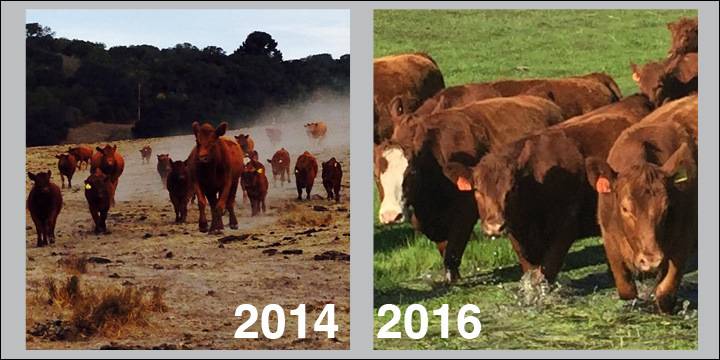
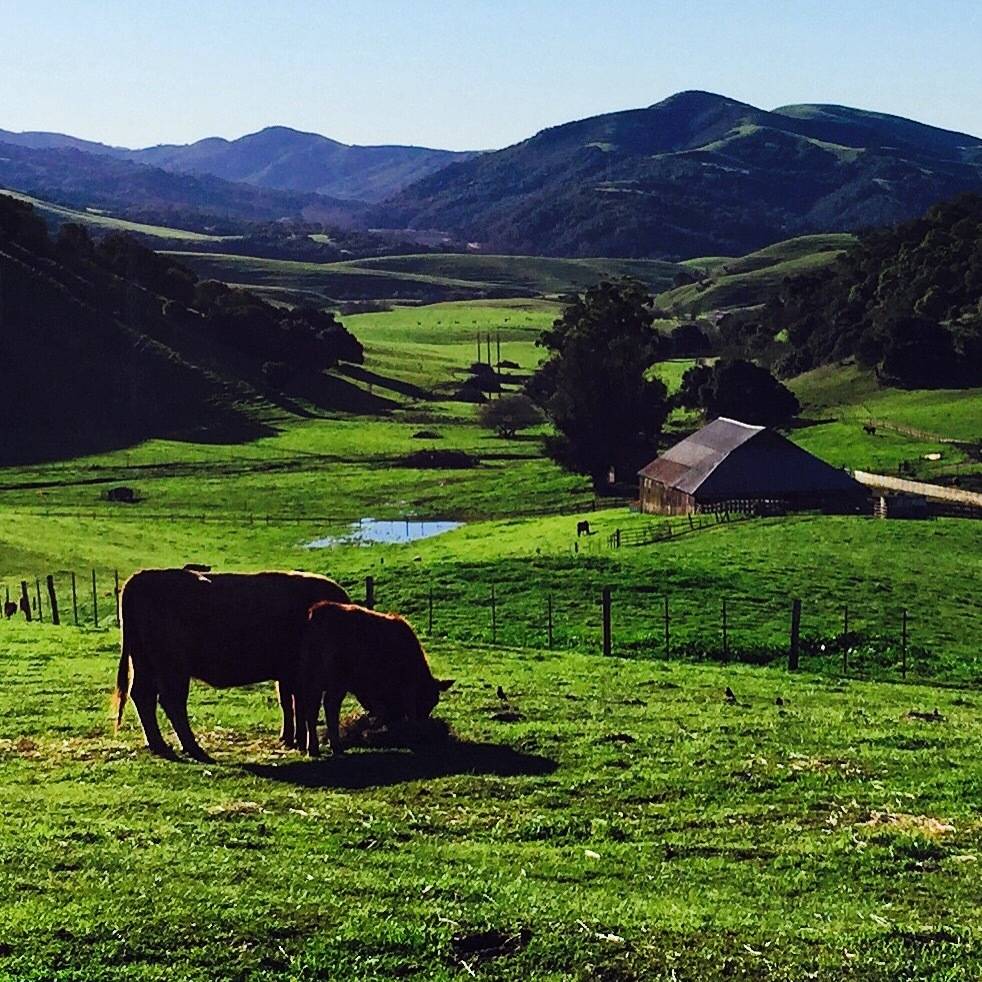
    Drought ComparedThe lush, green hills where Red Angus cows and calves graze today in the Salinas Valley is a stark contrast to the picture here at the height of the California megadrought. Zero rain fell in January 2014, making it the driest in 135 years of recordkeeping. January is typically California’s wettest month of the year, and about eight inches fell in Salina last month.

    “Each day I truly feel blessed that we have gotten moisture,” says Celeste Settrini, a fourth generation rancher who raises cattle with her brother, John. “We’re far from out of the woods in our drought situation, but it’s such a comfort knowing there is water in our ponds and green grass growing. If rains continue to come, then we will be in decent shape for the year ahead.”

    There’s nothing like scarcity to make a person appreciate what they have. Two years ago rain was so scarce that Celeste asked friends to join her for a day of reflection, prayer and fasting during a virtual event called “Havesting Faith.” Farmers, ranchers and non-farming friends from across the nation came together to pray for rain in California.

    photo 3, hills“I truly could not believe the response from the Harvesting Faith event!” says Celeste. “Hundreds upon hundreds of people ‘liked’ our event on Facebook. We all came together to share stories and to pray for relief. I was on radio segments. There were stories written about it – this event was bigger than anything I ever imagined. It made me feel so good that farmers and ranchers from across America came together to pray for relief.”

    Prayers were answered shortly thereafter. Celeste remembers being on a walk when dark clouds formed. “It looked really stormy and I thought, ‘Wow. I think God is listening to all of us,” she said. “It rained that day, although not a lot. It gave me the hope needed to realize that, yes, prayers are answered. God will take care of us in His time, so we must remain patient and hopeful.”

    Through the “Harvesting Faith” event, people from all walks of life focused on the bigger picture. Many times those of us in agriculture get crossways over different production methods or are worn down by others who don’t farm but want to influence the way we do.photo 2, cows

    “We are all a part of a very large family of wonderful people,” says Celeste. “I personally believe there are no better people on the planet than farmers and ranchers. We need to reach out and ask for help when we need it, not be afraid to share our thoughts with our off-farm friends, stand up for what we do and celebrate the good of American Agriculture. No matter what method you use to produce food for this growing nation YOU are an important part of that, big or small. Take pride in that and realize that you are a part of the bigger picture.”

    Celeste and her brother, John, have worked side-by-side daily since 2013 when a series of life events prompted her to leave a 20-year career as an ag commodities broker. They share day-to-day responsibilities for everything from feeding and working cattle to fixing fence and selecting breeding stock.

    “We’re always together. Where one is strong, the other assists and vice versus. As the ‘chatter box’ of the family, I enjoy being involved in cattlemen’s groups and anything pertaining to promoting or preserving our way of life,” says Celeste.

    Promoting agriculture and the people engaged in this industry is so much of a passion for Celeste that she started CS Connections. This boutique agency serves clients in the rodeo, stock show and agricultural industries. Services include social media management, website creation, as well as collateral and print ad design.

    A typical day for Celeste means waking up at 5 am and photo 1, 4wheelerfiring up her laptop. After answering emails and updating social media for about two hours, she leaves the home ranch and travels about 10 minutes away to the hills where she will either feed or take stock of the cattle.

    These days Celeste is riding through the fields, checking on mamas and their babies, She also keeps her eyes open for troughs or fences that must be mended. Around noon, she returns home and settles into her office where she resumes work for CS Connections.

    “A series of events led me to start my promotions business and run cattle. This is exactly where I want to be!” says Celeste. “It took a while to get here, so my advice to others is, ‘Don’t ever give up!’ Keep following your bliss.”

    Team Latham

    February 22, 2016
    Agriculture, General, Industry News
Previous Page
1 … 19 20 21 22 23 … 85
Next Page

Latham Hi‑Tech Seeds

131 180th Street | Alexander, IA 50420

(641) 692-3258

SIGNUP FOR OUR NEWSLETTER
  • Contact
  • Legal
  • Dealer Center
  • Seedware Login
  • Latham Gear

© 2025 Latham Hi‑Tech Seeds. All rights reserved. | Iowa Web Design by Webspec | Privacy Policy

Latham® Hi-Tech Seeds is a trademark of M.S. Technologies, L.L.C., 103 Avenue D, West Point, IA 52656.