Latham Hi-Tech Seeds

(641) 692-3258

  • Home
  • Products
    • Corn
    • Soybeans
    • Alfalfa
    • Corn Silage
    • Seed Guide
  • Performance
  • Find a Rep
  • Media
    • Blog
    • News
    • Videos
    • Podcasts
    • TECHTalk
  • About Us
    • Company History
    • Our Mission
    • Careers
    • Become a Rep
    • Sowing Seeds of Hope
  • Contact Us
  • Latham Hi‑Tech Seeds

    Livestock Producers Demonstrate Effectiveness of Quarantine

    October is coming to an end, and I must talk about pork before it’s over!

    The last few weeks I have written how my mother-in-law’s 90th birthday celebration gave us a reason to look through old family albums and reflect upon the good old days. The Iowa DNR (Department of Natural Resources) recently released an historical aerial map photo project, dating to the 1930s.

    As I looked through these maps of old farmsteads, I noticed a difference in buildings. What an amazing look through history of farming! The buildings, like our equipment, have completely changed. We have gone from hand labor cleaning the barns to mechanization, from pitch fork to pumps to for manure removal. I can see how this natural fertilizer was applied to the fields by looking at these maps.

    In the past, manure was moved with horses so it most often got applied close to the building site. The soil tests taken when I started farming in the early 1970s proved this as the fertility around the buildings was sky high; the fields farthest away from the building site were very low in fertility. The manure was valued but not scientifically applied.

    Today’s pork producers understand the value in applying this natural fertilizer where it’s needed. Producers keep records of manure application, such as the method (injection, incorporation, etc.), date of application, field location, number of acres, and application rate.

    Just as we’ve developed more scientific ways of applying natural fertilizer and modern equipment technology now allows us to inject or incorporate the manure right into the soil, today’s pig farmers also have made great strides in controlling disease outbreaks.

    In the late 1980s, I was on the Iowa Pork board as chairman of the Feeder Pig Committee. It was decided that the pork industry would eradicate pseudorabies. Pseudorabies is an extremely contagious disease that causes reproductive problems, including spontaneous abortion, stillbirths and death losses in breeding and finishing hogs. While the disease is not a threat to humans and the meat from infected animals is not contaminated, pseudorabies can wipe out a herd. The financial impact from pseudorabies was huge for farmers, as well as for the state.

    Pork production generates billions of dollars annually for Iowa’s economy. Iowa pork producers raise more than 17 million pigs, or 28% of the nation’s pork supply. It goes without saying that eradicating pseudorabies was a huge undertaking!

    Veterinarians developed an eradication plan that was put into action. Because some areas of Iowa’s pork production were completely shut down, it was devastating to many pork producers. Feeder pig shows were especially hit hard, but it worked! A press conference was held in July 2004, declaring our state free of pseudorabies.

    Today Ebola is making the headline news. We know quarantines can be effective in stopping the spread of this disease, they cause hardships for medical professionals. In fact, some medical professionals might even avoid volunteering to help fight Ebola due to the quarantine.

    While it may not be fun or convenient, being quarantined for 21 days is an extremely small price to pay when you think about it! Livestock production has proved time and again that quarantine is an effective way of stopping the spread of deadly disease.

    Stopping the spread of Ebola is certainly a concern, and we don’t want it to become an epidemic. However, there are so many other problems this world: starvation, political unrest, terrorism, the right to life… Is anyone making a list and trying to put things in order of importance?

    Next week’s election is a good place to start showing your priorities! Then after the election, let’s keep the official’s feet to the fire. Talk to your elected officials at all levels, and let them know what you expect. Then remember to keep talking to them because bills get passed and regulations get made all year long.
    Larry Sailer, Musings of a Pig Farmer

    October 28, 2014
    Agriculture, General, Industry News
  • Latham Hi‑Tech Seeds

    Runners Power Up with Pork

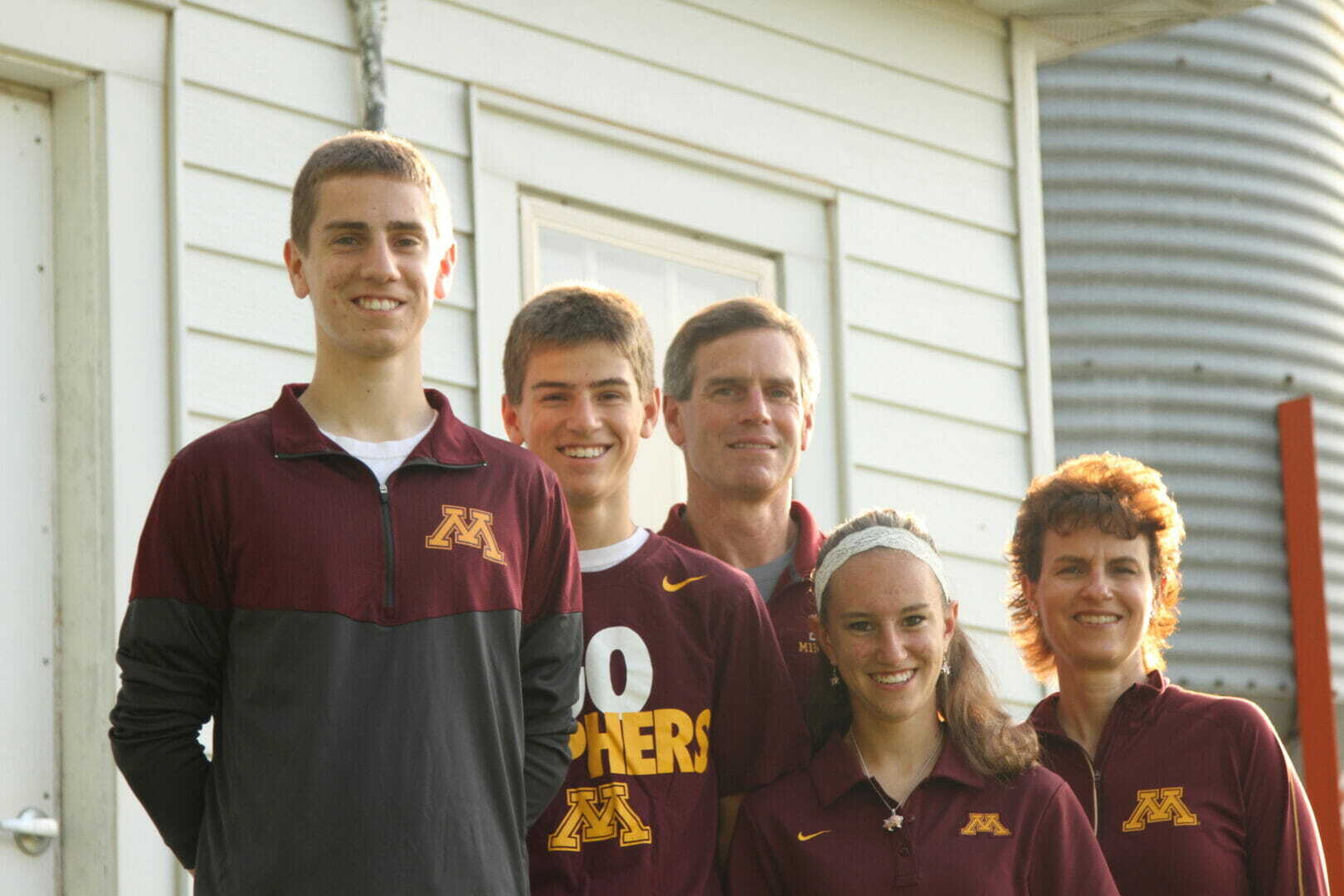
    Stevermer family

    Dale and Lori Stevermer along with their children raise corn, seed soybeans and also farrow-to-finish 150 sows on their third generation farm near Easton, Minnesota. Dale returned to the farm in 1988, and Lori joined him after they were married in 1990.

    Stevermer_family

    Through the years, they Stevermers have diversified their farm by selling pork to premium markets. They raise pigs for Compart Family Farms’ Premium Duroc Pork market, using specific genetic, nutrition and health programs to produce meat that is sold to white tablecloth restaurants across the nation.

    In addition to their farm, Dale and Lori are active in their local community and within the agriculture industry. They both have served on the Minnesota Pork Producers Association Board of Directors; Dale served as president in 2005 and Lori is finishing her first-term as president. On a local level, they have chaired church and school fundraisers plus served on the county 4-H Youth Council. Dale currently chairs the church Finance Council and is a member of the United South Central School Board. Lori’s job as Marketing Specialist for Hubbard Feeds keeps her involved in numerous projects.

    Dale and Lori have a real passion and drive to talk to consumers about what they do on their family farm. Four years ago the Minnesota Pork Board held its first Oink Outing, which involved going to Farmers Markets and town festivals to answer people’s questions about raising pigs. They also talk about their farm on social media (#RealPigFarming) and through Pig 3D, a program sponsored by the Minnesota Pork Board and the Minnesota Pork Producers Association that makes a direct connection between consumers and pig farmers.

    “We’ve been involved since the start and have had great conversations with people who want to know how their food is raised,” said Dale.

    They are also a part of the Minnesota Pork Power team that has participated with pork samples, running and a booth at the Health Expo’s for both Grandma’s Marathon and the Boston Marathon. “We combine our love for running with our love of pork as a lean, healthy protein and share that message with others,” said Dale.

    Dale loves being involved in the constant change that surrounds pig farming. “I enjoy working with nature, seeing new life, using new technologies and incorporating new technology with older techniques to improve animals and their environment along with my own work experience,” said Dale. “As a farmer, I appreciate the flexibility in my job. I enjoy being outside and having the freedom to set my hours – to an extent.”

    Even though October is National Pork Month, Dale and his family celebrate it every month, especially on the days they sell pigs! The last few years Minnesota Pork has sponsored the 5K “Pork Power Run” during the weekend of the Mankato Marathon. Dale and Lori help hand out pork samples and run the 5K. He says, “How can a pig farmer not participate in the “Pork Power” 5K?!”

    You can follow Dale on Twitter @tefguy and Lori at @tefgal. If you’d like to follow more pig farmers, look for #RealPigFarming on your favorite social channel!

    Team Latham

    October 24, 2014
    General, Pork, Recipes
  • Latham Hi‑Tech Seeds

    How to Interpret Yield Data

    This fall Latham Hi‑Tech Seeds has done very well in the F.I.R.S.T. trials all over the Midwest, winning many locations and Regional Performance Summaries. With such great data, it’s no wonder that farmers want to call in and order the winners. If we’re doing our job, however, we may not let you!

    Why wouldn’t we let farmers order what they want without asking any questions? The answer is simple: Just because a product placed first in a yield trial in one location, in one year, across one predominant soil type, doesn’t guarantee it will be the yield winner given another farm and a different management style.

    When study yield results from independent yield trials, be sure to analyze the information. Here are some tips for interpreting yield data:

      • Compare to a check strip that helps you check for variability across the field. Look to see if a particular product is yielding exceptionally well or exceptionally low as compared to the plot average. How has this same product been performing across multiple locations?
      • Is there a disease that has been prevalent this year, like Sudden Death Syndrome (SDS), that you know is affecting that particular product?
      • How variable was the rainfall in that area this year? What were planting and growing conditions?

    To help you select the right seed for your given situation, we’ll ask discovery questions first to determine needs like fighting weed resistance or corn rootworm. We’ll also visit with you about our hallmark Seed-2-Soil program for crop planning and/or nutrient management to help support your product selection.

    Don’t get me wrong… Latham Hi‑Tech Seeds is thrilled with how well we’ve performed this season in third party, unbiased, independent yield trials! It is great that we can win yield trials but winning on the farm is what really counts. We want to combine our yield data – with your own farm data – to help ensure you get the best products for your acres.

    Webspec Admin

    October 23, 2014
    Corn, Crop, Fall, General, Season, Soybeans
  • Latham Hi‑Tech Seeds

    Revisit the Past, Gain Appreciation for the Present

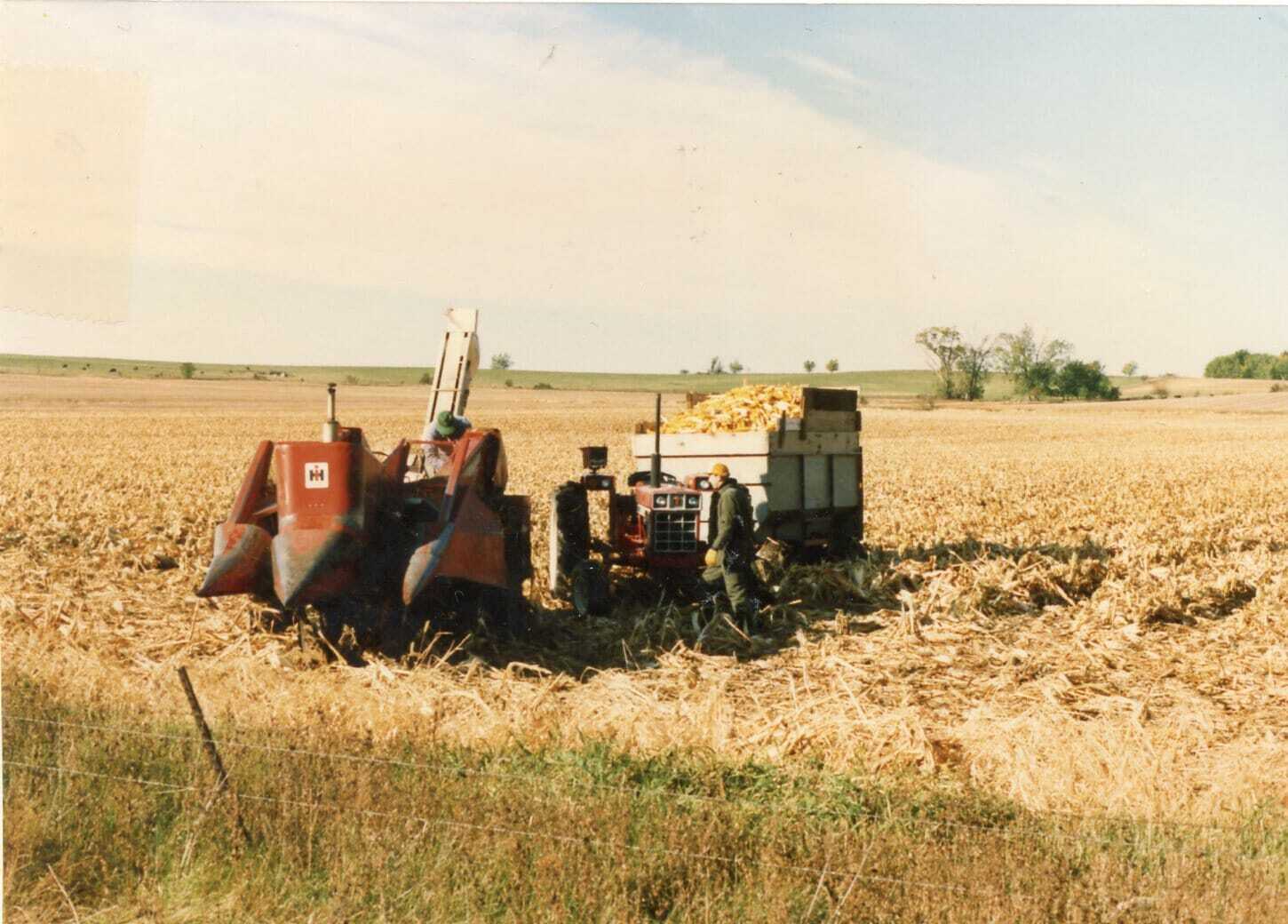
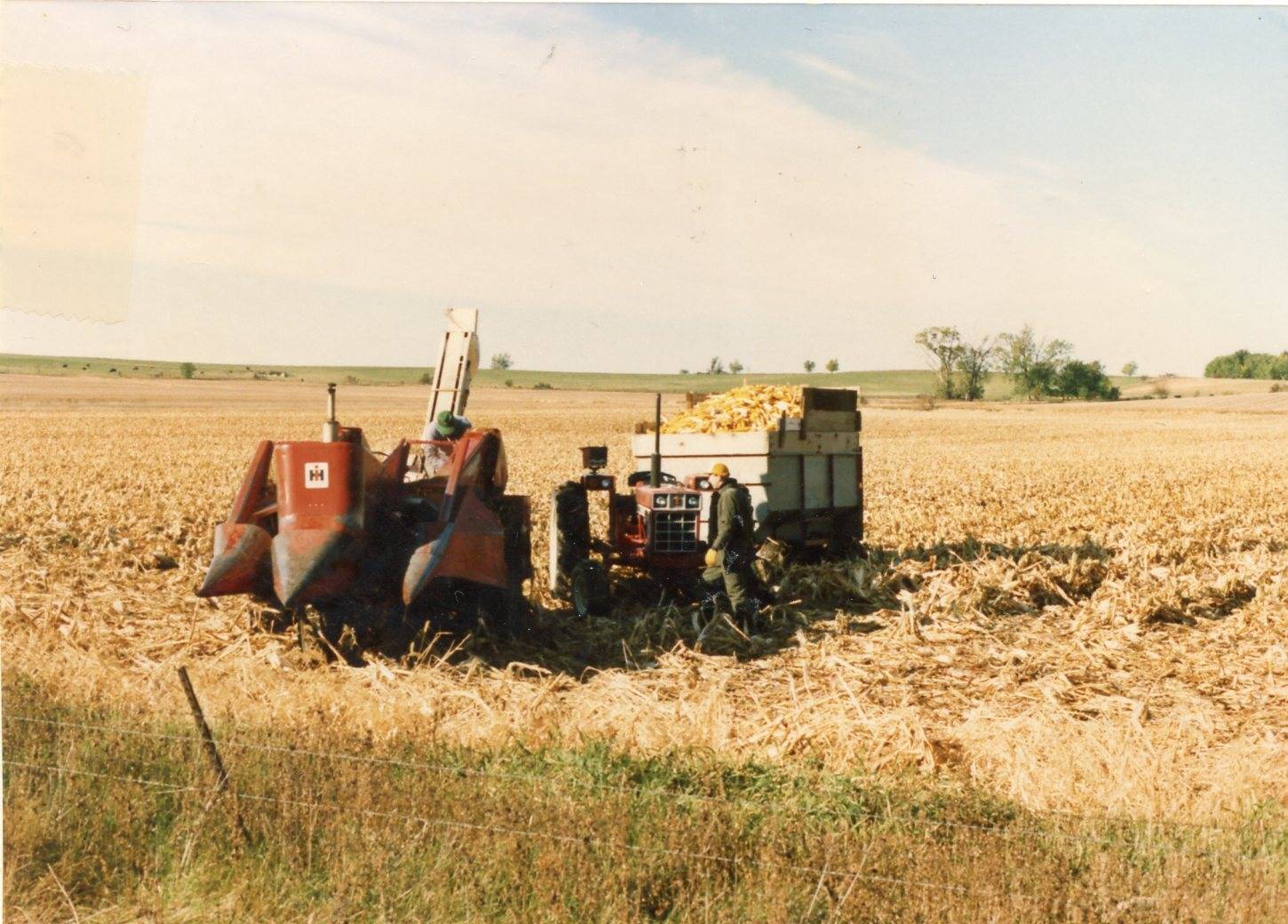
    LarryS PickingCorn Old

    This past week we celebrated my mother-in-law’s 90th birthday! My wife, Janice, conducted research and gathered photos to make a 22-minute video that showcased her parents’ lives – as well as told the story of farming – during the past nine decades.

    Honestly, many of those photos from the family album showed the hardships of farm life. Just imagine farming before tractors and electricity! Yet, year after year the Rewerts family kept farming. You can see how everyone in the family pitched in: planting crops, taking care of those crops including pulling weeds by hand, picking ears of corn, storing those ears until they were dry and then shelling corn in July. I remember those hot, dusty days! I also remember cold, winter days when we had to go outside to do chores in snow so deep that it almost went over the barn!

    It was fun to journey down Memory Lane. After looking at photos of those old cars and trucks, I’m truly amazed at how those old trucks got the job done. Those first vehicles didn’t have radios either. Speaking of radios, notice how big those first radios were. They took up a great deal of space in a house, so there was no way they would’ve fit in a dash. Of course, there weren’t computers, cell phones, video games or GPS systems then either.

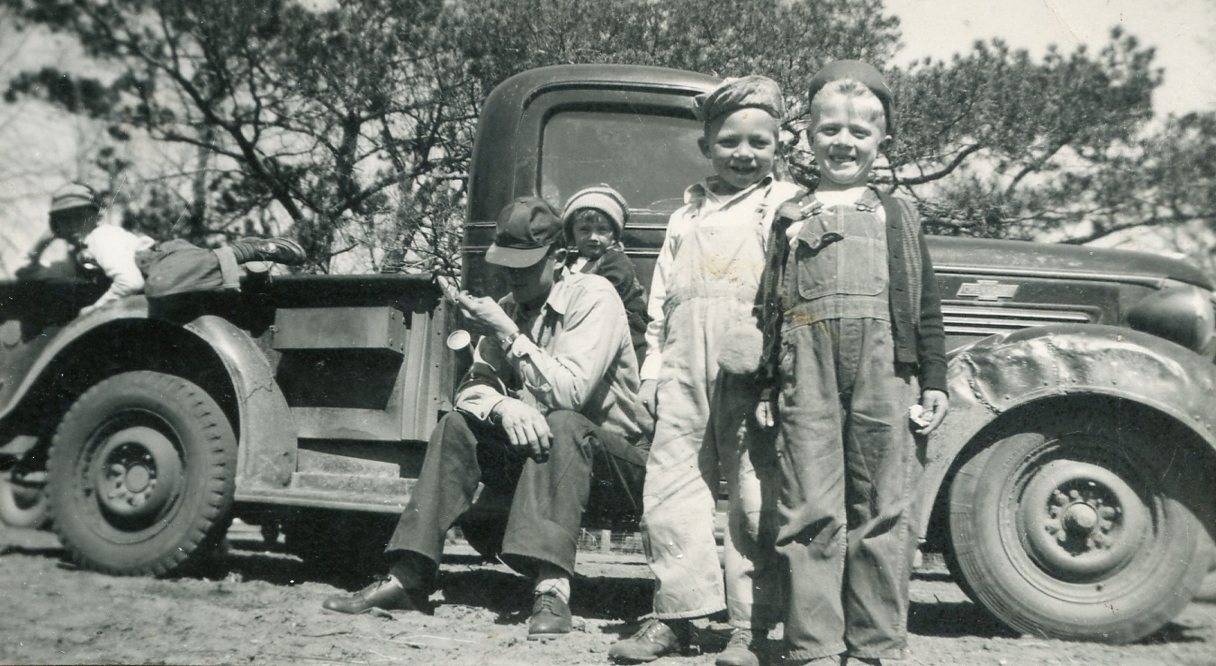
    Yesteryear’s farm truck… somehow it got the job done!
    Yesteryear’s farm truck… somehow it got the job done!

    What a contrast between those first tractors without even power steering to today’s tractors that can actually steer themselves! Combines now can harvest the same amount in minutes that was harvested in hours when my mother-in-law was young.

    Not only has farm machinery and equipment changed, but even the crops have changed. Honestly, farming has changed drastically just within the last 20-25 years due to the introduction of first Roundup Ready® soybeans and then traited corn products. Now we have corn hybrids that fight weeds and bugs on their own.

    Picking corn that would be dried in a corn crib and then ground for livestock feed
    Picking corn that would be dried in a corn crib and then ground for livestock feed

    Even the food on our tables has changed in the last 90 years. When Grandma was young, everything was made from scratch. No one worried about how many calories were consumed because it was all worked off by the enormous amounts of manual labor that was done. Today’s society is not only concerned with calories and nutritional content, but many consumers want to know how the food was produced.

    So much has changed! I’ve had a great time the last couple weeks reminiscing about the good ol’ days, but I’ll be the first to admit that I’m glad to be farming today. Earlier this fall I attended a Threshing Day where I saw them harvest the same amount of oats in three hours that could be harvested by a combine in just 10 minutes! Earlier this month I participated in the 4th Annual Franklin County Harvest Blogger’s Tour where we visited our county’s agricultural museum and then gave non-farmers rides in combines.

    My understanding of farming history helps me appreciate farming today! It’s great to be able to use today’s technology to grow my crops, raise my pigs, and even be able to communicate with all of you!

    Larry Sailer, Musings of a Pig Farmer

    October 21, 2014
    Agriculture, General, Industry News
  • Latham Hi‑Tech Seeds

    Escape the “Spiral of Silence” with a Story

    Monday2

    Guest Blog by April Hemmes,

    On Wednesday, October 15, I shut down harvest and headed to Des Moines Iowa for a 7 am breakfast. Not an everyday event for the middle of October for this farm girl! I was fortunate enough to be invited to the Council for Agricultural Science and Technology (CAST) Communication Award Ceremony.

    My good friend Annette Sweeney invited me, knowing it wasn’t going to be easy for me to get away. She lured me with a panel of discussion on GMOs after the presentation, and I couldn’t say “no” to that!

    But first I want to explain a little more about this CAST award, which is presented annually to a scientist who has shown leadership and passion for communicating agriculture technology. The recipient was Alison Van Eenennaam, an Animal Genomics and Biotechnology Cooperative Extension Specialist in the Department of Animal Science at the University of California—Davis. She has an active research and extension program but also works tirelessly and creatively to relay important information about agriculture and food production.

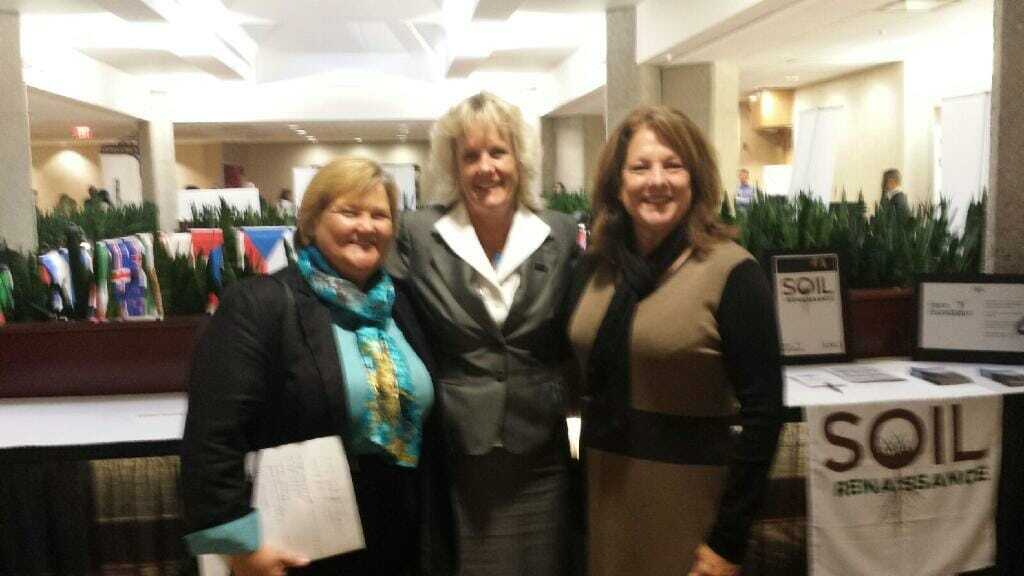
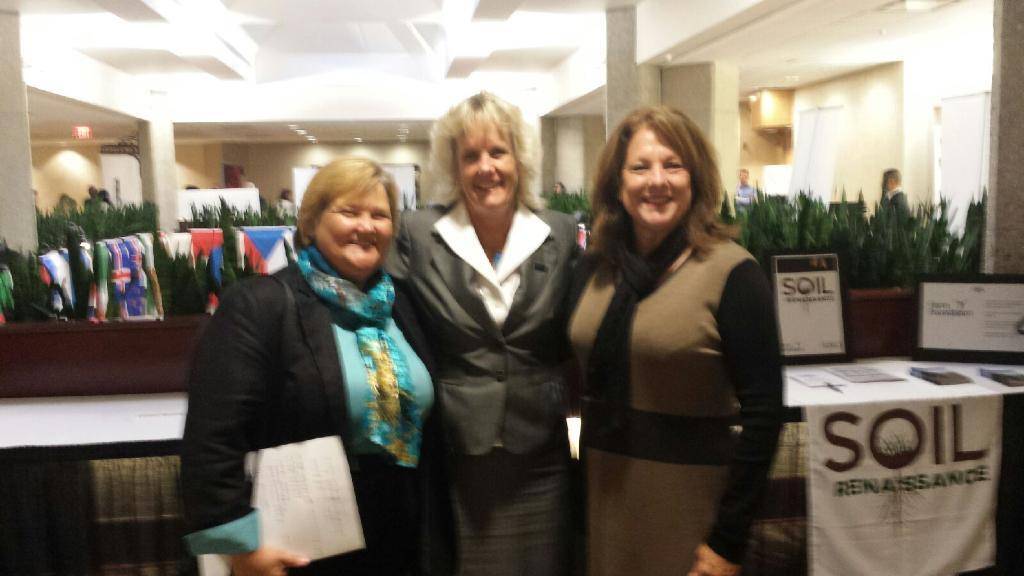
    April Hemmes (left) and Annette Sweeney (right) met with CAST Communications Award recipient Dr. Alison Van Eenennaam, an Animal Genomics and Biotechnology Cooperative Extension Specialist in the Department of Animal Science at the University of California—Davis, received. She has an active research and extension program but also works tirelessly and creatively to relay important information about agriculture and food production.
    April Hemmes (left) and Annette Sweeney (right) met with CAST Communications Award recipient Dr. Alison Van Eenennaam, an Animal Genomics and Biotechnology Cooperative Extension Specialist in the Department of Animal Science at the University of California—Davis, received. She has an active research and extension program but also works tirelessly and creatively to relay important information about agriculture and food production.

    Annette and I got to meet Dr. Van Eenennaam, and we had a great discussion about how more farm women are needed to speech publicly. More women are needed to get the truth disseminated about what farmers are doing. In Alison’s statements (since I met her, I feel like I’m on a first-name basis with her now), she pointed out that there are 16 million fewer dairy cattle than in the 1940s yet we’re producing 60% more milk! How? Mainly through genetic selection. Then she talked about the “spiral of silence,” meaning that even though someone might think GMO’s are acceptable, he or she won’t say anything due to the people who are speaking out against it.

    My favorite quote from Alison’s acceptance speech was a true story she told about her experience on Twitter. People were smack talking a peer-reviewed paper she had written, and she said, “It’s very difficult to defend a scientific paper in 140 characters or less!”

    Now about the GMO panel… This panel was part of the Borlaug Dialog at the World Food Prize. What a great group of people! The moderator was Mike Pearson, Host of Market to Market. Panelists were: Jay Byrne, president of v-Fluence Interactive, company that does research for public affairs and issue management; Julie Kenney, a farmer involved with CommonGround, a group of farm women who talk with other women (consumers) about what they do on the farm; and David Sutherland, a blogger and activist who is a Vegan but has no problems with GMO’s.

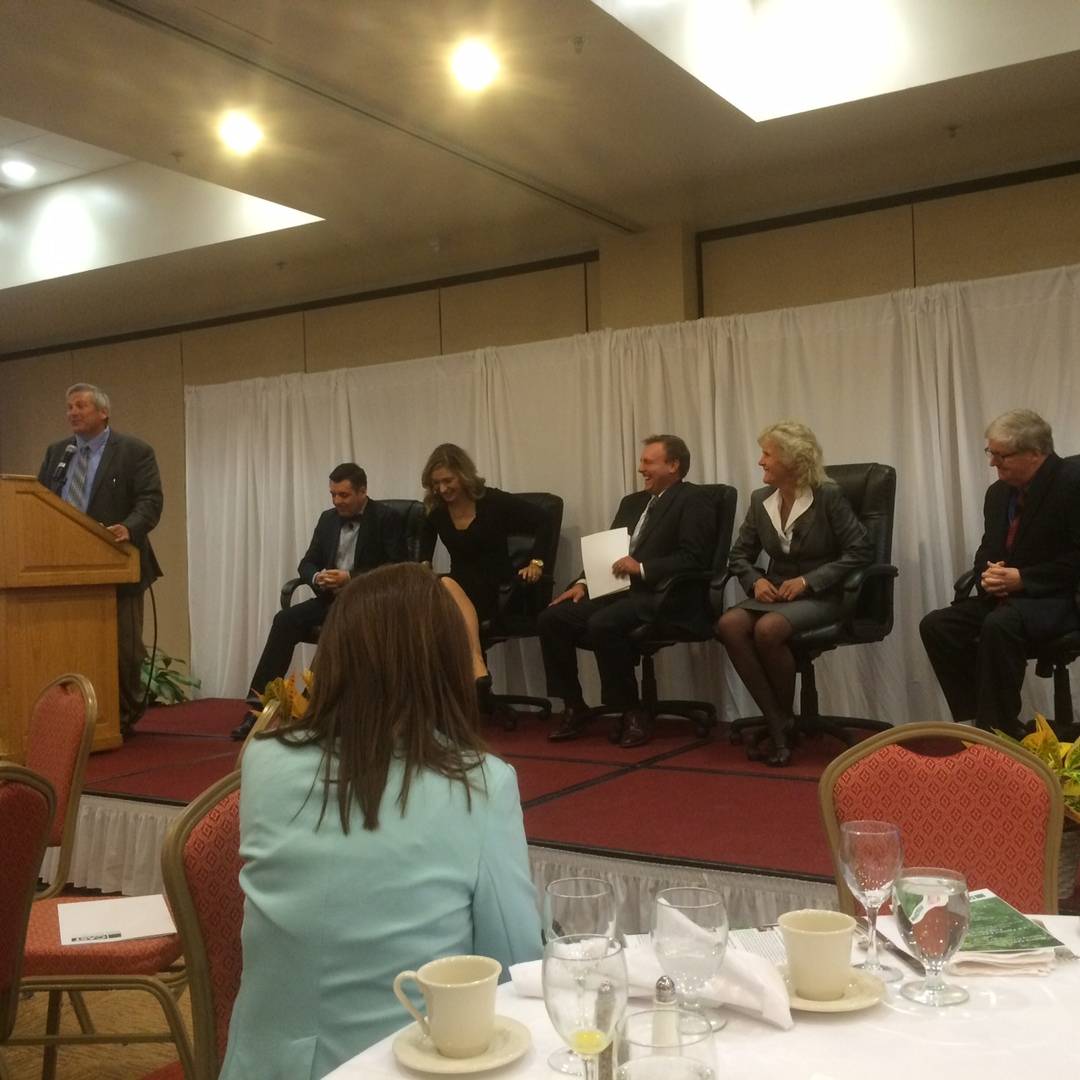
    Iowa Secretary of Agriculture Bill Northey has the honor of introducing a distinguished panel addressing GMOs and how to communicate with the public.
    Iowa Secretary of Agriculture Bill Northey has the honor of introducing a distinguished panel addressing GMOs and how to communicate with the public.

    This panel discussion provided some great tips on how to best communicate with the public about GMOs. First of all, we must realize that the Anti-GMO people are “story tellers.” While they have no facts to back up what they say, they are very well funded. They use those funds to spew untruths about those of us who farm or whose jobs are related to agriculture. We have “real jobs,” need to make a living plus defend what we do!

    So what do consumers want to hear? Honestly, those involved with farming are proud to help feed the world. Consumers don’t care! They also don’t care that the science is sound and safe. Consumers just want to know that there isn’t going to be a problem with eating food. Basically the take away is something that I have heard over and over: “We must keep telling our family’s farming story, so the truth gets made public.”

    Team Latham

    October 20, 2014
    Agriculture, General, Industry News
  • Latham Hi‑Tech Seeds

    Celebrate October with Apple-Pecan Pork Tenderloin

    BradandPeggy

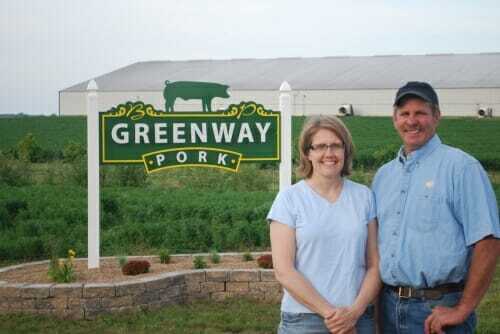
    BradandPeggyBrad and Peggy Greenway from Mitchell, South Dakota, believe it is important to share their family farm story with others.

    They both actively talk about how their family farm has changed over the years to provide better care for their pigs. And while they go about it in different ways – Peggy using social media (#RealPigFarming) and Brad speaking in front of numerous groups – their goal is the same: to continue to tell the real story about their family farm.

    Peggy enjoys using social media, most often Facebook, Twitter and Instagram, to share pictures and information about things that are happening on their farm throughout the year. “Sometimes I share fun photos, but many times I like to explain things, like how we take care of our livestock and land,” said Peggy.

    Social media allows Peggy to share with others the many things that happen on the Greenway’s farm every day. From taking care of newly weaned pigs as they come into their barns, vaccinating pigs to prevent diseases, to explaining how they work with a swine nutritionist to make sure their pigs are getting proper nutrition, Peggy shares it all.

    Brad, on the other hand, shares their family farm story by speaking to organizations across South Dakota and the nation. He became involved with the Pork Checkoff’s Operation Main Street program in 2004. The program provides public speaking training and coordinates speaking engagements in each participant’s local area and home state.

    Locally, Brad has spoken to over 100 groups including civic groups, dietetic and food service associations, county commissioners, zoning boards, and high school careers classes. Nationally, Brad has given pig farming presentations to major grocery retailers and packers and processors. He has also participated in some events where high profile food writers and bloggers were in attendance.

    “As someone who has terrible stage fright, I admire Brad’s ability to remain friendly, open and honest with people, even when asked very difficult questions,” said Peggy. “He is passionate about the pork industry and has devoted hundreds of hours over the years to communicate about the exciting improvements we’ve made regard animal care, reducing the use of natural resources and of course about the nutritious and delicious pork all pig farmers provide for consumers.”

    Peggy didn’t grow up on a farm and says she had to learn everything from scratch. “We worked extremely hard when we first started farming just to be able to make ends meet. Farming is not a glamorous life. It is filled with long days, a constant battle with weather and prices, and many other variables, too numerous to mention. After 31 years of working hard and embracing changes and improvements in pig farming, I can say we are proud of our farm. Our two modern pig barns help us provide better care for our pigs than ever before. There is an overwhelming feeling of accomplishment in seeing our pigs comfortable every day of the year.”

    The Greenway’s own a wean-to-finish pig farm that markets 10,000 pigs annually. They also have 200 beef cows and raise corn, soybeans, wheat and alfalfa on their family farm in South Dakota.

    You can follow Peggy on Twitter @GreenwayPork or on Instagram @PeggyJGreenway. If you’d like to follow more pig farmers, look for #RealPigFarming on your favorite social channel!

    Team Latham

    October 17, 2014
    Desserts, General, Recipes
  • Latham Hi‑Tech Seeds

    Don’t Pinch Pennies on Potassium!

    Graph SciMax

    PeterBixelby Peter Bixel, Seed-2-Soil

    With commodity prices lower, it’s certainly prudent for farmers to rethink each input expense. Crop inputs are certainly one big investment! I’m a farmer myself, so I understand the value in evaluating investments.

    Analyzing investments is really an exercise in managing expectations. We might settle for returns of 2 to 5% on our bank savings accounts and 401K, right? We don’t want to skimp on investments that will help us in the future. So why skimp on your Phosphorus (P) & Potassium (K) fertilizer investments? After all, an investment in P & K has the potential to return 100-700%!

    Phosphorus aids in healthy root growth, as well as flower and seed production. Potassium is responsible for improving overall health and disease.

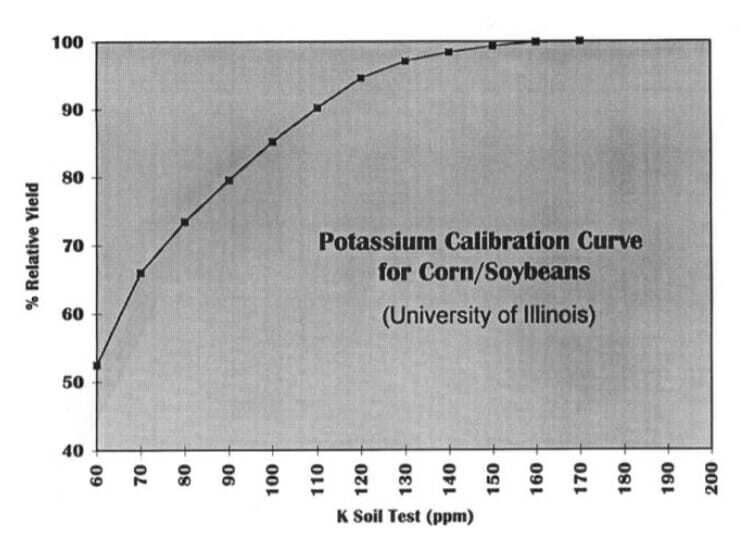
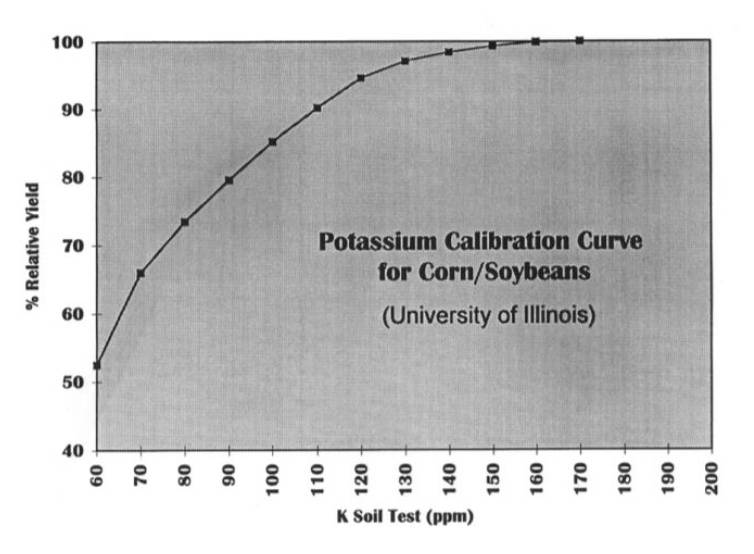
    Local data is critical for analyzing where your fertilizer dollars are best spent. Our data shows that across 400,000 acres, phosphorous values continue to be in the High category of soil test values with an average of 28ppm. This is more than likely because of manure history, fertilizer application and soil types in our area. However, potassium levels continue to be an area that needs to be addressed in order for us to not mine what we have invested in building up. Potassium levels are in the medium category with an average of 160ppm, while we are trying to reach 200ppm and higher.

    Take a look at the Potassium Calibration Curve below. With low soil test K values, your potential for high yielding crops dramatically decreases. Take your 2013 Local Data, looking at Corn on Corn Yield to Soil Test K, as soil test levels go from Low to High categories, yield increased 20bu/ac. How do these returns look to you?

    Potassium plays an important role in the utilization and uptake of Nitrogen and in turn meaning improved N use and higher yields. Higher rates of K allow for efficient use of more N, which resulted in better early vegetative growth and higher yields. K fertility is another important piece of the puzzle for high yielding crops.

    With tighter margins moving into 2015 crop year, it is important to remember to use YOUR data to help make the best investment decisions and to make sure you don’t mine your soil fertility.

    Make sure you’re not losing a dollar by trying to save a penny!

    Graph-SciMax

    Team Latham

    October 16, 2014
    Agronomics, Corn, Crop, Fertility, General
  • Latham Hi‑Tech Seeds

    Wet Weather Halts #Harvest14

    Intro 10 15

    Intro-10-15Almost 40% of Iowa’s soybean acreage was harvested during the 5 days suitable that were suitable for fieldwork last week. After we were blessed with the driest week in nearly three months, showers moved into many areas over the weekend and into this week. Between Sunday and Tuesday, one Northeast Iowa farmer reported that 4” in his rain gauge. Here in North Central Iowa, we’ve received 1.85″ inches in the past 72 hours.

    Wet weather brought #harvest14 to a halt. Corn harvest is just 10% complete, which is almost 3 weeks behind normal. Soybean harvest is just one week behind normal. The 5-day forecast for our area shows 0% chance of precipitation with breezy conditions and sunshine, so we expect harvest activity will resume soon. Click here for a harvest update by region: http://bit.ly/1mXS9RY

    Team Latham

    October 15, 2014
    Fall, General, Season
  • Latham Hi‑Tech Seeds

    National Focus on Food during World Food Prize Week

    World Food Prize

    There are many different topics I want to cover yet this month, but I’m running short on weeks!

    World Food PrizeOctober is National Pork Month, and as a pork producer, I like to do all that I can to promote the product I raise. Then there’s that nasty land grab on the ballot in New Jersey. But this week the World Food Prize is being awarded in Des Moines, so a story about food will take priority.

    “Food” has become such a broad subject, and there seems to be almost an obsession with food labels such as locally grown and organically produced. Recently, I’ve read too many articles proclaiming that small farms are the best way to feed the world.

    Say what? I’m under the impression that our society had moved beyond subsistence living thanks to advancements in agriculture. Innovation and technology helped free up labor, so people could pursue something other than raising food. Advances we’ve made in the last 100 years have allowed us to go from farming with horses to tractors that drive themselves! As a result, Americans’ standard of living has increased exponentially.

    Don’t blame farmers for the “system” that may not be getting food to the mouths of those whom need it! Politics, regulations, weather, war, incomes… so many factors are involved with feeding the world. In China, for example, the government is moving millions of people to big new cities. The purpose is two-fold: (1) those living in the city will have a better standard of living, and (2) the farm ground can be utilized to grow more food.

    China needs to grow more food to feed its population. They’re looking at way to increase efficiency. One innovation that has led to the increased efficiency of food production is biotechnology. Yet, stories are circulating that new technologies, such as GMOs, are putting small farmers out of business.

    Speaking from personal experience as a small farmer, I’m not being forced to buy any technology I don’t want. I could save back my own seed. I could pull all the weeds by hand. And I’m sure my yields and profit wouldn’t suffer… yeah, right! (I know my yields would suffer, and I don’t want to pull any weeds by hand if I can help it!)

    Truth is, GMOs have led to increased soil conservation and better water quality. My favorite newspaper (insert sarcasm) recently reported that GMOs have falsely taken the credit for moving conservation forward. Of course, the GMOs aren’t holding the soil themselves! But this headline that ran in last week’s newspaper is simply misleading: “Study: Biotech crops not reducing soil erosion.” (Read a bit further and you’ll see that the “study” was funded by an environmental group. It’s just one more example of why we must consider the source and use critical thinking skills.)

    Speaking from personal experience, GMOs allow me to farm differently. Forty years ago, I tried no-till farming. It flat out didn’t work with my soils! Technology evolved during the last decade – redesigned equipment, new seeds and reformulated pesticides – came together to make no-till work now.

    Better seeds and better equipment will help farmers of any size. That’s how farmers in this country have advanced; it’s how farmers in other countries like Ukraine and Uganda want to advance. But that doesn’t mean that we all must farm alike. After all, farmers grow different crops and raise different livestock based largely on where they live in addition to personal interests. I raise food primarily through animals here in Iowa, which is America’s number one pork-producing state. The way Tyson Roberts raises food in Utah is much more direct, right to the consumer. Yet, we’re both farmers trying to make a living.

    It’s going to take farmers of all sizes to feed this world, and this week the World Food Prize will highlight some great people doing amazing, innovative things to help feed our growing world. In fact, Dr. Norman Borlaug of Iowa founded the World Food Prize to recognize people for their contributions to ending famine and starvation. Borlaug, a Nobel Peace Prize winner, has been called “the man who saved more lives than anyone who has ever lived.” His legacy lives on as other agricultural researchers around the world work to integrate viable technologies into today’s food systems.

    Stay tuned to the Borlaug Dialogues, which focused around “The Greatest Challenge in Human History: Can We Sustainably Feed the 9 Billion People on our Planet by the Year 2050?”

    RELATED BLOG POSTS:

    • Be an Advocate during World Food Prize Week
    • Celebrate Ag in a Big Borlaug Way
    • Recognizing People for Improving the Environment

    Larry Sailer, Musings of a Pig Farmer

    October 14, 2014
    Agriculture, General, Industry News
  • Latham Hi‑Tech Seeds

    When dairy cattle judging is non-negotiable

    MoserBlog e1412785836311
    Laura Moser
    Laura Moser

    Guest Blog by Laura Moser
    Laura is an agricultural writer living with her family and their small herd of registered dairy cows in Dansville, Michigan.


    I distinctly remember my first trip to the World Dairy Expo in Madison, Wisconsin. I was a junior in high school and a member of a Green Bay FFA program (read: city kid). When my advisor asked for volunteers to compete in the FFA dairy judging contest all I heard was “who wants a day out of school” and my hand shot up – no training, no local competition – just volunteers. I went home that night and tried my best to explain to my parents why I would be going to Madison to look at cows. Although my motive for going to Madison that day had little to do with cows – what I saw was hundreds of kids with a passion and confidence I didn’t understand and certainly didn’t possess.

    Fast forward a few years (ok, maybe a decade or two) and I find myself once again amazed by the confidence and passion dairy kids have – but this time I am not watching strangers – I am watching my son, Lucas. And I am watching my husband watch our son. Because 31 years ago he was the one competing in the national contest – a contest he went on to win.

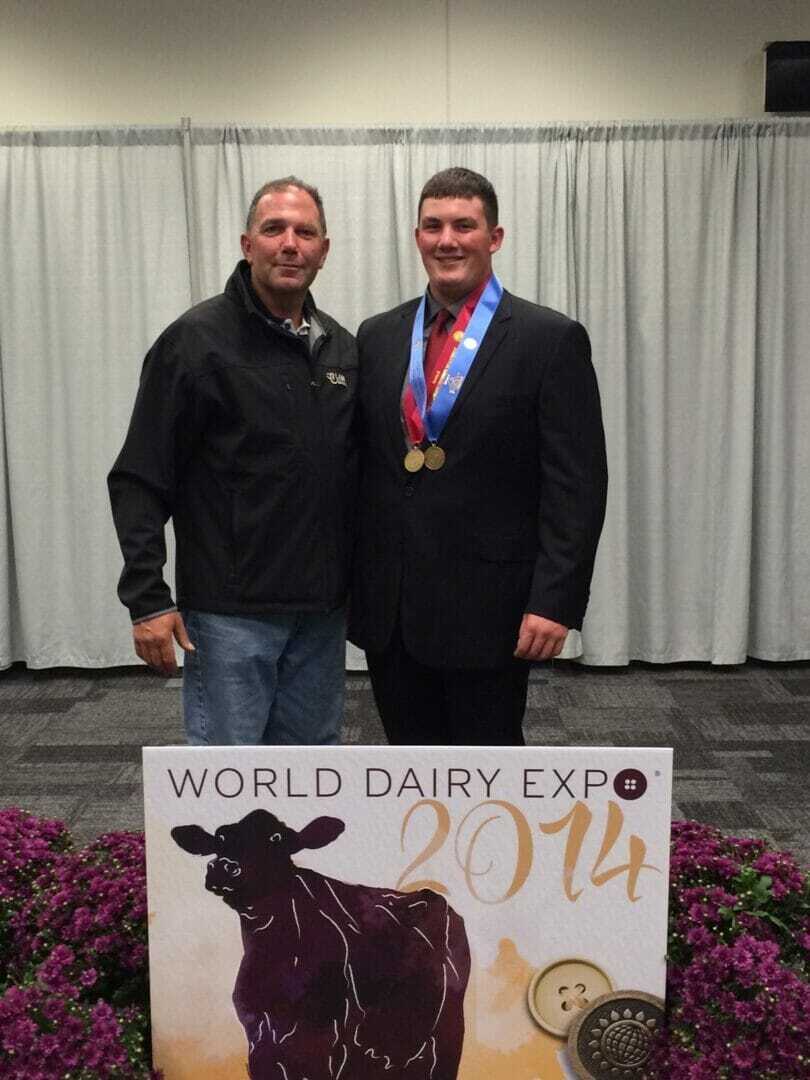
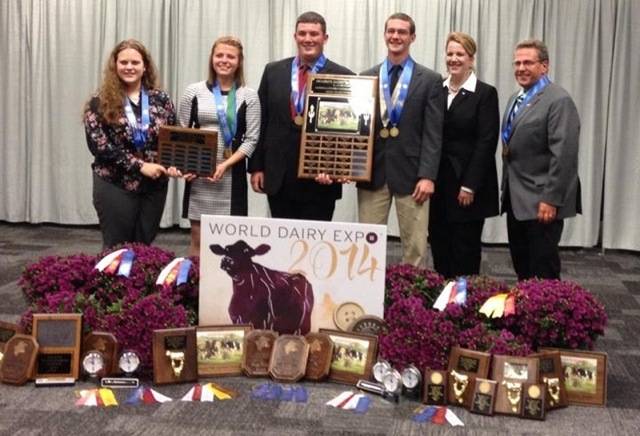
    By a one-point margin, the Michigan 4-H team won the Super Bowl of dairy judging at the 2014 World Dairy Expo!
    By a one-point margin, the Michigan 4-H team won the Super Bowl of dairy judging at the 2014 World Dairy Expo!

    In the years since my first trip to Madison I have been immersed in the dairy industry – working for a milk marketing cooperative, marrying a dairy farmer (who is now the owner of a construction company), and raising three kids all active in 4-H and FFA programs. Unlike me, when my husband Stan went to Madison to judge dairy cattle in the national 4-H contest – it wasn’t on a volunteer basis. He had spent years training and preparing for that day. He won local contests entitling him to a place on the team. He knew first-hand the skills, the opportunities and life lessons gained through judging and although we never talked about it – it was clear he would want our kids to have the same exposure.

    Dairy cattle judging in our house is non-negotiable – everyone participates. It begins each year with the anticipated arrival of the Hoard’s Dairyman judging issues. (For 5 consecutive months the cover of the magazine features a class of cows to be evaluated.) The arrival of the magazines sparks contentious discussions around the kitchen table as the kids make their case for their rankings. Because in our home it’s not the love of music, or a particular sport or hobby that is being passed down – it’s the love of good cows.

    For 10 years Lucas has listened, argued, argued some moreand listened again to his dad about good dairy cattle. About how to rank the cows and more importantly how to justify his ranking. You not only rank the cows, but must explain to the official judge why you ranked them in a particular order. Watching and listening to these discussions (I seldom have much to add), I know there is much more than dairy cattle evaluation lessons being learned. And I know where those impressive traits of the dairy kids start – at their kitchen table.

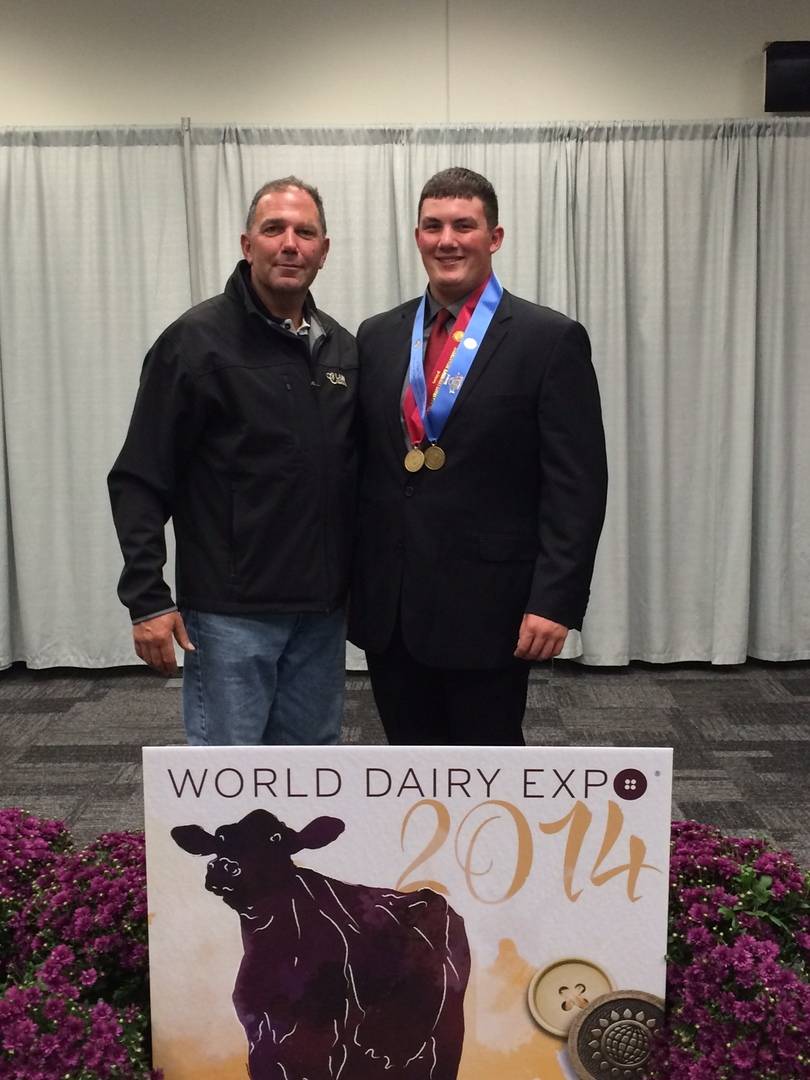
    When Lucas Moser stepped into the ring to participate in the judging contest last week at World Dairy Expo – he like his dad – has spent years working for this day with the help of some awesome 4-H coaches.
    When Lucas Moser stepped into the ring to participate in the judging contest last week at World Dairy Expo – he like his dad – has spent years working for this day with the help of some awesome 4-H coaches.

    When Lucas stepped into the ring to participate in the judging contest this year – he like his dad – has spent years working for this day (with the help of some awesome 4-H coaches). He has done well at the state level and competed at other contests – but World Dairy Expo – has the bragging rights of The National Contest – the Super Bowl of dairy judging. The anticipation leading to the contest was high – and while it wasn’t talked about much – having a dad that won the contest put a little added pressure on him to do well.

    Results at a judging banquet are not straightforward – there are several layers of competition, and it is difficult to tell who is “winning” as the scores are announced. Finally, as the overall winners were called, we began to see how the night would shake out. Michigan had three individuals in the top 10 – with Lucas placing second. After the individuals were announced, team placings were given. By a one-point margin – the Michigan 4-H team won the contest! While Lucas did not place first, being a part of the team that did was just as rewarding. He was able to share the moment with his teammates.

    So as Lucas closes his chapter on 4-H dairy judging, the lessons continue to build –the lessons of teamwork, and appreciation and hopefully the lesson to help pass this family tradition on to his younger brother and sister, and someday to his own kids. It is my hope that all kids find their passion. For our family, it shines through the cows. In other families it may be something else. But I believe helping kids find their passion – is one of the greatest gifts we give our children.

    Nothing like a spicy appetizer to fuel some passion: Here’s our family’s favorite snack:

    Team Latham

    October 10, 2014
    General, Poultry, Recipes
Previous Page
1 … 57 58 59 60 61 … 159
Next Page

Latham Hi‑Tech Seeds

131 180th Street | Alexander, IA 50420

(641) 692-3258

SIGNUP FOR OUR NEWSLETTER
  • Contact
  • Legal
  • Dealer Center
  • Seedware Login
  • Latham Gear

© 2025 Latham Hi‑Tech Seeds. All rights reserved. | Iowa Web Design by Webspec | Privacy Policy

Latham® Hi-Tech Seeds is a trademark of M.S. Technologies, L.L.C., 103 Avenue D, West Point, IA 52656.