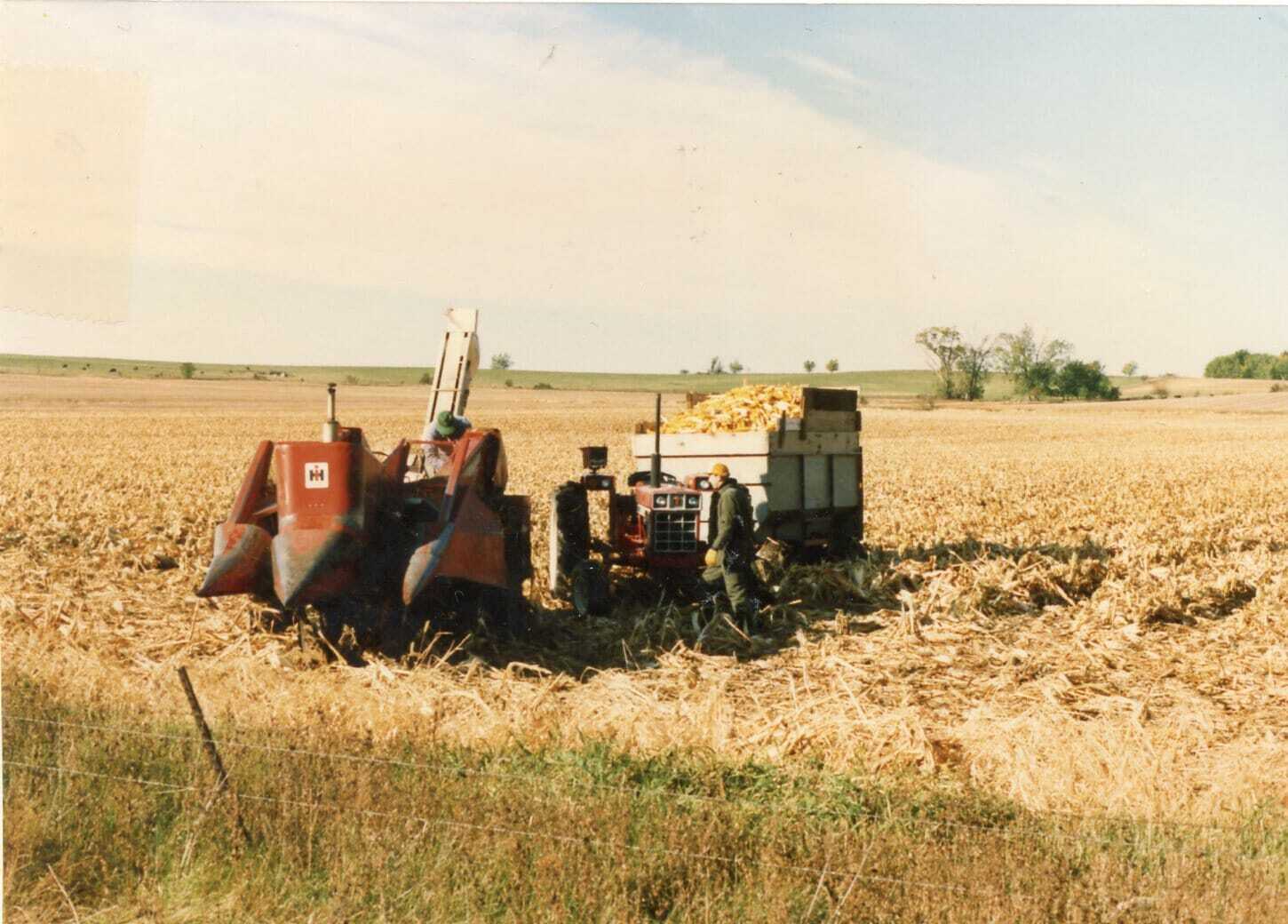
Almost 40% of Iowa’s soybean acreage was harvested during the 5 days suitable that were suitable for fieldwork last week. After we were blessed with the driest week in nearly three months, showers moved into many areas over the weekend and into this week. Between Sunday and Tuesday, one Northeast Iowa farmer reported that 4” in his rain gauge. Here in North Central Iowa, we’ve received 1.85″ inches in the past 72 hours.
Wet weather brought #harvest14 to a halt. Corn harvest is just 10% complete, which is almost 3 weeks behind normal. Soybean harvest is just one week behind normal. The 5-day forecast for our area shows 0% chance of precipitation with breezy conditions and sunshine, so we expect harvest activity will resume soon. Click here for a harvest update by region: http://bit.ly/1mXS9RY
National Focus on Food during World Food Prize Week
There are many different topics I want to cover yet this month, but I’m running short on weeks!
October is National Pork Month, and as a pork producer, I like to do all that I can to promote the product I raise. Then there’s that nasty land grab on the ballot in New Jersey. But this week the World Food Prize is being awarded in Des Moines, so a story about food will take priority.
“Food” has become such a broad subject, and there seems to be almost an obsession with food labels such as locally grown and organically produced. Recently, I’ve read too many articles proclaiming that small farms are the best way to feed the world.
Say what? I’m under the impression that our society had moved beyond subsistence living thanks to advancements in agriculture. Innovation and technology helped free up labor, so people could pursue something other than raising food. Advances we’ve made in the last 100 years have allowed us to go from farming with horses to tractors that drive themselves! As a result, Americans’ standard of living has increased exponentially.
Don’t blame farmers for the “system” that may not be getting food to the mouths of those whom need it! Politics, regulations, weather, war, incomes… so many factors are involved with feeding the world. In China, for example, the government is moving millions of people to big new cities. The purpose is two-fold: (1) those living in the city will have a better standard of living, and (2) the farm ground can be utilized to grow more food.
China needs to grow more food to feed its population. They’re looking at way to increase efficiency. One innovation that has led to the increased efficiency of food production is biotechnology. Yet, stories are circulating that new technologies, such as GMOs, are putting small farmers out of business.
Speaking from personal experience as a small farmer, I’m not being forced to buy any technology I don’t want. I could save back my own seed. I could pull all the weeds by hand. And I’m sure my yields and profit wouldn’t suffer… yeah, right! (I know my yields would suffer, and I don’t want to pull any weeds by hand if I can help it!)
Truth is, GMOs have led to increased soil conservation and better water quality. My favorite newspaper (insert sarcasm) recently reported that GMOs have falsely taken the credit for moving conservation forward. Of course, the GMOs aren’t holding the soil themselves! But this headline that ran in last week’s newspaper is simply misleading: “Study: Biotech crops not reducing soil erosion.” (Read a bit further and you’ll see that the “study” was funded by an environmental group. It’s just one more example of why we must consider the source and use critical thinking skills.)
Speaking from personal experience, GMOs allow me to farm differently. Forty years ago, I tried no-till farming. It flat out didn’t work with my soils! Technology evolved during the last decade – redesigned equipment, new seeds and reformulated pesticides – came together to make no-till work now.
Better seeds and better equipment will help farmers of any size. That’s how farmers in this country have advanced; it’s how farmers in other countries like Ukraine and Uganda want to advance. But that doesn’t mean that we all must farm alike. After all, farmers grow different crops and raise different livestock based largely on where they live in addition to personal interests. I raise food primarily through animals here in Iowa, which is America’s number one pork-producing state. The way Tyson Roberts raises food in Utah is much more direct, right to the consumer. Yet, we’re both farmers trying to make a living.
It’s going to take farmers of all sizes to feed this world, and this week the World Food Prize will highlight some great people doing amazing, innovative things to help feed our growing world. In fact, Dr. Norman Borlaug of Iowa founded the World Food Prize to recognize people for their contributions to ending famine and starvation. Borlaug, a Nobel Peace Prize winner, has been called “the man who saved more lives than anyone who has ever lived.” His legacy lives on as other agricultural researchers around the world work to integrate viable technologies into today’s food systems.
Stay tuned to the Borlaug Dialogues, which focused around “The Greatest Challenge in Human History: Can We Sustainably Feed the 9 Billion People on our Planet by the Year 2050?”
Guest Blog by Laura Moser Laura is an agricultural writer living with her family and their small herd of registered dairy cows in Dansville, Michigan.
I distinctly remember my first trip to the World Dairy Expo in Madison, Wisconsin. I was a junior in high school and a member of a Green Bay FFA program (read: city kid). When my advisor asked for volunteers to compete in the FFA dairy judging contest all I heard was “who wants a day out of school” and my hand shot up – no training, no local competition – just volunteers. I went home that night and tried my best to explain to my parents why I would be going to Madison to look at cows. Although my motive for going to Madison that day had little to do with cows – what I saw was hundreds of kids with a passion and confidence I didn’t understand and certainly didn’t possess.
Fast forward a few years (ok, maybe a decade or two) and I find myself once again amazed by the confidence and passion dairy kids have – but this time I am not watching strangers – I am watching my son, Lucas. And I am watching my husband watch our son. Because 31 years ago he was the one competing in the national contest – a contest he went on to win.
By a one-point margin, the Michigan 4-H team won the Super Bowl of dairy judging at the 2014 World Dairy Expo!
In the years since my first trip to Madison I have been immersed in the dairy industry – working for a milk marketing cooperative, marrying a dairy farmer (who is now the owner of a construction company), and raising three kids all active in 4-H and FFA programs. Unlike me, when my husband Stan went to Madison to judge dairy cattle in the national 4-H contest – it wasn’t on a volunteer basis. He had spent years training and preparing for that day. He won local contests entitling him to a place on the team. He knew first-hand the skills, the opportunities and life lessons gained through judging and although we never talked about it – it was clear he would want our kids to have the same exposure.
Dairy cattle judging in our house is non-negotiable – everyone participates. It begins each year with the anticipated arrival of the Hoard’s Dairyman judging issues. (For 5 consecutive months the cover of the magazine features a class of cows to be evaluated.) The arrival of the magazines sparks contentious discussions around the kitchen table as the kids make their case for their rankings. Because in our home it’s not the love of music, or a particular sport or hobby that is being passed down – it’s the love of good cows.
For 10 years Lucas has listened, argued, argued some moreand listened again to his dad about good dairy cattle. About how to rank the cows and more importantly how to justify his ranking. You not only rank the cows, but must explain to the official judge why you ranked them in a particular order. Watching and listening to these discussions (I seldom have much to add), I know there is much more than dairy cattle evaluation lessons being learned. And I know where those impressive traits of the dairy kids start – at their kitchen table.
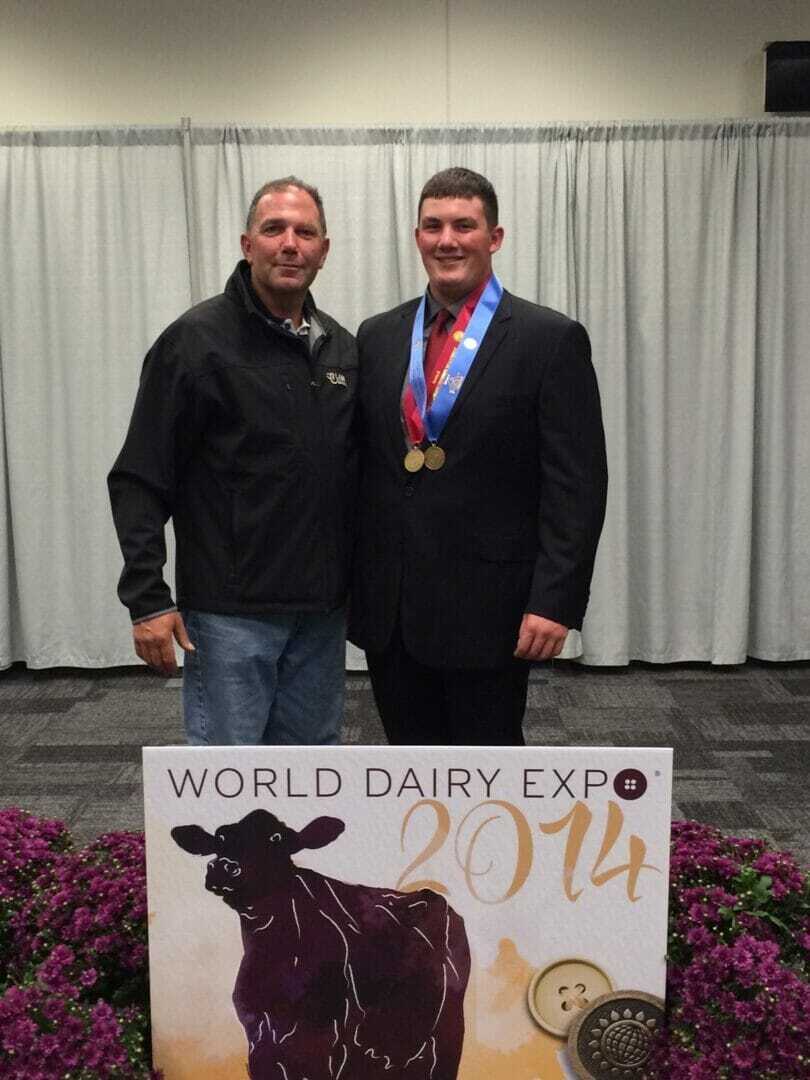
When Lucas Moser stepped into the ring to participate in the judging contest last week at World Dairy Expo – he like his dad – has spent years working for this day with the help of some awesome 4-H coaches.
When Lucas stepped into the ring to participate in the judging contest this year – he like his dad – has spent years working for this day (with the help of some awesome 4-H coaches). He has done well at the state level and competed at other contests – but World Dairy Expo – has the bragging rights of The National Contest – the Super Bowl of dairy judging. The anticipation leading to the contest was high – and while it wasn’t talked about much – having a dad that won the contest put a little added pressure on him to do well.
Results at a judging banquet are not straightforward – there are several layers of competition, and it is difficult to tell who is “winning” as the scores are announced. Finally, as the overall winners were called, we began to see how the night would shake out. Michigan had three individuals in the top 10 – with Lucas placing second. After the individuals were announced, team placings were given. By a one-point margin – the Michigan 4-H team won the contest! While Lucas did not place first, being a part of the team that did was just as rewarding. He was able to share the moment with his teammates.
So as Lucas closes his chapter on 4-H dairy judging, the lessons continue to build –the lessons of teamwork, and appreciation and hopefully the lesson to help pass this family tradition on to his younger brother and sister, and someday to his own kids. It is my hope that all kids find their passion. For our family, it shines through the cows. In other families it may be something else. But I believe helping kids find their passion – is one of the greatest gifts we give our children.
Nothing like a spicy appetizer to fuel some passion: Here’s our family’s favorite snack:
Harvest Tour is Learning Opportunity for Farmers & Consumers Alike
Harvest is underway in North Central Iowa, however, I’ve been spending as much talking about combining as I have actually spent in the field during the past two weeks.
In last week’s blog, I wrote about the opportunity I had to visit Mason City schools and answer some great questions from sixth graders about #RealPigFarming and crops. My main message was to remind these middle school students, who are like sponges absorbing information, to keep an open mind when reading information. I reminded them to consider the source of information and to not take all printed material as fact.
Over the weekend, I had the opportunity to spend time hosting a group of bloggers on our 4th Annual Franklin County Harvest Blogger’s Tour. Honestly, this is one event that I always look forward to as its main purpose is to showcase our county’s rich agricultural heritage and to help bridge the gap between farmers and consumers.
This event has been held the first weekend of October since 2011. This year, bloggers begin arriving at the Country Heritage B&B on Friday afternoon. We then took them on a tour of the first farmer-owned, rural electricity generating plant. In the 1930s, only 10 percent of U.S. farms had electricity. Interestingly enough, this electric utility plant in rural Hampton was the first rural electric utility plant west of the Mississippi. We made history right here in our own backyard – and this was the first time I’d actually visited the museum myself! I had a great time walking through the REA Museum, which is full of fascinating things from the beginnings of electricity.
Photo Credit to: BethAnnChiles.com
From the REA Museum, the bloggers toured Beeds Lake State Park. This lake was constructed by manual labor during the Great Depression. One focal point of the park is the 170 foot-long spillway – built by the Civilian Conservation Corps in the 1930s – that consists of horizontal layers of limestone that abruptly drops 40 feet. Another unique feature of Beeds Lake is the causeway near the lodge, providing more than one-third mile of shoreline fishing, as well as a convenient pathway for hikers and joggers.
Our final stop on Friday evening was the Learning Tree Lodge at the Carlson Tree Farm. The Carlsons have built a very nice retreat in rural Franklin County, and there is no charge to use their comfortable learning center. Great food and wine tasting was combined with the entertainment Dennis has a reputation of providing. As a former county conservation officer, he always teaches us something new about nature. We had the the opportunity to taste roasted meal worms… did I mention the wine tasting? Yes, Franklin County is home to Townsend Winery!
Saturday morning started early. We arrived on the Franklin County Fairgrounds at 8 AM where we toured our county’s farm museum. Many questions were asked and answered about the history of farming while we looked at old farm equipment. Every time I go through this building, I see something I had not noticed before. There’s such so much to see! It was a great stop.
From the fairgrounds, our busload of bloggers went downtown to shop the Hampton specialty stores. I had to head out to do my chores, but from the pictures posted, it looks like the shoppers had a good time. With shopping bags in hand, they boarded the buses for a trip to Latham Hi‑Tech Seeds, with headquarters on a Franklin County Century Farm.
John and Shannon are the third generation of Lathams to manage the family-owned seed business. They have added hybrid seed corn and Hi‑Tech forage to the product lineup, providing farmers with even more choices for their fields. Bloggers enjoyed learning how the Lathams contract with local farmers to produce seed beans, which are then brought to their plant in Alexander upon harvest. Controlling the handling of the soybeans from harvest through conditioning and bagging is what the Latham believes is key to their reputation for quality seed.
Following a soybean facility tour, we all enjoyed celebrating October #Pork Month with succulent loin sandwiches and Val Plagge’s Sweet & Spicy Hog Wild Baked Beans. While we enjoyed our delicious lunch, we also enjoyed a presentation about the North Iowa Ag in the Classroom group. Just four women talk to 10,000 kids a year about farming! Even though we live in a rural state, we learned that some North Iowa school kids believe corn stalks are bamboo. These ladies provide classroom materials about #RealPigFarming, ethanol production and soil conservation to name a few. All are important topics – topics that are greatly misunderstood by many adults.
Photo Credit to DonnaHup.com
As enjoyable as all of these tours were, the highlight of the weekend was definitely the combine rides! Saturday afternoon we traveled to Roy and Jeanie Arends’ farm. Although the soybeans were a little wet from all the rain we’ve had, Roy used it as an opportunity to explain why his ground needed to be tiled. This turned in to quite a question and answer session! Roy’s son, Andrew, even explained about GMOs.
Half of the blogger group stayed at the Arend’s farmer and half went to Ian and Val Plagge’s farm to combine some corn. Val even gave bloggers the chance to visit their pigs.
All of these tours and visits led to great understanding and some really interesting blog posts! Follow along with the hashtag #FranklinCoHarvest on Twitter and Facebook for a great recap from these bloggers:
Thanks to everyone who participated this year! It was an honor to help host this group of enthusiastic bloggers. Not only do they share their experiences here in Franklin County with many more people, but we have an opportunity to learn from them, too. It was another successful weekend, and I’m proud to have been a part of it.
October 5-11 is National 4-H Week, so club members and alumni across the U.S. will be sharing their success stories and encouraging others to “join the club.” Even if you were never in 4-H – and you’re past the age of joining – you can still get involved locally.
Join us Wednesday, Oct. 8, for a $5 lunch at the Fareway parking lot. Our goal is to have burgers grilled and ready for pickup almost as fast as any fast food drive-thru! Special thanks to the Franklin County Pork Producers and Latham Hi‑Tech Seeds, as well as Fareway grocery store, for their support of this fundraising event that supports scholarships in our county. We’ll start serving at 11 AM and will serve until 1 PM – or until we run out!
We’ve guaranteed 600 burgers with the option to purchase more, so I’m praying that Mother Nature cooperates and we have another strong turnout to support this important cause.
While there are many important causes being celebrated this month, 4-H is near and dear to my heart. (Yes, I’m still pledging my hands to larger service for my community and my world.) I have first-hand experience with the program as a 10-year member of the Coldwater Country Cousins 4-H Club in Butler County; as a state 4-H award winner; as a former member of the Iowa 4-H Council; as a former trustee for the Iowa 4-H Foundation; and as a current member of the Franklin County 4-H Foundation.
Through 4-H, I made friends with other 4-Hers who shared my same interests. Twenty-five years later, I’m still networking with 4-H friends from across the state! 4-H made a positive impact on my life and help me discover my love for journalism. Because of that, I’ve been lucky enough to enjoy every job I’ve ever held.
I want others to have the opportunity to discover their passions through 4-H. I also want them to let 4-H lead them to career success. For example, recently I had the opportunity to serve on a panel with other distinguished 4-H alumni and area business owners. We talked about how 4-H helps you prepare for the future. Business owners shared what they’re looking for in employees, and students were encouraged to ask questions. Following our discussion, students participated in mock interviews. Putting yourself in an interview situation takes you out of your comfort zone, so I commend the students who participated in this event. Experiences like this are also why I’m proud that both of our children are 4-H members, too.
Join @LathamSeeds in showing pride and support of the 4-H program this week through social media using the hash tags #Iam4H and #4HWeek.
Goats make the best pets!” says Sara Goemaat. “They have sweet personalities. Actually, they’re a lot like dogs, and you can even train them to lead. They’re just so lovable.
Sara Goemaat was raised on a family farm about three miles northeast of Belmond in North Central Iowa. As many youth do, she moved away from home upon graduating from high school. Sara then earned both bachelors and masters degrees in Ag Education from Iowa State University. She and her husband enjoyed their time in the city but yearned to return to their rural roots.
Today Sara and her husband, Dan, are harvesting their first crop in partnership with Sara’s parents, Larry and Karla Pals. Sara also works at the hospital, and then spends nights and weekends hobby farming. She and her mom, Karla Pals, enjoy raising La Mancha dairy goats. Currently, they have a tribe of 10. They turn the milk into tasty treats and moisturizing soaps. They also enjoy gardening and canning the fruits of their labor, so late summer and early fall finds them spending hours in the kitchen.
“My mom has always canned,” said Sara. “When Dan and I moved into our first place (it was an apartment), I wanted a big garden. I planted a lot of seed but jalepenos were the only thing the deer wouldn’t eat! Because I had so many peppers, I started making pepper jelly and then one thing led to the next.”
Today Sara sells a variety of jams and jelly including apple jelly, cranberry pepper jelly, sweet pepper jelly, and onion jelly. Her mom makes apple butter and basil jelly.
Fresh Goat Cheese with her Crazy Cranberry Pepper Jelly. Recipe for the Goat Cheese is Below.
Their jam business is growing based mostly on word-of-mouth advertising and a few booths at craft shows. Thanks to Pinterest, there’s been a renewed interested in canning and home cooking. Do-it-yourself projects are today’s hottest trend; Americans obsession with DIY leads to renewed interest in gardening and home redecorating projects, too.
“My nickname was ‘Grandma’ in school because I have always loved sewing, gardening and canning,” says Sara. “When I was in third and fourth grades, I’d go on sewing weekends with my grandma. Now my friends think my hobbies are cool. Lately I’ve been sewing fabric diapers for my friends’ babies. I’ve also made curtains and pillows for our house, as well as recovered chairs.”
A member of the Iowa Hawkeyes 4-H Club, Sara says her favorite project areas were horticulture and livestock. Her mom was the club’s leader. Now Sara, her mom, and Sara’s sister-in-law are all club co-leaders.
“Goat numbers are increasing as a 4-H project area today, but when I was a 4-H member, there wasn’t a goat category,” explains Sara. “I entered my goat in the pet category and was thrilled to take home Reserve Grand Champion Pet as a 5th grader.”
While Sara has raised goats since she was a youngster, it was during college she met Butch Sowers from Nevada that really fueled her passion for dairy goats. She spent a year helping show goats for several families and was then gifted a doe. That got her start, and now she enjoys showing at the Iowa Dairy Goat Association’s show and at the Iowa State Fair.
“We’re trying to keep our goat numbers to a level that allows us to make the best use of their milk. My mom makes cheese, and we’ve made ice cream for our own enjoyment. We also make soaps that we sell,” says Sara.
Before selling her soaps, Sara did a lot of research online. She found a cold process but the soap had to sit for six weeks. Then she found a crockpot recipe that allows you to use that soap the next day. She said it was intimidating to first calculate the correct proportion of lye to milk and oils. She also had to learn how to regulate the temperature to keep the soap the desired color.
The Amazing Grace Milk Shoppe soaps are all unscented, which is especially good news for people with allergies and sensitive skin. The only fragrance comes from additives including milk, honey and oatmeal. Goat soap has been shown to help people with acne, eczema and psoriasis. Plus, the natural glycerin in this soap keeps one’s skin moisturized and nourished.
“I wanted a meaningful name for my soap. One day I was listening to the radio and heard “Amazing Grace” playing. Whenever I hear that song, I think of my mom because it’s her favorite,” says Sara. “Moms are just so special, and my mom has always been so supportive. So I decided ‘Amazing Grace’ would be the perfect name and then I added ‘milk shoppe’.”
Latham® dealer Kyle Geske starting harvest on Latham L00938RR soybeans
Harvesting soybeans on a timely basis should be every farmer’s goal. Yields are maximized when each field is harvested at 13% moisture and combines are adjusted properly from the start. That being said, I’ve been asked numerous times just what the yield loss is when moisture falls below 13% and how to prevent soybeans from “shattering.”
Let’s tackle the first part of the question right away: “What is my yield loss when soybeans come in below 13%?” A recent article published by Gary Zoubek and Chuck Burr from the University of Nebraska Extension states the following:
Moisture at Harvest
% Yield Lost
12%
1.14
11%
2.25
10%
3.30
9%
4.40
8%
5.43
Using this information, a field yielding 75 bushels per acre harvested at 9% results in 3.3 fewer bushels per acre than if it would have been harvested at 13%. You will lose $33 per acre if the soybean market is at $10 per bushel!
Because life isn’t always perfect and we sometimes are prohibited from harvesting exactly at 13% moisture, here are a few simple suggestions that can help you put more in the hopper:
Begin harvesting soybeans at 14% or even 15% moisture, depending on your plans for the grain. If you are taking it directly to the elevator at harvest, ask the maximum moisture they will accept. If you are storing the grain in a bin, make certain you have fans for adequate ventilation/drying.
When harvesting at higher moistures, you will most likely run into tougher or even green stems. Adjust your combine and operate at reduced speeds to match the conditions of your field. NOTE: You’ll probably need to adjust your combine and your speed several days each day!
When possible, harvest under optimum conditions. We all know that soybeans pick up moisture overnight, especially if there is a heavy dew. They also lose moisture as the day progresses, when the humidity is low, when daytime temperatures are warm and when there is even a slight breeze. Avoid harvesting during hot afternoons when you stand to lose the most moisture.
Another tip for harvesting soybeans on a timely basis is to spread out the maturities. Keep this in mind now as when selecting your soybean seed for next year. Don’t place “all of your eggs in one basket” when it comes to selecting the maturity of soybean seed.
Moving on to the second part of the question stated in the first paragraph: “How can I keep soybeans from shattering?” “Shattering” implies that something is wrong or abnormal. However, I truly believe it’s natural for a pod to split open and soybeans fall to the ground because these plants were created to spread their seeds and propagate! To prevent “shattering,” spread out your maturities so you may harvest your soybeans in a timely manner.
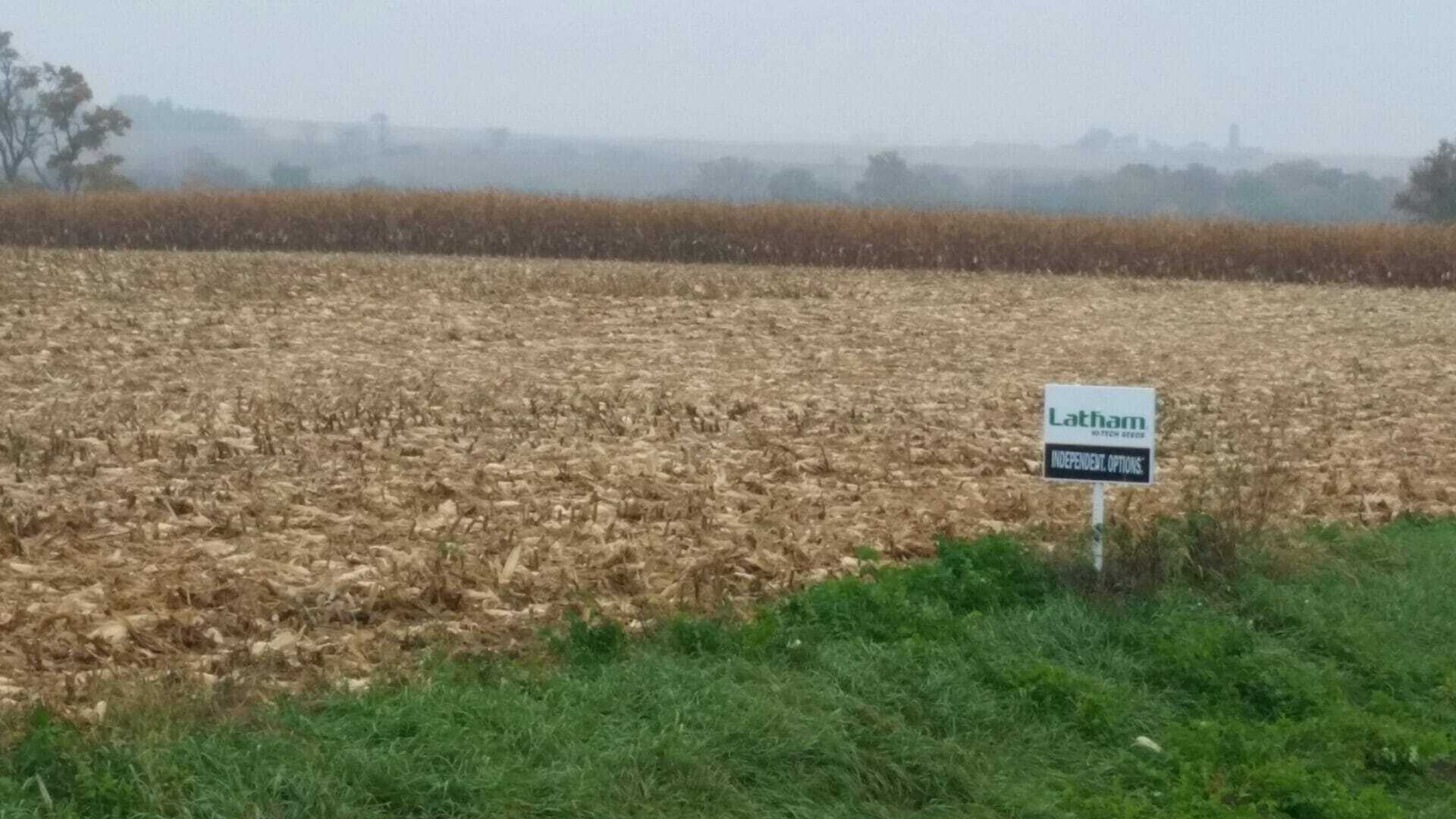
Above average temperatures pushed crops toward maturity this past week. Silage and hay harvest are wrapping up. Farmers across Latham Country are harvesting soybeans primarily, and some corn, as conditions allow. #Harvest14 came to a halt when rain fell in many areas last night and into today. For an update on progress by region, click here.
Today’s Kids Must Develop Critical Thinking Skills
Yesterday Larry Sailer shared his farm story with 6 classes of sixth graders. Today he’s heading back into the classroom!
Late last week I was contacted by our Ag in the Classroom staff from North Iowa Ag in the Classroom about a book being used in the Mason City sixth grade as a textbook. This nonfiction book by Micheal Pollan, entitled Omnivore’s Dilemma, is being used for every class – even art!
At first blush, it sounds like this book would be about all the food choices available in America. But that’s not the case! Omnivore’s Dilemma is filled with half-truths and misinformation. For example, Pollan implies that government subsidies force farmers to grow corn and Americans are becoming obese because corn is “hidden” in so many food products.
Thanks to Pollan’s nonfiction writing and the concern this “textbook” has caused among farmers and those who work with North Iowa’s Ag in the Classroom program, I found myself facing a dilemma… Should I combine my soybeans or head into the classroom?
Because I whole-heartedly believe we must connect farming and food to the classroomx, yesterday I found myself getting behind the wheel of my pickup rather than my combine. It honestly felt privileged to talk with six classes of sixth graders yesterday. My main message was to remind these middle school students, who are like a sponge absorbing information, to keep an open mind when reading information. I reminded them to consider the source of information and to not take all printed material as fact.
I also encouraged them to ask farmers question about why they do what they do. As you might expect, I got a lot of questions from them! These kids asked really thoughtful and engaging questions.
One young person asked, “If you think you’re going to lose money, why do you go ahead and plant your crops?”
“How do farmers get such big equipment?”
What kind of education does it take to become a farmer?
These kids had so many good questions! Another girl asked if I name my pigs. That opened up a conversation about the difference between pets and food production. We talk about the cycle of life and how some animal’s purpose in life is to become food. That’s natural. It happens in nature, too.
Conversations like this with non-farmers help us find common ground. I consider telling my farm’s story and educating consumers – even future consumers – to be a very important part of my operation. That’s why today I’ll be getting my pickup truck again, driving about 45 minutes north, and spending another full day talking to more students.
We all must keep sharing our farm story. It’s quite apparent other sources of information are getting into our schools, and that information might not be accurate!
With more than 30 varieties, you’ll find everything from mini to giant pumpkins at Enchanted Acres in Sheffield.
Nothing compares to tomatoes or watermelon ripened on the vine. Baked apples and pumpkin butter taste better when made from scratch, using locally grown products. Fresh baked bread, rolls and muffins don’t even need butter to make them taste better.
Get a taste of wholesome goodness for yourself! Franklin County Iowa is hosting its 2nd Annual Fresh on the Farm event, Sunday, Sept. 28, from noon to 6 PM. Sample homegrown foods as you ramble across the county side, stopping at these three host farms: Enchanted Acres, Carlson Learning Tree Lodge and Koenigs Acres.
“Fresh on the Farm is a series of free, on- farm tours that provide the public an opportunity to meet local farmers, learn about their farms, sample the foods they grow and purchase their products,” says Jan Libby, coordinator, Healthy Harvest of North Iowa. “Each farm will have products for sale, so visitors are encouraged to pack a cooler and shop along the route.”
Consumers are invited to shop the route in any order they please as this is a “come and go” event. Each host site will feature additional local producers:
Carlson Tree Farm, 867 130th Street, Hampton. Dennis and Cathy Carlson owners.Sample and buy fresh chickens, eggs, aronia berries, grilled goat and bison meat. Try whole wheat buns and flour made from Carlson’s homegrown wheat. Talk to an ostrich grower about how healthy the meat is. Buy and sample fresh in season vegetables and fruit with another local grower. Ask about their CSA gardens. View the tree farm and Learning Tree Lodge. There will baby goats for the kids to pet and whether goats for sale. Be sure to buy Cathy’s fresh, delicious sugar cookies!
Enchanted Acres, 1017 250th Street, Sheffield. Shannon Latham, owner.Enchanted Acres creates magical experiences for the whole family! Enjoy our entertaining goats, rabbits and chickens. Our playground offers endless entertainment. Crunch through the leaves as you walk through trails in our woods. Most of all, be sure to pick your own pumpkins! More than 30 varieties of specialty pumpkins were planted this spring. Pumpkin decorating classes will be offered. Plus, winemakers from Train Wreck Winery will be on hand to offer samples. We’ll also be featuring HenCliff Honey. You’ll have the opportunity to sample and buy bread, dip mixes, homemade jams plus fresh pumpkin butter and apple butter. We’ll also offer an array of fresh produce for sale including apples, spaghetti squash and various baking squashes. Be sure to reserve your locally farm-raised chickens, which will be ready in about 4 weeks.
Koenig’s Acres, 1510 110th Street, Hampton. Matt and Karen Koenig, owners.Check out what Matt intends to raise in the stock tanks. Find out which farmers markets Karen attends. Tour the gardens and sample the Koenigs’ produce. Townsend Winery will also be on-site with samples and wine to purchase. Emily Pfaltzgraf will have bison meat to sample and buy. There will also be fresh chickens, honey, jam, and in-season produce for sale. Be sure to ask about Karen’s CSA and how you can be part of it!
“Fresh on the Farm in Franklin County” is sponsored in part by Healthy Harvest of North Iowa, Iowa State University Extension and Franklin County Tourism.
After eating your way around the county and buying fresh produce, you might be feeling adventurous enough to try some new recipes. My new favorite lunch recipe is the Apple Orchard Panini from the Iowa Girl Eats blog. I make it with my homemade apple butter and top it with Provolone since there’s not a Trader Joe’s nearby.
Today I’m going to share with you another fittingly fall, one-dish recipe that my friend Sue made when we visited her family. (She served it with the best Wheat Blueberry Bread.) What’s your favorite way to enjoy fall flavors? I’d love it if you’d share a recipe with me, too!