Latham Hi-Tech Seeds

(641) 692-3258

  • Home
  • Performance
  • Products
    • Corn
    • Soybeans
    • Soybean Blends
    • Alfalfa
    • Corn Silage
    • Seed Guide
  • Find a Rep
  • Media
    • Blog
    • News
    • Videos
    • Podcasts
    • TECHTalk
  • About Us
    • Company History
    • Our Mission
    • Careers
    • Become a Rep
    • Sowing Seeds of Hope
  • Contact Us
  • Latham Hi‑Tech Seeds

    Less Government Would Help More Farmers

    Here in the Upper Midwest, we have produced ourselves into a period of low prices. Times like these show us which farmers have the deepest pockets as they’re the ones who are taking on more ground.

    Last week I heard that another young neighboring farmer is losing most of his crop acreage to an older, larger farmer who is able to pay more in rent. That makes three that I’ve heard about in the last three weeks!

    It’s no wonder that the average age of the principal U.S. farm operator is 7.5 times higher than the average age of a farmer in the 1980s. Farmers are 17 years older than the average American worker, according to a recent National Geographic article.

    Truth is, there are many young farmers – many with a college degree in hand – who are for an opportunity to farm. It’s just that there are many barriers to entry, including the high price of farmland and equipment.

    Any business is hard to start from scratch. But the very capital intense business of farming, with very low or even non-existent margins, makes it next to impossible to get started without help. There are many USDA programs to jump start a farm. There are even tax benefits for those who rent to a young farmer, yet too many barriers remain.

    Here are a few barriers that must be removed to help younger farmers:

      • Reduce cumbersome regulations that cost farmers’ money. Research shows farmers are likeable people, yet some vocal consumers hate the practices we use. This has led to many regulations. What we need are more people who understand farming and know that farmers – not the government – should decide the best way to farm.
      • Remove death tax. If a young farmer is fortunate enough be part of a family farm, then our government shouldn’t make it impossible to keep that farm in the family.
      • Our current administration claims to support the middle class, yet life is getting more expensive.  The cost of energy tops my list. By limiting how electricity is generated, costs can only rise. Coal and atomic power are by far our most reasonable priced. Making our abundant oil supply more efficient with pipelines and rail also would be a huge help.

    Plus, the U.S. needs to stop throwing dollars at our competition! The new Farm Bill is a SNAP for foreign farmers. Building roads and infrastructure in other countries may be a great cause, but we shouldn’t build them with dollars that the American public already thinks of as “American Farmer Welfare.”

    The U.S. Farm Bill should not decide who the winners and losers. We can’t keep throwing the huge amount of dollars at the farmers that know how to “farm” the government. I’ve been studying the new farm program that we need to sign up for, and it’s a complicated mess. What a farmer decides right now can make or break a farm, and you have to live with your decision for the life of the Farm Bill!

    The U.S. government is getting too complicated and expensive. Too much money thrown at problems that don’t get fixed. I believe most farmers can make it if we can keep the government at bay.

    Bottom line: Let the economy and the hard work of farmers decide how the farms in this country will transition. They may get bigger, or they may start many new small specialty farms. However, the current system of government meddling is just going to tilt the transition the wrong way.

    Larry Sailer, Musings of a Pig Farmer

    December 2, 2014
    Agriculture, General, Industry News
  • Latham Hi‑Tech Seeds

    Let’s Move this Country Forward!

    In this week of Thanksgiving, I’ve been thinking a lot about food – more specifically the growing number of hungry Americans. In 2012, there were 15.8 million kids living in food-insecure homes in this country. A growing number of these children don’t even live in homes! A staggering 2.5 million children – or 1 in every 30 children – are homeless in America.

    It’s ironic that food insecurity is an issue in a country where each farmer grows enough food to feed 155 people! As recently as 1960, a farmer only feed 25.8 people. You’d think we’d be making strides in feeding everyone, yet it seems we’re becoming more of a country of “haves and have nots.”

    While 1 in 6 Americans struggles with hunger, obesity is becoming a real problem for a growing number of Americans. The percentage of children aged 6–11 years in the United States who were obese increased from 7% in 1980 to nearly 18% in 2012, according to the Centers for Disease Control and Prevention. The percentage of obese adolescents aged 12–19 years increased from 5% to nearly 21% during the same period.

    Why is one in five kids in this prosperous country at risk of going to bed hungry? (And I’m not even talking about school lunches!) Is hunger related to the percentage of income it takes in this country to buy food? Data from the U.S. Agriculture Department (USDA) shows that Americans spent only 6.6 percent of their 2012 household income on food. Americans spend less of their income on food than any other country.

    Is there a correlation between hungry Americans and the percentage of the food dollar that gets returned to the farmer? This week I’ve been engaged in a related conversation started by farm broadcaster Trent Loos. This online discussion reports that a farmer only receives from 11.6 to 18 cents each food dollar, so this stat alone would suggest that hunger in America is caused by something else.

    With a growing amount of welfare support including the Supplemental Nutrition Assistance Program (SNAP), as well as school lunch programs and summer lunch programs, one would think everyone is getting everyone fed! I believe food (in)security is a very complex issue. It’s one that will take time and many different approaches to fix, but I do believe it can be fixed!

    It not politically correct for me to say this, I know, but I believe the deterioration of moral values is a major reason we’re seeing an increasing number of homeless and hungry people. When I was child, families were intact and parents took pride in working hard to put food on their own tables. America’s family and living arrangements have changed drastically. The number of single-parent households is on the rise. Broken families are a huge issue; it’s very difficult for a single parent to pay for the costs of living today.

    In addition to food and clothing, many Americans now feel entitled to cable TV, gaming systems and smartphones. The average U.S. household today has more televisions than people! Priorities have changed during the past 50 years, and the line between wants and needs has become blurred.

    It’s time to stop the attitude of entitlement! Government handouts are not working. Education and training programs all good ways to start. American workers don’t need a PhD, but they do need skills and training to make a good living.

    Every student gets a good job when graduating from North Iowa Community College in Industrial Technology (welding, tool and die, diesel technology, building trades). The Iowa State College of Agriculture has a 98% placement rate. It’s being done… this is how we can move this country forward! I truly believe we can do this if we get our values back where they belong!

    This Thanksgiving I hope you and your family will enjoy time together and give thanks for all of blessings. Whether you celebrate with ham or turkey, remember wrapping it in #bacon makes everything better. 🙂 Happy Thanksgiving!

    Larry Sailer, Musings of a Pig Farmer

    November 25, 2014
    Agriculture, General, Industry News
  • Latham Hi‑Tech Seeds

    Help #CanHunger this Holiday Season

    CannedFoods

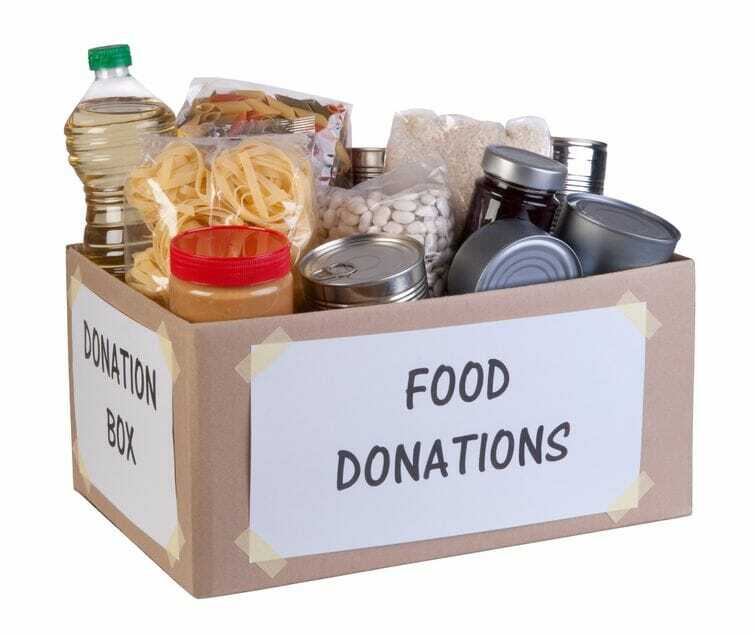
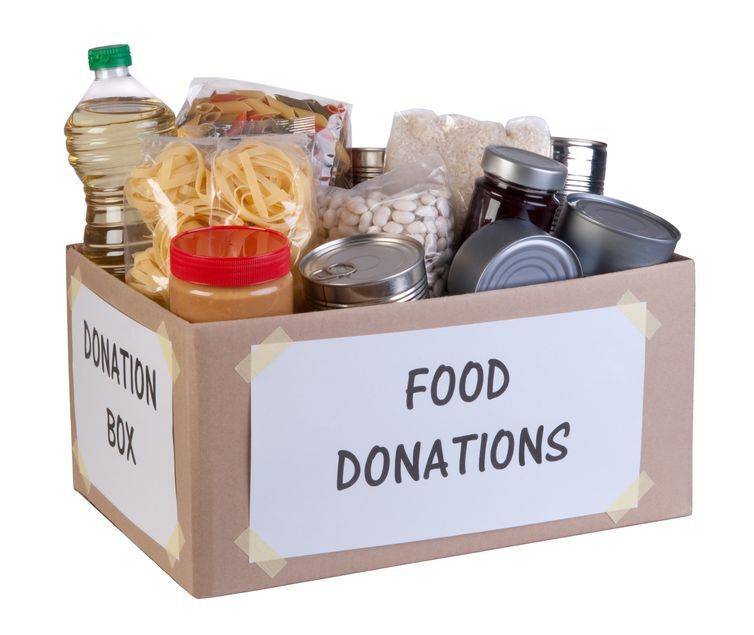
    CannedFoodsEach year, right before Thanksgiving, confirmation students in our local community conduct a food drive. Last Wednesday night 472 items were collected for the Franklin County Food Pantry!

    I’m pleased to say that our family donated to the local food drive. But if I would have known then what I know now, our donations would have been different. First of all, I would have included some toiletries like toothpaste, toothbrush, deodorant and bar soap, plus paper products and garbage bags as these items cannot be purchased with food stamps.

    Secondly, I would have made sure my donated items contained more ready-to-go meals like beef stew and chili with meat. I also would have included a box of crackers along with instant soup packets. Finally, I would have donated canned potatoes, carrots and peas because green beans are most often donated. I also would have donated canned fruit other than pineapple, which is most commonly donated.

    “We surveyed food banks and the items we found to be most in demand are: canned chicken and canned tuna, peanut butter, soup, boxed meals, pasta, canned veggies and canned fruit,” says Lindsey Haley, Operations Manager for the Iowa Food Bank Association.

    If you plan to donate food items to your local food bank, please:

      • Choose boxes (rice, potatoes, macaroni, etc.) as bags of food can tear easily.
      • Donate low-sugar cereal like plain Cheerios or Raisin Bran.
      • Purchase instant meals like oatmeal or biscuit mix that only require water because they’re easier to make.
      • Know that cans, cartons or boxes of powered and evaporated milk are always needed.
      • Remember that juice boxes, applesauce containers and granola bars make great snacks for kids.

    “The best donation a person can make is a cash donation as the food banks can purchase approximately 4 meals for every $1 that’s donated,” adds Haley.

    Because $1 can make such a big difference, I’m making a monetary donation this week to help fight hunger. Are you up for the challenge?

    The Murphy family from Johnston, Iowa, has issued an open invitation to the #CanHunger challenge, which includes donating to FeedingAmerica.org or to your local food bank. Iowa Girl Eats Kristin Porter and many North Iowa Bloggers have accepted the challenge. You can, too!

    Sign a canned food item, donate it to your local food bank, and then challenge three of your friends to do the same. Use the hashtag(#) and see how we can all help make a difference. #CanHunger this holiday season!

    Team Latham

    November 24, 2014
    Agriculture, General, Industry News
  • Latham Hi‑Tech Seeds

    Meet the Farmers behind Your Thanksgiving Turkey

    Olthoff 2013 61

    olthoff 2013 (61)With Thanksgiving preparations underway, it seems like everyone is talking turkey. Thanks (insert sarcasm) to the FoodBabe, some folks are questioning whether their Thanksgiving turkey is safe to eat.

    So Iowa turkey farmer Katie Olthoff is setting the record straight! Earlier this month she drafted a response to the FoodBabe’s unfounded and erroneous information to give consumers the truth about turkey:

    “As farmers, we have two top priorities: animal welfare and food safety. Every single decision we make that influences either of those outcomes is thoroughly researched by my husband and I and the network of veterinarians, animal nutritionists, and scientists we work with regularly.”

    Earlier this week, Bart and Katie took viewers inside their turkey barns during an interview by ABC5. They’re also sharing the facts through a new book, My Family’s Farm, which is available online. This week Katie was gracious enough to answer some interview questions below, so I hope you’ll enjoy learning more about her family’s farm and her new book!

    cover_thumb[3]Shannon: Tell us about your new book.

    Katie: My Family’s Farm is a non-fiction children’s book written about our farm from the point of view of our 6-year-old son, Adam. It features photographs of our farm and additional text for older students and adults.

    Shannon: What prompted you to write the book?

    Katie: A couple of years ago, Adam asked me why we don’t live on a “regular farm.” He thought we should have a couple of pigs, a dairy cow and some sheep. I realized that children’s media only portrays livestock farms like “Old MacDonald’s.”

    I wanted to show modern livestock farms, and help my son and others realize that our farm is a “regular farm.”

    Shannon: Two years ago… so this has been in the works a while.

    Katie: Yes, writing the book was the easy part. The photography took longer, but the real issue was publishing. Getting a book published through a traditional publisher is a challenge. The Iowa Turkey Federation offered to help me self-publish the book, so I took them up on their offer and finished the project.

    Shannon: How can people get a copy of the book?

    Katie: The best way is to check it out online! It is available as a FREE e-book at www.onthebanksofsquawcreek.com or www.iowaturkey.org. The Iowa Turkey Federation is graciously giving away copies to teachers in Iowa, too. Just email katie@iowaturkey.org to request your copy.

    Shannon: One final questions, “Does your family eat a lot of turkey?”

    Katie: We sure do! At least one of us eats turkey every day! My boys are sort of picky eaters, but they love turkey pepperoni and lunchmeat. I use turkey instead of chicken and ground turkey instead of ground beef in almost all of my cooking.

    Today on the TheFieldPosition, Katie is sharing her son’s favorite Turkey Snack Sandwiches. Here are a a few additional recipes you can make.

    Additional Turkey Recipes:

      • Hot Turkey Dip – a snack for the grown-ups, courtesy Iowa Turkey Federation
      • Slow Cooked Turkey Breast
      • Turkey Lemon Garlic Rotini with Zucchini

    Team Latham

    November 21, 2014
    General, Poultry, Recipes
  • Latham Hi‑Tech Seeds

    Farm Bill is a “Snap” for Foreign Farmers

    FBWeatherScreenshot

    As I did chores yesterday morning, it felt like we were in the middle of January instead of the middle of November! Twenty-mile-an-hour winds whipped snow around the corner of the buildings. I had to make sure the curtains were working to regulate the temperatures inside my hog barns, so I was sweating when I was inside the barn and freezing on the outside. Even as cold as it was outside, 300-pound pigs create a lot of heat inside my barns. That means the curtains must go up and down to keep it comfy for the pigs! The pigs definitely had it better than I as they stayed inside, warm and dry, with the ability to eat and drink whenever they get the urge.

    When I saw this weather report, I realized why I felt so miserable:

    FBWeatherScreenshot

    I don’t even want to know what the wind chill was!

    After battling frigid temperatures all morning, I went inside to my office to sort through some of the papers on my desk. I’ve been reading where the billions of dollars go in our Farm Bill. Funding for Supplemental Nutrition Assistance Program (SNAP) accounts for 80% of the Farm Bill, so it would appear U.S. farmers get to fight over the remaining 20%.

    SNAP has been a part of the Farm Bill for years, but it’s become an increasingly large budget item. SNAP cost almost $80 billion last year – twice the amount it cost just five years ago! Page 2 of the FY2015 USDA Budget Summary shows that U.S. Farm and Commodity programs only receive 11% of Farm Bill funding, so my curiosity led me to explore where some of this money goes.

    It appears that a significant amount of USDA (U.S. Department of Agriculture) funds don’t even support U.S. farmers and ranchers. An article posted Nov. 4 by Joani Dong, Foreign Service Agriculture Attaché, provides an update on The Food for Progress Program. Administered by USDA’s Foreign Agricultural Service, this program helps developing countries like Senegal modernize and strengthen their agricultural sectors using proceeds from U.S. agricultural commodities.

    In essence, Food for Progress uses commodities we donate to that country and sells them. For example, a ribbon cutting ceremony was recently held for a 7.5-mile road in Senegal that will help local farmers get products to market. This road links agriculture production zones to the major highway, which is being built with funding from the Millennium Challenge Corporation. Another 10 miles of roads should be completed by year’s end, and a 3-year plans includes the development of 73.3 miles of feeder roads.

    Another example of how the USDA’s Food for Progress Program is helping individual farmers expand takes us to Ethiopia. Michael Francom, Agriculture Counselor, U.S. Embassy, Addis Ababa, posted on Sept. 4 how U.S.-donated commodities have helped a small dairy farmer, Ms. Yetemwork Tilahun, expand her farm.

    “[Funding] has allowed her to expand her operation from a single dairy cow to her current herd of 10 crossbred Holsteins, each valued at about $3,000 (USD),” writes Francom. “As a result of this expansion, Ms. Yetemwork is not only able to provide her family with fresh milk, but is also able to generate extra income by selling surplus production to several restaurants and hotels, as well as the nearby cooperative.”

    These are all good programs, right? Honestly, I’m the type of person that seems to always worry about the whole world. I’m truly concerned for the under fed and the under employed. I would love for the world to be… happy. Yet, the U.S. can’t afford to literally run huge deficits in an attempt to save the whole world.

    Let’s focus on helping our own country’s agricultural sector to grow and thrive! I prefer my food grown here, not imported. Unnecessary regulations, cumbersome paperwork and tax burdens drive business out of our country.

    Larry Sailer, Musings of a Pig Farmer

    November 18, 2014
    Agriculture, General, Industry News
  • Latham Hi‑Tech Seeds

    Latham Corn Tops More F.I.R.S.T. Trials

    Corn latham

    John_inCornIt has been an incredibly exciting harvest season for a product guy like me! I love looking for products that work well for farmers and the specific challenges they face on their Midwest farms.

    This year the product team at Latham Hi‑Tech Seeds decided to put our lineup up against the competition in the F.I.R.S.T. Trials, an independent, third party testing service. We’ve always had a lot of confidence in our corn and soybean lineups. For years, we’ve tracked how we not only compete – but beat – national brands in our marketing footprint.

    Just like someone entering a livestock show or a team entering a basketball tournament, one never really knows what the actual performance will be at that particular time and place. All you can do is prepare and try your best. That’s what we did when we entered the F.I.R.S.T. Trials, and the results have been nothing short of amazing!

    Soybean trial results came first. Last Wednesday I wrote about how “Latham places first again and again.” I’ve never had so much fun checking my emails in the morning as I have this fall, watching test results show Latham® Hi‑Tech Soybeans at the top.

    The final total was 18 location or region summary wins for Latham brand soybeans! Unbelievable. Our soybean lineup was hitting a grand slam homerun!

    The more I thought about all of our soybean wins, however, the more anxiety I had over the corn results. I’ve known for years that our corn lineup can compete against anyone. After all, we do our own research against industry-leading products to help us choose our product lineup. Such research has given us confidence in our own lineup, yet there are still a great many farmers who are hesitant to give a “new” corn brand a try.

    LathamCornLatham® Hi‑Tech Hybrids are celebrating their tenth year, and we’ve been fortunate to grow our corn lineup for 10 straight year. Our customers have known for years that Latham has great corn, and now thanks to our performance in 2014 F.I.R.S.T. Trials, more Midwest farmers will know it!

    This week we were fortunate to win our 19th corn test – that’s one more test than our decorated soybean lineup! Eight different Latham corn products have won F.I.R.S.T. Trial locations all the way from 90 to 110 days.

    Products like LH 4097 VT2 PRO and LH 5215 VT2 PRO have absolutely dominated their area of adaptation.  Latham has had 140 Latham corn products place in the top 10 in FIRST Trial tests, which shows the strength and depth of our lineup. Plus, this broad maturity range will allow more customers to try and most importantly profit from Latham corn hybrids!

    Again, I credit Latham’s team approach to product selection for this year’s performance. Unlike the national brands that choose products based on a wide area of adaptability, we focus on choosing the best products for local conditions. Latham’s strategy to choose products that perform in specific soil types and field conditions across our marketing area works. But don’t just take my word for it… Look over all the data at www.firstseedtests.com!

    John Latham, President

    November 12, 2014
    Corn, Crop, Fall, General, Season
  • Latham Hi‑Tech Seeds

    What’s the Downside of Food Labeling?

    27250755 m

    On this Veteran’s Day, I want to begin by saying “thank you” to all who have served. Many American soldiers have made the ultimate sacrifice, but all who have served have been affected in some way. As my friend and fellow ag blogger Janice Person writes, “Observing Veteran’s Day is a small town tradition, a small town commitment. Did you know only 16% of Americans live in small towns but 40% of our military comes from those small towns?”

    As Americans, we enjoy the freedom of choice. We are free to choose where we live and work, as well as how we practice religion. The First Amendment also guarantees us the freedom of speech. What I don’t understand, however, is why so many folks believe they also have the freedom to spread misinformation and lies. Yet, this is exactly what’s happening!

    “What you put in your mouth is a personal choice,” writes Michele Payn-Knoper in her book No More Food Fights!” What a farmer produces is also a personal choice. One should not overpower the other.”

    27250755_mWith Thanksgiving just around the corner, food production is again top of mind with consumers. I certainly understand why people want to know more about their food. After all, few things are more personal than what we place in our mouths to nourish our bodies.

    Healthy dialogue is needed to promote understanding between producers and consumers. It’s one thing to ask legitimate questions, but it’s quite another thing to develop a fear over certain foods. Too often false information and half-truths are posted online, and those tend to be the articles that come to the top in a Google search.

    Why? A blogger who calls herself FoodBabe, has no background in nutrition or food production, yet she has developed a huge following by spreading fear. Dr. Oz, who is a heart surgeon and also “plays” a doctor on TV, gets paid handsomely to spread fear.

    Sensationalism sells. Fear sells! If it didn’t, HSUS wouldn’t show videos of sorry looking puppies and teary eyed little kitties. Emotion keeps the cash flowing! If HSUS actually visited a real farm, there would be no audience to play to.

    Many groups, like HSUS and those opposing GMOs, instill fear of modern farming practices. Many groups instill fear of modern farming practices like those opposing GMOs. As a result, some large food companies are promoting they’re not part of this “modern style of farming.” Their advertising shows how they only source food from farmers who farm a certain way. Honestly, I believe such ads are merely a marketing tactic. These companies only want to differentiate themselves from the competition in hopes of increasing sales. However, such ads definitely confuse the general public and cause people concern over modern food production techniques.

    There’s an entire industry emerging that’s based on food fear, which is also promoting food labeling legislation. Labeling foods as “non-GMO” connotes there is some type of danger. However, there is no proven danger with genetically modified products. There isn’t even a nutritional difference.

    Requiring labels for GMO products is redundant and will be costly. Government mandates always cost money. Production prices will increase, and grocery prices will follow. Some affluent people can afford to pay more for food they don’t think they fear, but how will others be affected like the single mother who lives paycheck to paycheck?

    Voluntary labeling is already in place… it’s called advertising! If consumers want non-GMOs, all they need to do is buy foods labeled “certified organic.” Consumers already have this choice, yet the food fights continue.

    “… the public debate about GMOs isn’t playing out in a constructive way. Both sides have dug trenches, and they’re lobbing grenades over the wall while nothing much changes. It’s the World War I of food issues, and something’s gotta give,” writes Tamar Haspel in a recent Washington Post article entitled, “The GMO debate: 5 things to stop arguing.”

    “Stop making these arguments, at least for a while, and see if it doesn’t help,” summarizes Haspel in his Oct 27th Post article. “While you’re at it, reach out to someone you respect who disagrees with you, and listen. If you’re a scientist, academic, activist, journalist or any other type who gets invited to speak on panels, insist that the panel represent both sides fairly; choir-preaching doesn’t help. We need to come to some kind of reasonable consensus on this issue. Give peace a chance.”

    Here are some farmers who are reaching out to consumers:

      • The truth about your Thanksgiving Turkey by Katie Olthoff
      • Understanding food labels by Kim Bremmer
      • Ten Truthful Things about Harvest by Wanda Patsche

    If you’re a farmer, I hope you’ll follow the examples these ladies are setting. If you’re a consumer, I hope you’ll start following these bloggers.

    Larry Sailer, Musings of a Pig Farmer

    November 11, 2014
    Agriculture, General, Industry News
  • Latham Hi‑Tech Seeds

    Celebrating Farm Fresh Foods with Local Flavor

    Salad small

    “Farm to Table” is a concept every farmer understands. After all, those of us from rural America were raised on the foods that were either produced on our farms or grown by family members and neighbors. We know firsthand that farm fresh is best!

    Now more consumers than ever share our opinion. Sixty-two percent of restaurants reported featuring locally-sourced produce in 2013. The farm-to-table trend has accelerated in 2014, according to Restaurant.com, because diners desire the wholesome simplicity of homestyle cooking and minimally-processed foods. Renowned chefs are serving up dishes that more closely resemble those that graced grandma’s kitchen table.

    Using the freshest ingredients in creative ways brings communities together through agri-tourism. Last week Latham Hi‑Tech Seeds’ graphic designer Amy Hild wrote about her Farm to Table dining experience. Last night John and I enjoyed attending a similar meal with friends in Sheffield. From appetizer to dessert, the main ingredients were sourced from Franklin County Iowa.

    The evening started with the most unique appetizer, featuring bison raised by Emily Pfaltzgraff and her family. Chef Todd Merfeld nestled a bison meatball inside a won ton and infused a little spice into locally grown strawberries, creating a masterful sweet & sour sauce. I’m not sure how to recreate this at home, but I would love to try!

    Starter-F2F-small

    The next course featured greens and candied hazelnuts from Koenigs Acres topped with apples from Enchanted Acres. The featured soup was Potato and Leek Soup with ingredients grown by Koenigs Acres.

    Salad-small

    Fitting for fall, the entrée was Neiman Ranch pork loin with a side of squash risotto.

    F2F_MainCourse

    The fifth and final course of the evening was homemade pumpkin pie… What an encore it was! Cathy Carlson of Carlson Tree Farm grew the wheat, which she harvested and then milled. She used homegrown wheat flour to make a flakey crust. Yours truly made pumpkin puree from the fruit we grew at Enchanted Acres. The combination was divine, if I do say so myself.

    F2F-dessert

    Last night’s Farm to Fork Dinner was so delicious that I’m inspired to try recreating it at home – with a few modifications to accommodate the way I cook. (Everything I make must be relatively simple.) Below is the menu with links to the recipes I’m planning to try:

    • Fall Salad with Cranberry Vinaigrette
    • Potato Leek Soup
    • Butternut Squash Risotto
    • Pumpkin Cream Pie

    Since I don’t have a gift for making a light and flakey crust, I’m intrigued by the Pioneer Woman’s recipe for Pumpkin Cream Pie. The graham cracker crust won’t take much time at all to make, and it will be a great use of the many graham crackers leftover from campfires held at our pumpkin patch. I plan to puree one of my remaining pie pumpkins for the cream pie, and then roast the seeds. My kids absolutely love roasted pumpkin seeds!

    Plus, I’m looking forward to trying the following recipe for Caramelized Pork Tenderloin. The beautiful centerpieces gracing the tables last night – made from specialty pumpkins grown at Enchanted Acres – have inspired me to create a beautiful centerpiece of my own. After all, a beautiful meal deserves a beautiful table!

    Centerpiece_byEA-small

    Team Latham

    November 8, 2014
    General, Pork, Recipes
  • Latham Hi‑Tech Seeds

    Tips for Choosing Safe, Healthy Foods for Your Family

    Momscrewingup

    momscrewingup“Behind every good kid is a parent who is pretty sure she’s screwing it up.”

    I felt like printing off this graphic when I saw it on Facebook and framing it immediately because it verified that someone else shared my sentiment. Parenting is no easy job! As a working mom of two, I have experienced more than my fair share of “mommy guilt.”

    There have been many situations I wish I would’ve handled differently with my kids. There are times when I wish work didn’t take me away from home. There are days when I doubt myself and my abilities. The last thing I need is feel guilty about the food that I put on the table to fortify their growing bodies!

    But one doesn’t have to take many steps inside any grocery store before doubt and even fear set in…
    Organic vs. Natural. Cage Free vs. Free Range. GMO vs. Conventional. Sugar free. Gluten free. Fat free.

    There are so many different food labels and marketing tactics that suddenly grocery shopping requires a “glossary of key terms.” Our nation has done such a great job of raising large quantities of food that Americans enjoy the luxury of food choice, but too many choices can be overwhelming.

    In today’s blog, I’m attempting to bring clarity to a few commonly misunderstood food terms and provide a few simple steps to help every person feel better about the food that goes in his or her shopping carts. Let’s begin by taking a closer look at these three commonly used foodie terms:

      • Cage Free vs. Free Range: “Cage free” means that livestock is raised inside a building but not in a cage. “Free range” means the livestock is on the loose, basically living outside. You’ll hear people argue for and against each type, but honestly, it really is a choice that an individual farmer must make based on his/her beliefs, facilities, climate and a variety of other factors.This year I raised cage free chickens inside a building. The main reason my chickens were kept inside is because their purpose in life was to become meat on the table. These chickens were meant for human consumption, not for the dining pleasure of raccoons, weasels, hawks or eagles. Yes, predators are part of the circle of life. When you’re buying chicken feed and spending the time to care for animals, however, you hate to see your hard earned money literally get carried away.
      • Organic vs. Conventional: You might be surprised to learn that more than 20 chemicals commonly used in the growing and processing of organic crops are approved by the U.S. Organic Standards. The difference between organic and conventional farming is the origin of the pesticides. However, just because organic foods are raised with no or natural chemicals, doesn’t mean they’re free of harmful things. Organic foods tend to have higher levels of potential pathogens. One study found E. coli in fresh produce from almost 10% of organic farms samples but only in 2% of conventional samples. The same study found Salmonella only in samples from organic farms.Another misconception is that organic foods are healthier. These two methods of production have been studied for more than 50 years, but science cannot find any evidence that organic foods are in any way healthier than non-organic ones. Organic fruits and veggies, just like conventional produce, are dense with nutrients, low in calories and contain antioxidants that help promote health.Feel good about the nutritional value of your fresh fruits and veggies, regardless of how they were raised!
      • GMO vs. Non-GMO: What is a GMO? It turns out that most people fear “it” even though they don’t know what “it” is. Click here to see what I mean.The truth is, “modified” doesn’t equal “bad” or “harmful.” Unfortunately, many mainstream reporters and media personalities like Dr. Oz have created confusion by spreading misinformation and using outlandish examples to cause us to fear our food. They make “genetically modified organisms” sound like some evil development.Fact is, farmers have intentionally changed the genetic makeup of all crops grown and livestock they have raised since domestic agriculture began 10,000 years ago! Every fruit, vegetable and grain that is commercially available today has been altered by human hands. Even kale is a genetically modified food. Can you believe that one of the most heralded “super foods” of our time is a GMO?

        Headlines throughout the summer produce season have been filled with them merits of kale, but very few acknowledged kale as a GMO. I’ve seen more recipes for Kale Smoothies get shared on Facebook. Why? Consumers are led to believe that the latest buzzword must be good, but as farming advocate Kim Bremmer writes, “…all of these “strategically worded labels” come at the expense of consumers.”

    How can you feel comfortable about the food that you feed your family? Follow these easy steps:

      1. Consider the source. Mainstream media doesn’t always cover both sides of the story nor does it necessarily get the facts straight! Sometimes research findings are influenced by whomever paid for the research. Other times information from a special interest group serves only that group’s best interest. Make sure you’re consulting information from unbiased groups like Best Food Facts.
      2. Ask questions to a real farmer. Realizing that consumers have questions due to desire to better understand food production, more farmers than ever are sharing their personal farming stories. I regularly read blog posts by farmers who raise type of livestock that I don’t, and I find their stories fascinating. Engage in conversations about food and farming with groups like CommonGroundTM and the Iowa Food & Family Project. Start following hash tags like #RealPigFarming and #foodchat.
      3. Plan Well Balanced Meals. Whether you buy your food direct from a farmer or pick it up from your local grocery store, give yourself to feel good about the food you’re feeding your family! Take the time to meal plan, including menu items from all food groups. Studies show that when meals are eaten together, the food tends to be more nutritious. Not only that, but research proves that valuable conversations are shared and important memories are created around the family dinner table. At the end of the day, wouldn’t you rather your family have warm memories of good food and good conversation rather than fear and anxiety over what’s on their plate?

    Team Latham

    November 6, 2014
    Agriculture, General, Industry News
  • Latham Hi‑Tech Seeds

    Latham Places 1st Again & Again in F.I.R.S.T. Trials

    John Soybeans

    John-SoybeansI’ve always been very confident in the corn and soybean products that we offer at Latham Hi‑Tech Seeds. After all, when your name in literally on each bag of seed, you want to do all that you can to protect your reputation! That’s why we take a team approach to selecting products.

    Our Product Team members either farm themselves or call on farmers in the areas where they live. This means they not only review data from breeders and their own research plots, but they watch these crops grow and develop. Our corn and soybean specialists walk fields and test plots, searching for the perfect products to perform in our customer’s field conditions. As a result, they have confidence in the products that go into our lineup.

    Latham® brand products are selected for their yield potential, as well as for their ability to overcome specific regional challenges. For example: Latham’s IronCladTM Soybeans receive this unique designation for their rating on Iron Chlorosis or White Mold. Our Gladiator Corn Hybrids are selected to do yield better in corn-on-corn situations. Even Latham’s alfalfa lineup was chosen to address specific needs like high-salt soils or leaf-hopper resistance.

    To showcase our lineup, this year Latham Hi‑Tech Seeds made a much larger investment in the independent F.I.R.S.T. Trials. This third-party testing service is proving how well we compare to the competition… The results this fall have been amazing!

    Latham Hi‑Tech Seeds, to date, has won 29 different F.I.R.S.T. Trial corn and soybean locations and region summaries this fall! We’ve won 18 different soybean tests, including 5 different region summaries in Iowa, Minnesota, Wisconsin, South Dakota and Illinois.

    Eleven different Latham soybean products have won F.I.R.S.T. Trial tests from Group 0 all the way to 2.7 maturity. Many of these locations contain as many as 84 different competitive products! In the state of South Dakota alone, Latham won 6 different F.I.R.S.T. Trial Tests with 6 different Latham® Hi‑Tech Soybean products.  In the state of Minnesota, Latham L1858R2 is the top yielding soybean in any test in Minnesota, Wisconsin or the Dakotas with a yield of 82.9 bushel per acre!

    Latham brand corn is performing extremely well, too.  Tests remain to be harvested, but already Latham corn has won 11 different F.I.R.S.T. Trial locations across Iowa, Minnesota and North Dakota.  Latham LH 5215 VT2 PRO has won 5 different tests across Iowa and Minnesota PLUS it won the West Central region of Minnesota.  In the north, Latham LH 4097 VT2 PRO and Latham LH 4455 VT3 PRO together have won 4 locations so far.  In Central Iowa, Latham LH 5829 SS won the Winterset, Iowa, location at 247.9 bushels.

    So what’s the secret to Latham’s stellar product performance? Unlike the national brands that choose products based on a wide area of adaptability, we focus on choosing the best products for local conditions. Latham’s strategy to choose products that perform in specific soil types and field conditions across our marketing area works. But don’t just take my word for it… Look over all the data at www.firstseedtests.com!

    John Latham, President

    November 5, 2014
    Corn, Crop, Fall, General, Season, Soybeans
Previous Page
1 … 56 57 58 59 60 … 160
Next Page

Latham Hi‑Tech Seeds

131 180th Street | Alexander, IA 50420

(641) 692-3258

SIGNUP FOR OUR NEWSLETTER
  • Contact
  • Legal
  • Dealer Center
  • Seedware Login
  • Latham Gear

© 2025 Latham Hi‑Tech Seeds. All rights reserved. | Iowa Web Design by Webspec | Privacy Policy

Latham® Hi-Tech Seeds is a trademark of M.S. Technologies, L.L.C., 103 Avenue D, West Point, IA 52656.