Latham Hi-Tech Seeds

(641) 692-3258

  • Home
  • Performance
  • Products
    • Corn
    • Soybeans
    • Soybean Blends
    • Alfalfa
    • Corn Silage
    • Seed Guide
  • Find a Rep
  • Media
    • Blog
    • News
    • Videos
    • Podcasts
    • TECHTalk
  • About Us
    • Company History
    • Our Mission
    • Careers
    • Become a Rep
    • Sowing Seeds of Hope
  • Contact Us
  • Latham Hi‑Tech Seeds

    Scott County Farmers Give “Hand Up” for Sustainable Farming

    HeartsHarvest2
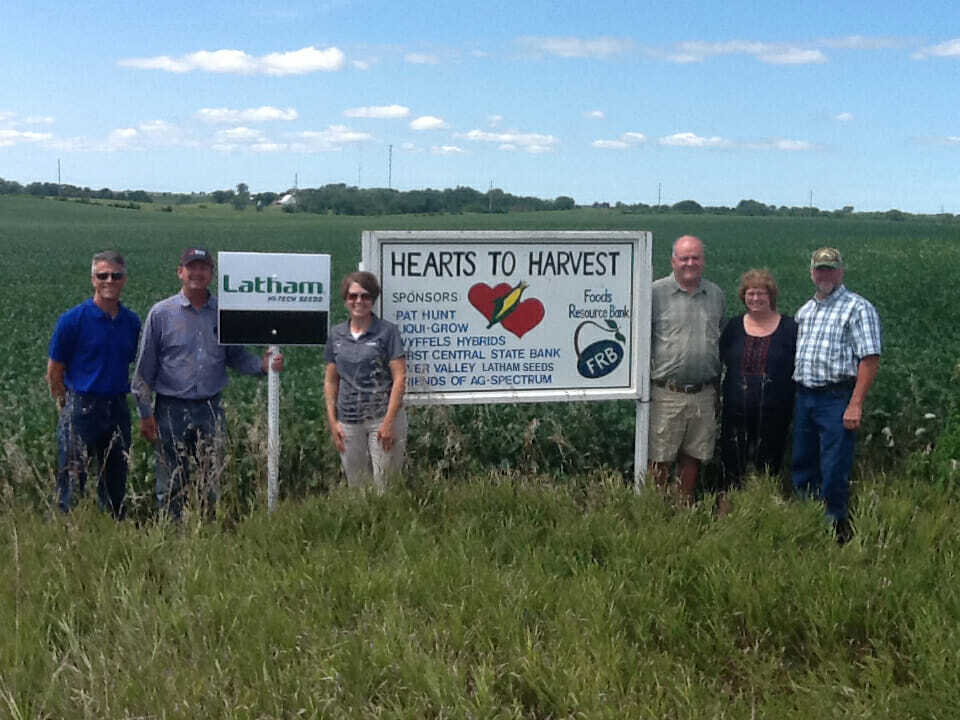
    All proceeds from crops raised on a 40-acre plot by Hearts for Harvest go to help poverty-stricken families in third world countries. Pictured from left to right are board members: Scott Rochau, Bob Braden; Shannon Latham, Latham Hi‑Tech Seeds; Dave Boeding, Nancy Urmie & Dan Urmie.
    All proceeds from crops raised on a 40-acre plot by Hearts for Harvest go to help poverty-stricken families in third world countries. Pictured from left to right are board members: Scott Rochau, Bob Braden; Shannon Latham, Latham Hi‑Tech Seeds; Dave Boeding, Nancy Urmie & Dan Urmie.

    It’s common for local farmers to come together at harvest time and help out their neighbors in need. What makes a group of Scout County farmers unique is that they come together each fall and combine for the benefit of farmers across the globe.

    Bob Braden heard about Foods Resource Bank (FRB), a non-governmental humanitarian organization committed to providing food security in developing nations through sustainable small-scale agriculture production projects.

    Feeling called to make a difference, Bob passed along the information to the congregation at St. Ann’s Catholic Church in Long Grove. He felt God nudge again, so Braden talked with more members of the community whom he thought might feel the same way. A committee was formed, and together they started a growing project called “Hearts to Harvest.” Today 10 committee members participate from both St. Ann’s and Faith Lutheran Church in Eldridge.

    Hearts of Harvest consists of 40 acres, which produces a crop of both corn and soybeans each year. All proceeds from the crops go to projects that help poverty-stricken families in third world countries feed themselves with assistance from the FRB. The FRB assists with everything from providing seed for community gardens and getting farmers the tools needed to installing drip irrigation.

    TeachToFish_Quote“Despite the challenges we might face, our growing project has had tremendous success,” says Braden, president of the Hearts to Harvest LLC. “We feel a sense of achievement working together to achieve a common goal of helping hungry people in developing world have the dignity and pride that comes with feeding themselves.”

    “We’ve been truly blessed with such by such a caring and giving community,” adds committee member and Latham® seed dealer David Boeding. “We would like to thank everyone for your past support and prayers. So many companies and individuals come together to support our annual project.”

    You can help, too! Simply donate $25 to sponsor one row of corn, which will help since Hearts to Harvest rents a 40-acre parcel to provide funds for the FRB.

    Each year after harvest, members of the Hearts for Harvest board gather to choose the sustainable projects to which they’ll donate. Past Hearts for Harvest-sponsored projects have included:

    2013  Honduras-Neuva Frontera – funds helped create cement ponds to capture water that could be piped into homes.
    2012  Kenya-Kitui – funds were used to increase food availability and increase water resources.
    2011 Liberia Rural Counties – funds were used to increase agricultural productivity and reduce malnutrition. Female head of households were targeted to develop home gardens.
    2010 Tanzania – Dodoma – funds helped develop and implement community-based water provision systems. Sand dams and tree nurseries were built. Local farmers were trained in agricultural techniques and technologies related to food security.
    2009 Liberia Rural Counties – this program supports agricultural and animal components as part of a wider program that includes water and school aspects as communities resettle after 14 years of war.
    2008 India Chattisgart – funding was used to train and educate farmers about increasing crop yields and, in turn, increasing their profits to help feed and educate their families. Funds also were used to construct and repair water resources in six communities.
    2007 Bosnia – Bosansko Grahovo – projects were funded in small Bosnian Village that was devastated by war. Funds were used to help local farmers build a milk buying station that met health standards to ensure milk quality.
    2006 Kenya Africa – funds helped farmers produce more grain and open doors for improving nutrition with meat, milk and eggs. Farmers were provided with access to fertilizer and learned how to produce their own maize, amaranth and soybean seeds to enhance plant performance.

    In honor of the work done in the developing world by Foods Resource Bank, today we’re sharing a traditional Tanzanian recipe for Braised Cabbage. Visit your local Farmers Market and gather the ingredients needed to try this at home!

    Team Latham

    September 5, 2014
    General, Recipes, Sides
  • Latham Hi‑Tech Seeds

    Late-Season Scouting Leads to Better Seed Decisions

    RootwormPressure
    RootwormPressure
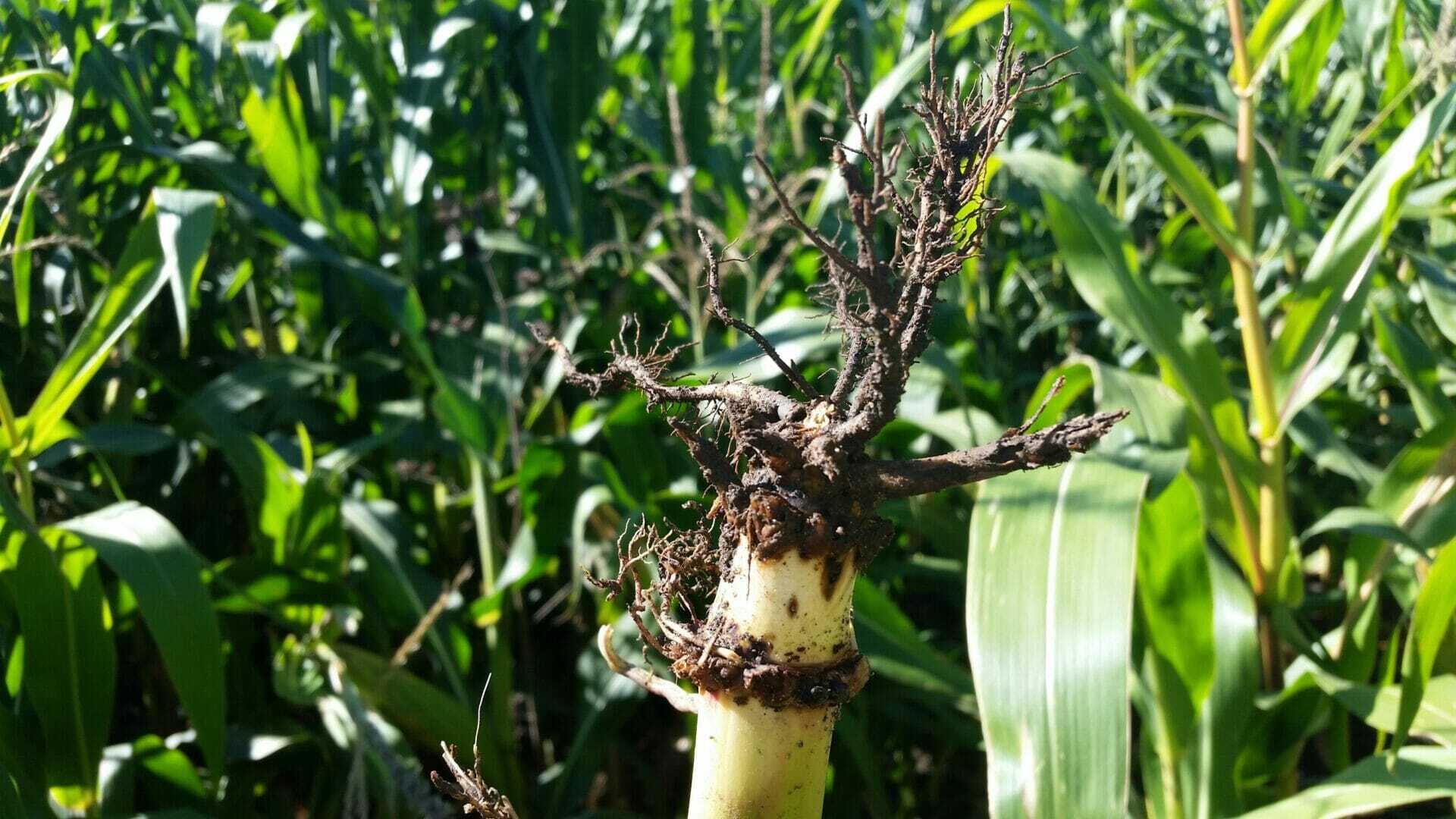
    Rootworm pressure may be low, but it’s present. Latham Corn Specialist Nick Benson (@LathamCornGuy) saw evident this week in a continuous corn field.

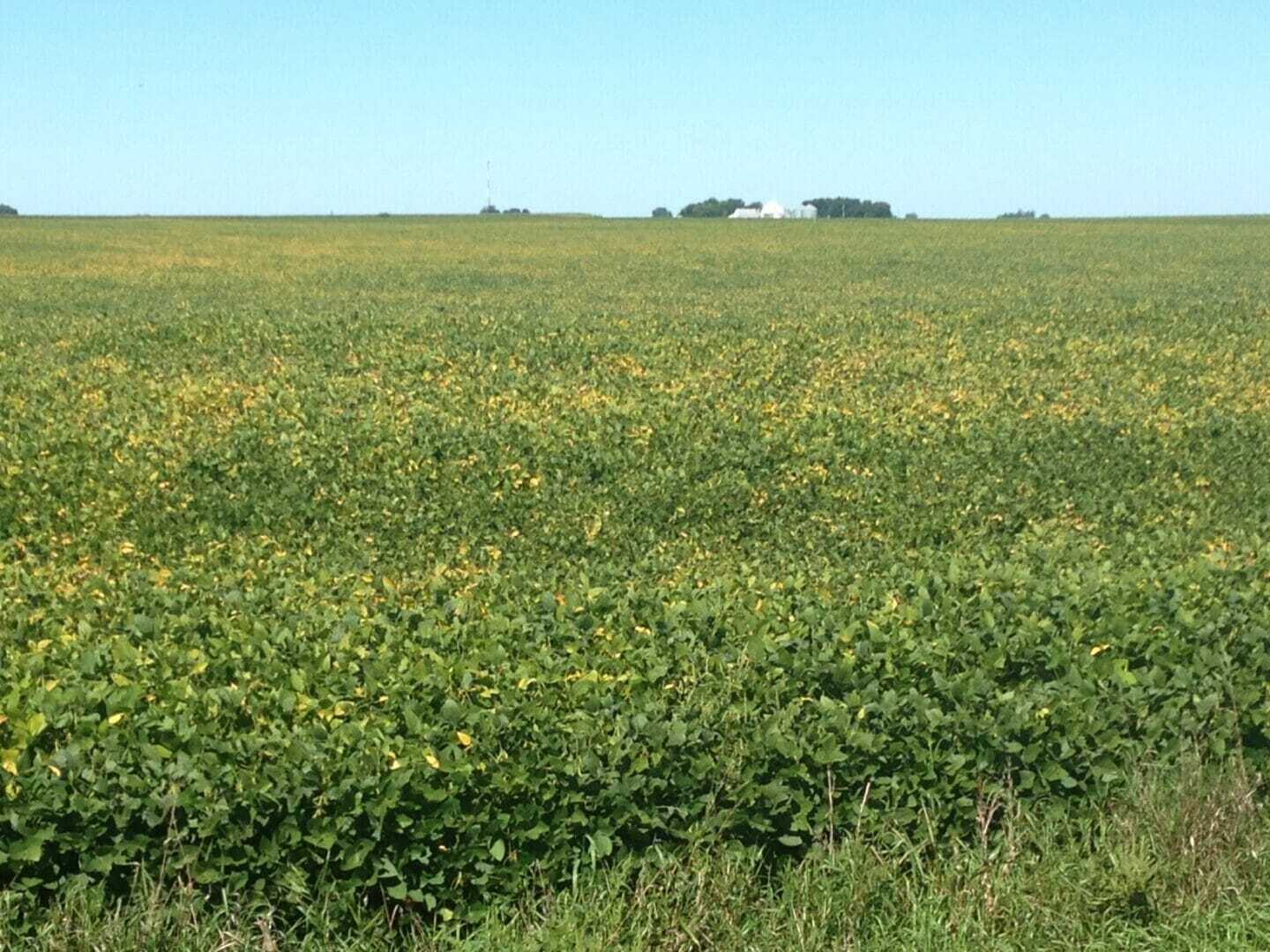
    The effects of our wet, cold planting season continue to surface. As one drives the back roads now, you’ll see where Sudden Death Syndrome (SDS) is affecting many soybean fields. You also may notice soybean fields turning yellow, which is a common symptom of Iron Deficiency Chlorosis (IDC).  IDC is a function of the soil type, so it’s most common in poorly-drained soils with higher-than-normal pH values.

    Plants under stress get taken advantage of by pests like Soybean Cyst Nematode (SCN). Doing a “drive by” or even walking through the fields may not be enough to detect SCN. Visual symptoms, such as above-ground stunting and/or yellowing, may not be evident for years. That’s why it’s best to check fields for the presence of SCN during the growing season by digging roots. You can also sample this fall for SCN by gently removing soil from the roots. Look for the egg-filled, round, white SCN females on the roots.

    While your shovel is at the ready, also be sure to conduct a few root digs in your corn fields. Latham Corn Product Specialist Nick Benson dug roots Sept. 2 in Fayette County Iowa, where he found evidence of rootworm feeding. In addition to looking for corn rootworm damage, note signs of sidewall compaction and hard pans. Also look at leaves and ears for signs of disease.

    It’s important to identify late-season corn and soybean diseases, as well as insect damage, so you can better manage them in the future. One way to control corn rootworms, for example, is to rotate rootworm-resistance traits developed by Monsanto, Syngenta and Dow.

    As an independent seed company, Latham Hi‑Tech Seeds has access to traits and technologies from all the major providers. We can work with you to develop a diverse crop plan that include Latham’s GladiatorTM Hybrids, which combine the best genetics and traits available to help maximize yields from corn-on-corn acres.

    To help simplify your soybean seed selection process, our website lists Latham® IRONCLAD™ Soybeans that include exceptional genetics and industry-leading protective traits to battle against yield-robbing threats from pests and diseases. Each IRONCLAD soybean brand must be Soybean Cyst Nematode resistant and carry an Iron Deficiency Chlorosis rating of 2.2 or better.  IRONCLAD brands must protect against either White Mold or Sudden Death Syndrome with a rating of 2.2 or higher.

    White Mold and SDS have both been an issue this season in different parts of our territory, so farmers will want to plant IRONCLAD soybeans on affected acres in the future. Plus, IRONCLAD products have strong defensive ratings against Phytophthora Root Rot and Brown Stem Rot.

    For more information about selecting the right seed for your situation, visit with your local Latham® representative. Also feel free to contact me at 1-877-GO-LATHAM (1.877.465.2842).

    Webspec Admin

    September 4, 2014
    Agronomics, Corn, Crop, Disease, General, Insects, Soybeans, Weed Control
  • Latham Hi‑Tech Seeds

    Wet Weather Continues

    NickC 9314

    NickC-9314Above-average temperatures and frequent rains continued this week. At Latham headquarters in North Central Iowa, about 7 inches of rain has fallen during the past 9 days. Some parts of the state could use a break from the wet weather, however, the crop remains in very good condition. Iowa Secretary of Agriculture Bill Northey, today on KILJ Radio, reports that 76% of corn and 73% of the state’s soybeans crop is in good to excellent condition.

    Diseases like Sudden Death Syndrome continue to surface. Keep a watch on stalk rots, which can help prioritize fields for the upcoming harvest. Scouting reports will also be helpful as you select seed now for next year’s crop. Click here for regional crop updates in the territories we cover.

    Team Latham

    September 3, 2014
    Fall, General, Season
  • Latham Hi‑Tech Seeds

    Threshing Days are Stark Contrast to Today’s Harvest

    20140830 145823

    20140830_144039“To appreciate farming today, one must understand history” was the main point I made in last week’s blog post. A few days after I posted that blog, I had the opportunity for a hands-on history lesson at the 3rd Annual Norris Threshing Day northwest of Mason City, Iowa.

    It was a beautiful, late summer, Saturday afternoon. Some clouds floated by, giving a little shade once in a while, and a nice breeze was blowing. It was just one of those days when you’re thankful to be alive and able to enjoy the great outdoors.

    As my wife, Janice, and I drove to into the lane, a nice A John Deere was popping away and singing on two cylinders. It was attached by a long belt to a threshing machine. This machine is like a stationary combine, separating the grain from the rest of the oat plant. The difference is that oats must be fed into the threshing machine, by hand, from a flat rack.

    20140830_145823

    Preparing for threshing requires advanced preparation. The oats are first cut and put into shocks, which are bundles of plants tied together, days before. The shocks are then picked up by hand and put on flat racks, which are four-wheeled wagons that are pulled beside the thresher. The bundles are then thrown onto a conveyer with a pitch fork and conveyed into the thresher to be separated.

    In the three hours that I was watching the threshers, less than 100 bushels of oats went into the wagon. Remember, this was just the threshing part. Hours were spent in advance, cutting and shocking the oats. Consider this… A modern combine can do ALL of these steps and harvest about the same amount of grain in 10 minutes!

    Charlie Norris and his family had some other older machinery lined up around the field. Janice and I took a nice trip down memory lane, reminiscing about the “good old days.” We looked at outdated equipment like moldboard plows and small field cultivators, which were used to turn the soil black when I was a kid. (Today we leave crop residue on top of the soil to keep it from blowing away or washing away.)

    I also saw many older John Deere tractors like the ones I used when I started farming in the 1970s and couldn’t help but think of all the advancements that have been made. The technology we use today has made farming so much less labor intensive – and safer. The hard labor and dangerous equipment used in the “good old days” played a large role in many farm kids getting an education and moving to the city for better pay, better hours, and not all the manual labor!

    Thanks to new technology, many 30- to 45-years-old and are either returning to their rural roots or moving to rural areas for the first time. They’re bring high skill sets, such as college degrees and master’s degrees, and have a career path in place with outside connections.

    Why the rural rebirth? Come see for yourself! A fall harvest bloggers tour, like we host in Franklin County, is a great way to see modern day farming in action. I’m on the planning committee for it this fall, so let me know if you’re interested in attending, even if you don’t blog. You can also learn more about modern farming by following along daily with the Iowa Food & Family Project. And, of course, you can always ask me questions!

    Larry Sailer, Musings of a Pig Farmer

    September 2, 2014
    Agriculture, General, Industry News
  • Latham Hi‑Tech Seeds

    Win or Lose, Make Your Tailgate a Success

    ISU Tailgate2011
    Coach Paul Rhodes (center) with Chris, Bill, Shannon and John Latham
    Coach Paul Rhodes (center) with Chris, Bill, Shannon and John Latham

    “Kickoff” is a sure sign that seasons are changing. Our annual Latham® dealer kickoff meeting marks the beginning of a new sales season. And our annual Latham tailgate marks the beginning of a new football season – including another season of the Latham Locker Room Show.

    The Latham Locker Room Show airs during every football broadcast on the statewide Cyclone Radio Network. This segment airs following the play-by-play and includes exclusive “locker room” interviews with players and coaches. We’d like to invite you to listen along as you’re tailgating in the parking lot, driving home from the game or bringing in #crop14.

    Just as we enjoy a friendly rivalry when Iowa State takes on Iowa, there is sure to be a fair amount of smack talk when Latham customers from North Dakota Roll into Ames this weekend,” says John Latham, company president and ISU alum.

    The Bison may be the three-time defending national champions, but the Cyclones will have the home field advantage. Iowa State’s top tight end, E.J. Bibbs, is generating lots of attention already. Although this ISU senior had a breakout season in 2013, Iowa State Head Coach Paul Rhoads says his team’s offense won’t revolve around one player this season.

    “It takes a good offense and a good offense to win on the grid iron – or in a farm field,” agrees John Latham. “I’m really excited about the talent ISU has and am looking forward to seeing the new defense come together. I’m equally excited about our new offensive coordinator and tight ends coach Mark Mangino. I know our team will be prepared to do battle.”

    To help you prepare for the new season, we’re sharing a recipe for Pizza Snacks from the new Let’s Cook cookbook featuring “Iowa Girl Eats” blogger and host of “Join My Journey”, Kristen Porter. We know that large quantities of good food are key to hosting a successful tailgate, so we’re also including links below to some of our most popular tailgating recipes.

    Get into the spirit and bring home the “W” with Team Latham!

    Top Tailgating Recipes

      • Tailgating Tips
      • Creamy Buffalo Chicken Dip
      • Pulled Pork
      • Tailgating Eggs
      • Build Your Own Burger

    Team Latham

    August 29, 2014
    General, Recipes, Sides
  • Latham Hi‑Tech Seeds

    Seed Selection is Key to Avoiding Sudden Death

    Nematode01
    Photo courtesy of Purdue University Extension
    Photo courtesy of Purdue University Extension

    The effects of our wet, cold planting season continue to surface. As one drives the back roads now, you’ll see where Sudden Death Syndrome (SDS) is affecting many soybean fields across Latham country.

    Although SDS infects soybean plants right after germination and emergence, symptoms generally do not appear until mid- to late summer. Leaf symptoms first appear as yellow spots between leaf veins. Eventually, the leaves turn yellow and brown streaks develop between the leaf veins while the veins remain green. Leaflets eventually drop but the petioles remain on the stem. Diseased plants may have rotted root systems.

    Understanding the extent of SDS infection in each field is key to effectively managing the disease. Future management tactics include: reducing soil compaction; planting fields with a history of SDS towards the end of a planting schedule when soils may be warmer and drier; and testing for the presence of Soybean Cyst Nematodes.

    Dont-Feed-the-NematodesSoybean Cyst Nematode (SCN) is usually associated with SDS. You may see more severe cases of SDS in soybean varieties that are SCN-susceptible. When selecting soybean seed, it’s best to read through the SDS score rather than judge a bean solely by SCN tolerance.

    Planting tolerant varieties, or avoiding very susceptible varieties, is the most effective way to reduce losses from SDS. Keeping good field records from year-to-year will help determine which characteristics are most crucial when selecting soybean varieties to plant in a given field in a given year.

    To help simplify your seed selection process, we’ve made a list of Latham® brand soybeans with Excellent and Good Tolerance to SDS. Our website includes more information about each product. Also feel free to contact your local Latham representative or call 1-877-GO-LATHAM (1.877.465.2842) for additional information.

    Latham® Soybeans with Excellent SDS Tolerance (1.6 – 1.9 ratings): 

    L1383R2 L1968R2 L2128R2 L2787L
    L2884R2 L2978L L3158L L3248R2


    Latham® Soybeans with Very Good SDS Tolerance (2.0 – 2.2 ratings):

    L1985R2 L2083L L2084R2 L21B53R2
    L2183R2 L2253R2 L2258L L2558L
    L2585R2 L2758R2 L2948R2 L3184R2


    Webspec Admin

    August 28, 2014
    Agronomics, Crop, Disease, General, Soybeans
  • Latham Hi‑Tech Seeds

    Rain at Last!

    Photo 4

    It’s been a dry summer across Latham Country. After weeks of reporting “cool, dry conditions persist,” it’s good to hear that many areas received heat units and rainfall during the past 7 days. Above-normal temperatures during the week aided crop development.

    Eighty-eight percent of Iowa’s corn crop is in the dough stage or beyond, which is 17 days ahead of last year and 8 days ahead of the five-year average. Three-quarters of the corn is rated in good to excellent condition. Ninety-four percent of the soybean crop is setting pods or beyond, which is 13 percentage points above last year and 1 point above average. Nearly ¾ of the soybean acreage is in good to excellent condition.

    The week ending Aug. 25 was Iowa’s wettest in seven weeks. Topsoil moisture levels improved. Subsoil moisture levels rated 4 percent very short, 21 percent short, 73 percent adequate, and 2 percent surplus. Click here for regional updates in the territories we cover.

    Team Latham

    August 27, 2014
    General, Season, Summer
  • Latham Hi‑Tech Seeds

    To Appreciate Farming Today, You Must Know History

    Loaded corn 1939
    It took an entire family to bring in a load of corn back in 1939. Janice’s grandpa, Fred, is leaning against wheel. Her father is pictured next to him. Just imagine the manual labor involved!
    It took an entire family to bring in a load of corn back in 1939. Janice’s grandpa, Fred, is leaning against wheel. Her father is pictured next to him. Just imagine the manual labor involved!

    Have you ever wondered what farming and our food system would look like if we farmed the way we did in “the good old days“? I found myself thinking about this topic as I had lots of windshield time to reflect while driving to the 7 meetings I attended last week. (So much for winter being the farmers’ meeting season!)

    Every time I tried to decide how others would perceive farming in the good old days, I got hung up. When were the good old days?

    Many folks believe farming was simpler before technology… but which technology? Technology has a different definition, depending on a person’s occupation or personal experience. Some might define the “good old days” as the time before we planted genetically modified crops. Others might define it before the advent of equipment like GPS and tractors with tracks instead of tires.

    no-tillYet today’s equipment allows us to better manage our land, reduce soil compaction and implement practices like minimum tillage. Today’s farming advances, such as herbicide application and genetically modified seeds, are the most talked about today. But why? What people do not understand, they often fear. Those oppose new technology capitalize on “fear of the unknown.” Fear is used to discredit new technology.

    To understand agriculture today, we must know where it has evolved from. In 1790, 93% of the population of the United States was rural, most of them farmers. By 1990, barely 2% of our population farmed.

    “The agriculture we have today in the United States is unique,” writes J. Paul Lilly, Associate Professor Emeritus, Department of Soil Science, North Carolina State University. “No nation has ever had so few people actively farming. This is a profound social change that has isolated most people from rural life and from an appreciation of the complexities and uncertainties of food production.”

    As a young farm boy, I remember the many different types of crops and livestock we raised that provided food for our own family. We had dairy cows, beef cattle, hogs and chickens. I’ll never forget that goose that chased me and bit me in the belly or the sheep buck that nailed me in the rear as I carried two, 5-gallon pails of feed!

    I remember farrowing pigs under flat racks in the pasture. (I could have been a track star because I had plenty of “training” as I ran to jump on the hay rack before a sow, protecting her baby pigs, could catch me!) I trekked several miles, walking soybean through fields and pulling weeds before the advent of Roundup Ready Soybeans. I learned to drive the “70” John Deere on the hay baler when I was six!

    I could go on and on about “the good old days,” but I think you get the picture. Farming was a lot of hard, manual work back then. I’m still not sure how or why I survived, except maybe I was still needed to write this blog! I’m not saying that farming is not hard work today, but it’s a different type of work. We farm in a way that is safer and smarter. We also know a lot more about the need to fertilize (feed) plants, as well as protect the water and soil.

    In the “good old days,” we plowed the fields until they were black. Farmers took pride in the fact that you couldn’t see a corn stalk when they had finished field work. Why was this a source of pride? The herbicides available then didn’t work if they were diluted by organic matter, or corn stalks. The equipment used then to make a seedbed plugged if the corn stalks were not completely buried. Planters at that time couldn’t plant uniformly if there were stalks, dirt clods or if the ground was uneven. We plowed, disked and field cultivated until that ground was powder.

    This was back before we had terraces, buffer strips, or practiced contour farming. As a result, it was common to see road ditches full of black soil and streams full of silt. With black tillage, there wasn’t much room for wildlife to hide. I remember only seeing a deer one time as a young boy. That’s not the case today as wildlife has made a huge comeback. Every time I drive home after dark now, I’m watching for the next deer on the road. It’s not uncommon to see eagles soaring either.

    The chemicals we use today are so much more environment friendly, too. When I started farming, it was a problem getting rid of all the pails the chemicals came in because we measured chemicals in gallons. Now we measure in ounces!

    Minimum tillage and no till, made possible by new technology including Roundup Ready corn and soybeans, have made this comeback possible. New seed genetics allow crops to withstand conditions that the crops of my youth wouldn’t survive. They have better stalks and better roots. Today’s crops can withstand dry weather, insects, disease and just plain yield better.

    When I think of all the new technology being developed today (drones, GPS, crop genetics), I’m even more confused about how to define “good old days.” Perhaps the best answer is the original garden… but even then, there was that darned old apple tree!

    Larry Sailer, Musings of a Pig Farmer

    August 26, 2014
    Agriculture, General, Industry News
  • Latham Hi‑Tech Seeds

    Curious about #RealPigFarming?

    Image001

    Consumers continue to have questions about how pigs are raised, and no one knows the answers better than real pig farmers, says Claire Masker.

    Claire Masker
    Claire Masker

    As public relations manager for the National Pork Board, Claire’s main responsibilities are to create positive outreach materials for the U.S. Pork Industry and Pork Checkoff programs. Last month Claire invited me to talk about #agvocacy with a pioneering group of pig farmers from across the nation, who are participating in The Pork Checkoff’s new social media outreach program through #RealPigFarming.

    “We want to empower producers to have meaningful, impactful conversations on social media with consumers about what happens on their farms,” explains Claire. “The hashtag (#) before Real Pig Farming helps people search social media posts with the same phrase, making it easier for them to follow conversations.”

    #RealPigFarming brings together pig farmers, academics, youth, veterinarians and allied industry members to discuss key topics in modern pork production. Everyone with a passion for agriculture or a positive story to share about real pig farming is invited to use the #RealPigFarming in status updates, tweets, Instagram photos, blogs, vlogs and other social media updates. Visit www.facebook.com/RealPigFarming, or follow @RealPigFarming on Twitter.

    Claire, showing at the fair.
    Claire, showing at the fair.

    “I have a passion for helping farmers and those involved in the food and agriculture industries tell their story,” says Claire. “We have a great story to tell about what farmers are doing to raise food for neighbors. As Kid President says ‘Create something that will make the world awesome,’ and I like helping farmers show the world all the awesomeness they create every day on their farms.”

    Claire also puts #RealPigFarming into action. You can follow her on Twitter @ClaireMasker and on Instagram @ClaireMasker. Growing up the second of five kids on her family’s farm in Neola, Iowa, she always has a story to tell.

    “My siblings and I had the ‘opportunity’ to work on our family farm. We raised row crops, cattle, hogs and sometimes had chicken and turkeys.I’ve done just about every job on the farm from walking beans and scooping out bunks to feeding livestock. I’ve also tried my best to operate a tractor and grain cart. There were times that I was jealous of all my ‘city’ friends. Now I look back at everything I learned and realize how blessed I am. I learned about hard work, as well as learned to respect animals and the land.”

    After graduating from high school, Claire attended Iowa State University where she earned a bachelor’s degree in Agriculture Education – Communications Option and Animal Science. She also earned a Masters of Science in Agriculture Education. While earning her masters, Claire worked for the U.S. Pork Center of Excellence. She then went to work for the Iowa Corn Growers Association and the Iowa Corn Promotion Board as the communications manager where she managed the I-LEAD program and assisted with the Collegiate Advisory Team.

    Today Claire is promoting the industry she loves by sharing one of her family’s favorite #pork recipes with us. Enjoy this recipe and remember to #ThankAFarmer! If you’d like to learn more about #RealPigFarming, here are links to a few blogs that I enjoy following:

    • Musings of a Pig Farmer
    • Corn, Bean, Pigs & Kids
    • Food & Swine

    Larry Sailer, Musings of a Pig Farmer

    August 22, 2014
    Agriculture, General, Industry News
  • Latham Hi‑Tech Seeds

    Moisture is Critical During Pod Fill

    L 2884 RR2

    Boeding soybean plotJuly makes corn and August makes soybeans, as the saying goes. That’s because adequate moisture levels are especially crucial during two key developmental stages: germination and reproduction-seed development. Having adequate moisture wasn’t an issue at germination time as record rain fell in Iowa after Easter. The Midwest experienced wet, cold weather in May and into June, yet some areas haven’t received a drop of moisture for the past three or four weeks.

    Moisture during the reproductive stages has a major impact on yield potential. When water is short during this growth stage, soybeans show signs of drought stress. Plants may abort flowers, and the numbers of pods set is reduced. Fewer seeds per pod are produced per pod, and smaller seed may result. Because dry conditions can slow or stop the nitrogen fixation needed by the plant to produce soybeans, yields will be lowered.

    Anytime you get this type of weather, other stress factors arise. You may notice soybean fields turning yellow, which is a common symptom of Iron Deficiency Chlorosis (IDC).  IDC is a function of the soil type, so it’s most common in poorly-drained soils with higher-than-normal pH values.

    Unfortunately, it’s too late to really manage IDC properly by the time it’s noticed in a field.  The best defense is a good offense.  Note trouble spots now, and then be proactive when choosing future soybean brands for these fields. In fact, Latham Hi‑Tech Seeds gives the IRONCLADTM designation only to those soybeans bred for high yields with a strong defensive package.

    There is no such thing as complete resistance to IDC, but some soybean brands (i.e. varieties) are better than others at handling this condition.  Because Latham Hi‑Tech Seeds is headquartered North Central Iowa – where Iron Chlorosis is a familiar challenge – we have always tried to choose soybean genetics that have the best possible scores against this condition.  Visit with your local Latham® dealer about specific products that would best fit your farm, or feel free to call our office directly at 1-877-GO-LATHAM.

    Webspec Admin

    August 21, 2014
    Agronomics, Crop, General, Growth Stages, Soybeans
Previous Page
1 … 60 61 62 63 64 … 160
Next Page

Latham Hi‑Tech Seeds

131 180th Street | Alexander, IA 50420

(641) 692-3258

SIGNUP FOR OUR NEWSLETTER
  • Contact
  • Legal
  • Dealer Center
  • Seedware Login
  • Latham Gear

© 2025 Latham Hi‑Tech Seeds. All rights reserved. | Iowa Web Design by Webspec | Privacy Policy

Latham® Hi-Tech Seeds is a trademark of M.S. Technologies, L.L.C., 103 Avenue D, West Point, IA 52656.