Latham Hi-Tech Seeds

(641) 692-3258

  • Home
  • Performance
  • Products
    • Corn
    • Soybeans
    • Soybean Blends
    • Alfalfa
    • Corn Silage
    • Seed Guide
  • Find a Rep
  • Media
    • Blog
    • News
    • Videos
    • Podcasts
    • TECHTalk
  • About Us
    • Company History
    • Our Mission
    • Careers
    • Become a Rep
    • Sowing Seeds of Hope
  • Contact Us
  • Latham Hi‑Tech Seeds

    Note Effects of Frost and Plan Accordingly for Harvest

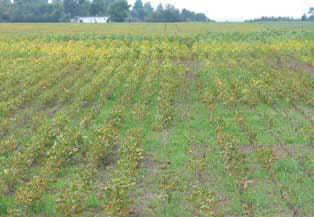
    Frost damage Soybean2

    Weather is always a concern for farmers – and rightly so. Weather accounts for 70 bushels per acre, or 27 percent, of total yield! In research conducted by Dr. Fred Below, Professor of Plant Physiology at the University of Illinois, weather ranks as the most important factor affecting corn yield.

    Corn and soybean crops across Latham Country were affected by a mid-September frost. Effects of the frost appear to be highly variable based on local climate conditions, crop maturity, and topographical features.

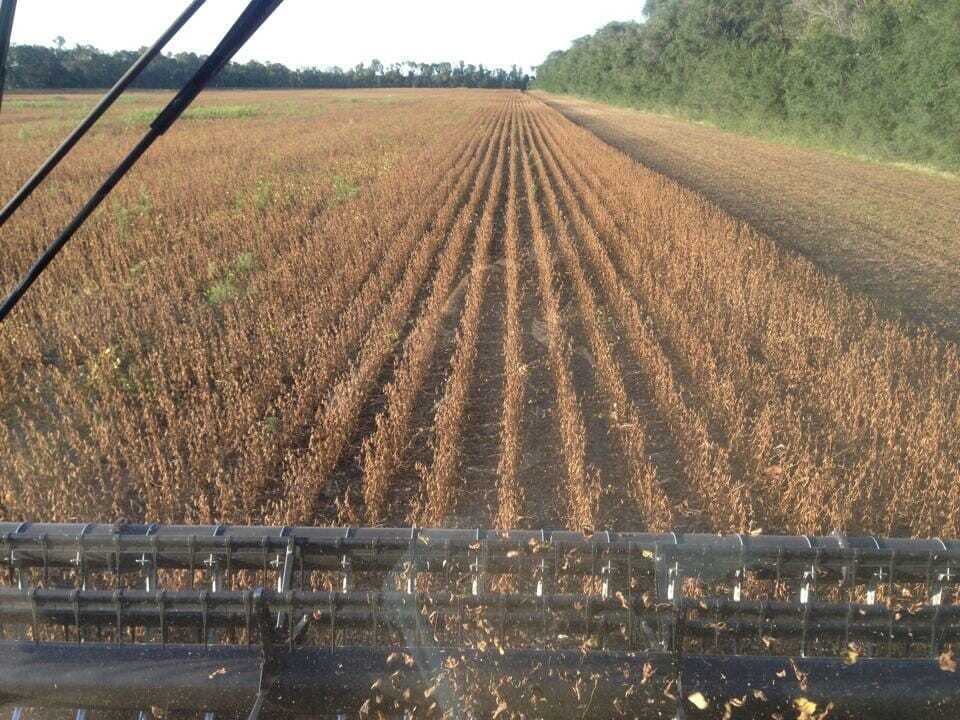
    frost damage Soybean2If you haven’t yet already done so, now is the time to scout crops affected by frost and prioritize fields for harvest. The amount of damage to corn from a frost or killing freeze depends largely upon two factors: (1) How cold it gets and for how many hours; and (2) The plant’s stage of development.

    When grain filling is stopped by frost/freeze damage, the grain itself is often impacted. Test weights are often impacted, and kernels tend to be softer and more susceptible to mechanical and drying damage.  Misshapen and broken kernels impact air movement through dryers and storage bins, increasing the potential for losses at those stages as well.

    When accessing frost damage in soybeans, watch for these characteristics:

      • Green or elongated yellow soybeans that shrink to smaller than normal size after drying.
      • Reduced oil content and quality.
      • Higher moisture level (by 1% to 2%) than indicated by a moisture meter.
      • Slower field dry-down.

    Take note of crop damage and prioritize fields accordingly. Focus first on fields that are exhibiting lodging or are at the greatest risk of lodging. Rank and then harvest the fields where stalk lodging or stalk rot is the worst. Hybrid maturity and crop residue management should take a backseat to weak stalks.

    Stalk quality problems often are not apparent until mid- to late September in years where crop development is delayed. Monitor corn fields for compromised stalk strength or the development of severe stalk rots, and adjust your harvest schedules accordingly. Harvest these fields early in the season to avoid the consequences of severe stalk lodging.

    Prioritizing corn fields for harvest is always important. This year it may be even more so as there were so many variables affecting crop growth and development from planting through harvest. There are some areas that received enough rainfall, so the crop is growing fairly evenly across the field.

    In a wet spring like we experienced, roots – or lack thereof – can be a real issue. Stalks could be weaker and the plants may be smaller in very wet or ponded areas of fields. Wet soils are more of a significant factor with bad roots or root lodging, and that would affect harvest decisions.

    Webspec Admin

    September 25, 2014
    Fall, Frost, General, Season, Weather
  • Latham Hi‑Tech Seeds

    Attention Turns to Harvest

    GaryG 9 17beans
    Latham® dealer Kyle Geske starting harvest on Latham L00938RR soybeans
    Latham® dealer Kyle Geske starting harvest on Latham L00938RR soybeans

    Our season of extremes continue. This past week we experienced extreme temperature differences, as temperatures at one point as low as 33 degrees but daytime highs reached 90 degrees in Northwest Iowa.  This past weekend also brought another rain event – or two – to the area. Top soil moisture is 80% adequate, and subsoil moisture is 79% adequate.

    Although last week’s early frost nipped immature crops, 76% of Iowa’s corn and 74% of our state’s soybean crop are in good to excellent condition. Click here to see how crops are faring by region across Latham’s six-state marketing footprint.

    Team Latham

    September 24, 2014
    Fall, General, Season
  • Latham Hi‑Tech Seeds

    What’s the Price of Income Equality?

    Larrypigfarmer

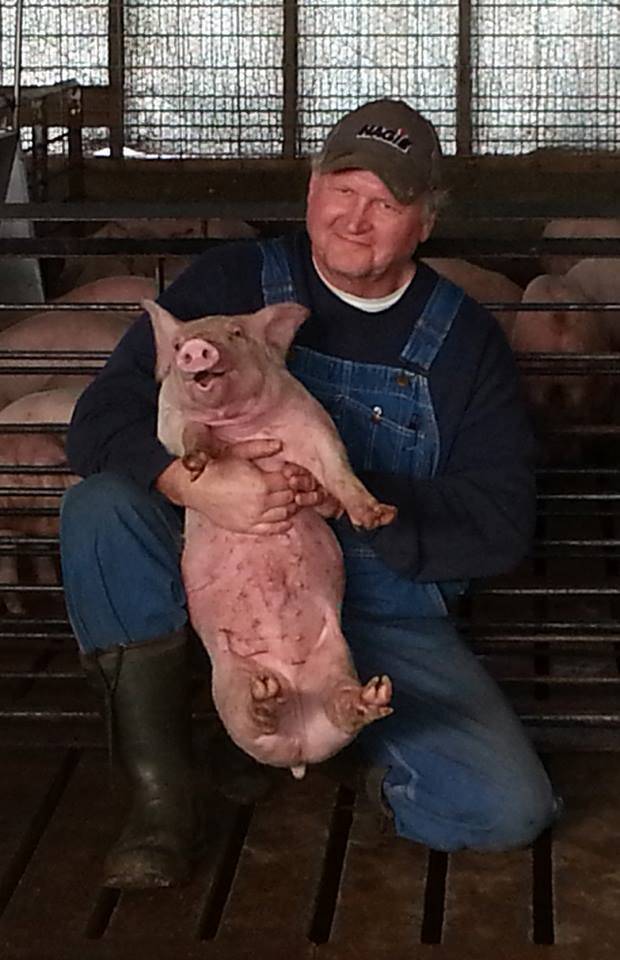
    LarrypigfarmerI’ve been reading articles about income inequality, covering a wide array of topics, since the economy crashed in 2008. Wall Street has been picketed. The minimum wage is too low. Rich people are simply hoarding all the money. But in The Des Moines Register on Tuesday, Sept. 16, a front page-article by Mike Kilen explained how the Ag economy has contributed to growth in the rich-poor gap.

    The story doesn’t out right blame farmers for causing this gap, but I did take it to be the underlying theme of the story. Admittedly, that’s my perception of the article. Kilen includes information from Iowa State University sociologist David Peters that three Iowa counties are in the nation’s top 10 for inequality of income growth. That’s not surprising as farming had a pretty good run from 2000-2012 while the economy, as a whole, did not. Logic tells me that this would make a spread.

    Is it the farmers’ fault? Should the farmers be “fair” and share the gains made?

    Before you answer “yes,” remember that farming goes in cycles. Farming was great in the 1970s, and then in the 1980s, we experienced a farm depression that took out many farmers. Those who survived were usually ended up farming more ground. Do the math: There are fewer farmers but the same amount of land is being farmed. Of course, the farmers are “bigger.” Is it their fault? Of course not! That’s how a capitalistic society functions.

    These farmers took a risk by taking on more land, and they’ve enjoyed some good times. The last five years have been probably some of the best ever for farmers who were raising crops or livestock with strong market prices and were doing a decent job of controlling their business expenses.

    Now, however, the cycle has turned. The price I can sell my soybeans and field corn for today is below the cost of production. My income this year will be well below minimum wage. It probably will be a negative income! Does anyone who stands to make a profit this year want to share his income with me? I’m sure there will be people standing in line, waiting to give their money to me, right? Not!

    “It’s difficult to imagine the economic mindset of those who consider that government forcing an increase in the minimum wage can bring about improved prosperity,” was posted today on one of my friend’s Facebook pages yesterday.

    Let’s ask ourselves if question: If economic prosperity through minimum wage levels promises such an advantage, why not mandate a minimum wage of $100 per hour or higher?

    Those who see government as the great provider can’t seem to grasp the emptiness of their vision! Numerous attempts have been made to for the U.S. government to become all-powerful, the end-all and be-all. The results have been devastating, yet so many Americans continue to promote these failed beliefs.

    Our country is headed in the direction of socialism. We want everyone to be equal… I see this in kids’ contests where every kid gets a ribbon or prize. I see it in this article in The Register article, indicating that all Iowans should have equal net worth.

    Let’s examine why the net worth gap is spreading in Iowa. First of all, land values have increased significantly. The incomes of some farmers have followed, but not nearly as much as one might think because a lot of this value is only on paper.

    Commodity prices, on the other hand, greatly impact the amount of disposable income farmers have to purchase new machinery and equipment and to build buildings or buy land. The more money there is made in farming, the more money gets released into the U.S. economy. But it takes more than that.

    We must find the will for everyone to achieve. We need better jobs. We need to get people trained and educated to do those jobs! When I was running my construction business, one of my biggest constraints was finding people with the skills and “will” to work. Even the social fabric of our society played a role. Many employees would work until the state paperwork for child support caught up with them, and then they did not show up to work. I visited with a friend last week who is still involved in the construction, and his biggest challenge is finding people willing to do the work.

    The spread in wealth brings to mind the story of Jack Ma, an entrepreneur from China. His company, Alibaba, went public last week. He worked hard and took a chance. He also had the knowledge and talent. Jack is now worth billions. Should we take away his incentive to dream big?

    I know… Let’s allow tax policy to level the playing field as Senator Tom Harkin likes to say. After all, the Government is here to help you! I keep reading about all the programs USDA has to help the disadvantaged farmers get started.

    Half of the people in this country are being subsidized by the other half! Keep this up, and we will take away even the most energetic worker’s will to succeed. If you take from one who is working and give to the one who isn’t working, doesn’t that limit the amount of work being done by both groups?

    “When everybody owns something, nobody owns it, and nobody has a direct interest in maintaining or improving its condition. That is why buildings in the Soviet Union — like public housing in the United States — look decrepit within a year or two of their construction.”

    Larry Sailer, Musings of a Pig Farmer

    September 23, 2014
    Agriculture, General, Industry News
  • Latham Hi‑Tech Seeds

    HenCliff Honey is the Bee’s Knees

    Honeys comb.jpg
    Ian and Melissa with their 12-year-old son, Nik.
    Ian and Melissa with their 12-year-old son, Nik.

    Starry filled nighttime skies. Wide open spaces to roam. The feel of the sun shining on your face. The smell of harvest in the air…

    These are the reasons most farmers enjoy living in rural areas, making a living doing what they love. It’s why Ian Pitzenberger desired to farm. It’s also why he and his wife, Melissa, feel blessed to raise their family on a farm. They’re enjoying keeping farming traditions, while giving their own farm a “flavor” of its own.

    Ian has “officially” been raising seed beans for Latham Hi‑Tech Seeds since 2004, but he actually grew up helping his dad raise them on the Tyden No. 6 Farm in Dougherty, Iowa. Aftergraduating in 1999 from Greene High School, Ian attended Kirkwood Community College for two years and then transferred to Iowa State University where he earned a Bachelor’s of Science degree. He then took a full-time job at a local co-op for a year until he had the opportunity to rent a farm. Today Ian and Melissa farm with Ian’s parents, Ted and Judy Pitzenberger, and Ian’s brother Phil and his wife, Lyndsie.

    Ian with his daughter, Eliyah, who was born in January 2014
    Ian with his daughter, Eliyah, who was born in January 2014

    “My dad is the glue of the operation; he keeps all of us together and running. Phil takes care of the business side. He’s the number cruncher and keeps our profits in the green. I’m the “service manager.” I keep the equipment running as efficiently as possible,” says Ian.

    In addition to raising row crops, this year Ian and his son started keeping bees and producing honey. They wanted to diversify their operation, as well as help the environment since there has been so much talk about bees disappearing.

    “It’s a wonderful opportunity for our children to learn responsibility and to make some money at the same time,” says Ian. “I also wanted a chance to help make a difference. Without bees, there is no pollination. Without pollination, plants die.”

    Another advantage of keeping bees is that it’s relatively inexpensive to start plus the turnaround time is relatively low. The Pitzenbergers harvested their first honey within two months. After collecting the combs, they extract the honey and run it through a screen to remove wax and particulates. Then it’s bottled – raw.

    On June 22, the bees were just starting the comb. On Sept. 7, Ian and Nik harvested the last of their first-year honey.
    On June 22, the bees were just starting the comb. On Sept. 7, Ian and Nik harvested the last of their first-year honey.

    “We don’t use any heat in the process because heat destroys all the vital ingredients that give honey its healthful properties,” says Ian, who keeps the bees on the farm where his mother was raised by her parents, Henrietta and Clifford. To honor his maternal grandparents, the product is labeled HenCliff Honey. This first season has definitely been a learning experience, but it’s been a good experience.

    “With any job or hobby, there are several ups and downs,” says Ian. “In the end, beekeeping is worth it because it does so much good for the environment and it results in healthy products.”

    Honey is extremely versatile, from the medicine cabinet and bathroom vanity to the gym bag and kitchen cupboard. Honey attracts and retains moisture, so it’s used in many beauty and healthcare products. With approximately 17 grams of carbohydrates per tablespoon, honey is an effective and all-natural energy booster. It’s also a natural cough suppressant, helping soothe and relieve irritation from coughing.

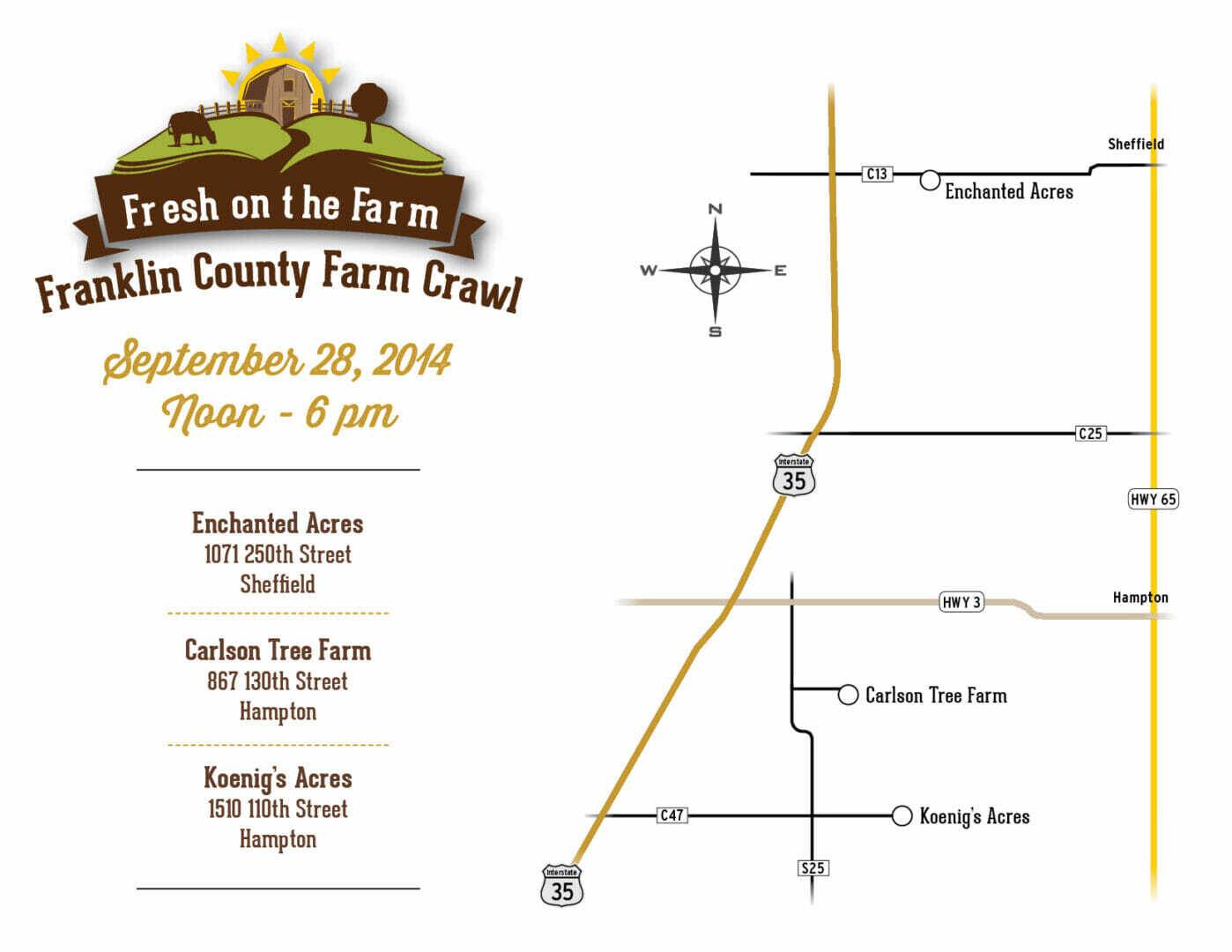
    To purchase your own bottle of HenCliff Honey, participate in the 2nd Annual Franklin County (Iowa) Farm Crawl. This event will be held on Sunday, Sept. 28, from noon to 6 PM. Three local farms will participate, and each farm will host other local farmers, who will offer samples of everything from grilled goat and ostrich to aronia berries and local wine. HenCliff Honey will be available for purchase at Enchanted Acres pumpkin patch, 1071 250th Street, Sheffield, Iowa.

    Buy a bottle and celebrate National Honey Month at home! Ian says his favorite way to enjoy honey is with toast and peanut butter because it’s simply delicious. In honor of September National Honey Month, the National Honey Board is sharing recipes for everything from simple After School Snacks to gourmet entrees like Orange Blossom Honey-Seared Halibut.

    Because I enjoy making quick breads – and I have a passion for all things pumpkin – I’m looking forward to baking up a patch of this Pumpkin Honey Bread. What’s your favorite way to enjoy honey?

    Team Latham

    September 19, 2014
    General, Recipes, Sides
  • Latham Hi‑Tech Seeds

    Light Frost Nips Immature Crops

    Image002

    After getting a later start at planting in many areas, followed by even later replants in many areas, farmers across Latham Country were hoping for a late frost. An early frost affected many regions across the Midwest, which might have an impact on some corn and soybean yields. The minimum temperature of the freeze and the growth stage of the corn influence the potential yield loss.

    To see how crops are faring across our six-state marketing footprint, click here.

    Team Latham

    September 17, 2014
    Fall, Frost, General, Season, Weather
  • Latham Hi‑Tech Seeds

    Does Food Come Too Cheaply in America?

    Larrypigfarmer

    LarrypigfarmerThough Americans are famous for their healthy appetites, their food bill is proportionally low. In fact, Americans spend less for groceries than any other country in the world. The main reason food is so inexpensive here is because U.S. farmers are so productive.

    Think of all the agricultural innovations in this country that have allowed 98% of our people to move off the farm and creating all creature comforts we enjoy in this modern age. If 70 or 80% of the populace were still needed to grow food, what would this country look like? Look no further than Uganda, Ukraine or any number of third world countries and you’d have an idea!

    Not only do U.S. farmers grow enough food to make the USA the cheapest place to eat, we also grow energy and fiber. Without agriculture, everyone would be naked and hungry. Farming and ranching goes beyond providing food… It also provides more than ¼ of our workforce with steady employment. Twenty-three million jobs are associated with modern day agriculture.

    So why is there almost this romantic back-to-nature obsession with organic farming? It all goes back to money. That’s why I’m beginning to wonder if our food in this country has become too cheap. Organic has long since become an ideology… it’s almost as though the food movement become a cult. A reported $63 billion is spent worldwide on organic foods.

    There are those in the upper middle class that can obviously afford to pay for organic foods, but what about those who can’t? Think of those with lower incomes and the poor, who can get a lot more nutrients in their body from buying two regular carrots than they can for the price of one organic carrot. This is the type of challenge we face to feed planet that’s population will surge to 9 billion before the middle of the century!

    Literally millions of people in poverty are starving to death or have serious health problems, yet some solutions are so simple. Severe Vitamin A deficiency results in blindness, and nearly 50% of the half-million children who are blinded by it die within a year. A new variety of rice can cure many of these problems, yet we’re letting fear of the unknown prohibit us from helping these poor people.

    I know most people don’t give a rip whether people are starving in Africa because the American public has become so self-centered with little concern for anyone else. One in six Americans goes to bed, worrying if they’ll have enough to eat tomorrow.

    People go hungry because abundant food, which has been proven over and over again to be safe, gets the same old fears thrown at it. There are no real real health benefits to organic and non-GMO foods. Studies prove it. A Stanford study found that organic foods were considerably less likely than conventional foods to have pesticide residues, although organic foods were higher in e. coli. Shouldn’t we be just as concerned by that?

    Maybe I’m getting to emotionally involved, but I’m starting to get offended every time GMOs and “normal” agriculture. I’m not even sure what “normal” is anymore! And if I’m getting confused, what about people not involved in farming?

    Larrys-NewsClipBut back to my point… I read an article September 13 in my local newspaper about a local produce company. Locally grown. Certified organic. But the locally producer is quoted as saying, “When you see certified organic, that means no chemicals, no pesticides and no GMOs are used.”

    I have a hard time believing this producer can make that statement. Plus, she’s asking for special treatment to be allowed to sell her produce in a city park on Main Street instead of at the local farmer’s market. Maybe my skin is just getting to thin, but I don’t understand why this producer should have special treatment.

    As Rob Wallbridge, an organic farmer and consultant based in Western Quebec says, “If we haven’t already, we’re about to split into sects and factions, driven apart by ideological dogmas that have nothing to do with reality.”

    Reality is that it’s going to take every farmer to feed the world by 2030. I’m in support of agriculture that improves the quality and quantity of food available throughout the world. Instead of splitting into factions and calling names, why not let the free market – instead of government regulations – decide what people want to buy?

    Larry Sailer, Musings of a Pig Farmer

    September 16, 2014
    Agriculture, General, Industry News
  • Latham Hi‑Tech Seeds

    High Tech Will Go “Sky High” on Sept. 19

    Drone

    DroneTo fully appreciate the capabilities of today’s 8-stack hybrids, we believe you must see how far corn breeding has come. The story of corn starts with wild teosinte, which doesn’t resemble today’s plants. Come see for yourself! At Latham’s Seed-2-Soil® Field Day in Alexander on Friday, September 19, you can walk through the history of corn, get a sneak peek of our 2015 product lineup plus watch a high-flying drone demonstration.

    The Seed-to-Soil field day begins at 9 AM with field tours including a technology showcase plot with 40+ of the industry’s most innovative hybrids and varieties. See the unique interactions of 30+ corn hybrids with row spacing, population and stress wheel studies.

    Chad Colby of AgTechTalk, one of the most respected and well-versed individuals in the UAV field, will demonstrate several types of drone technology. He will also share his experiences applying the technology to the farm.  Following the high-flying drone presentation, a drone sponsored by Greenleaf Genetics will be awarded to one lucky attendee.

    Also at our field day on September 19, you’ll see how you can benefit from the 4 main components of Latham’s Seed-2-Soil program: (1) Crop Planning; (2) Nutrient Management; (3) Agronomic support; and (4) Seed Treatments.

    Put September 19th on your calendar for the Latham Hi‑Tech Seeds Field Day in Alexander, beginning at 9 AM. To RSVP, call your local Latham® representative or dial 1-877-GO-LATHAM (1-877-465-2842).

    Team Latham

    September 15, 2014
    Agriculture, General, Industry News
  • Latham Hi‑Tech Seeds

    Latham Dealership Helps Wahl Live His Dream

    WahlFamily2

    WahlFamily2“Choose a job you love and you will never have to work another day in your life” is more than just a quote on an inspirational poster for Matt Wahl. It’s become an action plan.

    Matt raised on an Iowa farm in Butler County southwest of Shell Rock and dreamed of joining his family’s farming operation one day. Before he was old enough to help, however, his father rented the ground to a neighbor and took a full time job at John Deere. Fast forward nearly two decades, and today Matt enjoys farming with his parents. He also appreciates the opportunity he’s had for the past 13+ years to farm with his wife’s father and brother.

    “Living on a farm has many advantages, but I would have to say the best part is being able to instill within our children a good work ethic,” says Matt. “It’s great being part of day-to-day farming operations. Hopefully, we’ll teach our kids values that will be passed down for generations to come.”

    Many people, like Matt, wish to become part of their family’s farming operation but need additional income opportunities to make it possible. That’s why last fall Matt’s interest was piqued in a Latham® seed dealership when he heard John Latham being interviewed on the radio. Matt says he was familiar with the Latham brand and knew the company had a long-standing tradition of producing quality seed. Understanding the correlation between quality seed in the bag and outstanding performance in the field, Matt was interested in learning more about becoming a seed dealer.

    “I sent John an email from my smartphone,” said Matt. “Within an hour, I received a response. Shortly after that, I received a phone call from RSM (Regional Sales Manager) Craig Haaland. After speaking with John and Craig, I knew I wanted to be on the leading edge with Latham.”

    Getting the Most for Every Dollar

    As margins tighten in farming, Matt says he believe farmers will look for the best quality product. “Latham has developed a reputation with its dealers and customers for offering the best seed available. I’m very proud to sell the seed, and I’m excited for the new things to come.”

    Drought-resistant corn hybrids. Dicamba-tolerant soybeans. Proprietary seed treatments… it’s all in the Latham pipeline. But Latham doesn’t focus merely on producing high-tech products. Latham Seeds helps farmers use today’s technology from grid sampling to variable rate planters.

    “Latham’s hallmark Seed-2-Soil program really interests me,” says Matt. “I believe this program is going to become an even more important part of farming with tighter margins. We must help farmers get every possible bushel from each acre of land. Matching seed product to soil type gives us the best possible chance to do so. Plus, farmers can choose their level of participation in the Seed-2-Soil program. Variable rate planting and nutrient management are others ways they can use more efficient use of inputs for maximum return.”

    Keeping it Classy

    In his free time, Matt enjoys repairing and restoring classic and muscle cars. He’s had his own shop since 1999 and recently began restoring tractors. He also enjoys taking a Minnesota fishing trip annually with his family, as well as camping.

    Matt and his wife, Charlotte, have been married for 13 years. They’re the proud parents of two sons and one daughter: Gavin, 12; Blake, 8; and Madison, 6. Their kids have enjoyed sports and extracurricular activities, but the family’s priorities changed when Blake was diagnosed in 2010 with kidney cancer. After surgery and a year of chemotherapy, he’s in remission.

    “This was a true eye opener for our family,” says Matt, whose family is an active support of Butler County Relay for Life. “It really made us value our family and gain a new appreciation for how precious life really is.”

    With a new appreciation for life, the Wahls savor simple moments like Saturday morning breakfasts. Today’s their sharing a favorite family recipe for Homemade Buttermilk Pancakes. Hopefully, your family can make the time this weekend to savor every bite!

    Team Latham

    September 12, 2014
    General, Recipes
  • Latham Hi‑Tech Seeds

    Follow the Money & Find the Motive

    LarrySailer Kickoff

    LarrySailer_KickoffThe fight over food this past week seems to have stepped it up a notch! The Food Babe is all over my news feed for her views on some type of food or another. Last week she posted her findings from an “investigation” into Starbucks Pumpkin Spice Latte. That post went viral and continues to be a hot topic.

    Food fights have reached a new level, which brings to mind why I try so hard to listen and bridge the communication gap between consumers and producers. In Michele Payn-Knoper’s (pronounced “Pain – Ka-nope-r”) book, No More Food Fights, I’m quoted as saying, “A conversation must include listening. I need to know the concerns of people and to learn how they view what I do.”

    While I listen to promote greater understanding of farming to consumers, many celebrities and well-known “experts” like Dr. Oz and influential businesses don’t. They knock different foods to promote ideas that get attention. The Food Babe would lose her fan base if she actually listened and understood. Stores like Whole Foods wouldn’t be in business unless some consumers could be persuaded to believe that ” mainstream products are bad for you.

    The food conversation is no longer about the truth. It is about making money!

    Wayne Pacelle, President and Chief Executive Officer (CEO) of the Humane Society of the United States (HSUS), is another good example of someone who uses emotions to sway others’ thoughts and actions. His organization shows pictures of scared little kitties and abused dogs on late-night TV, and then asks you to donate $19/month. The truth is, HSUS uses emotion to raise money to pad retirement funds and to hire lobbyists.  Only one half of one percent of funds raised by HSUS goes toward animal care!

    Now Pacelle is trying to impact how I raise pigs. He’s painting a picture of how horrible farmers like me treat pigs just so his organization is able to raise funds. For 50 years, I have continually tried to improve how I raise pigs. If it were as bad as Pacelle claims, I’d be out of business!

    GMO is another buzzword. How many people have ever been harmed by GMOs? None! How many people are harmed every day because they don’t have access to GMOs? Literally millions… People who live in poverty suffer from Vitamin A deficiency resulting in compromised immune systems. Yet activists have let “fear of the unknown” trump pure facts. Somehow we must learn how to use science-based information with emotion!

    We also must uncover scams. If we follow the money trail, we’ll find the activists’ motives. Not only is this true as it relates to food, but it also applies to the environment. There is so much misinformation about conservation and water quality. For example, CEO and General Manager of the Des Moines Water Works Bill Stowe seems to know all about how farmers are polluting the drinking water for Greater Des Moines. Just ask him! He can show you “proof” with all kinds of charts and graphs. Why? His objective is to secure more money for his operations. The worse he can make the water quality look, the more funds he can acquire!

    Americans must read, listen and analyze. Question the “experts.” Examine multiple sources. Uncover the truth.  Don’t assume something you read on the internet is actually true. Consider the source — and the motive behind the source. Follow the money trail!

    P.S. Farmers must enter the food conversation.

    Larry Sailer, Musings of a Pig Farmer

    September 9, 2014
    Agriculture, General, Industry News
  • Latham Hi‑Tech Seeds

    Breaking Down Walls in China

    Welcome
    April Hemmes in China
    April Hemmes in China

    Guest blog by April Hemmes, who farms south of Hampton in Franklin County Iowa

    World traveling farmer reporting in to The Field Position! My latest adventure took me to China.

    It all started back in January when my husband brought me the Farm Bureau Spokesman and said, “They’re taking a trip to China, and you need to apply for it. All they want you to do is talk about the trip when you get home. I think they would get their money’s worth out of you!”

    I applied, never thinking in a million years they would pick me. Then in late February, I got the news that I was one of 18 farmers chosen! The trip was sponsored by Iowa Farm Bureau, and we paid a portion of our own way.

    In late June, 11 men, 7 women and 2 Farm Bureau staff members took off for China. We ranged in age from 26 – 74. It was a pretty diverse group, but like I say, when you put a bunch of farmers together you always have a good time.

    Group_China

    We flew into Beijing with stops at a wholesale produce and a meat market, plus the U.S. Embassy, U.S. Grains Council and Meats Council. Our last day in Beijing started with a meeting at the Ministry of Science and Technology. Teachers and researchers of Agricultural subjects met with us and we spoke about agriculture in China and how they inform farmers of research they have done. The quote I came away with was that they don’t tell farmers what to plant but they “ spare no effort” to suggest what crops would be best for the farmers to plant. I know what I would think if anyone “strongly suggested” what I should plant!

    A few take-away from our visit include:

    • Nearly 90% of the crops are still grown on small farms. A little more than half an acre is the average farm size.
    • A large farm is thought to be 25 acres. The Chinese Government wants to increase the size of farms, so there is a need to move the farmers into the city. We saw high-rise apartment complexes being built in the middle of nowhere. I had heard about this but seeing it with my own eyes just confirmed it for me.

    ChinaFacts1

    Good to see family that lives far away!  With my sister in law Jackie!
    Good to see family that lives far away! With my sister in law
    Jackie!

    My favorite part of visiting Beijing was getting to see my brother-in-law and sister-in-law! My husbands’ brother, Jim, lives in Beijing and has for 7 years. His wife, Jackie, was born in Shanghai. She went to school at Arizona State University and is now an American citizen. Jackie works in finance and is very involved in a group of women leaders in China. They organized a night where we had a panel of Americans and others doing business in China, telling us what that involved. We also had a panel of women leaders in different areas telling about their experiences and what it was like for women working in China. I was very fortunate to be involved in that panel!

    From Beijing, we set off for Heibei Province. Heibei is the sister state to Iowa. Our final destination in the province is Shijiazhuang, which is the sister city of Des Moines. Iowa and Heibei Province have had leaders visiting for over 30 years. The President of China , Xi Jinping, has been to Iowa several times. We were treated like dignitaries here and had several interesting stops including a corn processing plant, dairy and milk processing plant along with the local agriculture college.

    One of our formal dinners in the Sister State of Iowa.  Hebei Province.
    One of our formal dinners in the Sister State of Iowa. Hebei Province.

    Our last stop was the province of Jilin. It is in the North East part of China, but it reminded us all of home with a lot of cornfields and a climate much like ours. Local dignitaries met us here, too, and followed us throughout our stay. One of our visits was to a farm where 5 producers went together and farm 1,500 acres.


    Remember, each landowner has around a ½ to 1 acre of ground, so they worked with a lot of owners! They also hire 36 employees for the farm. They couldn’t believe it when we said we would have about 2 or three people to work that amount of ground. They still pick in ear corn and store it that way. The government pays them $9.50 a bushel for their corn. This is a communist state, so there is no open market for grain trading. It is $2/bushel cheaper for the livestock feeders there to import corn from America than it is to feed the lower quality corn stored in China.

    Because it is a communist state, we only saw what they wanted us to see. No random stops were made along the way. Our group quickly realized that the nature of the trip was a market study tour and had changed to a networking /diplomatic trip. But that was just fine with all of us and we made the best of it.

    There was never a dull moment or lack of discussion during our meetings and banquets. As a result of the contact we made, three Chinese groups have contacted the Iowa Farm Bureau about visiting our state! This is great news and makes for a successful trip.

    It wasn’t all work on our trip, however. We did some cultural sightseeing: Tiananmen Square, Forbidden City, the Great Wall, Olympic Table Tennis center, ancient monasteries, silk and pearl markets and one of the largest shopping malls in the world. All of which were amazing and wonderful to experience!


    It was truly an honor to go on this trip and I would highly recommend anyone to apply for this trip next year. Look in your Farm Bureau Spokesman around January for details. I made life-long friends, not only with the Iowa farmers with whom I shared this wonderful adventure, but in China as well.

    Team Latham

    September 8, 2014
    Agriculture, General, Industry News
Previous Page
1 … 59 60 61 62 63 … 160
Next Page

Latham Hi‑Tech Seeds

131 180th Street | Alexander, IA 50420

(641) 692-3258

SIGNUP FOR OUR NEWSLETTER
  • Contact
  • Legal
  • Dealer Center
  • Seedware Login
  • Latham Gear

© 2025 Latham Hi‑Tech Seeds. All rights reserved. | Iowa Web Design by Webspec | Privacy Policy

Latham® Hi-Tech Seeds is a trademark of M.S. Technologies, L.L.C., 103 Avenue D, West Point, IA 52656.