Latham Hi-Tech Seeds

(641) 692-3258

  • Home
  • Products
    • Corn
    • Soybeans
    • Alfalfa
    • Corn Silage
    • Seed Guide
  • Performance
  • Find a Rep
  • Media
    • Blog
    • News
    • Videos
    • Podcasts
    • TECHTalk
  • About Us
    • Company History
    • Our Mission
    • Careers
    • Become a Rep
    • Sowing Seeds of Hope
  • Contact Us
  • Latham Hi‑Tech Seeds

    Losing Sleep Over HSUS Rhetoric

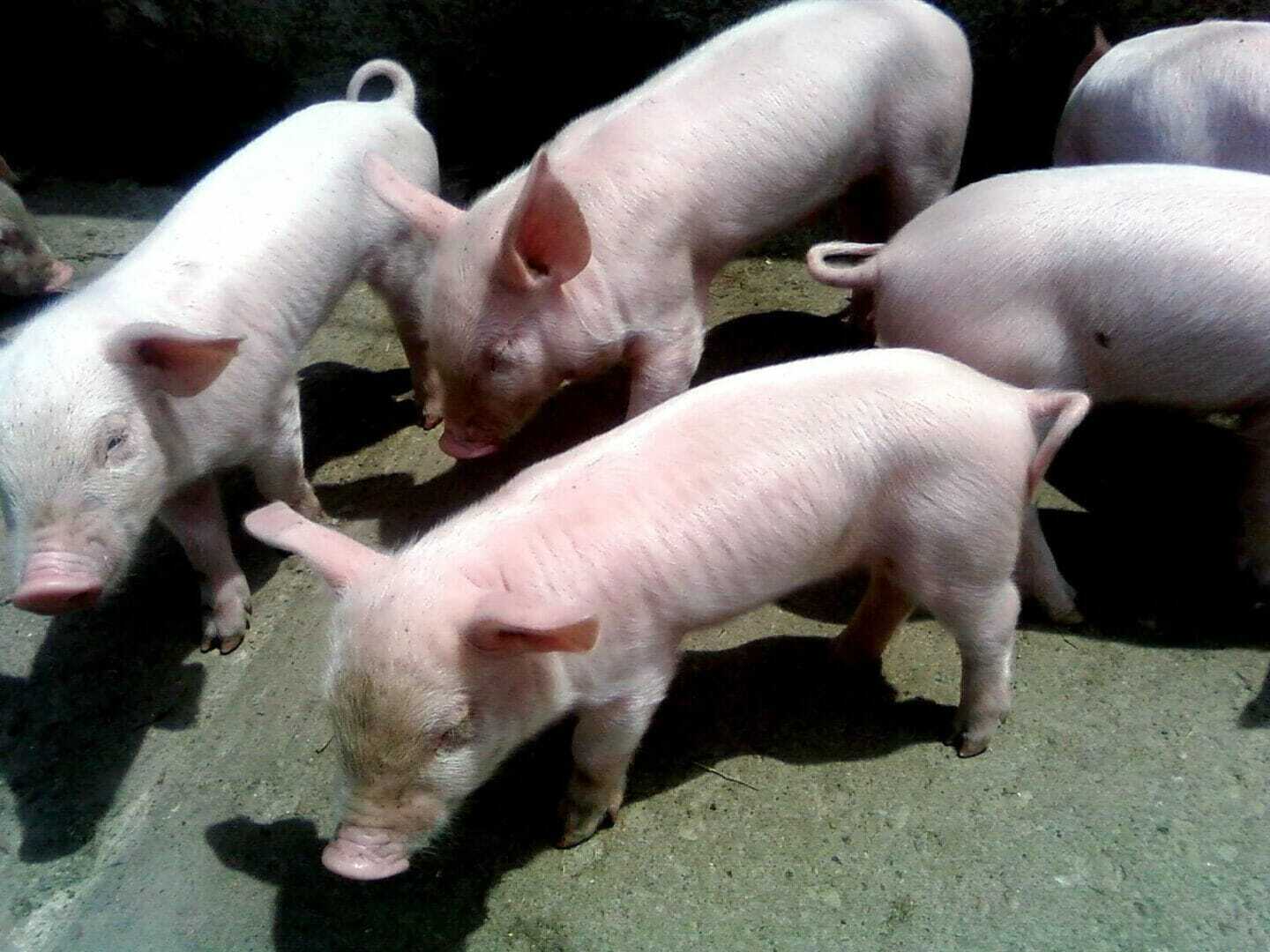
    Little pigs

    Little_pigsI’ve farmed long enough that I sometimes wake up early. I don’t want to sleep too late because there is livestock to be fed and crops to be planted, so I have a big clock that I can read in the dark to know whether it’s really time to get up or try to go back to sleep. When I saw 2 AM on Monday morning, I turned on 1040 WHO Radio where I can usually be lulled back to sleep by the “Coast to Coast” program.

    But last night, I experienced a living nightmare when I heard the voice of Wayne Pacelle, President/CEO of the Humane Society of the United States (HSUS). Nothing makes my blood boil faster than that smooth talker! Janice even woke up and tried to convince me to shut off the radio and go back to sleep, but I was wide awake as I listened to the same old sound bites and misinformation Wayne always shares.

    What was different about this program, however, was the admissions that activists go under cover. Not only Cody Carlson admits to, but he’s very proud of lying his way into animal operations. He looks for ways to come up with footage that will make an operation look bad. He even shares how he spent weeks filming to get some video to take public!

    Also on the program was HSUS public policy director, Matthew Dominguez, who railed against laws that are meant to keep undercover, doctored up videos from inflaming fear about livestock operations.  There was so much hype and untruths by these three men, and the program host just keep egging them on about factory farms!

    The first caller to the program wanted to hear from farmers. George Knapp, the host, answered this question by saying there is no way a farmer would come on his show to debate with his current guests. His opinion was that farmers want to hide all the bad things they’re doing. “How could farmers possibly defend torturing animals?” he asked.

    Of course, Matt and Cody agreed with George. Wayne wasn’t heard from again after the first hour. This makes for good radio, but I know these men know better. I have personally been sharing what I do and why. You’d think they have never heard of Google! There are many farmers today making a huge effort to share why we raise livestock the way we do.

    For almost 10 years now, I have been sharing the experiences I’ve had while raising pigs for 50 years. I try to explain how much we have improved their care by moving them inside climate controlled buildings, away from the harsh winter weather and hot summers. This was done for the comfort of the animals. They have better nutrition and better housing because of these new technologies.

    Gestation stalls were condemned by this show. This piece of equipment seems to be a lightning rod for animal activist! Even Temple Grandin has condemned stalls. The problem is, I have personal experience raising gestating sows many different ways. I can tell you these stalls were designed for the welfare of the sow! There have been several studies now showing, if the sow can chose between being in a crate or in with a group, she picks the crate over 90 percent of the time!

    “Coast to Coast” talked many times about how farming should be like Old McDonald’s Farm instead of the big, bad factory farms. Truth is, over 90% of today’s farms are “family farms.” Today’s family farmers are growing food the best way they know how, using all the new technology they can learn to keep animals stress free. Growing the best, safest food they can for my family and yours to enjoy!


    Larry Sailer, Musings of a Pig Farmer

    April 29, 2014
    Agriculture, General, Industry News
  • Latham Hi‑Tech Seeds

    Using Social Media with Purpose

    SocialMedia Kids

    SocialMedia_KidsToday’s teens, as we know, are tech savvy. The average American teen sends 60 text messages daily, and more than 400 million Tweets are posted per day by people of all ages. But how many of these messages are sent with purpose?

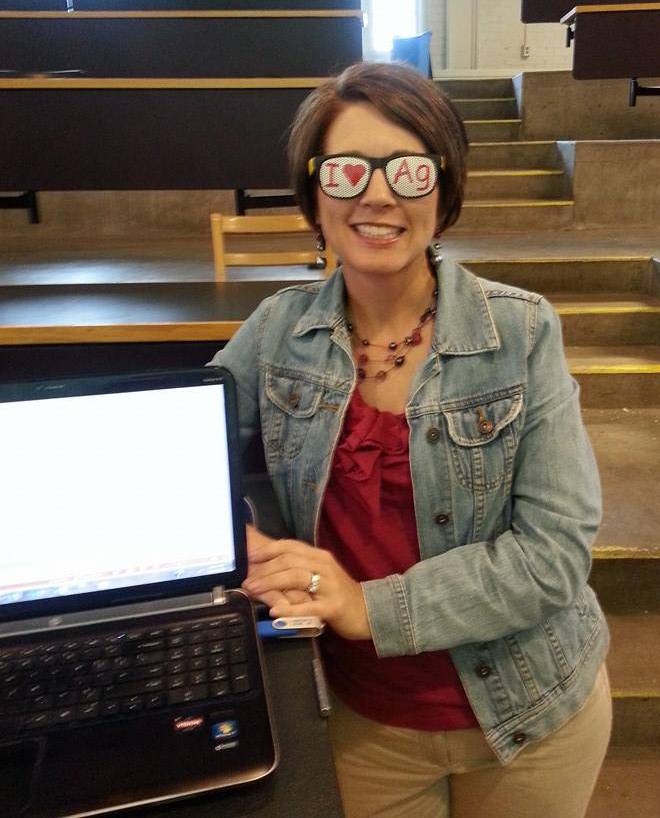
    Yesterday I had the honor and privilege of being on the program with some of the biggest names in agriculture during the annual Agvocacy Day on the Iowa State University campus. A prelude to the annual Iowa FFA Leadership Conference, approximately 225 high school students came to campus on Sunday afternoon to learn how they can use social media for the purpose of sharing their agricultural stories.

    ShannonAgvocate“Social media, when used properly, is a great tool for advocating,” said Mike Pearson, host of Market to Market, during a keynote address yesterday in Kildee Hall’s Lush Auditorium. Pearson opened the day, using graphs and drawing laughs, by sharing statistics and his own personal experiences as a cattle producer. Graphs illustrate how the world’s population is growing, and then Pearson explained how this is great news to American livestock producers.

    As societies around the world – particularly in Asia and Africa – transition from rural to urban lifestyles, their per capita grows. As their incomes grow, Pearson said, so does their appetite for protein. This creates more markets for American beef as long as government rules and regulations allow beef to be exported from the U.S. to international markets. Then Pearson reminded FFA members that we live in a democracy. The majority rules, which means that the 2 percent of America’s population that produces food, fiber, fuel and pharmaceuticals must be diligent in explaining what they do and how they do it.

    Blogging, YouTube, Facebook, Twitter and Instagram are all tools that American farmers are using to share what they do on a daily basis. In my presentation, “Make Your Voice Heard,” I shared examples of advocates for students to follow. Topping my list are the Peterson Farm Brothers. With 144K followers on Facebook and more than 1 million views on YouTube, these beef producers have become online sensations with parodies of popular songs like Chore and Farmer Style.

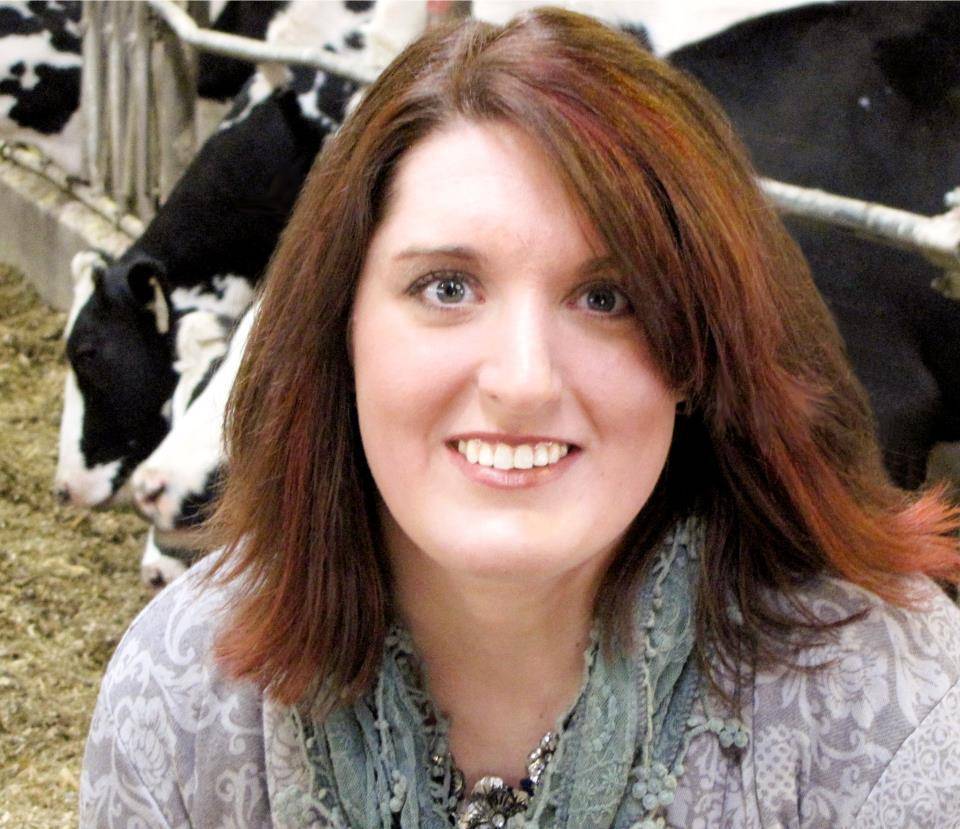
    Carrie Mess, of Dairy Carrie
    Carrie Mess, of Dairy Carrie

    Another farmer who has learned how to grab your attention and then entertain you is Wisconsin dairy farmer Carrie Mess. The Adventures of Dairy Carrie blog, Facebook, Twitter and Instagram give followers an insider’s look at life on a dairy farm. She shares the joys of birth by photographing newborn calves and released “undercover video footage.” She also shares the compassion farmers feel when their stock is diagnosed with disease or falls ill. She’s given play-by-play of surgeries and uses terms like “Tums” to explain when and why medicine is given. She has a love affair with cheese and encourages her followers to branch out beyond slices of American. In fact, she’ll tell you that she’s actually anti-American… cheese!

    Following breakout sessions like mine, the students again gathered in the auditorium for closing remarks by sixth generation United States farmer Trent Loos. When anti-agricultural activists threatened the way of life he cherished, he took a stand and launched Loos Tales. Loos was recognized in 2008 as the “Voice of Rural America” by the West Quest organization for his ground-breaking work in advocating for agriculture.

    Yesterday Loos told FFA members that he believes the true value of food supply is a means of national security for America. “Farmers who feed us and the dedicated United States military personnel are the two most unsung and vitally important factions of our population,” he said.

    Both farmer and soldiers are undervalued and misunderstood, so Loos says we must work to change that. Go ahead and advocate. Start telling your ag story – or someone else will and you may not like it!

    Team Latham

    April 28, 2014
    Agriculture, General, Industry News
  • Latham Hi‑Tech Seeds

    Celebrating Our 2,000th Blog Post

    ShannonRadioEyebrows raised. Mouths gaped. Cheek muscles twitched.

    You could’ve heard a pin drop for a few moments after I presented my idea in 2008 about launching a blog to a room filled with 10 salesmen and managers. Then one brave soul asked, “You mean you’re going to write a journal about your feelings and post it for the world to read? Why would any farmer want to read that?”

    His question was valid. Very few people were blogging at the time, and honestly, I wasn’t aware of another seed company doing anything like what I had proposed. We modeled TheFieldPosition after blogs like Templeton Rye’s The Good Stuff and Nuts about Southwest (Airlines). Our objective was – and still is – to allow our customers to interact with our company 24/7.

    Over the course of six years, our stories have evolved from agronomic newsletter articles to feature stories. TheFieldPosition blog has become known for Wednesday crop reports throughout the growing season and for Friday Farm Family Features all year long. Readers have gotten to know our family in a more personal way from stories about our daughter’s Zaney Zebra-themed party for her 9th birthday to the celebration of Grandma Latham’s 95th birthday. We’ve chronicled adventures including sales incentive trips to Key West, Florida, and Maui, Hawaii. We’ve called for farmers to take action on legislative and regulatory issues, ranging from child labor to accurate food labeling.

    TheFieldPosition has allowed to put my journalism degree to work by writing about interesting Iowans including Miss American Pie, a cookbook author who gives pie baking lessons inside the American Gothic House, and the Iowa Girl Eats blogger Kristen Porter, who showed me how to cook with tofu.

    But my favorite part about being a blogger is traveling the countryside and meeting with farmers throughout Latham’s six-state marketing region. I love hearing how they fight empty nest syndrome and practice good land stewardship. I enjoy hearing about their kids’ successful 4-H pork and beef projects, as well as learning about unique 4-H Clubs like Franklin County’s Kitchen Krew.

    My favorite thing to do is pull up a chair in the “Farmer’s Kitchen” because that’s where the best conversations happen – usually over coffee and cake. I found myself Pampered in Pender, Nebraska, and was inspired by Northwest Iowa farm family’s Make It Christmas.

    Shannon1This time of year I enjoy making visits to farmers as they’re planting. Often times, I plan these customer visits around restaurants that have been recognized as serving one of Iowa’s Best Burgers. Tuesday, during our first planter remote broadcast of the season with WHO Radio farm broadcaster Mark Dorenkamp, Michelle Baumhover from the Iowa Beef Council treated us to burgers from Niland’s Café in Colo.  Niland’s is one of the 456 Iowa restaurants that was nominated for the fifth annual Iowa Best Burger Contest; the 2014 winner will be announced May 1.

    In honor of both national egg and May Beef Month, today I’m sharing a recipe that I recently marked in a book called Favorite Summertime Recipes. (Yes, I read recipe books for the fun of it. Doesn’t everyone? :)) I’m looking forward to trying these on King’s Hawaiian Sweet Rolls. Saturday’s weather sounds perfect for grilling, and we might even be able to enjoy a picnic on the patio. Maybe I could make sliders and serve them with a side of Hawaiian coleslaw and fresh fruit. Ooo… I’m making myself hungry just thinking about it!

    What will be on your grill this weekend?

    Team Latham

    April 25, 2014
    Agriculture, General, Industry News
  • Latham Hi‑Tech Seeds

    90-Day Comment Period Opens for Clean Water Act: Government Land Grab Extends from Land to Air

    Deer in Woods2

    It’s been more than one week since the standoff over land rights ended in Nevada between rancher Cliven Bundy and the Bureau of Land Management (BLM), yet the horror of the situation keeps building. There are reports that the BLM’s hired cowboys killed prized bulls plus destroyed water lines, fences and even water tanks in a dessert environment.

    This dispute over land rights is just one example of how the U.S. government is exerting its authority. A commented posted by a friend on my personal Facebook page sums up the situation nicely: “Oregon, my state, is the same as Nevada and many other western states. Federal agencies are totally in control of land/ water, and they own vast areas of land. Vast stands of timber, rivers, streams, springs, geothermal fields, dams /reservoirs, roads, mining areas and other high value assets are all owned and controlled by the Federal government… Pioneers risked everything to come to Oregon. Now the people are poor and tired, towns and counties struggling [in rural Oregon]. How did we get here?”

    Deer_in_Woods2Dispute over land and water rights, including the U.S. government’s efforts to seize unprecedented authority and control, is topic that’s been largely ignored by mainstream media. Perhaps the even larger story being overlooked now are the rules released last month by the Environmental Protection Agency (EPA), requesting jurisdiction over all public and private U.S. streams that are “intermittent, seasonal and rain-dependent.”

    “For the past 15 years, two complex court decisions muddled the law and we lost a clear understanding of which waters are protected,” reads an Op-Ed piece authored by Karl Brooks, administrator for the EPA’s Region VII, which includes Iowa, Kansas, Missouri, Nebraska and nine tribal nations. Brooks goes on to write, “The proposed rule helps clear the way for the CWA to ensure clean, healthy waters.”

    So how does the government “clear the way”? Visit www.epa.gov/uswaters and you’ll see 370 pages of explanation of how this new EPA rule makes things clearer. The length of this explanation is a red flag. It’s like the government is trying to baffle us with bull$&!+ because they aren’t able to convince us with brilliance.

    American Farm Bureau Federation (AFBF) President Bob Stallman said the proposal “poses a serious threat to farmers, ranchers and other landowners.” Exemptions for agriculture included in the proposal do not protect farmers from federal veto power over pest and weed control, fertilizer application, and other essential farming activities.

    The biggest push behind all the new EPA and DNR regulation is being caused by lawsuits! Environmental groups are strong arming the agencies, which settle the suits by agreeing to more regulation and enforcement. The environmental groups get their expenses paid and a big monetary settlement.

    “Public lands” can mean big money to states, as well. The Iowa Legislature in 2010 passed an amendment to the constitution called the Natural Resources and Outdoor Recreation Trust Fund to provide a permanent and protected source of funding for Iowa’s natural resources. This fund starts generating money the next time the sales tax is increased and is projected to raise $120 million annually.

    Iowa is not alone in its desire to control property rights. I received a comment from a farmer in New Jersey about landowners selling their development rights to the State Ag Development Committee.

    The more you regulate, the more you depress the economy and jobs. This seems to be true whether it’s the post office, Obamacare, soil conservation or turtles.

    In America’s desire to change, we’re actually allowing new policies that curb growth! It’s time we, the people, speak up. Contact the EPA and the U.S. Army Corps of Engineers and share your concerns about how they’re defining protected waters under the Clean Water Act (CWA) in the Federal Register. Comments may be submitted during a 90-day public comment period, which ends July 21.

    Larry Sailer, Musings of a Pig Farmer

    April 22, 2014
    Agriculture, General, Industry News
  • Latham Hi‑Tech Seeds

    “Continual Improvement” is Our Mantra

    Planter2013

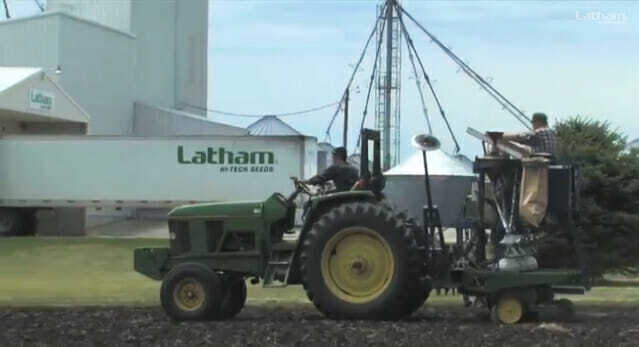
    planter2013Companies evolve and business practices change, but the one thing that stands the test of time is Latham’s commitment to continual improvement. Willard Latham started cleaning oats for other area farmers and started providing certified oat seed to meet customer needs. He later added soybean seed. In recent years, we’ve extended our product lines to offer a wider range of alfalfa, corn and soybean products.

    When soybeans became the main focus of Latham’s business, greater emphasis was placed on breeding and developing new cultivars. This was done in cooperation with various genetic suppliers so our research testing program would incorporate Latham’s own genetics and germplasm as well as other providers. Tremendous resources were made available, so Latham’s research program could test thousands of new soybeans annually.  Our goal is to bring the best possible genetics to our customers across our marketing area no matter where the genetics originated.

    Techniques were developed, and trials were arranged in Alexander, Iowa, and at out-lying locations. Personnel was trained and when computers became available, they were quickly integrated into the research system. While our basic philosophy has not changed, there have been some necessary modifications over the years to our research system including:

    • Soybean Breeding and Testing: All cultivar crossing used to be done at the Latham Research Farm near Alexander. Because of the many advancements in genome testing and the advent of gene-marker technologies, this work has been outsourced to companies with advanced equipment and expertise.
    • Preliminary Trials: Once new lines make it through observation trials, they’re tested in either 2- or 4-row replicated plots. Entries in these trials are limited to products from each specific breeder and advancement out of these trials is determined by yield. Also during this time, maturities and plant characteristics are noted.
    • Secondary Trials: The next step after Preliminary Trials is Secondary Trails. These plots are mostly limited to products by each specific breeder but will also include some well-known checks. Advancement is determined by yield plus plant characteristics such as disease tolerances, maturity, Soybean Cyst Nematode (SCN) and Iron Deficiency Chlorosis (IDC) tolerance and plant types.
    • Latham Elite Trials: While all of the above practices are common to many seed companies, Elite Trials are unique to Latham. We take the very best products from our various genetic suppliers (including our own) and tests them against each other and against common competitive checks. Products in these trials are tested for yield and other characteristics similar to the secondary trials with an emphasis on overall yield within Latham’s marketing region.
    • Super Strip Plots: These side-by-side plots are managed by Latham RSM’s and the Research Team. Planted and harvested by farmer cooperators, Super Strips are another way of testing products in varying environments. Groups are separated by maturity and always include products we’re currently marketing, products that will be marketed the following year plus experimentals that have “graduated” from the Latham Elite trials.

    On-farm research conducted in cooperation with our dealers and customers continues to play an important role in our product selection. Latham’s Product Team, comprised of members who live in the areas where these products are being tested, has been working diligently since harvest data became available to analyze and carefully select products. We recently finalized our 2015 product lineup because, as you plant your 2014 crop, we’re growing your 2015 seed. Like you, we’re hoping for warmer and drier soils in the short-term forecast!

    Webspec Admin

    April 17, 2014
    Agriculture, General, Industry News
  • Latham Hi‑Tech Seeds

    This Land is Your Land… or Is It?

    5531131 m

    5531131_mThere has been a Wild West standoff in Nevada over the rights to graze cattle on public lands between a rancher named Cliven Bundy and the Bureau of Land Management (BLM).

    Last week I posted a comment on my Facebook page, likening this situation to an old western movie and asked what characters John Wayne and Dick Martin would play. When I made that comment, I had no idea how serious the situation was! Fortunately, over the weekend, a standoff ended peacefully when the BLM stood down and released Bundy’s cattle.

    The mainstream press has been very quiet about this dispute, so I’ll attempt to summarize the situation. (It’s really pretty long and involved.)  The Bundy family has been grazing their cattle herds for more than a century in Nevada. Under the Desert Land Act passed in 1877 by the U.S. Congress, the Bundy family acquired the rights to land in Nevada.

    The Desert Land Act was intended to promote the development of arid and semi-arid lands. The Act allowed anyone to purchase 640 acres of land for 25 cents per acre if the land was irrigated within three years of filing. A rancher could receive title to the land upon proof of compliance with the law and payment of one additional dollar per acre.

    Over the years, ranchers passed down what was supposed to be “rights in perpetuity.” They paid a fee when they acquired the ground, and we’re responsible for improvements such as water and road infrastructure. One definition I read of perpetuity is “eternity.”

    Bottom line: the Bundy case is really a dispute over property rights. Bundy’s defense is that the federal government doesn’t own the land in question and therefore has no authority to regulate grazing. He doesn’t pay federal grazing fees, like other ranchers do, because he says the government is supposed to be charging him for managing the land. In reality, the government is trying to manage him out of business – and he doesn’t believe he should pay for that.

    While Bundy’s viewpoint may seem extreme at first, I believe it merits a closer look. Here’s why… The BLM now controls of much of the western half of this country. In the government’s broad wisdom, it limits the number of cattle grazing a certain amount of acres under the auspices of saving the desert tortoise. Yet, there is no threat that a cow will eat a tortoise.

    Cattle graze on grass, but there is no threat the cattle will destroy the tortoise environment. On the contrary, there is evidence of a symbiotic relationship. Tortoise populations increase where cattle are grazing because the tortoise feasts on cow pies. Cow manure is loaded with undigested nutrients, proteins, and minerals.

    By eating cow dung, a tortoise consumes far more calories and proteins than grazing on its own. I’m no expert on tortoise diets, so I’ll let you do your own research. There are many myths and half-truths being spread around the Internet that I’ll let you draw your own conclusions.  Some reports say the desert has made such a comeback in some areas that the government is euthanizing them to control the population growth.

    Regardless of what’s happening with tortoise populations, I do know that government regulations impede business including farming and ranching. The standoff that unfolded in Nevada late last week cost taxpayers millions of dollars, plus caused stress to a rancher’s family and his stock. Between Saturday and Wednesday, CNN reported that contracted wranglers impounded a total of 352 cattle out of 900 grazing in the area. Reports say these cattle were spread over 600,000 acres, with at least some of the cows with calves.

    Horses, helicopters, four wheel drive vehicles, ATVs and even backhoes were brought in for the roundup. Militia groups gathered. Verbal confrontations occurred between the Bundy family and Federal officers. Pictures and a video went viral that shows a lady, who says she’s a cancer survivor, being tased with attack dogs at the ready.

    The story even gets bigger with reported behind-the-scene deals by U.S. Senators. Several reports suggest Senator Reid was making a sweet heart deal with a Chinese company to put a solar panel farm on this land. Others report the Senator is working on a deal to provide water to Las Vegas. Water is a big deal in arid regions as Will Rogers once said:

    “They have been hunting water in the West much longer than they have gold. If a wonderful spring come out of a mountainside, men left gold, silver and copper mines to come and grab that spring. Water ain’t gold in the West, water is diamonds and platinum.”

    Bundy vs. the BLM could be a precedent-setting case. One rancher stood up for his convictions for 20 years because he wanted to make a difference to regulations impacting his livelihood. What difference can you make in your own backyard?

    Larry Sailer, Musings of a Pig Farmer

    April 15, 2014
    Agriculture, General, Industry News
  • Latham Hi‑Tech Seeds

    Supporting Safe & Accurate Food Labeling

    Whitehouseblossoms
    The weather in D.C. last week was a beautiful sunny and 74 degrees. The cherry blossoms were in full bloom and, fortunately, I was able to get take a few pictures during our walk to Capitol Hill.
    The weather in D.C. last week was a beautiful sunny and 74 degrees. The cherry blossoms were in full bloom and, fortunately, I was able to get take a few pictures during our walk to Capitol Hill.

    Last week about 20 of my industry colleagues and I, who serve on the American Seed Trade Association (ASTA) Executive Committee, met for three intense days in Washington D.C.  Each spring we meet to discuss issues and lobby for or against legislative bills that impact our industry and our livelihoods.

    One of the issues we discussed with members of Congress is the Safe and Accurate Food Labeling Act. On April 9, a bi-partisan group of legislators introduced this piece of legislation that would ensure accurate and consistent labeling of foods made with GM ingredients and formalize FDA’s safety review of new biotech traits.

    What I like most about the Safe and Accurate Food Labeling Act is that it would provide consistent reporting nationwide and help restore some common sense to food labeling. The federal legislation would provide consumers with accurate, consistent information about their food without implying that GM ingredients are less nutritious or less safe.

    We support the Safe and Accurate Food Labeling Act because it:

    • Eliminates confusion. The bill addresses the confusion and uncertainty that would result if each state in the union passed its own GMO food labeling laws. Just imagine the problems this could cause for food companies and restaurants doing business in multiple states!
    • Informs consumers. The bill helps consumers make sense of GM labeling claims by asking the FDA to establish federal standards for companies that want to voluntarily label their product regarding the absence-of or presence-of GMO food ingredients. This will aid consumers in understanding food choices when they shop.
    • Provides consistency:  The bill requires FDA to define the term “natural” for use on food and beverage products.
    • Further advances food safety:  The bill mandates that any company introducing GM traits work extensively with FDA to ensure an extensive safety review is completed before the trait is commercialized, which is standard industry practice today.

    We hope you’ll join us in support the Safe and Accurate Food Labeling Act. Send a letter to the editor of your local paper and set the record straight on GMOs and the Safe and Accurate Food Labeling Act. Learn more about this legislation from the Coalition for Safe Affordable Food.

    John Latham, President

    April 14, 2014
    Agriculture, General, Industry News
  • Latham Hi‑Tech Seeds

    Connect Farming to Food in the Classroom

    PorkFactoid
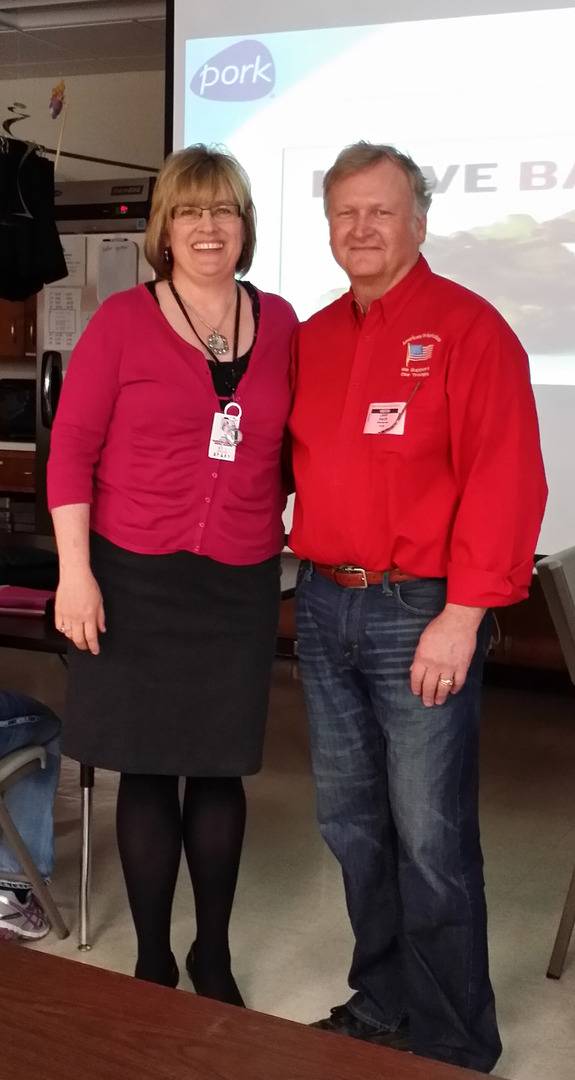
    Larry and Mrs. Hoegh
    Larry and Mrs. Hoegh

    Last week I had the pleasure of serving as a guest teacher for one day in the Hampton-Dumont High School. It’s been 44 years since I graduated from Hampton, which wasn’t part of a consolidated school system at that time. While many changes have occurred over the years, I found the students to be engaging and interested in the facts I shared with them.

    I certainly enjoyed my time “at the head of the class,” teaching two of Jane Hoegh’s Food and Nutrition classes and had three of Sara DeBour’s Vo Ag classes as part of the National Pork Board’s Operation Main Street program. I’ve given about 50 presentations to civic groups as part of this group, but last week was the first time I spoke to young students in a classroom setting. In fact, I spoke to 95 kids in just one day!

    Although we live in a rural county, many kids in that classroom had never visited a farm. I gave them a virtual tour by showing videos and explaining how we’ve improved our pig operations from the time I started farming 50 years ago. We have become much more efficient in producing pigs. We use much less ground and water per pig, and we have changed the pork we produce to be much healthier.

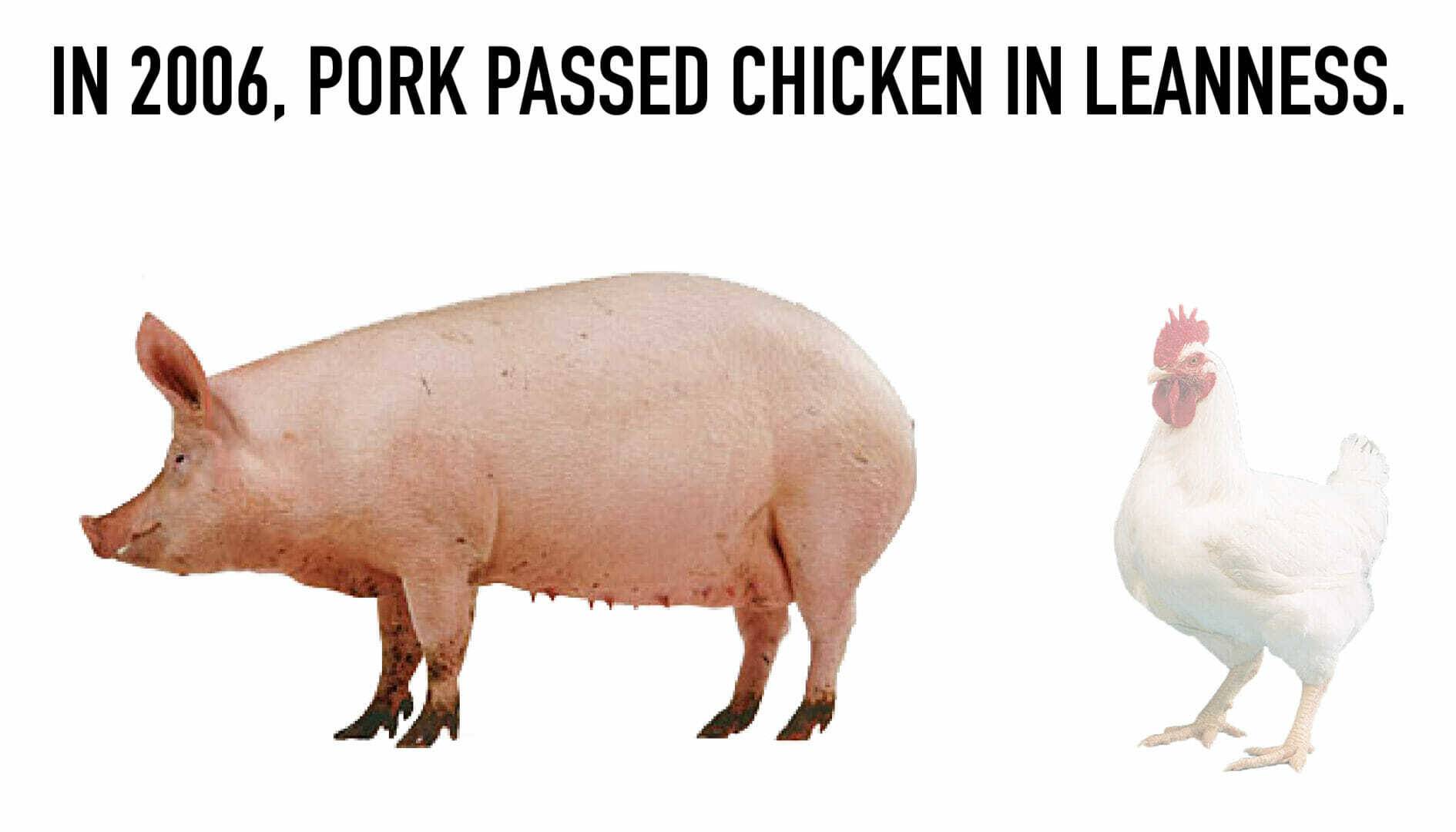
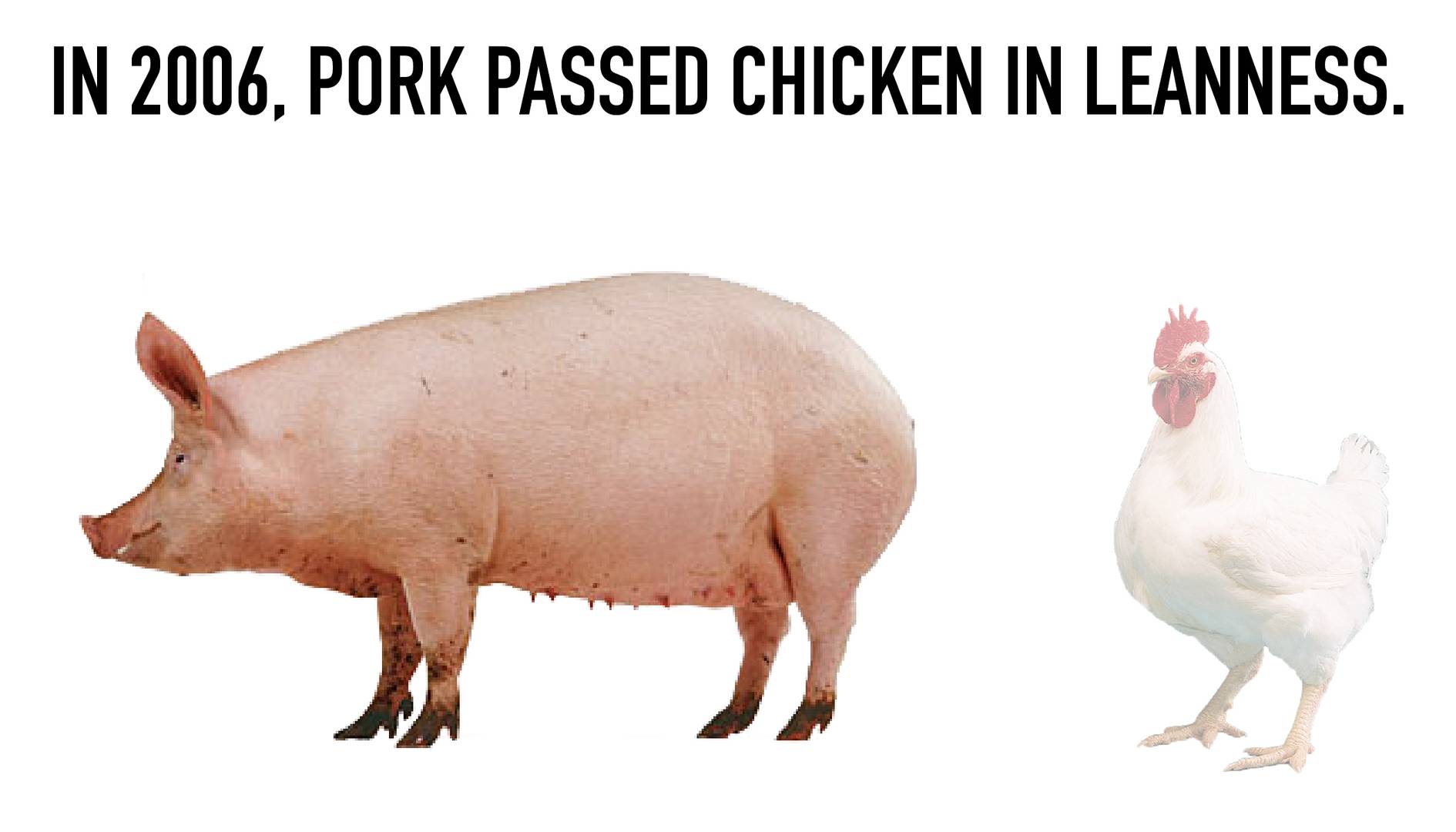
    The food classes learned how many nutrients are in pork, making it a very nutritious food. Easy to prepare and very versatile. In 2006, pork passed chicken in leanness.

    PorkFactoidIn both classes, I shared that there are 7 billion (with a “b”) people in the world today. Half of those seven billion live on less than $2 dollars per day. Then we talked about what it’s going to take to grow enough food – on the same amount of ground we have now – as the population gains another 2.3 billion people by 2050. U.S. farmers will need to grow 100% more food by 2050 because these people will want to eat better as they acquire better incomes. (Click here to watch a short video explaining this.)

    Specifically in the Vo Ag classes, I went more into detail about how the hog buildings work.  I explained the We CareTM initiative and how pig farmers work hard to do the right things for our pigs every day. We talked about how pork producers use medicines according to our veterinary recommendations, making sure all withdrawal times are met. Antibiotics leave the pigs bodies just like they do in humans, so there is no residue in the meat at the time of market.

    Mrs. Sara DeBour talks with her Vo Ag class following Larry’s presentation
    Mrs. Sara DeBour talks with her Vo Ag class following Larry’s presentation

    Antibiotics are used to keeps our pigs healthy. We have other precautions in place, such as posted warning signs, to help prevent diseases from spreading through our herds. I explained to the students that these signs aren’t posted to hide anything. Instead, signs like “STOP Authorized Personnel Only Beyond This Point” are in place to protect pigs from disease. We had a good discussion on how cleanliness is key to animal health. I explained that pigs are raised on different sites as they grow to break the disease cycle, and I shared photos of how my barns are cleaned and sanitized before a new group of pigs arrive.

    From the photos I shared of my hog barns, these students saw all of the technology involved to regulate temperatures and regulate fans. Kids understand technology since they’re growing up in the age of iPads, iPods, and things I can’t even name. Yes, today’s kids understand new ways to raise pigs!

    I had a great time being “back” in school. I’m hopeful these kids will explain to their parents what I do every day and why I do it! I also hope they’ll be able to shop the grocery store and buy food for themselves with confidence.

    Larry Sailer, Musings of a Pig Farmer

    April 8, 2014
    Agriculture, General, Industry News
  • Latham Hi‑Tech Seeds

    5 New Ways to “Feed Your Curiosity” About Food and Farming

    JMJ Latham Seeds 18

    JMJ_Latham_Seeds-9Finding unbiased information about food and farming is, at times, a quest. Instead of leaving Iowans feeling like they’re lost on a road trip without a compass, the Iowa Food & Family Project and trusted blogger Kristin Porter (aka “Iowa Girl Eats”) are taking people on a journey to feed their curiosity.

    “Join My Journey” started last year when Kristin visited several Iowa farms, meeting the families who grow the products she features on her popular blog. This season, Kristin is bringing those experiences along with her to new locations including restaurants, grocery stores and the “kitchen table.”

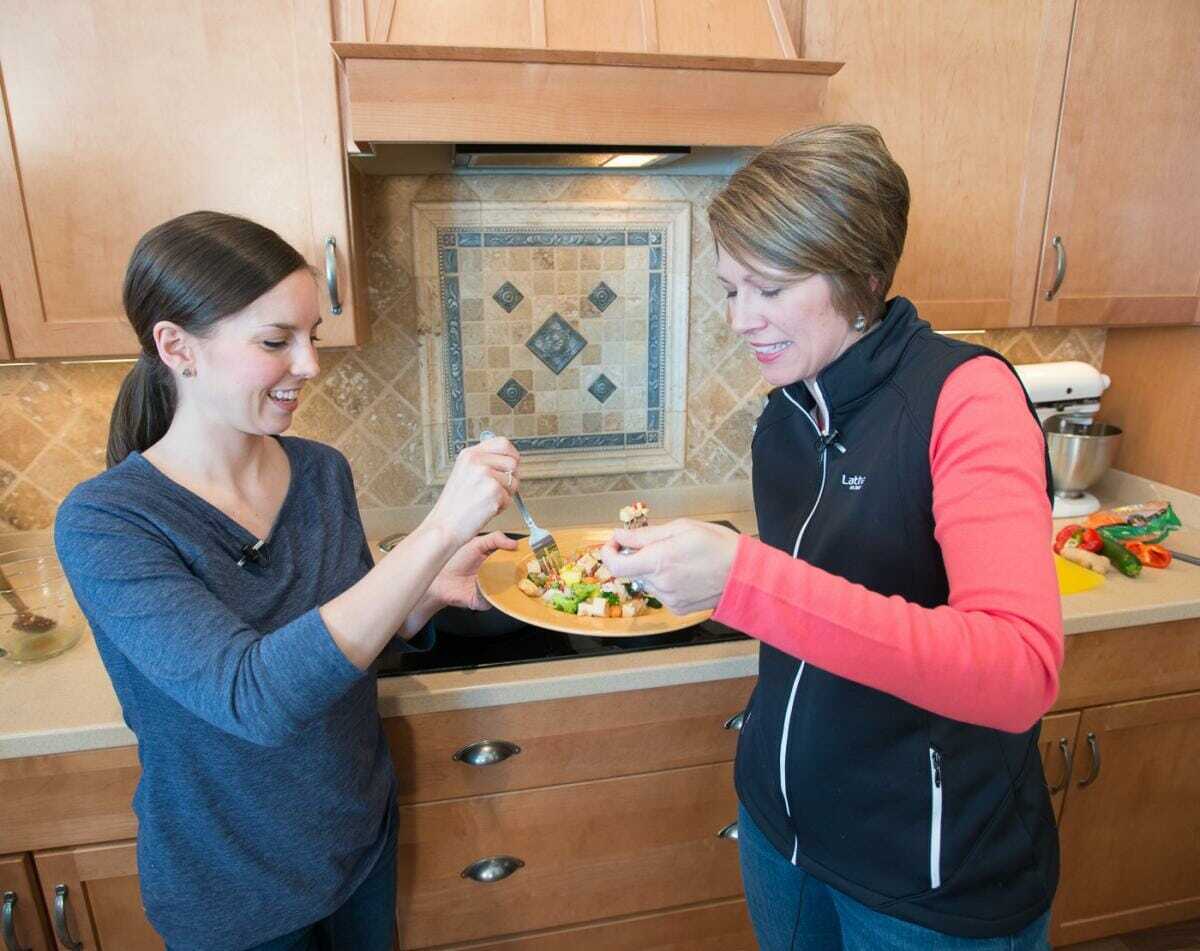
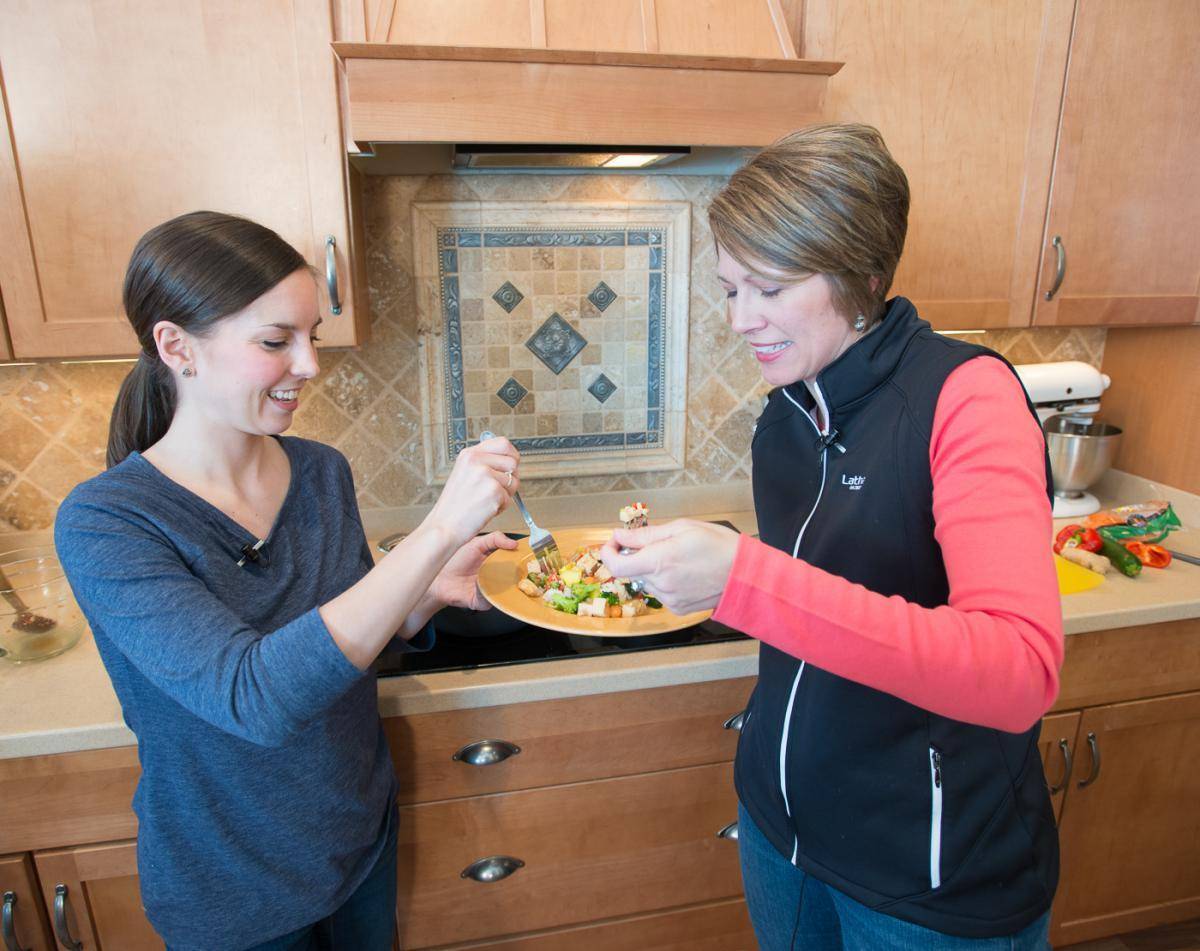
    Recently, I had the opportunity to cook up a storm with Kristin in my own kitchen where she showed me how easy it is to cook with tofu. (Confession time… I’m a meat and potatoes kind of girl, whose parents and grandparents took great pride in raising their own meat and potatoes for our dinner table. I wasn’t too keen on trying on tofu. Since I married into a family whose primary business was raising soybeans – even some food grade beans for the Japanese market – I decided it was time to give it a try.)

    JMJ_Latham_Seeds-18Kristin’s visit forced me to literally eat my words. Why? Because I often say to my kids, “It’s good to try new things.” I couldn’t expect them to eat something I wouldn’t eat myself, right? Fortunately, I was pleasantly surprised when I took my first bite of Tofu and Vegetable Stir Fry. It was like taking my taste buds on spring break after a long winter of feasting on comfort foods.

    Cooking with Kristin was more fun than a person should have on a work day! Click on this link to see how colorful and fresh the ingredients were that we used. Imagine hearing them sizzle in the wok. It all smelled so tantalizing and tasted even better. Truly, this meal was a journey for my five senses.

    Like me and Kristin, many moms and food purchasers are on a journey to gain confidence in the safety and quality of the food they provide for their family. Greater confidence comes from knowing how and why foods are grown. To help feed that curiosity, Kristin is working with farm families, food safety experts and chefs to take a closer look at actual food products, ranging from tofu to tenderloins.

    IFFFeed your curiosity! Here are the top five ways you can enjoy the journey:

    1. Follow along at iowafoodandfamily.com.  Each month Iowa Girl Eats and several guest bloggers will document their adventures with new stories, voices and info nuggets each month.
    2. Face(book) the facts. Track the trip at the IFFP’s Facebook page where friends can find facts about food, ranging from riveting data such as identifying five JELL-O flavors that flopped to discussions about GMO safety.
    3. Ready-to-go recipes. ‘Iowa Girl Eats’ is known for her no-nonsense, easy-to-prepare-and-source, healthy recipes and she’ll feature some with each visit whether it’s preparing pork at one of Iowa’s hottest new restaurants, to enjoying beef at one of Iowa’s most popular summer attractions to dishing about dairy at a grocery store.
    4. FREE STUFF! Each month, IFFP will offer fun, food-related giveaways to enhance any kitchen.
    5. Join the journey in person. Come along and experience the journey for yourself. Several stops are open to the public and feature giveaways, samplings and more. Watch online for upcoming visits.

    “Join My Journey” is an activity of the Iowa Food & Family Project, funded in part by the soybean checkoff and involving nearly 35 partners including Latham Hi‑Tech Seeds. The IFFP sponsors innovative and engaging activities providing Iowans with the real scoop on food from the people who best know it and grow it — Iowa farm families.

    Team Latham

    April 3, 2014
    Agriculture, General, Industry News
  • Latham Hi‑Tech Seeds

    What’s Your Perception of Farming?

    I like to pick a word to blog around, and this week I’ve chosen “perception.” Recently, I have been having some conversations about what people think a farm is. To my surprise, people have the perception that a farm in North Central Iowa must have crops.

    Interestingly enough, even my wife, Janice, told me in no uncertain terms that “farming is crops.” She said I wasn’t going to get her to change her mind about that either! While I love raising crops, I think of crops as more of a hobby. I’ve been raising hogs for more than 50 years, and that’s what I think of as my on-farm job. My perception of farming includes livestock. After all, I titled my blog “Musings of a Pig Farmer.”

    What is your perception of a rancher… do you think he or she must raise cows? Ranchers are farmers, too. They often raise cows, sheep, goats and chickens.

    Do you think of farmers raising fruits and vegetables? I sure do because I know some vegetable farmers! Tyson Roberts grows fresh produce including garlic, potatoes, Spanish onions, sweet corn, watermelon and pumpkins on his family’s 6th generation farm in Layton, Utah.

    Let’s think broader about perceptions. What do you suppose is the perception of a 20-something Mom shopping for her two-year-old daughter? Is her perception of food the same as mine? What is her background? It’s certainly not the same as mine. If she grew up in downtown Chicago, her perceptions were formed differently. She reads different articles than I read. She has not experienced the birth of baby farm animals like I have. She may not understand my thoughts as to what the purpose of farm animals should be. She may have watched Charlotte’s Web and Babe. Her perception of farming may be Old McDonald’s Farm!

    Now think worldwide… what are the perceptions of farming in India, China, Africa and the Ukraine? After visiting Ukraine last summer, I know their perception of a farm differs from my Iowa hog farm!

    Just as the perception of farming is diverse, so is the perception of food. There are day and night, black and white differences in what people believe about food! Instead of fighting over food, let’s celebrate those differences. Relish food choice.

    Everyone’s perception is right for him or her. This is a key point… your perception is right for you! Don’t force your perceptions on others. Buy what’s right for your family, and I’ll buy what’s right for mine!

    Larry Sailer, Musings of a Pig Farmer

    April 1, 2014
    Agriculture, General, Industry News
Previous Page
1 … 43 44 45 46 47 … 95
Next Page

Latham Hi‑Tech Seeds

131 180th Street | Alexander, IA 50420

(641) 692-3258

SIGNUP FOR OUR NEWSLETTER
  • Contact
  • Legal
  • Dealer Center
  • Seedware Login
  • Latham Gear

© 2025 Latham Hi‑Tech Seeds. All rights reserved. | Iowa Web Design by Webspec | Privacy Policy

Latham® Hi-Tech Seeds is a trademark of M.S. Technologies, L.L.C., 103 Avenue D, West Point, IA 52656.