No two crop years are exactly alike, so why base next year’s potential off last year’s results? In 2010, we received excessive rainfall. In 2011, we experienced three weeks of 100-plus degree heat. Last season we experienced the most severe drought since 1956. This year we experienced excessively wet spring conditions, followed by extreme heat and now a lack of moisture.
Making seed selections based only on this year’s yield results could risk performance next year due to the drastic changes in growing conditions from year to year. Because the weather is unpredictable, it’s important to minimize risk by planting a portfolio of products.
Treat your seed product portfolio much like a financial portfolio. Minimize risk by (1) planting seed products with different traits and genetics; (2) varying maturity; plus (3) balancing offensive and defensive characteristics.
Products that are typically thought of as more defensive could actually be the highest yielders depending on: weed pressure, insect pressure, heat stress, emergence issues, and disease pressure. It’s all about balance.
No matter how good a particular football team is, it can’t win on the gridiron by having a strong offense or a strong defense. It takes both! And the same is true whether you’re planting in a corn field or a soybean field. Remember to plant a minimum or three different seed numbers, with a mixture of offensive and defensive traits.
When I have a lot of windshield time – whether it’s driving to meetings or combining corn – I contemplate all sorts of things. For example, have you ever wondered about the term “landlord”?
The term dates back to the Roman Empire and feudalism when peasants (or serfs) were bound to the land. The peasants worked the land and paid homage to their lord; they shared their produce and other fruits of their labor in exchange for military protection.
Fast forward a couple thousand years to the country of Ukraine. The tables have turned during the last 20 years, so now the people who used to be the peasants are the landlords. When the Soviet Union fell apart, land that has been confiscated by the government was returned to the farm villagers.
Kees Huizinga
Each qualifying person received about three to four hectares, but there was a catch… the villagers could not buy or sell that land! If the owners of the ground cannot sell it, that means they must either farm it themselves or rent it. This is where the story really gets interesting (IMHO)…
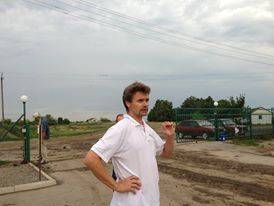
During our Black Sea Study Trip last July with Iowa Farm Bureau, we had an opportunity to visit many farms in the Ukraine. One particular farmer, Kees Huizinga, stands out in my mind. His farm operation is called “krychenka.” He has grown it from scratch to 14,000 hectares, or about 35,000 acres.
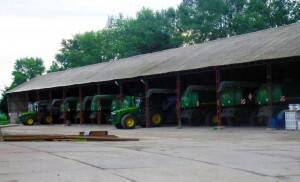
Kees (Case) Huizinga is an investor-owner, operator of “Krychenka”, a 14,000+ hectare farm (35,000 acres). A native of the Netherlands, Kees began farming in the Ukraine about 10 years ago. The initial farming operation had 1,000 hectares. Kees said that when they started farming there the fields were full of weeds that really had not been farmed. They used a moldboard plow to get started and to begin the process of cleaning up the fields and leveling them out.
Now if you’re an old farmer like me, you start doing the math! Kees has about 4,500 landlords living in about 10 villages, which Kees is now responsible for taking care of. Not only does Kees need contracts with 4,500 landlords, he must take care of the needs of their villages. There aren’t any property taxes to fund the schools, supply water, maintain roads or remove snow. Kees has large equipment, so he’s expected to take care of all these needs! Basically, he is taxed by the services he must provide.
Can you imagine? Many Midwest farmers feel that one landlord is one too many! Imagine having 4,500 landlords who expect you to take care of more than just their farm acres. As frustrated as I can get with the rules and regulations, I can’t imagine having thousands of landlords. Hmm… maybe there are more similarities between the two than I first thought!
For more stories about our trip to the Ukraine, click on the links below:
‘Tis the night before the Iowa-Iowa State football game and all through the state… Folks are prepping beef roasts, pork loins, dips and desserts for their parking lot tailgates.
Saturday is the annual Cy-Hawk football game, a time when Iowans gather together for a day of fun and games. It’s time to round up the ladder golf and bean bag toss; mix up some dip and grab an extra bag of chips. Kickoff is 5 p.m. in Ames, so there will be plenty of time for tailgating.
Latham Hi‑Tech Seeds wanted to extend the fun, so today we’re hosting a companywide tailgate in Alexander. We’re grilling brats and burgers for lunch. But the main attraction, in my humble opinion (IMHO), is the buffet line. Each Latham Team member will bring an appetizer, side dish or dessert.
While trying to decide what to make and share at today’s tailgate lunch, I searched The Field Position. Talk about choices! From appetizers to entrees and dessert, we cover it all on The Field Position. Here’s my list of Top 10 Tailgating Recipes:
I ended up “punting” and ordered decorated sugar cookies for today’s event. My neighbor makes the best homemade buttercream frosting, plus she’s a master decorator. I will admit that my conscience got the best of me, so I ordered a few cookies decorated in Hawkeye colors. “Few” is the operative word. Of course, there are far more cookies decorated in Cardinal and Gold. (Insert devilish grin here.)
Let the smack talk begin! Before anyone wants to take a crack at my Clones, just keep these stats in mind:
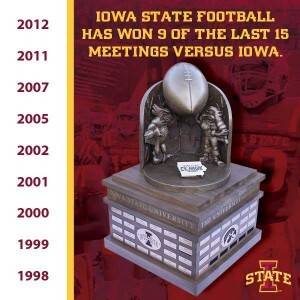
Iowa State Football has won 9 of the last 15 meetings with Iowa.
Iowa State is 9-6 against Iowa since ending its 15-year losing streak in 1998
Iowa State is 8-6 against current U of I Coach Kirk Ferentz
Whether you’ll be watching the game from your living room, a parking lot or inside the stadium, have fun! Then remember to tune into the Cyclone Radio Network following the game for the Latham Hi‑Tech Seeds Locker Room Show and commentary by analysts, players and coaches.
Detecting late season corn diseases ASAP will help you prioritize fields for harvest. Hybrid maturity and crop residue management should take a backseat to weak stalks. Start by harvesting fields with the weakest stalk to help preserve the quality and quantity of grain that goes into your hopper.
At this time of year, the biggest concerns are stalk rots or fusarium. Warm, moist weather with extended periods of overcast skies and high humidity makes conditions ideal for stalk rot. Later in the season, you might see stalks break or bend below the ear.
Walk fields now and note what you believe is the cause of stalk rot or lodging: fertility, hail, high wind, amount of rainfall, or the genetic predisposition of a hybrid. The cause of stalk rot could affect the seed you purchase or your management practices in 2014. There’s no better time than the present to plan your next crop! Get your seed ordered while the availabilities of all products are at their highest.
Many people gain a sense of accomplishment from doing a job well or completing a project. In my case, I enjoy harvesting crops and the sense of satisfaction that come when the last of the corn is in the bin. I always think, “Now I can relax.”
But, I find myself involved in so many other things that it’s truly hard to find time to relax. I had this epiphany while sitting in church on Sunday morning. (Yep, I know I should be concentrating on the sermon – and I was!) The sermon made me wonder whether I have done enough for my church. When is enough… well, enough? I started questioning whether I set the right example for my kids when they were growing up or whether I was too busy.
As busy as I am, I never seem to cross as many items as I’d like off my list. I have maybe 37 different projects started around my farm and house. There’s a porch I want to add on to the west side of our house, and the door to it is already in place. Right now it’s a door that leads to nowhere! I’ve torn the sheet rock off half the laundry room with the intent of making a walk-in closet. That project is half done. And whatever you do, don’t ask Janice about our trim work. I’m very glad I don’t do trim work in the hog barns!
There are projects that I just never seem to be around to doing. I’ve had the materials on hand to make a waterfall by Janice’s shop for at least 10 years now. I think that is long enough! I’m in the process of cleaning up my old steel piles, but that’s easier said than done. After all, I might need something off that pile to fix something someday. I’ve been saying this for 40 years now, but I’m still wondering when enough steel is enough. 🙂
This week I had to set aside all of the projects that I wanted to work no in order to do the work that really needed to be done. It’s time to bring in some new porkers, so that means I’m emptying hog barns this week. While cleaning hog barns is always a big chore, it’s even more daunting this week as I’m cleaning up after Porcine Epidemic Diarrhea Virus (PEDV). I will keep cleaning and disinfecting until it’s time to put in the new pigs because I’m don’t believe there is such a thing as “clean enough.”
There is also work to be done in the political arena. When can we say “enough is enough” in regards to talking to our elected officials? That’s an easy answer for me. “Never!” We can never stop educating the people we’ve put in office to run our government. Ag literacy among American politicians is a grave concern. Farmers can’t afford to say “enough is enough” as it related to the Farm Bill, school lunches, soil conservation and animal welfare.
When have we talked enough about agriculture? It’s so important that we share information with people, who want to know how their food is grown. I believe it’s important for me to talk with people about why I raise pigs the way I do and why I grow GMO crops. Even though I’ve given several interviews, I have several engagements waiting for me right now. Michael Libbie has invited me to be a guest on his new radio show, Insight on Business the News Hour, and I’m looking forward to finding a date that works for us both.
I’m also gearing up for the classroom where I’ll talk to students in local schools as part of the National Pork Board’s Operation MainStreet program. This is the program through which I’ve actively spoken to civic groups about how I raise pigs. After nine years of talking to these groups, it’s exciting to branch out into a new focus group!
I’ve also been asked to record a one-hour presentation for Iowa State Extension about genetically modified crops. I’ve tended to “just wing it” in the past, but now I’m wondering how much preparation is enough. I enjoy being asked questions and knowing what the audience wants to hear. I’m still talking about the Ukraine Market Study from July. Apparently, folks haven’t heard enough yet about that trip! It amazes me how people, especially farmers, want to know what farmers do in other countries.
Enough is enough for this week’s blog… I must get back to cleaning hog barns! I’m looking forward to getting get some satisfaction from having those barns spotless and ready for new little pigs.
As the number of corn-on-corn acres has increases, corn rootworm management becomes increasingly important. That’s why I’m pleased to announce that Latham’s 2014 product lineup includes 36 hybrid seed corn products, offering six different trait combinations in various maturities, for rootworm (RW) control.
Latham Hi‑Tech Seeds is able to guarantee trait and genetic diversity because we’re a family-owned company that works with multiple trait and genetic providers. Our independence allows us to provide farmers with an industry-leading number of product choices from provides including: Monsanto, Bayer, BASF, Syngenta, Dow AgroSciences and more.
Talk about choices for farmers! Our 2014 corn product lineup includes:
Genuity SmartStax RIB — the first corn technology to provide 2 modes of action against rootworm
Rootworm control is a must in corn-on-corn protection, so it’s important to determine which trait is right for your situation. In an area with heavy rootworm pressure or multiple years of corn-on-corn, plant Latham hybrids with two modes of action against CRW like Genuity® SmartStax®, Agrisure Duracade or 3122 technology. Look at dual modes of action and consider rotating crops in areas where rootworm pressure is extreme.
You’ll see great options like Genuity VT3 PRO, VT3 and Agrisure 3000GT that work well in moderate corn rootworm situations of minimal years of corn-on corn or extended diapause in ground that has been rotated. These are proven technologies that are combined with the best genetics to help maximize yields.
Because corn-on-corn acres are more susceptible to challenges presented by weather, soil and pest pressure, Latham has introduced the Gladiator designation to help with 2014 seed selection. Gladiator hybrids have the industry’s most advanced genetic foundation, offering powerful root and stalk strength and superior above- and below-ground insect protection. Give them a try as part of your diversified 2014 crop plan!
Need help figuring out what to plant where? Ask your local Latham representative about our all-new Seed-2-Soil program. Or, contact the Latham office directly at 641-692-3258.
There’s no need to sound a dinner bell. Somehow, when Ruth Wittrock of Paullina pulls a fresh batch of Oatmeal Bars from the oven, her family members and neighbors know to call. Her husband and sons say her cooking is their secret to keeping their customers happy.
This Northwest Iowa family operates a baling business within a 40-mile radius around their business. Gordon and his three sons, Tracy, Tim and Terry, began Wittrock Baling in 2003 by purchasing equipment from a neighbor. That neighbor had operated a custom baling business for 16 years, so there was an existing book of business. The Wittrocks began with a customer base of 40 and, over the past decade, have grown their business to 120 customers.
Photos courtesy of Terry Wittrock
“Buying the baling business was a really good opportunity for us,” says Gordon. “All three of our sons were interested in farming. It’s a bit unique that all of our boys wanted to farm, so we wanted to find a way to make it work. We weren’t farming enough acres for everyone to make a living, so we needed to look for additional income. Baling has allowed each of our boys to pursue their passion for farming.”
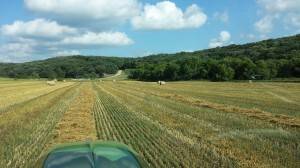
Terry Wittrock appreciates the beauty of Iowa’s countryside as he custom harvests hays
From April through November, the Wittrocks are busy cutting alfalfa, baling grass, chopping silage and baling cornstalks. There’s no down time during the baling season, so the winter months are spent buying/selling equipment and making repairs. They also raise their own corn and soybean crops, so it’s important that every piece of equipment is ready to go once the fields are fit to enter in the spring.
The Wittrocks go directly from spring planting to first crop alfalfa. Depending on the growing conditions, they may put up four hay crops for their customers before corn and soybean harvest begins. Once those crops are harvested, it’s time to bale the corn stalks.
Operating with such efficiency takes a great deal of teamwork. Tim and Terry line up the jobs. Terry does most of the cutting, however, everyone does whatever is needed to get the jobs done in a timely fashion. The days and hours can be long and demanding, especially when the weather is against them.
Over the years, they’ve upgraded equipment and added additional lines of machinery to handle the demand. They started cutting and baling with a John Deere 4240 and used a John Deere 4010, without a cab, for raking. Now they all use newer equipment. They have a John Deere R450 windrower. They use their John Deere 7930 and 7530 tractors to pull their two, new 569 balers. They use a John Deere 7810 to pull a new 27-wheel Rouse rake that will rake 47 feet.
“We like the bigger rake for greater speed and efficiency,” says Tim. “We also like the rubber mounted teeth for low maintenance.”
Not only has equipment technology changed, but alfalfa seed has advanced. This spring the Wittrocks planted Genuity® Roundup Ready® Alfalfa from Latham Hi‑Tech Seeds. This particular alfalfa stands up to heavy traffic. It produces a large, deep set crown with high root and crown carbohydrate reserves to allow for aggressive regrowth and winter hardiness. These features, combined with an outstanding disease package and resistance to Roundup Ready herbicide, make this an ideal choice for those in search of high quality, weed control, and high yield under an aggressive schedule.
“You wouldn’t have believed what a weedy mess this field was in early spring! Then we made one pass with Roundup and it made a night and day difference,” says Gordon. “Not only was the field weed-free but the first crop on new seeding was extremely high yielding. LH 455TQ RR produced 20 large square bales off 13 acres. It’s leafy and fine-stemmed, just the way cows like it. We couldn’t be happier.”
On second thought, Gordon might be happier if he was eating an oatmeal bar while admiring his alfalfa crop. Try a batch at home and see if you can bake your family happy!
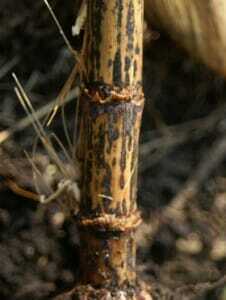
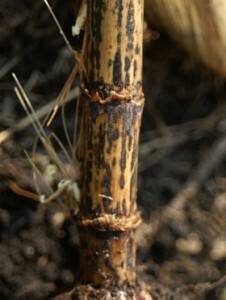
Warm, moist weather with extended periods of overcast skies and high humidity makes conditions ideal for stalk rot. That’s why it’s so important to continue scouting your fields. Detecting late season corn diseases ASAP will help you access the potential impact and harvest early to preserve the quantity and quality of that grain that goes in your hopper.
Start looking for stalk rot pathogens problems about 30 to 40 days after pollination. Monitor stalk health over the next few weeks, and adjust harvest strategies accordingly to manage fields where stalk lodging may be a big problem. Plants that were damaged by wind and hail earlier in the season are vulnerable to a number of problems that may show up, so it might be necessary to harvest those fields first to prevent stalk lodging or dropped ears.
photo from the ISU Extension
Later in the season, as the plant matures, you might see stalks break or bend below the ear. Many factors can contribute to this situation: fertility, hail, high wind or level of rainfall, as well as the genetic predisposition of certain hybrids. Goss’s Wilt and Gray Leaf Spot may also be contributing factors. Knowing the true cause will help you determine how to better manage stalk rot.
Stalk rots reduce standability. Fields where greater than 10% of plants are affected by stalk rots should be scheduled for an early harvest. The following video shows how to detect stalk rot.
To minimize damage from stalk rot in the future, consider these three best management practices: (1) maintain proper fertility in fields; (2) plant at recommended populations; and (3) rotate crops. It’s important to note stalk strength and the disease package when selecting hybrids. Only those corn hybrids with the toughest defensive package are designated as Latham’s GladiatorTM products. They’re selected to do battle and win! Talk with your local Latham® representative about Gladiator corn hybrids for your 2014 seed needs.
Last week I had the privilege of attending an information-gathering meeting for Take Root, a new program being launched by the Iowa Farm Bureau Federation to help farmers develop business and succession plans. The objective of this new program is to help farm families work through a step-by-step process of developing a vision for their operation and then taking a managed approach to the obstacles they face in farm growth and transition.
If the turnout to last week’s meeting is any indication, this topic is near and dear to many people’s hearts! I had a hard time finding a place to park at the Fireside Restaurant in Eldora where the meeting was held. After finally securing a spot on the street, I went inside to find standing-room only. The IFBF has expected 20 attendees, but there were more than 40 people in that room!
I’ve been hearing for years about all of the old farmers who will retire, leaving no one to grow our food. Surprise… these fears are unfounded! From what I gathered at the Take Root meeting, young folks are eager take over.
Transitioning the family farm from one generation to the next requires pre-planning and careful consideration. That’s why the IFBF is offering a new program to help.
When asked what should be covered in the Take Root series, one young farmer answered, “How do we get the old folks out of our way?” I reminded him there were a few of us old farmers in the room! From this remark, however, I realized some of these young farmers need to see the value of having experience. It’s okay they want to take over, but I hope Take Root blends “old farmers’” experience with the young farmers’ enthusiasm, so we can help them prevent some of costly mistakes from being too eager.
One of the subjects that will be covered by the Take Root program is how to transfer a farming operation. One reason is this is such a challenge is because more than 97 percent of Iowa’s farms are family owned. As any parent knows, you’re going to have more than one opinion if you have more than one child. It’s no wonder that only 30 percent of the farms successfully make the transition from the first to the second generation and only 10 percent of those make it to the third generation. Farm transition is going to be key to keep Iowa agriculture – and Iowa’s economy – strong in the future.
The second priority of Take Root is developing a business plan, which becomes the farm’s road map. Yep… a business plan for a farm! Should you use a C-Corp or an S-Corp? How about a limited liability company (LLC)? In many operations, there can be more than one structure used: livestock might be in one form, land in another and machinery may even be in a third. S-Corp, C-Corp or LLC – all are still examples of a family farm.
There is a need to setup the farm the right way for each family as how the farm is structured is extremely important for that family to pass it to the next generation. Farm structure can play a large role in the financial situation of the operation. Taxes are a large consideration, but I’m not even going to try to cover taxes here today!
We have food to raise and people to feed. We’re in an industry that will not go out of style. Us “old farmers” need not worry who will raise that food. We just need to get out of the way and not get run over. It’s a new world out there, but we still need to eat! For more information about Take Root, go to www.iowafarmbureau.com or contact Nathan Katzer at 515-225-5494 or nkatzer@ifbf.org.
Larry Sailer is known as a hog farmer from North Central Iowa, an agvocate and the author of “Musings of a Pig Farmer.” Some folks even remember that he wrestled in college. But did you know that Larry is the proud grandfather of a member of the Iowa State Cyclone football team?
Devin Lemke was a three-star recruit and named to The Des Moines Register Class 2A first-team all-state team. As a high school senior, Devin caught 10 passes for 199 yards and four touchdowns. He threw a 55-yard touchdown pass as a tight end on offense. He also recorded 53 tackles, nine for a loss, earning all-district honors as a junior.
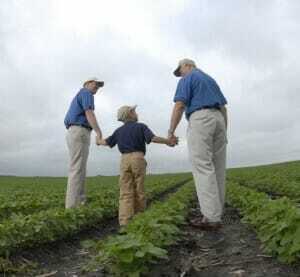
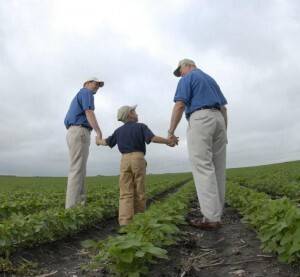
Larry Sailer with grandson Devin Lemke
An all-around athlete, Devin lettered four times in track and wrestling. He was a two-time conference champion and qualified for state wrestling tournament as a junior. He placed third in state as a senior and was one of three finalists for Mr. Wrestler. Devin also was member of state champion 4×100-meter relay team and finished third in 200 meter dash at state championships as a junior.
With stats like these, it’s no wonder Devin was being recruited by both Iowa and Iowa State. An endearment to the Cardinal & Gold, as well as respect for Coach Paul Rhoads and his vision to build the ISU football program, ultimately swayed his decision. When Devin announced his commitment to Iowa State, he was quoted in the newspaper as saying, “It means a lot to know that I’ll be representing my home state. My family is proud of me, and my decision to pick Iowa State really made them happy.”
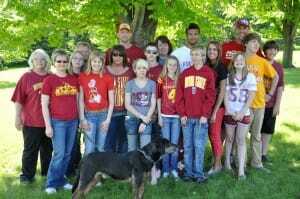
Cardinal and Gold runs deep in Larry’s family.
“We’re proud of all Devin has accomplished on the field and in the classroom,” says Larry. “But most importantly, he’s just a great kid! He takes sports seriously, but win or lose, he acts with class. He’s earned respect from his opponents and coaches alike.”
“Devin is a hard worker whenever there’s a job to do,” adds Larry. “He’s dependable and he doesn’t quite until the job is done. He has helped us on the farm for many years and still comes home to help every chance he gets. He literally gave me a helping hand when I was laid up and couldn’t do my hog chores this past winter. He comes home often and helps wash out the hog barns. He helps during the planting and harvest seasons, too. He’s a real worker.”
This weekend that Iowa work ethic will get put to use on the gridiron. Larry and his wife, Janice, along with Devin’s parents, Charlotte and Lance Lemke, will be among the happiest fans in the stands. Not only does Saturday’s game against the UNI Panthers mark the Cyclones’ 2013 season opener, but it’s also Devin’s return to the game as a shoulder injury keep him on the sidelines last season.
How does a family celebrate such an occasion? The Sailer family celebrates with pork, of course! Charlotte has requested that Larry smoke a pork loin, which is a family favorite. But a tailgate just wouldn’t be complete without a few side dishes and snacks. That’s why today Janice is sharing her simple recipe for Mexican Dip. Mix together a batch and get ready for a Cyclone weather alert!
 No two crop years are exactly alike, so why base next year’s potential off last year’s results? In 2010, we received excessive rainfall. In 2011, we experienced three weeks of 100-plus degree heat. Last season we experienced the most severe drought since 1956. This year we experienced excessively wet spring conditions, followed by extreme heat and now a lack of moisture.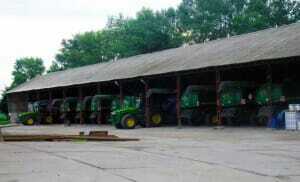

 Saturday is the annual
  I ended up “punting” and ordered decorated sugar cookies for today’s event. My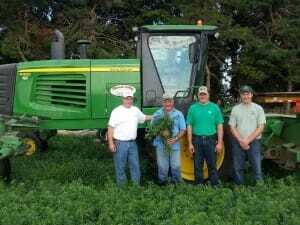
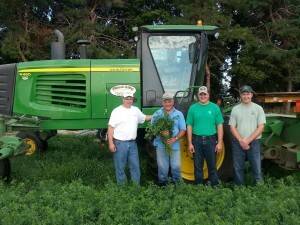

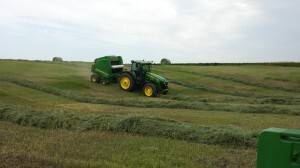 Over the years, they’ve upgraded equipment and added additional lines of machinery to handle the demand. They started cutting and baling with a John Deere 4240 and used a John Deere 4010, without a cab, for raking. Now they all use newer equipment. They have a John Deere R450 windrower. They use their John Deere 7930 and 7530 tractors to pull their two, new 569 balers. They use a John Deere 7810 to pull a new 27-wheel Rouse rake that will rake 47 feet.