Latham Hi-Tech Seeds

(641) 692-3258

  • Home
  • Performance
  • Products
    • Corn
    • Soybeans
    • Soybean Blends
    • Alfalfa
    • Corn Silage
    • Seed Guide
  • Find a Rep
  • Media
    • Blog
    • News
    • Videos
    • Podcasts
    • TECHTalk
  • About Us
    • Company History
    • Our Mission
    • Careers
    • Become a Rep
    • Sowing Seeds of Hope
  • Contact Us
  • Latham Hi‑Tech Seeds

    Cool, Damp Weather Creates Ideal Conditions for White Mold

    Photo from the Iowa State University Extension White Mold, or Sclerotinia Stem Rot, is becoming evident now in many soybean fields across the Upper Midwest.  Like weed seeds, sclerotia can lay dormant for years and then grow when the conditions are suitable.  Cooler than normal temperatures, combined with ample moisture in fields, has created a favorable environment for the fungus in recent weeks.

    Today we’re providing tips to help you prevent the fungus from spreading this season and remedying it for the future.

    White Mold starts to show when soybean plants are in the early reproductive stages and there is moisture in the crop canopy.  This usually happens in July and August, but we’re just starting to notice it now since it took longer for soybean crops to reach the reproductive stage due to later planting dates.

    In addition to the fluffy white mycelium of the fungus, a closer inspection of the plant will turn up sclerotia.  These black, oblong structures resemble rat droppings.  Sclerotia form in the center of the bleached plant stem and also develop inside the stem, so they can be easily seen when the stem is split.

    Sclerotia are the fungus’ survival structures. Although they are initially soft, sclerotia harden with age and basically encapsulate the fungus.  Deep tillage can bring sclerotia to the surface, causing White Mold to be found in areas where it hadn’t been seen for a decade or more.

    Preventing the Spread

    Because infected soybean plants may not produce seed, a little White Mold can have a big impact on yield.  Most likely, you won’t be able to do anything for the plants already infected with the fungus but you can protect the rest of the field.  Certain foliar fungicides may be applied when you see White Mold starting to attack, so contact your local Ag Retailer or Crop Consultant for specific recommendations.

    There are also Best Management Practices to help prevent White Mold from surfacing in future years.  In fields with a history of White Mold, be sure to select soybean seed with resistance to White Mold.  Research shows that it also helps to lower the plant population in these fields; avoid planting 200,000 plants per acre regardless of row width.

    The most effective defense against White Mold is to keep the fungus out of a field, but this is easier said than done.  To prevent White Mold from spreading:

    • Avoid harvesting disease-infested fields before harvesting healthy fields
    • Clean your combine thoroughly after a field with White Mold is harvested. It’s important to clean the combine before moving to a field with no history of the disease.
    • If White Mold is restricted to a portion of the field, that restricted area should be harvested last and independently from the rest of the field.
    • If White Mold is already present in a field, keep sclerotia out of the upper layer of the soil, and prevent the sclerotia from distributing over a wider area

    Soybeans with very good to excellent White Mold tolerance:

    L1568R2
    L1783R2
    L1868L
    L1948R2
    L1985R2
    L2083L
    L2084R2
    L2183R2
    L21B53R2
    L2253R2
    L2440R2
    L2483R2
    L2648R2
    L2758R2
    L2780R2
    L2883L
    L3158L

    Webspec Admin

    August 15, 2013
    Agronomics, Crop, Disease, Fungicide, General, Soybeans
  • Latham Hi‑Tech Seeds

    Freedom Ride V: Register by Aug. 15 for Do-Rag or T-Shirt

    Byway21

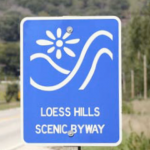
    Byway2Bring out your inner explorer as you travel western Iowa for the 5th Annual Latham Freedom of Independence Ride on Saturday, Aug. 24.

    This year we’ll be traveling the Lewis & Clark Byway throughout the Loess Hills, one of the most beautiful drives this state has to offer.  The 120-mile route will take us into two farm fields, through a dairy and across a lake in a historic keel boat.

    Loess Hills: View from Murray Hill between Pisgah & Little Sioux
    Loess Hills: View from Murray Hill between Pisgah & Little Sioux

    Our corn stop will showcase new Latham® Hi‑Tech Hybrids in our 2014 corn product lineup including Genuity® DroughtGard™, Agrisure E-Z Refuge™ and Agrisure Duracade™.  Our soybean stop will feature two new technologies that are in the pipeline: Dicamba-tolerant soybeans (Roundup Ready® Xtend) and those with 2,4-D tolerance (Enlist E3).

    Get ready for the seed industry’s fastest field day!  Motorcycles of any make and vehicles of any model – as long as they can travel 55 mph – are welcome.  However, pre-registration is required as space is limited.  Click here to register now!

    Check out the fun we’ve had in years past:

    • Freedom Ride IV – Latham Hi‑Tech Seeds’ 65th anniversary celebration
    • Freedom Ride III – the Great River Ride
    • Freedom Ride II – Central Iowa (recap with video)
    • Freedom Ride I – Okoboji, Iowa’s Great Lakes

    Team Latham

    August 12, 2013
    Agriculture, General, Industry News
  • Latham Hi‑Tech Seeds

    Happiness is the 2013 Iowa State Fair

    Happiness is the theme of the 2013 Iowa State Fair, Aug. 8-18.  Cynthia Foder from KCCI News 8 filed a story yesterday, asking fair-goers how they would define “happiness” at the Iowa State Fair.  Since I wasn’t able to provide my comment then, I’ve decided to blog about it today.  Why?  Because I truly believe happiness is the Iowa State Fair! Happiness is…

    • Biting into a bacon wrapped corn dog or one of 18 new foods to debut at the 2013 fair.
    • Seeing sheep, pigs, goats, horses and cattle – it’s the next best thing to showing your own!
    • Spending a picture perfect Friday at the Iowa State Fair, making new acquaintances and visiting with dear friends.

    Today I have the pleasure of joining Mark Dorenkamp and Bob Quinn for a live broadcast of “The Big Show.” You can join the fun by tuning in between 11:30 a.m. and 1:00 p.m.  We’ll be talking about the 5th Annual Latham Freedom of Independence Ride, which is sure to be the most unique field day a farmer has ever attended!

    Iowa Ag Secretary Bill Northey and Iowa Lottery CEO Terry Rich help build connections between rural and urban Iowans
    Iowa Ag Secretary Bill Northey and Iowa Lottery CEO Terry Rich help build connections between rural and urban Iowans

    Speaking of unique events, I can’t wait to stop inside the south atrium of the Varied Industries Building where the “Get Connected to Farming” exhibit is being built by the Iowa Food & Family Project.  The centerpiece of this exhibit is an amazing sculpture created by Sean Kenney, a LEGO® Certified Professional. (I’m envisioning LEGOLAND at the Iowa State Fair.)

    At 2 p.m. daily, the Iowa FFP hosts a LEGO brick building contest between a celebrity and youth.  Yesterday Iowa Secretary of Agriculture Bill Northey took part.  I’m looking forward to a friendly competition today with Duane Murley, farm/news broadcaster, with KWMT in Fort Dodge.

    My final “must make stop” on the fairgrounds is the Agriculture Building to see the butter cow, of course! This year’s companion butter sculpture celebrates the Lincoln Highway Bridge in Tama in celebration of the 100th anniversary of the Lincoln Highway.  This year also marks the 150th anniversary of Lincoln’s Emancipation Proclamation and Gettysburg Address. There’s so much to see and do!  Happiness is…

    • Seeing the butter sculptures.
    • Smelling fresh wood shavings as you walk through the livestock barns.
    • Dipping into a Hot Beef Sundae at the Cattlemen’s Beef Quarters.

    Yes, indeed, happiness is the Iowa State Fair! As a tribute the fair, I’m sharing one of my favorite cake recipes from Kaitlyn Bartling.  She’s not only a good friend but one of the best farm cooks I know! Bake a cake from scratch, mix up some homemade frosting and then decorate it beautifully like the cake pictured here.  This cake was decorated by Franklin County 4-H member Jenna Borcherding.  Jenna’s cake, which was Pinterest-inspired, is a 2013 Iowa State Fair entry. Happiness is… homemade cake topped with fresh berries.

    Bake someone happy this weekend!

    Here are 2 more recipes from Kaitlyn Bartling:

    1. Shredded Beef French Dip
    2. Stuffed Meatballs

    Team Latham

    August 9, 2013
    Desserts, General, Recipes
  • Latham Hi‑Tech Seeds

    Register for 5th Annual Freedom of Independence Ride

    You’re invited to join us for the fastest field day in the industry!  Rev your engines and join the ride as Freedom Ride V embarks on a beautiful journey through the Loess Hills of western Iowa on Saturday, August 24, 2013.

    Click Here to register.  Those who sign up before August 15 will receive a complimentary do-rag or commemorative t-shirt.  Hope to see you on the open road!

    SF_LathamPage1

    Team Latham

    August 8, 2013
    Agriculture, General, Industry News
  • Latham Hi‑Tech Seeds

    Up-in-the-Air Farm Bill has this Farmer Up in Arms

    Grain gridlock and globalization were hot topics of conversation when nearly 300 Iowa farmers and agribusiness industry leaders gathered July 22-23 for the 2013 Iowa Farm Bureau Economic Summit.

    Attendees, like me, were reminded how important it is to prepare for the storm – whether that means increased global competition or rising land prices.  Panelists agreed the agricultural sector can expect changes in the months to come and only good planning will protect their sustainability.

    “The consistent message was, ‘Make long-term plans and make sure you’re grounded in reality’,” said IFBF Director of Research and Commodity Services David Miller.  Risk management was certainly the most important take away.  With weather extremes and government policies, it will be critical for farmers keep their finances balanced and not get leveraged.

    The one topic that stood out from all the rest for me was U.S. Secretary of Agriculture Tom Vilsack’s talk about Farm Bill and his rationale for keeping it a “food and farm bill.”  This bill is really the Farm Bill only in title as 80% of the bill pertains to the food stamp program.  Now called the Supplemental Nutrition Assistance Program, SNAP cost almost $80 billion last year – twice the amount it cost just five years ago.

    Sec. Vilsack really, really emphasized the need to keep food stamps and farming in the same bill because, without SNAP, he says farmers have no clout.  (Does this remind anyone else of the comment he made about rural American becoming less and less relevant?)  He then went on to tell us how important the Farm Bill is.  Not only do Americans need food, but according to the Secretary, SNAP is a great program that creates jobs – and a market – for U.S. farmers.  Sec. Vilsack believes that the billions going into SNAP helps famers sell more food!

    That reminds me… Last month the Senate Budget Committee reported that between food stamps, housing support, child care, Medicaid and other benefits, the average U.S. Household below the poverty line received $168/day in government support in Fiscal Year 2012.  However, the median U.S. household income averages $137.13/day.  Interesting facts, right?  Yet Secretary Vilsack claims there is very little abuse of the U.S. food stamp program.

    Vilsack went on and on about how the Farm Bill benefits everyone, urban and rural.  I understand that SNAP is food and food is farming, but I can’t help but question why two programs with such merit couldn’t stand on independently.

    Sec. Vilsack claims the Ag department would be split up between other agencies if we don’t keep the SNAP in the Farm Bill.  From his convincing arguments, one can see how persuasive he must have been as a practicing lawyer.  Vilsack strongly “sold” his ideas, and I’m afraid most people in the audience bought into everything he said.  No one challenged dared to challenge assumptions.  On why Congress needs to pass a unified farm bill and not separate the bill into nutrition and non-nutrition bills, here’s what he said during the Economic Summit:

    “They’re not on the farms. They’re not producing the vast majority of what you produce. They don’t understand what you do. They have a hard time even appreciating what you do. When they send members to Congress and to the Senate, they may send folks who do not have an appreciation for what you do and those folks may find it hard to understand the importance of having a safety net: of why crop insurance is not just important for producers but it’s also important for the community where producers live. You’ve got to give them a reason why it’s important for them to think that a farm bill is more than a farm bill. They have to understand that it is a foods bill, that it is a jobs bill, that it will impact their constituents. If you separate those two things, you lose that leverage. You lose that capacity to convince, to persuade, to advocate. Why would you do that?”

    Quite frankly, Vilsack knows from personal experience that many folks in Washington don’t understand farming.  Just because he holds the esteemed title of U.S. Secretary of Agriculture doesn’t mean he can appreciate what it’s like to place your future in the hands of God each spring when you plant seed in hopes of harvesting a bumper crop.

    Obviously, food is important to everyone.  And everyone is titled to his or her opinion, but this is what makes it so difficult to move forward. How can we afford to spend more money? Do we cut programs? If so, which programs? Who will this affect and how!

    I don’t have all the answers, but I will still be part of the conversation. You can bet that I will listen and I will share my thoughts, as well. Farming and food is relevant! More people need to understand that – especially the people we send to Washington, D.C.!

    Larry Sailer, Musings of a Pig Farmer

    August 6, 2013
    Agriculture, General, Industry News
  • Latham Hi‑Tech Seeds

    “Connect to Farming,” Aug. 8-18, at the Iowa State Fair

    Aaron Putze
    Aaron Putze

    Guest Blog by Aaron Putze
    Director of External Relations & Coordinator
    Iowa Food & Family Project, Iowa Soybean Association

    It’s less than week away from the start of the one-and-only Iowa State Fair.  Indulge in all the great fair fun.  Try some of the 18 foods to debut in 2013, and put the “Get Connected to Farming” exhibit on your “must see and do” list!

    The Iowa Food & Family Project will be building (yes, literally building!) connections between rural and urban Iowans about farming and food at the Iowa State Fair, Aug. 8-18, with a unique “Get Connected to Farming” exhibit located in the south atrium of the Varied Industries Building.

    The centerpiece of this year’s exhibit will feature the work of Sean Kenney, a LEGO® Certified Professional who uses LEGO pieces to create amazing sculptures.  Kenney’s build for the Iowa Food & Family Project (Iowa FFP) will be made completely of LEGO pieces showcasing the positive contributions farming makes to Iowa, the nation and the world.  It will feature a colorful representation of Iowa’s landscape, including rolling farm fields interspersed with farms and towns surrounded by a variety of food grown, made and sold in Iowa.

    The daily LEGO brick building contest held at 2 p.m. promises to be fun and engaging.  It will feature a celebrity vs. youth as they compete to successfully build a farm-related sculpture using LEGO bricks.  Confirmed participants include Gov. Terry Branstad, Iowa Secretary of Agriculture Bill Northey, Iowa Lottery CEO Terry Rich, WHO-TV’s Erin Kiernan, radio personalities Mark Dorenkamp, Kim Chase, Duane Murley and Greg Chance and the 2013 Iowa State Fair Queen.

    Fairgoers can also participate in a variety of other activities. They can build their own creations using LEGO bricks, visit with farmers and test their knowledge about food and farming. They’ll also be invited to contribute to the Iowa Food Bank Association.

    Another Iowa Food and Family Project is helping make the connection to the need for a wholesome food supply for everyone is through its partnership with Meals from the Heartland.  On Opening Day, August 8, it will partner with the Iowa Soybean Association and GROWMARK to package 250,000 servings of the soy-based meals.  To reach this goal, it will take 1,500 volunteers packaging in one-hour shifts from 7 a.m. to 6 p.m. Stop by the exhibit opening day and lend a helping hand!

    Food is certainly an important part of the Iowa State Fair.  And it just wouldn’t be state fair season without a tribute to food on a stick!  Pay tribute to Iowa’s dairy farmers and soybean producers with this simply recipe, provided by The Soyfoods Council, for Cheesecake on a Stick.

    Team Latham

    August 2, 2013
    Desserts, General, Recipes
  • Latham Hi‑Tech Seeds

    Get the Scoop on Corn Rootworm

    CRW beetle

    Iowa farmers, agronomists, crop consultants and others wanting to get the scoop on corn rootworms are invited to participate in a corn rootworm field day on Thursday, Aug. 8, in Boone, Iowa, at the ISU Field Extension Education Laboratory (FEEL).  There is no attendance fee, but preregistration is required as attendance is limited to 50.

    Between 8:00 – 10:00 a.m., ISU Extension specialists will perform tissue testing and do rootworm injury assessments on samples brought in by attendees.  Receive one-on-one training on using the corn rootworm injury rating scale, as well as discuss corn rootworm (CRW) management options with ISU specialists.

    Even if you don’t attend next week’s field day, it’s a good time to be scouting for rootworm beetles and other insects that are actively feeding on corn silks. If silks are clipped to a length of ½” or less, pollen has a hard time landing on the silks and uneven pollination occurs.

    It’s also a good time to conduct root digs.  Here are some quick tips for conducting a rootworm dig:

    1. You can’t always see feeding unless you actually wash off the roots.
    2. Rootworms can have “hot pockets” in the field, so the more locations the better.
    3. While you are digging roots, note:
      1. Insect pressure (in particular rootworm beetle feeding)
      2. Disease pressure, paying special attention to the leaves above ear leaf.
      3. Runt plants and uneven emergence.
      4. Make note of root structure after you wash off roots; notice any compacted zones and if there was any sidewall compaction during planting.
      5. Look at plant spacing.

    For more information about corn rootworm management, click on the links below:

    • Pressure on the rise for insects and disease
    • Outsmart corn rootworm
    • (CRW) management options

    Webspec Admin

    August 1, 2013
    Agronomics, General, Insects
  • Latham Hi‑Tech Seeds

    Preparing to Weather the Storm

    Anyone who’s been a farmer, was married a farmer or has sat around a coffee table with them knows farming is a cyclical business that’s largely depending on supply and demand, and the supply is largely dependent on how fickle Mother Nature is feeling.  During the Iowa Farm Bureau’s 2013 Economic Summit in Ames last week, I learned to not only expect the unexpected but I was reminded about the importance of planning for it.

    Honestly, two full days of meetings with more than 20 speakers is a bit of an overload for this old hog farmer!  There was so much information covered that I can’t possibly fit it into one blog post.  Today’s I’ll merely provide a summary, and next week I’ll provide more details about the farm policy discussion.

    To begin with, John Phipps was a great emcee.  He kept things moving.  He also shared interesting information and stories from his many travels including Africa.  If you think farming in America is hazardous, it’s nothing compared to Africa!  African farmers are very much at risk of getting killed – and not by their machinery.  It’s a tough political climate with too much unrest and uncertainty.  Land disputes have become life or death situations.  What a contrast Africa is to America where many families engage in transition planning, so the family farm stays in the family for generations to come.

    Legacy planning, economics and farmland prices were interesting items of discussion over the course of two days.  A presentation on weather was especially interesting to me.  Iowa State University Extension Climatologist Elwynn Taylors says our weather has been following a predictable cycle and continues to do so.  Ironic, isn’t it?  We’ve been finding our weather unusual, yet the climatologist finds it predictable.  He says we’re entering the third year of a 25-year cycle of unsettled weather:  floods in 2011; drought in 2012; and then both floods and drought-like weather in 2013.  What could be more unsettling?  It sounds like we’ll find out whether we want to or not!

    I also enjoyed David Miller’s summary of our recent Black Sea Study Trip. The first question he fielded from the audience was, “How do you get to go on such a trip?”  It was a great trip!  The Ukraine was discussed in several presentations that explored future export trading.  David’s presentation provided a nice segue for Dr. Michael Boehlje’s presentation about globalization and agriculture.

    Iowa Secretary of Agriculture Bill Northey and Dean Lemke, an engineer with the Iowa Department of Agriculture and Land Stewardship (IDALS), explained the workings of the new nutrient management program. It’s a very intense and well rounded program, and I’m actually looking forward to this program working.  We also were schooled on nano technology by Suranjan Panigrahi, PH.D., MBA.  It’s unbelievable the things that are possible now!  Most of this presentation went way over my head – and being half deaf didn’t help – but it was still very fascinating.

    The final speaker of the conference was John Hinners of the U.S. Meat Export Federation, who told us that meat is probably the brightest spot in the U.S. export markets.  The rest of the world is looking to improve their diet, and we’re a low-cost producer of protein.  Asia will remain our biggest buyer simply because of the large numbers of people there.

    I love ending on a positive note!  Be sure to tune in next week when I recap U.S. Secretary of Agriculture Tom Vilsack’s presentation about the Farm Bill.

    Larry Sailer, Musings of a Pig Farmer

    July 30, 2013
    Agriculture, General, Industry News
  • Latham Hi‑Tech Seeds

    Maximize Yield Potential with Latham’s Seed-2-Soil®

    Seed2soil infographic flat

    Latham Hi‑Tech Seeds created its hallmark Seed-2-Soil® program before “right seed, right acre” became an industry buzzword. Why? Because we’re interested in simplifying the crop planning and seed selection process to help our customers maximize their yield potential.

    Research has shown that correct product placement leads to a 3-7% yield improvement. Latham’s Seed-2-Soil program utilizes the power of a partnership between grower and Latham representative to fit the right seed to every acre.

    seed2soil-infographic_flat-2Seed-2-Soil begins with a discussion with you and your seed rep about all the variables that go into your farming practices each year. Each field is considered on an individual basis, factoring all the important information the farmer holds with the product and performance information the seed rep can bring to the table. The outcome is a tailored solution focused on maximum yield and profit per acre.

    Not everyone has the same needs, so you get to choose your level of participation in the Seed-2-Soil program. Want to go beyond managing which varieties go in your field? Seed-2-Soil has another level of offerings to help measure and utilize micronutrients in your field for maximum yield per acre. Click here for more information.

    How to Enroll

    There are many variables that contribute to overall yield, so the Seed-2-Soil program helps you focus attention on those you can more easily control.  That’s why this year-long field observance and consulting program gives more meaning to grid sample data and geo-reference yield data, as well as promotes understanding about nutrients, varieties, and production practices.

    To get started, your Latham representative will want to gather any previous year data that may be of help when planning and placing products for the coming season.  This can include but is not limited to:

    • GPS yield monitor data
    • Grid soil samples
    • Variety/hybrid information from previous year
    • Basic fertilizer and chemical application records

    Seed-2-Soil provides farmers an opportunity to utilize data to help make sound management decisions in the quest for more profit per acre.  Click here to see how Seed-2-Soil can help organize data and evaluate results.

    Team Latham

    July 29, 2013
    Agronomics, General, Precision Ag
  • Latham Hi‑Tech Seeds

    Pressure on the Rise from Insects & Disease

    Gray leaf spot early1
    Gray leaf spot (early symptoms). (photo from Alison Robertson)

    Corn diseases will likely be more prevalent this season due to an excessively wet spring followed by humid summer weather.  Plentiful moisture or dew is ideal for most fungal corn diseases.  Watch for Gray Leaf Spot, Southern and Common Rust, Northern & Southern Leaf Blight and Eyespot.

    Later planted crops can get stressed more easily, which also makes them more prone to insect pressure.  It’s likely we’ll see different insect and disease pressure now than we typically would because our corn is not as far along in its development as it would be in late July.

    Corn rootworm are strongly attracted to corn during pollination and can trim back silks to the husk. Photo by Marlin E. Rice.

    Watch for these insects now that corn is silking:  adult corn rootworm beetles, Japanese beetles, western bean cutworm, aphids, corn flea beetle, corn borer and grasshoppers.  Consider infection levels, potential economic damage and weather conditions before determining a treatment strategy.

    Take good field notes to help you select the right seed for the future.  For example, fields with confirmed Goss’s Wilt should be planted to a hybrid that is more resistant to Goss’s wilt in subsequent years.  Tillage and crop rotation can also help reduce corn rootworm.  Tillage and crop rotation also can help reduce the amount of residue that can harbor bacteria for the next corn crop.  For additional information about managing disease or insects, click on the related links below.

    Related Links:

    • Anthracnose Leaf Blight, Common Ruse, Gray Leaf Spot and Goss’s Wilt
    • Japanese Beetles are Back
    • It’s Fungicide Season

    Webspec Admin

    July 25, 2013
    Agronomics, Corn, Crop, Disease, General, Insects, Soybeans
Previous Page
1 … 83 84 85 86 87 … 160
Next Page

Latham Hi‑Tech Seeds

131 180th Street | Alexander, IA 50420

(641) 692-3258

SIGNUP FOR OUR NEWSLETTER
  • Contact
  • Legal
  • Dealer Center
  • Seedware Login
  • Latham Gear

© 2025 Latham Hi‑Tech Seeds. All rights reserved. | Iowa Web Design by Webspec | Privacy Policy

Latham® Hi-Tech Seeds is a trademark of M.S. Technologies, L.L.C., 103 Avenue D, West Point, IA 52656.