Latham Hi-Tech Seeds

(641) 692-3258

  • Home
  • Performance
  • Products
    • Corn
    • Soybeans
    • Soybean Blends
    • Alfalfa
    • Corn Silage
    • Seed Guide
  • Find a Rep
  • Media
    • Blog
    • News
    • Videos
    • Podcasts
    • TECHTalk
  • About Us
    • Company History
    • Our Mission
    • Careers
    • Become a Rep
    • Sowing Seeds of Hope
  • Contact Us
  • Latham Hi‑Tech Seeds

    Making the CASE for Education Reform

    Superintendents1

    The federal budget.  The Farm Bill.  The Middle East…  There are so many major topics weighing on Americans right now, but in today’s blog, I’m going to focus on education and topics discussed at last week’s county Farm Bureau board meeting.

    You might think that all that farming and ranching is all that gets discussed at a Farm Bureau meeting, but that’s not true.  Board members help develop the organization’s policy.  Actually, any Farm Bureau member can provide policy input at the grassroots level.  Our policy covers things like the legal system, emergency service fees, energy facilities, as well as items directly tied to farming like conservation.  Education is also very high on this list.

    Most Farm Bureau members have kids or grandkids.  (If you have been following me, you know I have lots of grandkids!)  That’s why once a year we invite the superintendents of our county schools to meeting for a chat.  The supers talk about their concerns for the year:  budgets, building projects and enrollment numbers.  New programs and ideas also are shared.

    SuperintendentsOne new program discussed at last week’s meeting was CASE, Curriculum for Agricultural Science Education.  Mr. Brett Spurgin, ag instructor for West Fork Schools, explained how CASE teaches science and math concepts through activity-, project- and problem-based instruction.  Students need a background in science, math and language, but CASE goes beyond textbook learning and teaches them how to work together to actually solve problems.
    I really like the idea of the CASE program.  Not only do students have an opportunity to apply what they’re learning in the classroom, but it provides them with an understanding of production agriculture outside a typical ag class.  I’ve always thought all school kids should be taught the basics of food production, and now I wonder how we can get a program like this into the big city schools.  A curriculum like this is needed so kids grow up knowing that milk comes from a cow, not the grocery store!

    Education basics (the old 3 R’s) are extremely important.  To be successful in school – and life – a person needs to be able to read and write, understand math and know a little something about the world (history).  But, sadly many young people lack needed skills when they enter the workforce.

    Workers don’t have the required skills, says Bob Funk, president and founder of Express Employment Services, America’s fifth-largest employment agency with annual sales of $2.5 billion and more than 600 franchises across the country.  Express has as many as 20,000 jobs across the U.S. that it can’t fill now because workers don’t have the skills required.

    Funk is mystified why Express has so much trouble filling thousands of information-technology jobs when so many young, working-age adults are computer literate.  He blames public schools and universities for the skills mismatch.  In an article entitled Where the Jobs Are—and How to Get One, published Sept. 20 by the Wall Street Journal, Funk encourages young people looking for a solid career is to get training in accounting, information technology, manufacturing-robotics programming, welding and engineering.

    All of these “top jobs” relate somehow to science and math.  There is truly a need for America’s education system to strengthen its core curriculum, but I don’t believe in taking a cookie cutter approach to education.  Every child is different, with different ideas, wants and needs.  If we were all the same, the world would never progress!  However, I was reading about some of laws the Iowa Legislature passed last session and am concerned about their impact on our state’s educational system.

    One law passed last session addresses home schooling.  Wording of laws is critical, and it appears that Iowa kids can be home schooled without any supervision or testing.  I’m on the fence here.  On one hand, I believe parents should determine how they educate their children.  On the other hand, I’ve known some parents whom shouldn’t even had kids!

    Like farming, I believe the educational sector can be overregulated.  And I haven’t even mentioned school lunches yet!  However, I believe there are some standards worth meeting.  What are your thoughts?

    Larry Sailer, Musings of a Pig Farmer

    September 24, 2013
    Agriculture, General, Industry News
  • Latham Hi‑Tech Seeds

    A lesson in rural road safety

    6339893 l 300x2001

    FS4JK-logoguest blog by, Tracy Schlater of Farm Safety For Just Kids

    Safety on rural roads largely depends on knowing what the other vehicle is going to do.  Turn signals and brake lights are the only means we have of alerting others to our actions, and I learned that lesson – the hard way – shortly after getting my driver’s license at age 16.

    6339893_l-300x200On my way home from school, I was following a pickup hauling a couple of grain wagons on the gravel road leading to my family’s farm.  There was a field drive coming up on the left and a farmhouse drive to the right.  As we approached the intersection where the two driveways met the road, the driver of the pickup moved to the left side of the road.

    Since he moved left, my 16-year-old self thought he was turning into the field drive on the left.  I assumed that he moved into the oncoming “lane” of our gravel road, so I wouldn’t have to slow down while he made his turn.

    I was wrong.

    He was swinging wide to make the right hand turn into the farm yard without taking out the mailbox on the corner.  His turn would have been obvious had the signal been working on his wagons.  I was seconds from plowing into the passenger side of his pick up as he made his turn.

    My mistake was making an assumption.  I should have slowed down long enough to see his next move. I’m fortunate to have learned that lesson at such a young age without the costly implications of an accident.

    About one-third of fatal tractor accidents occur on public roads, according to the National Safety Council.  That’s why I’d like to share the following tips for sharing the road safely this harvest season.

    What’s the best way to share the road?

    • Plan the BEST route; avoid busy streets and towns when possible
    • You MUST allow 1/2 the roadway to oncoming traffic AND behind you
    • Try to move equipment during daylight hours whenever possible.  Avoid moving farm equipment on public roads between sunset and sunrise or anytime when visibility is limited to 500 feet.

    What lighting is required on farm equipment and wagons?

    • DOT regulations state you must have at least 1 solid red light on the rear of an ag trailer
    • Properly light your farm equipment. Ensure turn signals, headlights and taillights conform to state vehicle codes.
    • Use amber flashers to provide warning to motorists that hazards may exist.
    • Have slow moving vehicle emblems and reflectors in place on all tractors and implements.
    • Emblems should be clean and in good condition; SMV signs are required for speeds less than 35 mph.
    • **Speeds greater than 35 mph, signs need to be covered or removed.
    • Make sure your load does not obscure lights and warning devices. Pay special attention to the outward edge of equipment such as knives.

    How should you prepare your drivers?

    • DON’T ASSUME your drivers know the hazards of large equipment on the road.
    • Prepare selected maps for your drivers so you can avoid narrow bridges, blind hills and generally unsafe areas along the way

    Start with a PLAN and make sure your drivers know what you expect of them in terms of safe passage.

    Gary Geske

    September 23, 2013
    Agriculture, General, Industry News
  • Latham Hi‑Tech Seeds

    Winding Road Leads to Home

    Wengers1

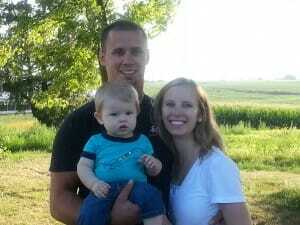
    WengersAaron Wenger is proud to be the fifth generation to live on this century farm just southeast of Elgin, nestled in between the beautiful rolling hills of northeast Iowa. But, he took the most unusual road to get home.

    As a child of a career military officer, Aaron spent his childhood moving from place to place.  His two brothers and he moved all over the nation, living in a total of eight different states.  One constant was spending summers in Fayette County, Iowa, where he stayed in his grandmother’s large farmhouse and helped his uncles farm.  Helping with farm work gave him a sense of accomplishment at the end of the day and connected him to the land and the people here.

    That’s why, after graduating from Tipton Rosemark Academy in Memphis, Tennesee, Aaron knew he was going to make his way to the Midwest.  He accepted a partial football scholarship at Southeast Missouri State in Cape Girardeau, where he played linebacker.

    “I really enjoyed playing football,” says Aaron.  “As an athlete, I liked competing.  I liked challenging myself physically and mentally.”

    Aaron loved belonging to the team and the experience of college football, but he felt the urge to look toward the future and decided to transfer to Iowa State University (ISU) in Ames.  Friends and cousins were attending ISU already, so adjusting to a new college was pretty easy for Aaron.

    After graduating in December 2008 with a bachelor’s degree in Ag Studies, Aaron worked for a farmer in Central Iowa for two years.  He used this time to build connections in Fayette County and plan a transition to his grandparents’ farm.

    Aaron’s uncle was willing to help him begin farming.  Aaron provided labor on his uncle’s farm in exchange for the use of his uncle’s equipment.  An agreement was also reached with his Grandma Wenger to move into her farmhouse, which allowed Aaron and his wife, Kali (Kay-lee) to start making that house their home put putting their own touches inside.

    There have been a few changes since Aaron and Kali were married in December 2010.  Aaron’s grandmother now enjoys living in town.  Aaron and Kali are adjusting to parenthood as their son, Broc, will soon be 8 months old.  Also this spring, they decided to build a hog building to diversify their operation and spread out the risk of farming.

    It had been 30 years since pork had been produced on the Wenger farm, so it took a great deal of work to get ready for the first group of pigs.  Aaron built a new wean-to-finish barn.  When many Iowa farmers were concentrating on getting spring field work and their crops planted, Aaron was juggling a workload that also included disinfecting buildings before his second group of hogs arrived.

    Fortunately, Aaron has the support of his wife.  Kali, a native of Parkersburg, Iowa, grew up on a dairy farm.  Her grandpa started milking and her dad operated the dairy until 1997 when he entered the hog business.

    “Raising hogs was a family effort,” says Kali.  “We worked together.  My parents made working fun, and it certainly helped all of us kids develop a strong work ethic.”

    After graduating from high school, Kali earned an associate’s degree in child development from Hawkeye Community College in Waterloo.  She then transferred to Upper Iowa University in Des Moines where she completed a bachelor’s degree in early childhood education.  Now she puts her background and experience to work as the preschool director and teacher of the 4- and 5-year olds at Valley of Elgin.

    Aaron and Kali are looking forward to raising their children on the farm where they can gain an appreciation of caring for the land, nurturing crops and growing food to help feed the world.  They’re proud to make their home in Elgin, the little Switzerland of Iowa, where the hills are alive with the sounds of bawling calves, snorting pigs and powerful tractors.  It’s where roots run deep and friendships are formed.

    It was Aaron’s friendship with corn product specialist / regional sales manager Nick Benson that drew him to Latham Hi‑Tech Seeds.  “Nick spoke very highly of Latham’s diverse product offerings and explained how the family-owned, independent company can draw best genetics and traits from the industry.  After seeing my yield results after the first year, and then watching how well Latham® products performed during the drought, I didn’t have any reason to look anywhere else.  I like the idea of supporting a family-owned business.  Plus, Nick takes the time to place products on a field-by-field basis for me.  I couldn’t ask for better service.”

    Today the Wengers are sharing a couple of their family favorite recipes.  These ham balls are perfect for fall tailgates, whether they’re enjoyed outside the football stadium or inside a farm field during the harvest season.  These meatballs can be made ahead of time and freeze well.  Mix up a batch for supper, followed by Cherry Crunch for dessert!

    Cherry Crunch

    Ingredients:

    • 2 cups Bisquick®
    • 2/3 cups sugar
    • ¾ tsp. cinnamon
    • 1 egg
    • 1/3 cup softened butter (not melted)
    • 1 can cherry pie filling

    Directions:

    1. Mix all ingredients, except the pie filling, with a fork.
    2. Pat 2/3 of the dough in the bottom of a greased pie pan.
    3. Spread pie pilling.
    4. Crumble remaining dough over filling.
    5. Bake at 400° for approximately 25 minutes.

    Team Latham

    September 20, 2013
    Desserts, General, Pork, Recipes
  • Latham Hi‑Tech Seeds

    Diversify & Limit Risk

    nickB_FR13No two crop years are exactly alike, so why base next year’s potential off last year’s results? In 2010, we received excessive rainfall. In 2011, we experienced three weeks of 100-plus degree heat. Last season we experienced the most severe drought since 1956.  This year we experienced excessively wet spring conditions, followed by extreme heat and now a lack of moisture.

    Making seed selections based only on this year’s yield results could risk performance next year due to the drastic changes in growing conditions from year to year. Because the weather is unpredictable, it’s important to minimize risk by planting a portfolio of products.

    Treat your seed product portfolio much like a financial portfolio. Minimize risk by (1) planting seed products with different traits and genetics; (2) varying maturity; plus (3) balancing offensive and defensive characteristics.

    Products that are typically thought of as more defensive could actually be the highest yielders depending on: weed pressure, insect pressure, heat stress, emergence issues, and disease pressure. It’s all about balance.

    No matter how good a particular football team is, it can’t win on the gridiron by having a strong offense or a strong defense. It takes both! And the same is true whether you’re planting in a corn field or a soybean field. Remember to plant a minimum or three different seed numbers, with a mixture of offensive and defensive traits.

    Webspec Admin

    September 19, 2013
    Agriculture, General, Industry News
  • Latham Hi‑Tech Seeds

    Imagine Having 4,500 Landlords!

    FarmingOperation

    When I have a lot of windshield time – whether it’s driving to meetings or combining corn – I contemplate all sorts of things.  For example, have you ever wondered about the term “landlord”?

    The term dates back to the Roman Empire and feudalism when peasants (or serfs) were bound to the land.  The peasants worked the land and paid homage to their lord; they shared their produce and other fruits of their labor in exchange for military protection.

    Fast forward a couple thousand years to the country of Ukraine. The tables have turned during the last 20 years, so now the people who used to be the peasants are the landlords.  When the Soviet Union fell apart, land that has been confiscated by the government was returned to the farm villagers.

    Kees Huizinga
    Kees Huizinga

    Each qualifying person received about three to four hectares, but there was a catch… the villagers could not buy or sell that land! If the owners of the ground cannot sell it, that means they must either farm it themselves or rent it.  This is where the story really gets interesting (IMHO)…

    During our Black Sea Study Trip last July with Iowa Farm Bureau, we had an opportunity to visit many farms in the Ukraine.  One particular farmer, Kees Huizinga, stands out in my mind.  His farm operation is called “krychenka.”  He has grown it from scratch to 14,000 hectares, or about 35,000 acres.

    Kees (Case) Huizinga is an investor-owner, operator of “Krychenka”, a 14,000+ hectare farm (35,000 acres). A native of the Netherlands, Kees began farming in the Ukraine about 10 years ago. The initial farming operation had 1,000 hectares. Kees said that when they started farming there the fields were full of weeds that really had not been farmed. They used a moldboard plow to get started and to begin the process of cleaning up the fields and leveling them out.
    Kees (Case) Huizinga is an investor-owner, operator of “Krychenka”, a 14,000+ hectare farm (35,000 acres). A native of the Netherlands, Kees began farming in the Ukraine about 10 years ago. The initial farming operation had 1,000 hectares. Kees said that when they started farming there the fields were full of weeds that really had not been farmed. They used a moldboard plow to get started and to begin the process of cleaning up the fields and leveling them out.

    Now if you’re an old farmer like me, you start doing the math!  Kees has about 4,500 landlords living in about 10 villages, which Kees is now responsible for taking care of.  Not only does Kees need contracts with 4,500 landlords, he must take care of the needs of their villages.  There aren’t any property taxes to fund the schools, supply water, maintain roads or remove snow.  Kees has large equipment, so he’s expected to take care of all these needs!  Basically, he is taxed by the services he must provide.

    Can you imagine?  Many Midwest farmers feel that one landlord is one too many!  Imagine having 4,500 landlords who expect you to take care of more than just their farm acres.  As frustrated as I can get with the rules and regulations, I can’t imagine having thousands of landlords.  Hmm…  maybe there are more similarities between the two than I first thought!

    For more stories about our trip to the Ukraine, click on the links below:

    • Busting Myths about Dracula’s Castle
    • Farmer’s Markets Open 24/7 in the Ukraine
    • How Eastern European Farms Measure Up

    Larry Sailer, Musings of a Pig Farmer

    September 17, 2013
    Agriculture, General, Industry News
  • Latham Hi‑Tech Seeds

    Tips for Throwing a Spirited Tailgate

    Cy Hawk cookies1

    ‘Tis the night before the Iowa-Iowa State football game
    and all through the state…
    Folks are prepping beef roasts, pork loins, dips and desserts
    for their parking lot tailgates.

    TriceSaturday is the annual Cy-Hawk football game, a time when Iowans gather together for a day of fun and games.  It’s time to round up the ladder golf and bean bag toss; mix up some dip and grab an extra bag of chips.  Kickoff is 5 p.m. in Ames, so there will be plenty of time for tailgating.

    Latham Hi‑Tech Seeds wanted to extend the fun, so today we’re hosting a companywide tailgate in Alexander.  We’re grilling brats and burgers for lunch.  But the main attraction, in my humble opinion (IMHO), is the buffet line.  Each Latham Team member will bring an appetizer, side dish or dessert.

    While trying to decide what to make and share at today’s tailgate lunch, I searched The Field Position.  Talk about choices!  From appetizers to entrees and dessert, we cover it all on The Field Position.  Here’s my list of Top 10 Tailgating Recipes:

    1. Corn Salsa
    2. Buffalo Chicken Dip
    3. Mexican Queso Dip
    4. Deviled Eggs with Bacon
    5. Fruit Pizza
    6. Cardinal and Gold Cheeseburgers
    7. Beef Sundaes
    8. Beef Wraps
    9. Glazed Pork Loin
    10. Perfect Pulled Pork

    Cy-Hawk cookies I ended up “punting” and ordered decorated sugar cookies for today’s event.  My neighbor makes the best homemade buttercream frosting, plus she’s a master decorator.  I will admit that my conscience got the best of me, so I ordered a few cookies decorated in Hawkeye colors.  “Few” is the operative word.  Of course, there are far more cookies decorated in Cardinal and Gold.  (Insert devilish grin here.)

    Let the smack talk begin!  Before anyone wants to take a crack at my Clones, just keep these stats in mind:

    • Iowa State Football has won 9 of the last 15 meetings with Iowa.
    • Iowa State is 9-6 against Iowa since ending its 15-year losing streak in 1998
    • Iowa State is 8-6 against current U of I Coach Kirk Ferentz

    Whether you’ll be watching the game from your living room, a parking lot or inside the stadium, have fun!  Then remember to tune into the Cyclone Radio Network following the game for the Latham Hi‑Tech Seeds Locker Room Show and commentary by analysts, players and coaches.

    Team Latham

    September 13, 2013
    General, Recipes, Sides
  • Latham Hi‑Tech Seeds

    Tips for Late-Season Scouting

    Detecting late season corn diseases ASAP will help you prioritize fields for harvest.  Hybrid maturity and crop residue management should take a backseat to weak stalks.  Start by harvesting fields with the weakest stalk to help preserve the quality and quantity of grain that goes into your hopper.

    At this time of year, the biggest concerns are stalk rots or fusarium.  Warm, moist weather with extended periods of overcast skies and high humidity makes conditions ideal for stalk rot.  Later in the season, you might see stalks break or bend below the ear.

    Walk fields now and note what you believe is the cause of stalk rot or lodging: fertility, hail, high wind, amount of rainfall, or the genetic predisposition of a hybrid.  The cause of stalk rot could affect the seed you purchase or your management practices in 2014.  There’s no better time than the present to plan your next crop!  Get your seed ordered while the availabilities of all products are at their highest.

    Webspec Admin

    September 12, 2013
    Agronomics, Corn, Crop, Disease, Fungicide, General, Insects, Soybeans, Weed Control
  • Latham Hi‑Tech Seeds

    When is Enough… Enough?

    Many people gain a sense of accomplishment from doing a job well or completing a project.  In my case, I enjoy harvesting crops and the sense of satisfaction that come when the last of the corn is in the bin.  I always think, “Now I can relax.”

    But, I find myself involved in so many other things that it’s truly hard to find time to relax.  I had this epiphany while sitting in church on Sunday morning.  (Yep, I know I should be concentrating on the sermon – and I was!)  The sermon made me wonder whether I have done enough for my church. When is enough… well, enough?  I started questioning whether I set the right example for my kids when they were growing up or whether I was too busy.

    As busy as I am, I never seem to cross as many items as I’d like off my list.  I have maybe 37 different projects started around my farm and house. There’s a porch I want to add on to the west side of our house, and the door to it is already in place.  Right now it’s a door that leads to nowhere!  I’ve torn the sheet rock off half the laundry room with the intent of making a walk-in closet.  That project is half done.  And whatever you do, don’t ask Janice about our trim work.  I’m very glad I don’t do trim work in the hog barns!

    There are projects that I just never seem to be around to doing.  I’ve had the materials on hand to make a waterfall by Janice’s shop for at least 10 years now.  I think that is long enough!  I’m in the process of cleaning up my old steel piles, but that’s easier said than done.  After all, I might need something off that pile to fix something someday.  I’ve been saying this for 40 years now, but I’m still wondering when enough steel is enough. 🙂

    This week I had to set aside all of the projects that I wanted to work no in order to do the work that really needed to be done.  It’s time to bring in some new porkers, so that means I’m emptying hog barns this week.  While cleaning hog barns is always a big chore, it’s even more daunting this week as I’m cleaning up after Porcine Epidemic Diarrhea Virus (PEDV).  I will keep cleaning and disinfecting until it’s time to put in the new pigs because I’m don’t believe there is such a thing as “clean enough.”

    There is also work to be done in the political arena.  When can we say “enough is enough” in regards to talking to our elected officials?  That’s an easy answer for me.  “Never!”  We can never stop educating the people we’ve put in office to run our government.  Ag literacy among American politicians is a grave concern.  Farmers can’t afford to say “enough is enough” as it related to the Farm Bill, school lunches, soil conservation and animal welfare.

    When have we talked enough about agriculture?  It’s so important that we share information with people, who want to know how their food is grown.  I believe it’s important for me to talk with people about why I raise pigs the way I do and why I grow GMO crops.  Even though I’ve given several interviews, I have several engagements waiting for me right now.  Michael Libbie has invited me to be a guest on his new radio show, Insight on Business the News Hour, and I’m looking forward to finding a date that works for us both.

    I’m also gearing up for the classroom where I’ll talk to students in local schools as part of the National Pork Board’s Operation MainStreet program. This is the program through which I’ve actively spoken to civic groups about how I raise pigs.  After nine years of talking to these groups, it’s exciting to branch out into a new focus group!

    I’ve also been asked to record a one-hour presentation for Iowa State Extension about genetically modified crops.  I’ve tended to “just wing it” in the past, but now I’m wondering how much preparation is enough.  I enjoy being asked questions and knowing what the audience wants to hear.  I’m still talking about the Ukraine Market Study from July.  Apparently, folks haven’t heard enough yet about that trip!  It amazes me how people, especially farmers, want to know what farmers do in other countries.

    Enough is enough for this week’s blog… I must get back to cleaning hog barns!  I’m looking forward to getting get some satisfaction from having those barns spotless and ready for new little pigs.

    P.S. I’ve had enough of the word “enough”!

    Larry Sailer, Musings of a Pig Farmer

    September 10, 2013
    Agriculture, General, Industry News
  • Latham Hi‑Tech Seeds

    Protect 2014 Corn Crop with New Technologies

    As the number of corn-on-corn acres has increases, corn rootworm management becomes increasingly important. That’s why I’m pleased to announce that Latham’s 2014 product lineup includes 36 hybrid seed corn products, offering six different trait combinations in various maturities, for rootworm (RW) control.

    Latham Hi‑Tech Seeds is able to guarantee trait and genetic diversity because we’re a family-owned company that works with multiple trait and genetic providers. Our independence allows us to provide farmers with an industry-leading number of product choices from provides including: Monsanto, Bayer, BASF, Syngenta, Dow AgroSciences and more.

    Talk about choices for farmers!  Our 2014 corn product lineup includes:

    • Genuity SmartStax RIB — the first corn technology to provide 2 modes of action against rootworm
    • Genuity VT Triple Pro RIB
    • YieldGard VT3
    • Agrisure Duracade — the newest RW trait stacked with 2 modes of action
    • Agrisure 3122 also contains 2 modes of action against RW
    • Agrisure 3000 GT

    Rootworm control is a must in corn-on-corn protection, so it’s important to determine which trait is right for your situation.  In an area with heavy rootworm pressure or multiple years of corn-on-corn, plant Latham hybrids with two modes of action against CRW like Genuity® SmartStax®, Agrisure Duracade or 3122 technology. Look at dual modes of action and consider rotating crops in areas where rootworm pressure is extreme.

    You’ll see great options like Genuity VT3 PRO, VT3 and Agrisure 3000GT that work well in moderate corn rootworm situations of minimal years of corn-on corn or extended diapause in ground that has been rotated.  These are proven technologies that are combined with the best genetics to help maximize yields.

    Because corn-on-corn acres are more susceptible to challenges presented by weather, soil and pest pressure, Latham has introduced the Gladiator designation to help with 2014 seed selection. Gladiator hybrids have the industry’s most advanced genetic foundation, offering powerful root and stalk strength and superior above- and below-ground insect protection. Give them a try as part of your diversified 2014 crop plan!

    Don’t forget that genetics make yield but traits protect yield! During the 2013 growing season, we’ve seen how different genetics handle stress from drought and wind.  That’s why genetic diversity is so important. Plant a portfolio of 4 to 6 different Latham® numbers for added protection.

    Need help figuring out what to plant where?  Ask your local Latham representative about our all-new Seed-2-Soil program. Or, contact the Latham office directly at 641-692-3258.

    John Latham, President

    September 9, 2013
    General, Industry News, Seed Technology
  • Latham Hi‑Tech Seeds

    Baling Business Allows Brothers to All Farm

    WittrockFamily1
    The Wittrock Family
    The Wittrock Family

    There’s no need to sound a dinner bell.  Somehow, when Ruth Wittrock of Paullina pulls a fresh batch of Oatmeal Bars from the oven, her family members and neighbors know to call.  Her husband and sons say her cooking is their secret to keeping their customers happy.

    This Northwest Iowa family operates a baling business within a 40-mile radius around their business.  Gordon and his three sons, Tracy, Tim and Terry, began Wittrock Baling in 2003 by purchasing equipment from a neighbor.  That neighbor had operated a custom baling business for 16 years, so there was an existing book of business.  The Wittrocks began with a customer base of 40 and, over the past decade, have grown their business to 120 customers.

    Photos courtesy of Terry Wittrock
    Photos courtesy of Terry Wittrock

    “Buying the baling business was a really good opportunity for us,” says Gordon.  “All three of our sons were interested in farming.  It’s a bit unique that all of our boys wanted to farm, so we wanted to find a way to make it work.  We weren’t farming enough acres for everyone to make a living, so we needed to look for additional income.  Baling has allowed each of our boys to pursue their passion for farming.”

    Terry Wittrock appreciates the beauty of Iowa’s countryside as he custom harvests hays
    Terry Wittrock appreciates the beauty of Iowa’s countryside as he custom harvests hays

    From April through November, the Wittrocks are busy cutting alfalfa, baling grass, chopping silage and baling cornstalks.  There’s no down time during the baling season, so the winter months are spent buying/selling equipment and making repairs.  They also raise their own corn and soybean crops, so it’s important that every piece of equipment is ready to go once the fields are fit to enter in the spring.

    The Wittrocks go directly from spring planting to first crop alfalfa.  Depending on the growing conditions, they may put up four hay crops for their customers before corn and soybean harvest begins.  Once those crops are harvested, it’s time to bale the corn stalks.

    Operating with such efficiency takes a great deal of teamwork.  Tim and Terry line up the jobs.  Terry does most of the cutting, however, everyone does whatever is needed to get the jobs done in a timely fashion.  The days and hours can be long and demanding, especially when the weather is against them.

    20130706_161700Over the years, they’ve upgraded equipment and added additional lines of machinery to handle the demand.  They started cutting and baling with a John Deere 4240 and used a John Deere 4010, without a cab, for raking.  Now they all use newer equipment.  They have a John Deere R450 windrower. They use their John Deere 7930 and 7530 tractors to pull their two, new 569 balers.  They use a John Deere 7810 to pull a new 27-wheel Rouse rake that will rake 47 feet.

    “We like the bigger rake for greater speed and efficiency,” says Tim.  “We also like the rubber mounted teeth for low maintenance.”

    Not only has equipment technology changed, but alfalfa seed has advanced.  This spring the Wittrocks planted Genuity® Roundup Ready® Alfalfa from Latham Hi‑Tech Seeds.  This particular alfalfa stands up to heavy traffic.  It produces a large, deep set crown with high root and crown carbohydrate reserves to allow for aggressive regrowth and winter hardiness.  These features, combined with an outstanding disease package and resistance to Roundup Ready herbicide, make this an ideal choice for those in search of high quality, weed control, and high yield under an aggressive schedule.

    “You wouldn’t have believed what a weedy mess this field was in early spring!  Then we made one pass with Roundup and it made a night and day difference,” says Gordon.  “Not only was the field weed-free but the first crop on new seeding was extremely high yielding.  LH 455TQ RR produced 20 large square bales off 13 acres.  It’s leafy and fine-stemmed, just the way cows like it.  We couldn’t be happier.”

    On second thought, Gordon might be happier if he was eating an oatmeal bar while admiring his alfalfa crop.  Try a batch at home and see if you can bake your family happy!

    Team Latham

    September 6, 2013
    General, Recipes, Sides
Previous Page
1 … 81 82 83 84 85 … 160
Next Page

Latham Hi‑Tech Seeds

131 180th Street | Alexander, IA 50420

(641) 692-3258

SIGNUP FOR OUR NEWSLETTER
  • Contact
  • Legal
  • Dealer Center
  • Seedware Login
  • Latham Gear

© 2025 Latham Hi‑Tech Seeds. All rights reserved. | Iowa Web Design by Webspec | Privacy Policy

Latham® Hi-Tech Seeds is a trademark of M.S. Technologies, L.L.C., 103 Avenue D, West Point, IA 52656.