Latham Hi-Tech Seeds

(641) 692-3258

  • Home
  • Products
    • Corn
    • Soybeans
    • Alfalfa
    • Corn Silage
    • Seed Guide
  • Performance
  • Find a Rep
  • Media
    • Blog
    • News
    • Videos
    • Podcasts
    • TECHTalk
  • About Us
    • Company History
    • Our Mission
    • Careers
    • Become a Rep
    • Sowing Seeds of Hope
  • Contact Us
  • Latham Hi‑Tech Seeds

    Battle Weed Resistance with Herbicides from Different Groups

    Weed resistance continues to be a topic of discussion during winter meetings with farmers and others in the ag industry. Many are anxiously awaiting full global approval of herbicide traits like Enlist™, Xtend™ and Balance GT,™ but remember, herbicides alone will not remedy weed resistance.

    “Diversity of tactics is key to consistent weed management and high crop yields,” said Iowa State Extension Weed Specialist Dr. Micheal Owen while presenting at Latham’s field day in September 2011. He pointed out that rotating crops, rotating traits and rotating pesticides is the best way to slow down the very natural process whereby pests develop resistance to products that mankind uses to protect crops.

    Herbicide products kill plants by binding to specific proteins and inhibiting the functions of those proteins. This is commonly referred to as the site (mode) of action. Check the numbering system, usually printed on the first page of the manufacturer’s label, to categorize each herbicide by its site of action.

    “Weeds will adapt, so you must know your herbicide action group,” Dr. Owen during a recent Crop Advantage Series jointly presented by Iowa State University and the Iowa Soybean Association.

    For example, say a farmer has been using Prowl® and FirstRate® pre-emergence on Roundup-Ready® Soybeans followed by Roundup® and FlexStar® post-emerge.  He wants to rotate chemicals for better weed management. Next year he’s planning to use Treflan® plus Raptor®, followed by Roundup and Resource®.  The problem? Prowl and Treflan are both classified as group 3 herbicides.  FlexStar and Resource are group 14, and Raptor and FirstRate are in group 2.  He might see some improved weed control simply because the herbicides have slightly different active ingredients, but his rotation will not help prevent weed resistance.

    A better plan would be to use Dual® (group 15) plus Sencor® (group 5) pre-emergence followed by Roundup plus Basagran® (group 6).  And the BEST plan would be to plant LibertyLink™ Soybeans instead of Roundup-Ready and then switch Liberty® herbicide (group 10) in that plan for the Roundup (group 9) and the Basagran!

    Using multiple products with different sites of action, however, is not enough.  Farmers must also make certain the herbicides are effective against the weeds they are trying to manage. Mechanical methods of weed control including cultivation even hand-weeding must be considered, as well as crop rotation and other cultural practices.

    More information on which herbicides belong to which site-of-action group is available at http://www.weeds.iastate.edu/HerbicideChart.pdf.  This website also gives information on many of the premix herbicide combinations and the groups to which they belong.

    Webspec Admin

    January 28, 2015
    Agronomics, Corn, Crop, General, Herbicide Technology, Industry News, Soybeans, Weed Control
  • Latham Hi‑Tech Seeds

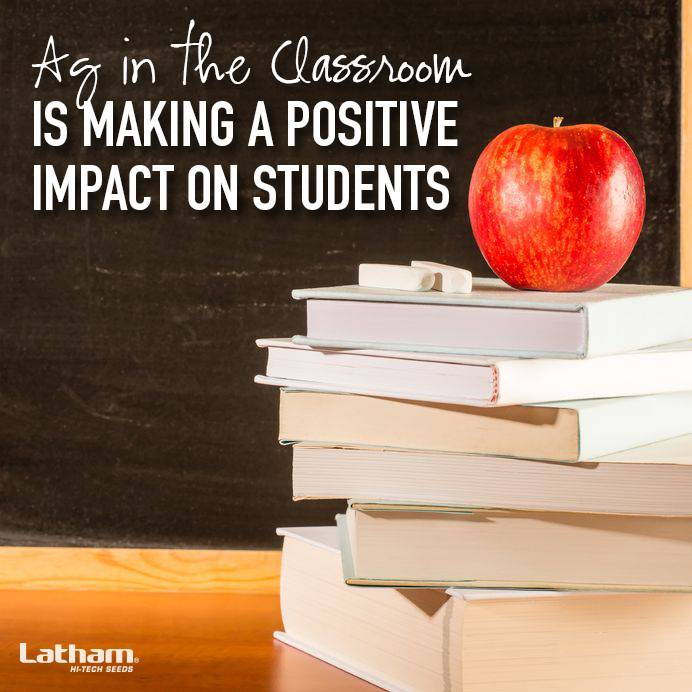
    Ag in the Classroom is Making a Positive Impact on Students

    Ag classroom chalkboard

    ag-classroom-chalkboard

    Before I delve into the main topic of today’s blog, I want to make a quick mention about mental health. Governor Branstad defends the plan to close two Iowa mental health facilities and there are threats of lawsuits being filed. What’s right? What’s the proper way to proceed?

    Here in Franklin County IA, we’ve invited local mental health experts to attend our next Farm Bureau board meeting with the intent of becoming as informed as we can. Our board tries to make a difference in all areas of our community, not only with farm issues.

    ag-in-the-classroom-logoLast Friday morning I was on my way to an Ag in the Classroom board meeting, when an incident happened that made me even more interested in investigating mental health issues. I was driving down the highway – before daybreak – when an oncoming set of headlights suddenly crossed into my lane. No swerving, no slowing down. Those lights came straight at me! Without time to even click off my cruise, I took the shoulder.

    Because this car came directly at me, it made me question the driver’s intent. Was this person suffering from health – even mental health – issues? Concerned that the safety of other drivers was a stake, I considered calling 911. But what could I report? It happened so fast, I wasn’t even sure if it was a car or pickup. Nonetheless, it was a wakeup call!

    Now about what I really want to talk about this week…

    While speaking at a 140 conference in Des Moines a few years ago, I shared how our North Central Ag in the Classroom program helps educate students about farming and its importance to our state. In attendance was Desmund Adams, who had grown up in Chicago. He asked why we don’t do Ag in the Classroom in Chicago. He shared how growing up he didn’t know meat came from an animal; he grew up thinking meat simply came from the grocery store.

    Unfortunately, people without a direct connection to farming only know what they hear and see through images portrayed by Disney® cartoons or those in a Little Golden Book like Old MacDonald Had a Farm. Helping Iowa students know their food comes from the farm, not the grocery store, is a goal of the North Iowa Ag in the Classroom.

    The vision for this program started in 1998, but it took several years to organize. An IRS 501(c)3 organization formed in July of 2004. Since then, North Iowa Ag in the Classroom has grown to five employees, who work with 28 schools in 10 counties, thanks in part to sponsors like Latham Hi‑Tech Seeds. The AITC programs reached nearly 9,000 kids during the 2013-2014 school year.

    It is one thing to create curriculum, but it’s an entirely different matter to have the opportunity to present that material in the classroom. I honestly believe in-person presentations by AITC staff are having great impact. Last year AITC reached another 571 students in special request. In the classroom with presentations on a variety of subjects. Classroom presentation, as well as farm tours, may be requested by teachers at any time of the year. Farm tours also are organized upon request, and last year 201 students went on tours of area farms.

    North Iowa Ag in the Classroom provides students with a broad view of farming. Most AITC counties sponsor an Ag Fair Day, which last year reached 1,039 first through fourth grade students. Ag Fair Days allow students to learn about a variety of topics such as healthy food, conservation, livestock, farm safety, and machinery.

    By connecting farming to food and the classroom, it’s my hope that we’ll help kids develop critical thinking skills. By improving the knowledge young people have of farming and food production, it’s our hope that the younger generation will know better than to accept information from Dr. Oz and the Food Babe as truthful and factual. If kids acquire more knowledge, perhaps such misinformation won’t be quite as effective.

    Together we can make a difference! Contact Linda Anderegg about how you can support Ag in the Classroom efforts, or feel free to contact me for more information.

    Larry Sailer, Musings of a Pig Farmer

    January 27, 2015
    Agriculture, General, Industry News
  • Latham Hi‑Tech Seeds

    Am I Really Qualified to be an Agvocate?

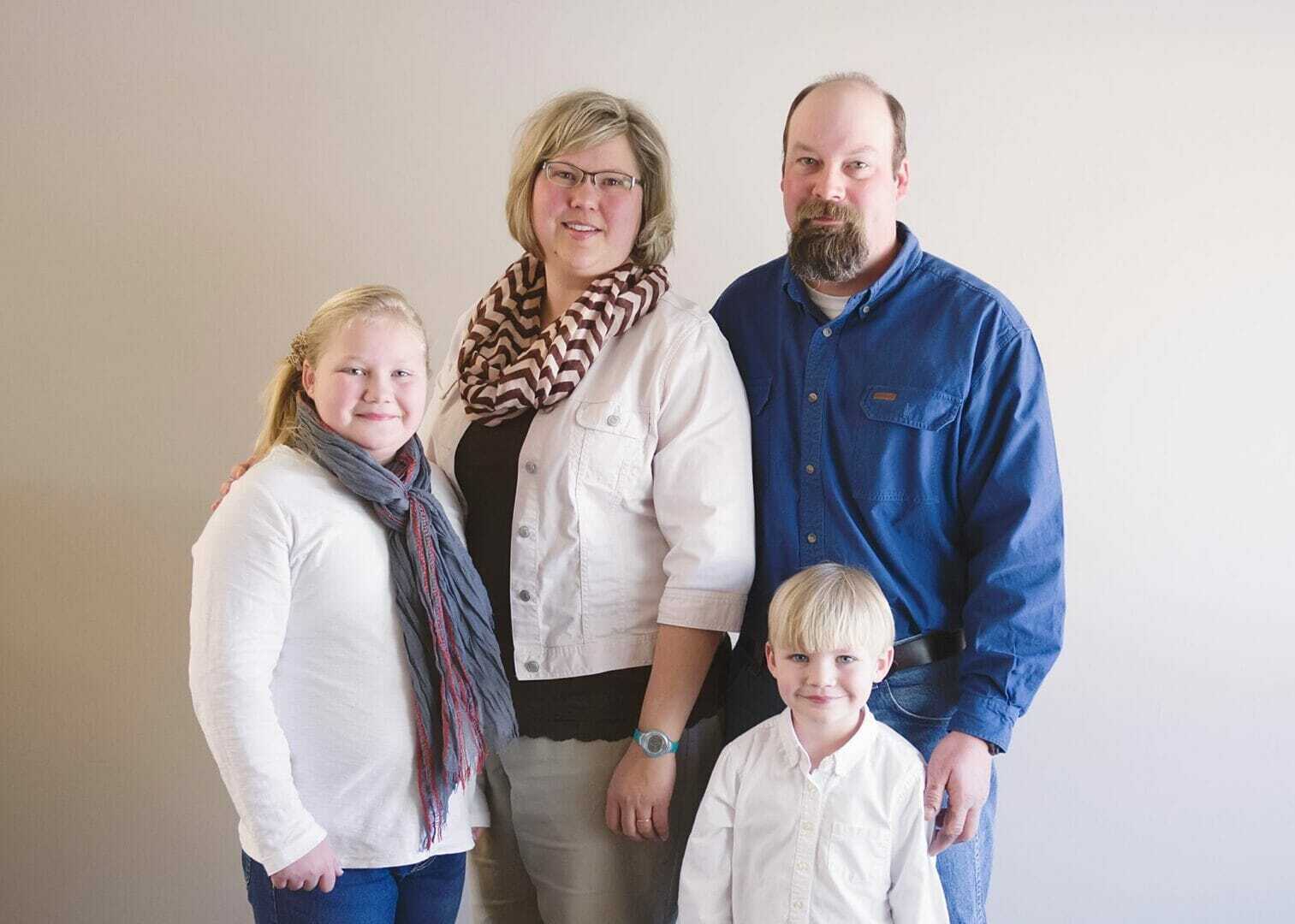
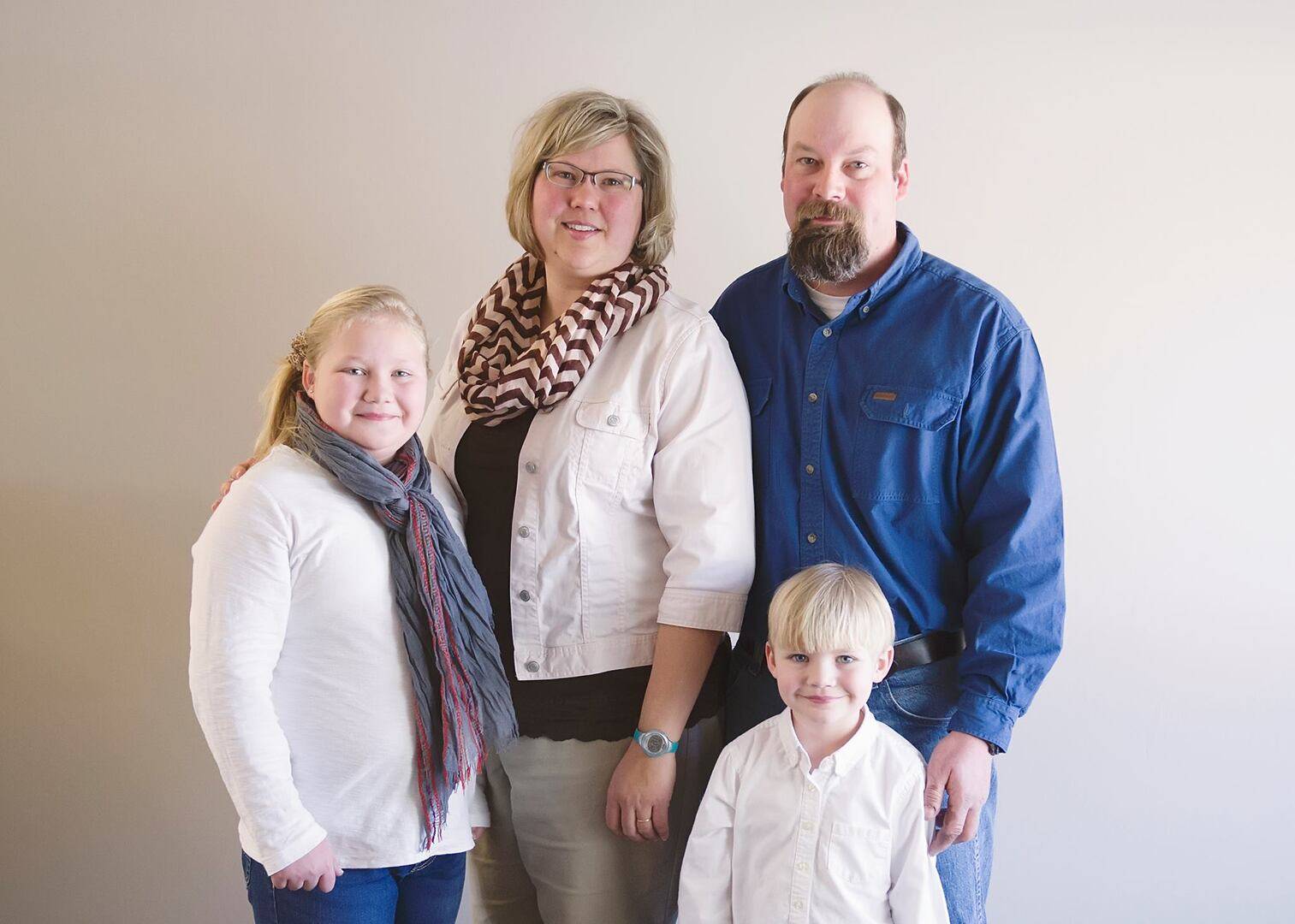
    Kaitlyn Bartling
    Photo Credit: Yarrow Photography
    Photo Credit: Yarrow Photography

    Guest Blog by Kaitlyn Bartling

    I’ve struggled over the past several years to come to terms with the process of agvocating. I have honestly questioned whether my voice counts as an agvocate.

    I am married to a farmer, who is a part of a Century Farm in Hardin County Iowa, but I work full time at a job that is not agriculture focused. I know there are as many views of agriculture as there are producers. Organic, GMO, natural, antibiotic free, free range, confinement, commercial – listing those made me feel political not agricultural. I don’t really care for politics. Since my agricultural experience isn’t always going to align perfectly with another producer’s reality, even in my own township, am I harming their farm story when I talk about ours?

    I’ve hesitated to call myself an agvocate because I do not have amazing technical or creative skills to do musical parodies like the Peterson Farm Bros or Farmer Derek Klingenberg. My work removes me from our farming operation and daily chores. I have a blog, but it is really about my interest in creative writing. It chronicles the life that goes along with being a farmer’s wife and the meals I make along the way.

    I only saw barriers and reasons I couldn’t be called real agvocate. Then I rediscovered something…

    I have a deep and abiding dedication to this life I have made, standing next to my husband and kids. The ignorance of the consuming public about the basics of agriculture will impact my children’s ability to raise livestock and food crops, even as youth project participants. The masses of consumers who have no connection to or knowledge of how food comes to them will certainly impact the opportunities my kids will have to be involved in our family farm as another generation. These same voting consumers will impact the issues of food security and water quality for the world’s population. Most importantly, My Farmer’s Wife blog gives my kids a voice and an identity that is as linked to our family farm as the seasons are linked to crop production. If I don’t support and encourage them and my husband’s vocation, I’m not the mom and bride I set out to be!

    I decided to begin to support other agvocate projects and develop a voice locally. I take time to write personal notes to other agvocates when I see them approach a difficult topic on a blog or news outlet. I involve my kids and husband in ways they are comfortable in reaching consumers.

    My family agreed to submit a video for the “Happy” parody that Derek Klingenberg put together last year. The week this parody was released was the only time my son was willing to participate in preschool show and tell, and he talked to his classmates about the cattle in our clip.

    When our daughter had a week to share with her 3rd grade class, she chose to have her dad bring three piglets from our farrowing barn. She told the class what she does at our farm and asked us to talk about how pork is produced at our farm.

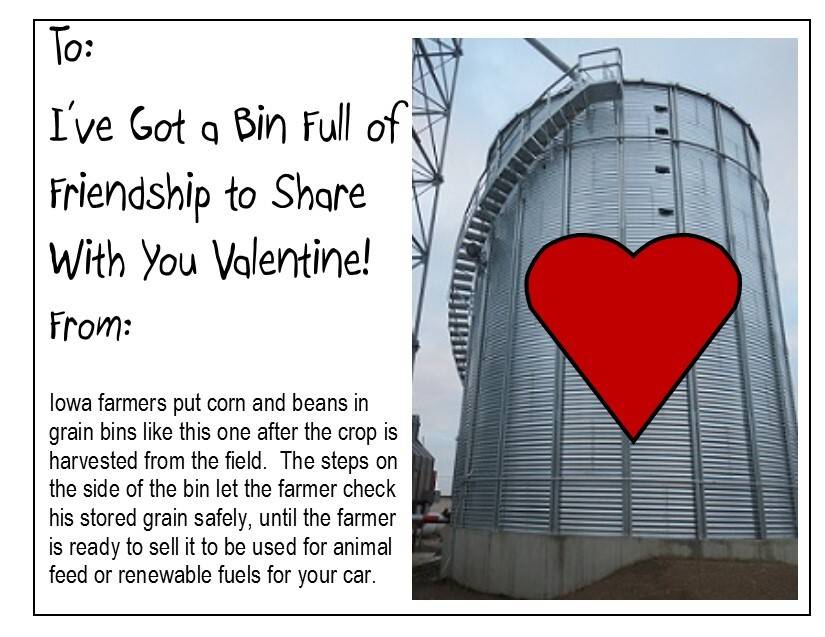
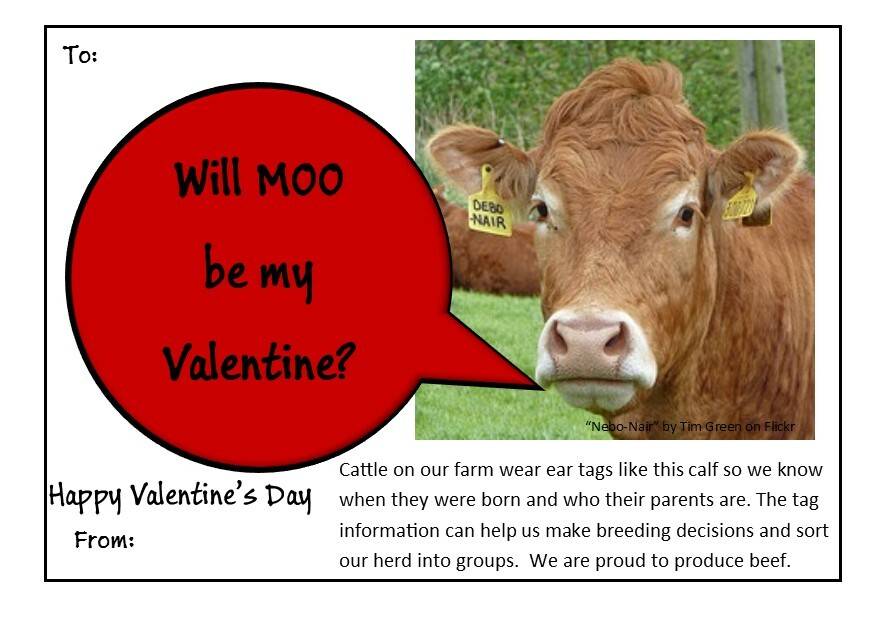
    This year our kids will be giving out Ag-tines instead of commercially produced Valentines. We have designed ours from pictures that fit our interest. They are just from a publisher postcard template, but they serve the purpose of giving our kids a conversation starter.

    GusAg-tine-2015 Emma-valentine-2015

    Our family doesn’t have an amazing, high dollar, coast-to-coast, super charged communications platform. We wouldn’t know what to do with it if we did. We do have a willingness to engage with others and give a little time on a regular basis to think about incorporating agriculture into the everyday world of others. We can’t be afraid of telling our farm’s truth while still respecting the place and the value of other farms that may not be exactly like ours.

    It has taken some time, but I’m finally ready to say I’m an agvocate. I hope you’ll join me!

    Team Latham

    January 26, 2015
    Agriculture, General, Industry News
  • Latham Hi‑Tech Seeds

    Through True Grit and Determination, Lacina Family Reaches Dreams

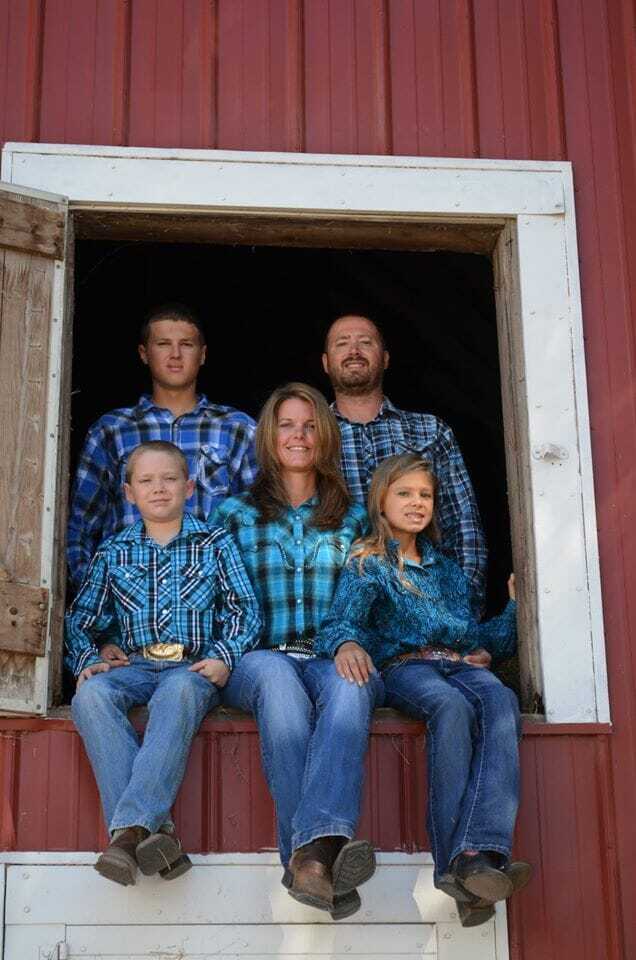
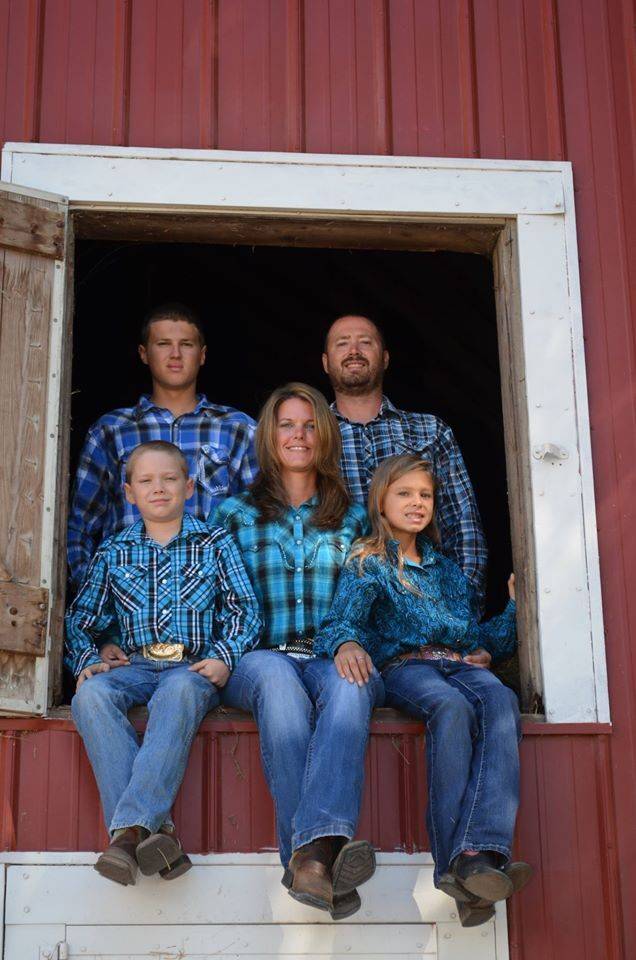
    Lacina Family Picture
    John and Niikia Lacina with their children: Alan, 17; Kaylee, 13; and Adam, 11.
    John and Niikia Lacina with their children: Alan, 17; Kaylee, 13; and Adam, 11.

    When John Lacina was a young boy, he literally walked in his dad’s shadow. He loved helping with chores, and he knew he wanted to grow up and be a farmer. Even though John was only 7 when his father passed away, his dream lived on – and became a reality thanks to hard work and determination.

    “What I enjoy most about farming is the chance to create something new each season. You prepare the soil and put seeds in the ground. Then you do what you can to help the crop thrive throughout the growing season and hope you harvest your best crop yet each fall,” explains John. “You’re responsible for managing that crop. When you see the results, you’re either going to kick yourself or give yourself a pat on the back.”

    Personal responsibility, true grit and determination defines him. In 1995, John graduated from high school in May and turned 18 in July. In September that year, he married his high school sweetheart. John and Niikia (pronounced na-key-a) had spent their high school years side-by-side. Niikia wasn’t raised on a farm, but she realized helping with farm work or riding in the tractor was a way to spend more time with John.

    “There wasn’t going to be money for a movie if John didn’t earn it first,” says Niikia, “so I would help him cut eye teeth (on pigs) or whatever needed to be done. Sometimes I just rode in the tractor or combine – and still do – to keep him company during the busy seasons.”

    As newlyweds, John and Niikia took off-farm jobs to help fund their dreams. John started as a floater operator at a local co-op, and spent all of his “free time” helping two local farmers. The long-term goal was for John to buy into Danny Dencklau’s farming operation over time, but fate moved up the time table.

    Sadly, Danny developed cancer and John left his position at the co-op to assume more of the day-to-day responsibilities with Danny’s farm and his trucking business. John and Niikia had to decide whether to finish buying Danny’s half of John’s semi or whether to sell the truck. After Danny passed away, the Lacinas had to determine how they were going to buy ground and equipment to continue farming.

    A local banker and a few others from the community had faith in the young couple. Today John is happy to be farming full-time and operating a Latham® seeds dealership. Niikia works off-farm as a Health Insurance Agent for KHI Solutions. The couple feels blessed to raise their three children on a farm where they can chase their own dreams.

    Their oldest son Alan, 17, is a junior in high school. He loves everything about farming. “From the time he could walk, Alan was my shadow,” says John. “He’s happiest when he’s behind the wheel of a tractor. He’s also enjoys snowmobiling and four-wheeling.”

    Their 13-year-old daughter, Kaylee, is an accomplished barrel racer. She got her first barrel horse when she was seven years old. In 2014, she started competing in larger events through the Professional Rodeo Cowboys Association (PRCA). In her just her third PRCA race, she placed 3rd out of 50 racers. Kaylee also won a saddle as the 2014 Senior TMRA Barrel Racing Champion with her 8-year-old Palomino named Scarlett Bandit.

    The Lacina’s youngest son, Adam, has been riding Tuff-N-Nuff Miniature Buck-N-Bulls for seven years. He got interested in bull riding after seeing live Pro Bull Riding (PBR) events and watching the movie 8 Seconds, based on the life story of Lane Frost. Adam won a Tuff-N-Nuff event in Fort Dodge when he was just 4, and he’s placed in the Top 5 every year since. He finished in second place over all in 2014, just one point behind the first place Junior Bull Rider. Adam also qualified for and rode January 10 at the 2015 National Western Stock Show & Rodeo (NWSS).

    “We’re making memories,” says Niikia. “Rodeos are something we enjoy watching and our kids enjoy participating in. We also like camping together and spending time with other families who share similar interests.”

    Working and relaxing together is the Lacina family’s mantra. Today they’re sharing a favorite recipe that hits the spot, especially during the fall harvest season when a home-cooked meal on weekends is an extra special treat. It also sounds like a perfect recipe to celebrate the Super Bowl – or to enjoy any Sunday Supper.

    Team Latham

    January 23, 2015
    General, Pork, Recipes
  • Latham Hi‑Tech Seeds

    Roundup Ready 2 Xtend™ Soybeans Get Closer to Commercialization

    One week after Latham Product Manager Mark Grundmeier posted an update on new soybean traits and technologies, the U.S. Department of Agriculture (USDA) announced the deregulatation of Roundup Ready 2 Xtend™ soybeans. Soybeans with this Dicamba-resistant trait from Monsanto will provide farmers with another option for managing tough broadleaf weeds.

    “This announcement marks an important milestone for farmers around the world,” said Robb Fraley, Ph.D., Monsanto’s chief technology officer in a news release. “Weeds represent a key pest to agriculture operations around the world and limit crops of much-needed nutrients, sunlight and access to available water resources.”

    Weeds are the most economically damaging pests that Iowa corn and soybean farmers face every year, according to Iowa State University Extension Weed Specialist Dr. Mike Owen. The best management practice for achieving weed control is still a diversity of tactics: cultural, mechanical and herbicide. Soybean growers should use products from as many herbicide groups, or families, as possible.

    Using one family of herbicides is not a sustainable choice, so weed management specialists like Dr. Owen continue to recommend multiple sites of action herbicide programs as part of Best Management Practices. Roundup Ready 2 Xtend soybeans can help preserve the effectiveness of glyphosate by providing one more important and much needed tool to fight weed resistance.

    USDA approval is a major step forward in the process toward full-scale commercialization of this technology. Now with de-regulation, this spring we’re planning to plant production fields of 12 Latham® Roundup Ready 2 Xtend soybeans. This will allow us to make Xtend soybeans available for 2016 planting should full global approval happen.

    Chinese approval will be the last step before full-scale commercialization of Roundup Ready 2 Xtend soybeans. With China’s recent approval of the Agrisure Viptera® corn trait, I’m hopeful this bodes well for future trait approvals.

    John Latham, President

    January 21, 2015
    Crop, General, Industry News, Seed Technology, Soybeans
  • Latham Hi‑Tech Seeds

    Everyone – Especially Animals – Loses When Emotion Trumps Science

    Larrys dog

    There has been a lot of chatter since the American Farm Bureau Federation recently presented a Distinguished Service Award, its highest honor, to Dr. Temple Grandin during the 96th AFBF Annual Convention.

    “There’s no question that Dr. Grandin’s work has transformed the livestock industry,” said AFBF President Bob Stallman. “Her groundbreaking (livestock processing) systems have become popular across the country for their capacity to reduce animal fear and stress while making handling and transport easier.”

    While Mr. Stallman says there’s no question that Dr. Grandin’s work has changed the livestock industry, I believe we raise a few questions: How many of these changes were based on science rather than emotion? How has Dr. Grandin moved the conversation forward between foodies and farmers? How does autism affect how she’s perceived?

    One thing I do know for certain, Grandin’s achievement award has been a conversation starter among farmers and ranchers for the past 10 days or so!

    Farmers and ranchers use science every day! How I take care of pigs is all based on science, and yes, a little instinct. Feeding these pigs in a controlled environment and keeping them healthy has been done through research and experience – that’s science! Many of the words and terms I use to explain how and why I farm are like a foreign language to non-farmers.

    “Emotions” are a universal language. When I traveled to the Ukraine a couple years ago, I found that scientific terms did not translate but the Ukrainians could see my passion (emotion) for crops and livestock. We discovered common ground through the passion and emotion.

    So not only do we have a problem speaking the same language, science can be interpreted in different ways. For example, the Des Moines Water Works (DMWW) is claiming the rivers from which they draw water are more polluted now. If you study DMWW’s own data, however, you can clearly see the nitrates have decreased 25 percent in the past 15 years. Of course, that information doesn’t work in to their emotional plan to sue three Iowa counties!

    But back to Temple Grandin… I had the opportunity to hear her speak in Des Moines a few years ago. She explained all that she has done for cattle, and not being a cattle guy, I couldn’t argue with what she was saying. When she started talking about pigs, however, I could tell right away she had no experience raising pigs. Her presentation condemning gestation stalls was based on just emotion!

    Temple told this crowd of Iowa farmers that we “had” to get rid of gestation stalls because consumers would demand that we do. That is just plain wrong! I have personal experience raising gestating sows many different ways, and I can tell you these stalls were designed for the welfare of the sow! There have been several studies (real science) that show, given the choice between being in a gestation crate or in with a group, she picks the crate over 90 percent of the time. Why?

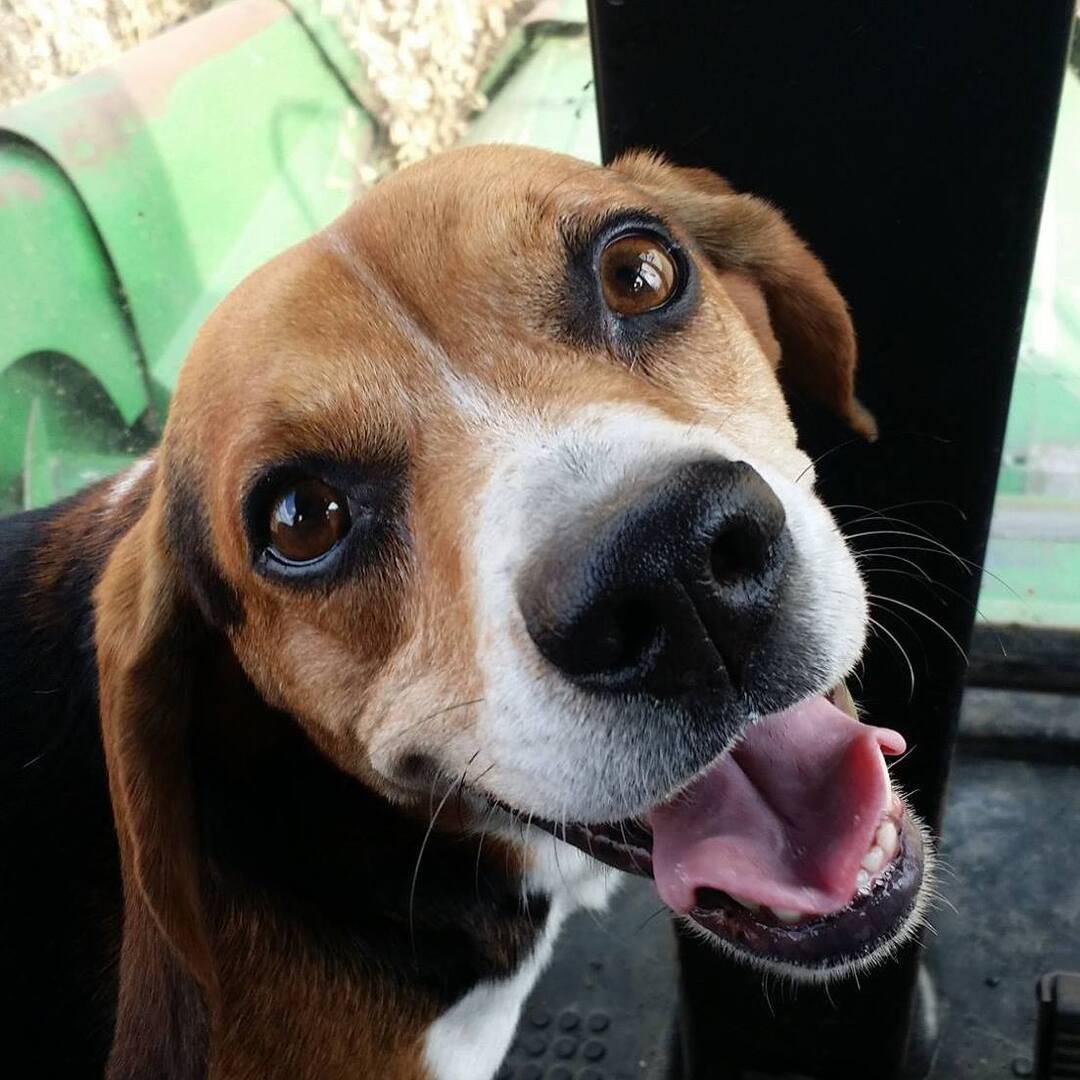
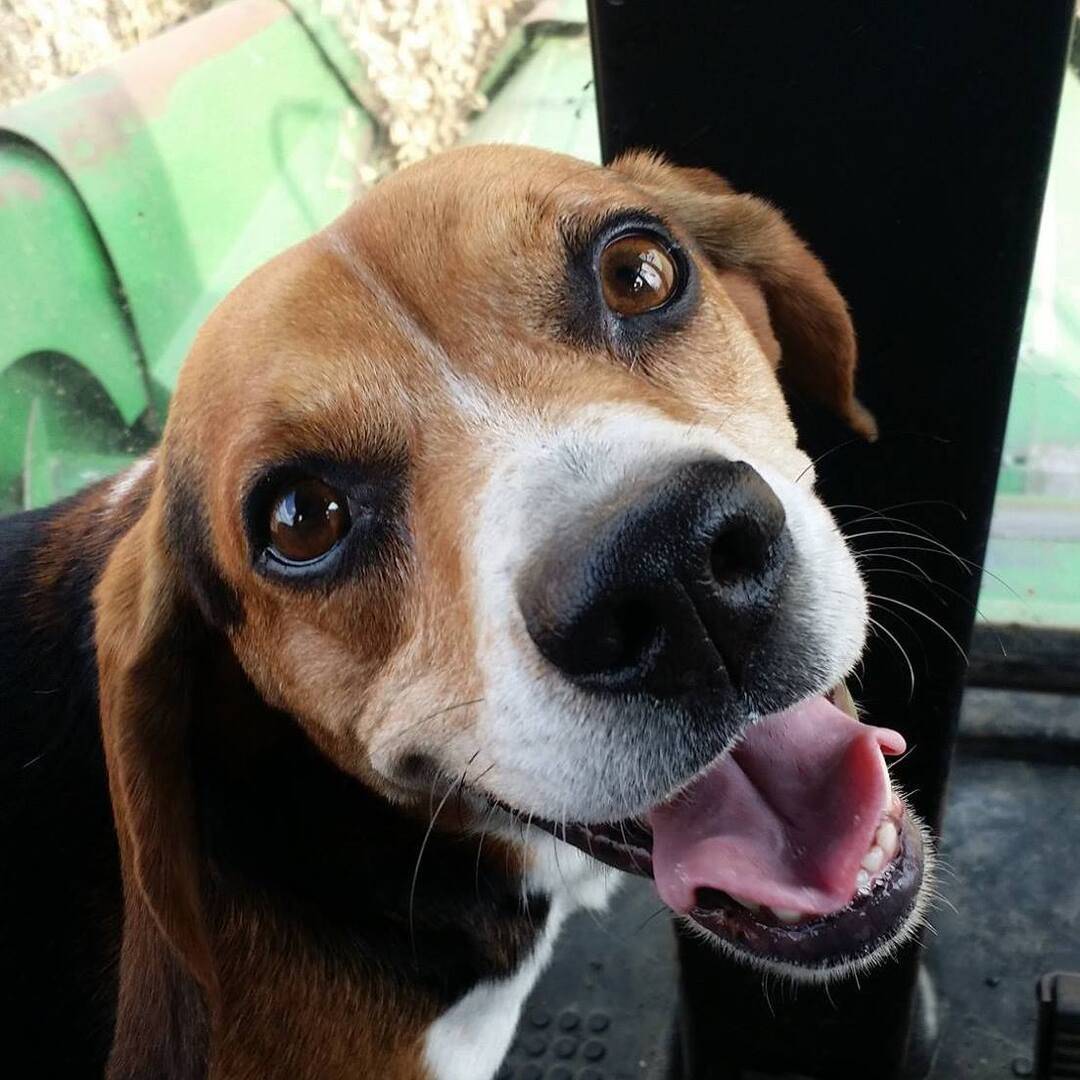
    larrys-dogSows feel comfortable being in a crate, similar to how some dogs prefer to be inside their kennels when they feel threatened. My dog, Tucker, feels safer inside his kennel. Sows are the same way… and I’m fine with using “emotion” this time to help people understand pork production.

    I’m not fine, however, using “sensationalism in place of science” as Trent Loos goes on to explain. A sixth generation United States farmer and host of the daily radio show, yesterday Trent outlined some reasons why “Temple Grandin is the greater threat to the future of a domestic food supply than all of the animal rights groups combined.”

    Here’s an excerpt from Trent’s article, “Choose a Better Path,” that published January 19, 2015, by the High Plains Journal:

    “One of her (Temple’s) favorite sayings is, “Gestation crates for pigs are a real problem. … Basically, you’re asking a sow to live in an airline seat. … I think it’s something that needs to be phased out.”

    Here again she comes to that decision based on emotion and not one shred of science. She leads the discussion regarding sow gestation housing by saying the consumer chooses pork production systems with group housing. However, in every study done that compared the two systems, when sows were allowed to choose they preferred to go lay in gestation stalls rather than in the group housing area. So are we doing this for the pigs or not?”

    When Temple tells farmers how to raise livestock to appease consumer’s emotion instead of using a science-based way to raise livestock, everyone – and the animals – lose!

    Larry Sailer, Musings of a Pig Farmer

    January 20, 2015
    Agriculture, General, Industry News
  • Latham Hi‑Tech Seeds

    5 Pieces of Tried and True Marriage Advice for Bachelorettes

    BachelorSeries2 2

    BachelorSeries2_2Marriage is marriage, whether the couple is living on or off a farm, as Jody Dvorak so wisely reminded me last week when the two of us were chatting about ABC’s reality show “The Bachelor”.

    “A supportive spouse is there at the end of the day to listen, to understand that her needs don’t come first every day and to provide a safe space for her husband,” said Dvorak.

    Words of affirmation are a love language for all men, according to 10 Secrets of a Happy Marriage as penned by author Karen Kingsbury in her bestselling book Forever. Women need respect and nurturing. Always show appreciation and remember to say “thank you.”

    While both partners must “work” at a marriage, I’m focusing on what women can do. Why? Iowa bachelor Chris Soules has a worldwide stage now, which provides an opportunity to showcase Iowa in particular and agriculture in general. Last Monday on TheFieldPosition.com we addressed 5 misperceptions bachelorettes had about Iowa agriculture during the season premiere. Today I’m offering marriage advice from experienced farm wives.

    The following 5 Tried and True Pieces of Marriage Advice are the result of me sifting through Facebook comments and emails from my farm friends and summarizing them for bachelorettes:

    1. Keep the faith.
    2. Never doubt for one moment that you are loved.
    3. Date nights are weather dependent, regardless of the season.
    4. Learn to speak “farm talk” or “ag talk,” an unofficial love language.
    5. Enjoy life’s simple pleasures.

    Keep the faith. “Pray for safety for your ‘man’ and for patience to sustain you throughout the season,” as Chris Cornelius of Andrew, Iowa, wrote lovingly in a letter to the lady who is now happily married to Chris’ oldest son. Farming is a consuming business. Both the body and mind are taxed during the busiest seasons of the year. Remember, “This too shall pass.”

    Never doubt for one moment that you are not loved. There will be weeks of long hours and sacrifice,” adds Chris. During the planting and harvest seasons, recognize it’s “not about me,” it’s about the business. “Farming is a matter of attitude.”

    Attitude is everything, agrees Laura Cunningham. Growing up on a North Central Iowa grain and beef operation, she knew what to expect when she married a farmer. It’s also why she chose to become a third generation Iowa farmer herself! Laura and her husband Aaron are partners in SkyView Farms. Aaron focuses on raising row crops and feed for their livestock. Laura’s focus is the cow-calf operation and marketing their locally raised beef products.

    On the other hand, Jody Dvork says she was clueless about how long a farmer’s hours are. “Before cell phones, it was tough to know what was going on in the field or even what field he was in! I also didn’t realize how much time I’d be spending alone.”

    It’s times like this when many supportive farm wives look for opportunities to rendezvous. Laura and her husband share a May birth date. Sometimes they share birthday cake in the tractor cab. If it’s too windy to spray or the soils are too wet to work, the Cunninghams may find themselves celebrating their birthdays with a boat ride or a day at the lake. They spent their fourth wedding anniversary with a romantic picnic in a field of beautiful purple flowers – never mind that Aaron stepped down from combine and took time out from harvesting monarda.

    skyviewfarms-couple

    “Date nights during planting and harvest equals time in the tractor or combine with your husband,” shares newlywed Jenny Dewey Rohrich on her Prairie Californian blog. “Dates during any other time of the year besides winter equals checking crops. If you want to see him or spend time with him, this is where you will be.”

    Most dates are weather dependent. Unlike your non-farming friends, you’ll be happy for rain on Saturdays in the summer adds Jody Dvorak. “Rain means you may go to a movie or out to dinner with your guy, and your guy is usually happy for the rain because it makes his crops grow.”

    Know that a majority of the conversations during your meal time will be about farming, advises Jenny Rohrich. Farm talk will become table talk during supper. “Talking farming” is a love language. It’s okay to let your farmer talk; you can practice your listening skills. J You will get to hear all about how the crops are growing. You’ll get an update on commodity prices. You’ll probably hear about equipment that broke down, equipment needs or his equipment wish list.

    Regardless of the season, weather is always a favorite topic of conversation. Weather dictates what farming operations can be performed during spring, summer and fall. Summer weather plays a major role in crop yield, which greatly affects farm income. And in Midwest during the winter, weather dictates whether or not you’ll be leaving home. Prepare yourself for delays, postponements and cancellations due to inclement weather.

    Even though Iowa’s average daytime temperature in January is 15°, you’ll find beauty in the countryside. While the constellations are a sight to behold in the fall and summer, they shine even brighter on a cold winter’s night. On the coldest days, you’ll find beauty in the form of sun dogs. Sunrises and sunsets can be brilliant, too.
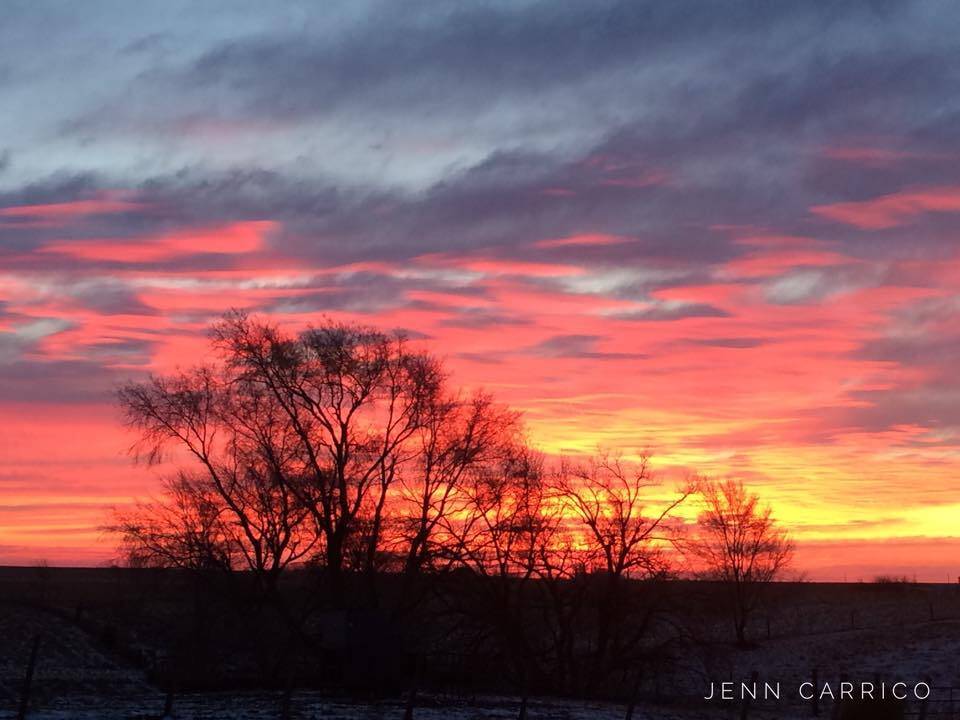
    Winter sky

    Learn to enjoy life’s simple pleasures.“I really enjoy sitting around the fire pit and admiring the view,” says Jody. “Even though I rode the city bus to hang out with my friends on weekends as a kid, I’ve learned that my little town doesn’t need a mall or even a spa to be awesome. I cherish the friendships I’ve made here, too.”

    It’s possible for a woman who wasn’t raised on a farm to find happiness on one, but Jody advises the bachelorettes to know what they’re in for! Here are three things she wishes she would have known:

    • That “slow time” between harvest and planting seasons is pretty much a myth. The work is hard, and the laundry is dirty. When that pricey equipment breaks down, you’ll just shut off the stove, throw the kids in the car, run to pick up your stranded farmer. Later that night, you eat gluey potatoes and are happy that everyone is home safe and sound.
    • Most of that beautiful corn growing in all those fields you drive past doesn’t end up in cans of Del Monte niblets. The majority of Iowa’s corn is made into livestock feed, and there is definitely a difference between “feed” and “food”! Field corn goes into feed; sweet corn goes on your supper table.
    • Strategically choose your seat at the annual seed dinner. Make it a point to stop and “tie” your shoe casually as you pass one of the banquet tables. If you see a red dot under one of the chairs, take that seat. There might be a centerpiece or Latham® spatula in your future!

    Team Latham

    January 19, 2015
    Agriculture, General, Industry News
  • Latham Hi‑Tech Seeds

    Secrets to Turning a House “Divided” into a House United

    IMG 0849 1

    1508586_10152990709793080_7994767553956698845_n copyWhile Jody (Cole) Dvorak grew up in the Land of Deere, she says she had never ridden in a tractor or spent any time on a farm before she started dating the man who became her husband. Her parents operated a professional photography studio in Waterloo, and that’s where she discovered an interest in business.

    She enrolled at the University of Iowa, and her career path seemed clear. She would earn a bachelor’s of Business Administration degree, move to Minneapolis or Chicago and work for 10 years before starting her own company in the fashion industry.

    Two months before graduation, however, Jody and her roommate went to watch a rugby match at City Park in Iowa City. David Dvorak was “the handsome wing forward” who explained the game to them. David had graduated the previous year from Iowa State University with a bachelor’s degree in Agriculture Business and played for the Iowa City Ducks when his scheduled allowed.

    “That day he told me that he’d like to call me in about six weeks,” said Jody. “My first thought was, ‘Whaaaat?” Dave explained that he would be busy with harvest until then, but I was still surprised when he actually didn’t call until the crops were out.”

    It goes without saying that love changed the course of Jody’s career plans. She found herself following new dreams that led her down a moonlight path near West Liberty in eastern Iowa.

    “Farming is a life unlike any other, and I discovered right away how little I knew about agriculture. But I was excited about the completely new lifestyle. Marriage is marriage. A supportive spouse is there at the end of the day to listen, to understand that her needs don’t come first every day and to provide a safe space for her husband,” says Jody.

    When the Dvoraks were married and getting started in the 80’s, one of the most supportive things Jody said she could do was have a paycheck. She worked off farm for 22 years. She was an ad executive for three newspapers and advertising manager at the Iowa City Press-Citizen. She also served as membership director for the Iowa City Chamber of Commerce and as a coach for the Susan G. Komen 3-Day for the Cure. Plus, she owned two Curves fitness centers.

    Jody gets involved on the farm when her experience allows her to add value to the operation. Dvorak Farm became ISO-9000 certified about 15 years ago, so she became more involved at that time. She helped create sales and marketing materials for Innovative Growers, which produced expeller pressed soy oil, when David served as president of that group. They attended food shows to find new markets for their oil. Recently, Jody says she’s “dipped a couple toes into the pool of grain marketing.”

    Today Dvorak Farm raises primarily corn and soybeans. They lean toward value-added crops, growing white and waxy corn plus non-GMO corn and soybeans, seed corn and seed soybeans. They also grow some organic corn and soybeans. Their business is “driven by ethical principles and land stewardship while maintaining honest and fair relationships with landlords, employees, and everyone with whom they do business.”

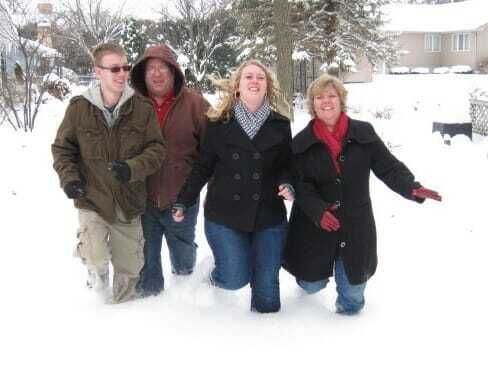
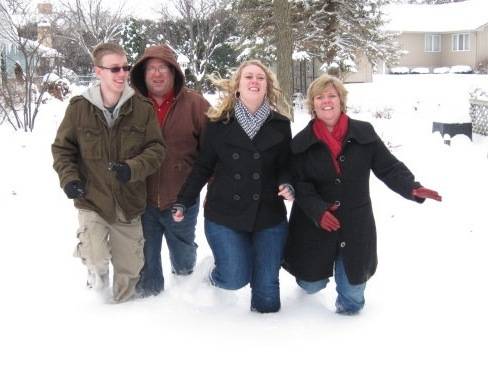
    Dave and Jody Dvoark with son, John, and daughter, Casey.
    Dave and Jody Dvoark with son, John, and daughter, Casey.

    In addition to raising crops, David and Jody raised a family on their farm. Their 24-year-old daughter Casey works at an ad agency in Chicago, Their son John, 22, is working on his Master’s Degree in Computer Science at Rochester Institute of Technology (RIT) in Rochester, NY.

    “While my childhood was spent with a lot of neighborhood kids, Casey and John’s memories include each other. They played outside on the swings or built forts in their rooms together. They walked to and from the school bus every day, and did homework together. They had a mix of life on the farm like their dad had, but they also got time in the ballet studio and wrestling meets like my childhood. But unlike me, they had plenty of space to learn to drive!”

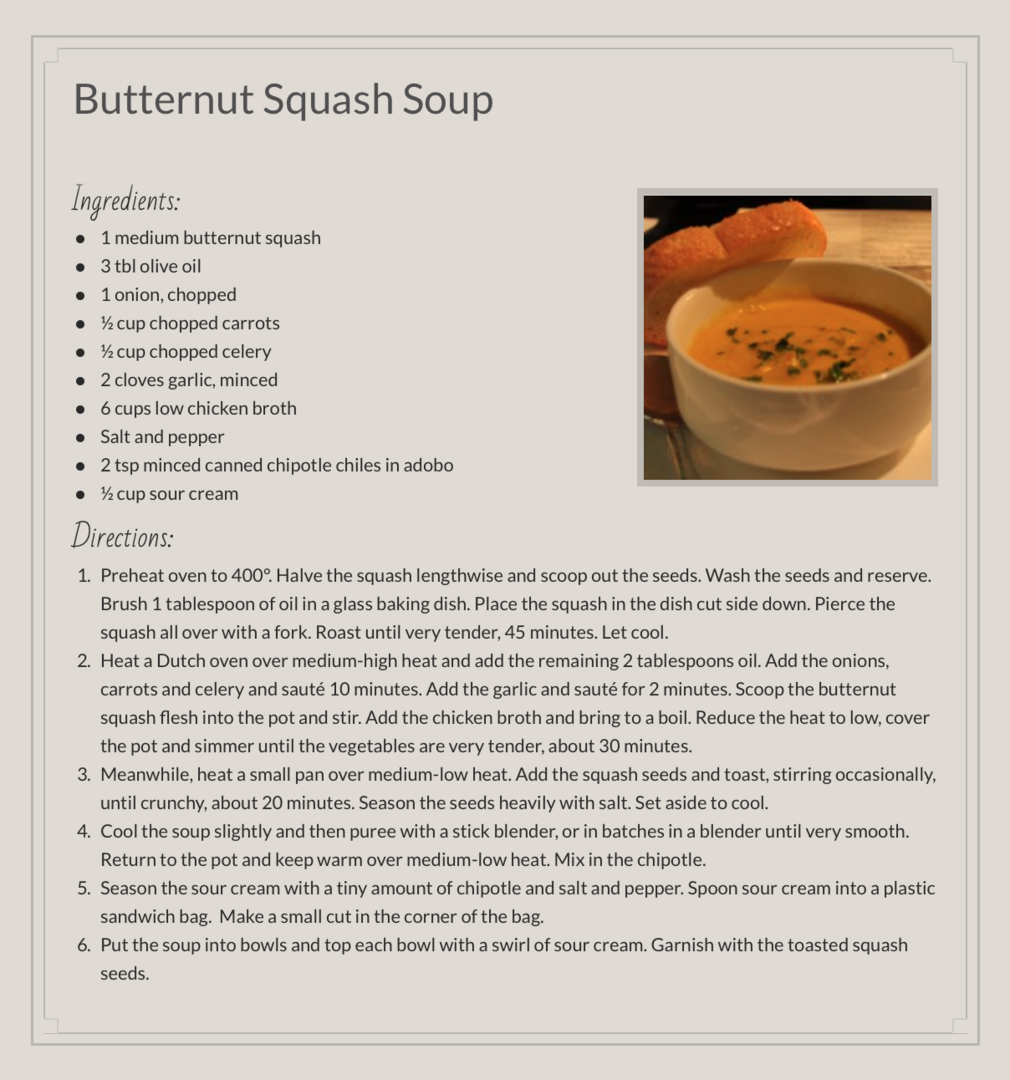
    The Dvorak’s children are following their dreams in far-away cities now, but they enjoy trips back home for a good home-cooked meal. In honor of January soup month, today Jody shares with us a favorite recipe for Butternut Squash Soup. She’s also sharing another recipe for bruschetta, which Jody says has become a favorite tailgating recipe.

    “Our family enjoys a good-natured competition every September although the Iowa – Iowa State rivalry hasn’t been as enjoyable for me the last few years,” says Jody good-naturedly. “When my Hawkeyes won the Big Game the first 12 years we were together, I should have been more gracious! Fortunately for me, Dave played rugby at Iowa State, not football, so it’s a pretty fun weekend no matter what happens.”

    P.S. Jody grew up in the city and graduated from the University of Iowa. David was raised on a farm and graduated from Iowa State University. While opposites attracted, they put their differences aside and work toward common goals. Be sure to read Monday’s blog when Jody shares advice for any girl who decides to marry a farmer! Monday’s blog is Part II in our “Bachelor series.” Click here to read Part I.

    Butternnu-Squash-Soup

    Team Latham

    January 16, 2015
    General, Recipes, Sides
  • Latham Hi‑Tech Seeds

    Watch for Sudden Death and Stink Bugs in 2015

    Each December researchers from across the Upper Midwest gather at Iowa State University in Ames for the Integrated Crop Management (ICM) conference where they present data and opinions on a wide variety of topics. Information, which I believe is most pertinent to the Midwest states in which we do business, is summarized below.

    SDS: Sudden Death Syndrome (SDS) was severe in many fields in 2014. Many Latham® Ironclad™ Soybeans were put to the test and did an excellent job of handling the disease! Understanding the extent of SDS infection in each field is key to effectively managing the disease. Future management tactics include: reducing soil compaction; planting fields with a history of SDS towards the end of a planting schedule when soils may be warmer and drier; and testing for the presence of Soybean Cyst Nematodes.

    However, the very nature of SDS makes it difficult to predict if and when an outbreak will occur. Dr. Daren Mueller, Iowa State University Extension Plant Pathologist, and his team shared years of extensive research on SDS including:

      • Glyphosate herbicide applications do not adversely affect or enhance the presence of SDS in soybean fields.
      • A side benefit of this study was a look at glyphosate applications versus manganese availability in plants. Fourteen field experiments were conducted in Iowa, Illinois, Indiana, Michigan, Wisconsin and Ontario, Canada. There were no interactions between glyphosate and the total manganese available in soybeans.
      • That same study did include a new treatment called ILeVO™ from Bayer CropScience. It showed significant effectiveness at reducing the severity of the disease, resulting in 2½ to 3 bushels of saved yield on average. Bayer expects full registration for this product soon.

    NEW, INVASIVE INSECT: The Brown Marmorated Stink Bug (BMSB) is a fairly new insect species that has the potential to cause serious crop injury. It is already considered a severe agricultural pest in New England and East Coast states. It was first noticed in Pennsylvania in 1998 and has rapidly spread to 41 states. It was first seen in Iowa in 2012; in 2014, BMSB was confirmed in eight Iowa counties. This particular species has the typical “shield-like” body of other stink bugs. However, BMSB also has rounded shoulders, white and dark bands along the edge of the body and along the antennae plus the marmorated (speckled) appearance on its back.

    This insect will feed on over 100 different species of plants, including many fruits, vegetables and field crops. In corn, BMSB feeds directly on developing kernels right through the husk causing aborted, shrunken and discolored seeds. Similarly, it will feed on soybeans directly through the pods and cause extensive damage to the seeds present. Control can be achieved with several insecticides but residual may not last long enough to prevent the insect from re-infesting the field.

    Webspec Admin

    January 15, 2015
    Agronomics, Crop, Disease, General, Insects, Soybeans
  • Latham Hi‑Tech Seeds

    Tips for Selecting Corn Silage Hybrids

    CoreyC2One question frequently asked by producers – and rightfully so – is what the most important characteristics are when selecting corn hybrids for silage or grain. To pick the best hybrids for his situation a farmer should follow 3 basic steps: (1) Consider the end use first; (2) Keep crop rotation in mind; and (3) Minimize yield-limiting factors.

    Consider the end use first. Corn kernel attributes can vary greatly, and seed traits can affect the qualities of the end product. For example, the availability of kernel starch and how it is digested is important for ethanol and livestock feed. A softer starch kernel is not preferable for export. When selecting corn hybrids for snaplage, look for excellent fall plant intactness plus a large ear and flared husk to facilitate a cleaner ear snap. Some hybrids have better fiber digestibility than others, but you also have to make sure those particular hybrids work on your soils or have the desired trait package needed in a corn-on-corn situation.

    Keep crop rotation in mind. Crop rotation must also be considered when making seed selections. Planting corn on corn creates probable nutrient shortages, as well as increased insect and disease pressure. Residue management also helps prevent disease transmission between seedlings and old residue. Remember when corn is harvested for grain, organic matter is left in the field that doesn’t remain when the corn crop is harvested for silage or when corn stalks are baled. Different hybrids are needed when planting conventional verses no-till or minimum till situations.

    Minimize yield-limiting factors. Seed selection and crop rotation are just two of the factors that impact crop yield. Dr. Fred Below, Professor of Plant Physiology at the University of Illinois, has seen up to 50-bushel differences between hybrids on the same field based on the seven primary factors: Weather, Nitrogen, Hybrid, Previous Crop, Plant Population, Tillage and Growth Regulators.

    Remember, the potential for next year’s crop begins when the seed is still in the bag! At Latham Hi‑Tech Seeds, we can help you layer yield and soil data to determine which seed is best suited for certain soil types and management situations. Talk to your local Latham® seed representative about how the Seed-2-Soil® program can help you reach new yield levels!

    Webspec Admin

    January 14, 2015
    Corn Silage, Crop, General
Previous Page
1 … 52 53 54 55 56 … 159
Next Page

Latham Hi‑Tech Seeds

131 180th Street | Alexander, IA 50420

(641) 692-3258

SIGNUP FOR OUR NEWSLETTER
  • Contact
  • Legal
  • Dealer Center
  • Seedware Login
  • Latham Gear

© 2025 Latham Hi‑Tech Seeds. All rights reserved. | Iowa Web Design by Webspec | Privacy Policy

Latham® Hi-Tech Seeds is a trademark of M.S. Technologies, L.L.C., 103 Avenue D, West Point, IA 52656.