Latham Hi-Tech Seeds

(641) 692-3258

  • Home
  • Performance
  • Products
    • Corn
    • Soybeans
    • Soybean Blends
    • Alfalfa
    • Corn Silage
    • Seed Guide
  • Find a Rep
  • Media
    • Blog
    • News
    • Videos
    • Podcasts
    • TECHTalk
  • About Us
    • Company History
    • Our Mission
    • Careers
    • Become a Rep
    • Sowing Seeds of Hope
  • Contact Us
  • Latham Hi‑Tech Seeds

    Secrets to Turning a House “Divided” into a House United

    IMG 0849 1

    1508586_10152990709793080_7994767553956698845_n copyWhile Jody (Cole) Dvorak grew up in the Land of Deere, she says she had never ridden in a tractor or spent any time on a farm before she started dating the man who became her husband. Her parents operated a professional photography studio in Waterloo, and that’s where she discovered an interest in business.

    She enrolled at the University of Iowa, and her career path seemed clear. She would earn a bachelor’s of Business Administration degree, move to Minneapolis or Chicago and work for 10 years before starting her own company in the fashion industry.

    Two months before graduation, however, Jody and her roommate went to watch a rugby match at City Park in Iowa City. David Dvorak was “the handsome wing forward” who explained the game to them. David had graduated the previous year from Iowa State University with a bachelor’s degree in Agriculture Business and played for the Iowa City Ducks when his scheduled allowed.

    “That day he told me that he’d like to call me in about six weeks,” said Jody. “My first thought was, ‘Whaaaat?” Dave explained that he would be busy with harvest until then, but I was still surprised when he actually didn’t call until the crops were out.”

    It goes without saying that love changed the course of Jody’s career plans. She found herself following new dreams that led her down a moonlight path near West Liberty in eastern Iowa.

    “Farming is a life unlike any other, and I discovered right away how little I knew about agriculture. But I was excited about the completely new lifestyle. Marriage is marriage. A supportive spouse is there at the end of the day to listen, to understand that her needs don’t come first every day and to provide a safe space for her husband,” says Jody.

    When the Dvoraks were married and getting started in the 80’s, one of the most supportive things Jody said she could do was have a paycheck. She worked off farm for 22 years. She was an ad executive for three newspapers and advertising manager at the Iowa City Press-Citizen. She also served as membership director for the Iowa City Chamber of Commerce and as a coach for the Susan G. Komen 3-Day for the Cure. Plus, she owned two Curves fitness centers.

    Jody gets involved on the farm when her experience allows her to add value to the operation. Dvorak Farm became ISO-9000 certified about 15 years ago, so she became more involved at that time. She helped create sales and marketing materials for Innovative Growers, which produced expeller pressed soy oil, when David served as president of that group. They attended food shows to find new markets for their oil. Recently, Jody says she’s “dipped a couple toes into the pool of grain marketing.”

    Today Dvorak Farm raises primarily corn and soybeans. They lean toward value-added crops, growing white and waxy corn plus non-GMO corn and soybeans, seed corn and seed soybeans. They also grow some organic corn and soybeans. Their business is “driven by ethical principles and land stewardship while maintaining honest and fair relationships with landlords, employees, and everyone with whom they do business.”

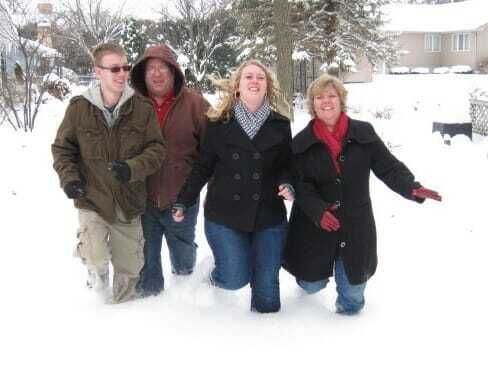
    Dave and Jody Dvoark with son, John, and daughter, Casey.
    Dave and Jody Dvoark with son, John, and daughter, Casey.

    In addition to raising crops, David and Jody raised a family on their farm. Their 24-year-old daughter Casey works at an ad agency in Chicago, Their son John, 22, is working on his Master’s Degree in Computer Science at Rochester Institute of Technology (RIT) in Rochester, NY.

    “While my childhood was spent with a lot of neighborhood kids, Casey and John’s memories include each other. They played outside on the swings or built forts in their rooms together. They walked to and from the school bus every day, and did homework together. They had a mix of life on the farm like their dad had, but they also got time in the ballet studio and wrestling meets like my childhood. But unlike me, they had plenty of space to learn to drive!”

    The Dvorak’s children are following their dreams in far-away cities now, but they enjoy trips back home for a good home-cooked meal. In honor of January soup month, today Jody shares with us a favorite recipe for Butternut Squash Soup. She’s also sharing another recipe for bruschetta, which Jody says has become a favorite tailgating recipe.

    “Our family enjoys a good-natured competition every September although the Iowa – Iowa State rivalry hasn’t been as enjoyable for me the last few years,” says Jody good-naturedly. “When my Hawkeyes won the Big Game the first 12 years we were together, I should have been more gracious! Fortunately for me, Dave played rugby at Iowa State, not football, so it’s a pretty fun weekend no matter what happens.”

    P.S. Jody grew up in the city and graduated from the University of Iowa. David was raised on a farm and graduated from Iowa State University. While opposites attracted, they put their differences aside and work toward common goals. Be sure to read Monday’s blog when Jody shares advice for any girl who decides to marry a farmer! Monday’s blog is Part II in our “Bachelor series.” Click here to read Part I.

    Butternnu-Squash-Soup

    Team Latham

    January 16, 2015
    General, Recipes, Sides
  • Latham Hi‑Tech Seeds

    Watch for Sudden Death and Stink Bugs in 2015

    Each December researchers from across the Upper Midwest gather at Iowa State University in Ames for the Integrated Crop Management (ICM) conference where they present data and opinions on a wide variety of topics. Information, which I believe is most pertinent to the Midwest states in which we do business, is summarized below.

    SDS: Sudden Death Syndrome (SDS) was severe in many fields in 2014. Many Latham® Ironclad™ Soybeans were put to the test and did an excellent job of handling the disease! Understanding the extent of SDS infection in each field is key to effectively managing the disease. Future management tactics include: reducing soil compaction; planting fields with a history of SDS towards the end of a planting schedule when soils may be warmer and drier; and testing for the presence of Soybean Cyst Nematodes.

    However, the very nature of SDS makes it difficult to predict if and when an outbreak will occur. Dr. Daren Mueller, Iowa State University Extension Plant Pathologist, and his team shared years of extensive research on SDS including:

      • Glyphosate herbicide applications do not adversely affect or enhance the presence of SDS in soybean fields.
      • A side benefit of this study was a look at glyphosate applications versus manganese availability in plants. Fourteen field experiments were conducted in Iowa, Illinois, Indiana, Michigan, Wisconsin and Ontario, Canada. There were no interactions between glyphosate and the total manganese available in soybeans.
      • That same study did include a new treatment called ILeVO™ from Bayer CropScience. It showed significant effectiveness at reducing the severity of the disease, resulting in 2½ to 3 bushels of saved yield on average. Bayer expects full registration for this product soon.

    NEW, INVASIVE INSECT: The Brown Marmorated Stink Bug (BMSB) is a fairly new insect species that has the potential to cause serious crop injury. It is already considered a severe agricultural pest in New England and East Coast states. It was first noticed in Pennsylvania in 1998 and has rapidly spread to 41 states. It was first seen in Iowa in 2012; in 2014, BMSB was confirmed in eight Iowa counties. This particular species has the typical “shield-like” body of other stink bugs. However, BMSB also has rounded shoulders, white and dark bands along the edge of the body and along the antennae plus the marmorated (speckled) appearance on its back.

    This insect will feed on over 100 different species of plants, including many fruits, vegetables and field crops. In corn, BMSB feeds directly on developing kernels right through the husk causing aborted, shrunken and discolored seeds. Similarly, it will feed on soybeans directly through the pods and cause extensive damage to the seeds present. Control can be achieved with several insecticides but residual may not last long enough to prevent the insect from re-infesting the field.

    Webspec Admin

    January 15, 2015
    Agronomics, Crop, Disease, General, Insects, Soybeans
  • Latham Hi‑Tech Seeds

    Tips for Selecting Corn Silage Hybrids

    CoreyC2One question frequently asked by producers – and rightfully so – is what the most important characteristics are when selecting corn hybrids for silage or grain. To pick the best hybrids for his situation a farmer should follow 3 basic steps: (1) Consider the end use first; (2) Keep crop rotation in mind; and (3) Minimize yield-limiting factors.

    Consider the end use first. Corn kernel attributes can vary greatly, and seed traits can affect the qualities of the end product. For example, the availability of kernel starch and how it is digested is important for ethanol and livestock feed. A softer starch kernel is not preferable for export. When selecting corn hybrids for snaplage, look for excellent fall plant intactness plus a large ear and flared husk to facilitate a cleaner ear snap. Some hybrids have better fiber digestibility than others, but you also have to make sure those particular hybrids work on your soils or have the desired trait package needed in a corn-on-corn situation.

    Keep crop rotation in mind. Crop rotation must also be considered when making seed selections. Planting corn on corn creates probable nutrient shortages, as well as increased insect and disease pressure. Residue management also helps prevent disease transmission between seedlings and old residue. Remember when corn is harvested for grain, organic matter is left in the field that doesn’t remain when the corn crop is harvested for silage or when corn stalks are baled. Different hybrids are needed when planting conventional verses no-till or minimum till situations.

    Minimize yield-limiting factors. Seed selection and crop rotation are just two of the factors that impact crop yield. Dr. Fred Below, Professor of Plant Physiology at the University of Illinois, has seen up to 50-bushel differences between hybrids on the same field based on the seven primary factors: Weather, Nitrogen, Hybrid, Previous Crop, Plant Population, Tillage and Growth Regulators.

    Remember, the potential for next year’s crop begins when the seed is still in the bag! At Latham Hi‑Tech Seeds, we can help you layer yield and soil data to determine which seed is best suited for certain soil types and management situations. Talk to your local Latham® seed representative about how the Seed-2-Soil® program can help you reach new yield levels!

    Webspec Admin

    January 14, 2015
    Corn Silage, Crop, General
  • Latham Hi‑Tech Seeds

    Add “Juggler” to the List of Skills a Farmer Needs

    Walk through testament

    A farmer has been described (at least by Paul Harvey in his “So God Made a Farmer” speech) as “somebody with arms strong enough to rustle a calf and yet gentle enough to deliver his own grandchild. Somebody to call hogs, tame cantankerous machinery…”

    This week I feel like the farm broadcaster’s legendary speech should be amended to read: “… somebody with shoulders broad enough to carry the weight of the world but humble enough to know he can’t do it alone. Somebody with the acrobatic artistry to juggle eight balls for eight days without dropping a single one.”

    One of the issues that’s currently weighing heavily on my heart and mind is the vote by Des Moines Water Works to sue three Iowa counties over nitrates. On Monday of this week, Iowa farmers and the Iowa Soybean Association spoke out against the intent to sue. Yesterday, Iowa farmer and cattle producer Dan Hanrahan posted follow up comments on his blog where he writes:

    “Soil and water quality have always been a concern and a focus of many producers’ efforts. If anything has changed… it is Des Moines Water Works’ approach to the problem. I believe you would find LD Mc Mullen (Stowe’s predecessor as director of Des Moines Water Works) was a proponent of the collaborative approach and built many relationships in that regard with the community upstream. Stowe has ended many of those and seems to be intent on going it alone. At the end of the day the challenge for improved water quality is such a complicated issue, I don’t see how it is going to take anything less than all of us working together to find a solution.”

    With many fellow Iowa farmers sharing their stories about soil conservation and water quality efforts this week, it frees me up to talk about some other projects in which I’m involved. Winter, although considered the “off season” for farmers, is one of my busiest times of the year. I have pig chores to do, regardless of the season. I also have year-long responsibilities and obligations to my family and my community, which includes attending meetings for everything from church to the local chamber.

    Winter is truly the meeting season. This week has reminded me of a circus performer who juggles three, four or more objects in the air at the same time. The trick is, of course, not to let a single ball drop. This week I felt like I had eight balls in the air, and I really don’t want to drop a single thing! It’s a week filled with many meetings and events that I am really proud to be a part of, but each more meeting has given more projects to coordinate.

    TownCountryPlease understand that I’m not “playing the violin” here. I know community involvement (and over commitment) isn’t a farmer-specific problem. I do, however, want to give you a snapshot of what my week is like:

    • Sunday, January 11, I was ordained as an elder of our church.
    • Monday was filled with many phone calls, as I worked to tie up loose ends for this week’s events. I had two meetings Monday night, a political responsibility at 5 PM and a church meeting at 7 PM.
    • Today will start with the Franklin County social media breakfast on the importance of using hash tags, followed by some more detail work for the Greater Franklin County Chamber’s inaugural Town & Country Expo (#towncountry).
    • Tomorrow I’ll travel to the Des Moines airport to where I’ll greet California cattle baroness, Celeste Settrini, who will keynote Thursday’s Expo. I also have a few errands to run before that evening’s Meet & Greet. This day will pass way too quickly!
    • Thursday is a BIG event! The Town & Country Expo, which is FREE and OPEN to the public, will take place inside the convention center on the fairgrounds in Hampton, from 10 AM until 3 PM. At 6 PM, I have a county Farm Bureau board meeting.

    walk through testamentP.S. One of my grandsons is wrestling on Monday, Tuesday, and Thursday evenings. I can only be at one place at a time, and I have to tell you that I’m always feel guilty when I have to miss something!

    • Friday will bring a very early trip to the airport and a good bye to Celeste.
    • Saturday there is another wrestling tournament, plus a kick off banquet for a membership drive.
    • Sunday, January 18, I’ll return to church for an all-day event that I have helped plan for nearly a year. “Walk through the Old Testament” is a hands-on, interactive learning experience that begins at 9 AM with the service at Bethel Reformed Church in Aplington. You don’t have to be a member to attend, so let me know if you’re interested!

    Meeting season to me is very important, yet I just need to remember to include those near and dear to me. This week I was reminded that as one works so hard to serve the greater good, those closest to you may not be getting the attention they deserve. My church and my family deserve more of my attention. My farm operation needs more of my attention, too. I feel called to promote agriculture and share my farm story because I want to help consumers understand what farmers are about and why they farm the way they do.

    Advocating can be a juggling act in itself… Here’s to eight days of not dropping the ball!

    Larry Sailer, Musings of a Pig Farmer

    January 13, 2015
    Agriculture, General, Industry News
  • Latham Hi‑Tech Seeds

    5 Things a Bachelorette Should Know before Saying “I Do”

    BachelorSeries2

    Talk at the water coolers and comments on Facebook have been heavily focused on ABC’s “The Bachelor” since last Monday’s premiere. Even if you’re not a fan of this reality show, chances are you know the 19th edition features Iowa farmer and Iowa State University alumnus, Chris Soules.

    In a recent interview with the ISU alumni magazine, Iowa’s most recognizable bachelor answers five questions. Soules’ notoriety certainly provides him with a worldwide stage to advocate for agriculture, and he hopes people understand that most modern farms are still run as family businesses. In fact, 98% of all U.S. farms are family owned. Soules says, “The people who run those family businesses are not just farmers, they are also business people who have a lot of pride in what they do.”

    There is something to be said for the person who not only puts food on the table for his own family but feeds 155 people worldwide! One way Americans can gain a better understanding of the hard work and dedication it takes to be a successful farmer is to get a real look inside Soules’ life. Will Hollywood producers accurately portray our great state or its “bread and butter” industry?

    BachelorSeries2From what I saw during last Monday’s premiere, misperceptions abound. That’s why I put together this list of things I believe all the bachelorettes should learn about Iowa agriculture and life in our state:

    1. Your life will drastically change when you marry a farmer. Chris Soules is a farmer, and he can’t “relocate” his ground. Hopefully, the woman who chooses to marry him wants to become his partner in life – and that includes being a supportive farm wife. As Prairie Californian Jenny Rohrich writes in her blog post, 10 Ways Marrying a Farmer Will Change Your Life, “Date nights during planting and harvest = time in the tractor or combine with your husband. Dates during any other time of the year besides winter = checking crops. If you want to see him or spend time with him, this is where you will be.”
    2. Pork fuels Iowa’s economy. Iowa is the number one pork producing state in the nation. Chris’ farm plus approximately 6,265 more Iowa hog farms produce 49 million hogs per year and employ nearly 40,290 Iowans. We invite all the bachelorettes and The Bachelor fans to learn more about Chris’s role in hog production by following the hashtag #RealPigFarming in social media. This tag is meant to bring together the many ways that hogs are raised on farms across the country and show how farmers focus on management and care of their animals.
    3. Most farmers don’t use a moldboard plow; they practice conservation tillage. Ninety percent of Iowa’s crop land is farmed using some form of conservation practices. Since 1987, farmers have applied conservation methods that have reduced wind and water erosion on American crop land by more than a third (33%). The Iowa Farm Bureau, an organization in which Chris is actively involved, has launched an initiative called Conservation Counts to help more farmers implement new conservation methods. These methods include soil testing, nutrient management planning, tillage and crop residue management, crop rotation and precision agriculture techniques.
    4. Iowa is nicknamed the Tall Corn State. (Kansas is nicknamed the Sunflower State, although North Dakota leads the nation in sunflower production.) Iowa leads the nation in corn, soybean, pork and egg production. Here’s a little known fact: There are 20 times the number of chickens in Iowa as there are people! For more facts about Iowa, including our capitol city and state bird, click here. Be sure to also note the average January temperature here is 15°F, but don’t be surprised if you find yourself facing blizzards with wind chills of 30 below (yes, negative) zero!
    5. Iowa is the Hawkeye State but a CyclONE nation! Chris Soules gives a “politically correct” answer by saying he graduated from Iowa State and is a Cyclone fan but also cheers for the Hawkeyes. But bachelorettes should take note that Soules is the exception, not the rule. Most Iowans root for one team or the other because, well, bragging rights are at stake! If a woman is going to immigrate to Northeast Iowa, she needs to know about the Cy-Hawk Series. She’d be well served to study these tips for hosting a spirited tailgate.

    The girls whom Chris is getting to know in California don’t appear to have been “picked fresh off the farm,” but that’s not to say that one of them can’t or won’t play an important role on his Northeast Iowa farm someday. Hopefully, this season of The Bachelor will open these girls’ eyes and allow all of America to enjoy a real look at agriculture in Iowa. Like Chris stated in his interview for the ISU Alumni Association’s magazine, VISIONS, we’d love for viewers to see how important Iowa agriculture it is to our state, our country and our world food supply.

    P.S. Watch for Part 2 of this series to post one week from today on Monday, January 19!

    Team Latham

    January 12, 2015
    Agriculture, General, Industry News
  • Latham Hi‑Tech Seeds

    Get a Glimpse of “Farm Living”

    Image009

    Ever since the 19th season of ABC’s The Bachelor premiered on January 5, folks have been debating whether Iowa farmer Chris Soules can find a bachelorette who can become his life partner. Many experts have offered advice and shared secrets to a happy marriage. Others wonder if a beauty from one of the coasts can actually live happily ever after in the middle of cornfields, especially during the winter months.

    The truth is, a degree in agriculture or a background in farm life is not a prerequisite to become a supportive farm wife. Some of agriculture’s most well-known advocates were not raised on a farm. You might be surprised to learn that Carrie Mess, who blogs at “The Adventures of Dairy Carrie” was raised in Madison. Katie Olthoff, who blogs at “On the Banks of Squaw Creek,” never ever dreamed she’d become an advocate for agriculture and the turkey industry. Nor did Wanda Patsche grow up thinking she’d ever become well versed about #RealPigFarming.

    wanda patsche

    In fact, Wanda never thought she’d live on a hog farm. Her best friend during high school lived on a hog farm and had to clean pig pens every weekend. Wanda watched her friend work one Saturday morning and professed she would never marry a hog farmer, but those words were spoken before she started dating Charles Patsche!

    “My husband felt a calling to farm,” says Wanda. “He enjoys the feeling of planting a crop in the spring, watching it grow all summer long and then harvesting it in the fall. It’s experiencing the miracle of life that I’ve come to love, too.”

    Wanda has a way with words. I truly enjoy her writing style and find her blogs so insightful and relatable, whether she’s talking about everyday life on the farm or sharing stories about her family. That’s why today I’m simply going to share her candid responses to my questions.

    How long have you been blogging and why did you start?

    Prior to blogging, I was involved in agvocating through Twitter and Facebook. I really wanted to give blogging a chance but didn’t feel I was qualified because I didn’t have a journalism or ag communication degree. I’m a grandma who also farms from rural Minnesota… Who would want to listen to me? But I had things I wanted to say! Then a couple of years ago, I attended an AgChat national conference where I met many other agvocates from across the country. This conference inspired me to blog, and I’ve been blogging for two years.

    How did you get involved with agvocating and why do you believe it’s important for farmers to tell their stories?

    Both my husband and I have been involved in the pork industry for many years. We both had served on the county board level, and I was also a member of a few state pork committees. In 2012, my family was selected as the 2012 Minnesota Pork Farm Family of the Year. Our children were on their own or at least in college at that time, so I had some extra time to promote agriculture, or I should say, “Correct the enormous amount of misinformation about ag.” It’s important that farmers tell their story because there are people/organizations taking advantage of the fact that the numbers of farmers are small. Honestly, there wasn’t the need years ago to communicate with consumers because they already had a connection to farming, whether it was their own background of growing up on a farm or at the very least, their parents grew up on a farm. Today, “transparency,” or talking to consumers about what they do and why, is new to farmers. Many are busy farming and don’t understand the need to engage with consumers. Farming has modernized and doesn’t look the same as in the past, so consumers have questions about today’s agriculture. They want to know farmers. Anti-ag people/organizations are also taking advantage of consumers’ disconnect to agriculture by spreading information about agriculture that is misleading, deceitful and outright wrong. We need to stop that movement – and we can by giving agriculture a face and telling our story in whatever way is comfortable to farmers. It can be as simple as talking to family and friends about what farmers do and why.

    How do you respond to farmers who say, “I don’t have a story to tell”?

    Everyone has a story. I am a grandma, who lives in rural Minnesota – in the middle of nowhere – who also farms. I can relate to many people, such as other moms who are so confused about the food they are feeding their families. I listen to their concerns and engage in conversations about what we do and why we do it. We are just normal, regular people growing food for families. Consumers want and deserve to hear from us. image010

    What do you enjoy most about farming?

    There is nothing better than the feeling of growing and raising food for other families. It’s humbling and a huge responsibility. None of which we take for granted.

    What do you wish consumers understood better?

    Just this week I posted a blog with 7 things farmers wish for consumers (and families) in 2015. First and foremost, I wish for more truthful and less confusing marketing. Farmers care about our animals and our soils. We care for the environment. And even though nothing is perfect in farming, we try every single day to be better than the day before.

    How has your online presence helped you connect with consumers?

    It’s been amazing the connections I have made with consumers! People from all over the world read my blog. I actually had to use a translator to read comments left in German. It’s been an interesting journey. Through time and some training, I’m able to try and take “attack” statements and turn them into a conversation. Granted, it does not work every time because there are people who not want to converse. I’ve learned that it’s okay to walk away from them, but I have had so many other successes! And the unique aspect of an online social media presence is other people can also read the conversations. When I have online conversations, I think about other people who are lurking, reading and learning, too. image011

    How has your online presence connected you with more farmers?

    This has been special! I’ve gotten to know so many farmers across the country and Canada online. When we meet in person, it’s like we’re old-time friends. It’s a very special bond. And it’s great because if I have a question about farming that I’m not familiar with, I almost always have someone I know that I can ask. Now if you have questions about farming, you know to ask Wanda! Learn more about #RealPigFarming and crop farming in the Midwest by following “Minnesota Farm Living” on Facebook and on Twitter @MinnFarmer. From reading my blogs, you know I enjoy a good recipe as much as I enjoy a good story! I especially enjoy Wanda’s Whiskey Peach Pork Chops, which I downloaded this fall from Prairie Californian. Now I’m looking forward to trying her crockpot recipe for pulled pork. Hopefully, you will, too!

    Team Latham

    January 9, 2015
    General, Pork, Recipes
  • Latham Hi‑Tech Seeds

    Update On New Soybean Traits & Technologies

    1274848 10151896062987138 626713682 o

    1274848_10151896062987138_626713682_oU.S. seed companies and farmers were handed an early Christmas present when China approved imports of hybrids with the Agrisure Viptera® corn trait, and many in the ag industry had hoped this one approval signaled a more consistent Chinese regulatory process. As a result, I’ve fielded a fair number of phone calls and e-mails from farmers wondering when they can expect final approval of various new soybean traits and technologies.

    Here’s a quick update on those that are reasonably close to hitting the marketplace:

    • ENLIST™ (2,4-D resistant trait from Dow AgroSciences):
      The U.S. Department of Agriculture (USDA) in January 2014 announced completion of the Draft Environmental Impact Study for the Enlist™ corn, Enlist soybean and Enlist E3™ soybean traits. Following a comment period, the USDA announced on September 17, 2014, the Enlist corn and soybean traits have been deregulated.
      On October 15, 2014, the EPA announced Enlist Duo™ herbicide is approved for use with Enlist corn and soybean traits for the 2015 cropping season. This was the final step in the U.S. regulatory process, but one fairly large hurdle remaining is overall foreign approval.
    • ROUNDUP READY 2 XTEND™ (Dicamba-resistant trait from Monsanto):  Like the Enlist soybeans, this trait went through a comment period that ended September 25, 2014, and U.S. approval is expected any day. Roundup Xtend™ is a premix of dicamba and glyphosate. Xtendimax™ will be a straight dicamba formulation that will be used for tank mixing with other herbicide products.  Both of these new herbicides will be available with VaporGrip™ technology, designed to help significantly reduce the volatility of the dicamba active ingredient.
    • BALANCE GT™ (Balance-resistant trait from Bayer CropScience):  The Balance GT soybean trait has full U.S. approval, however, full global approval is still pending. It’s possible that Balance GT soybeans will be available for testing and plots in 2015, but a full commercial launch isn’t expected before 2016. As far as the herbicide system is concerned, Bayer has applied for registration of Balance® Bean herbicide and EPA approval is expected in early 2016.

    There is uncertainty as to when these new traits will receive approval from foreign countries like China and the European Union. At Latham Hi‑Tech Seeds, we will continue to do our own testing to see which technologies and genetics will be the best fit for our market area. We’ll also keep you updated on the approvals of these exciting new technologies. And, yes, we expect to have them in our lineup as soon as they’re commercially available!

    Webspec Admin

    January 8, 2015
    Crop, General, Industry News, Seed Technology, Soybeans
  • Latham Hi‑Tech Seeds

    Consumers Begin New Year with Confidence

    Consumer

    More Iowans are starting the New Year with the know-how to eat healthier and with more confidence that farmers are doing a good job growing their food, according to recent findings of an Iowa Food & Family Project (Iowa FFP) survey.

    consumerThe Consumer Pulse Survey, conducted by Campaign HQ of Brooklyn, polled 353 health-conscious Iowans who make the majority of their household’s food purchases. Respondents were asked about a variety of food topics, their familiarity with the Iowa FFP and how that familiarity changes their perceptions about today’s farms and food system.

    Ninety-five percent of respondents said they are “very” and “somewhat” knowledgeable about how the food they purchase is produced, up 6 percentage points from last year’s poll and up 9 points from the previous year. The survey also found 81 percent of people have a positive impression about farming.

    Fifteen percent of respondents said farmers “do things right regardless of financial benefit,” up 6 percentage points from the last poll. Sixty-one percent believe growers “balance doing what’s right” with profit, while just 14 percent think farmers are “driven solely by profit,” down 4 points from last year.

    Such results indicate the Food & Family Project is having success, bridging the communications gap between producers and consumers. This year’s survey shows consumers are:

    • Ten percent more confident that farmers care for the well-being of their livestock.
    • Nine percent more confident that farmers protect the environment.
    • Nine percent more trusting that farmers balance doing what’s right with financial considerations.

    “What these numbers tell us is that we’re influencing the food influencers,” said Iowa FFP Coordinator Aaron Putze. “Those involved in the Iowa FFP have a passion for helping Iowans be healthier, happier and more informed about the food they love and the farmers who grow it. Our work is groundbreaking and the results are real, positive and measureable.”

    Results like these are exactly why Latham Hi‑Tech Seeds is a proud supporter of the Iowa FFP, and why I feel honored to be a part of the Iowa FFP Advisory Team. Launched in 2011 by the Iowa Soybean Association (ISA), the Food & Family Project facilitates greater confidence among food-minded Iowans about how food is grown and acquaints them with the farmers who grow it. Watch for an exciting announcement coming soon about the third year of the Iowa FFP’s Join My Journey project!

    Team Latham

    January 7, 2015
    Agriculture, General, Industry News
  • Latham Hi‑Tech Seeds

    Truth Is, Protein is Part of a Healthy Diet

    20150106 082146

    I was going to just write about why I vaccinate pigs in today’s blog, but that was before I read the January 4th issue of the Waterloo-Cedar Falls Courier. On the front page of the Cedar Valley section, in a “Dr. K column,” was a question about whether adults should drink protein shakes.

    There are several reasons our bodies need protein, was the reply. Then Dr. K went on to explain how and why we need to consume a certain amount of protein every day. He even said there is no difference between proteins from plants and meat. However, the “good doctor” advocated for a diet rich in plant proteins because of fat in meat. You can about imagine what I was thinking when I read that!

    Folks, a mistake was made about 40 years ago when many of our ailments were blamed the consumption of too much fat. And meat was blamed as the source of that fat!

    New studies show we actually need fat in our diets. Yes, we must be careful with the amount we eat and we must balance what we consume. You know I like my bacon! As with everything, we should eat in moderation. We should not, however, avoid protein from meats.

    Protein helps keep hunger at bay between meals and may facilitate weight loss. Studies even show that pork can be a healthy part of a well-balanced diet. Many cuts of pork are as lean as skinless chicken. Lean pork is a great source of lean protein and many essential vitamins and other nutrients. A 3-ounce serving of pork tenderloin is an “excellent” source of protein, thiamin, vitamin B6, phosphorus and niacin and a “good” source of riboflavin, potassium and zinc.

    Going back to the advice from celebrity doctors… They are not always up on the latest information. They’re not always right. Half of Dr. Oz’s medical advice is baseless or wrong.

    20150106_082146 copyAs if the Dr. K column wasn’t enough to get me riled, I read in the same Sunday newspaper a Q&A section. Readers send in questions that are then answered by staff from the newspaper and the Waterloo library. The first question was about pot use in Colorado: “Can employees come to work with pot in their system?” I passed on reading that!

    The following question asked if a couple of football players could be relatives… Ok. The next question was “Are GMO crops responsible for the growing number of people with wheat and gluten intolerance?” This answer should be a no brainer, right? Wrong! The answer printed was, “It’s hard to know for sure.” WHAT?! What “medical evidence” supports this?

    There is no GMO wheat! On top of that, only about one percent of the population has a legitimate problem with gluten. The other nine percent (the growing number) only think they do! Really, 17 million people may unnecessarily believe they are gluten-sensitive.

    Many people are self-diagnosing today based on the amount of information available. But one can’t always believe doctors, the media or the library. Of course, the Internet isn’t always right. So whom can you trust? Talk to people who live it! This is the very reason I talk about my corn, soybeans, and pigs. I live this every day.

    I try to know the science, and the emotion behind the food I grow. Even though I don’t have first-hand experience with wheat and gluten, I read about it. I follow blogs of farmers who grow wheat. I read blogs from people involved in studying genetics. I follow people from seed companies, too. (You can trust what you read on TheFieldPosition.)

    To help me as a farmer connect with consumers, I also have joined our local Chamber of Commerce. This is why I’m very involved in the Town & Country Expo that will be held January 15 in Hampton, Iowa. I want to talk to people who have questions about their food because I want “No More Food Fights“!

    Come join us for the conversation. I promise I’ll listen!

    Larry Sailer, Musings of a Pig Farmer

    January 6, 2015
    Agriculture, General, Industry News
  • Latham Hi‑Tech Seeds

    Reach New Yield Levels in the New Year!

    TenWays SoybeanYield Blog

    This time of year the headlines are filled with tips to help consumers reach their New Year’s Resolutions for “getting healthier” and “losing weight while eating great.” As seed product manager, I confess that my New Year’s Resolutions have more to do with achieving more rather than doing with less!

    “Higher yield” tops my list for 2015. We’re encouraged by results from the 2014 F.I.R.S.T. Trials. Latham Hi‑Tech Seeds won 38 location or regional summaries with 19 different products! We had 77 Top 3 finishes, 127 Top 5 finishes and 275 Top 10 finishes!

    TenWays_SoybeanYield_BlogOne key to our success is working as a team to select products selected for local growing conditions. Our team approach includes working with Latham® dealers and customers in every region to conduct on-farm research. While we enjoy winning yield trials, we’re most interested in winning on your farm!

    Here’s my Top 10 List for how we can all achieve top soybean yields in 2015:

    1. Variety Selection: In my opinion, this is THE most important factor to achieving higher soybean yields. Farmers must manage a number of stress factors: disease, weeds, Soybean Cyst Nematodes, etc. Fortunately, many of these stress factors can be managed through careful variety selection. Many regions are experiencing weed resistance to glyphosate herbicides, so keep in mind that Latham has LibertyLink soybeans available.
    2. Seed-to-Soil®: Research shows correct product placement leads to a 3 to 7% yield improvement. Basing seed selection mostly on cost per bag and the size of the seed in the bag won’t add a single bushel to your overall yield. Understanding a particular product’s response to soil type or planting population, however, will! Get to know your local Latham® representative and work with him or her to develop a crop plan for success.
    3. Early planting: Soybeans are a light-sensitive crop, so it stands to reason that an earlier-planted crop has more potential for yield since it will have greater access to sunlight. However, there are risks associated with early planting. Protect early-planted soybeans from seedling diseases and insects by using seed treatments with either a fungicide or a fungicide-insecticide combination. Latham’s own SoyShield™ brand seed treatments are an excellent choice!
    4. Weed Management: Soybeans are very sensitive to early-season competition from grass and broadleaf weeds. Using a weed control program that includes a pre-emergence herbicide and a post-applied product reduces stress from weed pressure and allow for early canopy closure. An early complete canopy is important to intercept as much sunlight as possible throughout the growing season.
    5. Narrow Row Spacing: Based on the theory that enhanced yields are tied directly to the amount of light intercepted by the soybean crop, narrow row spacing can help close the canopy and allow for increased light interception. I strongly recommend that farmers take a look at row spacings in the 15- to 20-inch range. Over many years of field observations, this seems to be the range that affords the greatest amount of yield potential while also mitigating risks (such as White Mold) associated with drilled soybeans in the 7- to 10-inch range.
    6. Soil Fertility: When striving for higher yields, ensure adequate soil nutrients are available to achieve those yields or else all their careful planning and cultural practices will be for naught. Again, Latham’s Seed-2-Soil Nutrient Management program is invaluable to help farmers achieve these goals. Soil sampling, field mapping and nutrient recommendations are just three of the many benefits.
    7. Soybean Cyst Nematode: SCN is the number one pest of soybean fields in the United States. You really can’t even begin to think about raising 80 bushel per acre (bu/A) or even 60 bu/A soybeans until you know SCN populations are in each field. Nematodes tend to cause the most damage in drier years where soil moisture is lacking and plants are already under severe stress. 2012 was one of those years and we saw a significant amount of SCN damage that reduced overall yields. Here again, soil sampling and careful variety selection are critical.
    8. Crop Rotation: Many will argue this comment, but in my opinion, the corn-soybean crop rotation is still the most profitable practice for farmers over time. The long-term benefits of this rotation outweigh the short-term successes of corn-on-corn or even beans-on-beans.
    9. Scouting: Scouting your fields at least once a week is crucial. There will be times during the year when once a week isn’t often enough, and you might find yourself scouting fields every other day! Most land-grant universities support Extension programs in their respective states that give excellent advice on crop scouting.
    10. Inoculants: If soybeans haven’t been grown in a field for 4 or 5 years or if the soil is sandy, then inoculating the soybean seed should be seriously considered. Most fields in the Upper Midwest won’t require inoculants if they have been part of a corn-soybean rotation. Here again, scouting your fields, knowing your soils and digging up plants to assure proper nodulation is crucial for achieving top-end yields.

    Webspec Admin

    January 5, 2015
    Agronomics, General
Previous Page
1 … 53 54 55 56 57 … 160
Next Page

Latham Hi‑Tech Seeds

131 180th Street | Alexander, IA 50420

(641) 692-3258

SIGNUP FOR OUR NEWSLETTER
  • Contact
  • Legal
  • Dealer Center
  • Seedware Login
  • Latham Gear

© 2025 Latham Hi‑Tech Seeds. All rights reserved. | Iowa Web Design by Webspec | Privacy Policy

Latham® Hi-Tech Seeds is a trademark of M.S. Technologies, L.L.C., 103 Avenue D, West Point, IA 52656.