Latham Hi-Tech Seeds

(641) 692-3258

  • Home
  • Products
    • Corn
    • Soybeans
    • Alfalfa
    • Corn Silage
    • Seed Guide
  • Performance
  • Find a Rep
  • Media
    • Blog
    • News
    • Videos
    • Podcasts
    • TECHTalk
  • About Us
    • Company History
    • Our Mission
    • Careers
    • Become a Rep
    • Sowing Seeds of Hope
  • Contact Us
  • Latham Hi‑Tech Seeds

    WANTED: A Farm Bill to Benefit Everyone

    The 2013 growing season has certainly has its share of challenges.  Iowa farmers worried about the lack of subsoil moisture in March, and then we experienced record rainfall in April.  Planting was already considered “late” when we found ourselves, once again, forced from the fields due to downpours.

    My planter is parked, and from the looks of the forecast, it’s going to be parked for quite some time.  How disappointing…  I had all intentions of finishing #plant13 by Memorial Day, but Mother Nature decided to show me who was boss!  The skies opened up on Friday evening, and rain fell literally all weekend long.  The 24-hour precipitation totals for Iowa Falls in North Central Iowa were:

    from Friday to Saturday                 0.19”
    from Saturday to Sunday               1.72”
    from Sunday to Monday                3.42”

    5.33” fell over the holiday weekend!

    More than 5 inches of rain fell across North Central Iowa from Friday through Memorial Day. Many local creeks were out of their banks, and many farm fields flooded. The water is receding, leaving “trash” on the road. Thankfully, the sun is peaking through the clouds on Tuesday afternoon.

    As I sat watching the rain fall, I couldn’t help but think about the Farm Bill and the importance of crop insurance.  Like many farmers, I’m wondering how yields will be impacted by planting dates, planting conditions plus factors that will influence yield during the rest of the growing season.  Honestly, I’m glad there is federal crop insurance.

    Not everyone feels the same as I was reminded on May 26 when The Des Moines Sunday Register ran editorial touting why the “Farm Bill Should Benefit Everyone.”  What a great headline!  It caught my attention and even held it until I read the subheading: “Better nutrition, sustainable farming are in the public interest.”  Wow, these people are good!  Two great statements in a row, and the editorial copy is even better.  (Insert sarcasm here.)  Here’s an excerpt:

    These farm bills, which must be updated every five years, were created during the Depression to protect family farmers from the gyrations of the marketplace and natural disasters. But they have morphed into programs that subsidize corporate agribusinesses, often at the expense of family farmers, the environment and the real nutritional needs of the nation.

    This editorial also states that “crop insurance is so lucrative” that farmers are taking unnecessary risks and putting marginal lands into production.  The Register claims crop insurance is pork belly (as a pig farmer, I just had to throw that in!) because it helps insure use against economic losses from the market turning against us.  I’m not certain how this is different from a weather loss – a loss is a loss and either can put me out of business!

    Yet, The Register editors claim that farm programs unfairly help the big farmer.  That’s news to me as I’m a small farmer, and I’m the guy who needs that insurance!  Crop insurance helps reduce risk – especially for beginning and small farmers – plus ensures bank loans will be repaid.  I can only remember collecting one time for crop insurance, so I’ve collected much less than I have paid in in premiums.  However, it’s a way for me to insure that I can regroup and farm next year.  Crop insurance is what makes it possible to keep farming with some certainty, and that’s especially comforting in a year this!

    It’s of great concern that people who don’t understand farming are the ones writing editorials and making rules.  We all want everyone to have enough safe food, and we want our farm ground to always be productive.  That doesn’t mean, however, that we need a Farm Bill that benefits everyone!

    Larry Sailer, Musings of a Pig Farmer

    May 28, 2013
    Agriculture, General, Industry News
  • Latham Hi‑Tech Seeds

    Time Limit on Animal Abuse Report Creates Controversy

    Famed broadcaster and agvocate Trent Loos recently tagged me in a post on his Facebook page with a link to his broadcast about clergy, who oppose a bill passed by the Tennessee Statehouse to protect animals.  Trent’s Facebook message to was “enjoy.”

    Anytime HSUS is mentioned, I’m pretty sure I’m not going to enjoy it.  But I was wrong!  This broadcast was recorded after Trent received a call from actress/activist Park Overall, who wanted to discuss the bill sitting on Governor Haslam‘s desk waiting to be signed into law.

    Before I tell you why this interview was so entertaining, let me first provide some background information on the Tennessee bill.  This bill is so simple that we can print it – in its entirety – here:

    “SECTION 1. Tennessee Code Annotated, Section 39-14-202, is amended by adding the following language as a new, appropriately designated subsection:
    ( ) Any person who records by photograph or video a violation of subsection (a) as committed against livestock shall, within twenty-four (24) hours of the photograph’s or recording’s creation:
    (1) Report such violation to law enforcement authorities; and
    (2) Submit any unedited photographs or video recordings to law enforcement authorities.
    SECTION 2. This act shall take effect July 1, 2013, the public welfare requiring it.”

    Yes, that is the entire thing.

    The key language in the legislation is the requirement to submit unedited photos or videos within 24 hours.  As Trent writes in a related editorial, “Now anybody who truly cares about ‘animal welfare’ would not sit on such information for even six hours much less six months if their goal was really to protect animals.”

    To make his point that HSUS is more concerned with holding videos until they best serve the organization’s interests, Trent reminds us of a video that HSUS released on Feb 17, 2008.  This particular video, documenting the heinous treatment of some dairy cattle being unloaded at the Hallmark/Westland Meat Packing Company, was captured about six months earlier but was held until it was most strategic for their fundraising efforts.

    Trent Loos

    Why would anyone with the best interest of animals at mind sit on video like this for six months?  Park Overall’s excuse (i.e. “explanation”) is that it takes time to build a case.  Parks’ southern drawl and rambling reasoning make her interview with Trent entertaining, but that’s not all.  She then goes off the topic of the Tennessee bill and mentions gestation crates.  Trent supports g-stalls, so he explains why – and I agree with him.

    But the use of g-stalls is controversial even within ag circles.  Temple Grandin has even said they must be history as the gestation stall has become a symbol of cruelty to animals.  I understand where Temple is coming from saying the crates must go due to public perception alone.

    I just find it ironic that so many folks are against g-stalls when I believe they’re one of the greatest advances in prevention of animal cruelty!  There have been studies that show if given a choice, the sow will spend about 85% of her time secure inside that crate, protected from the other sows.

    G-stalls also protect farmers.  I grew up raising pigs outside, in groups, and have seen firsthand how sows can abuse and kill each other.  Plus, I had to be careful for my own safety because a 500-pound momma sow can be a killing machine!  As a kid, I remember literally running for my life to get onto a flat rack in the sow pasture.  What was considered normal at the time now scares the crap out of me!

    The bottom line is this:  We need to promote understanding between producers and consumers alike.  I’m against cruelty to animals, but video that’s edited to be misleading doesn’t help animals.  Honestly, I’m not sure how people can get as “emotional” as Park did, arguing against the 24-hour deadline to submit animal cruelty videos.  Why wouldn’t they want to stop that abuse ASAP?  Perhaps that’s why HSUS uses actresses as spokespeople…

    Thank you Trent Loos for tagging me and for allowing me enjoy your interview.  Thanks also for letting me vent on a topic that has been ticking me off for a long time!

    Larry Sailer, Musings of a Pig Farmer

    May 21, 2013
    Agriculture, General, Industry News
  • Latham Hi‑Tech Seeds

    See “Behind the Scenes” Operations of a Hog Farm

    Larry31

    Musings of a Pig Farmer by Larry Sailer

    Last fall I wrote a series of blog posts, following a group of pigs from about 50 pounds to 290 pounds. The first post in the series began September 25, 2012, and ended a post on January 8, 2013.

    Today I’ve decided to let my pictures “do the talking.”  I’ve included a series of photos that show the “day-to-day” work of modern day hog production from disinfecting buildings to treating sick animals.  As always, feel free to contact me if you have any questions.

    _____________________________________________________

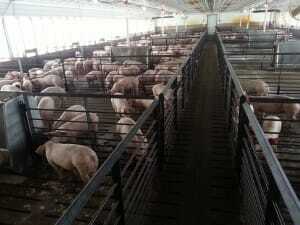
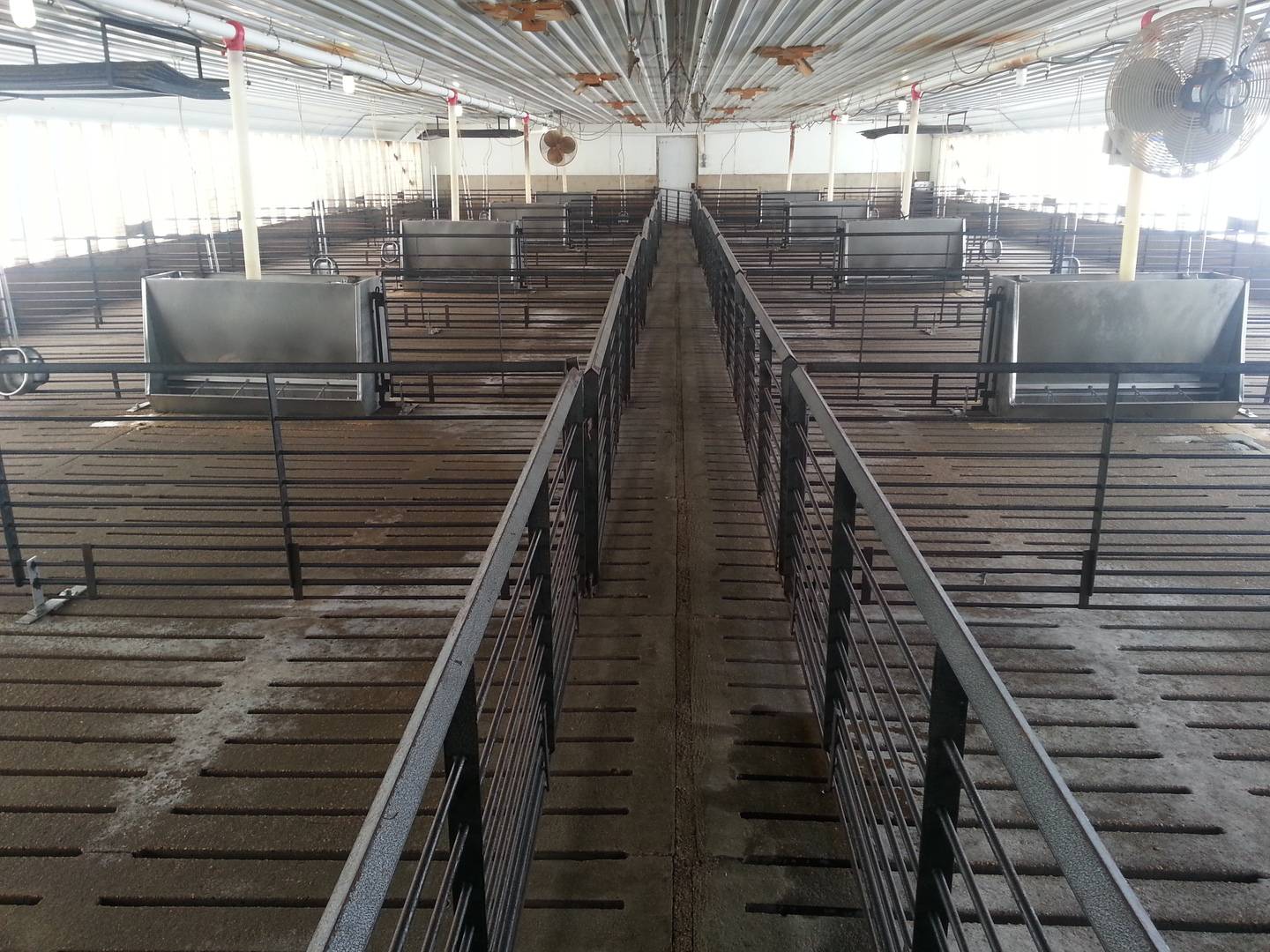
    Before a new group of hogs arrives, we power wash our buildings to disinfect them.  Cleanliness is a primary way to prevent disease and to help reduce the amount of medication needed to treat sick animals.

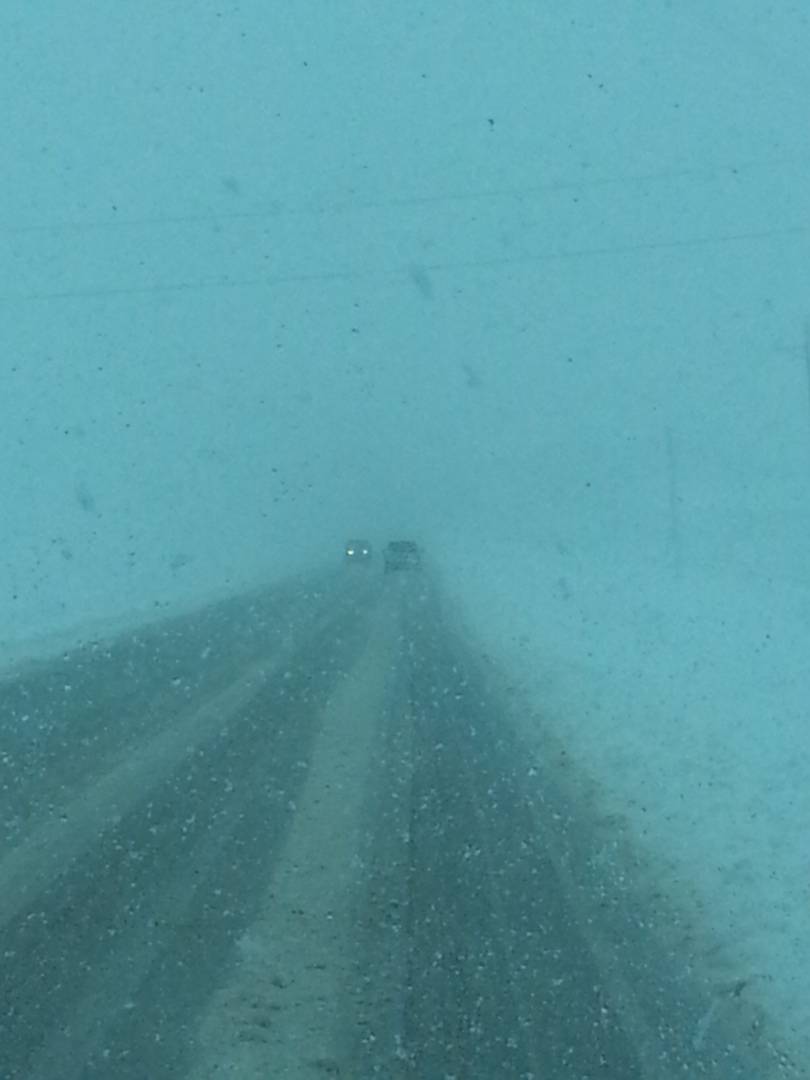
    May 3, 2013 – We’re on our way to the hog houses to receive new pigs.

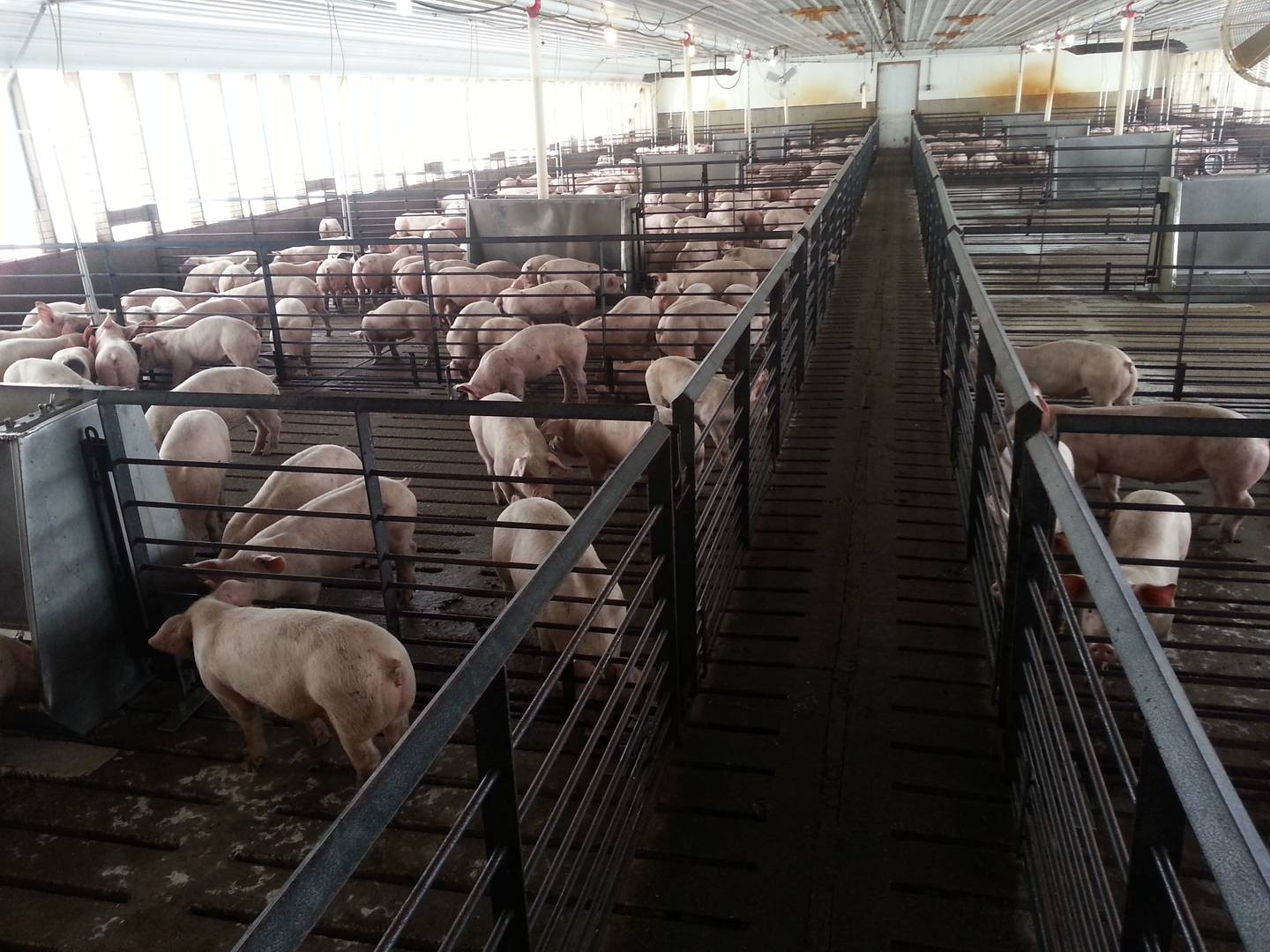
    With an indoor temperature of 75 degrees, our pigs are warm and toasty on May 3.  They aren’t even aware of the record-breaking snowfall outside the building.

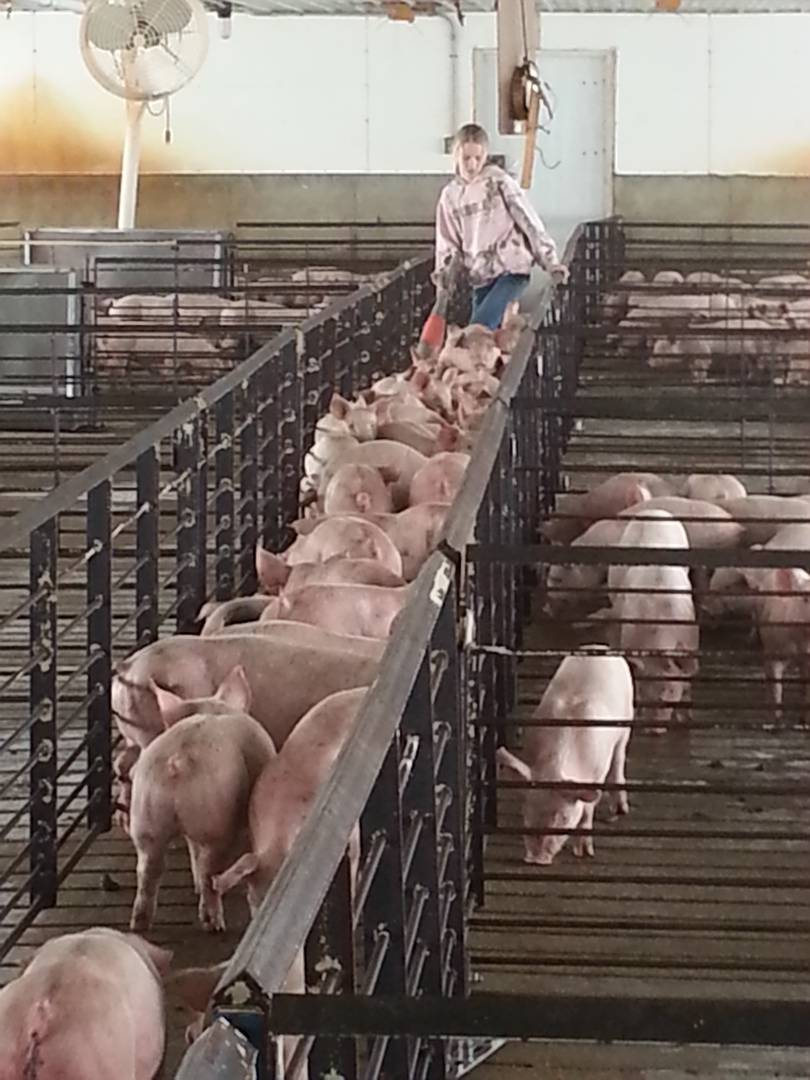
    “Who let the hogs out?” My granddaughter Carlie is sporting her pink camo as she counts the number of pigs into each pen.

    Inside one of the “hospital pens,” Carlie and Darin are enticing sick pigs to eat their feed.

    Darin is climbing over the gates, getting out of the way so as not to scare the next group of pigs coming into the building.

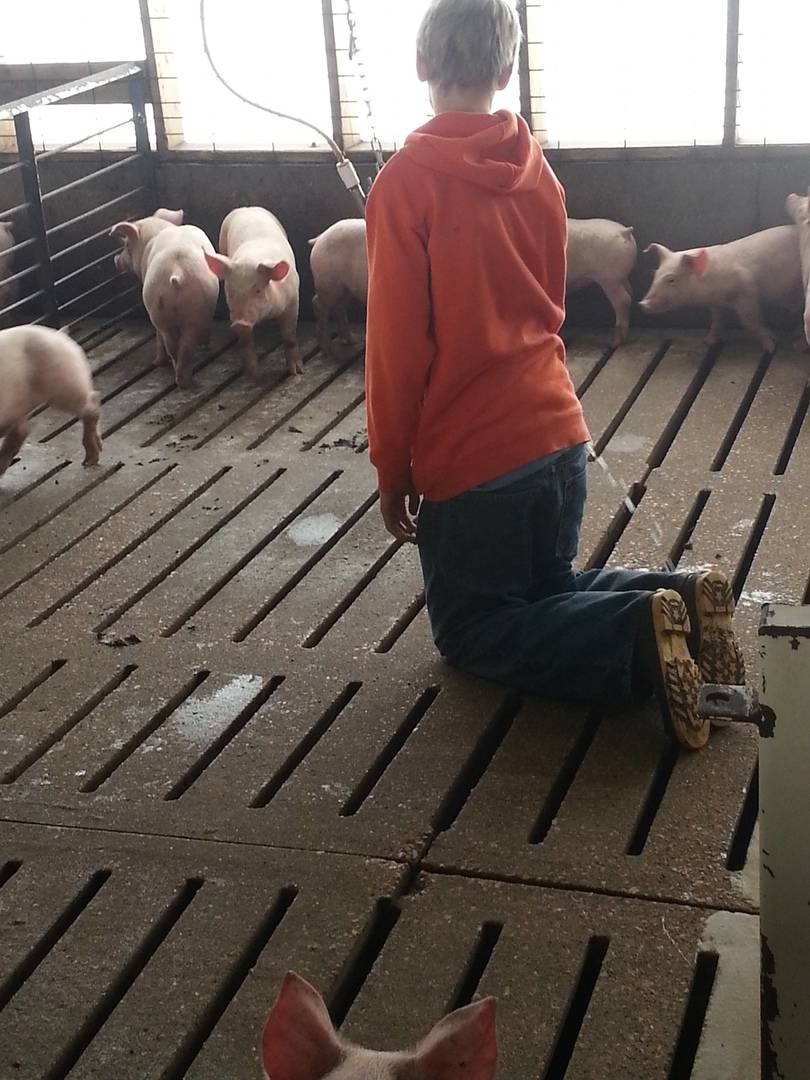
    Darin shows the pigs where to find water.

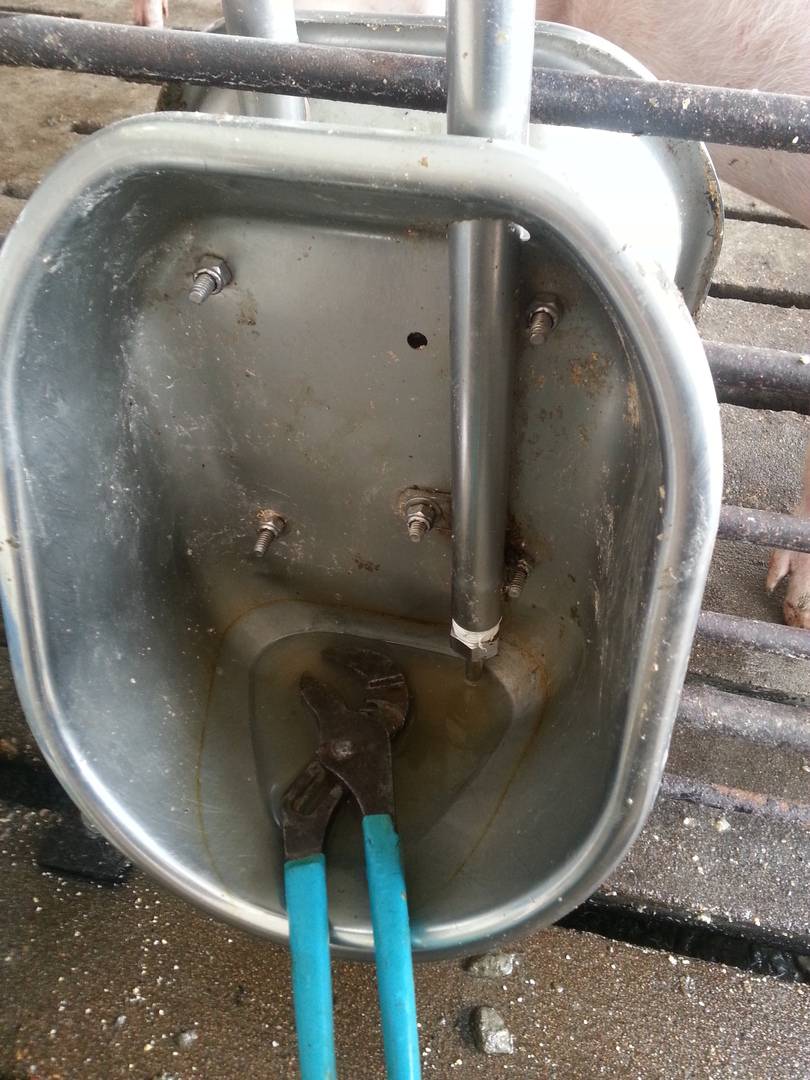
    It’s critical to have the right amount of fresh water available for pigs.  I’m putting on a new nipple to ensure these little pigs will receive the right amount of water.

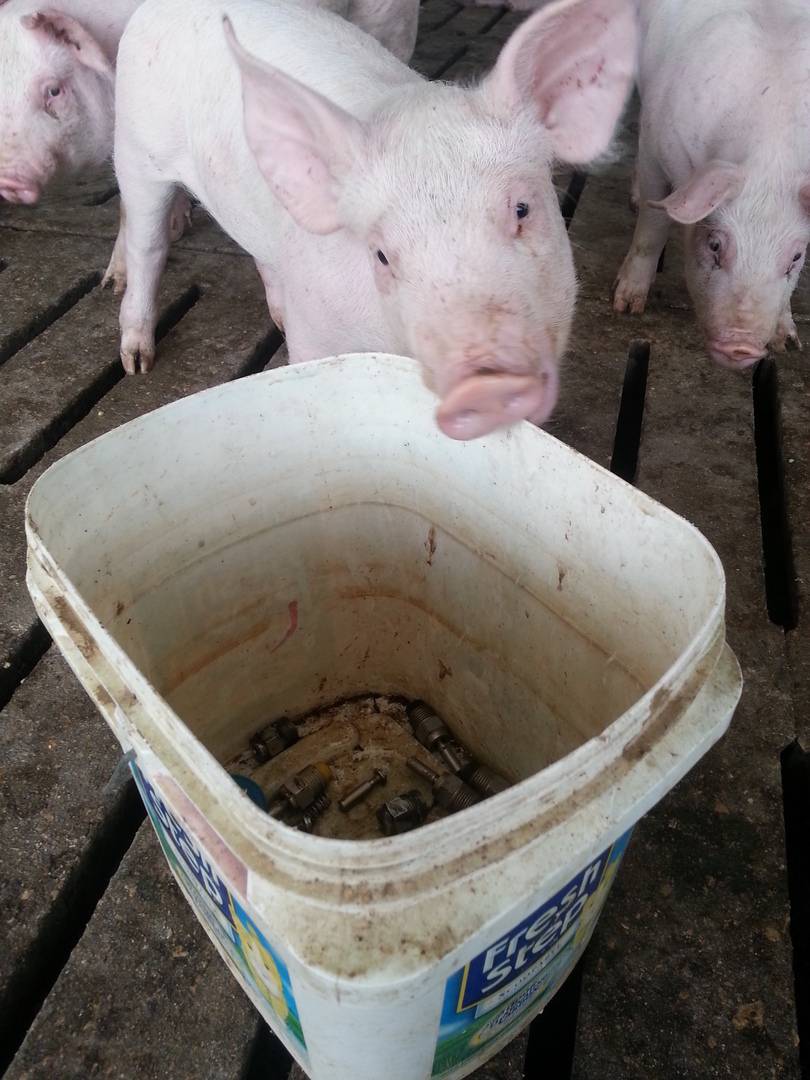
    While I was adding the new nipple, the pigs were trying to “help” by carrying around spare parts.

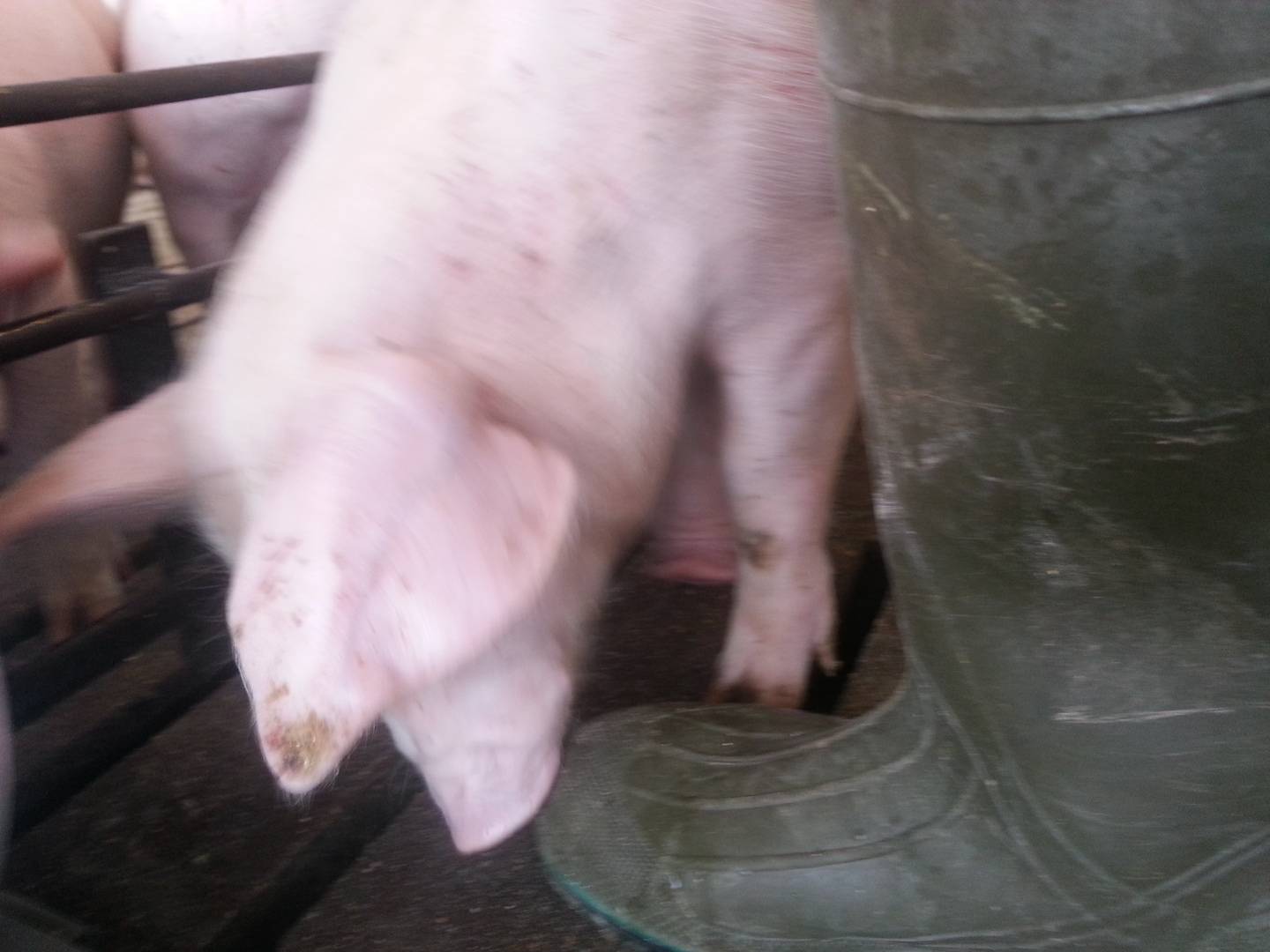
    Other curious pigs were trying to chomp on my toes as I worked on the nipple.

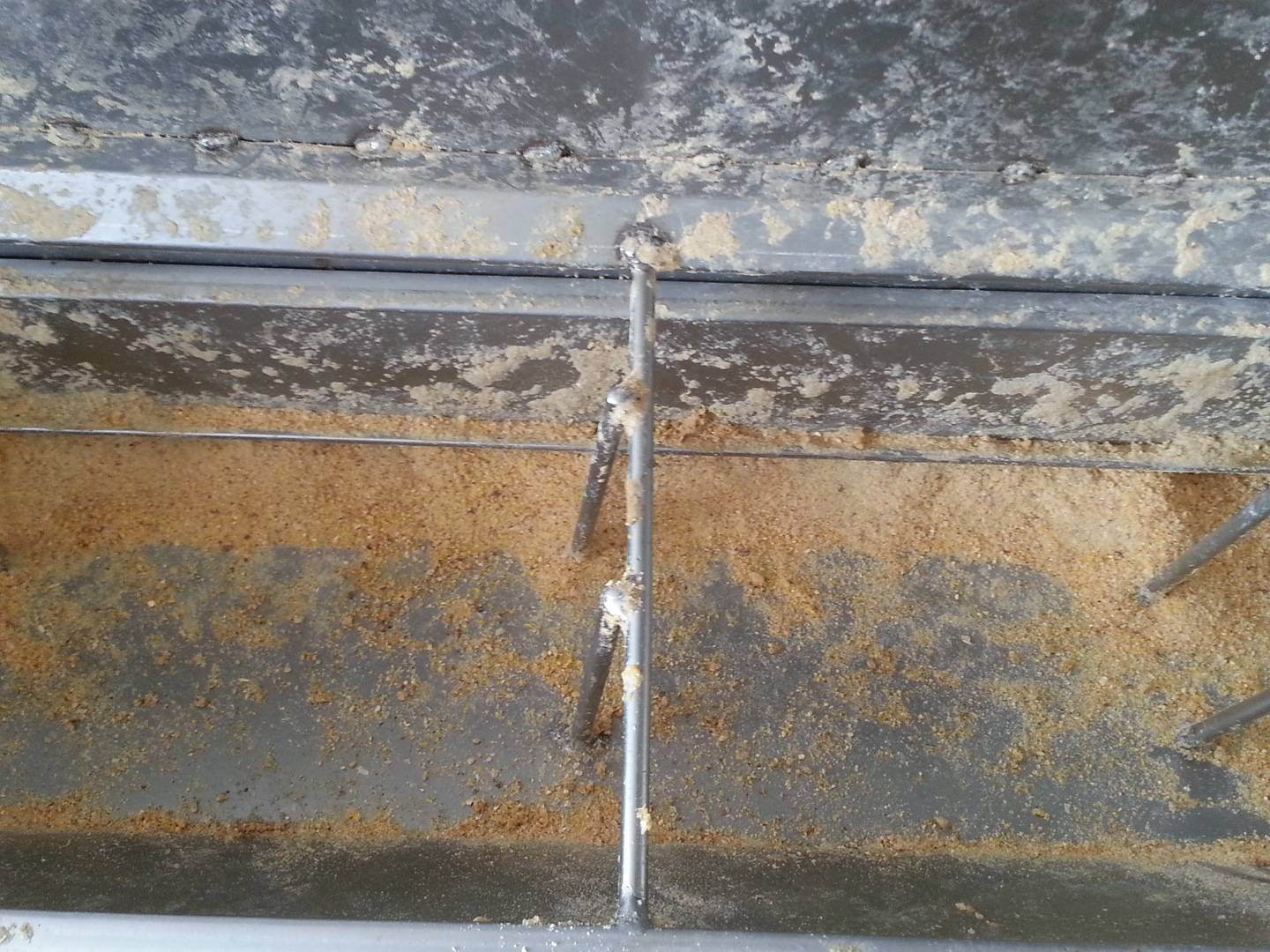
    This feeder must be adjusted so that about 30% of the bottom is covered with feed.  That’s the “optimal setting” that provides the pigs with plenty to eat without them wasting any.  Otherwise, excess feed falls into the waste pit – and that’s a waste of good feed!

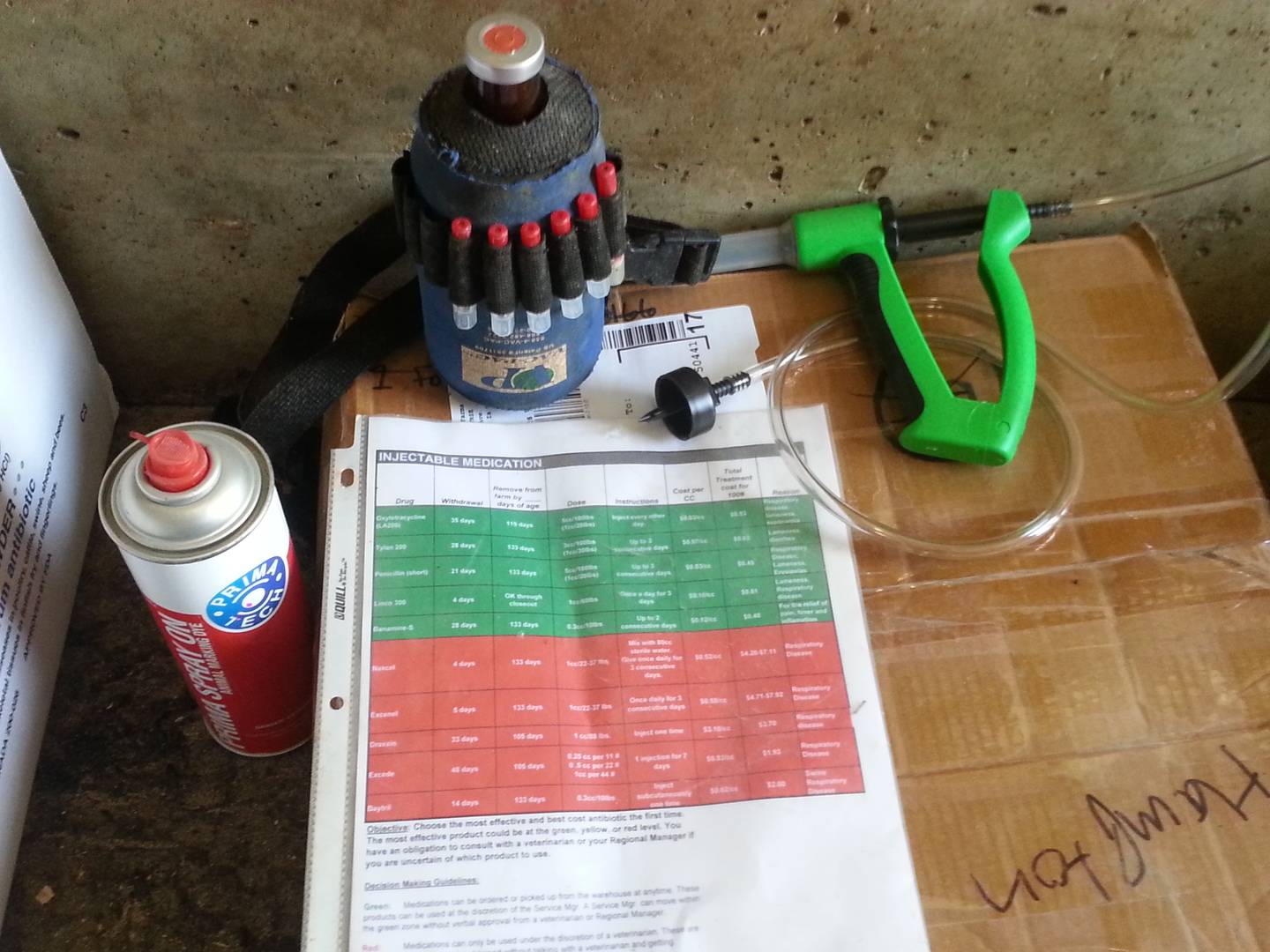
    Veterinarians have developed guidelines for properly using and administering medication when needed.  We use a can of paint to identify which pigs have already received medicine.

    The blue bottle in the center, which hangs upside down next to my waist, is the medicine. The green handle is what I use to administer the shots; the next dose is already in the syringe.  The long tube is the exact amount of medication and will automatically refill after each shot.  Since I gave about 2,000 shots on Saturday, this tool is a huge time saver!

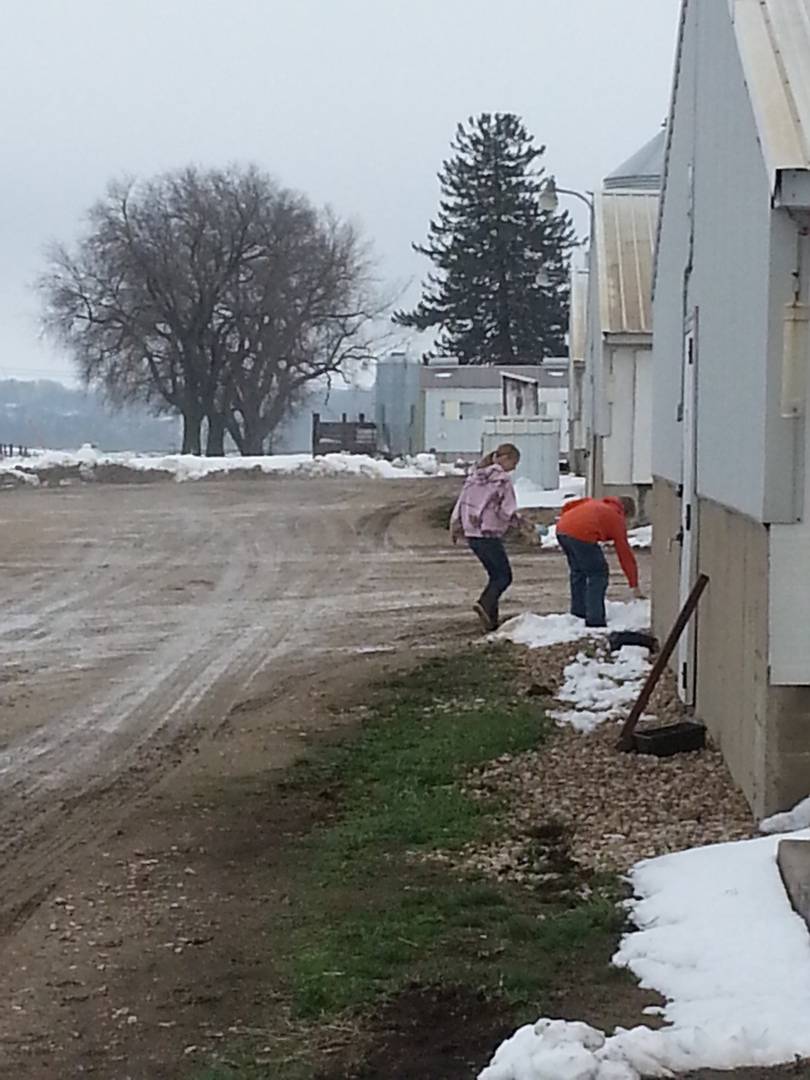
    After the pigs are unloaded from the livestock trailer into our building, Carlie and Darin decided celebrate by going outside and having a snowball fight.

    Related Posts:

    • Part I: Cleanliness is Key to Good Animal Health My Pigs Stay Safe and Warm Despite Harsh Winter Conditions
    • Part II: Farmers Recycled Before Green Efforts Began
    • Part III: Foil Curtains Help Pigs Stay Warm
    • My Pigs Stay Safe and Warm Despite Harsh Winter Conditions

    Larry Sailer, Musings of a Pig Farmer

    May 14, 2013
    Agriculture, General, Industry News
  • Latham Hi‑Tech Seeds

    Consider Traits & Chemistries in Your Crop Rotation

    Soybeans2

    A soybean-corn crop rotation allows farmers to spread out spring and summer fieldwork and provides a larger window for harvest.  Plus, a soybean-corn rotation can lead to energy savings during production and when handling, drying and conditioning of stored grain, according to recent issue of “Advance” published by the ISA On-Farm Network.

    “Studies show us that corn yields are higher following soybeans. The advantage of a soybean-corn rotation still centers on yield. The positive impact is probably due to several factors,” says Ed Anderson, Iowa Soybean Association senior director of supply and production systems.  “Soybeans break disease, insect and weed cycles and provide a nitrogen credit for corn the following year.

    It’s true that crop rotation can help achieve higher yields, as well as reduce risk ranging from volunteer corn to weed resistance.  Other benefits include better soil health, less disease pressure and higher profits are a few of the benefits that come from rotating corn and soybeans if farmers are careful about rotating traits and chemistries.  Plus, crop rotation can be one of the best management practices to control CRW.

    However, it’s no longer enough for farmers to merely rotate crops. Farmers also must rotate between herbicide chemistries, as well as hybrid/variety traits.  Rotating between various herbicide traits is important from the standpoint of reducing weed resistance.  It also has been proven that it helps in overall herbicide performance.

    Rotating traits, especially insect resistance traits in corn, is especially important for the same reasons – to decrease the risk of insects becoming resistant to those traits and also to improve overall trait performance.  As newer traits become commercially available in soybeans, the same will be true.  We  will need to be good stewards of these traits and rotate them whenever possible!

    One advantage of working with family-owned and independent Latham Hi‑Tech Seeds is that we can help you select the trait packages needed to change up your modes of action. Latham offers the industry’s broadest, deepest seed lineup – which makes it more convenient for farmers to get all their seed needs met.

    Team Latham

    May 2, 2013
    Corn, Crop, General, Herbicide Technology, Industry News, Seed Technology, Soybeans
  • Latham Hi‑Tech Seeds

    Lawsuit Could End Transparency at the Farm Gate

    Harvest Tour 2012

    Is farm transparency going to end just as we are starting to roll?  Yesterday Radio Iowa reported the Iowa Senate voted 26 to 21 against providing new legal liability protection for landowners.  This bill was introduced after the Iowa Supreme Court ruled that farm owners who host tours could be held liable for accidents.

    Iowa farmers had been protected for more than 40 years under the recreational use and immunity statute.  It stated: “farmers are immune from liability of injuries that occur on their property aside from a farmer willfully injuring an individual.”  That all changed on February 15 when the Iowa Supreme Court ruled that the owners of a Northeast Iowa dairy farm could be sued by a chaperone, who was injured when she fell through a hole in a hayloft during a kindergarten class field trip.

    “It is important that farmers reach out to the general public and show them what we are doing on our farms and why.  Iowa agriculture has a tremendous story to tell, and it is important we make it easier for farmers to share what they are doing, not more difficult,” said Iowa Agriculture Secretary Bill Northey in a FarmWorld article posted Feb. 27.  “It will be extremely unfortunate if the Iowa Supreme Court decision discourages farmers from opening up their farms for tours and other educational efforts.”

    Secretary Northey said it well.  The Supreme Court ruling, without corresponding state legislation to provide immunity, could cause many farmers to shut their doors.  The Daily Iowan, on April 11, quoted me as follows: “It’s one of my passions to show people who don’t know a lot about a farm what a farm is.”

    Harvest Tour 2012

    I’ve been very involved with giving people, who are removed from farming, a porthole to view how modern farms operate.  I believe in letting them watch as we go about our business of making food, fuel and fiber!  I was – and still am – under the impression that we must do everything possible to protect visitors to our farms.  Sometimes, however, things happen that are beyond a farmer’s control.

    When I think back to the visit to my farm last fall by a group from Japanese Public TV, I believe there also has to be some personal responsibility.  That camera man stood on top of anything he could climb to get the right angle!  He stood on top of tractors, climbed into wagons of corn, and crawled all over my combine.  I could tell him he wasn’t being safe, but he would choose to get the angle.

    That same week, Fox News Network, was in my field as we harvested soybeans.  The man with the camera hung on the outside of my combine as my son Corey drove across the field.  Personally, I think these camera guys are nuts!  If something had happened to one of these people, I would’ve been responsible!

    I’ve been involved with the Franklin County Bloggers Harvest Tour.  For the past two years, we’ve invited urban bloggers to spend a weekend in rural Franklin County where they tour historic sites and see firsthand how we harvest our crops.  These tours have been highly successful because our guests are very active with their followers on Twitter and Facebook.  They also post blogs to their vast readerships, spreading what they have witnessed far and wide.  They share farming insights with literally thousands of folks across the country, who enjoy learning more about Iowa agriculture.

    Consumers, our customers, want to see how their food is raised.  I want them to see how their food is raised, too!  There are too many misunderstandings being spread through the mainstream media and through social media networks.  That’s why there is a need for our harvest blogger tour, on-farm visits and on-farm interviews.  Hopefully, these will be able to continue. I encourage you to contact your elected officials if “transparency at the farm gate” is important to you!

    Larry Sailer, Musings of a Pig Farmer

    April 30, 2013
    Agriculture, General, Industry News
  • Latham Hi‑Tech Seeds

    Count Your Blessings, One by One

    Devin Iowa State1

    I am a rich man.  No, I’m not talking about being a rich farmer.  That I’m not! But, I am rich in the ways that matter most.

    The tragic events that unfolded this past week – from Boston to West Texas – caused me to pause for a moment and think about how good life really is here in the Heartland.  For example, yesterday was Earth Day.  Such a day reminds me of what a wonderful world God has created!  I also caused me to reflect upon the change Janice and I are making as we transfer our memberships to the church she attended as child.

    Thinking about Janice’s childhood then caused me to reflect upon my own childhood.  I was born to farm!  From the time I was a toddler, I literally followed in the steps of my great grandfather, my grandpa and my dad.  Fifty years later, I’m still proud to call myself a farmer – but it hasn’t always been easy.

    In the 70s, I was one of what they called the “Young Tigers.”  I reached my goal of farming 1,000 acres, which at that time, was worth $1,000 per acre.  I spent all my available hours working on the farm.  As a workaholic, I was focused on the wrong goals!

    My way of thinking changed a decade later.  On my 30th birthday, I married Janice and had an instant family.  We joked that “something had to go” to make room for four kids, so I sold my airplane.  During the 1980s Farm Crisis, I sold off some farmland.  Janice ran the farming operation, including doing hog chores, while I took an off-farm job working construction.  We built hog units across the Midwest, so I was gone from home too much of the time.  We did what we was required to provide for our growing family at the time, and we were all thankful when I could return to farming full time.

    Over the last 30 years, I’ve become very wealthy in a non-material way.  Our family has brought us so much joy!  The past two weeks have been particularly enjoyable: our grandchildren Jessica and Zach went to prom; and grandson Devin finally was healed enough to play some great football in Iowa State’s spring game!


    I mentioned in a previous blog post that each of our grandkids has his/her unique talents and interests. Some, like Devin and Jessica, have a passion for sports.  Carlie enjoys writing and dancing.  Darin enjoys hunting, fishing and gardening.  Zach is interested in wood working and mechanics.  Hallie, Lindi and Jessica are very artistic.  Sydney is an avid reader, while Quinten is a computer guru.

    Today I’m showing some of my favorite photos of each.  While it’s not exactly a “Wordless Wednesday” post, it’s about as close as this proud grandpa can get!

    Hopefully, looking through family photos will help you remember to take time to count your blessings.  I can’t think of anything better to do, especially on a gray day!

    Larry Sailer: April 23 – slideshows

    Larry Sailer, Musings of a Pig Farmer

    April 23, 2013
    Agriculture, General, Industry News
  • Latham Hi‑Tech Seeds

    Fear Spreads Faster than Wildfire!

    Science is Madness1

    While sipping my morning cup of coffee, I usually browse my social media news feed.  While doing so last Thursday, I came across a post entitled “Did You Know?” on the blog Jean’s Boots Are Made for Talking.  Imbedded in this post was a video that I’d seen before, and honestly, it blows my mind every time I watch it. This video virtually reminds how we’re not isolated in our own part of the word, and it also explains why I believe we must work diligently to educate others about farming practices and how their food is grown.

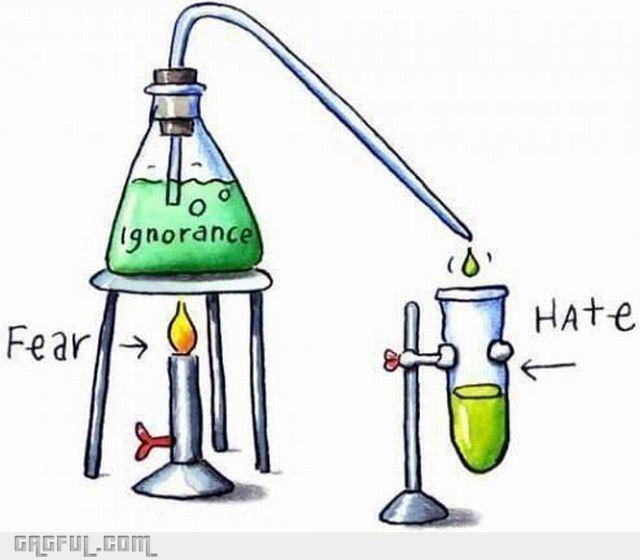
    Why should farmers care about consumers? The long and short of it is that hate stems from fear. People, who lack a clear understanding of GMOs, for example, fear the GMOs and hate everyone who grows GMO crops.  More consumers need to understand why farmers plant GMOs, for example.

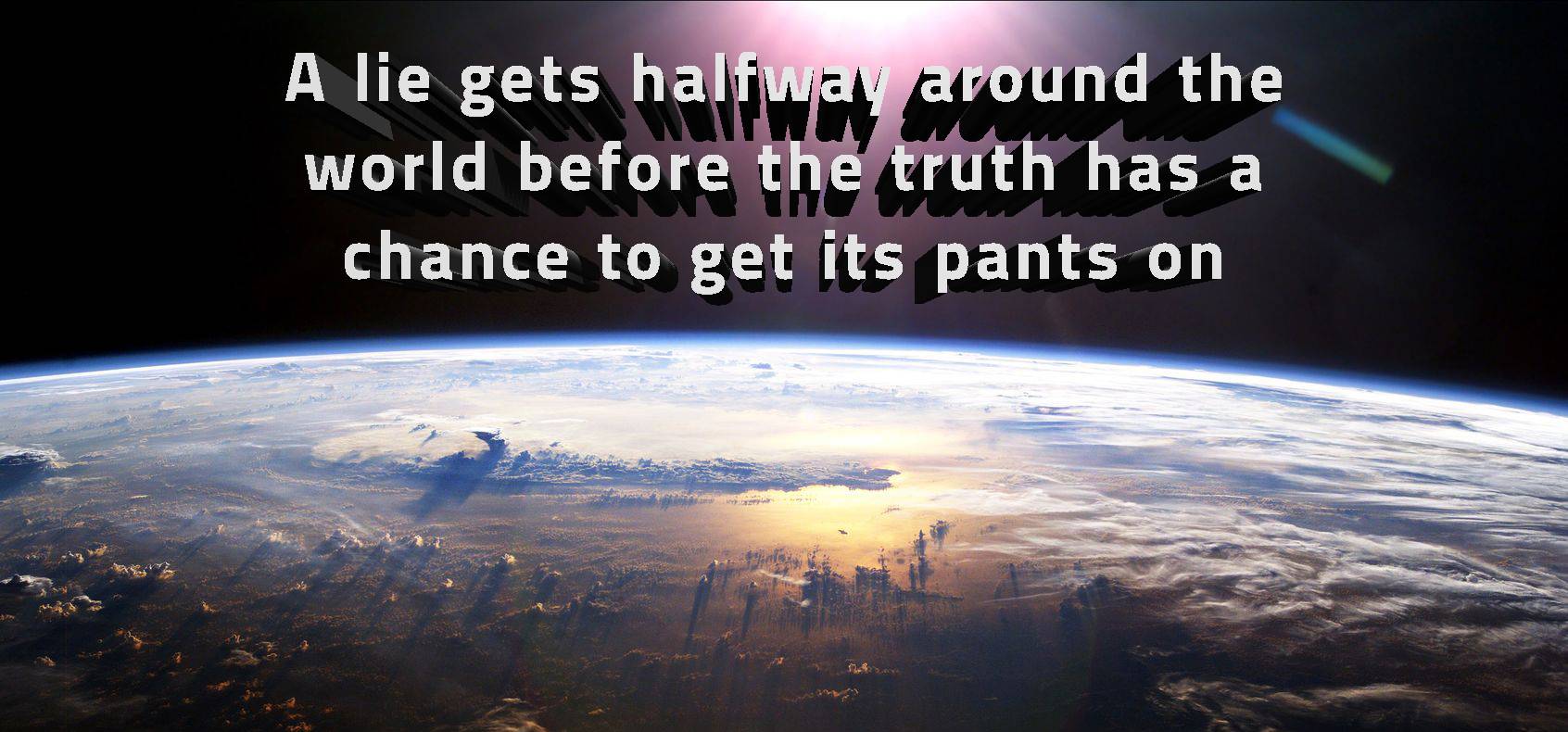
    Another reason farmers should care about consumers’ thoughts and opinions is because – thanks in large part to social media – misinformation spreads faster than wildfire.  Below is an excerpt from a post I saw last week on Facebook:

    DANGER TO YOUR FAMILY!!
    from the Department of Life Education:

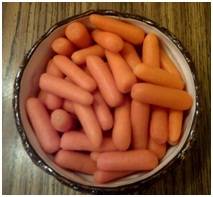
    The small cocktail (baby) carrots you buy in small plastic bags are made using the larger crooked or deformed carrots, which are put through a machine that cuts and shapes them.  What you may not know and should know is the following…

    There is no truth to the myth that the whitish film on baby cut carrots is a chlorine residue from carrot processing.

    Once the carrots are cut and shaped into cocktail carrots they are dipped in a solution of water and chlorine. (This is the same chlorine used in your pool).  Since baby carrots don’t have a skin or natural protective covering, they’re given a higher dose of chlorine.

    You’ll notice that once you keep these carrots in your refrigerator for a few days, a white covering will form. This is the chlorine which resurfaces!  At what cost do we put our health at risk to have esthetically pleasing vegetables?  I used to buy those baby carrots for vegetable dips. I know that I will never buy them again!!!

    I was watching this conversation – trying to decide if when and how to engage – when I saw a fellow agvocate, Carolyn Olson, post. Carolyn shared “Myth & Fact about the white film on baby carrots” and then shared a related link for waterandhealth.org.  Great job, Carolyn!

    It’s difficult to always be in the right place at the right time as Carolyn was, but I hope this explains why there is a group of agvocates speaking out and trying to have that conversation. I hope this also helps explain why we need more farmers to join our effort.  Agvocating: It’s harder to say than do.  Just do it!

    Related Posts:

    • Chlorine in carrots?
    • Carrot and Shtick
    • Bleach on carrots

    Larry Sailer, Musings of a Pig Farmer

    April 16, 2013
    Agriculture, General, Industry News
  • Latham Hi‑Tech Seeds

    Genetically Modified News?

    Earth1

    Guest blog by Dan Gogerty, Communications editor for CAST

    Information comes at light speed and in bulk proportions through websites, news releases, and social media outlets.  This can be good and bad. For example, the topic of genetically modified food – plant and animal – becomes mind numbing with the barrage of articles and opinions.  Maybe we consumers of news need a bit of genetic modification ourselves in order to handle it all.

    Most, not all, seem to agree that GMO plants used in food have not been a research-proven hazard, but some say there are other problems with the concept, and they speculate that problems could surface. Food from biotech animals brings up a similar mix of opinions, but the tone is even more edgy.

    The following links show a wide variety of opinions, but many other sources are available:

    • The FDA provides a questions & answers page about food from genetically engineered plants.
    • This agri-journalism site by Ag Professional gives a top-ten list of positives about biotech crops.
    • This Farm Aid site provides opinions and links about GMO crops, some of them questioning the practice.
    • A blog from the “Chicks on the Right” favors the new law supporting GMO crops, and it provides a link to the Mark Lynas’ speech. The “chicks” also have a DDT problem with Rachael Carson.
    • Maybe this writer could be called “Dude on the Left.” He opposes the new GMO law, and he seems skeptical of the wide use of biotech food products. This letter is a farmer’s pro-GMO response.

    SIDEBAR by Shannon Latham
    From Dan Gogerty’s guest post, it is evident there are two sides to every (news) story.  “Dude on the Left” obviously believes the “Farmer Assurance Provision” was put in place to protect Monsanto.  “Why do GMOs need protection?” he asks.  Here’s why…

    It’s farmers who need the protection!  The so-called “Monsanto Protection Bill” doesn’t protect Monsanto.  The true name is the “Farmers Assurance Provision.”  This provision was added to a bill that was signed into law on March 26 for the express purpose of protecting farmers!  The intention of the provision is to mitigate the effects of repeated and future litigation from anti-biotech activists, who have been using the courts to impede the use of biotech crops.

    My hope is that, by providing several articles with points and counterpoints, today’s blog post will help set the record straight.  For additional background information on GMOs and why they’re planted, read:

    • Necessity-Genetically Engineered Crop
    • The Truth Behind GMOs
    • Why Farmers Plant GMO Crops

    Team Latham

    April 15, 2013
    General, Industry News, Seed Technology
  • Latham Hi‑Tech Seeds

    Unemployment and Apathy Grow Poverty

    Most Midwest farmers have spent the past week preparing for the spring planting season and closely monitoring soil temperatures in anticipation of #plant13.  There are a few things that I still need to get done before I head to the field, but I’ll admit, my energy level is low right now.

    While eating my lunch on Friday, I was trying to figure out why I have less ambition than I used to.  Several thoughts came to mind:

    1. It’s been a long winter.  (Those early spring snowfalls dampened my spirits, even though I appreciate the moisture they brought.)
    2. I’m not a spring chicken any more.  (I’ve been farming for 50 years!)
    3. During the winter months, I’m less physically active even though hog chores keep me pretty busy.

    Then I had the proverbial “light bulb moment…”  I believe government has played a large role in my recent frump.  It seems that apathy and anxiety has become a pandemic affecting our nation.  Why?

    Breaking news on Friday, April 5, was that U.S. unemployment numbers are lower.  This sounds like good news until you realize that unemployment fell for all the wrong reasons – five times as many people quit looking for work than jobs that were created!  The job participation rate of “prime-age” workers, age 25 to 54, fell to match the lowest reading since 1984, according to CNN.

    While taking a lunch break on Friday, I continued to wonder why fewer Americans are feeling the need to search for a job when I came across an article by Tim Elmore, author of Growing Leaders.  He makes a case for how adults are stealing ambition from kids:

    “One of the most valuable commodities we can cultivate in this emerging generation of kids is ambition,” writes Elmore.  “By wanting our children and students to be happy, we may have created the most depressed population of kids in recent history. By leading them in this way, we have all but removed ambition in them…  Think about it. If I grow up in a world where almost everything has been given to me, or made easy—I start feeling entitled to it.”

    Have Americans become so politically correct that we’re taking the will to learn away from our kids?  Every kid is different, yet many sports programs and educational endeavors try to treat everyone equally.  My own grandkids provide a great example. Some, like Devin and Jessica, have a passion for sports.  Carlie enjoys writing and dancing.  Darin enjoys hunting, fishing and gardening.  Zach is interested in wood working and mechanics.  Hallie, Lindi and Jessica are very artistic.  Sydney is an avid reader, while Quinten is a computer guru.

    Each one of my grandchildren have different talents, skill sets and interests, but they’re driven to pursue their passions. That’s what we need!  We need to do away with “cookie cutter mentality,” which reminds me of the one-size-fits-all approach our government has taken to the school lunch program.

    Speaking of government… I received a notification on Friday of an update from the Caffeinated Thoughts blog with news that Iowa Senator Brad Zaun filed a bill (Senate File 336) to repeal the Iowa Department of Education and the Iowa State Board of Education.  Senator Zaun believes an increase in educational funding will not lead to an increase student performance.  He says he wants “real education change” and is quoted as saying, “This bill will increase student performance and give parents 100% choice.”

    Regardless of whether you’re Republican, Democrat or Independent, the fact remains that America is facing big issues that need to be addressed.  Unless we change current policies and attitudes, unemployment and poverty is only going to grow.  How can a nation maintain its position as a World Leader then?

    Other related posts:

    • 11 Facts About Poverty in America
    • Hunger Has a Cure
    • Congress ignores America’s poverty crisis

    Larry Sailer, Musings of a Pig Farmer

    April 9, 2013
    Agriculture, General, Industry News
  • Latham Hi‑Tech Seeds

    “Buy Local” Initiative Brings “Dough” to Rural Communities

    BuyLocal

    Knowing where food comes from and how it is grown is becoming increasingly important for many U.S. consumers. Connecting consumers with local producers is one goal of the Healthy Harvest of North Iowa’s “Buy Fresh. Buy Local.” initiative.

    Local food initiatives help fuel stronger communities. Each dollar spent on locally grown food keeps dollars circulating through the community, which can have a big impact on rural communities. The average Iowa family spends $137.90 weekly on food. Residents in the Iowa counties of Franklin and Wright spend $69 million annually on food.

    “If we could capture 10% of the food dollars in Franklin and Wright counties, that means $6.9 million would be reinvested in our local communities! Even a 1% market share would be significant,” said Jan Libbey, coordinator for Healthy Harvest of North Iowa.

    Team Latham

    April 8, 2013
    Agriculture, General, Industry News
Previous Page
1 … 55 56 57 58 59 … 95
Next Page

Latham Hi‑Tech Seeds

131 180th Street | Alexander, IA 50420

(641) 692-3258

SIGNUP FOR OUR NEWSLETTER
  • Contact
  • Legal
  • Dealer Center
  • Seedware Login
  • Latham Gear

© 2025 Latham Hi‑Tech Seeds. All rights reserved. | Iowa Web Design by Webspec | Privacy Policy

Latham® Hi-Tech Seeds is a trademark of M.S. Technologies, L.L.C., 103 Avenue D, West Point, IA 52656.