Skip to content
Latham Hi-Tech Seeds

(641) 692-3258

  • Home
  • Performance
  • Products
    • Corn
    • Soybeans
    • Alfalfa
    • Corn Silage
    • Seed Guide
  • Find a Rep
  • Media
    • Blog
    • News
    • Videos
    • Podcasts
    • TECHTalk
  • About Us
    • Company History
    • Our Mission
    • Careers
    • Become a Rep
    • Sowing Seeds of Hope
  • Contact Us
  • Latham Hi‑Tech Seeds

    Sharpen Those Pencils & Get to Work on the Farm Bill!

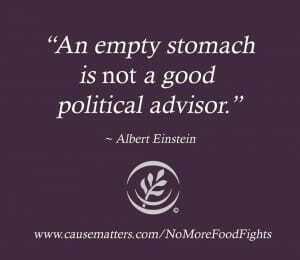
    Political advisor1

    Soon summer vacation will end and all classes will resume at all of our local schools.  The same goes for the United States Congress.  Their August recess ends soon, and there’s a real need for them to sharpen their pencils and get to work!

    Our Federal elected officials have been home (hopefully) talking to us, the people whom they represent.  This past month provided constituents with an opportunity to visit U.S. senators and congressmen about topics that matter most to us.  Now that our elected officials are returning to Washington, D.C., it’s time to stop talking to them.  Instead, send them an email or drop them a letter.  I was told by a state representative that one time he voted on the opinion of one email – just one!  Letters and emails are so important, and that’s why I’m once again writing about the Food Security Act.

    political advisorHouse Speaker John Boehner expects to bring up the Farm Bill “immediately” when the House returns Sept. 9.  He expects to appoint conferees the next day and finish the bill before Sept. 30 when the current farm bill expires.  However, House Agriculture Committee ranking member Collin Peterson is not optimistic.  Peterson says it’s more likely the current Farm Bill will be extended – again.

    We don’t need an extension.  We need a bill!  And I mean “need.”

    “I don’t care which side of the aisle you align yourself with – no one can be proud of what is going on, or more accurately, not going in our nation’s capital,” writes farmer and rancher Glenn Brunkow in his blog “Dust on the Dashboard.”  He makes a compelling case for why the Farm Bill is so desperately needed:

    1. Food security must be established to insure that a society will grow and flourish. Nowhere in history will you find an enduring world power without a strong agricultural foundation.
    2. World powers have always been food secure. Wars are started by hungry people!
    3. A strong food and fiber production system was undeniably a matter of national security.  Think how the price of crude oil fluctuates based on the whims of other nations that don’t have our best interests in mind; now think about how that would be if that was your food we were talking about. We can’t become dependent on foreign nations for our food!

    The Food Security Act goes much further than the production of food and fiber.  And, it’s extremely complicated.  There are parts of the Farm Bill that deal with everything from how we conserve our soils, to export our farm products.  It even includes food assistance programs.  In fact, the Supplemental Nutrition Assistance Program (SNAP) funding now accounts for 80% of the Farm Bill.

    The SNAP program has been a part of the bill for years, but it’s become an increasingly large budget item.  SNAP cost almost $80 billion last year – twice the amount it cost just five years ago!  Our federal budget must be considered in any legislation that is passed.  I know this is not always done, which has resulted in the deficit with which we now labor.

    On a side note, the U.S. Deficit is a huge national security risk!  We must trim funding.  We must address the waste in the SNAP program.  I know that U.S. Secretary of Agriculture Tom Vilsack says he’s working on it, but honestly, a lot of money is being spent on a lifestyle and not on food.  (I know it’s not politically correct for me to say this.  Everyone “needs” a cell phone, cable TV and the Internet.)

    The reality is that North Americans aren’t naked and starving, so food security is secondary.  On the Doc ‘n Lefty show last week, Doc talked about how wealthy Americans pocketed millions of funds for farms they had never even been on.  We’re willing to fix that, but remember, this type of fix almost always hurts the small and beginning farmers most.

    The Food Security Act is needed whether you live in a city, on a farm, or are in need.  This is one bill that should be non-partisan.  Contact your U.S. congressman and senators.  Let them know what you think.  It’s time to mind your own business!
    Larry Sailer, Musings of a Pig Farmer

    August 27, 2013
    Agriculture, General, Industry News
  • Latham Hi‑Tech Seeds

    Riders Embraced Their “Spirit of Adventure” on Freedom Ride V

    20130824_154333Nearly 100 people, driving or riding motorcycles and muscle cars, channeled famous Iowa explorers as they traveled through Lewis & Clark Country on Saturday, Aug. 24, for the 5th Annual Latham Freedom of Independence Ride.  The 134-mile route took drivers down the Lewis & Clark Trail.

    One highlight of this adventure was a ride across Blue Lake on an historic keelboat similar to the one Lewis & Clark, along with 26 men, traveled up the Mississippi River from St. Louis. Army Captain Meriwether Lewis and his former commanding officer William Clark were commissioned by President Thomas Jefferson in 1804 to explore the vast western territory purchased from France as part of the Louisiana Purchase.  Lewis & Clark embodied the nationalistic vision and patriotism that formed the spirit and richness of American history.

    IMG_3848

    Another fun stop along the way was Sioux Jerseys LLP, a state-of-the-art dairy where cows are milked 24/7 using two, double Mag 90i parallel parlors.  Because Sioux Jerseys contracts with Well’s Blue Bunny, following the tour, riders were treated to Blue Bunny® ice cream.  One bite into a sweet treat makes it clear why Wells – the largest, family-owned and operated ice cream manufacturer in the United State – is celebrating its 100th year of business in 2013.

    BeanPlotOne of the crop stops included a Latham® Hi‑Tech Soybean showcase, where Latham Product Manager Mark Grundmeier gave an overview of three exciting technologies in the pipeline.  Latham Forage Products Manager Corey Catt also talked about the importance of micronutrients to increase corn yield, forage production and alfalfa tonnage.

    loess hillsOf course, no field day – even one on two wheels – would be complete without a corn technologies showcase.  Riders had a chance to learn more about Agrisure Artesian corn products, which provide season-long drought protection to increase yield in moisture-stressed fields.  Two Latham Hi‑Tech Hybrids for 2014 planting, LH 4974 3011A and LH 6412 GTA, will feature this fascinating new trait.
    Agrisure Duracade™ is a brand new mode of action for corn rootworm control and will be combined with Agrisure RW to give two modes of action. Agrisure E-Z Refuge™ offer performance, ease-of-handling and reduced.  We’ll begin with LH 5495 3122 and plan to add other trait packages like Duracade as they gain regulatory approval.

    Watch for exciting new announcements soon from Latham Hi‑Tech Seeds!  Be part of the journey every day at www.thefieldposition.com .  We also post agronomic tips and news of interest daily on our company’s Facebook page at www.facebook.com/LathamSeeds.  You can also follow @LathamSeeds on Twitter.

    For a recap of Latham’s first four Freedom of Independence Rides, click on the links below:

    • Good Times Roll at Inaugural Freedom Ride
    • Freedom Riders Join Drivers in the Seed Industry
    • Picture Perfect Ride Conditions for 3rd Annual Freedom Ride
    • Going Hog Wild for Latham’s 65th Anniversary

    Team Latham

    August 26, 2013
    Agriculture, General, Industry News
  • Latham Hi‑Tech Seeds

    I’m Minding My Own Business, Thank You Very Much!

    In the past, I was a pig farmer who preferred to stay on my farm and mind my own business.  It was easy to stick my head in the proverbial sand in the 1970s when I was a beginning farmer: land was cheap; commodity prices were good; and I didn’t have a family.

    Then the 1980s hit… with a thud!  Prices of land and farm rent skyrocketed.  Meanwhile, the prices for which I could sell my farm products dropped like a rock.  Interest rates hit well over 20%, and I acquired an instant family of four kids.  It was then I realized that I didn’t have a choice but to get involved with government agencies.

    Someone decides how the government is run.  While we often like to blame elected officials for making rules or laws they don’t have to follow, someone is influencing HOW they make their decisions.  Now if that isn’t you, just who do you think it will be?  Many groups are pushing their agendas and lobbying elected officials to vote in their favor.  If you agree with that group’s agenda, then all is well.  But what happens when the laws and regulations passed affect my farming operation and your food supply?

    Laws and regulations always drive up the cost of any business.  Some of that cost is needed, but often times it’s excessive and wasteful.  Let’s look at soil conservation, for example.  I have written several blogs on this topic already:

    • Why use Hammer if the Carrot Works?
    • Threats of New Soil Conservation Rules
    • Conservation and Compliance

    In addition, I’ve had a few of my Letters to the Editor published about soil conservation.  I’ve even received some hate mail in return… thank you very much!!  While I won’t repeat what my hate mail actually said, let’s just say that some folks don’t believe that farmers like me should help decide how soil conservation work.  In so many words, they told me to “mind my own business.”  I find that ironic since that’s exactly what I’m trying to do by getting involved in the rules-making and lawmaking processes!

    When things are as valuable as one’s land – and livelihood – our voices deserve to be heard.  I’m a small farmer, but even my farmland is worth millions.  The average farm size in Iowa is approximately 333 acres, and the statewide farmland value posted in March 2013 was $11,515 per acre.  That means the average Iowa farm is valued at nearly $4 million ($3,834,495).  It’s not uncommon for a sole proprietor to farm 1,000 acres, which equates to a land value of $11.5 million.  That’s big money!

    Because there is so much at stake, farmers are on the front line of the soil conservation issue.  We have no choice.  How silly it would be to throw away our most expensive tool and asset!  Soil is our main tool and resource.  That’s why I believe it’s so important for farmers to get involved with soil conservation and nutrient management.

    The Iowa Nutrient Reduction Strategy is in place and looks like it will work if given a chance.  Dean Lemke, a Natural Resources Engineer for the Iowa Department of Agriculture and Land Stewardship (IDALS), said criticism of the Nutrient Strategy’s voluntary implementation has been premature.

    Iowa’s new nutrient reduction plan has been endorsed by the new head of the EPA, Gina McCarthy.  The Iowa Farm Bureau, the Iowa Department of Agriculture and Land Stewardship (IDALS), and the Iowa State Extension Service are all encouraging farmers to improve the management of their land.

    Yet, I recently read an article in the opinion section of The Des Moines Register about how current laws must be enforced and farmers should be penalized.  Take a look and talk to farmers about what they are doing before you write that letter to the editor!  Ask questions.  Listen and learn.  We must be informed on both sides of this issue!

    Larry Sailer, Musings of a Pig Farmer

    August 20, 2013
    Agriculture, General, Industry News
  • Latham Hi‑Tech Seeds

    Freedom Ride V: Register by Aug. 15 for Do-Rag or T-Shirt

    Byway21

    Byway2Bring out your inner explorer as you travel western Iowa for the 5th Annual Latham Freedom of Independence Ride on Saturday, Aug. 24.

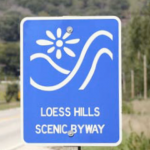
    This year we’ll be traveling the Lewis & Clark Byway throughout the Loess Hills, one of the most beautiful drives this state has to offer.  The 120-mile route will take us into two farm fields, through a dairy and across a lake in a historic keel boat.

    Loess Hills: View from Murray Hill between Pisgah & Little Sioux
    Loess Hills: View from Murray Hill between Pisgah & Little Sioux

    Our corn stop will showcase new Latham® Hi‑Tech Hybrids in our 2014 corn product lineup including Genuity® DroughtGard™, Agrisure E-Z Refuge™ and Agrisure Duracade™.  Our soybean stop will feature two new technologies that are in the pipeline: Dicamba-tolerant soybeans (Roundup Ready® Xtend) and those with 2,4-D tolerance (Enlist E3).

    Get ready for the seed industry’s fastest field day!  Motorcycles of any make and vehicles of any model – as long as they can travel 55 mph – are welcome.  However, pre-registration is required as space is limited.  Click here to register now!

    Check out the fun we’ve had in years past:

    • Freedom Ride IV – Latham Hi‑Tech Seeds’ 65th anniversary celebration
    • Freedom Ride III – the Great River Ride
    • Freedom Ride II – Central Iowa (recap with video)
    • Freedom Ride I – Okoboji, Iowa’s Great Lakes

    Team Latham

    August 12, 2013
    Agriculture, General, Industry News
  • Latham Hi‑Tech Seeds

    Register for 5th Annual Freedom of Independence Ride

    You’re invited to join us for the fastest field day in the industry!  Rev your engines and join the ride as Freedom Ride V embarks on a beautiful journey through the Loess Hills of western Iowa on Saturday, August 24, 2013.

    Click Here to register.  Those who sign up before August 15 will receive a complimentary do-rag or commemorative t-shirt.  Hope to see you on the open road!

    SF_LathamPage1

    Team Latham

    August 8, 2013
    Agriculture, General, Industry News
  • Latham Hi‑Tech Seeds

    Up-in-the-Air Farm Bill has this Farmer Up in Arms

    Grain gridlock and globalization were hot topics of conversation when nearly 300 Iowa farmers and agribusiness industry leaders gathered July 22-23 for the 2013 Iowa Farm Bureau Economic Summit.

    Attendees, like me, were reminded how important it is to prepare for the storm – whether that means increased global competition or rising land prices.  Panelists agreed the agricultural sector can expect changes in the months to come and only good planning will protect their sustainability.

    “The consistent message was, ‘Make long-term plans and make sure you’re grounded in reality’,” said IFBF Director of Research and Commodity Services David Miller.  Risk management was certainly the most important take away.  With weather extremes and government policies, it will be critical for farmers keep their finances balanced and not get leveraged.

    The one topic that stood out from all the rest for me was U.S. Secretary of Agriculture Tom Vilsack’s talk about Farm Bill and his rationale for keeping it a “food and farm bill.”  This bill is really the Farm Bill only in title as 80% of the bill pertains to the food stamp program.  Now called the Supplemental Nutrition Assistance Program, SNAP cost almost $80 billion last year – twice the amount it cost just five years ago.

    Sec. Vilsack really, really emphasized the need to keep food stamps and farming in the same bill because, without SNAP, he says farmers have no clout.  (Does this remind anyone else of the comment he made about rural American becoming less and less relevant?)  He then went on to tell us how important the Farm Bill is.  Not only do Americans need food, but according to the Secretary, SNAP is a great program that creates jobs – and a market – for U.S. farmers.  Sec. Vilsack believes that the billions going into SNAP helps famers sell more food!

    That reminds me… Last month the Senate Budget Committee reported that between food stamps, housing support, child care, Medicaid and other benefits, the average U.S. Household below the poverty line received $168/day in government support in Fiscal Year 2012.  However, the median U.S. household income averages $137.13/day.  Interesting facts, right?  Yet Secretary Vilsack claims there is very little abuse of the U.S. food stamp program.

    Vilsack went on and on about how the Farm Bill benefits everyone, urban and rural.  I understand that SNAP is food and food is farming, but I can’t help but question why two programs with such merit couldn’t stand on independently.

    Sec. Vilsack claims the Ag department would be split up between other agencies if we don’t keep the SNAP in the Farm Bill.  From his convincing arguments, one can see how persuasive he must have been as a practicing lawyer.  Vilsack strongly “sold” his ideas, and I’m afraid most people in the audience bought into everything he said.  No one challenged dared to challenge assumptions.  On why Congress needs to pass a unified farm bill and not separate the bill into nutrition and non-nutrition bills, here’s what he said during the Economic Summit:

    “They’re not on the farms. They’re not producing the vast majority of what you produce. They don’t understand what you do. They have a hard time even appreciating what you do. When they send members to Congress and to the Senate, they may send folks who do not have an appreciation for what you do and those folks may find it hard to understand the importance of having a safety net: of why crop insurance is not just important for producers but it’s also important for the community where producers live. You’ve got to give them a reason why it’s important for them to think that a farm bill is more than a farm bill. They have to understand that it is a foods bill, that it is a jobs bill, that it will impact their constituents. If you separate those two things, you lose that leverage. You lose that capacity to convince, to persuade, to advocate. Why would you do that?”

    Quite frankly, Vilsack knows from personal experience that many folks in Washington don’t understand farming.  Just because he holds the esteemed title of U.S. Secretary of Agriculture doesn’t mean he can appreciate what it’s like to place your future in the hands of God each spring when you plant seed in hopes of harvesting a bumper crop.

    Obviously, food is important to everyone.  And everyone is titled to his or her opinion, but this is what makes it so difficult to move forward. How can we afford to spend more money? Do we cut programs? If so, which programs? Who will this affect and how!

    I don’t have all the answers, but I will still be part of the conversation. You can bet that I will listen and I will share my thoughts, as well. Farming and food is relevant! More people need to understand that – especially the people we send to Washington, D.C.!

    Larry Sailer, Musings of a Pig Farmer

    August 6, 2013
    Agriculture, General, Industry News
  • Latham Hi‑Tech Seeds

    Preparing to Weather the Storm

    Anyone who’s been a farmer, was married a farmer or has sat around a coffee table with them knows farming is a cyclical business that’s largely depending on supply and demand, and the supply is largely dependent on how fickle Mother Nature is feeling.  During the Iowa Farm Bureau’s 2013 Economic Summit in Ames last week, I learned to not only expect the unexpected but I was reminded about the importance of planning for it.

    Honestly, two full days of meetings with more than 20 speakers is a bit of an overload for this old hog farmer!  There was so much information covered that I can’t possibly fit it into one blog post.  Today’s I’ll merely provide a summary, and next week I’ll provide more details about the farm policy discussion.

    To begin with, John Phipps was a great emcee.  He kept things moving.  He also shared interesting information and stories from his many travels including Africa.  If you think farming in America is hazardous, it’s nothing compared to Africa!  African farmers are very much at risk of getting killed – and not by their machinery.  It’s a tough political climate with too much unrest and uncertainty.  Land disputes have become life or death situations.  What a contrast Africa is to America where many families engage in transition planning, so the family farm stays in the family for generations to come.

    Legacy planning, economics and farmland prices were interesting items of discussion over the course of two days.  A presentation on weather was especially interesting to me.  Iowa State University Extension Climatologist Elwynn Taylors says our weather has been following a predictable cycle and continues to do so.  Ironic, isn’t it?  We’ve been finding our weather unusual, yet the climatologist finds it predictable.  He says we’re entering the third year of a 25-year cycle of unsettled weather:  floods in 2011; drought in 2012; and then both floods and drought-like weather in 2013.  What could be more unsettling?  It sounds like we’ll find out whether we want to or not!

    I also enjoyed David Miller’s summary of our recent Black Sea Study Trip. The first question he fielded from the audience was, “How do you get to go on such a trip?”  It was a great trip!  The Ukraine was discussed in several presentations that explored future export trading.  David’s presentation provided a nice segue for Dr. Michael Boehlje’s presentation about globalization and agriculture.

    Iowa Secretary of Agriculture Bill Northey and Dean Lemke, an engineer with the Iowa Department of Agriculture and Land Stewardship (IDALS), explained the workings of the new nutrient management program. It’s a very intense and well rounded program, and I’m actually looking forward to this program working.  We also were schooled on nano technology by Suranjan Panigrahi, PH.D., MBA.  It’s unbelievable the things that are possible now!  Most of this presentation went way over my head – and being half deaf didn’t help – but it was still very fascinating.

    The final speaker of the conference was John Hinners of the U.S. Meat Export Federation, who told us that meat is probably the brightest spot in the U.S. export markets.  The rest of the world is looking to improve their diet, and we’re a low-cost producer of protein.  Asia will remain our biggest buyer simply because of the large numbers of people there.

    I love ending on a positive note!  Be sure to tune in next week when I recap U.S. Secretary of Agriculture Tom Vilsack’s presentation about the Farm Bill.

    Larry Sailer, Musings of a Pig Farmer

    July 30, 2013
    Agriculture, General, Industry News
  • Latham Hi‑Tech Seeds

    Busting the Myth about Dracula’s Castle

    Castelul Bran1

    I’m doing another blog about my experiences on the Black Sea Study Trip to Eastern Europe, so hopefully you’re not getting tired of this subject. From converting weights and measurements to contrasting farmer’s markets, there are just so many fascinating things to talk about!

    We spent the majority of our time touring farms and learning about agriculture, but we also got to do a little sightseeing. One of my favorite stops was Transylvania, in the heart of rural Romania, at the medieval Bran Castle. This castle has been appraised at $180 million, making it one of the most expensive houses in the world! It’s owned by architect Archduke Dominic Hasburg, Princess lleana’s son, who resides in New York.

    Originally built in 1212 by the Knights of the Teutonic Order, Bran Castle remained an important feudal fortress throughout the Middle Ages. Then in 1921, Queen Maria of Romania brought the royal court architect to the castle for extensive renovations and transformed it into a Royal residence. The castle was taken from the royals by the communists in 1948, and in 2006, it was returned to the Archduke.

    Bran Castle is better known as Dracula’s Castle.  Dracula, written in 1897 by Brampton Stocker, is one of the most famous horror novels of all time. It’s based on Prince Vlad the Impaler, who was imprisoned in the castle for one night in the 1400s. He was famous for the way he killed his foes and terrorized his enemies.  In fact, killing a vampire with a wooden stake most likely came from his practices.

    Inside the castle courtyard is a scale that was used to determine whether or not a lady was a witch. The lady was placed on one side the scale; a Bible and some stones were placed on the other side.  If the lady weighed more, she was considered a witch and put to death!

    After touring the castle, we enjoyed lunch in the village. The restaurateur told us about his flock of sheep. Since he makes his own cheese from sheep’s milk, we enjoyed sampling many different kinds. He also prepared a very good meal of lamb.  He uses many sheepskins as decorations, too. It was certainly a dining experience unlike any I’ve had in the States!

    Traveling abroad certainly provides one with unique experiences and perspectives.  I’m thankful to have had the opportunity to see so many interesting places throughout Eastern Europe and to learn about agriculture from half a world away.  Hats off to David Miller and the Iowa Farm Bureau for all of their efforts!

    Larry Sailer, Musings of a Pig Farmer

    July 23, 2013
    Agriculture, General, Industry News
  • Latham Hi‑Tech Seeds

    Farmers Markets Open 24/7 in the Ukraine

    Ukraine FarmersMarket
    Ukraine Wholesale Market

    While spending nearly two weeks in June traveling throughout Eastern Europe as part of a Black Sea Study Trip sponsored by the Iowa Farm Bureau, I noticed several differences between our cultures and farming practices.  Last week I blogged about the number of conversions we had to make when discussing acres/hectares and pounds/kilos.  This week I’d like to share some thoughts about their markets.

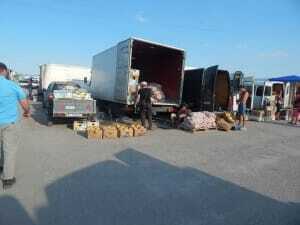
    We came upon The Mother of all Farmer’s Markets in Ukraine!  This wholesale market is open 24 hours daily, 7 days each week.  Massive amounts of fruits and vegetables are sold from any type of vehicle from large farm trucks to horse carts.  Now keep in mind it was about 100 degrees the day we visited, so much of this fresh produce was literally baking in the sun.  And it didn’t smell like apple pie either!  It smelled down right awful.  Cleanliness wasn’t a priority, and it didn’t seem like food safety was either.

    Odessa Privos Market

    Later we visited the Odessa Privos Market, a large, public market that was founded in 1827.  Tiny booths are lined up for blocks, and it seems as though you can buy anything there – as long as you could fight your way through the crowd.  Some of this market is under roof, and that’s where you can buy just about any animal part imaginable!  There also was a lot – and I do mean a lot – of fish for sale.

    Des Moines Farmers Market

    I couldn’t help contrast these two markets with the U.S. farmer’s markets that I’ve visited.  It seems that even the smallest Iowa communities have a local market at least once a week with markets held more frequently in larger cities like Des Moines.  The streets around Court Avenue in downtown Des Moines are blocked on Saturday mornings, so people of all ages can enjoy a leisurely stroll while they choose from a variety of wonderful smelling fresh cooked foods and fresh brewed coffee.  All of the vendors display their wares so neatly, and most have tents that shade their produce from the blistering summer sun.  Farmers sell meat in Des Moines from refrigerated trucks.  Plus there are many beautiful fresh flowers, fruits and vegetables for sale.

    Interestingly enough, many Eastern Europeans don’t realize how many fresh fruits and vegetables Americans eat.  Our tour guide in Romania was under the assumption that all we eat is processed foods and sweets.  “Junk food” isn’t something they have broad access to, and there is a concern the health of their kids may decline as new technology streams into Eastern Europe.  As their standard of living improves, how will this change their culture?

    Culture definitely changes as people move up the “hierarchy of needs.”  Eastern Europeans are no longer dependent upon the government to provide them with basics like food.  When they were under the control of the Soviet Union, Ukrainians raised more food in their backyards than they did on the collective farms. The Soviets moved many village people into high-rise cement apartment buildings, trying to force them into working on the collective farms.  Since it’s hard to grow food without soil, hungry people were motivated to work on the collective farms.  Even before the Soviets gained control, small villages were under a feudal system.

    After years of oppression, Ukrainians are making great strides now.  Their biggest challenge is developing infrastructure and markets.  It’s hard to get crops to market when trucks keep getting stuck!  But, they have so many rich natural resources.  I have no doubt the Ukraine will play a key role in helping feed the growing world population.

    Larry Sailer, Musings of a Pig Farmer

    July 16, 2013
    Agriculture, General, Industry News
  • Latham Hi‑Tech Seeds

    Protect Your Family from Sun Damage

    Heat Stroke1

    Guest Blog from Farm Safety For Just Kids

    With unseasonably cool temperatures persisting throughout the spring, many farmers were hoping for heat units to aid in plant development.  The warm sun has a major impact on crop growth, but the heat of the day can make dangerous working conditions for people.

    Farm workers are especially vulnerable to heat exposure.  When the body becomes overheated, workers become weak and tire more quickly.  Too much heat can also cause workers to become less alert, which is particularly dangerous if they’re operating farm equipment.

    It’s important for farmers to be aware of the three main phases associated with heat illness:

    1. Dehydration – results when the body isn’t taking in enough liquids.  Symptoms include fatigue, thirst, dry mouth and sapped energy.  Cramping may also occur in the legs and abdomen.
    2. Heat exhaustion – occurs when the body loses too much water and salt.  Symptoms include excessive sweating, extreme fatigue, clammy skin, dizziness or confusion, nausea, as well as fast, shallow breathing.
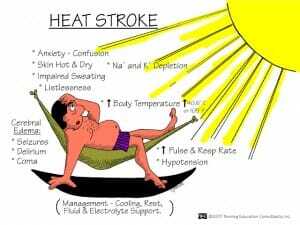
    3. Heat stroke – occurs when internal temps rise rapidly and the body is unable to cool down.  Symptoms may include profuse sweating, chills, throbbing headache, poor coordination, slurred speech, vomiting, hallucinations, fainting or collapse.

    Repeated exposure to the sun can cause premature aging, eye damage and even cancer.  Damage takes place over time, so it’s important to encourage protection at a young age.  To limit exposure and prevent long-term damage:

    • Avoid the sun during peak hours between 10 a.m. and 4 p.m.
    • Wear hats with wide brims that cover the face, neck and ears.
    • Cover as much of your body as possible with light clothing.
    • Use sunscreen with an SPF of 15 or higher and reapply often.
    • Wear sunglasses rated to filter out UV rays.

    Research shows a link between sunburns in children and an increased risk of melanoma and skin cancer later in life.  Help protect the future of agriculture by protecting the next generation of farmers and ranchers!  Click here for more tips on how to keep your children safe in the sun.

    bonnie-harris

    July 15, 2013
    Agriculture, General, Industry News
Previous Page
1 … 54 55 56 57 58 … 95
Next Page

Latham Hi‑Tech Seeds

131 180th Street | Alexander, IA 50420

(641) 692-3258

SIGNUP FOR OUR NEWSLETTER
  • Contact
  • Legal
  • Seedware Login
  • Latham Gear

© 2026 Latham Hi‑Tech Seeds. All rights reserved. | Privacy Policy

Latham® Hi-Tech Seeds is a trademark of M.S. Technologies, L.L.C., 103 Avenue D, West Point, IA 52656.