Skip to content
Latham Hi-Tech Seeds

(641) 692-3258

  • Home
  • Performance
  • Products
    • Corn
    • Soybeans
    • Alfalfa
    • Corn Silage
    • Seed Guide
  • Find a Rep
  • Media
    • Blog
    • News
    • Videos
    • Podcasts
    • TECHTalk
  • About Us
    • Company History
    • Our Mission
    • Careers
    • Become a Rep
    • Sowing Seeds of Hope
  • Contact Us
  • Latham Hi‑Tech Seeds

    Livestock Producers Can’t Shut Down

    New group pigs1

    I’m so frustrated with D.C. Right now that I’m going back to talking about pigs instead of government!

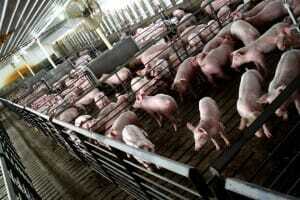
    Pigs are about 10 weeks old when they arrive on Larry’s farm
    Pigs are about 10 weeks old when they arrive on Larry’s farm

    I just refilled the barns I manage with a nice group of pigs that are about 10 weeks old. Any time you move a pig, there can be stress just like a person going to a new place. And just like with people, stress can make them more prone to sickness.  Some pigs in this group had a bout of flu although the modern hog barns I use are very good at keeping the pigs comfortable. These pigs are getting better as they adjust to their new environment.

    And this is the control panel view of the environment computer.
    And this is the control panel view of the environment computer.

    The ideal temperature is 75 degrees inside the hog barns. To get the buildings ready for the arrival of a new group of pigs, I set the computer to control the heat, fans, curtains and cool spray. I have eight of these computers, each costing about $1,000.  Six of these computers have been replaced, and many of the switches and other controls get replaced as needed.

    When I set the temperature at 75, the computer controller does many things. First of all, it turns on the heaters to bring up the temperature. It also turns on fans to keep fresh air flowing into and out of the buildings.  “Minimum air fans” ensure there is always the right amount of fresh air no matter how hot or cold it is outside. As the temperature warms, the controller tells these fans to turn faster. When this isn’t enough air to keep the temperature in the barns constant, the second stage fans are turned on by the computer.

    Pic5
    This is a view of the curtains and secondary fans.

    As the pigs grow bigger, they make more heat just like any living thing. The computers work to maintain the ideal temperature, so it starts opening curtains on the side of the buildings. On a warm summer day, the curtains serve as a big sunshade with a cool breeze blowing through. Many days this past summer, the pigs had the coolest place on the farm so it was more comfortable doing chores than spending time outside on the farm.

    Also inside of these barns, there are additional fans that circulate the air.  But we don’t stop there… the computer also controls the system that sprays a mist of cooling water on the pigs. Pigs can’t sweat ya know! The evaporation process moves heat energy away from the pig. This computer turns the water off and on as needed to let the pigs dry and cool.  Neat huh?!

    Top box controls the secondary fans Bottom left controls the heaters and the spray cool systems
    Top box controls the secondary fans
    Bottom left controls the heaters and the spray cool systems

    This entire system works in reverse as the building cools down: The cooling sprays stop.  The circulation fans shut off. The curtains go back up, just a little at a time. The big fans turn off.  As the building needs to warm up, the little fans slow down to the minimum that they need to turn to keep fresh air on the pigs. Finally, as the wind blows the snow into drifts outside, the heaters run inside to keep our pigs at a very constant temperature.

    If the temperature gets outside the perimeters I set, or if the barns looses water pressure, I get a phone call.  This “alarm system” works any time of the day – even on weekends and holidays! Pig comfort is always our priority. Yet, some people think we are mean by building barns that cost hundreds of thousands of dollars to pamper our pigs!
    Larry Sailer, Musings of a Pig Farmer

    October 1, 2013
    Agriculture, General, Industry News
  • Latham Hi‑Tech Seeds

    More Latham Cowbell, Please!

    LathamCowbelljpg

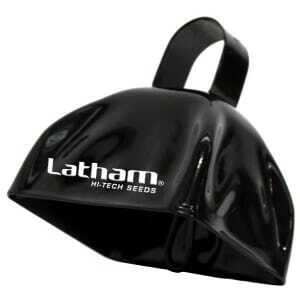
    Tomorrow marks the beginning of the 2013 World Dairy Expo, a week which kicks off with the 4-H & FFA member contests. To help ring in this year’s expo, we’re holding our very own #MoreLathamCowbell Contest for 4-H and FFA attendees. Participants will have the chance to win one of three $25 iTunes gift cards.

    LathamCowbellTo join in on the fun, stop by the Latham booth #883 in the New Holland Trade Center to get your Latham Cowbell and contest instructions. Then take a photo or video with your Latham Cowbell while you’re exploring all World Dairy Expo has to offer. Share your photo or video with us via one of your favorite social media channels (Twitter, Facebook, Instagram or Vine) or send us a photo message. Be sure to tag your entry with #MoreLathamCowbell! Winners will be chosen at random at the end of the day. Feel free to send us multiple photos or videos to increase your chances of winning!
    Follow us on our social media pages throughout the day as we post our own Latham Cowbell photos and videos visiting our favorite places at the Expo. Need some inspiration on where to take your Latham Cowbell while at Expo? Here are some stops we’d recommend:

    • Badger Dairy Club Cheese Stand (The best grilled cheese sandwich you’ll ever eat!)
    • GEA Ice Cream Booth (Who doesn’t like ice cream?)
    • Purple Cow Gift Shop
    • World Forage Analysis Superbowl
    • Cattle Showring (Sure to be a good photo or video opp!)
    • And of course, the Latham Hi‑Tech Seeds booth #883

    Latham experts Corey Catt, Forage Products Manager and Steve Bailie, Regional Sales Manager, will be meeting with dairy industry professionals throughout the week as well as discussing new forage technologies for 2014 and our AlfaShield™ seed treatment for better emergence in dry or wet weather.

    We look forward to seeing all your Latham Cowbell pictures and videos!

    • Facebook: Facebook.com/LathamSeeds
    • Twitter: @LathamSeeds
    • Instagram: @LathamSeeds
    • Vine: @Latham Hi‑Tech Seeds

    Team Latham

    September 30, 2013
    Agriculture, General, Industry News
  • Latham Hi‑Tech Seeds

    Making the CASE for Education Reform

    Superintendents1

    The federal budget.  The Farm Bill.  The Middle East…  There are so many major topics weighing on Americans right now, but in today’s blog, I’m going to focus on education and topics discussed at last week’s county Farm Bureau board meeting.

    You might think that all that farming and ranching is all that gets discussed at a Farm Bureau meeting, but that’s not true.  Board members help develop the organization’s policy.  Actually, any Farm Bureau member can provide policy input at the grassroots level.  Our policy covers things like the legal system, emergency service fees, energy facilities, as well as items directly tied to farming like conservation.  Education is also very high on this list.

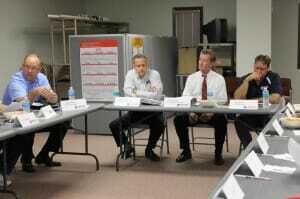
    Most Farm Bureau members have kids or grandkids.  (If you have been following me, you know I have lots of grandkids!)  That’s why once a year we invite the superintendents of our county schools to meeting for a chat.  The supers talk about their concerns for the year:  budgets, building projects and enrollment numbers.  New programs and ideas also are shared.

    SuperintendentsOne new program discussed at last week’s meeting was CASE, Curriculum for Agricultural Science Education.  Mr. Brett Spurgin, ag instructor for West Fork Schools, explained how CASE teaches science and math concepts through activity-, project- and problem-based instruction.  Students need a background in science, math and language, but CASE goes beyond textbook learning and teaches them how to work together to actually solve problems.
    I really like the idea of the CASE program.  Not only do students have an opportunity to apply what they’re learning in the classroom, but it provides them with an understanding of production agriculture outside a typical ag class.  I’ve always thought all school kids should be taught the basics of food production, and now I wonder how we can get a program like this into the big city schools.  A curriculum like this is needed so kids grow up knowing that milk comes from a cow, not the grocery store!

    Education basics (the old 3 R’s) are extremely important.  To be successful in school – and life – a person needs to be able to read and write, understand math and know a little something about the world (history).  But, sadly many young people lack needed skills when they enter the workforce.

    Workers don’t have the required skills, says Bob Funk, president and founder of Express Employment Services, America’s fifth-largest employment agency with annual sales of $2.5 billion and more than 600 franchises across the country.  Express has as many as 20,000 jobs across the U.S. that it can’t fill now because workers don’t have the skills required.

    Funk is mystified why Express has so much trouble filling thousands of information-technology jobs when so many young, working-age adults are computer literate.  He blames public schools and universities for the skills mismatch.  In an article entitled Where the Jobs Are—and How to Get One, published Sept. 20 by the Wall Street Journal, Funk encourages young people looking for a solid career is to get training in accounting, information technology, manufacturing-robotics programming, welding and engineering.

    All of these “top jobs” relate somehow to science and math.  There is truly a need for America’s education system to strengthen its core curriculum, but I don’t believe in taking a cookie cutter approach to education.  Every child is different, with different ideas, wants and needs.  If we were all the same, the world would never progress!  However, I was reading about some of laws the Iowa Legislature passed last session and am concerned about their impact on our state’s educational system.

    One law passed last session addresses home schooling.  Wording of laws is critical, and it appears that Iowa kids can be home schooled without any supervision or testing.  I’m on the fence here.  On one hand, I believe parents should determine how they educate their children.  On the other hand, I’ve known some parents whom shouldn’t even had kids!

    Like farming, I believe the educational sector can be overregulated.  And I haven’t even mentioned school lunches yet!  However, I believe there are some standards worth meeting.  What are your thoughts?

    Larry Sailer, Musings of a Pig Farmer

    September 24, 2013
    Agriculture, General, Industry News
  • Latham Hi‑Tech Seeds

    A lesson in rural road safety

    6339893 l 300x2001

    FS4JK-logoguest blog by, Tracy Schlater of Farm Safety For Just Kids

    Safety on rural roads largely depends on knowing what the other vehicle is going to do.  Turn signals and brake lights are the only means we have of alerting others to our actions, and I learned that lesson – the hard way – shortly after getting my driver’s license at age 16.

    6339893_l-300x200On my way home from school, I was following a pickup hauling a couple of grain wagons on the gravel road leading to my family’s farm.  There was a field drive coming up on the left and a farmhouse drive to the right.  As we approached the intersection where the two driveways met the road, the driver of the pickup moved to the left side of the road.

    Since he moved left, my 16-year-old self thought he was turning into the field drive on the left.  I assumed that he moved into the oncoming “lane” of our gravel road, so I wouldn’t have to slow down while he made his turn.

    I was wrong.

    He was swinging wide to make the right hand turn into the farm yard without taking out the mailbox on the corner.  His turn would have been obvious had the signal been working on his wagons.  I was seconds from plowing into the passenger side of his pick up as he made his turn.

    My mistake was making an assumption.  I should have slowed down long enough to see his next move. I’m fortunate to have learned that lesson at such a young age without the costly implications of an accident.

    About one-third of fatal tractor accidents occur on public roads, according to the National Safety Council.  That’s why I’d like to share the following tips for sharing the road safely this harvest season.

    What’s the best way to share the road?

    • Plan the BEST route; avoid busy streets and towns when possible
    • You MUST allow 1/2 the roadway to oncoming traffic AND behind you
    • Try to move equipment during daylight hours whenever possible.  Avoid moving farm equipment on public roads between sunset and sunrise or anytime when visibility is limited to 500 feet.

    What lighting is required on farm equipment and wagons?

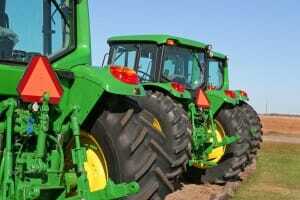
    • DOT regulations state you must have at least 1 solid red light on the rear of an ag trailer
    • Properly light your farm equipment. Ensure turn signals, headlights and taillights conform to state vehicle codes.
    • Use amber flashers to provide warning to motorists that hazards may exist.
    • Have slow moving vehicle emblems and reflectors in place on all tractors and implements.
    • Emblems should be clean and in good condition; SMV signs are required for speeds less than 35 mph.
    • **Speeds greater than 35 mph, signs need to be covered or removed.
    • Make sure your load does not obscure lights and warning devices. Pay special attention to the outward edge of equipment such as knives.

    How should you prepare your drivers?

    • DON’T ASSUME your drivers know the hazards of large equipment on the road.
    • Prepare selected maps for your drivers so you can avoid narrow bridges, blind hills and generally unsafe areas along the way

    Start with a PLAN and make sure your drivers know what you expect of them in terms of safe passage.

    bonnie-harris

    September 23, 2013
    Agriculture, General, Industry News
  • Latham Hi‑Tech Seeds

    Diversify & Limit Risk

    nickB_FR13No two crop years are exactly alike, so why base next year’s potential off last year’s results? In 2010, we received excessive rainfall. In 2011, we experienced three weeks of 100-plus degree heat. Last season we experienced the most severe drought since 1956.  This year we experienced excessively wet spring conditions, followed by extreme heat and now a lack of moisture.
    Making seed selections based only on this year’s yield results could risk performance next year due to the drastic changes in growing conditions from year to year. Because the weather is unpredictable, it’s important to minimize risk by planting a portfolio of products.

    Treat your seed product portfolio much like a financial portfolio. Minimize risk by (1) planting seed products with different traits and genetics; (2) varying maturity; plus (3) balancing offensive and defensive characteristics.

    Products that are typically thought of as more defensive could actually be the highest yielders depending on: weed pressure, insect pressure, heat stress, emergence issues, and disease pressure. It’s all about balance.

    No matter how good a particular football team is, it can’t win on the gridiron by having a strong offense or a strong defense. It takes both! And the same is true whether you’re planting in a corn field or a soybean field. Remember to plant a minimum or three different seed numbers, with a mixture of offensive and defensive traits.

    September 19, 2013
    Agriculture, General, Industry News
  • Latham Hi‑Tech Seeds

    Imagine Having 4,500 Landlords!

    FarmingOperation

    When I have a lot of windshield time – whether it’s driving to meetings or combining corn – I contemplate all sorts of things.  For example, have you ever wondered about the term “landlord”?

    The term dates back to the Roman Empire and feudalism when peasants (or serfs) were bound to the land.  The peasants worked the land and paid homage to their lord; they shared their produce and other fruits of their labor in exchange for military protection.

    Fast forward a couple thousand years to the country of Ukraine. The tables have turned during the last 20 years, so now the people who used to be the peasants are the landlords.  When the Soviet Union fell apart, land that has been confiscated by the government was returned to the farm villagers.

    Kees Huizinga
    Kees Huizinga

    Each qualifying person received about three to four hectares, but there was a catch… the villagers could not buy or sell that land! If the owners of the ground cannot sell it, that means they must either farm it themselves or rent it.  This is where the story really gets interesting (IMHO)…

    During our Black Sea Study Trip last July with Iowa Farm Bureau, we had an opportunity to visit many farms in the Ukraine.  One particular farmer, Kees Huizinga, stands out in my mind.  His farm operation is called “krychenka.”  He has grown it from scratch to 14,000 hectares, or about 35,000 acres.

    Kees (Case) Huizinga is an investor-owner, operator of “Krychenka”, a 14,000+ hectare farm (35,000 acres). A native of the Netherlands, Kees began farming in the Ukraine about 10 years ago. The initial farming operation had 1,000 hectares. Kees said that when they started farming there the fields were full of weeds that really had not been farmed. They used a moldboard plow to get started and to begin the process of cleaning up the fields and leveling them out.
    Kees (Case) Huizinga is an investor-owner, operator of “Krychenka”, a 14,000+ hectare farm (35,000 acres). A native of the Netherlands, Kees began farming in the Ukraine about 10 years ago. The initial farming operation had 1,000 hectares. Kees said that when they started farming there the fields were full of weeds that really had not been farmed. They used a moldboard plow to get started and to begin the process of cleaning up the fields and leveling them out.

    Now if you’re an old farmer like me, you start doing the math!  Kees has about 4,500 landlords living in about 10 villages, which Kees is now responsible for taking care of.  Not only does Kees need contracts with 4,500 landlords, he must take care of the needs of their villages.  There aren’t any property taxes to fund the schools, supply water, maintain roads or remove snow.  Kees has large equipment, so he’s expected to take care of all these needs!  Basically, he is taxed by the services he must provide.

    Can you imagine?  Many Midwest farmers feel that one landlord is one too many!  Imagine having 4,500 landlords who expect you to take care of more than just their farm acres.  As frustrated as I can get with the rules and regulations, I can’t imagine having thousands of landlords.  Hmm…  maybe there are more similarities between the two than I first thought!

    For more stories about our trip to the Ukraine, click on the links below:

    • Busting Myths about Dracula’s Castle
    • Farmer’s Markets Open 24/7 in the Ukraine
    • How Eastern European Farms Measure Up

    Larry Sailer, Musings of a Pig Farmer

    September 17, 2013
    Agriculture, General, Industry News
  • Latham Hi‑Tech Seeds

    When is Enough… Enough?

    Many people gain a sense of accomplishment from doing a job well or completing a project.  In my case, I enjoy harvesting crops and the sense of satisfaction that come when the last of the corn is in the bin.  I always think, “Now I can relax.”

    But, I find myself involved in so many other things that it’s truly hard to find time to relax.  I had this epiphany while sitting in church on Sunday morning.  (Yep, I know I should be concentrating on the sermon – and I was!)  The sermon made me wonder whether I have done enough for my church. When is enough… well, enough?  I started questioning whether I set the right example for my kids when they were growing up or whether I was too busy.

    As busy as I am, I never seem to cross as many items as I’d like off my list.  I have maybe 37 different projects started around my farm and house. There’s a porch I want to add on to the west side of our house, and the door to it is already in place.  Right now it’s a door that leads to nowhere!  I’ve torn the sheet rock off half the laundry room with the intent of making a walk-in closet.  That project is half done.  And whatever you do, don’t ask Janice about our trim work.  I’m very glad I don’t do trim work in the hog barns!

    There are projects that I just never seem to be around to doing.  I’ve had the materials on hand to make a waterfall by Janice’s shop for at least 10 years now.  I think that is long enough!  I’m in the process of cleaning up my old steel piles, but that’s easier said than done.  After all, I might need something off that pile to fix something someday.  I’ve been saying this for 40 years now, but I’m still wondering when enough steel is enough. 🙂

    This week I had to set aside all of the projects that I wanted to work no in order to do the work that really needed to be done.  It’s time to bring in some new porkers, so that means I’m emptying hog barns this week.  While cleaning hog barns is always a big chore, it’s even more daunting this week as I’m cleaning up after Porcine Epidemic Diarrhea Virus (PEDV).  I will keep cleaning and disinfecting until it’s time to put in the new pigs because I’m don’t believe there is such a thing as “clean enough.”

    There is also work to be done in the political arena.  When can we say “enough is enough” in regards to talking to our elected officials?  That’s an easy answer for me.  “Never!”  We can never stop educating the people we’ve put in office to run our government.  Ag literacy among American politicians is a grave concern.  Farmers can’t afford to say “enough is enough” as it related to the Farm Bill, school lunches, soil conservation and animal welfare.

    When have we talked enough about agriculture?  It’s so important that we share information with people, who want to know how their food is grown.  I believe it’s important for me to talk with people about why I raise pigs the way I do and why I grow GMO crops.  Even though I’ve given several interviews, I have several engagements waiting for me right now.  Michael Libbie has invited me to be a guest on his new radio show, Insight on Business the News Hour, and I’m looking forward to finding a date that works for us both.

    I’m also gearing up for the classroom where I’ll talk to students in local schools as part of the National Pork Board’s Operation MainStreet program. This is the program through which I’ve actively spoken to civic groups about how I raise pigs.  After nine years of talking to these groups, it’s exciting to branch out into a new focus group!

    I’ve also been asked to record a one-hour presentation for Iowa State Extension about genetically modified crops.  I’ve tended to “just wing it” in the past, but now I’m wondering how much preparation is enough.  I enjoy being asked questions and knowing what the audience wants to hear.  I’m still talking about the Ukraine Market Study from July.  Apparently, folks haven’t heard enough yet about that trip!  It amazes me how people, especially farmers, want to know what farmers do in other countries.

    Enough is enough for this week’s blog… I must get back to cleaning hog barns!  I’m looking forward to getting get some satisfaction from having those barns spotless and ready for new little pigs.

    P.S. I’ve had enough of the word “enough”!

    Larry Sailer, Musings of a Pig Farmer

    September 10, 2013
    Agriculture, General, Industry News
  • Latham Hi‑Tech Seeds

    Protect 2014 Corn Crop with New Technologies

    As the number of corn-on-corn acres has increases, corn rootworm management becomes increasingly important. That’s why I’m pleased to announce that Latham’s 2014 product lineup includes 36 hybrid seed corn products, offering six different trait combinations in various maturities, for rootworm (RW) control.

    Latham Hi‑Tech Seeds is able to guarantee trait and genetic diversity because we’re a family-owned company that works with multiple trait and genetic providers. Our independence allows us to provide farmers with an industry-leading number of product choices from provides including: Monsanto, Bayer, BASF, Syngenta, Dow AgroSciences and more.

    Talk about choices for farmers!  Our 2014 corn product lineup includes:

    • Genuity SmartStax RIB — the first corn technology to provide 2 modes of action against rootworm
    • Genuity VT Triple Pro RIB
    • YieldGard VT3
    • Agrisure Duracade — the newest RW trait stacked with 2 modes of action
    • Agrisure 3122 also contains 2 modes of action against RW
    • Agrisure 3000 GT

    Rootworm control is a must in corn-on-corn protection, so it’s important to determine which trait is right for your situation.  In an area with heavy rootworm pressure or multiple years of corn-on-corn, plant Latham hybrids with two modes of action against CRW like Genuity® SmartStax®, Agrisure Duracade or 3122 technology. Look at dual modes of action and consider rotating crops in areas where rootworm pressure is extreme.

    You’ll see great options like Genuity VT3 PRO, VT3 and Agrisure 3000GT that work well in moderate corn rootworm situations of minimal years of corn-on corn or extended diapause in ground that has been rotated.  These are proven technologies that are combined with the best genetics to help maximize yields.

    Because corn-on-corn acres are more susceptible to challenges presented by weather, soil and pest pressure, Latham has introduced the Gladiator designation to help with 2014 seed selection. Gladiator hybrids have the industry’s most advanced genetic foundation, offering powerful root and stalk strength and superior above- and below-ground insect protection. Give them a try as part of your diversified 2014 crop plan!

    Don’t forget that genetics make yield but traits protect yield! During the 2013 growing season, we’ve seen how different genetics handle stress from drought and wind.  That’s why genetic diversity is so important. Plant a portfolio of 4 to 6 different Latham® numbers for added protection.

    Need help figuring out what to plant where?  Ask your local Latham representative about our all-new Seed-2-Soil program. Or, contact the Latham office directly at 641-692-3258.

    John Latham, President

    September 9, 2013
    General, Industry News, Seed Technology
  • Latham Hi‑Tech Seeds

    Take Root: Growing Farms. Seeding Futures.

    3generations latham

    Last week I had the privilege of attending an information-gathering meeting for Take Root, a new program being launched by the Iowa Farm Bureau Federation to help farmers develop business and succession plans.  The objective of this new program is to help farm families work through a step-by-step process of developing a vision for their operation and then taking a managed approach to the obstacles they face in farm growth and transition.

    If the turnout to last week’s meeting is any indication, this topic is near and dear to many people’s hearts!  I had a hard time finding a place to park at the Fireside Restaurant in Eldora where the meeting was held.  After finally securing a spot on the street, I went inside to find standing-room only.  The IFBF has expected 20 attendees, but there were more than 40 people in that room!

    I’ve been hearing for years about all of the old farmers who will retire, leaving no one to grow our food.  Surprise… these fears are unfounded!  From what I gathered at the Take Root meeting, young folks are eager take over.

    Transitioning the family farm from one generation to the next requires pre-planning and careful consideration. That’s why the IFBF is offering a new program to help.
    Transitioning the family farm from one generation to the next requires pre-planning and careful consideration. That’s why the IFBF is offering a new program to help.

    When asked what should be covered in the Take Root series, one young farmer answered, “How do we get the old folks out of our way?”  I reminded him there were a few of us old farmers in the room!  From this remark, however, I realized some of these young farmers need to see the value of having experience.  It’s okay they want to take over, but I hope Take Root blends “old farmers’” experience with the young farmers’ enthusiasm, so we can help them prevent some of costly mistakes from being too eager.

    One of the subjects that will be covered by the Take Root program is how to transfer a farming operation.  One reason is this is such a challenge is because more than 97 percent of Iowa’s farms are family owned.  As any parent knows, you’re going to have more than one opinion if you have more than one child.  It’s no wonder that only 30 percent of the farms successfully make the transition from the first to the second generation and only 10 percent of those make it to the third generation.  Farm transition is going to be key to keep Iowa agriculture – and Iowa’s economy – strong in the future.

    The second priority of Take Root is developing a business plan, which becomes the farm’s road map. Yep… a business plan for a farm!  Should you use a C-Corp or an S-Corp?  How about a limited liability company (LLC)?  In many operations, there can be more than one structure used: livestock might be in one form, land in another and machinery may even be in a third.  S-Corp, C-Corp or LLC – all are still examples of a family farm.

    There is a need to setup the farm the right way for each family as how the farm is structured is extremely important for that family to pass it to the next generation.  Farm structure can play a large role in the financial situation of the operation.  Taxes are a large consideration, but I’m not even going to try to cover taxes here today!

    We have food to raise and people to feed.  We’re in an industry that will not go out of style.  Us “old farmers” need not worry who will raise that food.  We just need to get out of the way and not get run over.  It’s a new world out there, but we still need to eat!  For more information about Take Root, go to www.iowafarmbureau.com or contact Nathan Katzer at 515-225-5494 or nkatzer@ifbf.org.

    Larry Sailer, Musings of a Pig Farmer

    September 3, 2013
    Agriculture, General, Industry News
  • Latham Hi‑Tech Seeds

    Kicking Off the Football Season with Pork

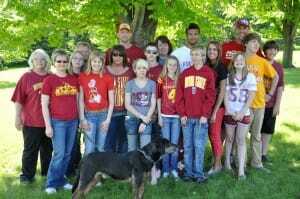
    Sailer family

    Larry Sailer is known as a hog farmer from North Central Iowa, an agvocate and the author of “Musings of a Pig Farmer.”  Some folks even remember that he wrestled in college.  But did you know that Larry is the proud grandfather of a member of the Iowa State Cyclone football team?

    Devin Lemke was a three-star recruit and named to The Des Moines Register Class 2A first-team all-state team.  As a high school senior, Devin caught 10 passes for 199 yards and four touchdowns.  He threw a 55-yard touchdown pass as a tight end on offense.  He also recorded 53 tackles, nine for a loss, earning all-district honors as a junior.

    Larry Sailer with grandson Devin Lemke
    Larry Sailer with grandson Devin Lemke

    An all-around athlete, Devin lettered four times in track and wrestling.  He was a two-time conference champion and qualified for state wrestling tournament as a junior.  He placed third in state as a senior and was one of three finalists for Mr. Wrestler.  Devin also was member of state champion 4×100-meter relay team and finished third in 200 meter dash at state championships as a junior.

    With stats like these, it’s no wonder Devin was being recruited by both Iowa and Iowa State.  An endearment to the Cardinal & Gold, as well as respect for Coach Paul Rhoads and his vision to build the ISU football program, ultimately swayed his decision.  When Devin announced his commitment to Iowa State, he was quoted in the newspaper as saying, “It means a lot to know that I’ll be representing my home state.  My family is proud of me, and my decision to pick Iowa State really made them happy.”

    Cardinal and Gold runs deep in Larry's family.
    Cardinal and Gold runs deep in Larry’s family.

    “We’re proud of all Devin has accomplished on the field and in the classroom,” says Larry.  “But most importantly, he’s just a great kid! He takes sports seriously, but win or lose, he acts with class.  He’s earned respect from his opponents and coaches alike.”

    “Devin is a hard worker whenever there’s a job to do,” adds Larry.  “He’s dependable and he doesn’t quite until the job is done. He has helped us on the farm for many years and still comes home to help every chance he gets.  He literally gave me a helping hand when I was laid up and couldn’t do my hog chores this past winter.  He comes home often and helps wash out the hog barns.  He helps during the planting and harvest seasons, too.  He’s a real worker.”

    This weekend that Iowa work ethic will get put to use on the gridiron.  Larry and his wife, Janice, along with Devin’s parents, Charlotte and Lance Lemke, will be among the happiest fans in the stands.  Not only does Saturday’s game against the UNI Panthers mark the Cyclones’ 2013 season opener, but it’s also Devin’s return to the game as a shoulder injury keep him on the sidelines last season.

    How does a family celebrate such an occasion?  The Sailer family celebrates with pork, of course!  Charlotte has requested that Larry smoke a pork loin, which is a family favorite.  But a tailgate just wouldn’t be complete without a few side dishes and snacks.  That’s why today Janice is sharing her simple recipe for Mexican Dip.  Mix together a batch and get ready for a Cyclone weather alert!

    Larry Sailer, Musings of a Pig Farmer

    August 30, 2013
    Agriculture, General, Industry News
Previous Page
1 … 53 54 55 56 57 … 95
Next Page

Latham Hi‑Tech Seeds

131 180th Street | Alexander, IA 50420

(641) 692-3258

SIGNUP FOR OUR NEWSLETTER
  • Contact
  • Legal
  • Seedware Login
  • Latham Gear

© 2026 Latham Hi‑Tech Seeds. All rights reserved. | Privacy Policy

Latham® Hi-Tech Seeds is a trademark of M.S. Technologies, L.L.C., 103 Avenue D, West Point, IA 52656.