Skip to content
Latham Hi-Tech Seeds

(641) 692-3258

  • Home
  • Performance
  • Products
    • Corn
    • Soybeans
    • Alfalfa
    • Corn Silage
    • Seed Guide
  • Find a Rep
  • Media
    • Blog
    • News
    • Videos
    • Podcasts
    • TECHTalk
  • About Us
    • Company History
    • Our Mission
    • Careers
    • Become a Rep
    • Sowing Seeds of Hope
  • Contact Us
  • Latham Hi‑Tech Seeds

    How Do Eastern European Farms Measure Up?

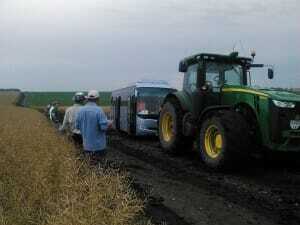
    Bad Roads1
    One of the biggest challenges while traveling throughout Eastern Europe was poor road conditions. It wasn’t uncommon for our bus to get stuck.

    From June 22 through July 5, I had the opportunity to travel throughout Eastern Europe with a group of 20 Iowa Farm Bureau and staff members on a study trip.  We visited with farmers in the Ukraine’s Black Sea region, which is expected to become a top competitor for Iowa crop exports in coming years.

    One of the things I wasn’t prepared for on this trip was the need to convert measurements.  Believe it or not, the European measurements make a lot more sense!  Americans measure liquids as a cup, pint, quart and then gallon.  It can be very confusing unless you memorize the number of ounces in 1 cup (8 ounces equals 1 cup); the number of cups in a pint (2 cups equal 1 pint); the number of pints in a quart (2 pints in 1 quart); and the number of quarts in a gallon (4 quarts in 1 gallon).

    Then you calculate weight… Who in the world thought it was a good idea to make an odd number, like 16 ounces, equal a pound?  And why is “lb” the abbreviation for a pound?  Say what?!  Now a ton makes a little more sense to me since it’s the round figure of 2,000 pounds.  Although the metric ton is 2,200 pounds, it doesn’t really matter.  Europeans use kilograms to figure a ton, and this makes even their tonnage easier to calculate.

    The next measurement we had to convert while touring farms in the Ukraine was hectares.  Converting hectares into acres is a real brain teaser!  An acre is 43,560 square feet.  Somewhere in history, this was logical.  Why?  Don’t ask me!  I’m not even going to Google it.  After two weeks of doing math, I know that I’d prefer for Americans to use hectares.  Like everything else metric, a hectare can be divided by 10.

    Talk about a travel delay! It took a group of Iowa farmers four hours to travel four miles from Ukraine through Moldova into Romania.

    I’d hate to guess how many conversions we made.  A group of 20 Iowa Farm Bureau members asks a lot of questions while touring:  What’s the size of the farm?  (Convert hectares to acres.)  What’s the average yield?  (Yield really takes a bunch of conversions.)  How much herbicide do you apply (Convert from hectares to acres, and then from ounces, pints and gallons to liters per acre.)  Thank goodness there’s an app for that!

    Another huge problem we had in the Ukraine was the terrible road conditions.  Iowa’s pot holes are nothing compared to those in the Ukraine.  We soon discovered it wasn’t possible to travel these roads fast enough to keep our schedule, so we coined a phrase: “the Ukrainian 20 minutes.”  This phrase describes a situation that takes much longer than 20 minutes.  But not even “the Ukrainian 20 minutes” described the time it took us to cross through Moldova.  It took more than four hours to move less than four miles – the Moldova minute had no end!  (And, no, we weren’t stuck in mud at the time.  Click here to read Dirck Steimel’s account of that sticky situation.)

    Pepsi products became a unit of measurement for Iowa farmers traveling through the Ukraine, Moldova and Romania.

    As we traveled through Moldova, Romania and Ukraine, it became apparent that another unit of measure was in order to simply compare economies of these different areas.  Being the great economist that he is, David Miller again rose to the occasion.  He found a way to explain economies in a scale that all of us could understand…  You see, Dave was always looking for his favorite drink, Diet Mountain Dew.  Pepsi can be found almost anywhere, so it came to signify the “poorest economy” we traveled through.  If Mountain Dew could be purchased in the area, it was referred to as a “civilized economy.”  In the rare place where Dave found a Diet Dew, it was called a “sophisticated region.”  It’s good to know all of those degrees Dave earned are coming in handy! 🙂

    On a serious note, I would like to thank David Miller for leading a very successful and informative market study trip to Ukraine and Romania.  No matter the question, Dave had knowledge and understanding of what we wanted to know.  Some answers were as simple as Diet Mountain Dew, and some were as complex as the economy of Ukraine.
    Larry Sailer, Musings of a Pig Farmer

    July 9, 2013
    Agriculture, General, Industry News
  • Latham Hi‑Tech Seeds

    Learning about Ag from Half a World Away

    Ag perspectives1
    Larry Sailer is one of 20 Iowa farmers who are traveling through the Ukraine to get a new perspective on agriculture

    For two weeks, I’m joining a group of 20 Iowa Farm Bureau and staff members touring throughout the Ukraine and Romania to learn about farming practices underway since the breakup of the Soviet Union.  We left June 22 for the Black Sea region, which is expected to become a top competitor for Iowa crop exports in coming years.

    The Ukraine, known as the Breadbasket of Europe, has rich, black dirt similar to what we see in Iowa.  The biggest difference is there is three times as much soil here!  Imagine rich, Iowa farm ground that is the size of Texas.  I’m convinced there is a huge amount of ground in this region with a huge potential to raise more food than is currently being produced.  Much of this farmland has been sitting idle, waiting for the proper political climate and for the right farmers with the know-how to get ‘er done.

    The corn on this farm in Ukraine is looking good. It’s much taller than mine at home in Iowa!

    It needs farmers like Iowa Farm Bureau member Jeff Rechkemmer, who’s from Oelwein in Northeast Iowa but has farmed in Ukraine about a decade.  Jeff says there are many similarities between farming in Iowa and Ukraine.  Like in Iowa, his most profitable Ukrainian crops are corn and soybeans.  Most of the tractors on his Ukrainian farm are John Deere models that were made in Waterloo.

    Our Farm Bureau group came with questions about how this region can compete with Iowa for export markets.  We wondered if farmers here can produce food as inexpensively as we can.  Our questions include:  What are their yields?  What are their input costs?  Are they sustainable?  Is their infrastructure adequate?  Can they get the product out of their country at a price that competes with ours?  What is the quality of their grain?  What crops do they grow?

    So many questions!  Honestly, I’m overwhelmed by the amount of information we’ve already gathered.  It’s been a great learning experience so far, but we’re only half done.  There’s a lot more to look forward to seeing and doing here!

    We plan to return home on Friday, and then it will take a little time to organize all of my photos and information.  But it’s a job that I’m looking forward to!  In the coming weeks, I will use blog articles and presentations to share the vast amounts of information to which I’ve been exposed.  I hope you’ll turn to TheFieldPosition.com on Tuesdays for my guest blog posts.  Please also contact me if you know of a group that would be interested in hearing my presentation.

    In the meantime, you can learn more about our Ukrainian adventures by reading these “Farm Fresh” blog posts by Dirck Steimel, editor of the Iowa Farm Bureau Spokesman:

    • Weather delays are hard to fly away from
    • Learning about Ukrainian traditions from an Iowan

    Larry Sailer, Musings of a Pig Farmer

    July 2, 2013
    Agriculture, General, Industry News
  • Latham Hi‑Tech Seeds

    “New” GMO Pig Study is “Junk”

    Twitter has been a flutter with a “new” study on pigs fed feed containing GMOs.  I was curious about all that was being said, so I spent quite a bit of time reading many comments on Facebook and following the topic on Twitter.

    Seeing the same old hype, I dug further into the study.  Here’s what I discovered… the so-called GMO Pig Study contains nothing scientific whatsoever!  In fact, I agree with author Mark Lynas that it’s really “a propaganda effort by anti-biotech campaigners masquerading as proper science.”

    The GMO pigs study was funded by extreme organic folks with an agenda, who were connected to the flawed cancer in rats study.  It’s no surprise these two tests were very similar.  The research was done using a very small group of very unhealthy pigs that were fed two different diets.  Almost all of the pigs, whether feed non-GMO or GMO had the same symptoms.  Interestingly enough, 15% of pigs fed the non-GMO diet had heart abnormalities as compared to only 6% of the GM-fed pigs.  Twice as many non-GM pigs had liver problems as the GM pigs.

    These facts didn’t support the agenda of those funding the study, so they chose instead to focus on stomach inflammation.  Results of the stomach inflammation study were subjective, at best.  It’s no wonder Lynas wrote, “GMO pigs study – more junk science.“

    I’m not a scientist, just an old pig farmer, but let me tell about what I have happen in my own operation.

    The GMO corn and soybeans I grow are delivered locally to a feed mill and a soybean processing plant, and I doubt they’re kept separate.  It wouldn’t make sense to separate the grain as the vast majority of crops grown in my area use this technology.

    Technology has been rapidly adopted for its efficiency.  I’ve seen firsthand how these crops have been good for my operation, using fewer inputs to produce more feed.  Plus, today’s hogs are efficient.

    My hogs have very little disease pressure.  I can’t imagine having the 13% and 14% death losses as reported for GMO pigs study!  My pigs are healthy and grow very fast.  They consume about 5 pounds of feed per day to gain, on average, two pounds per day.  They do this all on GMO feed.

    I know my pigs are healthy, so I have no problem feeding the pork we raise to my family.  I’m very happy that the modern consumer is concerned about what they buy to eat, too.  I just hope consumers won’t get caught up in these silly, unfounded studies that try to sway consumers’ buying decisions.

    The science is clear, writes Lynas.  Consuming foods with ingredients derived from GM crops is no riskier than consuming the same foods containing ingredients from crop plants modified by conventional plant improvement techniques.

    Buy good, healthy foods and eat in moderation!

    Larry Sailer, Musings of a Pig Farmer

    June 25, 2013
    Agriculture, General, Industry News
  • Latham Hi‑Tech Seeds

    Farm Bill Debate Underway Now

    The 2012 Farm Bill is like the 2013 planting season… it just goes on and on!

    The Farm Bill is top of mind again this week as it is being debated on Capitol Hill.  The Senate passed a version of the bill with huge savings for tax payers, and the House version saves even more.  The Senate’s proposal would save $24 billion over 10 years; the House version would save $39.7 billion.

    Unfortunately, the President is threatening to veto the Farm Bill because it cuts too much funding for food stamps.  The food stamp program, now called the Supplemental Nutrition Assistance Program (SNAP), cost almost $80 billion last year – twice the amount it cost just five years ago.

    We cannot continue to throw unlimited funds towards the SNAP program!  Anyone who knows me, knows that I do NOT want one hungry person to be denied assistance if he truly needs a hand up.  The problem comes from people who are “milking the system.”  Generations of families have become dependent on public assistance, and the number of people on welfare has sky rocketed in the last six years.  When an Administration spends millions of dollars to advertise food stamps and welfare programs, it’s time for Americans to question the tactics!

    How are we going to balance a budget if people are only willing to make cuts to small budget items?  We must dig into the high priced line items:  Medicare and like programs just continue to expand.  I’m not even going to talk about The Affordable Care Act that is draining tax dollars and causing my insurance premiums to increase.  Then there’s the Food Security Bill.  Seriously, who dreams up these names?

    As a farmer, I’m concerned that SNAP funding accounts for 80% of the Farm Bill.  Discord over which programs to cut and how much to cut have prevented the Farm Bill from passing.  With the SNAP program and so many other issues wrapped up in the same bill, the Farm Bill has become too complex.

    A complex system of rules and regulations is now in place to tell farmers how to best raise their crops.  Although no one knows their business better than farmers, some so-called “experts” are being consulted to develop rules that tell farmers how to raise their animals.  Why not let farmers and ranchers adapt and change as they determine what works best in their operations?  Farmers and ranchers are always trying to be more efficient and want to keep food safe and affordable.

    Instead of creating a Farm Bill that benefits everyone, I’d settle for one that would encourage farmers – and a successful rural way of life!

    Larry Sailer, Musings of a Pig Farmer

    June 18, 2013
    Agriculture, General, Industry News
  • Latham Hi‑Tech Seeds

    Planting Decisions, Right or Wrong

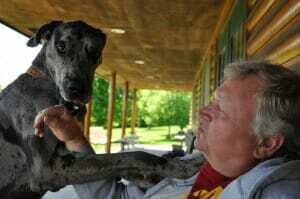
    Larry dog1

    Musings of a Pig Farmer by Larry Sailer

    This spring has been one of the most challenging in the 40 years that I have been farming!  With dry soils in March, we were optimistic that spring planting would be early.  Some of us were even concerned whether we had enough subsoil moisture to make it through until the spring rains arrived.  Then April Showers began to fall, and we experienced the wettest April on record for 141 years.  We haven’t had many days without precipitation, and the week of June 5th was the wettest on record in Iowa since July 2010.  As a result, the spring 2013 planting season (#plant13 on Twitter) is the most drawn out one that I’ve experienced.

    I took this picture this morning after dropping kids off at bible school. This is the erosion that is happening due to all this rain.

    If I would’ve known then what I know now, I would’ve made different farming decisions.  (Hind sight is always 20/20, right?)  I started planning my 2013 crop last fall when my ground was extremely dry.  To conserve soil, save time and fuel, I had been farming no-till for several years.

    Years of no-till also meant that my soil was becoming compacted.  During the dry year, I could definitely see how compaction – which resulted when heavy equipment was driven across my fields to erect the wind turbines – affected plant growth and yield.  I could tell that around the turbines the plants’ roots couldn’t grow down, so those plants weren’t able to reach the moisture needed.  Deep tillage is the cure for compaction, so I chose “to make lemonade” during the dry fall.  I tilled to break up the soil and give the 2013 crop’s roots a chance to grow down into the soil for moisture and plant food.

    Other decisions that I made last fall include:

    • The number of acres to plant to corn or beans (crop rotation);
    • Fertilizer needed to feed the growing crops;
    • Weed control programs;
    • Seed selection; and
    • the list goes on and on!

    Thanks to Mother Nature, I’m now facing some of these same decisions again:

    • Do I switch relative maturity on my corn?
    • Should I switch from planting corn to beans?
    • Should I even plant at all?

    Today’s farmer must “farm the government.”  What I mean by this is a farmer must know all the rules and regulations that modify the way we farm to stay in compliance with the law.  Sometimes this is extremely difficult to do because some rules are so vague that they’re interpreted differently by the various people charged by the government to in force the rules.

    In addition to my crop concerns, thoughts of my livestock and family weight heavily on my mind:

    • What new viruses might my pigs get?
    • What fun memories can we make with our grandkids, who are here this week for their annual Bible school visit?
    • When will I find the time to move the horses?  (That reminds me, they really need vaccinations including worming medicine.)
    • When will it ever stop raining?  Soil is washing away!
    • How can I better manage my ground?
    • When is the first ISU football game, and how are Devin’s shoulders healing?
    • How is Jesse getting along the blood clots in her leg?
    • Oh no, when do I leave for Romania and the Ukraine?
    • Will I ever get the lawn mowed?!
    • When will be a good time to build that waterfall Janice has been wanting?
    • Which should I do first, finish remodeling her laundry room or building the waterfall?
    • Maybe I should go out and pick up all those rocks I pulled out with the ripper.  Wait, I can’t do that yet because the fields are just too wet.

    With all these thoughts racing through my mind, I’m beginning to feel a lot like the pig who was given a pancake!  In case you’ve never read that classic children’s storybook, If You Give a Pig a Pancake, written by Laura Numeroff, I’ll share a brief excerpt to give you an idea:

    If you give a pig a pancake, she’ll want some syrup to go with it. You’ll give her some of your favorite maple syrup, and she’ll probably get all sticky, so she’ll want to take a bath. She’ll ask you for some bubbles. When you give her the bubbles…

    Back to thinking about planting… Should I stop planting corn with only 10 acres left, or should I switch to beans?  Research shows you can get decent corn yields through mid-June, but according to the insurance programs, I should switch crops.  Right or wrong, government policy will make some of these planting decisions for me!

    Larry Sailer, Musings of a Pig Farmer

    June 11, 2013
    Agriculture, General, Industry News
  • Latham Hi‑Tech Seeds

    A Farmer’s Father’s Day

    Gadgets1
    Jeff Caldwell
     With permission from “A Farmer’s Father’s Day” by Jeff Caldwell, Multimedia Editor for Agriculture.com and Successful Farming magazine.
    © Meredith Corporation 2012
    Father’s Day is right around the corner! If you’ve got a father to shop for and he’s not the easiest person in the world in that department, let us help narrow down your search for the perfect gift, whether it’s a gadget for fun or a tool to put to work in the shop!
     A guy can’t work all the time. So, to that end, check out these fun gadgets for your farm father, from bacon-scented candles to cool grilling gadgets!
    Check out these 10 great gifts for dad.


    Is your farm father more of a tool guy than a gadget guy? Here are 10 new tools to help him make life easier in his shop or in the field.

    Spruce up your shop with these new tools.

    Team Latham

    June 10, 2013
    Agriculture, General, Industry News
  • Latham Hi‑Tech Seeds

    Finding the Silver Lining in Each Cloud

    Rewerts reunion1

    This past week has been very emotionally draining. Turning a year older at this age should be a good thing, right? Sending your daughter half way around the world to China is a good thing, right? Not having your crops planted by June 4 is… a real downer!

    It’s easy to let all of this dreary, wet and cold weather dampen one’s spirits. That’s why I’m making a conscious effort to look on the bright side of things:

    • Turning a year older is, of course, a good thing. I don’t like the idea of getting older, but it sure beats the alternative!
    • Sara’s trip to China to finish her schooling is really pretty cool! It’s a great opportunity for her to practice Mandarin and experience the culture.
    • As for the crops, I carry insurance and that should be enough to keep me farming another year. A year without crops is like going a year without a paycheck, so that’s why crop insurance is so important.
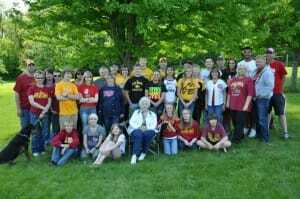
    Rewerts Family Reunion

    When I was younger, I didn’t always take time to think about the good times. The pressure of raising a family and trying to give them everything they want can be tough. Looking back, spending more time with them would have been nice. We did survive. Some scars, some great times. And we continue to get together and share the good and the bad, but I do enjoy time much more than I did!

    Over the weekend, my wife and I attended the Rewert family reunion. Good food, good times! Instead of focusing on how much we all missed my father-in-law, we reflected on all the good times we had and shared fun memories!

    There will certainly be more good times in the days and weeks ahead. I’m looking forward to attending World Pork Expo this week. Our grandkids, who are still young enough to attend Vacation Bible School, will stay next week with us. We always look forward to making good memories and enjoying family time. And, yes, I’m still hoping we’ll get seed in the ground this week.

    Hope you’re all looking on the bright side this week!

    Larry Sailer, Musings of a Pig Farmer

    June 4, 2013
    Agriculture, General, Industry News
  • Latham Hi‑Tech Seeds

    WANTED: A Farm Bill to Benefit Everyone

    The 2013 growing season has certainly has its share of challenges.  Iowa farmers worried about the lack of subsoil moisture in March, and then we experienced record rainfall in April.  Planting was already considered “late” when we found ourselves, once again, forced from the fields due to downpours.

    My planter is parked, and from the looks of the forecast, it’s going to be parked for quite some time.  How disappointing…  I had all intentions of finishing #plant13 by Memorial Day, but Mother Nature decided to show me who was boss!  The skies opened up on Friday evening, and rain fell literally all weekend long.  The 24-hour precipitation totals for Iowa Falls in North Central Iowa were:

    from Friday to Saturday                 0.19”
    from Saturday to Sunday               1.72”
    from Sunday to Monday                3.42”

    5.33” fell over the holiday weekend!

    More than 5 inches of rain fell across North Central Iowa from Friday through Memorial Day. Many local creeks were out of their banks, and many farm fields flooded. The water is receding, leaving “trash” on the road. Thankfully, the sun is peaking through the clouds on Tuesday afternoon.

    As I sat watching the rain fall, I couldn’t help but think about the Farm Bill and the importance of crop insurance.  Like many farmers, I’m wondering how yields will be impacted by planting dates, planting conditions plus factors that will influence yield during the rest of the growing season.  Honestly, I’m glad there is federal crop insurance.

    Not everyone feels the same as I was reminded on May 26 when The Des Moines Sunday Register ran editorial touting why the “Farm Bill Should Benefit Everyone.”  What a great headline!  It caught my attention and even held it until I read the subheading: “Better nutrition, sustainable farming are in the public interest.”  Wow, these people are good!  Two great statements in a row, and the editorial copy is even better.  (Insert sarcasm here.)  Here’s an excerpt:

    These farm bills, which must be updated every five years, were created during the Depression to protect family farmers from the gyrations of the marketplace and natural disasters. But they have morphed into programs that subsidize corporate agribusinesses, often at the expense of family farmers, the environment and the real nutritional needs of the nation.

    This editorial also states that “crop insurance is so lucrative” that farmers are taking unnecessary risks and putting marginal lands into production.  The Register claims crop insurance is pork belly (as a pig farmer, I just had to throw that in!) because it helps insure use against economic losses from the market turning against us.  I’m not certain how this is different from a weather loss – a loss is a loss and either can put me out of business!

    Yet, The Register editors claim that farm programs unfairly help the big farmer.  That’s news to me as I’m a small farmer, and I’m the guy who needs that insurance!  Crop insurance helps reduce risk – especially for beginning and small farmers – plus ensures bank loans will be repaid.  I can only remember collecting one time for crop insurance, so I’ve collected much less than I have paid in in premiums.  However, it’s a way for me to insure that I can regroup and farm next year.  Crop insurance is what makes it possible to keep farming with some certainty, and that’s especially comforting in a year this!

    It’s of great concern that people who don’t understand farming are the ones writing editorials and making rules.  We all want everyone to have enough safe food, and we want our farm ground to always be productive.  That doesn’t mean, however, that we need a Farm Bill that benefits everyone!

    Larry Sailer, Musings of a Pig Farmer

    May 28, 2013
    Agriculture, General, Industry News
  • Latham Hi‑Tech Seeds

    Time Limit on Animal Abuse Report Creates Controversy

    Famed broadcaster and agvocate Trent Loos recently tagged me in a post on his Facebook page with a link to his broadcast about clergy, who oppose a bill passed by the Tennessee Statehouse to protect animals.  Trent’s Facebook message to was “enjoy.”

    Anytime HSUS is mentioned, I’m pretty sure I’m not going to enjoy it.  But I was wrong!  This broadcast was recorded after Trent received a call from actress/activist Park Overall, who wanted to discuss the bill sitting on Governor Haslam‘s desk waiting to be signed into law.

    Before I tell you why this interview was so entertaining, let me first provide some background information on the Tennessee bill.  This bill is so simple that we can print it – in its entirety – here:

    “SECTION 1. Tennessee Code Annotated, Section 39-14-202, is amended by adding the following language as a new, appropriately designated subsection:
    ( ) Any person who records by photograph or video a violation of subsection (a) as committed against livestock shall, within twenty-four (24) hours of the photograph’s or recording’s creation:
    (1) Report such violation to law enforcement authorities; and
    (2) Submit any unedited photographs or video recordings to law enforcement authorities.
    SECTION 2. This act shall take effect July 1, 2013, the public welfare requiring it.”

    Yes, that is the entire thing.

    The key language in the legislation is the requirement to submit unedited photos or videos within 24 hours.  As Trent writes in a related editorial, “Now anybody who truly cares about ‘animal welfare’ would not sit on such information for even six hours much less six months if their goal was really to protect animals.”

    To make his point that HSUS is more concerned with holding videos until they best serve the organization’s interests, Trent reminds us of a video that HSUS released on Feb 17, 2008.  This particular video, documenting the heinous treatment of some dairy cattle being unloaded at the Hallmark/Westland Meat Packing Company, was captured about six months earlier but was held until it was most strategic for their fundraising efforts.

    Trent Loos

    Why would anyone with the best interest of animals at mind sit on video like this for six months?  Park Overall’s excuse (i.e. “explanation”) is that it takes time to build a case.  Parks’ southern drawl and rambling reasoning make her interview with Trent entertaining, but that’s not all.  She then goes off the topic of the Tennessee bill and mentions gestation crates.  Trent supports g-stalls, so he explains why – and I agree with him.

    But the use of g-stalls is controversial even within ag circles.  Temple Grandin has even said they must be history as the gestation stall has become a symbol of cruelty to animals.  I understand where Temple is coming from saying the crates must go due to public perception alone.

    I just find it ironic that so many folks are against g-stalls when I believe they’re one of the greatest advances in prevention of animal cruelty!  There have been studies that show if given a choice, the sow will spend about 85% of her time secure inside that crate, protected from the other sows.

    G-stalls also protect farmers.  I grew up raising pigs outside, in groups, and have seen firsthand how sows can abuse and kill each other.  Plus, I had to be careful for my own safety because a 500-pound momma sow can be a killing machine!  As a kid, I remember literally running for my life to get onto a flat rack in the sow pasture.  What was considered normal at the time now scares the crap out of me!

    The bottom line is this:  We need to promote understanding between producers and consumers alike.  I’m against cruelty to animals, but video that’s edited to be misleading doesn’t help animals.  Honestly, I’m not sure how people can get as “emotional” as Park did, arguing against the 24-hour deadline to submit animal cruelty videos.  Why wouldn’t they want to stop that abuse ASAP?  Perhaps that’s why HSUS uses actresses as spokespeople…

    Thank you Trent Loos for tagging me and for allowing me enjoy your interview.  Thanks also for letting me vent on a topic that has been ticking me off for a long time!

    Larry Sailer, Musings of a Pig Farmer

    May 21, 2013
    Agriculture, General, Industry News
  • Latham Hi‑Tech Seeds

    See “Behind the Scenes” Operations of a Hog Farm

    Larry31

    Musings of a Pig Farmer by Larry Sailer

    Last fall I wrote a series of blog posts, following a group of pigs from about 50 pounds to 290 pounds. The first post in the series began September 25, 2012, and ended a post on January 8, 2013.

    Today I’ve decided to let my pictures “do the talking.”  I’ve included a series of photos that show the “day-to-day” work of modern day hog production from disinfecting buildings to treating sick animals.  As always, feel free to contact me if you have any questions.

    _____________________________________________________

    Before a new group of hogs arrives, we power wash our buildings to disinfect them.  Cleanliness is a primary way to prevent disease and to help reduce the amount of medication needed to treat sick animals.

    May 3, 2013 – We’re on our way to the hog houses to receive new pigs.

    With an indoor temperature of 75 degrees, our pigs are warm and toasty on May 3.  They aren’t even aware of the record-breaking snowfall outside the building.

    “Who let the hogs out?” My granddaughter Carlie is sporting her pink camo as she counts the number of pigs into each pen.

    Inside one of the “hospital pens,” Carlie and Darin are enticing sick pigs to eat their feed.

    Darin is climbing over the gates, getting out of the way so as not to scare the next group of pigs coming into the building.

    Darin shows the pigs where to find water.

    It’s critical to have the right amount of fresh water available for pigs.  I’m putting on a new nipple to ensure these little pigs will receive the right amount of water.

    While I was adding the new nipple, the pigs were trying to “help” by carrying around spare parts.

    Other curious pigs were trying to chomp on my toes as I worked on the nipple.

    This feeder must be adjusted so that about 30% of the bottom is covered with feed.  That’s the “optimal setting” that provides the pigs with plenty to eat without them wasting any.  Otherwise, excess feed falls into the waste pit – and that’s a waste of good feed!

    Veterinarians have developed guidelines for properly using and administering medication when needed.  We use a can of paint to identify which pigs have already received medicine.

    The blue bottle in the center, which hangs upside down next to my waist, is the medicine. The green handle is what I use to administer the shots; the next dose is already in the syringe.  The long tube is the exact amount of medication and will automatically refill after each shot.  Since I gave about 2,000 shots on Saturday, this tool is a huge time saver!

    After the pigs are unloaded from the livestock trailer into our building, Carlie and Darin decided celebrate by going outside and having a snowball fight.

    Related Posts:

    • Part I: Cleanliness is Key to Good Animal Health My Pigs Stay Safe and Warm Despite Harsh Winter Conditions
    • Part II: Farmers Recycled Before Green Efforts Began
    • Part III: Foil Curtains Help Pigs Stay Warm
    • My Pigs Stay Safe and Warm Despite Harsh Winter Conditions

    Larry Sailer, Musings of a Pig Farmer

    May 14, 2013
    Agriculture, General, Industry News
Previous Page
1 … 55 56 57 58 59 … 95
Next Page

Latham Hi‑Tech Seeds

131 180th Street | Alexander, IA 50420

(641) 692-3258

SIGNUP FOR OUR NEWSLETTER
  • Contact
  • Legal
  • Seedware Login
  • Latham Gear

© 2026 Latham Hi‑Tech Seeds. All rights reserved. | Privacy Policy

Latham® Hi-Tech Seeds is a trademark of M.S. Technologies, L.L.C., 103 Avenue D, West Point, IA 52656.