Jason Aldean’s hit single, “1994,” is prompting country fans like me to reminisce about the year when musicians like Billy Ray Cyrus made a fashion statement with a mullet, Justin Bieber was born, the OJ Simpson trial was headline news and a gallon of gas cost $1.09. Also during that time, Joe Diffie was a platinum recording artist.
Shannon was serving as a lobbyist for the Agribusiness Association of Iowa. One highlight that year was coordinating barge tours to help legislators understand how altering water flows would impact getting farmers’ crop to market.
Country music stars like Luke Bryan, Keith Urban and Dierks Bently have joined in the fun by posting photos of themselves, circa 1994. Although these musicians are in a class of their own, I thought it would be fun to share a few photos from the Latham family album today on TheFieldPosition.com.
I also wanted to highlight a few historical events that greatly shaped the agricultural community including the seed industry:
Amendments to the Plant Variety Protection Act strengthened intellectual property rights, which provided more protection for companies to develop new seed varieties.
In 1994, Chris Latham was a junior at Drake University in Des Moines.
Fast forward nearly two decades, farming practices are still coming under scrutiny and some people are still debating the merits of biotech seeds. But you can’t dispute the fact that today’s farmers grow more food, using barely half the energy and fewer resources for every bushel of grain, gallon of milk, egg and pound of meat.
No-till acreage for corn in 2010 was 30% and as more acres in the United States are planted to corn than any other crop, more corn is in no-till production than any other crop.
No-till acreage in the U.S. has increased for corn, cotton, rice and soybeans by about 1.5% per year since 2000.
The year 1994 is significant to John Latham because that’s the year Tom Latham was elected as a U.S. Congressman. Tom’s absence from day-to-day operations with the family’s seed business created an opportunity for John to come onboard as a salesman. (John is pictured second from the right.)
Your Story May Seem Ordinary, but to Someone It’s Extraordinary
Recently, my Latham Hi‑Tech Seeds marketing colleagues and I traveled to Rochester, Minnesota, for the first ever AgChat Upper Midwest Regional Conference. The goal of the conference was to teach participating farmers and industry contributors how to communicate with consumers by using social media platforms to tell our agriculture stories.
I have to admit, when I signed up for this conference, I was wearing my “seed company hat.” I wasn’t thinking about how I could tell an ag story from the voice of SkyView Farms, which my husband and I own. We plant crops and raise cows, and honestly, I couldn’t see any of our friends or family members wanting to read about that since they’re also engaged in farming. And then I had a light bulb moment…
Jenny Dewey
“Your story may seem ordinary to you, but it’s extraordinary to someone else,” said conference speaker Jenny Dewey, whose family operates the Chico Locker & Sausage Co. She pointed out that day-to-day operations are interesting to the majority of Americans who don’t experience it daily. It’s so important for those of us who understand food and fiber production to tell our stories.
“Social media fires” break out often when it comes to hot agricultural issues, said keynote speaker Katie Pinke (pronounced ‘pink-e’), author of the Pinke Post. As she spoke these words, my mind was immediately filled of thoughts about biotech crops and antibiotic use in livestock production.
Katie Pinke
Katie said that when it comes to ag issues, we all must work together to put these fires out with “social media water.” Uh… what? Simply put, the more voices there are telling the truth about agriculture, the better the chances of debunking the misconception.
Think of it this way… When you’re skeptical about an issue, you Google it, right? If a person Googles a topic or key phrase related to farming or agriculture and the only results are from people writing mistruths, it gives more credibility to that side of the story. However, if people are blogging, posting and pinning true stories, then consumers have more sources for correct information that will put their minds at ease on the issue.
Now that you understand why it’s so important to make your voice heard, the big question lingers… where does one start?
The first step is to listen. What is your audience talking about? Where do they spend their time online? What are they asking about? This will fuel your topics and can also set a tone for how to respond.
Pick a platform. How do you want to communicate? This could be a blog, Facebook, Twitter, YouTube, Pinterest, the list goes on. We all love TheFieldPosition, so let’s use a blog as an example. There are several blog hosting sites out there with pros and cons. It just comes down to personal preference and will take practice to learn the ins and outs. Here’s a good article on options.
Create content. Katie Pinke advised us to think of our content like pages in a magazine. Topics may vary but should focus on a common theme, so your audience knows what to expect.
As you write your stories, be leery of industry jargon or how your story is perceived by consumers. Kristie Swenson of FindOurCommonGround.com shared some eye opening facts from the most recent U.S. Farmers and Ranchers Alliance Consumer Perception study. One example from the study is the word “abundant”. In agriculture, we might say, “We need to strive to provide an abundant source of food for our growing population.” This is intended to convey that we will soon have more people on the planet than we can feed, so we must be proactive. The average consumer thinks, “We have an obesity problem, we have enough food already.” Two totally different perceptions of one sentence and there are more like it in the study.
Be conversational and don’t be afraid to take a stand on issues. Do you have an opinion on the changes to school lunch programs or use of antibiotics on farms? Blog about how you handle it at home or on your farm. It’s a non-defensive way to share an opinion on an issue in a relatable way.
Reach out. Find 20 non-ag blogs and comment on those blogs. This will help draw people “beyond the choir” to hear about your positive agriculture messages. Find a few more blogs that are related to ag topics you have in common and get involved on them. This can help build your group of “Ag Ninjas” that can help reinforce your content through comments and sharing.
Agvocating overall is a very simple process. It’s taking your day-to-day and putting it “out there” for people to learn. It can be as simple as writing a story about your first newborn calf of the spring or as bold as to stand up to proposed changes in legislature. The important take-home message is that consumers need our help understanding the “how and why” of food production. Tell your farm story so the news reporters don’t tell it for you! As KatiePinke says, her mom blogs about their family farm story so Katie Couric doesn’t!
It’s been a week filled with highs and lows, and I’m not talking about the commodity markets! I’ve been experiencing a roller coaster of emotions, and the “heartline roll” began with continued talks about the Sequester.
After reading about nine U.S. senators asking USDA Secretary Tom Vilsack to explain therationale for furloughing meat and poultry inspectors, I had all intentions of writing a follow up piece to my post last Tuesday. I wanted to hammer on all the essential programs being cut. There are many non-essential programs that could’ve been cut, but then again, those wouldn’t have gained the politicos nearly as much attention. I also wanted to shed some light on new programs in the works while everyone’s attention is diverted by budget cuts.
Saturday was another good day. Grandson Devin came up from Iowa State to help me with farm work. Devin moved snow while I did chores, and then we put together an old pool table my grandfather gave me years ago.
The next two days were emotional. We had planned to attend church on Sunday morning, but instead, I ended up driving Janice to the emergency room. She’s still in the hospital, but thankfully she is getting better. Then Monday morning I received word that my Aunt Cleva had passed away. When I was in college, I lived with Cleva and her husband, Carl. I helped them farm because Carl had had back surgery the previous winter, and Cleva treated me like the son she had never had. Great memories!
After all the emotion of the last few days, ups and downs, I received this message on my Facebook page:
You are an amazing Iowan. I appreciate how you represent rural Iowa and farmers. I find your articles interesting. Thanks for putting farmers in a positive light. Thanks for your hard work, your passion for agriculture and for being a great friend.
Thanks, Tammy Sneller, for making my day! You gave my spirits a big lift just when I needed it.
In my circles of agriculture and social media, we don’t often say “thank you” or “nice job.” I know I should thank more people for having conversations with those who do not understand what farming and ranching is about, but perhaps we take one another for granted. Thank you, Tammy, for reminding me about the things I take for granted every day! And to all my fellow advocates out there, thank you for also putting farmers in a positive light!
Duracade Approval Puts New Trait in Arsenal to Fight CRW
Farmers need multiple options to fight corn rootworm (CRW), and the efficacy of Agrisure DuracadeTM appears promising. With its new and unique mode of action, Agrisure Duracade will be combined with the Agrisure® RW trait to provide dual modes of action on corn rootworm.
When more than one trait is added to individually control corn borer and CRW, studies have shown the yield advantage increases by an additional 6-8 bushels per acre over the single-traited CRW protected hybrids. Research by the United States Department of Agriculture has reported that the Agrisure Duracade trait delivers the highest reduction in beetle emergence (99.79%) of any commercial CRW trait.*
Corn rootworm is the single most destructive pest in U.S. corn production. Before the availability of corn-rootworm-resistant biotech traits, populations of western corn rootworm and northern corn rootworm caused annual yield losses and control costs that exceeded $1 billion. To prevent corn rootworm damage from reaching such devastating levels again, it’s important for farmers to plant a portfolio of products and to reduce risk with rotation. Rotation involves rotating modes of action, and that’s why Agrisure Durcade will be an important defense mechanism in farmers’ ongoing battle with CRW.
Supplies of Latham® Hi‑Tech Hybrids with the Agrisure Duracade trait will be available for the 2014 sales/planting season. For more information, talk to your local Latham® representative or call 1-877-GO-LATHAM (1-877-465-2842).
*Field measures of Western corn rootworm mortality caused by transgenic corn expressing the mCry3A (MIR604) and eCry3.1Ab (5307) proteins. (Hibbard et al. ESA Meeting December 2010)
Latham Employees “Do Battle” to Support Local Food Pantries
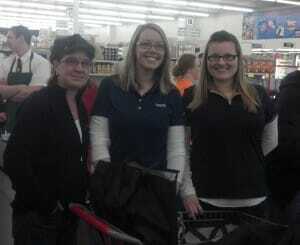
Julie, Laura, & Amy at the end of the “Breakfast Battle”
Just yesterday, Latham Hi‑Tech Seeds participated in the 2nd Annual Franklin County Farm Bureau Breakfast Battle. This event, held in honor of National Food Check-Out Week, promotes the abundance and safety of our country’s food supply. One interesting fact shared during the event was that each year National Food Check-Out Week is celebrated at the time that most Americans have earned enough of their annual income to purchase all the food they will need in a year. How fortunate we are to have an abundance of safe and affordable food to be able to pay for it in two months’ time!
National Food Check-Out Week celebrates the time when most Americans have earned enough of their annual income to purchase enough food for one year.
Latham Seeds was one of 9 businesses participating in this event. Battle began early last week with a “Facebook Fan Favorite” poll on Facebook. Many of you may have seen our calls for help in voting, and we THANK YOU for the great response! Latham Hi‑Tech Seeds was voted “fan favorite” of the event – an honor we’ve captured for the second year in a row. Team Latham edged out the number two team this year by almost 10 votes, receiving 10 seconds off our total time.
Yesterday at 8 AM teams met at Fareway in Hampton, Iowa, to compete in additional events including a challenging round of Ag Trivia. Each correctly answered question was worth 10 seconds off your grocery shopping time for the latter part of the competition. While the questions were tough, the Latham team brought down one correct answer for an additional 10 seconds off our total time.
The next step of the competition required each team to draw a menu from the stack. Our menu consisted of Chewy Granola bake for breakfast; lunch was a Creamy Egg Salad sandwich; and supper was Creamy Chicken and Vegetables. The challenge then was to race through the store selecting each of the required ingredients while spending between $45 and $50.
This year’s competition was even more intense than last year! While we didn’t come in first place, we did a great job of selecting items with a total of $46.66. Nine families will receive groceries and additional monetary donations collected through this event will go to neighboring food banks.
Having another battle under our belt, team Latham is feeling experienced and has already begun training to “do battle” again in 2014!
The countdown is on… just three days remain until the “world ends” due to sequestration. Who knows what will really happen on Friday, March 1? There have been so many threats made about the Federal budget; half-truths and mistruths abound.
Reading the White House fact sheet on how the sequester would impact the middle class, jobs and economic security could make a person question whether anyone will be able to survive. The last news release I read talks about cuts to education, small business, food safety, mental health, and the list goes on – and on!
U.S. Secretary of Agriculture Tom Vilsack, in an article posted Feb. 21 on agweb, said the USDA might be forced to make big cuts to its budgets that will disrupt service to farmers and consumers including:
Food safety;
The Farm Bill; and
Small businesses, which could have a negative impact especially on rural communities.
What troubles me the most is that all of the areas on the chopping block are vital to some American or some U.S. industry. Meantime, expenditures like aid to foreign countries and less vital programs, are never mentioned.
There are claims that we will have food shortages and many problems with food safety due to a lack of Federal workers. A potential furlough requiring every meat and poultry inspector nationwide to stay home for two weeks could effectively shut down the meat industry. These particular claims concern me since my livelihood is based on producing pork.
Consumers must be able to purchase food from the meat counter with confidence, so that we’ll continue to have strong markets for our products. But wait… Some have said that Americans would be healthier with less meat in their diets.
“A meat industry shutdown would actually give consumers — and their bodies — a much-needed break from the foods that are causing our nation’s worst health problems,” writes Susan Levin on thecalifornian.com.
Talk about misleading! It’s clear from reading Levin curse “factory farms” that she’s never visited with a family farmer like myself.
Why can’t we just agree that eating healthy can include meat as a very good source of protein and vitamins? Eating fruits and vegetables play an important role in a healthy, and getting enough exercise should always be one’s goal. “Balance” and “moderation” are often overlooked in favor of self-interest and special interests groups.
This whole process of “working on the federal budget” has turned into a publicity stunt. There will be disruption and hardships for many people as a result, but it’s doubtful that we’ll starve. Food is still being produced by farmers like me. Grocery stores will remain open. This country will eventually move ahead. But, the next few days will be telling as to whom and what floats to the top!
“The Accord” Shows How Group of Committed Citizens Can Impact Policy
There are so many political issues that impact not only the seed industry, but agriculture in general, that it’s important to engage in the political process. We must let legislators and rule makers know how proposed laws and rules could and do impact our business. Sometimes they have good intentions, but their laws or rules have unintended consequences.
We can become so involved with the day-to-day tasks involved with running our businesses and farms that it can be difficult to follow issues and anticipate how they might impact our livelihoods. However, we must make time! We can’t just rely on paid lobbyists to represent our best interests. While lobbyists play an important role, they can’t entirely replace a constituent’s voice – or vote.
Remember these famous, wise words of Margaret Mead:
Never doubt that a small group of thoughtful, committed citizens can change the world; indeed, it’s the only thing that ever has.
During the Iowa Seed Association’s (ISA) annual meeting last Wednesday in Des Moines, John Latham spoke about several issues of interest to seed professionals in attendance. Three issues that could have the largest and/or most immediate impact on the seed industry are: (1) the Accord; (2) food labeling; and (3) seed treatment stewardship.
Today I’ll focus on the Accord, which will allow access to seed technologies after a patent on technology expires. The Accord went into effect on Nov. 15, 2012. A news release announcing this landmark agreement opens by stating:
The Biotechnology Industry Organization (BIO) and the American Seed Trade Association (ASTA) announced today that the Generic Event Marketability and Access Agreement (GEMAA) is now effective. Following its launch on October 31, five BIO and ASTA member companies and agriculture biotech providers – BASF Plant Science, Bayer Crop Science, Dow Agro Sciences, DuPont Pioneer and Monsanto Company – have all signed on as signatories.
Why does this matter? Here’s my personal take…Roundup Ready® soybeans, the world’s most widely adopted biotech trait, is set to go off patent soon in the United States. Monsanto, which first development this technology, in 2009 introduced second-generation Roundup Ready soybean technology. This means Monsanto is developing new soybean products based off the Genuity® Roundup Ready 2 Yield® technology platform, and Monsanto is licensing this next-generation technology to companies like Latham Hi‑Tech Seeds. Companies like Pioneer and several universities have breeding programs based off the original Roundup Ready platform, so the Accord allows them to continue offering soybean brands containing the original Roundup Ready trait.
The Accord creates a process based on binding contractual relationships, so regulatory and stewardship obligations are maintained. It encourages innovation among biotech providers as they invest in product development. It provides technology choices to seed companies like Latham. And, it means farmers will be able to purchase soybeans with some form of the Roundup Ready trait even after the patent expires. Win, win, win!
Today through Friday, you can bid for your chance to get tickets to the Iowa State Men’s Basketball Game which is next Monday. All the proceedes will go to the American Cancer Society. The Bid is now up to $125 so make sure you click on the picture to bid. (comments on this post will not count towards the bidding)
For the Love of Food: Farmers & Consumers Must Bridge the Communications Gap
“Musings of a Pig Farmer”
By Larry Sailer
Michele Payn-Knoper, Michael Libbe and Larry Sailer share “food love” on Valentine’s Day. Michele is author of “No More Food Fights!” and Larry is one of 35 contributing writers. Michael is host of “Insight on Business.”
Last Tuesday I wrote a blog about how farmers spend their time when there aren’t any crops in the fields. I mentioned that winter is the “meeting season,” and today I want to share highlights of one particular meeting I had on Valentine’s Day in Des Moines. I got to share some “food love” while making media visits with Michele Payn-Knoper (pronounced “Pain – Ka-nope-r”).
A food and farm advocate, Michele wrote No More Food Fights! Growing a Productive Farm & Food Conversation. This is the first-ever book to speak to all sides of the food movement in an attempt to bridge the divide between farmers and consumers. I had the honor and privilege of being one of 35 contributing editors. Chefs, registered dieticians and Olympic athletes also share their stories.
“Food and farming seem to have become the new politics and religion,” says Michele during an interview last Thursday with Michael Libbe, host of Insight on Business. “You don’t dare talk about it with people because you don’t want to get your friends upset with you. That’s really unfortunate.”
More than 98% of Americans are several generations removed from first-hand farming experiences and very few have even visited a farm. Most are very disconnected from and distrusting of modern agriculture, writes Michele in a No More Food Fights!news release. At the same time, Michele says many farmers have done a poor job of talking about today’s farming practices. Not enough farmers are taking advantage of tools like social media that could help facilitate connections to the farm that food buyers crave.
To satisfy your own craving for knowledge, check out No More Food Fights! It’s providing me with great insight as I work to bridge the communication gap with consumers through social media and presentations.
That reminds me… I’m looking forward to getting together Friday evening and all day Saturday with fellow #agnerds and #agvocates at the AFC Upper Midwest Regional Conference.
Before I head north to that conference in Minnesota, I must head south for another meeting. Today I’m making about a 90-minute trip south to the Statehouse in Des Moines where Iowa Farm Bureau members will visit elected officials. Side note: Anyone can be a member of Farm Bureau. You don’t need to be a farmer to become part of the IFBF’s grassroots efforts either. Members can sit in on board meetings or even go to the member section of the web site and voice your opinions on topics ranging from education to what our kids (or grandkids in my case) eat in school. #Schoollunchrules
Thursday, in the middle of a forecasted blizzard, I’m planning to attend a PQA Plus continuous improvement program for pork producers. Although I’m not due to renew my CEU’s, this class is being held right within 10 minutes of my farm. That’s too good to pass up! I can always learn something.
This busy week is sure to be disrupted by weather, but we’ll “play the hand that Mother Nature deals us.” How’s your week looking?
One technology to help maximum yield potential is Roundup Ready® Xtend Crop System for soybeans. Also in Monsanto’s pipeline is Corn Rootworm III Technology, designed to complement current commercial traits. This “next generation corn rootworm technology” will attack corn rootworm through a new mode of action using a natural process different than Bt.
New programs for Goss’s Wilt protection and Gray Leaf Spot resistance also are in the pipeline. . Monsanto’s Ag Biologicals Platform is focusing on BioDirect™, which is designed to target glyphosate-resistant weeds for better control. BioDirect™ was also seen to provide protection against insect pests and reduce symptoms of viruses.
While weed management and pest protection are certainly two important factors when maximizing yield potential on each acre, seed selection is perhaps the single most important factor. Traited products from Latham Hi‑Tech Seeds combine industry-leading genetics with industry-leading traits from technology providers like Monsanto.
NOTE: Not all traited products offer rootworm protection. Herculex I, for example, has resistance/tolerance to Liberty, Roundup and corn borer. Herc 1, however, does not protect against corn rootworm. A person can’t just assume that a “Bt hybrid” will have rootworm protection.
Take some time now to review what seed you’re planning to plant in which fields. Planning pays! Seed can have a 700% return on investment… What else does?