Latham Hi‑Tech Seeds is releasing five new Latham® soybeans brands and 15 experimental lines with the Roundup® Ready Xtend soybeans technology in maturities from Early Group Zero to Early Group 3. Midwest farmers can plant these Xtend products this spring to test product performance before full-size commercialization happens in 2017.
We’ve been waiting for Xtend approval for years to fight weed resistance. It’s so exciting that this trait has finally been approved in China! The finish line is in sight for full-scale commercialization as the Xtend herbicide is pending approval by the Environmental Protection Agency (EPA).
Because EPA has yet to approve dicamba for over-the-top use on these new soybean products, we’re treating 2016 as a trial year for Roundup 2 Xtend soybeans. Latham customers have come to expect strong genetics and disease packages from our company, so we’re especially excited about the potential of offering some of our most popular genetics with the Xtend technology. New Latham brand soybean products for 2017 include a RR2 Xtend version of our top-selling Latham 2084R2 with the IRONCLAD designation for unmatched disease protection with unparalleled yield.
Farmers should treat RR2 Xtend soybeans the same as Genuity® Roundup Ready 2 Yield until the dicamba-based herbicides become approved. Roundup Ready 2 Xtend soybeans are tolerant to both glyphosate and dicamba herbicides. Until EPA grants approval, however, it’s illegal to use of dicamba herbicides.
Liberty Link is currently the only non-selective alternative to the Roundup (glyphosate) weed control system. Latham Seeds offers a full lineup of LibertyLink® soybeans also in many different maturities and disease packages for 2016 planting.
To learn more about the products that are best suited for your farm, visit lathamseeds.com or call 1.877.GO.LATHAM (1.877.465.2842) to be connected with a Latham representative in your area.
“Will to Win” is Common Denominator Among Cyclones & Cancer Patients
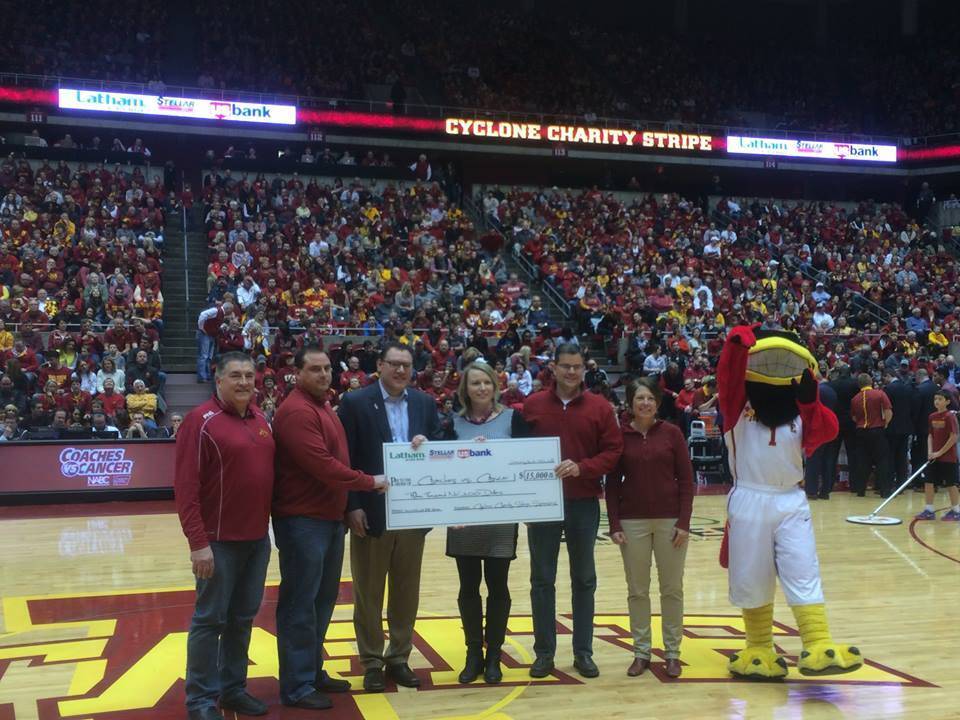
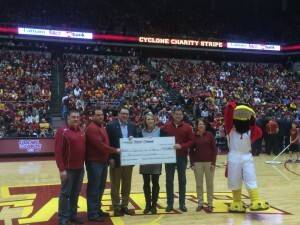
For the fourth year in a row, Latham Hi‑Tech Seeds has partnered with two other Iowa companies to support the Cyclone Charity Stripe. This promotion raises money for every free throw that the Iowa State Cyclones Men’s Basketball team makes during the basketball season, and donations benefit the American Cancer Society through Coaches vs. Cancer.
Coaches vs. Cancer was championed by Norm Stewart, former head coach of the University of Missouri men’s basketball program. As a cancer survivor and member of the National Association of Basketball Coaches (NABC), Stewart challenged fans to pledge a dollar amount for points made by his team. The American Cancer Society and the NABC adopted that concept in 1993, transforming it into a nationwide effort “to provide help and hope to people facing cancer.”
Providing help and hope to people facing cancer is something our family is passionate about due to first-hand experience. On February 20, 2010, former Latham Seeds’ president Bill Latham underwent a stem cell transplant to battle Acute Myelogenous Leukemia (AML). That transplant was extended his life more than five years, and we are grateful for the great care he received until he lost his earthly battle July 31, 2015.
Bill, father of John and Chris, was an avid Cyclone supporter and a season ticket holder for both football and basketball. He would have loved the will to win on display last Saturday when the 14th-ranked Cyclones defeated No. 24 Texas in an 85-75 victory in a packed Hilton Coliseum.In the first half, Georges Niang scored 13 consecutive ISU points, including three consecutive 3-point baskets.
During a break in the action last Saturday, three Iowa companies were recognized for their support of the Cyclone Charity Stripe. Latham Seeds is proud to support this great cause for four consecutive years. Click below for a season-by-season recap of our donations:
This morning I read an article about the possibility of a processing plant – with the potential for 800 jobs – coming to North Iowa. From the comments posted under this article on Facebook, it’s clear that area residents have questions and are raising concerns. That’s why today I’m addressing some of the comments posted by area residents, and I’m sharing why I believe this could be good for Iowa farmers and residents alike.
Rural Iowa needs jobs! Increased employment rates have a ripple effect on the whole economy. Houses get built, or at least remodeled, and occupied. Most small towns have houses that need a family to live in them. Main Street businesses survive because houses in which employed people live bring in business. In turn, property tax revenue makes it possible to improve local schools and roads. See how bringing a processing plant to North Iowa could be a win-win?
It’s too bad there already seems to be some bias against the proposed new business. For starters, the article I read didn’t have the most favorable headline. It called this facility a “slaughterhouse,” which doesn’t exactly conjure up the most pleasant images to non-farmers. The article also included an unpleasant image of a pork carcass on the processing line.
As a farmer, I always try to think of how other people imagine farms. I want non-farmers to see why I feel blessed to work this land, and why farmers feel such a sense of duty and responsibility to the livestock we raise. We take our jobs as stewards seriously.
Not every day on our farm is filled with rainbows – or even sun dogs – and blooming plants. I understand the realities of this situation. When we bring in feeder pigs, we know their mission is to become meat on the table. Our market animals serve the purpose of feeding others, but farmers do what we can to give our livestock the best quality of life. This is why most hogs today are raised inside barns where they’re protected from the winter weather like the terrible blizzard we’ve experienced the past two days.
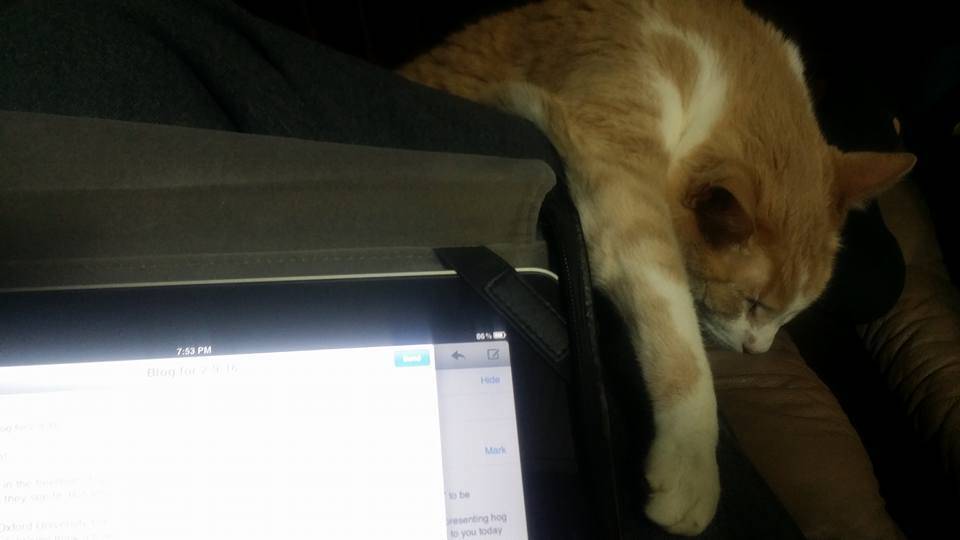
As I worked on writing this blog, one of my cats was sleeping on my lap. I don’t think Buddy would enjoy being outside today. As much as I enjoy spending time with my pet, I know that Buddy won’t be with us someday. All life comes to an end.
Farmers respect both life and death. The pork industry, for example, has programs like Pork Quality Assurance (PQA) and Trucker Quality Assurance (TQA) to make sure everyone knows the best way to handle pigs. The “We CareSM Initiative” reminds us that everyone throughout the pork supply chain plays a role in building and maintaining trust in the industry.
Every day farmers like me consider how our actions impact our livestock, our workers and the environment. Because I have delivered market pigs, I know there is cooling water available so truckers can keep pigs cool until they’re unloaded from the trailers. When the pigs are unloaded, inspectors keep a watchful eye on how the pigs are handled.
Pigs cannot be mistreated. Our protocol does not allow hitting or even cussing at a pig to get them loaded, unloaded or at any time. (If you’ve ever handled livestock, you know how frustrating it can be. Not cussing can be a challenge!) Pigs may not even be handled roughly after they die. The auditing and inspection process has gotten very involved, and I just want consumers to understand there are protocols in place.
It can be so easy to stop a new idea – to stop change – before all sides are even considered. Let’s look at the upside and grab opportunities when we can. We need to let Mayor Bookmeyer know he has our support!
Brief Run, Big Party… Join Cupid’s Undie Run on Feb. 13
Cupid’s Undie Run is a mile(ish) run in your “bedroom-best” and it’s coming to Mason City on Saturday, February 13! Festivities get underway with a pre-party at Music Man Square at noon on Saturday, followed by running and dancing around the downtown Mason City course plus post-race fun and awards.
Why an Undie Run?
Neurofibromatosis (NF) is a genetic disorder that causes tumors to grow on nerves throughout the body, which can lead to blindness, deafness, learning disabilities and severe chronic pain. The Children’s Tumor Foundation is the world’s largest non-government organization dedicated to ending NF through research. One family every day of the year will find their world turned upside down as they learn their child has a rare nerve disorder called NF. This news will be followed by MRI’s, doctor’s visits and therapy sessions but no cure.
Cupid’s Undie Run was created to help raise funds and find a solution to end NF through research guided by the Children’s Tumor Foundation. Undie Runners face their fears and defy cold weather to help raise funds for a cure. The first Mason City Run held in 2014 raised over $40,000 — and that was more than the Charleston, Omaha and Louisville events combined! In 2015, race director Loni Dirksen led the event to blow past their first record raising $57,000 to support the cause. While all the funding goes to support NF research around the U.S., Loni was happy to report that a majority of last year’s funds raised in Mason City were given to the University of Iowa Children’s Hospital. It’s great to know all our efforts are benefiting children right here!
#NorthIowaBloggers are Fundraising Their Pants Off in Memory of Amy
Everybody knows running in your undies is more fun with friends, so for the second consecutive year, a few like-minded cherubs from the North Iowa Bloggers group have banded together to form a team! This year’s team is special as they are running in memory of our dear co-worker and friend Amy Hild. Amy would’ve been a three-time participant this year. It’s fitting that more are coming together to support a cause she was passionate about and remember her fun-loving spirit.
What to Expect Running in Mason City Cupid’s Undie Run 2016.
If you’re on the fence about participating, know that the Undie Run is strictly a fun run. There are no times or winners, except top fundraisers. Costumes are encouraged and are part of the fun! Some runners will be in full out skivvies, but some of us (me included in previous races) chickened out and wore winter running gear. From tutus to bathrobes to speedos and lingerie, you’ll see it all at Cupid’s Undie Run. Pack light, keeping it to only the essentials (your ID and undies!) Make sure someone in your group has a camera though to capture the hilarity as you fundraise your pants off for this great charity.
If you’re not able to join the fun during the run, you can support team #AmysGift! As of Feb 7, Undie Run Mason City had raised $43,132 with a goal of $85,000. Check out links below for more info on how you can help them reach it!
Iowa Has Spoken… Remain Engaged in the Political Process
My granddaugther’s daddy was deployed soon after she was born, so I wear RED on Fridays to Remember Everyone Deployed, says Larry Sailer. My heart is heavy with everything that is happening in the world. I truly fear for our next generations. but I have faith and know there is a plan!
There are so many issues that are important to me: the Constitution, the right to free speech, right to bear arms, states’ rights, overreaching federal government, over regulation… and so many more!
What are your concerns? Is the huge buildup of armed forces by government agencies concerning you? Did you know the Environmental Protection Agency (EPA) has spent millions of dollars over the last decade on military-style weapons to arm its 200 “special agents” to fight environmental crime? Government agencies like the USDA and the EPA have more fire power than the U.S. Marines. This is an alarming time in our country’s history! Why are government agencies arming themselves?
The show of force this past week in southeast Oregon raises many questions. How do these men and women justify killing an American, who was peacefully protesting? Have U.S. regulators been brainwashed into taking force? People entering the U.S. armed forces pledge to defend the U.S. constitution from enemies, foreign and domestic. How are the armed forces of the USDA trained? If this doesn’t scare you, you need to do some reading!
The direction this country is taking is concerning. Government programs are paying better than some jobs, which is a disincentive for some people to seek employment. Healthcare programs are costing more than promised. Taxes are sky rocketing, yet government debt is growing. American government officials have sold uranium to Russia through non-profit corporation.
Enough is enough. It’s time to take a stand.
When our founding fathers wrote that we are all “equal,” they didn’t mean each kid should get a participation ribbon or everyone should go home with a trophy. They didn’t mean that everyone has the right to have equal amounts of everything. They meant that everyone has equal opportunity! Too many people don’t understand that opportunity is often disguised as work and requires one to accept personal responsibility.
Much work needs to be done, so future generations can live the American dream. That’s why it’s so important to keep following the election cycle. Even though Iowa has spoken through its first in the nation caucus, we must keep elected officials feet to the fire.
Talk to the candidates about issues that are important to you and learn their positions on those issues. Talk with current elected officials about how proposed laws could affect your livelihood. Inform them. Remember, elected officials have been elected to represent constituents – you and me – as they lead our country. Let’s give them some direction!
If I could have dinner with a famous person, I’d be torn between Debbie Macomber and Nicholas Sparks.
My dream is to write a children’s book.
All my life I’ve been hoping to catch a trophy fish. I’ve been to the Walleye Capital but only came home with dinner.
My favorite pastime is reading because good books can take you places you’ve never been.
It’s my goal to visit all 50 U.S. states before I turn 51.
Trips to Switzerland, Italy and Greece top my travel wish list. Another bucket list item is attending the Christmas Market in Germany.
I have a passion for punctuation and love alliteration.
This world needs more cheerleaders, so I make it a point to compliment at least one person in each meeting that I attend.
I have my motorcycle license.
For my 40th birthday, I debated whether to get a butterfly tattoo or to buy a Harley. I didn’t get either.
Like Thoreau, I’d rather sit alone on a pumpkin and have it all to myself than be crowded on a velvet cushion.
Enchanted Acres pumpkin patch is my happy place. I started it in 2012 to help families make memories and to help consumes connect with farmers.
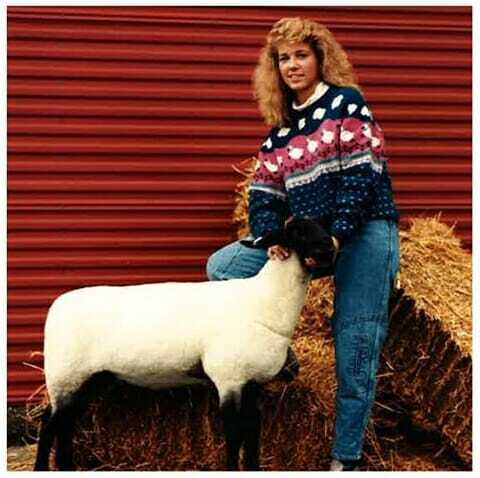
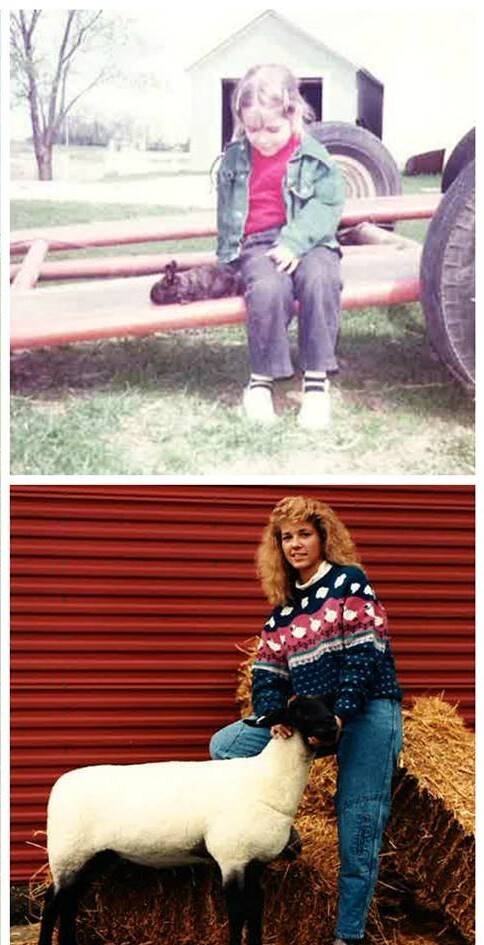
My first business checking account was opened when I was 10 years old for my 4-H sheep project.
While attending the 4-H Washington, D.C. Focus trip as a junior, I learned about lobbying. My first full-time job was serving as a lobbyist for agribusiness.
I won the state 4-H award for Ag Careers, earning a trip to National 4-H Congress.
Although I’ve been a Girl Scout leader for 9 years, I have yet to cook outdoors with a Dutch oven.
I was a charter member of the North Butler FFA. I was also the only female member and chapter president.
My favorite car was a candy apple red Pontiac Grand Prix with a sunroof and spoiler.
One of my favorite things about being a Mom is watching my kids discover what makes their eyes light up. For my son, it’s playing basketball all over North Iowa. For my daughter, it’s the perfect lope around the show ring on the back of her horse.
If you would’ve asked me what I wanted to be when I was a child, I would’ve said a veterinarian.
One year Santa delivered a goat named “Merry” on Christmas morning.
I grew up with cats but our family’s Black Lab, Bailey, has turned me into a dog lover. No one is happier to see me come home than she is!
Trying new recipes is a favorite past time, and my love of food prompted Friday’s featured recipes on TheFieldPosition.com.
I earned my bachelor’s degree from ISU and my MBA from the University of Iowa, but my loyalties are not evenly split. Iowa may have gotten my money but ISU has my heart
Iowa is the Hawkeye State, but I’m a proud member of cyclONEnation!
It feels like the 2016 presidential election has been underway for months because our mailboxes have been stuffed with campaign mailers, and our answering machines have been filled with messages from campaign camps. But in reality, this process is just beginning! National media are moving into Des Moines, Iowa’s capitol city, to set up for Friday night’s GOP debate. Then on Feb. 1, our state will host the renowned “first in the nation” Iowa Caucus.
As much as we’d like to tune out all of the noise, it’s vitally important to our livelihoods that we engage in the process. Whom we elect really does make a difference! Viewpoints of the U.S. president impact how he appoints members of the cabinet and influence rulings made by agency administrators. Did you know that many regulations are not passed by our elected officials but instead are made by “rulemakers,” or governmental agencies like the Environmental Protection Agency (EPA) and the U.S. Department of Agriculture (USDA)?
Once again the U.S. EPA is trying to slip Waters of the U.S. (WOTUS) passed all of us. This new writing of an old law was sold as a clarification. Officials said they would clear up what bodies of water and how much land around those waters could be controlled by the EPA. The EPA makes any organization or individual who opposes WOTUS look like they are against clean water. The truth is, we all want clean water!
It’s important to understand the true agenda here… WOTUS isn’t about clean water – it’s about control!
A girl listens to a presidential candidate in December during a caucus campaign stop in Greenfield, Iowa. Photo by Joseph L. Murphy
A bill introduced by Iowa Senator Joni Ernst would repeal what the EPA was trying to do. This bill passed the House and Senate with by partisan backing, however, it was vetoed by President Obama. Last Saturday I attended a meeting in Allison, Iowa, where Sen. Ernst explained that WOTUS is now being held up by a court ruling. This regulation might be tied up for years in the court system.
My family and I drink the water from the well on our farm, so believe me, we’re concerned about clean water. Here are a few reasons why this clean water regulation is bad:
WOTUS would require farmers to have permits before implementing conservation practices, such as terraces, could be built. Permits would discourage conservation because permits cause delays and cost money. Farmers – voluntarily – have been making huge strides in conservation!
It’s possible that almost every house in town could need a permit to landscape, build a fence or make a playhouse for your kids! If water runs into your basement, it could be regulated by the EPA under WOTUS. In fact, 97% of land in Iowa and 99% of Missouri would fall under control of this regulation. Yes, the land on which buildings and factories have been built – in towns and cities – would fall under the jurisdiction of WOTUS.
Keep in mind what’s already happening all over this country in the name of endangered species, property rights, water rights or grazing rights. The rights we, as farmers and ranchers, think we have are being taken away. This regulation is just an extension of all those laws and it’s all a government effort to take control!
Next week is the beginning of the voting process with the Iowa caucus. Cast aside glamor and appeal, and cast your vote! It’s time to elect officials who will do right by this country and protect our freedom to operate. Freedom is not free, and neither are all the things being promised by some of the candidates. When someone promises to give something for free, remember it was first earned and then taken away from someone else!
I’d like to share this week about how government bureaucrats have made laws and regulations that seem to have the opposite effect of what they intended. Here in Iowa, there have been many rules and regulations enacted to help the small farmer. Small farms are thought to be family farms.
Although many tend to associate small farms with family farmers, the USDA’s National Agriculture Statistics Service shows that 97% of farms are family farms. Many people equate the number of small farms to the number of people working locally, the number of kids enrolled in local schools, as well as the health of Main Street businesses in small town. Two problems come to mind with this reasoning: (1) Farms must be profitable to help the local economy, and (2) small farms normally have a tougher time with regulations.
Larger farms have staff and more scale to spread these costs over. On my small crop farm, it’s more difficult to use newer technology or to implement new conservation practices due to high costs. For example, if I am required to get permits for water discharge, I have fewer acres across which to spread such costs.
On a bigger scale, we can look out West to where federal government is battling ranchers over control of the ground for the sake of wildlife. Government agencies have kicked ranchers off their range and stopped timber harvest, yet the number of animals the government is trying to protect has actually declined. Forest fires have been bigger where timber harvest has stopped, and wildlife is doing better where the property was managed by private individuals who needed to make a profit to stay in business. I just read a story that says massive amounts of money is needed to trim the Sierra forests. Because these forests have become so overgrown under federal management, there massive forest fires are a real concern. It sounds like many federal policies are neither good for old growth trees, wildlife nor taxpayers!
There has been a movement – a strategy by environmental groups to sue government agencies – to make them take these actions. Basically law is being made by a court decree without due process or public debate. The government agency caves in to the lawsuit, and new policy is made.
Now we’re seeing the disastrous side-effects that can result from this type of action! A big debate is taking place as over whether the federal government can legally own this ground in the West. But the truth is, the government is buying more and more property every day. There are public employees that have this as their only job. The more property that is purchased, the more property is taken off the property tax roll. As a result, this land become a cost instead of a revenue generator for the U.S. government.
Our country treatment of land – and of farmers and ranchers – is largely dependent upon who holds the highest office. With the election season is upon us, there are many politicians saying what they think certain groups want to hear. It can be a lot to listen to, I know. But take the time to really listen and understand what the unintended results will be. It’s your civic duty!
New Dietary Guidelines Offer Small Victories for Farmers
I often talk about how laws and government regulation impact farmers. Today I’m going to revisit a topic that will interest of nearly every American, regardless of how you make your living… food!
Federal dietary guidelines are released every five years. On January 7, new guidelines were issued to shape American’s food choices. Perhaps more importantly, these guidelines shape purchases made by meals programs offered by public schools, hospitals, prisons and the military. Even the Supplemental Nutrition Assistance Program (SNAP) uses federal guidelines to suggest what people using this program purchase.
These guidelines impact the buying decisions of millions of Americans, so they have a huge impact on entire industries like the beef, pork and eggs. When preliminary dietary guidelines were issued late last winter, the advisory committee suggested that Americans should decrease their red meat consumption for sustainability reasons. A group of “advisors,” thinking they are saving the planet, falsely think that raising meat causes more harm to Mother Earth.
Recent studies have shown that when comparing food – calorie for calorie – meat is more efficient for our environment! Fortunately, the sustainability factors were removed from the final guidelines that were released last week.
The newest dietary guidelines call for Americans to choose lean meats and limit red meat consumption. This, too, is a partial win as studies show that lean beef and lean pork can have positive benefits in a diet. Beef naturally provides essential nutrients such as zinc, iron, protein and B vitamins. Pork chops, which are nearly as lean as chicken, provide iron, potassium and other essential nutrients.
Fat, or marbling, adds flavor to meat. It not only tastes good but some fat is good for you! Fat is a necessary part of a balanced diet. Fat provides your body with energy, as well as help move the vitamins A, D, E and K through your bloodstream. Essential fatty acids play a role in brain development, blood clotting and managing inflammation.
Ironically, Americans were told for years that fat was bad. The no-fat diet became a fad, but now the “experts” are reversing their recommendation. More recent research shows that what people ate in place of fat – carbohydrates from processed foods and sugary drinks – led to more obesity and disease.
The 2015-2020 U.S. Federal Dietary Guidelines urge Americans to reduce their overall sugar intake, while also adding “good fats found in salmon, avocados and nuts” to their diets. I know these guidelines can lead to food trends, but you can bet that I won’t be replacing my pork loin with grilled fish!
guest blog post by Aaron Putze, Director of Communications & External Relations, Iowa Soybean Association
The nation’s longest-serving governor has always been ready to take on a challenge.
And as another legislative session gavels in today (Jan. 11), Iowa Gov. Terry Branstad will propose the biggest and boldest initiative he’s put forth as the state’s chief executive.
Those are his words, not mine.
The legislative proposal, to be a signature piece of his State of the State Address tomorrow, would increase funding for education and water quality initiatives without raising taxes.
Flanked by Lt. Gov. Kim Reynolds, U.S. Ag Secretary Tom Vilsack, several school superintendents, farmers and farm association leaders, Branstad outlined the details of the proposal during a news conference held at the Iowa Capitol Jan. 5. It’s a proposal that has already drawn strong support from farmers, school administrators and farm organizations, including the Iowa Soybean Association.
At the heart of the proposal is a 20-year extension of the Secure an Advanced Vision for Education program (SAVE). Enacted on July 1, 2008, SAVE dedicates one penny of the state’s six-cent sales tax for school infrastructure projects, or $3.2 billion since its inception. With SAVE to sunset in just 13 years, school officials are already finding it difficult to secure bonding for needed improvements to facilities and classrooms.
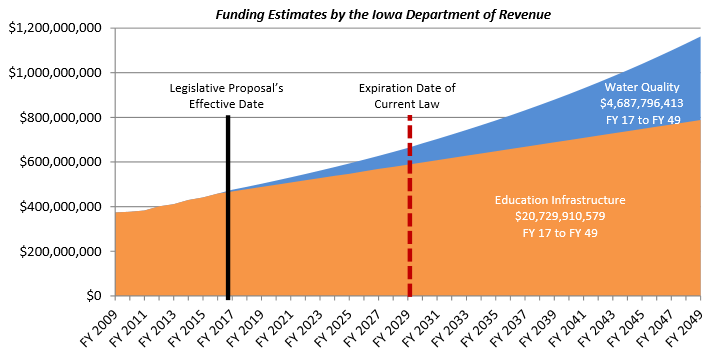
Branstad’s proposal would provide stable and long-term funding to schools by extending SAVE through Dec. 31, 2049. It would guarantee schools a minimum projected base of $458 million annually plus the first $10 million in anticipated annual growth beginning in fiscal year 2017. Combined, these revenues would total an estimated $20.7 billion.
Additional revenues generated by SAVE – estimated at nearly $5 billion – would fund nonpoint water quality efforts administered by the Iowa Department of Agriculture and point source water quality activities through the Iowa Finance Authority and Iowa Department of Natural Resources.
As you can see from the trend line, Branstad’s proposal solidifies the SAVE program through 2049, allowing schools to continue to plan for bonding school infrastructure (same steady increasing trend shown in orange) while avoiding any further implications on taxpayers. The blue portion indicates the part of pre-existing tax (GROWTH portion only) to be used to fund water quality initiatives in Iowa. Two very important issues in need of support from Iowans.
“This plan works for schools, farmers and Iowa,” Branstad said. “It funds school infrastructure improvements over the long term and spurs greater collaboration and implementation of the state’s nutrient reduction strategy.
“The challenges associated with water didn’t occur overnight and they won’t be solved overnight,” he added. “But we can make real and meaningful progress without raising taxes.”
It’s an intriguing concept. Schools and water quality are both priorities for Iowa and several prominent school administrators favor SAVE’s extension sooner rather than later.
Dr. Paul Gausman, superintendent of schools for the Sioux City Community School District, attended the Jan. 5 news conference at the statehouse and said SAVE’s extension is critical as educational facilities continue to age. The proposal, he said, would allow schools to move important infrastructure improvements forward. That’s critical in many communities, including Sioux City, were deteriorating facilities need attention and in Waukee, where new facilities are needed.
Waukee Superintendent of Schools David Wilkerson disagreed with reporters who, during the news conference, said Branstad’s proposal would divert funding from education to the environment.
“We’re not taking anything away from schools because, without enactment of this proposal, there’s no guarantee that the one-cent sales tax will be renewed when it expires in 2029,” Wilkerson said.
“It’s also important to note that our schools do not exist in isolation in our communities,” he added. “We depend on a strong farm economy and our farmers. We look forward to working with them on this important issue.”
Wilkersons points are extremely valid. After all, there’s no guarantee that schools will be capable of bonding as the clock ticks down to 2029. Nor is it a sure thing that Iowa’s governor and the state legislature will renew it in 2029, or before, for that matter.
U.S. Secretary of Agriculture Tom Vilsack said the Governor’s initiative was a far more productive solution to improving water quality than lawsuits and finger-pointing.
“I believe that what the governor has outlined will lead to better water quality and greater collaboration,” he said.
When asked by reporters to handicap the odds that the proposal would gain favor among lawmakers, Vilsack pushed back.
“You don’t want perfect to be the enemy of good. And if someone has a better proposal, than put it on the table,” he said.
Iowa’s former governor also summoned a spirit of collaboration – one that Iowans have long been known for.
“We’re all in this together,” Vilsack said. “This is an Iowa problem and the only way it gets solved is to work together in a collaborative way. If this doesn’t get solved, farmers won’t know what to do, lenders won’t know what to do and communities will suffer. It is about being big and bold and dealing with realities of today.”



 former head coach of the University of Missouri men’s basketball program. As a cancer survivor and member of the National Association of Basketball Coaches (NABC), Stewart challenged fans to pledge a dollar amount for points made by his team. The American Cancer Society and the NABC adopted that concept in 1993, transforming it into a nationwide effort “to provide help and hope to people facing cancer.”


 research. One family every day of the year will find their world turned upside down as they learn their child has a rare nerve disorder called NF. This news will be followed by MRI’s, doctor’s visits and therapy sessions but no cure.