Skip to content
Latham Hi-Tech Seeds

(641) 692-3258

  • Home
  • Performance
  • Products
    • Corn
    • Soybeans
    • Alfalfa
    • Corn Silage
    • Seed Guide
  • Find a Rep
  • Media
    • Blog
    • News
    • Videos
    • Podcasts
    • TECHTalk
  • About Us
    • Company History
    • Our Mission
    • Careers
    • Become a Rep
    • Sowing Seeds of Hope
  • Contact Us
  • Latham Hi‑Tech Seeds

    Brief Run, Big Party… Join Cupid’s Undie Run on Feb. 13

    Cupids 2015 Amy Hild Mod Photography

    Cupid’s Undie Run is a mile(ish) run in your “bedroom-best” and it’s coming to Mason City on Saturday, February 13! Festivities get underway with a pre-party at Music Man Square at noon on Saturday, followed by running and dancing around the downtown Mason City course plus post-race fun and awards.

    1961381_10101664424177570_2065889275_nWhy an Undie Run?

    Neurofibromatosis (NF) is a genetic disorder that causes tumors to grow on nerves throughout the body, which can lead to blindness, deafness, learning disabilities and severe chronic pain. The Children’s Tumor Foundation is the world’s largest non-government organization dedicated to ending NF throughCaptivating Kreations Photography Cupids Undie Run Mason City research. One family every day of the year will find their world turned upside down as they learn their child has a rare nerve disorder called NF. This news will be followed by MRI’s, doctor’s visits and therapy sessions but no cure.

    Cupid’s Undie Run was created to help raise funds and find a solution to end NF through research guided by the Children’s Tumor Foundation. Undie Runners face their fears and defy cold weather to help raise funds for a cure. The first Mason City Run held in 2014 raised over $40,000 — and that was more than the Charleston, Omaha and Louisville events combined! In 2015, race director Loni Dirksen led the event to blow past their first record raising $57,000 to support the cause. While all the funding goes to support NF research around the U.S., Loni was happy to report that a majority of last year’s funds raised in Mason City were given to the University of Iowa Children’s Hospital. It’s great to know all our efforts are benefiting children right here!

    1898095_10153818400745231_2085178620_n

    #NorthIowaBloggers are Fundraising Their Pants Off in Memory of Amy

    Everybody knows running in your undies is more fun with friends, so for the second consecutive year, a few like-minded cherubs from the North Iowa Bloggers group have banded together to form a team! This year’s team is special as they are running in memory of our dear co-worker and friend Amy Hild. Amy would’ve been a three-time participant this year. It’s fitting that more are coming together to support a cause she was passionate about and remember her fun-loving spirit.

    Cupids 2015 Amy Hild Mod Photography

    What to Expect Running in Mason City Cupid’s Undie Run 2016.

    If you’re on the fence about participating, know that the Undie Run is strictly a fun run. There are no times or winners, except top fundraisers. Costumes are encouraged and are part of the fun! Some runners will be in full out skivvies, but some of us (me included in previous races) chickened out and wore winter running gear. From tutus to bathrobes to speedos and lingerie, you’ll see it all at Cupid’s Undie Run. Pack light, keeping it to only the essentials (your ID and undies!) Make sure someone in your group has a camera though to capture the hilarity as you fundraise your pants off for this great charity.

    If you’re not able to join the fun during the run, you can support team #AmysGift! As of Feb 7, Undie Run Mason City had raised $43,132 with a goal of $85,000. Check out links below for more info on how you can help them reach it!

    Register to Run: https://my.cupids.org/registration/

    Support Team Amy’s Gift: https://my.cupids.org/AmysGift

    bonnie-harris

    February 8, 2016
    Agriculture, General, Industry News
  • Latham Hi‑Tech Seeds

    Iowa Has Spoken… Remain Engaged in the Political Process

    RedShirt Friday
    My granddaugther's daddy was deployed soon after she was born, so I wear RED on Fridays to Remember Everyone Deployed, says Larry Sailer. My heart is heavy with everything that is happening in the world. I truly fear for our next generations. but I have faith and know there is a plan!
    My granddaugther’s daddy was deployed soon after she was born, so I wear RED on Fridays to Remember Everyone Deployed, says Larry Sailer. My heart is heavy with everything that is happening in the world. I truly fear for our next generations. but I have faith and know there is a plan!

    Now that the Iowa Caucuses are over, the election cycle has just begun!

    There are so many issues that are important to me: the Constitution, the right to free speech, right to bear arms, states’ rights, overreaching federal government, over regulation… and so many more!

    What are your concerns? Is the huge buildup of armed forces by government agencies concerning you? Did you know the Environmental Protection Agency (EPA) has spent millions of dollars over the last decade on military-style weapons to arm its 200 “special agents” to fight environmental crime? Government agencies like the USDA and the EPA have more fire power than the U.S. Marines. This is an alarming time in our country’s history! Why are government agencies arming themselves?

    The show of force this past week in southeast Oregon raises many questions. How do these men and women justify killing an American, who was peacefully protesting? Have U.S. regulators been brainwashed into taking force? People entering the U.S. armed forces pledge to defend the U.S. constitution from enemies, foreign and domestic. How are the armed forces of the USDA trained? If this doesn’t scare you, you need to do some reading!

    The direction this country is taking is concerning. Government programs are paying better than some jobs, which is a disincentive for some people to seek employment. Healthcare programs are costing more than promised. Taxes are sky rocketing, yet government debt is growing. American government officials have sold uranium to Russia through non-profit corporation.

    Enough is enough. It’s time to take a stand.

    When our founding fathers wrote that we are all “equal,” they didn’t mean each kid should get a participation ribbon or everyone should go home with a trophy. They didn’t mean that everyone has the right to have equal amounts of everything. They meant that everyone has equal opportunity! Too many people don’t understand that opportunity is often disguised as work and requires one to accept personal responsibility.

    Much work needs to be done, so future generations can live the American dream. That’s why it’s so important to keep following the election cycle. Even though Iowa has spoken through its first in the nation caucus, we must keep elected officials feet to the fire.

    Talk to the candidates about issues that are important to you and learn their positions on those issues. Talk with current elected officials about how proposed laws could affect your livelihood. Inform them. Remember, elected officials have been elected to represent constituents – you and me – as they lead our country. Let’s give them some direction!


    Larry Sailer, Musings of a Pig Farmer

    February 2, 2016
    Agriculture, General, Industry News
  • Latham Hi‑Tech Seeds

    25 Things about Shannon Latham

    10250326 805167319561234 248440138033160704 n1
    1. If I could have dinner with a famous person, I’d be torn between Debbie Macomber and Nicholas Sparks.Shannon Latham Latham Seeds
    2. My dream is to write a children’s book.
    3. All my life I’ve been hoping to catch a trophy fish. I’ve been to the Walleye Capital but only came home with dinner.
    4. My favorite pastime is reading because good books can take you places you’ve never been.
    5. It’s my goal to visit all 50 U.S. states before I turn 51.
    6. Trips to Switzerland, Italy and Greece top my travel wish list. Another bucket list item is attending the Christmas Market in Germany.
    7. I have a passion for punctuation and love alliteration.
    8. This world needs more cheerleaders, so I make it a point to compliment at least one person in each meeting that I attend.
    9. I have my motorcycle license.
    10. For my 40th birthday, I debated whether to get a butterfly tattoo or to buy a Harley. I didn’t get either.
    11. Like Thoreau, I’d rather sit alone on a pumpkin and have it all to myself than be crowded on a velvet cushion.
    12. Enchanted Acres pumpkin patch is my happy place. I started it in 2012 to help families make memories and to help consumes connect with farmers.
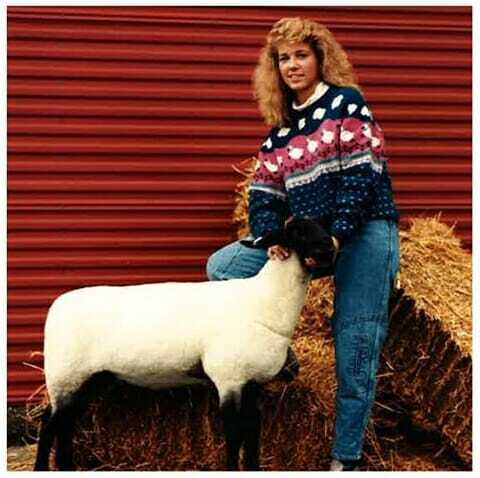
    13. My first business checking account was opened when I was 10 years old for my 4-H sheep project.
    14. While attending the 4-H Washington, D.C. Focus trip as a junior, I learned about lobbying. My first full-time job was serving as a lobbyist for agribusiness.
    15. I won the state 4-H award for Ag Careers, earning a trip to National 4-H Congress.
    16. Although I’ve been a Girl Scout leader for 9 years, I have yet to cook outdoors with a Dutch oven.
    17. I was a charter member of the North Butler FFA. I was also the only female member and chapter president.
    18. My favorite car was a candy apple red Pontiac Grand Prix with a sunroof and spoiler.
    19. One of my favorite things about being a Mom is watching my kids discover what makes their eyes light up. For my son, it’s playing basketball all over North Iowa. For my daughter, it’s the perfect lope around the show ring on the back of her horse.
    20. If you would’ve asked me what I wanted to be when I was a child, I would’ve said a veterinarian.
    21. One year Santa delivered a goat named “Merry” on Christmas morning.
    22. I grew up with cats but our family’s Black Lab, Bailey, has turned me into a dog lover. No one is happier to see me come home than she is!
    23. Trying new recipes is a favorite past time, and my love of food prompted Friday’s featured recipes on TheFieldPosition.com.
    24. I earned my bachelor’s degree from ISU and my MBA from the University of Iowa, but my loyalties are not evenly split. Iowa may have gotten my money but ISU has my heart
    25. Iowa is the Hawkeye State, but I’m a proud member of cyclONEnation!10250326_805167319561234_248440138033160704_n

    Team Latham

    February 1, 2016
    Agriculture, General, Industry News
  • Latham Hi‑Tech Seeds

    Make Your Vote Count: Be an Informed Citizen

    Iowa Caucus

    It feels like the 2016 presidential election has been underway for months because our mailboxes have been stuffed with campaign mailers, and our answering machines have been filled with messages from campaign camps. But in reality, this process is just beginning! National media are moving into Des Moines, Iowa’s capitol city, to set up for Friday night’s GOP debate. Then on Feb. 1, our state will host the renowned “first in the nation” Iowa Caucus.

    As much as we’d like to tune out all of the noise, it’s vitally important to our livelihoods that we engage in the process. Whom we elect really does make a difference! Viewpoints of the U.S. president impact how he appoints members of the cabinet and influence rulings made by agency administrators. Did you know that many regulations are not passed by our elected officials but instead are made by “rulemakers,” or governmental agencies like the Environmental Protection Agency (EPA) and the U.S. Department of Agriculture (USDA)?

    Once again the U.S. EPA is trying to slip Waters of the U.S. (WOTUS) passed all of us. This new writing of an old law was sold as a clarification. Officials said they would clear up what bodies of water and how much land around those waters could be controlled by the EPA. The EPA makes any organization or individual who opposes WOTUS look like they are against clean water. The truth is, we all want clean water!

    It’s important to understand the true agenda here… WOTUS isn’t about clean water – it’s about control!

    A girl listens to a presidential candidate in December during a caucus campaign stop in Greenfield, Iowa. Photo by Joseph L. Murphy
    A girl listens to a presidential candidate in December during a caucus campaign stop in Greenfield, Iowa. Photo by Joseph L. Murphy

    A bill introduced by Iowa Senator Joni Ernst would repeal what the EPA was trying to do. This bill passed the House and Senate with by partisan backing, however, it was vetoed by President Obama. Last Saturday I attended a meeting in Allison, Iowa, where Sen. Ernst explained that WOTUS is now being held up by a court ruling. This regulation might be tied up for years in the court system.

    My family and I drink the water from the well on our farm, so believe me, we’re concerned about clean water. Here are a few reasons why this clean water regulation is bad:

    • WOTUS would require farmers to have permits before implementing conservation practices, such as terraces, could be built. Permits would discourage conservation because permits cause delays and cost money. Farmers – voluntarily – have been making huge strides in conservation!
    • It’s possible that almost every house in town could need a permit to landscape, build a fence or make a playhouse for your kids! If water runs into your basement, it could be regulated by the EPA under WOTUS. In fact, 97% of land in Iowa and 99% of Missouri would fall under control of this regulation. Yes, the land on which buildings and factories have been built – in towns and cities – would fall under the jurisdiction of WOTUS.
    • Regulations have unintended consequences and almost always hurt the people that can least afford the cost.

    Keep in mind what’s already happening all over this country in the name of endangered species, property rights, water rights or grazing rights. The rights we, as farmers and ranchers, think we have are being taken away. This regulation is just an extension of all those laws and it’s all a government effort to take control!

    Next week is the beginning of the voting process with the Iowa caucus. Cast aside glamor and appeal, and cast your vote! It’s time to elect officials who will do right by this country and protect our freedom to operate. Freedom is not free, and neither are all the things being promised by some of the candidates. When someone promises to give something for free, remember it was first earned and then taken away from someone else!

    SenErnst

    Larry Sailer, Musings of a Pig Farmer

    January 26, 2016
    Agriculture, General, Industry News
  • Latham Hi‑Tech Seeds

    Regulations Can Have Unintended Consequences

    I’d like to share this week about how government bureaucrats have made laws and regulations that seem to have the opposite effect of what they intended. Here in Iowa, there have been many rules and regulations enacted to help the small farmer. Small farms are thought to be family farms.

    Although many tend to associate small farms with family farmers, the USDA’s National Agriculture Statistics Service shows that 97% of farms are family farms. Many people equate the number of small farms to the number of people working locally, the number of kids enrolled in local schools, as well as the health of Main Street businesses in small town. Two problems come to mind with this reasoning: (1) Farms must be profitable to help the local economy, and (2) small farms normally have a tougher time with regulations.

    Larger farms have staff and more scale to spread these costs over. On my small crop farm, it’s more difficult to use newer technology or to implement new conservation practices due to high costs. For example, if I am required to get permits for water discharge, I have fewer acres across which to spread such costs.

    On a bigger scale, we can look out West to where federal government is battling ranchers over control of the ground for the sake of wildlife. Government agencies have kicked ranchers off their range and stopped timber harvest, yet the number of animals the government is trying to protect has actually declined. Forest fires have been bigger where timber harvest has stopped, and wildlife is doing better where the property was managed by private individuals who needed to make a profit to stay in business. I just read a story that says massive amounts of money is needed to trim the Sierra forests. Because these forests have become so overgrown under federal management, there massive forest fires are a real concern. It sounds like many federal policies are neither good for old growth trees, wildlife nor taxpayers!

    There has been a movement – a strategy by environmental groups to sue government agencies – to make them take these actions. Basically law is being made by a court decree without due process or public debate. The government agency caves in to the lawsuit, and new policy is made.

    Now we’re seeing the disastrous side-effects that can result from this type of action! A big debate is taking place as over whether the federal government can legally own this ground in the West. But the truth is, the government is buying more and more property every day. There are public employees that have this as their only job. The more property that is purchased, the more property is taken off the property tax roll. As a result, this land become a cost instead of a revenue generator for the U.S. government.

    Our country treatment of land – and of farmers and ranchers – is largely dependent upon who holds the highest office. With the election season is upon us, there are many politicians saying what they think certain groups want to hear. It can be a lot to listen to, I know. But take the time to really listen and understand what the unintended results will be. It’s your civic duty!

    Larry Sailer, Musings of a Pig Farmer

    January 19, 2016
    Agriculture, General, Industry News
  • Latham Hi‑Tech Seeds

    New Dietary Guidelines Offer Small Victories for Farmers

    Pork loin

    I often talk about how laws and government regulation impact farmers. Today I’m going to revisit a topic that will interest of nearly every American, regardless of how you make your living… food!

    Federal dietary guidelines are released every five years. On January 7, new guidelines were issued to shape American’s food choices. Perhaps more importantly, these guidelines shape purchases made by meals programs offered by public schools, hospitals, prisons and the military. Even the Supplemental Nutrition Assistance Program (SNAP) uses federal guidelines to suggest what people using this program purchase.

    These guidelines impact the buying decisions of millions of Americans, so they have a huge impact on entire industries like the beef, pork and eggs. When preliminary dietary guidelines were issued late last winter, the advisory committee suggested that Americans should decrease their red meat consumption for sustainability reasons. A group of “advisors,” thinking they are saving the planet, falsely think that raising meat causes more harm to Mother Earth.

    Recent studies have shown that when comparing food – calorie for calorie – meat is more efficient for our environment! Fortunately, the sustainability factors were removed from the final guidelines that were released last week.

    The newest dietary guidelines call for Americans to choose lean meats and limit red meat consumption. This, too, is a partial win as studies show that lean beef and lean pork can have positive benefits in a diet. Beef naturally provides essential nutrients such as zinc, iron, protein and B vitamins. Pork chops, which are nearly as lean as chicken, provide iron, potassium and other essential nutrients.

    Fat, or marbling, adds flavor to meat. It not only tastes good but some fat is good for you! Fat is a necessary part of a balanced diet. Fat provides your body with energy, as well as help move the vitamins A, D, E and K through your bloodstream. Essential fatty acids play a role in brain development, blood clotting and managing inflammation.

    pork loinIronically, Americans were told for years that fat was bad. The no-fat diet became a fad, but now the “experts” are reversing their recommendation. More recent research shows that what people ate in place of fat – carbohydrates from processed foods and sugary drinks – led to more obesity and disease.

    The 2015-2020 U.S. Federal Dietary Guidelines urge Americans to reduce their overall sugar intake, while also adding “good fats found in salmon, avocados and nuts” to their diets. I know these guidelines can lead to food trends, but you can bet that I won’t be replacing my pork loin with grilled fish!

    Larry Sailer, Musings of a Pig Farmer

    January 13, 2016
    Agriculture, General, Industry News
  • Latham Hi‑Tech Seeds

    Time for a bold plan for a better Iowa

    Revenue chart
    Aaron Putze, Iowa Soybean Association
    Aaron Putze, Iowa Soybean Association

    guest blog post by Aaron Putze, Director of Communications & External Relations, Iowa Soybean Association

    The nation’s longest-serving governor has always been ready to take on a challenge.

    And as another legislative session gavels in today (Jan. 11), Iowa Gov. Terry Branstad will propose the biggest and boldest initiative he’s put forth as the state’s chief executive.

    Those are his words, not mine.

    The legislative proposal, to be a signature piece of his State of the State Address tomorrow, would increase funding for education and water quality initiatives without raising taxes.

    Flanked by Lt. Gov. Kim Reynolds, U.S. Ag Secretary Tom Vilsack, several school superintendents, farmers and farm association leaders, Branstad outlined the details of the proposal during a news conference held at the Iowa Capitol Jan. 5. It’s a proposal that has already drawn strong support from farmers, school administrators and farm organizations, including the Iowa Soybean Association.

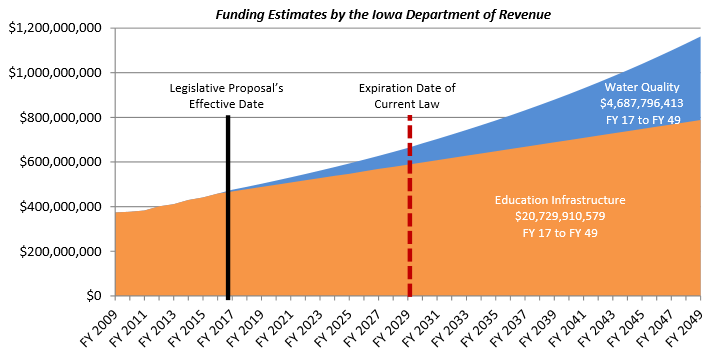
    At the heart of the proposal is a 20-year extension of the Secure an Advanced Vision for Education program (SAVE). Enacted on July 1, 2008, SAVE dedicates one penny of the state’s six-cent sales tax for school infrastructure projects, or $3.2 billion since its inception. With SAVE to sunset in just 13 years, school officials are already finding it difficult to secure bonding for needed improvements to facilities and classrooms.

    Branstad’s proposal would provide stable and long-term funding to schools by extending SAVE through Dec. 31, 2049. It would guarantee schools a minimum projected base of $458 million annually plus the first $10 million in anticipated annual growth beginning in fiscal year 2017. Combined, these revenues would total an estimated $20.7 billion.

    Additional revenues generated by SAVE – estimated at nearly $5 billion – would fund nonpoint water quality efforts administered by the Iowa Department of Agriculture and point source water quality activities through the Iowa Finance Authority and Iowa Department of Natural Resources.

    As you can see from the trend line, Branstad's proposal solidifies the SAVE program through 2049, allowing schools to continue to plan for bonding school infrastructure (same steady increasing trend shown in orange) while avoiding any further implications on taxpayers. The blue portion indicates the part of pre-existing tax (GROWTH portion only) to be used to fund water quality initiatives in Iowa. Two very important issues in need of support from Iowans.
    As you can see from the trend line, Branstad’s proposal solidifies the SAVE program through 2049, allowing schools to continue to plan for bonding school infrastructure (same steady increasing trend shown in orange) while avoiding any further implications on taxpayers. The blue portion indicates the part of pre-existing tax (GROWTH portion only) to be used to fund water quality initiatives in Iowa. Two very important issues in need of support from Iowans.

    “This plan works for schools, farmers and Iowa,” Branstad said. “It funds school infrastructure improvements over the long term and spurs greater collaboration and implementation of the state’s nutrient reduction strategy.

    “The challenges associated with water didn’t occur overnight and they won’t be solved overnight,” he added. “But we can make real and meaningful progress without raising taxes.”

    It’s an intriguing concept. Schools and water quality are both priorities for Iowa and several prominent school administrators favor SAVE’s extension sooner rather than later.

    Dr. Paul Gausman, superintendent of schools for the Sioux City Community School District, attended the Jan. 5 news conference at the statehouse and said SAVE’s extension is critical as educational facilities continue to age. The proposal, he said, would allow schools to move important infrastructure improvements forward. That’s critical in many communities, including Sioux City, were deteriorating facilities need attention and in Waukee, where new facilities are needed.

    Waukee Superintendent of Schools David Wilkerson disagreed with reporters who, during the news conference, said Branstad’s proposal would divert funding from education to the environment.

    “We’re not taking anything away from schools because, without enactment of this proposal, there’s no guarantee that the one-cent sales tax will be renewed when it expires in 2029,” Wilkerson said.

    “It’s also important to note that our schools do not exist in isolation in our communities,” he added. “We depend on a strong farm economy and our farmers. We look forward to working with them on this important issue.”

    Wilkersons points are extremely valid. After all, there’s no guarantee that schools will be capable of bonding as the clock ticks down to 2029. Nor is it a sure thing that Iowa’s governor and the state legislature will renew it in 2029, or before, for that matter.

    U.S. Secretary of Agriculture Tom Vilsack said the Governor’s initiative was a far more productive solution to improving water quality than lawsuits and finger-pointing.

    “I believe that what the governor has outlined will lead to better water quality and greater collaboration,” he said.

    When asked by reporters to handicap the odds that the proposal would gain favor among lawmakers, Vilsack pushed back.

    “You don’t want perfect to be the enemy of good. And if someone has a better proposal, than put it on the table,” he said.

    Iowa’s former governor also summoned a spirit of collaboration – one that Iowans have long been known for.

    “We’re all in this together,” Vilsack said. “This is an Iowa problem and the only way it gets solved is to work together in a collaborative way. If this doesn’t get solved, farmers won’t know what to do, lenders won’t know what to do and communities will suffer. It is about being big and bold and dealing with realities of today.”

    Let’s go to work.

    Photo Credit: Joe Murphy
    Photo Credit: Joe Murphy

    bonnie-harris

    January 11, 2016
    Agriculture, General, Industry News
  • Latham Hi‑Tech Seeds

    Going “Behind the Seeds” at EPCOT (Part II)

    20151227 135035 resized

    Guests on the “Behind the Seeds” tour at Disney’s EPCOT center experience farming technologies – hydroponics, aeroponics and aquaculture – that can help lesser productive areas of the world raise more food.

    Scientists also are researching how to grow gardens in space, which would allow astronauts to eat fresh food during long journeys. (SIDE BAR: I couldn’t help but think how cool it would be to incorporate the seed industry’s Tomatosphere™ program, which uses space exploration to teach students the processes of scientific experimentation and inquiry.)

    9 lb. lemon tree at EPCOT
    9 lb. lemon tree at EPCOT

    The Land Pavilion at EPCOT Center offers more than a glimpse of pie-in-the-sky science… It’s living proof that large-scale food production can be achieved in small spaces. Encompassing nearly 6 acres, The Land annually produces 27,000 pounds of vegetables and herbs for Walt Disney World restaurants.

    The Spice Garden at EPCOT Behind the Seeds Tour
    The Spice Garden at EPCOT Behind the Seeds Tour

    Last week my family had the pleasure of seeing where those Mickey-shaped cucumbers, specialty spices and other unusual fruits and vegetables are produced. We walked into a greenhouse where hydroponics allows plants to grow without soil. Those of us blessed with rich soils in the Midwest may find this production method disconcerting at first, but we must remember that good soil is limited worldwide. (Click here to see some amazing photos of the hydroponic gardens from The Photo Garden Bee blog.)

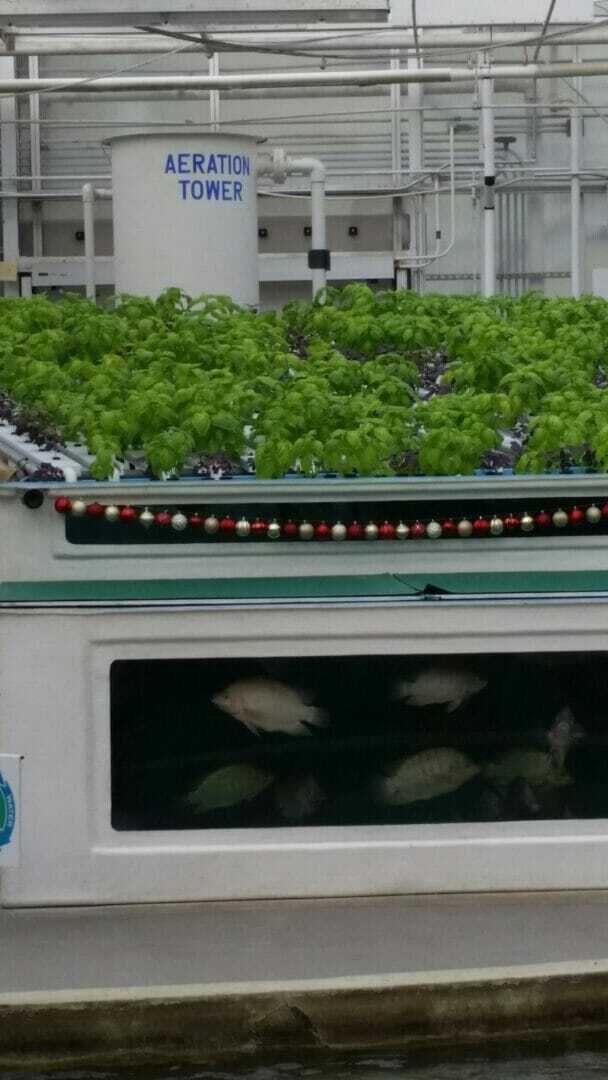
    Aquaponics in action at EPCOT
    Aquaponics in action at EPCOT

    In addition to hydrophonics, we saw aeroponics in action. Aeroponics remind me of “food towers” where fruits and vegetables grow vertically. One potted tomato tree, vining along a trellis system, can produce thousands of tomatoes. (Literally. This tomato tree that set the Guinness Book of World Records by producing 32,000 tomatoes in one year!) Fifty-pound Winter Melons and Cinderella pumpkins even grow on the trellis system. Who knew?

    Easy Pick Tomatoes at EPCOT
    Easy Pick Tomatoes at EPCOT

    The wonder continued as we stepped inside the Tropical Greenhouse, which is home to 30+ different edible crops. Some crops seen in U.S. ornamental gardens are actually used for food in other countries. Visitors can see how pineapples and bananas grow, too. (Did you know that bananas grow on a plant, not a tree? Banana plants are actually giant herbs of the same family as lilies, orchids and palms.)

    There is just so much to see and learn on the “Behind the Seeds” tour! One of my family’s favorite was the Mimosa Pudica, a sensitive plant that immediately reacts to touch.  Learn more about this plant as you watch a cool time-lapse video here.

    So how did my kids feel about spending an hour in the class room during winter break? My 14-year-old son, without prompting, said this was one the best tour he’s taken. Like you’d expect from Disney, this tour is engaging. We got to touch plants, sample fruits grown in the greenhouses, and feed the fish.

    Pumpkin Vines growing on a trellis at EPCOT
    Pumpkin Vines growing on a trellis at EPCOT

    Disney even provides QR codes on signs along the tour route, so you can use your smartphone to learn more about the fruits and to download recipes. Today on TheFieldPosition, we’re sharing with you Disney’s recipe for Sweet & Sour Chicken. We hope you and your family enjoy a magical meal at home!

    Team Latham

    January 8, 2016
    Agriculture, General, Industry News
  • Latham Hi‑Tech Seeds

    “Behind the Seeds” at Disney’s EPCOT

    20151227 135047 resized

    A nine-pound lemon. A tomato tree that set the Guinness Book of World Records by producing 32,000 tomatoes in one year! And pumpkins grown in the shape of Mickey Mouse’s head. I’d read all about these rare fruits and veggies, but I had to see it for myself!

    After cashing in years’ worth of Reward Points earned from purchases made using my Disney Visa card, I booked a one-day park hopper pass for “Latham Party of 5.” Two days after celebrating a White Christmas in Iowa we arrived in Orlando, eager to enjoy all the Sunshine State has to offer.

    Our first stop was Animal Kingdom because our animal-loving daughter had her heart set on taking the Kilimanjaro Safari. One advantage of taking this tour in the morning is the animals are more active earlier in the day. We saw hippos out of the water, which our guide says is unusual. Giraffes were feeding. Elephants were playing, and lions were sunning themselves on the rocks. (TIP: If you aren’t at the park when it first opens, get a Fast Pass. You’ll want to experience this attraction, but you’ll enjoy it a lot more if you’re not waiting in line for an hour! Click here for more tips on how to make the most of your first hour at Disney.)

    20151227_111352_resized


    20151227_110857_resized

    After surviving Expedition Everest, it was time to travel to EPCOT for our “Behind the Seeds Tour” of four greenhouses. (EPCOT stands for the Experimental Prototype Community of Tomorrow, which helps explain some of the sustainable farming methods being implemented here.)

    The tour began in the biotech lab where our college-aged intern explained how, through Integrated Pest Management (IPM), good bugs are used to take out the bad. We also learned how scientists used biotechnology to create Mickey’s Mini Gardens, or the dragon fruit souvenir.

    Interestingly enough, dragon fruit was as close as our tour guide got to talking about GMO foods. This would be a great opportunity to educate Disney guests, who may have questions about GMOs simply due to misleading headlines and activist campaigns, but who would appreciate learning GMO facts like:

    1. Genetically Modified Organisms (GMOs) are developed through plant breeding. A GMO is a plant developed through a process whereby a copy of a desired gene or section of genetic material from one plant or organism is placed in another plant.
    2. Pesticide applications have decreased largely due to the adoption of (biotech) insect-resistant crops. Herbicide-tolerant crops allow farmers to participate in no-till methods that preserve topsoil and prevent erosion.
    3. GM foods have a safe track record with 20+ years in the marketplace. GMOs have not caused or contributed to a single illness or death.
    4. Numerous studies have shown no nutritional differences between commercially available GMO and non-GMO foods.
    5. Only nine GMO crops are commercially available: Alfalfa, Canola, Corn (field and sweet), Cotton, Papaya, Potatoes, Soybeans, Squash, and Sugar Beets. Artic Apples won’t be mass marketed before 2017. Because it won’t turn brown when sliced, the Artic Apple will potentially reduce food waste.

    In the future, GMO crops could lead to more nutrient-dense foods and enhanced dining experiences for people with food allergies. Genetic modification can actually improve the nutritional content of some foods; Low linoleic acid canola oil, for example, can reduce transfat content.  Golden Rice, a genetically modified rice, could help prevent vitamin deficiency in poor countries. Severe Vitamin A deficiency results in blindness, and nearly 50% of the half-million children who are blinded by it die within a year. Modified peanuts could reduce the risk of peanut-allergy reactions.

    How cool it would be if Artic Apples and Golden Rice were added to the crops being grown in the 2.5 million square feet of greenhouses at EPCOT!  are some really interesting crops being grown using innovative techniques here. Read more about them tomorrow in Part II of “Behind the Seeds at EPCOT”!

    RELATED LINKS:

    • 10 Things You May Not Know about GMOs
    • What Consumers Want to Know About GMOs
    • What Affect Do GMOs Have on Human Health?
    • Do GMOs Have Side Effects on Unborn Children or Pregnant Women?
    • How do GMOs Affect the Environment?
    • Frequently Asked Questions – GMOs
    • Say “Yes” to Science and “No” to Anti-GMO


    Team Latham

    January 7, 2016
    Agriculture, General, Industry News
  • Latham Hi‑Tech Seeds

    Government Involvement Creates Change, but Is It Good?

    Wethepeople

    wethepeopleI’ve read that 99.9% of all species have become extinct! Extinction happened before man had anything to do with “climate change.” The difference in our present age, however, is the fact that man thinks he is in control. Now we want to control climate!

    Some folks believe that adjusting how we create energy will save the planet. Fewer carbon dioxide emissions, they say, will stop climate change. The truth is, one major volcanic eruption can make more “pollution” than was made throughout history by all mankind!

    Every time an attempt is made to change one thing, other things unexpectedly get changed – most times these unexpected changes are not for the better. Take the spotted owl for example. With the passage of the Endangered Species and the National Forest Management Acts, the logging industry was basically shut down in the Northwest.

    Saving one species of bird was put ahead of mankind, but the desired results were not accomplished. The number of spotted owl didn’t increase, and now scientists believe the aggression of barred owls has actually led to the decline. Not only were logging families devastated and entire regions suffered economic hardship, but the “untouched” forests grew a massive amount of combustible material. Without man’s management of the forest, massive forest fires occur every year and create massive amounts of air pollution. Are we saving that birds or old forests… or are we just making huge mistakes?

    Mankind has been given the power to make decisions. We have the ability to make a difference. In my chosen career of farming, we have made huge advances in producing food. The U.S. free market system has been the biggest catalyst, yet man likes to step in and interfere. As our society has grown, so has the amount of government intervention.

    Government officials are always trying to make things better. My question remains, “What will be the 100 after-effects of trying to fix one problem?” Are we better without coal? Is green energy the answer or will it cause unknown problems for the future? Can government involvement fix the problem by breaking one industry and replacing it with another?

    Taxes, regulation and rule by force interferes with the free market. Taking land from private individuals – like the Hammand family of Oregon and Texas ranchers like Ken Aderholt for “the public good” will have long-term effects. The examples of government overreach and the use of eminent domain just keep on growing, and I’m genuinely concerned about losing the freedom to operate here.

    It’s time to return power to the people!  Our country was not made great by a president overpassing congress and ignoring the constitution. In fact, our forefathers were very intentional in how they formed our government because one person was not supposed to have that kind of power.

    We have an election bearing down on us. Are the candidates saying what they think you want to hear, or are they laying out a plan for a better future? Are they promising “free” stuff? Remember, free stuff will have hundreds of effects because someone has to pay for it!

    Now is the time to learn the issues and examine how the candidates really think. Whom we elect makes a difference!

    Larry Sailer, Musings of a Pig Farmer

    January 5, 2016
    Agriculture, General, Industry News
Previous Page
1 … 26 27 28 29 30 … 95
Next Page

Latham Hi‑Tech Seeds

131 180th Street | Alexander, IA 50420

(641) 692-3258

SIGNUP FOR OUR NEWSLETTER
  • Contact
  • Legal
  • Seedware Login
  • Latham Gear

© 2026 Latham Hi‑Tech Seeds. All rights reserved. | Privacy Policy

Latham® Hi-Tech Seeds is a trademark of M.S. Technologies, L.L.C., 103 Avenue D, West Point, IA 52656.