Latham Hi-Tech Seeds

(641) 692-3258

  • Home
  • Products
    • Corn
    • Soybeans
    • Alfalfa
    • Corn Silage
    • Seed Guide
  • Performance
  • Find a Rep
  • Media
    • Blog
    • News
    • Videos
    • Podcasts
    • TECHTalk
  • About Us
    • Company History
    • Our Mission
    • Careers
    • Become a Rep
    • Sowing Seeds of Hope
  • Contact Us
  • Latham Hi‑Tech Seeds

    HenCliff Honey is the Bee’s Knees

    Honeys comb.jpg
    Ian and Melissa with their 12-year-old son, Nik.
    Ian and Melissa with their 12-year-old son, Nik.

    Starry filled nighttime skies. Wide open spaces to roam. The feel of the sun shining on your face. The smell of harvest in the air…

    These are the reasons most farmers enjoy living in rural areas, making a living doing what they love. It’s why Ian Pitzenberger desired to farm. It’s also why he and his wife, Melissa, feel blessed to raise their family on a farm. They’re enjoying keeping farming traditions, while giving their own farm a “flavor” of its own.

    Ian has “officially” been raising seed beans for Latham Hi‑Tech Seeds since 2004, but he actually grew up helping his dad raise them on the Tyden No. 6 Farm in Dougherty, Iowa. Aftergraduating in 1999 from Greene High School, Ian attended Kirkwood Community College for two years and then transferred to Iowa State University where he earned a Bachelor’s of Science degree. He then took a full-time job at a local co-op for a year until he had the opportunity to rent a farm. Today Ian and Melissa farm with Ian’s parents, Ted and Judy Pitzenberger, and Ian’s brother Phil and his wife, Lyndsie.
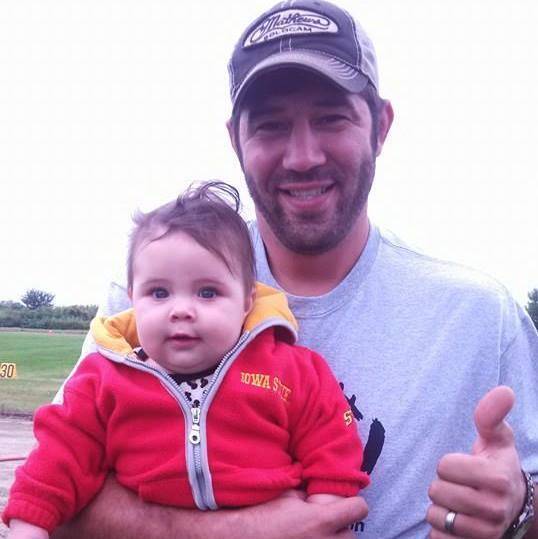
    Ian with his daughter, Eliyah, who was born in January 2014
    Ian with his daughter, Eliyah, who was born in January 2014

    “My dad is the glue of the operation; he keeps all of us together and running. Phil takes care of the business side. He’s the number cruncher and keeps our profits in the green. I’m the “service manager.” I keep the equipment running as efficiently as possible,” says Ian.

    In addition to raising row crops, this year Ian and his son started keeping bees and producing honey. They wanted to diversify their operation, as well as help the environment since there has been so much talk about bees disappearing.

    “It’s a wonderful opportunity for our children to learn responsibility and to make some money at the same time,” says Ian. “I also wanted a chance to help make a difference. Without bees, there is no pollination. Without pollination, plants die.”

    Another advantage of keeping bees is that it’s relatively inexpensive to start plus the turnaround time is relatively low. The Pitzenbergers harvested their first honey within two months. After collecting the combs, they extract the honey and run it through a screen to remove wax and particulates. Then it’s bottled – raw.
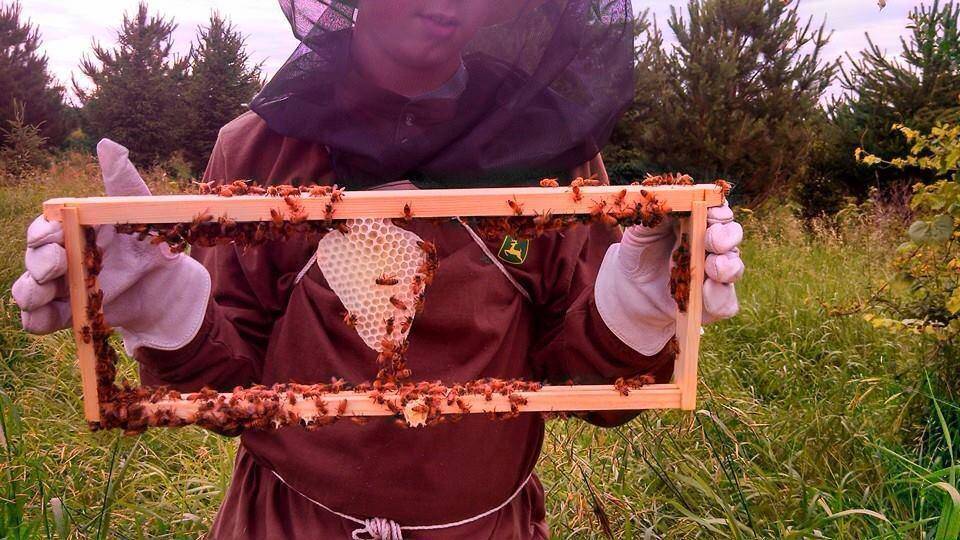
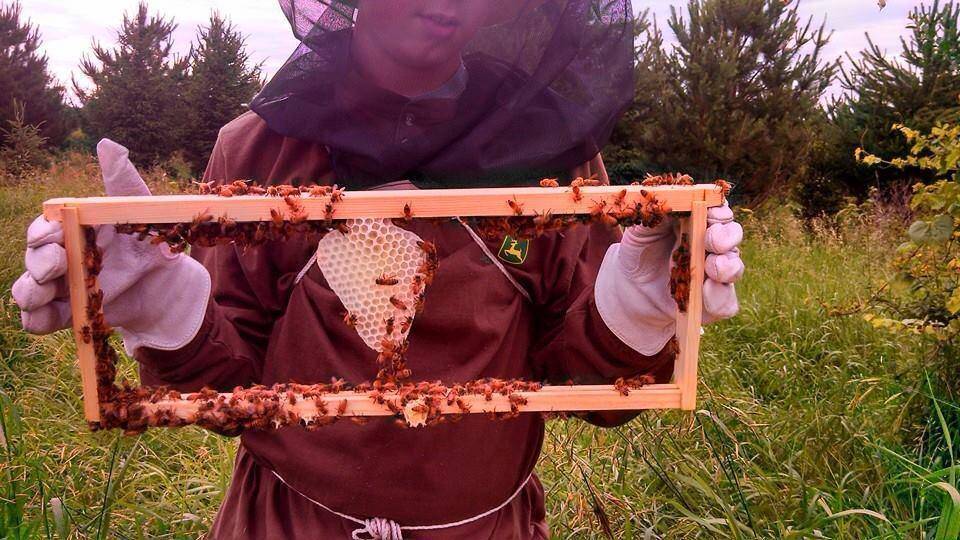
    On June 22, the bees were just starting the comb. On Sept. 7, Ian and Nik harvested the last of their first-year honey.
    On June 22, the bees were just starting the comb. On Sept. 7, Ian and Nik harvested the last of their first-year honey.

    “We don’t use any heat in the process because heat destroys all the vital ingredients that give honey its healthful properties,” says Ian, who keeps the bees on the farm where his mother was raised by her parents, Henrietta and Clifford. To honor his maternal grandparents, the product is labeled HenCliff Honey. This first season has definitely been a learning experience, but it’s been a good experience.

    “With any job or hobby, there are several ups and downs,” says Ian. “In the end, beekeeping is worth it because it does so much good for the environment and it results in healthy products.”

    Honey is extremely versatile, from the medicine cabinet and bathroom vanity to the gym bag and kitchen cupboard. Honey attracts and retains moisture, so it’s used in many beauty and healthcare products. With approximately 17 grams of carbohydrates per tablespoon, honey is an effective and all-natural energy booster. It’s also a natural cough suppressant, helping soothe and relieve irritation from coughing.

    To purchase your own bottle of HenCliff Honey, participate in the 2nd Annual Franklin County (Iowa) Farm Crawl. This event will be held on Sunday, Sept. 28, from noon to 6 PM. Three local farms will participate, and each farm will host other local farmers, who will offer samples of everything from grilled goat and ostrich to aronia berries and local wine. HenCliff Honey will be available for purchase at Enchanted Acres pumpkin patch, 1071 250th Street, Sheffield, Iowa.

    Buy a bottle and celebrate National Honey Month at home! Ian says his favorite way to enjoy honey is with toast and peanut butter because it’s simply delicious. In honor of September National Honey Month, the National Honey Board is sharing recipes for everything from simple After School Snacks to gourmet entrees like Orange Blossom Honey-Seared Halibut.

    Because I enjoy making quick breads – and I have a passion for all things pumpkin – I’m looking forward to baking up a patch of this Pumpkin Honey Bread. What’s your favorite way to enjoy honey?
    Team Latham

    September 19, 2014
    General, Recipes, Sides
  • Latham Hi‑Tech Seeds

    Light Frost Nips Immature Crops

    Image002

    After getting a later start at planting in many areas, followed by even later replants in many areas, farmers across Latham Country were hoping for a late frost. An early frost affected many regions across the Midwest, which might have an impact on some corn and soybean yields. The minimum temperature of the freeze and the growth stage of the corn influence the potential yield loss.

    To see how crops are faring across our six-state marketing footprint, click here.

    Team Latham

    September 17, 2014
    Fall, Frost, General, Season, Weather
  • Latham Hi‑Tech Seeds

    Does Food Come Too Cheaply in America?

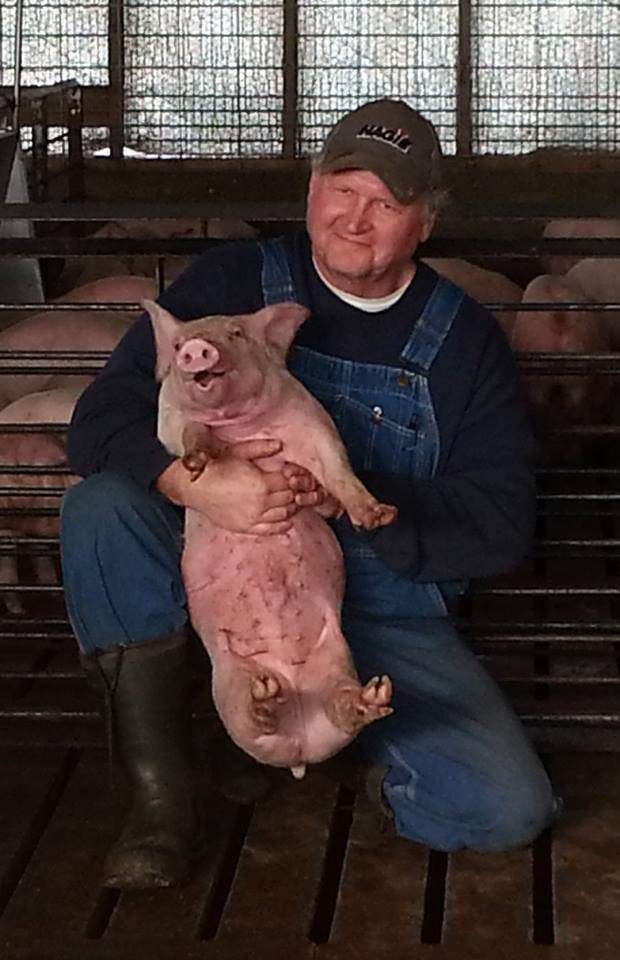
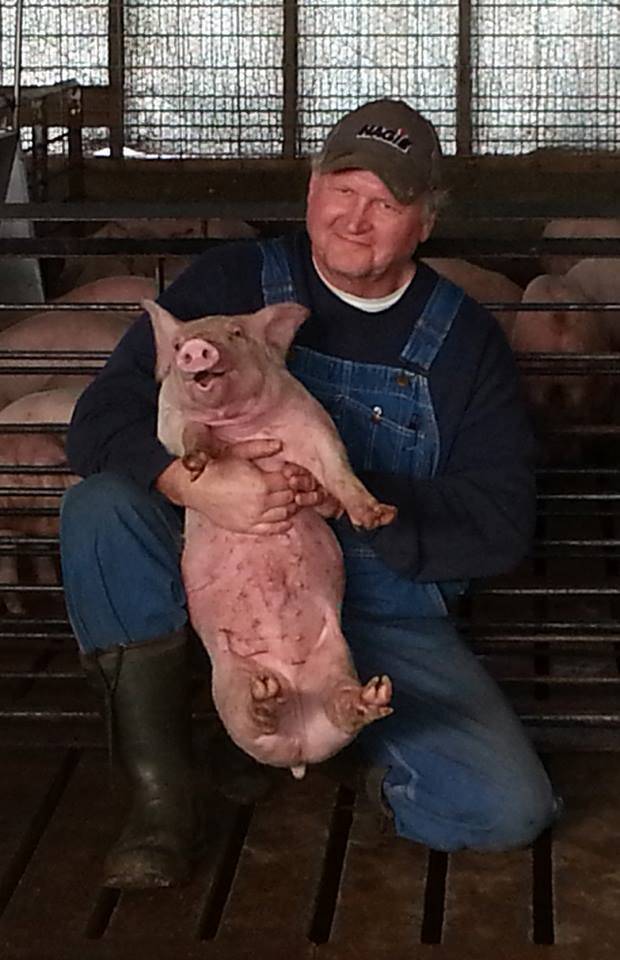
    Larrypigfarmer

    LarrypigfarmerThough Americans are famous for their healthy appetites, their food bill is proportionally low. In fact, Americans spend less for groceries than any other country in the world. The main reason food is so inexpensive here is because U.S. farmers are so productive.

    Think of all the agricultural innovations in this country that have allowed 98% of our people to move off the farm and creating all creature comforts we enjoy in this modern age. If 70 or 80% of the populace were still needed to grow food, what would this country look like? Look no further than Uganda, Ukraine or any number of third world countries and you’d have an idea!

    Not only do U.S. farmers grow enough food to make the USA the cheapest place to eat, we also grow energy and fiber. Without agriculture, everyone would be naked and hungry. Farming and ranching goes beyond providing food… It also provides more than ¼ of our workforce with steady employment. Twenty-three million jobs are associated with modern day agriculture.

    So why is there almost this romantic back-to-nature obsession with organic farming? It all goes back to money. That’s why I’m beginning to wonder if our food in this country has become too cheap. Organic has long since become an ideology… it’s almost as though the food movement become a cult. A reported $63 billion is spent worldwide on organic foods.

    There are those in the upper middle class that can obviously afford to pay for organic foods, but what about those who can’t? Think of those with lower incomes and the poor, who can get a lot more nutrients in their body from buying two regular carrots than they can for the price of one organic carrot. This is the type of challenge we face to feed planet that’s population will surge to 9 billion before the middle of the century!

    Literally millions of people in poverty are starving to death or have serious health problems, yet some solutions are so simple. Severe Vitamin A deficiency results in blindness, and nearly 50% of the half-million children who are blinded by it die within a year. A new variety of rice can cure many of these problems, yet we’re letting fear of the unknown prohibit us from helping these poor people.

    I know most people don’t give a rip whether people are starving in Africa because the American public has become so self-centered with little concern for anyone else. One in six Americans goes to bed, worrying if they’ll have enough to eat tomorrow.

    People go hungry because abundant food, which has been proven over and over again to be safe, gets the same old fears thrown at it. There are no real real health benefits to organic and non-GMO foods. Studies prove it. A Stanford study found that organic foods were considerably less likely than conventional foods to have pesticide residues, although organic foods were higher in e. coli. Shouldn’t we be just as concerned by that?

    Maybe I’m getting to emotionally involved, but I’m starting to get offended every time GMOs and “normal” agriculture. I’m not even sure what “normal” is anymore! And if I’m getting confused, what about people not involved in farming?

    Larrys-NewsClipBut back to my point… I read an article September 13 in my local newspaper about a local produce company. Locally grown. Certified organic. But the locally producer is quoted as saying, “When you see certified organic, that means no chemicals, no pesticides and no GMOs are used.”

    I have a hard time believing this producer can make that statement. Plus, she’s asking for special treatment to be allowed to sell her produce in a city park on Main Street instead of at the local farmer’s market. Maybe my skin is just getting to thin, but I don’t understand why this producer should have special treatment.

    As Rob Wallbridge, an organic farmer and consultant based in Western Quebec says, “If we haven’t already, we’re about to split into sects and factions, driven apart by ideological dogmas that have nothing to do with reality.”

    Reality is that it’s going to take every farmer to feed the world by 2030. I’m in support of agriculture that improves the quality and quantity of food available throughout the world. Instead of splitting into factions and calling names, why not let the free market – instead of government regulations – decide what people want to buy?

    Larry Sailer, Musings of a Pig Farmer

    September 16, 2014
    Agriculture, General, Industry News
  • Latham Hi‑Tech Seeds

    High Tech Will Go “Sky High” on Sept. 19

    Drone

    DroneTo fully appreciate the capabilities of today’s 8-stack hybrids, we believe you must see how far corn breeding has come. The story of corn starts with wild teosinte, which doesn’t resemble today’s plants. Come see for yourself! At Latham’s Seed-2-Soil® Field Day in Alexander on Friday, September 19, you can walk through the history of corn, get a sneak peek of our 2015 product lineup plus watch a high-flying drone demonstration.

    The Seed-to-Soil field day begins at 9 AM with field tours including a technology showcase plot with 40+ of the industry’s most innovative hybrids and varieties. See the unique interactions of 30+ corn hybrids with row spacing, population and stress wheel studies.

    Chad Colby of AgTechTalk, one of the most respected and well-versed individuals in the UAV field, will demonstrate several types of drone technology. He will also share his experiences applying the technology to the farm.  Following the high-flying drone presentation, a drone sponsored by Greenleaf Genetics will be awarded to one lucky attendee.

    Also at our field day on September 19, you’ll see how you can benefit from the 4 main components of Latham’s Seed-2-Soil program: (1) Crop Planning; (2) Nutrient Management; (3) Agronomic support; and (4) Seed Treatments.

    Put September 19th on your calendar for the Latham Hi‑Tech Seeds Field Day in Alexander, beginning at 9 AM. To RSVP, call your local Latham® representative or dial 1-877-GO-LATHAM (1-877-465-2842).

    Team Latham

    September 15, 2014
    Agriculture, General, Industry News
  • Latham Hi‑Tech Seeds

    Latham Dealership Helps Wahl Live His Dream

    WahlFamily2

    WahlFamily2“Choose a job you love and you will never have to work another day in your life” is more than just a quote on an inspirational poster for Matt Wahl. It’s become an action plan.

    Matt raised on an Iowa farm in Butler County southwest of Shell Rock and dreamed of joining his family’s farming operation one day. Before he was old enough to help, however, his father rented the ground to a neighbor and took a full time job at John Deere. Fast forward nearly two decades, and today Matt enjoys farming with his parents. He also appreciates the opportunity he’s had for the past 13+ years to farm with his wife’s father and brother.

    “Living on a farm has many advantages, but I would have to say the best part is being able to instill within our children a good work ethic,” says Matt. “It’s great being part of day-to-day farming operations. Hopefully, we’ll teach our kids values that will be passed down for generations to come.”

    Many people, like Matt, wish to become part of their family’s farming operation but need additional income opportunities to make it possible. That’s why last fall Matt’s interest was piqued in a Latham® seed dealership when he heard John Latham being interviewed on the radio. Matt says he was familiar with the Latham brand and knew the company had a long-standing tradition of producing quality seed. Understanding the correlation between quality seed in the bag and outstanding performance in the field, Matt was interested in learning more about becoming a seed dealer.

    “I sent John an email from my smartphone,” said Matt. “Within an hour, I received a response. Shortly after that, I received a phone call from RSM (Regional Sales Manager) Craig Haaland. After speaking with John and Craig, I knew I wanted to be on the leading edge with Latham.”

    Getting the Most for Every Dollar

    As margins tighten in farming, Matt says he believe farmers will look for the best quality product. “Latham has developed a reputation with its dealers and customers for offering the best seed available. I’m very proud to sell the seed, and I’m excited for the new things to come.”

    Drought-resistant corn hybrids. Dicamba-tolerant soybeans. Proprietary seed treatments… it’s all in the Latham pipeline. But Latham doesn’t focus merely on producing high-tech products. Latham Seeds helps farmers use today’s technology from grid sampling to variable rate planters.

    “Latham’s hallmark Seed-2-Soil program really interests me,” says Matt. “I believe this program is going to become an even more important part of farming with tighter margins. We must help farmers get every possible bushel from each acre of land. Matching seed product to soil type gives us the best possible chance to do so. Plus, farmers can choose their level of participation in the Seed-2-Soil program. Variable rate planting and nutrient management are others ways they can use more efficient use of inputs for maximum return.”

    Keeping it Classy

    In his free time, Matt enjoys repairing and restoring classic and muscle cars. He’s had his own shop since 1999 and recently began restoring tractors. He also enjoys taking a Minnesota fishing trip annually with his family, as well as camping.

    Matt and his wife, Charlotte, have been married for 13 years. They’re the proud parents of two sons and one daughter: Gavin, 12; Blake, 8; and Madison, 6. Their kids have enjoyed sports and extracurricular activities, but the family’s priorities changed when Blake was diagnosed in 2010 with kidney cancer. After surgery and a year of chemotherapy, he’s in remission.

    “This was a true eye opener for our family,” says Matt, whose family is an active support of Butler County Relay for Life. “It really made us value our family and gain a new appreciation for how precious life really is.”

    With a new appreciation for life, the Wahls savor simple moments like Saturday morning breakfasts. Today’s their sharing a favorite family recipe for Homemade Buttermilk Pancakes. Hopefully, your family can make the time this weekend to savor every bite!

    Team Latham

    September 12, 2014
    General, Recipes
  • Latham Hi‑Tech Seeds

    Follow the Money & Find the Motive

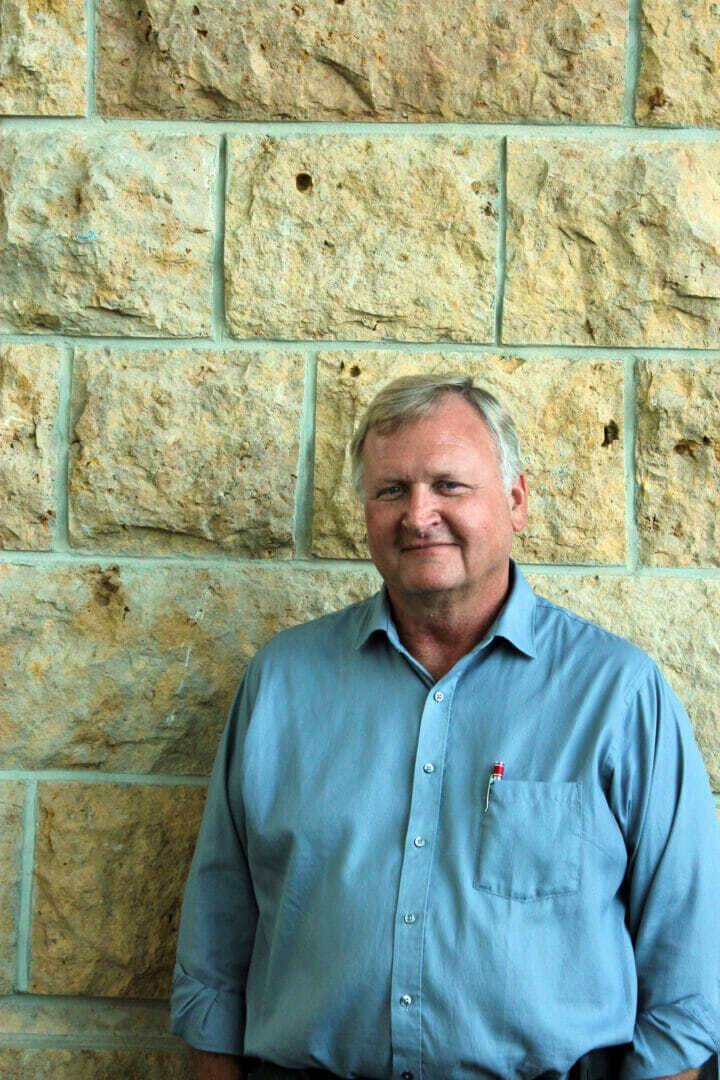
    LarrySailer Kickoff

    LarrySailer_KickoffThe fight over food this past week seems to have stepped it up a notch! The Food Babe is all over my news feed for her views on some type of food or another. Last week she posted her findings from an “investigation” into Starbucks Pumpkin Spice Latte. That post went viral and continues to be a hot topic.

    Food fights have reached a new level, which brings to mind why I try so hard to listen and bridge the communication gap between consumers and producers. In Michele Payn-Knoper’s (pronounced “Pain – Ka-nope-r”) book, No More Food Fights, I’m quoted as saying, “A conversation must include listening. I need to know the concerns of people and to learn how they view what I do.”

    While I listen to promote greater understanding of farming to consumers, many celebrities and well-known “experts” like Dr. Oz and influential businesses don’t. They knock different foods to promote ideas that get attention. The Food Babe would lose her fan base if she actually listened and understood. Stores like Whole Foods wouldn’t be in business unless some consumers could be persuaded to believe that ” mainstream products are bad for you.

    The food conversation is no longer about the truth. It is about making money!

    Wayne Pacelle, President and Chief Executive Officer (CEO) of the Humane Society of the United States (HSUS), is another good example of someone who uses emotions to sway others’ thoughts and actions. His organization shows pictures of scared little kitties and abused dogs on late-night TV, and then asks you to donate $19/month. The truth is, HSUS uses emotion to raise money to pad retirement funds and to hire lobbyists.  Only one half of one percent of funds raised by HSUS goes toward animal care!

    Now Pacelle is trying to impact how I raise pigs. He’s painting a picture of how horrible farmers like me treat pigs just so his organization is able to raise funds. For 50 years, I have continually tried to improve how I raise pigs. If it were as bad as Pacelle claims, I’d be out of business!

    GMO is another buzzword. How many people have ever been harmed by GMOs? None! How many people are harmed every day because they don’t have access to GMOs? Literally millions… People who live in poverty suffer from Vitamin A deficiency resulting in compromised immune systems. Yet activists have let “fear of the unknown” trump pure facts. Somehow we must learn how to use science-based information with emotion!

    We also must uncover scams. If we follow the money trail, we’ll find the activists’ motives. Not only is this true as it relates to food, but it also applies to the environment. There is so much misinformation about conservation and water quality. For example, CEO and General Manager of the Des Moines Water Works Bill Stowe seems to know all about how farmers are polluting the drinking water for Greater Des Moines. Just ask him! He can show you “proof” with all kinds of charts and graphs. Why? His objective is to secure more money for his operations. The worse he can make the water quality look, the more funds he can acquire!

    Americans must read, listen and analyze. Question the “experts.” Examine multiple sources. Uncover the truth.  Don’t assume something you read on the internet is actually true. Consider the source — and the motive behind the source. Follow the money trail!

    P.S. Farmers must enter the food conversation.

    Larry Sailer, Musings of a Pig Farmer

    September 9, 2014
    Agriculture, General, Industry News
  • Latham Hi‑Tech Seeds

    Breaking Down Walls in China

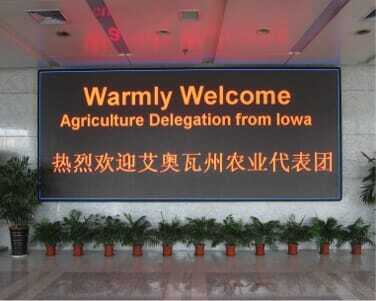
    Welcome
    April Hemmes in China
    April Hemmes in China

    Guest blog by April Hemmes, who farms south of Hampton in Franklin County Iowa

    World traveling farmer reporting in to The Field Position! My latest adventure took me to China.

    It all started back in January when my husband brought me the Farm Bureau Spokesman and said, “They’re taking a trip to China, and you need to apply for it. All they want you to do is talk about the trip when you get home. I think they would get their money’s worth out of you!”

    I applied, never thinking in a million years they would pick me. Then in late February, I got the news that I was one of 18 farmers chosen! The trip was sponsored by Iowa Farm Bureau, and we paid a portion of our own way.

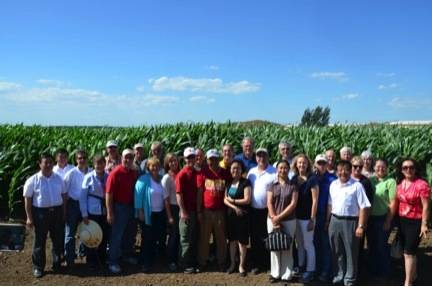
    In late June, 11 men, 7 women and 2 Farm Bureau staff members took off for China. We ranged in age from 26 – 74. It was a pretty diverse group, but like I say, when you put a bunch of farmers together you always have a good time.

    Group_China

    We flew into Beijing with stops at a wholesale produce and a meat market, plus the U.S. Embassy, U.S. Grains Council and Meats Council. Our last day in Beijing started with a meeting at the Ministry of Science and Technology. Teachers and researchers of Agricultural subjects met with us and we spoke about agriculture in China and how they inform farmers of research they have done. The quote I came away with was that they don’t tell farmers what to plant but they “ spare no effort” to suggest what crops would be best for the farmers to plant. I know what I would think if anyone “strongly suggested” what I should plant!

    A few take-away from our visit include:

    • Nearly 90% of the crops are still grown on small farms. A little more than half an acre is the average farm size.
    • A large farm is thought to be 25 acres. The Chinese Government wants to increase the size of farms, so there is a need to move the farmers into the city. We saw high-rise apartment complexes being built in the middle of nowhere. I had heard about this but seeing it with my own eyes just confirmed it for me.

    ChinaFacts1

    Good to see family that lives far away!  With my sister in law Jackie!
    Good to see family that lives far away! With my sister in law
    Jackie!

    My favorite part of visiting Beijing was getting to see my brother-in-law and sister-in-law! My husbands’ brother, Jim, lives in Beijing and has for 7 years. His wife, Jackie, was born in Shanghai. She went to school at Arizona State University and is now an American citizen. Jackie works in finance and is very involved in a group of women leaders in China. They organized a night where we had a panel of Americans and others doing business in China, telling us what that involved. We also had a panel of women leaders in different areas telling about their experiences and what it was like for women working in China. I was very fortunate to be involved in that panel!

    From Beijing, we set off for Heibei Province. Heibei is the sister state to Iowa. Our final destination in the province is Shijiazhuang, which is the sister city of Des Moines. Iowa and Heibei Province have had leaders visiting for over 30 years. The President of China , Xi Jinping, has been to Iowa several times. We were treated like dignitaries here and had several interesting stops including a corn processing plant, dairy and milk processing plant along with the local agriculture college.

    One of our formal dinners in the Sister State of Iowa.  Hebei Province.
    One of our formal dinners in the Sister State of Iowa. Hebei Province.

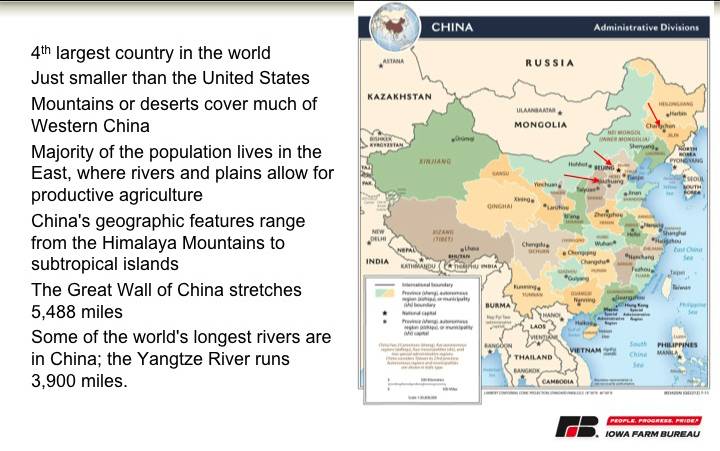
    Our last stop was the province of Jilin. It is in the North East part of China, but it reminded us all of home with a lot of cornfields and a climate much like ours. Local dignitaries met us here, too, and followed us throughout our stay. One of our visits was to a farm where 5 producers went together and farm 1,500 acres.


    Remember, each landowner has around a ½ to 1 acre of ground, so they worked with a lot of owners! They also hire 36 employees for the farm. They couldn’t believe it when we said we would have about 2 or three people to work that amount of ground. They still pick in ear corn and store it that way. The government pays them $9.50 a bushel for their corn. This is a communist state, so there is no open market for grain trading. It is $2/bushel cheaper for the livestock feeders there to import corn from America than it is to feed the lower quality corn stored in China.

    Because it is a communist state, we only saw what they wanted us to see. No random stops were made along the way. Our group quickly realized that the nature of the trip was a market study tour and had changed to a networking /diplomatic trip. But that was just fine with all of us and we made the best of it.

    There was never a dull moment or lack of discussion during our meetings and banquets. As a result of the contact we made, three Chinese groups have contacted the Iowa Farm Bureau about visiting our state! This is great news and makes for a successful trip.

    It wasn’t all work on our trip, however. We did some cultural sightseeing: Tiananmen Square, Forbidden City, the Great Wall, Olympic Table Tennis center, ancient monasteries, silk and pearl markets and one of the largest shopping malls in the world. All of which were amazing and wonderful to experience!


    It was truly an honor to go on this trip and I would highly recommend anyone to apply for this trip next year. Look in your Farm Bureau Spokesman around January for details. I made life-long friends, not only with the Iowa farmers with whom I shared this wonderful adventure, but in China as well.

    Team Latham

    September 8, 2014
    Agriculture, General, Industry News
  • Latham Hi‑Tech Seeds

    Scott County Farmers Give “Hand Up” for Sustainable Farming

    HeartsHarvest2
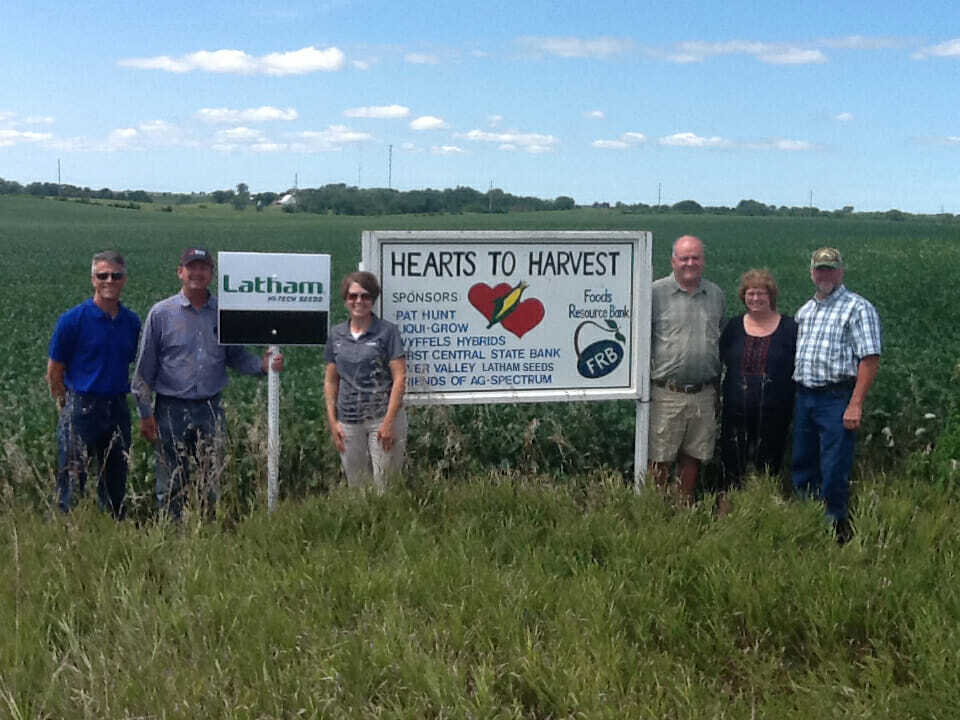
    All proceeds from crops raised on a 40-acre plot by Hearts for Harvest go to help poverty-stricken families in third world countries. Pictured from left to right are board members: Scott Rochau, Bob Braden; Shannon Latham, Latham Hi‑Tech Seeds; Dave Boeding, Nancy Urmie & Dan Urmie.
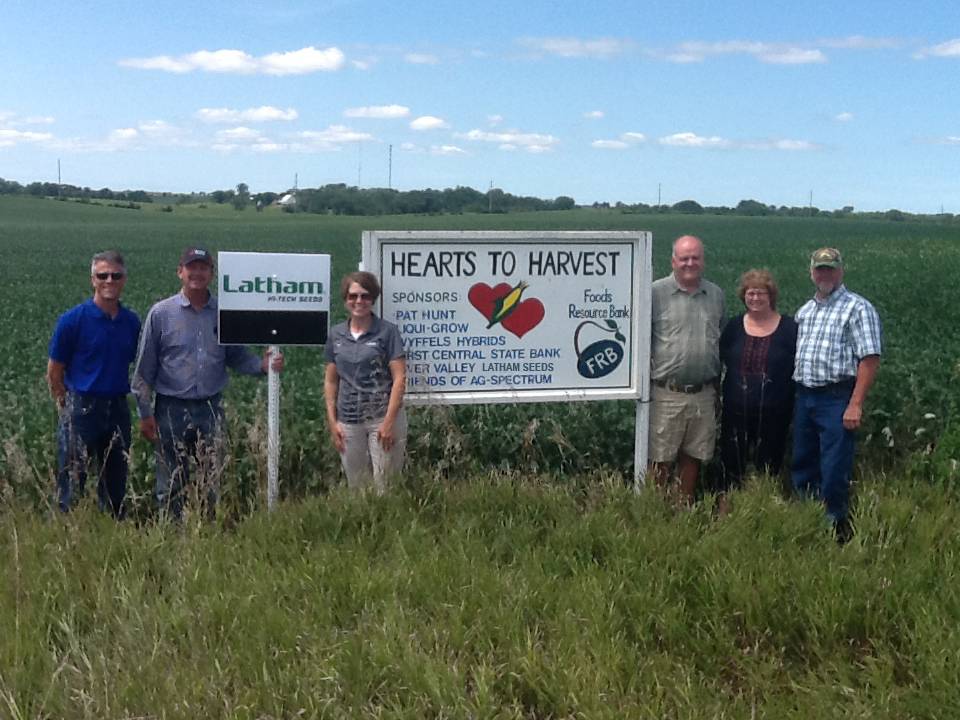
    All proceeds from crops raised on a 40-acre plot by Hearts for Harvest go to help poverty-stricken families in third world countries. Pictured from left to right are board members: Scott Rochau, Bob Braden; Shannon Latham, Latham Hi‑Tech Seeds; Dave Boeding, Nancy Urmie & Dan Urmie.

    It’s common for local farmers to come together at harvest time and help out their neighbors in need. What makes a group of Scout County farmers unique is that they come together each fall and combine for the benefit of farmers across the globe.

    Bob Braden heard about Foods Resource Bank (FRB), a non-governmental humanitarian organization committed to providing food security in developing nations through sustainable small-scale agriculture production projects.

    Feeling called to make a difference, Bob passed along the information to the congregation at St. Ann’s Catholic Church in Long Grove. He felt God nudge again, so Braden talked with more members of the community whom he thought might feel the same way. A committee was formed, and together they started a growing project called “Hearts to Harvest.” Today 10 committee members participate from both St. Ann’s and Faith Lutheran Church in Eldridge.

    Hearts of Harvest consists of 40 acres, which produces a crop of both corn and soybeans each year. All proceeds from the crops go to projects that help poverty-stricken families in third world countries feed themselves with assistance from the FRB. The FRB assists with everything from providing seed for community gardens and getting farmers the tools needed to installing drip irrigation.

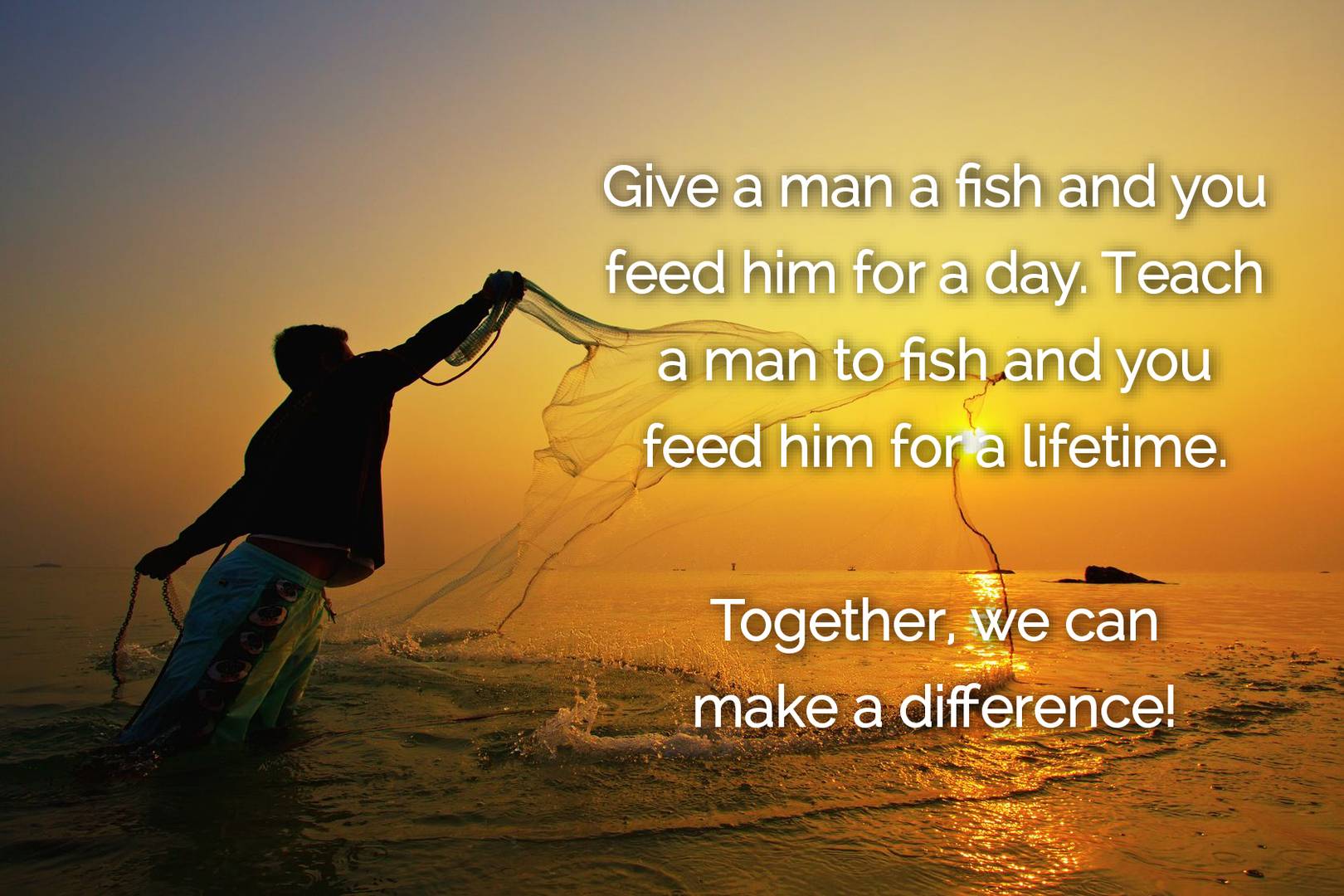
    TeachToFish_Quote“Despite the challenges we might face, our growing project has had tremendous success,” says Braden, president of the Hearts to Harvest LLC. “We feel a sense of achievement working together to achieve a common goal of helping hungry people in developing world have the dignity and pride that comes with feeding themselves.”

    “We’ve been truly blessed with such by such a caring and giving community,” adds committee member and Latham® seed dealer David Boeding. “We would like to thank everyone for your past support and prayers. So many companies and individuals come together to support our annual project.”

    You can help, too! Simply donate $25 to sponsor one row of corn, which will help since Hearts to Harvest rents a 40-acre parcel to provide funds for the FRB.

    Each year after harvest, members of the Hearts for Harvest board gather to choose the sustainable projects to which they’ll donate. Past Hearts for Harvest-sponsored projects have included:

    2013  Honduras-Neuva Frontera – funds helped create cement ponds to capture water that could be piped into homes.
    2012  Kenya-Kitui – funds were used to increase food availability and increase water resources.
    2011 Liberia Rural Counties – funds were used to increase agricultural productivity and reduce malnutrition. Female head of households were targeted to develop home gardens.
    2010 Tanzania – Dodoma – funds helped develop and implement community-based water provision systems. Sand dams and tree nurseries were built. Local farmers were trained in agricultural techniques and technologies related to food security.
    2009 Liberia Rural Counties – this program supports agricultural and animal components as part of a wider program that includes water and school aspects as communities resettle after 14 years of war.
    2008 India Chattisgart – funding was used to train and educate farmers about increasing crop yields and, in turn, increasing their profits to help feed and educate their families. Funds also were used to construct and repair water resources in six communities.
    2007 Bosnia – Bosansko Grahovo – projects were funded in small Bosnian Village that was devastated by war. Funds were used to help local farmers build a milk buying station that met health standards to ensure milk quality.
    2006 Kenya Africa – funds helped farmers produce more grain and open doors for improving nutrition with meat, milk and eggs. Farmers were provided with access to fertilizer and learned how to produce their own maize, amaranth and soybean seeds to enhance plant performance.

    In honor of the work done in the developing world by Foods Resource Bank, today we’re sharing a traditional Tanzanian recipe for Braised Cabbage. Visit your local Farmers Market and gather the ingredients needed to try this at home!

    Team Latham

    September 5, 2014
    General, Recipes, Sides
  • Latham Hi‑Tech Seeds

    Late-Season Scouting Leads to Better Seed Decisions

    RootwormPressure
    RootwormPressure
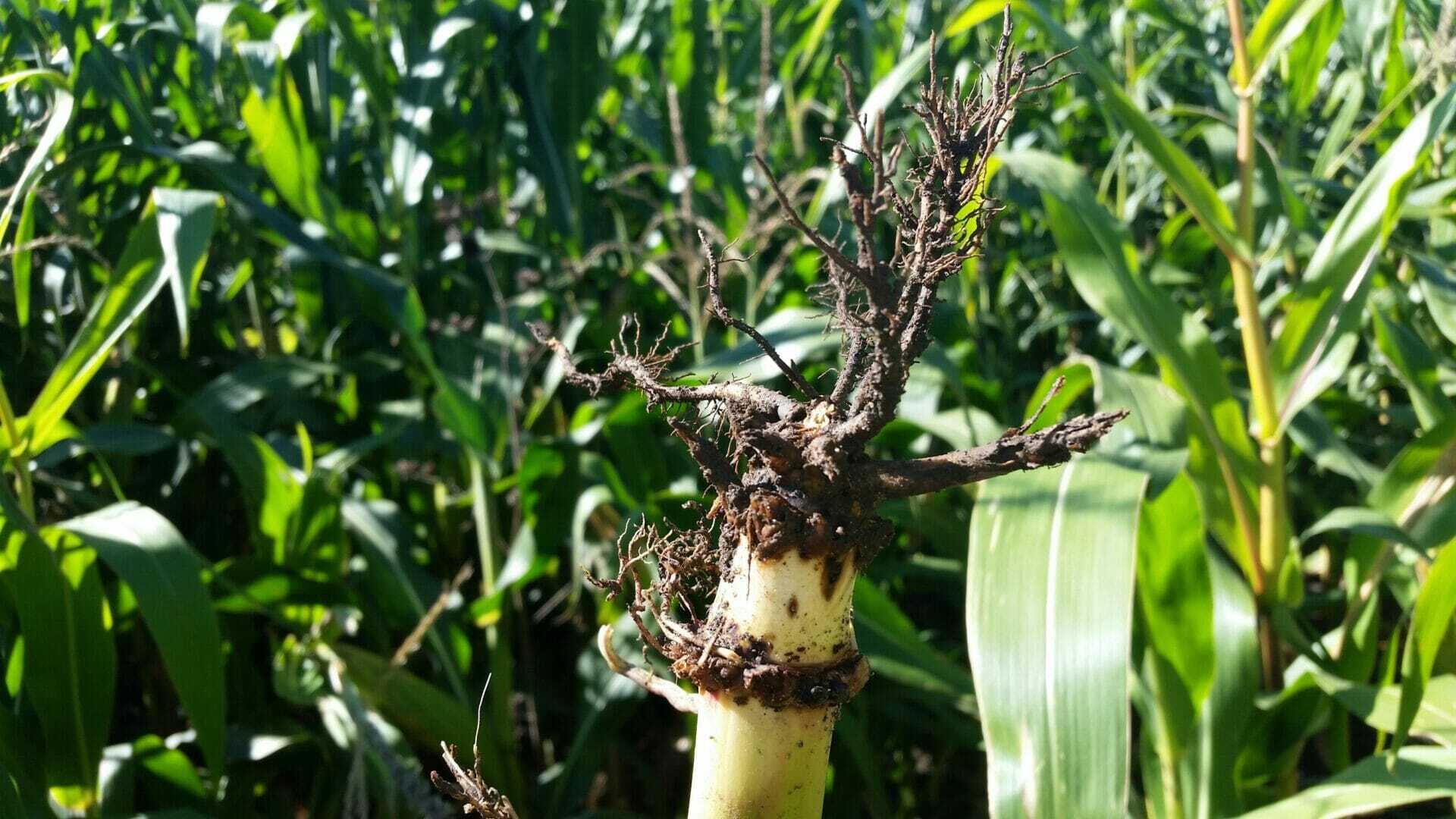
    Rootworm pressure may be low, but it’s present. Latham Corn Specialist Nick Benson (@LathamCornGuy) saw evident this week in a continuous corn field.

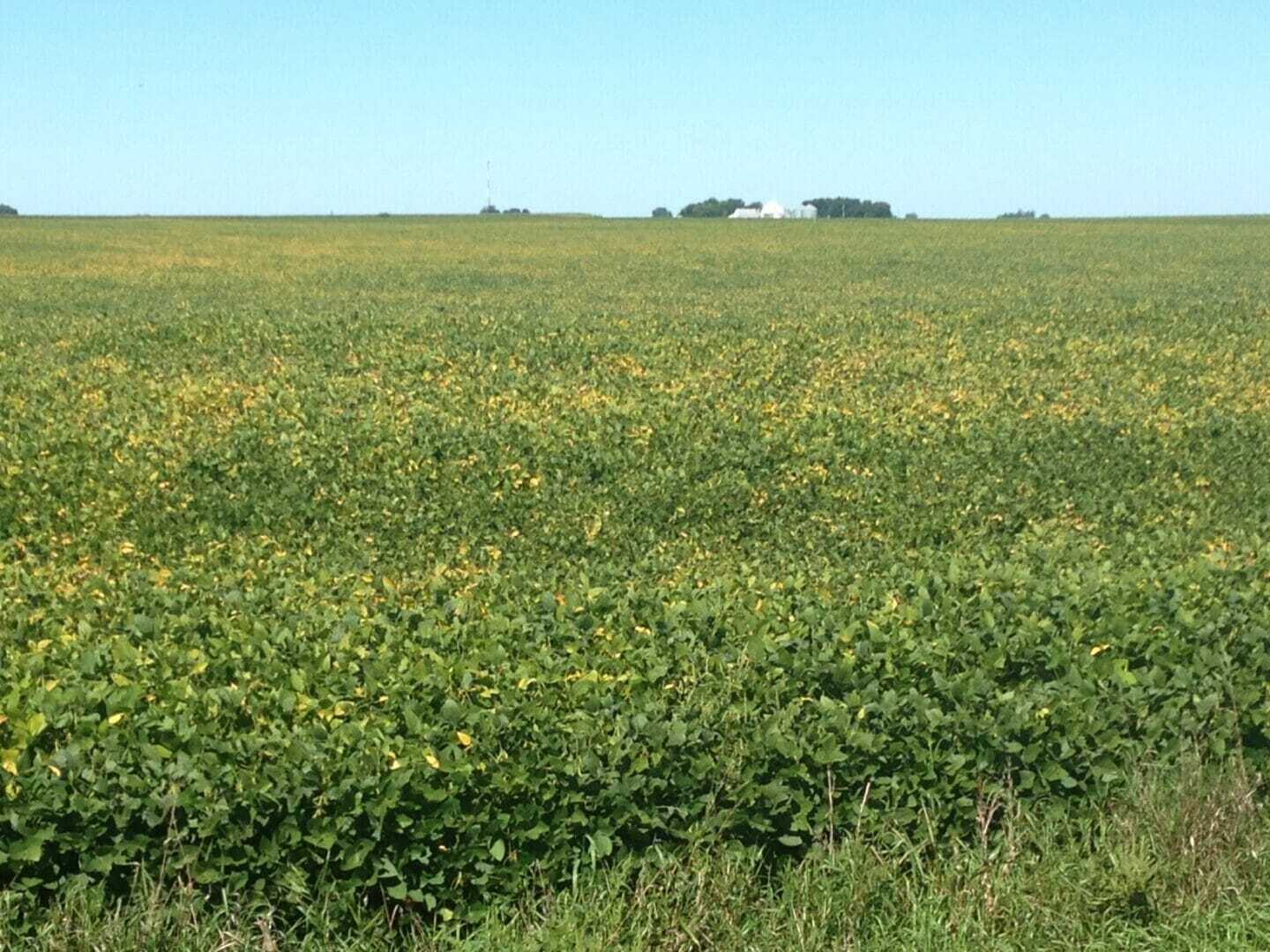
    The effects of our wet, cold planting season continue to surface. As one drives the back roads now, you’ll see where Sudden Death Syndrome (SDS) is affecting many soybean fields. You also may notice soybean fields turning yellow, which is a common symptom of Iron Deficiency Chlorosis (IDC).  IDC is a function of the soil type, so it’s most common in poorly-drained soils with higher-than-normal pH values.

    Plants under stress get taken advantage of by pests like Soybean Cyst Nematode (SCN). Doing a “drive by” or even walking through the fields may not be enough to detect SCN. Visual symptoms, such as above-ground stunting and/or yellowing, may not be evident for years. That’s why it’s best to check fields for the presence of SCN during the growing season by digging roots. You can also sample this fall for SCN by gently removing soil from the roots. Look for the egg-filled, round, white SCN females on the roots.

    While your shovel is at the ready, also be sure to conduct a few root digs in your corn fields. Latham Corn Product Specialist Nick Benson dug roots Sept. 2 in Fayette County Iowa, where he found evidence of rootworm feeding. In addition to looking for corn rootworm damage, note signs of sidewall compaction and hard pans. Also look at leaves and ears for signs of disease.

    It’s important to identify late-season corn and soybean diseases, as well as insect damage, so you can better manage them in the future. One way to control corn rootworms, for example, is to rotate rootworm-resistance traits developed by Monsanto, Syngenta and Dow.

    As an independent seed company, Latham Hi‑Tech Seeds has access to traits and technologies from all the major providers. We can work with you to develop a diverse crop plan that include Latham’s GladiatorTM Hybrids, which combine the best genetics and traits available to help maximize yields from corn-on-corn acres.

    To help simplify your soybean seed selection process, our website lists Latham® IRONCLAD™ Soybeans that include exceptional genetics and industry-leading protective traits to battle against yield-robbing threats from pests and diseases. Each IRONCLAD soybean brand must be Soybean Cyst Nematode resistant and carry an Iron Deficiency Chlorosis rating of 2.2 or better.  IRONCLAD brands must protect against either White Mold or Sudden Death Syndrome with a rating of 2.2 or higher.

    White Mold and SDS have both been an issue this season in different parts of our territory, so farmers will want to plant IRONCLAD soybeans on affected acres in the future. Plus, IRONCLAD products have strong defensive ratings against Phytophthora Root Rot and Brown Stem Rot.

    For more information about selecting the right seed for your situation, visit with your local Latham® representative. Also feel free to contact me at 1-877-GO-LATHAM (1.877.465.2842).

    Webspec Admin

    September 4, 2014
    Agronomics, Corn, Crop, Disease, General, Insects, Soybeans, Weed Control
  • Latham Hi‑Tech Seeds

    Wet Weather Continues

    NickC 9314

    NickC-9314Above-average temperatures and frequent rains continued this week. At Latham headquarters in North Central Iowa, about 7 inches of rain has fallen during the past 9 days. Some parts of the state could use a break from the wet weather, however, the crop remains in very good condition. Iowa Secretary of Agriculture Bill Northey, today on KILJ Radio, reports that 76% of corn and 73% of the state’s soybeans crop is in good to excellent condition.

    Diseases like Sudden Death Syndrome continue to surface. Keep a watch on stalk rots, which can help prioritize fields for the upcoming harvest. Scouting reports will also be helpful as you select seed now for next year’s crop. Click here for regional crop updates in the territories we cover.

    Team Latham

    September 3, 2014
    Fall, General, Season
Previous Page
1 … 59 60 61 62 63 … 159
Next Page

Latham Hi‑Tech Seeds

131 180th Street | Alexander, IA 50420

(641) 692-3258

SIGNUP FOR OUR NEWSLETTER
  • Contact
  • Legal
  • Dealer Center
  • Seedware Login
  • Latham Gear

© 2025 Latham Hi‑Tech Seeds. All rights reserved. | Iowa Web Design by Webspec | Privacy Policy

Latham® Hi-Tech Seeds is a trademark of M.S. Technologies, L.L.C., 103 Avenue D, West Point, IA 52656.