Latham Hi-Tech Seeds

(641) 692-3258

  • Home
  • Products
    • Corn
    • Soybeans
    • Alfalfa
    • Corn Silage
    • Seed Guide
  • Performance
  • Find a Rep
  • Media
    • Blog
    • News
    • Videos
    • Podcasts
    • TECHTalk
  • About Us
    • Company History
    • Our Mission
    • Careers
    • Become a Rep
    • Sowing Seeds of Hope
  • Contact Us
  • Latham Hi‑Tech Seeds

    Start the Season Right by Planting the Right Genetics

    Wooden block with GOAL, PLAN and ACTION on table background

    With the 2022 planting season right around the corner, it’s time to focus on the one thing that will help you capture the most ROI in each field.

    Field-by-field product placement is key to maximizing yield – and in turn – profit. Research shows plant genetics account for a 20% difference in yield. This means you could raise 12 more bushels of soybeans and 40 more bushels of corn PER ACRE simply by paying closer attention to your crop placement.

    Below are three factors to consider when double-checking your crop placement for 2022:

    • Study Field x Field® Ratings. Look at the Field x Field Ratings in the Latham® Product Guide for corn and soybeans. These charts simplify where you should place hybrids and varieties. A “1” rating means it’s a great fit for a particular environment; a “3” rating means you should not plant that product if your field conditions match that description. Your Latham Dealer has seen most of our products in environments, so call him or her if you have additional questions about where to place a particular product.
    • Stick to the plan. If your seed dealer has provided you with a Field x Field plan, organize your seed shed so you can stick to the plan. Subscribers to Latham Seeds’ Data Forward® program receive a crop plan book, which you can keep in your planter tractor. It’s a good practice to double check that the right seed gets in the planter. If planting conditions change in a particular field, then take the time to move products. It will be worth an hour of your time to capture the extra $150 to 200 per acre in profit potential.
    • Match Genetics to Management. If a certain corn product is described as “likes high management,” then you should not place that product in a field with poor fertility levels. Your seed dealer may not know your fields’ fertility levels unless you share it. That information is critical for accurate product placement as some genetics can handle tough fertility situations and others will fall apart in those environments. Also make sure you aren’t overplanting or underplanting each hybrid. Look at the “suggested populations” in our Product Guide, as well as the “Ear Type” rating and our stress wheel poster. We want to help you capture yield!

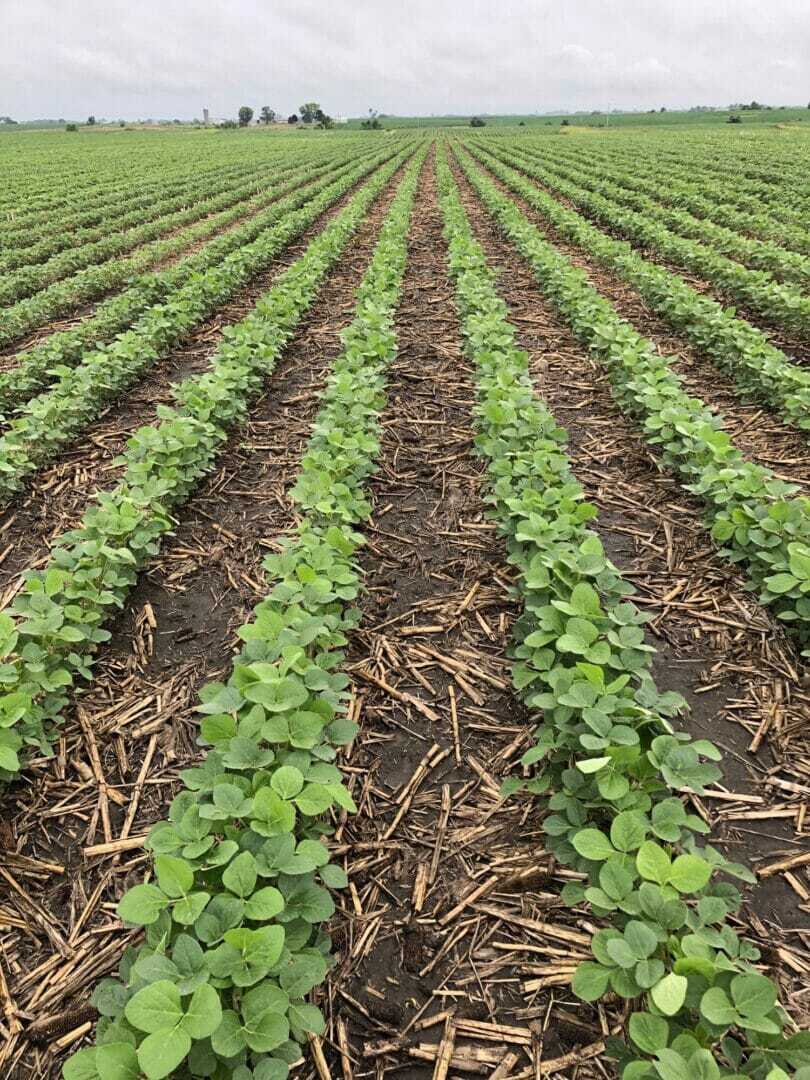
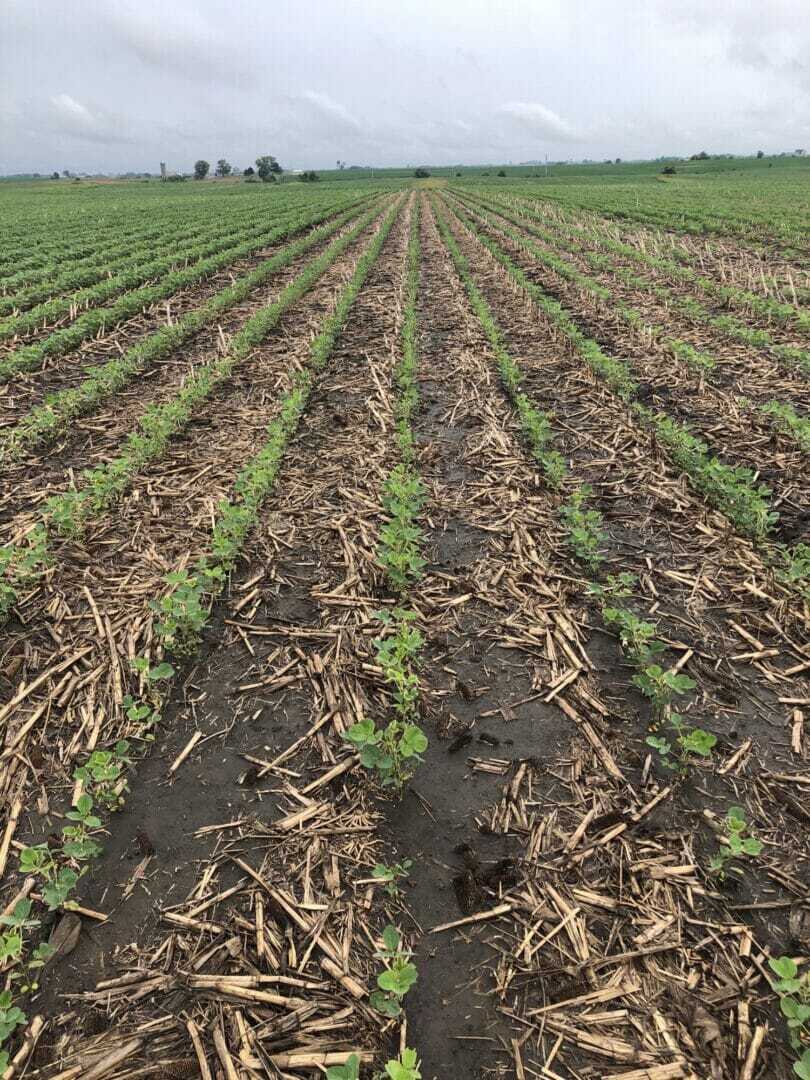
    If you’re planting soybeans early or at the same time your planting corn, treat the seed with SoyShield® to protect it from early season fungal diseases. Seed treatment also gives seedings an early advantage. Even when using a quality seed treatment, plant fields with the heavy soils that remain wet and cold last or at least the soils have warmed. This will help your soybeans better ward off root diseases all season long.
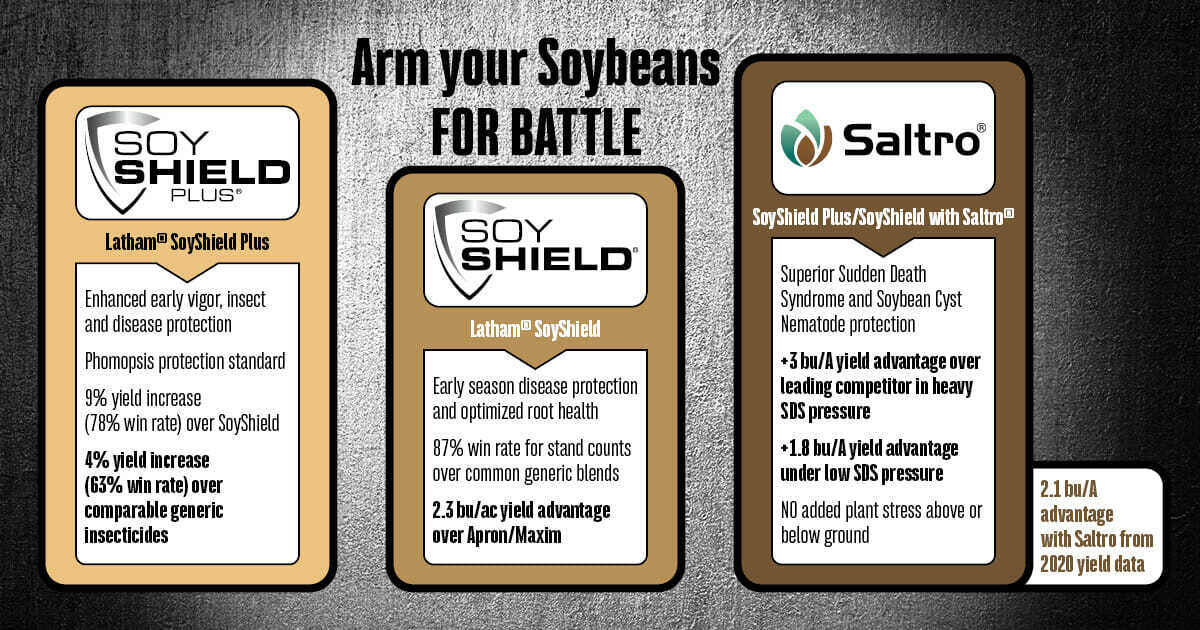
    SoyShield Seed treatment infographic

    A successful 2022 crop year begins with having a plan and sticking to it! Take the time now to double-check that you properly matched plant genetics with soil conditions. Our dealers are also happy to talk through field placement as well. If you have further questions or want to chat with our agronomists call: 1.877.GO.LATHAM (1.877.465.2842).
    Phil Long

    February 9, 2022
    Agronomics, Alfalfa, Corn, Corn Silage, Cover Crops, Crop, Disease, Emergence, Fertility, General, Precision Ag, Seed Technology, Seed Treatment, Soil, Soybeans
  • Latham Hi‑Tech Seeds

    #AskTheAgronomist: Evaluating Fall Fertilizer Decisions

    Ask the agronomist cover photo for video 01

    When faced with high fertilizer prices, what considerations should factor into next season’s investment? Precision Agronomy Advisor Phil Long addresses each macronutrient’s effect on yield and performance plus the pros and cons of investing versus scaling back for next season.

    Webspec Admin

    October 20, 2021
    #AskTheAgronomist, Agronomics, Corn, Crop, Fall, Fertility, Season, Seed Treatment
  • Latham Hi‑Tech Seeds

    Take the Test and Beat the Pest!

    Fig 1

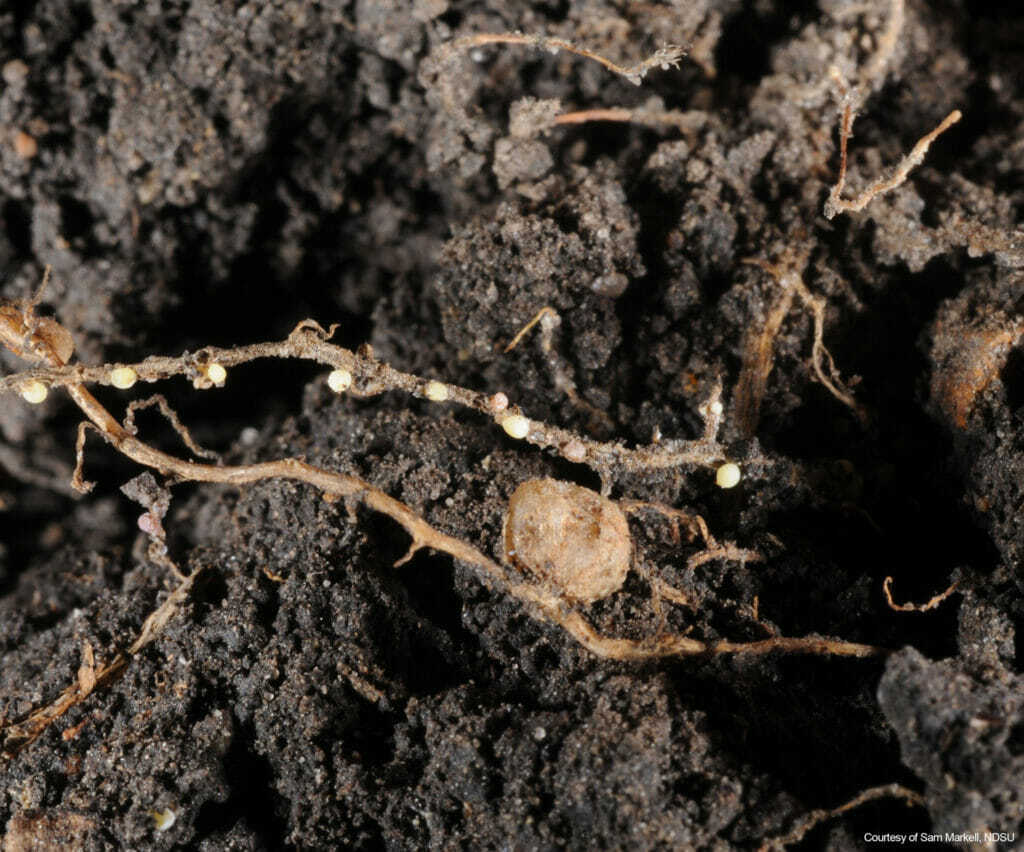
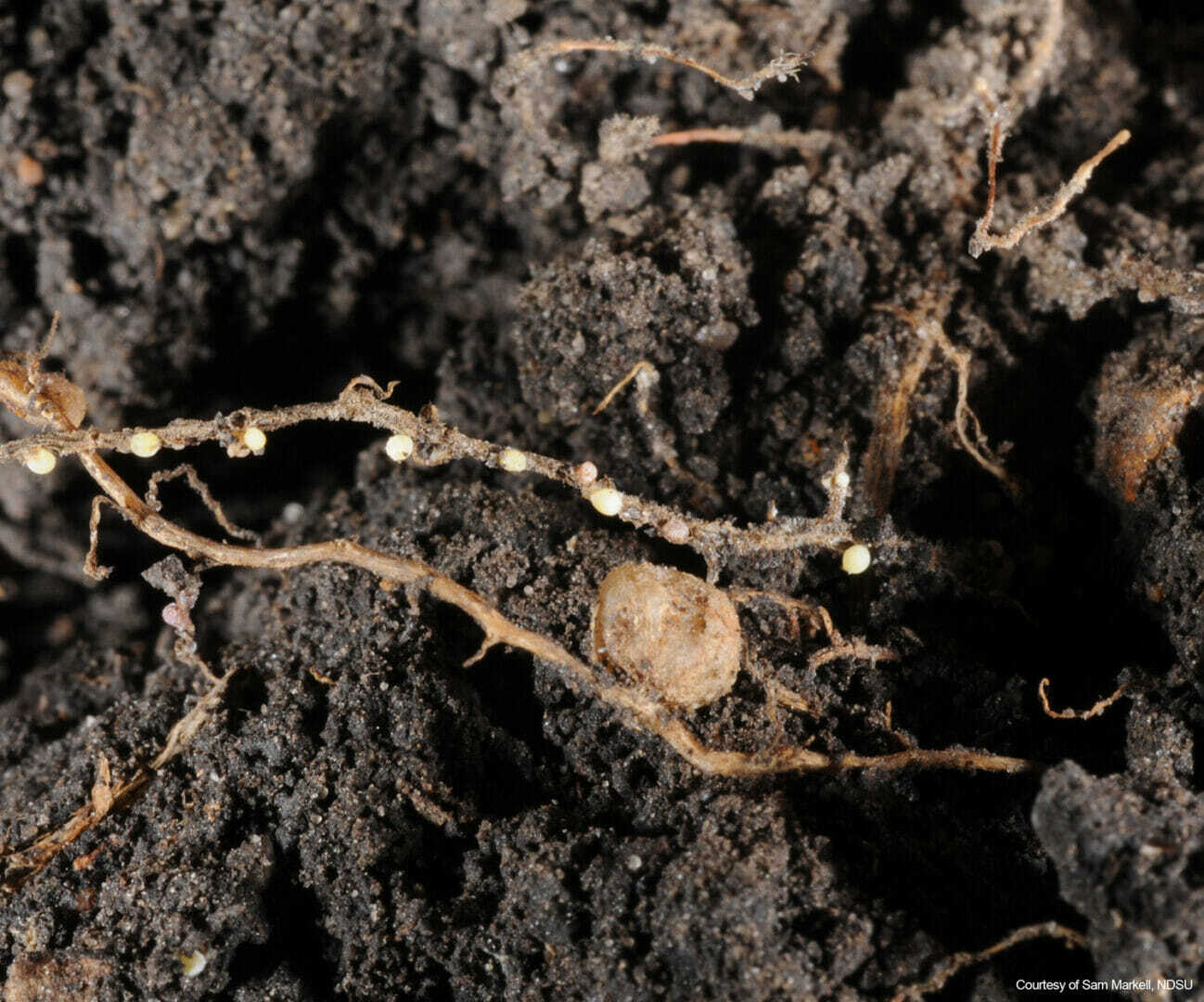
    Fig 1By robbing farmers of more than 100 million bushels annually, Soybean Cyst Nematode (SCN) is estimated to be the #1 yield-robbing soybean pest or disease in the United States. Farmers may scream over lost yield this fall, but SCN is considered a “silent yield robber” due to a lack of above-ground symptoms in most fields.
    Immediately after harvest is the best time to take soil samples for SCN. Several universities have programs that offer free soil samples to evaluate SCN, so check with your local Extension office to see if you qualify.

    Think SCN isn’t a problem in your fields? Think again! Dry soil conditions, especially early in the growing season, can greatly increase the effects of SCN infestations. I received numerous calls in June and July about yellow, stunted soybeans. Most farmers suspected Iron Deficiency Chlorosis. Upon further inspection, SCN was almost always present and in larger numbers than previously observed. When I asked whether these farmers had taken a recent soil sample for SCN, most had not. They admit to mostly relying on SCN-resistant varieties to control or minimize the losses from this pest.

    We have known for years that PI 88788 is gradually losing its efficacy against the pest, and more than 95% of SCN-resistant soybeans in America have PI 88788 as the source of gene resistance.  Since 1997, a team of researchers at Iowa State University led by Dr. Greg Tylka has conducted annual in-field trials with hundreds of SCN-resistant varieties. They measure agronomic performance and SCN population densities from planting until after harvest.

    Scientists have determined that to be effective, SCN-resistant varieties must maintain less than a 10% reproduction rate of SCN during the growing season.  Since 2004, Dr. Tylka and his team have noticed that the average of all PI 88788 varieties in their trials have gradually exceeded that threshold. They have also noted that the average yield of those varieties has decreased as the SCN reproduction has increased. For more information on these studies, visit www.isuscntrials.info. Other land-grant university researchers have reported similar findings.

    To effectively manage SCN in the future, soybean breeders are focusing on other sources of gene resistance. Your Latham Soybean Product Team is continually evaluating and searching for opportunities to bring new, better resistant varieties to our lineup. We also are evaluating several seed treatments for battling this pest. Saltro®, our seed treatment product for SDS protection, is also noted to have activity against SCN.  More information from our Latham Elite trials will be available post-harvest.

    “TAKE THE TEST.  BEAT THE PEST.” is a slogan/campaign by The SCN Coalition™ and funded by the Soybean Checkoff and is designed specifically to promote awareness of SCN. These microscopic roundworms, which infect the roots of soybeans and other plants, can be present in a field for years before above-ground symptoms are visible. We encourage you to take the test this season, so you can plan accordingly for the future.

    Mark Grundmeier, Product Manager

    October 15, 2021
    Agronomics, Crop, Disease, Drought, Fall, General, Insects, Season, Seed Treatment, Soil, Soybeans, Spring, Weather
  • Latham Hi‑Tech Seeds

    AlfaShield Gives Seed a Competitive Edge

    Alfashield logo

    What gives you a competitive edge?

    There are many clever practices that can give athletes an edge. When drug testing became a standard, athletes had to discover legal ways to get an edge. It was noted that athletes who trained at higher elevations tended to perform better. As science progressed, they discovered the oxygen concentration is less at high elevations. Over a long period of time, our bodies will release a hormone to stimulate the production of more red blood cells because red blood cells carry oxygen in the blood. When the athletes returned to lower elevations to perform, they had more capacity to perform because they had significantly more red blood cells.

    Alfashield logoHow in the world does this relate to alfalfa? Think of the seed as an athlete of the acre, competing to germinate quickly and yield more. When we add AlfaShield seed treatment, the alfalfa seed has a performance-enhancing advantage. AlfaShield provides a distinctive winning edge as it combines a list of highly researched ingredients and incorporates them into an osmotic protective type coat.
    Think of AlfaShield as wrapping your alfalfa seed in a sponge. It helps protect the fragile germ of the seed. It also helps draw moisture to the seed, which is particularly important when seeding into moisture-stressed soils. Summers-seeded alfalfa is up against the time clock to get four to six weeks of significant growth to develop the crown. That’s why it’s so important for the seed to germinate quickly. If there isn’t any rain, this delay could be costly. You’ll see in the 2022 Latham® product guide that we have added a dry matter (DM) ton advantage of AlfalfaShield compared to the old industry standard. AlfaShield has a bigger advantage in moisture-stressed soils.

    We had scheduled alfalfa research trials, including seed treatments, for 2021. Unfortunately, this has been delayed because the university was unable to run it due to Covid-19. Because I already had the seed, I did a quick home study. All the seed came from the same lot: raw seed, old industry-standard treatment, and AlfaShield. I got three flower pots and used regular potting soil for consistency. Then I counted 100 seeds of each.

    Note that in the first 65 hours, AlfaShield had ten times more seeds emerge than the other two treatments! Seeds with the other two treatments eventually emerged because this was an ideal situation. However, a farm field is not ideal. We know Mother Nature can be brutal, and the risk to the seed is high.  AlfaShield is a tough seed treatment. It helps manage the risk of the acre better than the rest, and it shows up in the yield and quality. Emerge fast. Grow strong. Yield more!

    Webspec Admin

    August 27, 2021
    Agronomics, Alfalfa, Crop, Drought, General, Seed Treatment, Soil, Weather
  • Latham Hi‑Tech Seeds

    The SoyShield Plus Saltro Difference

    SW Iowa Comparison

    These photos, submitted from a field in southeast Iowa, show a side-by-side comparison of Latham SoyShield Plus with Saltro against eight competitor entries. Click here for more information on Latham’s Seed Treatment offerings.

    SW Iowa Comparison 2
    Eight competitor entries.
    SW Iowa Comparison
    Latham SoyShield Plus with Saltro.

    Webspec Admin

    July 2, 2021
    Agronomics, Crop, Seed Treatment, Soybeans
  • Latham Hi‑Tech Seeds

    Give Alfalfa a Second Look

    Alfalfa can offer one of the highest returns on a farmers’ investment, but it often gets the least amount of consideration. Growers often purchase alfalfa from the first salesperson who asks for the order, but it really pays to compare alfalfa products. You usually get what you pay for, and quality pays for itself.

    Latham Hi‑Tech Seeds offers very competitive, highly productive, Olympic-style alfalfa products. Unfortunately, we tend to undersell the advantages our alfalfa line carries.

    Here are three reasons why alfalfa from Latham is superior:

    1. Best genetics offer higher yield potential.
    2. Top seed quality leads to higher germination rates.
    3. Best seed treatment fosters emergence success.

    Because most farmers only get approximately 40 chances in their careers to get a crop right, make each one count! One key to top yields is fast emergence. When you merge the best genetics with the best seed treatments, farmers can have confidence they have done all they can to manage environmental risks.

    Latham’s AlfaShield seed treatment surrounds the alfalfa seed, helping it absorb soil moisture quickly to begin the germination process. AlfaShield also contains key micronutrients, as well as a growth promoter called Optimize Gold, that accelerate emergence.

    Seed Treatment Chart

    New seeding mortality rates were very high, from 50 to 75% in the first year, with old seed treatments. New treatments like Stamina, however, reduce pathogen problems and manage risk. As a result, seedling mortality is lower and higher yields are possible.

    Our goal is MORE LIVE PLANTS per bag, which allows you to capture more yield. Seed selection and fertility are key, so help set your crop up for success by choosing alfalfa products from Latham Seeds.

    Latham Seeds Agronomy Team

    December 29, 2020
    Agronomics, Alfalfa, Crop, Seed Treatment
  • Latham Hi‑Tech Seeds

    Seed Treatment Fundamentals

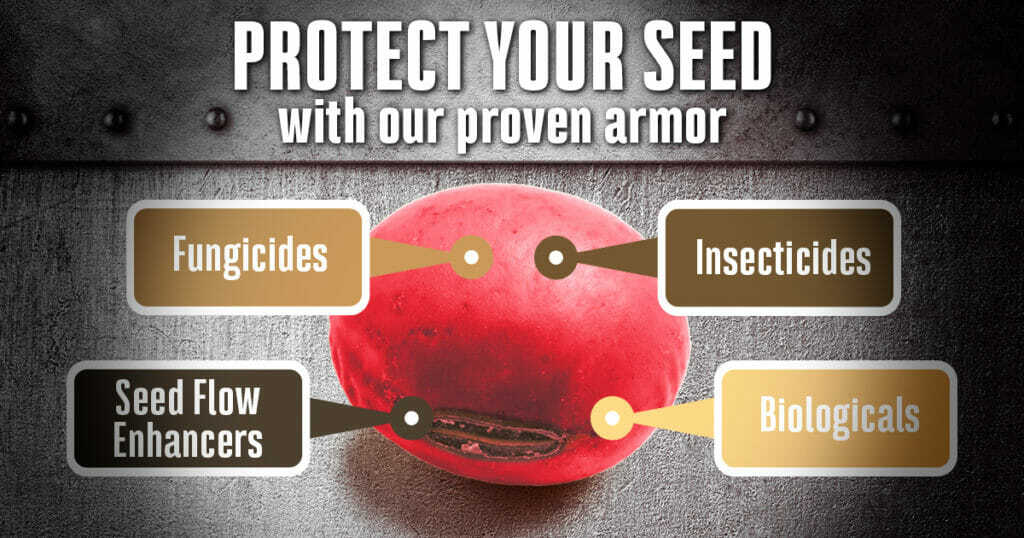
    Seed treatment infographic

    Did you know up to 90% of seedling diseases are caused by 4 major fungi? These fungi kill soybean seedlings before emergence or damage the seed enough to reduce yield.

    4 Major Fungi:

    1. Pythium
    2. Phytophthora
    3. Rhizoctonia
    4. Fusarium

    Research shows that during the emergence stage alone 2.5 bushels of soybean yield are at risk due to seed rot and seedling blight. Latham SoyShield® brand seed treatments are best-in-class formulations designed to battle the toughest pathogens like Fusarium and Phytophthora.

    Seed treatment infographic

    Instead of viewing seed treatment as an input cost, consider it an investment – an insurance policy if you will. After all, it takes less than a bushel of soybeans to pay for the cost of treatment!

    Wet, poorly drained soils favor the development of fungal pathogens that cause seedling diseases, which slow germination and plant growth. Seed treatments protect seedlings until they have a fairly well-established root system.

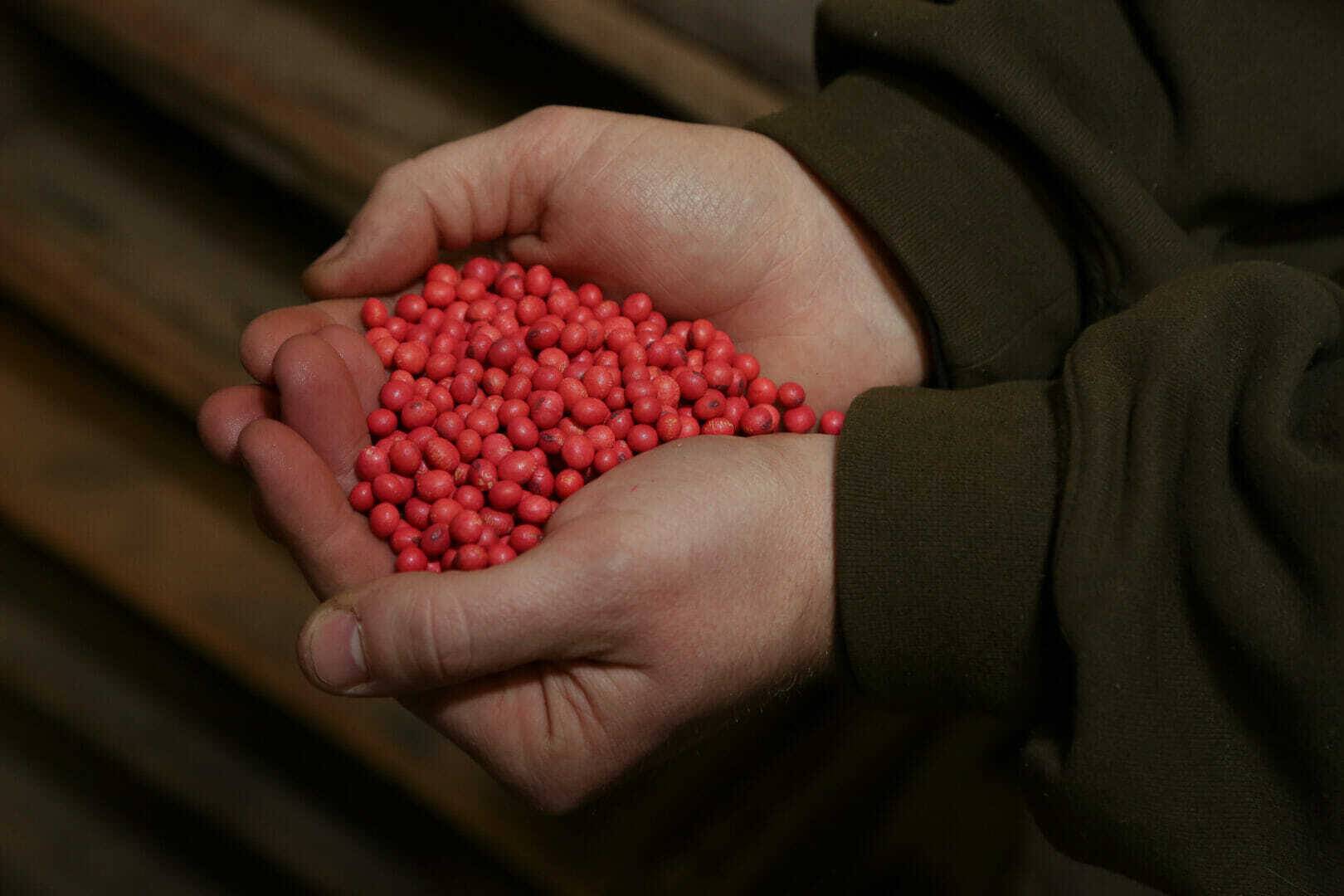
    To help the seeds go through the planter better, Latham Hi‑Tech Seeds adds a proprietary blend of polymer and seed coating. Our customers say they waste less seed and see more even stands, resulting in better yield potential and ultimately an increased return on investment.

    Latham Hi‑Tech Seeds’ signature SoyShieldTM, a fungicide-only package, and SoyShield PlusTM with fungicide and insecticide, protect seeds from disease and insect damage for up to 30 days. This time frame is longer than many other seed treatments and is typically an adequate window of protection.

    SoyShield Plus includes an exclusive fungicide combination that provides excellent protection against seed and soil borne diseases including: Pythium, Phytophthora, Fusarium and Rhizoctonia. In addition, seed treatments can provide health benefits for more rapid and increased germination under certain conditions.

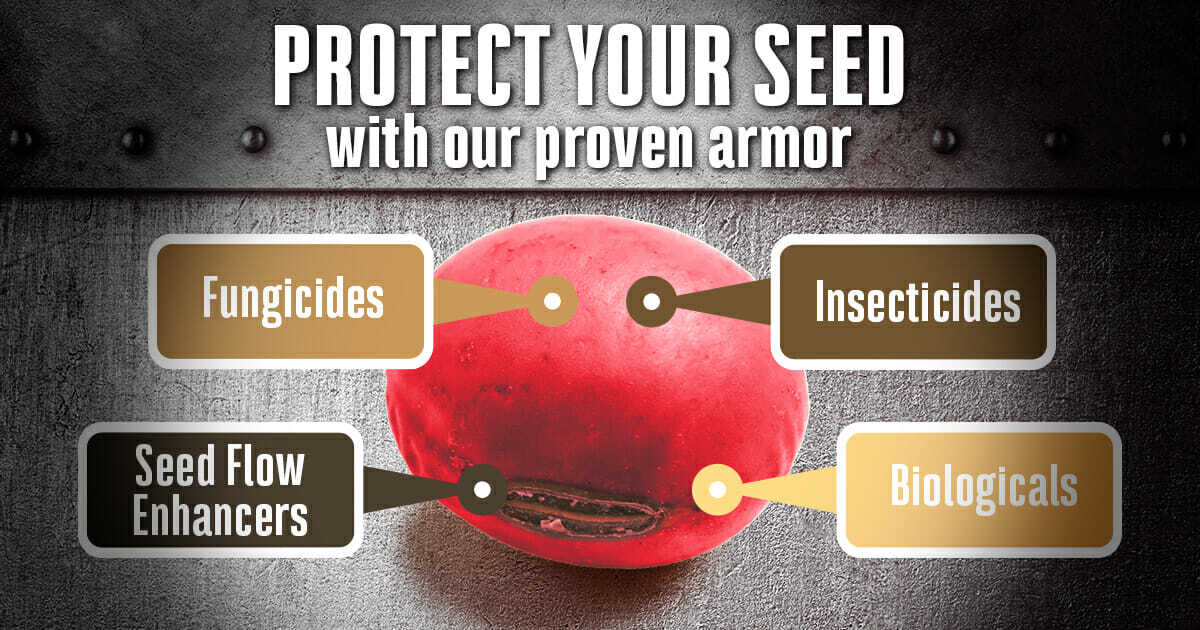
    SoyShield Seed treatment infographic

    Some seed treatments also help protect against nematodes, which are becoming more prevalent. Many fully-loaded treatments may have innoculants, micronutrients or plant food. Interested in learning more? Talk to your local Latham® representative or leave your comments below. You’re also welcome to call us at 1-877-GO-LATHAM (1-877-465-2842).


    Webspec Admin

    December 22, 2020
    Agronomics, Crop, Disease, Seed Treatment, Soybeans
  • Latham Hi‑Tech Seeds

    Preliminary Trial Results Show It Pays to Use Saltro®

    Industry Leading Quality

    Industry Leading QualityIn September 2019 the U.S. Environmental Protection Agency (EPA) approved Saltro, a new seed treatment product from Syngenta Seed Care to control Sudden Death Syndrome (SDS) and Soybean Cyst Nematode (SCN) in soybeans. For the 2020 growing season, Latham Hi‑Tech Seeds distributed about 50 trials to Latham® dealers and their customers. Each on-farm trial consisted of a Latham® soybean treated with SoyShield Plus™ that was planted side-by-side with that same soybean treated with SoyShield Plus and Saltro. The majority of these trials were conducted within the parameters of Latham SuperStrip™ plots where a check variety was used to adjust final yield calculations. To date, we have received yield results from 25 of those studies: 16 from Iowa, six from Minnesota and three from South Dakota. I believe it’s worthwhile to share preliminary results with you.

    Comparing the harvested raw yield data, the 16 trials from Iowa showed an average yield increase from Saltro of 2.01 bushels per acre (bpa). The Minnesota plots gave an increase of 3.85 bpa raw yield, and the South Dakota plots came in at 2.24 bpa. Overall, there was a 2.30 bpa yield increase from using Saltro in the raw yield column. The results were very similar when the harvested yields were adjusted to the check. The Iowa plots came in with a 1.84 bpa increase. The Minnesota trials showed a 3.73 bpa increase, and the plots from South Dakota averaged 5.40 bpa better. The overall average in the adjusted yield column came in at 2.31 bpa!

    It should be noted here that there were a handful of trials where the seed treated with SoyShield Plus and Saltro actually showed a yield decrease. While it is difficult to understand and even more difficult to explain, results like this are very common when doing research of this type and are usually attributed to experimental error. I also want to note that we did not see widespread infestations of SDS in 2020. Due to variable weather patterns and a fairly widespread drought, SDS didn’t show up in a lot of fields. We intend to proceed with a similar Saltro study in 2021.

    BOTTOM LINE: While more experiment results will be sent to us yet this year, there is a trend for at least a two bushel per acre yield benefit from using soybean seed treated with Saltro. With a retail cost of approximately $13 for the Saltro, the added yield benefits in a year where SDS was not widespread are fairly substantial. Using the soybean market price of $10.50 per bushel as I write this article, the treatment acted as an insurance policy that paid for itself.

    Check back with us during and after our Post-Harvest meetings to get the updated yield results from this study.

    Mark Grundmeier, Product Manager

    November 16, 2020
    Agronomics, Disease, Emergence, Seed Treatment
  • Latham Hi‑Tech Seeds

    Latham’s 2020 Virtual Field Day Was “Made for You”

    IMG 6752

    Virtual cover imageAt Latham Hi‑Tech Seeds, we have hosted multiple field day on wheels. We’ve showcased emerging technologies that allow us to check crops from the air, but this is the first year we didn’t have to worry about the weather on our field day. It’s also the first time we a virtual day event.

    Welcome to 2020! The worldwide COVID-19 pandemic has forced businesses around the globe to deliver information using technology like Zoom, Facebook Live and YouTube. Although we prefer to meet with farmers in person, our team of industry experts has developed some interesting and informative content for you. We hope you enjoy it and find it of value!

    Below is a recap of our 2020 Latham® Virtual Field Day with links, so you can watch agronomic presentations from the comfort of your office or the cab of your tractor or combine:

    • Fortunately, weather events did not affect our production fields. It looks to be another banner year for Latham seed production! You’re invited to join us for this 40-minute industry roundtable with Latham’s Product Team.
    • IMG 6752In this “challenges of harvest” roundtable hosted by Bob Foley, farmers from across the Upper Midwest tell us how they’re managing harvest in not-so-ideal conditions.
    • Put products and practices to the test on your on farm! Precision Agronomy Advisor Darin Chapman discusses on-farm research and the benefits. He covers how you can use “small data” to work on your own farm.
    • Soybean Product Manager Mark Grundmeier provides tips for Selecting Soybean Products that are Built for Battle. Did you know farmers don’t have to give up yield when planting defensive soybeans? Mark talks about how Latham’s exclusive IRONCLADTM products are bred to combat local diseases.
    • Latham’s Northern Product Manager Gary Geske explains how seed treatment helps maximize yield potential. He explains what makes Latham Seeds’ SoyShield® so unique, so elite and so effective.
    • Latham Corn Product Manager, Lyle Marcus, shares how to maximize performance and reduce risk with Latham® corn hybrids in 2021. He also introduces eight new hybrids for spring planting.
    • In this 20-minute workshop on seed placement and performance, Precision Agronomy Advisor Phil Long explains how to use Latham’s product guide to choose seed products for 2021. Did you know that placement can affect yield by up to 20 percent? That’s a 20- to 50-bushel yield swing! Phil walks us through how to match management style to product characteristics for best placement and performance.

    One of the things we enjoy most about hosting field days is sitting at the table with Latham® dealers and customers. We always enjoy hearing about our customers’ families and learning more about farming operations. If you attend a Latham Seeds’ event, you can count on great conversation and a wonderful meal.

    In true field day fashion, we are sharing with you a typical field day menu. Below are links to some of our favorite fall recipes:

    • Harvest BBQ Pulled Pork Sandwiches, a recipe shared by Iowa’s Deputy Secretary of Agriculture Julie Kenney
    • Sweet & Spicy Baked Beans
    • Cranberry Waldorf Salad (Although this recipe isn’t from “The Field Position” blog, it’s a hit every time I make it for a group that visits Enchanted Acres pumpkin patch.)
    • Apple Crisp

    With the cool fall weather this week, we thought it would be the perfect time to share a new crockpot dish.  Scroll down to find a recipe for Slow Cooker Cajun Chicken Fettuccine. Recipe and image sourced here.

    Shannon Latham

    September 11, 2020
    Agronomics, Corn, Crop, Disease, Emergence, Fertility, Food & Family, Fungicide, Growth Stages, Insects, Poultry, Precision Ag, Recipes, Seed Treatment, Sides, Soil, Soybeans, Weed Control
  • Latham Hi‑Tech Seeds

    2020 Latham Virtual Field Tour Recap

    Virtual cover image

    Find a recap of our 2020 Latham Virtual Field Tour. Latham’s product team shares insights on a variety of key topics geared toward success this harvest and into the 2021 growing season.  If you missed the live session, no worries! Find our on-demand videos below of the field tour.


    TUESDAY, SEPTEMBER 8, 2020: KICKOFF TO LATHAM’S VIRTUAL FIELD TOUR WEEK 2020
    2
    Join us for the first session of our 2020 Virtual Field Day as John Latham shares about our 73 years of quality and innovation. What does this mean for our dealers and customers across Latham Country? Tune in to find out! #LathamSeeds
    • Watch on YouTube: https://youtu.be/38HPu0W5AG0
    • Watch on Facebook: https://www.facebook.com/watch/?v=716833985567673&extid=wucYcQA8x7m2HAf4

    Tune in above for a roundtable with Latham’s Product Team hosted by President John Latham.
    • 0:35 — Introductions
    • 2:06 — What soybean technologies can farmers be looking forward to in the future?
    • 3:50 — Has any of the extreme weather affected our corn supply?
    • 5:45 — What additional agronomy videos are coming down the pipeline?
    • 8:50 — Can the Data Forward app help with yield estimates?
    • 11:25 — How to prepare yield monitors to gather accurate yield data?
    • 16:30 — Late-season visible differences in treated and untreated seed
    • 18:00 — Update on XtendiMax renewal
    • 20:25 — 2021 corn line-up sneak peak
    • 24:00 — What makes the word INDEPENDENCE so meaningful at Latham Seeds?
    • 28:30 — Can we fix yield data after harvest?
    • 29:25 — When is the best time to soil sample?
    • 32:40 — Seed treatments: where can farmers cut some costs?
    • 35:45 — John Latham’s update from ASTA

    Watch on Facebook: https://www.facebook.com/watch/?v=2668478816588211&extid=ca2iM5vffbodkI4Y

    Watch on YouTube: https://youtu.be/O8FHM7ESu9M


    WEDNESDAY, SEPTEMBER 9, 2020: MAXIMIZING YOUR 40 CHANCES

    Join us for a 35 minute segment as farmers tell all about managing no-so-ideal harvest scenarios hosted by Bob Foley.

    • Watch on YouTube: https://youtu.be/wapZOMosW9w
    • Watch on Facebook: https://www.facebook.com/watch/?v=2769613716607152&extid=qtyQfwe76nz099nQ 

    Join us as Precision Agronomy Advisor Darin Chapman discusses on-farm research and the benefits of testing ideas for the future.

    • Watch on YouTube: https://youtu.be/dQGiV3n9SwQ
    • Watch on Facebook: https://www.facebook.com/watch/?v=230182775092324&extid=2gNkqUOjZDfEUmW4

    Join us as Corn Product Manager, Lyle Marcus, discusses how to maximize performance and reduce risk with Latham® corn hybrids in 2021.

    • Watch on YouTube: https://youtu.be/TqU1IGTj-VU
    • Watch on Facebook: https://www.facebook.com/watch/?v=313068009801743&extid=LSYK1tpv18TZXFtt

    SPECIAL FEATURE! 20 Minute Workshop hosted by Precision Agronomy Advisor Phil Long. Did you know that placement can affect yield by up to 20%? That’s a 20-50 bushel yield swing! Phil will walk through how to match management style to product characteristics for best placement and performance.

    • Watch on YouTube: https://youtu.be/3GijMR2w6nw
    • Watch on Facebook: https://www.facebook.com/watch/?v=887477738448432&extid=vfxO7xfB1W1Jr5XH

    THURSDAY, SEPTEMBER 10, 2020: MANAGING SOYBEANS ON OFFENSE AND DEFENSE

    What does it mean for a product to be Built for Battle? Mark Grundmeier shares insight into our highly offensive and defensive soybean product options.
    • Watch on YouTube: https://youtu.be/_EGw1UA4-b4
    • Watch on Facebook: https://www.facebook.com/watch/?v=1233891166969244&extid=LS56ewVr5vxXKVKA

    Join us as we discuss how to protect the yield potential of soybean genetics from day one with expert Gary Geske.
    • Watch on YouTube: https://youtu.be/mNxBtFDryHk 
    • Watch on Facebook: https://www.facebook.com/watch/?v=1945198385604293&extid=9ycIGoHLwzgBYFjq 


    Mark Grundmeier and Gary Geske share key insight on diversifying your soybean options to maximize performance and reduce risk.
    • Watch on YouTube: https://youtu.be/Q9I5hS-y8fU
    • Watch on Facebook: https://www.facebook.com/watch/?v=1233891166969244&extid=LS56ewVr5vxXKVKA

    Laura Cunningham

    September 10, 2020
    Agronomics, Corn, Crop, Disease, Emergence, Fertility, Fungicide, Growth Stages, Insects, Precision Ag, Seed Treatment, Soil, Soybeans, Weed Control
Previous Page
1 2 3 4
Next Page

Latham Hi‑Tech Seeds

131 180th Street | Alexander, IA 50420

(641) 692-3258

SIGNUP FOR OUR NEWSLETTER
  • Contact
  • Legal
  • Dealer Center
  • Seedware Login
  • Latham Gear

© 2025 Latham Hi‑Tech Seeds. All rights reserved. | Iowa Web Design by Webspec | Privacy Policy

Latham® Hi-Tech Seeds is a trademark of M.S. Technologies, L.L.C., 103 Avenue D, West Point, IA 52656.