Skip to content
Latham Hi-Tech Seeds

(641) 692-3258

  • Home
  • Performance
  • Products
    • Corn
    • Soybeans
    • Soybean Blends
    • Alfalfa
    • Corn Silage
    • Seed Guide
  • Find a Rep
  • Media
    • Blog
    • News
    • Videos
    • Podcasts
    • TECHTalk
  • About Us
    • Company History
    • Our Mission
    • Careers
    • Become a Rep
    • Sowing Seeds of Hope
  • Contact Us
  • Latham Hi‑Tech Seeds

    2020 Latham Virtual Field Tour Recap

    Virtual cover image

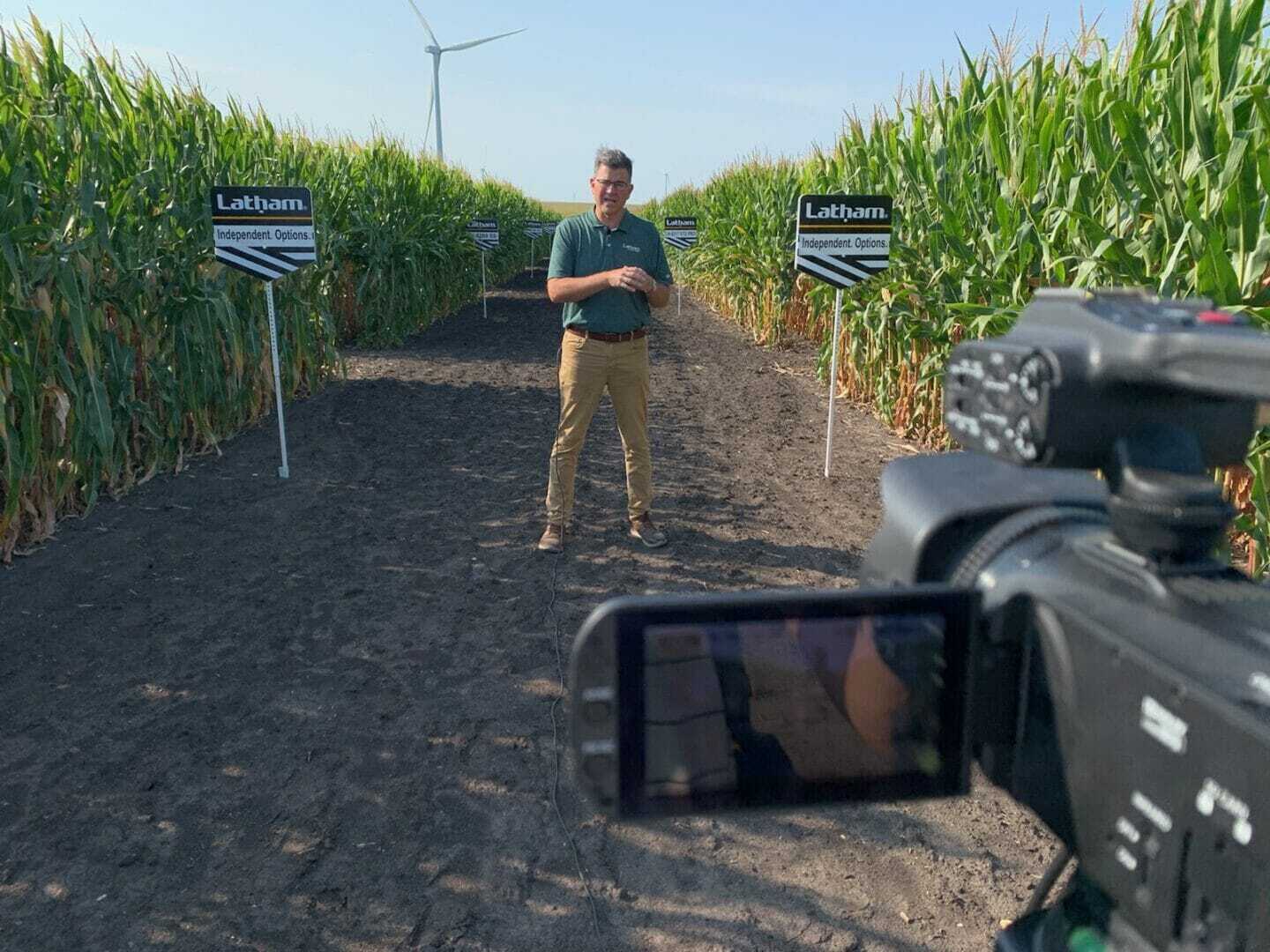
    Find a recap of our 2020 Latham Virtual Field Tour. Latham’s product team shares insights on a variety of key topics geared toward success this harvest and into the 2021 growing season.  If you missed the live session, no worries! Find our on-demand videos below of the field tour.


    TUESDAY, SEPTEMBER 8, 2020: KICKOFF TO LATHAM’S VIRTUAL FIELD TOUR WEEK 2020
    2
    Join us for the first session of our 2020 Virtual Field Day as John Latham shares about our 73 years of quality and innovation. What does this mean for our dealers and customers across Latham Country? Tune in to find out! #LathamSeeds
    • Watch on YouTube: https://youtu.be/38HPu0W5AG0
    • Watch on Facebook: https://www.facebook.com/watch/?v=716833985567673&extid=wucYcQA8x7m2HAf4

    Tune in above for a roundtable with Latham’s Product Team hosted by President John Latham.
    • 0:35 — Introductions
    • 2:06 — What soybean technologies can farmers be looking forward to in the future?
    • 3:50 — Has any of the extreme weather affected our corn supply?
    • 5:45 — What additional agronomy videos are coming down the pipeline?
    • 8:50 — Can the Data Forward app help with yield estimates?
    • 11:25 — How to prepare yield monitors to gather accurate yield data?
    • 16:30 — Late-season visible differences in treated and untreated seed
    • 18:00 — Update on XtendiMax renewal
    • 20:25 — 2021 corn line-up sneak peak
    • 24:00 — What makes the word INDEPENDENCE so meaningful at Latham Seeds?
    • 28:30 — Can we fix yield data after harvest?
    • 29:25 — When is the best time to soil sample?
    • 32:40 — Seed treatments: where can farmers cut some costs?
    • 35:45 — John Latham’s update from ASTA

    Watch on Facebook: https://www.facebook.com/watch/?v=2668478816588211&extid=ca2iM5vffbodkI4Y

    Watch on YouTube: https://youtu.be/O8FHM7ESu9M


    WEDNESDAY, SEPTEMBER 9, 2020: MAXIMIZING YOUR 40 CHANCES

    Join us for a 35 minute segment as farmers tell all about managing no-so-ideal harvest scenarios hosted by Bob Foley.

    • Watch on YouTube: https://youtu.be/wapZOMosW9w
    • Watch on Facebook: https://www.facebook.com/watch/?v=2769613716607152&extid=qtyQfwe76nz099nQ 

    Join us as Precision Agronomy Advisor Darin Chapman discusses on-farm research and the benefits of testing ideas for the future.

    • Watch on YouTube: https://youtu.be/dQGiV3n9SwQ
    • Watch on Facebook: https://www.facebook.com/watch/?v=230182775092324&extid=2gNkqUOjZDfEUmW4

    Join us as Corn Product Manager, Lyle Marcus, discusses how to maximize performance and reduce risk with Latham® corn hybrids in 2021.

    • Watch on YouTube: https://youtu.be/TqU1IGTj-VU
    • Watch on Facebook: https://www.facebook.com/watch/?v=313068009801743&extid=LSYK1tpv18TZXFtt

    SPECIAL FEATURE! 20 Minute Workshop hosted by Precision Agronomy Advisor Phil Long. Did you know that placement can affect yield by up to 20%? That’s a 20-50 bushel yield swing! Phil will walk through how to match management style to product characteristics for best placement and performance.

    • Watch on YouTube: https://youtu.be/3GijMR2w6nw
    • Watch on Facebook: https://www.facebook.com/watch/?v=887477738448432&extid=vfxO7xfB1W1Jr5XH

    THURSDAY, SEPTEMBER 10, 2020: MANAGING SOYBEANS ON OFFENSE AND DEFENSE

    What does it mean for a product to be Built for Battle? Mark Grundmeier shares insight into our highly offensive and defensive soybean product options.
    • Watch on YouTube: https://youtu.be/_EGw1UA4-b4
    • Watch on Facebook: https://www.facebook.com/watch/?v=1233891166969244&extid=LS56ewVr5vxXKVKA

    Join us as we discuss how to protect the yield potential of soybean genetics from day one with expert Gary Geske.
    • Watch on YouTube: https://youtu.be/mNxBtFDryHk 
    • Watch on Facebook: https://www.facebook.com/watch/?v=1945198385604293&extid=9ycIGoHLwzgBYFjq 


    Mark Grundmeier and Gary Geske share key insight on diversifying your soybean options to maximize performance and reduce risk.
    • Watch on YouTube: https://youtu.be/Q9I5hS-y8fU
    • Watch on Facebook: https://www.facebook.com/watch/?v=1233891166969244&extid=LS56ewVr5vxXKVKA

    Laura Cunningham

    September 10, 2020
    Agronomics, Corn, Crop, Disease, Emergence, Fertility, Fungicide, Growth Stages, Insects, Precision Ag, Seed Treatment, Soil, Soybeans, Weed Control
  • Latham Hi‑Tech Seeds

    #AskTheAgronomist: Talc USA Benefits

    3.5.20

    Is talc worth it? Phil Long reviews real benefits of our Talc USA line and research from our test at Alexander. #LathamSeeds

    0:40 — Topic Introduction
    1:30 — The importance of talc
    3:10 — Why Talc USA?
    4:30 — Talc study at Latham Seeds
    7:00 — How to incorporate Talc USA products on you farm

    Laura Cunningham

    March 5, 2020
    #AskTheAgronomist, Agronomics, Corn, Crop, Season, Seed Treatment, Soybeans, Spring
  • Latham Hi‑Tech Seeds

    #AskTheAgronomist: Seed Treatments

    1.9.20 Feature ATA image
    Tune in to hear the top three reasons to use our SoyShield soybean seed treatment this spring. #AskTheAgronomist
     
    0:30 — Topic introduction
    3:14 — Early planting & cool soils
    3:34 — SDS protection
    5:30 — Soybean Gall Midge protection

    Laura Cunningham

    January 9, 2020
    #AskTheAgronomist, Agronomics, Crop, Season, Seed Treatment, Soybeans, Spring, Winter
    benefits of seed treatment, cold spring, seed protection, Seed treatment, soybean seed treatment
  • Latham Hi‑Tech Seeds

    Our “Secret Sauce” is Saltro® Fungicide

    9.17.19 Tech Tuesday Image

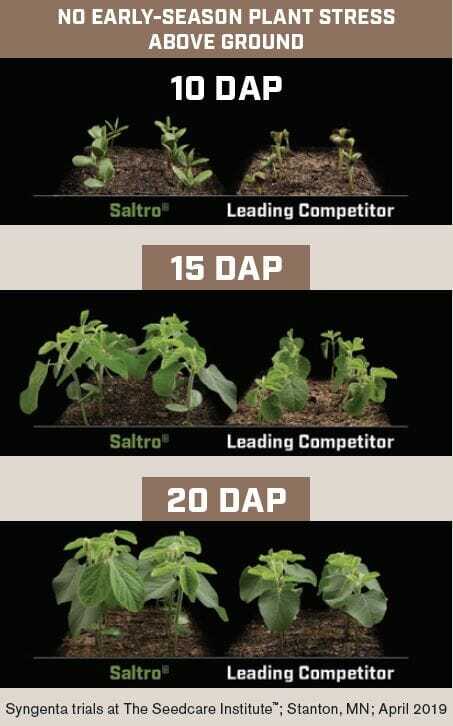
    One of the reasons we use Saltro is because it protects early-season plant health, plus protects plants against Soybean Cyst Nematode (SCN) and Sudden Death Syndrome (SDS). Soybeans treated with Saltro have strong emergence, better stands, healthier leaves and develop more robust early-season root mass. As a result, soybean plants treated with Saltro can reach their full genetic and yield potential.

    Saltro also doesn’t cause additional plant stress, like the halo effect we’ve seen with older chemistries. Soybeans can outgrow the side effects from early-season, above-ground stress, but they may not fully recover from the lower yield potential caused by below-ground stress.

    While touring the Syngenta Seedcare Institute in Minnesota, a group of Latham representatives were told Saltro is safer and more effective than the current standard seed treatment. More than three years of research shows that soybeans treated with Saltro have a 3-bushel per acre yield advantage over the leading SDS competitor in heavy SDS pressure and a 1.8-bushel yield improvement under low SDS pressure.

    Another advantage we saw first-hand on our tour is that Saltro has 22% better wet seed flow than its leading competitor. Saltro has a much lower use rate. In addition, the leading competitor creates 63% more buildup and 100% more dust than Saltro.

    Improved handling and treatment efficiency, higher yields, no plant stress, as well as superior SDS and SCN protection are the reasons why Latham Seeds is making our unique Saltro blend available for the products we’re selling for next planting season. Ask your Latham® representative for more information!

    9.17.19 Tech Tuesday Image

    Mark Grundmeier, Product Manager

    September 17, 2019
    Agronomics, Cover Crops, Crop, Season, Seed Treatment, Spring, Tech Tuesday, Winter
  • Latham Hi‑Tech Seeds

    Seed Industry Update with John Latham

    LIBSYN header 4

    LIBSYN header 2-01

    John Latham talks all things seed industry today! From weather to new seed technology approvals, join us for insight from John.

    For the Facebook Live link, click here: https://www.facebook.com/LathamSeeds/videos/10156341954222138/


    April 19, 2018
    #AskTheAgronomist, Seed Treatment, Spring
  • Latham Hi‑Tech Seeds

    Podcast: Seed Traits, Seed Treatments and Crop Rotation

    LIBSYN header 4


    LIBSYN header 2-01

    http://traffic.libsyn.com/fromthefield/3_out_of_3.mp3

    Phil Long wraps up our Profitability Series! Tune in as he talks about seed traits, treatments and crop rotation. Have a great day!

    For the Facebook live version, clicker here: https://www.facebook.com/LathamSeeds/videos/10156043160802138/

    January 4, 2018
    #AskTheAgronomist, Corn, Podcast, Seed Treatment, Soybeans
  • Latham Hi‑Tech Seeds

    Soybean Emergence: The Halo Effect & ILeVO

    LIBSYN header 4

    LIBSYN header 2-01

    [embedded_content]

    This week we cover the Halo Effect in result of ILEVO seed treatment.

    0:33 — What is the Halo Effect?

    1:09 — Why does the Halo Effect happen?

    2:51 — Does it result in a yield loss?

    We invite you to submit any questions weighing on your mind from agronomy diagnostics to new seed technologies. Phil will answer those questions on a Thursday weekly interview.

    Thanks for tuning in!

    Ask the Agronomist Podcast Week 2

    bonnie-harris

    May 11, 2017
    #AskTheAgronomist, Agronomics, Seed Treatment
  • Latham Hi‑Tech Seeds

    Four Ways Latham Seeds Can Help You Maximize Yield in 2017

    LATHAM 0073 JAN17 TECHtalk WEB ARCHIVE

    While fighting blowing snow and bitter wind chills, it’s a welcome relief to think about spring! I know many farmers, including myself, are getting equipment ready for tillage and planting. It’s also a good time to review your seed order.

    I expect most orders were placed with thoughtful consideration of the 2016 results, including university, F.I.R.S.T. yield trials and dealer plots. While this is all important data, keep in mind it represents information that was recorded in one location during one growing season.

    Also keep in mind that on-farm plots might be impacted by variables you would be unaware of unless you walked the plot throughout the growing season. For example, if a sprayer wheel track accidentally ran over part or all of the plants in a row, the yield of that hybrid could be affected significantly. If the wheel track happens to run over part of a row on a check hybrid, that yield reduction would affect hybrids on both sides of the check.

    Two more areas to consider when selecting seed are soil type and disease. Plants respond differently in various growing conditions. It’s also important to know field history. For example, once you’ve had white mold or Sudden Death Syndrome (SDS) in a field, it has the potential to cause yield loss every time you plant soybeans there in the future. That’s why it’s especially important to know how well different brands handle SDS and white mold.

    Be sure to check out our performance in the 2016 F.I.R.S.T. Trials. Latham won a record-setting 42 trials! Our corn program produced 17 first place winners and 199 total Top 10 finishes; our soybean program produced 25 first place finishes and 185 total Top 10 finishes. These stats show just how deep and wide our product line is.

    Latham’s sales and product teams are at your service! Call us at 1.877.GO.LATHAM (1.877.465.2842), and we’ll gladly help you choose the right seed, field-by-field!

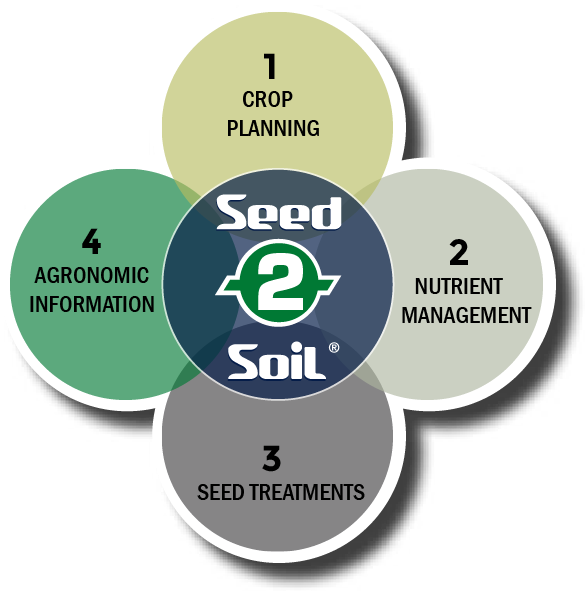
    LATHAM_0073 JAN17_TECHtalk_WEB ARCHIVELatham Hi‑Tech Seeds helps simplify the seed selection process through our Seed-2-Soil® agronomic services. We help maximize your yield potential by focusing on four key areas:

    1. FieldXField crop planning: Your farm management style, equipment and overall production goals, along with our research and performance data for each hybrid, is taken into account when we help you select the best Latham hybrid in each field. Seed placement helps reduce risk and increases your likelihood of top performance.
    2. Nutrient management: Research shows that fertility programs influence plant performance and yield by as much as 60%, so nutrient management includes the use of foliar leaf sampling to help manage micro and macro nutrients. There are 17 essential nutrients for plant development, and each one is important in various amounts. We also look at variable rate planting to help manage populations specific to field conditions and hybrid tendencies.
    3. Seed treatments: It’s important to treat seed with proper fungicides and insecticides to protect your growing crop from insects and diseases. Farmers who invested in seed treatments last year were very glad their crops had extra protection. (See Mark Grundmeier’s column in this issue for specific results.) Research shows that seed treatment is the best defense against disease. Choose a treatment like Latham’s SoyShield fungicide or SoyShield PLUS that is a fungicide-insecticide combination to help protect early-planted seed against the unexpected.
    4. Agronomic information: Latham Seeds provides agronomic tools to help choose the right hybrids. You’ll find loads of information on our blog, TheFieldPosition.com. On our website, lathamseeds.com, you’ll find product tech sheets, seed placement recommendations, and companion hybrid recommendations, as well as yield data from strip trials and unbiased independent third party trial results.

    January 18, 2017
    Agronomics, Crop, Seed Treatment, Soil
  • Latham Hi‑Tech Seeds

    ASK THE AGRONOMIST: SEED TREATMENTS

    Ask the Agronomist Feature Photo 01

    Thanks for checking out the last week of our “Ask the Agronomist” series! Read below for Mark’s response to this week’s question about seed selection for your 2017 planting season!

    Crisp, cool mornings remind us that fall is just around the corner.  Time is of the essence!  Plan a successful harvest by scouting fields and evaluating standability.  Identify potential problem areas.  Note crop progress, as well as insect and disease pressure.  Pay particular attention to fields that were damaged by wind and hail, promoting stalk rot.

    Q: Silage harvest is going strong and soon field corn will be ready to combine. What should Upper Midwest farmers keep in mind as they’re preparing for #Harvest16?

    A: There are 3 things to keep in mind for the harvest season: (1) Assess crop progress. (2) Develop a harvest plan. (3) Make sure your equipment is ready to go.

    A good plan outlines which fields to harvest first. The main consideration when contemplating your harvest order is focusing on fields exhibiting potential for Stalk Rot and subsequent Stalk Lodging. Secondary concerns include hybrid maturity, crop residue management and logistical concerns.

    Q: Let’s talk about hybrid maturity. It looks like harvest is going to be early this fall.

    A: All of those warm summer days pushed along maturity this season. Wet, humid conditions have also created ideal conditions for leaf diseases and some stalk rots in corn, as well as Sudden Death in soybeans. In other areas of Latham’s sales territory, drought conditions will cause an early harvest. Make sure you check machinery and conduct necessary maintenance well ahead of the expected harvest date. I have witnessed farmer who, due to conditions like Stalk Rot, should have harvested a week earlier than they actually did.  They simply weren’t prepared for an earlier harvest, and as a result, they lost thousands of dollars’ worth of crops that could have been saved.

    Q: How can farmers determine which fields are in jeopardy of downed corn?

    A: Check stalk strength and integrity by pinching the lower internodes on the plant and feel for weakness.  Also, the root mass can affect the plant’s ability to stand up against late-season winds.  Roots can be more of an issue than stalks in a wet growing season like we experienced.  Saturated soils limit the growth of root hairs and brace roots, making the total root mass much smaller.  If those plants grow close to full size, that puts a lot of stress on the plant later in the year –either it may not have the ability to take up enough nutrients or the plants may lodge if there is a late-season wind or wind and rain event.

    Q: Even before this crop gets harvested, farmers are already planning for their next crop year. What advice do you have as farmers are making their seed corn decisions now?

    A: I like to recommend that a farmer chooses seed corn not only for certain plant characteristics but also by maturity. Relative maturities are just that –relative. Accumulated Growing Degree Units (GDUs) determine whether full crop maturity comes early or late in a year. Different hybrids react differently to growing conditions, too. That’s why I recommend planting 50% of one’s corn acres to the normal maturity for that area with 25% of the acres planted to an earlier maturity and 25% to a later maturity. Planting a portfolio of hybrids each year maximizes your chances of a good harvest.

    Q: I’ve noticed in your seed product guide that it lists whether hybrids move north or south out of its zone. What does this mean?

    A: Our product team spends countless hours taking field notes about hybrid characteristic, such as how it emerges and when it flowers. When you talk about moving out of zone, we look at when that hybrid flowers. If a hybrid flowers early for its relative maturity (RM), that hybrid typically moves north better than south. A hybrid that flowers late usually moves better south of its zone. A few hybrids are neutral, so they can move north or south well. Maturity is also a determining factor when corn must be replanted later because obviously the length of its growing season has been shortened.

    Q: What types of research does Latham Seeds use to determine relative maturity, as well as to select products for its lineup?

    A: As far as where do we get the info for rating our releases, we take into consider our sales representative’s recommendations along with our SuperStrips information. These SuperStrip trials split our corn lineup into maturity groups and are conducted on our home research farm in North Central Iowa, as well as on more than 70 of our dealers’ and customers’ farms throughout the Midwest.

    Q: What else would you like to add? A: Learn more about Seed Treatments, New Corn and Soybean Technologies and Corn Hybrid Stress Research at Latham’s home farm on Wednesday, Aug. 31. We’ll be giving tours of our research plots, and Latham® seed grower Phil Pitzenberger will demonstrate how Drone Technology is improving operations on his family farm. Visit LathamSeeds.com for more details!

    September 1, 2016
    #AskTheAgronomist, Agronomics, Seed Treatment
  • Latham Hi‑Tech Seeds

    ASK THE AGRONOMIST: SEED TREATMENTS

    Ask the Agronomist Feature Photo 01

    Thanks for tuning in to our weekly “Ask the Agronomist” Audiocast! Play the audio file below to listen to Mark’s response to this week’s question about choosing seed with the right treatments for your fields.

    https://lathamseeds.com/app/uploads/2016/08/latham-8-23.mp3

    Q: My soybean plants are the tallest I’ve ever seen them! Should I be concerned that all of the energy is going into stems and leaves rather than into pods?

    A: This is what makes soybeans such an interesting crop!  With the weather we’ve had this growing season, it does not surprise me that plant height is taller than normal. Vegetative growth can occur through the R5 stage if moisture, temperature and nutrients are readily available. R5 is the “beginning seed” stage when seeds start to develop on one of the 4 top nodes of the plant.  We’ve even had a few varieties over the years that shot extra pods out the top of the plant after R5.

    This season I believe disease will have more impact on soybean yields than anything else.

    Q: We’ve talked in recent weeks about how Sudden Death Syndrome and Brown Stem Rot are a factor this season. Now farmers are starting to see White Mold in their soybean fields. What can be done?

    A: Cool, wet conditions this spring followed by saturated soils and high humidity this summer have been favorable for development of many diseases in both corn and soybeans.  White Mold usually shows up when we have a closed soybean canopy that traps excess moisture.  If farmers are proactive and can catch the disease in the early stages, there are some foliar fungicides that can help reduce the severity of the disease.  However, each product has different application rates and timing so contact your local chemical retailer to see what they have available to fight White Mold.  Again, the key is to scout your fields and catch the disease early.

    Q: So farmers need to scout their fields…  We’ve heard this before and it seems like good advice.  Anything else they can do to prevent outbreaks in the future?

    A: For future crops, seed selection is key to reducing risk and minimizing damage. If you notice problem areas, your Latham® rep can help you select varieties with the highest level of disease resistance. Also ask about ILeVO, the latest seed treatment to protect seedlings against SDS and soybean cyst nematode. In fact, you can learn more about ILeVO at Latham Seeds’ field day on Aug. 31.

    Q: What is ILeVO?

    A: ILeVO seed treatment from Bayer CropScience has received lots of positive press for its effectiveness against Sudden Death Syndrome (SDS). In recent years, fields stricken with the SDS disease have lost so much yield that some researchers are calling it the #2 pest affecting U.S. soybeans. It’s second only to Soybean Cyst Nematodes (SCN).  Interestingly enough, some of Bayer’s studies have shown that ILeVO may also have some effect on SCN as well as SDS. We’re researching ILeVO this season in our proprietary Latham SuperStrip research plots and you can be sure we’ll let you know if there is a correlation in our tests.

    Q: Is ILeVO a new seed treatment that Latham Seeds is testing this season. What other seed treatments are available for 2017?

    A: As an independent, family-owned seed company, Latham Hi‑Tech Seeds is all about options! New for 2017, we now have 5 different formulations available of our trademark SoyShield seed treatment:

    1. SoyShieldTM
    2. SoyShield Plus
    3. SoyShield with IleVO
    4. SoyShield Plus with ILeVO
    5. And our brand new SoyShield Select

    Q: What is SoyShield Select?

    A: SoyShield Select is Latham Seeds’ new seed treatment offering that contains a different fungicide and insecticide formulation that is more value-priced.  To qualify, customers must order a minimum of 250 units or increase their order by 100 units over 2016 purchases and these orders must be postmarked or received by August 25, 2016, to receive an additional $4/unit discount. Orders of SoyShield Select received between August 26 and October 15 will receive an additional $2/unit discount.

    Q: What else would you like to add?

    A: Learn more about Seed Treatments, New Corn and Soybean Technologies and Corn Hybrid Stress Research at Latham’s home farm on Wednesday, Aug. 31. We’ll be giving tours of our research plots, and farmer Phil Pitzenberger will demonstrate how Drone Technology is improving operations on his family farm. Visit LathamSeeds.com for more details!

    August 25, 2016
    #AskTheAgronomist, Agronomics, Seed Treatment
Previous Page
1 2 3 4
Next Page

Latham Hi‑Tech Seeds

131 180th Street | Alexander, IA 50420

(641) 692-3258

SIGNUP FOR OUR NEWSLETTER
  • Contact
  • Legal
  • Seedware Login
  • Latham Gear

© 2026 Latham Hi‑Tech Seeds. All rights reserved. | Privacy Policy

Latham® Hi-Tech Seeds is a trademark of M.S. Technologies, L.L.C., 103 Avenue D, West Point, IA 52656.