Skip to content
Latham Hi-Tech Seeds

(641) 692-3258

  • Home
  • Performance
  • Products
    • Corn
    • Soybeans
    • Soybean Blends
    • Alfalfa
    • Corn Silage
    • Seed Guide
  • Find a Rep
  • Media
    • Blog
    • News
    • Videos
    • Podcasts
    • TECHTalk
  • About Us
    • Company History
    • Our Mission
    • Careers
    • Become a Rep
    • Sowing Seeds of Hope
  • Contact Us
  • Latham Hi‑Tech Seeds

    You Can’t Control the Weather.

    but you can plan for white mold pressure.

    White mold has an annoying habit of making itself obvious when there’s not much you can do about it.

    By the time its telltale white, cottony growth appears on soybean stems, infection has already occurred. And because the sclerotia that carry the fungus can survive in the soil for years, a field with a history of white mold deserves extra attention long before symptoms appear.

    That’s why managing white mold isn’t just about reacting to what you see in the field. It’s about building a plan before the next crop goes in.

    Know Where You’re at Risk

    Cool, wet conditions and moisture within a dense soybean canopy can create favorable conditions for white mold development. Fields with a history of the disease deserve particular attention when planning for the next growing season.

    Good field notes are a great place to start. Record where white mold appeared, how severely different varieties were affected and the field conditions where pressure was greatest.

    Then use that information when making next year’s seed decisions.

    Build Defense into Your Seed Selection

    Variety selection is one of the most important tools farmers have for managing white mold risk.

    Look closely at white mold ratings and other defensive characteristics when selecting soybeans for fields with a known history of disease. Latham’s 2027 soybean lineup includes varieties with strong white mold tolerance, including new K-Class™ products that combine top-end yield potential with the defensive characteristics needed across Latham Country.

    Your Latham® Dealer can help evaluate options and match soybean products to the disease history, soils and management practices of each field.

    Add Another Layer with SoyShield Ultra

    Seed treatment provides another opportunity to build protection into your plan before planting.

    Latham SoyShield™ Ultra brings several components together in one treatment package, including HeadsUp® for Sudden Death Syndrome (SDS) and soybean white mold suppression. It also includes an increased rate of mefenoxam compared to SoyShield Plus, BIOST for nematode and insect protection, and Amplifyr to support early-season plant growth.

    In other words, SoyShield Ultra isn’t just about white mold. It’s designed to give soybeans broader protection against several of the disease and pest pressures farmers face across the Upper Midwest.

    And that’s an important distinction: there isn’t one silver bullet for white mold.

    The better approach is to layer management decisions — knowing your field history, selecting varieties with the right defensive package, using appropriate seed treatment and continuing to scout throughout the season.

    Start Planning Now

    If you’re seeing white mold in your fields this season, don’t just make a mental note and move on.

    Document it. Talk about it with your Latham Dealer. And use what you’re seeing today to make a stronger plan for 2027.

    You can’t control what Mother Nature delivers next season. But you can make decisions now that help your soybeans stand up to the pressure.

    Talk with your local Latham Dealer about soybean selection and whether SoyShield Ultra is a good fit for your acres.

    Team Latham

    September 12, 2026
    Agronomics, Crop, Disease, Seed Treatment, Soybeans, Uncategorized
  • Latham Hi‑Tech Seeds

    The Value of Seed Treatment

    Seedware

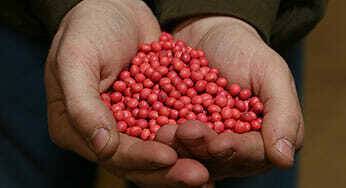
    Benefits of seed treatment include protecting seed from rot, seedling blights and insects, as well as improved germination. Seed treatments also help prevent the spread of plant diseases and reduce the risk of replant.

    Seed treatments are one of the most efficient crop protection technologies as they reduce farmers’ need for foliar spray applications. They also offer some certainty because field and weather conditions can prevent farmers from entering the field to apply fungicide and/or insecticide after seeding.

    Applying treatment directly on the seed before planting protects seeds and young plants, regardless of field conditions. Because seed treatment is a targeted, one-time application of pesticides to seeds, seedlings are protected during their most vulnerable stages of growth. Spraying fungicides or insecticides during these early growth stages is unlikely to be as effective because sprays are less targeted.

    Treated seeds carry a precise amount of pesticide that protects the seed during early growth, which is the critical growth period before and during germination. Seed treatments also are a “curative treatment,” protecting plants against seed-borne diseases.

    Research shows that seed treatments deliver more robust seedlings to farmers, protect plant stands and maximize yield potential. Conversely, farmers not using seed treatments in high pest pressure areas can see yield losses of 50% or more.

    Help secure a return on your seed investment with seed treatment! But don’t just take our word for it… take crop notes this growing season and compare data from multiple years. The Latham Team is here to answer your questions at 1-877-GO-LATHAM (877-465-2842).

    If you liked this article, watch this episode of Beyond the Bushel. John Latham and Justin Prokosch break down Latham’s three new soybean blends, what makes each unique, how they can help boost results this season and why they are exited to be apart of Victrato® with TYMIRIUM® technology, a new seed treatment from Syngenta. 


    Did you enjoy this article? We want to (TECH)talk with you! Sign up for our newsletter to receive agronomy article in your inbox! We’ll TALK soon.

    Victrato®, TYMIRIUM®, and the Syngenta logo are trademarks of a Syngenta Group Company. 

    Team Latham

    January 6, 2026
    Agronomics, Corn, Crop, Seed Treatment, Soybeans, Spring
  • Latham Hi‑Tech Seeds

    Proof Points – Episode 15

    Proof points video graphic

    Shannon Latham

    December 13, 2023
    Corn, Crop, Industry News, Seed Technology, Seed Treatment, Soybeans
  • Latham Hi‑Tech Seeds

    Proof Points Podcast – Episode 4

    Proof Points Snip

    On this week’s Proof Points Podcast, Gary explains how seed treatment is an insurance policy to protect yield within a plant. Because we never know what Mother Nature will bring.

    June 2, 2023
    Agronomics, Corn, Crop, Podcast, Proof Points Podcast, Seed Treatment, Soybeans
  • Latham Hi‑Tech Seeds

    Three Keys to High-Yielding Soybeans

    NW IA Latham Seeds Soybeans 8 13 19

    Our focus for Latham Premier Agronomy Center in Alexander, Iowa, is to showcase a broad lineup of independent options and to demonstrate how genetics interact with the environment and management styles (G X E X M).

    LPAC Picture Resized

    In the Premier Agronomy Center this year, we tested 26 Latham® soybean varieties using 28 different management practices. My top take-home messages for our 2022 soybean plots are:

    1. August rains make soybeans. We received 11.8 inches of rain this season but 4.1 inches of it fell in August. Although we received below-normal moisture, the rain came at the right time. Our plots averaged 75 bushels per acre (bu/A) on about 12 total inches of rain!
    2. Don’t stress soybeans at early bloom. Weed control in soybeans is extremely important. I made a second pass of Liberty® in season, however, it reduced yields by 10 percent. Our showcase plots did not get the extra dose of herbicide and averaged 86 bu/A; the plots that received a second pass yielded an average of 78 bu/A.
    3. “Early” planting date is key to high yield. While earlier is better, “early” does not mean April 10 because we don’t want to risk stand loss to freezing temps. This year our first soybean plots were planted later than expected due to conditions. The plots planted May 13 averaged 5.5 bu/A better than the plots planted May 20. Seven days can make a difference in the number of nodes and pods retained, plus the canopy closes sooner.

    The key to higher yields is how all three components – genetics by environment by management – interact. Fertility tops my list, so I always make sure potassium is sufficient. Potassium is what gets soybeans (and corn) through stressful times and helps them better manage water loss on hot days.

    Latham® soybeans have outstanding yield potential. But like all living and breathing organisms, our soybeans struggle to perform when they’re stressed at the wrong time. The key to top soybean yields is management: reduce as much stress as possible during the growing season because we can’t control the weather.

    Did you enjoy this article? We want to (TECH)talk with you! Sign up for our newsletter to receive agronomy articles in your inbox! We’ll talk soon.

    Team Latham

    December 8, 2022
    Agronomics, Crop, Disease, Emergence, Fertility, Fungicide, General, Growth Stages, Insects, Seed Treatment, Soil, Soybeans, Weed Control
  • Latham Hi‑Tech Seeds

    Latham’s Premier Agronomy Center Opens for Tours

    LPAC Picture Resized

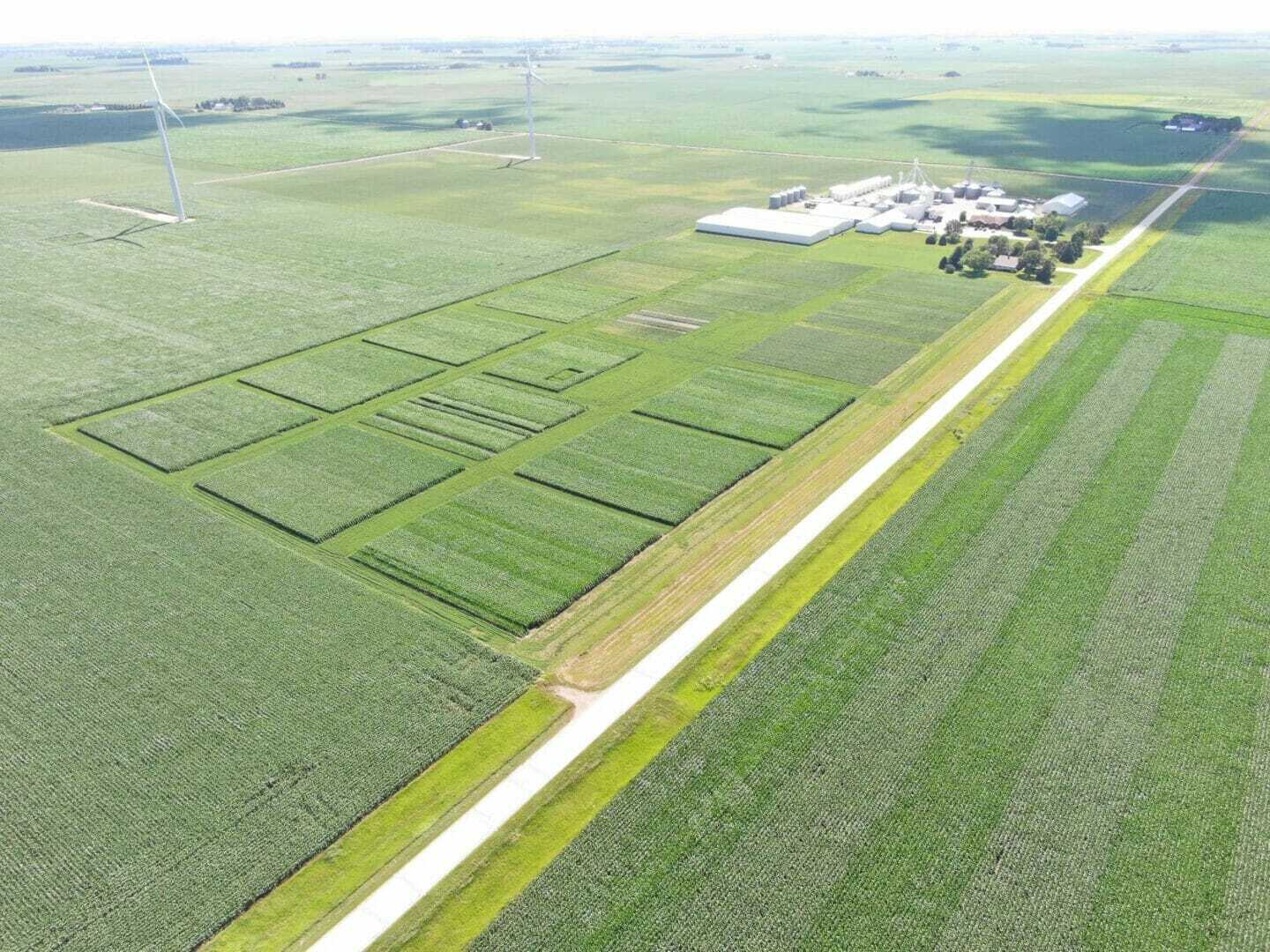
    Latham Hi‑Tech Seeds’ Premier Agronomy Center at our company headquarters in North Iowa provides us with opportunities to collect data on real-world challenges. It also provides us with an opportunity to talk about the exciting new Latham® products, as well as management practices, that help you raise more bushels. This year we have 18 different plots (10 corn and 8 soybean) to demonstrate different techniques.LPAC Picture Resized

    Interested in seeing Latham’s Premier Agronomy Center? Plan a visit! Latham Dealers are encouraged to make arrangements with their regional sales manager (RSM), so they can bring their customers throughout the growing season. We will be open for public tours on Thursday, Sept. 8, at 4 p.m.

    Here’s what you can see inside Latham’s Premier Agronomy Center… As you drive west on 180th Street in Alexander, Iowa, you will see our Latham Showcase plots featuring our top corn and soybean products. Next to that are corn and soybean seed treatment demonstration plots. I also planted my hybrid stress research up front. Twenty different Latham hybrids were planted from 22,000 to 36,000 plants per acre, so we can pinpoint when each hybrid flexes and how we can better manage them in-season.

    The second tier of plots contains high-yield plots (corn/beans) where we “throw the kitchen sink at it,” so to speak, to try to add some extra bushels. Our soybean Iron Deficiency Chlorosis (IDC) plot uses tactics like in-furrow chelated iron products with increasing population to overcome the challenges IDC can bring. We have a silage demonstration plot with a planting date demonstration. You’ll also see a sneak peak of Latham’s corn breeding program alongside some great observation plots featuring planting depth.

    The third tier of plots are “long-term plots” that include cover crops, no-till and continuous corn. These practices come with many challenges, so we have several different products/treatments including in-furrow fertilizer, biologicals, in-furrow fungicide, and biological products for providing nitrogen to corn. We also have included herbicide demonstrations, showing how cover crops can increase water infiltration during pounding rains, as well as also reduce herbicide costs and improve weed control in soybeans.

    All growing season long we’re providing opportunities to learn from our demonstrations in the Premier Agronomy Center. Follow @LathamSeeds on Facebook, Twitter, Instagram and YouTube. We share our weekly “Ask the Agronomist” videos, as well as season-specific information.

    Team Latham

    July 27, 2022
    #FromTheField Crop Reports, Agronomics, Corn, Crop, Fertility, From the Field, Fungicide, General, Growth Stages, Insects, Precision Ag, Season, Seed Treatment, Soil, Soybeans, Summer, Weed Control
  • Latham Hi‑Tech Seeds

    Summer Fertilizer Increases Alfalfa Winterhardiness

    Alfalfa3

    Corey Headshot PNG
    Core Catt, Forage Product Manager

    With everything from groceries to gas on the rise, we understand the need to question whether expenses are necessary or justifiable. Below is information to support why fertilizing alfalfa in summer and applying fungicide to silage hybrids warrants your attention.

    Fertilizing alfalfa in the summer helps fill the cellular gas tank of the plant’s crown, which helps increase its yield potential for the current growing season, as well as increases its potential for winterhardiness. All alfalfa benefits from in-season fertility, regardless of cutting schedule or strategy.

    Summer seeding is fast approaching. July 20 through August 1 are key seeding dates for Latham Hi‑Tech Seeds’ northern territory, which includes North Dakota, as well as northern Minnesota and northern Wisconsin. August 1-15 is the range of recommended alfalfa seeding dates for southern Minnesota and southern Wisconsin while most alfalfa growers in Iowa typically seed in mid-August. Look at this graph.

    Corey Graph
    Sourced from University of Wisconsin – Extension

    Due to our late spring, many Midwest alfalfa growers have moved seeding alfalfa to this fall. The success of fall seeding depends on moisture. It’s important that alfalfa germinates quickly, develops a crown, and builds enough crown carbohydrates to overwinter.

    Latham® AlfaShieldTM is a great seed treatment to help facilitate quick emergence. Think of AlfaShield as wrapping your alfalfa seed in a sponge. It helps protect the fragile germ of the seed. It also helps draw moisture to the seed, which is particularly important when seeding into moisture-stressed soils. Summers-seeded alfalfa is up against the time clock; approximately four to six weeks of significant growth needed to develop the crown before frost. The 2022 and 2023 Latham product guides include a dry matter (DM) ton advantage of AlfaShield compared to the old industry standard. AlfaShield has a bigger advantage in moisture-stressed soils.

    Summer Considerations for Corn Silage

    When I walk fields and test plots in the fall, I note a hybrid’s stay-green ability. I believe this observation relates to plant health. Healthy plants tend to have a lower probability of developing infection, which can create the environment for molds and mycotoxins to grow.  Fungicide application promotes plant health and can boost yield and corn silage quality. Healthy, dark green, disease-free leaves are like solar panels capturing more sunlight for more photosynthesis. Healthy leaves also build more yield, as well as reduce chances for mold and mycotoxins to develop.

    There are a variety of fungicides to select from, all of which inspire improved plant health. I have the most experience with BASF fungicide corn silage research relating to improved corn silage tonnage and forage quality. Several of the studies have resulted in two to three more tons of corn silage per acre plus the potential of reduced molds and mycotoxins is encouraging. With current commodity prices, that’s around an extra $140 to $210/acre in corn silage tonnage!

    Investing fungicide is worth consideration for livestock producers, who raise their own forages. Molds and mycotoxins can be more challenging to quantify. When fed to livestock, however, they can severely impair animal performance. In severe instances, it can lead to mortality.

    Feel free to contact your local Latham rep with any questions about summer fertilizing or fungicide application. You’re also welcome to email me at coreyc@lathamseeds.com. I’m always happy to visit with Midwest farmers who are interested in raising better meat, milk and eggs!

    July 14, 2022
    Agronomics, Alfalfa, Crop, Disease, Fungicide, General, Seed Treatment, Tech Tuesday
  • Latham Hi‑Tech Seeds

    Try Something New!

    Nebraska Cornfield

    Phil Long, Precision Agronomy Specialist
    Precision Agronomy Advisor, Phil Long

    A common theme you will hear when listening to national corn/soybean contest winners is they always use a few acres to try something new. Latham’s Forage Products Manager, Corey Catt, has written numerous articles, encouraging growers to use a few acres to experiment on their own farms with products, seeding rates and management practices.

    While third-party research plays an important role in helping us choose seed products, it’s also important to conduct your own on-farm research. Here are a few ideas to try this growing season. If you have acres that struggle with Sudden Death Syndrome, try treating a few soybean units with Latham® SoyShieldTM Plus with Saltro and run a side-by-side comparison. Another idea is to apply sulfur to soybeans and measure your results. Experiment on a few corn acres with Xyway® 3D in-furrow fungicide or try a phosphorus-enhancer, such as Encompass from TALC USA.

    You could create quite a list of new products, different tillage/planting practices, in furrow fertilizers, or in-season practices that you could try to break your farm’s yield plateau. Here are some tips to make the most of your on-farm research efforts:

    1. Use a decent farm, or part of a decent farm, to do your research. Use a farm that has soil types and drainage/topography characteristics that represent a lot of your acres. Don’t pick the less desirable ground in terms of fertility. If pH, phosphorus (P), and potassium (K), levels are wacky, you won’t learn much when trying a new in-furrow treatment, biological or fungicide. Basic needs must be taken care of before you can add more yield.
    2. Keep it short and simple (K.I.S.S.). Weather and soil types cause enough variation in any research that you don’t need to add complexity. Try one thing at time, so you’re not adding multiple factors into the equation. For example, run a planter pass with Xyway mixed in your starter fertilizer and then shut it off the next pass. Do these two “treatments” at least three more times across your field to reduce the influence of soil types on your results.
    3. Garbage in, garbage out. Make sure your monitors/globes/planting equipment have the latest update, so you can capture the data when it’s go time. Layout your research, so your combine can capture it. This is very important! For example, if you harvest with an 8-row head, change “treatments” on 20-foot increments.

    Mapping what you do this spring will allow you to analyze it next fall. You will want to look at how that new product did in your heavy soils, lighter soils and whether it is worth expanding on more acres next year. Every year is different, so keep weather in mind as it is usually the #1 influencing factor. Start small to find out what works best on your farm. I am happy to help you figure out what new thing to try on a few acres. Give me a call and we can chat more about it at: 641-692-0370.

    Team Latham

    April 21, 2022
    Agronomics, Alfalfa, Corn, Corn Silage, Cover Crops, Crop, Disease, Emergence, Fertility, Fungicide, General, Precision Ag, Season, Seed Treatment, Soil, Soybeans, Spring
  • Latham Hi‑Tech Seeds

    More Tonnage on Less Acres… What’s Your Blueprint?

    Silage

    Striving for tonnage and quality has never been more important than now with high cost of inputs and high commodity prices. More tonnage on less acres could mean more #2 yellow at a good price. Additionally, maximizing quality means more protein, more starch, more digestibility and greater feed efficiency.

    What’s your blueprint to success for 2022? Here are a few things to consider:

    Corey arrow graphic

    Hybrid Selection for Corn Silage: Review of Latham’s 2021 Wisconsin corn silage trials results = WOW.  This summary reveals the incredible tonnage some of our hybrids showed in the trials, blowing past the competition. We have many winning dual-purpose hybrids highlighted in our product guide, as well as our silage specific leafy hybrids. Check out these top-performing Latham® hybrid product numbers: 4937, 5245, 5742, 5965, 6285, 6477. Access to tonnage starts with hybrids that have historically had evidence of strong, known performance.  Using trusted genetics has never been more important.

    Seed Placement: Latham Seeds’ product guide provides specific placement details to help you achieve the best performance. Key in on the plant population for soil type, especially with the leafy hybrids. Leafy hybrids are massive plants, so they require a lot of in-row room to grow. To maximize leafy tonnage and starch, ensure proper seed depth. It’s important to promote the development of a superior nodal root system to hold up the large plant, as well as to bring in essential water and nutrients.

    Nutrients: With a high premium on nitrogen, use in-season tissue and soil testing to determine whether the plant needs supplemental nutrition. Additionally, think about booking fungicides early to make sure you have them. High input investment coupled with high value commodity means many farmers will protect the plant with fungicides, so book early to ensure you have access to them! It seems a lot of helpful inputs are short supply, and fungicides like Headline AMP® have shown to produce 2 to 3 more tons/acre average. This is a very valuable consideration. When corn is $6/bushel, corn silage is about $60/ton.  Adding 2 or 3 tons is about $120-$160/acre. A healthy corn plant adds more quality, as well as helps mitigate the expensive risk of mold and mycotoxins.

    Know and Maximize Manure and Alfalfa Credits: The adage “think outside the box” recommends that we think freely and openly, so that we’re not bound by old, nonfunctional, or limiting rules or practices. While I believe there is a time and a place for this type of thinking, today I’m suggesting that we think “inside the box.” We can leverage what we already have.

    What do you have on hand that can help reduce your expenses and minimize financial exposure?

    Because the 2022 crop cycle is likely to set a record for the highest input investment crop, many farmers are scrutinizing every input. They’re leveraging what is on hand or readily available, so manure has become a highly sought-after resource. Manure also is proving to be effective. These manure credit charts give an idea of some “inside the box” considerations of nitrogen sources.

    Corey chart

    Additionally, corn planted on rotated alfalfa crop can yield as much as 20% more, especially in combination with manure. Applying manure requires some extra work and planning, here’s an online calculator to help you decide what manure is worth to your farm. Remember the intangibles. Manure provides the soil with needed nutrients, plus it unfolds a world of the living microbes.

    Every growing season starts with a custom tailored blueprint. Consider how powerful genetics and some “inside the box” thinking can help you create more tons from less acres this season!


    March 16, 2022
    Agronomics, Corn Silage, Crop, Fungicide, General, Seed Treatment, Soil, Tech Tuesday
  • Latham Hi‑Tech Seeds

    #AsktheAgronomist – Latham Adds Vayantis

    Ask the agronomist latham adds vayantis

    Latham Seeds adds new Vayantis® to SoyShield® Plus! On this week’s #AsktheAgronomist, Phil Long, precision agronomy advisor, and Matt Moore, soybean product manager, discuss soybean treatments and how the addition of Vayantis is really exciting going into the 2022 planting season! Learn more about Vayantis fungicide. 

    March 8, 2022
    #AskTheAgronomist, Agronomics, Corn, Crop, Disease, Fungicide, General, Industry News, Seed Technology, Seed Treatment, Soybeans
1 2 3 4
Next Page

Latham Hi‑Tech Seeds

131 180th Street | Alexander, IA 50420

(641) 692-3258

SIGNUP FOR OUR NEWSLETTER
  • Contact
  • Legal
  • Seedware Login
  • Latham Gear

© 2026 Latham Hi‑Tech Seeds. All rights reserved. | Privacy Policy

Latham® Hi-Tech Seeds is a trademark of M.S. Technologies, L.L.C., 103 Avenue D, West Point, IA 52656.