Skip to content
Latham Hi-Tech Seeds

(641) 692-3258

  • Home
  • Performance
  • Products
    • Corn
    • Soybeans
    • Alfalfa
    • Corn Silage
    • Seed Guide
  • Find a Rep
  • Media
    • Blog
    • News
    • Videos
    • Podcasts
    • TECHTalk
  • About Us
    • Company History
    • Our Mission
    • Careers
    • Become a Rep
    • Sowing Seeds of Hope
  • Contact Us
  • Latham Hi‑Tech Seeds

    What Are Your Fields Telling You About 2027?

    What is your harvest telling you
    What is your harvest telling you

    harvest gives farmers more than a yield number

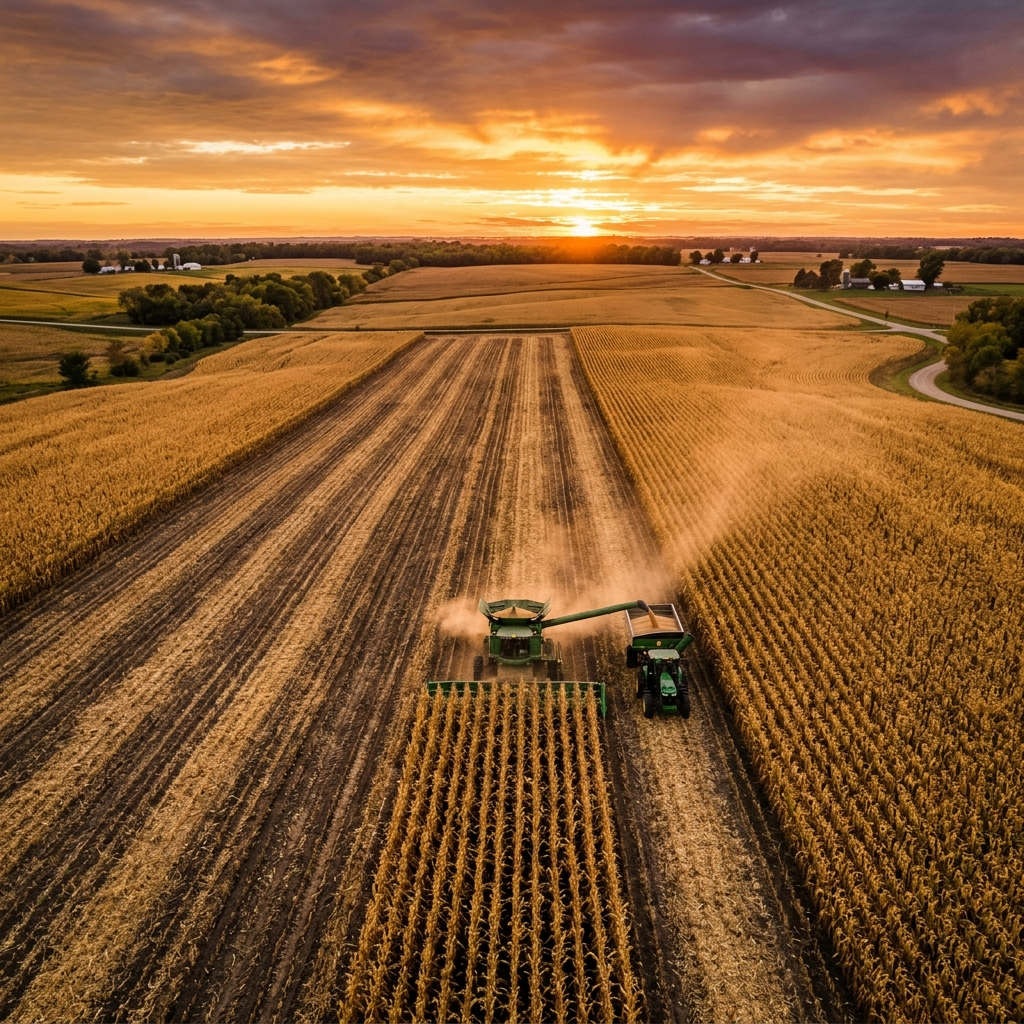
    As the combine moves across the field, it’s also revealing where disease showed up, which products stood strong, how different acres responded to stress and where management decisions paid off.

    Those observations can provide valuable clues for 2027.

    Where Did Disease Show Up?

    Make note of disease pressure while the evidence is still easy to see.

    Did Sudden Death Syndrome appear in certain soybean fields? White mold in others? Did stalk disease affect standability in corn?

    Field history matters. Knowing where problems occurred — and how different products handled them — can help guide variety selection, seed treatment decisions and management strategies for next season.

    What Stayed Standing?

    Yield matters, but so does getting that yield into the combine.

    Pay attention to stalk and root strength in corn and standability in soybeans. Which products maintained late-season plant health? Where did lodging occur? Did certain fields or growing conditions create more problems than others?

    Those observations can help identify where stronger defensive characteristics may deserve more consideration in 2027.

    What Happened on Your Tougher Acres?

    Some of the most useful harvest information may come from fields that didn’t have ideal growing conditions.

    Look at how products handled drought stress, excess moisture, disease pressure and variable soils. A product that held its own under challenging conditions may tell you just as much as one that topped the yield monitor on your best ground.

    Where Did Population and Placement Matter?

    Did a flex-ear corn hybrid respond well at a moderate population? Did another product seem better suited to your highest-yielding acres? Were there differences between soil types or management practices?

    The goal isn’t simply to identify the highest-yielding product. It’s to understand where each product performs best.

    What Would You Do Differently in 2027?

    Harvest is a good time to start building that list.

    Maybe one field needs stronger disease protection. Another needs a product better suited for stress. Perhaps this season reinforced the value of spreading risk across different genetics, maturities and trait packages.

    Every field is different — and every growing season teaches us something new.

    Before the details of 2026 fade, take a few notes. Talk through what you’re seeing with your Latham® Dealer. Look beyond the final yield number and consider the story behind it.

    Because your fields may already be telling you what they need in 2027.
    Team Latham

    October 8, 2026
    Agronomics, Corn, Corn Silage, Crop, Data, Disease, Emergence, Fall, Fertility, General, Growth Stages, Season, Seed Treatment, Soil, Soybeans
  • Latham Hi‑Tech Seeds

    What Makes a Great Silage Hybrid?

    look beyond yield

    When choosing a corn silage hybrid, yield matters. But tons per acre only tell part of the story.

    The real value of silage is ultimately measured in the feed bunk. That means selecting the right hybrid requires looking at agronomic performance alongside tonnage, starch digestibility, fiber digestibility and the needs of your livestock operation.

    Here are a few factors to consider as you evaluate silage hybrids for next season.

    Start with Agronomic Fit

    A great silage hybrid still has to perform in the field.

    Consider soil type, crop rotation, disease pressure, maturity and the trait package needed for each acre. Strong plant health and standability are also important, particularly because silage hybrids need to maintain plant integrity until the crop reaches the right harvest window.

    The goal isn’t simply to select a hybrid with excellent feed characteristics. It’s to find one that combines those characteristics with the agronomic package needed to perform on your farm.

    Tonnage Matters — But So Does What’s in It

    More tons per acre can certainly add value. But livestock producers also need to consider how efficiently animals can use what’s in those tons.

    That’s why Latham evaluates silage hybrids for factors including starch digestibility and fiber digestibility, in addition to tonnage.

    Starch makes up a significant portion of corn silage dry matter and provides an important source of energy. Fiber digestibility influences how much feed an animal can consume and use.

    Put simply: producing more feed is important. Producing feed that animals can use efficiently is important, too.

    Consider Your Options at Harvest

    Another factor worth considering is flexibility.

    Dual-purpose hybrids can provide growers with the option to harvest a field for silage or take it through to grain, depending on growing conditions, feed needs and other factors at harvest.

    That flexibility can be especially valuable in a year when Mother Nature doesn’t follow the plan.

    Latham evaluates dual-purpose hybrids for both grain performance and silage characteristics, helping farmers understand where products may offer options without sacrificing agronomic fit.

    Look at Performance Across Environments

    One plot, one field or one growing season doesn’t tell the entire story.

    Growing conditions affect tonnage, plant health and feed characteristics. Evaluating performance across locations and years provides a better picture of how a hybrid may perform under different conditions.

    That’s why Latham continues to collect silage performance information across the Midwest and evaluates more than raw grain yield when assessing silage hybrids.

    As you plan for next season, look beyond the biggest yield number. Consider the whole package: agronomic fit, tonnage, digestibility and harvest flexibility.

    Because the best silage hybrid isn’t simply the one that produces the most.

    It’s the one that delivers the most value for your operation.

    Team Latham

    September 29, 2026
    Agronomics, Corn Silage, Crop, Data, Fall, Season, Uncategorized
  • Latham Hi‑Tech Seeds

    Harvest the Data

    turn this year’s results into better decisions for 2027

    When the combine rolls into a field, you’re harvesting more than corn or soybeans. You’re also
    collecting some of the best information you’ll have for planning next year’s crop.

    Yield data matters. But the number flashing across the monitor is only part of the story.

    This harvest, take time to consider what your fields are telling you — and how those
    observations can help build a stronger plan for 2027.

    Look Beyond the Yield Monitor

    Accurate yield data can help identify variability within a field, compare performance over time
    and evaluate the return on different management practices.

    But don’t stop there.

    Think back over the entire growing season. Where did disease pressure show up? Which
    products handled stress well? Where did standability become a concern? Did certain soil types
    or field conditions expose differences between products?

    Sometimes the most useful information isn’t simply which product yielded the most. It’s
    understanding why a product performed the way it did — and where it fits best next season.
    Take notes while those observations are still fresh.

    One Field Doesn’t Tell the Whole Story

    It’s tempting to crown a winner based on one field, one plot or one especially impressive
    number on the yield monitor.

    But farming rarely works that way.

    Weather, soils, planting dates, disease pressure and other factors can affect product
    performance from one field to the next. That’s why Latham evaluates products across multiple
    locations and environments before making placement recommendations.

    The goal isn’t necessarily to find one hybrid or soybean variety to plant everywhere. It’s to build
    a package of products with different strengths that fit the individual fields across your
    operation.

    That diversity can help spread risk while giving each acre a better opportunity to perform.

    Turn Observations into Better Decisions

    Put those harvest observations to work as you begin planning for 2027. Consider what you
    learned alongside field history, product characteristics and performance data from multiple
    locations and environments.

    At Latham, that’s how we approach product placement, too. The goal isn’t simply to identify the
    highest-yielding product. It’s to understand where each product performs best — and help
    farmers put the right genetics on the right acres.

    Maybe a hybrid impressed you with its standability. A soybean variety handled disease pressure
    particularly well. Perhaps one field struggled in a way you didn’t expect.

    Those observations all add another piece to the puzzle as you evaluate next year’s seed
    decisions.

    Because the best decisions aren’t made from a single number.

    They’re made by understanding the whole field.

    As you harvest this fall, don’t just collect the crop.

    Harvest the information that can help make next season even stronger.

    Team Latham

    September 29, 2026
    Agronomics, Data, Uncategorized
  • Latham Hi‑Tech Seeds

    Tips for Choosing the Hybrid Maturity

    Farm Proven Ad 1080 x 1080

    As farmers make their final seed purchasing decisions, some may wonder if the hybrids they selected in early fall are still the right ones today. The Latham Team will gladly help put your mind at ease.

    Let’s begin by reviewing a few product selection basics. Most selection decisions begin with relative maturity (RM). These ratings are relative to physiological maturity and largely driven by a combination of growing degree days (GDDs) and planting date. When building a plan for the upcoming growing season, identify the GDD range and average required for a hybrid to reach physiological maturity (black layer) in your geography.

    Planting multiple hybrids of varying maturity will reduce risk in three main areas:

    1. Agronomics (emergence, stalk strength, disease tolerance)
    2. Harvest management (harvest moisture)
    3. Genetic diversity (yield, drought tolerance)

    About 60 to 70% of a farmer’s portfolio traditionally is focused on the core RM zone (i.e. 100-day RM) with 10 to 20% focused on earlier RM and the remainder on later RM. Remember, there is typically more yield variability within a given RM group. Spreading risk across a wider maturity range is especially important given the moisture limitations across the Upper Midwest.

    Grain moisture at harvest also increases steadily with increasing relative maturity. On average, grain moisture at physiological maturity increases by 0.25 to 0.5% with each one-day increase in relative maturity. Selecting hybrids of appropriate maturity is important for a balance between yield potential and managing grain moisture at harvest, which ultimately grows more corn.

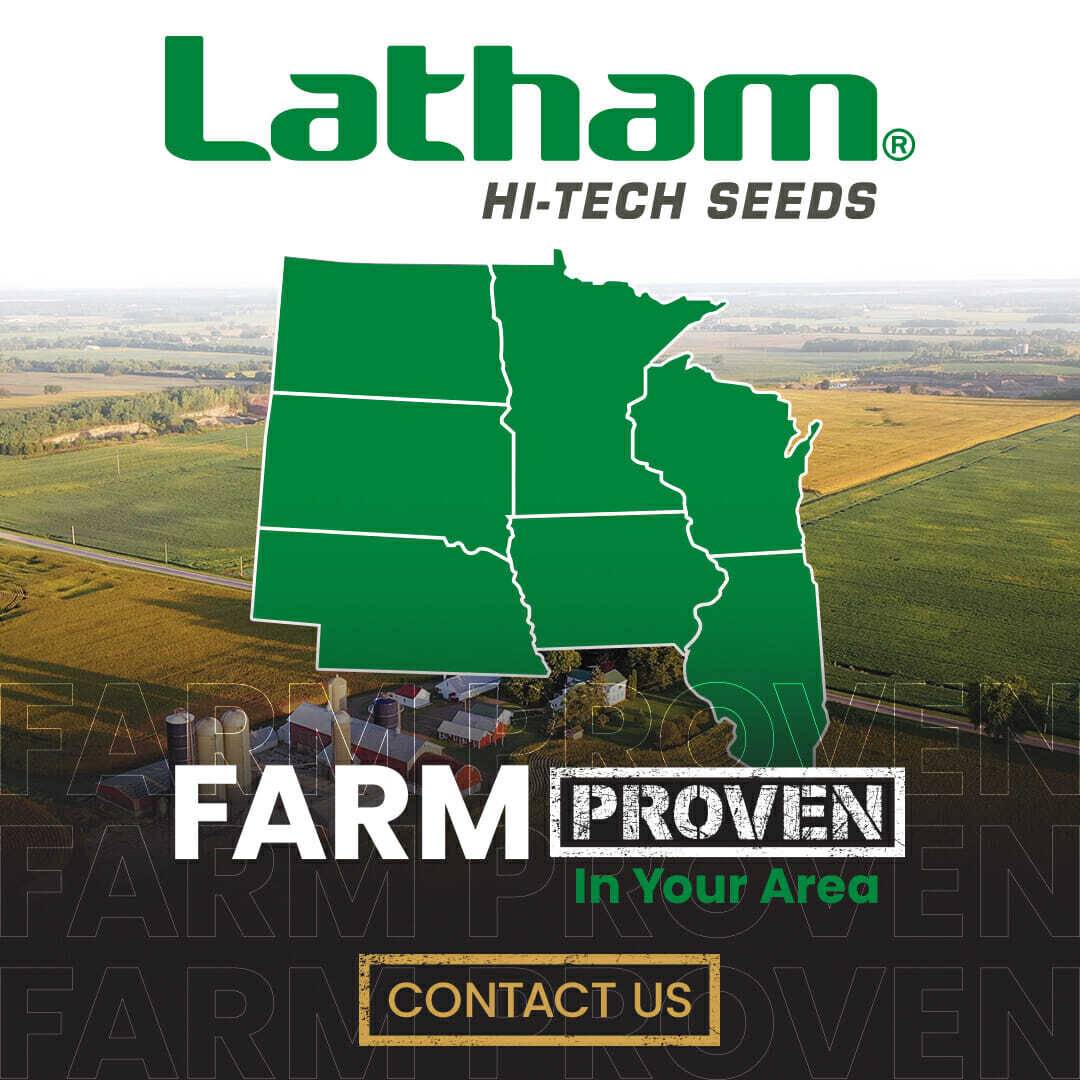
    The Latham Team is here to help you feel confident about your seed decisions. After harvest each year, we share results from our own research. We hire third-party companies to plant and harvest Latham Elite trials, so our Product Team members can observe products and take notes at a greater number of locations. As a result, we have recently tripled the number of trials conducted on both corn and soybean products in Iowa, Minnesota, Nebraska, Wisconsin, North Dakota and South Dakota!

    Once we identify experimental products from the Elite Trials that meet Latham Seeds’ standards AND fulfill our customers’ needs, we release them for sale. Check out multiple years and multiple locations of Latham® performance at LathamSeeds.com.

    Yield pays. Latham delivers on that promise, just as we have for more than 75 years. Feel free to contact your local Latham Seeds representative or call 877-GO-LATHAM (877) 465-2842.


    Team Latham

    December 14, 2023
    Agronomics, Corn, Crop, Data, Fall, General, Growth Stages, Season, Soybeans, Tech Tuesday
  • Latham Hi‑Tech Seeds

    Tips for Analyzing Harvest Data

    Corncob background

    As harvest season ends, it’s time to think about which products to plant on your farm next year. It’s easy to get overwhelmed by seed company data. To help, I’ve put two of the most important numbers at the bottom of the page: CV and LSD. Let’s take a deep dive into each number.

    What is the Co-efficient of Variation (CV)?

    The co-efficient of variation (CV) is a statistical measure of the dispersion of data points in a data series around the mean. The statistical mean is the mathematical average, which is calculated by adding up all the values in a data set and then dividing by the number of data points.

    KEY TAKEAWAYS

    • The co-efficient of variation (CV) is a statistical measure of the relative dispersion of data points in a data series around the mean.
    • The CV is useful for comparing the degree of variation from one data series to another, even if the means are drastically different from one another.
    • The lower the ratio of the standard deviation to mean return, the better risk-return tradeoff.

    CV SUMMARY

    The co-efficient of variation shows the extent of variability of data in a sample in relation to the mean of the test or trial. The lower the CV, the more value the trial or data set you’re looking at has. Paying attention to the CV is very important this year due to the variability we experienced during the growing season. Use caution with data CVs between 15 and 19, and do not use data with CVs higher than 20.

    What is the Least Significant Difference (LSD)?

    When studying yield data from universities, seed companies or third-party sources, always look for the Least Significant Difference (LSD value) at the bottom of the data set or table. The LSD value measures variability in a test that might be caused by soil types, population density variations, micro-environment or experimental errors.

    KEY TAKEAWAYS

    • To be considered significant, the yields of any two hybrids or varieties must be greater than the LSD value. This is to make sure the differences are real and not caused by chance or soil variability.
    • Uniform tests have smaller LSD values and are more reliable. Agronomists and researchers try to limit variabilities by seeking uniform ground to conduct their tests. The differences of 10 bushels in high-yielding corn test plots are generally not significant and are within the LSD value, so it is a mistake to make a big deal when a hybrid tops one test plot.
    • LSD values in the university tests are generally reported at (0.1) or 10% level. It means that there is a 90% chance that any one of the hybrids or varieties within the LSD value for the test could be on the top. Some test plot data are now being reported with LSD at (0.25) or 75% level, perhaps to be more inclusive.

    Everyone likes to be on the top for “bragging” rights, but a hybrid on top in one test may be in the middle in the next test. Rather than focusing on hybrids that top a plot, look for the hybrids that are consistently in the top tier in different plots across several locations.

    LSD SUMMARY

    It’s human nature for our eyes to gravitate to the top of a trial and assume the top product is what to plant on the farm next year. It’s not uncommon for almost half of a 20-entry trial to be within the LSD.

    To help determine which products might perform best given your soil types, management practices and other factors, consult your local Latham® representative. We’re here to help guide you through the fall data rush.

    Team Latham

    November 1, 2023
    Data, Fall, Season, Tech Tuesday

Latham Hi‑Tech Seeds

131 180th Street | Alexander, IA 50420

(641) 692-3258

SIGNUP FOR OUR NEWSLETTER
  • Contact
  • Legal
  • Seedware Login
  • Latham Gear

© 2026 Latham Hi‑Tech Seeds. All rights reserved. | Privacy Policy

Latham® Hi-Tech Seeds is a trademark of M.S. Technologies, L.L.C., 103 Avenue D, West Point, IA 52656.