-
Latham Hi‑Tech Seeds
Today we’re celebrating our Freedom of Independence
-
Latham Hi‑Tech Seeds
Farmers Feed the World… So What?
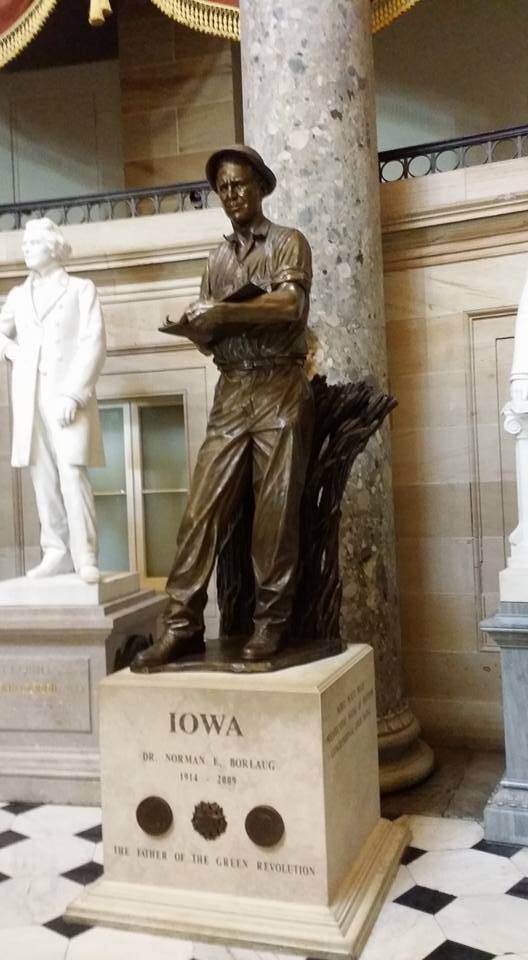

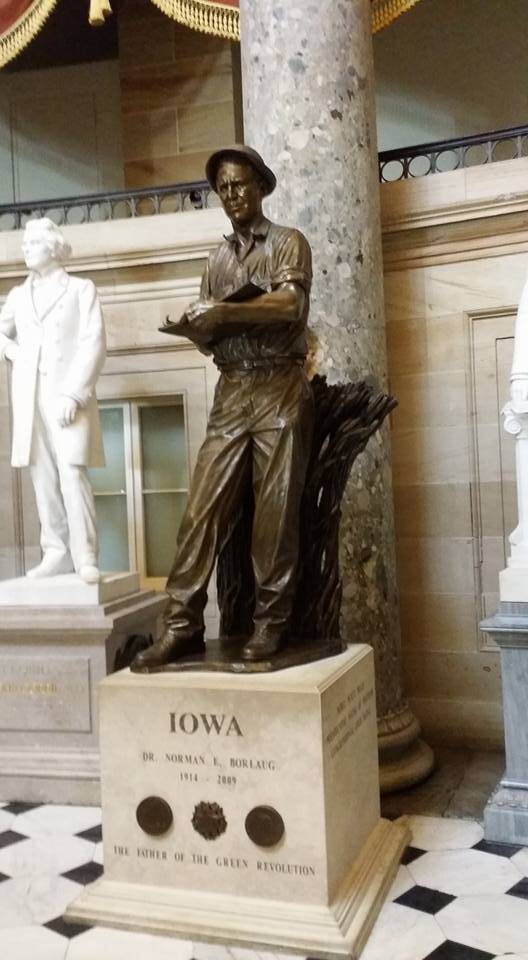
Larry Sailer says it’s fitting that during his visit last week to D.C. he got to see this likeness of Norman Borlaug in the U.S. Capitol’s Statuary Hall. Dr. Borlaug is widely called “the father of the Green Revolution” because of his work to increase food production and combat world hunger. If there were one thing that you could do to make the biggest difference in the shortest amount of time, what would it be?
Every dollar invested in agriculture is twice as effective in reducing poverty as investing in non-agriculture sectors. I truly believe it’s not the producing of food that will eliminate hunger; it’s the access and ability to afford food that will eliminate hunger! The economy of a society must improve. And it’s my understanding that agriculture is always the basis to begin improving an economy.
But where do we start? I believe we start with kids. If you have listened to Trent Loos this week, you know that human milk is medicine. Good nutrition during pregnancy followed by mother’s milk gives a child a great start! This time frame is so critical to the brain and its future functioning. How can an economy flourish with stunted bodies?
Food aid programs in the past have been pretty much all reactive. When there is a crisis, you want to get people fed! I was thinking about this a lot last week as I traveled to Washington, D.C. I kept thinking of the saying, “Give a man a fish and you feed him for a day. Teach him to fish and you feed him for life.” This sounds simple, but I think we all know it’s complicated!
First of all, it takes money to do anything in this world. That’s one of the reasons I was in D.C. last week with a group of farmers who are part of The Farm Journal Foundation’s Farmers Feeding the World initiative. A group of 21 farmers from 16 states are making a special effort to make a difference in the world by combating hunger.
How can we make the world a better place? Well-fed people are less likely to fight wars. Well- fed people can build a better economy. Although some people wonder why U.S. farmers are concerned about the well being of others around the world, I’m looking forward to this new challenge!
-
Latham Hi‑Tech Seeds
Time to declare our independence from food fights

Guest blog post by Aaron Putze, APR
 Director of Communications & External Relations
 Iowa Soybean Association, Iowa Food & Family Project
We’ll soon celebrate Independence Day commemorating the adoption of the Declaration of Independence and our severance from the British Empire. The popular holiday features fireworks, parades, family reunions and baseball games. As with most events, food is a central part of the celebration with picnics and barbecues among the most popular Fourth of July activities.
As we gather next Monday around grills, picnic tables and fire pits to enjoy time with friends and family, perhaps we can declare another form of independence – this one from the ongoing food fights that needlessly sap precious time, energy and money while undermining the health of humans and the planet.
The idea came to mind when, as if on cue, the U.S. Senate leadership last week brokered a “landmark” agreement seeking a compromise on the long-standing dustup over the labeling of food that includes genetically modified ingredients. The bill, crafted in response to a Vermont law set to take effect July 1 requiring the labeling of GMO foods, would establish a national standard of mandatory disclosure of GMO ingredients through a variety of options including quick-response codes, 800-numbers, websites and on-package labeling.
The setting of a national mandatory standard (action on the bill is expected before the July 4 holiday) would pre-empt state labeling laws like that of Vermont. Doing so would avoid a patchwork of differing requirements between states while avoiding a $400 to $1,000 annual increase in what the average U.S. household spends for food, according to a studies provided by John Dunham & Associates of New York City and the Biotechnology Industry Organization.
Now, keep in mind that the U.S. Food and Drug Administration requires labeling only if an ingredient poses a health or safety risk (like calories and allergens). A GMO shouldn’t be in the conversation because it’s not a product. Biotechnology is technology based on biology; a process that has improved lives by making food products such as bread, cheese, grain and dairy products more plentiful and useful.
What makes the ruckus over GMOs so nonsensical is that time and time again, genetic modification has been declared safe. Countless health and wellness officials, organizations and institutions and federal agencies and authorities have studied and rendered their judgement. The latest to give GMOs a clean bill of health is the National Academies of Science. Its 388-page report summarizing a review of 900 studies and data covering 20 years since genetically modified crops were first introduced struck a familiar conclusion. Genetically engineered crops, it declared, are safe for humans and animals to eat and have not caused increases in cancer, obesity, gastrointestinal illnesses, kidney disease, autism or allergies (or any number of other maladies that have been blamed on GMOs). Read more here.
The report will do little to calm the shark-infested waters surrounding GMOs. Too much time and treasure have been invested by those who profit from making consumers fearful of this important and life-saving practice, not unlike other food issues.
The GMO issue, after all, is just the tip of food fight iceberg. Every day, it seems there’s something else wrong with our food, whether the topic is hormones (news flash: they’re naturally present in both food and our bodies), the use of antibiotics to care for livestock (second news flash: there can be no antibiotic residue on the food you buy) or what in the world makes something “natural” or “local” (on the latter, consumers define local from as narrow as “across the street from where I live” to as broadly as “grown somewhere in the United States”).
Indeed, food conversations have evolved from “clean your plate” and “take it or leave it.” Now, it includes what’s in food, where it comes from, who grows it and how it’s grown.
This scrutiny about what we put in our bodies didn’t materialize out of thin air. Some of the interest is real and sincere, and that’s a good thing. What’s dangerous, however, is the context hyped by a small group of food elites (cue the Humane Society of the United States’ Wayne Pacelle and affluent world traveler and author Michael Pollan), bloggers and reporters, TV personalities and non-government organizations intent on dictating how food is grown and how we eat.
In the path of the wave of supposed consumer discontent are those who prepare, market and sell food. When reacting, they have two options: fight or flight. Most have chosen the latter. At first, the decision was made out of fear of being bullied by those who have made food a religion.
Over time, however, another justification has emerged – one that’s even more powerful. You see, the confusion over food can actually be good for business. Using the powerful persuasion of emotion, a growing number of processors, vendors, brand managers and food retailers are distinguishing themselves in the marketplace by making clever and often unsubstantiated claims about food (ever heard of “Food with Integrity?” or “Eat Consciously, Live Responsible?”).
Emotion is the powerful engine driving consumer behavior, a fact not lost on retailers and brand managers, most of whom operate in a high-volume, low-margin business. To boost revenue, a wise tactic is to increase sales of higher-margin offerings. If consumers are willing to spend 15, 25 or 50 percent more or double or triple the price of a conventional offering based on how it makes them feel or look, than food marketers will eagerly make the sale. To justify the increased cost, they attach specific attributes to that product to differentiate it from its competitor. This holds true whether we’re talking mayonnaise at your favorite grocer or the “grass finished” steak sold for $28 per pound.
Today, perception is the new reality. It also drives value. Popular labels proclaiming a product as “local,” “sustainable,” “farm fresh” and “natural” are nearly impossible to define or validate. But consumers will pay more because they have been conditioned to believe products claiming to be those things are better, safer and healthier.
Yet documented nutritional, health and safety differences between traditional products and the “new-and-improved” offerings are negligible at best. In fact, most often the only discernable difference between the two is price. One could even go further, however, and make the case that the food labeling craze is actually harming human health, animal care and the environment because it’s dismissing practices founded on science and substance in favor of splash and sizzle and what’s best for shareholders this quarter. By disparaging the use of GMOs and antibiotics (to name just two) , they’re altering the use of safe and sound agricultural practices that have been adopted over generations of continuous improvement to the benefit of human health, the environment and the family budget.
 Undefinable and unsubstantiated marketing claims. Instantaneous communications. Well-funded activist groups. Less personal and individual understanding of agriculture. The dismissal of science in favor of feelings and emotion. These realities are just a few of the reasons confusion reigns in the food conversation.
It doesn’t have to be this way. Let’s declare our independence from irrational fears, unsubstantiated claims and meaningless food labels by taking the time to study and understand the issues and to ignore those who profit from pedaling fear and confusion.
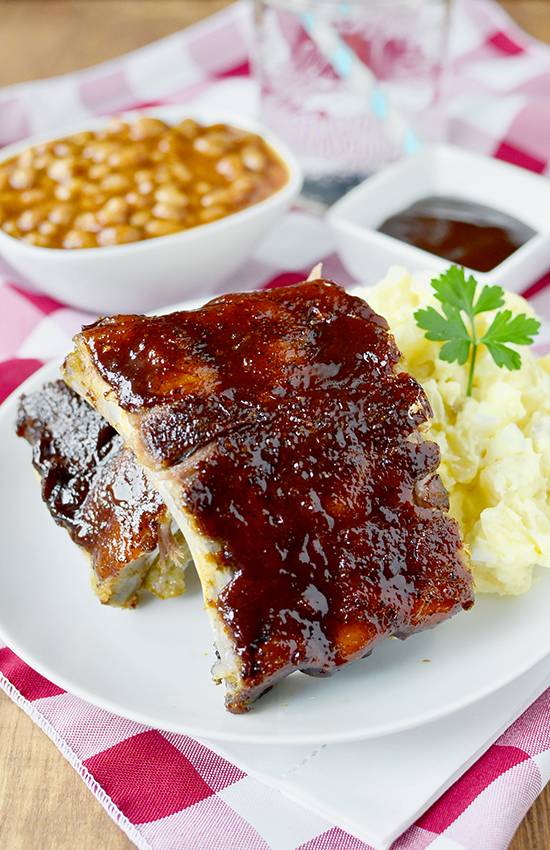
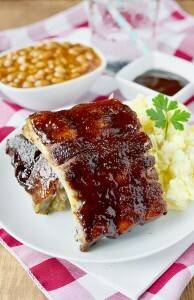
Now please pass the barbecued ribs, potato salad, baked beans and cherry cheesecake. Let’s eat!
-
Latham Hi‑Tech Seeds
Emotion Trumps Facts and Affects Perception
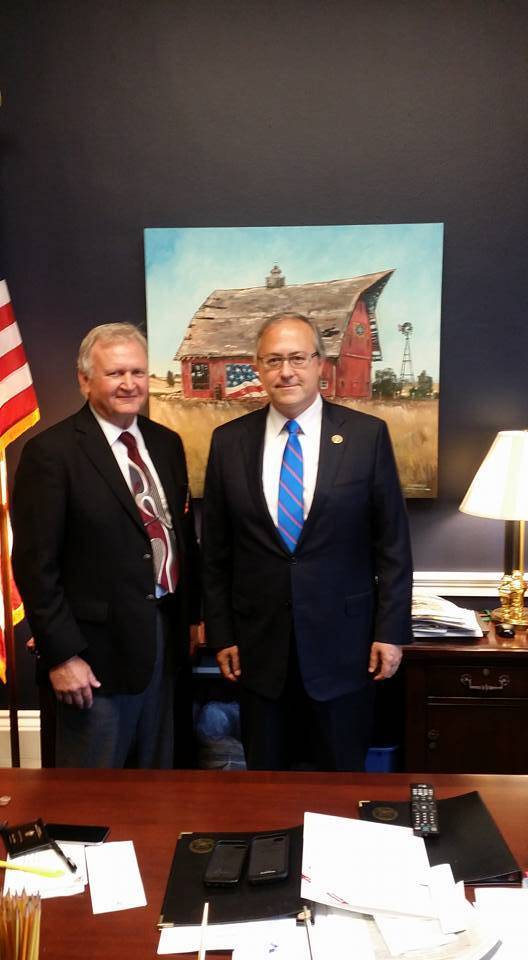
As I’m writing this morning, I’m preparing to visit the offices of our elected officials in Washington, D.C. I’ve made this trip as a member of the Farm Journal Foundation’s Farm Team. This nonprofit corporation is dedicated to sustaining U.S. agriculture’s ability to serve the vital needs of a growing world population. This team is a group of farmers, working together to fight world hunger!
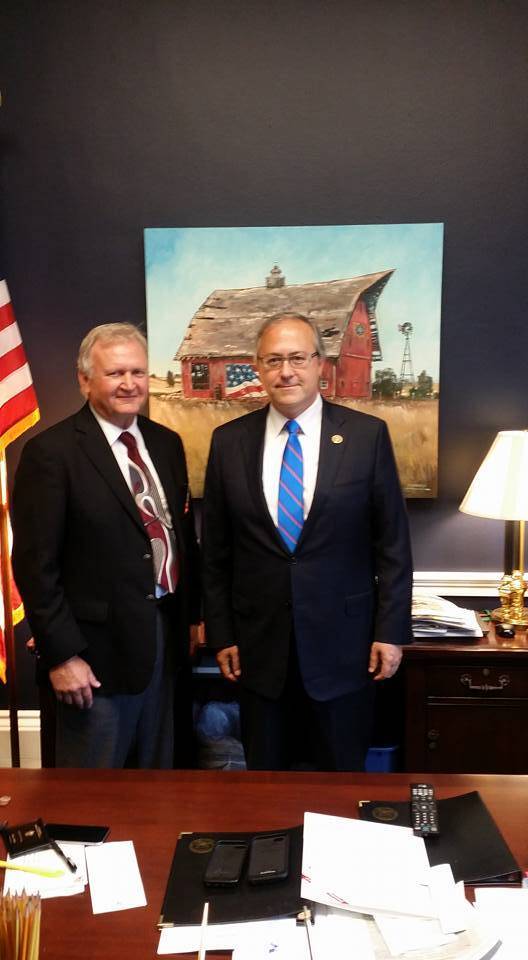
Larry Sailer meeting with Iowa Congressman David Young (R-IA3) in his D.C. office Preparing for today’s meetings on Capitol Hill got me thinking about the perception of agriculture – and especially of farming practices – around the world. I’ve written about different perceptions in the past (and you’ll find links to these posts below), but today I’m going to address this topic from a different angle.
Recently I read a post on Facebook to an article, claiming that glyphosate is much worse than feared! People were jumping all over each other with comments like, “I told you so!” The headline of this article supported their own beliefs, so many of these folks jumped into the discussion without obviously reading the copy. If you read the copy and checked the sources, it stated that glyphosate has helped reduce herbicide use and is safe when the rules, including use of Personal Protective Equipment, are followed.
“Roundup and glyphosate is a hot button topic… When you really take the time to digest some of the facts, read the labels, and put it into perspective with other common household items, the toxicity of glyphosate is extremely low. I’ve written an article before on fear. We don’t need to make our lives more complicated by buying into these fears spread much like the article above,” writes Jenny Dewey in a Huffington Post article.
It comes down to perception and emotion. People’s perception of danger is not just based on the facts. If consumers don’t like the way those “facts feel,” they believe all the negative comments. No wonder it’s so difficult to convince people of the great things farmers are doing!
We’ve seen first-hand in North Iowa how much weight negative words and actions can carry when Prestage Farms was considering building a pork processing facility in Mason City. Old arguments about modern livestock production resurfaced. I thought we were doing a great job sharing why we farm the way we do. Climate-controlled barns are better for our pigs, better for the environment and better those of us who work on the farm! But our voice got lost when a group of anti-modern farmers started beating their drums louder.
This week I’m trying very hard to keep an open mind while having conversations in D.C. I’m trying not to let naysayers keep me from accomplishing – or at least advancing – some progress in world hunger. Let’s all keep open minds! Remember to “listen” and dig deeper into the discussion.
Related Posts:
- What’s Your Perception of Farming?
- Regardless of Perception, Do What’s Right!
- North Iowan’s (Mis)Perception of Family Farms
-
Latham Hi‑Tech Seeds
Modern Pork Production is Humane, Not Human-like
Recently, I’ve been addressing common questions people have about Prestage Farms and the new packing plant this company is considering to build in North Iowa. I believe Prestage is a great fit in my home county of Franklin! Last week I wrote about family farms versus “factory farms.” Two weeks ago I covered pig poop and why it’s a valuable resource.
This week I’d like to talk about “animal welfare.” There is a distinct difference between treating animals humanely and humanly. In the past, I’ve described how modern pig farms are not Old McDonald’s Farm. Many positive changes have occurred since the 1950’s and 60’s, yet many Americans have almost a romantic notion about “the good ol’ days.”
Those of us who “live farming” can see how technology has led to improved production systems that are better for the environment and for the animals. Those who grew up on a farm but moved away years ago – or those who are three generations removed from the farm – may need a comparison. Here’s an analogy that may help…
Imagine you’re enjoying a beautiful spring day with blue skies, bright sunshine, gentle breezes and a high between 72 and 75 degrees. (We’ve experienced this recently, so it’s not too hard to image, right?) Now think of a day when you can’t buy a breeze, and the sun is so scorching hot it feels as though you could fry an egg on the sidewalk! Contrast this to the discomfort you feel when the north wind is gusting at 30 miles an hour, the mercury is dipping below zero and your eyelashes freeze in the few minutes it takes you to walk across a parking lot.
Iowa weather can be extreme. Our summers can get miserably hot, and the winters can be bitterly cold. When we raised pigs on pasture, they were miserable and so was I! Some people think it’s better for pigs to remain outside than it is to stay cool inside a climate-controlled pig barn.
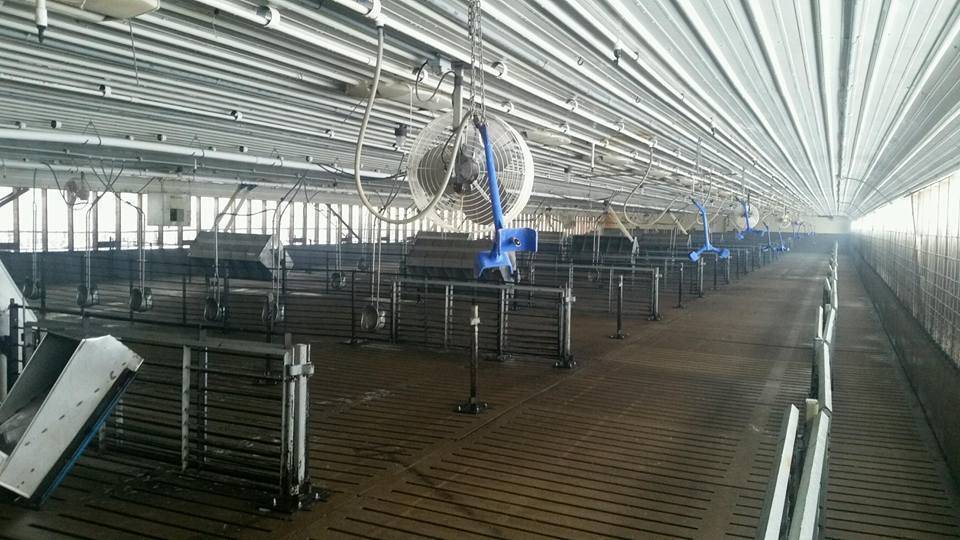
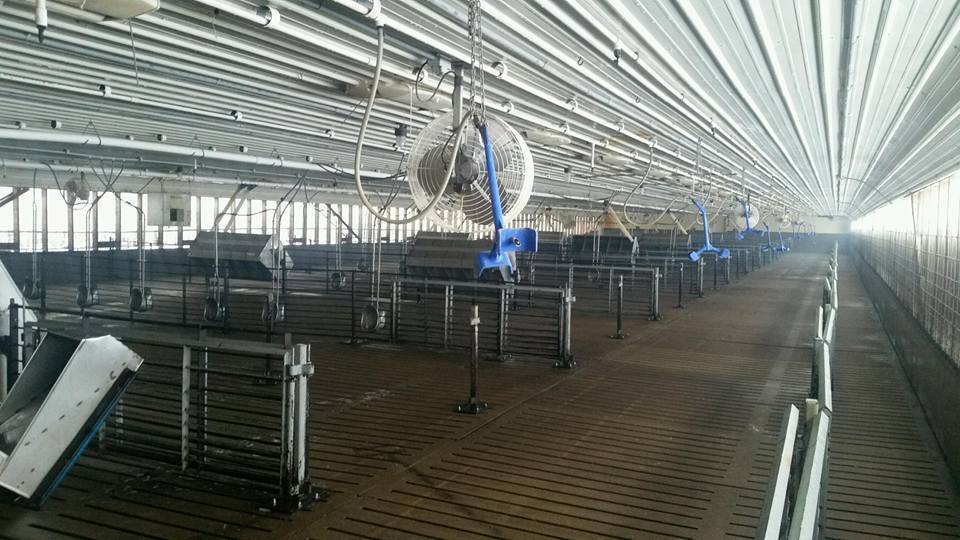
There’s no way I’d trade a modern barn for pig huts on pasture. I’m often reminded of how much better today’s production methods are. For example, last week I was called to adjust some air ventilators inside a gestation barn. It was 95 degrees outside, but inside this stall gestation barn it was 79 degrees! I couldn’t help but notice the contented sows. Many were sleeping comfortably, and a few woke up and curiously checked me out as I worked to adjust new ceiling vents.
These vents prevent warm air from coming inside. When it’s warm outside, fresh air is pulled through “cool cells” to keep the inside temperatures consistent. One end of the building is lined with specially treated corrugated cardboard that has water continuously soaking it. The fresh air comes in through the corrugations, which cools the air down about 20 degrees!
Modern pig barns are a good place for people to work and a good place for pigs to live. Farmers make their animals as comfortable as possible. They provide their livestock with fresh food, fresh air, and fresh water. Livestock should be treated with respect and receive the best care a farmer can give them. After all, it’s the right thing to do!
We must also keep in mind that the animals we raise are livestock. Since the beginning of time, people have had dominion over animals. This means humans have the reasoning power to make life and death decisions for our livestock. We give our livestock the best quality of life that we can, and then we respect them in death because their purpose is to feed our growing population. I have blogged in the past about how developing nations increase their meat consumption as their economy improves. When an emerging economy wants to improve its diet, the country’s ruler doesn’t say “let’s eat vegan!” The people in these countries want the best protein they can afford, and that protein is meat.
Meat production facilities and a new processing plant can help grow our locally economy, as well as the Iowa economy. This is Iowa, folks, and we grow pigs here! We have great resources that makes agriculture – and pork production – a great fit here.
Farming has been a great means of growing the economy since the beginning of time! Our towns, our schools, our Main Street businesses need a growing economy. Let’s welcome new industry! Sure, there are always growing pains but we can overcome any challenges… together!
-
Latham Hi‑Tech Seeds
Rally for a Cause on Friday, Aug. 19

 Latham’s Freedom of Independence Ride to Benefit Retrieving Freedom Inc.
The excitement of adventure and the freedom of the open road has prompted hundreds of Midwest farmers to join the Latham Freedom Ride in the past. This year we’re hoping to spark even more interest among motorcycle enthusiasts as we ride throughout eastern Iowa, raising awareness of Retrieving Freedom (RFI) and funds for its service dog training program.
One hundred percent of a rider’s $25 registration fees for the 2016 Latham Freedom of Independence Ride will benefit RFI. The $25 per rider registration fee includes two meals plus a commemorative t-shirt and a do-rag. The event will conclude that evening with a performance by Nashville recording artist Neil Hewitt.

Staging for the 2016 Latham Freedom of Independence Ride will be at Scott County Park near Davenport, Iowa. Lunch will be served followed by a series of fun stops as we learn about the latest in seed industry technologies and tour local attractions. Riders can look forward to stops at Antique Archaeology, home base for Mike Wolfe of American Pickers reality television series, and a guest appearance by Retrieving Freedom dogs in training.
Retrieving Freedom Inc. of Waverly, Iowa, trains service dogs for placement with disabled veterans and children with autism. The organization receives 4 requests for every dog that has been trained through its program, so more money is needed to train more dogs, says Scott Dewey, RFI co-founder and co-president.
Retrieving Freedom spends two years training specific dogs to place with disabled veterans and individuals with autism. As a 501c (3) non-profit organization, Dewey says RFI strives to maximize the value of each donation by incorporating experienced volunteers, in-kind donations, and a limited staff.
“Trained service dogs allow veterans and children to regain their independence from simply sustaining in life to thriving,” says Dewey. “This is why we hope many farmers, who enjoy riding motorcycles, will join Latham Seeds on R.E.D. Shirt Friday to become part of this amazing journey.”
Help us “Remember Everyone Deployed” and show support for those who have proudly served our country, defending our freedoms. Register today for the 2016 Latham Freedom of Independence Ride.
To get a feel for the Latham Freedom Ride, check out the following coverage of our past rides:
-
Latham Hi‑Tech Seeds
Kellie for Ag: Finding Her Voice in Agriculture
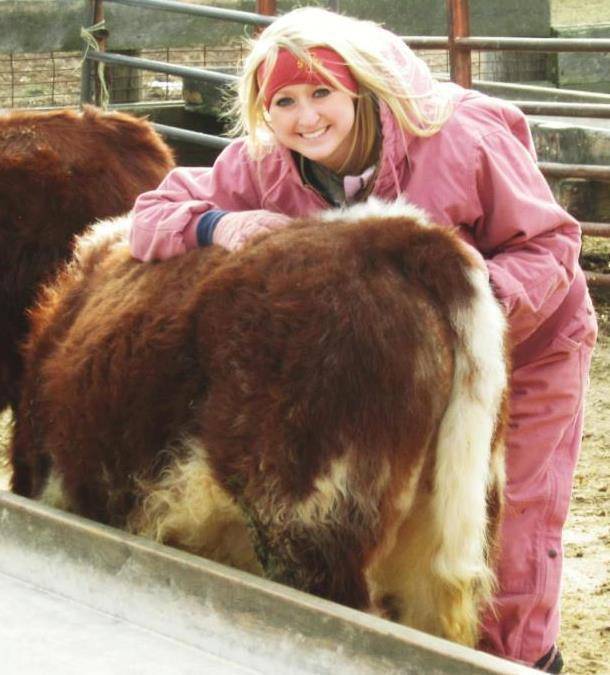

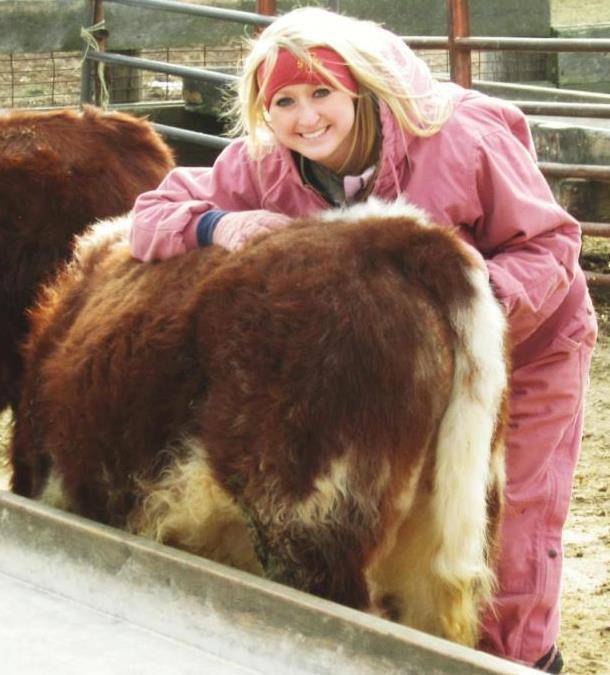
Kellie Gregorich, an eastern Iowa beef producer, is using her talents for social media and blogging to promote agriculture online. Photo Credit: Kellie Gregorich. by Amber Hammes, Latham Hi‑Tech Seeds Marketing Intern
According to the United States Department of Agriculture, women make up approximately 30% of all farmers in the United States. However, #FarmHers are sometimes an overlooked demographic. Kellie Gregorich, an eastern Iowa cattle producer, is doing everything she can to ensure that doesn’t continue. (more…)
-
Latham Hi‑Tech Seeds
See How Pork Feeds the Iowa Economy
Writer’s block has never been one of my problems! There are so many things I want to write about that my mind is having a hard time focusing on just one issue. Here’s why…
Today in Iowa is an Election Day. Get to the polls and vote! In our county, we have a primary for board of supervisors. Members of the Franklin County Board of Supervisors plan, finance and deliver services related to public safety, public health, human services, drainage, secondary roads, conservation, economic development and administration. Many of these services affect farmers, so you can be sure I’m interested in the outcome of this race!
 Also this week in Des Moines is World Pork Expo! Each year 20,000 pork producers and professionals attend this event on the Iowa State Fairgrounds, so it’s no wonder this event is attended by U.S. secretaries of agriculture, governors, presidential candidates, United States Department of Agriculture officials, trade ambassadors, as well as government dignitaries from the U.S. and other countries. There are many educational presentations and new product demonstrations throughout the 3-day event. In addition to visiting with producers, one highlight for me is the The Big Grill. Can you believe more than 10,000 pork sandwiches are served here during this annual event?
Yesterday I was in Greater Des Moines as Cristen Clark and I were again invited to share our stories with the newest Pork Institute Class at the National Pork Board offices. One of the topics that came up during our training session was the debate about building a pork processing facility in North Iowa. It seems many folks in North Iowa are like the friends of the Little Red Hen. Remember that classic children’s story about the Little Hen who needs help planting wheat, tending to the crop, harvesting it and then baking bread? No one wanted to do the work but everyone wanted to enjoy the delicious loaf of bread.
Bacon Mania has stuck America, but very few folks are willing to allow pork production in their backyard! Although Prestage Farms was considering Mason City as the location of a new processing facility, some Clear Lake residents joined the protest against it. “Say ‘No’ to Factory Farms” and “Preserve Water Quality,” were common messages by the opposition. The term “factory farm” was coined to discredit modern farming, and I have yet to have anyone give me a good definition for it.
How one defines “factory farming” or “modern farming” seems to be similar to the term “sustainable” in that it’s meaning depends on who’s using it and what their special interests are. The definition changes based on a person’s experience and/or perceptions about farming.
Let me share what my perception of family and farming are. Although everyone has a family, we know that not all families are the same. Some farm families have a hard time differentiating “family” from “farming” because their farming operation is a family-run business. It’s so much of who they are and what they do that the two are intertwined, but let’s separate the two for now.
All businesses, big and small, are run by people with families. I’m working with a pig producing family that started on a “family farm” in Minnesota. This farm has been successful enough to grow, so it now involves many families, including mine. Does this make my employer a factory farm? No! I have been very impressed with how this farm family cares about all aspects of their farming operation, including the families who make a living by working on this farm. We want all to have a sense of family, raising pigs in the best most modern way possible!
More than 90 percent of U.S. farms are family farms. I see farms every day. I live right in the middle of great farm country. We have been blessed with abundant natural resources to grow crops and livestock in a very “sustainable” way.
That’s why I’m involved with helping Prestage Farms find the ideal place to locate its plant. I believe welcoming new ideas will help North Iowa prosper. Last week I blogged about how I believe a Prestage facility can breathe new life into rural communities. In particular, locating in Franklin County would be a win-win for the company and for my home county! The economic potential is vast. The benefit to our local schools and down town businesses – which are run by “families” – is vast.
Let’s grasp opportunities and stop outside agitators from spreading fear in our communities. Take the time to understand the benefits of modern farming including benefits to our families, the environment, and yes, even our livestock. If you have questions, or doubts, see for yourself!
Talk to a farmer. See firsthand how farming is being done. And remember to vote!
-
Latham Hi‑Tech Seeds
The Future is Bright for Latham’s Summer Interns
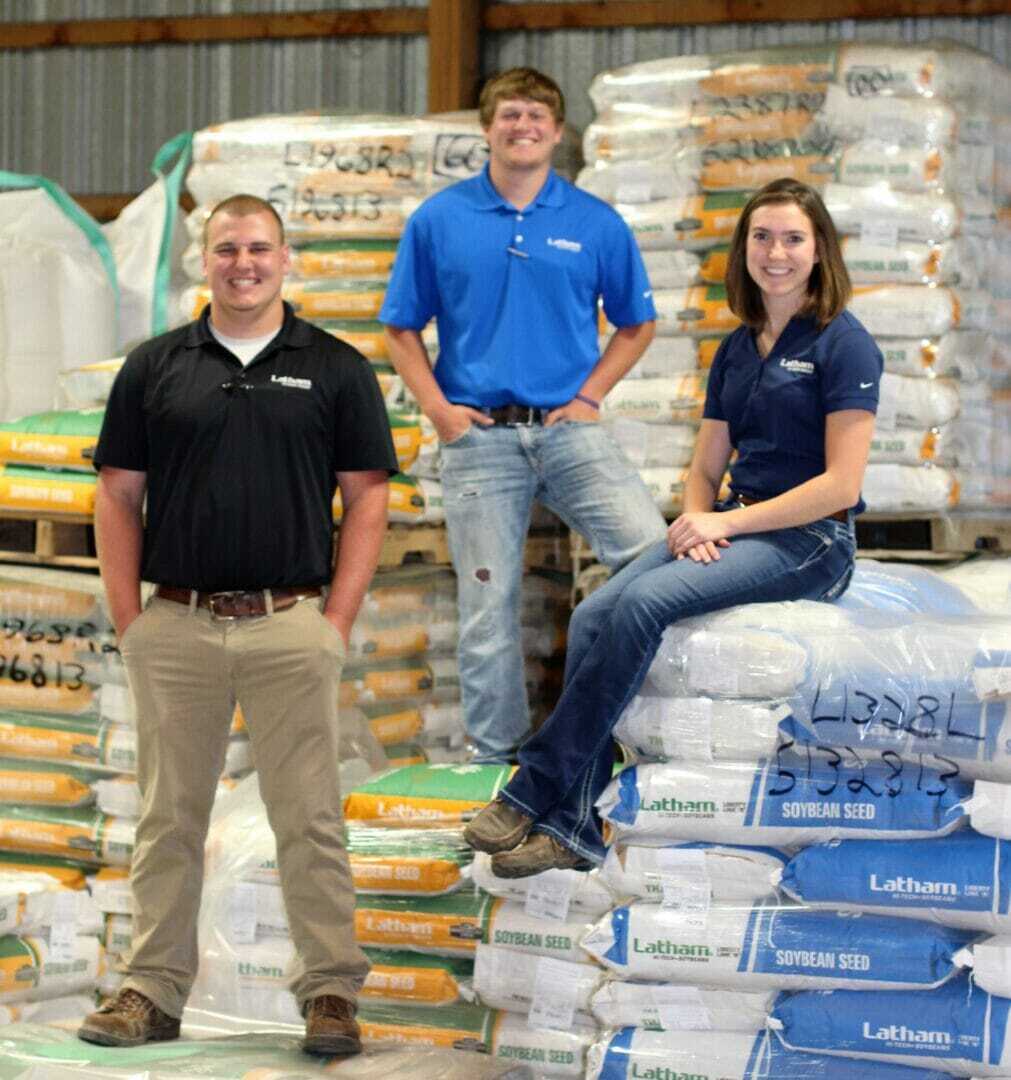

Joe Roberts (left), Logan Shedenhelm (center) and Amber Hammes (right) are joining Team Latham this summer as Latham Hi‑Tech Seed’s 2016 Interns. Three Iowa State University (ISU) students have joined Latham Hi‑Tech Seeds as interns for sales and marketing. Their first day on the job was May 10, and it’s been all hands on deck ever since! Our two summer sales interns have been busy assisting with planting research and show plots in Alexander. Meanwhile, our marketing intern has been conducting interviews and writing blogs. (more…)
-
Latham Hi‑Tech Seeds
Agricultural Development Can Breathe New Life into Rural Communities
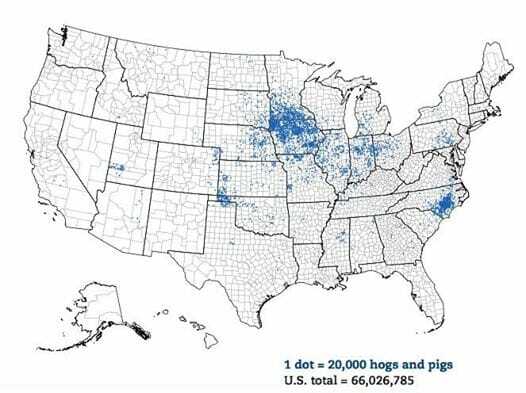
The month of May is like a set of bookends about Prestage Farms making a bid to build a pork processing facility in North Iowa. In my first blog of the month, I talked about how new businesses could make North Iowa prosper. Protesters, however, swayed the city council’s vote in Mason City and Prestage Farms was sent packing. In a turn of events, now my home county is reaching out to Prestage Farms. That’s why my last blog of this month will give reasons why I believe building a new pork processing facility in Franklin County is a win-win situation.
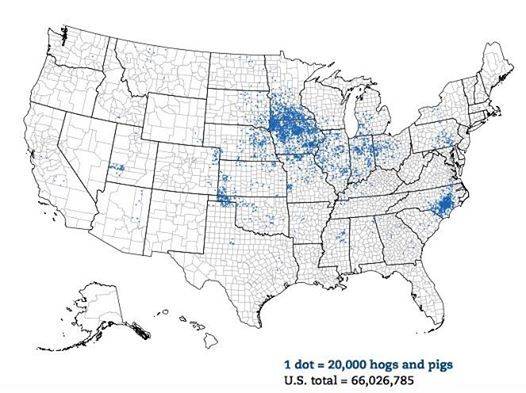
Here are a few of the reasons why Franklin County is a good fit for Prestage Farms:
- Franklin County’s economy is ag-based, and residents understand the relationship between agriculture and local prosperity. Large numbers of hogs are raised here, so residents know first-hand that people and pigs can coexist harmoniously.
- A processing plant means local producers will have more options to sell their pork. About 26 million pigs are currently raised within 100 miles of Mason City, but this hog supply has outpaced available packing capacity as older facilities closed. Prestage Farms’ new facility would provide a market for about 1 million hogs that already are raised in our area.
- Our proximity to Interstate 35 makes shipping convenient.
Those who opposed Prestage Farms building in Mason City raised concerns about air quality and water supply. Today I plan to provide “the other side of the story” as it relates to each of these topics. I also want to reiterate the positive impact Prestage Farms could have on economic development.
Air Quality
This plant will be more advanced than any in the world. New technologies will negate odors from the livestock barn and rendering facilities. Vegetative buffers will further reduce potential concerns. The holding pond for wastewater treatment will be covered, and the methane captured will be utilized as an energy source. Wastewater treatment and rendering will use the latest technology available for further remediation and conditioning prior to emission.
Water Supply
The County will work closely with the Iowa DNR (Department of Natural Resources) and company engineers to determine waste flows from the plant. The company will pre-treat all water leaving the facility, so nothing harmful will be released into the area watershed. It’s my understanding that testing is required daily to meet local and state regulations.
Economic Development
It was estimated that the Prestage pork project would have an economic impact of $750 million on the region through population growth and spending at local businesses. During the Mason City hearings, it was reported that Prestage would create 922 full-time jobs averaging $15.70/hour plus overtime and full benefits. The lowest paid Prestage employees are expected to make $39,208 annually plus benefits estimated at $12,236,722:
- Affordable Family Healthcare
- Short-term disability insurance after one year of employment
- Company paid life insurance
- Contributions to Health Savings Account
- Paid time off including vacation and holidays
- 401-k match of one-to-one match for first 2% of employee contribution
Stop the Spread of Fear
“It’s becoming mainstream in our culture to petition against something we don’t understand. People have preconceived notions – most of which aren’t even true – and that propagates fear. Fear kills job,” said Reg Morton of Mort’s L.L.C. “For those who operate on fear, I have explained the two options: (1) Fill your towns with people who are working and bringing income into the community; or (2) Let the houses stand empty until someone unemployed and on entitlements moves in.”
“Prestage Farms is an opportunity… we really need to take a strong look at this,” encourages Reg. “There will be positives and negatives that must be considered, but one thing is for sure, our communities need people with jobs in order to remain healthy and vibrant.”
Anti-farm groups had everyone in North Iowa worked in to a tizzy. Myths have half-truths spread faster than wildfire, so in last week’s blog I addressed one of their concerns about nutrient waste management. Not only can pig poop be managed, it can fuel our economy here.
“Agriculture is what fuels us,” said Mason City Mayor Eric Bookmeyer. It fascinates me that we’re willing to stick our nose up… I wonder where we’re at that we are considering not participating in the largest industry in Iowa.” (Click here to watch the rest of his emotional testimony.)
Franklin County has an opportunity to not only participate – but to embrace – agriculture as economic development. We have room for Prestage Farms, and Prestage Farm can help bring new life (literally) to our local communities. Win-win.