Latham Hi-Tech Seeds

(641) 692-3258

  • Home
  • Products
    • Corn
    • Soybeans
    • Soybean Blends
    • Alfalfa
    • Corn Silage
    • Seed Guide
  • Performance
  • Find a Rep
  • Media
    • Blog
    • News
    • Videos
    • Podcasts
    • TECHTalk
  • About Us
    • Company History
    • Our Mission
    • Careers
    • Become a Rep
    • Sowing Seeds of Hope
  • Contact Us
  • Latham Hi‑Tech Seeds

    Switching to Beans

    Plantingpopstudy
    plantingpopstudy
    Planting population study

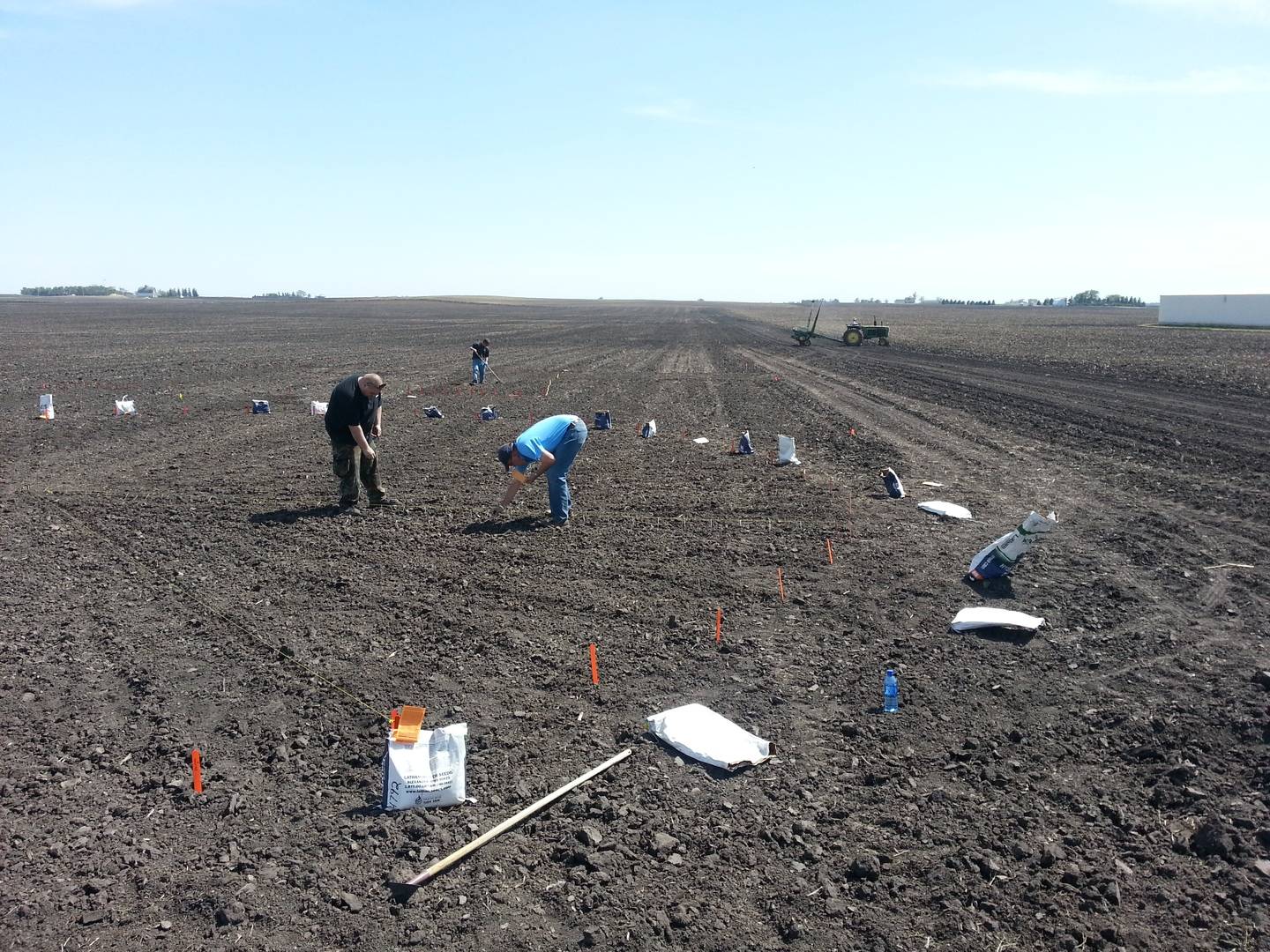
    Warm temperatures and below normal precipitation allowed soybean planting and crop progress to advance rapidly. At Latham headquarters in Alexander, we finished planting our corn plots and are nearly done with planting soybeans. Yesterday a welcome one inch of rain fell, which brought planting to a halt.

    Statewide corn has been planted on 96% of the acres intended for 2014, as of the week ending May 25. Soybean planting is 80% complete, which was double the previous week’s progress. Nationally, corn has been planted on 88% of the acres and has emerged on 60%, according to the U.S. Department of Agriculture. Soybeans have been planted on 59% of the U.S. acres and with 25% emerged.

    “With just sporadic rainfall last week, crop planting proceeded quickly and now both corn and soybean planting progress is slightly ahead of the 5 year average,” notes Iowa Secretary of Agriculture Bill Northey in his May 27 crop report. “After the extremely late planting last year farmers are excited to get the crop in the ground in a more-timely manner this year.”

    For a look at crop conditions around our six state territory, click here, or select a region from the drop down above.

    Team Latham

    May 28, 2014
    Agronomics, Crop, General, Growth Stages, Soybeans
  • Latham Hi‑Tech Seeds

    Stop Using School Lunch to “Play Politics” with Kids

    Lunch tray
    (Photo: Rodney White/The Register)
    (Photo: Rodney White/The Register)

    Think the school lunch program is “old news”? Think again! Last Friday The Des Moines Register ran an article by Christopher Doering detailing how U.S. Secretary of Ag Tom Vilsack defends new school nutrition guidelines.

    The USDA, since 2010, has been phasing in new nutrition guidelines for school lunches to address the childhood obesity epidemic and to help those at risk of going hungry. The Healthy, Hunger-Free Kids Act of 2010 requires lunch programs that receive federal dollars to provide healthier meals. The latest sets new limits for calories, increases whole-grain requirements and lowers sodium levels.

    Vilsack “lashed” out at critics of the program for playing politics with our kids, but this is no real surprise and “playing politics” has become the standard argument whenever Congress disagrees with the current Administration. President Obama has even accused our founding fathers of setting up Congress wrong, claiming the Senate should have representation like the House. Think about that one for a couple minutes!

    Before I digress too much, let’s take a closer look at Secretary Vilsack’s comments. He says, “I don’t believe that politics and politicians should trump good policy and policy that’s established by experts when it comes to the future of our children.”

    Vilsack makes quite the emotionally-charged statement, but fact is, new school guidelines are being criticized by more than politicians. The School Nutrition Association claims over 1 million fewer students are eating school lunches! With fewer students eating the lunches, schools are having trouble covering the costs.

    Last week in The Hill, a representative for the School Nutrition Association is quoted as saying 1,445 schools have dropped out of the program since the standards went into effect as costs mount. A House spending bill approved by a subcommittee last Tuesday would force the USDA to give a temporary waiver to school lunch programs that can show they were operating at a net loss for the last six month.

    lunch-trayNot only are they operating at a loss in many cases, but schools are having trouble finding some of the required foods. The USDA has confirmed that schools could not find whole-grain pastas that did not fall apart in the giant cauldrons used to prepare school meals, which prompted an announcement last Tuesday by the USDA that it would allow schools to obtain a two-year delay in implementing a whole-grain standard coming into effect.

    “The first lady has from day one made the health of our children a top priority, and that means keeping the pressure on to ensure that school nutrition standards already implemented by 90 percent of our schools stay intact,” says White House spokesman Jay Carney said.

    “Michelle’s meals turn off kids.” That’s why I’d like to raise these questions:

      • Did the experts take food costs and sources into consideration when they developed the new guidelines?
      • What about taking regional differences into consideration? There are food items available in larger markets than in rural areas, for example.
      • Did anyone think about the alternative to eating school lunch might simply be to skip lunch altogether?

    Let’s remember that many low income students receive most of their nutrition at school. Even if they do take the lunch, how much of it are they throwing away? Placing “nutrition” on the plate doesn’t ensure that kids are going to eat it. Kids are being hurt by hunger!

    Vilsack’s experts may be experts, but that doesn’t mean they don’t have something to learn!  They need to humble themselves enough to listen. I’m always amazed how much I learn when I listen, but this administration and Sec. Vilsack are doing a very poor job of listening. I strongly feel this IS all about politics and saving face on their part. Let’s make school lunch rules about kids, not politics! Contact your legislators.

    Related Posts:

    • New School Lunch Regsc, One Hot Potato
    • The Quest for a Balanced Diet
    • Act Now to Restore Sense to School Lunch Program

    Larry Sailer, Musings of a Pig Farmer

    May 27, 2014
    Agriculture, General, Industry News
  • Latham Hi‑Tech Seeds

    Finding Peace Along the Trout Streams

    WyntheinFamily
    Tyler and his wife, Dani, recently returned to the Wynthein’s family farm in Fayette County. They’re raising crops and cattle with Tyler’s parents, David and Leslie.
    Tyler and his wife, Dani, recently returned to the Wynthein’s family farm in Fayette County. They’re raising crops and cattle with Tyler’s parents, David and Leslie.

    It’s been said that a bad day of fishing beats a good day at work. So what can be said about the family who’s lucky enough to live near two trout streams and in between rolling green hills where cow-calf pairs graze contentedly?

    “There are just so many things we enjoy about living here,” says Leslie Wynthein, who spent her childhood living in and around cities including Los Angeles, Dallas and Chicago. “It’s very different from my childhood, but I can’t imagine raising our family anyplace else. We have made so many great memories here. When our children were younger, they learned to entertain themselves. They could engage in creative play. They never had to worry about being bored because there is always something to do on a farm. As a result, they developed a strong work ethic and all of them enjoy being outside.”

    The rolling hills that serve as a backdrop to the Wynthein’s farm (pronounced Win-thee-in) remind David of the countryside where his family raised feeder cattle and crops outside St. Charles, Illinois. After David graduated from high school, they relocated to northeast Iowa because urban sprawl was encroaching their farmland.

    “I’ve always enjoyed farming,” said David. “For a while I considered becoming a veterinarian, but then I decided against it because I was afraid it would take me away from what I really enjoy doing and that’s working on my own farm.”

    Instead David chose to major in Animal Science at Iowa State University. His high school sweetheart, Leslie, also made the move to Ames and earned a degree in Horticulture. They were married in 1977, moved to Volga and bought their first five cows in 1978. They moved to their current home near Arlington about 25 years ago. Today, they feel blessed to live just five miles away from David’s 89-year-old mother. Plus their son Tyler and his wife, who are expecting their first baby in late June, live just a stone’s throw away.

    While it may not sound surprising that one of their four children would return to the family farm, Tyler took an uncommon path before making his way back home. He worked summers first as a wrangler and then as assistant camp director and assistant program director for Beartooth Mountain Christian Ranch in Fishtail, Montana. During the winter months, Tyler took classes in Ag Business at Northeast Iowa Technical College in Calmar. He graduated from Calmar in 2007 with a degree in Ag Business before furthering his education at Montana Bible College. There he met the love of his life, Dani, who was also earning her degree in Biblical Studies. After they were married, Tyler worked full-time for a farmer in Bozeman.

    “I’ve always enjoyed farming. I found myself wondering why I was farming for someone else when I could be farming with my own family,” said Tyler. “As much as Dani and I love Montana and its beautiful scenery, we decided to return to Iowa and to the place where we want to raise our children.”

    Montana remains a state that’s near and dear to the entire Wynthein family. David and Leslie enjoy traveling there to visit their three children and their families. The Wynthein’s oldest daughter, Laura, and her husband, Jeramy, met at Beartooth Christian Camp in Fishtail. Jeramy has been on staff there since 2007 and is currently camp director. Laura was food service director from 2004 to 2009, and then family became her primary focus. She and Jeramy have three children ages 5, 3 and 6 months.

    ChocoChipCookiesDavid and Leslie’s youngest son, Matthew, is currently the program director at Beartooth. He has been part of the summer camp team since 2010 and also spent three months in the Middle East among Syrian Refugees. Their oldest son, Benjamin, met his wife, Cristi, in Montana. They’re raising their four children – ages 7, 5, 3 and 1 – in Fishtail where he manages a ranch plus operates his own repair and spraying business.

    Outside of traveling and spending time with their family, David and Leslie enjoy hunting and riding their Goldwing motorcycle. Leslie also enjoys gardening, reading, refinishing furniture and spending time in the kitchen. As a proud beef producer and an avid baker, today Leslie is sharing two of her favorite recipes below.

    Memorial Day weekend is the start of the summer grilling season, so I’m looking forward to trying this recipe for steak marinade with Choco-Coconut Cookies for dessert. What’s going on your grill?

    Team Latham

    May 23, 2014
    Beef, Desserts, General, Recipes
  • Latham Hi‑Tech Seeds

    Post-planting is Ideal for Early Crop Scouting

    Crusting

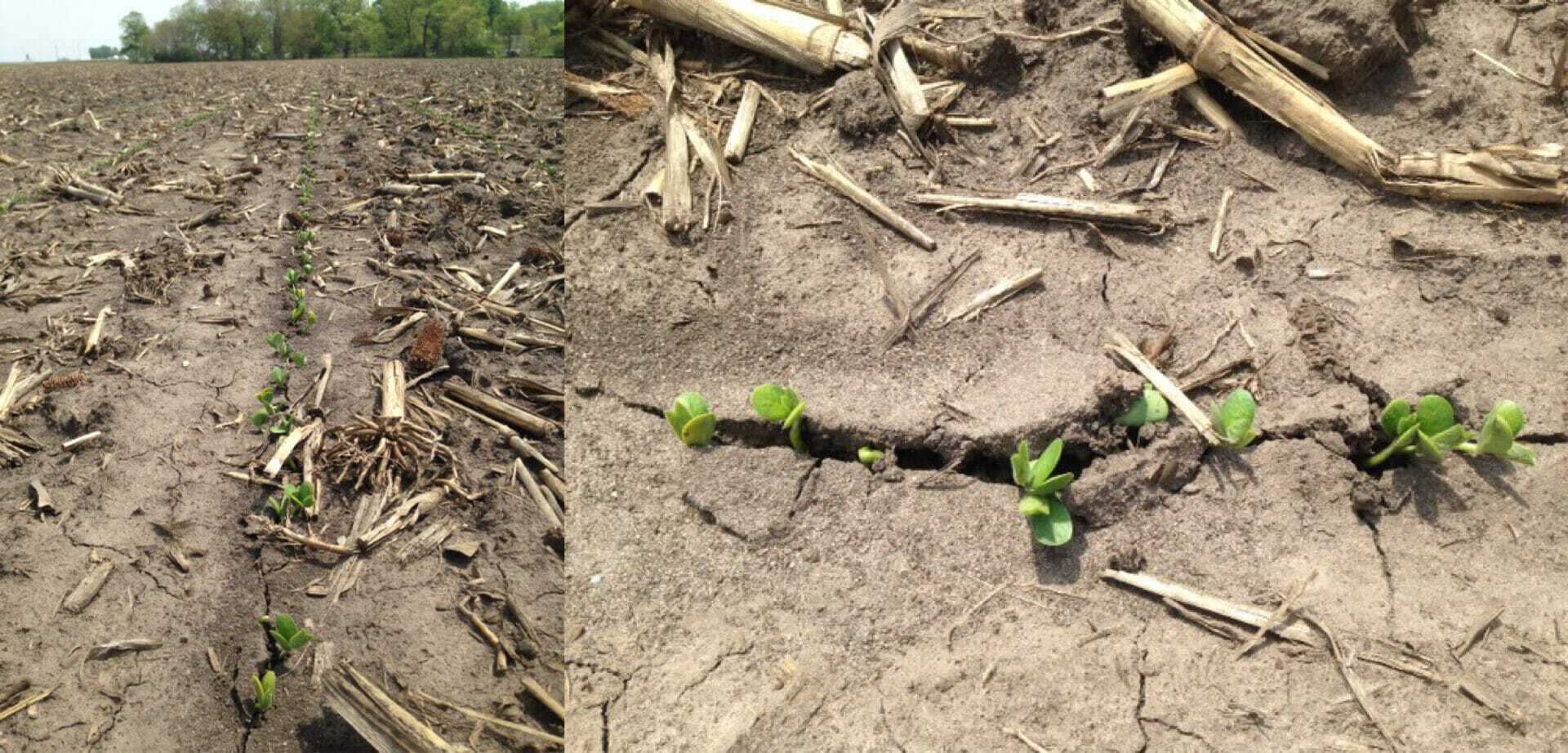
    It's been a perfect warm sunny Tuesday here in Central Iowa. To top it off, these photos came in today of a field of L2585R2 soybeans planted in Boone county that have emerged and are looking great! How are crops progressing on your farm?It’s a good idea to start walking fields within 3 to 5 days of planting to see how well the crop is emerging at this point. Weather at the time of and shortly after planting really plays a role in the germination and emergence of corn. This spring we’re hearing from a few farmers who planted extremely early and made it work, while others are recovering from frost injury.

    During germination, corn is particularly sensitive to low-temperature stress during germination, emergence, and seedling stages. A variety of soybean pathogens, like Pythium, are more prevalent in cool, wet soils. Cold soil temperatures can affect uniform emergence, consistent plant population and ultimately yield. We suggest taking field notes of the following:

    1. Make a list of the planting date for each field.
    2. Determine what hybrids or were planted where. Note the differences in “stress emergence” scores for the hybrids you planted.
    3. Also note where each soybean brand was planted. If soybeans are damping off, perhaps next season you should opt for seed-applied fungicides.

    Seed selection is one of the most important decisions affecting yield. Latham has a team of Product Specialists who can help you simplify the decision-making process. Talk to your local Latham® representative for more information or contact us at 1.877.GO.LATHAM (1.877.465.2842).

    Webspec Admin

    May 22, 2014
    General, Season, Spring
  • Latham Hi‑Tech Seeds

    Planting While the Sun Shines

    Corn emerging
    Joe Murphy / Iowa Soybean Association
    Joe Murphy / Iowa Soybean Association

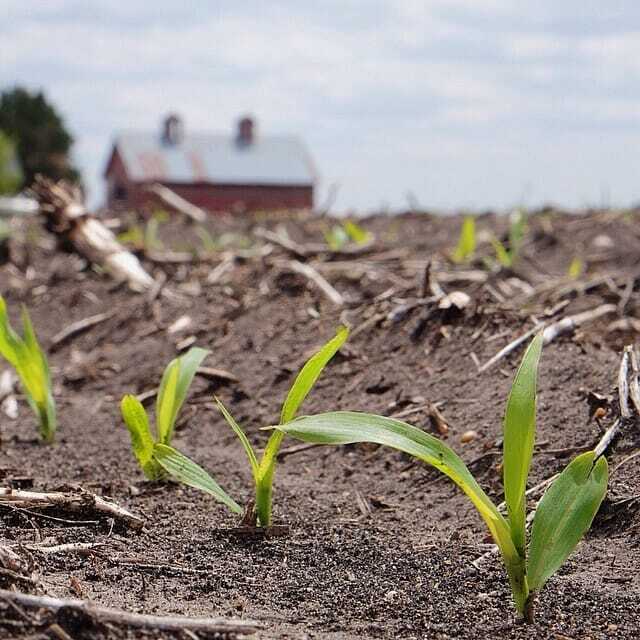
    Last week at this time, corn planting had yet to get underway in many territories across Latham Country. What a difference one week makes! The U.S. Department of Agriculture reported Monday that 40% of the soybean crop and 84% of the state’s corn crop had been planted as of Sunday. With mostly sunny weather in the forecast through Saturday, we expect much ground to be covered yet this week.

    For a look at crop conditions around our six state territory, click here, or select a region from the drop down above.

    Team Latham

    May 21, 2014
    General, Season, Spring
  • Latham Hi‑Tech Seeds

    What Happens When Government Takes Control?

    Wethepeople

    America’s “Win All, Lose All” Position Has Led to Invention & Innovation

    “Freedom of choice” has been the American Way ever since our forefathers fought – and won – freedom from Great Britain. Little by little, however, our freedoms are being threatened. Obamacare is one case in point.

    wethepeople

    Believe me, I’m not trying to politicize this issue. I would oppose this U.S. healthcare law regardless of who authored it. As one Iowa congressman wrote, “… the law is not the common sense path our nation should be taking on much needed health care reforms.” It creates instability, restricts patient choice and explodes costs that will hamper the economy. Even the presidents of three of the nation’s largest labor unions, including the International Brotherhood of Teamsters, released a letter to Democratic leaders in Congress warning that Obamacare would “shatter not only our hard-earned health benefits, but destroy the foundation of the 40-hour work week that is the backbone of the American middle class.”

    Such comments were made before Obamacare became the law of the land. Now we’re seeing how much American’s freedom of choice is being restricted. “We have to break people away from the choice habit that everyone has,” said Marcus Merz, chief executive of PreferredOne, one of the largest Preferred Provider Organizations (PPOs) in the Upper Midwest.

    What’s even more disconcerting to me than limited American’s ability to choose the healthcare plan that best suits their needs is how our government is paying to deceive us! Just last week I watched a video of a worker given a huge government contract to basically do nothing. While she was hired to sign up people for health insurance, she said most days she and her coworkers just sit around talking. They’re told to look busy when inspectors come in to ensure taxpayer money is being spent correctly. They pretend to type, look busy and put on a good show. Talk about government waste at its finest!

    When government takes over a business like they have health insurance, the efficiency disappears. That’s just plain economics, and I don’t need a degree to understand.

    I have always believed there must be risk for a business to succeed. To succeed big, there must be big risk. There should be the possibility to lose it all because that makes the drive to succeed much greater. “Necessity is the mother of all invention.” The goal of success leads to innovation, too. People have an incentive to try new ways to improve efficiencies and improve their lives. This drive to succeed has made our country great. However, the comfort of everyone being “comfortable” was not a part of making this country great.

    The post office is another example of government waste and inefficiency. When there is unlimited tax money to spend – money that wasn’t earned, borrowed or associated with any risk – there’s no incentive to make the business lean.

    My trip to Ukraine made it very clear how a country can change by a little push from free enterprise. Where there was risk and effort, that country was making much progress in agriculture. I’m really hoping the current crisis, including protests against corrupt government leaders who have mismanaged the economy, doesn’t ruin all the progress that has been made. Government intervention can undo overnight what it takes a life time to build.

    Another example of government intervention being showcased on a morning radio shows is government-owned resorts. Why are we letting government parks and cabins compete with private enterprise? Some of these parks have been made to be super nice, but at what cost to tax payers? Does this resort property pay property taxes? It’s my contention that taxpayer money is being used to create resorts that will take money away from private enterprises, yet private enterprises return a large portion of that money to the U.S. Department of Revenue in the form of taxes.

    Government agencies should not be making rules and regulations that control business. Unless America remains “government of the people by the people,” what is happening in Ukraine can and will happen here! We must remain watch dogs for government control.

    What’s happening in health care is happening in many other areas of business. Look at banking, investments, and my favorite… agriculture! New water rules by the EPA are a blatant grab for control. EPA and the Army Corps of Engineers proposed the rule in March to clarify which bodies of water — such as wetlands and streams — come under the agencies’ authority to protect under the Clean Water Act. Basically, they want to control every drop of water.

    We can’t farm without water. If you don’t believe me, just talk with a California farmer suffering from drought. Water is needed to produce everything from milk, beef and wine to some of the nation’s largest fruit and vegetable crops, including avocados, strawberries and almonds. Because California accounts for one-third of U.S. vegetable output and two-thirds of fruit and nut production, lack of production will increase retail prices. Retail tomato prices jumped 10 percent in the 12 months. U.S. retail prices for beef, bacon, lettuce and broccoli posted double-digit gains last year.

    Giving the EPA control agriculture gives the U.S. government control of FOOD! Many governments in this world control their populations by controlling the food supply, and we’re having a huge discussion about food in this country. Consumers want to know where their food comes from and how it’s grown. If we are not careful, you might not have any say about your food. Government control can come a little at a time. Freedom can slip away very silently.

    Preserve life, liberty and the pursuit of happiness! Stay informed about the issues. Research political candidates. Exercise your right to vote.

    Larry Sailer, Musings of a Pig Farmer

    May 20, 2014
    Agriculture, General, Industry News
  • Latham Hi‑Tech Seeds

    Finding Peace behind the Tractor Wheel

    Wyattfamily1

    WyattfamilyMatt Wyatt of Reinbeck in Northeast Iowa is planting his fourth crop, but it’s the first time he’s been able to do so without having to check his email frequently or field phone calls. In April, he left his job as claims supervisor for Rain & Hail Agricultural Insurance. It was a position he had enjoyed for 18 years, but he left so he could fully enjoy this new season of life.

    “I like knowing I’ll be home every night. I like working with my dad, and I’m looking forward to working with my children,” says Matt, the fourth generation of Wyatts to farm near Hudson. In addition to raising corn and soybeans, he and his father also have an early wean-to-finish pork operation.

    Matt admits that being alone with his thoughts for a good part of the day took a little getting used to. Now he enjoys spending time outside where the birds sing and his phone isn’t incessantly “chirping.” He can concentrate on doing the day’s job plus plan for the future.

    “Even if they don’t decide to pursue farming, I want my children to have an appreciation for the process,” adds Matt. “I want them to experience a feeling of accomplishment at the end of the day, knowing the work that was done is all a part of something bigger.”

    Frank Wyatt has been a Latham® dealer for nearly 20 years. His youngest son, Matt, is returning to the family farm and will plans to join the dealership for the 2015 sales year.
    Frank Wyatt has been a Latham® dealer for nearly 20 years. His youngest son, Matt, is returning to the family farm and will plans to join the dealership for the 2015 sales year.

    Matt graduated in 1996 from Iowa State University where he earned a bachelor’s degree in Agricultural Business with a minor in Agronomy. It’s also where he met his wife, Chelsea, who stays busy with her children’s school and community activities. The couple are the proud parents of two sons and a daughter: Cael, 14, recently got his permit. He enjoys wrestling and track. Aiden, 12, enjoys soccer, baseball and football. Ava, 9, has been taking dance lessons since she was 3. She also enjoys soccer.

    Community involvement and education are a common interest for this couple. Chelsea organizes the community soccer program and chairs the local parent-teacher association. Matt has coached the community’s youth wrestling program plus serves as assistant coach for Ava’s soccer team. Matt also is president of the Gladbrook-Reinbeck School Board and active in his local church. In addition, Matt and his father, Frank, are active in the Masonic Lodge.

    In their free time, the Wyatts enjoy cheering on the Iowa State Cyclones. Matt enjoys golfing, and Chelsea enjoys taking family vacations to the beach.

    Today, in honor of the pork they produce and the tropical vacations they enjoy, the Wyatts are sharing a family favorite recipe.

    “It’s rare that I make the same thing twice, but this recipe is great for tailgating and entertaining,” says Chelsea. “You can whip it up the night before, it feeds a lot of people and is always a hit!

    Team Latham

    May 16, 2014
    General, Pork, Recipes
  • Latham Hi‑Tech Seeds

    Don’t give up too soon…

    Blog Quote

    PLANTING SEASON IS A MARATHON NOT A SPRINT

    Blog_QuoteWe’ve all heard the saying, “Anything worth having is worth waiting for.” But did you ever think about how this familiar quote applies to farming? We must remember that planting season is more like running a marathon than a sprint.

    Highly competitive runners have to deliberately pace themselves. They also have to avoid jumping the gun. This, too, applies to farming. You see, many farmers jump the gun and switching corn hybrid maturities too soon. Corn planted in early June can make decent yields, and there’s no need to switch from corn to soybeans until after that.

    When you switch maturities, you forfeit maximum potential and have essentially decided to lower your yield expectations! Based on my experiences over the past 35 years – as well as research findings from many Midwest land grant institutions – I can tell you with confidence that full-season hybrids and varieties outperform early maturing hybrids and varieties.

    There becomes a point in time where the advantages of planting a full-season hybrid diminishes to the point where shifting to a shorter-season hybrid or variety will generally result in drier corn and higher yields come fall. Following is a summary of factors to consider when deciding whether to switch corn or soybean maturities.

    FACTORS TO CONSIDER WHEN SWITCHING MATURITIES

    I’ll use northern Iowa and southern Minnesota as an example. If your maturity range is 98- to 109-days (which is what I use for the Latham Research Farm), then you should generally not deviate from those maturities until at least May 25. If all you have left to plant is your 98-day hybrids, then you can safely extend your planting window to about June 7-10. On the other hand, if you only have your 109-day hybrids left to plant, you’ll probably be better off switching to 95- or 99-day products.

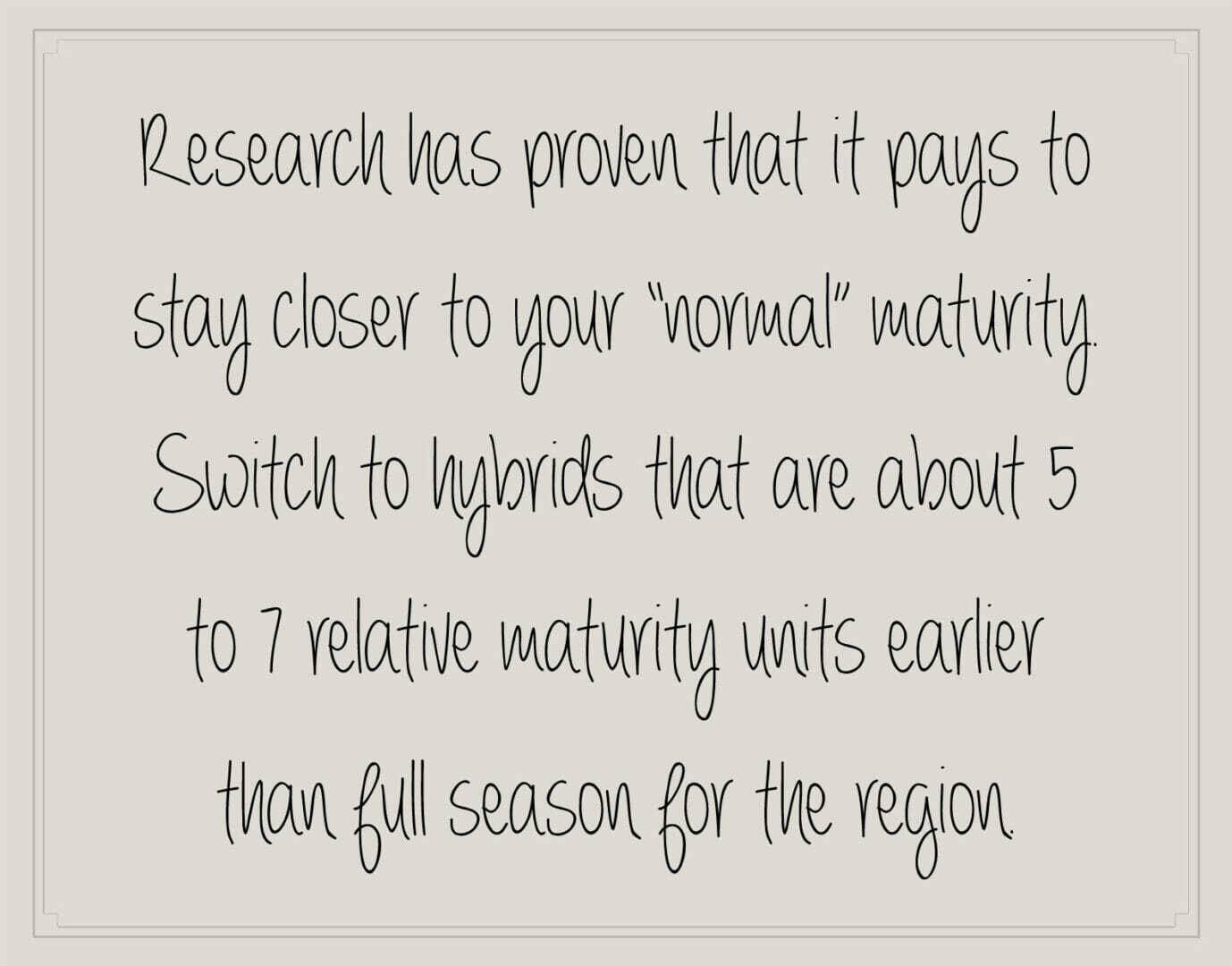
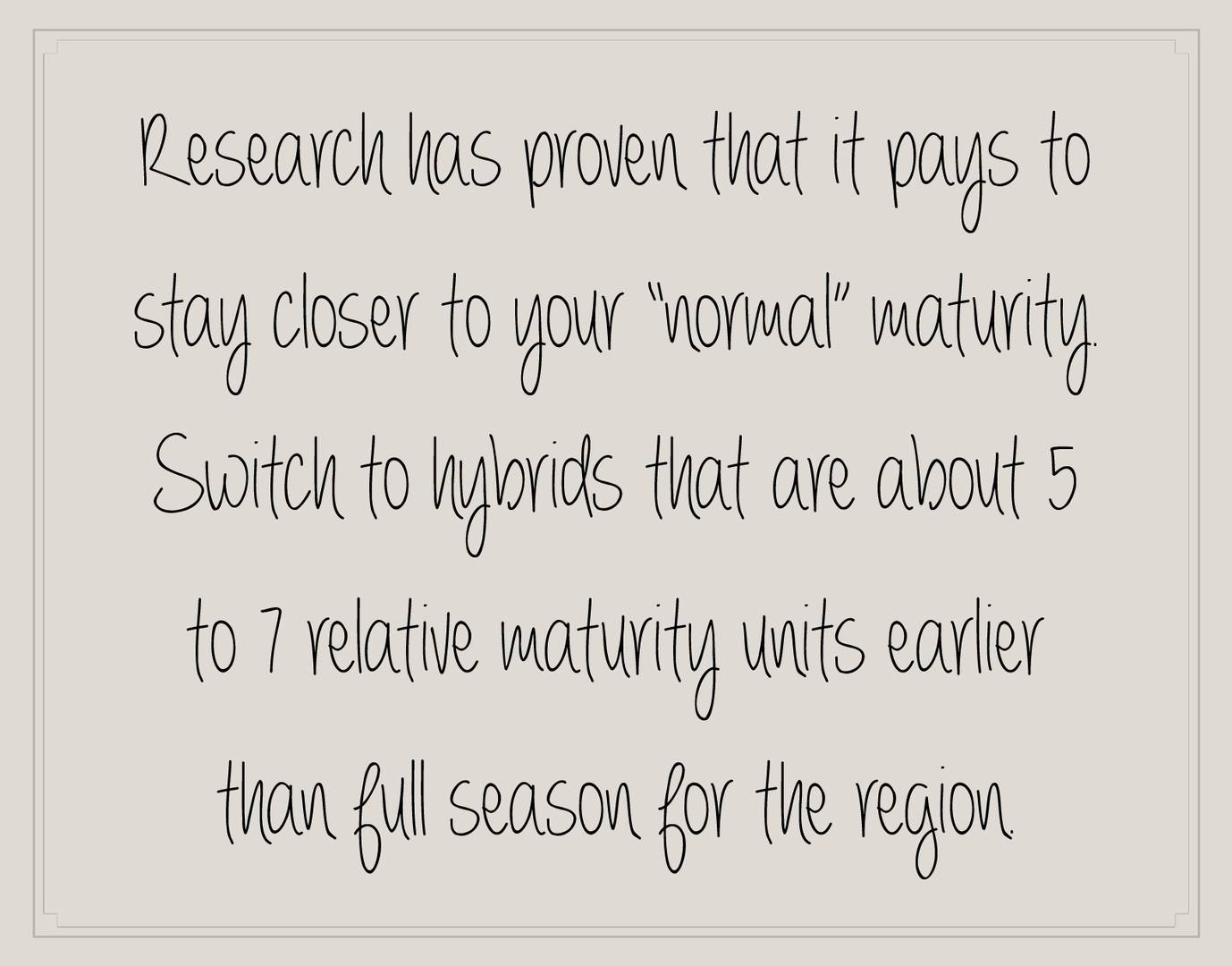
    That brings us to the next subject… if you must switch, how early of a hybrid is needed? You don’t need to take it to extreme and switch from 109 RM to an 85-day hybrid. Research has proven that it pays to stay closer to your “normal” maturity. Switch to hybrids that are about 5 to 7 relative maturity units earlier than full season for the region. Yields in this scenario will be greatly improved if northern Iowa and southern Minnesota farmers (from the example above) move toward a 92- to 95-day hybrid that is more closely adapted to the area.

    The decision to switch maturity with delayed corn planting is difficult because of so many variables including: available GDUs, first frost date and fall drying conditions. With this in mind, here are some general guidelines:

    Location
    within Iowa
    Full Season RM Switch to
    on May 20
    Switch to
    on May 30
    South of I-80 114-117 108-111 108-111
    Central 110-115 107-110 107-110
    North of I-80 109-113 105-108 105-108

    Webspec Admin

    May 15, 2014
    Agronomics, Corn, Crop, General, Growth Stages, Soybeans
  • Latham Hi‑Tech Seeds

    #plant14 Wraps Up in the West but has Yet to Begin in Parts of the North

    NickC Corn14

    This spring has certainly a challenge, especially for farmers across North Central and Northeast Iowa and into Minnesota and the Dakotas. However, there’s no need for farmers to jump the gun and switch corn maturities now or even make the switch from corn to soybeans.

    Remember, we’re still within the optimal window of yield for another 7 to 10 days. Most farmers only needs 2 to 3 good days to finish planting corn. If the sun shines and farmers return to the field as expected this weekend, much ground will be covered in a few days.

    We don’t start losing significant yield on corn through the end of May, so continue to practice patience. At Latham Hi‑Tech Seeds, we’re just as eager to get our #crop14 into the ground. This season is definitely testing our patience, too. We’re taking our own advice by working our crop plan and avoiding the temptation to rush into unfit fields. We know nothing good comes from planting in soils that are too wet. Bring on the sun!

    Team Latham

    May 14, 2014
    General, Season, Spring
  • Latham Hi‑Tech Seeds

    Reminiscing about the “Good Old Days”

    Little red wagon

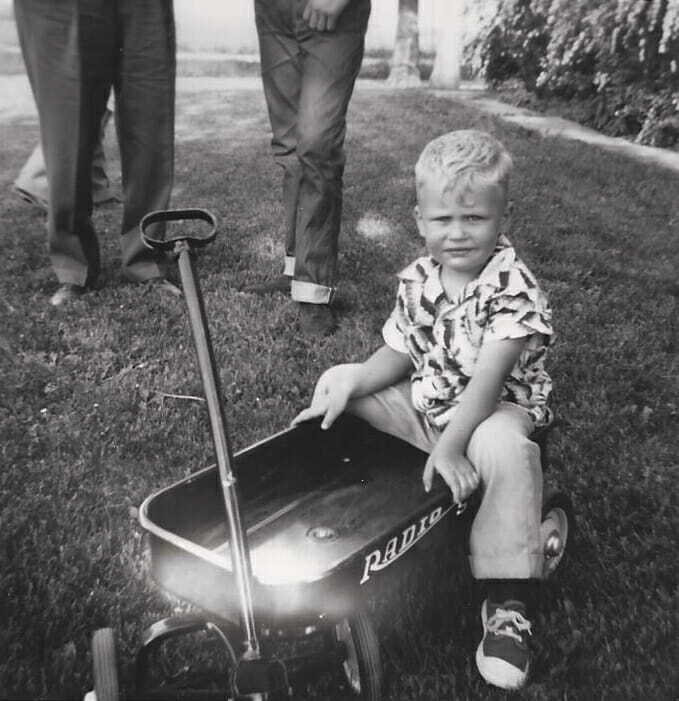
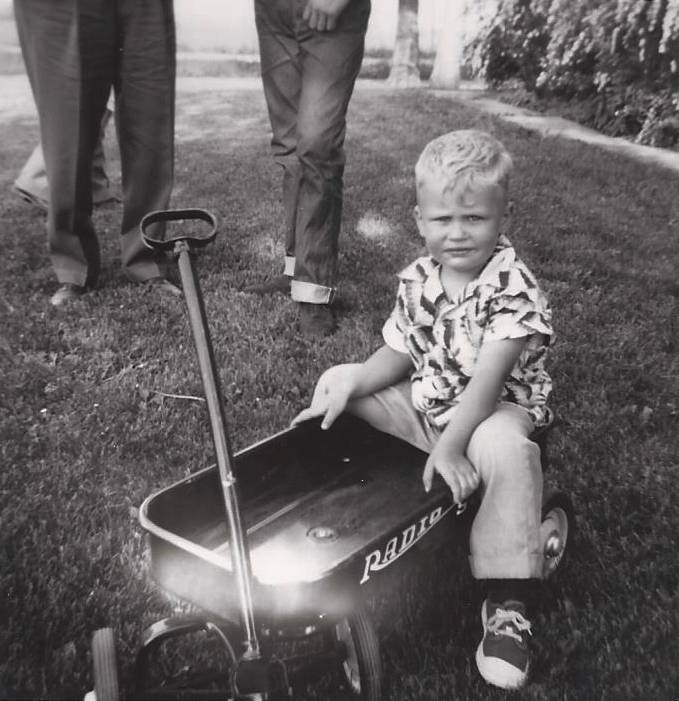
    Little red wagonMy wife, Janice, and I have been looking through family photos and gathering material to make a historical video for our grandson Zach’s high school graduation present. Seeing all of these old pictures made me reminisce about my farming career.

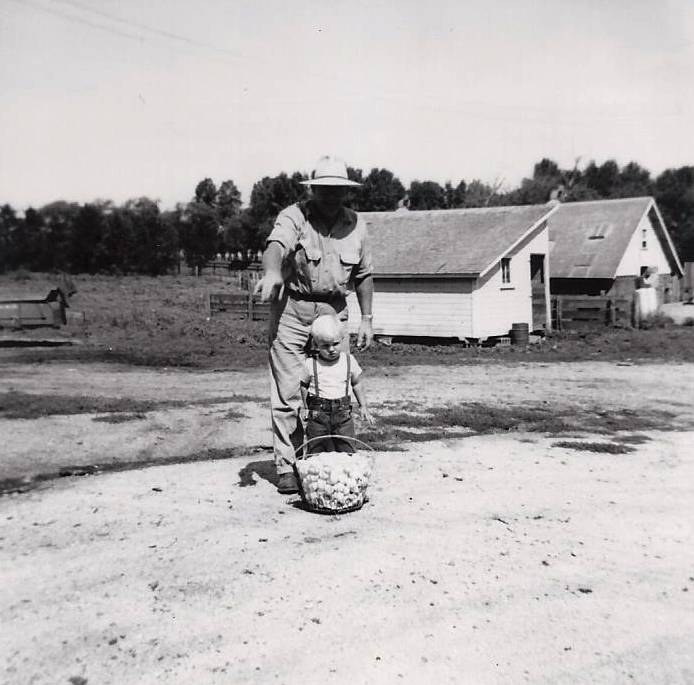
    Growing up, I have fond memories playing with one of those little red wagons. I also remember spending my fair share of time doing chores. Multi-generations were involved on the farm, and I remember learning from my grandfather Jake. Mom had a chicken house full of laying hens that earned grocery money for our growing family that included seven kids. Gathering eggs in a wire basket was something we all learned at an early age!

    Gathering Eggs
    Gathering Eggs

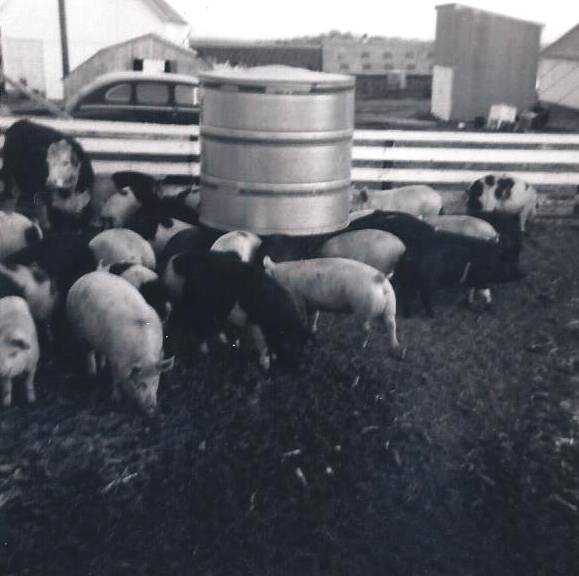
    In addition to fresh eggs, we drank milk from our cows. We also ate home-raised chickens, beef from our own cattle and pork from our hogs. That’s the way it was done.

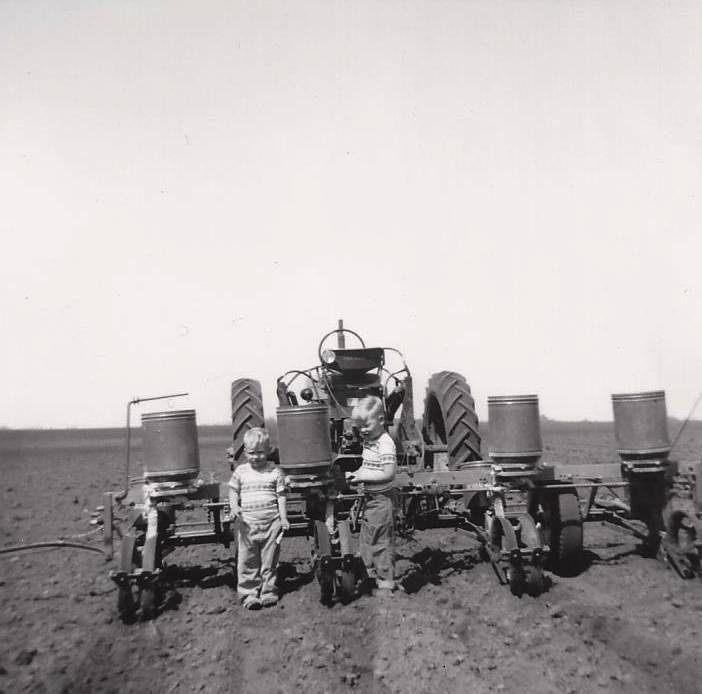
    Farming required lots of manual labor from lots of family members because we didn’t have modern technology! Plowing the ground black was somewhat a source of pride as you were considered doing a bad job of farming if there was a corn stalk showing after you plowed! We spread lots of manure, usually close to the barns because it took too much time with slow tractors to haul it to fields that were further away. No manure management plans were written. We needed lots and lots of tillage to control weeds because there weren’t herbicides and pesticides.

    Sounds great… right? Not so!

    PlanterDirtEven though we used very few chemicals, the wildlife populations were scarce on our farm compared to now. We had more fox and jack rabbits, but I can only remember one deer as a kid.

    I also remember seeing so much soil erosion, and black dirt filled the air when the wind blew. Soil filled the ditches, which needed to be cleaned. Each spring we’d have to plow the dirt “drifts” away from the fence rows, and we’d have to fill in gullies that washed through the fields. Yields were pitiful compared to today, too!

    Do we want to talk about livestock? The weather was harsh and housing conditions were crude by today’s standards, so I don’t think we even need to go there!

    1stVoAgI will say, however, that we thought we were doing a great job of raising food back then. Each year we implemented new ideas, and we got better! Agriculture has continued to evolve. Fast forward to today, and we’re even better. Of course, we’re not perfect but we are better than we were 50 years ago. And you can bet that every year we will continue to get better and better at raising food!

    I loved growing up on the farm, but I wouldn’t go back to “the good old days.” We produce much more output (food), with much less input (herbicide, pesticides, erosion). There’s no doubt in my mind that farmers today are doing a much better job of taking care of the environment, our soil, and our water. After all, I’ve “lived” farming for 50-plus years!

    Larry Sailer, Musings of a Pig Farmer

    May 13, 2014
    Agriculture, General, Industry News
Previous Page
1 … 65 66 67 68 69 … 159
Next Page

Latham Hi‑Tech Seeds

131 180th Street | Alexander, IA 50420

(641) 692-3258

SIGNUP FOR OUR NEWSLETTER
  • Contact
  • Legal
  • Dealer Center
  • Seedware Login
  • Latham Gear

© 2025 Latham Hi‑Tech Seeds. All rights reserved. | Iowa Web Design by Webspec | Privacy Policy

Latham® Hi-Tech Seeds is a trademark of M.S. Technologies, L.L.C., 103 Avenue D, West Point, IA 52656.