Latham Hi-Tech Seeds

(641) 692-3258

  • Home
  • Products
    • Corn
    • Soybeans
    • Alfalfa
    • Corn Silage
    • Seed Guide
  • Performance
  • Find a Rep
  • Media
    • Blog
    • News
    • Videos
    • Podcasts
    • TECHTalk
  • About Us
    • Company History
    • Our Mission
    • Careers
    • Become a Rep
    • Sowing Seeds of Hope
  • Contact Us
  • Latham Hi‑Tech Seeds

    Help Wanted Ad Leads to Multi-Generation REAL Dairy Tradition

    11295582 10153072619778884 1285014576049159236 n

    It’s no secret that dairy farming is a rich tradition in Wisconsin, but it was a chance meeting that led Kevin and Julie Roske to their dairy. Originally from a dairy farm near Riceville, Iowa, the couple moved to Wisconsin in the mid-80s to answer a help-wanted ad in Hoard’s Dairyman for a herdsman near Chetek, Wisconsin.

    A few years later while attending a Herd Improvement Meeting near Barron, Kevin connected with Joe Mullen, a dairy farmer who was in his 70s at the time. Joe took note of Kevin’s interest in learning and his passion for improvement. He made a job offer for Kevin to come work at his dairy in Hillsdale. While the Roske’s didn’t accept that initial offer, they did keep in touch with Mullen and learned more about his operation before deciding to move their young family at the end of that year.

    The initial arrangement was for Kevin to work on the farm as herdsman. However, Mullen was nearing retirement so the two worked carefully on a transition plan. Kevin worked for a wage and also received a 25% share of each heifer calf. A couple years later, Joe’s farm went on choice auction. Half of the cows were sold to the highest bidders, and the other half returned to the herd where Kevin and Julie used their 25% share in the heifers as a down-payment for the farm.

    Kevin was in charge of day-to-day farm operations while Joe managed the finances. They continued working in share agreements, allowing Kevin to build his herd and share machinery, while always maintaining two sets of farm books to be audited in their monthly meetings. Later on, a contract was established with Kevin as full manager of the farm. Kevin was to uphold an 18,000 pound rolling herd average with an escape clause for Joe to nullify the contract should this goal not be met. Kevin met and surpassed that first goal, which convinced Joe to sell the rest of the farm to the Roske family.

    The part of this story that the Roske’s love to share the most is that even though Joe was technically retired at that point in their relationship, he still wanted to do what he could to help the young family build a strong foundation for their new farm business. He wrote up several other contracts for farms he purchased, which allowed the Roskes to add a second farm with heifer facilities and a third farm with a barn for dry cows.
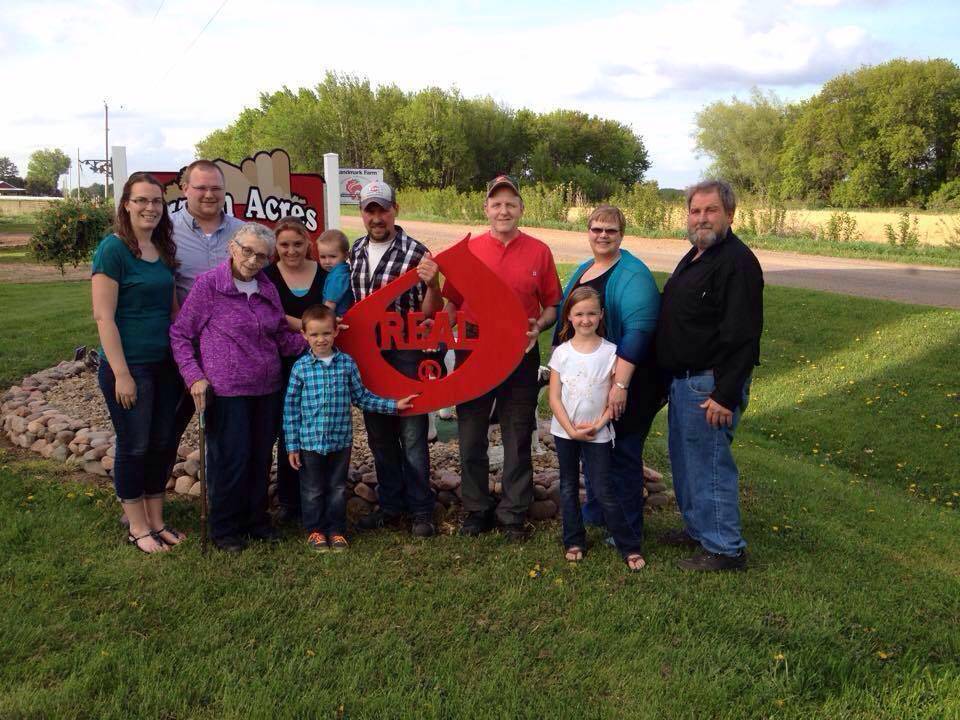
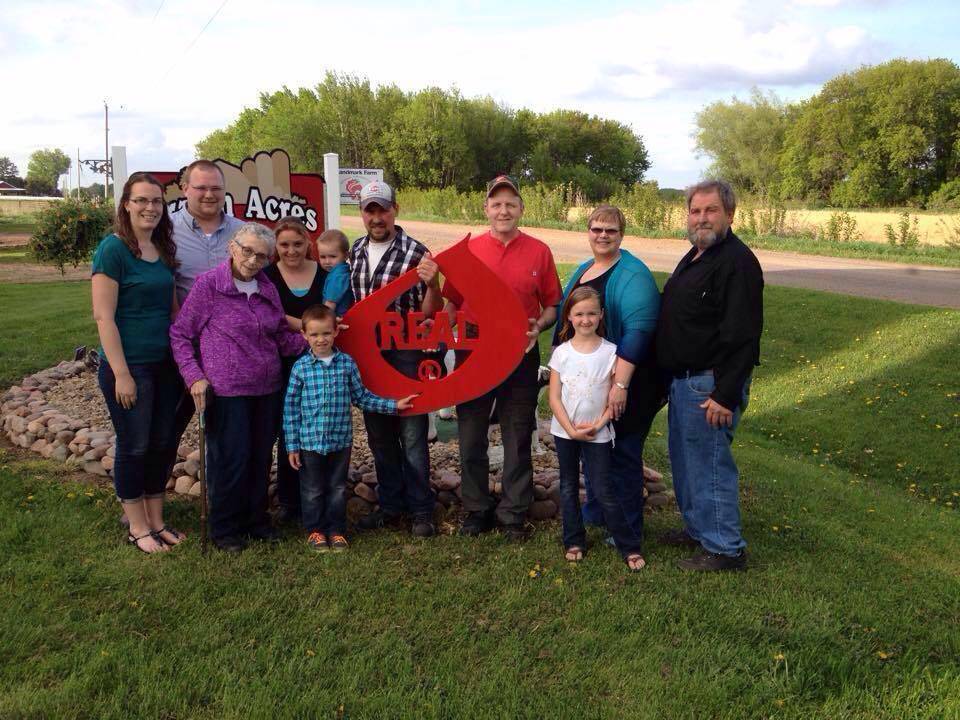
    The Grazin' Acres family was recently presented with the REAL Seal as hosts of the 41st Annual Barron County Dairy Breakfast. Pictured from left to right: Tanya Roske and husband Josh Roske, REAL Seal presenter Janet Nelson, Liz Roske (holding Emmett Roske), Korbin Roske, Nathaniel Roske, presenter Kim Barta, Makenna Roske, Julie Roske, and Kevin Roske.
    The Grazin’ Acres family was recently presented with the REAL Seal as hosts of the 41st Annual Barron County Dairy Breakfast. Pictured from left to right: Tanya Roske and husband Josh Roske, REAL Seal presenter Janet Nelson, Liz Roske (holding Emmett Roske), Korbin Roske, Nathaniel Roske, presenter Kim Barta, Makenna Roske, Julie Roske, and Kevin Roske.

    Joe Mullen passed away in March 1994 at the age of 80. Both Kevin and Julie routinely express how grateful they are for the opportunities he provided to help them bring their dream of owning a dairy to reality. When the Roskes first moved to the farm, they were milking 34 cows. Today they care for a herd of 90 cows. They also raise 200 acres of corn and 200 acres of alfalfa each year to provide all the feed they need for the herd.

    Kevin used to say that his main focus on the farm was to “keep the herd average high, pay the bills and raise the family he needed to keep the farm running for Joe.” I’m happy to share the Roskes are doing so in the most fitting way as they work to transition their oldest son, Nathaniel, in as the next generation of Grazin’ Acres dairy ownership.
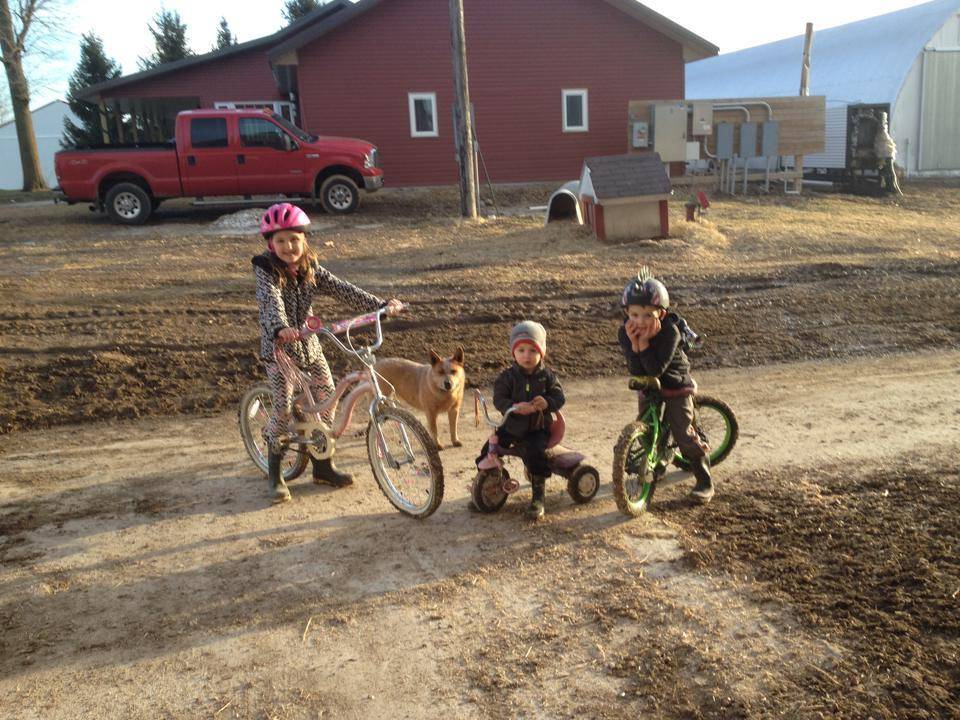
    Nathaniel’s three children are also regularly “on patrol” during morning and evening milkings. I look forward to Part III of the story when the Roske family REAL dairy tradition continues with the third generation.
    Nathaniel’s three children are also regularly “on patrol” during morning and evening milkings. I look forward to Part III of the story when the Roske family REAL dairy tradition continues with the third generation.

    The Roske farm transition story is just one example of how dairy farm families across the country work together to bring us fresh dairy products.

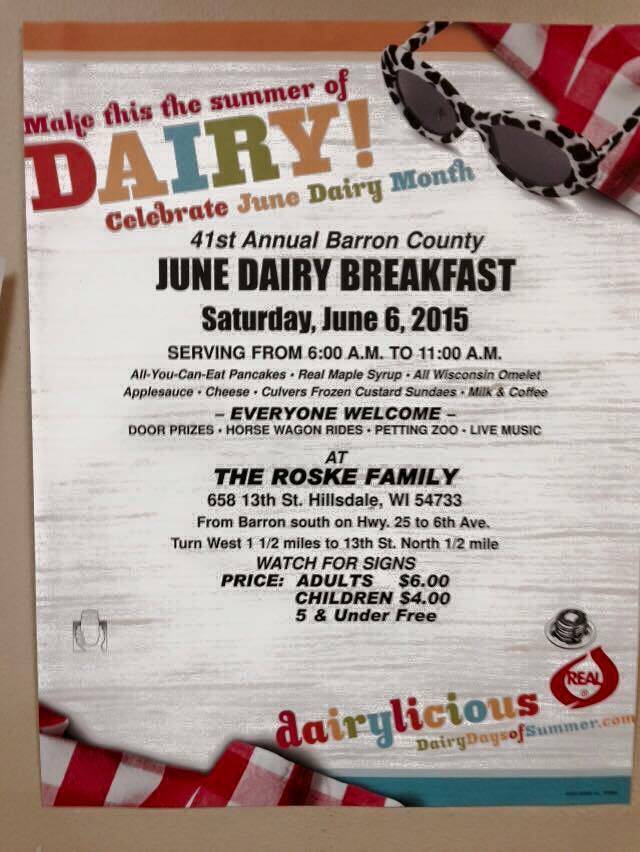
    Did you know that June is Dairy Month? If you have questions about how your dairy products are produced, seek answers from your local farmers. Saturday I’m heading north to take part in the 41st Annual Barron County Dairy Breakfast on the Grazin’ Acres Farm. I look forward to joining the 2,999 other people expected at this year’s breakfast. You’re welcome to join us on Saturday, June 6, from 6 AM to 11 AM! All who attend will be treated to a fantastic breakfast and entertainment.

    To find a dairy breakfast near you, check out Midwest Dairy Association’s listing of summer dairy events and Wisconsin’s June Dairy Days of Summer events. You’ll have a great time learning about this REAL labor of love and learn how milk, cheese and ice cream products move from the farm gate to your dinner plate!
    11020243_986508581382157_4486416217424021310_n

    In celebration of the breakfast to be held Saturday morning in Hillsdale, I share with you this easy recipe for Egg Bake.
    Gary Geske

    June 5, 2015
    General, Recipes, Sides
  • Latham Hi‑Tech Seeds

    Is It Worth Replanting at this Point?

    20150527 094903 resized

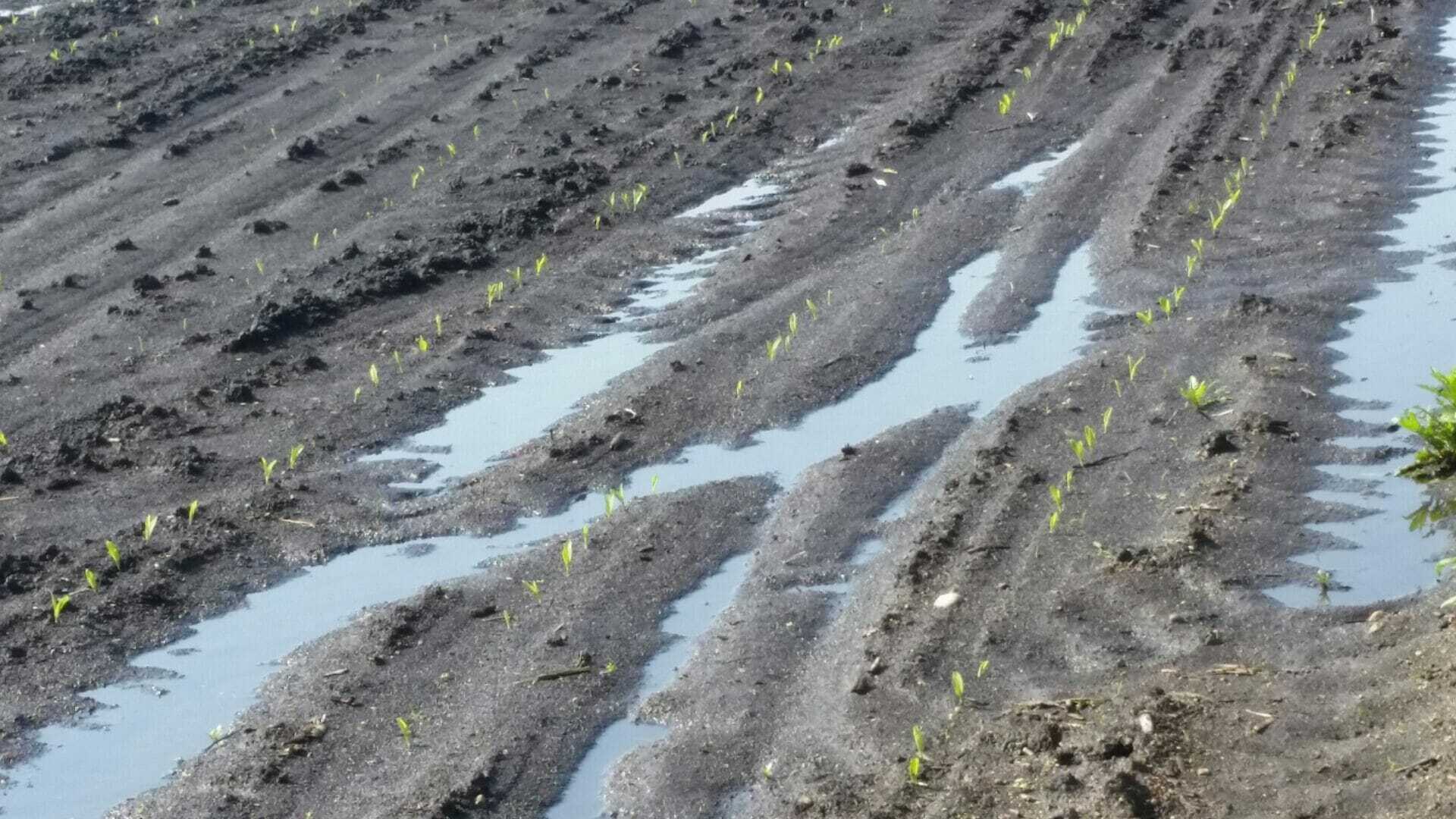
    Unseasonably wet, cold spring weather has lingered longer than any Midwest farmer had hoped. These conditions create stress on seed germination and on seedlings. Plus, there were reports last week of frost damage to both corn and soybean seedlings in the areas I cover. Many farmers here in the north are assessing the damage and hoping to get replants done by June 10.

    Whether farmers will replant corn or replant soybeans in earlier maturities will be determined after taking these three steps:


    1. Evaluate the current stand.  

    When evaluating the existing stand for population, only count plants that have a good chance of survival. Then, observe the uniformity across the field to decide whether replanting the entire field or portions of the field is justified. There are different stand count options to test for both corn and soybeans to perform an accurate count.

    2. Compare yield potentials.

    When judging the potential yield of the standing crop, again you should only count plants that have a good chance of survival. These tables for corn and soybeans help determine the percent of full-yield potential based on planting time.

    3. Consider various management practices. 

    Before replant occurs, remove any existing stand. Also keep in mind that most soil insecticides cannot be applied twice during the same growing season in the same location in the field.


    The decision as to whether or not a farmer should replant really comes down to individual circumstances and “local conditions.” For example, I heard about a farmer from the Fargo area who had purchased a competitors’ soybeans without seed treatment. The wet, cold spring weather caused those seeds to literally rot in the ground. Note: Seed treatments like Latham’s trademark SoyShield and SoyShield Plus give superior control of most seed and soil-borne diseases, including damping off, as well as controls early season Phytophthora.

    The germination in the particular farmer’s field mentioned above was so poor that it warrants a replant, but he’s in a precarious situation. Field conditions as of June 1 weren’t fit for planting, however, another 3 inches of rain is in the forecast this week with more precipitation likely in the 10-day forecast. If that farmer doesn’t get his crop replanted before the rain falls this week, it will most likely be another week or 10 days before he can get back in that field. Then we’re looking at a potential planting date of June 10.

    If you’re considering a replant, it’s best to be in contact with your insurance agent. I’ve heard Federal Crop and others may not pay unless the field is inspected first. Plus, farmers also need to know the final planting date that will be covered by their policies.

    The later the planting date, the better the chance we’ll have a killing frost before the crop matures. June 20-25 is a target date for switching soybean maturities in Iowa. However, our growing season is so much shorter in the north that June 4 is considered a late planting.

    On our family farm near Enderlin in Southeast North Dakota, we usually plant soybean maturities ranging from 08 to Group 1. We’ve already switched to earlier varieties and are hoping the weather will allow us to get these planted before rain brings planting to a halt again. To inquire about soybean maturities in your zone, contact me or your local Latham® representative by calling 1.877.GO.LATHAM (1.877.465.2842).

    Webspec Admin

    June 4, 2015
    General, Season, Spring
  • Latham Hi‑Tech Seeds

    If Not You, then Who?

    Larry signed cookbook

    This is a great time of year to be a farmer! I love feeling the warmth of the sun on my face. I enjoy hearing the birds sing each morning as I go outside to do chores. I love how the earth smells after a rain, but fresh cut hay is the best perfume ever smelled by an old farmer!

    Farmers in North Central Iowa are getting ready to make their first cutting of hay. Most of them have their crops in the ground and have moved their attention from planting to scouting crops for weeds and disease. The wet, cool spring conditions made prime conditions made the weeds grow like, well weeds!

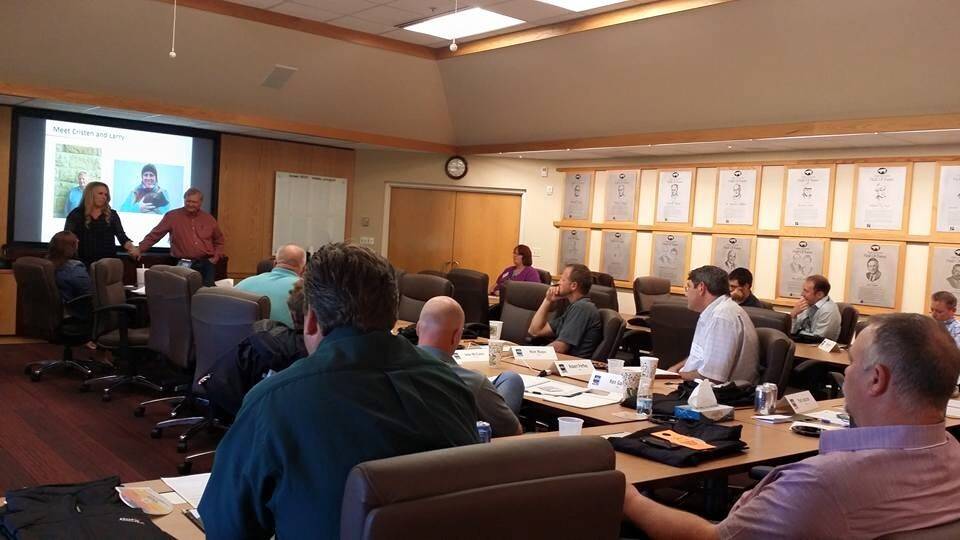
    LarryCristen presentIn spite of all the work there is to be done on the farm at this time of year, it’s still a busy meeting season. I’ve written before that winter is the meeting the season, but meetings seem to have branched out to year around.

    This week I’m part of a panel discussion at the National Pork Board office in Des Moines. Cristen Clark, who blogs at Food and Swine, and I have been invited to share some of our experiences with a group of new leaders, who also raise pigs. The theme of this week’s leadership training session is, “If not you, who?”

    It’s important for real pig farmers to tell their farm stories because consumers want to know about how their food is produced. I can’t blame them because food is a very personal choice. Although most of us don’t eat what we should, we all want to think we are eating as healthy as possible! If the folks who raise the food don’t share what they are doing, then someone else will tell their story. Who will tell the farm story… a computer programmer? a TV doctor? a food blogger?

    No one can tell the pork story better than a pig farmer! This group of farmers with whom Cristen and I spoke will also attend the World Pork Expo, June 3-5, on the Iowa State Fairgrounds. This three-day event brings together folks from all over the world to learn the newest and greatest ideas about everything piggy.

    This year I’m not obligated to any duties at the World Pork Expo. I’m free to watch the pig judging and the pig races. I can attend seminars to learn the latest technology. It could spend days visiting all the booths displaying everything from new knee boots and the latest computer programs to wind turbines and natural fertilizer haulers.

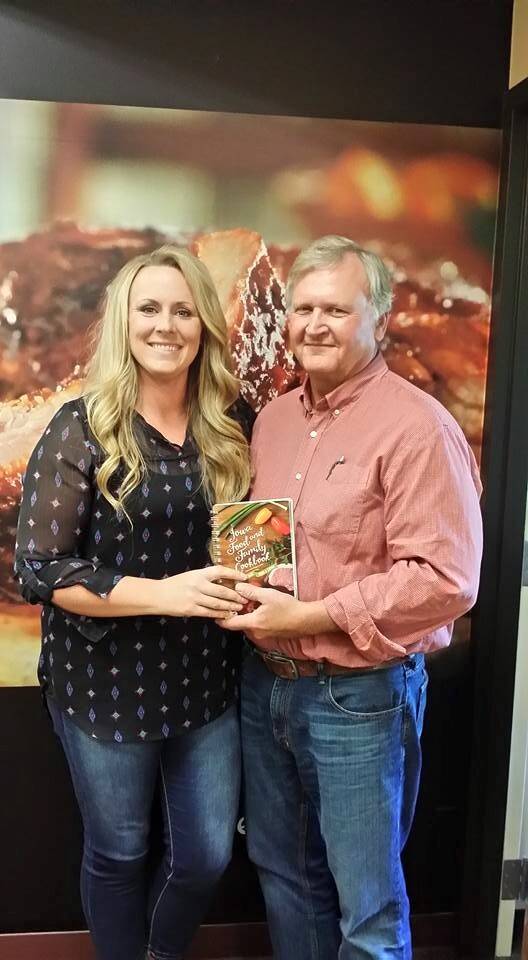
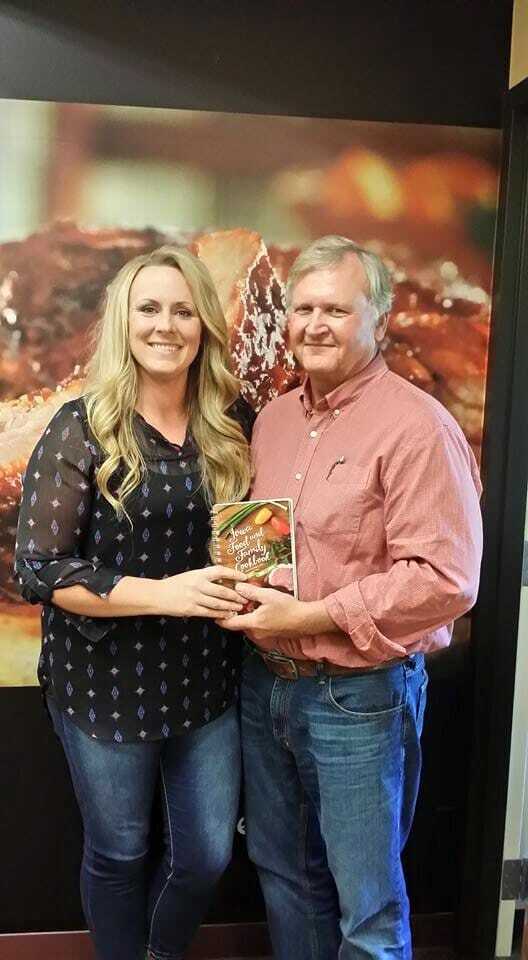
    Food blogger and farmer Cristen Clark presents a signed copy of a cookbook to "Musings of a Pig Farmer" blogger Larry Sailer
    Food blogger and farmer Cristen Clark presents a signed copy of a cookbook to “Musings of a Pig Farmer” blogger Larry Sailer

    As much as I enjoy all of these things, the best part of World Pork Expo is getting to see friends. I’ve made many dear friends during the 30 years I’ve been involved with pork organizations and activities like Operation Main Street.

    I’ve made many more friends through my involvement in social media. I’ve been known to travel the state – and even out of state – to deliver a free speech. Some people wonder why…

    If not me, then who? If I don’t tell my farm story, someone else will and I may not like it! If you’re a farmer, ask yourself what can you do to tell your farm story. If you’re a consumer with questions, talk to a farmer!


    Larry Sailer, Musings of a Pig Farmer

    June 2, 2015
    Agriculture, General, Industry News
  • Latham Hi‑Tech Seeds

    Follow these 3 P’s for a Pollinator-Friendly Garden

    20150502 160131 resized1

    There’s been a lot of buzz about bees recently as more people voice concerns about declining pollinator habitats.

    The interaction between farming and bees is a natural symbiosis because bees feed on pollen and nectar, and many crops need bees for pollination. Pollinators play an important role in keeping your garden healthy and blooming, too.

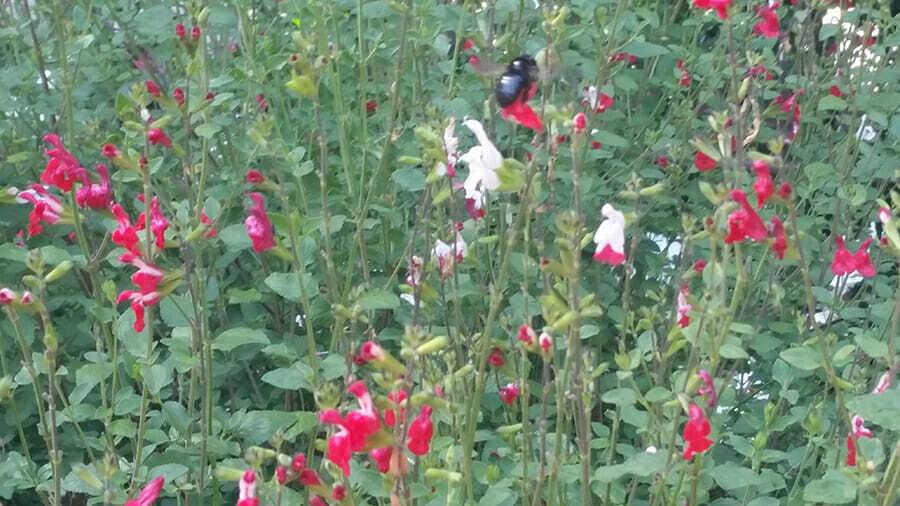
    Interested in promoting pollinator populations for bats, butterflies and bees? You can plant a pollinator-friendly garden by following the three P’s: Plan, Plant and Provide.

    PLAN

    The first step in planning a pollinator-friendly garden involves surveying the area where you intend to plant flowers. What is the sun and/or shade coverage? What is the soil type? Assessing these conditions helps you select flowers that will flourish. Next, decide what type of pollinators you want to attract based upon the type of flowers that will grow in your region.

    The Bee Smart ™ Pollinator Gardener’s app can help narrow the search of which plants to use in your garden based upon regional needs, such as soil, amount of sunlight, preferred type of pollinators and flower color. These planting guides are another resource organized by regions, which will help you begin answering these questions.

    When selecting your flowers, choose plants that will bloom from early spring to late fall to ensure a long season of bloom. This will result in a consistent food source for your visitors.

    Lastly, plan to choose flowers that offer a diverse set of colors, fragrances and shapes. This will make your garden more attractive for the pollinators you want to visit.

    Gardeners’ tip: You can always alter the type of plant you grow. Since you can’t change the soil type and sun coverage, choose the type of flowers the fits your geographic location.

    PLANT

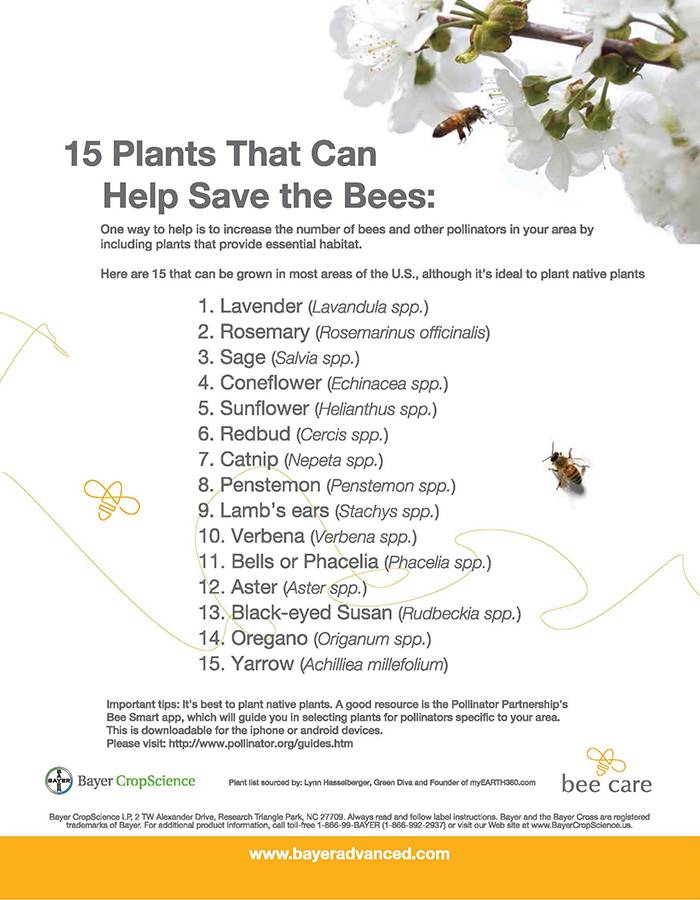
    Below is a list of 15 plants that can grow in most areas of the U.S. and can help increase the number of pollinators in your area:

    JPEG Bees

    Attracting a diverse community of native bee species begins with raising an abundant and diverse garden. When planting, be sure to plant generously throughout your whole garden. Pollinators are more attracted to large groups of flowers versus single plants.

    Gardeners’ tip: Bees love blue, purple, white and yellow. Butterflies navigate toward red and purple flowers.

    PROVIDE

    Once your garden is planted, it’s critical to provide water in addition to the food source. Grassy areas and shrubbery nearby provides a healthy habitat for pollinators’ nesting and egg-laying needs. Improve the forage in your habitat to make native bee pollinators feel welcome.

    Monitor the pollinators’ actions and needs. Be knowledgeable and interactive in your garden to satisfy the needs of your pollinators and flowers.

    Gardeners’ tip: Post signs to educate the public about your new habitat and encourage others to do the same.

    Along with attracting pollinators, did you know you can attract birds and butterflies, too?! Find out how by following these two links:

    • Gardening Can Be for the Birds!
    • Add Beauty to Backyard with Butterfly Garden

    Team Latham

    June 1, 2015
    Agriculture, General, Industry News
  • Latham Hi‑Tech Seeds

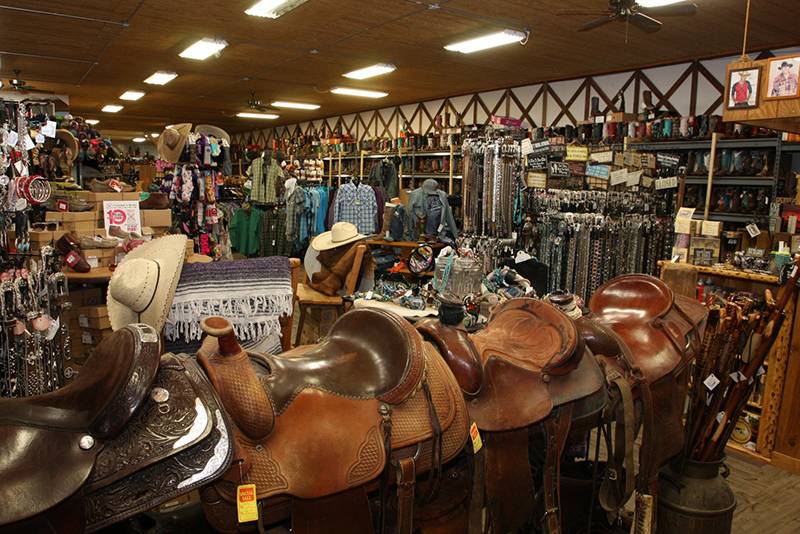
    Western Edge Remains Rooted in Rural Iowa

    Western.Edge .hats .April .2015.low .res

    Guest blog by Darcy Maulsby

    Blame it all on her roots. Not only did Melanie (Wagner) Edge show up in boots, but she’s kicking things up a notch, thanks to 4-H, her family’s western store and a new line of custom-designed cowboy boots.

    “Our roots are in the western and rural lifestyle, which is the heritage of America,” said Edge, a Franklin County native whose family runs the Western Edge, Ltd. in Humboldt and Ames. “4-H is also an important part of who we are.”

    Western.Edge.Humboldt.store.April.2015.low.res

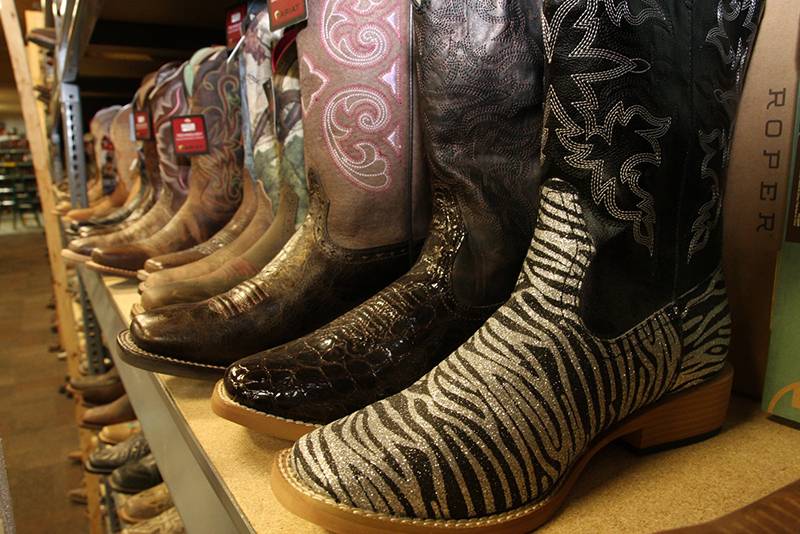
    While the Western Edge has long been known for its stylish apparel and hats, along with tack, saddles and more, the business has expanded into custom-designed boots for men, women and children. Edge, her son, Clay, and daughter, Jessica, travel to Dallas, Texas, once or twice a year to work with the Ferrini boot company to create original designs.

    “You can get boots at the Western Edge that you can’t get anywhere else in the nation,” said Edge, who has had other companies approach her about designing boots for them, too.

    The creativity required to create unique cowboy boots also helps Edge design eye-catching displays in her family’s stores. She credits 4-H with helping her develop this expertise, along with many other life skills, thanks to her involvement in horse and sheep projects, horse judging, home improvement and clothing exhibits and citizenship projects.

    “4-H taught me how to become more creative, set goals, work hard and communicate effectively,” said Edge, a former member of the Reeves Rosettes 4-H Club in Franklin County. “I use these skills in all sorts of ways, including reading my own radio commercials that are broadcast on Des Moines radio stations.”

    Western.Edge.boots.April.2015.low.res

    Growing up country
    When Edge was growing up on a farm near Hampton in the 1970s, more than 700 kids participated in 4-H throughout Franklin County. “If you were a farm kid, joining 4-H is just what you did,” said Edge, a 1976 graduate of Hampton High School. “It was fun and offered a good way to meet friends.”

    Edge also kept busy helping part-time at Wagner’s Western Store, which her grandparents, Glee and Thelma Wagner, ran for decades in Hampton. One of her favorite jobs was selling the store’s merchandise at the Iowa State Fair.

    “I’ve worked at the state fair since I was nine years old, and I still love going there,” said Edge, who opened her own western store after graduating from Iowa State University, marrying her husband, David, and starting a family.

    The business started in the 1980s in a farmhouse on the Edge family’s property, with tack and saddles displayed on the porch, gift items in the kitchen, boots in the family room, clothing in the dining room, kids’ toys in the bathroom and more merchandise upstairs. “The business was successful and we wanted to help it grow, so we decided to create a destination store,” Edge said.

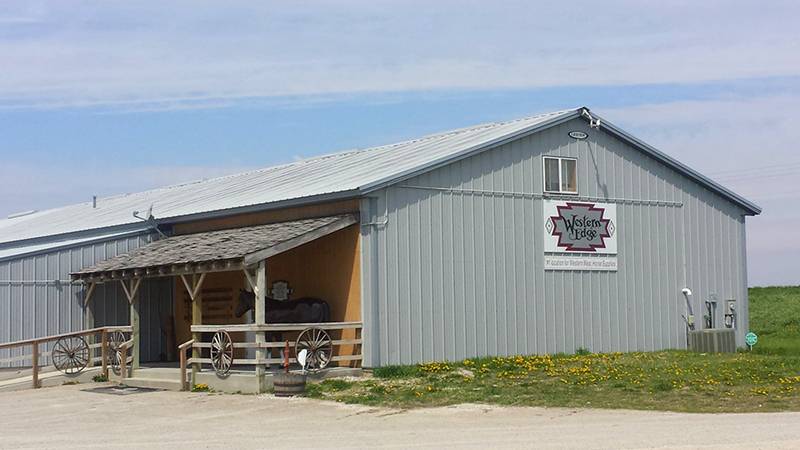
    Western.Edge.store.Humboldt.April.2015.low.res

    The Edge family built their Western Edge shop southwest of Humboldt. They opened a second store near Ames about 10 years ago. When people walk in either store, they are wowed by the selection of merchandise, along with the big sales. “While I didn’t necessarily dream of running a store, it has been a great opportunity to work with my family and many long-time employees,” Edge said.

    Giving back to the community
    Edge and her husband also made sure their three children had the opportunity to participate in 4-H as the kids were growing up. Cole, a steer wrestler who competes on the Professional Rodeo Cowboys Association circuit, credits 4-H with teaching him a solid work ethic. Clay appreciated the opportunity to learn responsibility and accurate recordkeeping at a young age. Jessica, who was shy by nature, says 4-H helped her develop her leadership and communication skills.

    Today, the next generation of the Edge family is involved in 4-H, since the Edge’s grandson, Kaden, participates in Clover Kids. The Western Edge has also launched a new initiative to help young people succeed in 4-H, FFA and rodeo. Talented youth are encouraged to apply to join the “We Team” and receive discounted merchandise from the Western Edge.

    “We know it takes a lot of time and resources to be involved in these programs, so we want to help,” Edge said. “It’s important to give back to the community.”

    Farmer’s Delight offers a meal in minutes
    Since Edge not only gives back to the community but travels extensively for her business, she relies on fast, easy meals to serve her family when she’s home. Her Farmer’s Delight recipe fits the bill.

    Team Latham

    May 29, 2015
    Beef, General, Recipes
  • Latham Hi‑Tech Seeds

    Calculating Stand Counts

    Photo May 04 9 11 50 AM1

    As crops emerge across Latham territory, the time has arrived to evaluate planting results. Here’s a quick how-to on taking stand counts in your fields.

    Webspec Admin

    May 28, 2015
    Agronomics, Corn, Crop, Emergence, General
  • Latham Hi‑Tech Seeds

    Support Our Troops through Red Shirt Friday

    While observing Memorial Day yesterday, I gave a lot of thought to Red Shirt Friday. I wear a red shirt to show support for our troops because “red” is really an acronym for “remember everyone deployed.”

    Last Friday, as on many Fridays, I wore my red shirt. This Friday, however, wearing red had a more personal meaning for me and my wife, Janice. Our daughter, Sara, was home to help celebrate my birthday and our wedding anniversary. Sara is a military veteran, and she greatly appreciated seeing her mother and me show a sign of military support.

    Apparently wearing red on Fridays is an old tradition that might even date back to a military women’s support group. Last night I spent several hours googling, trying to find that story. I didn’t find “that” story. I did, however, find some very interesting links that I’ve incorporated into this blog post and also will share below. I hope you will take a few moments to read these articles and watch the video.

    Too many Americans have forgotten there are many U.S. troops still fighting to defend our freedoms. That’s why I appreciate all my good friend and radio broadcaster Trent Loos does to raise awareness and to support our troops. In fact, I ordered my red shirt through Trent. He also is a huge supporter of the All American Beef Battalion, which thanks U.S. servicemen and women by serving ribeye steaks to them.

    It doesn’t matter whether you support the wars we are fighting or whether you support the various places our troops are serving. What matters is that we support our troops for doing a very dangerous job! These people from all walks of life like you and me, yet they make it possible for all of us in this country to express our views and enjoy our rights!

    Show your support of the troops by giving a follow to the Red Shirt Friday page. Listen to Trent’s radio show on Rural Route Radio, and wear RED on Fridays!

    Below are additional resources for Red Friday:

    • Chief’s View: Thanks for your support of red shirt Friday
    • The Story Behind Red Shirt Friday
    • A Red Wave of Support for Our Troops


    Larry Sailer, Musings of a Pig Farmer

    May 27, 2015
    Agriculture, General, Industry News
  • Latham Hi‑Tech Seeds

    Beef Provides Nutrients Needed for Brain Function

    NCW 2
    Kelli Loos
    Kelli Loos

    Sharing the story share of beef with consumers and educating youth about the beef industry are the two things Kelli Loos enjoyed most about serving as Vice President and then two years as President of the Nebraska Cattlewomen.

    “I am passionate about sharing the ag story with consumers and other mothers because people aren’t sure where to get the truth,” says Kelli. “The most important thing consumers need to know about the food we raise is that we proudly feed that same food to our own kids. What parent would jeopardize the health of safety of their child by giving them food that wasn’t safe?”

    A fifth generation Central Nebraska farmer, Kelli grew up on a diversified family farm just 15 miles from where she and her husband now live with their three daughters. Her parents still farm and raise cattle where Kelli and her five siblings were raised. Kelli and her siblings were involved with sheep production, helped in the hay field, walked soybeans and chopped thousands of musk thistles in the pasture. Kelli also was active in 4-H livestock, clothing and many other projects for 11 years.

    The 4-H and farming traditions continue. Kelli and Trent have raised cattle and hogs together for 22 years. They spend hours washing and walking 4-H livestock projects with their daughters: 17-year-old Libbi, 12-year-old Lindsi, and 10-year old Landri.

    “We take pride in not only the food we raise but the opportunity we have to raise our children in the family business and teach them the integrity, responsibility and work ethic it takes to succeed in every life endeavor,” says Kelli, who graduated from University of Nebraska – Lincoln (UNL) with an Agricultural Honors degree. She was a member of the UNL Livestock and Meats Judging Teams and was active in Block & Bridle, too. Kelli also earned a Master’s of Science degree in Reproductive Physiology from the University of Kentucky and worked as a Research Specialist at the University of Missouri, Department of Animal Science.

    “It’s so important that we share with consumers the message that meat, eggs and dairy products are essential for a healthy life,” Kelli continues. “The marbling that gives meat its flavor and juiciness is good fat – monounsaturated fat. This is a nutrient that your body needs and is especially important to brain function. By cutting out whole milk and meat from their diets, consumers are robbing their brains of necessary fatty acids that help prevent dementia and improve cognition.”

    You can be sure protein, like beef, helps the Loos family power through their routines. While there is no such thing as a “normal” day in Kelli’s life, every day usually involves a trip to somewhere either for to pick up feed, deliver pigs or take the girls to softball practice or another one of their numerous activities. Kelli enjoys being self-employed, so she can adjust her schedule around our girls’ many activities.

    “We want our girls to know that a strong work ethic is important,” says Kelli. “The chores have to be done, but the girls are always more important. We make sure that we are there to enjoy those growing-up years that go by way too fast!”

    Enjoy some family time this weekend with one of the Loos family’s favorite recipes for Stuffed Steak. I have a feeling “stuffed” will be the word that best describes me after this meal, but I’m looking forward to trying it soon with a side of fresh asparagus. Doesn’t it make your mouth water, just thinking about it?!

    Team Latham

    May 22, 2015
    Beef, General, Recipes
  • Latham Hi‑Tech Seeds

    Attention New Grads: Don’t Take Water Quality Issues at Surface Level

    Creek now1

    This past weekend, I attended one of my granddaughter’s high school graduation ceremony in a small town south of Des Moines. The ceremony was held on the football field, which is quite an undertaking during spring in Iowa!

    By luck, and maybe a little divine intervention, the outdoor graduation ceremony worked. We enjoyed some sunshine. Then just like you’d expect from Iowa weather, some clouds moved in, a few sprinkles fell and the winds began to gust. Papers blew off the stage, and the young ladies were hanging onto their skirts. Nonetheless, it was a beautiful ceremony!

    About 35 years ago, Larry Sailer planted trees and bushes along the creek that runs through his farm. #FarmersCoverIowa
    About 35 years ago, Larry Sailer planted trees and bushes along the creek that runs through his farm. #FarmersCoverIowa

    The keynote speaker was a retiring school teacher, who had taught most of his career at this school. I must admit that I don’t remember the speech at my graduation, however, he captured my attention by referencing farmers in his presentation! He talked about how farmers sow seeds, and teachers do likewise. What a great analogy, right?

    Later in the commencement address, the speaker told these graduating seniors how they need to fix the problems of our waters in Iowa! He shared how an all-time high number of our waters are polluted. I could feel my wife’s eyes on me. As soon as we got to our car, Janice said she was a little concerned at how I might react to the keynote. Rather than say anything at the time, I decided to address it in this week’s blog.

    It concerns me that educated people can be so misinformed! Did the teacher share untruths about Iowa’s farmers? No! Did he share all the facts? No!

    Our government agencies have the ability to control public perception simply by choosing which information to release and when. The Des Moines Waterworks (DMWW) own data shows a downward trend of nitrates in the Raccoon River, but that’s not what is making the headlines these days in Iowa. Instead we’re hearing about increasing amounts of nitrates from the DWMM.

    More Iowa waters made the “polluted list” this year, but it’s misleading because the standards by which waters are judged have changed. When you lower the level by which waters are judged, you have more water bodies on the list. Was this information shared with these new graduates? Of course it wasn’t!

    The commencement speaker used the water quality example to rally new members of our society, and as is often the case today, people take information at surface value. Many people do not dig for the facts! Emotional issues run on emotion, not facts.

    As I was pondering the commencement address, I an article from the New Yorker came to mind that reads: Scientists have discovered a powerful new strain of fact-resistant humans who are threatening the ability of Earth to sustain life. One scientist involved with the study concluded by saying that although the research is preliminary, “… It’s possible [humans] will become more receptive to facts once they are in an environment without food, water or oxygen.”

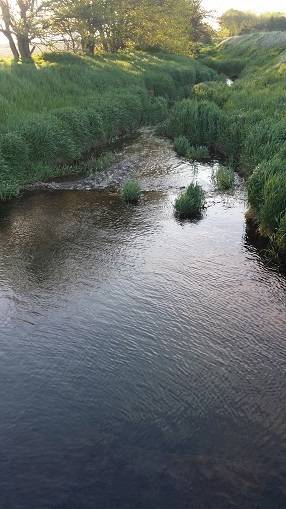
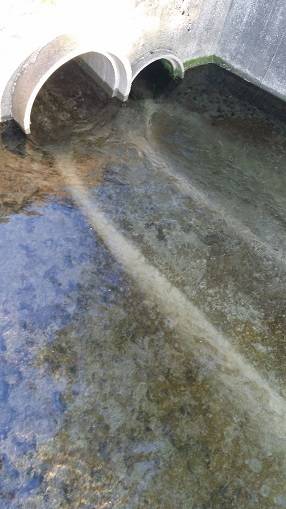
    The water running through Larry Sailer's farm is so clear you can see rocks on the bottom of the creek bed.
    The water running through Larry Sailer’s farm is so clear you can see rocks on the bottom of the creek bed.

    “Armchair farmers” believe agriculture is simple and that policies are needed to ensure farmers protect the environment. While I agree there are still improvements that we can make to further enhance water quality, let’s give credit for the improvements that have been made. Conservation practices are helping improve water quality.

    Back in the good old days, a lot of damage was done to our soils and water. The ground was tilled until there was no residue left, so soil would either blow or wash away. “Conservation tillage” was a buzz word when I started farming. No-till was just beginning. Terraces, or dirt pilled to control water flow, were being built by the miles.

    With today’s farming technology and equipment, we’ve made huge strides towards better soil conservation. I’ve planted acres of trees and bushes on my farm. By my creek, I’ve planted buffer strips for erosion control and wildlife habitat.

    I have taken pictures of my creek, showing how clean my water is leaving my farm. The water is absolutely clear, so you can see the bottom of the stream. Such clear water makes it difficult to take a picture, but I hope you “see my point.”

    Yes, we also need to control things in the water that we can’t see. That why I side-dress fertilizer, using just the right amount at the right time to feed corn plants. Lots of farmers are voluntarily spending millions of their own dollars every year to implement conservation practices.

    Today’s technology can detect smaller amounts of pollution in our waters, but it can also help us reduce that pollution. Farmers have made a huge difference, and we’ll continue to do more because we take pride in seeing results!


    Larry Sailer, Musings of a Pig Farmer

    May 20, 2015
    Agriculture, General, Industry News
  • Latham Hi‑Tech Seeds

    “The Covered Dish” Shares Simply Delicious Recipes

    Culinary school

    Culinary schoolMy husband once told me that if he’s not playing a round of golf, he’d just as soon be watching the professionals play. I wondered if I’d ever find anything I was that passionate about, but that was before I acknowledged the obvious…

    You see, I began cooking from the time I was old enough to scoot a stool in front of the stove. I scrambled eggs as my mom cooked up a hearty breakfast for my dad and his friends on the opening day of hunting season. I learned to fry a hamburger before I entered kindergarten. I earned a blue ribbon as a first-year 4-Her member with the chocolate chip muffins I exhibited at the county fair.

    No wonder I felt an immediate connection to Debbie Dance Uhrig, the Master Craftsman who teaches at Silver Dollar City’s Midwest Living® Culinary & Craft School. Debbie writes in the forward to her Simply Yours cookbook:

    “I began cooking from the time I could handle a spoon and stir. Throughout my life, I was taught to preserve foods, cook in ample amounts and to be prepared for extra folks at the table or surprise guests.”

    That’s the same philosophy my mom instilled within me! No wonder my mom and I greatly enjoyed watching the professional demonstrate cooking during the Farm to Table cooking class we took last Saturday. We learned to make Midwest Living’s Garden Pasta Primavera and a Quick Red Pepper Pasta Sauce, one of Debbie’s original creations.


    Quick Red Pepper Pasta Sauce

    by Debbie Dance Uhrig, Master Craftsman at Silver Dollar City’s Midwest Living® Culinary & Craft School


    Debbie1, 13.5-ounce package of high fiber spaghetti or linguine
    8 ounces Vince’s Roasted Red Pepper Pesto
    1 cup heavy cream
    ½ cup shredded Parmesan cheese
    1-2 tablespoons butter
    Fresh ground pepper to taste

    Boil noodles in salted water. While pasta is cooking, combine: pesto sauce, heavy cream and Parmesan cheese in small saucepan and heat thoroughly. Turn sauce to low. Drain the pasta when it’s done and turn back to original pan with 1-2 tablespoons of butter. Pour hot sauce over pasta and stir to coat. Serve as a side with steak, chicken or seafood. Serves 4 to 5.

    COOK’S TIP: Grate fresh Parmesan cheese for this dish for best results and maximum creaminess. Because cheese loses moisture once it’s cut, purchasing shredded Parmesan cheese will result in lumpy sauce.


    My 14-year-old daughter, who also attended the culinary class, enjoyed this pasta sauce so much that she asked if we could make it at home this week. (Side bar: Debbie mentioned this pasta would make a great side dish for grilled meats, so I’m planning to serve it with marinated grilled steaks. After all, our #31DaysofBeef celebration continues throughout the month of May.)

    The fanciest part of each recipe that Debbie demonstrated is the title! While the list of ingredients for the primavera may look intimidating at first, the recipe itself it quite simple to follow. Debbie believes in presenting recipes that call for common ingredients and a simple understanding for cooking. (This sounds exactly like the recipes we feature on TheFieldPosition! As Debbie says, “Why overwhelm people with more elaborate dishes that might prevent them from going through the effort?”)

    Like Debbie, I believe in reconnecting with family and friends around the dining room table. Today I’m sharing both of the pasta recipes she demonstrated. Also be sure to check out Debbie’s website, The Covered Dish, for more down-home Midwestern recipes.

    P.S. Our long weekend getaway to Branson, Missouri, was the latest road trip taken in celebration of my mom’s birthday. Last year we traveled to Seed Savers Exchange, and in 2013, we took a pie baking class inside the American Gothic House. What culinary adventures have you enjoyed? I need ideas for our May 2016 road trip!


    Team Latham

    May 18, 2015
    Food & Family, General, Recipes, Sides
Previous Page
1 … 46 47 48 49 50 … 159
Next Page

Latham Hi‑Tech Seeds

131 180th Street | Alexander, IA 50420

(641) 692-3258

SIGNUP FOR OUR NEWSLETTER
  • Contact
  • Legal
  • Dealer Center
  • Seedware Login
  • Latham Gear

© 2025 Latham Hi‑Tech Seeds. All rights reserved. | Iowa Web Design by Webspec | Privacy Policy

Latham® Hi-Tech Seeds is a trademark of M.S. Technologies, L.L.C., 103 Avenue D, West Point, IA 52656.