
Latham Hi-Tech Seeds

(641) 692-3258

  • Home
  • Performance
  • Products
    • Corn
    • Soybeans
    • Soybean Blends
    • Alfalfa
    • Corn Silage
    • Seed Guide
  • Find a Rep
  • Media
    • Blog
    • News
    • Videos
    • Podcasts
    • TECHTalk
  • About Us
    • Company History
    • Our Mission
    • Careers
    • Become a Rep
    • Sowing Seeds of Hope
  • Contact Us
  • Latham Hi‑Tech Seeds

    Mid-Season Crop Scouting is Especially Important

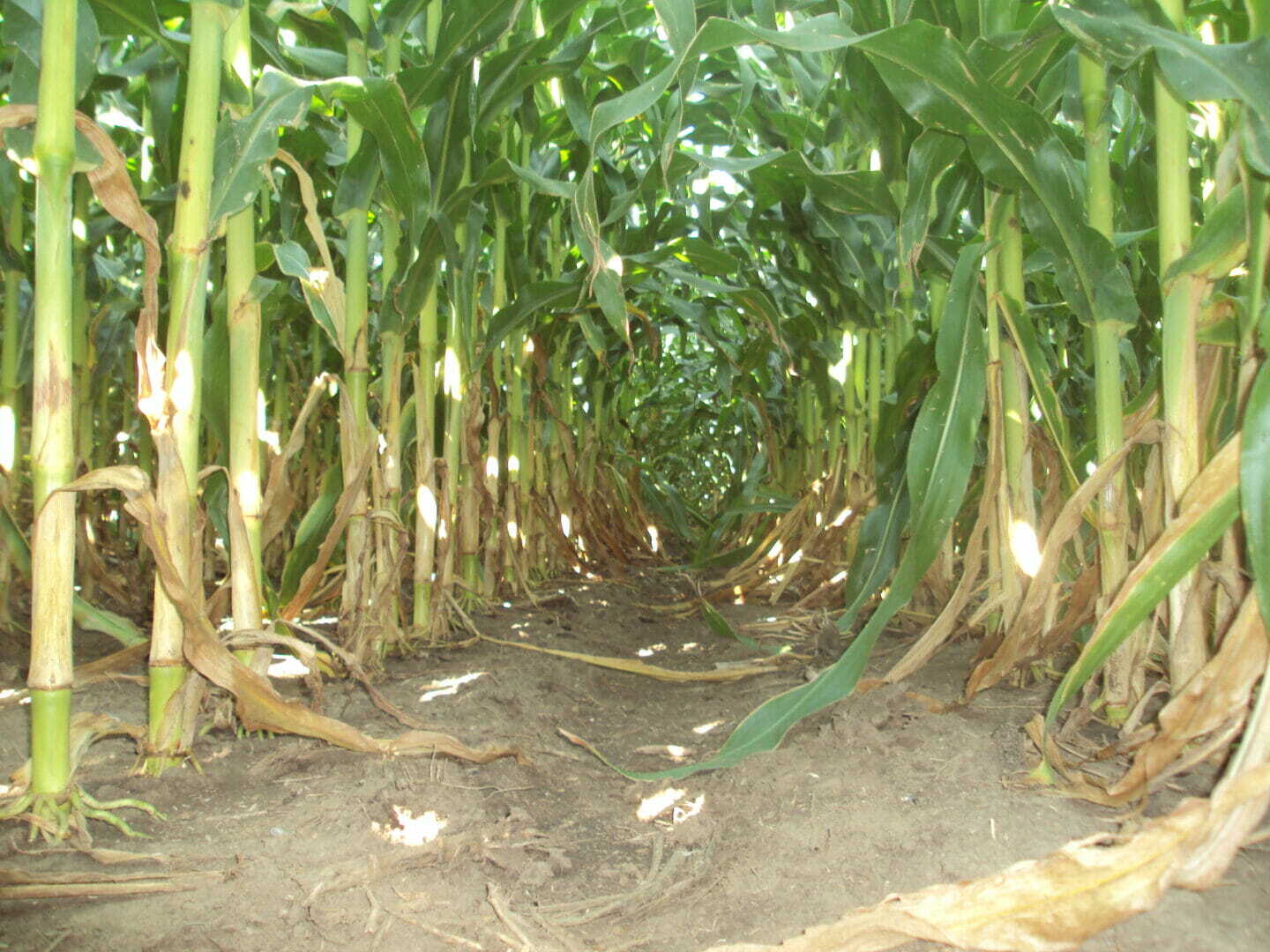
    A rabbits view1

    Mid-season crop scouting is especially important because different insect and disease pressures become evident at this time of year. Any type of stress greatly enhances the likelihood of opportunistic insects such as corn leaf aphids, European corn borer and armyworm to feed upon plants.  In soybeans, we might see soybean aphids, two-spotted spider mites and Japanese Beetles.

    There hasn’t been a great deal of insect or disease pressure yet this season, but that doesn’t mean we can rest on our laurels. High humidity and heavy dew creates ideal conditions for diseases like Northern Corn Leaf Blight (NCLB). Fungal diseases like Sudden Death Syndrome are more evident in late July and early August, too.

    Taking field notes now can help farmers develop a fall harvest plan. They’ll want to keep a close eye on stalks that have been damaged because those will be prone to stalk lodging, ear dropping and repeat infestations. Field notes also will help these farmers choose seed for 2016 planting.

    One reason stalks may be damaged is from corn borer feeding. At this point in the season, corn borers have burrowed into the stalk and foliar applications are no longer effective.

    Black cutworm could be a larger problem this year as they’re known to cause more damage in fields where corn is planted later.  Fields of higher risk also include those that are poorly drained and low lying; those next to areas of natural vegetation; and those that are weedy or have reduced tillage.

    Also due to the wide variance in planting dates, rootworm beetles may move between fields in search of the best “buffet.”  A late maturing corn field may attract a large numbers of beetles if neighboring corn stopped producing pollen, for example.  Rootworm beetles may also move into corn and/or soybean fields that have an abundance of pollen-producing weeds, including volunteer corn, ragweed or foxtails.

    Controlling weeds will help control corn rootworm populations, as well as other insects like Two-spotted Spider Mites and aphids. Mites and aphids begin feeding along field edges, especially in weedy areas, before eventually developing into a field-wide infestation. Many common insecticides aren’t overly effective on Spider Mites, so carefully read the labels of any products.

    A rabbits view of corn plants

    Another insect to watch for in both corn and soybean fields is Japanese Beetles. These beetles will literally eat anything that’s green! They seem to prefer the leaf tissue between the veins of soybean leaves and the soft silks of corn plants.  Both activities can result in significant yield loss, so that’s why it’s especially important to scout for Japanese Beetles.

    If you’re seeing Japanese beetles now, make note and watch from them again in early spring. Adult Japanese beetles emerge around early to mid-June and begin feeding on low-lying plants. They eventually move to trees and field crop foliage where they feed and mate. Mated females move back to grass in August and September to lay small egg masses in soil cavities. The eggs hatch into small grubs that feed on roots underground until late September when the temperature cools. The almost fully-grown grubs burrow down in the soil and remain inactive all winter. In the early spring, grubs become active again and feed until turning into resting pupae. The pupae hatch into adults and emerge from the soil – and the cycle begins again!

    Walking fields and noting where there is both weed and insect pressure will help farmers determine an action plan now, as well as in the future. Field notes in 2015 will help farmers determine whether they need to change modes of action when making their 2016 seed decisions.

    Remember, family-owned Latham Hi‑Tech Seeds offers the industry’s broadest product portfolio of corn, soybean and alfalfa products specifically designed to thrive in our geography. For more information, contact your local Latham® representative or call 1-877-GO-LATHAM (1.877.465.2842).

    Webspec Admin

    July 23, 2015
    Agronomics, Disease, General, Insects, Weed Control
  • Latham Hi‑Tech Seeds

    Watch for “U.S. Raised” Label on Chickens Processed in China

    AuthorLarrySailer lg

    By special request, today’s blog will not be about pigs but chicken! It’s been more than a year since the USDA announced its “controversial chicken arrangement with China.” This issue is the headline again this week thanks in part to a recent Facebook post by Erin Brockovich.

    On the surface this seems like a simple issue: The U.S. Department of Agriculture (USDA) and the current administration will allow chickens raised in this country to be shipped to China for processing, shipped back to America, and then labeled as “grown in the USA.”

    So what’s the fuss? Many Americans are concerned about food safety – and rightly so. There has been a push in this country for transparency from farm gate to dinner plate. More and more consumers wants to know how food is grown here. However, the decision to allow U.S.-raised chicken to be processed in China creates more questions about transparency in this process, as well as raises many questions about food safety.

    According to an article in the Huffington Post, eventually the USDA will allow chicken raised and slaughtered in China to be imported directly into the United States, despite the fact that:

    • A December 2013 USDA audit found that China’s poultry slaughter system is not yet equivalent to that of the United States in terms of food safety practices.
    • The New York Times reported that toxic soil and water pollution in some areas of China is causing growing concern over the safety of food produced in that country.
    • Bloomberg News reported that at a press conference, one of China’s own food safety officials essentially admitted that his country can’t meet the food safety standards of more developed nations.

    If “outsourcing” can happen to U.S. chicken, it could happen to other American-raised meats. I’m concerned about what precedent this sets. As a pork producer, I’m especially concerned about the future of U.S.-raised pork.

    The issue of U.S.-raised chicken being shipped to China for processing and then returned to the U.S. for consumption is especially complicated! It appears this decision is motivated by money, so let’s “follow the money and see if we can uncover the motive. I’ve read where the average wage for chicken processors in the USA is $11 per hour; the average wage in China is $1 to $2 per hour.

    One can’t read the disparities in minimum wage without thinking about the ongoing debate in this country to increase the minimum wage. (I don’t have enough space to delve deeper into this this angle today, but I certainly want to in a future blog post.) If our workforce loses out to China over an $11 wage, what chance does our middle class have? Remember, the Obama administration has placed an emphasis on helping the middle class!

    Another issue this situation raises is confusion over the “locally raised” label. If this chicken is raised locally, shipped to China for processing and returned to your local store, will it be labeled as a “locally” grown chicken? How can we guaranteed that an “organically raised” chicken from the U.S. that’s sent to China for processing will be the same chicken that’s returned to the U.S. for consumption? How “green” is this move? After all, it’s requiring more energy to ship to and from China!

    Furthermore, how did the U.S. Department of Agriculture even reach the decision to send U.S. raised chicken to China for processing?

    I’m asking a lot of questions today, but as you can see, this is not a simple issue. Regulation can get very complicated: labeling, minimum wages, climate change, even avian flu can be brought in to this issue. Trade between countries can get complicated because one little issue can affect many other issues. I could even start in on school lunches here. If our department of ag is for chickens being processed in China, will this be a part of food our kids eat in school? The food eaten in the schools are not purchased by an American mom from Trader Joes or Whole Foods.

    Here’s why Americans should worry about Chinese-processed chicken on their kids’ school lunch tray:

    • Rat and other small mammal meat has been sold to Chinese consumers as lamb.
    • Chinese poultry supplier provided Kentucky Fried Chicken restaurants in China with chicken fattened by large quantities of illegal drugs.
    • The FDA warned U.S. pet owners not to feed their pets jerky treats from China. Since 2007, approximately 600 dogs and cats in the United States have mysteriously died and approximately 3,600 pets have become ill from eating Chinese pet treats containing chicken or duck.

    Does anyone else find it ironic that we don’t want to feed our pets treats from China but we’re going to trust them to process chicken that humans would consume?

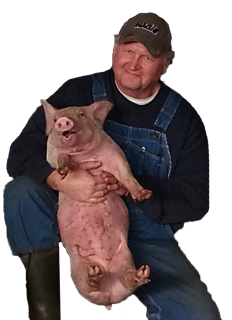
    Larry Sailer, Musings of a Pig Farmer

    July 21, 2015
    Agriculture, General, Industry News
  • Latham Hi‑Tech Seeds

    Comment to EPA on RFS before July 27

    Annette RFS

    More than 300 American farmers rallied July 15 outside the U.S. Capitol building to promote the Renewable Fuels Standard (RFS). They wanted to call upon the Environmental Protection Agency (EPA) to raise the RFS volumes for corn-based ethanol that were cut in the final rules for 2016. Final public comments on the proposed RFS changes are due July 27.

    Annette RFS
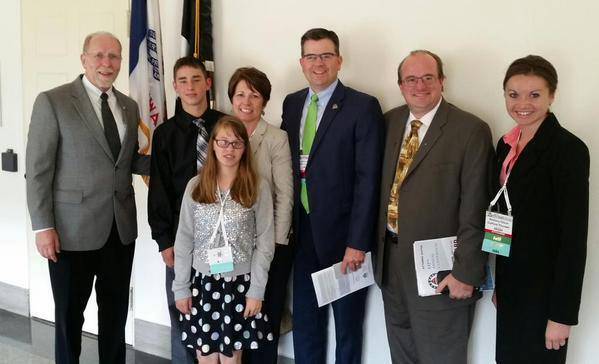
    More than 300 corn growers from across the U.S. rallied on July 15 in Washington, D.C. Pictured here are Lindsey Burrier, corn grower from Maryland; Pam Johnson, NCGA past president from Iowa; and Annette Sweeney, co-chair of America’s Renewable Future campaign.

    “The EPA is worried about climate change, and it’s making a huge push for clean air. Biofuels like ethanol fit so well into their plans, yet on May 29 the EPA announced it wants to reduce 2015 and 2016 blending requirements by at least 20 percent,” says Annette Sweeney, co-chair of America’s Renewable Future campaign. “If the EPA takes such action, it will be breaking the law! The Renewable Fuels Standard was established by law in 2005 and updated in 2007. By proposing new standards, it sounds like the EPA is trying to bypass the lawmaking process.”

    As a former Iowa State Representative and chair of the House Agriculture Committee, Sweeney is well versed in political procedure. As a third generation farmer, she understands the importance of production agriculture to both the Iowa and the U.S. economy. She also understands how rules like this could affect each farmer’s livelihood as her family’s diversified farm in North Central Iowa includes corn, soybeans, cattle and fish farming enterprises. Plus, Sweeney understands how our political climate impacts U.S. jobs and investments.

    Speaking of investments, Sweeney finds it curious that on June 18 the Department of Energy (DOE) announced it will invest $55 million in advanced research projects to accelerate biofuel crop development. The DOE says it will put another $30 million into “transportation energy resources from the renewable agriculture program to support six projects developing plant remote sensing analysis.”

    “Why invest $55 million in biofuel crop development if EPA is jerking the rug out from under ethanol?” asks Sweeney. “Why spend another $30 million to build infrastructure for other biofuel crops when we already have infrastructure in place to produce biofuels? Are agency officials really interested in taking away that market from America and their freedom to choose their fuel? It makes me wonder why is the RFS is really being targeted. Who is pressuring the EPA to make these changes?”

    Recent actions by the EPA and other federal agencies make it appear this administration is talking out of both sides of its mouth. The White House announced June 10 the U.S. Department of Ag will spend $7 million on 550 renewable energy projects and upgrades on small farms and businesses and rural businesses.

    “What good will it do to invest this money if the EPA cuts the RFS?” asks Sweeney.

    Ethanol could help at least three U.S. agencies meet their environmental priorities. It’s seems suspect that only 17.4 billion gallons of ethanol being proposed to be blended into the U.S. fuel supply in 2016 rather than 22.25 required under the Energy Independence and Security Act. Why isn’t corn being considered as a clean alternative fuel under the U.S. Environmental Protection Agency’s (EPA) Clean Power Plan? The National Association of Clean Air Agencies on May 21, 2015, compiled list of 25 strategies that states can employ to comply with EPA’s Clean Power Plan. So why isn’t ethanol a top strategy for states?

    “Let’s add climate change into the mix,” says Sweeney. “Biofuels are clean burning, renewable and sustainable. So why aren’t we using more ethanol to fight the climate change if this administration is so concerned about it?”

    “I’m not trying to make the RFS a political issue. I’m merely raising questions,” explains Sweeney. “Agriculture should not be partisan. After all, we all eat! Agriculture is key to a strong U.S. economy and that’s also something all Americans – regardless of party affiliation – should be able to agree upon!”

    Click here to encourage the EPA to uphold the RFS. Comments are due July 27. Be sure to change the subject line on your email to the EPA and personalize your message.

    “The RFS is the only policy trying to level the playing field for renewable fuels,” add Sweeney. “I stand behind the Renewable Fuel Standard and what is right for America I hope you’ll join me! Please send your comments in support of the RFS to the EPA by July 27.”

    Team Latham

    July 20, 2015
    Agriculture, General, Industry News
  • Latham Hi‑Tech Seeds

    Local 4-Her Dishes Up Award-Winning Homemade Ice Cream

    Dish This Ribbons 2015

    “Dish This!” is a competition held annually during the Franklin County Fair in which 4-H members showcase Iowa-grown food products. Contest categories include: Appetizer / Snack, Salad / Side Dish, Main Dish, Bread and Desserts.

    One might think a member of the county’s Kitchen Krew 4-H specialty club would have an advantage of the competition, but don’t be so quick to assume! Ben Reinke, a second year member of the Outdoor Adventures 4-H Club, swept yesterday’s “Dish This!” competition at the Franklin County (Iowa) Fair. He won a purple ribbon in each category he entered: Desserts, Entrée and Breads. He earned a fourth purple ribbon for Best Overall Dish in the Junior division with his ham balls. Ham balls

    In addition to ham balls, Ben made Apple Cinnamon Rolls and Peach Ice Cream. “I thought of what my favorite meals were and then picked dishes based on that had the most Iowa grown products,” he said.

    The peach ice cream, appropriately enough, came from a Ben & Jerry’s® cookbook. Not many people associate Iowa with peaches, so this recipe helps draw attention to the fact that are peaches grow here. However, Ben explained he had to use Georgia peaches for this competition because Iowa peaches are not yet ready. His peach ice cream recipe also incorporates the Iowa food products of cream, milk and eggs. In fact, Ben raises his own farm-fresh eggs.

    Not only is this dessert recipe delicious, but all the ingredients are easy to find. You can treat an entire family to homemade ice cream for a total cost of $5.25, which Ben calculated is just $0.65 per serving. Today Ben has allowed us to share his favorite ice cream recipe on TheFieldPosition.

    Ben Reinke, a second year 4-H member, swept yesterday’s “Dish This!” competition at the Franklin County (Iowa) Fair. He won a purple ribbon in each category he entered: Desserts, Entrée and Breads. He earned a fourth purple ribbon for Best Overall Dish in the Junior division.
    Ben Reinke, a second year 4-H member, swept yesterday’s “Dish This!” competition at the Franklin County (Iowa) Fair. He won a purple ribbon in each category he entered: Desserts, Entrée and Breads. He earned a fourth purple ribbon for Best Overall Dish in the Junior division.

    This was the first year Ben took any 4-H projects to the fair, and he spent countless hours preparing them. His efforts were rewarded when his educational poster about Farm Fresh Chicken Eggs was selected for the Iowa State Fair. His Wheat poster/exhibit project was considered for state fair. He also won blue ribbons for a patch quilt that his grandma helped him make from blue jeans and for a welded garden art flower.

    Enjoy some of the best foods from the county fair at home. July is National Ice Cream month after all! Ben’s peach ice cream is featured below. Click here for more ice cream dessert recipes:

    • Buster Bar Dessert
    • Rice Krispies Ice Cream Dessert
    • Ritz Cracker Ice Cream Dessert

    Time-Saving Tip… Scroll to the very end of each post above to find the featured recipe.

    Team Latham

    July 17, 2015
    Desserts, General, Recipes
  • Latham Hi‑Tech Seeds

    Watch for Leaf Diseases & Pest Pressure

    Thurs

    In yesterday’s weekly crop updates, our regional sales managers (RSMs) reported seeing leaf diseases and pest pressure as they’ve been walking fields.  Watch for these three situations in your soybean fields: (1) Soybean Aphids; (2) Soybean Cyst Nematodes (SCN); and (3) Sudden Death Syndrome (SDS). Also check your corn fields for Northern Corn Leaf Blight and Eye Spot.

    None of our regional sales managers have reported soybean aphids at threshold levels of 250 aphids per 811727276_328a2e4821_zplant on 80% of the plants, but RSMs this week reported aphid citings. Remember, aphid populations can double every two to three days! With the varying stages of soybean development due to an extended planting season and many late replants, continue scouting past your first insecticide application.

    Taking the time to scout for SCN within the next few weeks may not be at the top of your “to do list,” but perhaps it should be! Soybean Cyst Nematode is the number one yield robber of soybeans. Digging root samples is the best way to check for SCN; SCN females will be on soybean roots that are easy to dig from the soil through early August.

    SCN is usually associated with SDS. Sudden Death Syndrome infects soybean plants right after germination and emergence, but symptoms generally do not appear until mid- to late summer. Leaf symptoms first appear as yellow spots between leaf veins. Eventually, the leaves turn yellow and brown streaks develop between the leaf veins while the veins remain green. Leaflets eventually drop but the petioles remain on the stem. Diseased plants may have rotted root systems.

    The most effective way to manage SCN and SDS is through quality soybean seed selection. Latham® IronCladTM Soybeans offer unmatched protection. To bear the IRONCLAD distinction, each Latham soybean brand must be SCN resistant and carry an Iron Deficiency Chlorosis rating of 2.2 or better.  It also must contain a Phytophthora-resistant gene as well as a very good rating (2.2 or better) against Brown Stem Rot and either White Mold or Sudden Death Syndrome.

    Just as wet planting conditions followed by humid summer weather makes prime conditions for soybean pests, the same holds true for corn leaf diseases. Plentiful moisture or dew is ideal for most fungal corn diseases. Watch for Gray Leaf Spot, Southern and Common Rust, Northern & Southern Leaf Blight and Eyespot.

    Scout corn fields prior to tassel emergence, around V14 growth stage, to determine disease pressure. NCLBFungicides may help but consider cost and predicted weather conditions first. To prevent Northern Corn Leaf Blight (NCLB) from becoming a larger problem in the future, rotate to a non-host crop. A two-year rotation away from corn may be necessary in no-till and reduced tillage fields with a history of NCBL. Hybrid selection is also key for reducing future threats of NCLB.

    Cool temperatures, humid and wet conditions, continuous corn, conservation tillage, and susceptible corn hybrids/inbreds favor Eyespot. Once again, selecting resistant corn hybrids is key to managing this disease in the future. Other management strategies include crop rotation and tillage to reduce corn residue.

    Take good field notes now to help you select the right seed for the future. It’s not too soon to place your 2016 seed order! Latham Hi‑Tech Seeds last week took delivery of its new seed product guides. Contact your local Latham® dealer or contact us online for more information.


    Webspec Admin

    July 16, 2015
    Agronomics, Disease, General, Insects
  • Latham Hi‑Tech Seeds

    Size Matters, Especially When Sifting through Scientific Data

    AuthorLarrySailer lg

    Lately I’ve been reading many articles about the most common food toxins, hormones in our meat supply and nitrates in our drinking water. How much or how little of something in our food or water supply is a big deal!

    A hot topic this year has been nitrate removal from drinking water by the Des Moines Waterworks. Bill Stowe, CEO and General Manager, Des Moines Water Works on April 17 said, “The public health of our community is once again at risk.” That sounds especially frightening, but we can’t take water issues at the surface level.

    Nitrate levels in the Raccoon and Des Moines rivers have trended upward during the past 40 years, but the data show little or no change from 1984 to 2014. The data actually shows a slight improvement when measuring from 1994 and 2004, which could indicate that conservation practices voluntarily implemented by Iowa farmers are slowing and capture nitrates before they get into streams and rivers.

    According to U.S. regulations, nitrates in drinking water must remain below 10 parts per million. Occasionally levels spike above that limit, and the DMWW incurs added costs to remove these nitrates. In a past blog, I did the math. It cost the average consumer of the DMWW less than $10 per year.

    But was even that small cost necessary? According to the EU, there can be 15 parts per million with no ill effects. I have also read that for a baby to get Blue Baby Syndrome nitrates must be as high as 200 parts per million. That amount is so minute! As far as I can find, there has not been a case of Blue Baby Syndrome in Iowa without some other source of nitrate contamination! Millions spent, with no proof of the amount in our water causing any problem. It seems size does matter.

    Lately I’m seeing food products, especially milk and beef products, being advertised as “no hormones added.” Here again, this type of advertising can be confusing and even scary. After all, who wants to buy food with “added hormones”?! Interestingly enough, many foods naturally contain higher levels of hormones than beef. Again, size does matter! Shown below is a visual comparing hormone levels across various foods.

    horomone-levels

    What about “chemicals” in your food? It’s true – your food contains chemicals. (Remember the Periodic Table and how all these chemicals make up our world?) However, not all chemicals are bad. For example, Dr. Julie M. Jones points out that cranberries keep very well in the refrigerator because they have a higher level of (naturally-occurring) benzaldehyde than the FDA allows to be added to food. This is just one example.

    Consumers also worry about eating food from plants that have been sprayed with pesticides. It’s very difficult not rely on some kind of pest control. Weeds and bugs do happen! A number of marketing tactics have presented organic fruits to be safer, but that is simply not true. In truth, Best Food Facts points out that BOTH organic and conventional farmers use pesticides on their crops.

    “It’s the amount of the chemical rather than the presence or absence that determines the potential for harm,” explains Dr. Carl Winter, PhD, Director, FoodSafe Program, Extension Food Toxicologist at the University of California-Davis. “In the case of pesticide residues on food, we can detect them, but generally at very tiny levels. I think consumers are concerned because they’re aware that these chemicals, which have potential toxic effects, show up on foods. However, the levels at which we detect these pesticides are so low consumers have nothing to worry about.”

    Most of the chemicals I use are now measured in ounces. Some of the chemicals used in organic are measured in pounds. Nothing wrong with either one because it’s what is left on your food that makes the difference. Maybe size doesn’t matter here!

    Remember, your food choices matter. What – and how much – you eat affects your body mass and health. We need a variety of foods to obtain the nutrients our bodies need. Your body needs a certain amount of fat; the non-fat kick we’ve been on has made our bodies crave other types of food that have contributed to our declining health.

    Research believed for the last 30 or 40 years has been proven wrong. In early 2015, it was announced that it’s okay to eat eggs because research “shows no appreciable relationship” between heart disease and how much dietary cholesterol a person eats. And the new proposed dietary guideline that calls for a reduction in red meat consumption really isn’t being pushed is for your health… it’s someone’s agenda to fix something that’s not broke. There is a misperception that beef production isn’t sustainable. Also keep in mind, our First Lady pushed changes to the school lunch program based on bad science!

    Let’s get rid of this fear of food. No more food fights! Size matters. Common sense matters. Enjoy your food!

    Larry Sailer, Musings of a Pig Farmer

    July 14, 2015
    Agriculture, General, Industry News
  • Latham Hi‑Tech Seeds

    Field Notes Made Now Can Help Prioritize Fields for Harvest

    Week after week, in our Wednesday crop reports, we’ve reported the amount of rainfall that has been received from eastern Iowa to Nebraska and up to North Dakota. Continuous rainfall prolonged the planting season and made it a challenge for farmers to apply herbicides in a timely manner. Now we’re seeing the effects that wet weather has had on root development and stalk strength.

    Sunday’s wind and rain events across Latham Country caused corn to lodge in many fields. Hail damage, disease and other factors could put crop standability at risk. If this happened in your area, make notes now and take that damage into consideration as fall harvest approaches.

    Warm, moist soils are great breeding grounds for weeds and pathogens. That’s why so many farmers are considering whether to apply fungicide.  Mud that cakes on leaves and stalks from ponding or flooding encourages fungal and bacterial diseases to attack damaged plant tissue. If damage is severe enough, the plants won’t live through the growing season. That’s why farmers will be consulting their seed product guides and talking with local dealers to see on which hybrids fungicides are “highly recommended” or “recommended.”

    Knowing what has caused stalk lodging helps determine the best course of action. Four common cause of lodging include: (1) Weather, (2) Insects, (3) Diseases and (4) Other Stresses like extreme soil moisture or drought, nutrient deficiencies, and corn-on-corn rotations to name a few.

    More than anything, we’re seeing shallow roots developing as a result james downed cornof this spring’s wet weather. Saturated soils inhibit roots from developing deep into the soils. We’re also seeing poor root formation in fields that were planted too wet as soil compaction prevents roots from growing down into the soil.

    Root function deteriorates in saturated soils, making the corn more prone to green snap and root lodging. The risk of green snap is exacerbated because right now corn plants are growing so quickly given our hot, humid environment. Weak roots also predispose these corn plants to late-season root and stalk rots. Fields will need to be monitored; during September and October, harvest-strategies may need to be modified. Careful scouting now and prioritizing fields for harvest according to condition can help prevent field losses due to low stalk quality.

    Even before we received this last rain event, scouting was going to be more critical than ever this growing season because this crop has been stressed since seed went in the ground. Seed corn planted into wet soils is prone to problems throughout the growing season such as: stunted plant growth; slow infiltration of water and/or ponding; high surface runoff under normal or light rainfall; poor root system development, or rootless corn; and even nutrient deficiency.

    Webspec Admin

    July 9, 2015
    Agronomics, General, Season, Summer
  • Latham Hi‑Tech Seeds

    Whom We Elect Makes a Difference!

    Technology gap or generational gap? Let me begin by explaining an experience my wife and I had…

    On Sunday, Janice and I followed our normal routine. We went to church and then drove to Waverly, Iowa, to visit her mother. We often pick up something for dinner along the way. This time Janice decided to call in a pizza order when we were about 20 minutes away.  What a challenge that turned out to be!

    I listened in as Janice “tried” to place a takeout order. Grandma likes her pizza a little different than we do, so Janice wanted to order one half of the pizza one way and the other half another. “I’d like Meat Lovers on one side. On the other side, I’d like pepperoni with onions. We want mushrooms on both sides.” Little did we know, this would be nearly impossible!

    Someone who takes pizza orders as a job should have been able to understand this request, right? It took about five minutes just to place the order! First, the kid on the other end of the phone line tried to say we shouldn’t order a Meat Lovers. After a debate, Janice let him know we were still ordering a Meat Lovers.

    Next, he said it wasn’t possible to take onions off half of the pizza according to his computer screen. Getting a bit louder now, Janice explained that we weren’t taking onions OFF half of the pizza because we know Meat Lovers doesn’t come with onions. However, onions could be ADDED to the half with pepperoni.

    Then in the background, Janice heard him explaining our order to someone. She heard him say, “Put onions on the side without pepperoni.” Whoa… start over! Finally the order was placed, and Janice asked how long before it would be ready. He replied 35 minutes, and Janice thought that sounded a little long. When she questioned the time, he said that was about normal for a delivered pizza. What? I mentioned we were ordering a “takeout” pizza!

    Our experience got us to thinking about three things:

    1. Minimum Wage. I’m not sure what that guy at Pizza Hut is getting paid, but I know it’s costing his boss to have him work there. Having owned a construction company for 15 years, I know paying employees for not doing their jobs is a huge waste. But having employees in a service industry who aren’t able to serve – and who upset customers – is especially costly!
    2. Education. Our governor is taking some heat this week for vetoing one-time education funding. Gov. Branstad said he nixed the funding because it would cause “uncertainty” for schools since it was one-time funding. He is frustrated that the Legislature did not approve a second year of school funding, as he had requested and as called for by Iowa law. We need an educational system that prepares kids for life beyond the classroom. Throwing money at a problem doesn’t necessarily fix the problem.
    3. The Economy. Is the lack of a skilled workforce holding back our economy? How does the quality of education affect our economy? How much are government policies and regulations to blame? I agree with Mike Patton who wrote in Forbes, “Unless and until a new regime is installed in Washington, one which is more business friendly and less concerned with remaining in power, I fear the economy will continue to suffer.”

    It’s complicated and there are no simple solutions to fix the current state of the economy. But we must keep working on it! Elections are coming up, so exercise your right to vote. Take the time to find out how candidates stand on issues of important to you. Whom we elect truly makes a difference!

    Larry Sailer, Musings of a Pig Farmer

    July 8, 2015
    Agriculture, General, Industry News
  • Latham Hi‑Tech Seeds

    Iowan Preserves the Sounds of Liberty

    11136187 819870408068804 8828425411925601628 o
    Brooke Stevens
    Brooke Stevens, Old Guard Fife and Drum Corps

    Music and patriotism have been an integral part of America since its founding. This spirit lives on through the Old Guard Fife and Drum Corps, where musicians like Brooke Stevens from Hampton, Iowa, showcase the soundtrack of America’s story.
    “We are the goodwill ambassadors of the U.S. Army,” said Stevens, a U.S. Army staff sergeant and bugle player in the Old Guard Fife and Drum Corps. “We have a unique opportunity to share our music with people worldwide.”

    Founded in 1960, the Old Guard Fife and Drum Corps brings U.S. history to life. Stevens and her fellow musicians wear distinctive uniforms of red regimental coats, waistcoats, black tricorn hats, white wigs and colonial coveralls patterned after those worn by the musicians of Gen. George Washington’s Continental Army, circa 1781.

    In support of the president, the Corps performs at all armed-forces arrival ceremonies for visiting dignitaries and heads of state at the White House. The Corps has also participated in every presidential inaugural parade since 1961.

    One of Stevens’ first missions with the Corps involved Barack Obama’s presidential inauguration in 2013. “The Corps is the official escort to the President of the United States, so we were right ahead of the president’s motorcade,” said Stevens, who has served with the Corps since September 2012.

    Let freedom ring
    Stevens’ spectacular journey to Washington, D.C., from Franklin County, Iowa, started with the Hampton-Dumont school’s concert and jazz bands, where she played the trumpet. She credits her father, Brian, a retired middle school band director, for inspiring her love of music.

    “Dad taught me to set goals and follow through,” said Stevens, a four-time All-State Band member. “I also learned that hard work and dedication pay off.”

    After graduating from Hampton-Dumont High School in 2002, Stevens earned her music degree in trumpet performance from the University of Northern Iowa in 2006. Then it was on to Indiana University, where she earned her master’s degree in music in 2008 and began working on her doctorate in brass pedagogy and literature.

    Stevens also began looking at job opportunities. She was intrigued by the Old Guard Fife and Drum Corps, which offers more than 500 performances annually and has appeared at NBA games, NFL games including Super Bowl XVI, the Kentucky Derby and the Indianapolis 500.

    Since the 70 members of the Corps are active-duty military, Stevens enlisted in the U.S. Army and completed basic training in June 2012 before joining her unit in September 2012. She is stationed at Fort Myer, Va., near Arlington National Cemetery.

    Old Fife Drum and Bugle Corps
    Old Fife Drum and Bugle Corps

    “One of my highest honors was playing taps at the Tomb of the Unknown Soldier,” said Stevens, who added that the Corps supports all U.S. Army funerals in the Washington, D.C. area.

    While Stevens has always been patriotic, serving with the U.S. Army and Old Guard Fife and Drum Corps makes the 4th of July especially meaningful, she said. “Experiencing military life and seeing the sacrifices that servicemen and women are making for our country and their families gives me the utmost appreciation and respect for the U.S. military.”

    A taste of Iowa
    While Stevens travels extensively with the Old Guard Fife and Drum Corps, part of her will never leave Iowa. “I’m proud to be from Iowa and represent the state,” said Stevens, who shares her all-time favorite bar recipe from home.

    Team Latham

    July 3, 2015
    Agriculture, General, Industry News
  • Latham Hi‑Tech Seeds

    Agvocate to Preserve Choice and to Promote Common Sense!

    Larry podium

    Larry podiumLast week I got a call from farm broadcaster and writer Ty Higgins, host of Farm & Country. This interview reminded me why I started speaking out for agriculture. Ty gave me an opportunity to talk about crop conditions in our area and to also talk about my pigs.

    Of course, Ty and I also had to talk about the weather! (I honestly don’t think people who make a living off the land can have a conversation that doesn’t touch on this subject.) There are many farm fields across the Midwest where too much rain is wreaking havoc on the crop. Fortunately, where I live in North Central Iowa, the conditions are nearly perfect. I have the best looking crop that I’ve seen in 5 years, but I’m saying prayers because weather and growing conditions can turn on a dime!

    Ty gave me an opportunity to talk about how much pig farming has changed over the years. When I was a kid, we raised pigs in the pasture. Pigs don’t sweat, however, so they needed help staying cool on hot summer days. Did you know that today’s fair-haired pigs also can get sunburned?

    Now I raise pigs in temperature-controlled buildings where there’s no threat of sunburn and where pigs have access to food and water. I’ve shared before how the number of sick pigs and our death loss decreased after we started producing hogs inside. I’ve also that during the 1980s Farm Crisis I supplemented my farming income but starting a construction business that focused on building hog units.

    Recently I accepted an opportunity to oversee the remodeling of existing hog buildings and acting as the general contractor for new construction. Making a better, safer place to raise pigs is something I’ve been involved with for decades. We continue to learn and improve the buildings, as well as our methods, as we go along. The same is true for those farmers who only raise crops… we’re always improving. Producing more with less is always the goal.

    Technological advancements in agriculture are comparable to what’s happened in the medical field, as I was reminded while making a doctor’s visit. I’ve been battling a sore foot for a couple of months. Being a stubborn old farmer, last week I finally made a doctor’s appointment. The first thing I had to do when I got to the office was complete a stack of paper; more paperwork was required before I left.

    Medicine reminds me a lot of farming. It makes use of state-of-the-art technology – and lots of regulation. “State-of-the-art technology and regulation” define modern farming, too. But technology is accepted in medicine! Almost everyone understands that new technology makes people healthier, and as a result of better healthcare and nutrition, our life expectancy has increased.

    Penicillin is a great example of a medical breakthrough. It was discovered by accident but has become a miracle worker. But wait. Is penicillin a chemical?! Of course, it is! What about the equipment used in the medical field like X-ray machines? We used to have to wait for film to be developed, but today’s technology provides us with nearly instant results. The same is true for farming: GPS, auto-steer, drones, grid sampling and tissue sampling. All these things can make farming more efficient and “sustainable“!

    Just as they are in farming, burdensome regulations are holding back future innovations and inventions. Safeguards are needed, but unnecessary regulations increase the cost of medical services, procedures and even vaccines. Some people are being denied procedures and medicines that could save their lives. This is true in agriculture as many small shareholder farmers in developing countries can access the newest seed technologies, and others in their country are being denied biotech crops like Golden Rice even though it could save millions of lives. The GMO rice has such a huge potential to save lives, but emotions – and politics – keep holding back its potential.

    Emotion and politics are directly linked in the United States, too. We enjoy food choice, but a loud minority of people would like to change that. I’ve written before about how confusing food labels have become, and paying more for “hormone-free chicken or turkey” is a case in point. I know there are a group of seed industry officials support federal H.R. 1599 Safe and Accurate Food Labeling Act to standardize regulations nationwide.

    Choice and common sense are very important to innovation. After all, the medicine field could still be using techniques such as bleeding and leaches!

    Larry Sailer, Musings of a Pig Farmer

    June 30, 2015
    Agriculture, General, Industry News
Previous Page
1 … 44 45 46 47 48 … 160
Next Page

Latham Hi‑Tech Seeds

131 180th Street | Alexander, IA 50420

(641) 692-3258

SIGNUP FOR OUR NEWSLETTER
  • Contact
  • Legal
  • Dealer Center
  • Seedware Login
  • Latham Gear

© 2025 Latham Hi‑Tech Seeds. All rights reserved. | Iowa Web Design by Webspec | Privacy Policy

Latham® Hi-Tech Seeds is a trademark of M.S. Technologies, L.L.C., 103 Avenue D, West Point, IA 52656.