Latham Hi-Tech Seeds

(641) 692-3258

  • Home
  • Performance
  • Products
    • Corn
    • Soybeans
    • Soybean Blends
    • Alfalfa
    • Corn Silage
    • Seed Guide
  • Find a Rep
  • Media
    • Blog
    • News
    • Videos
    • Podcasts
    • TECHTalk
  • About Us
    • Company History
    • Our Mission
    • Careers
    • Become a Rep
    • Sowing Seeds of Hope
  • Contact Us
  • Latham Hi‑Tech Seeds

    Seed Industry Launches Political Action Committee (PAC)

    Pollinator health. Uniform food labels. Intellectual property rights.

    All of these are important issues to the seed industry, but they’re only a sampling of the federal bills under consideration.

    “Federal legislation greatly impacts our businesses and those of our dealers and customers. It’s necessary for the seed industry to become more present on Capitol Hill, and that’s why we are so excited about the SeedFirstPAC,” says John Latham, Chair of SeedFirstPAC, Vice President of the North Central Region of the American Seed Trade Association (ASTA) and president of Latham Hi‑Tech Seeds.

    SeedFirstPAC, a political action committee guided by a board of seed industry leaders, was officially launched earlier this month during the 2015 summer annual ASTA convention in Washington, D.C. It is a voluntary committee that will support candidates that value the contribution of seed to the health and well-being of society.

    “The industry has more and more cross-cutting issues to deal with and they span the whole gamut — new breeding techniques, import/export issues and phytosanitary requirements,” said John Schoenecker, immediate past ASTA chairman and SeedFirstPAC board member, in a SeedWorld article. “The PAC is another tool in the seed industry’s toolbox that will help us to be more effective in our lobbying efforts and have more of an impact.”

    Contributions are completely voluntary, adds Latham, and we hope everyone related to the seed industry will make a personal donation. The PAC can accept donations from all U.S. citizens and those who hold green cards.

    Click here to download a contribution form. Personal checks may be made payable to the SeedFirstPAC and mailed to:

    SeedFirstPAC

    300 Independence Ave. SE

    Washington, DC 20003

    Follow the group’s efforts on Twitter at @SeedFirstPAC. For more information about SeedFirstPAC, email SeedFirstPAC@gmail.com, or contact John Latham.

    FamilyDCjune15_Retouched
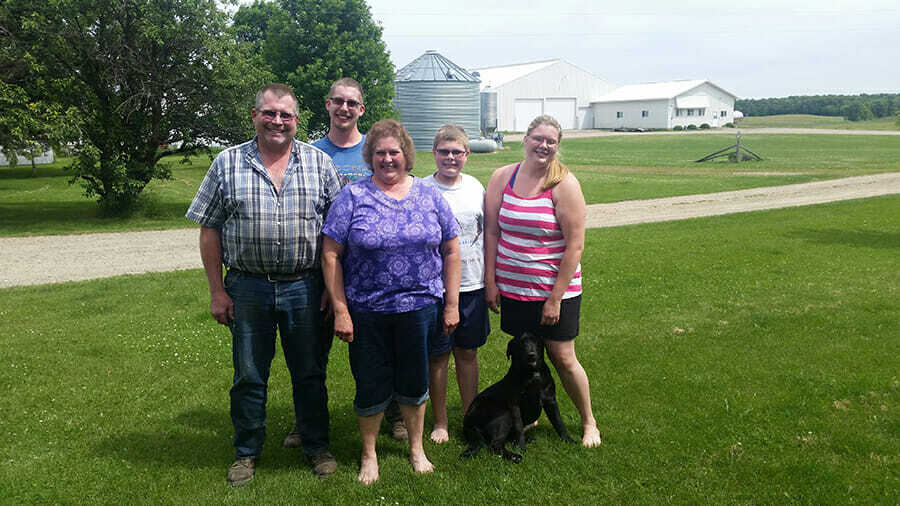
    The Latham family was among 125 seed industry advocates, who on June 17-18 traveled to Capitol Hill, visited with federal officials about issues including pollinator health and GMO labeling. Also that week, John Latham helped launch the SeedFirstPAC.

    Team Latham

    June 29, 2015
    Agriculture, General, Industry News
  • Latham Hi‑Tech Seeds

    DAIRYING HAS BEEN THIS FAMILY’S BUSINESS FOR 87 YEARS… & COUNTING

    Dairy fam1

    Ray Beutz is proud to be a third generation dairyman in Stearns County Minnesota. His grandpa moved onto the family farm in 1928. His father was born here. It’s also where Ray and his wife, Jean, are raising their three children: Matthew, 21; Miranda, 19; and Brian, 12.

    Ray and Jean Beutz are raising their three children on the same farm where his father was born and raised. Pictured in the back row, from left to right, Matthew, Brian and Miranda with their dog, Molly.
    Ray and Jean Beutz are raising their three children on the same farm where his father was born and raised. Pictured in the back row, from left to right, Matthew, Brian and Miranda with their dog, Molly.

    “Our kids have literally grown up on this farm, and I can’t think of a better place to raise a family,” says Jean, who was raised on a nearby farm where they raised hogs and beef cattle. Although she wasn’t raised on a dairy, Jean has been Ray’s partner for the past 22 years. She helps wherever she’s needed, from filling the feed cart to feeding the heifers, dry cows and calves.

    Ray adds, “Our kids have developed a strong work ethic and they know the value of a dollar.” Those two lessons that have been passed through the generations as Ray’s grandfather fought in World War I and his father grew up in the Depression. Ray attended high school during the 1980s Farm Crisis when many dairy herds across the state were being sold en masse. Fortunately, Beutz Dairy was in a position that allowed Ray to begin milking when in 1984 when he graduated high school.

    Seven years ago the Beutz family faced the decision of whether to undergo a massive remodel of the original barn or to build a new dairy barn. With several years before retirement – and the possibility of having a fourth generation join Beutz Dairy – they decided to invest in a new dairy barn with a swing 10 parlor. It actually turned out to be a “swing 11” to increase worker safety, but Ray says “it’s the cat’s meow” when one person is doing all the milking. One group of cows gets milked while cows on the other side are prepped.

    Beutz Dairy has 125 cows with 110-115 in the milking string. They also raise corn, soybeans and alfalfa. In addition, they recently took on a Latham® Seeds dealership. One reason Ray says he chose Latham is because the company has a long history. Like Beutz Dairy, Latham Seeds is a multi-generational, family-owned business being operated by the third generation.

    Latham has developed a reputation for top-performing products, which Ray says is evident by the number of top placings. In fact, Latham corn and soybean products scored 280 Top 10 finishes in the 2014 F.I.R.S.T. Trials in Iowa, Minnesota and South Dakota.

    “Genetics are genetics, whether you’re buying cows or seed,” says Ray, who sold a competitive seed brand for about a decade. “I’ve always enjoyed learning about seed products, including new traits and technologies. I really like all of the options that Latham Hi‑Tech Seeds has to offer from (Genuity®) Roundup Ready 2 Yield® and LibertyLink® soybeans to everything from Bt hybrids and (Genuity®) SmartStax.”

    “That’s the kind of diversity you can only get from an independent company,” adds Ray. “Plus, Latham’s products are supported by great people. There’s just a phone call away when I have a question. I’ve enjoyed working with Corey Catt (Latham Forage Products Manager) in the past, and I’m really looking forward to working with him again now. Corey understands that high-quality forage produces high quality milk and drives productivity.”

    With a seed dealership, a dairy and a farming operation – plus a house filled with three children who are on-the-go – Ray and Jean cherish family time around the dinner table. One of their family’s favorite side dishes is cheesy potatoes. Sit down with the fam this weekend and celebrate June Dairy Month!

    Team Latham

    June 27, 2015
    General, Recipes, Sides
  • Latham Hi‑Tech Seeds

    Latham® IRONCLAD is Your Best Defense Against IDC

    Geske

    With warmer temperatures, soybean plants across the Upper Midwest are entering a rapid growth phase. It’s no wonder so many of our sales managers, in Wednesday’s #FromtheField crop updates, reported seeing signs of Iron Deficiency Chlorosis (IDC) symptoms now.

    The most common symptom, interveinal chlrosis, is a yellowing of the leaf tissue between the veins while the veins themselves remain green. The yellowed portions eventually turn brown, and the entire leaflet may drop off the plant. If severe, entire plants can be stunted or even die causing major yield loss.

    Although not completely understood by researchers, the most likely cause of IDC is a soil pH level above 7.3. Symptoms are severe in soils with pH levels of 7.8. However, soil pH alone may not be the only factor in limiting iron. Other factors are poor drainage, high soluble salt content and excess calcium carbonates.

    Research has proven planting IDC-tolerant soybean brands is really the best management practice. To help farmers better identify those soybeans that have high tolerance to IDC, Latham Hi‑Tech Seeds has designed a lineup of soybeans as IRONCLAD™.

    Only a soybean brand that is Soybean Cyst Nematode resistant with an Iron Deficiency Chlorosis rating of 2.2 or better can earn the IRONCLAD designation. Depending on your specific needs, IRONCLAD brands must also protect against either White Mold or Sudden Death Syndrome with a rating of 2.2 or higher. Furthermore, these products must have strong defensive ratings against Phytophthora Root Rot and Brown Stem Rot.

    IRONCLAD soybeans have been especially developed to withstand the high pH, high salt soils in our marketing area. Be assured these Latham brand soybeans have undergone thorough testing and are the best possible choices for fields with a history of severe Iron Chlorosis. Protect yield with Latham® soybean brands proven to have good IDC tolerance.

    P.S. Just because these products are selected for their “defensive” characteristics, however, doesn’t mean you’re sacrificing yield. Check out our 2014 F.I.R.S.T. Trial results!


    geske


    Webspec Admin

    June 25, 2015
    Agronomics, Crop, Fertility, General, Soybeans
  • Latham Hi‑Tech Seeds

    How Can We Do More with Less?

    Larrypigfarmer

    In the “good old days,” people received local newspapers weekly in rural areas and daily in the cities. Radio made news in the 1920s, and television nightly national news was introduced in the 1950s. It could take months to disseminate information about “current events.”

    It’s been difficult to narrow down today’s blog topic because there are so many “current events” from across the world that impact my life on a daily basis. The more I read, the more I see. Studies estimate that we’re bombarded with anywhere between 3,000 and 20,000 messages daily! Wouldn’t it be wonderful to stick your head in the sand and ignore it all?

    Ignoring a problem doesn’t make it go away, so today I’m going to key in on the issue of Pope Francis’ encyclical on the condition of the environment. Many people have jumped on the wagon of climate change in recent years. I know… I know. There is “evidence” that proves this theory, but even National Geographicwarns that information in charts can be misleading; charts can be manipulated to make a desire points. According to the guy who reportedly invented the Internet, the polar caps should have all melted away and New York City should be under water by now!

    There have been and continue to be “doomsday” theories, but great improvement has been made and will continue to be made! I agree that everyone in this world can – and should – do a better job of managing resources from the amount of water they use when showering to reducing food waste. Farmers also should take advantage of new farming practices and technologies that allow us to better care for the environment. But do we need to break our economy and the businesses that are pushing our economy ahead by making laws, rules, and regulations that in theory may help the climate?

    Pope Francis also writes about the waste in today’s affluent countries, and I think he may be on to something here. We live in a throw-away society where it often costs less to replace rather than repair something. Our landfills are unbelievable. Recently, I visited a landfill on Des Moines’ east side and was flabbergasted by the vast quantity of garbage going into that place. Just think how much waste must come from a larger city like Chicago or New York City!

    What happen to all of this trash? At one time, big cities loaded barges with garbage. They can’t still do this, can they? (I’m seeing another research project here.) Sanitation and clean water systems are definitely key infrastructure needed for a healthy country. A healthy, steady food supply is also important to a country’s health and stability. (This reminds me of National Geographic articles I read recently about What the World Eats and Where The World’s Hungriest People Are.)

    Kathie Obradovich did a nice job in her opinion piece, “Pope’s message challenges caucusgoers, candidates, in The Sunday Des Moines Register. We can all live a simpler life by making do with fewer things. But let’s not let government break the bank with untried, unproven technologies, pushed by people with nothing to lose but have a fortune to gain on our tax dollar!

    Larry Sailer, Musings of a Pig Farmer

    June 23, 2015
    Agriculture, General, Industry News
  • Latham Hi‑Tech Seeds

    School’s Out Now but “Life-Long Lessons” Still in Session

    Family

    Last Friday on TheFieldPosition.com, we shared how Andrew and Jennifer Holle spent their senior year of college planning to fulfill their dream of returning to his family’s dairy. As new college graduates and as newlyweds, they purchased Northern Lights Dairy in 2003. Jennifer shared how she climbed the ladder of responsibility until finding her niche as the calf manager.

    Like their mother, the four Holle children are working their way up the ladder of responsibility.

    “We are all so excited now that school’s out for the summer!” says Jennifer enthusiastically. “I LOVE having my kids home because summer is a time where we work hard as a family but we also play hard. Each morning we start in the calf barn where they help: re-bed the stalls with straw, fill up the waterers, get baby calves up and put them in the auto-feeder, feed calf crunch, clean, and whatever else is needed. Then we head to the office where I do all my computer work and they either mow the lawn, clean the office area, pick-up the yard, or other tasks. From there, it depends on the day. Sometimes we sort heifers on 4-wheelers or on horseback, run into town for parts, or take the semi-truck to get a load of feedstuffs. They really do everything we do on the farm.”

    family
    Andrew and Jennifer Holle are living their dream being able to raise their children on a family dairy near Mandan, ND.

    Northern Lights Dairy is truly a family farm. Andrew is the General Manager. Jennifer says, “My husband multi-tasks so many different aspects of the farm that it blows my mind! My father-in-law, Kenton, lot of the truck driving and feed hauling. He also travels frequently for various boards like National Dairy Board and the Mid-West Dairy Association.”

    Jennifer shares her father-in-law’s passion for promoting dairy. She serves on American Dairy Association District 3 Dairy and Promotions Board. She also is Board Director of the North Dakota Dairy Coalition.

    “I want consumers to understand that dairying is something we live and breathe, 24 hours a day, 365 days a year. This is what we were born to do,” she explains passionately. “Farmers were made to take care of God animals, the environment, the planet, and the people around us. We care about each and every animal on our farm. We care about each acre that we farm. We care about everything we touch.  We understand the level of responsibility we have. There are 1,200 animals depending on us to feed, care, and nurture them each and every day. 

    Our mission statement is, ‘Northern Lights Dairy is an efficient, innovative, and profitable family dairy business always producing the highest quality milk.’ To produce the highest quality milk, we must take the best possible care of our cows. Every decision we make is always based around the cows.

    If it’s 2 a.m. and we see a cow needs help giving birth, we go.  If it’s minus 60 degrees Fahrenheit and we’re so cold that we feel our body, we have to bed the heifers with fresh straw so they are warm. If there is a pre-mature calf struggling to breathe, we go sit with them and in any way we can.  If hay is ready to be baled but we have a prior commitment, we go make hay.  This is not just a job, this is how we live.”

    Because of her involvement in the industry and in promoting dairy products, Jennifer was named Midwest Dairy Farm Mom, 2014 Northwest Farm Mom of the Year by “America’s Farmers” and the 2014 Farm and Ranch Guide Country Woman of the Year. Also in 2014, she was name the ND State Soccer Association Recreational Girls Soccer Coach of the Year.

    Extracurricular activities continue even though the kids Holle kids a break from school in the summer. They’re active in sports, church, 4-H, scouts and rodeos. Jennifer, who played soccer in college, coaches all of her kids’ teams. She also plays on a soccer team and is an avid runner. She enjoys being a part of Team Dairy, a group of dairy enthusiasts from across Midwest Dairy Association’s 10 states who enjoy running. Jennifer’s family members also love to run, so they often meet up in various cities to complete races together. Last fall they met in Washington, D.C. for the Marine Corps Marathon. (Click here to read Jennifer’s blog about that experience.) She enjoys traveling, too.

    “God made an amazing, beautiful world and I love to see and experience it! I live life to the fullest extent. When I get up to heaven I want to be flying in at 100 mph, burning rubber, and say, ‘Wow… what a ride!” So go out there and have a great ride. Leave a legacy that you are proud of. Make a difference, for you were created to be great. Go be GREAT!”

    Make it a great summer! You can celebrate June dairy month by downloading one of the Holle family’s favorite recipes from TheFieldPosition.com. Plus, the newly published Dairy Good Cookbook also features 100+ recipes inspired by America’s dairy farmers including the Holle’s.

    Gary Geske

    June 22, 2015
    Agriculture, General, Industry News
  • Latham Hi‑Tech Seeds

    Family Climbs “Ladder of Responsibility” at Northern Lights Dairy

    Family 2

    Most seniors spend their last year of college, polishing their interview skills and pressing their suits. But Jennifer Holle and her husband, Andrew, spent their senior year meeting with financial analysts, bankers and architects as they pursued their dream of owning a dairy farm.

    “We were trying to decide whether to expand the 125-milk cow facility to support two families or to build a brand-new one,” says Jennifer. “During that process, our banker called and asked if we’d be interested in looking at a foreclosed dairy farm that was about 45 miles away from the family dairy in New Salem. So we loaded up the pickup and took a ‘tour.’ The foreclosed dairy farm was basically an empty-shell of a facility, but its 36-stall rotary parlor was a huge upside. We then shifted gears and decided to move my husband’s 4th generation dairy farm to Mandan and expand to 600 milk cows.”

    family 2
    Andrew and Jennifer Holle feel blessed to have their opportunity to raise their children on a family dairy near Mandan, ND.

    So how does a self-described “city-girl” with bachelor’s degree in Equine Industries Management fit into a dairy operation? Jennifer grew up in a North Dakota town of about 1,800 people where her father was a Lutheran minister. Most of her friends lived on farms where they raised beef cattle and row crops, so she had spent a great deal of her childhood on farms. Plus, she spent many weekends helping at the Holle family dairy throughout her college years.

    “I started dating my husband early into our freshman year at University Of Minnesota-Crookston,” says Jennifer. “I knew from Day 1 that he was going to move back to his family’s generational dairy farm and farm with his father. Farming is in his blood, and it’s his ultimate dream in life. On the weekends, we would make the 5-hour drive back to his farm. I would spend the weekend helping Andrew. If he was cleaning barns, I would open the gates so he didn’t have to get out of the bobcat. If he was milking, I would help him milk or bring in the cows for him.”

    When Andrew and Jennifer bought Northern Lights Dairy in 2003, she says she continued being his “helper.” Then she climbed up the ladder of responsibility to parts-runner. When they moved into the new facility, she started working in the milking parlor full-time because they were milking three times daily. She says she even kept milking full-time with a baby on her back.

    “I did every job on the farm that you can imagine. I climbed the responsibility ladder before falling into my niche,” says Jennifer. “When the calf barn was experiencing death loss that was higher than we wanted to accept about 4 years ago, my husband basically asked me to manage the calf program. It’s a natural position for me because a baby is a baby whether it is a horse or a cow.  And as a mom, I have a sixth sense for animals that are not feeling well or just need a little extra attention.”

    Jennifer oversees all calves from newborn to breeding. In addition to serving as calf manager, Jennifer serves as office manager. She handles the farm’s daily paperwork, keeps daily records for cows and calves, plus handles employee training. The one duty that takes more time than Jennifer imagined is serving as the family dairy’s public relations specialist. She gives group tours, grants media interviews, writes blogs/articles, and plans their bi-annual “Breakfast on the Farm.” In addition, Jennifer still runs for parts or does whatever else is needed on any given day like sorting heifers.

    “When I sit back and think about what I really love about living on a dairy farm, it’s the fact that I always dreamed of being a wife and a mom. Being a farmer allows me to work with my family, and I get to watch them grow and thrive every single day! My husband and I are basically inseparable, and I absolutely LOVE that!  We all eat, sleep, work, play, breathe, and grow together side-by-side.”

    She says, “We really believe in letting children experience life so from a very young age, so they have helped us do all aspects of the dairy.” From the time they were babies, they were bouncing on the floor of the tractor in their baby seats. They help vaccinate the cows, and they know how to move heifers safely. They help calves be born. They all have their stethoscopes on to help Andrew ‘ping’ a cow to evaluate a DA.” (A displaced abomasum is when one of the cow’s four stomachs twists. To diagnose it, you thump on the side of the cow. If you hear a “ping” through the stethoscope, then the stomach has twisted and surgery is needed to fix it.)

    “There is no better place than a farm for kids to learn life’s lessons,” adds Jennifer. “They learn to value and respect life. They learn how to accept loss when a crop fails or their favorite dog dies. They learn to appreciate teamwork and to respect employees because we all depend on each other. They learn the circle of life and all its aspects.  There is so much value in growing up on a farm that it is really hard to put it into words, but there is no place I would rather be than raising my family on the farm.”

    “The blessings of living this life are so many that I have an extremely hard time putting them into words or even writing them down so that people can understand.  How do you express how it feels the very first time you catch a calf as she’s being born?  How do you put into words what it feels like to as you’re fighting to keep a sick animal alive for hours – and everything you do is futile because you see the life fade from its eyes?  How do you talk about the overwhelming sense of pride you feel when watching your son learn to drive a tractor and a smile is beaming across his face?  How can you explain the overwhelming heartbreak when so much snow accumulated on the barn roof during a blizzard that beams started breaking and one-fourth of your barn falls down?”

    “This farm is not just job. This is our livelihood. This is our dream. This is our heart and soul poured into every aspect of it. It has our blood, our sweat, and many of our tears wrapped around our laughter, our cheers, and our immeasurable joy!  To say that it is all worth it is a complete understatement… instead I will say, this is what I born to do.”

    To be continued…

    Be sure to check out Part II of this story Monday on TheFieldPosition.com!

    In the meantime, check out this delicious dairy recipe from Northern Lights Dairy.

    Gary Geske

    June 19, 2015
    Desserts, General, Recipes
  • Latham Hi‑Tech Seeds

    Let’s Celebrate Pollinator Week!

    Pollinator Week 2023

    This is a special week for supporting pollinator health. Latham Seeds accepted the White House Garden Challenge back in 2015 to increase pollinator habitats in urban, suburban and rural areas.

    Pollinator Week 2023

    These 22 organizations have formed the National Pollinator Garden Network that is promoting the Million Pollinator Garden Challenge. Every American can join the cause simply by planting pollinator habitat, from window boxes to patio containers to home gardens, to city parks and roadside prairies to acres of meadows.

    Latham Hi‑Tech Seeds is pleased to be a part of a positive initiative that is seeking to increase pollinator habitat in urban, suburban and rural areas. Even though these pollinators are small, they play a valuable role in the gardens!

    Attract pollinators by planting specific flowers to draw in birds, bees and butterflies. There are two main essentials for attracting birds and keeping them in your backyard: (1) an environment that is attractive to insects, which is a main food source for birds; and (2) cover, which is a place for them to live and build nests.

    Similar actions can be taken to attract butterflies and bees. Know the 3 P’s to plant a pollinator-friendly garden: Plan, Plant & Provide. There are various phone apps and planting guides available to help narrow the search of which plants to use in your garden based upon regional needs; such as soil, amount of sunlight, preferred type of pollinators and flower color. Remember, you can always alter the type of plant you grow, but you can’t change the soil type or sunlight, so check out the guides to ensure success in your garden.

    Become a part of the buzz and start planning a pollinator friendly garden! This can be a great family activity as well as an effective way to reach out to your community. Happy National Pollinators Week!

    Webspec Admin

    June 18, 2015
    Agriculture, General, Industry News
  • Latham Hi‑Tech Seeds

    Join the June #MilkDrive Challenge

    5339757734 5fe1e0cc6b b

    #MilkDrive Food Bank of Iowa

    Guest Blog Post by Kilah Hemesath
    Latham Hi‑Tech Seeds Intern

    While consuming a gallon of milk with supper is not unusual for some families in Iowa, there are many children across our state who suffer from milk insecurity. Milk is one of the most requested items by food banks, according to Feeding America, the nation’s largest domestic hunger-relief organization.

    On average the Food Bank of Iowa can only provide those in need less than one gallon of milk per year. The recommended milk consumption per person is significantly higher at 68 gallons/year.

    In accordance with June Dairy Month, Feeding America is hosting a Great American Milk Drive throughout the month of June. The Food Bank of Iowa was one in 10 food banks across the U.S. chosen to compete in the Great American Milk Drive!

    You can offer support to this organization by incorporating #MilkDrive and tag the Food Bank of Iowa into tweets and Facebook posts. The Food Bank of Iowa will share your post to spread the message about milk insecurity throughout Iowa. Each post will generate points towards the Milk Drive competition.

    The winner of the Great American Milk Drive will receive $10,000 towards milk purchases to help supply milk for children, families and seniors in Central Iowa. 95% of food banks say they don’t receive enough milk to meet their clients’ needs. Contribute to this cause by simply mentioning the Food Bank of Iowa in a post or tweet using #MilkDrive.

    June 16th is an important day for this cause. The Great American Milk Drive will MATCH DONATIONS towards this cause, and provide DOUBLE POINTS towards the national contest for posts and tweets composed by people like you!

    You can make a difference by donating directly, or sharing your message with the click of a button. Help those in need who miss out on the 9 essential nutrients provided by milk. Find The Food Bank of Iowa on Facebook and Twitter and start posting!

    Great-American-Milk-Collage-1024x700

    Gary Geske

    June 16, 2015
    Agriculture, General, Industry News
  • Latham Hi‑Tech Seeds

    My “Beef” with Banning “Pork” in Publication to be “PC”

    File6481243652295

    Last week I wrote that “Political correctness is making everyone wimps!” Then yesterday I came across an article with this headline: “Oxford University Press Bans Word ‘Pork’ To Not Offend Muslims.”

    Let me get this straight… The world’s top book publisher is banning the word “pork.” Oxford University Press is also reviewing the classics and deleting any references to “pig” and “pork products.”

    We certainly wouldn’t want to offend someone who doesn’t eat pork! Right?

    I truly don’t understand why Muslim’s preference trumps a Christian’s. Without bringing religion into this conversation (because we know that’s wouldn’t be PC), why can’t we let people exercise their freedom to buy. If they’re offended by children’s books with pictures of pigs, for example, there are certainly several thousand other books from which to choose.

    At what point does this PC absurdity stop? Being an old white male who lives in the middle of Iowa, I know that I don’t have the “right” to be offended. My status as “majority” only affords me the ability to offend. There can be no prejudice against me… after all, prejudice and discrimination can only happen to minorities. (Oh my! I have a feeling that wasn’t a PC statement.)

    Today’s society seems to have a need to blame everyone for everything that is wrong. We nit-pick about certain laws and regulations. We’ve declared War on Lemonade Stands. Over the weekend, two Texas girls were told by police they had to shut down their lemonade stand because they lacked the proper permit. The girls, ages 7 and 8, were attempting to raise $105 for their Father’s Day gift. All they really wanted to do was earn enough money, so they could take their dad to Splash Kingdom.

    Whatever happened to letting kids be kids? Whatever happened to igniting that entrepreneurial spirit and encouraging youngsters to pursue the American dream? Whatever happened to taking pride in hard work and being rewarded for it?

    There are several “socially acceptable” situations that made headlines both across the state and our nation over the weekend. Quite frankly, I found each one of them offensive. But I’m supposed to be tolerant and accepting. Why? Why should their freedom of choice trump mine?

    I think every American should celebrate the freedom to worship. I think we should celebrate the freedom of expression, even if my thoughts are not your thoughts! Since I can’t solve the world’s problems alone or overnight, I’m just going to have some bacon and celebrate that I still enjoy the freedom of food choice!

    Larry Sailer, Musings of a Pig Farmer

    June 16, 2015
    Agriculture, General, Industry News
  • Latham Hi‑Tech Seeds

    Watch for Early Soybean Insects & Diseases

    Jones beans

    Guest post by Kilah Hemesath, Latham Hi‑Tech Seeds Marketing Intern

    With nearly all of the soybeans for the 2015 planting season in the ground, crop scouting becomes a necessity. Early soybean pests and diseases can create issues for newly emerged soybean seedlings. Becoming knowledgeable on what to look for in a field can make identification of these pests and diseases simpler.

    As soybeans emerge, the bean leaf beetle may make a presence in your fields. This pest is distinguished by a small black triangle located at the base of the forewings. Adult bean leaf beetles are approximately ¼-inch long. They feed on the cotyledons, stems, unifoliate leaves and emerging trifoliates. Discolored, moldy, shriveled or diseased beans may be the result of bean leaf beetles in your field.

    Even if seedlings are emerged, stay on the lookout for Pythium. Pythium can cause post-emergence damping off under wet conditions. This disease commonly occurs during wet and cool conditions, particularly in poorly drained fields with compacted soil. Properly manage soil drainage in your fields to combat this issue.

    Septoria leaf blight, more commonly known as brown spot, is a soybean disease that spreads from the soil to the soybean plant by splashing rain. The infection of the soybean plant will leave small, irregular brown spots on the lower leaves. Favorable weather for this disease is warm, wet weather. Brown spot can move up the plant, causing leaves to turn yellow and drop. It is necessary to be aware of this disease and what is going on in your fields.

    Not necessarily a disease, iron deficiency chlorosis (IDC) is described as poor condition between the soil and plant. If your fields have a history of high pH and without enough iron to grow a healthy plant, the best decision is to choose an IDC-resistant seed brand.

    At Latham Hi‑Tech Seeds, we make it easy to choose such brands by designating them as IRONCLADTM. Latham® IRONCLAD Soybeans include exceptional genetics and industry-leading protective traits, battling against yield-robbing threats from pests and diseases. To bear the IRONCLAD distinction, each soybean brand must be Soybean Cyst Nematode resistant and carry an Iron Deficiency Chlorosis rating of 2.2 or better.

    Also remember to watch for aphids, too. Latham Product Manager Mark Grundmeier stresses the importance of crop scouting regularly from within the field, not just a drive-by. To inquire about soybean pests or diseases in your area, contact your local Latham® representative by calling 1.877.GO.LATHAM (1.877.465.2842)

    Sources:

    • corn-states.com
    • aganytime.com
    • http://extension.entm.purdue.edu
    • http://extension.agron.iastate.edu
    • http://www.extension.iastate.edu
    • http://cropdisease.cropsci.illinois.edu

    Gary Geske

    June 12, 2015
    Agronomics, Crop, Disease, General, Insects, Soybeans
Previous Page
1 … 45 46 47 48 49 … 160
Next Page

Latham Hi‑Tech Seeds

131 180th Street | Alexander, IA 50420

(641) 692-3258

SIGNUP FOR OUR NEWSLETTER
  • Contact
  • Legal
  • Dealer Center
  • Seedware Login
  • Latham Gear

© 2025 Latham Hi‑Tech Seeds. All rights reserved. | Iowa Web Design by Webspec | Privacy Policy

Latham® Hi-Tech Seeds is a trademark of M.S. Technologies, L.L.C., 103 Avenue D, West Point, IA 52656.