What are the top three challenges facing soybeans this year? Precision Agronomy Advisor, Phil Long, addresses planting, weeds and Soybean Cyst Nematode issues in Latham Country. Check out our #AsktheAgronomist series to learn more about industry news and agronomy.
-
Latham Hi‑Tech Seeds
#AsktheAgronomist- 2022 Soybean Considerations
-
Latham Hi‑Tech Seeds
With Fertilizer Prices Rising, Nitrogen Credits are Golden
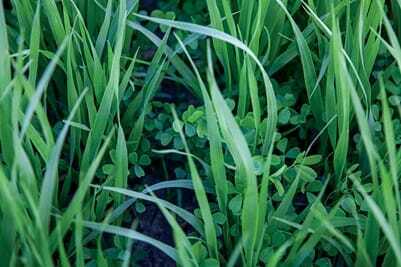
Fertilizer prices have put a lot of pressure on farmers to find creative ways to navigate the nutritional demands for the upcoming corn crop. Depending on the alfalfa stand health, farmers could capture 100 pounds of nitrogen per acre. That’s why many are considering an early rotation of alfalfa fields in 2022.
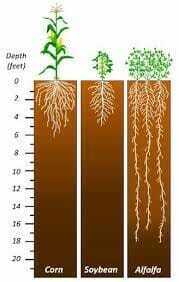
Farmers who raise alfalfa have an opportunity to capture nitrogen credits and to also capture more yield. Research shows a 20% increase in yields for the subsequent crop planted onto those acres. A mature alfalfa tap root can grow down 20 feet, creating a channel that allows the newly developing root to easily access critical moisture.
With commodity prices increasing, the goal should be to leave no yield in the field. Focusing on high-yielding alfalfa will vastly improve the productivity of all crops. It raises the yield ceiling of corn and soybeans in the traditional corn-soybean rotation upwards of 20% while improving the soil.
Alfalfa Seeding Establishment
Reviewing stand establishment details are important for the success of your alfalfa crop:
- Soil pH. Soil pH is important to quickly establish the nitrogen-fixation bacteria. For best performance, try to maintain a soil pH of 6.8 to 7.2.
- Seeding Rate. Although alfalfa is typically seeded at a rate of 16 to 20 pounds per acre, I encourage farmers to experiment on their farm. Simply double seed during one or two passes. More seed equals more plants. To run a successful trial, remember to apply a bit more fertilizer where plant populations are higher. You likely will be surprised with the life of stand. Latham Seeds has partnered with some innovative farmers to conduct replicated seeding rate trials on their farms, and results have been impressive! We have seen a multi-year yield advantage for higher seeding rates. During the first seeding year, our growers have seen an advantage of one-half dry matter (DM) ton and almost one full DM ton advantage in the second year. One ton of high-quality alfalfa is the Midwest is currently valued at $300.
- Seed Bed/Seed Depth: A firm seed bed is critical to properly placing alfalfa seed at ¼ inch and no deeper than ½ inch.
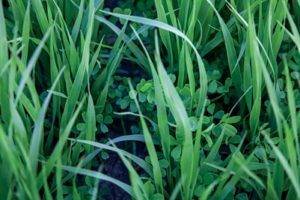
- Companion Crop: Use caution when seeding alfalfa with a companion crop. The key is to not plant companion crops so thick that they actually compete for the critical soil moisture the alfalfa seedling desperately needs. I like a lower to medium rate of oats, say 1 to 1.5 bushels, depending on soil type. Oats emerge quickly, which helps shield the delicate little alfalfa seedling from the intense spring sun. The oat roots also help hold soil in place during intense spring rains. In addition, oats tend to help reduce weed pressure.
Including high-yielding Latham brand alfalfa in your crop rotation is using a new interstate to increase soil biology and help meet nutrient demands of rotational crops. Research has shown that corn planted on rotated alfalfa can help unleash more of the genetic potential yield.
Want to chat more about adding alfalfa into your rotation? Reach out to your dealer or reach out to me, Corey Catt, forage product manager, at coreyc@lathamseeds.com.
-
Latham Hi‑Tech Seeds
#AsktheAgronomist – Why are Chelated Fertilizers Important
On this week’s #AsktheAgronomist, Phil Long, precision agronomy advisor, unpacks chelated fertilizers and why they are important. Learn how they are absorbed and how it can benefit soils with high pH in Latham Country.
-
Latham Hi‑Tech Seeds
2021 Research Trials Show Seed Treatment Pays

Advertisements and magazine headlines tout the opportunity to enhance yields through plant protection and the use of biologicals or naturals, but does it pay to use these products? Our research once again confirms that seed treatments are an investment that provides a return.
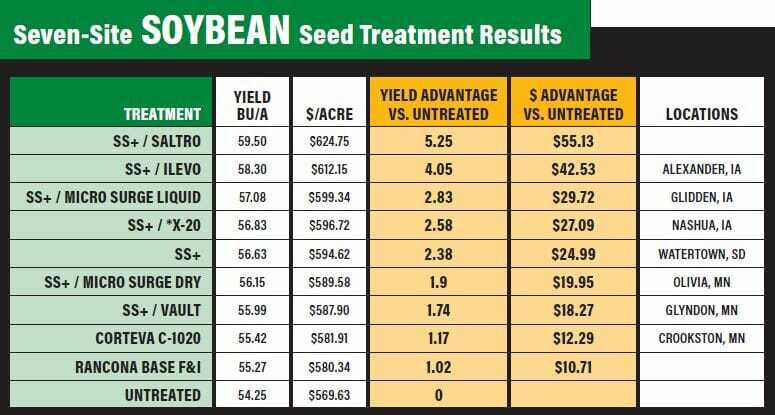
Latham Hi‑Tech Seeds expanded its 2021 research trials to include seed treatments and biologicals. We wanted to determine whether the performance of the seed products we offer could be improved by seed protection and biologicals. Soybeans treated with Latham brand SoyShield® Plus had a 2.38-bushel yield advantage over untreated seed and a 1.2-bushel advantage over other leading fungicide and insecticide (F&I) seed treatments.
Latham Seeds’ signature SoyShield Plus seed treatment is effective in protecting seedlings from early plant diseases for approximately 30 days, which is a longer window of protection than most seed treatments offered. SoyShield Plus includes an exclusive fungicide combination that provides excellent protection against seed and soil borne diseases including: Pythium, Phytophthora, Fusarium and Rhizoctonia.
The addition of Saltro to SoyShield Plus increased protection against Sudden Death Syndrome (SDS) and soybean cyst nematodes. In fact, this treatment combination produced the highest yield in research trials across seven locations in multiple states. The SoyShield Plus / Saltro treatment had a 5.25-bushel yield advantage over untreated seed and provides Best-in-Class protection across environments. Soybean cyst nematodes are one of the largest yield-robbing pests and SDS is a growing concern for more areas, so it makes sense to order the Latham SoyShield+ / Saltro combination for 2022.
Inoculants with biologicals continue to show increased yields over inoculants alone. Latham SoyShield Plus with Talc USA’s MicroSurge had a 2.83-bushel per acre advantage over untreated seed and more than one bushel per acre advantage over other premium inoculants.
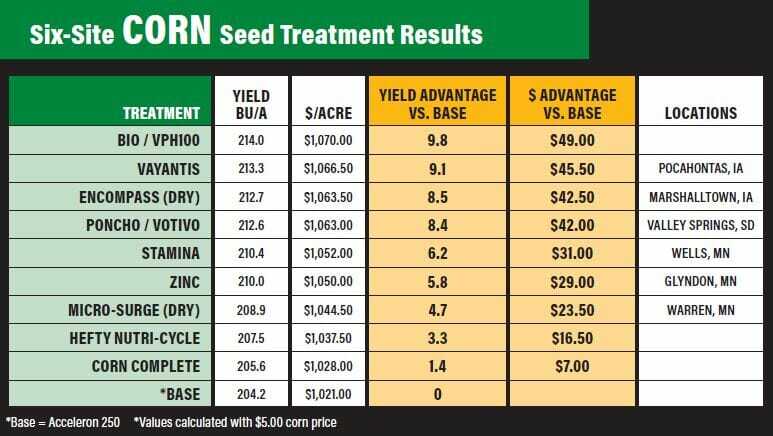
Corn trials conducted at six locations in multiple states also showed significant yield increases over the base seed treatments with various applications of seed applied or planter box treatments. Talc USA’s MicroSurge dry corn inoculant is easy to apply with talc. With two strains of Azospirillum, MicroSurge produced a 4.7-bushel yield advantage over the base seed treatment.
Encompass also was tested as a planter box treatment. It contains nitrogen-fixing microbials and helps mobilize phosphorous in the soils for easier nutrient uptake into the plant. Encompass showed an 8.5-bushel increase over base treatments in our 2021 trials. Now that’s a return on investment!
Contact your local Latham rep for more information about these and other products to protect your seeds and seedlings, so you can improve yields in your fields in 2022.
-
Latham Hi‑Tech Seeds
Three Generations of Franklin County Farmers Raise Latham Seed Beans
Producing corn, soybeans and pork on a farm is commonplace in Iowa, where livestock feed has been the primary use of grain crops throughout that state’s 175-year history. Families, like the Jacobsens of Dows in Franklin County, are proud of their farming legacy.
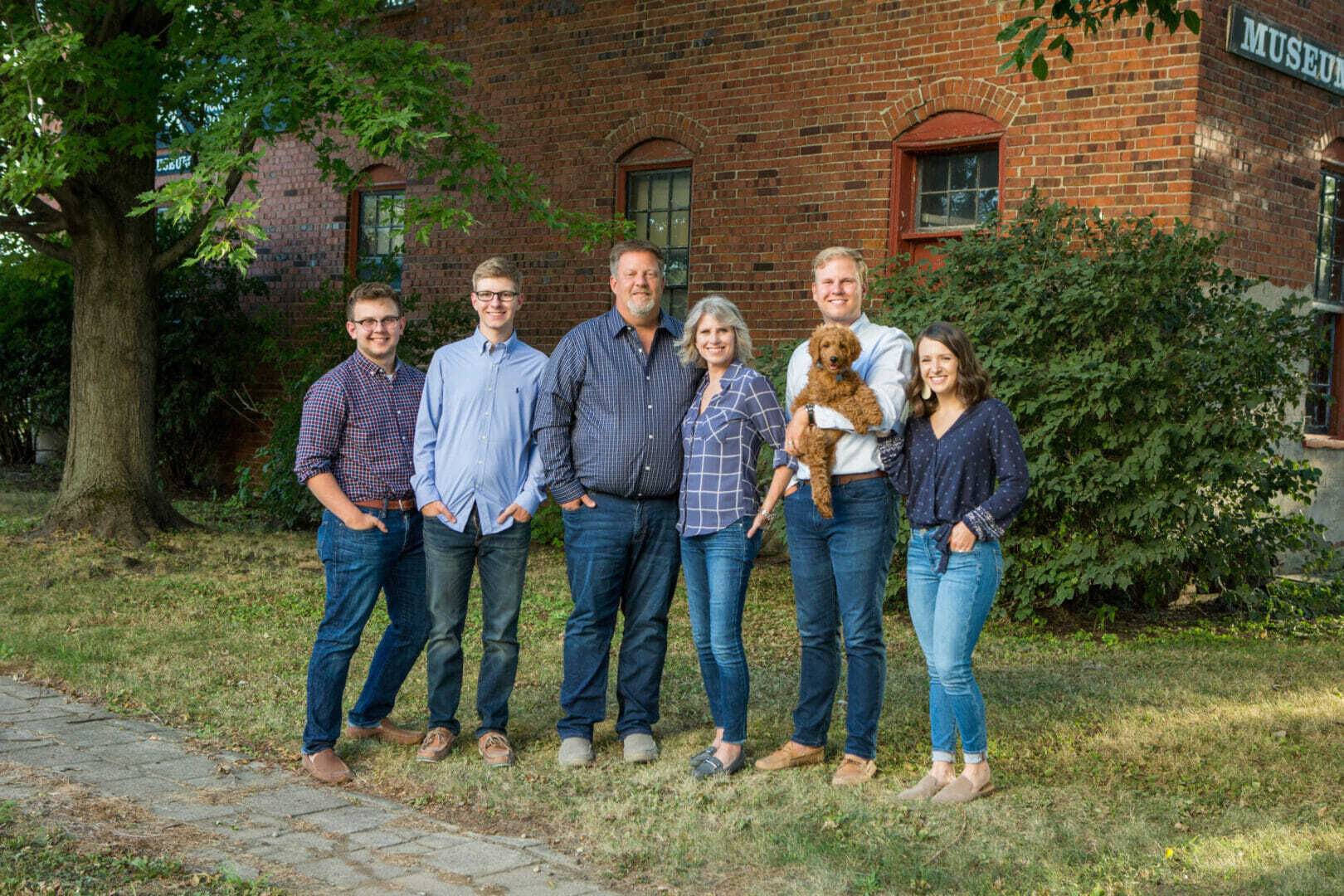
The Jacobsen Family Doug and Carolyn Jacobsen began growing seed beans for Latham Seeds in the 1970s. Their Iowa Century Farm is located one mile from where their son, Corey, and his wife, Kim, farm. Corey began growing seed beans in 1986 when he rented his first farm. Corey and Kim’s oldest son, a fifth generation Iowa farmer, began growing Latham seed beans in 2018.
“I appreciate the opportunity to raise Latham seed beans because most years we get access to newer genetics a year earlier than if we raised soybeans just commercially. I like seeing what’s new in the lineup,” says Corey. “It’s fun visiting with everybody in the fall when we deliver beans to the plant. Plus, it’s nice to know we can pick up the phone or stop by the office whenever we have questions about production or want input.”
Corey has been working toward his goal of farming since he graduated from high school. While studying ag business at Iowa State University (ISU), he helped plant four crops and maintained his breeding-to-finish swine operation. Corey traveled home each weekend to do chores and made countless other trips whenever needed for breeding or farrowing.
“I met Corey at the 1985 Franklin County Fair where he was showing pigs and I was working in the Extension office,” says Kim, who grew up on a farm south of Coulter and enjoyed showing horses in 4-H. It’s only natural their three sons would become showmen.
When Corey graduated from ISU in 1990, he began working at Brenton Bank in Clarion. One year later he started at Dows United Bank & Trust. Corey retired as bank president in 2000, and then he and Kim began farming full time. Kim also retired after teaching high school math and coaching volleyball and track for 10 years at Clarion-Goldfield Dows. Their more flexible schedules allowed their family to spend more time on their pork operation.
“Pork is truly a family project that we all enjoy,” says Kim. She and Corey custom-finished pigs for years and raised show pigs. Now they run an independent wean-to-finish operation. “Raising livestock taught our boys day-to-day responsibility that many other activities can’t provide. They learned that it takes teamwork to be successful and to accomplish what needs to be done.”
When their boys were in middle and high school, the Jacobsen family participated several livestock shows annually including: the Iowa State Fair, Ak-Sar-Ben, World Pork Expo, National Barrow Show, Sioux Empire in South Dakota, Iowa State University’s Block & Bridle, as well as numerous county and state 4-H and FFA shows. Ben had the honor of showing the Reserve Champion FFA Market Hog at the 2013 Iowa State Fair.
“Through 4-H, our boys learned skills they use on the farm also such as welding, woodworking, small engines, along with the communication and record keeping,” says Kim. “Now that they’ve all graduated from high school, I love to see our sons use their skills and continue to educate others about agriculture. Caleb won the Outstanding Agriculture Exhibit by ISU College of Agriculture and Life Science at the Iowa State Fair for his project teaching the truth of GMO’s. Matt is known as the ‘farm kid’ and go-to resource at college. He has skills in welding, woodworking, painting and general carpentry that most other students do not have. He laughs at all of this, especially the time he was a hero changing a gas tank on a gas grill, much to the amazement and awe of others. He also educates classmates and others in the city about livestock and agriculture.”
Matthew will graduate in May 2022 from Harvard College in Cambridge, Massachusetts, with a degree in Molecular and Neurological Biology. He has been a part of the Harvard Curling Club, John Adams debate society and Harvard Pro-Life while keeping up with research projects. Matthew plans to continue research for another year and then attend medical school.
The Jacobsen’s youngest son, Caleb, is a freshman majoring in Ag business at Iowa State University. He enjoys being active in the Ag Business Club and the SALT network through Cornerstone Church. Caleb is following the steps of his oldest brother, Ben, who graduated from ISU in 2018 with a degree in ag business. Ben farms with Corey and Kim. Frances is a Talent and Acquisition Specialist for Boston Scientific, working from their home in Ames. They are expecting their first child in June.
“We feel blessed to have our children grow up on the farm learning the value of honesty, hard work and sacrifice to accomplish goals,” says Kim. “Now the next generation will grow up farming in a community that has been so supportive. We couldn’t ask for anything more.”
During this time of transition, Corey and Kim are freeing up their schedules to make more time for travel. Corey had served on the Dows school board for 20 years and retired when the school district merged. Kim has relinquished most of her off-farm obligations but continues to serve on the Iowa Specialty Hospital Board. They enjoy following the Iowa State Cyclones to Bowl games and other destinations. They have greatly enjoyed making spontaneous trips and have especially enjoyed visiting Matt in Boston.
“We love traveling, trying restaurants, experiencing other cultures and visiting farming operations in other places,” says Kim. Today they’re sharing with us one of their favorite game day recipes of Sausage and Cheese Egg Roll Wraps.
-
Latham Hi‑Tech Seeds
Start the Season Right by Planting the Right Genetics

With the 2022 planting season right around the corner, it’s time to focus on the one thing that will help you capture the most ROI in each field.
Field-by-field product placement is key to maximizing yield – and in turn – profit. Research shows plant genetics account for a 20% difference in yield. This means you could raise 12 more bushels of soybeans and 40 more bushels of corn PER ACRE simply by paying closer attention to your crop placement.
Below are three factors to consider when double-checking your crop placement for 2022:
- Study Field x Field® Ratings. Look at the Field x Field Ratings in the Latham® Product Guide for corn and soybeans. These charts simplify where you should place hybrids and varieties. A “1” rating means it’s a great fit for a particular environment; a “3” rating means you should not plant that product if your field conditions match that description. Your Latham Dealer has seen most of our products in environments, so call him or her if you have additional questions about where to place a particular product.
- Stick to the plan. If your seed dealer has provided you with a Field x Field plan, organize your seed shed so you can stick to the plan. Subscribers to Latham Seeds’ Data Forward® program receive a crop plan book, which you can keep in your planter tractor. It’s a good practice to double check that the right seed gets in the planter. If planting conditions change in a particular field, then take the time to move products. It will be worth an hour of your time to capture the extra $150 to 200 per acre in profit potential.
- Match Genetics to Management. If a certain corn product is described as “likes high management,” then you should not place that product in a field with poor fertility levels. Your seed dealer may not know your fields’ fertility levels unless you share it. That information is critical for accurate product placement as some genetics can handle tough fertility situations and others will fall apart in those environments. Also make sure you aren’t overplanting or underplanting each hybrid. Look at the “suggested populations” in our Product Guide, as well as the “Ear Type” rating and our stress wheel poster. We want to help you capture yield!
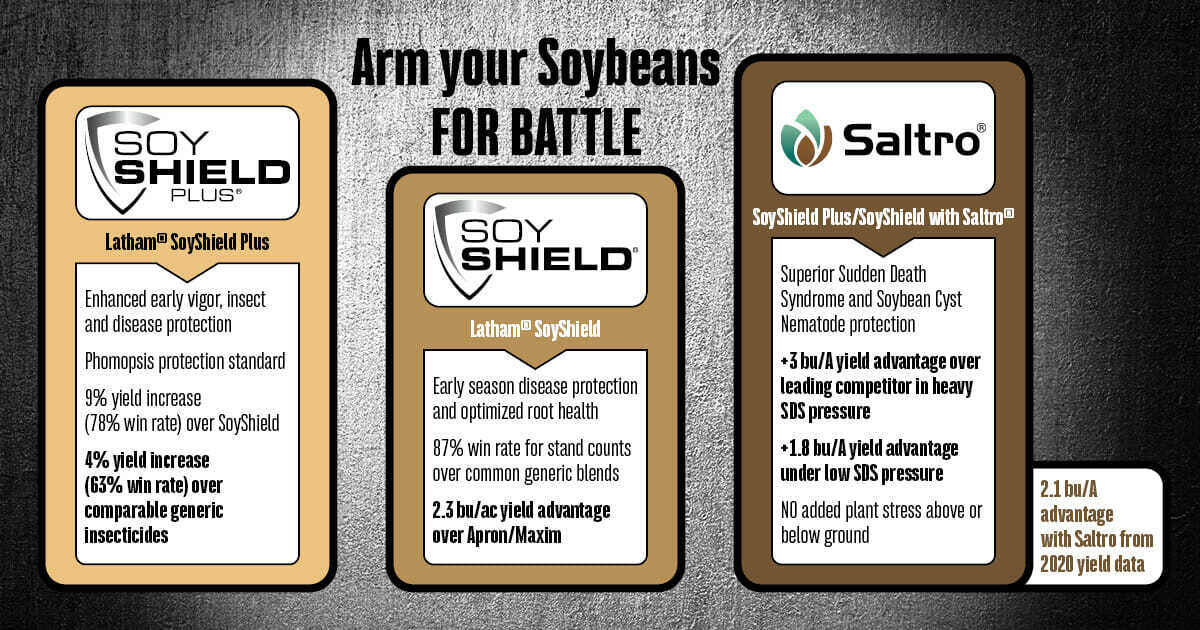
If you’re planting soybeans early or at the same time your planting corn, treat the seed with SoyShield® to protect it from early season fungal diseases. Seed treatment also gives seedings an early advantage. Even when using a quality seed treatment, plant fields with the heavy soils that remain wet and cold last or at least the soils have warmed. This will help your soybeans better ward off root diseases all season long.
A successful 2022 crop year begins with having a plan and sticking to it! Take the time now to double-check that you properly matched plant genetics with soil conditions. Our dealers are also happy to talk through field placement as well. If you have further questions or want to chat with our agronomists call: 1.877.GO.LATHAM (1.877.465.2842).
-
Latham Hi‑Tech Seeds
#AsktheAgronomist – Too Much Nitrogen?
Phil Long, precision agronomy advisor, continues his soil fertility series with the topic of Nitrogen. Is it possible to have too much Nitrogen?
-
Latham Hi‑Tech Seeds
It’s More Cost-Effective to Plant Alfalfa in 2022
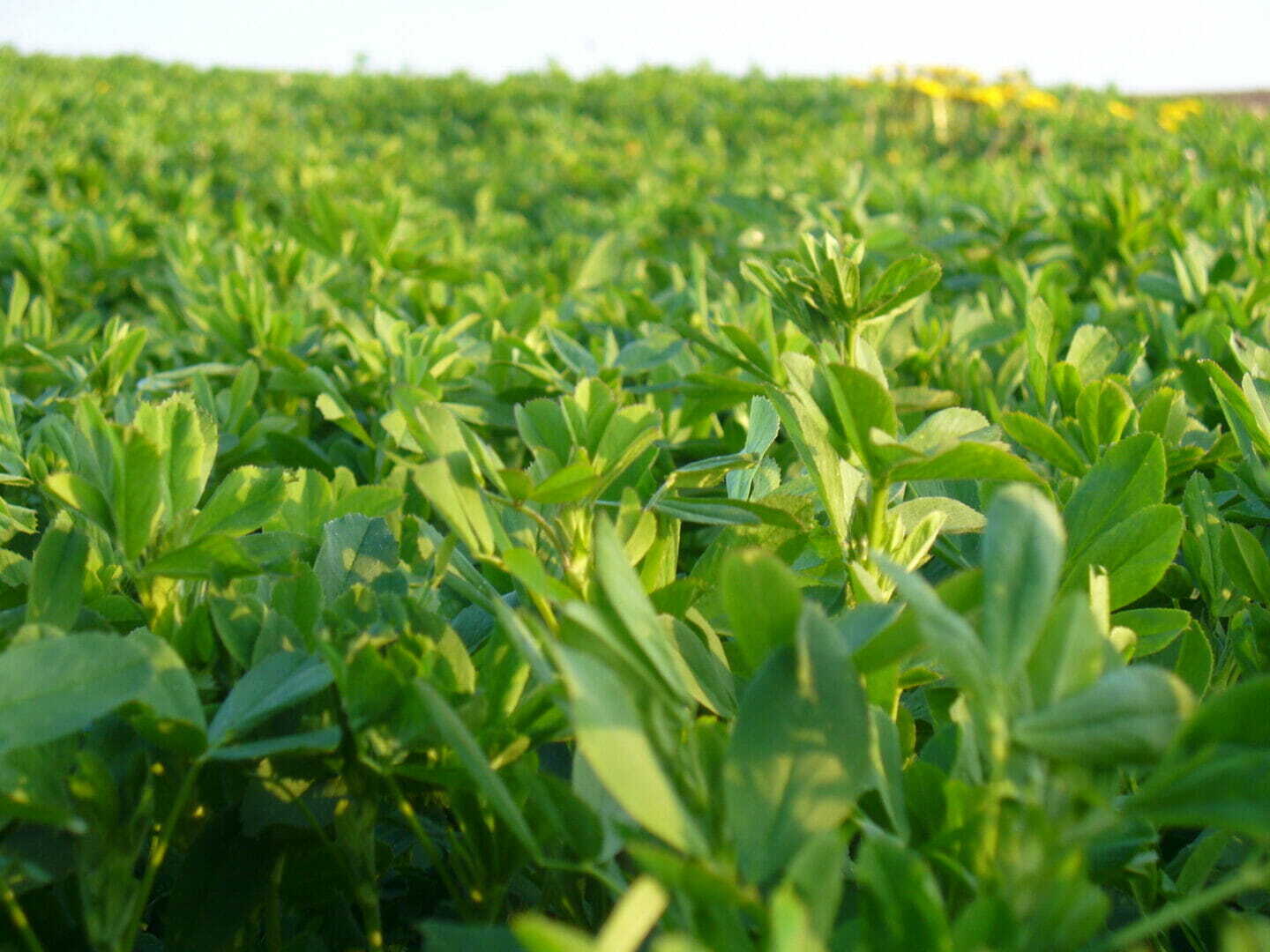
Latham’s Proprietary AlfaShield Seed Treatment accelerates emergence and protects against diseases. The growth in the cover crop markets combined with production shortages have grass seed prices climbing significantly. As a result, it’s not as economical to plant a grass seed-alfalfa mix. If you’ve historically planted a grass seed-alfalfa mix, consider a solid-seeded alfalfa for spring 2022.
High fertilizer prices have many farmers looking at every nitrogen credit. Similar to soybeans, alfalfa fixes most of its own nitrogen. Latham Seeds’ signature seed treatment, AlfaShieldTM, contains key micronutrients like molybdenum and an LCO growth promoter called Optimize® Gold. Having these components readily available upon emergence increases the chance of early nodulation and nitrogen-fixing cycle.
The speed at which an alfalfa plant creates nutrients correlates to yield, as well a healthier long-term stand. Alfalfa can fix an average of 150 to 200 pounds of nitrogen per year and has a robust advantage in providing nitrogen credits years after the stand ends.
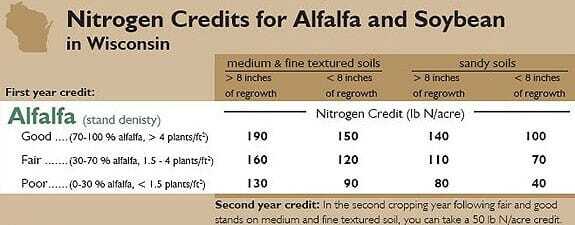
The chart above outlines potential credits. Traditionally, the subsequent crop planted on rotated alfalfa yields about 15 to 20% more! There is more good news, the value of alfalfa extends beyond the nitrogen credit. Alfalfa has many other assets to accompany your operation:
- Next years crop’s roots can grow deeper as alfalfa’s tap root extends beyond the soil hard pan.
- Alfalfa stands are three to four years old and can break down disease cycles.
- Alfalfa interrupts the insect cycles and reduces the use of common herbicide.
- Alfalfa is a great diversification tool and adds an additional avenue of revenue.
- Alfalfa seed can also be amortized over three to four years!
Making alfalfa part of a crop rotation has so many advantages. Talk with your Latham® rep today about making it part of your 2022 crop plan!
-
Latham Hi‑Tech Seeds
#AsktheAgronomist – Corn Yield
Where did the corn yield come from in 2021? Our agronomist breaks it down.
-
Latham Hi‑Tech Seeds
#AsktheAgronomist – Soybean Yield 2021

Precision Agronomy Advisor Phil Long weighs in on where the soybean yield came from in 2021 and what to look for in 2022.