Skip to content
Latham Hi-Tech Seeds

(641) 692-3258

  • Home
  • Performance
  • Products
    • Corn
    • Soybeans
    • Alfalfa
    • Corn Silage
    • Seed Guide
  • Find a Rep
  • Media
    • Blog
    • News
    • Videos
    • Podcasts
    • TECHTalk
  • About Us
    • Company History
    • Our Mission
    • Careers
    • Become a Rep
    • Sowing Seeds of Hope
  • Contact Us
  • Latham Hi‑Tech Seeds

    Amazing Soybean Reports

    We’re receiving amazing reports across Latham’s marketing territory about the increased potential yield this fall of Latham® Hi‑Tech Soybeans with the GenuityTM Roundup Ready 2 YieldTM trait.  Yesterday Travis Slusher and I looked at a field in Dallas County where we saw significantly more pods per plant on the Latham RR2Y beans than on the Pioneer beans that we’re competing against.

    Here’s an example of how more beans per pod equates to a lot more beans in the bin come harvest:

    Latham L 3184 R2 v. Pioneer 93M11

    ……………………………………….  L 3184 R2                              93M11

    Pods per plant                          34                                           28

    2-bean pods                               6                                            12

    3-bean pods                              28                                           16

    Total beans per plant              96                                           72

    The Latham Advantage is 24 beans /plant = 3,504,000 seeds per acre more

    Both are have an estimated final stand of 142,000 plants.

    John Latham, President

    September 3, 2009
    Crop, Soybeans
  • Latham Hi‑Tech Seeds

    Update on soybean rust

    There are a number of online sources starting to report that conditions may be favorable for soybean rust to hit Midwestern fields this season. Iowa State University Extension runs a site called The Rust Report. A recent posting on June 17 reported that “…Alabama’s extension soybean pathologist said that soybean rust was 3-4 weeks ‘ahead of schedule,’ and it is farther north than in previous years. Georgia’s soybean pathologists said that ‘these early finds mean that soybean rust could be a real threat to the soybean crop if the disease continues to progress.’”

    As Daren Mueller, a member of ISU’s soybean rust team, reports, ag specialists in the south earlier in the year were seeing soybean rust appear on kudzu. Kudzu is a vine plant that is loved and hated in Georgia and Alabama. It’s a pest plant that proliferates around abandoned buildings, yet can also be fed as temporary, high-quality forage that cattle tend to like. Earlier this month, some low level rust was found in a kudzu patch in Georgia. That finding has now been updated to include some rust found on southern soybeans. Weather conditions may be favorable for the rust to spread in the Southeastern states. That means we should be on the lookout in the Midwest as growing season progresses.

    The Rust Report provides a lot of helpful information on management of soybean rust, how to spot it, how to make sure it’s rust and not a look-alike disease, and many other tips.

    According to Stop Soybean Rust.com, “the main effects (of rust) on the soybean plant are destruction of photosynthetic tissue, which in turn causes premature defoliation, early maturation, and severe yield reductions through reduction in the number of pods and seeds, and decreased seed weight.” So close monitoring and information sharing is essential as rust moves out of the South.

    Be assured we’ll keep you updated on any notable developments.

    June 23, 2009
    Agronomics, Crop, Soybeans
  • Latham Hi‑Tech Seeds

    Showcase plots: Let the planting begin

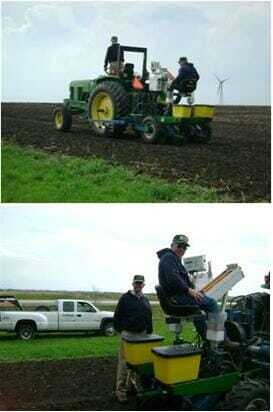
    Planter montage1

    In between showers, our research team has been getting our corn showcase plots planted. These pictures show Bill planter-montageLatham and Gary Bennett planting our Latham® corn showcase plot near Alta, Iowa. True to the season, this photo was taken after Bill and Gary got wet from a brief shower.

    Latham Hi‑Tech Seeds planted six corn showcase plots between May 4-6. Four more plots were planted between May 11-13. The seeds were planted with the company’s new corn plot air planter, complete with computer equipment that controls the drop rate and length of row per plot.

    Team Latham

    May 13, 2009
    Crop, Season, Spring
  • Latham Hi‑Tech Seeds

    Take listen to our new Latham Seed radio spot for Roundup Ready 2 Yield soybean seed.

    This spot will run on WHO Radio starting Feb. 9. Roundup Ready 2 Yield is showing great results in field trials. We’re pumped about it!

    Team Latham

    February 6, 2009
    Crop, Soybeans
  • Latham Hi‑Tech Seeds

    The Real Price of Ignoring Quality

    IMG 8888

    Not only is Latham the best industry source for the latest technologies, our team exhaustively searches every avenue seeking the best genetics to go with these technologies. If a product has earned the right to be in a Latham bag, rest assured the seed is the “cream of the crop”.

    Growers are still weighing the best options for spring. Facing high fertilizer prices and lower-than-expected commodity prices means some options, which may seem more appealing at the time, are actually poor choices in the long run. While it may be tempting to purchase seed purely on price alone, other factors should be taken into consideration. A issue of SeedWorld magazine provides a couple examples:

    1. Buying an inexpensive, unproven corn seed could mean giving up 10 bushels in a crop at $3.50 per bushel. For illustration purposes, planting 32,000 corn seeds per acre at $87.50 per bag on 1,000 acres could result in a loss of $87,500.
    2. The same scenario is true for soybeans. An 11 percent lower yielding soybean could mean a difference of up to 6.5 bushels less yield per acre. With soybeans near $9, that is a whopping $58.50 per acre each grower is giving up by not planting the highest yielding soybeans.

    Someone once said that paying for quality means you only have to wince once. Fortunately with Latham, you don’t have to wince at all. The technology and performance record behind your investment, coupled with our agronomic consulting expertise and our Farm Plan financing access, assures a confident, satisfying experience from start to finish.

    John Latham, President

    January 16, 2009
    Agronomics, Corn, Crop, Industry News, Season, Seed Technology, Soybeans, Spring, Tech Tuesday, Winter
  • Latham Hi‑Tech Seeds

    Soybean Seed is Quality

    There’s been much concern and speculation about the potential seed quality from the 2008 soybean crop. The delayed planting and cold wet conditions during and immediately following planting had many people convinced that most fields would not be able to make even the minimum standards required for seed conditioning. I’m happy to report that these concerns seem to be unfounded! We’ve been blessed with an excellent seed crop.

    We don’t have all the germination reports back yet from our composite bin samples, but what reports we do have are all testing in the upper 90s. Most germination reports range from 97 to 99 percent! Reports on conditioned lots including L2085R, L2158R and L2348R are all running in that same range.

    Seed size does not appear to be as big of concern as was initially feared. While some varieties may have slightly smaller seed size, others are similar to last year. The overall net effect will be minimal, perhaps just a bit smaller on average as compared to the 2007 crop.

    In general, the 2008 seed crop looks to be an excellent one. Despite the challenging growing conditions, we were pleasantly surprised with the yields we received and are grateful for the terrific quality. Latham customers can once again head into the new season knowing that they have superior quality in their seed purchases from Latham Companies.

    John Latham, President

    November 26, 2008
    Crop, Soybeans
  • Latham Hi‑Tech Seeds

    Increase Seed Rates to Achieve Optimal Plant Population in Final Stands

    Today’s biotech corn hybrids combine elite genetics with high-performing traits that better handle stress and actually thrive in high planting populations. University corn specialists across the Corn Belt recommend that growers increase seeding rates by 5% to 10% to achieve optimal plant population in final stands.

    Recent surveys indicate that many growers have not increased seeding rates to accommodate these high tech hybrids. In fact, 9 out of 10 growers surveyed plant rootworm-resistant corn hybrids at the same rate as traditional non-rootworm corn.

    It’s time to optimize seeding rates.  On productive soils, with consistent performance records, final stands of more than 30,000 plants per acre may be necessary to maximize yield potential. In less productive soils, droughty areas, or if late planting is necessary, final stands should be in the mid-20,000 range.

    It is important to understand the relationship between seeding rates and final stand.  To achieve optimized plant populations, you may need to increase your seeding rate 15% to 20% above your targeted final stand plant population. The higher rates will make up for unavoidable losses due to seasonal situations and planting conditions.

    One of your first steps should be increasing seeding rates for the biotech hybrids you plant next season.  At Latham Hybrids, we are focusing on planting populations in several research plots throughout the area.  For results on those trials, check with your local Latham Seed2Soil specialist.

    Have you tried any increased seeding rates in your fields?  Seen any university research trials on plant populations?  What were the results?  We’d love to hear your story!  Share it with us in the comment box below.

    John Latham, President

    November 13, 2008
    Agronomics, Corn, Crop
  • Latham Hi‑Tech Seeds

    Harvest Corn Report

    Harvest is here, and I’m optimistic that we will see some great yields. I think however, that we’ll also see more stalk rot and premature plant death due to wet planting conditions, severe storms throughout the growing season and low rainfall periods.

    You may notice that some areas of fields are maturing more slowly. Other areas may have died early. When corn plants don’t live for the full season, they don’t achieve maximum potential yields. Even though kernels on “prematurely dead plants” display a black layer, the lack of kernel size indicates they reached this stage too soon.

    Why have plants and areas of fields died prematurely this year? Reasons for premature death, that I have witnessed this year, include: moisture stress, nitrogen loss, anthracnose top-dieback, stalk rot and wind/hail damage.

    In summary: All of the stresses have likely contributed to the overall rapid shutdown of photosynthetic leaf area. Given the importance of live, viable leaves and their contribution to the grain filling process, the rapid leaf senescence evident in corn fields this year will likely shave some bushels off the upper limit of yield. Plants suffering from such stress struggle to complete grain fill before they die. As plants struggle to complete grain fill, they often resort to cannibalizing the carbohydrates and nutrients from the leaves and stalks in order to fill the grain. This leads to root and stalk rots.

    There is nothing that can be done now to prevent premature death; however, growers should walk their fields, monitor the stalk health, and adjust harvest strategies accordingly to manage fields where stalk lodging may be a big problem.

    John Latham, President

    October 17, 2008
    Corn, Crop
  • Latham Hi‑Tech Seeds

    Weak Stalks and Stalk Lodging

    I am beginning to get reports that corn is lodging this year. What is particularly alarming is that stalk lodging is occurring in fields with hybrids that typically have very strong stalks. And, even more perplexing, when stalks are split open, they appear to look healthy however the pith is gone right above the node where the stalk lodged over. Many farmers are asking how this can happen.

    Typically, weaker stalks result from smaller root systems. This leads to less nutrients going into the plant to satisfy the high demand for carbohydrates of the grain. If the roots bring in less nutrients than the demand of the grain then the grain will pull the carbohydrates it requires from the leaves and stalk. This creates hollowed out pockets above the nodes, which weaken the stalk, and predispose stalks to lodging whenever we get strong winds.

    Below, I have put together some talking points that can be helpful in diagnosing weak stalks that may be found in your fields this harvest season.

    The most effective management practice at this point in the season is to monitor fields and determine the level of weak stalks in the field. Randomly walk each field and test stalk strength of 50-100 plants by squeezing the stalk at the lower two internodes. If the stalk collapses between the thumb and forefinger of 25 or more plants, weak stalks have advanced to problem levels. These fields are at high risk to wind damage and should be harvested first to decrease lost yield from unharvestable ears.

    #1 Wet Spring (late planting, small roots, side-wall compaction, N loss, and poor potassium uptake)
    Corn plants have smaller than normal root systems this year. Later planting did not allow the plants time to generate roots that will reach water deep in the soil profile. In addition, when soils are wet, sidewall compaction at planting time can cause nutrient deficiencies later in the season, particularly nitrogen and potassium.  We probably lost some applied nitrogen due to wet conditions early. In essence, the plant will do all it can to “pump” carbohydrates into the kernels, sometimes at the expense of the health and maintenance of other plant parts including the roots and lower stalk.

    #2 Dry periods (drought) during grain fill
    Fields subjected to several weeks without rain will stress the plant and cause the plant to move nutients from the stalk into the ear to fill the grain.  This weakens the plant to the point that lodging can occur. Additionally, pathogens can invade and infect the plant causing premature plant death, dropped ears, lightweight grain and encourage the development of stalk rot.

    #3 Cooler temperatures and cloudy conditions during grain fill
    Cooler temperatures and cloudy days during grain fill can reduce sunlight to the leaf area that provides carbohydrates to the developing kernels. As a result, the corn plant draws reserves from the stalk tissue. The mobilization of nutrients our of the stalk creates hollowed out pockets which weaken stalks and can predispose the plant to stalk rot diseases.

    John Latham, President

    October 6, 2008
    Agronomics, Corn, Crop, Disease
  • Latham Hi‑Tech Seeds

    Premature Plant Death May Prompt New Harvest Strategy

    Harvest is drawing near, and I’m optimistic that we will see some great yields. I can’t help but think that we’ll also see more stalk rot and premature plant death due to wet planting conditions, severe storms throughout the growing season, and low rainfall periods in July.

    We expect corn plants to begin maturing this time of year, but you may notice that some areas of fields are maturing more quickly. Other areas may even die early. When corn plants don’t live for the full season, they don’t achieve maximum potential yields. Even though the kernels on “prematurely dead plants” display a black layer, the lack of kernel size indicates they reached this stage too soon.

    Why do plants and areas of the fields die prematurely this year? While every field is a little different, there is almost always more than one factor involved. Reasons for premature death that I have witnessed this year include: moisture stress, nitrogen loss, anthracnose top-dieback, stalk rot, and wind/hail damage.

    Moisture Stress. Generally, corn root development was not good this year because of early season wetness over an extended period. During grain fill, a plant needs a lot of water. Shallow, poorly developed and partially decayed root systems can’t provide enough moisture to keep the plant going especially during hot summer days. This scenario is particularly noticeable in places where there was standing water earlier in the season.

    Nitrogen loss.  Some plants are showing significant signs of nitrogen deficiency before they die. Wet conditions early in the season have resulted in the loss of nitrogen in many fields or parts of fields, and plants prematurely die because of a severe nitrogen deficiency.

    Anthracnose top-dieback.  This phase of the anthracnose disease is less common than the typical stalk rot that occurs at the stalk base. With top-dieback, the plant dies from the top down. The upper leaves turn yellow or reddish purple, then dry out. The fungus usually infects through the whorl earlier in the season and remains dormant in the stalks until late in the season.  Late-season stress triggers the development of disease symptoms.

    Yellow flag leaf on corn stalk- key symptom of anthracnose top-dieback
    Sighting of a yellowed, or purple flag leaf on the corn plant is a key symptom of anthracnose top-dieback.  (above).  Another key sign will appear during wet conditions.  A pink substance will be observed on the stalk (below).  Photos courtesy of Iowa State University.In wet conditions, one may find evidence of a pink substance on the stalk.

    Stalk rot.  Some plants might die because the base of their stalk is rotted by Gibberella or Fusarium.  The onset of these stalk rots is also stress related. When the stalk base is rotted, the whole plant wilts and dies rather suddenly. To see the symptoms, you may need to split the stalk all the way up the base, from below the soil line.

    Wind/hail damage.  Plants that were damaged by wind and hail earlier in the season are vulnerable to a number of problems that may show up now. Because of the physical damage to leaves, stalks, and roots, these plants are especially likely to suffer from stalk rot or a moisture-stress-related death.

    To summarize, all of the stresses have likely contributed to the overall rapid shutdown of photosynthetic leaf area.  Given the importance of live, viable leaves and their contribution to the grain filling process, the rapid leaf senescence evident in corn fields this year will likely shave some bushels off the upper limit of yield.  Plants suffering from such stress struggle to complete grain fill before they die. As plants stuggle, they often resort to cannibalizing the carbohydrates and nutrients from the leaves and stalks in order to fill the grain.  This leads to root and stalk rots.

    Obviously there is nothing that can be done now to prevent premature death.  However, growers should walk these fields during the next few weeks, monitor the stalk health, and adjust harvest strategies accordingly to manage fields where stalk lodging may be a big problem.

    John Latham, President

    September 14, 2008
    Agronomics, Corn, Crop, Disease, General
Previous Page
1 … 60 61 62 63
Next Page

Latham Hi‑Tech Seeds

131 180th Street | Alexander, IA 50420

(641) 692-3258

SIGNUP FOR OUR NEWSLETTER
  • Contact
  • Legal
  • Seedware Login
  • Latham Gear

© 2026 Latham Hi‑Tech Seeds. All rights reserved. | Privacy Policy

Latham® Hi-Tech Seeds is a trademark of M.S. Technologies, L.L.C., 103 Avenue D, West Point, IA 52656.