Latham Hi-Tech Seeds

(641) 692-3258

  • Home
  • Performance
  • Products
    • Corn
    • Soybeans
    • Soybean Blends
    • Alfalfa
    • Corn Silage
    • Seed Guide
  • Find a Rep
  • Media
    • Blog
    • News
    • Videos
    • Podcasts
    • TECHTalk
  • About Us
    • Company History
    • Our Mission
    • Careers
    • Become a Rep
    • Sowing Seeds of Hope
  • Contact Us
  • Latham Hi‑Tech Seeds

    Latham Hi‑Tech Alfalfa: Higher Quality. Greater Yield. Better Nutrition.

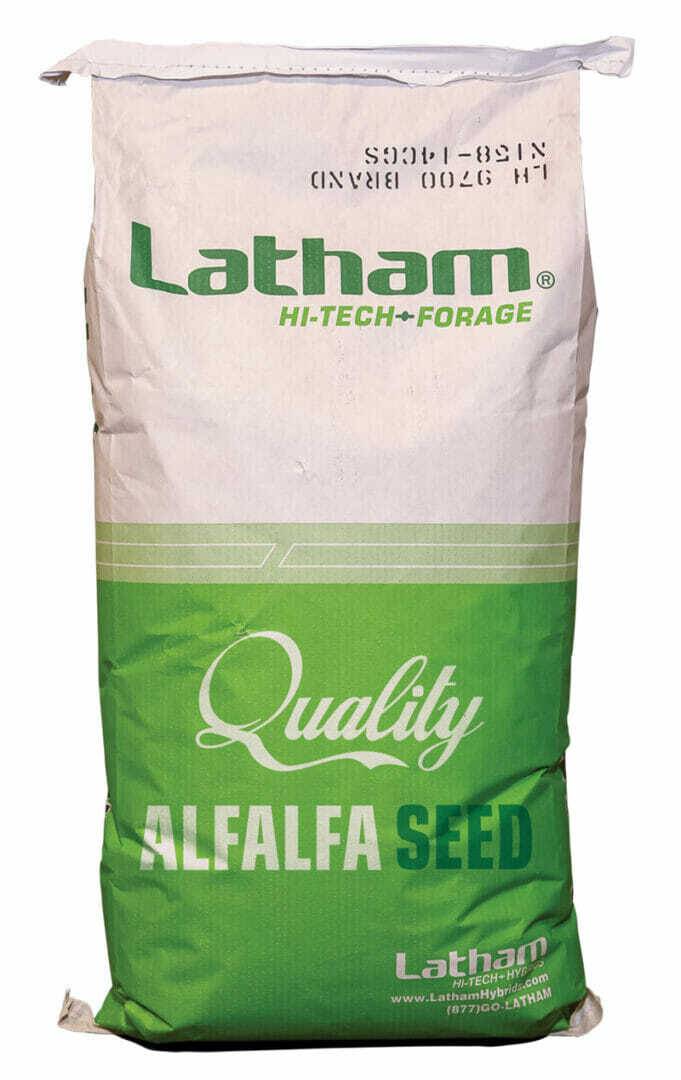
    Alfalfa bag clipped new

    Farming is like dancing with Mother Nature, and Mother Nature always leads. We can’t control the weather, but we can manage around the risk.

    Understanding a seed product’s features and benefits is powerful tool to help reduce production risks. Alfalfa from Latham Hi‑Tech Seeds provides growers with options to better place the best genetics for certain soils to enable a product to perform at its best.

    With this in mind, let’s review some of Latham’s top alfalfa products:

    • Features of LH 9120: branch root expression and finer stems.Branch root pic
      Benefits: LH 9120 can be planted on wetter soils. If conditions remain wet, the plant will respond with several branching roots instead of one major tap root. NOTE: Alfalfa usually has a singular tap root. In a water-logged situation, alfalfa with a tap root will not survive as long alfalfa with a branch root. Branch rooting give additional support by bringing several roots closer to the surface of the soil, allowing for better respiration. Additionally, 9120 has a finer stem.  Finer stemmed alfalfas tend to dry quicker for baling.
    • Features of LH 9700: disease resistance, unparalleled recovery after cutting and multi-foliate expression.
      Benefits: LH 9700 is a very powerful, high horsepower type of alfalfa protected with disease resistance. It protects the plant, giving it the best chance of long-term stand. Quick recovery after cutting means the crown buds produce new leaves quickly. Leaves catch the sun, build essential carbohydrates for the crown, and generate more yield and better quality. I relate each leaf to a cylinder in an engine. As we add cylinders to an engine, it adds more horsepower for better performance. It’s the same with alfalfa; more leaves equal more energy to produce top yields and superior quality.
    • Features of America’s Alfalfa AA 481 RR/HarvXtra: low lignin, Roundup® resistance, and high disease resistance.
      Benefits: Reduced lignin helps AA 481 RR/HarvXtra achieve better fiber digestibility. When compared to conventional alfalfa, research has shown to deliver 14 to 18 % relative forage quality (RFQ). Higher quality forage nourishes the animal, so it gains valuable feed efficiency and that leads to higher profitability. Additional benefits include harvest flexibility of seven to 10 days while maintaining excellence in quality and producing as much as 20% more yield. This is helpful to help manage around weather events. Roundup Ready benefits include keeping fields clean, improving forage quality, reducing weed competition, and extending stand life. This alfalfa product also has high resistance to anthracnose, which can damage stands. HVXRR 481 has HR rating for Race 1 and R rating for Race 5. This product is one of the newest commercial selections for HarvXtra alfalfa with top yield capacity. It also boasts extra yield and stand life, protecting benefits to reduce risks of anthracnose disease.

    Latham Hi‑Tech Seeds offers a variety of products, each with special features and benefits. Remember, each seed is treated with Latham’s AlfashieldTM, which gives our seed a competitive advantage by emerging faster, growing strong, and yielding more!

    Webspec Admin

    November 1, 2021
    Agronomics, Alfalfa, Crop, Industry News, Seed Technology
  • Latham Hi‑Tech Seeds

    Can You Cut Fertility Costs Without Cutting Yield?

    Phil TT potassium levels

    You could lose more than you save if you cut costs in the wrong places.

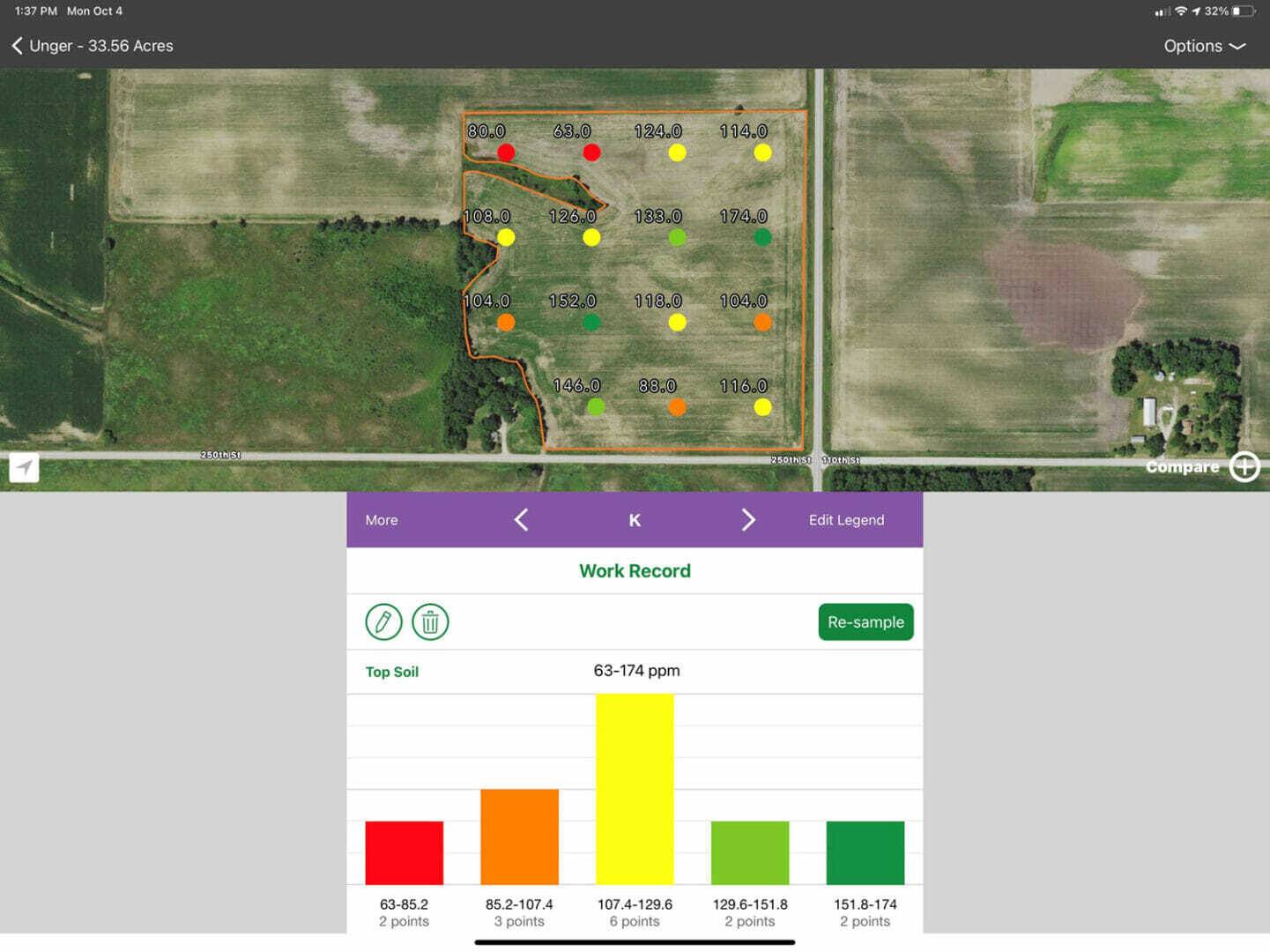
    Some farmers are thinking about cutting back on their fertility program for 2022 crops because fertilizer costs are increasing and pre-order prices aren’t guaranteed into next spring. I understand that price hikes cause uncertainty. As someone who also farms, I feel the same way. What I’ve learned is that fertility is the foundation to keeping a crop healthy all season. Top-performing hybrids need food to fuel their growth.

    Below are three questions to ask yourself as you plan your 2022 fertility program:

    Phil TT potassium levels

    1. Are you keeping potassium levels up? Potassium (K) is critical for handling drought stress and late-season stalk health. Depending on cation exchange capacity (CEC), you want to see K levels of 150 to 220 parts per million (ppm) on your soil test. North Dakota State University (NDSU) research reveals the type of clay soil (high vs. low shrink swell clay) is key to fertilization. High shrink swell clay soils must be kept at that 200-ppm threshold. When these soils dry out, they hold the K between clay layers much tighter. On soils with low shrink swell potential, the 150-ppm threshold will provide enough K throughout the season. Have you ever noticed how some soils are more forgiving after you accidently cut ruts when it’s a little wet? Note those soils because they hold K tighter, prohibiting your crop from using it.
    1. Thinking about cutting back on nitrogen? Nitrogen is more closely tied to yield than any other nutrient. Corn takes up approximately 150 to 300 pounds of nitrogen (N) to reach its full yield potential, but this doesn’t have to all go down as commercial fertilizer. Nitrogen needs depend on several factors including crop rotation, manure application, green manure, and residue management. Consider applying nitrogen in the spring with a nitrification inhibitor on lower CEC soils or if it’s a wet spring. The best practice in the fall is to wait until soil temps are below 50 degrees before applying nitrogen.
    1. How are you valuing manure? When comparing fields where manure was applied to fields that only get commercial fertilizer, you realize fertilizer is worth the additional hassle to apply. Microbes in the manure and the biology that feeds on it can build nutrient levels much faster in the soil as compared to commercial fertilizer. It’s important to have a representative manure analysis to know what you are applying.

    Remember, every 100 pounds of nitrogen applied requires about 500 pounds of lime to offset the acidity created by the nitrogen conversion process. Make sure your pH is correct, so all the nutrients in your soil are available to your growing crop. Correct soil pH before you try to build your P, K or micronutrients.

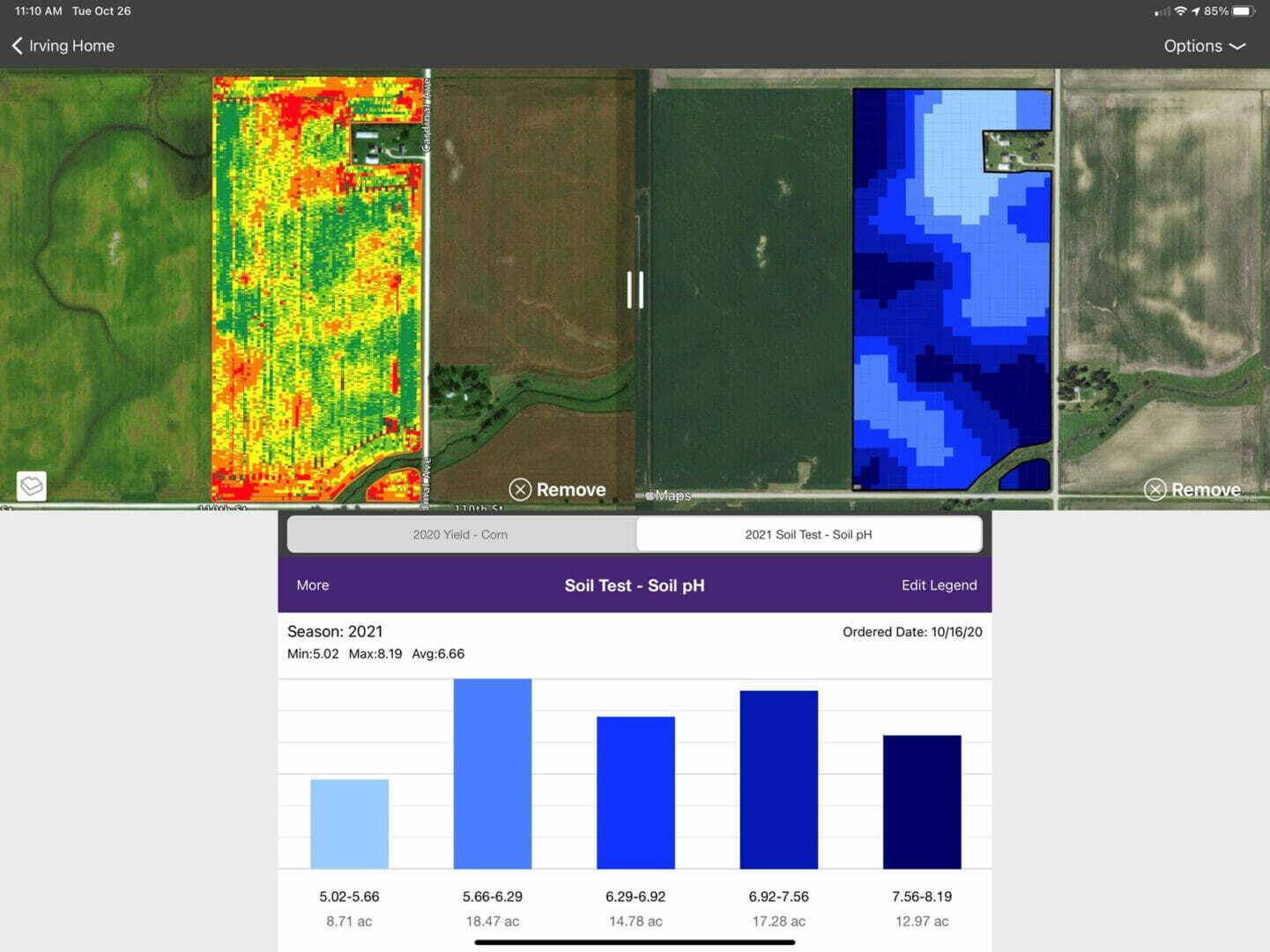
    Feel free to call me if you have any questions about how Data Forward can help you collect and store information that can lead to more profitable farm management decisions.

    Team Latham

    October 29, 2021
    Agronomics, Corn, Crop, Fertility, General, Precision Ag, Soil
  • Latham Hi‑Tech Seeds

    #AskTheAgronomist: Fall Nitrogen Considerations

    Maxresdefault

    As harvest comes to a close, the next item on many farmers’ minds is fertilizer. With prices nearly double previous levels, it’s important to get the timing – and the form – right for your fields, management styles and spring crop plans. Precision Agronomy Advisor Phil Long reviews the nitrogen cycle, product options and ways to make sure the fertilizer you apply now is ready for your crop in the spring.

    Laura Cunningham

    October 27, 2021
    #AskTheAgronomist, Agronomics, Crop, Fall, Season
  • Latham Hi‑Tech Seeds

    Improve Meat and Milk Production with Better Silage

    Corey feature image

    “Repetition is effective. Repetition is effective.” – Legendary Broadcaster Paul Harvey

    The massive amounts of information we process each day makes it easy for messages to get diluted or forgotten. That’s why I find it helpful to continually review the basics, especially when it comes to feeding corn silage.

    What gets fed to dairy cattle, as well as to beef cattle, affects the quality and quantity of the milk and meat produced. We know there is a correlation between starch and fiber digestibility with rates of gain. Getting the most tonnage and high nutritional concentration gives you the best chance of improving milk quality and production in dairy, as well as rates of gains in beef.

    Most of the silage research to date deals with feeding corn silage to dairy cattle. However, Iowa State University has updated its Beef Corn Silage Calculator that ranks the potential value of corn silage varieties used in beef rations.

    You also get an index ranking for Latham® hybrids in our seed guide. Our index rating shows a hybrid trend on a multi-season, multi-environment basis. Keep in mind that management practices, weather, and fertility can dramatically impact forage quality.

    Simply stated, here’s what we want from corn silage: high tonnage in the field and high quality in the bunk. Listed below are some basic corn silage terms to provide a better understanding of corn silage yield and quality:

    1. Dry Matter Basis (DM). Most all feed comparisons are done on a dry matter basis where all the moisture is removed. This helps provide consistency.
    2. Corn Silage Composition. Typical corn silage composition is 50% grain to 50 % stover on a dry matter basis.
    3. Grain yield. High-yielding grain hybrids tend to bring great tonnage and quality. Yield contributes to tonnage and quality.
    4. Nutritional value of the kernel. The value of corn silage is related to its energy content from starch, fat and amino acids. Corn silage provides energy from digestible fiber and from the starch contained in the kernel.
    5. Corey fecal starch tableStarch Digestibility. Increasing starch digestibility supports rumen bacteria and increases energy supply to dairy and beef cows. It’s estimated that for every 1 percent of fecal starch that passes into the manure, milk production is reduced by 0.72 pounds per head per day. This adds up!
    6. Fiber Digestibility. Hybrid selection, environment, and management practices impact fiber digestibility in corn silage. It’s estimated that for every 1 point of increased or improved fiber digestibility, milk output of a dairy cow can improve about one-half pound of milk per day per head.
    7. Non-Fiber Carbohydrate (NFC). Corn silage is about 50 percent NFC. Note: There is a correlation between this number and the grain percentage.

    There is an ocean of information available from seed guides to feed reports. Ultimately, it comes down to considering the end use first. Match your end use goals with product features and proper placement for maximum ROI at the bunk.

    Webspec Admin

    October 22, 2021
    Corn Silage, Crop, Fertility, General
  • Latham Hi‑Tech Seeds

    #AskTheAgronomist: Evaluating Fall Fertilizer Decisions

    Ask the agronomist cover photo for video 01

    When faced with high fertilizer prices, what considerations should factor into next season’s investment? Precision Agronomy Advisor Phil Long addresses each macronutrient’s effect on yield and performance plus the pros and cons of investing versus scaling back for next season.

    Webspec Admin

    October 20, 2021
    #AskTheAgronomist, Agronomics, Corn, Crop, Fall, Fertility, Season, Seed Treatment
  • Latham Hi‑Tech Seeds

    Take the Test and Beat the Pest!

    Fig 1

    Fig 1By robbing farmers of more than 100 million bushels annually, Soybean Cyst Nematode (SCN) is estimated to be the #1 yield-robbing soybean pest or disease in the United States. Farmers may scream over lost yield this fall, but SCN is considered a “silent yield robber” due to a lack of above-ground symptoms in most fields.

    Immediately after harvest is the best time to take soil samples for SCN. Several universities have programs that offer free soil samples to evaluate SCN, so check with your local Extension office to see if you qualify.

    Think SCN isn’t a problem in your fields? Think again! Dry soil conditions, especially early in the growing season, can greatly increase the effects of SCN infestations. I received numerous calls in June and July about yellow, stunted soybeans. Most farmers suspected Iron Deficiency Chlorosis. Upon further inspection, SCN was almost always present and in larger numbers than previously observed. When I asked whether these farmers had taken a recent soil sample for SCN, most had not. They admit to mostly relying on SCN-resistant varieties to control or minimize the losses from this pest.

    We have known for years that PI 88788 is gradually losing its efficacy against the pest, and more than 95% of SCN-resistant soybeans in America have PI 88788 as the source of gene resistance.  Since 1997, a team of researchers at Iowa State University led by Dr. Greg Tylka has conducted annual in-field trials with hundreds of SCN-resistant varieties. They measure agronomic performance and SCN population densities from planting until after harvest.

    Scientists have determined that to be effective, SCN-resistant varieties must maintain less than a 10% reproduction rate of SCN during the growing season.  Since 2004, Dr. Tylka and his team have noticed that the average of all PI 88788 varieties in their trials have gradually exceeded that threshold. They have also noted that the average yield of those varieties has decreased as the SCN reproduction has increased. For more information on these studies, visit www.isuscntrials.info. Other land-grant university researchers have reported similar findings.

    To effectively manage SCN in the future, soybean breeders are focusing on other sources of gene resistance. Your Latham Soybean Product Team is continually evaluating and searching for opportunities to bring new, better resistant varieties to our lineup. We also are evaluating several seed treatments for battling this pest. Saltro®, our seed treatment product for SDS protection, is also noted to have activity against SCN.  More information from our Latham Elite trials will be available post-harvest.

    “TAKE THE TEST.  BEAT THE PEST.” is a slogan/campaign by The SCN Coalition™ and funded by the Soybean Checkoff and is designed specifically to promote awareness of SCN. These microscopic roundworms, which infect the roots of soybeans and other plants, can be present in a field for years before above-ground symptoms are visible. We encourage you to take the test this season, so you can plan accordingly for the future.

    Mark Grundmeier, Product Manager

    October 15, 2021
    Agronomics, Crop, Disease, Drought, Fall, General, Insects, Season, Seed Treatment, Soil, Soybeans, Spring, Weather
  • Latham Hi‑Tech Seeds

    #AskTheAgronomist: Why is My Combine Black?

    Maxresdefault

    Precision Agronomy Advisor Phil Long addresses an interesting question surfacing this fall, “Why does my combine seem like it’s covered in soot?” Tune in to uncover what’s happening in the field as we harvest, plus some cautionary tips for livestock farmers if you are feeding cornstalks this season.

    Webspec Admin

    October 13, 2021
    #AskTheAgronomist, Agronomics, Corn, Crop, Fall, Season
  • Latham Hi‑Tech Seeds

    #AskTheAgronomist: Stalk Integrity at Harvest

    Maxresdefault

    Harvest is in full swing across Latham Country with reports of corn coming in at 16% moisture already in early October. Precision Agronomist Phil Long discusses how and why to evaluate stalk integrity as you decide which fields to harvest next.

    Webspec Admin

    October 6, 2021
    #AskTheAgronomist, Agronomics, Corn, Crop, Fall, Season
  • Latham Hi‑Tech Seeds

    Tips for Determining Why Stalks Are Lodging

    LH 5725 VT2PRO

    LH 5725 VT2PROAs Harvest 2021 gets underway, we will start our morning checks to see which fields should be prioritized for harvest. Hybrid maturity helps guide us to certain fields, but sometimes a field stands out for another reason like late-season stalk lodging.

    Hybrids have different susceptibility to stalk rots as the season progresses. Knowing the hybrid you have on every field – and how each hybrid handles stalk rot diseases – is important. Another consideration is whether the hybrid you planted is a racehorse because racehorse hybrids do whatever it takes to fill an ear even if that means cannibalizing the stalk. This can be an unfortunate reality in a year like 2021 where moisture was very limited across most of Latham Country. A fungicide can keep the lower stalk healthier later into harvest, so if you choose to spray, you likely will see better standability.

    Decisions made early in the season also influence late-season stalk health. Planter singulation is key. Doubles or multiples causes corn plants to grow on top of one another, so most of the time only one of those plants will develop an ear. Shallow planting depth causes the “crown” to establish closer to the soil surface, predisposing plants to root rot during this point in the season. Uniform competition is really important for neighboring corn plants, so that’s why good singulation and even emergence are important.

    Planting population can influence stalk diameter and stalk health. You can push planting populations more if you keep your fertility levels in check. If you’re having stalk lodging issues and tend to push higher populations, then test soils and investigate where you may have an issue. If you notice foliar symptoms as you’re scouting throughout the season, then there is no better time than right after harvest to take soil samples. Potassium is a key nutrient for building healthy stalks. Micro-nutrients are also important, but it requires a balance. Too much of one nutrient can prevent other nutrients from being taken up by the corn plant.

    As you walk your fields prior to fall harvest, do the “pinch” or “push” test to monitor stalk health. If you’re wondering about whether your soil fertility is influencing stalk health or haven’t soil tested in a while, feel free to give me a call. I’ll be glad to talk with you about the benefits of using Latham’s Data Forward® program.

    Team Latham

    October 1, 2021
    Agronomics, Corn, Crop, Fall, Fertility, General, Growth Stages, Season, Soil
  • Latham Hi‑Tech Seeds

    Managing Fall Armyworms in Alfalfa

    2021 08 27 Fall armyworm

    “The alfalfa is alive with crawlers!” A remark I heard last week as I scouted an alfalfa field heavily infested with Fall Armyworms. 2021 threw some curveballs this year, but I certainly could not have predicted a widespread Fall Armyworm outbreak with much of the Midwest under drought conditions.

    Spodoptera frugiperda, are a southern species of Armyworm that do not overwinter in the Midwest. As populations build during the summer, moths fly north often reaching the Midwest later in the summer or early fall. Hence the common name “Fall Armyworm”.

    Fall Armyworms can feed on alfalfa, pastures and newly seeded cover crops and small grains. This year there have even been reports of them taking out entire lawns in search of lush plant material to feed on in dry conditions.

    Life Cycle and Feeding Patterns

    The quick lifecycle of the Fall Armyworm is what makes their feeding pattern so impactful to alfalfa stands. Eggs are laid by moths in clusters of 50-200 and hatch roughly four days later. Larvae grow quickly and move widely. Days 14-30 when larvae are growing to sixth instar are their most destructive stage as many growers notice a small, stressed patch one day with complete defoliation in as little as 48 hours.

    Scout now for fall armyworm

    Threshhold and Treatment

    One to two worms per square foot can destroy seedling alfalfa and populations of 10-15 per square foot have been observed to destroy 12 to 14-inch alfalfa. Some experts advise not treating unless the majority of larvae are less than 3/4” long since more advanced larvae are nearing the end of their lifecycle. I agree with that line of thinking, however in alfalfa this must be heavily weighed against survivability of your alfalfa or cover crop stand. The short lifespan of armyworms means eggs can be laid at different times and all stages (instars) can be present in your field. With the aggressive and destructive nature of the insect, chemical treatment may be best way to control.  It’s tricky, as we are in that time frame of “no cut” for alfalfa, a time which we need every single leaf to generate and build our root reserves for the winter months.

    Bottom line: scout early, often, and plan quickly.

    Webspec Admin

    October 1, 2021
    Agronomics, Alfalfa, Insects
Previous Page
1 … 9 10 11 12 13 … 62
Next Page

Latham Hi‑Tech Seeds

131 180th Street | Alexander, IA 50420

(641) 692-3258

SIGNUP FOR OUR NEWSLETTER
  • Contact
  • Legal
  • Dealer Center
  • Seedware Login
  • Latham Gear

© 2025 Latham Hi‑Tech Seeds. All rights reserved. | Iowa Web Design by Webspec | Privacy Policy

Latham® Hi-Tech Seeds is a trademark of M.S. Technologies, L.L.C., 103 Avenue D, West Point, IA 52656.