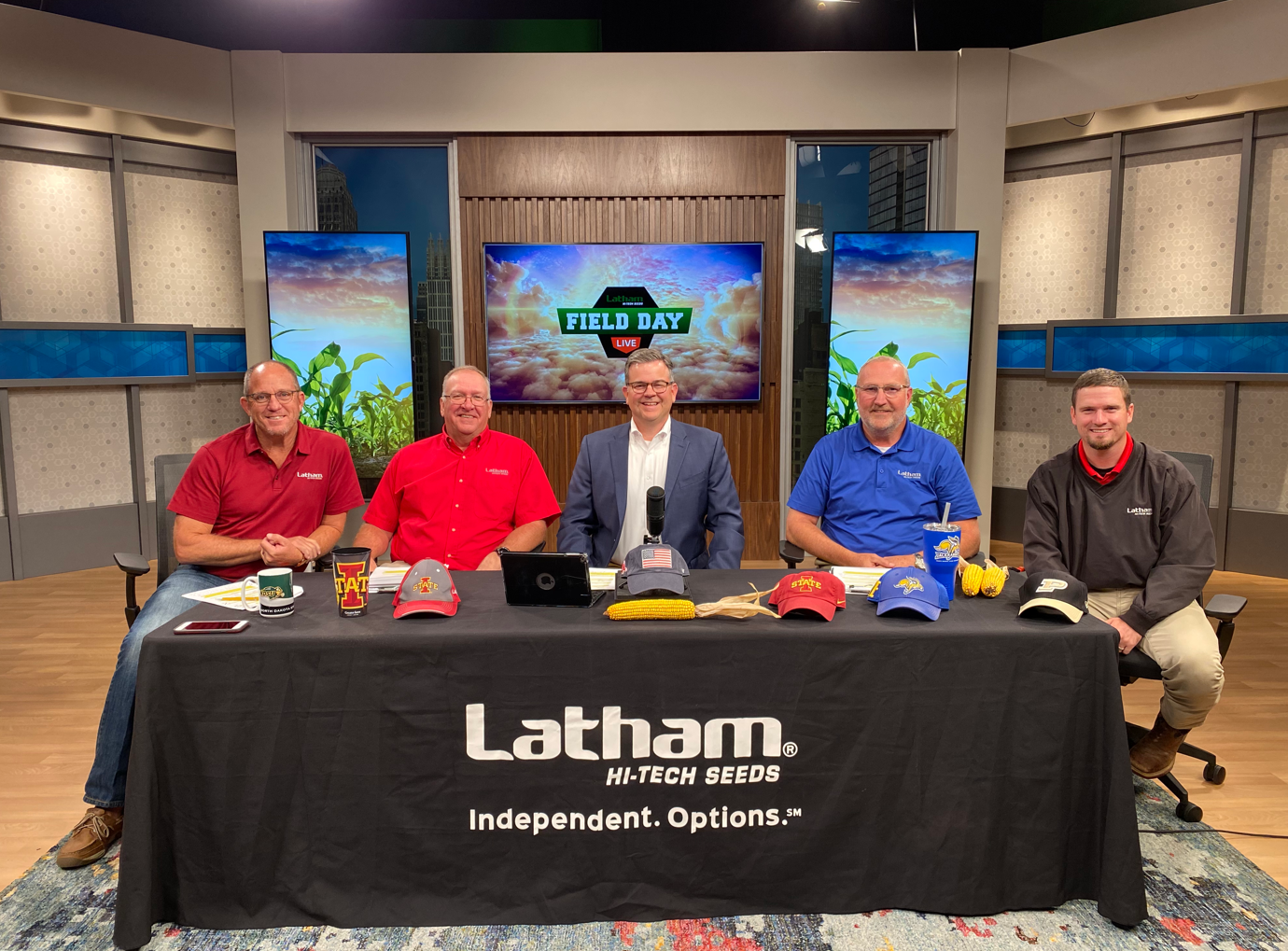
Precision Agronomy Advisor Phil Long addresses a series of questions about foliar feeding soybeans and shares some tips and practices to help with return on investment.
-
Latham Hi‑Tech Seeds
#AskTheAgronomist: Foliar Feeding Soybeans

-
Latham Hi‑Tech Seeds
5 Key Takeaways from XtendFlex® and Enlist E3® Systems

Based on a recent needs assessment poll conducted by Latham Hi‑Tech Seeds, the top two soybean trait technologies for 2022 planting will be Enlist E3® and XtendFlex® soybeans.Both technologies have triple-stacked traits, featuring tolerance to glyphosate (Roundup) and glufosinate (Liberty®) herbicides. Enlist E3 soybeans also are resistant to 2,4-D Choline herbicides (Enlist Duo® & Enlist One®). For XtendFlex® soybeans, the 3rd tolerance is to dicamba herbicides like XtendiMax®, Engenia® and Tavium®.

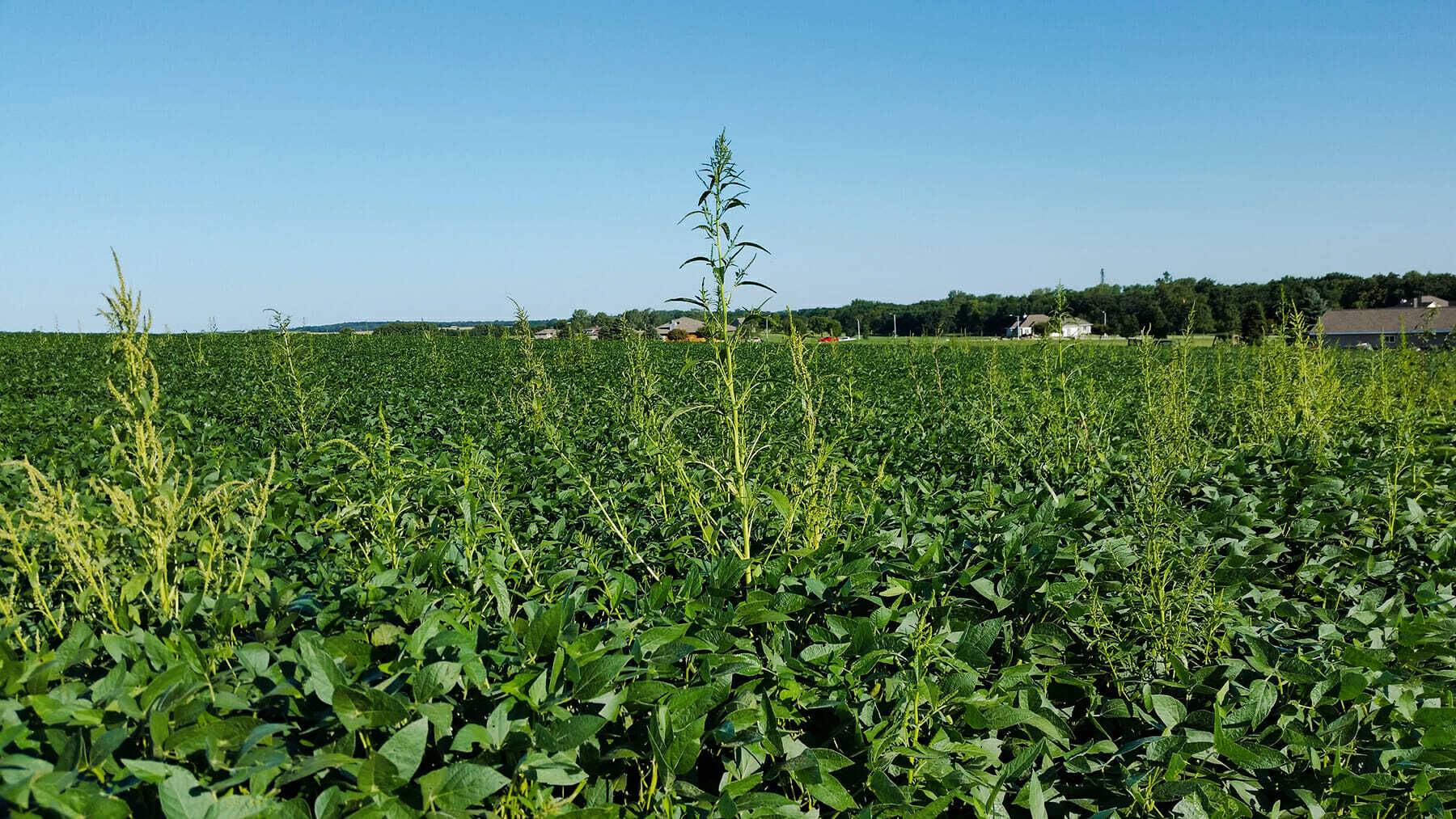
Do everything you can now to keep resistant weeds from gaining a foothold in your fields. Following are five key takeaways for effectively using weed control programs with both trait packages:
- Start with a clean field. One or two tillage passes may be necessary to take care of emerged weeds. For no-till operations, a good burndown herbicide program is needed.
- Always use a pre-emergent herbicide program whether before or after you plant. Consult your local ag chem retailer for herbicide recommendations for your area but try to use a program with multiple herbicides and sites of action.
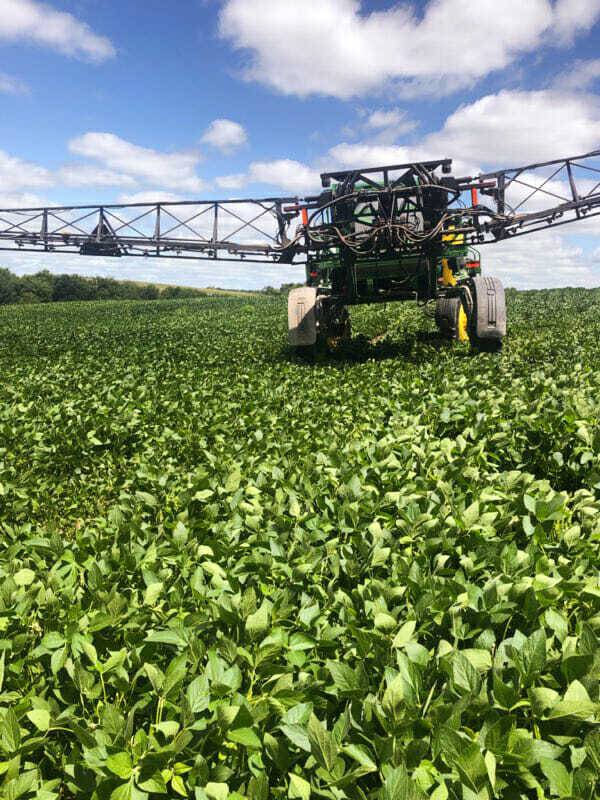
- Use a strong (multiple site of action) post-emergent herbicide program.
For post-emergent applications in Enlist soybeans: I like what I’ve seen when Enlist One and Liberty are applied together. Pay attention to weed size, the stage of your crop, and label rates. If needed, you can use a second application of Enlist One if you wait at least 12 days and it’s before the full bloom stage (R2).
For post-emergent applications in XtendFlex soybeans: You CANNOT tank mix any dicamba-based product with Liberty! I like applying XtendiMax (plus applicable tank mix partner/s) either pre-emergence or early post-emergence and then having the flexibility to come back at or before R1 with Liberty. This maximizes the benefits from this new technology while keeping you in compliance with the EPA-approved herbicide labels. Applying XtendiMax early also decreases the chances of off-target dicamba movement to sensitive crops.
- As always, read and follow all label directions for herbicide use. Whoever applies these herbicides is directly responsible for knowing the labels, including all setback and buffer requirements.
- Knowing what is planted where is a matter of crop life and death. All forms of dicamba and 2,4-D belong to the auxin (Group 4) chemical family but react differently, depending on the herbicide trait package being used. Remember, this family primarily controls broadleaf weeds. Most grasses show little or no effect from the application of Group 4 herbicides. XtendFlex and Xtend soybeans are tolerant only to dicamba-based products and can be killed with an application of any 2,4-D product. Likewise, if you spray Enlist E3 soybeans with dicamba, they will die.
-
Latham Hi‑Tech Seeds
#AskTheAgronomist: High-Yield Soybeans and Node Count

As the calendar moves closer to harvest, many farmers are looking to gauge yield expectations in soybean fields. In this week’s segment, Precision Agronomist Phil Long explains the correlation between node count, spacing, population and yield.
-
Latham Hi‑Tech Seeds
6 Tips for Harvesting Corn Silage in Drought Conditions

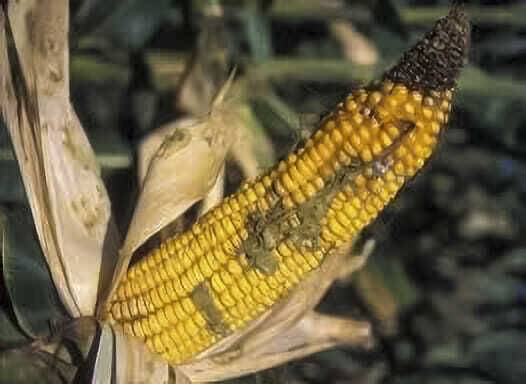
Drought-stressed corn can create a range of silage harvest issues. With much of Latham Country experiencing abnormal to extreme drought conditions, risks such as high nitrate levels, variable moisture content and potential for yeasts, molds and mycotoxins must be accounted for and well understood.
Taking extra precautions to ensure a safe and productive corn silage harvest is a worthy investment. Here are a few key considerations to keep in mind this summer and fall.
- Consult your team. Before you make any corn silage harvest decisions, verify your plan doesn’t impact your insurance coverage. It’s also good to discuss feed-out plans with an animal nutritionist so you have a plan for when and how the forage will be used.
- Test chopping height. As you prepare to harvest silage, test various chopping heights for nitrates. Nitrate concentration tends to lessen as chopping height increases. Measure your chopping height and then send a 5-inch stalk sample to the lab. It is best to send at least two samples. By testing different heights across the plant, it gives you a general idea of nitrate hot zones. Also, remember that recent rains can increase nitrate levels.If you harvest high on the stalk to avoid high nitrate levels, your tonnage will be reduced. It is estimated that you harvest 1 ton per foot of no ear or poorly eared corn.
- Monitor moisture content. As fields vary, so too will harvest moisture. Ideally, you want to get to 65% whole plant moisture. If it is drier, packing can be difficult but mixing in small particles can help if needed.
- Test on harvest day. Testing nitrate levels on harvest day will give you a good frame of reference for the final product. If it shows high, do not feed it to pregnant animals, and consult with your nutritionist regarding feeding to it the rest of your livestock. Allow this crop to ensile at least 21 days, and then retest.
- Innoculate. Anything to help ensile and preserve the forage after chopping is important. Because drought-stressed corn can be so variable in content, moisture and packing densities, it can lead to potential issues with high nitrates, mold, yeasts and mycotoxins. A good inoculant can help the fermentation process and reduce any further problems during feed out.
- Test before you feed. Ensiling can help reduce nitrate levels by as much as 40-60%, but the final nitrate levels can be dependent on good packing. It is always best to test before you feed silage to livestock. As a rule of thumb, take at least two samples from different areas of the silage pack. One sample is just a number, two samples start the trend and three samples add confidence. There is just too much at stake to risk nitrate poisoning.
While Mother Nature can certainly throw some unexpected curve balls our way, these tips can help you make the best of a not-so-ideal harvest scenario.
-
Latham Hi‑Tech Seeds
#AskTheAgronomist: Which Yield Factor is Most Important?

Which yield factor has the most bearing on final yield: kernel round, ear length or test weight? Precision Agronomist Phil Long and Intern Kirsten Suntken do the math in this segment of #AskTheAgronomist.
-
Latham Hi‑Tech Seeds
#AskTheAgronomist: Corn Rootworm Pressure Now and Into the Future

Corn rootworm pressure has been steadily increasing over the past few years across the Midwest. Precision Agronomy Advisor Phil Long discusses how to identify and gauge pest pressure in your fields and plan for the future.
-
Latham Hi‑Tech Seeds
#AskTheAgronomist: Soybean Cupping and Recovery

Each year, many farmers observe cupping in soybeans for a variety of reasons ranging from herbicide drift to environmental factors. Precision Agronomist Phil Long covers how to stage damage and evaluate recovery potential.
-
Latham Hi‑Tech Seeds
Scout Alfalfa for These Damaging Pests

As with all crops, scouting alfalfa acres is key to controlling pests. Each pest has a different life cycle based on different variables, such as heat and moisture. While weather plays a key role, there are still cyclical patterns in which pests are more common. Below is a chart showing the most damaging pests to scout for according to season.
Potato Leafhopper and Pea Aphids are the two pests that cause the most damage annually across Latham Country. Many farmers question how to judge when spraying an insecticide is a wise choice. Below are some tips to help you scout fields and arrive at a decision.
- WHAT TO LOOK FOR. Scouting should begin five to seven days after the first cutting is taken and should continue weekly or bi-weekly if population counts reach close to threshold on a particular day. When scouting for Potato Leafhoppers, look for stunted plants, yellowing leaves in a v-shaped pattern beginning at the leaf tip, as well as “hopperburn,” or a red edge found on the leaf. This red burn can be easily confused for Boron deficiency. Pea Aphids will cause plants to lose their green color and wilt.
- HOW TO TAKE SWEEP SAMPLES. The easiest way to scout for these insects is to use a small sweep net. Walk a W-shaped pattern in the field, taking samples from five randomly selected areas. Leafhopper infestations generally begin on the edges of the field, so include these areas in your checks. Tips for Taking Sweep Samples:
- Swing the sweep net in a 180-degree arc, so the net rim strikes the top 6 to 8 inches of growth. Each 180-degree arc is one “sweep.”
- Take a sweep from right to left, walk a step, take another sweep from left to right, and so on.
- After taking five sweeps, quickly close the net and count the number of each insect.
- Divide this number by five to get the average for that area; record the average for each of the five areas in the field.
- THRESHOLDS AND TREATMENT. A plant’s immune system tends to handle more pressure as alfalfa matures, however, the harmful compounds that each insect species injects while feeding can reduce yields. When left unmanaged, severe cases can shorten the life cycle. Treatment for Potato Leafhoppers and Pea Aphids can follow these guidelines.


Early harvests often can be used to control both leafhoppers and aphids. Insecticides are a tool to help alter the life cycle of a pest and are especially helpful if thresholds are reached when alfalfa is small. Several insecticides are labeled for alfalfa with different classes and modes of action. Most have a harvest wait period depending on class and rate used. Be sure to follow the label guidelines closely. As with herbicides, alternating modes of action reduces the risk of resistant pests.
-
Latham Hi‑Tech Seeds
Finding the Right Products for Your Farm

At Latham Hi‑Tech Seeds, we take pride in our ability to identify the best corn hybrids and soybean varieties to match our customers’ needs. We take time to listen to our sales team, which includes our dealers, talk about the needs of farmers across Latham Country. Their information about desired characteristics helps direct our research and testing efforts.
The journey to finding new products begins with our robust collaborative access to germplasm. Latham’s Product Team works in conjunction with many germplasm sources, including our own, to fuel our search to find the best products for the specific geographic regions we serve. We also have great relationships with trait providers to bring needed traits into our products. After we either find or create the desired genetic combinations, we move into the evaluation stage of our process.
Our Elite Trial program continues to grow with additional test locations across our sales footprint. We are testing in every corner of Latham Country. This means that we test products where they would be sold, which allows us to find unique niche products that excel in a local environment.
To help position products to fulfill our needs assessment, our regional sales managers (RSMs) get an early look at the products we’re considering for our lineup. Having “in-trial” conversations about products with our sales team is a tremendous benefit to Latham’s Product Teams. In addition, conversations about products in trials helps builds confidence with our sales team to position products. We have consolidated both our corn and soybean evaluation processes into one Elite Trial system, which allows our product teams to assess data more easily.
Once we identify products from the Elite Trials that meet Latham Hi‑Tech Seeds’ standards and fulfill our customers’ needs, we release them for sale. We also place these new products in our Latham Showcase plots, as well as in the independent F.I.R.S.T. Trials program, to once again showcase the performance of these new products and to provide opportunities for our customers to gain confidence in their performance.
Latham’s track record of performance in our Showcase plots and F.I.R.S.T. Trials proves the system we have built works! Our process of beginning with a large diverse pool of genetics; testing potential new products thoroughly in all parts of our footprint; and proving our performance in our final stages of Latham Showcase and F.I.R.S.T. Trial plots complete our journey in finding outstanding products.
I’m so excited about the products we’re testing this summer and look forward to talking about them in more detail at our upcoming field days. Watch your mail and social media for more details coming soon!
-
Latham Hi‑Tech Seeds
Get an “Early Look” at New Products

We have an exciting product lineup in store for 2022!
In September 2020, Bayer CropScience announced the approval of XtendFlex® soybeans for the 2021 growing season. Latham Hi‑Tech Seeds was prepared and launched seven new soybeans in this exciting new technology. We believe this new trait gives farmers an extra tool for battling the ever-increasing problem of herbicide-resistant weeds.

For the 2022 season, we are introducing these six new XtendFlex products:
- L 0254 XF – This 0.2 soybean carries the C-gene for Phytophthora, full resistance to Brown Stem Rot and excellent tolerance to Iron Chlorosis. Avoid SCN-infested fields.
- L 0984 XF – Featuring the Rps3-a gene for Phytophthora, this new 0.9 product also has strong tolerance to SCN, Brown Stem Rot, White Mold and Iron Chlorosis.
- L 1383 XF – This new Ironclad has L 0982 R2 as a parent! It has the Rps-3a gene, full resistance to Brown Stem Rot and good scores for White Mold, IDC, SCN and Stress.
- L 1784 XF – L 1858 R2 is a parent of this new 1.7 soybean! It features strong SCN, full resistance to Brown Stem Rot with very good scores for Iron Chlorosis and Stress.
- L 2786 XF – This new line has the Rps1-c gene for Phytophthora, full resistance to Brown Stem Rot and strong tolerance to SCN, White Mold, Iron Chlorosis and Stress.
- L 3086 XF – Replacing L 3058 XF, this SCN bean features the Rps1-c gene, full resistance to BSR and great tolerance to White Mold & Stress. It’s a fantastic Ironclad for no-till acres.
On the Enlist E3® side, we are adding four new soybeans:
- L 1219 E3 – This 1.2 bean carries the Rps1-c gene for Phytophthora and strong tolerance to SCN, SDS, Stress and Iron Chlorosis. It also has the Excluder gene for high-salt soils.
- L 1558 E3 – Here’s a 1.5 Ironclad that features the Rps3-a gene for Phytophthora, full resistance to BSR and great scores for SCN, Sudden Death, Iron Chlorosis and Stress.
- L 2458 E3 – This new E3 line has the Rps1-k gene, full resistance to BSR and strong scores for SCN, Sudden Death, Frogeye, Charcoal Rot, Stress and Iron Chlorosis.
- L 3479 E3 – Highlights of this new 3.4 bean K-gene for Phytophthora include complete BSR resistance, great SCN tolerance and strong scores for Sudden Death, IDC and Stress.
Our Product Development Teams have really done their homework for next year! Be sure to check out next month’s blog when we will highlight new corn products for 2022.
The legacy that we build our product decisions on is based on a foundation of quality and performance. We believe this foundation benefits Latham® dealers and their customers because we provide seed that is bred specifically for their geographies. Rest assured WHY we do what we do will never waiver!