Latham Hi-Tech Seeds

(641) 692-3258

  • Home
  • Products
    • Corn
    • Soybeans
    • Alfalfa
    • Corn Silage
    • Seed Guide
  • Performance
  • Find a Rep
  • Media
    • Blog
    • News
    • Videos
    • Podcasts
    • TECHTalk
  • About Us
    • Company History
    • Our Mission
    • Careers
    • Become a Rep
    • Sowing Seeds of Hope
  • Contact Us
  • Latham Hi‑Tech Seeds

    4 Factors to Improve Efficiency in 2021

    Pic 2

    It was a beautiful, extended fall season, giving us ample time to finish tillage, fertilizer applications, tilling and other field work. Our machinery was strategically tucked away in the shed before the snow fell. Speaking of strategic placement…

    Is your planter all the way in the back of the shed because you aren’t planning to touch it until March? Now is actually a good time to start thinking about your planter. New technology allows us to make our existing planter as good as – if not better than – the brand new planter on the lot at the implement dealership. One perk of working with us at Latham Hi‑Tech Seeds is using our Data ForwardSM services to help you make some unbiased decisions. Perhaps you weren’t happy with the way your corn was spaced in 2020 or maybe you noticed uneven emergence last spring. We can help you determine why this happened and fix these issues before going into 2021 planting season.

    If you attended a plot tour last summer or listened online to our Corn Product Manager Lyle Marcus, you know he emphasized the importance of planting depth. It can be difficult to stay consistent across the field; controlling planter speed is one of the simplest ways to achieve optimum seed placement. We can review planter speed. We also can explore technology options for your planter, so you can monitor and control variabilities throughout a field.
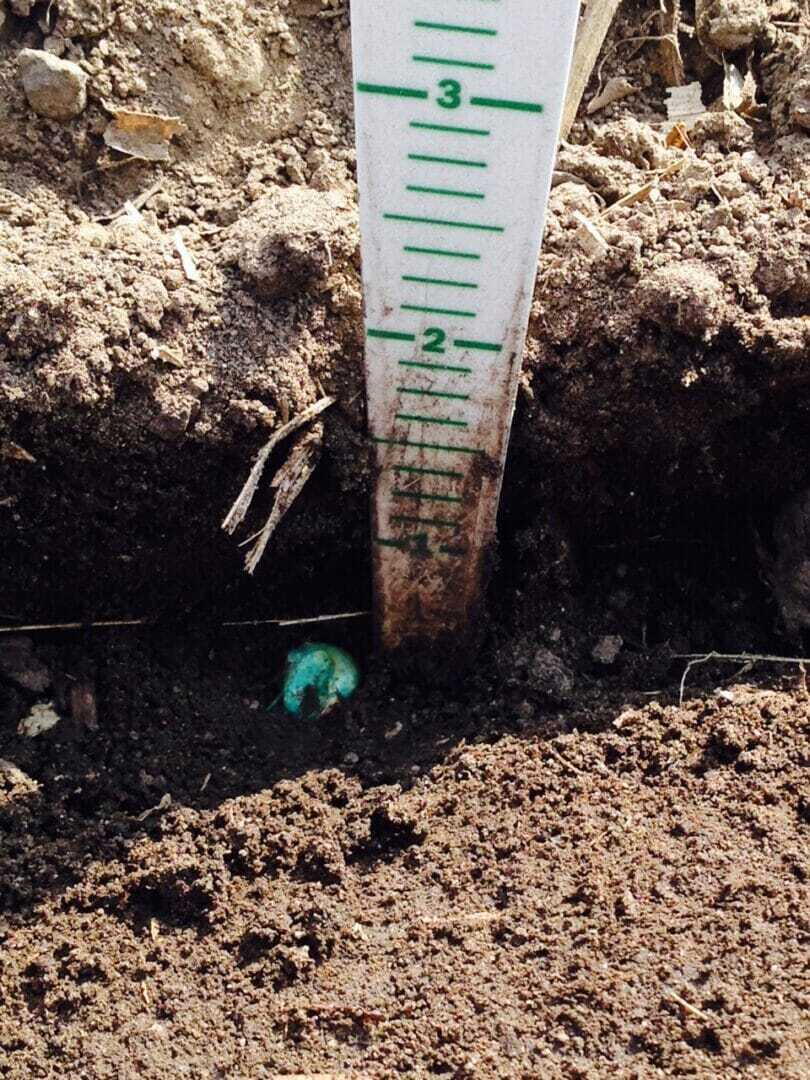
    Another factor to consider is planting depth. Oftentimes, we say 2.75 inches is a safe planting depth to allow adequate moisture and growing degree units (GDUs) to attain even emergence.

    There is a lot of talk around two-inch planting depths. This could be optimal if there is adequate moisture. Planting at 2 inches with adequate moisture can get you better emergence due to having faster GDU adaptation. This also means that it could come out of the ground better in crusting conditions, but keep in mind that the key to shallower planting is moisture. It’s risky to rely on moisture being available at that shallower depth.

    We spend a lot of time helping our Data Forward clients improve efficiency. While this can encompass many things, we focus on your planter, seed and equipment. We believe one of the most important assets to a farmer’s operation is the planter. If the planter is not equipped to place that seed where it is going to thrive, then other investments throughout the year are not going to be as valuable either.

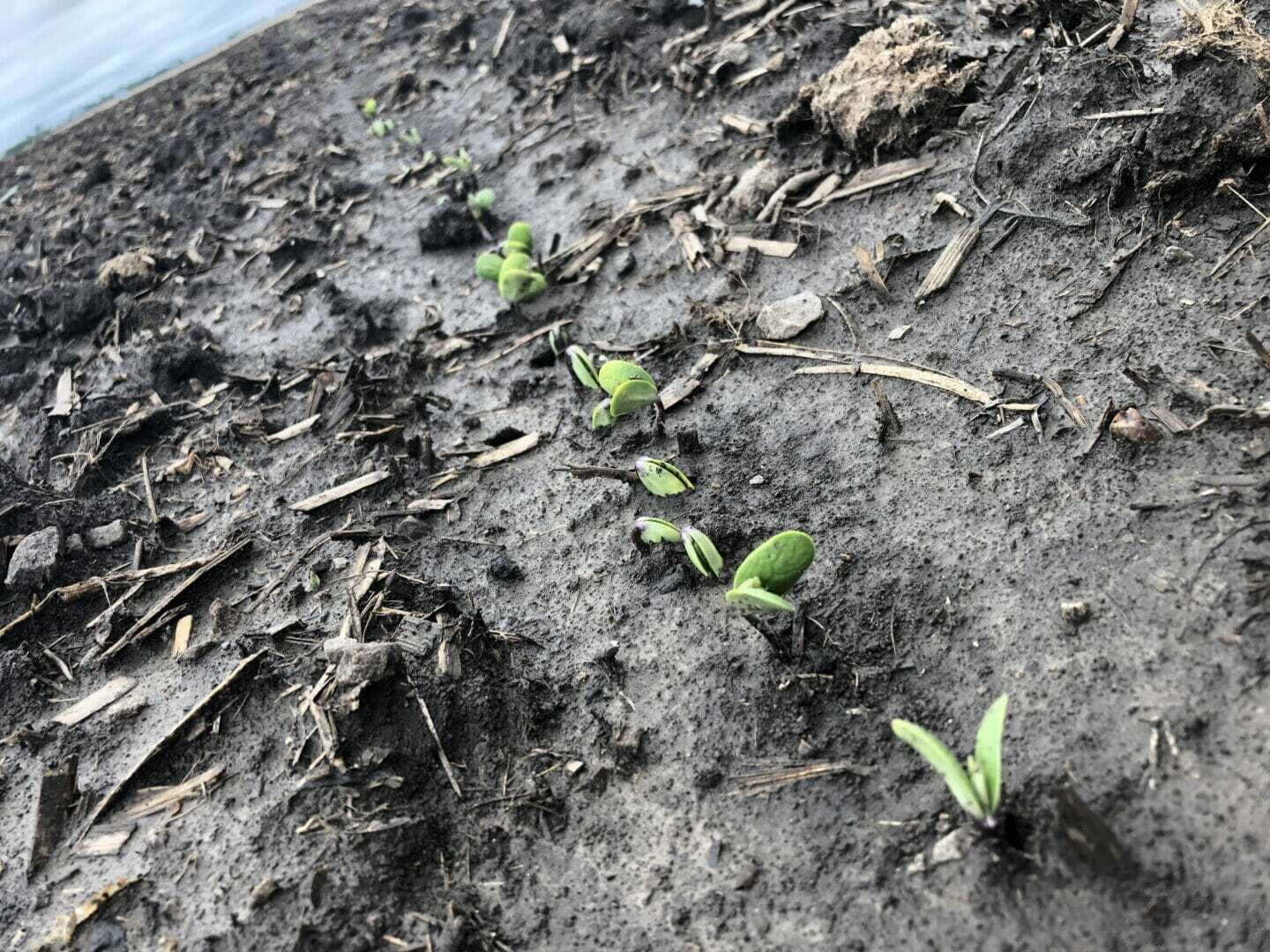
    One of our biggest challenges is helping clients achieve uniform, speedy emergence. If one plant emerges 24 to 48 hours after its neighbor, that plant will compete for the sunlight that its neighbor is already harvesting. The plant starving for sunlight will be a runt for the rest of the growing season.
    Keep these four things in mind when trying to keep even heat and moisture to achieve even emergence:

    1. Manage residue.
    2. Maintain planting depth.
    3. Achieve good seed-to-soil contact (no air pockets).
    4. Eliminate compaction.

    If you want to improve efficiency, planter performance, and data management for 2021, it’s time to plan. Call your Latham Precision Agronomy Advisors now for unbiased recommendations to get your 2021 crop off to a better start!
    Latham Seeds Precision Agronomy Advisors

    January 11, 2021
    Agronomics, Corn, Crop, Emergence, Precision Ag, Soil, Soybeans
  • Latham Hi‑Tech Seeds

    Preliminary Trial Results Show It Pays to Use Saltro®

    Industry Leading Quality

    Industry Leading QualityIn September 2019 the U.S. Environmental Protection Agency (EPA) approved Saltro, a new seed treatment product from Syngenta Seed Care to control Sudden Death Syndrome (SDS) and Soybean Cyst Nematode (SCN) in soybeans. For the 2020 growing season, Latham Hi‑Tech Seeds distributed about 50 trials to Latham® dealers and their customers. Each on-farm trial consisted of a Latham® soybean treated with SoyShield Plus™ that was planted side-by-side with that same soybean treated with SoyShield Plus and Saltro. The majority of these trials were conducted within the parameters of Latham SuperStrip™ plots where a check variety was used to adjust final yield calculations. To date, we have received yield results from 25 of those studies: 16 from Iowa, six from Minnesota and three from South Dakota. I believe it’s worthwhile to share preliminary results with you.

    Comparing the harvested raw yield data, the 16 trials from Iowa showed an average yield increase from Saltro of 2.01 bushels per acre (bpa). The Minnesota plots gave an increase of 3.85 bpa raw yield, and the South Dakota plots came in at 2.24 bpa. Overall, there was a 2.30 bpa yield increase from using Saltro in the raw yield column. The results were very similar when the harvested yields were adjusted to the check. The Iowa plots came in with a 1.84 bpa increase. The Minnesota trials showed a 3.73 bpa increase, and the plots from South Dakota averaged 5.40 bpa better. The overall average in the adjusted yield column came in at 2.31 bpa!

    It should be noted here that there were a handful of trials where the seed treated with SoyShield Plus and Saltro actually showed a yield decrease. While it is difficult to understand and even more difficult to explain, results like this are very common when doing research of this type and are usually attributed to experimental error. I also want to note that we did not see widespread infestations of SDS in 2020. Due to variable weather patterns and a fairly widespread drought, SDS didn’t show up in a lot of fields. We intend to proceed with a similar Saltro study in 2021.

    BOTTOM LINE: While more experiment results will be sent to us yet this year, there is a trend for at least a two bushel per acre yield benefit from using soybean seed treated with Saltro. With a retail cost of approximately $13 for the Saltro, the added yield benefits in a year where SDS was not widespread are fairly substantial. Using the soybean market price of $10.50 per bushel as I write this article, the treatment acted as an insurance policy that paid for itself.

    Check back with us during and after our Post-Harvest meetings to get the updated yield results from this study.

    Mark Grundmeier, Product Manager

    November 16, 2020
    Agronomics, Disease, Emergence, Seed Treatment
  • Latham Hi‑Tech Seeds

    The History of Latham® IRONCLAD™ Soybeans

    IMG 9881

    Soybean Cyst Nematode, Iron Deficiency Chlorosis, Phytophthora Root Rot and Sudden Death Syndrome are just a few of the pests, diseases and agronomic issues that have contributed to lower yields and higher costs. Farmers, who needed protection against these agronomic issues, were hesitant to plant defensive soybean lines in fear of giving up yield.

    Then in the late 1990s soybean breeding techniques were developed that could quickly identify cultivars that had sound defensive traits and were high yielding.

    In 2011, Bill Latham, then head of Latham’s Research program, challenged our Soybean Product Team to find an idea or a concept that would help change the way farmers felt about defensive soybean products. Bill, an ex-Marine aviator, was a military history buff as were several other members of our team at that time. We remembered back to the pre-Civil War era when naval warships were made almost exclusively out of wood. Offensive firepower from these ships was quickly outmatching their wooden defense. Innovators at the time were quick to experiment with using iron plates over the wooden sides. Hence, the term “Ironclad” was born.

    The first ever battle between two ironclads took place in 1862. The Monitor was the Union warship. The Confederacy had captured the Union ship Merrimack, plated it with iron, and renamed it the CSS Virginia. However, the battle has gone down in history as the Monitor versus the Merrimack. Although both sides claimed a victory, in essence it was a draw as neither ship could sink the other. It did, however, dramatically change the course of naval warfare. From that battle on, navies all over the globe began using metal plates over wood and eventually made their ships completely out of metal!

    Back to 2011… After much discussion, it was decided to use the designation of IRONCLAD™ for Latham brand soybeans that had a resistance gene for Soybean Cyst Nematode, a gene for Phytophthora Root Rot and scores of 2.2 or better (on a scale of 1-5) against Brown Stem Rot, Iron Deficiency Chlorosis and either White Mold or Sudden Death Syndrome.

    Latham’s first IRONCLAD soybeans were introduced in our 2013 Product Guide. It was quickly evident that these defensive traits were exactly what farmers in Latham Country needed to protect yield and increase profitability.

    It should be noted here that since the start of our Ironclad program, we have never had a #1 selling soybean that was NOT an IRONCLAD! Additionally, our 2021 Product Guide features 28 Ironclad soybeans out of the total 56 we have listed. That’s truly an amazing advancement during a short eight-year period of time!

    Mark Grundmeier, Product Manager

    November 10, 2020
    Agronomics, Crop, Disease, Emergence, Soybeans
  • Latham Hi‑Tech Seeds

    Latham’s 2020 Virtual Field Day Was “Made for You”

    IMG 6752

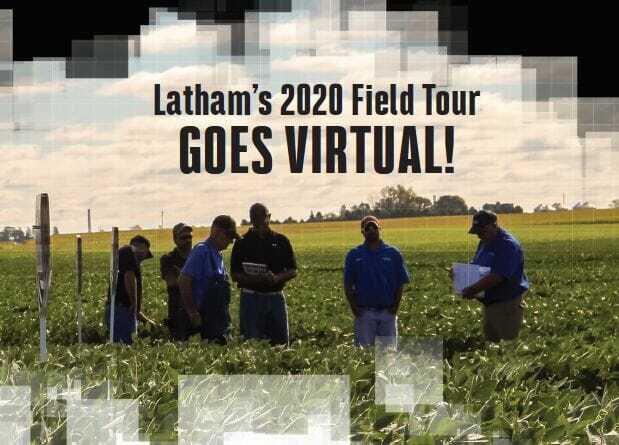
    Virtual cover imageAt Latham Hi‑Tech Seeds, we have hosted multiple field day on wheels. We’ve showcased emerging technologies that allow us to check crops from the air, but this is the first year we didn’t have to worry about the weather on our field day. It’s also the first time we a virtual day event.

    Welcome to 2020! The worldwide COVID-19 pandemic has forced businesses around the globe to deliver information using technology like Zoom, Facebook Live and YouTube. Although we prefer to meet with farmers in person, our team of industry experts has developed some interesting and informative content for you. We hope you enjoy it and find it of value!

    Below is a recap of our 2020 Latham® Virtual Field Day with links, so you can watch agronomic presentations from the comfort of your office or the cab of your tractor or combine:

    • Fortunately, weather events did not affect our production fields. It looks to be another banner year for Latham seed production! You’re invited to join us for this 40-minute industry roundtable with Latham’s Product Team.
    • IMG 6752In this “challenges of harvest” roundtable hosted by Bob Foley, farmers from across the Upper Midwest tell us how they’re managing harvest in not-so-ideal conditions.
    • Put products and practices to the test on your on farm! Precision Agronomy Advisor Darin Chapman discusses on-farm research and the benefits. He covers how you can use “small data” to work on your own farm.
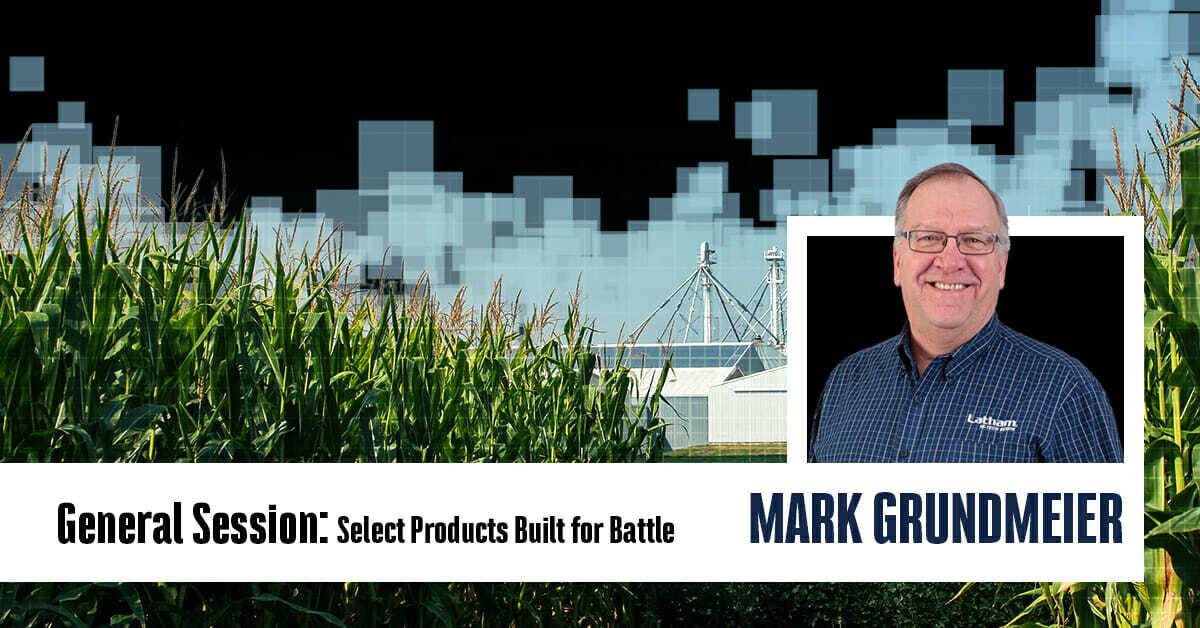
    • Soybean Product Manager Mark Grundmeier provides tips for Selecting Soybean Products that are Built for Battle. Did you know farmers don’t have to give up yield when planting defensive soybeans? Mark talks about how Latham’s exclusive IRONCLADTM products are bred to combat local diseases.
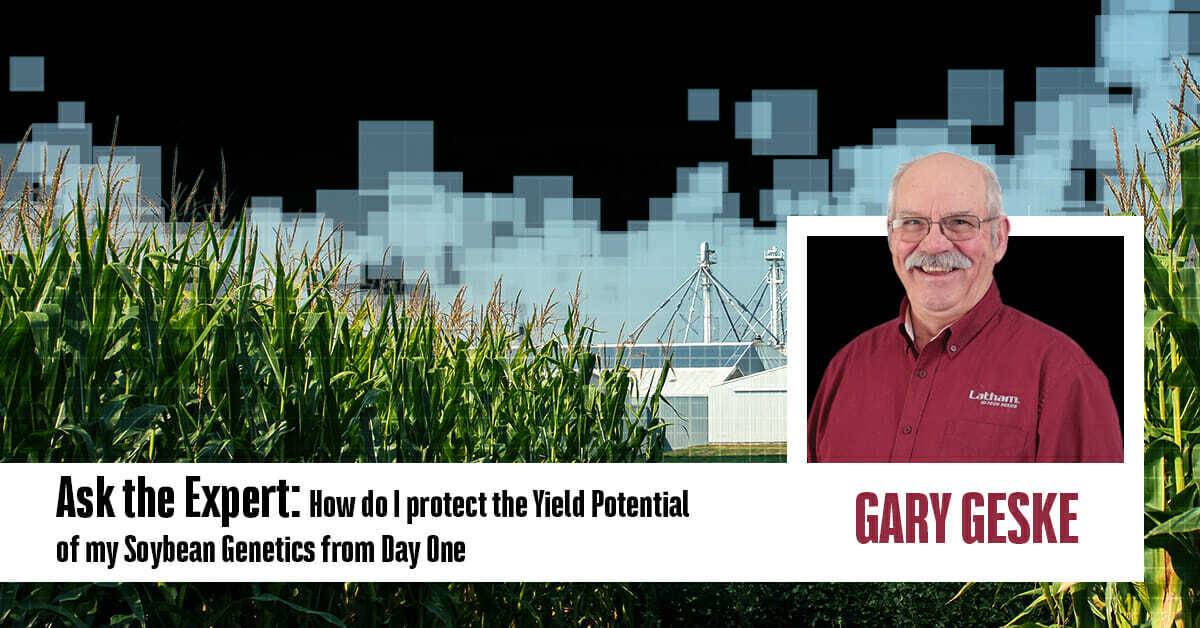
    • Latham’s Northern Product Manager Gary Geske explains how seed treatment helps maximize yield potential. He explains what makes Latham Seeds’ SoyShield® so unique, so elite and so effective.
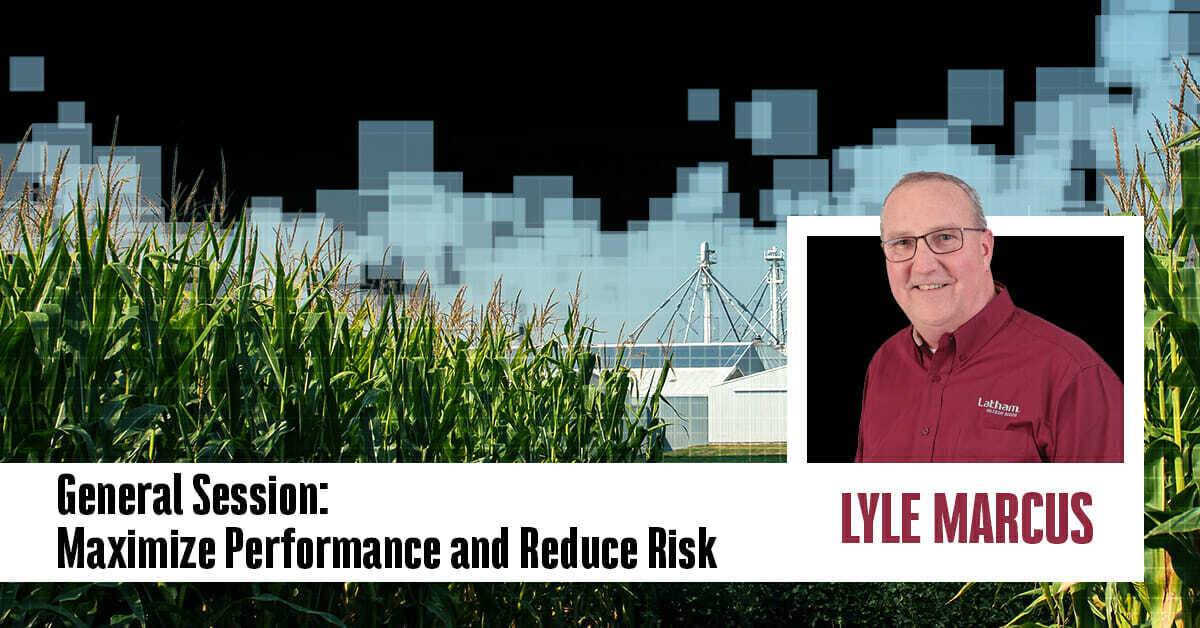
    • Latham Corn Product Manager, Lyle Marcus, shares how to maximize performance and reduce risk with Latham® corn hybrids in 2021. He also introduces eight new hybrids for spring planting.
    • In this 20-minute workshop on seed placement and performance, Precision Agronomy Advisor Phil Long explains how to use Latham’s product guide to choose seed products for 2021. Did you know that placement can affect yield by up to 20 percent? That’s a 20- to 50-bushel yield swing! Phil walks us through how to match management style to product characteristics for best placement and performance.

    One of the things we enjoy most about hosting field days is sitting at the table with Latham® dealers and customers. We always enjoy hearing about our customers’ families and learning more about farming operations. If you attend a Latham Seeds’ event, you can count on great conversation and a wonderful meal.

    In true field day fashion, we are sharing with you a typical field day menu. Below are links to some of our favorite fall recipes:

    • Harvest BBQ Pulled Pork Sandwiches, a recipe shared by Iowa’s Deputy Secretary of Agriculture Julie Kenney
    • Sweet & Spicy Baked Beans
    • Cranberry Waldorf Salad (Although this recipe isn’t from “The Field Position” blog, it’s a hit every time I make it for a group that visits Enchanted Acres pumpkin patch.)
    • Apple Crisp

    With the cool fall weather this week, we thought it would be the perfect time to share a new crockpot dish.  Scroll down to find a recipe for Slow Cooker Cajun Chicken Fettuccine. Recipe and image sourced here.

    Shannon Latham

    September 11, 2020
    Agronomics, Corn, Crop, Disease, Emergence, Fertility, Food & Family, Fungicide, Growth Stages, Insects, Poultry, Precision Ag, Recipes, Seed Treatment, Sides, Soil, Soybeans, Weed Control
  • Latham Hi‑Tech Seeds

    2020 Latham Virtual Field Tour Recap

    Virtual cover image

    Find a recap of our 2020 Latham Virtual Field Tour. Latham’s product team shares insights on a variety of key topics geared toward success this harvest and into the 2021 growing season.  If you missed the live session, no worries! Find our on-demand videos below of the field tour.


    TUESDAY, SEPTEMBER 8, 2020: KICKOFF TO LATHAM’S VIRTUAL FIELD TOUR WEEK 2020
    2
    Join us for the first session of our 2020 Virtual Field Day as John Latham shares about our 73 years of quality and innovation. What does this mean for our dealers and customers across Latham Country? Tune in to find out! #LathamSeeds
    • Watch on YouTube: https://youtu.be/38HPu0W5AG0
    • Watch on Facebook: https://www.facebook.com/watch/?v=716833985567673&extid=wucYcQA8x7m2HAf4

    Tune in above for a roundtable with Latham’s Product Team hosted by President John Latham.
    • 0:35 — Introductions
    • 2:06 — What soybean technologies can farmers be looking forward to in the future?
    • 3:50 — Has any of the extreme weather affected our corn supply?
    • 5:45 — What additional agronomy videos are coming down the pipeline?
    • 8:50 — Can the Data Forward app help with yield estimates?
    • 11:25 — How to prepare yield monitors to gather accurate yield data?
    • 16:30 — Late-season visible differences in treated and untreated seed
    • 18:00 — Update on XtendiMax renewal
    • 20:25 — 2021 corn line-up sneak peak
    • 24:00 — What makes the word INDEPENDENCE so meaningful at Latham Seeds?
    • 28:30 — Can we fix yield data after harvest?
    • 29:25 — When is the best time to soil sample?
    • 32:40 — Seed treatments: where can farmers cut some costs?
    • 35:45 — John Latham’s update from ASTA

    Watch on Facebook: https://www.facebook.com/watch/?v=2668478816588211&extid=ca2iM5vffbodkI4Y

    Watch on YouTube: https://youtu.be/O8FHM7ESu9M


    WEDNESDAY, SEPTEMBER 9, 2020: MAXIMIZING YOUR 40 CHANCES

    Join us for a 35 minute segment as farmers tell all about managing no-so-ideal harvest scenarios hosted by Bob Foley.

    • Watch on YouTube: https://youtu.be/wapZOMosW9w
    • Watch on Facebook: https://www.facebook.com/watch/?v=2769613716607152&extid=qtyQfwe76nz099nQ 

    Join us as Precision Agronomy Advisor Darin Chapman discusses on-farm research and the benefits of testing ideas for the future.

    • Watch on YouTube: https://youtu.be/dQGiV3n9SwQ
    • Watch on Facebook: https://www.facebook.com/watch/?v=230182775092324&extid=2gNkqUOjZDfEUmW4

    Join us as Corn Product Manager, Lyle Marcus, discusses how to maximize performance and reduce risk with Latham® corn hybrids in 2021.

    • Watch on YouTube: https://youtu.be/TqU1IGTj-VU
    • Watch on Facebook: https://www.facebook.com/watch/?v=313068009801743&extid=LSYK1tpv18TZXFtt

    SPECIAL FEATURE! 20 Minute Workshop hosted by Precision Agronomy Advisor Phil Long. Did you know that placement can affect yield by up to 20%? That’s a 20-50 bushel yield swing! Phil will walk through how to match management style to product characteristics for best placement and performance.

    • Watch on YouTube: https://youtu.be/3GijMR2w6nw
    • Watch on Facebook: https://www.facebook.com/watch/?v=887477738448432&extid=vfxO7xfB1W1Jr5XH

    THURSDAY, SEPTEMBER 10, 2020: MANAGING SOYBEANS ON OFFENSE AND DEFENSE

    What does it mean for a product to be Built for Battle? Mark Grundmeier shares insight into our highly offensive and defensive soybean product options.
    • Watch on YouTube: https://youtu.be/_EGw1UA4-b4
    • Watch on Facebook: https://www.facebook.com/watch/?v=1233891166969244&extid=LS56ewVr5vxXKVKA

    Join us as we discuss how to protect the yield potential of soybean genetics from day one with expert Gary Geske.
    • Watch on YouTube: https://youtu.be/mNxBtFDryHk 
    • Watch on Facebook: https://www.facebook.com/watch/?v=1945198385604293&extid=9ycIGoHLwzgBYFjq 


    Mark Grundmeier and Gary Geske share key insight on diversifying your soybean options to maximize performance and reduce risk.
    • Watch on YouTube: https://youtu.be/Q9I5hS-y8fU
    • Watch on Facebook: https://www.facebook.com/watch/?v=1233891166969244&extid=LS56ewVr5vxXKVKA

    Laura Cunningham

    September 10, 2020
    Agronomics, Corn, Crop, Disease, Emergence, Fertility, Fungicide, Growth Stages, Insects, Precision Ag, Seed Treatment, Soil, Soybeans, Weed Control
  • Latham Hi‑Tech Seeds

    Ask The Expert: How to Protect Soybean Yield From Day 1

    Field day presentation slide gary geske

    Join us on Sept 10 at 8:15 AM as we discuss how to protect the yield potential of soybean genetics from day one with expert Gary Geske.

    • Watch on YouTube: https://youtu.be/mNxBtFDryHk 
    • Watch on Facebook: https://www.facebook.com/LathamSeeds/posts/10158763315112138

    Laura Cunningham

    September 9, 2020
    Agronomics, Emergence
  • Latham Hi‑Tech Seeds

    Select Products Built for Battle with Mark Grundmeier

    Field day presentation slide mark products built for battle

    What does it mean for a product to be Built for Battle? Tune in on Sept 10 at 8 AM as Mark Grundmeier shares insight into our highly offensive and defensive soybean product options.

    • Watch on YouTube: https://youtu.be/_EGw1UA4-b4
    • Watch on Facebook: https://www.facebook.com/LathamSeeds/posts/10158763253662138

    Laura Cunningham

    September 9, 2020
    Agronomics, Crop, Disease, Emergence, Soybeans
  • Latham Hi‑Tech Seeds

    Maximize Performance and Reduce Risk with Latham Hybrids

    Field day presentation slide lyle marcus

    Join us as Corn Product Manager, Lyle Marcus, discusses how to maximize performance and reduce risk with Latham® corn hybrids in 2021.

    Laura Cunningham

    September 9, 2020
    Agronomics, Corn, Crop, Disease, Emergence, Fertility, Fungicide, Growth Stages
  • Latham Hi‑Tech Seeds

    Ask The Agronomist: Soybean Stress

    How much stress can soybeans handle? Phil Long discusses important early season soybeans stresses and their impact on yield.  #AskTheAgronomist

    1:00 — Scouting Tips: Staging soybeans

    3:45 — Post-emergence weed control

    6:20 — Yield impact with early season stresses

    9:12 — Soybean nodules

    10:15 — Final thoughts

    Laura Cunningham

    June 25, 2020
    #AskTheAgronomist, Agronomics, Crop, Emergence, Fertility, Growth Stages, Soybeans
  • Latham Hi‑Tech Seeds

    Ask The Agronomist: Early Season Soybean Scouting

    Greg 2
    Phil Long discusses early season soybean scouting. Tune in to learn the importance of noting emergence, growth and development. #AskTheAgronomist
     
    :20 – Welcome
    1:00 – Topic introduction
    2:25 – Soybean growth stages
    3:00 – Herbicide effectiveness
    5:10 – Soybean stand counts
    6:42 – Nodule development

    Latham Seeds Agronomy Team

    May 28, 2020
    #AskTheAgronomist, Agronomics, Crop, Emergence, Growth Stages, Soybeans, Weed Control
Previous Page
1 … 3 4 5 6 7 … 10
Next Page

Latham Hi‑Tech Seeds

131 180th Street | Alexander, IA 50420

(641) 692-3258

SIGNUP FOR OUR NEWSLETTER
  • Contact
  • Legal
  • Dealer Center
  • Seedware Login
  • Latham Gear

© 2025 Latham Hi‑Tech Seeds. All rights reserved. | Iowa Web Design by Webspec | Privacy Policy

Latham® Hi-Tech Seeds is a trademark of M.S. Technologies, L.L.C., 103 Avenue D, West Point, IA 52656.