Latham Hi-Tech Seeds

(641) 692-3258

  • Home
  • Performance
  • Products
    • Corn
    • Soybeans
    • Soybean Blends
    • Alfalfa
    • Corn Silage
    • Seed Guide
  • Find a Rep
  • Media
    • Blog
    • News
    • Videos
    • Podcasts
    • TECHTalk
  • About Us
    • Company History
    • Our Mission
    • Careers
    • Become a Rep
    • Sowing Seeds of Hope
  • Contact Us
  • Latham Hi‑Tech Seeds

    Determining Stands

    Evaluating corn and soybean stands early is key to identifying problems – or potential problems – while there is still time to remedy them.  Three methods are commonly used to determine stand counts:

    1. 1/1,000th Acre;
    2. Wheel; and
    3. Hoop.

    (Click on any of the below charts to view the text in a larger font size).

    The 1/1,000th Method involves counting the number of plants in a length of row equal to 1/1,000th of an acre based on row width (See Table 1).  Multiply the number of plants by 1,000 to calculate the number of plants per acre.  Repeat the process in several locations in the field.

    The Wheel Method entails counting 150 plants and measuring the distance from start to finish with a measuring wheel.  To determine plant population, divide the number of feet traveled into the appropriate factor  (See Table 2).

    For the Hoop Method, toss a hoop in a field and count the number of plants inside it.  Repeat this in at least five locations throughout the field.  Multiply the average number of plants by the appropriate factor listed in Table 3 to calculate the number of plants per acre.  NOTE:  Having a hoop with a diameter of 28 ¼” allows you to simply multiply by 10,000 to determine the number of plants per acre.  You can make a hoop this size by cutting anhydrous tubing to 88 ¾ inches and joining it to form a circle.

    Source: Monsanto’s Agronomic Spotlight, 4/26/10, Illinois Agronomy Handbook. 23rd Edition. Pg. 31. Purdue Corn & Soybean Field Guide. 2007.

    Team Latham

    May 5, 2010
    Agronomics, Emergence, General
  • Latham Hi‑Tech Seeds

    Top 10 Reasons to Avoid Soil Compaction

    “Avoid the temptation,” cautions the soil experts. Entering fields at less-than-ideal soil conditions can actually do more harm than good.

    Mahdi Al-Kaisi, Iowa State Univeristy associate professor in agronomy with research and Extension responsibilities in soil management and soil science, offers the following reasons to avoid rushing into your fields this spring.

    Top 10 Reasons to Avoid Soil Compaction:

    1. Causes nutrient deficiencies
    2. Reduces crop productivity
    3. Restricts root development
    4. Reduces soil aeration
    5. Decreases soil available water
    6. Reduces infiltration rate
    7. Increases bulk density
    8. Increases sediment and nutrient losses
    9. Increases surface runoff
    10. Damages soil structure

    Check the moisture profile before rushing into a field, says Al-Kaisi.  Maximum soil compaction results when soil moisture is at or near field capacity because the moisture acts like a lubricant between soil particles that are under pressure from heavy field equipment.

    For management tips on how to minimize soil compaction, check out Al-Kaisi’s article, “How and Why to Avoid Soil Compaction.”

    Mark Grundmeier, Product Manager

    April 6, 2010
    Agronomics, Emergence, General
  • Latham Hi‑Tech Seeds

    Compaction after a wet fall

    As you head into the fields this spring, take a moment to remember what it took to get your crop out last fall. Extremely wet weather led to combines rolling through muddy conditions, and the wet extremes were followed by unusually heavy snowfall. This activity should alert you that compaction will undoubtedly be a challenge this spring.

    Dealing with soil compaction

    Many farmers will be tempted to try some extra tillage this spring to see if that will help break up the soil, but that is exactly what you should NOT do. Only time and the natural freezing/thawing cycle will break up compaction that is deep in the soil. Because of the heavy snow cover this past winter, most soils did not get that real hard freeze necessary to break up that deep compaction layer. In a recent article posted in the Extension News, ISU Extension Agronomist John Holmes summed it all up when he said, “Put simply, the more wheels and machinery that move over wet soil, the more compaction will take place.”

    Therefore, be patient this spring. Wait until soil conditions are fit before doing tillage or fieldwork of any kind because it will pay you dividends next harvest! For fields that will be planted to soybeans, you may want to consider using a fungicide seed treatment. Cool, wet soils are noted to harbor diseases that can cause damping off. You should also choose soybean varieties and corn hybrids that have excellent disease ratings for your fields.

    Your Latham® seed specialist can help you select seed products that are right for you.  For more information on locating a Latham® dealer near you, call 1.877.GO.LATHAM (465.2842).

    Mark Grundmeier, Product Manager

    April 5, 2010
    Agronomics, Emergence, Fall, General, Season
  • Latham Hi‑Tech Seeds

    Top 5 Tips to Maximize Yield

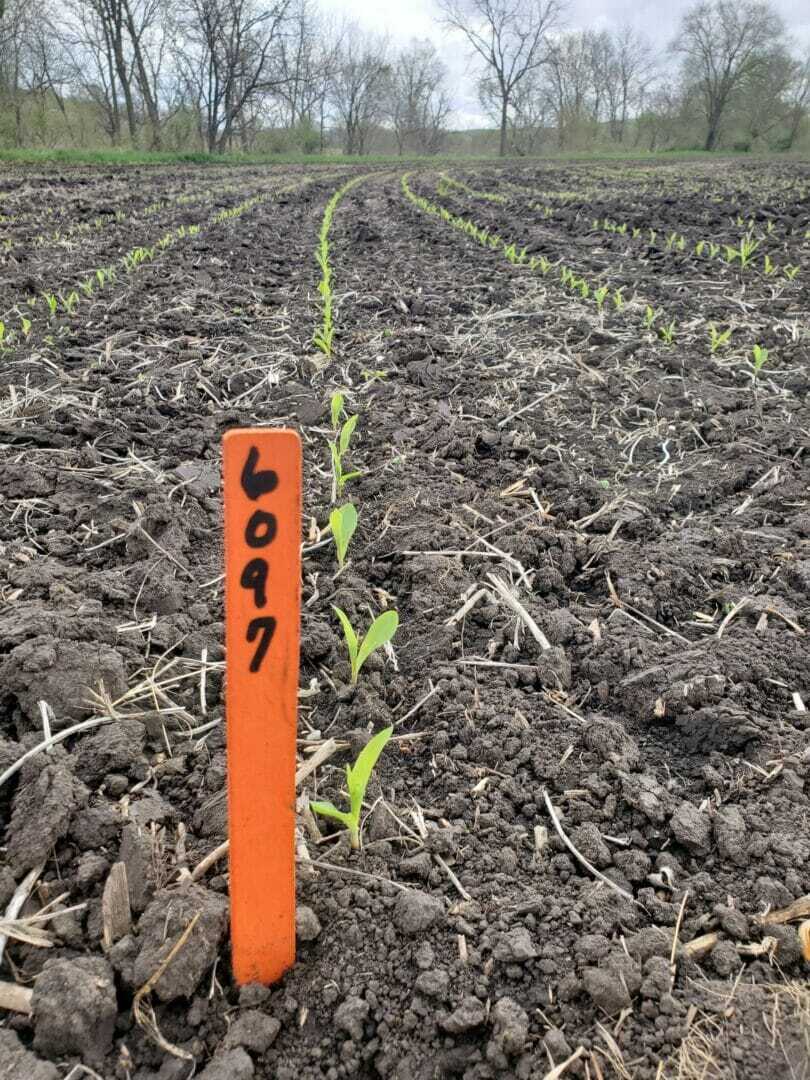
    Young corn plant sprout growing from the ground, Agricultural Farm


    We recently spoke with Mark Grundmeier, Latham Soybean Product Manager, who provided us with 5 tips to maximize your yields this season.

    Young corn plant sprout growing from the ground, Agricultural Farm

    #5 – Planting Date: The trend has been to plant earlier and earlier over the past decade. While this practice has, in general, increased yields, there are some pitfalls to watch for and avoid. Avoid planting into soils that are too wet. This practice ALWAYS causes problems later due to side-wall compaction and/or uneven emergence. When planting soybeans into cool soils, consider the use of a fungicide seed treatment such as Latham® SoyShield to prevent the advent of seedling diseases.

    #4 – Planting Depth: Ideal planting depth for corn is 2 inches and for soybeans it is 1½ inches. Some may still tell you to “plant to moisture” but this is seldom a good practice. If the soil moisture level is too deep, planting to that depth can cause delayed emergence, uneven stands and possibly even stands that are crusted over if you would receive a hard, pounding rain right after planting. Planting too shallow will often result in poor root development and may affect the crop all the way to harvest.

    #3 – Row Spacing: There has been and will continue to be much debate on which row spacing provides the optimum yields for both corn and soybean. In general, soybeans seem to respond most favorably to spacings between 15 inches to 20 inches.  If you are planting in rows that are wider or even narrower than this, consider running some side-by-side comparisons on your fields to see which spacing might be best for your farming operation.  For corn, 30-inch row spacings is still the most popular, but there are many farmers experimenting with 20-inch rows and also twin-row systems. Again, running trials on your own fields will help determine what is right for you.

    #2 – Weed Control: Before planting, always start with a clean field. Even in years when planting might be delayed due to wet conditions, allowing weeds to get ahead of the crop is not a good practice.  Remember that the objective of herbicide applications is to save yield, not just to kill weeds!

    #1 – Hybrid/Variety Selection: Choosing the right corn hybrid or soybean variety is the most important decision you make year in and year out. Selection should be based on past yield performance (in multiple trials conducted in like field conditions and comparing like maturities), past disease or pest problems that have been identified and taking into consideration farming practices used (e.g. early planting, narrow rows, no-till, etc.). Seed selection should not be based strictly on cost of the seed, seed size or what may have worked well for a neighbor/friend.

    If you have any questions we can help answer regarding planting, just type it in to the field below and we’ll reply shortly!

    Team Latham

    March 31, 2010
    Agronomics, Emergence, General, Precision Ag, Weed Control
Previous Page
1 … 8 9 10

Latham Hi‑Tech Seeds

131 180th Street | Alexander, IA 50420

(641) 692-3258

SIGNUP FOR OUR NEWSLETTER
  • Contact
  • Legal
  • Dealer Center
  • Seedware Login
  • Latham Gear

© 2025 Latham Hi‑Tech Seeds. All rights reserved. | Iowa Web Design by Webspec | Privacy Policy

Latham® Hi-Tech Seeds is a trademark of M.S. Technologies, L.L.C., 103 Avenue D, West Point, IA 52656.