Latham Hi-Tech Seeds

(641) 692-3258

  • Home
  • Performance
  • Products
    • Corn
    • Soybeans
    • Soybean Blends
    • Alfalfa
    • Corn Silage
    • Seed Guide
  • Find a Rep
  • Media
    • Blog
    • News
    • Videos
    • Podcasts
    • TECHTalk
  • About Us
    • Company History
    • Our Mission
    • Careers
    • Become a Rep
    • Sowing Seeds of Hope
  • Contact Us
  • Latham Hi‑Tech Seeds

    Take Time to Adjust the Planter

    To help provide “picket fence stands,” corn growers must make proper planter adjustments. It’s also important to match the planter speed to field conditions and to avoid planting seeds in extremely poor soil conditions.

    Planting in soils that are too wet can lead to sidewall compaction. The under-developed root systems resulting from the compaction are often confined in a flat plane within the furrow trench. Planting in too wet of soil, especially with coulters, allows sticky soil to build up on gauge wheels resulting in planting depth differences.

    Shallow planting places seed in differing soil moisture levels and can result in differing emergence dates. Shallow planting also can lead to a shallow secondary root system. “Rootless corn” may result, or plant development may be greatly delayed compared to neighboring plants.

    Failure to close the furrow is usually caused by poor soil conditions, improper closing wheels for field conditions, incorrect down pressure, or planting in sod. Worn or improperly adjusted planter parts can cause or aggravate all the previously mentioned problems.

    Make sure your planter does all its jobs properly: open the seed furrow without sidewall compaction; place seeds at a uniform depth; and close the seed slot without compaction.  Stop the planter frequently and physically check to ensure you’re getting uniform seed depth and good seed-to-soil contact.  Although it will take a few extra minutes in the spring, you’ll be glad you did when it’s time to harvest those extra bushels come fall!

    Webspec Admin

    May 13, 2013
    Agronomics, Corn, Crop, Emergence, General, Precision Ag, Soybeans
  • Latham Hi‑Tech Seeds

    Tips for Proper Seed Depth and Spacing

    Among the thousand variables crops are subject to each growing season, planting is the most crucial. Corn Product Specialist, Nick Benson offers these tips for proper depth and spacing as planters hit the ground rolling this spring.

    http://www.youtube.com/watch?v=d7W-IO7AvD4

    Webspec Admin

    May 9, 2013
    Agronomics, Emergence, General, Season, Spring
  • Latham Hi‑Tech Seeds

    Seed Quality: How Long is Germ Viable?

    Trays1

    While perusing some ag chat sites this week, we came across the following questions posted by a Midwest farmer. Today, Latham Product Manager Mark Grundmeier answers the questions that are top-of-mind with farmers.

    Q: How long will seed corn hold its quality/germ? A lot of seed is in warehouses already, and I presumed tested and determined “good quality” before it was shipped. Is it possible that the condition of any of this seed will deteriorate before spring planting?

    A: You’re right in that state and federal guidelines require seed companies to test – and tag – all seed before it ships to dealers and farmers. We must perform germination tests no sooner than December 2012 for spring 2013 delivery/planting.

    The germ on seed corn is quite stable and is largely dependent on heat and moisture. Since it’s unlikely that we’ll experience excessive heat and humidity before this seed corn gets planted, it’s very unlikely that the condition of this seed corn will deteriorate before spring planting.

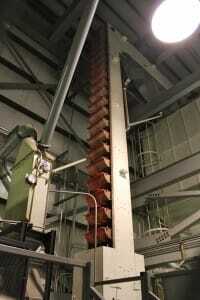
    The trays we use to bring soybeans from the cleaner to the bagging system are so gentle they’re used to make corn flakes!

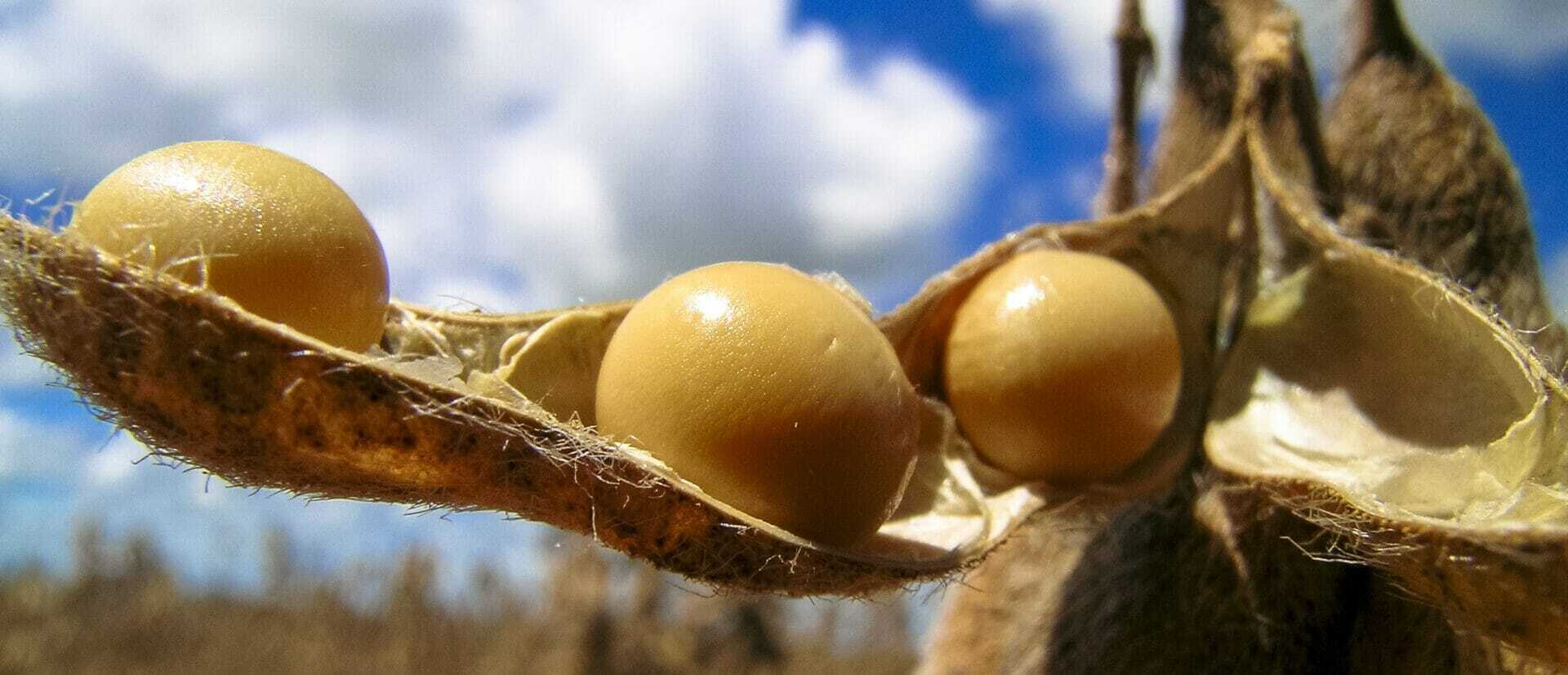
    On a side note, soybean seed is much more delicate and how it’s handled can greatly impact the germination rate. Extremely dry conditions in 2012 produced seed beans that were drier than optimal when harvested. Because the seed coat is so fragile, rough handling can crack the seed coat and deteriorate the quality. To preserve seed quality, Latham Hi‑Tech Seeds “babies its beans.” The majority of our seed beans are brought to our Alexander, Iowa, facility where it’s hand-tested before its stored on site.

    Our equipment is specially designed to treat the soybean seed as gently as possible. The trays we use to bring soybeans from the cleaner to the bagging system are so gentle they’re identical to those that are used to make corn flakes! We also don’t bag in extremely cold conditions, which can lead to splits and cracks and further reduce the chances of having that seed germinate. But the care doesn’t stop there… dealers and farmers must also handle soybean seed with care. Dropping bags of soybeans can damage the seed coat and lead to a lower germination rate than appears on the bag tag.

    Unlike corn, soybean seed can fall out of quality quite rapidly. Look for the germ rate on the seed tag. Anything above 90 percent indicates high quality soybeans; germ rates of 95% indicate high quality seed corn. If your soybeans are tagged at 80%, seed quality is most likely on a downward spiral. You’ll definitely need to increase your seeding rate to account for lower germination rates. You might even be better off to switch soybean brands.

    Don’t assume that all soybean seed is tagged at the highest quality. Be sure to read the tags on all products that get delivered to your farm.

    Webspec Admin

    February 13, 2013
    Agronomics, Emergence, General
  • Latham Hi‑Tech Seeds

    Latham 1884’s have Outstanding Emergence & Early growth

    Soybean

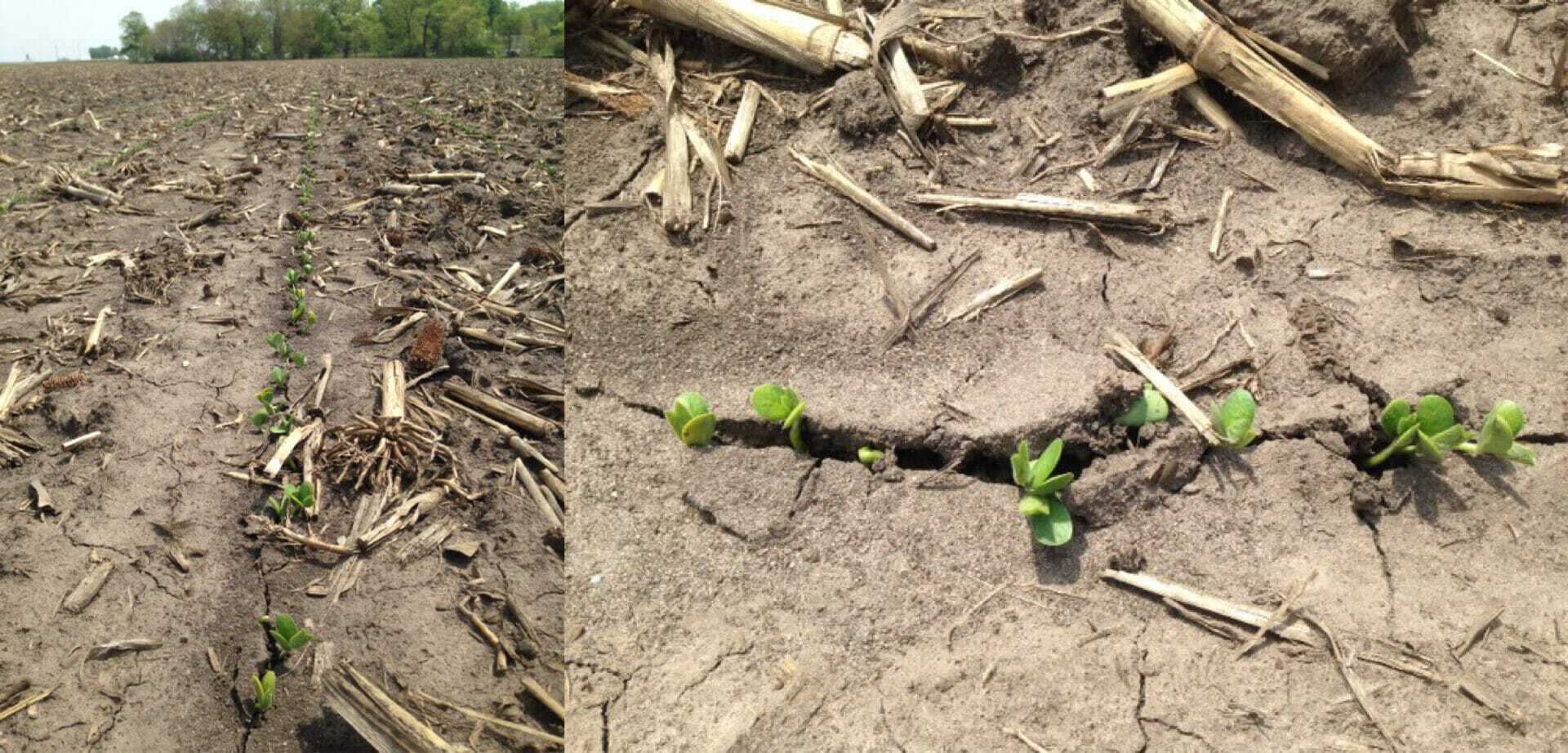
    L1884R2 had such strong emergence that it actually lifted a 6″ square of dirt that is about 1″ thick.  This is a sister line to our number one selling soybean L2084R2.  Look for more updates on this family of varieties as the season progresses.

    Larry Sailer, Musings of a Pig Farmer

    June 11, 2012
    Agriculture, Agronomics, Emergence, General, Industry News
  • Latham Hi‑Tech Seeds

    Causes of Uneven Stands, Part 2

    Submitted by John Toft
    CCA, Tekamah, Nebraska

    Yesterday, I blogged about the importance of determining the causes behind uneven corn stands in the field.  Things to consider included: planting conditions at the start of the season, possible excessive planter speed over rough soil or residue, planting in unfit soils, shallow or excessive planting depth, failure to close the furrow or worn planter parts.  I also provided a link to help make planter adjustments that promote those “picket fence” stands in your field.

    But what if everything I mentioned in yesterday’s post was done properly and you still end up with uneven corn?  Dig up those poorly performing plants!  Nearly all unevenness results from a problem under the soil surface.  Some potential culprits to check for include:

    • Insect damage by pests such as wireworms, seed corn maggots, white grubs, sod webworms and black cutworms.
    • Seedling diseases and/or rotted kernels.
    • Fertilizer injury, including Anhydrous ammonia or the subsequent nitrate salt formed in the ammonia injection band.  This injury can be eliminated by applying ammonia in good soil conditions and not planting directly into the ammonia injection band.
    • Varying amounts of residue cover in a field, which can affect soil temperature and soil moisture.
    • Cooler soil temperatures not only affect plant growth but also microbial activity responsible for nitrogen and/or sulfur mineralization and the micorrhizal fungal activity instrumental in phosphorous acquisition from the soil. It’s not uncommon to observe soil temperature under varying amounts of residue differing by as much as 10 to 12 degrees Fahrenheit into June.
    • Soil Compaction.
    • Patchy weed growth left to compete too long within a field often results in uneven corn.
    It’s not uncommon for fields to emerge and appear even until the plants reach the V2 stage of growth.  Until V2 a young plant survives mostly upon food storage in the kernel and water and nutrients received through its primary root system.  At approximately V2, the plant’s photosynthetic area has increased in size until it provides significant food and energy and the secondary root system (main plant root system) has developed enough to gather significant water and nutrients. 

    Plants at V2 that have lost or diminished primary root systems and underdeveloped secondary root systems will become smaller, poorer doing plants when compared to the increasing growth of their unimpaired neighbors.  As time goes on, the healthy, rapidly growing plants accentuate the unevenness as they “grow away” from the poor performing plants.  Fields emerging the same day but exhibiting unevenness prior to V2 usually contain plants with rotted kernels or have lost their primary root systems.

    A large number of uneven corn stand cases are always tied back to unfit soils at planting time and resulting soil compaction.  Having mentioned that, I’ll leave you with a link and the Top Ten Reasons to Avoid Soil Compaction as provided in a recent issue of Corn and Soybean Digest.

    Top 10 Reasons to Avoid Soil Compaction

    1. Causes nutrient deficiencies
    2. Reduces crop productivity
    3. Restricts root development
    4. Reduces soil aeration
    5. Decreases soil available water
    6. Reduces infiltration rate
    7. Increases bulk density
    8. Increases sediment and nutrient losses
    9. Increases surface runoff
    10. Damages soil structure

    Gary Geske

    June 28, 2011
    Agronomics, Emergence, General
  • Latham Hi‑Tech Seeds

    Causes of Uneven Stands, Part 1

    Submitted by John Toft
    CCA, Tekamah, Nebraska

    It’s important to examine the cause of uneven corn to avoid the situation in the future, if possible.  Some common reasons for uneven corn may be a result of: the planting trip; varying planting depths due to excessive planter speed over rough soil or residue; planting in soils that are too wet; shallow planting depth; excessive planting depth; failure to close the furrow; or worn planter parts.

    To help provide “picket fence stands,” make planting and planter adjustments.  It’s important to match the planter speed to field conditions and to avoid planting seeds in extremely poor soil conditions.

    Photo of root development on corn plant enduring sidewall compaction after being planted in wet soils.

    Planting in soils that are too wet can lead to sidewall compaction.  This spring I saw where two sidewalls compacted, causing the plant to come out of the ground in two halves.  The under-developed root systems resulting from the compaction are often confined in a flat plane within the furrow trench.  Planting in too wet of soil, especially with coulters, allows sticky soil to build up on gauge wheels resulting in planting depth differences.

    Shallow planting places seed in differing soil moisture levels and can potentially delay emergence dates.  Shallow planting also can lead to a shallow secondary root system.  “Rootless corn” may result, or plant development may be greatly delayed compared to neighboring plants.  Excessive planting depth, especially in challenging environment seasons, can result in uneven emergence, too.  However, I have far greater problems over the years with planting too shallow than I have with planting too deep. 

    Failure to close the furrow is usually caused by poor soil conditions, improper closing wheels for field conditions, incorrect down pressure, or planting in sod.  Worn or improperly adjusted planter parts can cause or aggravate all the previously mentioned problems.

    Although the 2011 planting season may be over and done, it’s important to monitor crop progress throughout the growing season and take notes.  Avoiding these same mistakes during next year’s planting season can help improve plant stands and lead to healthier, higher yielding plants.

    Gary Geske

    June 27, 2011
    Agronomics, Emergence, General
  • Latham Hi‑Tech Seeds

    Time to Begin Early Crop Scouting

    Many Midwest farmers will wrap up the 2011 planting season this week, but there won’t be much rest for the weary.  As soon as seed is in the ground, it’s a good idea to start scouting fields.

    Post-planting is an ideal time to begin scouting one’s crops.  Many soilborne pathogens strike as soon as the seed begins to take on water; others strike young seedlings.  Because seeds can germinate quickly and emerge in 3 – 5 days, it’s not too soon to start walking your fields.

    Check plant populations, evaluate stands and be on the lookout for early summer diseases.  Is there a germination problem?  Do you see effects of chilling or crusting?

    Assessing your situation ASAP will allow you to formulate a plan while there’s still plenty of time to implement it.  You could replant in parts or in all of a field now, so you can attain the yields and returns you want this fall.  Information on corn replanting decisions is available from www.agronext.iastate.edu/corn. Click on the “Planting” topic, then click on the “Replant Decision Aid Calculator” tab and use that tool and related information to help make a replant decision. For a resource on soybean replanting decisions, go to www.extension.iastate.edu/publications/pm1851.pdf.

    Another benefit of evaluating current stands is to help you determine what adjustments should be made before planting next year’s crop:  Do you need to adjust your planter settings or your planting speed?

    Once you get past the mechanical issues, look at the disease pressure.  If soybeans are damping off, perhaps next season you should opt for seed-applied fungicides? Do you need to pay closer attention to a particular soybean brand or corn hybrid’s disease rating?  Seed selection is one of the most important decisions affecting yield. Click here for tips on selecting  soybean brands and selecting corn hybrids.

    Webspec Admin

    May 12, 2011
    Agronomics, Disease, Emergence, Fertility, Fungicide, General, Growth Stages, Insects, Weed Control
  • Latham Hi‑Tech Seeds

    Establishing a Good Soybean Stand

    Farmers are continually working to increase their soybean yields. The statewide average in Iowa is now more than 50 bushels per acre, but last year several farmers broke the 80-bushel yield barrier with Latham soybean genetics and the Genuity® Roundup® Ready 2 technology.

    Raising record-breaking soybeans begins before the seed even hits the soil. Mark Grundmeier, Latham’s product manager, recently contributed to a Wallaces Farmer article with tips on how to establish a good soybean stand.

    In the article, Mark says the first step to establishing a good soybean stand starts with treated seed. The benefit from seed treatments far outweigh the costs. He adds that fungicide-treated seed is a must to prevent damping off from Pythium, Rhizoctonia, Phytopthora and Fusarium. It’s no secret soybean plants are subject to thousands of variables throughout the growing season.

    Proper planting conditions are crucial, and Mark says it’s important to remember that it’s much better to plant correctly than to plant quickly. Soil temperature sets the stage for healthy growth, and he recommends a temperature of 50 degrees or more at planting.  It’s also important to wait for soils to dry. Wet soils cause trouble from the beginning, and compaction resulting from wet soil can kill root growth.

    For Mark’s full list of tips to establish a good soybean stand, click here to read the article in Wallaces Farmer.

    Team Latham

    April 7, 2011
    Agronomics, Crop, Emergence, General, Soybeans
  • Latham Hi‑Tech Seeds

    Imbibitional Chilling Damage Affects Northeast Iowa

    In this week’s crop report Nick Benson, Latham’s regional sales manager in northeast Iowa, reported a 20-25% stand reduction in his area due to imbibitional chilling damage.  The damage resulted in what he called some very confused seedlings that were either emerging incorrectly or not emerging at all. We wanted to provide a little bit more information on just what imbibitional chilling is and how it affects seedlings.

    Imbibitional chilling damage is the chilling effect seeds may experience when they imbibe, or absorb, water when soil  temperatures are less than 55° F for an extended period of time. The seedlings may “corkscrew” or not emerge when exposed to these coil soil temperatures (see photo). This may happen also when there are rapid swings in air temperatures, of nearly 30° F.

    Nick said he has seen results of imbibitional chilling in corn that had been planted April 28-30. Those growers who saw the 20-25% stand reduction decided not to replant simply due to the lateness of the season – another reminder that farmers are at the liberty of the elements.

    If you have any questions about imbititional chilling damage, feel free to comment in the field below.

    Team Latham

    May 31, 2010
    Agronomics, Emergence, General
  • Latham Hi‑Tech Seeds

    Temperature Fluctuations May Inhibit Corn Emergence

    5 Larry 1

    5 Larry 1Corn planting occurred at an all-time record this spring. In Iowa in particular, we’ve experienced one of the best planting seasons in history. Recent cool temperatures throughout the Corn Belt, however, are requiring extra close attention be paid to corn fields as those cool temperatures may have caused seedling growth problems.

    We recommend farmers pay particularly close attention to corn fields planted recently, as they would be the most likely to exhibit seedling rot or poorer emergence. For those in low-lying areas, frost may have been an issue, causing leaf necrsosis and delayed growth of sprouted seeds.

    Listed below are seedling growth problems to scout for:

    1. Imbibitional chilling damage — the chilling effect seeds may experience when they imbibe, or absorb, water when soil temperatures are less than 55° F for an extended time. Seedlings may “corkscrew” or not emerge when exposed to cool soil temperatures. This may happen also when temperatures swing rapidly by 30° F.
    2. Soil crusting — wet soil at planting or heavy rain following planting can lead to reduced plant stands. Significant stand reductions lower yield potential.
    3. “Leafing out” underground — occurring most often in crusted soils (also appears with imbibitional chilling, above).
    4. Variable plant emergence and reduced plant population. Variable emergence and growth will reduce yield.

    Any of the situations listed above could call for a need to replant, but be sure to assess stands before making this decision.

    Contact your Latham representative with any questions or click here to read more.

    Team Latham

    May 18, 2010
    Agronomics, Disease, Emergence, General, Season, Spring
Previous Page
1 … 7 8 9 10
Next Page

Latham Hi‑Tech Seeds

131 180th Street | Alexander, IA 50420

(641) 692-3258

SIGNUP FOR OUR NEWSLETTER
  • Contact
  • Legal
  • Dealer Center
  • Seedware Login
  • Latham Gear

© 2025 Latham Hi‑Tech Seeds. All rights reserved. | Iowa Web Design by Webspec | Privacy Policy

Latham® Hi-Tech Seeds is a trademark of M.S. Technologies, L.L.C., 103 Avenue D, West Point, IA 52656.