-
Latham Hi‑Tech Seeds
#AsktheAgronomist – Stand Count
-
Latham Hi‑Tech Seeds
#AsktheAgronomist – Emergence
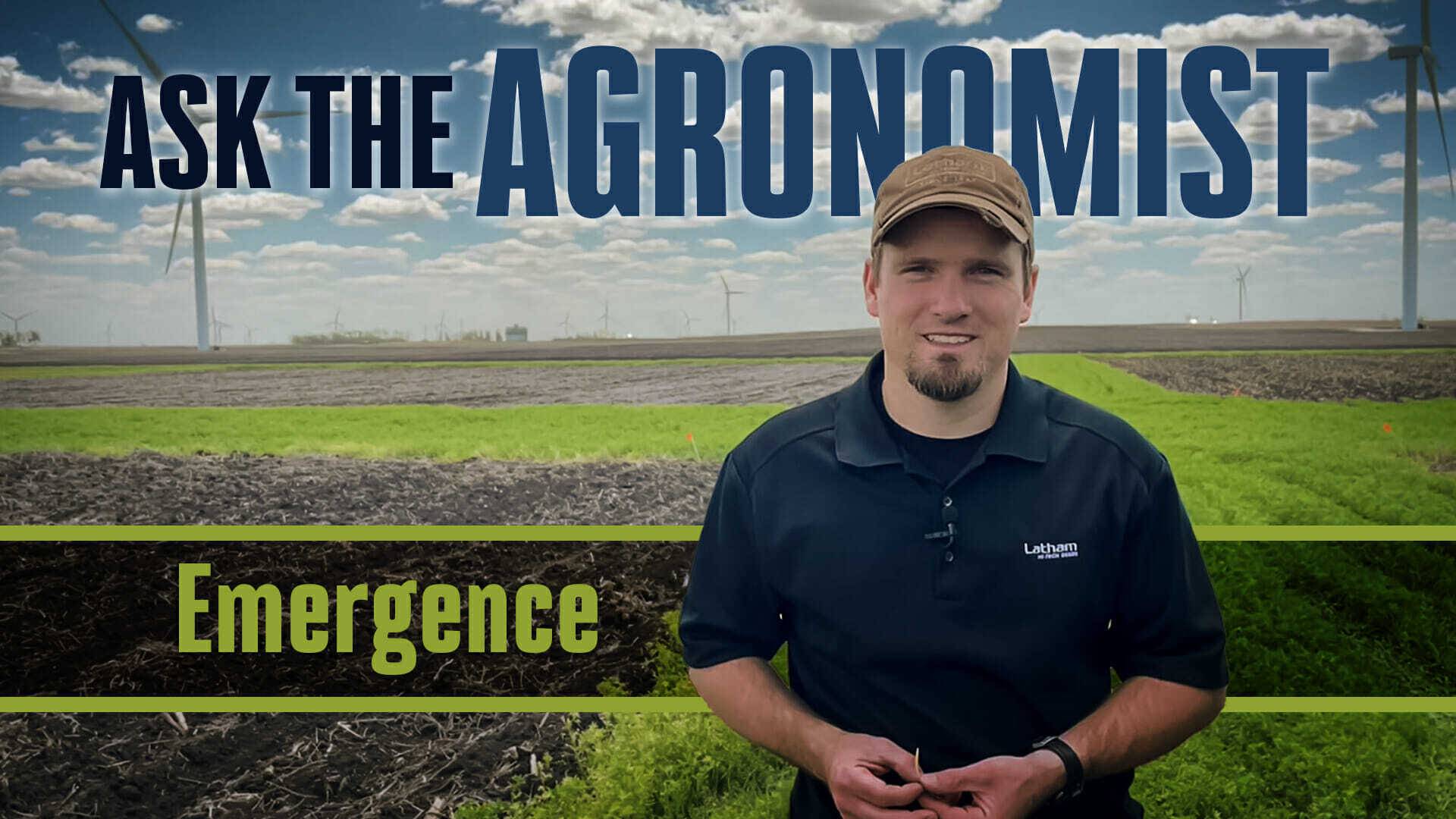
Precision Agronomy Advisor, Phil Long, brings us an update from the field. He shares what to keep an eye on with this late spring and how emergence may be quicker than normal.
-
Latham Hi‑Tech Seeds
#AsktheAgronomist – Soil Temperatures
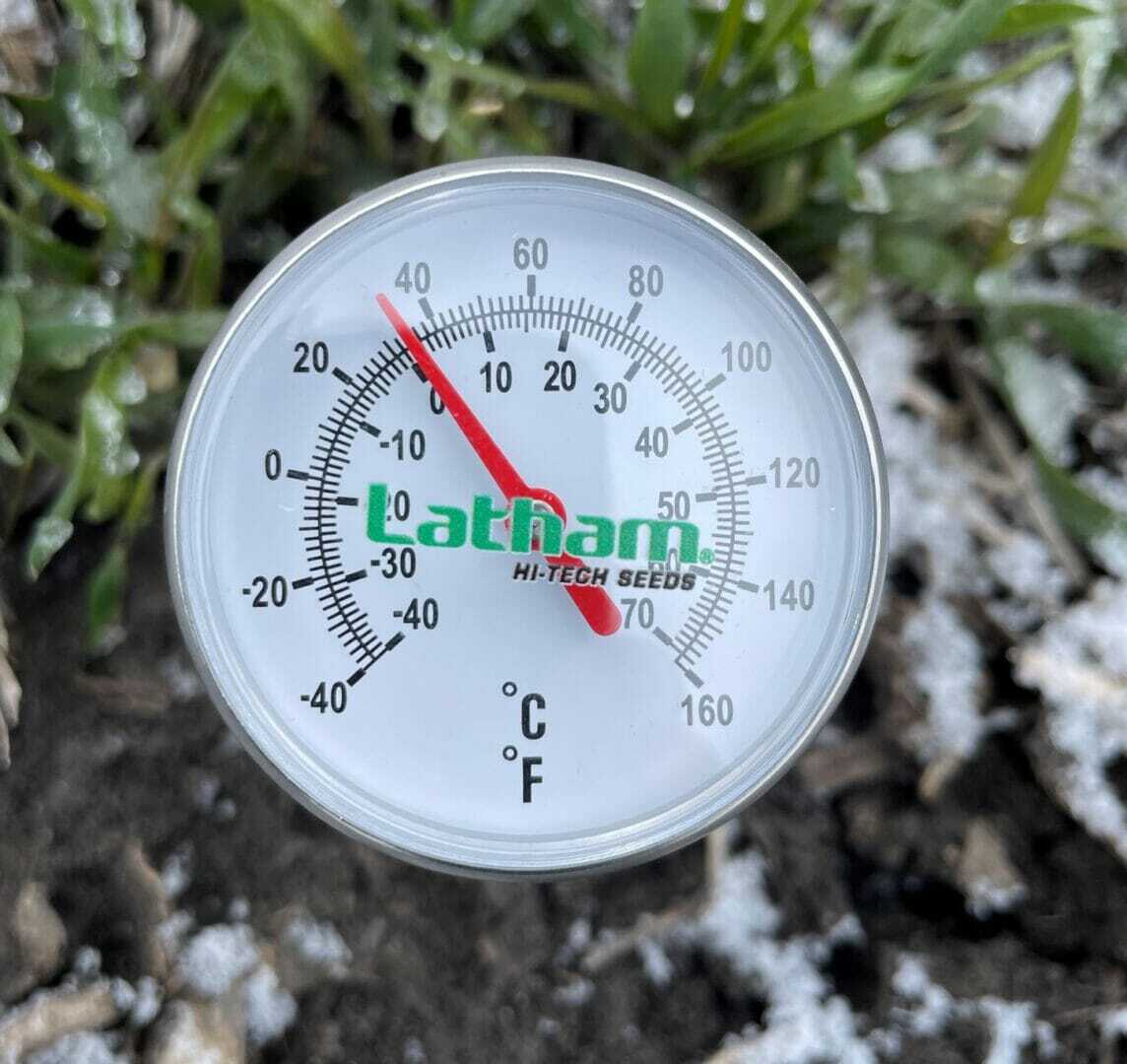 When will it be time to plant? Our agronomist shares current soil temperatures that include conventional tillage, no till and soil with a cover crop. The good news is that the ideal planting time is still yet to come as we approach May!Subscribe to our YouTube Channel today: https://www.youtube.com/user/TeamLathamSeeds
 -
Latham Hi‑Tech Seeds
Try Something New!


Precision Agronomy Advisor, Phil Long A common theme you will hear when listening to national corn/soybean contest winners is they always use a few acres to try something new. Latham’s Forage Products Manager, Corey Catt, has written numerous articles, encouraging growers to use a few acres to experiment on their own farms with products, seeding rates and management practices.
While third-party research plays an important role in helping us choose seed products, it’s also important to conduct your own on-farm research. Here are a few ideas to try this growing season. If you have acres that struggle with Sudden Death Syndrome, try treating a few soybean units with Latham® SoyShieldTM Plus with Saltro and run a side-by-side comparison. Another idea is to apply sulfur to soybeans and measure your results. Experiment on a few corn acres with Xyway® 3D in-furrow fungicide or try a phosphorus-enhancer, such as Encompass from TALC USA.
You could create quite a list of new products, different tillage/planting practices, in furrow fertilizers, or in-season practices that you could try to break your farm’s yield plateau. Here are some tips to make the most of your on-farm research efforts:
- Use a decent farm, or part of a decent farm, to do your research. Use a farm that has soil types and drainage/topography characteristics that represent a lot of your acres. Don’t pick the less desirable ground in terms of fertility. If pH, phosphorus (P), and potassium (K), levels are wacky, you won’t learn much when trying a new in-furrow treatment, biological or fungicide. Basic needs must be taken care of before you can add more yield.
- Keep it short and simple (K.I.S.S.). Weather and soil types cause enough variation in any research that you don’t need to add complexity. Try one thing at time, so you’re not adding multiple factors into the equation. For example, run a planter pass with Xyway mixed in your starter fertilizer and then shut it off the next pass. Do these two “treatments” at least three more times across your field to reduce the influence of soil types on your results.
- Garbage in, garbage out. Make sure your monitors/globes/planting equipment have the latest update, so you can capture the data when it’s go time. Layout your research, so your combine can capture it. This is very important! For example, if you harvest with an 8-row head, change “treatments” on 20-foot increments.
Mapping what you do this spring will allow you to analyze it next fall. You will want to look at how that new product did in your heavy soils, lighter soils and whether it is worth expanding on more acres next year. Every year is different, so keep weather in mind as it is usually the #1 influencing factor. Start small to find out what works best on your farm. I am happy to help you figure out what new thing to try on a few acres. Give me a call and we can chat more about it at: 641-692-0370.
-
Latham Hi‑Tech Seeds
#AsktheAgronomist – Final Planter Tips
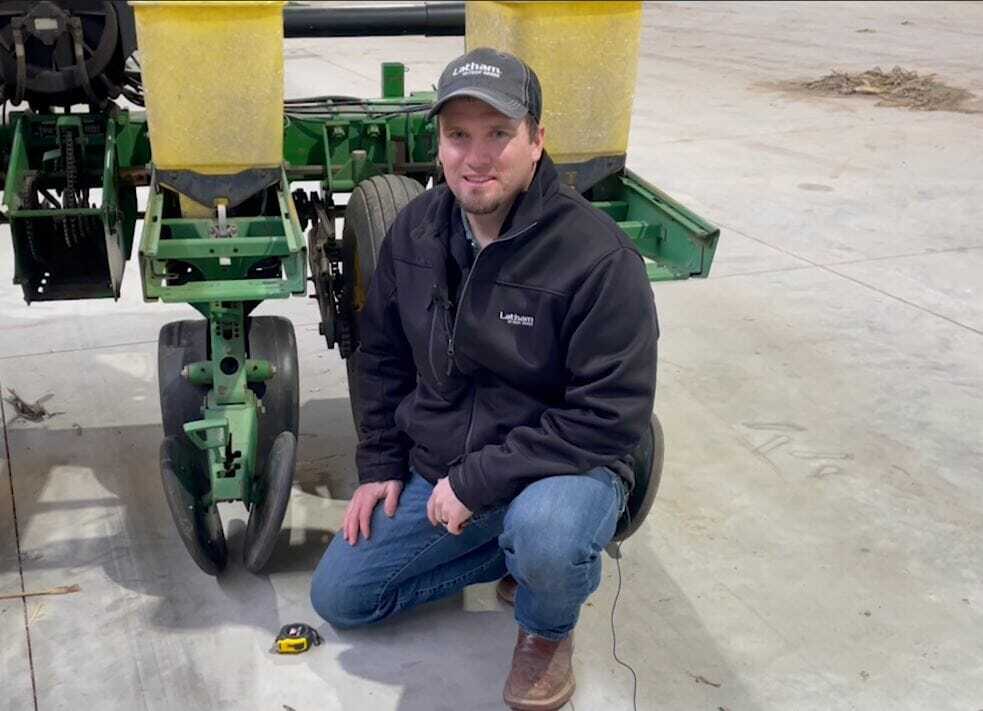
Precision Agronomy Advisor, Phil Long, highlights the closing wheels on the planter for his final #AsktheAgronomist – Planter Series. He advises when they should be replaced and how you can test them to make sure they are in alignment.
Latham Seeds has lots of great agronomy videos on our YouTube Channel. Subscribe today!
-
Latham Hi‑Tech Seeds
#AsktheAgronomist – How to Keep Residue Out of the Furrow?

Residue in your fields can play a major factor on how your seed is planted. Phil Long, precision agronomy advisor, unpacks tillage/no-till, row cleaners and other factors to improve your stand when dealing with residue. Subscribe to our YouTube Channel today to learn more agronomy tips and industry news.
-
Latham Hi‑Tech Seeds
Planter Upgrades with Quick ROI
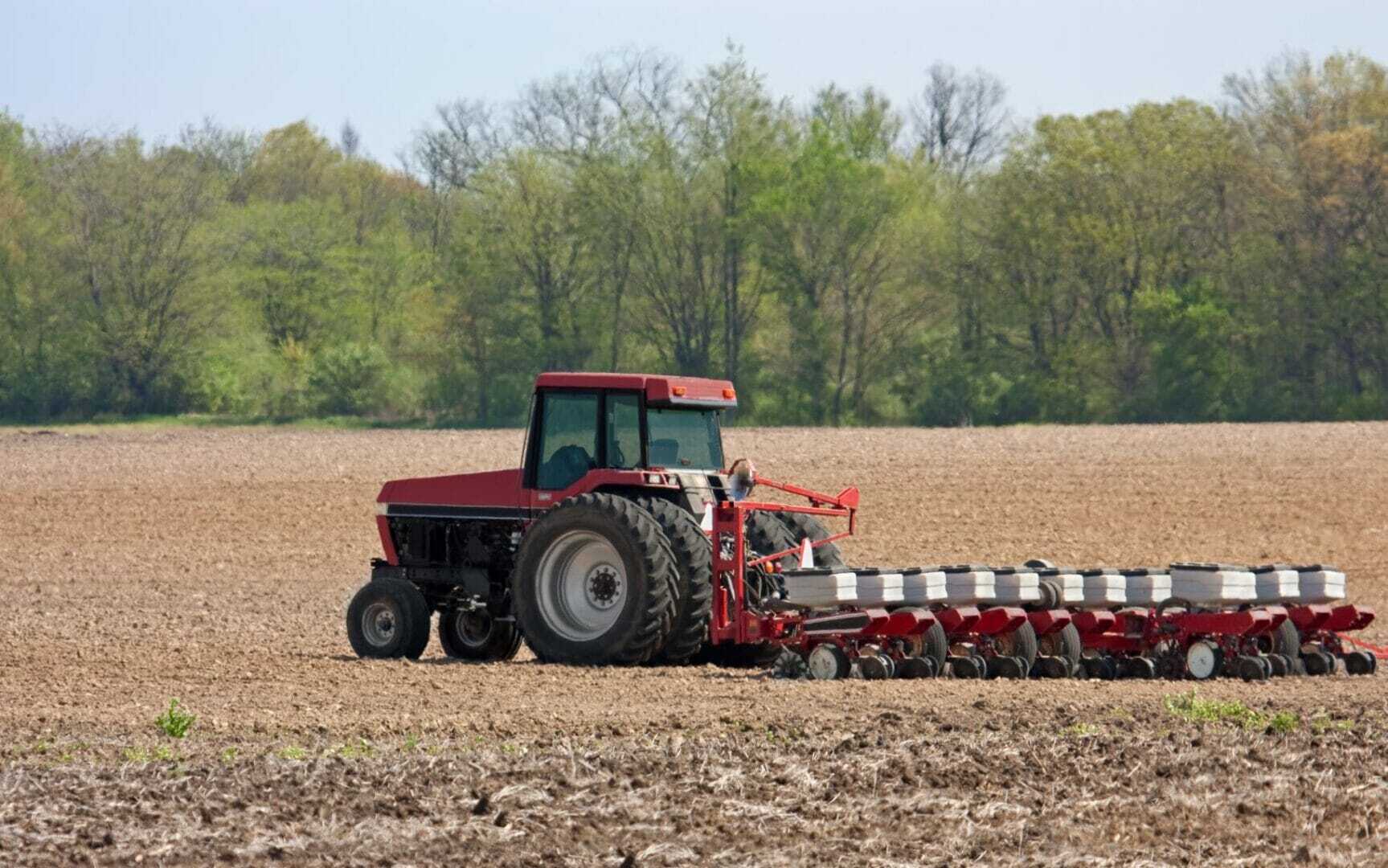
Your planter is the most important piece of equipment because it has the largest impact from emergence to final yield. Making these three upgrades will provide a return on your investment (ROI).

- Closing Wheels in No-Till or Limited-Till Conditions. Closing wheels on a planter ensure the furrow is closed and there is adequate seed-to-soil contact. In a dry spring, this can be the difference as to whether the seed can pull enough water to germinate. If there are air pockets around the seed, it either won’t germinate or it will rot trying. There are many different types of closing wheels and closing wheel systems. Look at your management style and determine if you need spiked wheels to help crumble the furrow wall in tough soil conditions or if you need more aggressive closing action. Then look at the closing wheel systems or one with a walking axle on it. If you conventionally till all your fields in the spring before planting, you likely don’t need this upgrade.
- Floating Row Cleaners. Rigid or pin adjust row cleaners have been the standard for many years and can perform well in certain circumstances. However, their limitation is not being able to adjust for changing terrain. Any tillage situation that leaves some residue on top of the soil can benefit from a residue cleaner. Consider switching from fixed to floating if you have been noticing uneven emergence in spots of the field as you roll across different terrain. The row cleaner could be riding high and not clearing a path, resulting in hair pinning, uneven planting depth and residue in the furrow.
- Downforce Adjustment. On-the-go downforce adjustments is not the easiest upgrade, but it will likely provide the best ROI in any tillage situation. This upgrade can keep your planter units riding smoother, so more uniform depth is achieved. Depth robs more yield than spacing. Having too little downforce means the unit could be riding up and not getting the seed placed where it should. If conditions are wet, you don’t need as much weight on the unit. Wet conditions or too much weight compact the furrow walls, causing root and early season growth issues. A study done by Agco in 2017 revealed on-the-go downforce adjustments had a 20 bushel per acre (Bu/A) advantage in situations when the down pressure was too light and 6 Bu/A advantage over too much down pressure.
Remember, your operation is not the same as your neighbors’. Be sure to align these planter upgrades with your specific soils and management practices, and they will provide a return for your operation.
-
Latham Hi‑Tech Seeds
#AsktheAgronomist- 2022 Soybean Considerations
What are the top three challenges facing soybeans this year? Precision Agronomy Advisor, Phil Long, addresses planting, weeds and Soybean Cyst Nematode issues in Latham Country. Check out our #AsktheAgronomist series to learn more about industry news and agronomy.
-
Latham Hi‑Tech Seeds
2021 Research Trials Show Seed Treatment Pays

Advertisements and magazine headlines tout the opportunity to enhance yields through plant protection and the use of biologicals or naturals, but does it pay to use these products? Our research once again confirms that seed treatments are an investment that provides a return.
Latham Hi‑Tech Seeds expanded its 2021 research trials to include seed treatments and biologicals. We wanted to determine whether the performance of the seed products we offer could be improved by seed protection and biologicals. Soybeans treated with Latham brand SoyShield® Plus had a 2.38-bushel yield advantage over untreated seed and a 1.2-bushel advantage over other leading fungicide and insecticide (F&I) seed treatments.
Latham Seeds’ signature SoyShield Plus seed treatment is effective in protecting seedlings from early plant diseases for approximately 30 days, which is a longer window of protection than most seed treatments offered. SoyShield Plus includes an exclusive fungicide combination that provides excellent protection against seed and soil borne diseases including: Pythium, Phytophthora, Fusarium and Rhizoctonia.
The addition of Saltro to SoyShield Plus increased protection against Sudden Death Syndrome (SDS) and soybean cyst nematodes. In fact, this treatment combination produced the highest yield in research trials across seven locations in multiple states. The SoyShield Plus / Saltro treatment had a 5.25-bushel yield advantage over untreated seed and provides Best-in-Class protection across environments. Soybean cyst nematodes are one of the largest yield-robbing pests and SDS is a growing concern for more areas, so it makes sense to order the Latham SoyShield+ / Saltro combination for 2022.
Inoculants with biologicals continue to show increased yields over inoculants alone. Latham SoyShield Plus with Talc USA’s MicroSurge had a 2.83-bushel per acre advantage over untreated seed and more than one bushel per acre advantage over other premium inoculants.

Corn trials conducted at six locations in multiple states also showed significant yield increases over the base seed treatments with various applications of seed applied or planter box treatments. Talc USA’s MicroSurge dry corn inoculant is easy to apply with talc. With two strains of Azospirillum, MicroSurge produced a 4.7-bushel yield advantage over the base seed treatment.
Encompass also was tested as a planter box treatment. It contains nitrogen-fixing microbials and helps mobilize phosphorous in the soils for easier nutrient uptake into the plant. Encompass showed an 8.5-bushel increase over base treatments in our 2021 trials. Now that’s a return on investment!

Contact your local Latham rep for more information about these and other products to protect your seeds and seedlings, so you can improve yields in your fields in 2022.
-
Latham Hi‑Tech Seeds
Start the Season Right by Planting the Right Genetics

With the 2022 planting season right around the corner, it’s time to focus on the one thing that will help you capture the most ROI in each field.
Field-by-field product placement is key to maximizing yield – and in turn – profit. Research shows plant genetics account for a 20% difference in yield. This means you could raise 12 more bushels of soybeans and 40 more bushels of corn PER ACRE simply by paying closer attention to your crop placement.
Below are three factors to consider when double-checking your crop placement for 2022:
- Study Field x Field® Ratings. Look at the Field x Field Ratings in the Latham® Product Guide for corn and soybeans. These charts simplify where you should place hybrids and varieties. A “1” rating means it’s a great fit for a particular environment; a “3” rating means you should not plant that product if your field conditions match that description. Your Latham Dealer has seen most of our products in environments, so call him or her if you have additional questions about where to place a particular product.
- Stick to the plan. If your seed dealer has provided you with a Field x Field plan, organize your seed shed so you can stick to the plan. Subscribers to Latham Seeds’ Data Forward® program receive a crop plan book, which you can keep in your planter tractor. It’s a good practice to double check that the right seed gets in the planter. If planting conditions change in a particular field, then take the time to move products. It will be worth an hour of your time to capture the extra $150 to 200 per acre in profit potential.
- Match Genetics to Management. If a certain corn product is described as “likes high management,” then you should not place that product in a field with poor fertility levels. Your seed dealer may not know your fields’ fertility levels unless you share it. That information is critical for accurate product placement as some genetics can handle tough fertility situations and others will fall apart in those environments. Also make sure you aren’t overplanting or underplanting each hybrid. Look at the “suggested populations” in our Product Guide, as well as the “Ear Type” rating and our stress wheel poster. We want to help you capture yield!
If you’re planting soybeans early or at the same time your planting corn, treat the seed with SoyShield® to protect it from early season fungal diseases. Seed treatment also gives seedings an early advantage. Even when using a quality seed treatment, plant fields with the heavy soils that remain wet and cold last or at least the soils have warmed. This will help your soybeans better ward off root diseases all season long.

A successful 2022 crop year begins with having a plan and sticking to it! Take the time now to double-check that you properly matched plant genetics with soil conditions. Our dealers are also happy to talk through field placement as well. If you have further questions or want to chat with our agronomists call: 1.877.GO.LATHAM (1.877.465.2842).

