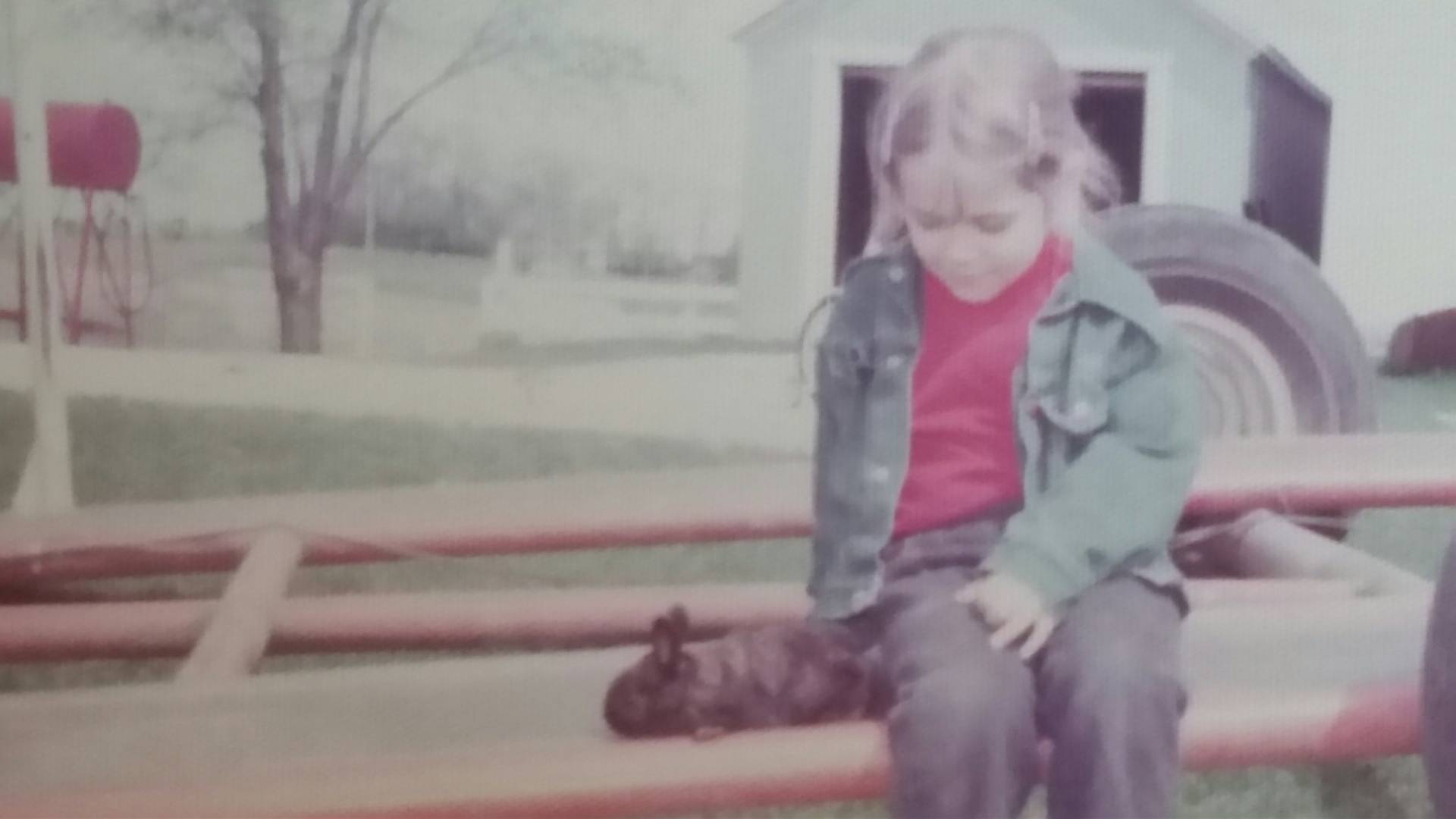
When Shannon Latham was 5 years old, the Easter bunny delivered a live rabbit.
When I was a child, I remember walking into the kitchen and finding my mom reading church cookbooks for new recipes to try. Fast forward to 2016, and I find myself saving recipes from my Facebook feed or pinning them to board on Pinterest.
There are so many photographs of beautiful dishes in my newsfeed! I was intrigued by the thought of making Baked Potato Cupcakes or Krispy Eggs. I toyed with the idea of making the Iowa Girl Eats’Easiest Fruit Salad because it’s so colorful – and I could use a little color after this week’s winter storm. Egg Lasagna sounded like an interesting side dish to ham.
I’ll probably try my hand at some of these recipes in the future, but I won’t be making them for Easter. I’ve decided to stick with Asparagus Casserole. Any one of my family members could probably guess what’s inside my dish before the cover comes off, and that thought made me realize that my casserole has become a tradition. I honestly look forward to the Deviled Eggs that my brother makes. My daughter looks forward to the Corn and Macaroni hot dish that my cousin brings. Without intending to, we’ve created family holiday traditions by the foods we serve.
Family traditions provide a constant in our otherwise ever-changing world. “Tradition gives us an opportunity to live in the moment and enjoy something that we have created as a family. It gives us the chance to slow down, appreciate and express gratitude towards the things in our lives that are not run by technology and busy demands.”
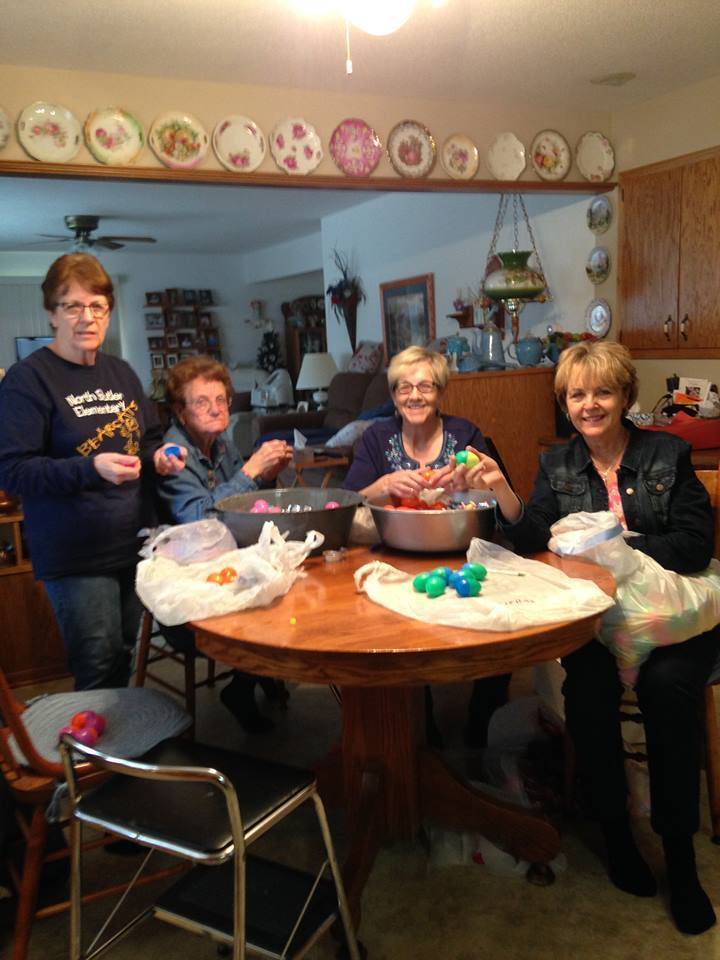
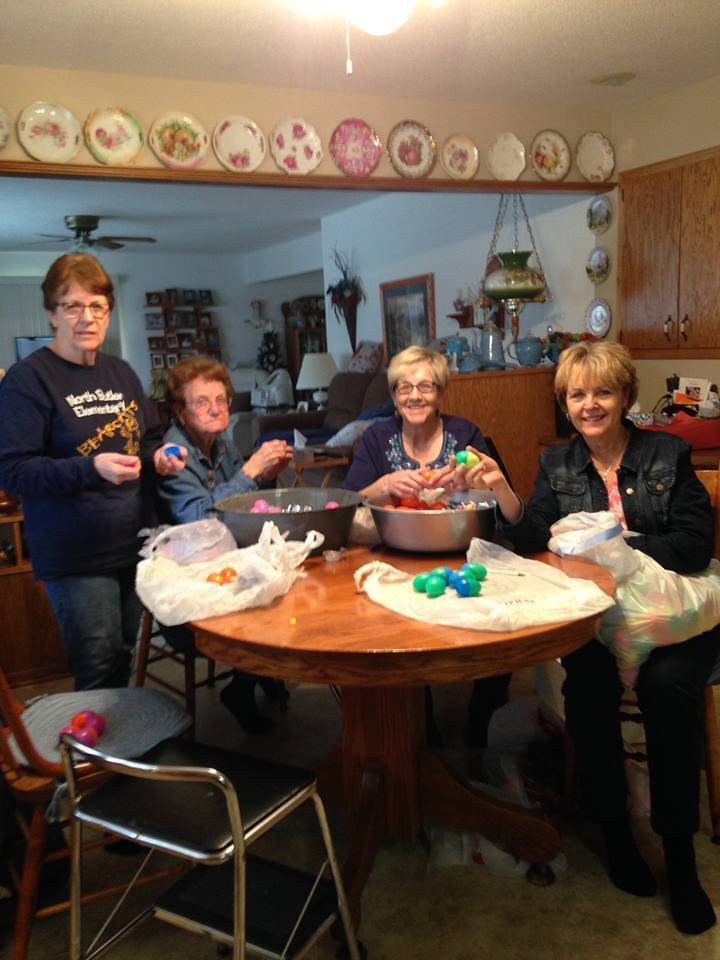
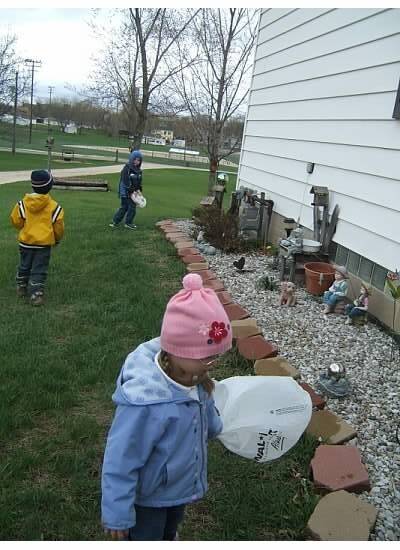
Shannon’s mom and her aunts helping her 91-year-old grandma fill Easter eggs for the 2016 hunt.Shannon’s kids, at age 5, enjoying their family’s annual Easter egg hunt.
The case for preserving family traditions was made in a HuffPost Homeblog article:
1. Traditions give us something to look forward to.
2. Traditions won’t preserve themselves.
3. Traditions keep us grounded.
The tradition I look forward to most each Easter is our annual egg hunt. My grandparents began hiding eggs more than 50 years ago. This weekend five generations will gather together to search for brightly colored plastic eggs filled with candy. Afterwards, we’ll enjoy a potluck meal. Like Pavlov’s dogs, my mouth is watering just thinking about it!
What traditions do you look forward to this holiday season? Perhaps you can start a new one… Included below is a recipe for Cherry Red Raspberry Cheesecake, courtesy of Food and Swine. Photo credit to the Iowa Food and Family Project.
It’s Crawfish Season, Y’all… Give “Fresh Catch Friday” New Meaning Tonight!
Just how hot are fresh crawfish in the Bayou State? The demand is so high that it’s hard to find a parking place, and even then, the evening’s Crawfish Boil might be sold out.
Crawfish harvest begins around March 1, says third generation Louisiana farmer Caleb Frey of Morganza, Louisiana. Traps are checked once daily at the beginning of the season and more frequently as the season progresses. Crawfishing runs through the second or third week of May, and then a late crop of rice will be planted in those fields where the crawfish were grown.
Sugar cane, soybeans and corn also are grown at Four Oaks Farm. The Frey family raises cattle on the levees that protect their farmland from the Mighty Mississippi. This diversified farming operation lends itself to year-round production.
“What I enjoy most about farming is the change,” says Caleb. “You might have a week or so of the same activity, like planting corn, and then it’s time to move onto the next activity.”
Corn planting was about to get underway around Natchez, Mississippi, when Franklin County Iowa farmer April Hemmes and I arrived. (April and Caleb traveled to China together as part of the United Soybean Board’s See For Yourself program. Applications are being accepted through April 1, so sign up online today to see how checkoff dollars help build markets worldwide for U.S. farm products.)
It had rained just enough the day of our visit that fieldwork came to a halt. So instead of touring the area’s beautiful pre-Civil war antebellum mansions, April and I went on a customized farm tour. Talk about luck! Here’s what we learned during our “short course” in Deep South Farming:
March:
These boats are used to check the traps and harvest the crawfish.
Crawfishing starts around the first of the month. Temperatures need to be in the 70s before the crawfish really start moving, so sometimes the season starts a little later.
Corn planting ideally starts the first or second week of March and will be complete by the month’s end. Last year, the Frey family didn’t start until March 19 and finished on the 30th.
The majority of rice acres are planted from mid-March to early April. Like corn, rice is very sensitive to high temperatures during pollination and needs adequate rainfall. The earlier it gets planted, the better the crop usually is.
April:
Early soybeans, typically early Group 4s, go in the fallow sugarcane ground around April 1.
May:
Most soybean acres are planted in May. Maturities generally range from 4.6 to 5.3.
June:
The Frey family stays busy with irrigating corn, soybeans and sugarcane, as well as spraying.
July:
Irrigating and spraying continues during the month of July as temperatures average 92 degrees Fahrenheit and the monthly rainfall is approximately 6 inches. Early rice and early corn are harvested toward the end of the month.
August:
Corn harvest is in full swing by the first or second week of August. Most of the rice is harvested mid-month, depending on the weather. If there is a hurricane threat, corn harvest is stopped so all hands can get the rice harvested before the weather hits. “Harvesting downed rice is one of the most painstaking things you could ever do in a combine,” explains Caleb. “Add mud to the mix following a big storm and it really gets interesting.”
Early soybeans also are harvested at this time, and the sugarcane planting crews typically follow right behind the combine.
September:
Sugarcane planting and soybean harvest wrap up. Sugarcane needs to grow about one year before it is harvested, so the Freys include this crop as in rotation with soybeans. Harvest begins around the last week of the month on the mature cane crop.
NOTE: The sugar cane gets a little growth on it during the fall, but it typically doesn’t get much more than a foot or two tall before frost causes it to go dormant. In the spring, the entire cane crop basically starts from the same point. It’s cultivated, fertilized, sprayed and irrigated.
Come October the “plant cane,” which is the crop that was planted the previous summer, is harvested along with the rest of the crop. Then it becomes “first year stubble,” which means it has been harvest once. Cane is typically stubbled, or harvested, three to four years before a field returns to soybeans.
October:
Sugarcane harvest cranks up and grain harvest comes to an end in October. Fall field prep is in full swing behind the combines. At this time, a maintenance shot of fertilizer is applied on all of the corn, soybean and rice acres.
November;
Typically all field work is finished by Thanksgiving, weather permitting. Sugarcane harvest is in full swing.
December:
Cane harvest is typically finished between Christmas and the first of the year, but the finish date is completely dependent upon the sugar mill. The mill determines the producers’ daily quota. Your quota is proportional to your cane acres and harvest is typically figured on a 90- to 100-day timeframe.
Additional information: During that 100-day window, each farmer gets one day off every other week. Moisture has no effect on the milling or harvest process, so harvest continues.
During harvest or “grinding” as it’s called here, cane is being harvested 24/7 from September through January. All farmers who haul a particular mill generally finish harvest on the same day, but finish dates vary across the state by a few weeks.
There are 11 sugar mills in Louisiana, and each mills sets its own schedule to a certain degree. Some have split shifts, which means half of their farmers harvest from 12 AM to 12 PM and the other half the opposite. Four Oaks Farms hauls to Cora Texas in Whitecastle, LA. This mill has all of its farmers harvest from 5 AM to whenever the quota is reach. Cane is stockpiled during the day, so cane is available to feed the mills all night long.
January;
The Frey family spends most of this month in the office, finalizing input orders and crop plans for the coming year.
February:
Planter preparation is underway in February plus corn and rice ground is burned down. If it’s dry, the Freys will till old sugarcane stubble so soybeans can be planted on that ground in April.
The Frey family raises cattle on the levees that protect their farmland from the Mighty Mississippi.
Caleb is responsible for purchasing and applying the inputs. He also helps wherever he’s needed from planting through harvest on every crop. Caleb’s dad, Marty, the youngest of four brothers for which Four Oaks Farms is named. Marty is transitioning into the role of president and also oversees the rice and soybeans in Morganza. Caleb’s uncle, Matt, primarily oversees cane production, crawfish harvest and the cattle. Mitch, the oldest of the four, takes care of all maintenance and equipment repairs. He also takes care of all the grain storage facilities plus the rice drying and storage during harvest. Caleb’s uncle, Mark, is the second oldest. Mark manages the northern farm in Vidalia where rice, corn and soybeans are grown. He also markets the farm’s whole crop. In addition, Mark helps his son sell and install irrigation pipes, wells, center pivots and moisture probes.
“I’ve had a chance to learn from the best,” says Caleb as he talks with me about his family’s farming operation. Instead of studying agriculture in college, he earned two associate degrees in Construction Management and Business Management from Baton Rouge Community College. He then enjoyed working four years as a welder and mechanic for Bengal Transportation/Crane & Rigging in Gonzales.
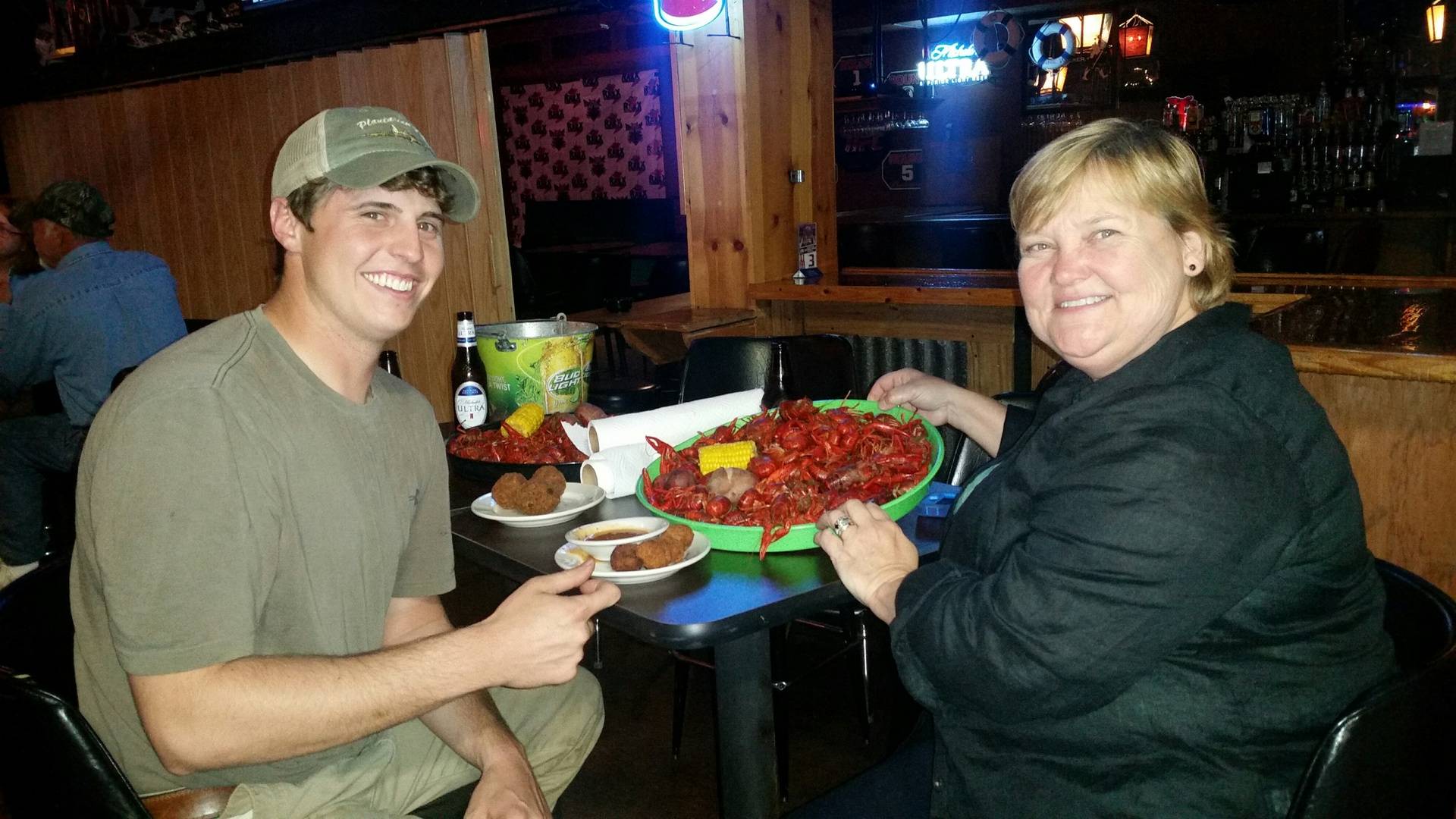
After learning how crawfish are raised, April Hemmes and I got the pleasure of eating this locally grown food. OH. MY. YUM!
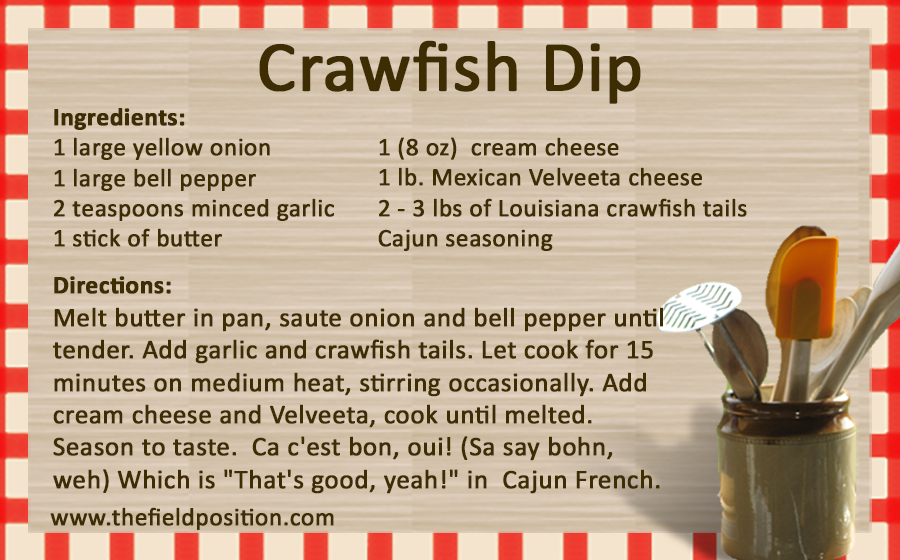
Caleb found himself longing for the wide open spaces and the call of the wild, so he returned to the family farm in 2014. He’s had his pilot license for 2½ years and flies whenever he can. In his free time, Caleb enjoys hunting squirrel, deer and rabbit. He also enjoys getting together with friends. On any given night, one of his buddies is hosting a cookout or a crawfish boil. Today Caleb has agreed to share one of his family’s favorite recipes on TheFieldPosition.
By the way, you can most likely purchase fresh Louisiana crawfish at the supermarket in your regional trade center. April Hemmes says she found them at the Hy-Vee in Iowa Falls, Iowa. Who knew? Give “Fresh Catch Friday” new meaning this Lenten season and celebrate with Crawfish Étouffée tonight!
New Orleans Melds Cultures into Unique Regional Cuisine
More than 8,000 farmers gathered last week in New Orleans for America’s largest farmer-led, farmer-focused trade show and convention. Open to all “friends of corn, soybeans, wheat and sorghum—from growers to member associations to agribusiness to farm media,” the 2016 Commodity Classic boasted an impressive schedule of presentations and events designed to get attendees jazzed about agriculture.
There was so much to get jazzed about from the seeing state-of-the-art planting and fertility equipment to presentations by yield guru Dr. Fred Below and UAV guru Chad Colby. I enjoyed walking around the tradeshow, catching up with old friends and meeting new acquaintances. I stopped by booths to learn more about what our industry partners are doing to advocate for the next generation. I talked with farm broadcaster Duane Murley of KWMT in Fort Dodge about exciting projects that Latham Hi‑Tech Seeds has underway with the Iowa Soybean Association and the Iowa Food & Family Project. (You can bet I’ll be blogging about those soon!)
The booze is the most crucial ingredient. Be generous.
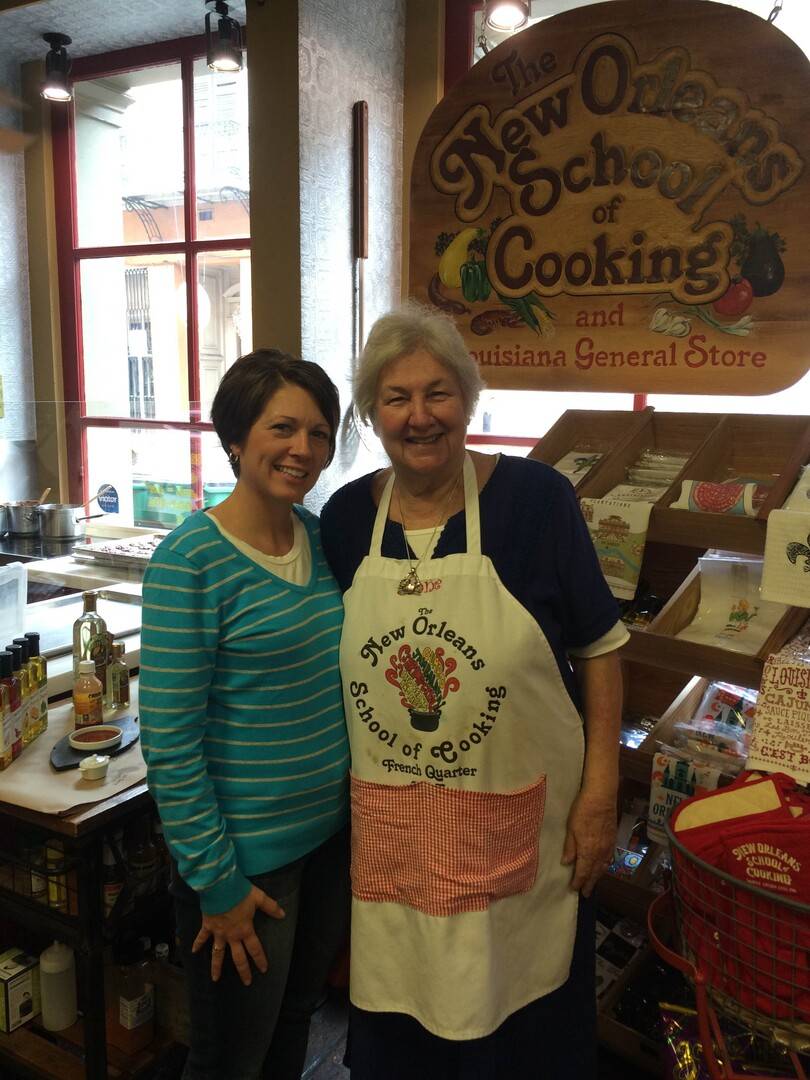
There was simply more to see and do that I could squeeze into four very full days because I also needed to get outside the convention hall to enjoy the beautiful weather, see a few sights and eat a lot of great food. One highlight of my week in the South was a visit to the New Orleans School of Cooking. (Thanks to Carol Coleman for the invitation to join her and several other Iowans for this fun time!)
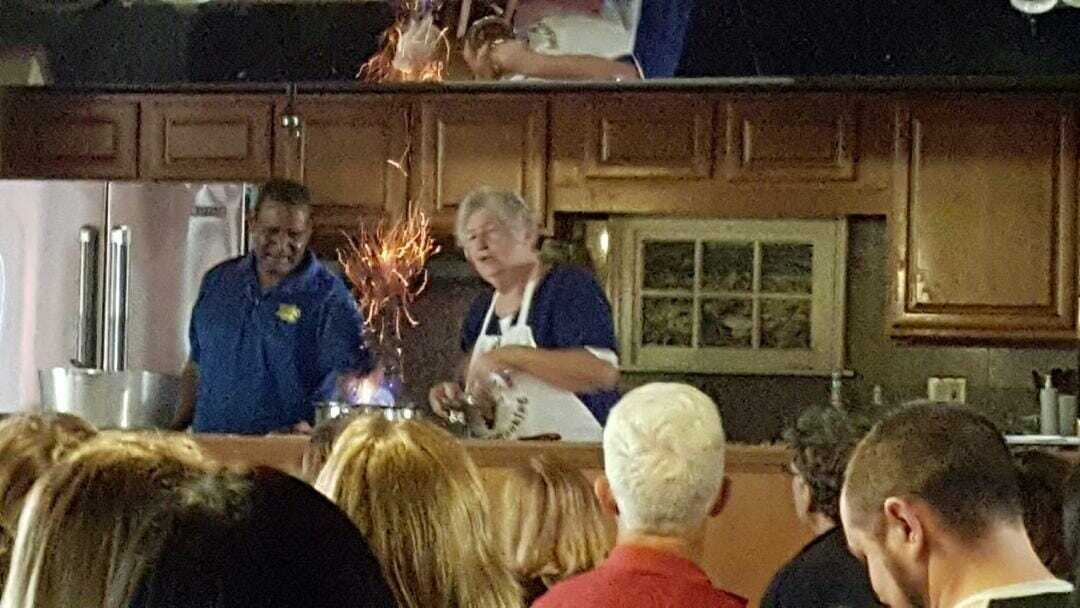
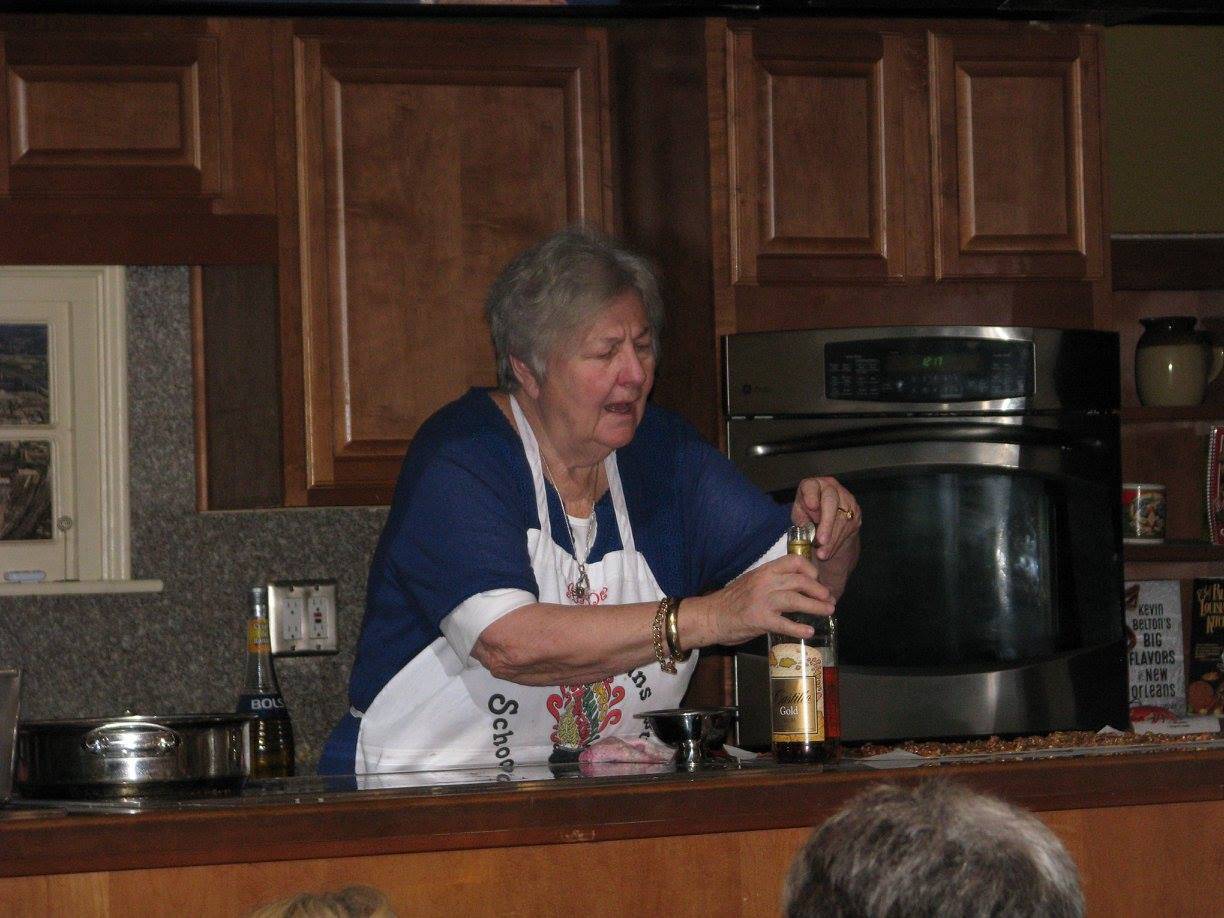
Our cooking instructor, a former kindergarten teacher and certified tour guide, was a walking encyclopedia of Louisiana history plus a colorful storyteller. We learned how Spanish explorers, French settlers, Canadian immigrants and African slaves influenced the Cajun and Creole dishes for which New Orleans is famous.
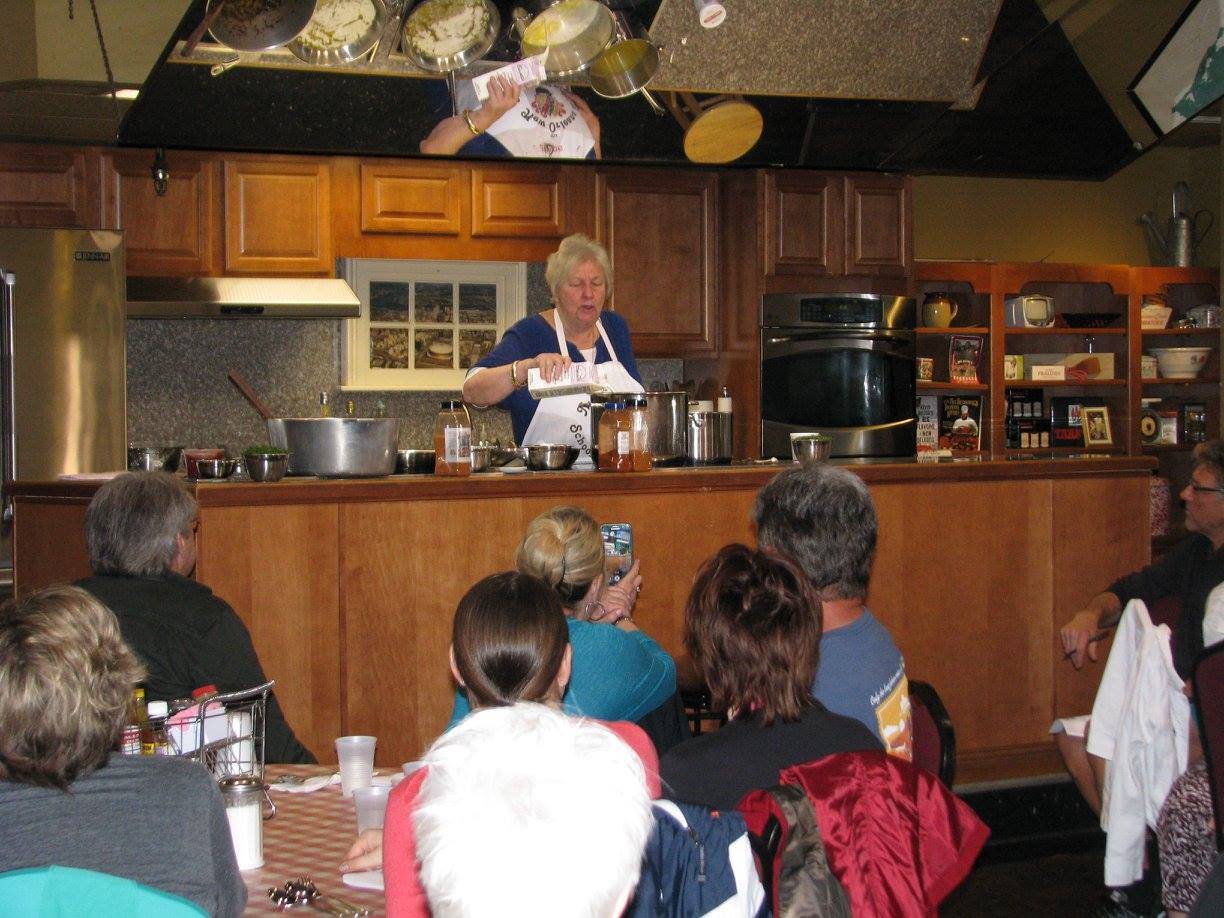
You can see inside the pans using the mirror above the instructor’s head!
What’s not to love about a history lesson that takes place over a four-course meal? As our class began, we were served hot buttermilk biscuits with cane syrup. (Before I made this trip, I assumed everyone ate maple syrup. We know what we grow, right? It only makes sense that cane would be the syrup of choice in Louisiana.)
The Southern menu demonstrated during our cooking class included:
Corn & Crab Bisque – Oh. My. Yum. This is one dish Iwill make at home! (Even though it wasn’t on our menu, I’m linking to gumbo because it’s a signature dish in New Orleans.)
Shrimp Creole – This is another southern specialty that’s oh so good! Be sure to mix it all together before taking a bite. (Our instructor said she can always tell the northerners in the class because they leave the gravy on top of the rice. “Mix it up, y’all!”)
Bananas Foster and Pralines (pronounced here as praa-leens) – Talk about indulgent! We were treated to both desserts plus ice cream.
Did you know that New Orleans (#NOLA) is the birth of Bananas Foster? I found it fascinating to learn this dessert was born out necessity. Here’s why… New Orleans was the major port of entry in the 1950s for bananas shipped from Central and South America. Owen Brennan, owner of Brennan’s Restaurant, challenged Chef Paul Blange to find a use for surplus or ripe bananas. Decadent Bananas Foster was created and named for Owen’s friend, Richard Foster, a local civic and business leader. Each year, Brennan’s flames 35,000 pounds of bananas for the famous dessert.
Get a taste of the French Quarter at home by recreating these classic recipes at home!
West Central Iowans Revisit Scandinavian Roots in Uganda
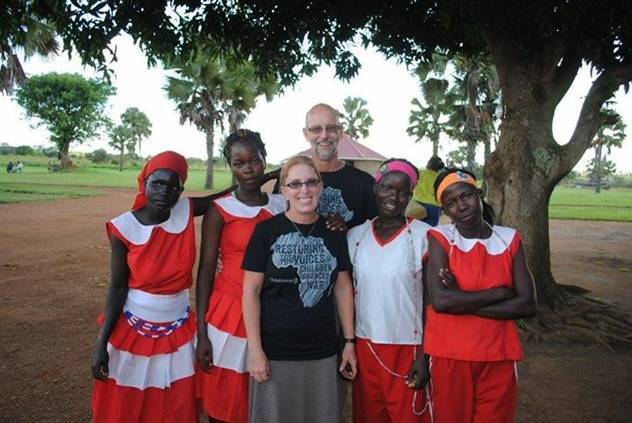
When Steven and Charlene Sandven of Humboldt got married in 1982 and moved onto a West Central Iowa farm, they had no idea its history would lead them to Uganda as they celebrated their 33rd wedding anniversary. Their story is one that weaves together two families across three different continents.
Steven’s great grandfather, Magnus, borrowed money from Lars Mandsager to emigrate to the United States from Norway. Magnus helped Lars farm, plus he worked as a tailor’s apprentice in Fort Dodge to earn additional money to pay back the loan. This tract of land transfers back and forth between the Mandsager and Sandven families throughout the years.
Fast forward to Fall Harvest 2015. Steven and Charlene are in the midst of harvesting soybeans
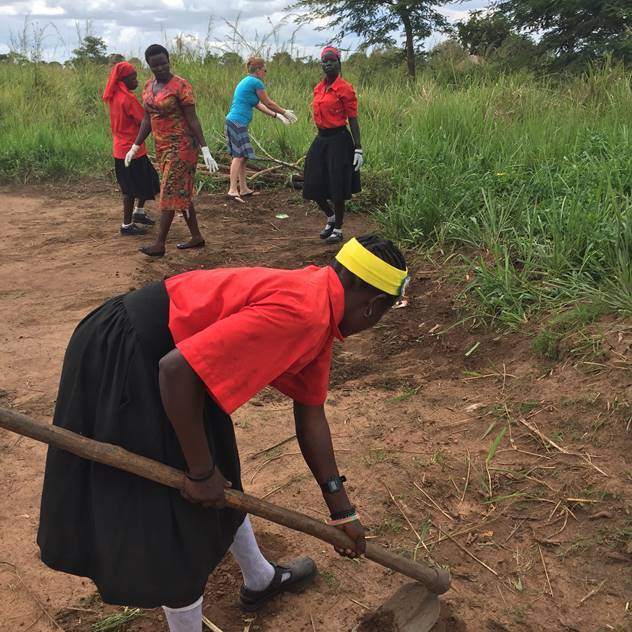
Tilling, planting and harvesting is all done by hand at ChildVoice Uganda
when they received a call from Conrad Mandsager, CEO and Founder of ChildVoice. Conrad and his younger brother, Neil, were born in Cameroon where their father was a medical missionary. Conrad graduated from Marshalltown High School and played football at Wartburg College in Waverly, Iowa. Conrad returned to his family’s Humboldt County farm, but his entrepreneurial drive led him to explore farms in the Northeast. He’s now a consultant in New Hampshire, and the Sandvens rent the Mandsager family’s Iowa farm land.
Regardless of where Conrad is hanging his hat, his heart is with people in Africa. He was moved by the women and children whose voices were silenced by war in Uganda. “The Lord’s Resistance Army began kidnapping children to become soldiers and women to be used as sex slaves. For 20 years, the rebels abducted an estimated 30,000 children from their homes in Northern Uganda and forced them to commit violent acts upon villagers.”
In 2006, ChildVoice pioneered a unique community model to provide hope and opportunity for adolescent girls in northern Uganda because returning child soldiers and sex slaves were not welcome in their home villages. Years of war had left their home communities traumatized and facing abject poverty. “The second generation impact of war remains,” read the organizations website, “and our young students today still face many challenges.”
One challenge is making the model community self-sustaining. Several fields, or large gardens, have been tilled and planted. The women primarily grow peanuts and vegetable crops like white sweet potatoes, beans, potatoes, okra and white, waxy corn that they call maize. They also grow watermelon. A few local men are hired to raise some chickens and a few pigs to supply ChildVoice with meat and eggs. A fish pond also has been built to raise tilapia, so they can raise their own fish as well as sell some.
Another challenge is teaching these women and children life skills, so they can become self-supportive. Women living in the village become apprentices in one of these areas: cooking for a restaurant, which is referred to as a hotel there, hairstyling or tailoring (seamstress). The Sandvens hope farming may be added, so the women may choose grain or livestock farming as a life skill. (As a sidebar, click here to read how one Iowa farm women has helped female farmers in Uganda.)
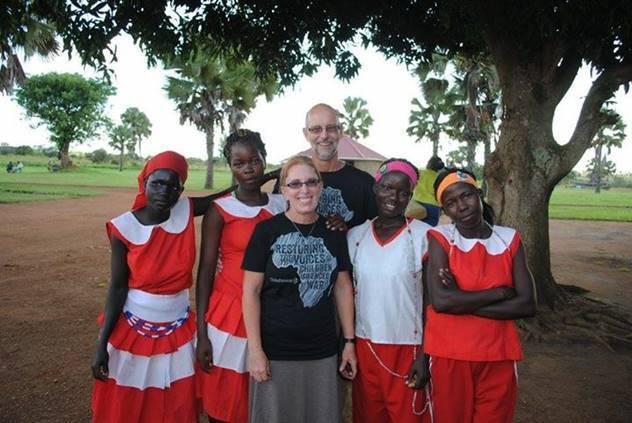
Steven and Charlene Sandven greeted upon arrival at ChildVoice Uganda
During their two-week stay last October, the Sandvens helped make physical improvements to facilities around the mission. Steven and Charlene also used their farming skills to evaluate the maize program. They learned the maize is yielding only about 10 bushels per acres! The maize is being planted in hills at a plant population of about 18,000 per acre (although the local measurement is hectares).
To demonstrate how more plants – and higher yield – could be achieved, the Sandvens taught the women how to plant in rows. They demonstrated with sweet corn, planted at a population of 32,500 plants per acre. They formed one measuring stick that was about 8 inches long for seed spacing and a 20-inch stick for row spacing.
Soil fertility is also key to improving yield, so soils have been tested on the ChildVoice farm. The next step in achieving higher production is going to be adding nutrients to the soil. Plans are in the works to begin using nutrients from the rabbit hutch and fish pond as fertilizer.
Of course, higher yield also means the villagers need to look at developing infrastructure. All labor is manual at this point. Should they consider oxen and equipment or purchase small farm machinery? Should they expand their land base? These are questions being pondered now by the ChildVoice board of directors, four of whom traveled with the Sandvens in October to Uganda along with five representatives from Lutheran Church of Hope in West Des Moines.
This group also traveled to nearby villages to see how well graduates of ChildVoice were doing on their own. One graduate had opened her own bakery next to another woman, who sells beans and rice that is delivered by a farmer in bulk bags. Then locals use measuring cups to buy what they want from the roadside market. Another ChildVoice aluma works as a cook in a hotel, or what Americans would call a restaurant. A third graduate has her own salon, and a fourth graduate married a farmer from another tribe.
“It was so rewarding to teach them things they could use to improve their lives,” says Charlene. “We hear the expression, ‘Another day, another dollar.” We’ll it’s true for these ladies! They earn so little, but they’re learning how to take care of themselves and their children.”
In honor of the Norwegian heritage that brought together the Mandsager and Sandven families three generations ago, today we’re sharing a recipe for Kringla. Kringla seem to magically appear on the tables of those with Scandinavian heritage either on Thanksgiving and Christmas. The Sandvan family enjoys these pretzel-like pastries so much that Charlene freezes them to have on hand throughout the winter.
As empty nesters with four adult children, Charlene says having casseroles and desserts in the freezer is a real life saver. Their oldest daughter, Brandy, lives nearby with her husband, Cody, who farms with Steven and Charlene. Brandy and Cody have two children. Brittany and her husband, Reed, have one son. The Sandven’s daughter Chelsea is a senior at the University of Northern Iowa, majoring in in Criminology and Psychology. Their youngest son, Skyler, is freshman in Aerospace Engineering at Iowa State University.
Both Steven and Charlene’s families come from Norway, so today their sharing their recipe for one of their favorite comfort foods with us!
Photo by Joseph L. Murphy – find him as @jmurphpix on Instagram and Twitter
Half marathon, check. Workout 45 minutes everyday, check. Eat healthy, check. No family history of heart disease, check. Heart attack, check!
If you are like me, you would scratch your head to hear someone in her early 40’s suffered a heart attack. That, of course, happens to people that are much older or who have risk factors like smoking, obesity or high cholesterol. I’m proud to say that I don’t fall into any of those categories, but the truth is, I now will live with heart disease the rest of my life.
Here is an excerpt of a blog I wrote about my heart attack:
It started as a normal day. I exercised in the moring, got the kids to school and went to work. After school we ran around and did our normal daily routines. I took [my daughter] Brenna to Irish dance lessons. We had supper and all went to bed. At 2:00 am I woke up with crushing chest pain. First thought, “I gave up caffeine today for Lent. Could that be the cause? What if I’m having indigestion?!”
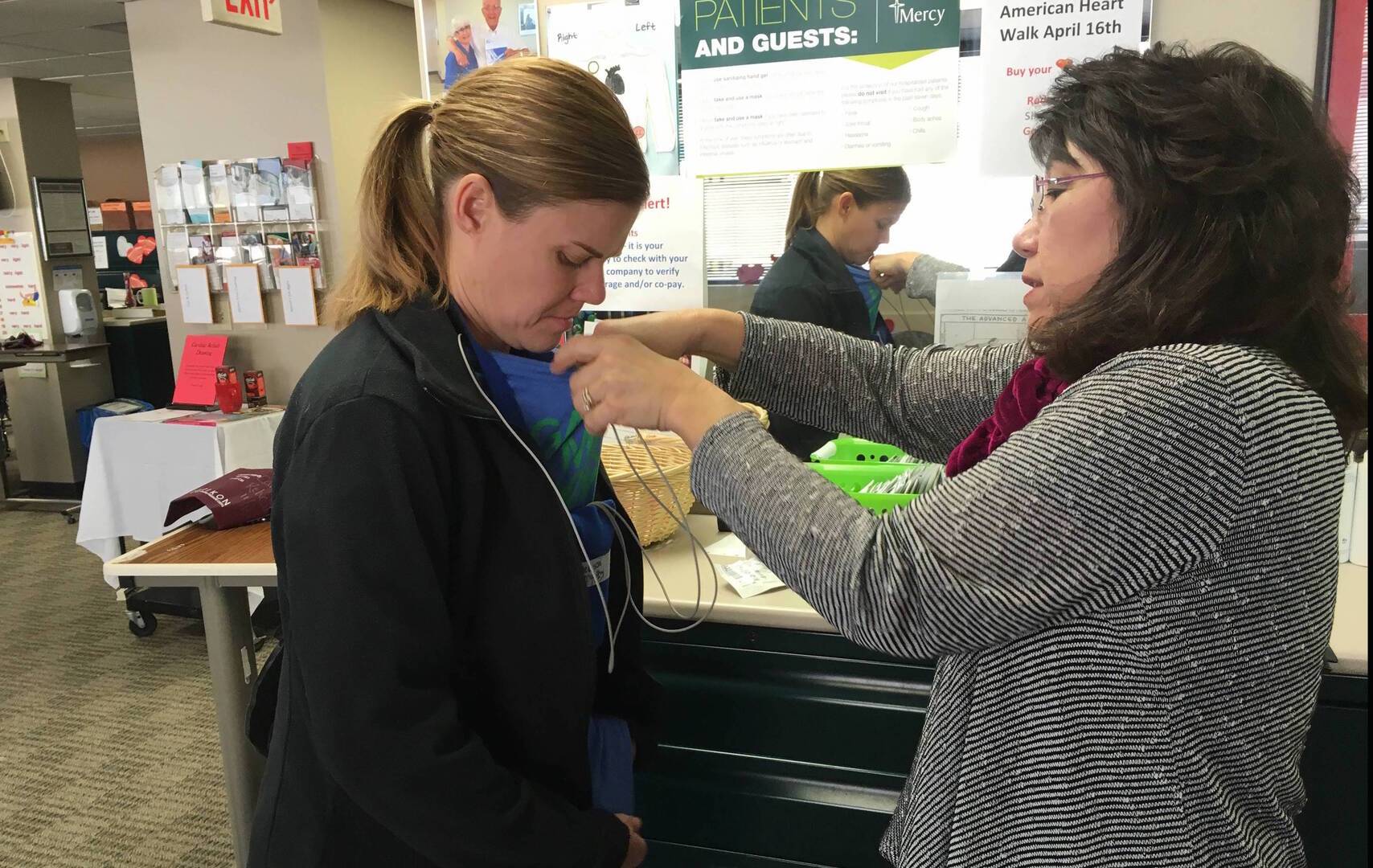
I got up and walked to the coach and sat in the dark for a minute. By now, I’m noticing the pain is in my jaw. I finally start to acknowledge that this is something bigger than I could possibly imagine. I have a Bachelors in Nursing and remember from my training that women present differently than men. (You can read more about the night I suffered a hearth attack and follow my road to recovery here: http://pinnie40.blogspot.com)
February ushers in National “Go Red for Women,” which brings awareness of heart disease and stroke by asking people to wear red and get more informed. The one thing I would like readers to know is how women’s symptoms can be completely different from men’s symptoms.
In my case, years of estrogen supplements from birth control pills caused a rare dissection in
Photo by Joseph L. Murphy – find him as @jmurphpix on Instagram and Twitter
my right coronary artery. I had two stents placed to reinforce the wall of my artery. Those stents will be a part of me for life, and I even received a serial number certificate (to show to doctors during procedures) as a reminder. I’ve also gone from one daily medication to a daily pill box with four medications. These medications will be my lifeline for the rest of my life, helping to guard against cholesterol and blood clots that could cause another heart attack.
Ladies and gentlemen, this is where it gets real. It – Can – Happen – To – You!!! Even though I’m a nurse and should’ve known better, I spent precious time googling my symptoms thinking it had to be something else. Don’t let death be the result of being embarrassed to call an ambulance. I delayed in making the 911 call and my vitals crashed in the ambulance on the way to the hospital.
Below are a list of symptoms that you should take seriously:
Chest pain or discomfort (may not be on left side)
Pain in your arm, back, neck and jaw
Stomach pain
Shortness of breath, nausea and light headedness
Sweating
Fatigue
Many women will experience vague or silent symptoms that might simply go unnoticed. Flu, indigestion, jaw pain, chest pain and shortness of breath are all signs of a heart attack. I had chest pain, jaw pain and felt nauseated. But I was still able to have a conversation, Google symptoms and doubt what was really going on. Sadly, all the symptoms aren’t always present. Be aware and take multiple symptoms seriously.
My other advice is to have discussions with your doctors. If you fall in the risk groups, work with your care providers and family members to improve your health. It might seem like hard work now, but the reward will be many years ahead with loved ones.
by Kilah Hemesath, Latham Hi‑Tech Seeds Marketing Intern
Packing lunch before heading out the door in the morning involves either throwing a few granola bars into my bag or arriving five minutes late to class because I took time to pack a real lunch. Thankfully, my dilemma was solved when I went home last weekend!
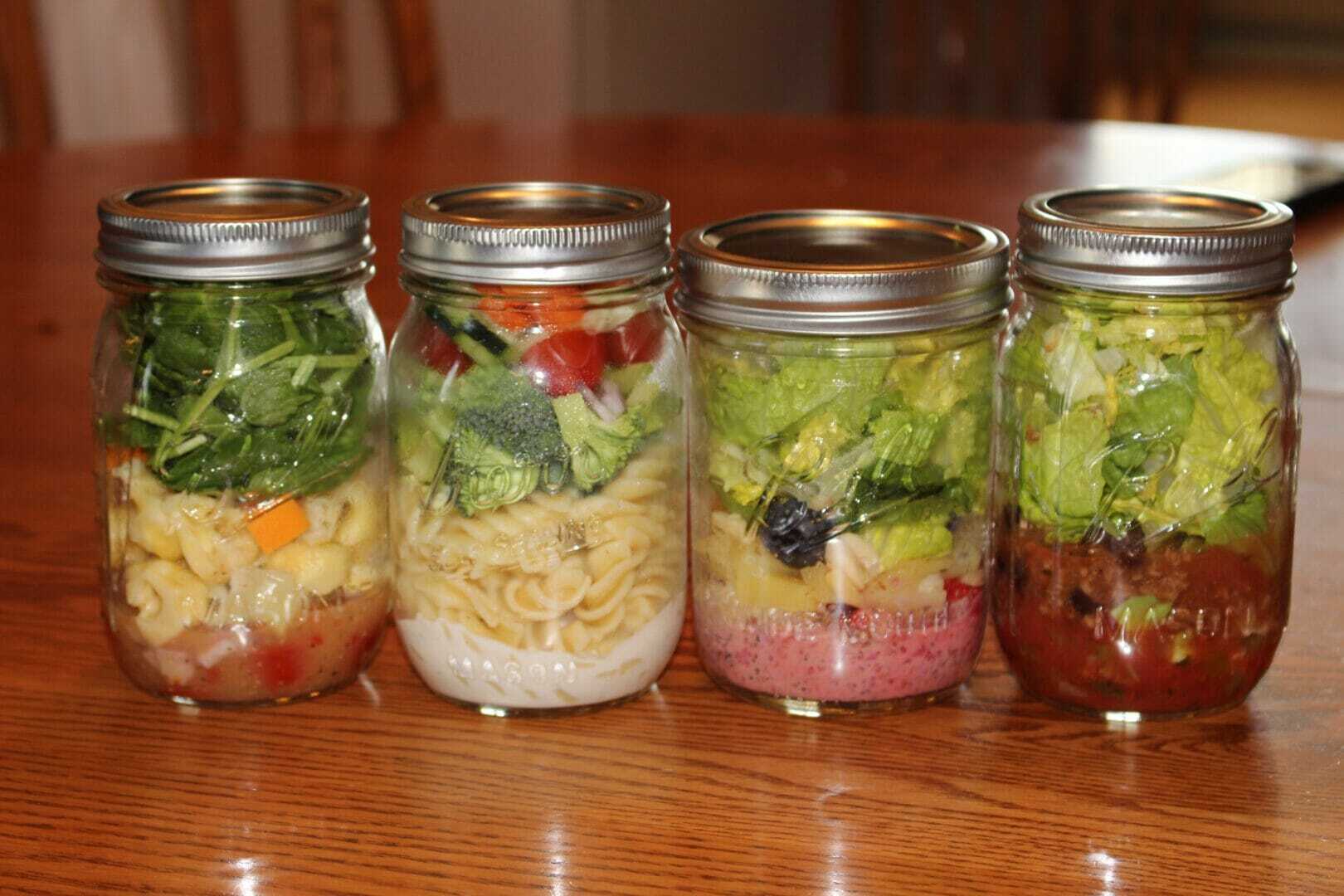
My mom had been telling me about a new trend called “Mason Jar Salads in a Jar.” I was a bit skeptical on how long they would stay fresh, but they lived up to the test! On Day 10, the salad was just as crisp and fresh as they were on Day 1.
After a trip to the grocery store and three hours of labor, we had 40 pints of salad in jars! We made 10 of each kind: Ranch Rotini, Tortellini and Artichoke, Taco Salad and Strawberry Vinaigrette. These recipes can be found here, along with 27 others!
Those three intensive hours of cooking, chopping and packing led me to develop a list of ways to speed up this process in the future. Here are my top three takeaways:
First cook the ingredients that must be cooled. Each recipe either called for noodles, quinoa or salad dressings that had to be cooled before being packed into the jars. Cooking these first minimizes downtown because you can be preparing other items while these are cooling.
Cut up your veggies at the same time. There A LOT of veggies to cut, especially if you make four kinds of salad! Cutting all veggies at the same time reduces the need to continuously clean up plus results in fewer dishes to wash in the end.
Make an assembly line. With multiple ingredients going into each jar, it’s easier to
have everything laid out nicely. This is also a great way to create an assembly line if multiple hands are there to help!
Depending on the ingredients of your salad, you may want to prioritize the order in which you eat them. For example, I don’t want to save the taco salads for last because of the fresh avocado.
A quick, easy and healthy lunch option is now doable with the Mason Jar Salads. Give it a shot and switch up your lunch!
Latham® Dealers Vacation like a Star at Hard Rock Cancun
The gleaming silver motor coach pulled into the guitar-shaped lane and rolled to a stop in front of a side entrance just for VIPs. Luggage was attended to by a group of attentive bellmen. As Latham® dealers and special guests walked through the doors of the Hard Rock Cancun on January 30, they were greeted with a smile and a cold drink.
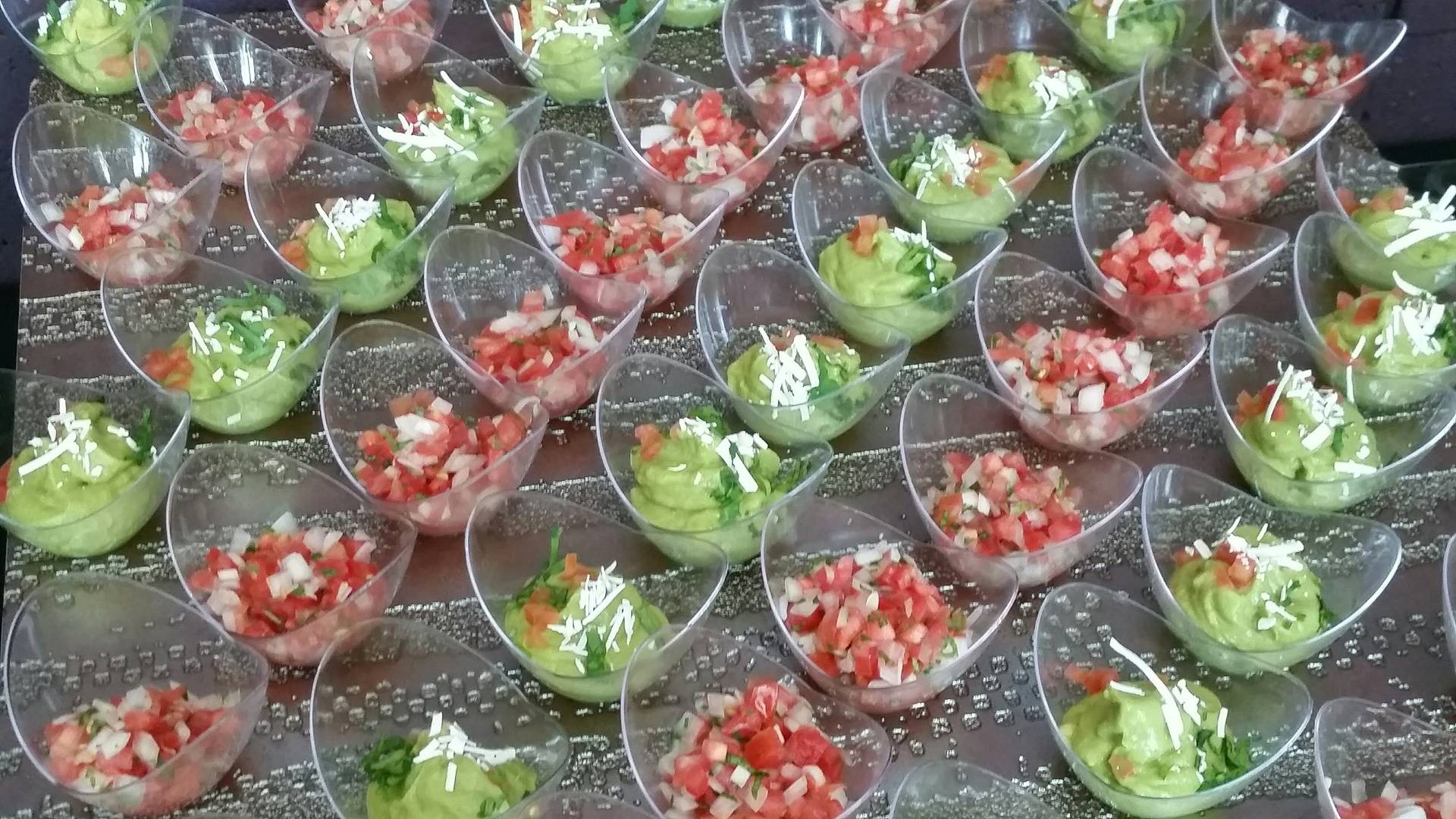
A one-man band played popular cover tunes. A buffet of chips with guacamole and pico de gallo, beef skewers and a variety of Mexican appetizers was provided. Fender guitars were available for anyone wishing to get into the rock ‘n roll spirit. (Did you know guests at the Hard Rock can check out a guitar and then turn to a TV channel to learn how to play? This is just one of the cool amenities offered at this all-inclusive resort.)
What more does a rock star need… How about unlimited food and drinks? Complimentary room service? Multiple swimming pools, white sand beaches and turquoise waters? Some of our guests enjoyed the Rock Spa for a massage on the beach. Others treated themselves to facials, pedicure and manicures. The more adventurous went ziplining, snorkeling, four-wheeling or horseback riding.
One especially notable excursion provided by Latham Hi‑Tech Seeds was a day trip to Chichén Itza (pronounced chee-chehn eet-sah), located on the Yucatan Peninsula. While visiting this wonder of the modern world, we learned many fascinating facts:
The sun and the moon were significant in the daily lives of Mayans, so there is symbolism throughout their architecture. El Castillo pyramid has four sides containing: 365 steps, or one for each day of the solar year; 52 panels, or one for each year in the Mayan century as well as for each week in the solar year; and 18 terraces, one for each month in the religious year. During the fall and spring equinoxes, the sun’s shadow forms an enormous snake’s body, which aligns with the carved stone snake head at the bottom of this pyramid.
The Pyramid of Kulkulkán — also known as El Castillo — is probably the most recognized ruin of Chichén Itza.
Ball games, featuring a soccer-sized ball with a set of intricate rules, drew huge crowds of spectators. Carvings around the courtyard display rules of this sacred game. One carving even shows the captain of the losing game being beheaded, which was thought to be a way of dying with honor as a sacrifice to the gods.
Corn (teosinte) was developed at least 7,000 years ago in Central Mexico. Early cultures literally depended on this staple for life, so corn greatly influenced religion and mythology. The Maya believed that gods mixed their own blood with corn flour to create humankind, and the elite members of society shaped their babies’ heads to resemble a tamale to honor the corn god.
While my family enjoyed visiting Chichén Itza and experiencing the Mexican countryside, we also loved every minute we spent at the Hard Rock Hotel. Honestly, our favorite restaurant at the Hard Rock Cancun was wherever we were dining that night! We tried them all: Zen hibachi grill, Ciao Italian, Ipanema Brazilian grill, Frida Mexican restaurant, The Market for International cuisine and Pizetto.
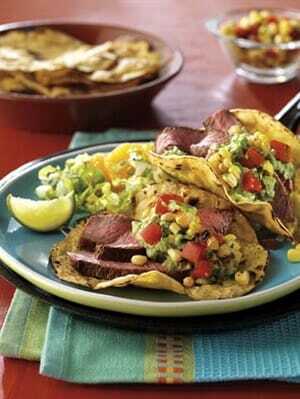
In honor of our fabulous sales incentive trip to Cancun, today on TheFieldPosition we’re featuring a Tex-Mex recipe courtesy of the Iowa Beef Industry Council. Click on the posts below for a recap of some of our past company trips, including recipes from those regions. NOTE: If you’re interested in learning how you can earn your own trip to another tropical destination next February, call 1-877-GO-LATHAM (1.877.465.2842).
The closer we get to Valentine’s Day, the more advertisements there are for roses and chocolates. Why wait for one special day to send flowers or to write sweet nothings? Why not hide love notes around the house or treat your spouse to a nice dinner for no particular reason? Why not send random text messages throughout the day to let her know that you’re thinking of her?
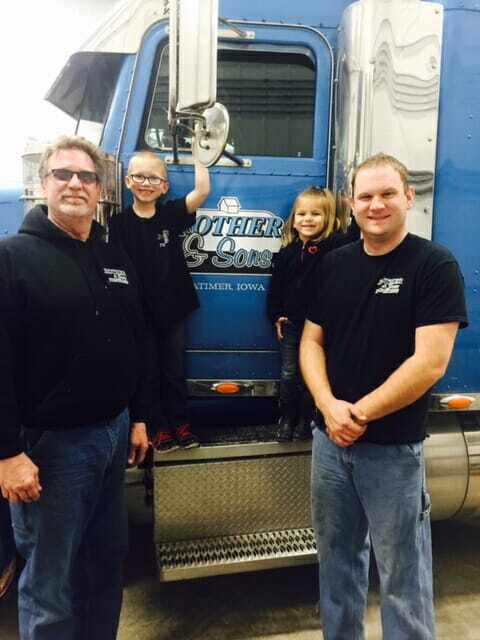
Let your loved ones know just how much they mean is Mark Rother’s mantra. He’s been married for 37 years to his childhood friend, and he feels so fortunate that he has worked with both of his sons. He considers his daughters-in-law to be bonus members of his family and is delighted that all five grandchildren live within four miles of the family farm.
Mark loves that he and Sue can attend the grandkids’ activities and help out when they’re needed. Ryan and his wife, Becky, are parents of three daughters: Rosie, 10; Brooke, 6, and JJ, 2.5 years old. Tony and his wife, Jessica, are the parents of Landon, 6, and Olivia, 3.
“I’m not rich in a monetary sense,” says Mark, “but my life is rich in all the ways that matter most.” He and his wife, Sue, live on the farm south of Sheffield in North Central Iowa that’s been in Mark’s family since 1921. They got married in 1978 and had the distinction of getting the first beginning farmer loan that the local bank had written in about 30 years. When the Farm Crisis of the 1980s hit, he said the bank was probably second-guessing their decisions but Mark and Sue weathered the storm. They did body work and automotive repair plus Mark took on carpentry jobs to bring in additional income.
Two decades later the Rother’s sons each found their passions from working side-by-side with their parents. After graduating from Ellsworth Community College, Ryan took a job with the state’s leading masonry company. He enjoyed his work, but it took him away from home for long stretches. With a wife and children, he decided to start his own carpentry and masonry business. Mark went to work for Ryan and continued farming.
A few years later when Tony graduated from North Iowa Area Community College, he also wanted to farm. The family’s operation wasn’t large enough to support everyone, so Tony decided to start his own trucking business. Today Mark helps Tony haul loads, including shipments of Latham® Hi‑Tech Seeds. Their trucking business is a good complement to their farming operation since they can haul through the winter months.
“What I enjoy most about farming is freedom I have,” says Mark. “I love the independence. I enjoy being my own boss and making my own decisions. There is just something be said about the earthy smell of working the ground in the spring and fresh cut hay in the summer. Our kids had a lot of responsibilities as they were growing up. We had a lot of livestock and they had to help. I really believe that teaches them a lot of life lessons.”
The boys learned to work hard, but Mark admits that he was raised by a workaholic father and was a workaholic himself. The older he gets, the more he understands the importance of work-life balance. That’s why he and Sue spend as much time camping and boating. Last summer they rented a houseboat and enjoyed vacationing with their sons, daughters-in-law and grandchildren on the Mississippi River. They also enjoy making memories when their families come over to spend time in the swimming pool or sleepover in the pool house.
“Susie’s grandmother passed away and left her $3,500. Susie wanted something to remember her by,” says Mark. “Since our boys were small at the time, Susie decided to buy a 28-foot swimming pool. We’ve zillion memories with our kids and now our grandkids.”
Recently the Rothers built a pool house that’s more like a cabin with a deck, overlooking the pool. It has lofted sleeping quarters, which their grandkids especially enjoy. There’s also a kitchenette and a patio, so they can fix meals outdoors and maximize their pool time.
In honor of enjoying life’s simple pleasures, today the Rothers are sharing one of their family’s favorite comfort foods. This crock pot recipe is perfect for the planting or harvesting seasons or when curling up beside a fire on a cold winter’s day.
One of my friends commented how she wished she had the knack for throwing parties. She said she finds hosting people in her home intimidating because she’s not the world’s best cook and she doesn’t own any fancy serving dishes. So… her comment inspired this blog post!
Why do we put so much pressure on ourselves to set a table that looks like it’s straight from the pages of Better Homes and Gardens or create meals that are Pinterest-worthy? When someone invites me over, I couldn’t care less if they serve me a frozen pizza or bake a calzone from scratch. I’m just thrilled with any invitation to get together with friends. Plus, it’s a bonus when I don’t have to fix a meal or do any dishes. What about you?
That’s why this Super Bowl I’m keeping the menu simple. I’m going to focus more on being a hostess rather than being a caterer. I hope “5 Fast Foods to Feed Football Fans” grabs your attention and inspires you, too.
Here are five recipes that can literally be made in minutes:
These recipes are all about minimizing your time in the kitchen and maximizing your time in front of the big screen with family or friends. Enjoy the game!
P.S. If you do enjoy taking the time to prepare a feast and set fancy table, check out our Pinterest page for ideas. The following #vintage posts also provide you with more menu options from appetizers and entrees to desserts.
Iowa has the most fertile soil and abundant land for agriculture, but Chris Freland says it’s the people who make it great! “I have been blessed to work with some of the industry’s greatest people who represent Iowa values. Working with many agriculture partners to make a bigger impact is what it is all about, and the dedicated staff at Iowa Beef Industry Council makes promoting beef every day a great experience.”
Right after the first of the year, headlines in major magazines and newspapers are filled with tips for losing weight and eating healthy. Truth is, many of those headlines are either vague or misleading.
The 2015 Dietary Guidelines for Americans suggest lean meat as part of a healthy, balanced diet. Did you know that beef is a small package with beef nutrition? One serving of beef, which is 3 ounces or about the size of an iPhone, provides our bodies with nearly half of its needed protein plus 10 essential nutrients including zinc, iron, protein and B vitamins.
Eating beef also can help stimulate muscle growth in older Americans, and that protein can play a key role in weight management. According to research published in the American Journal of Clinical Nutrition, eating four ounces of lean-beef protein each day can help enhance muscle development by 50 percent.
Evidence from a second study published in the Journal suggests that a moderate increase in dietary protein combined with physical activity can help a person manage weight by increasing heat produced in the body, which helps a person feel full longer, prolongs energy expenditure, helping maintain lean muscle mass and improves metabolism.
“Being able to educate consumers about agriculture and their food choices is vitally important. Iowa’s beef farmers are dedicated to raising safe and wholesome beef – and that is a promise from their families to yours,” says Chris Freland, who graduated from Iowa State University with a degree in Kinesiology and Public Health. She has a nursing degree and experience in the health care community.
Before being selected recently as the executive director of the Iowa Beef Industry Council, Freland owned and operated a dairy for 20 years. She also served as Industry Relations Manager for the Midwest Dairy Association, as well as Associate Director for the Iowa State Dairy Association.
“Iowa’s beef farmers do an incredible job every day caring for their land and their animals. It is our job at the Iowa Beef Industry Council to be their eyes, ears and voice to market their great products,” adds Freland. “We want consumers to understand with confidence where their beef comes from, and we want to help Americans continue to choose lean beef more often as a part of their diet.”
Beef is the perfect partner to fruits, vegetables, low-fat dairy and whole grains. Today the beef industry council is sharing a recipe that pairs skillet steak with bright colored vegetables. It’s not yet officially grilling weather in the Midwest, so this quick and easy recipe will let you serve up a meal that will take your taste buds on Spring Break!

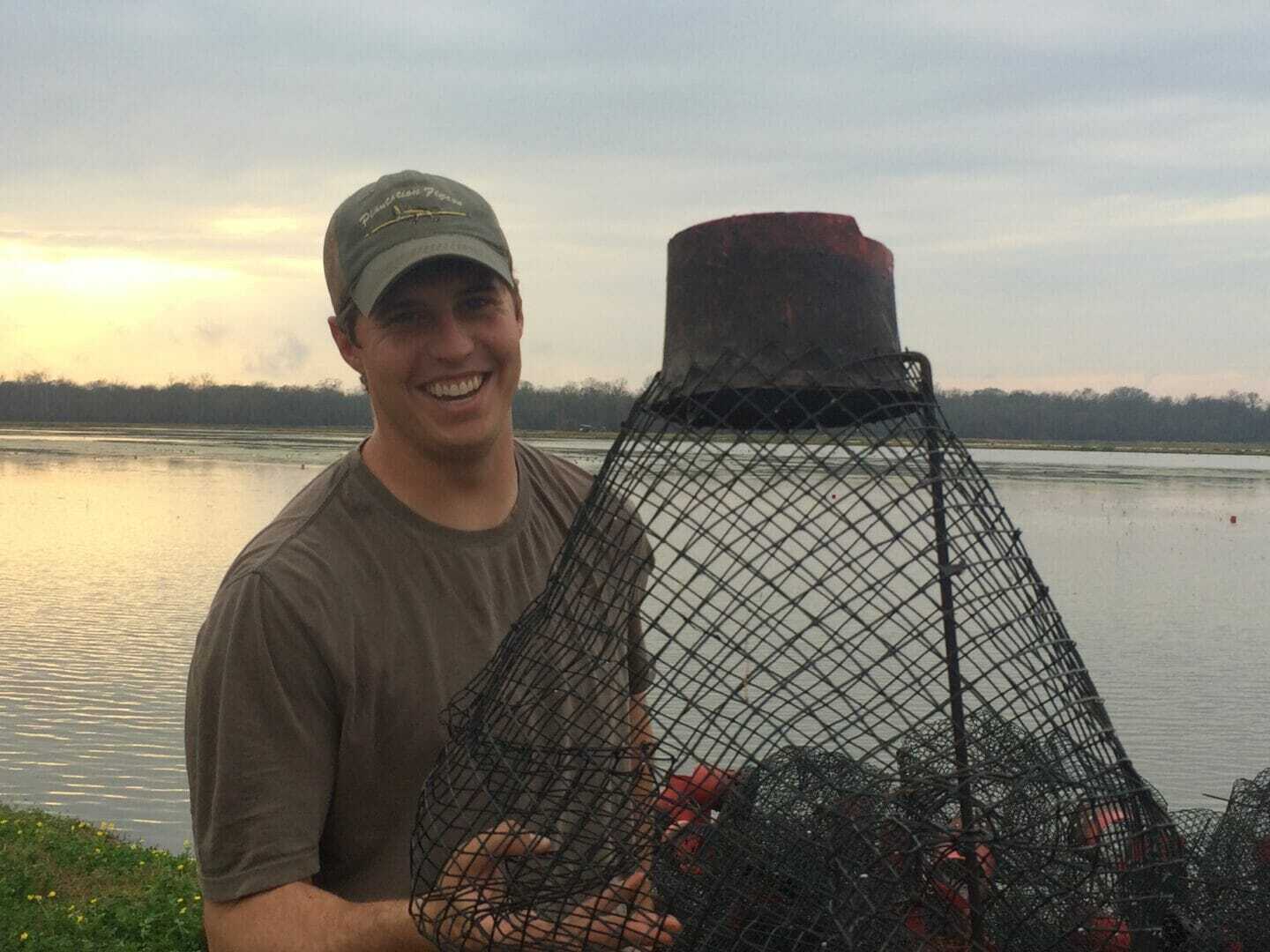
 Louisiana farmer Caleb Frey of Morganza, Louisiana. Traps are checked once daily at the beginning of the season and more frequently as the season progresses. Crawfishing runs through the second or third week of May, and then a late crop of rice will be planted in those fields where the crawfish were grown.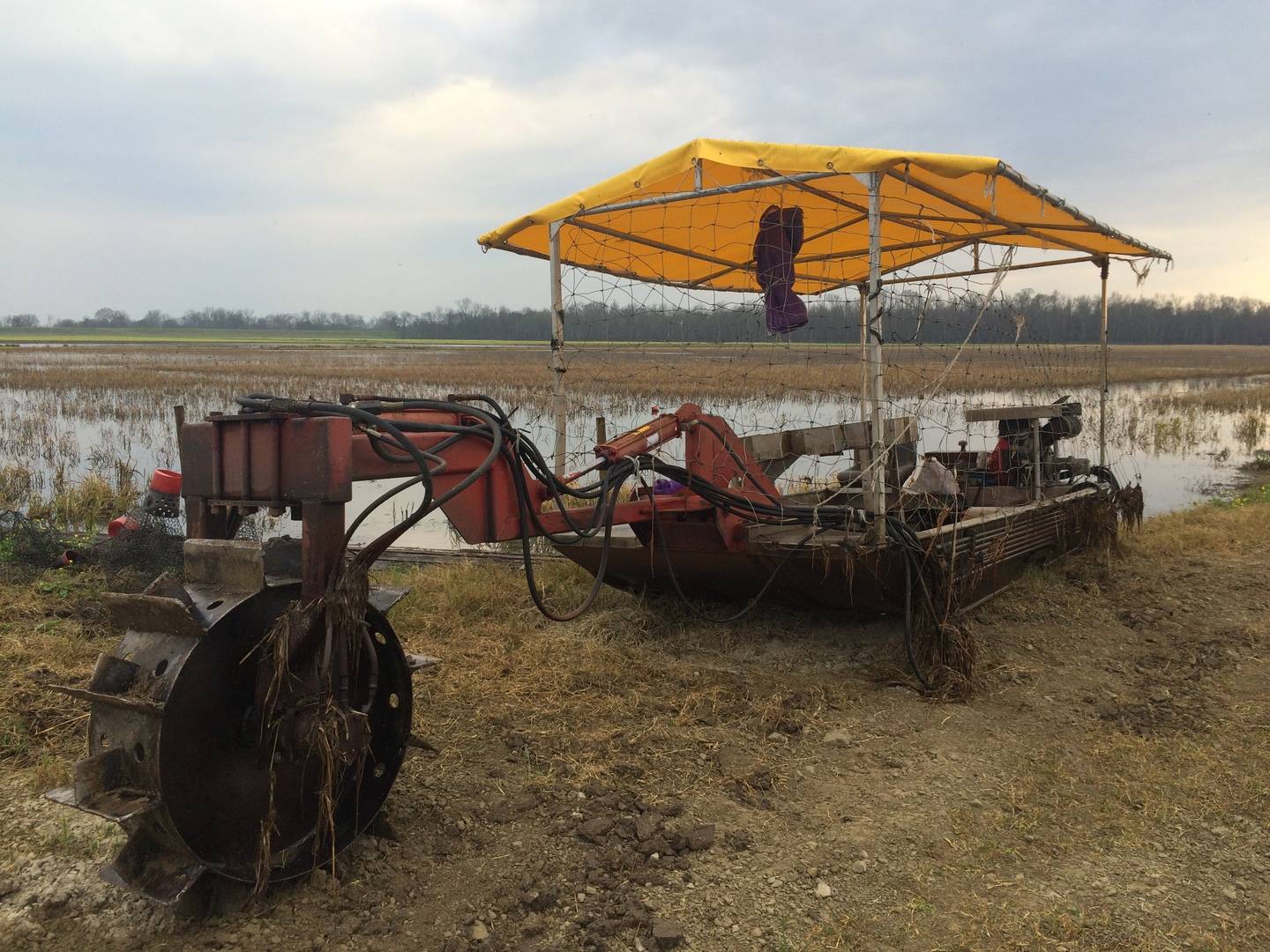


 morning involves either throwing a few granola bars into my bag or arriving five minutes late to class because I took time to pack a real lunch. Thankfully, my dilemma was solved when I went home last weekend!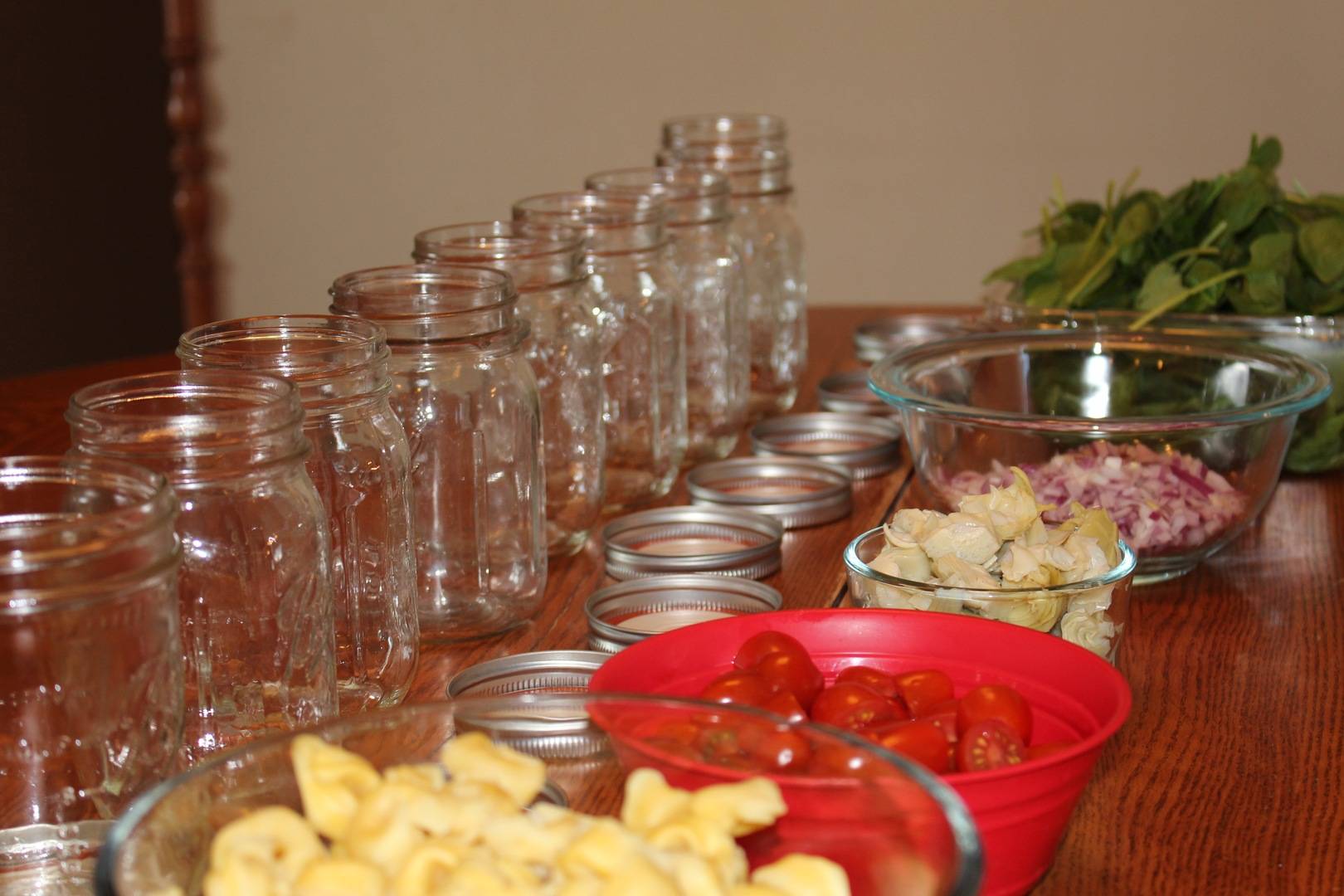



 Rother’s mantra. He’s been married for 37 years to his childhood friend, and he feels so fortunate that he has worked with both of his sons. He considers his daughters-in-law to be bonus members of his family and is delighted that all five grandchildren live within four miles of the family farm.