Thanks to all who visited in person or virtually during this year’s Minnesota Farm Fest. If you missed any of the event coverage on KQLX, here’s a recap:

Thanks to all who visited in person or virtually during this year’s Minnesota Farm Fest. If you missed any of the event coverage on KQLX, here’s a recap:

Guest blog post by Aaron Putze, Director of Communications & External Relations for the Iowa Soybean Association
What summer is complete without a trip to the Iowa State Fair? That’s what I thought.
Since we’re into asking questions, here’s one more… What do a 50-ton sand sculpture, balloon art and farm fresh recipes have in common? All will be featured by the Iowa Food & Family Project (IFFP) to demonstrate how “What Farmers Grow, Makes Iowa Go” at the Iowa State Fair, Aug. 13 – 23, in Des Moines.
It’s a great theme because Iowa farmers literally work from the ground up to provide wholesome food sustainably. The exhibit will help spark conversations between farmers and consumers about today’s farms and the food system in a fun, inviting atmosphere.
The IFFP exhibit, located in the southeast atrium of the Varied Industries Building, will showcase the many ways farming contributes to Iowa and the quality of life enjoyed by those who live and work here.

Stop by and see the exhibit take shape (literally!) as Greg and Brandi Glenn (picture to the right), co-owners of Sandscapes®, transform tons of sand into a display capturing the farm-to-table connection. The work of art will be created over the course of seven days, starting opening day of the fair and standing nearly 14-feet tall when completed.
A variety of activities, entertainment and prizes will also provide fun for the entire family:
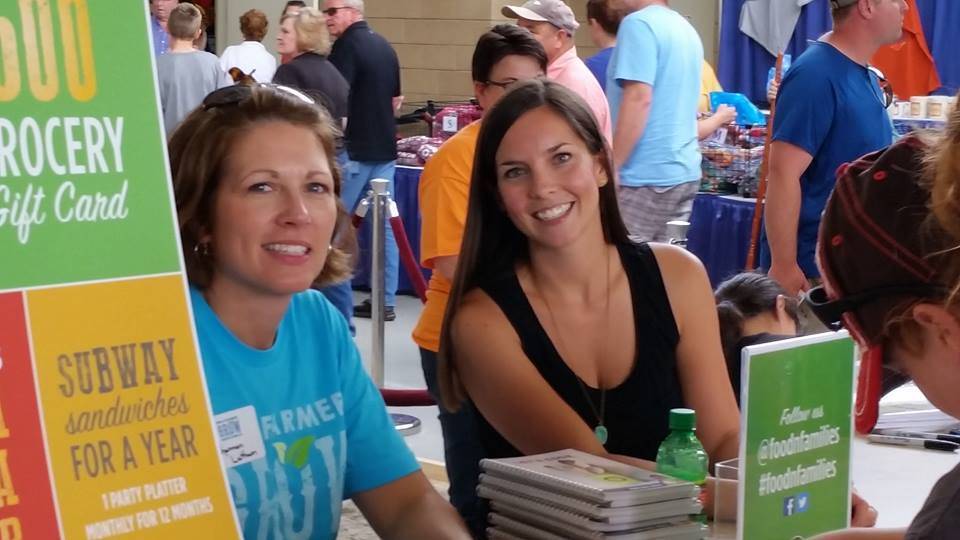
Visitors can also discover interesting facts about farming by embarking on an AgVenture Discovery Trail that winds its way throughout the fair. Trail maps are available at fair information booths and can be redeemed at the Iowa FFP booth for a special prize.
The Iowa FFP’s “What Farmers Grow Makes Iowa Go!” exhibit is powered by Iowa’s corn, soybean, pork, beef, dairy and egg farmers with a helping hand from Casey’s General Stores, United Soybean Board, Hy-Vee and the Machine Shed Restaurant.
Latham Hi‑Tech Seeds is also a great partner of the Iowa Food & Family Project, helping the effort maintain a statewide and year-long presence as we celebrate the continuous improvement of Iowa’s farm families and their dedication to providing wholesome food for everyone. Working together, we’re building a greater understanding and confidence among food-minded Iowans by conducting unique activities, serving as presenting sponsor of the Iowa Games and supporter of Live Healthy Iowa plus connecting with thousands of food-minded Iowans online via Twitter (@foodnfamilies), Facebook (Facebook.com/foodnfamilies) and at www.iowafoodandfamily.com.
On behalf of the Iowa Food & Family Project, I look forward to seeing you at the Iowa State Fair!

Guest blog post by Aaron Putze, Director of Communications & External Relations for the Iowa Soybean Association
August is the month when people say “the soybean crop is made,” make it fitting for August to be proclaimed Soybean Month in Iowa.
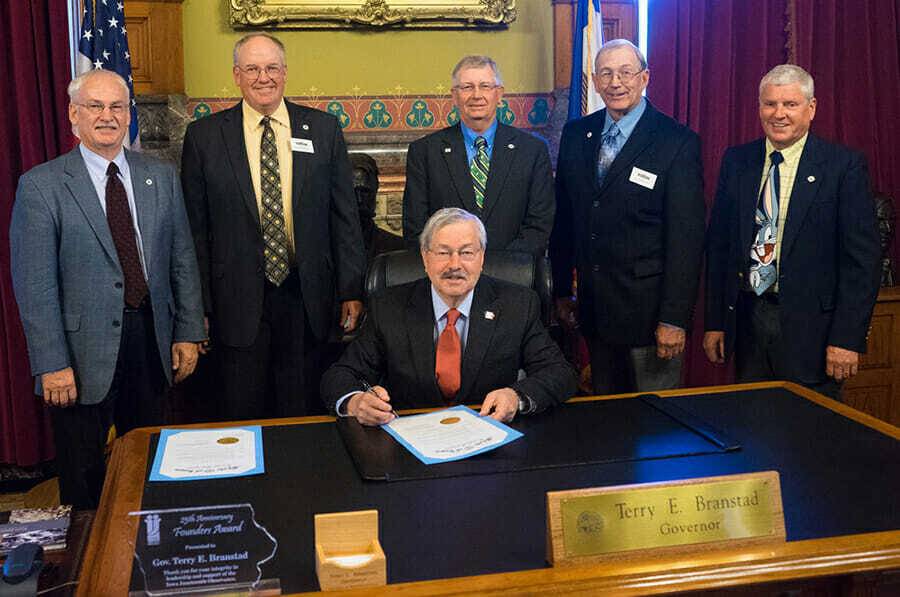
The declaration, signed July 29 by Gov. Terry Branstad, recognizes the importance of soybean production and the work of the Iowa Soybean Association.
Founded in 1964, the Iowa Soybean Association is recognized for excellence in enhancing the long term sustainability of Iowa’s soybean farmers. Our mission is to expand opportunities and deliver results for soybean farmers to improve their competiveness. And our launch of the Iowa Food & Family Project in 2011 is generating greater confident and trust among food-minded Iowans in today’s farm and food system.
Iowa soybean farmers are also among the nation’s most productive. Last year, they grew more than 505 million bushels of soybeans, the third largest crop on record. This productivity goes hand-in-hand with environmental performance.
Last year, the soybean checkoff invested $1.2 million to support water quality activities which leveraged $1.4 million in additional federal, state and local funding. This investment supports 26 active ISA-led water quality projects and 17 water monitoring projects involving 115 farmers and 436 sites, 220 tile lines and 169 streams.
A few more interesting facts about soybeans and 2014 Iowa Soybean Production:
Soybeans are used in:

For more information about soybeans, soy-based products and the ISA, go to www.iasoybeans.com.

A post I read yesterday on Facebook about the President talking in Kenya struck a chord with me. Farm broadcaster Trent Loos made the comment that in Kenya 35% of the kids under the age of five are stunted because their diets lack proper nutrients and 16% are under weight.
In contrast, Americans spend between $20 billion and $40 billion annually on fad diets and diet products. The U.S. Department of Agriculture (USDA) says nearly 1/3 of the U.S. food dollar is spent on eating out services.
Food is cheaper now in the U.S., taking a smaller percentage of our income, than any other time in history. Perhaps such a cheap food supply is leading to “food fights.” Instead of appreciating the great amount of food available at reasonable prices, many Americans are turning food production into a complicated topic.
Think about this… Most countries are poorer than America. I could just as easily been one born one of those starving kids in Africa. Yet I was born me and I’m glad to be me! I’m not rich but I certainly live better than most. I’ve been able to find work that I enjoy.
Rather than working to buy things we need or want, we have gotten to the point in this country where each one of us deserves the same things. Forty-seven percent of our population is on some type of welfare. Some people want to include cell phones and Internet access – like what I work to pay for – as part of those entitlements. Minimum wage is in the news again. Then there’s health insurance. (I won’t even go there today!)
Back to where I started… poverty level across the world is considered to be an income of less than $1.25 a day. Let’s think about what we have and who we are. This is an amazing country with so many opportunities if we would only just appreciate what we have and work to earn it!

The U.S. House of Representatives last Thursday (July 23) passed the Safe and Accurate Food Labeling Act with bi-partisan support. While this is great news for the seed industry, I’m concerned by the amount of misleading social media chatter and general “noise” this passage has created. I’m also concerned with headlines like “House Passes Anti-GMO Labeling Law.”

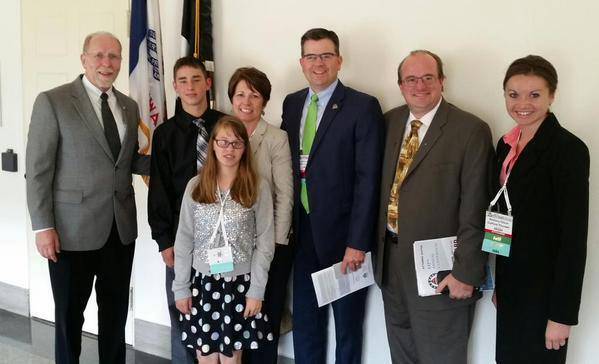
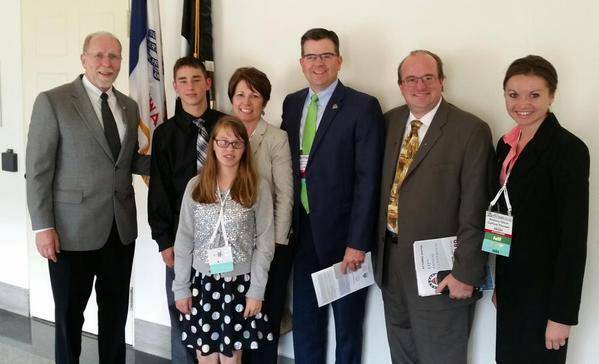
A headline of “House Supports Science-Based Labeling Standards” is more accurate, but I realize that not nearly as likely to draw in a reader. Since I have editorial control over TheFieldPosition, I’m going to take a few minutes and explain why Latham Hi‑Tech Seeds owners joined a group of representatives from the American Seed Trade Association last month to visit Capitol Hill in Washington, D.C. The ASTA is one of nearly 500 organizations that sent a letter to Congress in support of H.R. 1599.
Bottom line: The Safe and Accurate Food Labeling Act creates a uniform, science-based labeling standard for foods made with genetically modified organisms (GMOs). The bill also creates a standardized, voluntary “Non-GMO” labeling program under the U. S. Department of Agriculture (USDA).
During in-person visits, we asked our elected officials to support H.R. 1599 because:
“The bill isn’t about “simply preempting states’ rights” to label foods containing GMO’s,” as agvocate Ryan Goodman wrote July 24 on his I Am Agriculture Proud Facebook page. “HR 1599 creates consistency for a national food system and leads to a USDA-led certification for voluntary labeling, which should make label claims more consistent (see Section 291A – “The Secretary shall establish a voluntary genetically engineered food certification program…”)
If someone really wants to avoid GMO ingredients, they can use the Organic certification system that’s already in place. “Don’t force a mandatory system on the entire population when there are already tools available for use,” says Goodman. Touché!
We already have systems in place for people who prefer to have their food produced in a specific manner. So why add costly, burdensome and confusing mandatory regulations to the silent majority?
Attention now turns to the Senate where we expect a similar bill to be introduced this fall. You can bet we’ll be contacting our U.S. Senators, asking them to support uniform federal labeling standards. Stay tuned for TheFieldPosition to see what develops!
In the meantime, please do what you can to help consumers understand why farmers plant GMO seeds. The Peterson Brothers have done a good job explaining what GMOs are and are not; click on this link to Advocate for the [GMO] Truth.

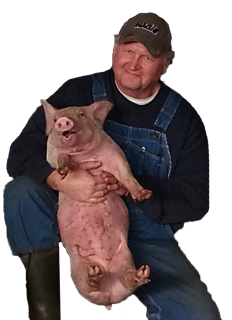
By special request, today’s blog will not be about pigs but chicken! It’s been more than a year since the USDA announced its “controversial chicken arrangement with China.” This issue is the headline again this week thanks in part to a recent Facebook post by Erin Brockovich.
On the surface this seems like a simple issue: The U.S. Department of Agriculture (USDA) and the current administration will allow chickens raised in this country to be shipped to China for processing, shipped back to America, and then labeled as “grown in the USA.”
So what’s the fuss? Many Americans are concerned about food safety – and rightly so. There has been a push in this country for transparency from farm gate to dinner plate. More and more consumers wants to know how food is grown here. However, the decision to allow U.S.-raised chicken to be processed in China creates more questions about transparency in this process, as well as raises many questions about food safety.
According to an article in the Huffington Post, eventually the USDA will allow chicken raised and slaughtered in China to be imported directly into the United States, despite the fact that:
If “outsourcing” can happen to U.S. chicken, it could happen to other American-raised meats. I’m concerned about what precedent this sets. As a pork producer, I’m especially concerned about the future of U.S.-raised pork.
The issue of U.S.-raised chicken being shipped to China for processing and then returned to the U.S. for consumption is especially complicated! It appears this decision is motivated by money, so let’s “follow the money and see if we can uncover the motive. I’ve read where the average wage for chicken processors in the USA is $11 per hour; the average wage in China is $1 to $2 per hour.
One can’t read the disparities in minimum wage without thinking about the ongoing debate in this country to increase the minimum wage. (I don’t have enough space to delve deeper into this this angle today, but I certainly want to in a future blog post.) If our workforce loses out to China over an $11 wage, what chance does our middle class have? Remember, the Obama administration has placed an emphasis on helping the middle class!
Another issue this situation raises is confusion over the “locally raised” label. If this chicken is raised locally, shipped to China for processing and returned to your local store, will it be labeled as a “locally” grown chicken? How can we guaranteed that an “organically raised” chicken from the U.S. that’s sent to China for processing will be the same chicken that’s returned to the U.S. for consumption? How “green” is this move? After all, it’s requiring more energy to ship to and from China!
Furthermore, how did the U.S. Department of Agriculture even reach the decision to send U.S. raised chicken to China for processing?
I’m asking a lot of questions today, but as you can see, this is not a simple issue. Regulation can get very complicated: labeling, minimum wages, climate change, even avian flu can be brought in to this issue. Trade between countries can get complicated because one little issue can affect many other issues. I could even start in on school lunches here. If our department of ag is for chickens being processed in China, will this be a part of food our kids eat in school? The food eaten in the schools are not purchased by an American mom from Trader Joes or Whole Foods.
Here’s why Americans should worry about Chinese-processed chicken on their kids’ school lunch tray:
Does anyone else find it ironic that we don’t want to feed our pets treats from China but we’re going to trust them to process chicken that humans would consume?

More than 300 American farmers rallied July 15 outside the U.S. Capitol building to promote the Renewable Fuels Standard (RFS). They wanted to call upon the Environmental Protection Agency (EPA) to raise the RFS volumes for corn-based ethanol that were cut in the final rules for 2016. Final public comments on the proposed RFS changes are due July 27.

“The EPA is worried about climate change, and it’s making a huge push for clean air. Biofuels like ethanol fit so well into their plans, yet on May 29 the EPA announced it wants to reduce 2015 and 2016 blending requirements by at least 20 percent,” says Annette Sweeney, co-chair of America’s Renewable Future campaign. “If the EPA takes such action, it will be breaking the law! The Renewable Fuels Standard was established by law in 2005 and updated in 2007. By proposing new standards, it sounds like the EPA is trying to bypass the lawmaking process.”
As a former Iowa State Representative and chair of the House Agriculture Committee, Sweeney is well versed in political procedure. As a third generation farmer, she understands the importance of production agriculture to both the Iowa and the U.S. economy. She also understands how rules like this could affect each farmer’s livelihood as her family’s diversified farm in North Central Iowa includes corn, soybeans, cattle and fish farming enterprises. Plus, Sweeney understands how our political climate impacts U.S. jobs and investments.
Speaking of investments, Sweeney finds it curious that on June 18 the Department of Energy (DOE) announced it will invest $55 million in advanced research projects to accelerate biofuel crop development. The DOE says it will put another $30 million into “transportation energy resources from the renewable agriculture program to support six projects developing plant remote sensing analysis.”
“Why invest $55 million in biofuel crop development if EPA is jerking the rug out from under ethanol?” asks Sweeney. “Why spend another $30 million to build infrastructure for other biofuel crops when we already have infrastructure in place to produce biofuels? Are agency officials really interested in taking away that market from America and their freedom to choose their fuel? It makes me wonder why is the RFS is really being targeted. Who is pressuring the EPA to make these changes?”
Recent actions by the EPA and other federal agencies make it appear this administration is talking out of both sides of its mouth. The White House announced June 10 the U.S. Department of Ag will spend $7 million on 550 renewable energy projects and upgrades on small farms and businesses and rural businesses.
“What good will it do to invest this money if the EPA cuts the RFS?” asks Sweeney.
Ethanol could help at least three U.S. agencies meet their environmental priorities. It’s seems suspect that only 17.4 billion gallons of ethanol being proposed to be blended into the U.S. fuel supply in 2016 rather than 22.25 required under the Energy Independence and Security Act. Why isn’t corn being considered as a clean alternative fuel under the U.S. Environmental Protection Agency’s (EPA) Clean Power Plan? The National Association of Clean Air Agencies on May 21, 2015, compiled list of 25 strategies that states can employ to comply with EPA’s Clean Power Plan. So why isn’t ethanol a top strategy for states?
“Let’s add climate change into the mix,” says Sweeney. “Biofuels are clean burning, renewable and sustainable. So why aren’t we using more ethanol to fight the climate change if this administration is so concerned about it?”
“I’m not trying to make the RFS a political issue. I’m merely raising questions,” explains Sweeney. “Agriculture should not be partisan. After all, we all eat! Agriculture is key to a strong U.S. economy and that’s also something all Americans – regardless of party affiliation – should be able to agree upon!”
Click here to encourage the EPA to uphold the RFS. Comments are due July 27. Be sure to change the subject line on your email to the EPA and personalize your message.
“The RFS is the only policy trying to level the playing field for renewable fuels,” add Sweeney. “I stand behind the Renewable Fuel Standard and what is right for America I hope you’ll join me! Please send your comments in support of the RFS to the EPA by July 27.”

Lately I’ve been reading many articles about the most common food toxins, hormones in our meat supply and nitrates in our drinking water. How much or how little of something in our food or water supply is a big deal!
A hot topic this year has been nitrate removal from drinking water by the Des Moines Waterworks. Bill Stowe, CEO and General Manager, Des Moines Water Works on April 17 said, “The public health of our community is once again at risk.” That sounds especially frightening, but we can’t take water issues at the surface level.
Nitrate levels in the Raccoon and Des Moines rivers have trended upward during the past 40 years, but the data show little or no change from 1984 to 2014. The data actually shows a slight improvement when measuring from 1994 and 2004, which could indicate that conservation practices voluntarily implemented by Iowa farmers are slowing and capture nitrates before they get into streams and rivers.
According to U.S. regulations, nitrates in drinking water must remain below 10 parts per million. Occasionally levels spike above that limit, and the DMWW incurs added costs to remove these nitrates. In a past blog, I did the math. It cost the average consumer of the DMWW less than $10 per year.
But was even that small cost necessary? According to the EU, there can be 15 parts per million with no ill effects. I have also read that for a baby to get Blue Baby Syndrome nitrates must be as high as 200 parts per million. That amount is so minute! As far as I can find, there has not been a case of Blue Baby Syndrome in Iowa without some other source of nitrate contamination! Millions spent, with no proof of the amount in our water causing any problem. It seems size does matter.
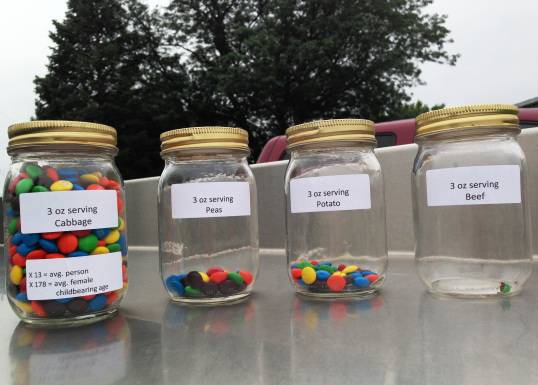
Lately I’m seeing food products, especially milk and beef products, being advertised as “no hormones added.” Here again, this type of advertising can be confusing and even scary. After all, who wants to buy food with “added hormones”?! Interestingly enough, many foods naturally contain higher levels of hormones than beef. Again, size does matter! Shown below is a visual comparing hormone levels across various foods.

What about “chemicals” in your food? It’s true – your food contains chemicals. (Remember the Periodic Table and how all these chemicals make up our world?) However, not all chemicals are bad. For example, Dr. Julie M. Jones points out that cranberries keep very well in the refrigerator because they have a higher level of (naturally-occurring) benzaldehyde than the FDA allows to be added to food. This is just one example.
Consumers also worry about eating food from plants that have been sprayed with pesticides. It’s very difficult not rely on some kind of pest control. Weeds and bugs do happen! A number of marketing tactics have presented organic fruits to be safer, but that is simply not true. In truth, Best Food Facts points out that BOTH organic and conventional farmers use pesticides on their crops.
“It’s the amount of the chemical rather than the presence or absence that determines the potential for harm,” explains Dr. Carl Winter, PhD, Director, FoodSafe Program, Extension Food Toxicologist at the University of California-Davis. “In the case of pesticide residues on food, we can detect them, but generally at very tiny levels. I think consumers are concerned because they’re aware that these chemicals, which have potential toxic effects, show up on foods. However, the levels at which we detect these pesticides are so low consumers have nothing to worry about.”
Most of the chemicals I use are now measured in ounces. Some of the chemicals used in organic are measured in pounds. Nothing wrong with either one because it’s what is left on your food that makes the difference. Maybe size doesn’t matter here!
Remember, your food choices matter. What – and how much – you eat affects your body mass and health. We need a variety of foods to obtain the nutrients our bodies need. Your body needs a certain amount of fat; the non-fat kick we’ve been on has made our bodies crave other types of food that have contributed to our declining health.
Research believed for the last 30 or 40 years has been proven wrong. In early 2015, it was announced that it’s okay to eat eggs because research “shows no appreciable relationship” between heart disease and how much dietary cholesterol a person eats. And the new proposed dietary guideline that calls for a reduction in red meat consumption really isn’t being pushed is for your health… it’s someone’s agenda to fix something that’s not broke. There is a misperception that beef production isn’t sustainable. Also keep in mind, our First Lady pushed changes to the school lunch program based on bad science!
Let’s get rid of this fear of food. No more food fights! Size matters. Common sense matters. Enjoy your food!
Technology gap or generational gap? Let me begin by explaining an experience my wife and I had…
On Sunday, Janice and I followed our normal routine. We went to church and then drove to Waverly, Iowa, to visit her mother. We often pick up something for dinner along the way. This time Janice decided to call in a pizza order when we were about 20 minutes away. What a challenge that turned out to be!
I listened in as Janice “tried” to place a takeout order. Grandma likes her pizza a little different than we do, so Janice wanted to order one half of the pizza one way and the other half another. “I’d like Meat Lovers on one side. On the other side, I’d like pepperoni with onions. We want mushrooms on both sides.” Little did we know, this would be nearly impossible!
Someone who takes pizza orders as a job should have been able to understand this request, right? It took about five minutes just to place the order! First, the kid on the other end of the phone line tried to say we shouldn’t order a Meat Lovers. After a debate, Janice let him know we were still ordering a Meat Lovers.
Next, he said it wasn’t possible to take onions off half of the pizza according to his computer screen. Getting a bit louder now, Janice explained that we weren’t taking onions OFF half of the pizza because we know Meat Lovers doesn’t come with onions. However, onions could be ADDED to the half with pepperoni.
Then in the background, Janice heard him explaining our order to someone. She heard him say, “Put onions on the side without pepperoni.” Whoa… start over! Finally the order was placed, and Janice asked how long before it would be ready. He replied 35 minutes, and Janice thought that sounded a little long. When she questioned the time, he said that was about normal for a delivered pizza. What? I mentioned we were ordering a “takeout” pizza!
Our experience got us to thinking about three things:
It’s complicated and there are no simple solutions to fix the current state of the economy. But we must keep working on it! Elections are coming up, so exercise your right to vote. Take the time to find out how candidates stand on issues of important to you. Whom we elect truly makes a difference!