Latham Hi-Tech Seeds

(641) 692-3258

  • Home
  • Products
    • Corn
    • Soybeans
    • Soybean Blends
    • Alfalfa
    • Corn Silage
    • Seed Guide
  • Performance
  • Find a Rep
  • Media
    • Blog
    • News
    • Videos
    • Podcasts
    • TECHTalk
  • About Us
    • Company History
    • Our Mission
    • Careers
    • Become a Rep
    • Sowing Seeds of Hope
  • Contact Us
  • Latham Hi‑Tech Seeds

    “New” GMO Pig Study is “Junk”

    Twitter has been a flutter with a “new” study on pigs fed feed containing GMOs.  I was curious about all that was being said, so I spent quite a bit of time reading many comments on Facebook and following the topic on Twitter.

    Seeing the same old hype, I dug further into the study.  Here’s what I discovered… the so-called GMO Pig Study contains nothing scientific whatsoever!  In fact, I agree with author Mark Lynas that it’s really “a propaganda effort by anti-biotech campaigners masquerading as proper science.”

    The GMO pigs study was funded by extreme organic folks with an agenda, who were connected to the flawed cancer in rats study.  It’s no surprise these two tests were very similar.  The research was done using a very small group of very unhealthy pigs that were fed two different diets.  Almost all of the pigs, whether feed non-GMO or GMO had the same symptoms.  Interestingly enough, 15% of pigs fed the non-GMO diet had heart abnormalities as compared to only 6% of the GM-fed pigs.  Twice as many non-GM pigs had liver problems as the GM pigs.

    These facts didn’t support the agenda of those funding the study, so they chose instead to focus on stomach inflammation.  Results of the stomach inflammation study were subjective, at best.  It’s no wonder Lynas wrote, “GMO pigs study – more junk science.“

    I’m not a scientist, just an old pig farmer, but let me tell about what I have happen in my own operation.

    The GMO corn and soybeans I grow are delivered locally to a feed mill and a soybean processing plant, and I doubt they’re kept separate.  It wouldn’t make sense to separate the grain as the vast majority of crops grown in my area use this technology.

    Technology has been rapidly adopted for its efficiency.  I’ve seen firsthand how these crops have been good for my operation, using fewer inputs to produce more feed.  Plus, today’s hogs are efficient.

    My hogs have very little disease pressure.  I can’t imagine having the 13% and 14% death losses as reported for GMO pigs study!  My pigs are healthy and grow very fast.  They consume about 5 pounds of feed per day to gain, on average, two pounds per day.  They do this all on GMO feed.

    I know my pigs are healthy, so I have no problem feeding the pork we raise to my family.  I’m very happy that the modern consumer is concerned about what they buy to eat, too.  I just hope consumers won’t get caught up in these silly, unfounded studies that try to sway consumers’ buying decisions.

    The science is clear, writes Lynas.  Consuming foods with ingredients derived from GM crops is no riskier than consuming the same foods containing ingredients from crop plants modified by conventional plant improvement techniques.

    Buy good, healthy foods and eat in moderation!
    Larry Sailer, Musings of a Pig Farmer

    June 25, 2013
    Agriculture, General, Industry News
  • Latham Hi‑Tech Seeds

    Best Options for Side Dressing Nitrogen

    Defeciencies
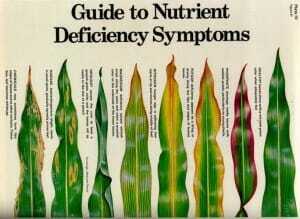
    Yellowing corn can be a symptom of nutrient deficiency. Photo by South Dakota State University

    This spring has been a logistical challenge for farmers in many ways, especially nitrogen applications. Farmers were told to forego nitrogen applications just to get the crop in and side dress later. It is now later and rain continues to fall. Nitrogen applied pre-plant in the form of UAN or Urea has the most potential for loss, primarily from leaching too deep into the soil for the late planted corn roots to catch up.

    There is no clear cut method to figure out how much nitrogen you may have lost. If you applied everything pre-plant using either UAN or Urea, it may be worth the extra money to add some additional in season. The amount of rain is the driving factor to deciding how much you may have lost. Anhydrous Ammonia has less available up front in the form of nitrate and therefore will likely still be there.

    There are still several good options to side dress corn with. Anhydrous Ammonia, UAN, and slow-release or sulfur coated Urea are a few. Injected or shallow incorporated with a UAN or NH3 toolbar is best. Broadcasting Urea works as well, as long as it has a urease inhibitor on it or a slow release form. If you choose to broadcast Urea, its best to do it before V6 so you are not risking yield loss. If you choose to apply all of your nitrogen this way, it’s best to get it on before the plants hit V4. Past V4, it can damage the corn plant and will cause yield loss and larger corn plants. The larger the corn plant, the more urea can end up lodged down in the whorl. As a reminder, the growing point is still below ground until around V6.

    This was a good spring to have an in-furrow or starter fertilizer down with your planter. If you did not and your corn is showing some yellowing, there is still time to get some additional nitrogen applied. One important thing to remember is yield potential decreases if you planted late, so if you had a lot of nitrogen down up front you may not need to add more. Take all factors into consideration and remember the power of your organic matter to supply some nitrogen now that we are warm enough for mineralization to keep the nitrogen available to the crop.

    If you have any questions, call the Latham office at 641-692-3258 and we will get you in contact with one of our experts.

    DeficiencySymptoms
    Photo courtesy of www.omafra.gov.on.ca


    Team Latham

    June 24, 2013
    Agronomics, Fertility, General
  • Latham Hi‑Tech Seeds

    Celebrate Summer Solstice Wisconsin-Style

    Rumchatafinal1
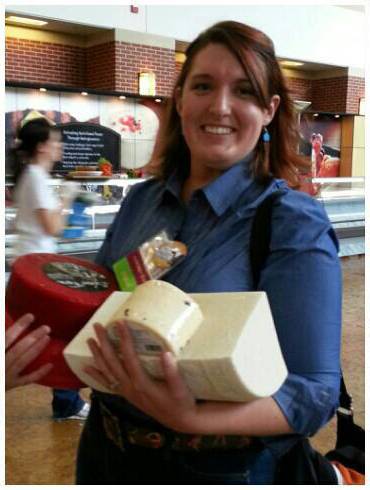
    They call me Dairy Carrie. I love agriculture, in particular dairy cows, more than is normal. Hubs and I are working with his parents on their 100-cow dairy farm in the rolling hills of southern Wisconsin. I like beer but I love Rumchata. And fresh Wisconsin cheese. Friends call me a cheeseaholic… and I just might resemble that comment!

    Carrie Mess is so passionate about agriculture that she has created an online persona for Dairy Carrie.  You can connect with her via Twitter (@DairyCarrie); like her on Facebook; and join her as she blogs about The Adventures of Dairy Carrie. 

    “Carrie’s blog is a dynamic blend of information and explanations of dairy practices plus hilarious, sincere and heartfelt stories about the things she loves most: cows, cheese, beer, and the farming life,” said Kelly Rivard. 

    I couldn’t agree more!  When following the Adventures of Dairy Carrie, you’re likely to end up with a smile on your face or doubled-over from laughing at some of her antics.  She provides a fresh voice for agriculture.  Just take a couple of minutes to watch her “Shocking Undercover Dairy Video” and you’ll see what I mean.  She also addresses burning questions non-farmers have like “Why are Dairy Cows so Skinny?” and “Is Chocolate Milk Made from Bloody Milk?”  (The title of this blog had me saying, “Eew.”  But, I had to read it and became educated about some non-farmers’ concerns about their milk supply.) 

    In honor of June Dairy Month, I thought about posting a list of top blogs by Dairy Carrie on TheFieldPosition.com.  Her obsession with RumChata would top my list, so I’ve decided to focus on that topic alone today.  After all, June 21st is the first day of summer.  Celebrating the Summer Solstice with RumChata seems to make perfect sense to me!  I hope you’ll agree.  Sit back and enjoy Dairy Carrie’s guest blog post today on RumChata… 

    After enjoying RumChata during a Christmas celebration with my family, I announced that I liked the drink so much that I would most likely name my first born child after it.  The next day I realized how silly that RumChata-induced statement was, mostly because kids aren’t on our radar.  However, the very next week I went to an auction and … 
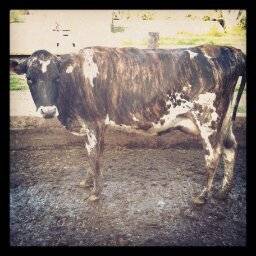
    RumChata the Cow

    So why in the world would I name a cow after an adult beverage?  Because it really is that good and the best part is, RumChata’s creaminess comes from real dairy cream.  I love this new “You must be 21 or older” twist on getting my daily dairy intake.  In honor of June Dairy Month, I sent an email to the folks at RumChata and they were kind enough to give me the lowdown on this delicious dairy treat.

    If you haven’t tried RumChata, I can best describe its taste as the milk leftover after a big bowl of Cinnamon Toast Crunch cereal – infused with rum. I highly recommend you, so long as you are of legal drinking age, go and get yourself a bottle.  Do it now, you can thank me later.  If you’re stuck sitting at work and can’t possibly get away until after 5:00, read my interview with Tom Maas, the founder and master blender at RumChata, then go.

    When was RumChata launched? I had never heard of it before Christmas and now it seems like everyone has gone RumChata crazy!

    In October 2009, we shipped the first cases in limited quantities.  Once we had RumChata in various markets, we personally worked in each market to get it noticed by bars and restaurants.  It’s now available in 49 states and from some Duty Free operators in the Caribbean. 

    One of the main ingredients to RumChata is cream that comes from Wisconsin dairy cows, which is awesome!  Do you buy the cream as an ingredient or is milk shipped directly to you?

    We work with a very large commercial dairy in Neenah, Wisconsin.  They ensure that the rum and cream are perfectly homogenized together, so that the finished product is very stable.  This homgenization of dairy and alcohol allows the product to be kept without refrigeration.

    In my mind, RumChata was developed by a rum-loving Wisconsin dairy farmer.  Any truth to that?

    RumChata was created by a person with deep Wisconsin roots, who also has had a very long tenure in the liquor business. I (Tom Maas) worked on a dairy farm in Shawano County for several years when I was growing up.  After getting a degree from the University of Wisconsin, I started a 35 year career in the liquor business.  After retiring from Jim Beam in 2005, I created RumChata and put all of these years of experience to good use.

    I like RumChata on the rocks and I love it blended with ice cream.  What’s your favorite way to drink Rumchata?

    With fresh made espresso in two ways: sip a little with a cup of espresso or make a shot of espresso.  Chill it to room temperature and combine it over ice with 2 ounces of RumChata.  It’s the best tasting iced coffee you will ever drink!

    There are just so many ways to enjoy RumChata!  RumChata Cupcakes are among my faves.  French Toast is yummy, too.  But it’s hard to beat a good RumChata drink; click on these links to learn how to make Lemon Cake and Cinnamon Roll drinks.

    If you’d like to celebrate June Dairy Month is more family-family, traditional way, try a Crustless Quiche or what I like to call “Not Egg Strata.”

    Team Latham

    June 21, 2013
    Desserts, General, Recipes
  • Latham Hi‑Tech Seeds

    Corn Rootworm Hatch is Delayed but Underway

    CRW Hatch
    Expect 50 percent hatch between 684-767 degree days. Click here for current degree day accumulation for corn rootworm, courtesy of Iowa Environmental Mesonet, ISU Department of Agronomy.

    Cool, wet spring weather delayed corn planting and the corn rootworm hatch, which is largely dependent upon soil temperature.  When soil temperatures accumulate between 684-767 degree days, 50 percent of the rootworm hatch occurs.

    Although corn is not as far along in its development as it normally is at this time of year, there is still plenty of plant material available to provide a feast for the CRW larvae.  It won’t be long before newly hatched larvae begin feeding on corn roots.  Severe infestation can destroy nodes 4-6, which effect water and nutrient uptake.

    Shortly after larvae begin feeding on roots, adult beetles begin to emerge from fields and begin feeding on pollen, green silks and leaves. The males emerge first, and the females follow about 5 to 7 days later.  Mating takes place, and then females will lay eggs toward the end of July through August.

    Because of the wide variance in planting dates this year, it will be important to inspect every field – regardless of seed selection.  Rootworm beetles can move between fields in search of the best “buffet.”  A late maturing corn field may attract a large numbers of beetles if neighboring corn stopped producing pollen, for example.  Beetles may also move into corn and/or soybean fields which have an abundance of pollen-producing weeds, including volunteer corn, ragweed or foxtails.

    Note areas where corn rootworm damage is the highest and create a plan of action if root injury is high.  To help assess injury, ISU Entomologist Aaron J. Gassmann developed an Interactive Node Injury Scale.  To help develop an action plan, keep best management practices in mind.

    Field notes from 2013 will help you select seed products for 2014.  To prevent corn rootworm damage from reaching such devastating levels, plant a portfolio of products.  Remember, that in 2104 Latham® Hi‑Tech Hybrids, will offer Agrisure DuracadeTM as another option in the fight against corn rootworm.

    Webspec Admin

    June 20, 2013
    Agronomics, Corn, Crop, General, Insects
  • Latham Hi‑Tech Seeds

    Farm Bill Debate Underway Now

    The 2012 Farm Bill is like the 2013 planting season… it just goes on and on!

    The Farm Bill is top of mind again this week as it is being debated on Capitol Hill.  The Senate passed a version of the bill with huge savings for tax payers, and the House version saves even more.  The Senate’s proposal would save $24 billion over 10 years; the House version would save $39.7 billion.

    Unfortunately, the President is threatening to veto the Farm Bill because it cuts too much funding for food stamps.  The food stamp program, now called the Supplemental Nutrition Assistance Program (SNAP), cost almost $80 billion last year – twice the amount it cost just five years ago.

    We cannot continue to throw unlimited funds towards the SNAP program!  Anyone who knows me, knows that I do NOT want one hungry person to be denied assistance if he truly needs a hand up.  The problem comes from people who are “milking the system.”  Generations of families have become dependent on public assistance, and the number of people on welfare has sky rocketed in the last six years.  When an Administration spends millions of dollars to advertise food stamps and welfare programs, it’s time for Americans to question the tactics!

    How are we going to balance a budget if people are only willing to make cuts to small budget items?  We must dig into the high priced line items:  Medicare and like programs just continue to expand.  I’m not even going to talk about The Affordable Care Act that is draining tax dollars and causing my insurance premiums to increase.  Then there’s the Food Security Bill.  Seriously, who dreams up these names?

    As a farmer, I’m concerned that SNAP funding accounts for 80% of the Farm Bill.  Discord over which programs to cut and how much to cut have prevented the Farm Bill from passing.  With the SNAP program and so many other issues wrapped up in the same bill, the Farm Bill has become too complex.

    A complex system of rules and regulations is now in place to tell farmers how to best raise their crops.  Although no one knows their business better than farmers, some so-called “experts” are being consulted to develop rules that tell farmers how to raise their animals.  Why not let farmers and ranchers adapt and change as they determine what works best in their operations?  Farmers and ranchers are always trying to be more efficient and want to keep food safe and affordable.

    Instead of creating a Farm Bill that benefits everyone, I’d settle for one that would encourage farmers – and a successful rural way of life!

    Larry Sailer, Musings of a Pig Farmer

    June 18, 2013
    Agriculture, General, Industry News
  • Latham Hi‑Tech Seeds

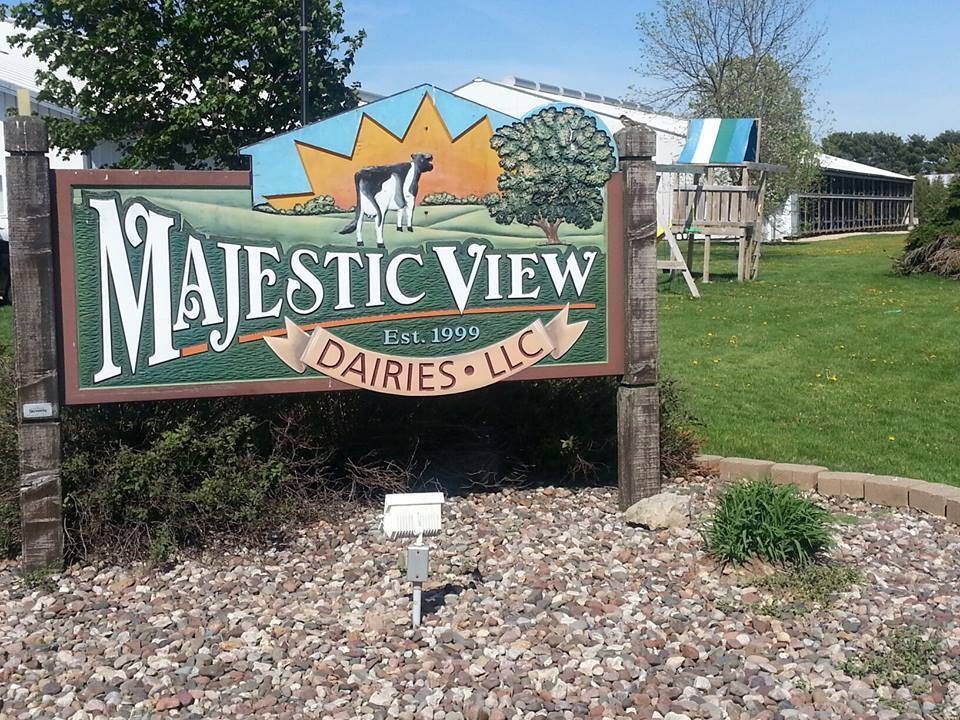
    Meet the Family Behind Majestic View Dairy

    Majestic Dairy1

    Families come in all shapes, sizes and colors.  And so do family-owned dairy operations.

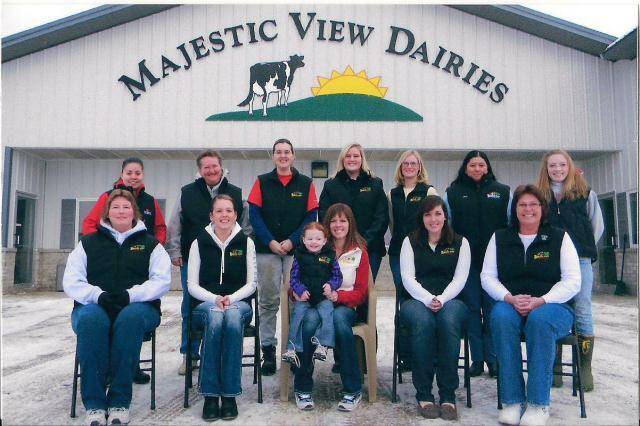
    Last Friday we introduced you to Sarah Mumm, who milks 50 registered Holstein dairy cows herself on her family farm in Grant County Wisconsin.  Her husband, Joe, works seasonally at Majestic View Dairy LLC.  Today we’re going to introduce you to the family behind Majestic View Dairy, a 1,000-cow dairy on the outskirts of Lancaster.

    Majestic View Dairy got its start, albeit unknowingly at the time, in 1939 when Carol and Foster Haskins purchased farmland.  John Haskins, a co-owner of Majestic View Diary, purchased 290 of those acres from his mother in 1959.  John purchased another 140 acres in 1983, and soon thereafter, Ron and Terri Abing started a 50/50 partnership with him.  In 1999, they formed an LLC and expanded to 600 cows.  Then in 2003, they expanded another barn to accommodate 1,000 cows.

    One evening in 1999, as the Abing family watched the sun set in front of the dairy being constructed, Jesse said, “Isn’t that a majestic view?”

    Building the dairy made a big impression on the Abings’ children: son Jesse was 18 at the time; oldest daughter Sarah was 14 and Amanda was 10.  They were fascinated by all of the computers and high-tech equipment that was being installed to run the dairy operation.  The children learned the value of working hard and working together.  Jesse majored in Spanish at Luther College in Decorah, Iowa.  He then taught high school Spanish for five years before returning to graduate school.  He earned a master’s degree and is now pursuing a PhD in Spanish Linguistics at the University of Texas.  Meanwhile, both of the Abings’ daughters were interested in dairying.  Sarah graduated from Southwest Technical School in Dairy Herd Management.  Amanda graduated from Lake Shore Technical School in Dairy Herd Management.

    Amanda, the Abings youngest daughter, became a herd manager when she was just 19.  She now works at Highway Dairy near Darlington, where she lives with her husband and their 7-month-old son Jacob.

    The Abings’ daughter, Sarah, has served as herd manager for Majestic View Dairy since 2008.  Her husband, Buck Johnsen, also works at the dairy, breeding cattle and helping with agronomy work.  Their four-year-old daughter, Amelia, loves to help her mom and Grandma Terri give tours to school children and other interested folks.  Sarah and Buck are also proud parents of 5-month-old son, Easton.

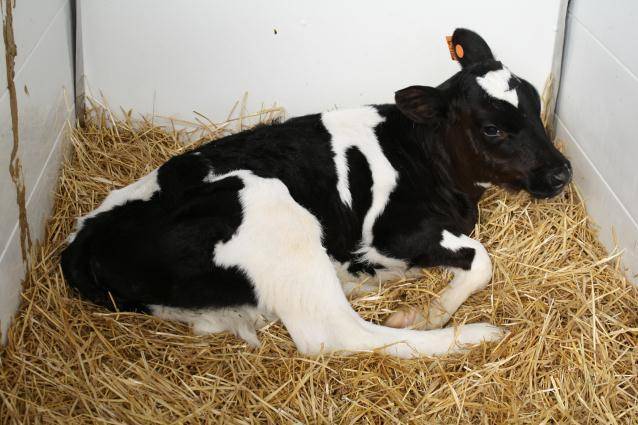
    In 2003 and in 2005, Majestic Dairy built two calf barns. Each barn, consisting of BSM Comfy Calf Suites, can accommodate 66 calves.

    Ron’s brother Chuck is the heifer operations manager. Four of Terri and Ron’s nephews and nieces also work on the farm:  Brandon Klien, Crystal and Kyle Abing, and Jake Martin.  Other key employees are Aaron Knapp, who maintains machinery and works with the hay, and calf manager Sara Recker, who has worked at Majestic View Dairy since it was formed.

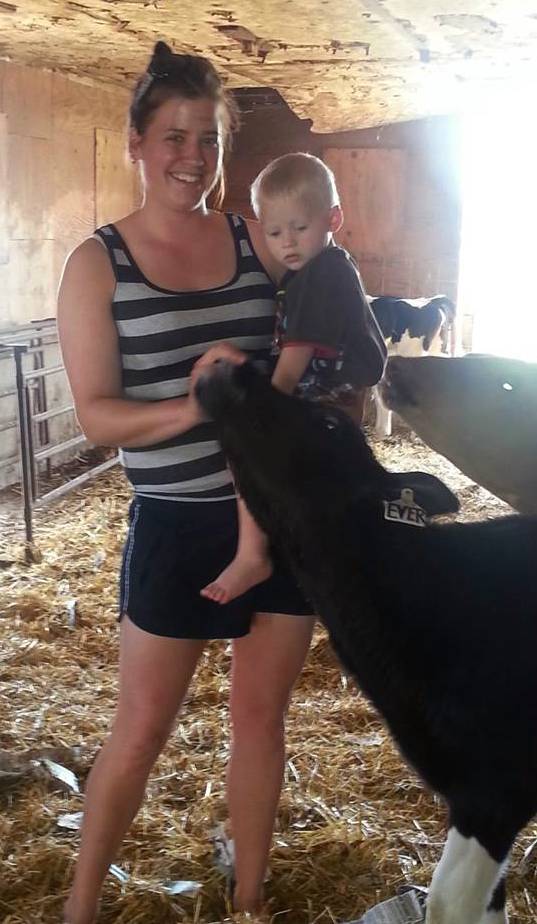
    Sara and the calves are a hit when school children visit the dairy.  More than 4,000 children have visited Majestic View Dairy since Terri started giving tours about seven years ago.

    “Although it takes a lot of time to prepare for those groups, it’s so worth it,” says Terri, whose passion is helping people understand how their dairy products are made.  The two-hour tour gives children and their adult chaperones an overview of the milking process, as well as the behind-the-scenes that goes into caring for the cattle.  They see the maternity pens, where cows take a two-month maternity leave before returning to the milk line, and the hospital barn, where special needs are met to return cows to good health.

    “I especially like the one-on-one conversations that occur with these groups,” says Terri.  “We like to help answer questions they might have about our operation or why we do things a particular way.  We also share fun facts like this one,’ It takes a baby about 1 year from the time it’s born until it takes its first steps.  About an hour after it’s born, a calf takes its first steps’.”  The tour concludes with a dairy buffet, including several varieties of cheese, assorted flavors of milk and portable yogurts.

    Majestic View Dairy employs a total 28 people, consisting of 14 part-time and 14 full-time positions.  Many of the part-timers are high school and college students, who come to work after class.

    “It’s really rewarding to see the growth that happens as these kids work at the dairy,” says Ron.  “They learn the importance of showing up on time and giving it your all during your shift.  Even if they don’t choose to pursue one of the 300 different career opportunities available with dairy, they’re developing skills that will help them in any job they pursue.

    As proud supports of the dairy industry, the Abings invite you to road trip to Wisconsin in June during the Dairy Days of Summer.  You can enjoy Breakfast on the Farm or participate in numerous other fun events from Cheese Curd Day to Ice Cream Weekend.

    Enjoy the fresh tastes of dairy foods from the comfort of your own home, too.  Whet your appetite with starters like June Chili and Chilled Raspberry Yogurt Soup, or cool off with a sweet treat like a Tiramisu Smoothie and Rhubarb Cheese Pie.

    Please excuse me now while I go search from some rhubarb…

    Team Latham

    June 14, 2013
    Desserts, General, Recipes
  • Latham Hi‑Tech Seeds

    Planting Decisions, Right or Wrong

    Larry dog1

    Musings of a Pig Farmer by Larry Sailer

    This spring has been one of the most challenging in the 40 years that I have been farming!  With dry soils in March, we were optimistic that spring planting would be early.  Some of us were even concerned whether we had enough subsoil moisture to make it through until the spring rains arrived.  Then April Showers began to fall, and we experienced the wettest April on record for 141 years.  We haven’t had many days without precipitation, and the week of June 5th was the wettest on record in Iowa since July 2010.  As a result, the spring 2013 planting season (#plant13 on Twitter) is the most drawn out one that I’ve experienced.

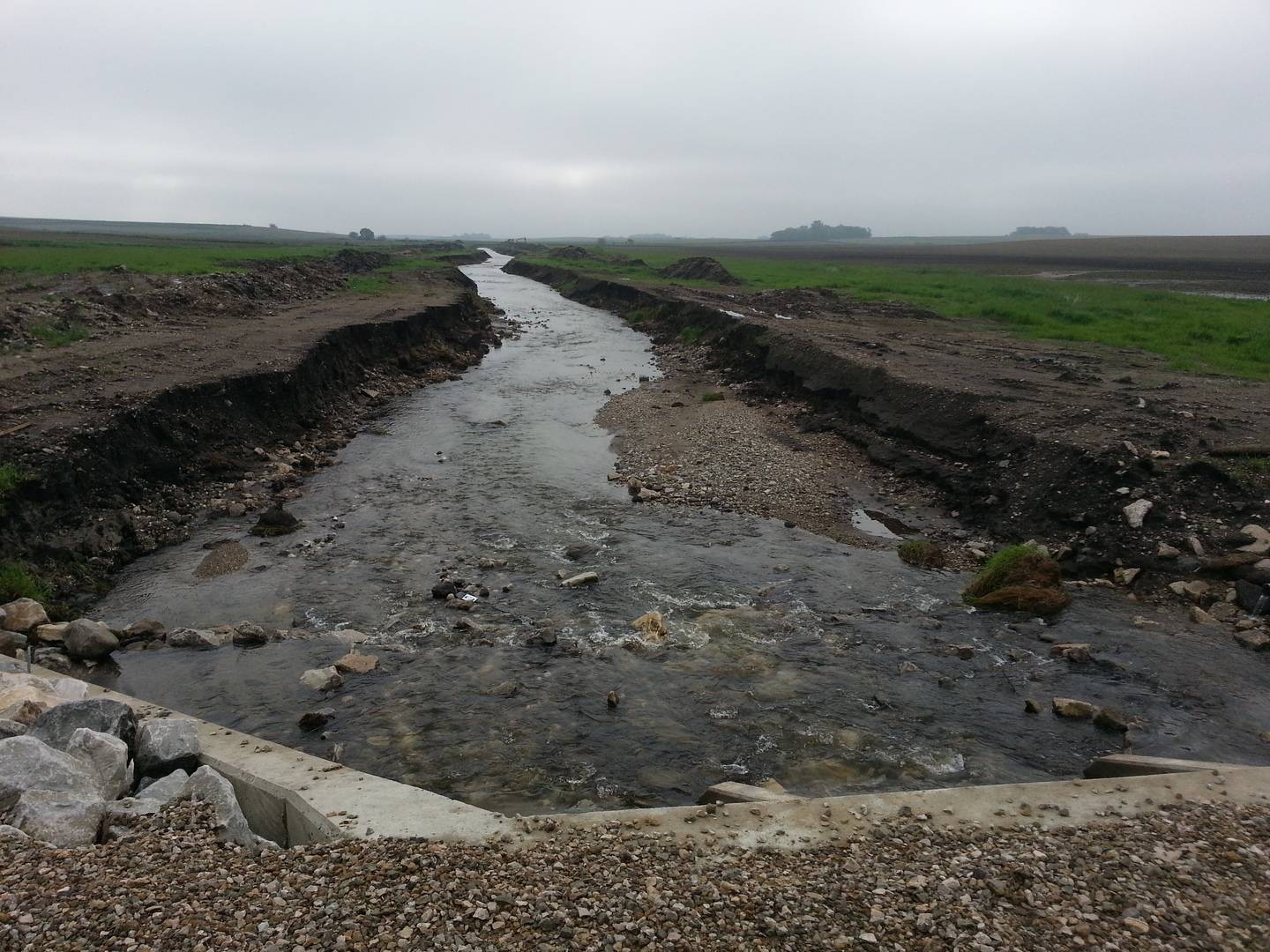
    I took this picture this morning after dropping kids off at bible school. This is the erosion that is happening due to all this rain.

    If I would’ve known then what I know now, I would’ve made different farming decisions.  (Hind sight is always 20/20, right?)  I started planning my 2013 crop last fall when my ground was extremely dry.  To conserve soil, save time and fuel, I had been farming no-till for several years.

    Years of no-till also meant that my soil was becoming compacted.  During the dry year, I could definitely see how compaction – which resulted when heavy equipment was driven across my fields to erect the wind turbines – affected plant growth and yield.  I could tell that around the turbines the plants’ roots couldn’t grow down, so those plants weren’t able to reach the moisture needed.  Deep tillage is the cure for compaction, so I chose “to make lemonade” during the dry fall.  I tilled to break up the soil and give the 2013 crop’s roots a chance to grow down into the soil for moisture and plant food.

    Other decisions that I made last fall include:

    • The number of acres to plant to corn or beans (crop rotation);
    • Fertilizer needed to feed the growing crops;
    • Weed control programs;
    • Seed selection; and
    • the list goes on and on!

    Thanks to Mother Nature, I’m now facing some of these same decisions again:

    • Do I switch relative maturity on my corn?
    • Should I switch from planting corn to beans?
    • Should I even plant at all?

    Today’s farmer must “farm the government.”  What I mean by this is a farmer must know all the rules and regulations that modify the way we farm to stay in compliance with the law.  Sometimes this is extremely difficult to do because some rules are so vague that they’re interpreted differently by the various people charged by the government to in force the rules.

    In addition to my crop concerns, thoughts of my livestock and family weight heavily on my mind:

    • What new viruses might my pigs get?
    • What fun memories can we make with our grandkids, who are here this week for their annual Bible school visit?
    • When will I find the time to move the horses?  (That reminds me, they really need vaccinations including worming medicine.)
    • When will it ever stop raining?  Soil is washing away!
    • How can I better manage my ground?
    • When is the first ISU football game, and how are Devin’s shoulders healing?
    • How is Jesse getting along the blood clots in her leg?
    • Oh no, when do I leave for Romania and the Ukraine?
    • Will I ever get the lawn mowed?!
    • When will be a good time to build that waterfall Janice has been wanting?
    • Which should I do first, finish remodeling her laundry room or building the waterfall?
    • Maybe I should go out and pick up all those rocks I pulled out with the ripper.  Wait, I can’t do that yet because the fields are just too wet.

    With all these thoughts racing through my mind, I’m beginning to feel a lot like the pig who was given a pancake!  In case you’ve never read that classic children’s storybook, If You Give a Pig a Pancake, written by Laura Numeroff, I’ll share a brief excerpt to give you an idea:

    If you give a pig a pancake, she’ll want some syrup to go with it. You’ll give her some of your favorite maple syrup, and she’ll probably get all sticky, so she’ll want to take a bath. She’ll ask you for some bubbles. When you give her the bubbles…

    Back to thinking about planting… Should I stop planting corn with only 10 acres left, or should I switch to beans?  Research shows you can get decent corn yields through mid-June, but according to the insurance programs, I should switch crops.  Right or wrong, government policy will make some of these planting decisions for me!

    Larry Sailer, Musings of a Pig Farmer

    June 11, 2013
    Agriculture, General, Industry News
  • Latham Hi‑Tech Seeds

    A Farmer’s Father’s Day

    Gadgets1
    Jeff Caldwell
     With permission from “A Farmer’s Father’s Day” by Jeff Caldwell, Multimedia Editor for Agriculture.com and Successful Farming magazine.
    © Meredith Corporation 2012
    Father’s Day is right around the corner! If you’ve got a father to shop for and he’s not the easiest person in the world in that department, let us help narrow down your search for the perfect gift, whether it’s a gadget for fun or a tool to put to work in the shop!
     A guy can’t work all the time. So, to that end, check out these fun gadgets for your farm father, from bacon-scented candles to cool grilling gadgets!
    Check out these 10 great gifts for dad.


    Is your farm father more of a tool guy than a gadget guy? Here are 10 new tools to help him make life easier in his shop or in the field.

    Spruce up your shop with these new tools.

    Team Latham

    June 10, 2013
    Agriculture, General, Industry News
  • Latham Hi‑Tech Seeds

    Get a Slice of Farm Life during Dairy Month

    Sarah Mumm isn’t a typical work-from-home mom.  Every morning at 6 a.m. and again every evening at 6 p.m., you’ll find her milking her 50 registered Holstein dairy cows in a picturesque white dairy barn nestled in the hills of rural Grant County Wisconsin.  Owning a dairy herd has been a dream since Sarah was a little girl; she grew up on a dairy farm about 30 minutes from where she and her husband, Joe, live with their two young sons.

    “People often ask why I milk 50 cows.  It’s the perfect number for me because of the space we have here and the amount of time it takes to chore and milk,” says Sarah, who at age 16 got her first milking job with a family raising Jersey cattle near Cobb.  That family’s optimism about the dairy business was one of the reasons Sarah attended the University of Wisconsin short course for Dairy Herd Management.

    It takes Sarah about 1½ hours to complete her shift of milking.  While she does the morning milking, Joe stays inside with Vincent, age 3½, and Mitchell, age 2.  Joe then leaves for his seasonal job at Majestic View Dairy in Lancaster, and Sarah keeps busy with their boys.  There’s a lot of “farming” to be done as the boys’ extra large sandbox is filled with tractors and equipment.  They also enjoy gathering eggs from their laying hens, helping take care of the calves and taking care of their two pigs.

    “We want our boys to know where their food comes from, so we raise a little bit of everything,” says Sarah with a warm smile.  She and Joe met at Majestic View where she was a herdsman and he worked with the crop side of the business.  It wasn’t long before Sarah bought a few cows of her own, and Joe proposed to her on the same day she started milking them.

    Today Joe and Sarah operate Vin-Rose Dairy.  They make their home on the same farm where Joe was raised.  They raise crops 50:50 with their landlord, who lives in California and comes to stay in Wisconsin for about one month each summer.

    Like father, like son. While Joe Mumm gets ready to plant corn, his son Mitchell holds up the bag of sweet corn for his patch.

    “There just aren’t enough words to explain how fortunate we feel to raise our family on a farm,” says Sarah.  “Our boys learn so much just by watching us.  They have an understanding of life and death.  They grasp that seeds get planted, so crops can be harvested for food.  They learn how to care for animals.  And they enjoy eating food from our garden.”

    Sarah opened up her recipe box and shared some of her family’s favorites with us today on TheFieldPosition.com.  Cheesy potatoes are a family favorite on Sundays, and banana bread with a class of milk is one of the boys’ favorite snacks.  As a salute to America’s dairy farmers during the Dairy Days of June, take the cap off a jug of milk, open a fresh package of cheese and let the cooking begin!

    Banana & Peanut Butter Smoothie

    Ingredients:

    • ½ cup milk
    • 6 ounces plain or vanilla Greek yogurt
    • 1 fully ripe banana
    • 2 Tbsp. creamy peanut butter
    • 2 Tbsp. honey
    • ½ cup ice cubes

    Directions:

    1. Blend all ingredients, and serve immediately.

    Cheesy Hash Brown Potatoes

    Ingredients:

    • 2 lbs frozen hash browns, thawed
    • 2 cans Cream of Celery or Cream of Chicken soup
    • 8 ounces sour cream
    • 1 cup grated Cheddar cheese
    • ½ cup butter, melted
    • 2 Tbsp dried minced onion
    • 2 tsp salt & a dash of pepper

    Topping:

    • 2 cups crushed corn flakes
    • 1/4 cup melted butter

    Directions:

    1. Mix all together and bake in a 9×13 pan at 350° for 15 minutes.
    2. Meanwhile in small bowl mix together crushed corn flakes and melted butter with fork. Remove potatoes from oven. Sprinkle corn flakes on top of potatoes. Bake 45 minutes longer, uncovered.

    Team Latham

    June 7, 2013
    Desserts, General, Recipes
  • Latham Hi‑Tech Seeds

    Early Season Tissue Sampling Helps Detect Deficiencies

    Tissue sampling has become very popular in recent years as it more accurately represents plant nutrition.  That’s why tissue samples should be taken as early in the season as possible to properly detect nutrient deficiencies and make adjustments during the growing season.

    For accurate results, avoid testing plants that show severe signs of stress from factors not related to nutrients.  This includes damage from insects, drought or flooding, temperature, chemicals or machinery.  Also be sure to test normal plants in addition to affected plants in the same stage of growth.

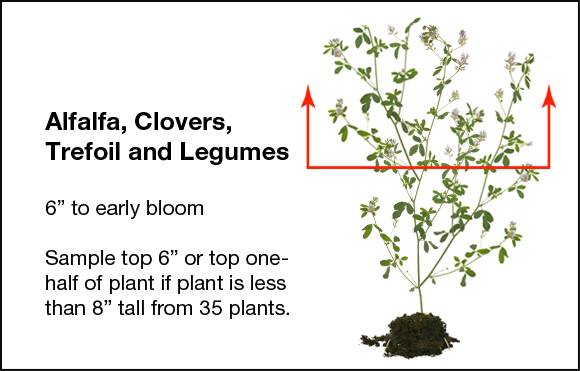
    When testing alfalfa plants from beginning stages until the first flower, it’s important to sample from the top six inches of the plant. Collect about 35 samples.  When sampling alfalfa closer to or at harvest for comparison, test about 25 whole plants.  Collecting soil samples simultaneously can be helpful when paired with the plant analysis to identify nutrient deficiencies, toxicities and imbalances.  Take soil samples, at a six- or seven-inch depth, from the same areas where plant samples were collected.

    Once samples have been collected, remove foreign particles like dirt but do so without washing the plant.  Place the samples in a paper bag or a large envelope to help prevent them from developing mold during shipping.  Soil samples also may be placed in a waterproof container with a correlating label to the field and tissue sample with which it was taken.

    Depending on the lab you use, some reports for plant samples will reveal the concentration of N, P, K, Ca, Mg, S, Zn, Mn, B, Cu, Fe, Al, and Na within the plant.  Soil samples submitted with the plant sample will be analyzed for pH, organic matter, P, K as well as special soil test results.  Nutrient levels will also be interpreted for soil and plant samples to identify any nutrient issues and potentially offer recommendations.  It’s important to note that nutrients can then be soil, seed and foliar applied.

    The ability to apply timely nutrition and reach new yield levels is so exciting!  Experiment on your farm.

    Webspec Admin

    June 6, 2013
    Agronomics, Corn, Crop, Fertility, General, Soybeans
Previous Page
1 … 85 86 87 88 89 … 159
Next Page

Latham Hi‑Tech Seeds

131 180th Street | Alexander, IA 50420

(641) 692-3258

SIGNUP FOR OUR NEWSLETTER
  • Contact
  • Legal
  • Dealer Center
  • Seedware Login
  • Latham Gear

© 2025 Latham Hi‑Tech Seeds. All rights reserved. | Iowa Web Design by Webspec | Privacy Policy

Latham® Hi-Tech Seeds is a trademark of M.S. Technologies, L.L.C., 103 Avenue D, West Point, IA 52656.