This past week has been very emotionally draining. Turning a year older at this age should be a good thing, right? Sending your daughter half way around the world to China is a good thing, right? Not having your crops planted by June 4 is… a real downer!
It’s easy to let all of this dreary, wet and cold weather dampen one’s spirits. That’s why I’m making a conscious effort to look on the bright side of things:
Turning a year older is, of course, a good thing. I don’t like the idea of getting older, but it sure beats the alternative!
Sara’s trip to China to finish her schooling is really pretty cool! It’s a great opportunity for her to practice Mandarin and experience the culture.
As for the crops, I carry insurance and that should be enough to keep me farming another year. A year without crops is like going a year without a paycheck, so that’s why crop insurance is so important.
Rewerts Family Reunion
When I was younger, I didn’t always take time to think about the good times. The pressure of raising a family and trying to give them everything they want can be tough. Looking back, spending more time with them would have been nice. We did survive. Some scars, some great times. And we continue to get together and share the good and the bad, but I do enjoy time much more than I did!
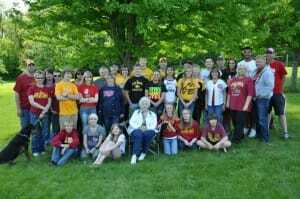
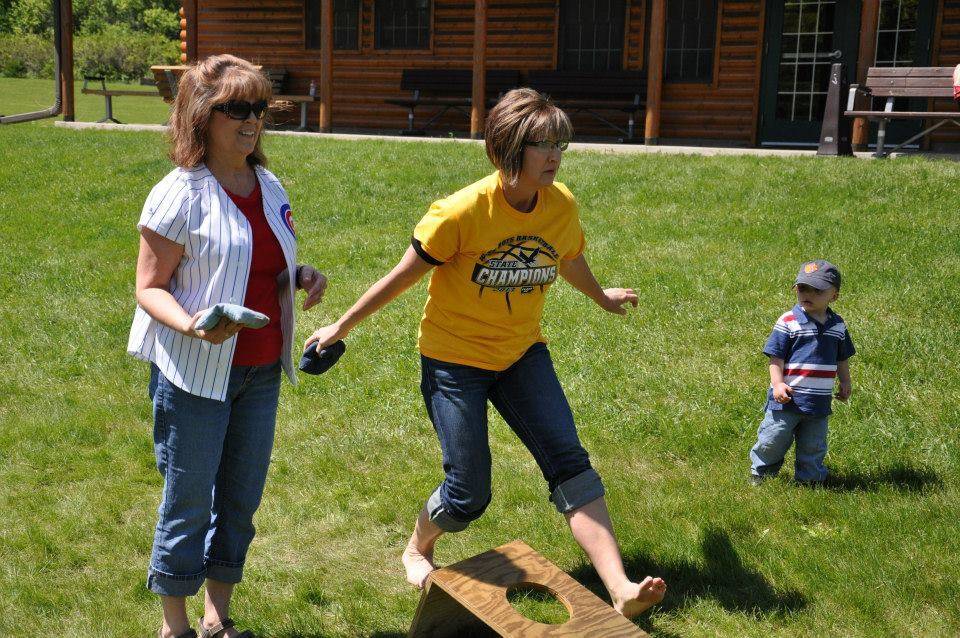
Over the weekend, my wife and I attended the Rewert family reunion. Good food, good times! Instead of focusing on how much we all missed my father-in-law, we reflected on all the good times we had and shared fun memories!
There will certainly be more good times in the days and weeks ahead. I’m looking forward to attending World Pork Expo this week. Our grandkids, who are still young enough to attend Vacation Bible School, will stay next week with us. We always look forward to making good memories and enjoying family time. And, yes, I’m still hoping we’ll get seed in the ground this week.
Hope you’re all looking on the bright side this week!
While some Midwest farmers will get the opportunity to reenter their fields this week, there won’t be much rest for the weary. With some seed already in the ground, it’s important to start scouting those fields now.
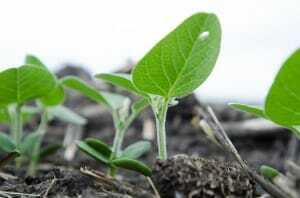
Post-planting is an ideal time to begin scouting one’s crops. Many soilborne pathogens strike as soon as the seed begins to take on water; others strike young seedlings. Because seeds can germinate quickly and emerge in 3 – 5 days, it’s not too soon to start walking your fields.
Check plant populations, evaluate stands and be on the lookout for early summer diseases. Is there a germination problem? Do you see effects of chilling or crusting?
Assessing your situation ASAP will allow you to formulate a plan while there’s still plenty of time to implement it. You could replant in parts or in all of a field now, so you can attain the yields and returns you want this fall. Information on corn replanting decisions is available from www.agronext.iastate.edu/corn. Click on the “Planting” topic, then click on the “Replant Decision Aid Calculator” tab and use that tool and related information to help make a replant decision. For a resource on soybean replanting decisions, go to www.extension.iastate.edu/publications/pm1851.pdf.
Another benefit of evaluating current stands is to help you determine what adjustments should be made before planting next year’s crop: Do you need to adjust your planter settings or your planting speed?
Once you get past the mechanical issues, look at the disease pressure. If soybeans are damping off, perhaps next season you should opt for seed-applied fungicides? Do you need to pay closer attention to a particular soybean brand or corn hybrid’s disease rating?
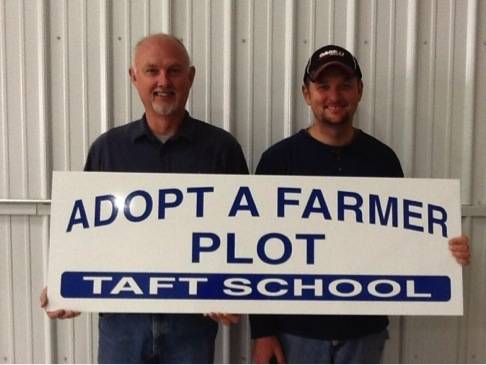
Second graders at Taft Elementary School in Humboldt, Iowa, are getting firsthand experience with planting Iowa’s number one crop as part of a project that begins with spring planting on a local farm and extends to next fall when, as third graders, they will harvest the crop they helped plant. Throughout the summer, they’ll have a chance to follow the crop’s progress through videos posted periodically online.
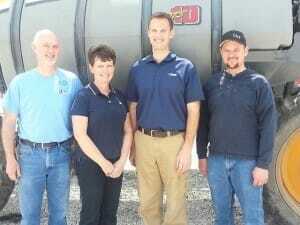
Humboldt County farmers Dean and Carol Coleman, along with their son Mike, initiated this program to help 2nd and 3rd grade students understand how and why farmers raise crops. The Coleman family raises corn and soybeans on their North Central Iowa farm.
“We wanted kids to have a chance to meet with the people who get their hands dirty every day,” says Carol Coleman, who served as a preschool teacher 20 years, plus is a mother of two and a grandmother of four. “We want kids to be able to put a face on farmers, who provide the basics of everyday life from food on their tables, fiber in their clothing and building materials for their houses. Basically, we want to answer the fundamental question: ‘Where does my stuff come from’?”
Farmer Dean & Farmer Mike
The Colemans had the idea for the Adopt-a-Farmer program after they listened to Bruce Vincent, a third generation logger from Montana, speak about the importance of telling your ag story.
“We decided to develop a program to make others aware of what farming is all about. Naturally, we thought of telling our story to kids. We had hosted grade school classes in the past. While they visited our farm, there wasn’t really time for us to explain farm operations. The kids had fun seeing the how much a bushel weighs and what is made from corn and soybeans. They loved climbing on the equipment and seeing the inside of the grain bin, but we wanted to create a program that would provide a more comprehensive look at agriculture. We wanted to give kids a chance to ask questions and learn facts about farming. We want them to see that food doesn’t just magically appear on grocery store shelves. We want them to learn how their food is grown.”
Dean and Carol Coleman with their sons, Nick and Mike
Prior to the planting season, the Colemans visited the classroom and introduced themselves to the students. They explained what the “Adopt-A-Farmer” program entailed and how they would like to become part of their classroom. The Colemans have provided videos of Farmer Dean and Farmer Mike doing their jobs, so students can see what’s involved with moving rock, welding equipment & grinding metal for a hitch piece for the planter or fix the tractor’s computer.
Also via video, students “rode” in the sprayer and the planter with Farmers Dean and Mike. Students then came to the Coleman farm and each planted 5 kernels of corn, themselves, in the field. Throughout the summer, students and their families can drive by and literally watch their corn plants grow. In the fall, they will come back to the farm and harvest their crop and see more things for harvest season.
“We really want all 109 students to get excited when they see crops in the field and know what is growing! Maybe they’ll even share some fun facts, which they learned on our farm, with their parents. We also want them to start understanding the difference between fact and fiction since the media doesn’t always accurately tell agriculture’s story.”
To help make a connection between the crops that are planted and the livestock that is raised with the food on our tables, today the Colemans are sharing two of their family’s favorite recipes for Taco Seasoning and Apricot Oatmeal Soy Cookies. Enjoy!
Taco Seasoning Recipe
Ingredients:
3 Tbls Chili powder
1 Tbls Salt
1 Tbls garlic powder
1½ tsp black pepper
¾ tsp red pepper
Directions:
Brown hamburger (can substitute ground turkey)
Then add ¼ cup of water and 1¼ teaspoon of seasoning per 1 lb. of meat.
Stir frequently and let slowly simmer for 15 minutes.
Try this seasoned meat on baked potato or Tostito chips with lettuce, refried beans, cheese and chip dip.
COOK’S TIP: To break up browned hamburger into fine morsels, stir with a whisk while it’s browning.
The 2013 growing season has certainly has its share of challenges. Iowa farmers worried about the lack of subsoil moisture in March, and then we experienced record rainfall in April. Planting was already considered “late” when we found ourselves, once again, forced from the fields due to downpours.
My planter is parked, and from the looks of the forecast, it’s going to be parked for quite some time. How disappointing… I had all intentions of finishing #plant13 by Memorial Day, but Mother Nature decided to show me who was boss! The skies opened up on Friday evening, and rain fell literally all weekend long. The 24-hour precipitation totals for Iowa Falls in North Central Iowa were:
from Friday to Saturday 0.19”
from Saturday to Sunday 1.72”
from Sunday to Monday 3.42”
5.33” fell over the holiday weekend!
More than 5 inches of rain fell across North Central Iowa from Friday through Memorial Day. Many local creeks were out of their banks, and many farm fields flooded. The water is receding, leaving “trash” on the road. Thankfully, the sun is peaking through the clouds on Tuesday afternoon.
As I sat watching the rain fall, I couldn’t help but think about the Farm Bill and the importance of crop insurance. Like many farmers, I’m wondering how yields will be impacted by planting dates, planting conditions plus factors that will influence yield during the rest of the growing season. Honestly, I’m glad there is federal crop insurance.
Not everyone feels the same as I was reminded on May 26 when The Des Moines Sunday Register ran editorial touting why the “Farm Bill Should Benefit Everyone.” What a great headline! It caught my attention and even held it until I read the subheading: “Better nutrition, sustainable farming are in the public interest.” Wow, these people are good! Two great statements in a row, and the editorial copy is even better. (Insert sarcasm here.) Here’s an excerpt:
These farm bills, which must be updated every five years, were created during the Depression to protect family farmers from the gyrations of the marketplace and natural disasters. But they have morphed into programs that subsidize corporate agribusinesses, often at the expense of family farmers, the environment and the real nutritional needs of the nation.
This editorial also states that “crop insurance is so lucrative” that farmers are taking unnecessary risks and putting marginal lands into production. The Register claims crop insurance is pork belly (as a pig farmer, I just had to throw that in!) because it helps insure use against economic losses from the market turning against us. I’m not certain how this is different from a weather loss – a loss is a loss and either can put me out of business!
Yet, The Register editors claim that farm programs unfairly help the big farmer. That’s news to me as I’m a small farmer, and I’m the guy who needs that insurance! Crop insurance helps reduce risk – especially for beginning and small farmers – plus ensures bank loans will be repaid. I can only remember collecting one time for crop insurance, so I’ve collected much less than I have paid in in premiums. However, it’s a way for me to insure that I can regroup and farm next year. Crop insurance is what makes it possible to keep farming with some certainty, and that’s especially comforting in a year this!
It’s of great concern that people who don’t understand farming are the ones writing editorials and making rules. We all want everyone to have enough safe food, and we want our farm ground to always be productive. That doesn’t mean, however, that we need a Farm Bill that benefits everyone!
“Pie is meant for sharing. Pie connects people. Pie knows no cultural or political boundaries,” says Beth Howard, nationally acclaimed pie advocate, author and baker extraordinaire. “Pie makes people happy. And happy people make the world a better place. That’s why the world needs more pie.”
“The World Needs More Pie” is more than a philosophy for Beth. It’s become her way of life.
In the “off season,” Beth teaches pie making classes that include a tour of her private residence. You can take a virtual tour of this 130-year old Iowa farmhouse plus get a preview of Beth’s luscious pies by watching this segment on Iowa Public Television’s “Iowa Ingredient” (from the 21 minute mark).
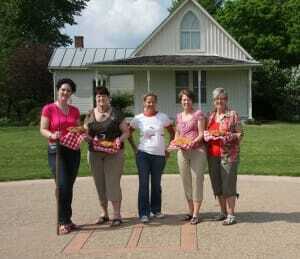
Last weekend, I had the pleasure of seeing inside the American Gothic House and attending one of Beth’s pie baking classes. (I still can’t believe it… I made the classic All-American Apple Pie inside the iconic American Gothic House. How surreal!) We were blessed by a beautiful spring day. The fragrance of blooming lilacs permeated the air as we posed for our souvenir photos outside the front porch; cinnamon and baked apples tickled our noses inside the house. Birds were chirping outside; inside laughter filled the air. It was one perfect day!
Every one of Beth Howard’s pie classes ends with a “victory pose.” From left to right are Darcy Maulsby and her mom, Beth, me and my mom.
This class was intended as a surprise birthday present for my mom; it really turned out to be a gift to me. It provided a good “work excuse” for me to spend some time with Darcy Maulsby, a fellow advocate, ISU journalism grad and guest blogger on TheFieldPosition.com. Honestly, it turned out to be a great therapy session! It was nice break from a stressful planting season plus a diversion from multiple printing deadlines. As Beth Howard quotes in the forward of her memoir, Making Piece, “Stress cannot exist in the presence of pie.”
There was no stress during our baking class. Before that day, however, I feared making pie dough. I’ll admit it. I’ve enjoyed making pies like my treasured recipe for Colorado Peach Pie or Key Lime Pie – neither of which requires a “real” crust. But ask me to make a double-crusted fruit pie for the 4-H stand at the Franklin County Fair, and I’ve been known to call for help! (“Hello, Mom!” or “Hello, Cathy!” of Cathy’s Country Cookin’ in Hampton, Iowa… I’d dial until I found someone who would answer my call.)
But that was so last year! That was before May 18, 2013, when Beth Howard shared her wisdom:
“Forget the rules! Relax. Take a free and easy approach.” “Use your fingers like salad tongs. It’s quick! Get your hands in and out.” “Don’t manhandle the dough. Think gentle, loving thoughts about the dough.”
Perhaps the most important lesson I learned that day was not to worry if my pie doesn’t look perfect! “Your pie looks like one-of-a-kind and homemade,”says Beth as she encouraged her students and sang their praises for a job well done. “Give yourself permission to not be perfect. Your pie looks perfectly delicious.”
Fresh, homemade apple pie seems so patriotic and a fitting way to celebrate Memorial Day. Beth’s apple pie recipe is posted below, and you can download her recipe for Shaker Lemon Pie from The World Needs More Pie website.
Of course my mom and I got to dress up and take a picture like the iconic Grant Woods painting. The one of the left is the “classic pose” and the one on the right is the “fun pose”!
Time Limit on Animal Abuse Report Creates Controversy
Famed broadcaster and agvocate Trent Loos recently tagged me in a post on his Facebook page with a link to his broadcast about clergy, who oppose a bill passed by the Tennessee Statehouse to protect animals. Trent’s Facebook message to was “enjoy.”
Anytime HSUS is mentioned, I’m pretty sure I’m not going to enjoy it. But I was wrong! This broadcast was recorded after Trent received a call from actress/activist Park Overall, who wanted to discuss the bill sitting on Governor Haslam‘s desk waiting to be signed into law.
Before I tell you why this interview was so entertaining, let me first provide some background information on the Tennessee bill. This bill is so simple that we can print it – in its entirety – here:
“SECTION 1. Tennessee Code Annotated, Section 39-14-202, is amended by adding the following language as a new, appropriately designated subsection: ( ) Any person who records by photograph or video a violation of subsection (a) as committed against livestock shall, within twenty-four (24) hours of the photograph’s or recording’s creation: (1) Report such violation to law enforcement authorities; and (2) Submit any unedited photographs or video recordings to law enforcement authorities. SECTION 2. This act shall take effect July 1, 2013, the public welfare requiring it.”
Yes, that is the entire thing.
The key language in the legislation is the requirement to submit unedited photos or videos within 24 hours. As Trent writes in a related editorial, “Now anybody who truly cares about ‘animal welfare’ would not sit on such information for even six hours much less six months if their goal was really to protect animals.”
To make his point that HSUS is more concerned with holding videos until they best serve the organization’s interests, Trent reminds us of a video that HSUS released on Feb 17, 2008. This particular video, documenting the heinous treatment of some dairy cattle being unloaded at the Hallmark/Westland Meat Packing Company, was captured about six months earlier but was held until it was most strategic for their fundraising efforts.
Trent Loos
Why would anyone with the best interest of animals at mind sit on video like this for six months? Park Overall’s excuse (i.e. “explanation”) is that it takes time to build a case. Parks’ southern drawl and rambling reasoning make her interview with Trent entertaining, but that’s not all. She then goes off the topic of the Tennessee bill and mentions gestation crates. Trent supports g-stalls, so he explains why – and I agree with him.
But the use of g-stalls is controversial even within ag circles. Temple Grandin has even said they must be history as the gestation stall has become a symbol of cruelty to animals. I understand where Temple is coming from saying the crates must go due to public perception alone.
I just find it ironic that so many folks are against g-stalls when I believe they’re one of the greatest advances in prevention of animal cruelty! There have been studies that show if given a choice, the sow will spend about 85% of her time secure inside that crate, protected from the other sows.
G-stalls also protect farmers. I grew up raising pigs outside, in groups, and have seen firsthand how sows can abuse and kill each other. Plus, I had to be careful for my own safety because a 500-pound momma sow can be a killing machine! As a kid, I remember literally running for my life to get onto a flat rack in the sow pasture. What was considered normal at the time now scares the crap out of me!
The bottom line is this: We need to promote understanding between producers and consumers alike. I’m against cruelty to animals, but video that’s edited to be misleading doesn’t help animals. Honestly, I’m not sure how people can get as “emotional” as Park did, arguing against the 24-hour deadline to submit animal cruelty videos. Why wouldn’t they want to stop that abuse ASAP? Perhaps that’s why HSUS uses actresses as spokespeople…
Thank you Trent Loos for tagging me and for allowing me enjoy your interview. Thanks also for letting me vent on a topic that has been ticking me off for a long time!
Every farmer I know looks forward to the beginning of a new planting season – as well as to its end! As much as Ben Jones of Spencer, Iowa, enjoys farming, he’s eagerly anticipating the end of the 2013 planting season and the beginning of a new chapter in his life.
Ben and his fiancé, Chelsea Heikens, are set to wed on June 22. Ironically, the two will be married in the building were they became reacquainted as the former Bomgaars building in Spencer has been converted into Faith Lutheran Church.
Both Ben and Chelsea were FFA members at Clay Central Everly, but Ben was a senior when Chelsea was a freshman. It was a few years – and many trips to Bomgaar’s – later, before the two reconnected.
“At the time, I was working fulltime for a farmer from spring through fall and working construction in the winter. It seemed like I was always going into Bomgaars for one thing or another. Once I realized Chelsea was working there, I might have come up with a few more reason to head into town,” says Ben with a shy smile.
Growing up on the farm and being active in both 4-H and FFA, helped Ben and Chelsea develop a love of the land and a passion for livestock. As a member of the Clay Raiders 4-H Club, Ben’s favorite 4-H project areas were cattle and hogs.
“I learned a lot about managing livestock and the importance of keeping accurate records,” he says of his 4-H experience. “You learn from your experiences and look for ways to continually better your operation.”
Such 4-H life skills are still in practice today as Ben helps his dad with the family’s Black Angus-mix cow-calf operation. Ben runs his own custom baling business, as well. He also still helps a local farmer, who Ben credits for interesting him in precision farming. They use GPS data to increase overall farm profitability by managing nitrogen and planting at variable rates.
Seed selection and seed placement are also key factors in increasing profit per acre. This is where Ben and Chelsea can team up as they get their Latham® seed dealership off the ground. This summer Chelsea is interning with a co-op. After earning an agronomy degree this December, she’ll pursue full-time employment in agronomy.
With two busy schedules, Ben and Chelsea plan ahead to spend time together often while enjoying a good meal. The two of them even cooked up their own recipe for Pot Roast. And in honor of May Beef Month, they’re sharing it today on TheFieldPosition.com. Beef. It’s What’s for Dinner!
Better planting equipment, improved soybean genetics and technology advancements such as seed treatments and weed control systems have moved soybean planting dates earlier in recent years. Last year 34% of Iowa’s soybean crop was planted by early May; this year only 1% of Iowa’s soybean acres are planted as of May 13.
Although there is a correlation to higher yield potential with earlier planting dates, it’s important to remember that soybeans respond favorably to early-planting datesif soil conditions are ideal for planting. Conditions weren’t fit for planting soybeans in late April or early May.
One silver lining in the delayed soybean planting is that soil temperatures have warmed. We recommend planting soybeans when soil temperatures are about 60 degrees, and soil temperatures were averaging only in the low 60s around May 15.
Planting into a field that is too wet or too cold early in the season will reduce emergence and plant population, which most often leads to reduced yield. Remember, planting soybeans in warm but wet soils can also have a detrimental impact on yield. Patience will continue to be key this planting season!
Last fall I wrote a series of blog posts, following a group of pigs from about 50 pounds to 290 pounds. The first post in the series began September 25, 2012, and ended a post on January 8, 2013.
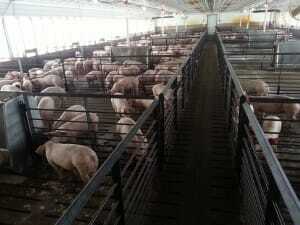
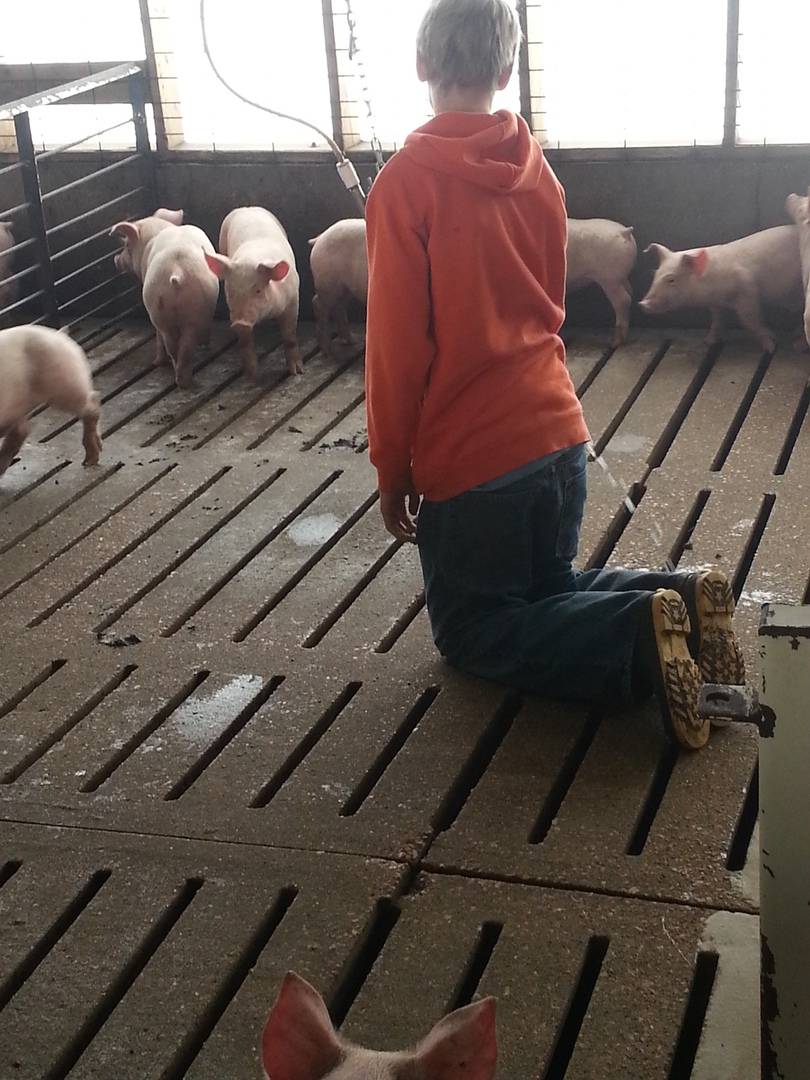
Today I’ve decided to let my pictures “do the talking.” I’ve included a series of photos that show the “day-to-day” work of modern day hog production from disinfecting buildings to treating sick animals. As always, feel free to contact me if you have any questions.
Before a new group of hogs arrives, we power wash our buildings to disinfect them. Cleanliness is a primary way to prevent disease and to help reduce the amount of medication needed to treat sick animals.
May 3, 2013 – We’re on our way to the hog houses to receive new pigs.
With an indoor temperature of 75 degrees, our pigs are warm and toasty on May 3. They aren’t even aware of the record-breaking snowfall outside the building.
“Who let the hogs out?” My granddaughter Carlie is sporting her pink camo as she counts the number of pigs into each pen.
Inside one of the “hospital pens,” Carlie and Darin are enticing sick pigs to eat their feed.
Darin is climbing over the gates, getting out of the way so as not to scare the next group of pigs coming into the building.
Darin shows the pigs where to find water.
It’s critical to have the right amount of fresh water available for pigs. I’m putting on a new nipple to ensure these little pigs will receive the right amount of water.
While I was adding the new nipple, the pigs were trying to “help” by carrying around spare parts.
Other curious pigs were trying to chomp on my toes as I worked on the nipple.
This feeder must be adjusted so that about 30% of the bottom is covered with feed. That’s the “optimal setting” that provides the pigs with plenty to eat without them wasting any. Otherwise, excess feed falls into the waste pit – and that’s a waste of good feed!
Veterinarians have developed guidelines for properly using and administering medication when needed. We use a can of paint to identify which pigs have already received medicine.
The blue bottle in the center, which hangs upside down next to my waist, is the medicine. The green handle is what I use to administer the shots; the next dose is already in the syringe. The long tube is the exact amount of medication and will automatically refill after each shot. Since I gave about 2,000 shots on Saturday, this tool is a huge time saver!
After the pigs are unloaded from the livestock trailer into our building, Carlie and Darin decided celebrate by going outside and having a snowball fight.
To help provide “picket fence stands,” corn growers must make proper planter adjustments. It’s also important to match the planter speed to field conditions and to avoid planting seeds in extremely poor soil conditions.
Planting in soils that are too wet can lead to sidewall compaction. The under-developed root systems resulting from the compaction are often confined in a flat plane within the furrow trench. Planting in too wet of soil, especially with coulters, allows sticky soil to build up on gauge wheels resulting in planting depth differences.
Shallow planting places seed in differing soil moisture levels and can result in differing emergence dates. Shallow planting also can lead to a shallow secondary root system. “Rootless corn” may result, or plant development may be greatly delayed compared to neighboring plants.
Failure to close the furrow is usually caused by poor soil conditions, improper closing wheels for field conditions, incorrect down pressure, or planting in sod. Worn or improperly adjusted planter parts can cause or aggravate all the previously mentioned problems.
Make sure your planter does all its jobs properly: open the seed furrow without sidewall compaction; place seeds at a uniform depth; and close the seed slot without compaction. Stop the planter frequently and physically check to ensure you’re getting uniform seed depth and good seed-to-soil contact. Although it will take a few extra minutes in the spring, you’ll be glad you did when it’s time to harvest those extra bushels come fall!


 There will certainly be more good times in the days and weeks ahead. I’m looking forward to attending World Pork Expo this week. Our grandkids, who are still young enough to attend Vacation Bible School, will stay next week with us. We always look forward to making good memories and enjoying family time. And, yes, I’m still hoping we’ll get seed in the ground this week.