Latham Hi-Tech Seeds

(641) 692-3258

  • Home
  • Products
    • Corn
    • Soybeans
    • Soybean Blends
    • Alfalfa
    • Corn Silage
    • Seed Guide
  • Performance
  • Find a Rep
  • Media
    • Blog
    • News
    • Videos
    • Podcasts
    • TECHTalk
  • About Us
    • Company History
    • Our Mission
    • Careers
    • Become a Rep
    • Sowing Seeds of Hope
  • Contact Us
  • Latham Hi‑Tech Seeds

    Farmers Markets Open 24/7 in the Ukraine

    Ukraine FarmersMarket
    Ukraine Wholesale Market

    While spending nearly two weeks in June traveling throughout Eastern Europe as part of a Black Sea Study Trip sponsored by the Iowa Farm Bureau, I noticed several differences between our cultures and farming practices.  Last week I blogged about the number of conversions we had to make when discussing acres/hectares and pounds/kilos.  This week I’d like to share some thoughts about their markets.

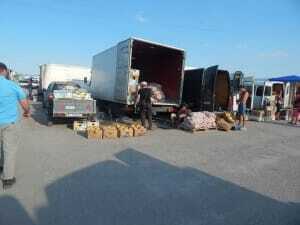
    We came upon The Mother of all Farmer’s Markets in Ukraine!  This wholesale market is open 24 hours daily, 7 days each week.  Massive amounts of fruits and vegetables are sold from any type of vehicle from large farm trucks to horse carts.  Now keep in mind it was about 100 degrees the day we visited, so much of this fresh produce was literally baking in the sun.  And it didn’t smell like apple pie either!  It smelled down right awful.  Cleanliness wasn’t a priority, and it didn’t seem like food safety was either.
    Odessa Privos Market

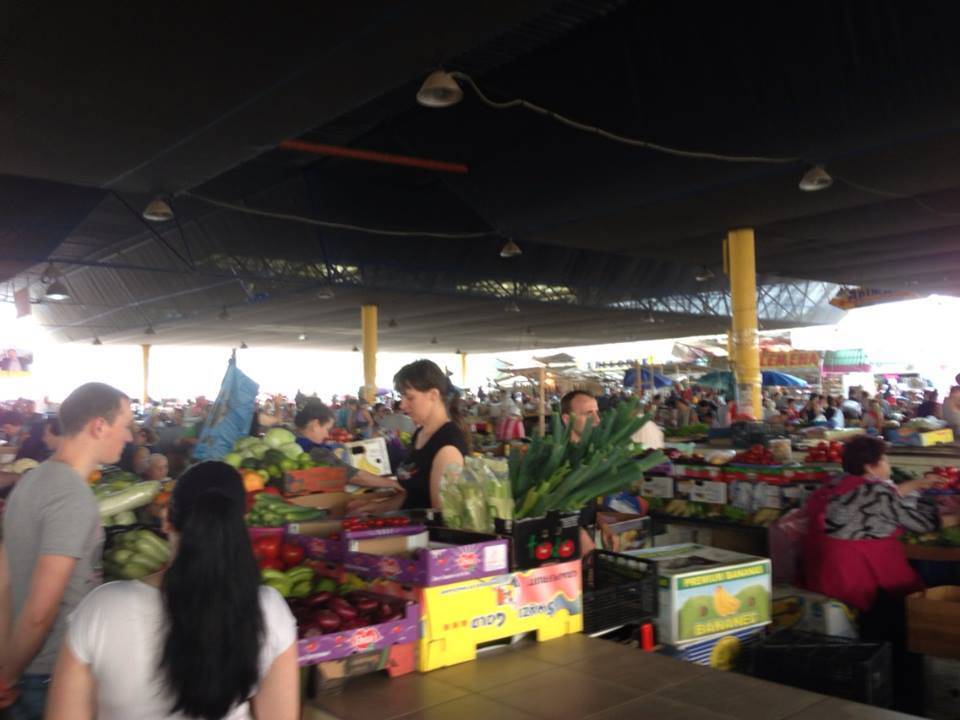
    Later we visited the Odessa Privos Market, a large, public market that was founded in 1827.  Tiny booths are lined up for blocks, and it seems as though you can buy anything there – as long as you could fight your way through the crowd.  Some of this market is under roof, and that’s where you can buy just about any animal part imaginable!  There also was a lot – and I do mean a lot – of fish for sale.

    Des Moines Farmers Market

    I couldn’t help contrast these two markets with the U.S. farmer’s markets that I’ve visited.  It seems that even the smallest Iowa communities have a local market at least once a week with markets held more frequently in larger cities like Des Moines.  The streets around Court Avenue in downtown Des Moines are blocked on Saturday mornings, so people of all ages can enjoy a leisurely stroll while they choose from a variety of wonderful smelling fresh cooked foods and fresh brewed coffee.  All of the vendors display their wares so neatly, and most have tents that shade their produce from the blistering summer sun.  Farmers sell meat in Des Moines from refrigerated trucks.  Plus there are many beautiful fresh flowers, fruits and vegetables for sale.

    Interestingly enough, many Eastern Europeans don’t realize how many fresh fruits and vegetables Americans eat.  Our tour guide in Romania was under the assumption that all we eat is processed foods and sweets.  “Junk food” isn’t something they have broad access to, and there is a concern the health of their kids may decline as new technology streams into Eastern Europe.  As their standard of living improves, how will this change their culture?

    Culture definitely changes as people move up the “hierarchy of needs.”  Eastern Europeans are no longer dependent upon the government to provide them with basics like food.  When they were under the control of the Soviet Union, Ukrainians raised more food in their backyards than they did on the collective farms. The Soviets moved many village people into high-rise cement apartment buildings, trying to force them into working on the collective farms.  Since it’s hard to grow food without soil, hungry people were motivated to work on the collective farms.  Even before the Soviets gained control, small villages were under a feudal system.

    After years of oppression, Ukrainians are making great strides now.  Their biggest challenge is developing infrastructure and markets.  It’s hard to get crops to market when trucks keep getting stuck!  But, they have so many rich natural resources.  I have no doubt the Ukraine will play a key role in helping feed the growing world population.
    Larry Sailer, Musings of a Pig Farmer

    July 16, 2013
    Agriculture, General, Industry News
  • Latham Hi‑Tech Seeds

    Protect Your Family from Sun Damage

    Heat Stroke1

    Guest Blog from Farm Safety For Just Kids

    With unseasonably cool temperatures persisting throughout the spring, many farmers were hoping for heat units to aid in plant development.  The warm sun has a major impact on crop growth, but the heat of the day can make dangerous working conditions for people.

    Farm workers are especially vulnerable to heat exposure.  When the body becomes overheated, workers become weak and tire more quickly.  Too much heat can also cause workers to become less alert, which is particularly dangerous if they’re operating farm equipment.

    It’s important for farmers to be aware of the three main phases associated with heat illness:

    1. Dehydration – results when the body isn’t taking in enough liquids.  Symptoms include fatigue, thirst, dry mouth and sapped energy.  Cramping may also occur in the legs and abdomen.
    2. Heat exhaustion – occurs when the body loses too much water and salt.  Symptoms include excessive sweating, extreme fatigue, clammy skin, dizziness or confusion, nausea, as well as fast, shallow breathing.
    3. Heat stroke – occurs when internal temps rise rapidly and the body is unable to cool down.  Symptoms may include profuse sweating, chills, throbbing headache, poor coordination, slurred speech, vomiting, hallucinations, fainting or collapse.

    Repeated exposure to the sun can cause premature aging, eye damage and even cancer.  Damage takes place over time, so it’s important to encourage protection at a young age.  To limit exposure and prevent long-term damage:

    • Avoid the sun during peak hours between 10 a.m. and 4 p.m.
    • Wear hats with wide brims that cover the face, neck and ears.
    • Cover as much of your body as possible with light clothing.
    • Use sunscreen with an SPF of 15 or higher and reapply often.
    • Wear sunglasses rated to filter out UV rays.

    Research shows a link between sunburns in children and an increased risk of melanoma and skin cancer later in life.  Help protect the future of agriculture by protecting the next generation of farmers and ranchers!  Click here for more tips on how to keep your children safe in the sun.

    Gary Geske

    July 15, 2013
    Agriculture, General, Industry News
  • Latham Hi‑Tech Seeds

    Celebrating Ag Traditions and Serving Up Hotdish in North Dakota

    Nick Pyle’s ancestors homesteaded around Casselton, ND, in 1879. Today he and his wife, Brandy, feel blessed to raise the seventh generation prairie farmers here. Their children include: Lily, 13; Brayden, who will soon turn 8; Amelia, 5; and Soren, 3.

    Nick Pyle’s ancestors uprooted their families from Canada move to Casselton, about 20 miles west from Fargo in eastern North Dakota.  Other ancestors relocated from Illinois to North Dakota, the land of opportunity. Six generations later, the Pyle’s are still proud to call this area home.

    “We’re blessed to have a rich heritage here that steeped in tradition,” says Nick, who lives with his wife, Brandy, and their four children in the farmhouse that members of his family have called home since 1903.  “Even after my working years are through, this place will be special because it holds so much history.”

    A love of history and respect for his family and their rural way of life is what led Nick to return to his prairie roots.  He and his cousin Brad are partners a family owned seed business that was started by their grandfather, Donald McIntyre. Donald recognized the need for quality, certified wheat seed, so he built the first of the company’s seed plants in 1966. As the number of seed varieties grew, a second seed plant was built in 1975. As agriculture changed, so did the product lineup and the business structure.

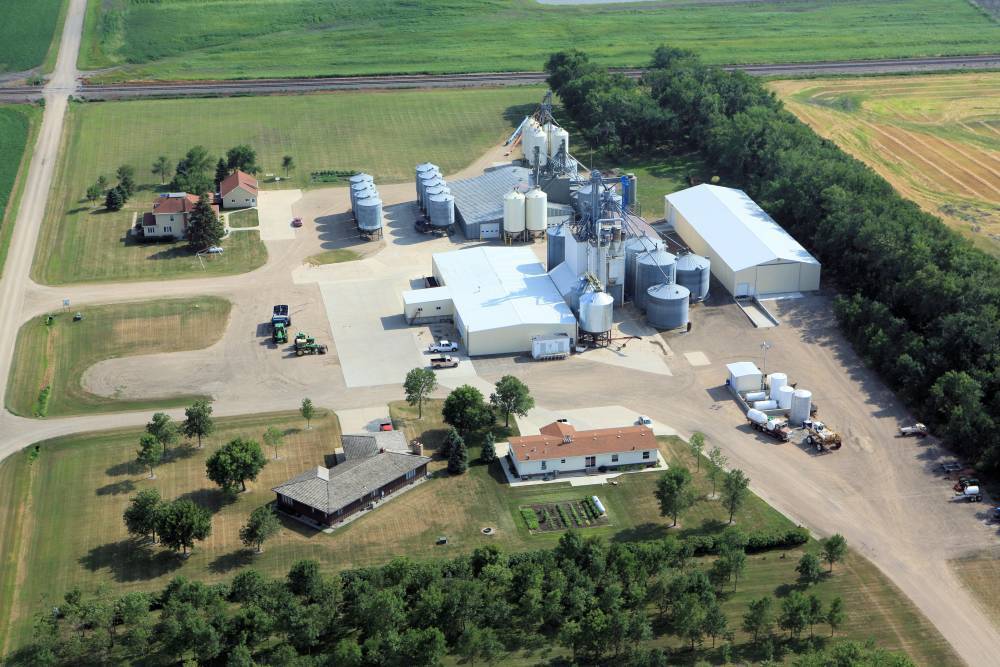
    Headquarters for Unity Seed of Casselton, ND

    McIntyre-Pyle Seeds, Inc. was formed through a partnership between Donald, his wife Lily; their two children, Duane and Marlyce; and their children’s spouses, Paula and Harvey Pyle.  Then in 1990, a business opportunity with another local seed company led to the formation of Unity Seed Company.  Unity Seed began processing identity preserved food-grade soybeans for both domestic and international markets.

    “Our mission is to provide our farmer-customers with the best quality seed available, both domestically and internationally,” says Nick. “We want to help farms survive and prosper here. Because we’re a family-owned company serving family farms, we believe strongly in partnering with family-owned entities.  That’s why we’re excited about our new partnership with Latham Hi‑Tech Seeds.”

    Latham Hi‑Tech Seeds believes in delivering the industry’s best quality seed with the most innovative traits and technologies to farmers in the Upper Midwest.  Like the Latham family members, Nick’s and Brad’s skill sets, interests and experiences complement one another and their business.  Brad grew up working on the production side of the business, so he manages the company’s processing plants. Nick earned a Finance degree in 2001 from the University of Minnesota Carlson School of Business, so he serves as the office manager.  Nick’s dad, Harvey, is preparing for retirement but is still available for counsel.  Dave Morken serves as general manager.

    Because family and community are so important to the families here – and to this region – it’s only fitting for the Pyle’s to serve up this recipe for hotdish.  Hotdish is commonly served in North Dakota at family reunions, potlucks and church gatherings.  While there are many various recipes, there dish itself usually consists of three primary ingredients:

    • a starch (pasta, rice or tater tots)
    • a meat (usually ground beef)
    • gravy or cream of mushroom soup

    Try the hotdish!

    Team Latham

    July 12, 2013
    Beef, General, Pork, Recipes
  • Latham Hi‑Tech Seeds

    Be a Vigilant Scout

    Walking fields and noting where there is weed and insect pressure will help you determine what you select seed products in the future.

    “Be prepared” is the Boy Scout motto.  Like a good Scout, farmers across the Midwest should be prepared for the unexpected this season as pests aren’t following their typical developmental patterns.  Corn and soybean plant development is later than normal, so they could be more susceptible to insect and disease pressure as pests prey on weaker plants.

    We haven’t seen much insect pressure yet this year, and that could be for a couple of different reasons.  First of all, the wet spring delayed planting and spraying.  Many farmers have gone straight from planting and tillage to spraying and haying.  Not many people have had the time to walk their fields and really take a close look for signs of insect and disease pressure.  Secondly, just as crop development is delayed, so is insect development.  We know the corn rootworm hatch was delayed.  We also know Japanese Beetles have been delayed.

    Just because the weather slowed them down, don’t count them out!  The Japanese Beetle is becoming a more common pest for both corn and soybean crops.  These voracious eaters literally eat anything that’s green.  They seem to prefer the leaf tissue between the veins of soybean leaves and the soft silks of corn plants.  Both activities can result in significant yield loss, so it’s important to scout for Japanese Beetles.

    Also watch for Bean Leaf Beetles, which have adapted to winter by protecting themselves in leaf litter.  Although overwintering beetles rarely cause economic damage, their presence may be an indicator of building first and second generations later in the season.  While feeding on young soybean seedlings, these beetles have been known to infest them with disease that leads to Bean Pod Mottle Virus.

    Another insect that could do some damage this season are corn rootworm.  Because of the wide variance in planting dates in 2013, rootworm beetles may move between fields in search of the best “buffet.”  A late maturing corn field may attract a large numbers of beetles if neighboring corn stopped producing pollen, for example.  Rootworm beetles may also move into corn and/or soybean fields that have an abundance of pollen-producing weeds, including volunteer corn, ragweed or foxtails.  Controlling weeds will also help control corn rootworm populations.

    In addition to corn rootworm, black cutworm could a larger problem this year as they’re known to cause more damage in fields where corn is planted later.  Fields of higher risk also include those that are poorly drained and low lying; those next to areas of natural vegetation; and those that are weedy or have reduced tillage.

    Walking fields and noting where there is both weed and insect pressure will help farmers determine an action plan for the future, too.  It will help you determine if you need to change modes of action in future years.  Remember, family-owned Latham Hi‑Tech Seeds offers the industry’s broadest product portfolio.  New for 2014 planting are Latham® Hi‑Tech Hybrids featuring Artesian and DroughtGard technologies.  We also will offer a complete portfolio of Refuge Made Simple products including corn hybrids with Genuity® SmartStax, VT2 and VT3, plus Agrisure 3122 E-Z Refuge.  For more details, contact your local Latham® representative or call the Latham office at 1-877-GO-LATHAM.

    Webspec Admin

    July 11, 2013
    Agronomics, Corn, Crop, Disease, Fungicide, General, Soybeans, Weed Control
  • Latham Hi‑Tech Seeds

    How Do Eastern European Farms Measure Up?

    Bad Roads1
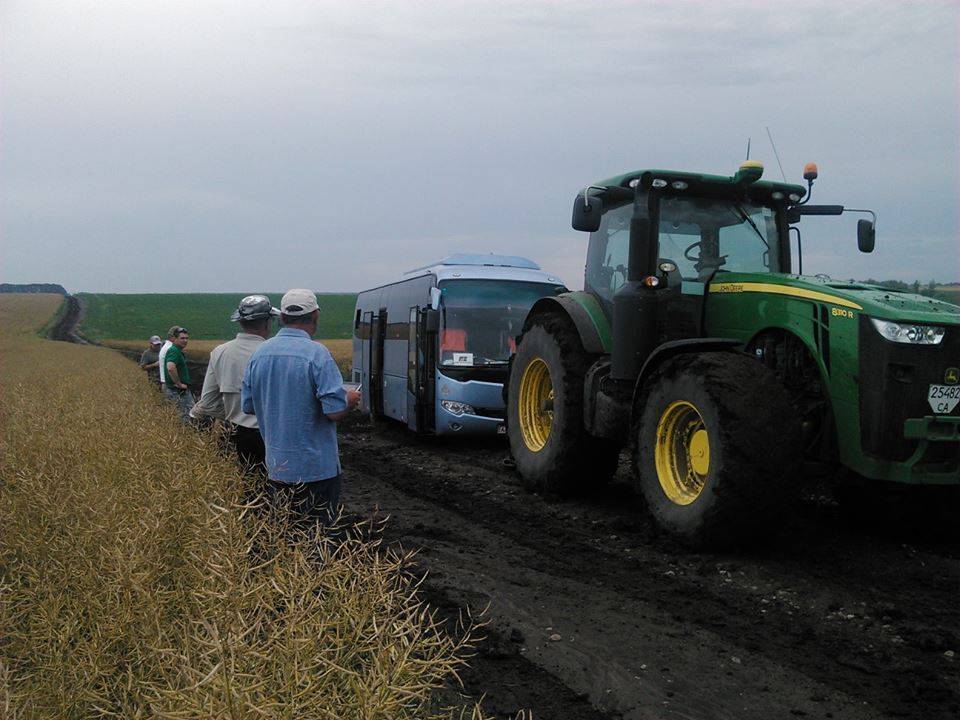
    One of the biggest challenges while traveling throughout Eastern Europe was poor road conditions. It wasn’t uncommon for our bus to get stuck.

    From June 22 through July 5, I had the opportunity to travel throughout Eastern Europe with a group of 20 Iowa Farm Bureau and staff members on a study trip.  We visited with farmers in the Ukraine’s Black Sea region, which is expected to become a top competitor for Iowa crop exports in coming years.

    One of the things I wasn’t prepared for on this trip was the need to convert measurements.  Believe it or not, the European measurements make a lot more sense!  Americans measure liquids as a cup, pint, quart and then gallon.  It can be very confusing unless you memorize the number of ounces in 1 cup (8 ounces equals 1 cup); the number of cups in a pint (2 cups equal 1 pint); the number of pints in a quart (2 pints in 1 quart); and the number of quarts in a gallon (4 quarts in 1 gallon).

    Then you calculate weight… Who in the world thought it was a good idea to make an odd number, like 16 ounces, equal a pound?  And why is “lb” the abbreviation for a pound?  Say what?!  Now a ton makes a little more sense to me since it’s the round figure of 2,000 pounds.  Although the metric ton is 2,200 pounds, it doesn’t really matter.  Europeans use kilograms to figure a ton, and this makes even their tonnage easier to calculate.

    The next measurement we had to convert while touring farms in the Ukraine was hectares.  Converting hectares into acres is a real brain teaser!  An acre is 43,560 square feet.  Somewhere in history, this was logical.  Why?  Don’t ask me!  I’m not even going to Google it.  After two weeks of doing math, I know that I’d prefer for Americans to use hectares.  Like everything else metric, a hectare can be divided by 10.

    Talk about a travel delay! It took a group of Iowa farmers four hours to travel four miles from Ukraine through Moldova into Romania.

    I’d hate to guess how many conversions we made.  A group of 20 Iowa Farm Bureau members asks a lot of questions while touring:  What’s the size of the farm?  (Convert hectares to acres.)  What’s the average yield?  (Yield really takes a bunch of conversions.)  How much herbicide do you apply (Convert from hectares to acres, and then from ounces, pints and gallons to liters per acre.)  Thank goodness there’s an app for that!

    Another huge problem we had in the Ukraine was the terrible road conditions.  Iowa’s pot holes are nothing compared to those in the Ukraine.  We soon discovered it wasn’t possible to travel these roads fast enough to keep our schedule, so we coined a phrase: “the Ukrainian 20 minutes.”  This phrase describes a situation that takes much longer than 20 minutes.  But not even “the Ukrainian 20 minutes” described the time it took us to cross through Moldova.  It took more than four hours to move less than four miles – the Moldova minute had no end!  (And, no, we weren’t stuck in mud at the time.  Click here to read Dirck Steimel’s account of that sticky situation.)

    Pepsi products became a unit of measurement for Iowa farmers traveling through the Ukraine, Moldova and Romania.

    As we traveled through Moldova, Romania and Ukraine, it became apparent that another unit of measure was in order to simply compare economies of these different areas.  Being the great economist that he is, David Miller again rose to the occasion.  He found a way to explain economies in a scale that all of us could understand…  You see, Dave was always looking for his favorite drink, Diet Mountain Dew.  Pepsi can be found almost anywhere, so it came to signify the “poorest economy” we traveled through.  If Mountain Dew could be purchased in the area, it was referred to as a “civilized economy.”  In the rare place where Dave found a Diet Dew, it was called a “sophisticated region.”  It’s good to know all of those degrees Dave earned are coming in handy! 🙂

    On a serious note, I would like to thank David Miller for leading a very successful and informative market study trip to Ukraine and Romania.  No matter the question, Dave had knowledge and understanding of what we wanted to know.  Some answers were as simple as Diet Mountain Dew, and some were as complex as the economy of Ukraine.

    Larry Sailer, Musings of a Pig Farmer

    July 9, 2013
    Agriculture, General, Industry News
  • Latham Hi‑Tech Seeds

    Volunteer to Serve Those Who Serve Us

    Julie Daughters
    Lea, Natasha and Julie

    Most Americans associate July 4 as the day when the original 13 British colonies declared their independence from Britain.  Fourth of July parades and community celebrations often honor those, who have provided military service throughout the years and have fought to protect our freedoms including the freedom of religion and freedom of speech.  But, July 4 is also a fitting time to honor those who are still serving our country a half a world away.

    Today we’re honoring a local military family, Latham Customer Support Specialist, Julie Kaduce and her husband Jonathan. They are the proud parents of three:  Natasha is a member of the Army Reserves;  Christopher is employed by Fareway in Belmond and has blessed them with their first grandson, Drake, who is 18 month old; and their youngest daughter, Lea, will be a junior this fall at West Fork High School in Sheffield.

    Christopher and his son, Drake

    “While we didn’t talk much about military service as she was growing up, Natasha seemed always to have an interest,” says Julie. “She frequently visited goarmy.com, and when she was in junior high, she was excited to get the t-shirt she’d ordered from that site.”

    Upon graduating from high school in 2007, Natasha earned a cosmetology degree from the Salon Professional Academy in Ames, Iowa.  She then joined the Army after receiving her cosmetology license.  She also wanted to return to college to further her education and finished her first year at North Iowa Area Community College (NIACC) one month early to start basic training.  She graduated basic training in 2010 with honors in Fort Sill, OK.

    Deployment affects family members of all shapes and sizes. Meet Mya, Natasha’s 5-year-old Yellow Lab / Springer Spaniel mix.

    Natasha was deployed on a special mission to Botswana, Africa, for one month last summer.  She is serving now through next summer with her unit in the Middle East.  Her current mission involves providing medical support in the area of approved food sources, facility sanitation, procurement and surveillance inspection of food and environmental zoonotic disease hazards.  She’s also providing support for veterinary services for military working dogs (MWDs) on duty.

    Volunteer to Serve

    Military members feel called to serve, and civilians can express appreciation for their service by assisting on the home front.  When servicemen and women are deployed for long periods of time, Julie says life is very different for their families.  Life can become downright challenging for husbands, wives, parents, children and even extended family members.

    “One way to support our troops is to get involved with programs that benefit their families. Sometimes just being available to their families is enough.  You can help make life changing differences for military families through organizations like the National Military Family Association and Our Military Kids.

    It’s also important to make sure young Americans know the significance of Independence Day and understand the important role the U.S. military plays in protecting our freedoms still today.  Teach patriotism to your children and grandchildren.  Click here for related holiday activities and crafts.

    You can also celebrate your freedom with patriotic foods and holiday potlucks.  Today Julie is sharing one of her family’s favorite salads.  She says it’s great for summer potlucks because it doesn’t contain mayonnaise.  This salad was served in early May when family and friends gathered for Natasha’s sendoff party.  We’re especially honored to post this recipe today as Julie rarely grants requests for it.  She says, “This recipe is special, just like my daughter.”

    Does your family have a recipe that has special meaning?  If so, we hope you’ll share it on TheFieldPosition!  Feel free to email it to me at shannonl@lathamseeds.com.

    Team Latham

    July 5, 2013
    General, Recipes, Sides
  • Latham Hi‑Tech Seeds

    Learning about Ag from Half a World Away

    Ag perspectives1
    Larry Sailer is one of 20 Iowa farmers who are traveling through the Ukraine to get a new perspective on agriculture

    For two weeks, I’m joining a group of 20 Iowa Farm Bureau and staff members touring throughout the Ukraine and Romania to learn about farming practices underway since the breakup of the Soviet Union.  We left June 22 for the Black Sea region, which is expected to become a top competitor for Iowa crop exports in coming years.

    The Ukraine, known as the Breadbasket of Europe, has rich, black dirt similar to what we see in Iowa.  The biggest difference is there is three times as much soil here!  Imagine rich, Iowa farm ground that is the size of Texas.  I’m convinced there is a huge amount of ground in this region with a huge potential to raise more food than is currently being produced.  Much of this farmland has been sitting idle, waiting for the proper political climate and for the right farmers with the know-how to get ‘er done.

    The corn on this farm in Ukraine is looking good. It’s much taller than mine at home in Iowa!

    It needs farmers like Iowa Farm Bureau member Jeff Rechkemmer, who’s from Oelwein in Northeast Iowa but has farmed in Ukraine about a decade.  Jeff says there are many similarities between farming in Iowa and Ukraine.  Like in Iowa, his most profitable Ukrainian crops are corn and soybeans.  Most of the tractors on his Ukrainian farm are John Deere models that were made in Waterloo.

    Our Farm Bureau group came with questions about how this region can compete with Iowa for export markets.  We wondered if farmers here can produce food as inexpensively as we can.  Our questions include:  What are their yields?  What are their input costs?  Are they sustainable?  Is their infrastructure adequate?  Can they get the product out of their country at a price that competes with ours?  What is the quality of their grain?  What crops do they grow?

    So many questions!  Honestly, I’m overwhelmed by the amount of information we’ve already gathered.  It’s been a great learning experience so far, but we’re only half done.  There’s a lot more to look forward to seeing and doing here!

    We plan to return home on Friday, and then it will take a little time to organize all of my photos and information.  But it’s a job that I’m looking forward to!  In the coming weeks, I will use blog articles and presentations to share the vast amounts of information to which I’ve been exposed.  I hope you’ll turn to TheFieldPosition.com on Tuesdays for my guest blog posts.  Please also contact me if you know of a group that would be interested in hearing my presentation.

    In the meantime, you can learn more about our Ukrainian adventures by reading these “Farm Fresh” blog posts by Dirck Steimel, editor of the Iowa Farm Bureau Spokesman:

    • Weather delays are hard to fly away from
    • Learning about Ukrainian traditions from an Iowan

    Larry Sailer, Musings of a Pig Farmer

    July 2, 2013
    Agriculture, General, Industry News
  • Latham Hi‑Tech Seeds

    Protect Your Crop from In-Season Nitrate Loss

    Rachel grew up near Madison, Wisconsin, on a dairy and grain crop farm.  Her passion for agriculture took her to the University of Wisconsin-River Falls where she earned a Bachelor’s of Science degree in Crop and Soil Science and also a master’s from Iowa State University in Weed Science.  Prior to joining Hagie Manufacturing, Rachel worked as an agronomist for North Central Cooperative in Clarion and made recommendations for crop protection and fertilization decisions.  As the agronomist for Hagie, Rachel works with employees and customers to help them gain a better understanding of the role the machinery plays in agronomy.

    Guest Blog from Rachel Halbach

    One of the biggest concerns of 2013, aside from actually getting the crop in the ground, is the fate of nitrogen that has already been applied.  Heavy, excessive rainfall events throughout this season have brought up many questions: Is the nitrogen still there?  How much is lost?  Does more need to be applied?  How much more should be applied?  All these are legitimate worries with answers that are hard to quantify due to variations in environmental and field conditions.  Many university extension departments have information that estimate losses and can help answer the above questions.

    But how is nitrogen lost in spring and summer?

    Denitrification and leaching are two major pathways of nitrate nitrogen loss at this point in the season.  Denitrification occurs when bacteria in the soil convert nitrate into either N2 or N2O gas, and it is subsequently is released into the atmosphere.  This process is typically a cause for concern in soils that tend to remain saturated- not usually coarse soil textures.  Leaching, however, can be more of an issue in coarse soils that don’t hold as much water as medium and fine textured soils.  Put simply, nitrate leaching occurs when the total amount of precipitation received exceeds the amount of moisture the particular soil can hold per inch.

    Major factors influencing the amount of nitrate lost to denitrification include the amount of nitrate present, soil temperature, soil moisture, organic matter, and soil pH.  Warm, saturated soils with a pH above 5 are most at risk.  For example, when soil temperatures are above 75 degrees and the ground is saturated for five days, 75% of the nitrates present can be lost!  Nitrate leaching is dependent on three major factors- the amount of nitrates in the soil, soil texture, and precipitation.  Unfortunately, none of the variables influencing denitrification or leaching are very controllable.

    So how does one protect against in-season nitrate loss?

    Timing, timing, timing!  Nitrogen applied close to the time when the crop will use it is less at risk for loss.  Fall applied nitrogen is subject to a range of environmental conditions and is expected to still be available to the plant nine months later if no additional applications are made.  Those that split apply can, in some cases, apply less nitrogen because no “extra” has to be factored in for what nitrogen might be lost.

    Traditionally, side-dressed nitrogen happens earlier in the corn plant’s lifecycle, but estimates are that 40% of the nitrogen a corn plant will use is taken up after tassel.  At Hagie, we have found a solution to provide a wider application window with our Nitrogen Toolbar attachment.  With 72” of clearance, our NTB can place nitrogen in tall corn just as the plant needs it for maximum yield potential!

    Team Latham

    July 1, 2013
    Agronomics, Fertility, General, Soil
  • Latham Hi‑Tech Seeds

    I Brake for Fresh Curds!

    American Pie

    It’s no secret that one of the things I enjoy most about my job as marketing director for Latham Hi‑Tech Seeds is traveling throughout the countryside, admiring quaint farmsteads and meeting with friendly farm families.  But I have a confession to make… I particularly enjoy my visits to America’s Dairyland where I’m sure to pick up a bag or two of squeaky, fresh cheese curds along the way.

    My favorite curds are those from the Ellsworth Cooperative Creamery in Ellsworth, Wisconsin.  Ellsworth White Cheddar Cheese Curds taste like no other because they’re made from 30,000 cows on 495 family farms in Wisconsin and Minnesota, says plant superintendent Joe Hines.  The creamery’s farmer/producers are very fussy about quality, and it shows in every fresh batch of cheese curds they produce.  Click here to learn more about the curd-making process.

    About 160,000 pounds of 100% All Natural Premium Cheddar Cheese Curds are made each day in Ellsworth.  These curds are sold online and through on-location retail stores in Ellsworth and Comstock, which are open daily.  Companies also buy Ellsworth curds in 500-pound barrels and transform them into an array of processed cheese products.  Whey, a thin liquid, is dried and sold mostly to food processors that turn it into sweet treats like candy bars.

    There’s a good chance you’ve tasted Ellsworth curds without even realizing it!  Not only are the creamery’s Real® products used by food processors, but its curds are popular among fair vendors.  About 400 pounds of curds are deep fried daily and served gooey, hot at the Iowa State Fair in August.  Ellworth curds have also made their way to state fairs in Minnesota, Wisconsin and Alaska.

    But why wait for the fair?  Road trip this weekend to the Ellsworth Cheese Curd Festival.  This food-filled event includes a cheese-curd-eating contest plus a parade, bingo, live auction, pedal tractor pull and craft vendors.

    Those who are looking forward to spending a weekend at home can fix up an appetizer in minutes.  I’m certainly looking forward to trying Cheese Curds Wrapped in Bacon, which is featured below.  This recipe sounds so simple and delicious that it has to be simply delicious, right? 🙂 I’m also planning to bake up a Cheese Curd Apple Pie.  If this pie is a hit at the office on Monday, I just may bake it again for our annual Fourth of July potluck.  More summer entertaining ideas are available online from Ellsworth Creamery.

    Team Latham

    June 28, 2013
    Dairy, General, Recipes
  • Latham Hi‑Tech Seeds

    Scout All Fields for Corn Rootworm

    CRW beetle

    With most of the 2013 crop in the ground, it’s time to walk fields.  Crops should be scouted within 3 to 5 days of planting and then regularly throughout the growing season.  Be on the lookout for: (1) crop emergence; (2) nitrate leaching and (3) insect and disease pressure

    It’s a good idea to walk fields within 5 days of planting.  Evaluating current stands can indicate whether to replant portions of the field.  Notes you take now also could impact your seed buying decisions this fall.  Plus, evaluating current stands can help determine if adjustments should be made to your equipment or planter speed next spring.

    When checking fields where the corn is more developed, look for signs of nitrogen loss.  Iowa State University Nutrient Management Specialist John Sawyer says the best options for sidedressing, in order from most to least preferable, include:

    1. injected anhydrous ammonia, UAN or urea,
    2. broadcast dry ammonium nitrate, ammonium sulfate or urease treated urea,
    3. surface dribbling UAN solution between rows,
    4. broadcast UAN, and
    5. broadcast urea.

    Also walk every field for signs of corn rootworm (CRW), regardless of what traits they planted.  The corn rootworm hatch is underway, so larvae will soon begin feeding on roots if they aren’t already doing so.  Corn development, although delayed, still provides plenty of plant material for the CRW larvae to feast upon. Severe infestation can destroy nodes 4-6, which effect water and nutrient uptake.

    Because of the wide variance in planting dates this year, rootworm beetles can move between fields in search of the best “buffet.”  A late maturing corn field may attract a large numbers of beetles if neighboring corn stopped producing pollen, for example.  Beetles may also move into corn and/or soybean fields that have an abundance of pollen-producing weeds, including volunteer corn, ragweed or foxtails.

    Weed control is important for several reasons.  Crops have a better chance of reaching optimal yield when they’re not competing with weeds for sunlight, water and nutrients.  Plus, controlling weeds helps control corn rootworm populations.  The rootworm hatch is underway; expect 50 percent hatch between 684-767 degree days.  Click here for current degree day accumulation for corn rootworm provided by the Iowa Environmental Mesonet, ISU Department of Agronomy.

    Webspec Admin

    June 27, 2013
    Agronomics, Corn, Crop, General, Insects
Previous Page
1 … 84 85 86 87 88 … 159
Next Page

Latham Hi‑Tech Seeds

131 180th Street | Alexander, IA 50420

(641) 692-3258

SIGNUP FOR OUR NEWSLETTER
  • Contact
  • Legal
  • Dealer Center
  • Seedware Login
  • Latham Gear

© 2025 Latham Hi‑Tech Seeds. All rights reserved. | Iowa Web Design by Webspec | Privacy Policy

Latham® Hi-Tech Seeds is a trademark of M.S. Technologies, L.L.C., 103 Avenue D, West Point, IA 52656.