Latham Hi-Tech Seeds

(641) 692-3258

  • Home
  • Products
    • Corn
    • Soybeans
    • Alfalfa
    • Corn Silage
    • Seed Guide
  • Performance
  • Find a Rep
  • Media
    • Blog
    • News
    • Videos
    • Podcasts
    • TECHTalk
  • About Us
    • Company History
    • Our Mission
    • Careers
    • Become a Rep
    • Sowing Seeds of Hope
  • Contact Us
  • Latham Hi‑Tech Seeds

    Recipe for a Healthy 2018: Eat Well. Move Well. Think Well.

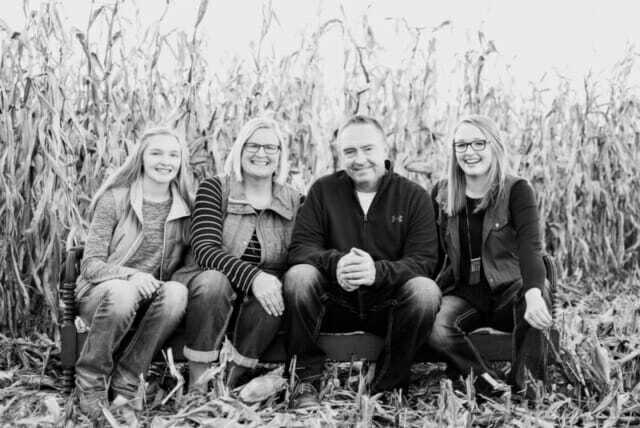
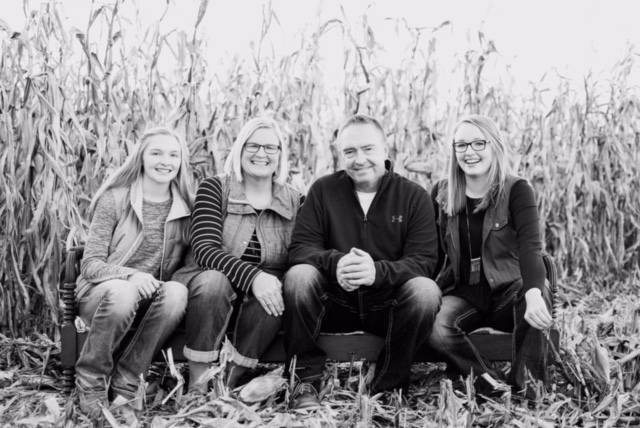
    BLACK WHITE CROP
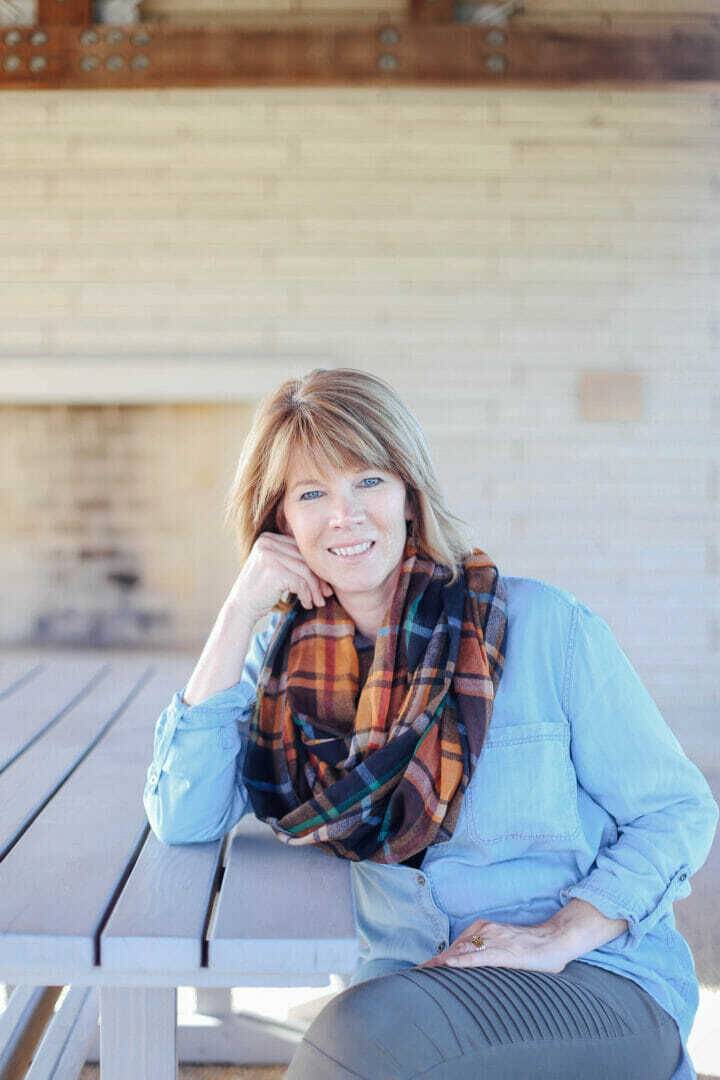
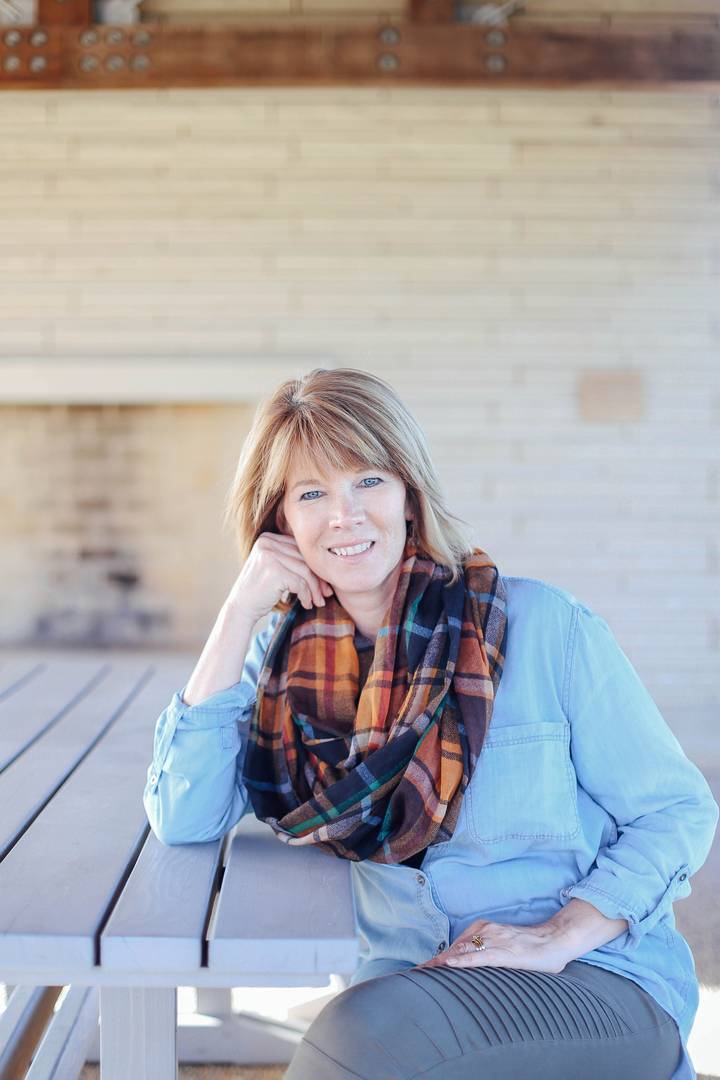
     Dr. Amy Michelle Willcockson, DC, CCWP Director of Live Healthy Iowa
    Dr. Amy Michelle Willcockson, DC, CCWP Director of Live Healthy Iowa

    Most New Year’s Resolutions focus on improving health and happiness but “get healthy” is ambiguous. Depending on which articles you read or the reports you listen to, eating healthier can be downright confusing or overwhelming.

    “What I tell people is: Eat well. Move well. Think well. Set small achievable goals for short periods of time,” encourages Dr. Amy Michelle Willcockson, director of Live Healthy Iowa, which was created to strategically address Iowa’s growing obesity problem. Live Healthy Iowa brings together friends, families, businesses and communities in team-based wellness challenges designed to promote positive lifestyle change.

    Dr. Willcockson says it’s best to create a baseline by getting a physical. Find out if all your numbers are in order: cholesterol, sugars and body fat percentage / body mass index (BMI). Keep track of where you are and strive for better balance. Work at getting just 10 percent better in any one area.

    “Focus on just one 10 percent increment at a time,” she says. “Don’t look at the insurmountable. Literally just take a step in the right direction. Then take the next step.”

    To get 10 percent better in any one area, Dr. Willcockson offers this practical advice:

    • Eat Well. Try to have one different colored fruit and vegetable on your plate at each meal. Pack snacks to enjoy as mid-morning and mid-afternoon snacks in the office or on the road. Be sure to include a healthy fat with fruits and veggies. “Grab and go” foods might include: 1/3 cup hummus with 12 baby carrots; ¼ cup almonds or walnuts with 8 large strawberries; or 1 cup cherry tomatoes with 1 ounce of plain cheese curds.
    • Move Well. Take the stairs instead of the elevator or escalator. Park further away from the building you’re going to enter. As a society, we need to change the way we think about how we workout. Google “interval training” or “burst training,” and get ideas for workouts that are from 5 to 15 minutes long.
    • Think Well. Does your self-talk need to be more positive? Maybe you struggle with depression or have an unresolved issue with a family member or friend. Get a stack of positive affirmation cards and begin the day by reading one or watch a motivational YouTube video every morning.

    LiveHealthyIowa_new_full color“Find solutions,” says Dr. Willcockson. “It’s so classic to think, ‘I just cheated on my diet, so I may as well have another cookie.’ Or, ‘I can’t make it to the gym, so what’s the point in exercising?’ Be stronger than your excuses! What can you do to incorporate more movement into your daily routine? Eat a healthy breakfast and then get your metabolism going for 5 or 10 minutes. Do squats while brushing your teeth, 30 seconds at a time. Do jumping jacks while waiting for your coffee. Do some lounges while you’re blow drying your hair.”

    The benefits of regular exercise are innumerable, adds Dr. Willcockson. To encourage people to get moving, Live Healthy Iowa offers quarterly challenges. In 2017 alone, 14,899 people participated in the 10-Week Wellness Challenge and logged 32,287,019 minutes of physical activity and lost a total of 36,654 pounds. Results of the 10-Week Challenge since 2002 are:

    • 339,605 participants
    • 1,222,406 pounds lost
    • 660,184,13 minutes logged

    Step Up to the Challenge!
    LHI_10WWC_400x200
    Become part of the network of support and education through the 2018 10-Week Challenge. Family members, friends, neighbors, church groups, or companies and businesses can sign up teams. Because activity is recorded online, teams can include members from different towns, states and countries.

    The 16th annual 10-week challenge begins Jan. 22, so click here to learn more or to sign up now! All you need to do is get online and get moving.

    “The programs that Live Healthy Iowa hosts are designed to help people engage in a team environment that helps hold them accountable with camaraderie,” says Dr. Willcockson. “Our programs are flexible and affordable. Programs like the 10-Week Challenge provide a catalyst for lifestyle changes.”

    “We do what we do because we want you to be there for the important moments in your life and for the important people in your life,” adds Dr. Willcockson. “You can’t be there – in so many ways – if you’re not healthy. Set goals to bike with young kids, get down on the floor and play or take the trips you want. Be there by eating well, moving well and thinking well.”

    To help us eat well, Dr. Willcockson is sharing with us one of her favorite ways to incorporate more vegetables into her diet. I have to admit, I’m looking forward to trying fried cauliflower in place of fried rice in a stir fry recipe this weekend.

    Team Latham

    January 12, 2018
    Food & Family, General, Recipes, Sides
  • Latham Hi‑Tech Seeds

    “Learning by Doing” Translates into Teens Managing Their Own Acres

    IMG 7523

    IMG_7523Some parents supervise their children as they do homework. Others even help their teenagers work through Math story problems. When your parents are lifelong farmers and your mother also is a school teacher, chances are you’ll learn how the classroom applies to agriculture.

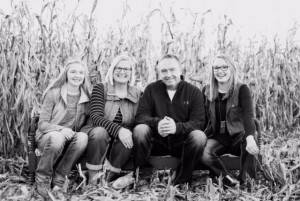
    Meet the Bell family of Washington, Iowa. Kerri moved to Washington County nearly 30 years ago and shortly thereafter she accepted a teaching job nearby. She and her husband, Lance, are raising their twin teenage daughters on the farm.

    “I teach. Lance farms. We each have our passions, but our operation is a family effort where we enjoy making memories together,” says Kerri, who grew up raising and showing Suffolk sheep on the Krafka family farm near Dysart, Iowa. “I wouldn’t have it any other way. If you love what you do, it doesn’t seem like work but instead it’s a way of life.”

    And what a full life it is! A former 4-H member, Kerri became an active volunteer in Washington County 4-H after she and Lance were married. She served on the Washington County Fair Sheep Department Committee for more than a decade. She was elected to the Washington County Extension Council and served on that council until their twin girls were born. Then Kerri stepped back from volunteering until her girls were in kindergarten and joined Clover Kids. Kerri once again became active in Washington County 4-H and Washington County Extension Service where she eventually was elected to the Washington County 4-H Youth Committee.

    The 4-H slogan is “learning by doing,” and that’s also Kerri’s mantra. She and Lance put that slogan into practice by providing every day, real-life experiences for their daughters. Ellie and Sophie have raised and shown Polish and Champagne D’Argent rabbits through Bell Sisters Rabbitry since 2011.

    In fact, rabbits were the girls’ first livestock project. Ellie and Sophie wanted to learn and grow independently of what their parents had done when they were in 4-H. The girls researched breeds and met with other rabbit breeders across the state to get started. They like these two breed because Polish show in four class divisions and Champagne D’Argents show in six divisions. Now the girls are researching cattle breeds to further diversify their farming operation and to make use of pasture the family has available.

    Transitioning from breeding show rabbits to producing beef cattle is one example of how Ellie and Sophie have accepted more responsibility with age.

    “From the time our twin daughters were born, they were riding on a tractor or in the combine,” says Kerri. “They’ve helped as much as they could at the age and stage they were.”

    Earning their Way
    unnamed-1
    To compensate them for their work, Lance and Kerri started giving an acre of corn and soybeans to each of their daughters when they were in third grade. Ellie and Sophie have had to market their grain in at least a half-acre increment and then deposit that amount into their savings accounts each crop season.

    “The girls each got a smartphone in third grade. Their first app was Kat’s Grain, so they could watch the markets daily. Lance receives text messages to ‘sell now’ as the girls watch closely to get the best market price.  Giving them these real-life experiences helps them for the next steps.”

    You name it, and Kerri says her daughters have probably experienced it on the farm. Ellie and Sophie have learned to do field work ahead of the planter, run tillage equipment after planting, fill the planter, run water tanks here and there, fill fertilizer tanks, gather seed, repair equipment, trouble shoot, mow, help burn CRP, clean bins, haul and unload grain, and more.

    These farming experiences are shared by three generations of family. Lance began farming full time with his parents, Pete and Carol Bell, after he completed the Iowa State University Farm Operations Program. Their roles have changed with time. Today Lance manages the farming operation and Pete assists where needed.

    Pete and Carol also are providing farming and learning experiences for their granddaughters by them the opportunity to crop share. (Click here to watch a video of the Bell twins harvesting their first crop share.) Ellie and Sophie have met with their family’s crop insurance agent to complete their crop insurance for their crops. They talk with seed dealers and order their own seed. They choose their own fertilizer, chemicals and insecticides.  They already had a working relationship with our grain marketing firm, so they can call and make decisions based on their prior knowledge and gain expert advice as needed.

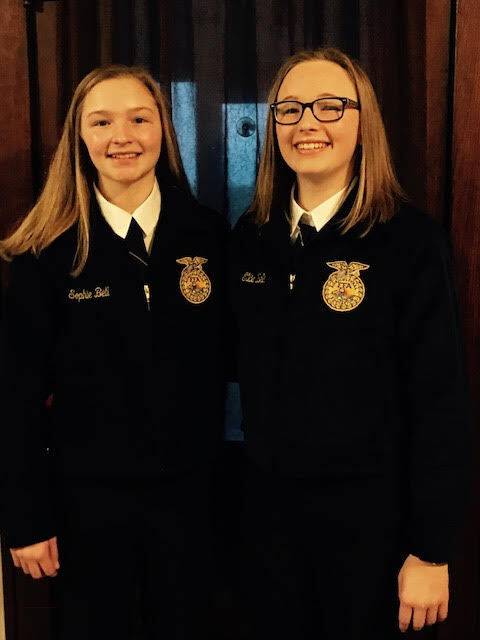
    The Bell sisters’ on-farm experience is enhanced by their FFA experiences. Or should we say their FFA experiences are enhanced by their on-farm experiences?

    “Competing in statewide competitions, completing programs, filling out applications and attending functions across the state gave me many opportunities that I wouldn’t have experienced otherwise,” says Kerri. “My twin daughters have stepped into this same role and are loving it, too. Their FFA Advisor, Mr. Trent Steinhart, sees their passion for FFA and agriculture. His wisdom and inspiration has allowed them to expand their vision of where they hope to be after high school and college.”

    Ellie and Sophie were the first girls to take an interest in the FFA Land Lab where they each had to invest $1,000 along with eight fellow FFA members. They do exactly what they do in their crop share experience with their grandparents to better understand the process of farming.

    Last spring Ellie and Sophie received greenhand awards. Together they were their chapter’s top fruit saleswomen as freshmen.  Sophie was elected Washington FFA reporter and Ellie was elected FFA historian. Both teens are serving as South East District FFA Ambassadors. They manage the Washington FFA Twitter(@washffa) page and write articles for area media promoting their chapter. They have numerous SAE projects including their rabbitry and crop share.

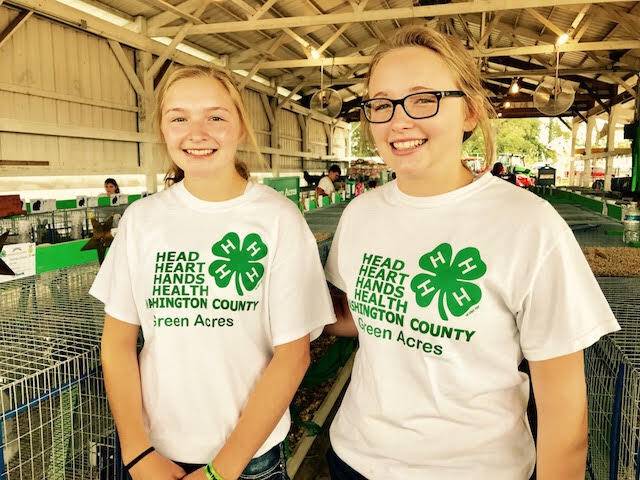
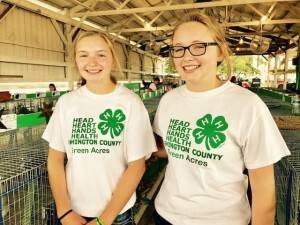
    They also remain active members of the Green Acres 4-H Club. Ellie is serving as 4-H club president and Sophie is treasurer. They graduated from the Washington County 4-H Leadership Development Team and were recently inducted into the Washington County 4-H County Council, working closely with Washington County 4-H youth coordinator, Amy Green, who is another mentor to them.

    They Bells also plant a large garden and exhibit their produce at the Washington County Fair. Ellie and Sophie each enter an abundance of 4-H projects at the county fair, and many of these projects have been selected for the Iowa State Fair 4-H Exhibits Building. The Bell sisters’ project areas include: Home Improvement, Food and Nutrition, Crop Production, Sewing, Communications, Personal Development, Woodworking, Photography, Health, Consumer Management, Citizenship, Leadership, Gardening, Horticulture, Child Development, Mechanics, Pride of Iowa, as well as educational presentations and working exhibits. They also serve as Clover Kids mentors. In addition, both Ellie and Sophie have earned variety of county project awards, including outstanding record book, outstanding junior and intermediate awards, and intermediate citizenship awards.

    Apples Don’t Fall Far from the Trees
    unnamed
    While the iGeneration often make headlines for using “individualized technology,” the Bell family uses technology to make decisions together on their family farm. Ellie and Sophie are proof positive that the “texting and multi-tasking generation” still engages with others and remains involved with the community. They’re following their parents’ examples.

    As lifelong farmers, Lance and Kerri became active in the Washington County Corn Growers Association when they were first married. They put a lot of effort into promoting this organization and have served in every capacity in the county organization. Lance is president of the Washington County Corn Growers and serves as president of the District 9 Iowa Corn Growers Association. He serves on a state committee, as well.

    “Our family is passionate about sharing our farm story,” says Kerri. On November 29, 2017, they created a booth and helped host the BioFuels Educational Trailer at Kirkwood Community College for Washington Center Family STEM Night. Last spring they participated in an ICGA video and produced a flyer/video for the Washington County Corn Growers banquet. They also have represented their county, district and state at the Commodity Classic in once Nashville, twice in San Antonio and are making arrangements for a trip next spring to Anaheim.

    “Through these experiences we’ve all grown. Making connections with fellow corn farmers across the county, district, state and nation to make us stronger in our own family operation,” adds Kerri. “These opportunities have given Ellie and Sophie a stronger base of communication skills, knowledge to grow and learn to make your operation better, a better work ethic and pride in sharing your story with those who share the same passions as you.”

    “We are optimistic of what our future in farming holds as both daughters intend to major in agriculture and return home to carry on our farming operation,” adds Kerri. “No matter where they end up, as long as they take pride in their work and enjoy it, we’ll be proud of them.”

    The Bell family works hard but also finds time to relax on their farm. Fishing, canoeing and stand up paddle boarding on their farm pond are a few of their favorite pastimes. They also enjoy cheering on the Iowa State Cyclones, DIY projects, gardening and cooking or baking together.

    At the 2017 Washington County Fair, Ellie and Sophie were selected as the Grand Champion Team for the Pride of Iowa cooking contest with their Gluten Free Fruit Pizza entry. Their father, Lance, was diagnosed with Celiac Disease nearly 14 years ago. Their family has learned a lot about gluten-free cooking, so it’s only natural these outstanding 4-H’ers would share what they learned with others.

    The Pride of Iowa competition is a favorite of Ellie and Sophie’s because they prepare recipes, featuring Iowa foods, in front of an audience. Participating 4-H members then serve their food and share the recipe with audience members. Today their sharing their award-winning recipe with us on The Field Position!


    Team Latham

    December 1, 2017
    Agriculture, General, Industry News, Recipes, Sides
  • Latham Hi‑Tech Seeds

    Give a Recipe, Get a Gift: Share How You Define “Turkey with all the Trimmings

    3141902576 fb6ded751e z

    Writing blogs for The Field Position allows me to meet the most hospitable farm families and to also learn about popular regional fare like runza in Nebraska and Wisconsin Beer Cheese Soup.

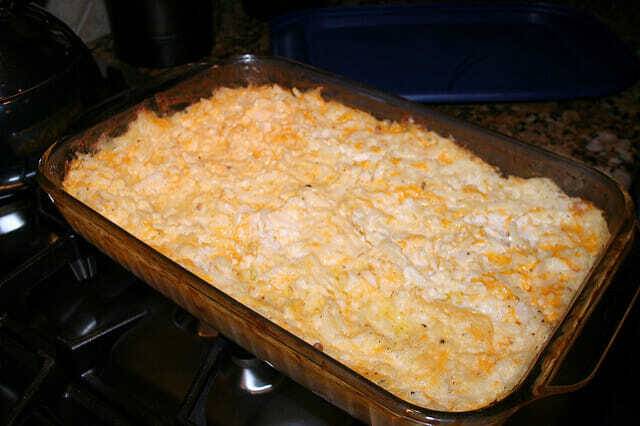
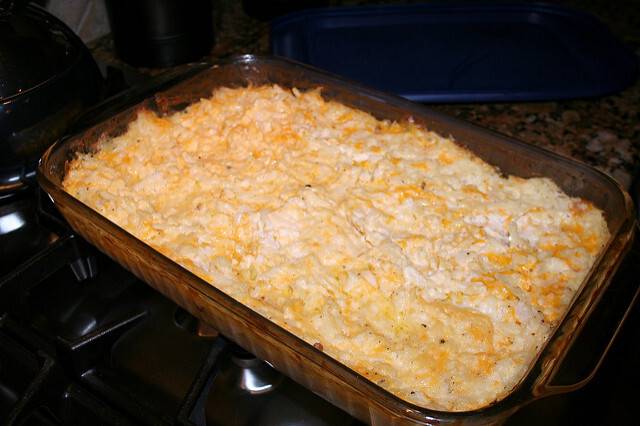
    Yesterday one of my blogger friends, who’s a native Minnesotan, posted a picture on Twitter with this copy: “It’s always cheesy potato hot dish time.” As a native Iowan, her tweet brought a smile to my face as I thought about how a North Central Iowa potluck or family holiday wouldn’t be complete without “cheesy potato casserole.”

    3141902576_fb6ded751e_zThoughts of cheesy potato casserole quickly shifted to traditional Thanksgiving holiday recipes. Quite honestly, I assumed every American family must feast on turkey, potatoes, corn, cranberries and pumpkin pie like the Pilgrims and Indians. Then my inquiring mind started to wonder what the pilgrims even ate at the first Thanksgiving…

    Wildfowl venison, as well as grain in the form of bread or porridge absolutely were part of the harvest celebration shared by the Pilgrims and Wampanoag at Plymouth Colony in 1621, according to the Smithsonian. Governor William Bradford described the autumn of 1621 as follows: “And besides waterfowl there was great store of wild turkeys.” He also mentions that they’d begun eating Indian corn after the harvest.

    Correspondence written by the colonists prove they planted gardens in the spring of 1621. In later documents, the colonists mention growing turnips, carrots, onions, garlic and pumpkins. Historians interested in researching the first Thanksgiving meal also studied foods served at traditional English celebrations during this same period.

    4035387329_1a344ff6fa_z“You see lots of pies in the first course and in the second course, meat and fish pies. To cook a turkey in a pie was not terribly uncommon. But it is like, no, the pastry isn’t there.” The colonists did not have butter and wheat flour to make crusts for pies and tarts, according to the Smithsonian. (While the Pilgrims didn’t have pumpkin pie, there’s a chance they enjoyed pumpkin pudding.)

    Knowing that people tend to make the most of what they have available – like Lobster Mac & Cheese in Maine and Clam Dressing in Massachusetts – I’m curious about what recipes your family enjoys for Thanksgiving. It will be fun to hear about “iconic Thanksgiving recipes” by region.

    The team at Latham Hi‑Tech Seeds will send a complimentary wooden spoon, spatula, cutting board or hand towel to anyone who shares his/her favorite Thanksgiving recipe by Nov. 22! Simply e-mail us your hometown, state and recipe to Marketing@LathamSeeds.com.

    Today I’m sharing a few of my favorite Thanksgiving recipes. Because I enjoy meal planning so much, I’ve linked to enough recipes to make a complete meal:

    • Herbed Slow Cooker Turkey Breast (This recipe is simple and delicious, which frees me up to watch the Macy’s Thanksgiving Day Parade or thumb through Black Friday ads!)
    • The best dang mashed potatoes (Trust me, we don’t save this recipe just for holidays! It’s one of our family’s favorite side dishes.)
    • German green beans or green bean casserole
    • Traditional Dressing or Scalloped Oysters
    • 60-Minute Rolls or homemade beer bread topped with herb butter or Cajun butter
    • Cran-Apple Jell-O mold
    • Butternut Squash Casserole (see recipe below)

    Team Latham

    November 10, 2017
    Food & Family, General, Recipes, Sides
  • Latham Hi‑Tech Seeds

    Try Pork Like Never Before with Recipes from Picnic Life Foodie

    IMG 1297c

    IMG_1297cFood connects people, so it’s probably only natural that Iowans would connect around pork. There are six pigs for every person living in our state, and Iowa is the top pork producing state.

    One of my Bucket List items is attending the Taste of Elegance. When I heard Anita McVey won tickets to the 2017 tasting event, I had to learn more! So I went up and introduced myself to her at the start of a bus tour to Southeast Iowa farms sponsored by the Iowa Food & Family Project.

    There’s nothing I enjoy more than touring farms and meeting farmers, but I quickly learned this road trip was going to become infinitely more enjoyable from the company I was in. (Click here for Anita’s wonderful recap of that two-day event.)

    Anita is warm and welcoming, and when you read her blog, it’s like she invites you right into her kitchen. In the intro to her blog, Anita writes:

    “My mom was one of those power-house-wives who cooked three complete meals a day, plus snacks, fed whomever pulled on the yard, had a massive garden, and did whatever was needed whenever she was asked. She never complained. EVER. The lady makes THE best apple fritters, but that was a treat saved for hay-baling day!”

    FullSizeRender (2)It seems Anita’s family had a way of turning ordinary, every day experiences into wonderful memories.
    She writes, “Picnics were special times but they were not glamorous. My dad’s idea of the perfect picnic was to have sandwiches, fruit and a cold drink on the tailgate of his truck out in the field during or after a long day of planting or harvesting. What made it perfect was the fact that my mom made it, delivered it and ate with him, often watching the sun set.”

    Anita is not alone in her appreciation of wide open spaces, as well as spectacular sunsets and sun rises. Just follow farmers on social media and your news feed will be filled with posts like, “My reward for harvesting tonight was this sunset.” You’re also bound to see a few moon rises, as well as sun rises, too.

    Like many farm kids, Anita says she had to leave home to realize how “spoiled” she was. She went away to college. She graduated from Iowa State University with B.S. degree in Statistics and a Math minor. She also earned a master’s degree in Statistics, and her thesis involved heritability errors in corn research. She met her husband, Marty, in Stat class. He holds a Ph.D. from ISU in Economics with an Ag emphasis.

    IMG_1989 (3)While Marty completed his degree, Anita worked in the Survey Section of the Statistics department as a Research Analyst where she says she helped with many amazing survey projects. When the couple moved to the Des Moines area, Anita found a part time job at Pioneer Hi-Bred International. After a few years, Anita and Marty saw the value of her being home with their boys full-time.

    Anita says her priorities shifted quickly. “Within a few years, I found myself at home full-time with my kids and back in the kitchen … and the garden … and addicted to ‘Food Network’.”

    Staying home with her boys allowed Anita to return to her roots.

    “I was raised on a steady diet of faith, family and farming. We had pork and chicken directly from the farm, to the butcher, back to the farm and into the oven. We ate eggs from the hens in the coop and drank milk from my uncle’s dairy cows. The garden we planted and harvested was enormous and we didn’t waste a thing. Canning and freezing were core classes.”

    To preserve these family memories, Anita says she wanted to put together a cookbook.

    “When I would make a recipe, it seemed there was almost always a memory or story behind it. I knew I wanted to combine the recipe with the story for my boys, and a blog seemed to be the IMG_1466platform. But I knew NOTHING about starting a blog. Our oldest son was home from his internship and interviewing for jobs, so he sat down with his laptop one day and dug in. (Isn’t that the greatest part about that generation? They just watch videos, read articles, try this, try that, and figure it out.) It has been a massive learning experience ever since. I have discovered that I enjoy the writing process much more than I expected and have found a creative outlet that just keeps expanding.”

    One of the things I enjoy most about Anita’s blog is the beautiful food photography. (Getting food to look beautiful in a photo is art!) I was looking for some tips, and Anita responded with this, “I upgraded my cell phone to an iPhone 7+ and have had lots of lessons, instruction and advice from my boys. The oldest works for a Social Media/PR firm in Minneapolis and the youngest is finishing his degree in graphic design at ISU. How lucky am I?!”

    Yes, she is lucky! And her readers are lucky she shares tips, tricks and stories with them. In honor of October Pork Month, today we’re featuring a few of Anita’s pork recipes with you. Click on the blog posts below:

    • Pulled Pork Cajun Sandwiches
    • Balsamic Pork Tenderloin
    • Sweet & Sour Meatballs

    Team Latham

    October 6, 2017
    Food & Family, General, Pork, Recipes
  • Latham Hi‑Tech Seeds

    Podcast: Corn Rootworm

    LIBSYN header 4

    LIBSYN header 2-01

    http://traffic.libsyn.com/fromthefield/Corn_Rootworm.mp3

    Welcome back to our Ask the Agronomist podcast! This week, Phil and Kilah discuss corn rootworm and how scouting now can help you plan for #crop18. Tune in for a 10-minute from the field agronomy update!

    Do you have #crop17 growing questions? Submit them to us on either Facebook, Twitter, Instagram or Snapchat. Thanks for tuning in!

    Webspec Admin

    July 27, 2017
    #AskTheAgronomist, Corn, Crop, General, Insects, Podcast
  • Latham Hi‑Tech Seeds

    From the Field Crop Reports: July 12th

    Jerry 2

    Eastern North Dakota 

    Brain McNamee

    Once all the acres have been planted (and replanted), it’s time to clean out the sheds and get ready for the next season. Our 2018 sales season is underway now!

    Brian

    Southeast North Dakota

    Gary Geske

    Regional plot by Glyndon cleaned up and ready for signs!

    Gary G


    Northeast South Dakota

    James Keltgen

    The number of drought-affected areas is growing across South Dakota. Corn has pretty much burned up in Central SD up to about Redfield. It also looks pretty tough from Howard to Mitchell. Areas that received rains are still hanging on, but the 90- to 100-degree weather is taking its toll. Spotty rain came through Tuesday night and brought hail that ranged in size from tennis ball to softball. It’s been a rough go this year in this territory as those gentle, consistent rains needed to make a bumper crop just aren’t falling.

    Southeast South Dakota

    Ramie Coughlin

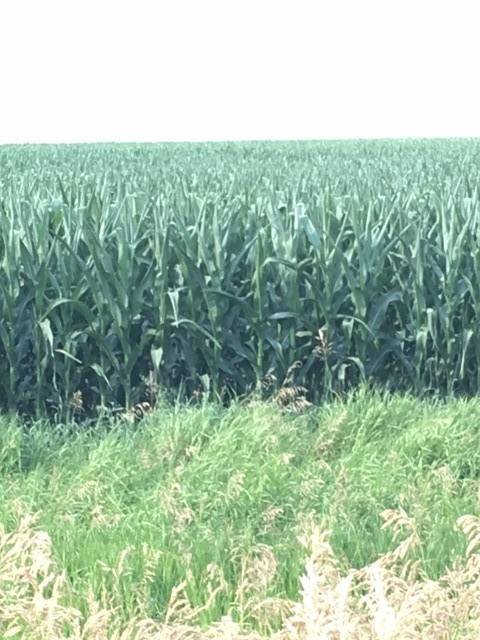
    As temperatures continue to hang out in the 90s, our corn has an onion-like appearance as a defense mechanism against the heat.

    Ramie

    Northern Minnesota

    Ken Highness

    Dairy cows on Latham® dealer Ray Beutz’s farm in Albany, Minnesota, eat contentedly.  Crops are coming along nicely. I’m standing in a very nice field of Latham’s LH 5492 GT.

    Southern Minnesota

    Brandon Wendlandt

    LH 5215 VT2 PRO RIB is starting to tassel in this field, which was planted on April 24.

    brandon

    Southern Wisconsin

    Greg Mair

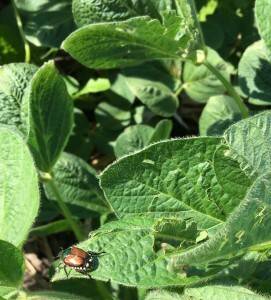
    It’s important to be a vigilant scout! Japanese Beetles are just starting to feed on soybeans. They feed on green leaf tissue and fresh silks, potentially causing yield losses. Continue to scout your fields and be prepared to treat for insects if you reach thresholds. Click here for additional information about Japanese beetles, including threshold levels.

    greg

    Northwest Iowa

    Darin Chapman

    Farmers are happy with the looks of their Latham LibertyLink soybeans in Northwest Iowa! With all the different options we offer with Latham Hi‑Tech Seeds, it is good to have good communications. Remember to post flags and signs to notify others what herbicides are being used.


    South Central Minnesota & North Central Iowa

    Cory Greiman

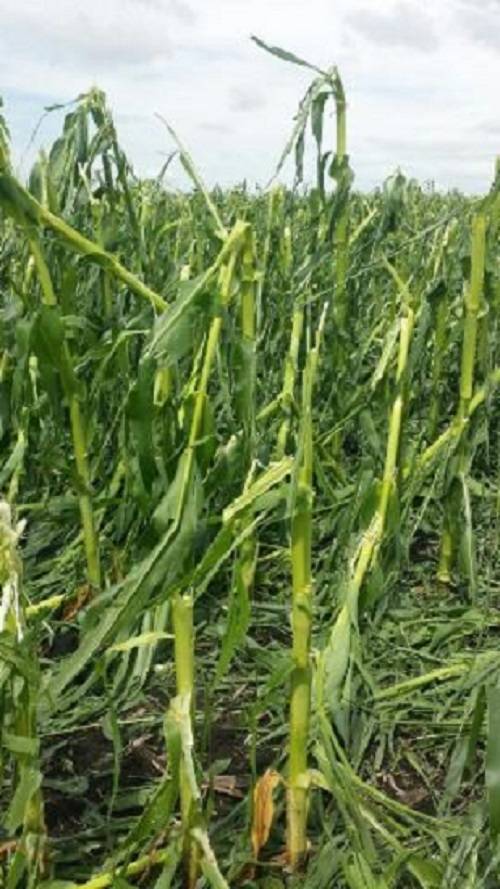
    A big storm came through North Iowa on Monday Night. Softball size hail and 90 mile per hour winds damage near Garner, IA.Cory picture

    Southeast Minnesota & Northeast Iowa

    Craig Haaland

    This field was planted in late April near Osage, Iowa, to one of Latham’s most popular hybrids. LH 5509 SS, which was planted corn-on-corn field looks fantastic. Corn fields are looking great and the bean fields are really taken off now that we’ve had some heat. We had been experiencing a bit of a dry spell lately, so the splash of rain we received earlier this week was welcome.

    Haalands

    West North Central Iowa

    Bart Peterson

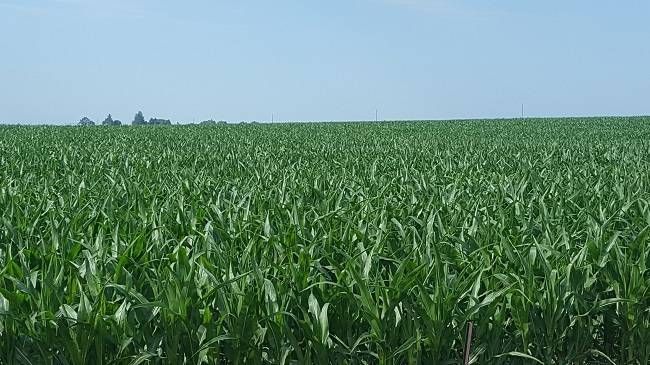
    Look at this great standing corn! This field of LH 5095 VT2 PRO RIB was planted April 11 near Rolfe, Iowa. This particular 100-day corn yield big. I’ve seen it beat LH 5215 VT2 PRO RIB, which is Latham Seeds’ #1 selling corn. Consider planting a multi-hybrid package, including these two numbers, in 2018!


    Bart

    Eastern Iowa

    Jerry Broders

    Latham corn and soybeans off to great start in Eastern Iowa @ Tim Meade plot near Iowa City. Contact your local Latham dealer to see the new products at plot near you.

    Central Iowa

    Bryan Rohe

    Tassels are forming on this corn, which was planted April 11 in Adel, Iowa.

    Western Iowa & Eastern Nebraska

    Larry Krapfl

    Adult Japanese beetles are active! Be sure you’re scouting fields to protect yield. Adults feed on soybean leaf tissues between veins. Considering treating soybeans at 20% leaf defoliation.

    Image result for japnese bean leaf beetle

    Webspec Admin

    July 12, 2017
    General, Season, Summer
  • Latham Hi‑Tech Seeds

    Resourcefulness is Second Nature at Valley View Farm

    DSC 3077
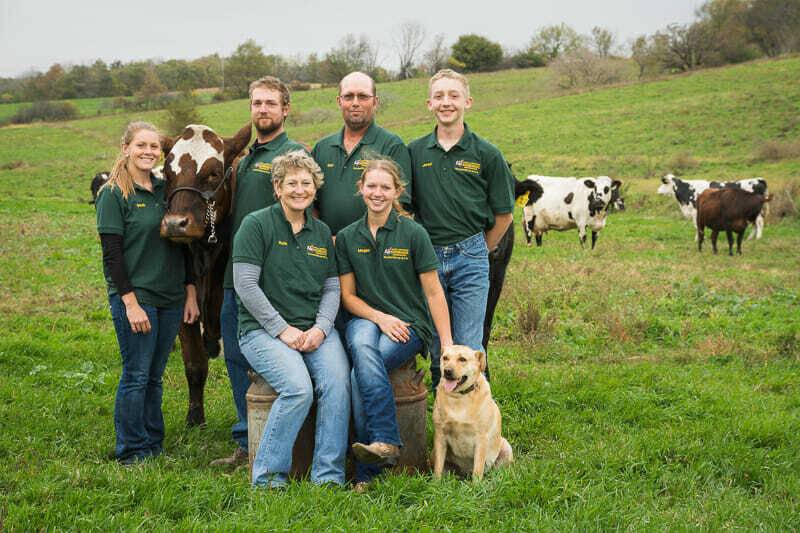
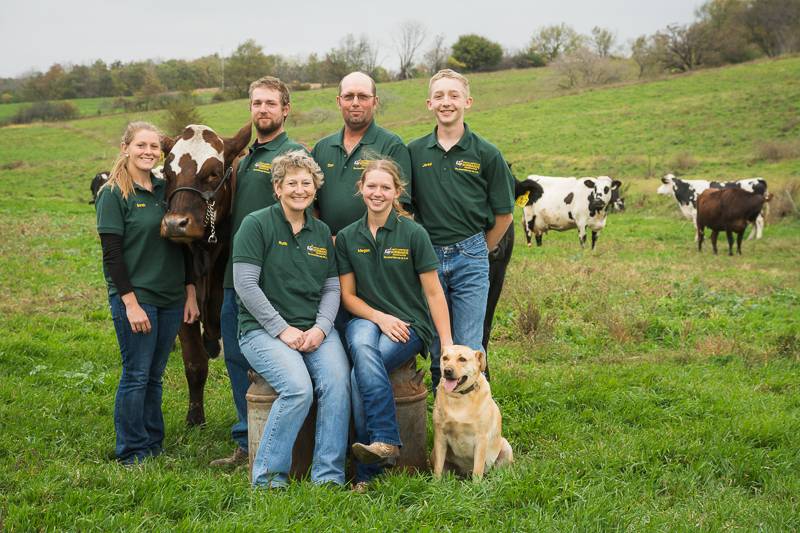
    Front Row (From left to right): Ruth & Megan Back Row (From left to right): Sarah, Derek, Dan, & Jared
    Front Row (From left to right): Ruth & Megan Back Row (From left to right): Sarah, Derek, Dan, & Jared

    Ruth grew up on a dairy farm and fell in love with a self-described “city boy,” who went to the same country church in Franksville, Wisconsin.  Dan grew up in town, but he worked on dairy farms throughout high school and always dreamed of becoming a dairyman.

    Dan pursued his dream by attending the University of Wisconsin-Platteville where he says he fell in love with the hills of southwestern Wisconsin. After graduating with a bachelor’s degree in Animal Science in 1983, Dan was hired as an AI technician for Tri-State Breeders. One of the perks of his job was seeing lots of dairy farms and getting ideas for his own operation.

    In March 1985, Dan and Ruth were married. They both worked and saved with the shared goal of buying a dairy farm.

    “In 1990, we got started part-time and were looking for an opportunity to buy our own farm,” says Dan. “Farm Credit Services produced real estate brochures featuring farms that had been foreclosed during the Farm Crisis. We looked at this farm and could see it’s potential.”

    IMG_1404The Vosbergs have been working for the past 26 years to make the most of their resources. Because most of the farm’s buildings were in disrepair, they needed to make the most of the acres and acres of pasture. They started attending grazing conferences, experimenting with pasture mixes and adopted managed grazing before it was trendy.

    Dan and Ruth have become known as grazing advocates. Dan has written extensively for Graze magazine, spoken at grazing conferences and the couple has hosted numerous pasture walks. In 1995, the Vosbergs and a few other grass-based dairy farmers helped start the Wisconsin School for Beginning Dairy and Livestock Farmers program through the UW – Madison Farm and Industry Short Course.

    The farmstead and the land were in rough shape, so the family worked to make continual improvements. By 1997, their herd size had grown to 100 cows. The 52-stanchion barn was retrofitted into a swing-16 milking parlor. They were the first dairy farm in Wisconsin to put in a Dairymaster parlor from Ireland. At the time, a UW-Madison college student from Ohio was interning at Valley View. He said his family had a Dairymaster and it worked really well.

    DSC_6267Multiple hoop barns with compost bedding packs were added over the years to offer protection from the hot summer sun and harsh winter winds. They had planned more improvements, but that was before a tornado touched down in May 2017 and damaged four buildings.

    “Our short-term plan is to repair everything that’s broken and then move forward with our plans to increase efficiencies throughout the operation,” says Derek.

    While they worked to restore the land and upgrade their facilities, the Vosberg family also worked to improve their herd. They started with Holstein and Jerseys but experimented with crossbreeding to find the best  grazing cross for their system . In 2000, they bought their first Normande semen.

    While this dual-purpose French breed is relatively new to America, Dan describes it as the quintessential cow. Breed qualities include hardiness, fertility, easy calving, with good feed conversions and genetic diversity. The breed fits well with the Vosberg’s operation.

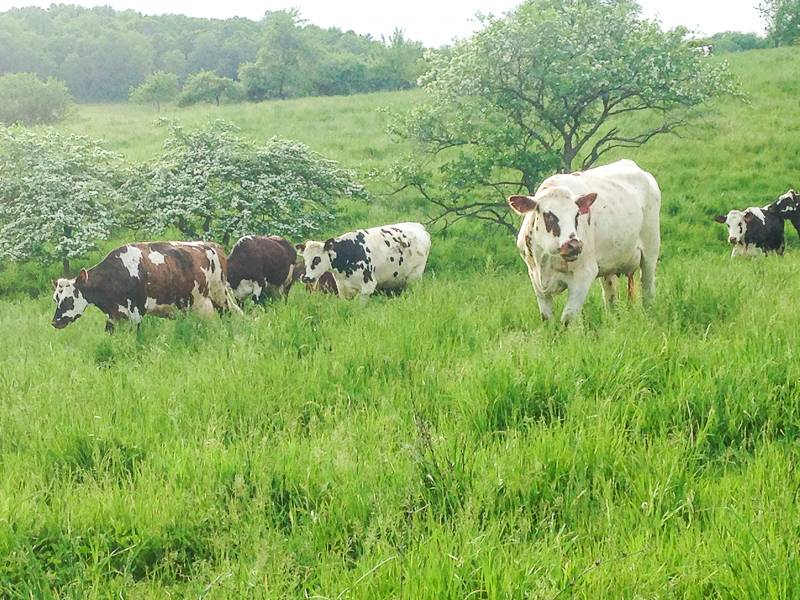
    Oldest son Derek describes Valley View Farm as “a 220-cow crossbred Normande herd based in Southwest Wisconsin. We rotational graze and calve bi-seasonally. Half of the herd calves in spring and half in fall.”

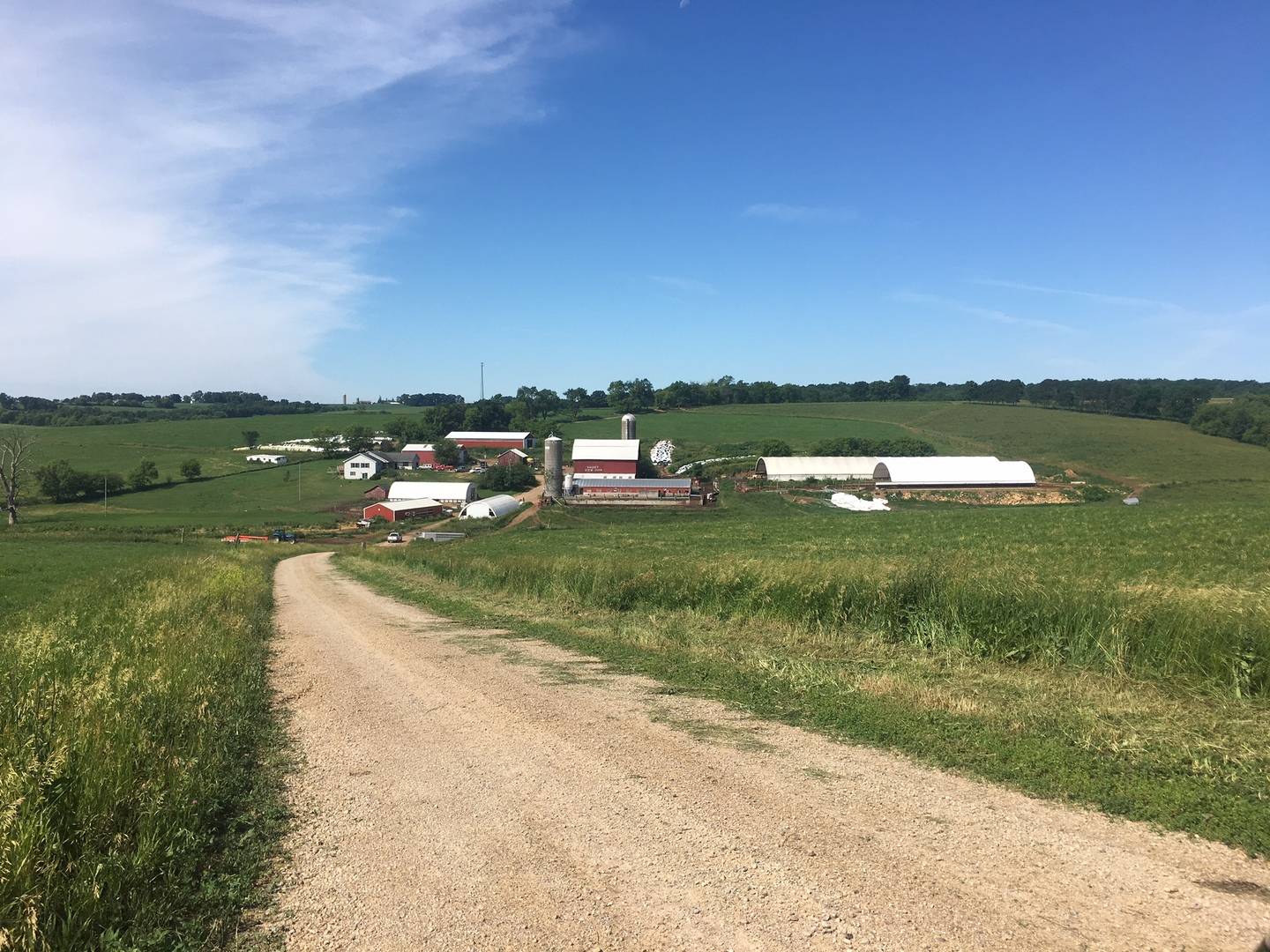
    As soon as one pulls into their lane, you can see how Valley View Farm got its name. It's a long way down!
    As soon as one pulls into their lane, you can see how Valley View Farm got its name. It’s a long way down!

    While the Normande cows don’t produce the quantity of Holsteins, they produce high protein and butter fat that’s desired for cheesemaking. The Vosbergs sell their milk to Torkelson Cheese in Lena, Illinois. Because carcass yield and marbling are superior, they also fetch top dollar for their cull cows and bull calves.

    Ironically, Derek’s wife grew up on the largest U.S. Normande beef farm. He and Sarah met at a national Normande conference and were married August 20, 2016, on their farm. While Sarah works off-farm as a physical therapist assistant, she also is active with Valley View Farm. She helps with milking, calf care and social media. Sarah also helps with cattle sales. In addition, she is secretary for the Iowa County Fair Board.

    The Vosberg’s 25-year-old daughter, Megan, also helps with milking and calf feeding. She met her husband, Lance, when he was working on the family’s dairy farm. Now Lance works construction.

    Sixteen-year-old son, Jared, stays busy with wrestling and track. He enjoys going to cattle shows. This summer he’s helping friends prepare for the county fair.

    While many silage bunkers are made from concrete, this one at Valley View Farm was created from the stones in a side hill.
    While many silage bunkers are made from concrete, this one at Valley View Farm was created from the stones in a side hill.

    “We’re like the Normande invasion at the Green County Fair,” says Dan. Ruth had served as a 4-H leader for more than 20 years, so they give youth in the area an opportunity to select, train and exhibit Normande cattle. They also show at the national Normande show in Mineral Point every year and promote the Normande breed at World Dairy Expo.

    Derek is in charge of crops and TMR. He works with a nutritionist for large animals. He and Dan also work together on seed selection and crop production.

    Although they have plenty to keep them busy, the Vosberg family believes in giving back to their community. Dan and Derek both serve as volunteer firemen. Dan also plays guitar for worship services at church, and Megan serves on church council.

    Their efforts haven’t gone unnoticed. In 2015, Dan was named Master Agriculturist by the Wisconsin agriculturist magazine. Valley View Farm also received the Lafayette County conservation award.

    Today on TheFieldPosition.com we’re recognizing this Wisconsin dairy family for their accomplishments and thanking them for producing the wholesome dairy products we enjoy like cream. Ruth Vosberg shares one of her family’s favorite recipes for Cream Puff Dessert.

    Team Latham

    June 30, 2017
    Desserts, General, Recipes
  • Latham Hi‑Tech Seeds

    From the Field Crop Report for May 3

    Bart 3

    Eastern North Dakota

    Brain McNamee

    Brian M 1

    Temperatures averaged 9 to 12 degrees below normal across most of the state last week, and precipitation halted fieldwork. Planters are rolling strong now, especially from Valley City east into the Red River Valley of North Dakota.

    Southeast North Dakota

    Gary Geske

    Geske 1

    Corn planted in 15-inch rows needs some warmer weather to emerge. Bare soil temps are running about 46 degrees here.

    Northeast South Dakota

    James Keltgen

    James 1

    Planting is in full force. Most small grains are finished. Soil temps are finally warming again. Corn is being planted nearly everywhere in the northeast, except where high snowfall totals fell. Some places received 4 to 6 inches of snow last week with total moistures of nearly 2 inches. Where little moisture was received, soil conditions are ideal!

    Southeast South Dakota

    Ramie Coughlin

    We have corn planters moving now that the weather has cleared! Approximately 5% of our corn acres have been planted as last week rain and snow fell across southeastern and East Central South Dakota.

    Northern Minnesota

    Ken Highness

    Ken 1

    Waiting!

    Southern Minnesota

    Brandon Wendlandt

    Brandon 1

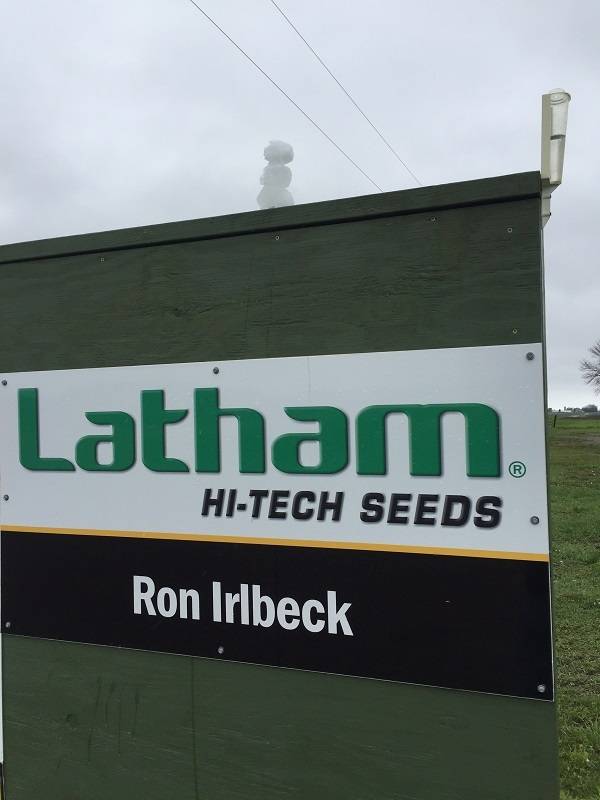
    May Day brought with it 1 to 2 inches of rain throughout much of southern Minnesota. Snow fell in a few western parts of the state, including in Sanborn, where I made this little snowman for our Latham® dealers.

    Southern Wisconsin

    Greg Mair

    About 5% of the corn acres in Wisconsin have been planted.  This past week was not suitable for planting as most of the state received around 2” of rain during the past 7 days.  If the forecast holds true, we will see planters back in the field Friday at the earliest.

    Northwest Iowa

    Darin Chapman

    Darin 1

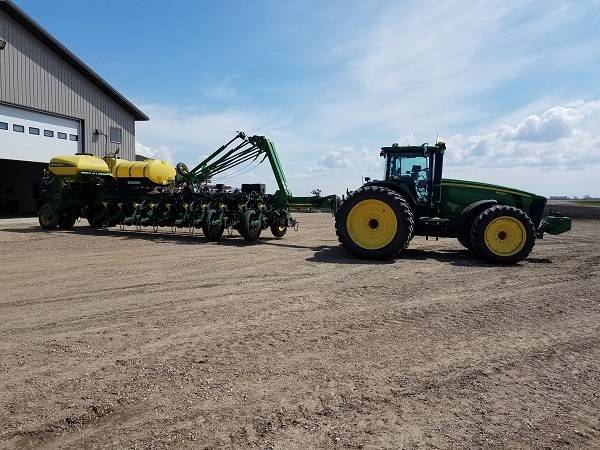
    Technology has come a long way to help us achieve ultimate seed placement! This technology pairs well with Latham Hi‑Tech Seed’s FieldXFieldTM program. I’m excited to be teaming up with Latham’s Technical Agronomist Phil Long on a multi-hybrid research project.

    South Central MN & North Central IA

    Cory Greiman

    Southeast Minnesota & Northeast Iowa

    Craig Haaland

    Craig H 1

    Our area received about 3/4″ of rain on Sunday and Monday. The temperature of these wet soils was only in the upper 30s this week, but the soils are warming now that the sun is shining for the second consecutive day.

    Eastern Iowa

    Jerry Broders

    With the wet and cold weather we had from last Thursday through Monday, soggy fields created planting delays. We could not plant, but there are always things that can be done on the farm. Several operators are hauling grain to market, and the Squires family finished restoring Kenny Squires 1466 over the weekend. Never a dull moment when you’re a farmer!

    West North Central Iowa

    Bart Peterson

    With the return of warmer weather, corn is starting to pop out of the ground near Rolfe in West Central Iowa. This field of LH 5095 VT2 PRO was planted April 11.

    Seedlings have been slow to emerge due to so many days of wet, cold weather. This week I dug around in a field of Latham L2248 LibertyLink soybeans that were planted on April 22. Their sprouts are about a half-inch long, so I expect they’ll pop through soon given this week’s forecast.

    Central Iowa

    Bryan Rohe

    This photo of the farmer planting was taken April 27, and approximately 24 hours later, snow was falling! Only in the Midwest can we get these types of weather patterns. Planting conditions weren’t ideal from April 24-28.

    Western Iowa & Eastern Nebraska

    Larry Krapfl

    Larry 1

    Rain and below normal temperatures prevented planting across much of my territory. This photo was taken after 1.75 inches of rain fell around Anthon in western Iowa.

    Webspec Admin

    May 3, 2017
    General, Season, Spring
  • Latham Hi‑Tech Seeds

    Yes, Iowa Farmers Help Feed the World!

    Larry1970s

    “Don’t expect Iowa farmers to ‘feed the world’,” reads the headline of a recent editorial in The Des Moines Register.

    You can bet that headline both sickened me and spurred action. Below is a copy of the response I sent yesterday to the Register…

    I’m saddened by the timing of the negative editorial because we are in the middle of World Food Prize week, a time when the world turns its eyes to Iowa to salute those who dedicate their lives to discovering innovations that feed people in need. But, I’m not surprised by the Register editorial since its editorial staff seems to be spending too much time with “scary clowns.”

    Scary clowns spread fear. Fear must sell a lot of newspapers. Scary clowns aren’t just an internet phenomenon, now showing up in our communities. Fear is also a weapon, a tactic that is passed around, printed and repeated, spreading faster than palmer amaranth seeds  in a fertile farm field.
    The Environmental Working Group has been trying to scare us all for quite some time, and the Register editors are all too happy to spread their fearful messages without question or any attempt to gain another perspective. Iowa farmers hope common sense Iowans can unmask the hype.

    larry1970sMy perspective is based on experience; I’ve been farming since 1973. I know innovation in farming not only helps us grow more food, it helps us do more with less: less pesticides, less tillage and turning of the soil, less erosion, less runoff of manure. I have had farmers and visitors from around the world including China, and Japan come to my farm to learn how we do it. The Des Moines Editorial chief went to China and marveled at the technology, yet his team leads the charge against the very same innovative livestock barns being built here! Why? Perhaps he and his staff are too young to remember what it was really like “back in the day.”

    About 35 years ago, Larry Sailer planted trees and bushes along the creek that runs through his farm. #FarmersCoverIowa
    About 35 years ago, Larry Sailer planted trees and bushes along the creek that runs through his farm. #FarmersCoverIowa

    Back in the 70’s, the ditches were full of black snow each winter because we had to turn the soils to kill the weeds and used a lot more chemicals to grow a crop. Back in the 70’s, more livestock was raised on feedlots than modern livestock barns, so manure washed off during a heavy rainstorm. Where did it go? It went into the watersheds, but the state wasn’t monitoring it then like it does now.

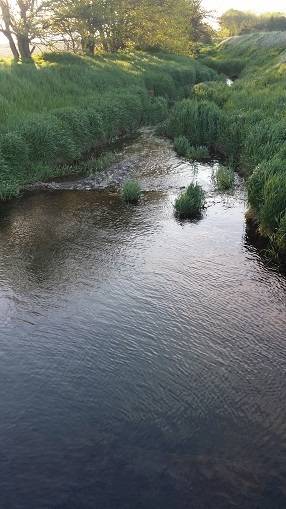
    Slowly, it’s turning around. Innovation in livestock farming, seeds, equipment and knowledge learned from the Nutrient Reduction Strategy is making a difference. I see it myself; in the time I have been farming, the drainage creek that runs through my land is so clear that you can’t see the water. You only see the stream bed. The waterways and buffer strips have done a great job on my farm, but all farms are different. Cover crops and other technologies in the last five years are making a huge difference!

    Are all watersheds like that stream by my farm? No, and that’s why better monitoring and lowered thresholds show new places for us all to begin. I accept the challenge of continuously trying new things to make water better for all, and I’m not alone in thinking that way.

    Iowa farming is successful and that success draws the world to our farms during World Food Prize week and beyond! I happen to think we should be embracing our success, not romancing the past, or forcing us all to farm like it’s 1974 because that style of farming doesn’t suit consumer needs today. Trying to “force fit” the past on all farmers is about a scary as forcing us all to squeeze back into the bell-bottom jeans we wore in 1974 – now that’s a scary thought!


    Larry Sailer, Musings of a Pig Farmer

    October 11, 2016
    Agriculture, General, Industry News
  • Latham Hi‑Tech Seeds

    Faith, Family & Farming Provide Foundation

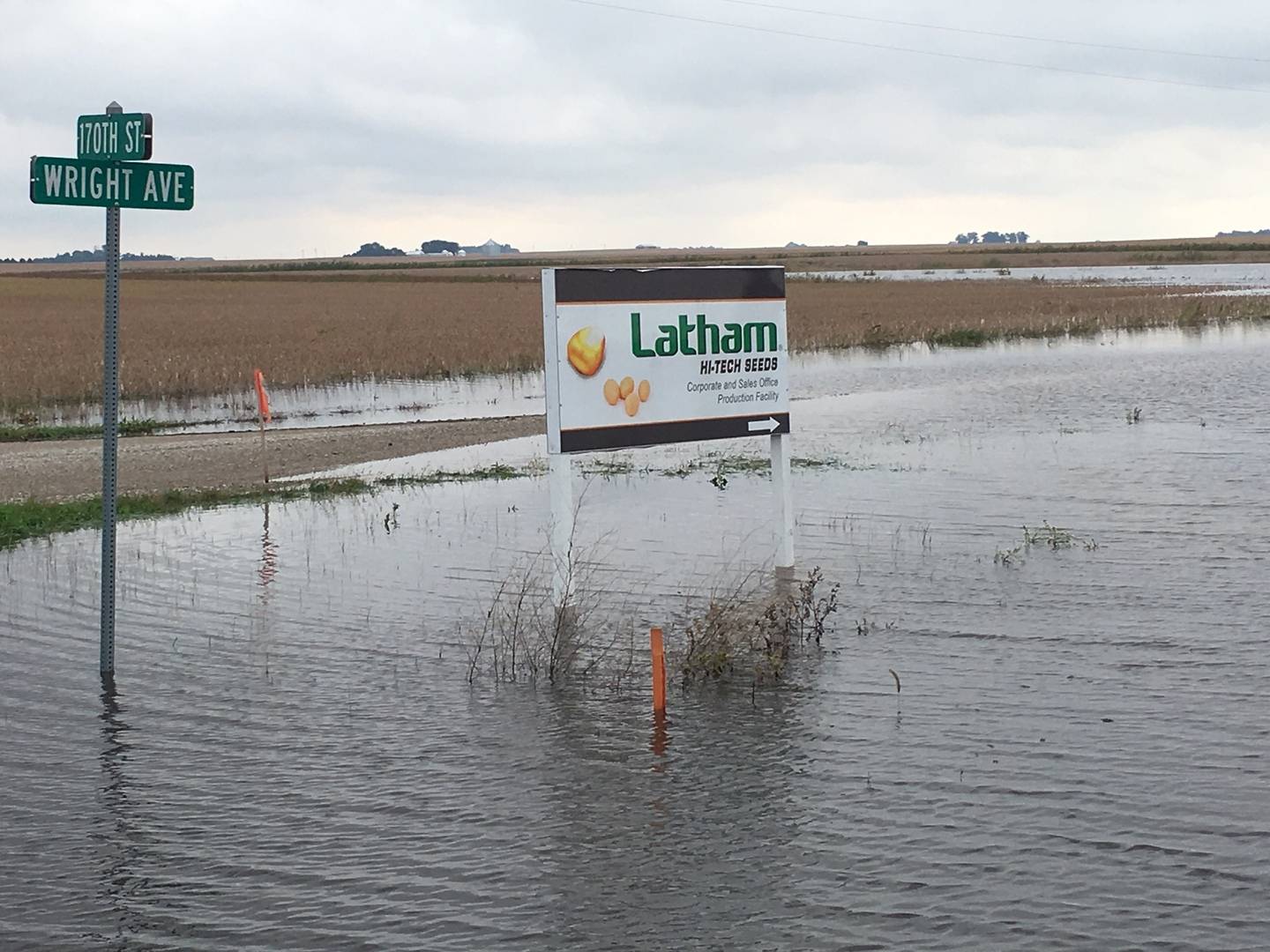
    Wet latham sign
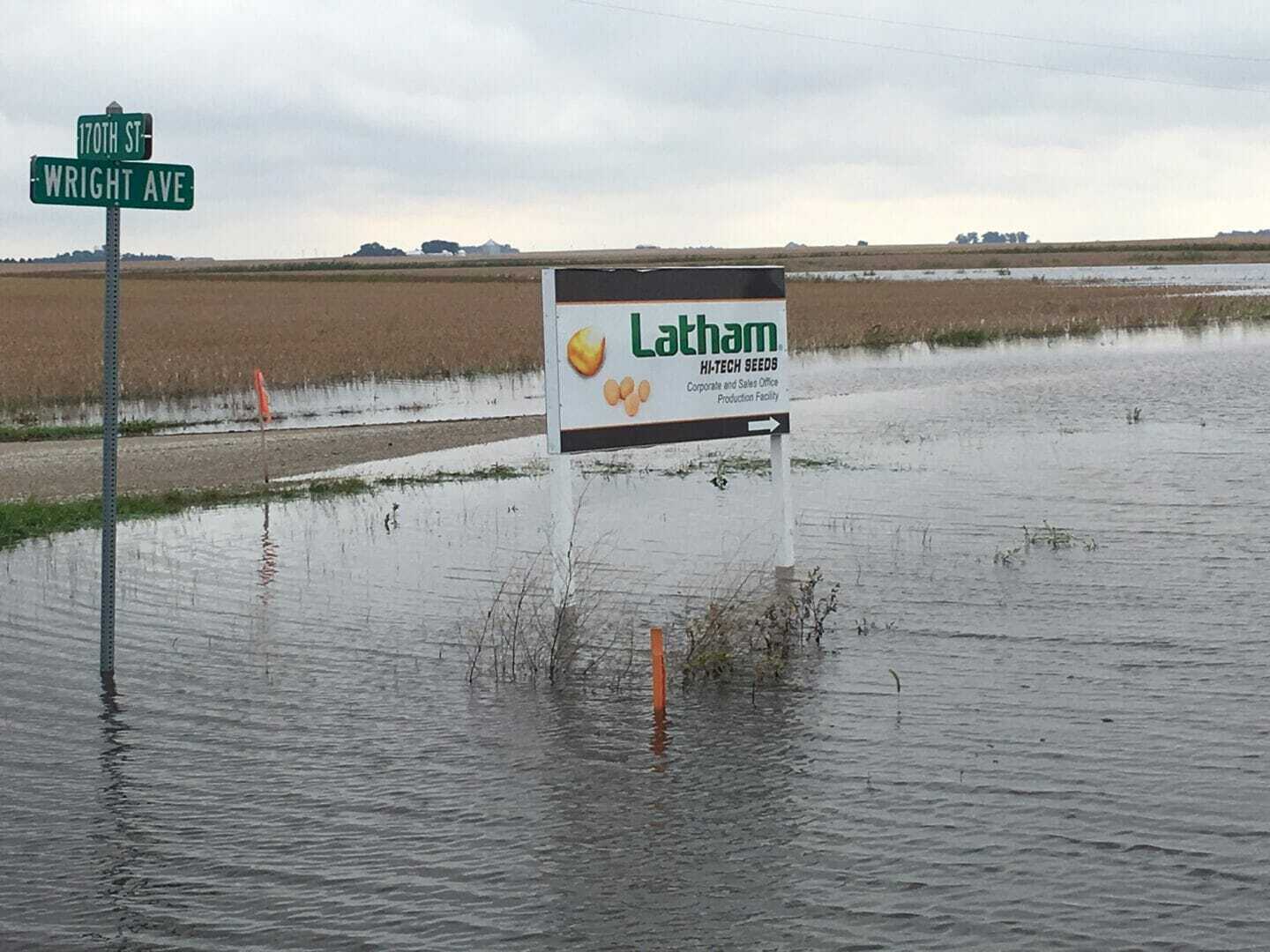
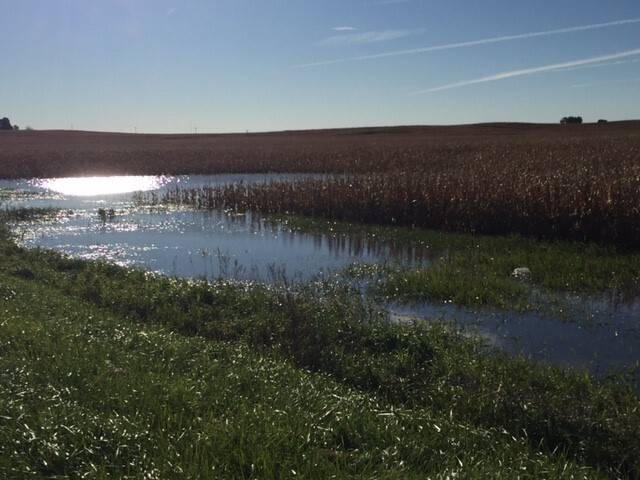
    Water across the roadways and flooded fields have been commonplace in North and Eastern Iowa after widespread rain fell last week.
    Water across the roadways and flooded fields have been commonplace in North and Eastern Iowa after widespread rain fell last week.

    This past week has been filled with huge events! Widespread rainfall. Record flooding. Devastation and loss.

    Rain events of 5 to 10 inches fell last week in southeast Minnesota, northeast Iowa and west central Wisconsin. As a result, record flooding has monopolized the headlines in recent days. We watched the reports as folks in Butler County braced for flooding. Now we’re hearing that Cedar Rapids is bracing for the second biggest flood on record.

    Just as some homeowners suffered as the enraged rivers ran through their property, many farmers have watched their entire year’s work literally wash away! Others watch helplessly as water continues to surround crops that are ready for harvest but impossible to reach. It will take years for families and communities to recover from the devastation.

    As devastating as these losses are, the one thing that brings tears to my eyes every time I think about it is the loss of a friend’s 10-week old grandson. Sudden Infant Death Syndrome (SIDS) is unimaginable to me. My heart just breaks for that entire family.

    In our big world, devastating losses happen every day. We must each bear our burdens as tough as they are, and how we handle these situations determines who we are. Do we hide from the issues facing us today? Do we shut down our emotions after a loss? Do decide we’ve had enough and refuse to plant another crop? Life can be tough!

    It helps to find the see the good deeds being done. The outpouring of support to nearby communities has been heartwarming as Iowans do what they do best – and that’s support one another in tough time. Yesterday football players from Osage, Riceville and West Fork lent a helping hand in the cleanup efforts in Greene.

    flooding-2
    This field is location just west of our headquarters in Alexander, Iowa. The corn is ready to be harvested, but the surrounding water is keeping farmers out of the field.

    Acts of kindness lift us up when we’re feeling down. Grace from strangers show us there’s hope where we couldn’t see it for ourselves. While reflecting upon this week’s events, this verse continued to come to mind: “God is our refuge and strength, a very present help in trouble.” (Psalm 46:1)
    Faith and prayer can give comfort and direction. I truly hope everyone can recover from the losses of the past week. Answers can be scarce, but we must continue in a forward direction.

    Join me in looking for those answers. Let’s keep striving for solutions. While watching last night’s debate, I was reminded that this presidential election is not the total solution. We also must engage in local and state races. Let’s elect the best people our system will allow while keeping our priorities in order: God, family and work.
    Larry Sailer, Musings of a Pig Farmer

    September 27, 2016
    Agriculture, General, Industry News
Previous Page
1 … 24 25 26 27 28 … 159
Next Page

Latham Hi‑Tech Seeds

131 180th Street | Alexander, IA 50420

(641) 692-3258

SIGNUP FOR OUR NEWSLETTER
  • Contact
  • Legal
  • Dealer Center
  • Seedware Login
  • Latham Gear

© 2025 Latham Hi‑Tech Seeds. All rights reserved. | Iowa Web Design by Webspec | Privacy Policy

Latham® Hi-Tech Seeds is a trademark of M.S. Technologies, L.L.C., 103 Avenue D, West Point, IA 52656.