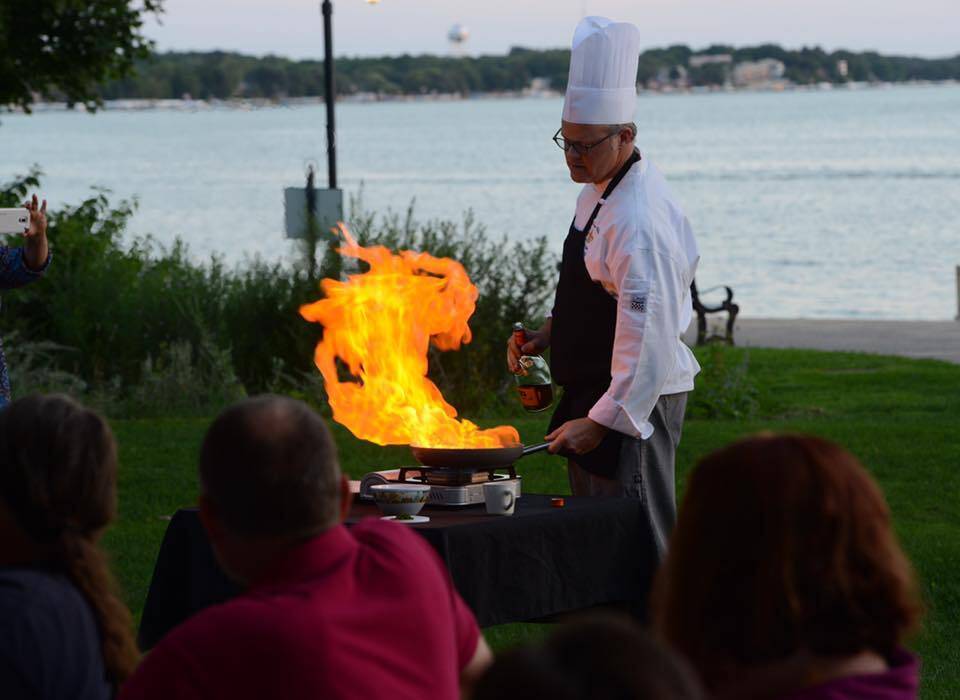
As you all know, I recently took a trip with the Iowa Farm Bureau to visit the Iowa Sister State of Yamanashi, Japan. I got the opportunity to visit with Japanese pork producers and eat some interesting dishes, to say the least.
They say a picture is worth a thousand words, and I have to say, it’s hard to summarize my experiences in Japan with just one 600-word blog post! So today, I’ll be sharing my first photo blog. (more…)
guest blog post by Craig Christians, territory sales manager for Latham Hi‑Tech Seeds
One lesson my mother taught me while I was growing up was the importance of serving others. She demonstrated “servant leadership” before that phrase was coined! As a result, I developed a passion for helping people and causes.
But it was one phone call that really changed my life.
I was driving home from work one night in the fall of 2004 when a friend of mine called to tell me about a young boy, who wished to go on a goose hunt. I learned that Ben was diagnosed with a cancerous brain tumor when he was 7 years old. He had been battling cancer about four years when I first met him. Although his body showed the effects of his chemo treatments, he always had a smile on his face.
Ben showed the love of God in his heart. While doing treatments at the University of Iowa Children’s Hospital, Ben was always concerned about the other children battling cancer in other rooms. His kind heart prompted his family to form the charity, Aiming for a Cure Foundation.
In Ben’s memory, I served on the Aiming for a Cure Foundation for three years followed by another three years with Cedar Rapids Iowa Chapter of Make-A-Wish Foundation. My involvement with these two organizations prompted another friend of mine to tell me about Retrieving Freedom Inc. (RFI).
My first visit with RFI co-founder Scott Dewey in 2013 was so moving. I was amazed by the positive impact a service dog can have on a wounded veteran and a child with autism. I was inspired by Chad Johnson, a veteran who openly shared that Retrieving Freedom and his service dog saved his life. It was at this point that I decided to support this great organization.
Just think of all the veterans who have sacrificed for our freedom! They have experienced things in life that I cannot imagine just to defend my freedom and my country’s freedom. Many soldiers return home from duty missing limbs or suffering from PTSD. I learned that 22 veterans commit suicide each day in our country because of the effects of war. It seemed the least I could do was help provide resources to help these returning soldiers find hope and the will to live.
If you’ve never before done so, take one moment to observe the bond of a wounded veteran or an autistic child with their service dogs. I guarantee you will be impacted the rest of your life, and you might even feel called to help. I’ve learned that by giving back, I receive so much more than you give.
Bred to Be the Best
My affiliation with RFI caused me to take notice of other service dogs. In 2013, I happened to be staying at a hotel in St Louis where a Seeing Eye Dog Convention was underway. I noticed there were all different types of conformation and temperaments of service dogs guiding their masters. It was at this time I believe God called me to work with Scott Dewey to develop RFI’s own breeding program.
My goal was to support the RFI cause by providing Labrador Retrievers with high quality pedigrees to produce future quality service dogs with structure, health clearances, temperament, and conformation. I searched for Labrador breeders, who raised dogs with Dual Conformation/Field Trial Champion pedigrees.
We were blessed to find breeders who understood RFI’s mission and were willing to place their genetics for a foundation breeding program. To date, I have donated 26 Labradors from these quality kennels: Kerrybrook Kennels, Yellow Rose Labradors, Ridge View Labradors and High Voltage Labradors.
Today we’re beginning to realize our goal of raising pups that can go into the RFI training. It has been gratifying to see other RFI supporters, like my colleague Jerry Broders and his wife, Kim, get involved with building the RFI breeding program. I have pledged an additional four placements from upcoming planned litters.
I’d like to personally invite you to join us as we Rally for the Cause on Friday, Aug. 19! Even if you’re not able to join us that day for the motorcycle ride around eastern Iowa, I hope you’ll consider doing what you can to help raise funds to train RFI service dogs. Latham Hi‑Tech Seeds has become a corporate training sponsor, but individuals can make smaller donations. You could also become involved by serving as a foster parent for one of the puppies in training. Contact Retrieving Freedom to learn more!
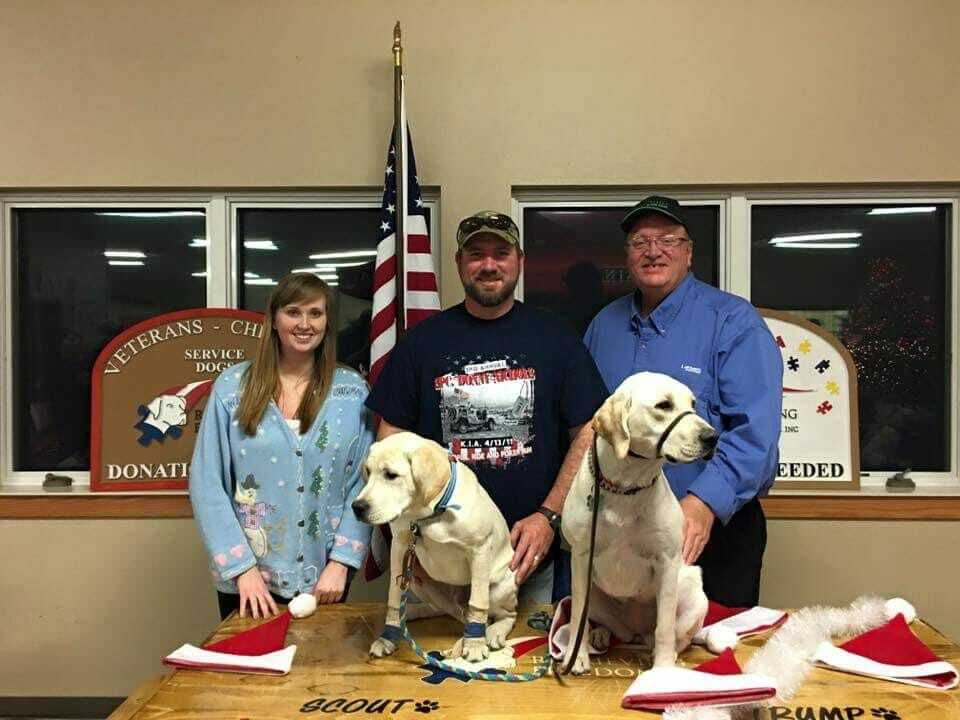
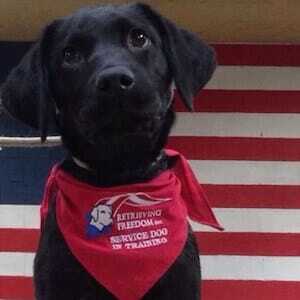
Viking & Kyah are two of 26 service dogs that Craig Christians has donated to Retrieving Freedom Inc. (RFI) for placement with veterans with PTSD or mobility challenges and children with autism. Pictured here, from left to right, are the dogs foster parent Porsha Isbell; RFI co-founder-Scott Dewey; and RFI volunteer Craig Christians.
Rally around RFI, Join Motorcycle Ride across Eastern Iowa on Aug. 19
Freedom of Independence Ride #RideforRFI: “Field Day on Wheels” to learn about emerging ag technologies while supporting our troops.
Midwesterners are known for taking care of each other and rallying when the going gets tough. That’s why we’re inviting all farmers with an interest in riding motorcycles to join us August 19 for a one-of-a-kind field day on wheels to benefit Retrieving Freedom Inc. (RFI).
“Unlike a typical field day, our Freedom of Independence Ride won’t be going over specific product numbers. We’ll address broad topics that apply to everyone with an interest in farming: precision farming, weed management and cover crops,” says Shannon Latham, vice president for Latham Hi‑Tech Seeds. “In addition to three field stops, we’ll make two fun stops. One stop will be at an antique tractor collector and another at Antique Archeology, home base for Mike Wolfe of American Pickers reality television series.”
Latham says each field stop will benefit the farmers in attendance by providing valuable information about crop technologies and emerging technologies. However, she’s excited about the fact this ride will be raising money to help wounded veterans and children with autism.
One hundred percent of a rider’s registration fees for Latham’s Freedom of Independence Ride will benefit RFI. The $25 per rider registration fee includes two meals plus a commemorative t-shirt, a do-rag and a performance by Nashville-recording artist Neil Hewitt. While the majority of participants will be riding motorcycles, there will be room for classic cars and farm trucks. You can also opt to attend only the evening meal and country concert. Visit LathamSeeds.com/events/freedom-ride to register!
The Cause
Retrieving Freedom spends two years training specific dogs to place with disabled veterans and individuals with autism. As a 501c (3) non-profit organization, RFI strives to maximize the value of each donation by incorporating experienced volunteers, in-kind donations, and a limited staff.
“We get four requests for every dog that has been trained through our program,” says Scott Dewey, RFI co-founder and co-President. ““Trained service dogs allow veterans and children to regain their independence from simply sustaining in life to thriving still costs. This is why we hope other companies will join Latham Seeds on this amazing journey.”
Latham Hi‑Tech Seeds of Alexander, Iowa, will donate $5,000 to RFI at its 2016 Freedom of Independence Ride, which is being held on a R.E.D. Shirt Friday to “remember everyone deployed.” The check presentation will be made in Scott County Park at 11 AM, followed by a special guest appearance and demonstration by some RFI dogs in training.
Can’t join for the ride but still want to support the cause? Donate at the link below:
The Ride Route
The ride will begin with a complimentary lunch in Scott County Park near Eldridge, Iowa. The day’s itinerary follows:
10 AM Registration in Whispering Pines Shelter at Scott County Park
11 AM Demonstration of service dogs in training by Retrieving Freedom Inc.
11:30 Complimentary Lunch
12:30 Staggered starts begins on the ride route
5:00 Riders begin to return; supper will be served upon arrival
5:00 Entertainment begins with Neil Hewitt, Nashville recording country artist
The approximately 120-mile route will be broken into five legs:
90 Antique Tractors, 1 Farm Family Tradition – New Liberty, Iowa
Increased Communication is Key to Building Consumer Trust
Holly presenting her public address on advocating at the sub-district FFA contest
Reaching consumers who are genuinely curious about the way their food is raised is what Holly Cook enjoys most about serving as the 2016 Iowa Pork Queen. While wearing a crown has literally opened doors for her across the state, this recent East Buchanan High School graduate says there are countless opportunities for each of us to get involved in advocating for agriculture.
“The more people who are willing to tell their story, the more effective our efforts will be as an industry,” says Holly Cook, who grew up helping her parents on their family farm and served as Buchanan County Pork Queen in 2015. Later this month she’ll begin her freshman year at Iowa State University, majoring in Ag Business.
“Every effort counts, whether social media campaigns, blogging, large scale promotional events, or simple face-to-face interactions with consumers,” adds Holly. “It’s crucial that consumers understand the commitment all farmers have made to producing safe, quality food.”
Passionate about bridging the knowledge gap and building trust between producers and consumers, Holly delivered and prepared a public address about it for an FFA Career Development Event (CDE). She placed first at sub-districts and second at districts, advancing to the state contest last April during the Iowa FFA Leadership Convention.
“Those directly involved in production agriculture see the necessity of improved practices. Farmers care for their animals every day and see that they are healthy and comfortable, yet the public constantly suspects mistreatment,” said Holly while delivering her public address for FFA.
“The great lack of consumer education in the United States has allowed anti-agriculture and animal activist groups to plant negative seeds in the minds of consumers. Buzz words such as ‘factory farming’ and ‘big ag’ coupled with a vast array of misconceptions have become an unfortunate reality in our society,” she continued. “To prevent farmers from having to take a huge step backwards in terms of efficiency and modernization, we must increase our efforts to reach American consumers.”
As Iowa Pork Queen, Holly has advocated for her industry across the state and met with state leaders including Governor Terry Branstad.
The three major concerns reported among American consumers are consistently: animal welfare, the environment, and a perceived danger of genetically engineered crops. Holly wants consumers to know that taking care of animals is extremely important from a production standpoint as it is a morality issue. Modern farming practices are in place to preserve soil and water quality. Plus, foods made using ingredients from GMO crops are safe and pose no greater health risk.
“While the current knowledge gap is not ideal, with work and outreach from both consumers and producers, this issue can be resolved,” adds Holly. “A healthy relationship and trust between these two parties is a crucial factor of modern agriculture’s progression.”
Building trust takes time, patience and transparency. Three tips for building trust from best-selling author and keynote business speaker Jon Gordon are:
Say what you are going to do and then do what you say! Lead by example.
Communicate, communicate, communicate. Frequent, honest communication builds trust.
Trust is built one day, one interaction at a time. Yet, trust can be lost in a moment because of one poor decision.
How can you help open communication lines between producers and consumers? How can you build trust with someone who might not share your opinions about responsible production methods or American’s right to food choice?
“It can be a challenge to talk with others who have conflicting opinions,” Holly admits. “I always remind myself to be respectful even when I don’t agree with them. I try my hardest to keep a smile on my face, so in the end, their impression of an Iowa pig farmer is positive. Getting mad isn’t going to solve anything, but parting with a smile might.”
You’ll find Holly smiling and answering the general public’s questions during the Iowa State Fair, Aug. 11-21. She’ll most likely be at the farrowing display in the Animal Learning Center or by the largest boar on display in the hog barn. She’ll also enjoy meals at the Iowa Pork Tent, home of Pork Chop on a Stick. (Did you know about 6,000 pork chops are enjoyed each year during the Iowa State Fair?!)
“We want consumers to know that the pork tenderloin is actually slightly leaner than a skinless chicken breast. Keep that in mind the next time you’re looking for healthy choices,” says Holly.
Pork tenderloin, lightly seasoned with Cookie’s Flavor Enhancer and grilled to 145 degrees, is Holly’s favorite homemade meal. But she looks to porkbeinspired.com for creative recipes like pork tacos and barbecued ribs. Her favorite recipe to cook is Pork and Broccoli Stir-Fry, so we’re sharing it today on TheFieldPosition. Pork. Be inspired.TM
From left to right: Holly’s oldest brother Spencer, her parents Aaron and Trish, and her youngest brother Kirby on the far right.
Scott Dewey, (319) 290-0350 | scottdewey@RetrievingFreedom.org
Retrieving Freedom Introduces Corporate Partnership Program
Latham Seeds Encourages Others to Help Sponsor Service Dog Training
Waverly, Iowa – July 18, 2016 – Retrieving Freedom Inc. (RFI) of Waverly, Iowa, today announces Latham Hi‑Tech Seeds as its first participant in their official Corporate Sponsorship program. Participating companies will agree to make two annual payments of $5,000.
“We’re honored by Latham’s gift and hope it will help us better meet the requests for incoming service dog requests. We get 4 requests for every dog that has been trained through our program, so more money is needed to train more dogs,” says Scott Dewey, RFI co-founder and co-President. “Retrieving Freedom trains service dogs for placement with disabled veterans and children with Autism.
“Because Iowans are known for taking care of each other and rallying when the going gets tough, we encourage other businesses to partner with RFI to provide specialized training for service dogs.” says Shannon Latham. “We’re also inviting Iowans with an interest in farming and a passion for riding motorcycles to join us for Latham Hi‑Tech Seeds’ field day on wheels to benefit Retrieving Freedom.”
One hundred percent of a rider’s registration fees for Latham’s Freedom of Independence Ride will benefit RFI. The $25 per rider registration fee includes two meals plus a commemorative t-shirt and a do-rag. Register today at lathamseeds.com!
“We’re committed to helping the communities where we live and do business, so we’re excited to announce our commitment to Retrieving Freedom,” says Shannon Latham, vice president of third, generation family-owned Latham Hi‑Tech Seeds. “There is a long history between rural America and the military, and still today 40 percent of our nation’s military personnel come from rural areas. They give so much to protect our freedoms that helping train a service dog is one way we can show our gratitude.”
Retrieving Freedom spends two years training specific dogs to place with disabled veterans and individuals with autism. As a 501c (3) non-profit organization, Dewey says RFI strives to maximize the value of each donation by incorporating experienced volunteers, in-kind donations, and a limited staff.
“Trained service dogs allow veterans and children to regain their independence from simply sustaining in life to thriving still costs,” says Dewey. “This is why we hope other companies will join Latham Seedson this amazing journey. Sponsors will receive monthly updates of their dog throughout the entire process, so their employees can also be part of the process as the dog progresses through training and gets matched with an individual.”
Anyone interested in learning more about Retrieving Freedom is encouraged to visit http://retrievingfreedom.org or call 319-505-5949.
Ask the Agronomist: New Soybean Technology Approvals
Thanks for tuning into our weekly “Ask the Agronomist” Audiocast! Play the audio file below to listen to Mark’s response to this week’s question about the new soybean technology approvals.
Q: New soybean traits and technologies have been making headlines since last Friday when it was announced that Roundup Ready 2 Xtend soybeans received EU approval. There have been rumblings that the Balance Bean also received EU approval last week. What is the status of these two new soybean technologies?
A: It’s important to understand that none of these technologies have actually received full approval. Roundup Ready 2 Xtend® soybeans received their final approval from the European Union in the global approval process. However, the low-volatile formulation of dicamba herbicide intended for Xtend soybeans has not received approval from the U.S. Environmental Protection Agency. Use of existing dicamba herbicides over top of Xtend soybeans is not allowed at this time.
Meanwhile, the Balance GT soybean also received EU approval last Friday but has not yet received approval from key markets such as China. The accompanying herbicide has not received approval from the EPA either.
Q: Since seed for the Xtend products has global approval, will it be commercially available for 2017 planting?
A: Yes, in fact, there are 13 new Xtend varieties in Latham’s 2017 lineup. Six of these products are designated as IRONCLAD™. Soybeans with the Ironclad designation have the toughest defense systems and are unique to Latham Hi‑Tech Seeds.
Q: What are IRONCLAD Soybeans and why are they unique to Latham Seeds?
A: Research has shown that the best defense against Soybean Cyst Nematodes and Iron Deficiency Chlorosis is diligent seed selection. In 2003, Latham Seeds was the only seed company to introduce SCN-resistant soybean brands. Because we’re headquartered where soils are more prone to IDC, our soybean lines have been bred to overcome it.
The IRONCLAD series was introduced to help farmers distinguish which products have the best defense packages. IRONCLAD soybeans have been proven to yield the highest in difficult conditions. Many of our IRONCLAD products have taken first place over the past two years in the F.I.R.S.T. Trials!
Q: What does it take for a soybean product to receive IRONCLAD designation?
A: To be considered IRONCLAD, the soybean must have a Soybean Cyst Nematode and Phytophthora Root Rot deficiency gene. It must also score an Iron Deficiency Chlorosis rating of 2.2 or better. Depending on the needs of the variety geography, it can also protect against White Mold and Sudden Death Syndrome.
Q: What about Enlist products? Will they be offered in 2017?
A: It’s very possible that Enlist will receive full approval in time for 2017 planting. Opposite of Xtend, Enlist has herbicide approval from the EPA but is awaiting Chinese approval.
Depending on regulatory approval, two Enlist products could be offered. Both Enlist soybeans and E3 Enlist soybeans will be tolerant to 2,4-D choline, glyphosate, and glufosinate.
So far, Enlist Duo is approved for use in the U.S. in 15 states on corn and soybeans. They are Illinois, Indiana, Iowa, Ohio, South Dakota, Wisconsin, Arkansas, Kansas, Louisiana, Minnesota, Missouri, Mississippi, Nebraska, Oklahoma, and North Dakota.
We’ll be providing an update on these emerging soybean technologies, as well as new corn technologies as part of Latham’s Technology Road Show. The first tour stop will be Friday, August 19, in Eldridge, Iowa near Davenport. While the Latham Freedom of Independence Ride is traditionally a field day on two wheels, we will make groups available for people who prefer to drive cars or trucks.
Biotech Disclosure Bill Puts Politics Aside for the Good of Americans
The whole GMO labeling fight in Washington was ultimately driven by one state’s misguided law which would have had repercussions across the entire nation. We’re pleased that earlier this month Congress was able to put politics aside and reach an agreement that works for American families, U.S. farmers and seed professionals.
Specific to the seed industry, the bipartisan federal legislation preempts state legislation requiring GMO labels on bags of seed. It’s also important that the law will not stifle innovation in the seed industry. More broadly, this federal legislation protects farmers and small businesses, including seed companies, from a patchwork of costly and confusing state labeling laws. At the same time, consumers with have more information than ever before about the foods they buy.
GMO food labeling agreement is a big win for businesses, consumers and farmers. We applaud Chairman Conaway and Roberts, Ranking Members Peterson and Stabenow, Congressmen Pompeo and Butterfield, and all the Republicans and Democrats in both the House and Senate who put politics aside and came together to do what’s right for American families and farmers. Failure to do so would have had long-term, irreversible consequences on our nation’s food supply chain.
Genetic engineering is one of a wide array of safe and important tools plant breeders use to address global challenges. Thanks to this bill, products produced through this method will not be unfairly stigmatized with mandatory on-pack labels.
About the American Seed Trade Association (ASTA)
Founded in 1883, the American Seed Trade Association (ASTA) represents over 700 companies involved in seed production, plant breeding and related industries in North America. ASTA is an effective voice of action in all matters concerning the development, marketing and movement of seed, associated products and services throughout the world. ASTA’s broad membership offers varieties from alfalfa to zucchini and all production types including conventional, organic and biotech. We promote the development of better seed to produce better crops for a better quality of life
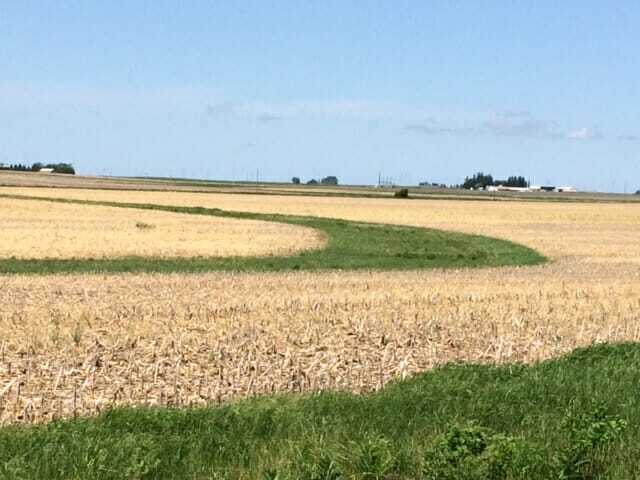
One word describes our current environment… HOT. A few politicians are finding themselves in hot water amidst scandal and allegations. Outside temperatures also are heating up, and now some folks say it’s because the corn is sweating!
Corn sweat is adding to heat misery in the Midwest,” was the headline of a USA Today story. “Like a giant wick, a growing corn plant pulls moisture out of the soil,” the article read. While covering last week’s heat wave, CNN wrote that a dangerous heat dome was forming over the United States and “corn sweat could be to blame.”
We have to blame it on something or someone, right? Thankfully, a reporter for The Washington Post set the record straight by letting her readers know that corn sweat definitely does not cause a wave? At most, [corn sweat] could make it more uncomfortable for some places.
I’d like to add that corn doesn’t sweat, per se. Just like pigs don’t sweat. Pigs exhale moisture, and plants lose water through evapotranspiration. There are a whole host of factors that affect evapotranspiration: temperature, humidity, wind speed, water availability and soil type.
But let’s move on to what most people really want to talk about… global climate change. Back when Native Americans followed the buffalo, the Midwest prairie was covered in very tall grass as far as you could see. How is that different from fields of corn? “Corn is unique in that it belongs to a family of plants that transpire, or sweat, both day and night.” As a result, Northern Illinois University researchers say heat waves today are different than they were a half century ago because they are more frequently accompanied by extreme spikes in humidity,”
The Midwest isn’t the only place that experiences such “tropical weather.” I recently had a very interesting trip to Japan. “Hot and extremely humid” best describes the weather we experienced, yet very little corn is grown there. In Iowa’s sister state of Yamanashi, the vegetation was very lush. In Tokyo, it was just as humid but one could hardly find a blade of grass! There are, however, miles and miles of concrete in Toyko. Perhaps all of that asphalt and cement held in the heat, making the city feel warmer than it really is. Or perhaps the 13.6 million people, who live and breathe, actually add to the city’s humidity by exhaling CO2.
Sound ridiculous? Where there must be an explanation, right? It seems to me our society has gotten to the point where we need to look for a problem and fix it. I’m not saying there is anything wrong with wanting to make the world a better place. Some Americans, however, have started to look for problems – or make up problems – to solve to make us feel better. Everyone need sa cause!
Global climate change is one of these causes. Farmers have been accused of denying climate change but nothing could be farther from the truth. Farmers always watch “the weather” because weather is one of our biggest challenges when growing crops. We keep an eye on the forecast when making decisions from planting and applying herbicides to cutting hay and combining crops. Weather also plays a role in how long it takes us to get our livestock to market and even dictates what activities we do on a given day.
Climate changes! Let’s remember the Ice Age and the 1930s Dust Bowl. Let’s also keep in mind that one forest fire (caused by government ineptness) or one volcano, changes our climate faster and farther than anything man has ever done!
Now government regulation is beginning to overtake weather as our biggest challenge. The shrinking middle class is always talked about by all our politicians, yet this class suffers the most from regulations that increase the cost of food and energy! The most affluent Americans are able to take increased costs in stride, and the poor are subsidized by the tax payers.
It’s important to think about the consequences that actions have down the line. And when a certain action doesn’t lead to the intended result, politicians are famous for assigning blame. Know for certain that “corn sweat” isn’t a real problem and instead focus on the real issues at hand. I have witnessed how many regulations, which were meant to save the small farmer, actually put the small farmer out of business. Let’s make changes where we can, but let’s make sure the result is what we intended!
SoyScholars Program Helps Prepare Tomorrow’s Ag Leaders
By Amber Hammes, Latham Hi‑Tech Seeds Marketing Intern
In the agriculture industry, we’re always thinking about tomorrow. Farmers hope that next year commodity prices will be higher. Industry professionals say that in 2050 we’re going to have to feed an extra 2 billion people. The Iowa Soybean Association and Latham Hi‑Tech Seeds are thinking about tomorrow too, that is to say, tomorrow’s leaders. (more…)
Niess Family Builds on Foundation of Family Farming
Photo credit to Joseph L. Murphy/Iowa Soybean Association
By Kilah Hemesath, Latham Hi‑Tech Seeds Marketing Coordinator
Something had to give, but what was it? It’s the tug-a-war between knowing there needs to be a change, and where to make it. It’s wanting to not only be alive, but to live a life.
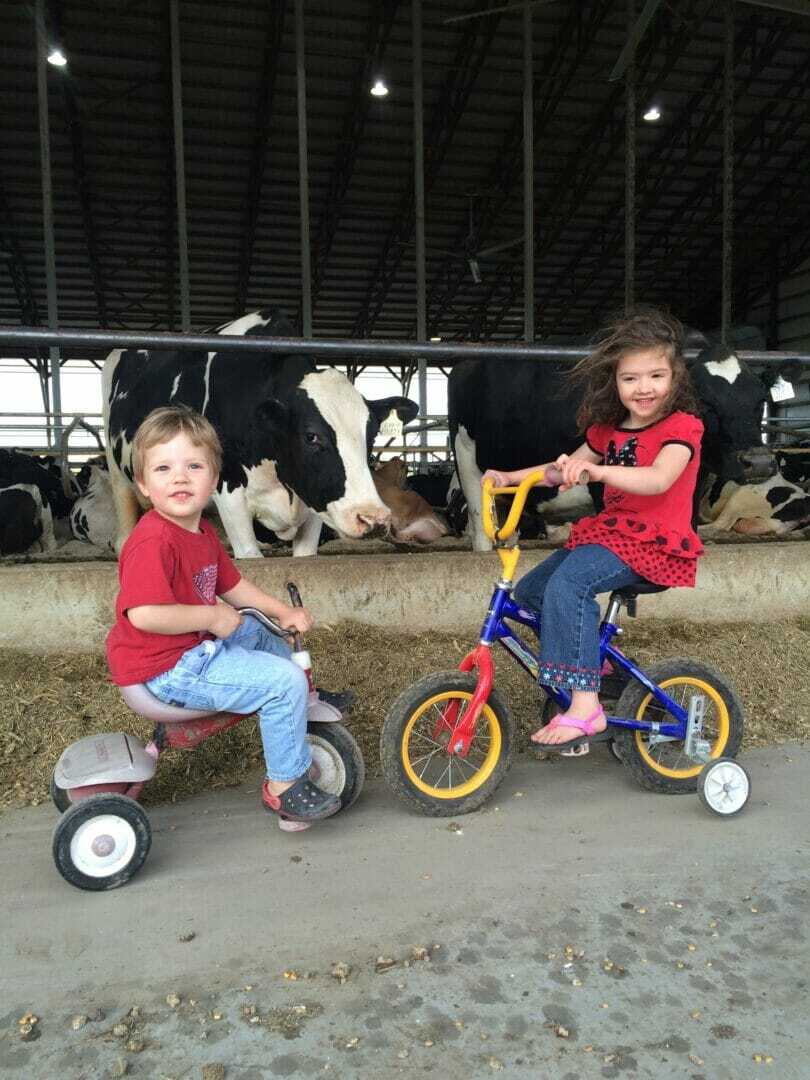
Scott and Julie Niess learned hard work and perseverance while growing up on their own dairy farms. After they married, they continued the valued way of life they knew for 18 years – dairy farming. Then in 2009 they found themselves at a turning point. Julie was diagnosed with breast cancer. Their life was tipped upside down, and they needed to create a new normal.
“We needed a change, for ourselves and our family. We sold our dairy cattle and decided to live life again,” said Scott Niess.
The Niess’s pulled through the hard times as a family. They also found ways to cope. Scott and Julie’s daughter, Cally, was 15 years old at the time. By watching her mom go through chemo, she wanted to help comfort other families going through the same struggle.
Born out of a 4-H project, Cally created Cally’s Cause. Cally’s Cause are bags that have been assembled to help other families go through the same hard times. These bags include thank you notes, postage stamps, hats, Kleenex, eye drops, sanitizer, puzzle books, band aids, cold and hot packs, tooth paste, tooth brush and plastic utensils. With help from members in the community, the bags are assembled and then delivered by Julie. There have been just over 300 bags delivered! Julie shares her story and offers others hope and encouragement. Visit their Facebook page to get in contact with Cally or Julie to learn more.
Photo credit to Joseph L. Murphy/Iowa Soybean Association
Today, Scott and Julie remain third generation farmers in Osage, Iowa. Both play vital roles in the farming operation and take pride in what they do. They raise beef cattle, as well as grow corn and soybeans. They buy groups of about 650-pound cattle from the Dakotas and Montana. The cattle are fed and sold at market weight. Their son, Cody, plays a role in marketing the cattle and their commodities. Cody works in Minneapolis full-time now but Scott and Julie are hoping to give him the opportunity to become their family’s fourth generation farmer.
Giving back to their community is a passion for this family. Scott currently serves on the Iowa Beef Council as a one-year appointee and is the president of the Osage Co-op.
Scott farmed with his dad for 15 years, and appreciates the active role his son plays on their farm. He values having a father-son partnership and looks forward to the opportunities ahead.
On August 26, a group of consumers interested in learning how food is produced will visit various farm and businesses in North Iowa, including the Niess Farm. The event, Expedition Farm Country, is part of the Iowa Food and Family Project, sponsored by the Iowa Soybean Association and supported by Latham Hi‑Tech Seeds. If interested in attending this tour, email lfoss@iasoybeans.com and state why you’d like to embark on the farm tour! Scott and Julie are looking forward to hosting this group.
“I enjoy having the opportunity to clarify any misconceptions consumers may have,” said Scott. “I want to share my story, so they get the right story.”
Watch for more blog posts coming soon about the Niess’s inspiring story. In the meantime, enjoy this hamburger cheese dip recipe! It’s the perfect recipe to salute their experience with dairy farming and to promote the beef they now raise.