Latham Hi-Tech Seeds

(641) 692-3258

  • Home
  • Performance
  • Products
    • Corn
    • Soybeans
    • Soybean Blends
    • Alfalfa
    • Corn Silage
    • Seed Guide
  • Find a Rep
  • Media
    • Blog
    • News
    • Videos
    • Podcasts
    • TECHTalk
  • About Us
    • Company History
    • Our Mission
    • Careers
    • Become a Rep
    • Sowing Seeds of Hope
  • Contact Us
  • Latham Hi‑Tech Seeds

    Beef Project Helps the Irons Develop Nerves of Steel

    7.1.16 BLOG 1

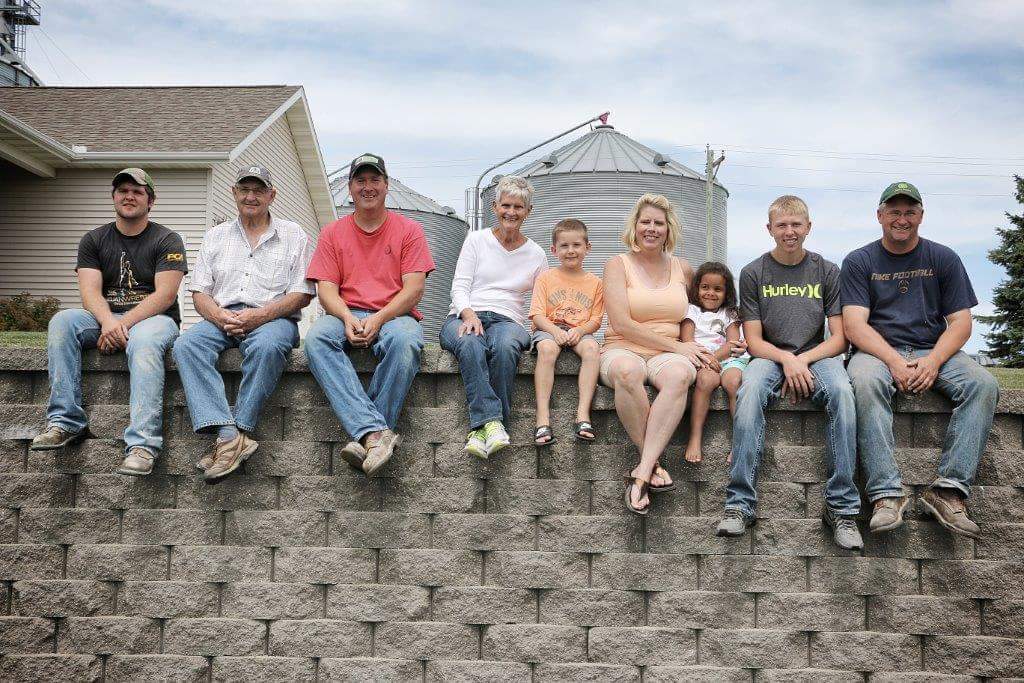
    David Irons met the love of his life in 1989 when they were both working in the same office in Des Moines.  Although David and Patty had both grown on up farms – he on a cow-calf operation in the Altoona-Runnells area and she on a feeder cattle-row crops operation in North Iowa –  farming fulltime wasn’t something they had thought about much. After all, they had grown up during the 1980s Farm Crisis and moved to the city for stable paychecks and promising careers.

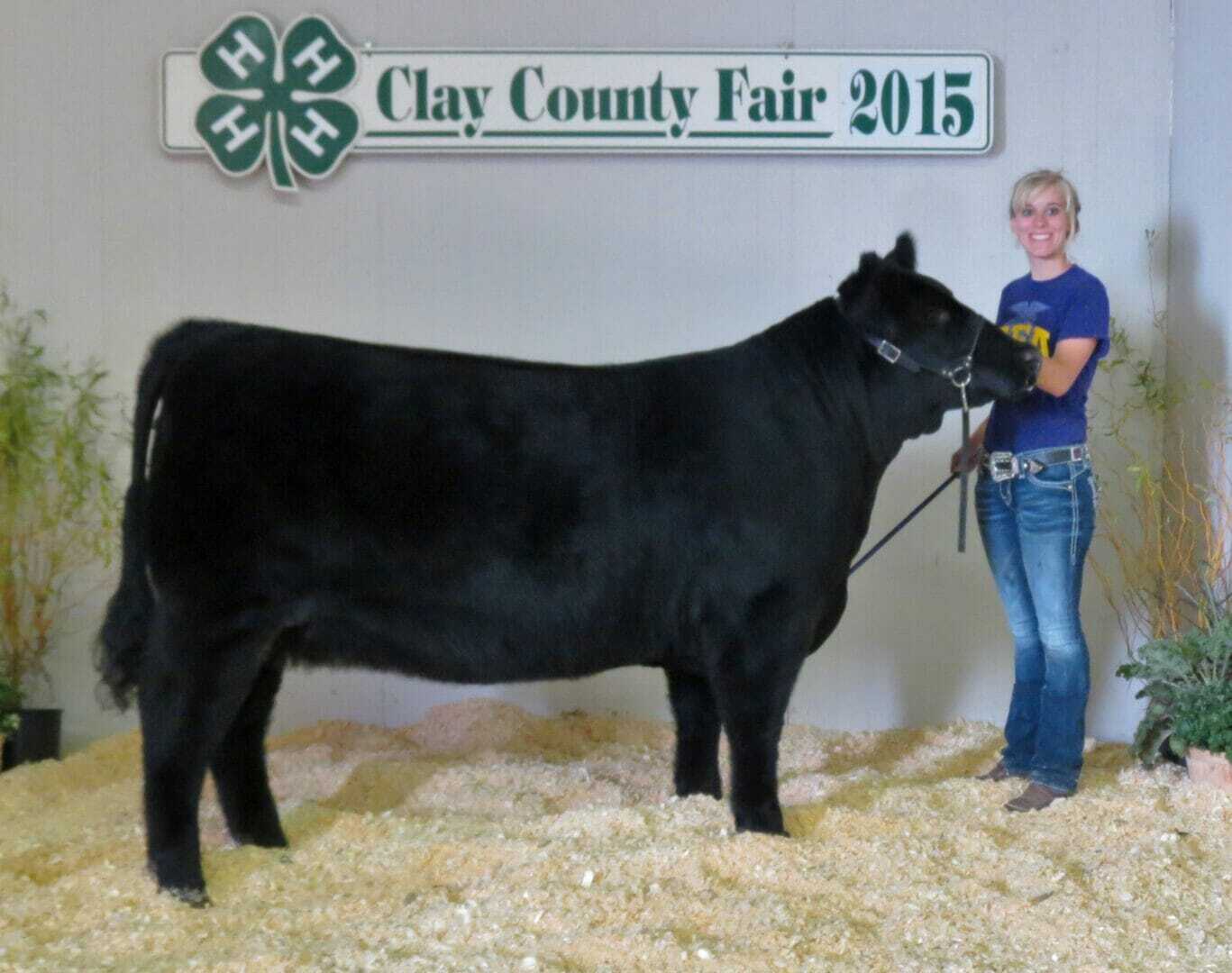
    Lisa and Coral at the Clay County Fair in September 2015
    Lisa and Coral at the Clay County Fair in September 2015

    Then, as it often does, life handed the young couple a curve ball. Patty’s father was diagnosed with terminal cancer in 1992, so the Irons had a decision to make. They chose to move to Northwood to become a part of the family farm and make a fresh start. They moved to the farm in January 1996 after Patty’s mom moved to town.  Over the years, they’ve remodeled facilities. They put a new roof on the barn in 2009 and tinned it in 2013 to make a nice area for the girls to store show equipment and fit cattle.

    Fitting is something Lisa, a junior studying Animal Science and beef production at Iowa State, enjoys and has become known for. She also enjoys showing cattle they’ve raised themselves and was proud to have produced the top selling heifer at the 2015 Worth County Club Calf Sale.  This is the last summer Lisa is eligible to show in FFA. Both Lisa and Mary showed at the Worth County Fair in June. They plan to show at various open shows in July, the Iowa State Fair in August, and the Clay County Fair in September.

    The Irons have shown in many Iowa Junior Beef Breeds Association shows, including Beef Expo. Lisa has also shown at Ak-sar-ben in Omaha and the Minnesota Beef Expo in St. Paul.  Lisa has led several clinics for beginning showmen.

    “Giving presentations and leading fitting demonstrations has helped me develop confidence, overcome my fear of public speaking and cope with anxiety,” says Lisa. “My 4-H and FFA beef project has helped me develop so many skills, meet many people and led me toward a career. My dream is to graduate from college and farm with my dad.”

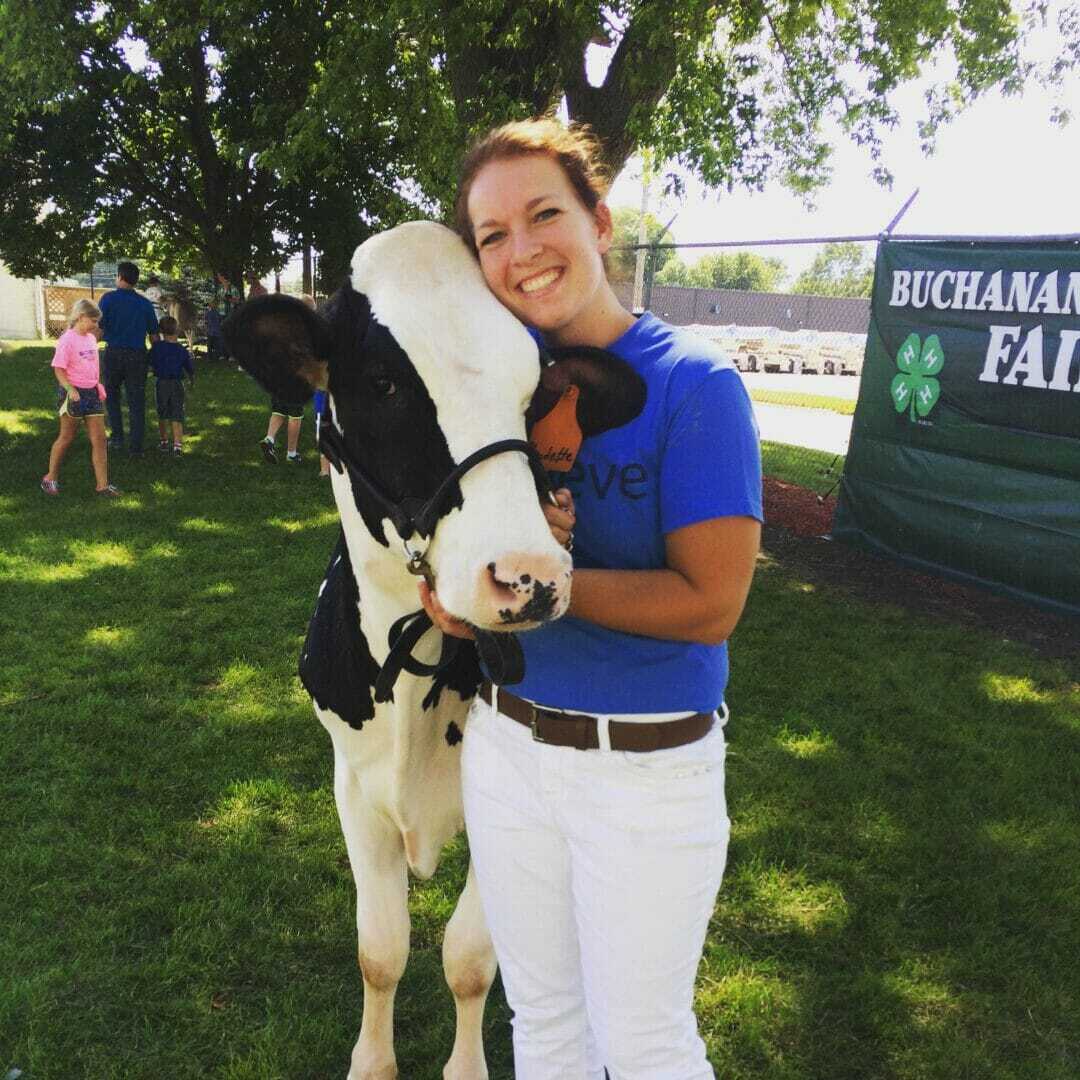
    Mary and Smurf taking a break at the 2014 Iowa State Fair
    Mary and Smurf taking a break at the 2014 Iowa State Fair

    Lisa started showing cattle as a third grader when she entered a bucket bottle calf in the county fair. She brought that heifer back the following year.  Mary followed in her sister’s footsteps, starting with bucket bottle calves.  As a N-K High School Senior, she plans to bring her first heifer back as a cow/calf pair to the 2017 Worth County Fair.

    As the girls have grown, so has their beef herd. They began with Maine-Anjou and have added more Simmental, which had more genetic resources available. Plus, the Simmental are known as a pretty docile beef breed that makes them good show animals. The Irons have focused on developing better and better stock, selling off animals and then using those proceeds to purchase better genetics.

    Most of their steers are sold to local feeders, but they feed out a few to sell directly to consumers. Female calves are kept as replacements or sold as bred heifers to other beef operators.

    “My dream is for my kids to find something they enjoy that provides a good life, as well as a good living, and to pass this farm to the next generation.”

    Brides Meat Loaf

    Team Latham

    July 1, 2016
    Beef, General, Recipes
  • Latham Hi‑Tech Seeds

    Ask the Agronomist: Rapid Growth Syndrome

    Ask the Agronomist Feature Photo 01

    Thanks for tuning into Week Nine of our “Ask the Agronomist” Audiocasts. Guest Agronomist and Latham Hi‑Tech Seeds Regional Sales Manager for Eastern Iowa, Jerry Broders will be filling in for Latham’s Senior Agronomist, Mark Grundmeier. To listen to Jerry’s response to this week’s question about rapid growth syndrome, play the audio file below. (more…)

    Webspec Admin

    June 30, 2016
    Agronomics, General, Growth Stages
  • Latham Hi‑Tech Seeds

    Farmers Feed the World… So What?

    Norman Borlaug statue
    Larry Sailer says it's fitting that during his visit last week to D.C. he got to see this likeness of Norman Borlaug in the U.S. Capitol's Statuary Hall. Dr. Borlaug is widely called "the father of the Green Revolution" because of his work to increase food production and combat world hunger.
    Larry Sailer says it’s fitting that during his visit last week to D.C. he got to see this likeness of Norman Borlaug in the U.S. Capitol’s Statuary Hall. Dr. Borlaug is widely called “the father of the Green Revolution” because of his work to increase food production and combat world hunger.

    If there were one thing that you could do to make the biggest difference in the shortest amount of time, what would it be?

    Every dollar invested in agriculture is twice as effective in reducing poverty as investing in non-agriculture sectors. I truly believe it’s not the producing of food that will eliminate hunger; it’s the access and ability to afford food that will eliminate hunger! The economy of a society must improve. And it’s my understanding that agriculture is always the basis to begin improving an economy.

    But where do we start? I believe we start with kids. If you have listened to Trent Loos this week, you know that human milk is medicine. Good nutrition during pregnancy followed by mother’s milk gives a child a great start! This time frame is so critical to the brain and its future functioning. How can an economy flourish with stunted bodies?

    Food aid programs in the past have been pretty much all reactive. When there is a crisis, you want to get people fed! I was thinking about this a lot last week as I traveled to Washington, D.C. I kept thinking of the saying, “Give a man a fish and you feed him for a day. Teach him to fish and you feed him for life.” This sounds simple, but I think we all know it’s complicated!

    First of all, it takes money to do anything in this world. That’s one of the reasons I was in D.C. last week with a group of farmers who are part of The Farm Journal Foundation’s Farmers Feeding the World initiative. A group of 21 farmers from 16 states are making a special effort to make a difference in the world by combating hunger.

    How can we make the world a better place? Well-fed people are less likely to fight wars. Well- fed people can build a better economy. Although some people wonder why U.S. farmers are concerned about the well being of others around the world, I’m looking forward to this new challenge!


    Larry Sailer, Musings of a Pig Farmer

    June 28, 2016
    Agriculture, General, Industry News
  • Latham Hi‑Tech Seeds

    Time to declare our independence from food fights

    Cherry and Red Raspberry Cheesecake

    Guest blog post by Aaron Putze, APR

    Aaron Putze, APR portraitDirector of Communications & External Relations

    Iowa Soybean Association, Iowa Food & Family Project

    We’ll soon celebrate Independence Day commemorating the adoption of the Declaration of Independence and our severance from the British Empire. The popular holiday features fireworks, parades, family reunions and baseball games. As with most events, food is a central part of the celebration with picnics and barbecues among the most popular Fourth of July activities.

    As we gather next Monday around grills, picnic tables and fire pits to enjoy time with friends and family, perhaps we can declare another form of independence – this one from the ongoing food fights that needlessly sap precious time, energy and money while undermining the health of humans and the planet.

    The idea came to mind when, as if on cue, the U.S. Senate leadership last week brokered a “landmark” agreement seeking a compromise on the long-standing dustup over the labeling of food that includes genetically modified ingredients. The bill, crafted in response to a Vermont law set to take effect July 1 requiring the labeling of GMO foods, would establish a national standard of mandatory disclosure of GMO ingredients through a variety of options including quick-response codes, 800-numbers, websites and on-package labeling.

    The setting of a national mandatory standard (action on the bill is expected before the July 4 holiday) would pre-empt state labeling laws like that of Vermont. Doing so would avoid a patchwork of differing requirements between states while avoiding a $400 to $1,000 annual increase in what the average U.S. household spends for food, according to a studies provided by John Dunham & Associates of New York City and the Biotechnology Industry Organization.

    Now, keep in mind that the U.S. Food and Drug Administration requires labeling only if an ingredient poses a health or safety risk (like calories and allergens). A GMO shouldn’t be in the conversation because it’s not a product. Biotechnology is technology based on biology; a process that has improved lives by making food products such as bread, cheese, grain and dairy products more plentiful and useful.

    What makes the ruckus over GMOs so nonsensical is that time and time again, genetic modification has been declared safe. Countless health and wellness officials, organizations and institutions and federal agencies and authorities have studied and rendered their judgement. The latest to give GMOs a clean bill of health is the National Academies of Science. Its 388-page report summarizing a review of 900 studies and data covering 20 years since genetically modified crops were first introduced struck a familiar conclusion. Genetically engineered crops, it declared, are safe for humans and animals to eat and have not caused increases in cancer, obesity, gastrointestinal illnesses, kidney disease, autism or allergies (or any number of other maladies that have been blamed on GMOs). Read more here.

    The report will do little to calm the shark-infested waters surrounding GMOs. Too much time and treasure have been invested by those who profit from making consumers fearful of this important and life-saving practice, not unlike other food issues.

    The GMO issue, after all, is just the tip of food fight iceberg. Every day, it seems there’s something else wrong with our food, whether the topic is hormones (news flash: they’re naturally present in both food and our bodies), the use of antibiotics to care for livestock (second news flash: there can be no antibiotic residue on the food you buy) or what in the world makes something “natural” or “local” (on the latter, consumers define local from as narrow as “across the street from where I live” to as broadly as “grown somewhere in the United States”).

    Indeed, food conversations have evolved from “clean your plate” and “take it or leave it.” Now, it includes what’s in food, where it comes from, who grows it and how it’s grown.

    This scrutiny about what we put in our bodies didn’t materialize out of thin air. Some of the interest is real and sincere, and that’s a good thing. What’s dangerous, however, is the context hyped by a small group of food elites (cue the Humane Society of the United States’ Wayne Pacelle and affluent world traveler and author Michael Pollan), bloggers and reporters, TV personalities and non-government organizations intent on dictating how food is grown and how we eat.

    In the path of the wave of supposed consumer discontent are those who prepare, market and sell food. When reacting, they have two options: fight or flight. Most have chosen the latter. At first, the decision was made out of fear of being bullied by those who have made food a religion.

    Over time, however, another justification has emerged – one that’s even more powerful. You see, the confusion over food can actually be good for business. Using the powerful persuasion of emotion, a growing number of processors, vendors, brand managers and food retailers are distinguishing themselves in the marketplace by making clever and often unsubstantiated claims about food (ever heard of “Food with Integrity?” or “Eat Consciously, Live Responsible?”).

    Emotion is the powerful engine driving consumer behavior, a fact not lost on retailers and brand managers, most of whom operate in a high-volume, low-margin business. To boost revenue, a wise tactic is to increase sales of higher-margin offerings. If consumers are willing to spend 15, 25 or 50 percent more or double or triple the price of a conventional offering based on how it makes them feel or look, than food marketers will eagerly make the sale. To justify the increased cost, they attach specific attributes to that product to differentiate it from its competitor. This holds true whether we’re talking mayonnaise at your favorite grocer or the “grass finished” steak sold for $28 per pound.

    Today, perception is the new reality. It also drives value. Popular labels proclaiming a product as “local,” “sustainable,” “farm fresh” and “natural” are nearly impossible to define or validate. But consumers will pay more because they have been conditioned to believe products claiming to be those things are better, safer and healthier.

    Yet documented nutritional, health and safety differences between traditional products and the “new-and-improved” offerings are negligible at best. In fact, most often the only discernable difference between the two is price. One could even go further, however, and make the case that the food labeling craze is actually harming human health, animal care and the environment because it’s dismissing practices founded on science and substance in favor of splash and sizzle and what’s best for shareholders this quarter. By disparaging the use of GMOs and antibiotics (to name just two) , they’re altering the use of safe and sound agricultural practices that have been adopted over generations of continuous improvement to the benefit of human health, the environment and the family budget.

    Easy Baked RibsUndefinable and unsubstantiated marketing claims. Instantaneous communications. Well-funded activist groups. Less personal and individual understanding of agriculture. The dismissal of science in favor of feelings and emotion. These realities are just a few of the reasons confusion reigns in the food conversation.

    It doesn’t have to be this way. Let’s declare our independence from irrational fears, unsubstantiated claims and meaningless food labels by taking the time to study and understand the issues and to ignore those who profit from pedaling fear and confusion.

    Now please pass the barbecued ribs, potato salad, baked beans and cherry cheesecake. Let’s eat!

    Gary Geske

    June 27, 2016
    Agriculture, General, Industry News
  • Latham Hi‑Tech Seeds

    Seed Industry Leader Risa Demasi Blazes Trails in Oregon

    Risa husband @ welcome reception

    Risa Demasi (pronounced Ree-sa De-macey) was the oldest of three girls raised on a second generation beef farm in Oregon, but she never dreamed about following an agricultural career path. Risa isn’t known for following herd; she’s known for her impeccable style. The seed company she helped found is known for providing novel solutions for growing concerns through plant breeding and production of turf, forages and cover crops.

    “Originally, I thought I was passionate about the fashion industry,” says Risa, who studied music at Hesston Mennonite College in Kansas. “As it turned out, I’m just passionate about clothes!”

    Interestingly enough, a job in fashion is what led to the seed industry. One day when she working at Nordstrom’s, a regular customer invited Risa to join a newly formed seed company as a shipping assistant. Risa’s knowledge and responsibilities grew as Olsen-Fennell Seed, Inc. grew.

    Pictured above is Risa and her husband.
    Pictured above is Risa with her husband, Michael, at the Welcome Reception for the ASTA Convention

    Olsen-Fennell sold to ABT (AgriBioTech), a publicly traded company. The company continued growing through acquisitions and mergers but went bankrupt in April 2000. Days after the ABT bankruptcy, Jerry Hall – whom Risa describes as a brilliant plant breeder with a great mind for business – called and asked her to consider co-founding the business. She didn’t hesitate to say yes!

    “I enjoy the freedom to try new ideas,” says Risa, co-founder/partner of Grassland Oregon. “Our philosophy is our tagline, ‘Novel Solutions for Growing Concerns.’ Our drive to take the lead provides value-added solutions for our customers, farmers and consumers. As a result of more than a decade of research and breeding efforts, Grassland Oregon is releasing highly effective varieties of novel cover crops including species that have never before been grown in the United States.”

    Rebuilding soils and conserving natural resources are top priorities for U.S. farmers, but today’s political climate has spiked interest in soil conservation practices and cover crops. More consumers than ever are voicing their opinions about plant breeding and modern farming practices. That’s why Risa, the American Seed Trade Association’s (ASTA) first female officer and outgoing chairwoman, says it’s more important than ever for those involved with the seed business to help others understand the industry. This week, as she presided over the 133rd annual convention (#ASTAannual) in Portland, Risa issued a challenge to her seed industry colleagues.

    Challenge to Seed Industry Colleagues

    Risa @ Banquet-awards ceremonyThe American Seed Trade Association was founded in 1883 and represents more than 700 companies in seed production and distribution, plant breeding, and related industries in North America. As directed by its members, ASTA is involved in nearly all issues relating to plant germplasm.

    “You get out of it what you put into it,” says Risa. “If you just pay your dues and don’t make an effort to engage or stretch yourself, you will not get much in return. However, if you participate by intentionally expecting to learn something and introducing yourself to other members, I guarantee you will feel it was a worthy investment.”

    We are in one of the best industries/professions on the planet and we can make a difference, adds Risa. An ASTA membership:

    1. Amplifies your voice by joining with those who face the same challenges you do;
    2. Allows you to make an even bigger different in the world; and
    3. Helps you connect the dots between challenges and solutions. You never know who you might meet that will make the difference in your business or your career!

    Pollinator in Fixation“As our communications message aptly states – Better Seed, Better Life – we are improving the quality of life for everyone. Everything starts with a seed! I am very proud of ASTA’s communications efforts. We recognized that we needed to meet people where they are and to speak their language rather than our “industry-speak.” This moves us from being reactionary to being thought leaders. We’re establishing ourselves as the credible resource we are, providing confidence to consumers, regulators and legislators.”

    In honor of Risa’s service to the seed industry – and in celebration of National Pollinator Week – it’s only fitting to share a recipe using honey. Grassland Oregon rents bees to pollinate its clover fields and then contracts with the beekeeper to purchase the honey produced. Its honey is then distributed to customers and growers.

    Team Latham

    June 24, 2016
    General, Recipes, Sides
  • Latham Hi‑Tech Seeds

    Foliar Fungicides: Are they worth it?

    Ask the Agronomist Feature Photo 01

    Foliar Fungicides: Are They Worth It?

    With the hot, humid weather that has made its way into Latham Country this week, conditions are prime for foliar diseases. Scout fields prior to tassel to determine disease pressure. Fields considered to be high risk are continuous corn fields, fields with conservation tillage and susceptible hybrids.

    Watch for Gray Leaf Spot, Southern Rust, Common Rust, Northern and Southern Leaf Blight and Eyespot. Northern Leaf Blight has already been confirmed in southern Wisconsin, and nearly a month earlier than last year.

    Q:  How do I know when it is most beneficial to apply a foliar fungicide?

    A: Prior to tasseling. Some research shows that application prior to the V8 stage is beneficial, but to do that, disease pressure and identification is key to timing of application. In soybeans, the best time to apply is between R1 (flowering) and R3.

    If you are concerned about foliar disease after heavy rainfall or hail, fungicide should be applied depending on the upcoming weather forecast and the weather prior to damage. Most labels suggest applying within 72 hours after the weather event to get the best efficacy out of the fungicide. It is crucial to read and follow the label as each fungicide has its own personality.

    Q: Are there benefits of fungicide outside of crop protection?

    A: Fungicide that is applied at the proper time can produce positive results in the form of saved yield for corn and soybeans. While some studies have shown an increase in performance that can’t be attributed to saving yield due to decreased diseases, these results have been inconsistent and more work needs to be done in this area.  U.S. agriculture is going through a period where commodity prices are low and return on investment is minimal.  We would encourage farmers in Latham Country to at least consider conducting their own trials to see the benefits of foliar fungicides in their operations.

    When it comes to weighing the costs and benefits of fungicide, there are many factors to consider. Price of corn, product, application and drying costs can all seem like daunting costs that would scare away any farmer from going the extra mile. However, investing in fungicide could be a small tradeoff when it comes to protecting your yield.

    If you have a question about what you’re seeing in the fields, feel free to ask! Send your questions via Twitter to @LathamSeeds, in a private message on Facebook or call our office at 1-877-GO-LATHAM (1.877.465.2842).

    Webspec Admin

    June 23, 2016
    Agronomics, Fungicide, General
  • Latham Hi‑Tech Seeds

    Emotion Trumps Facts and Affects Perception

    Congressman Young

    As I’m writing this morning, I’m preparing to visit the offices of our elected officials in Washington, D.C. I’ve made this trip as a member of the Farm Journal Foundation’s Farm Team. This nonprofit corporation is dedicated to sustaining U.S. agriculture’s ability to serve the vital needs of a growing world population. This team is a group of farmers, working together to fight world hunger!

    Larry Sailer meeting with Iowa Congressman David Young (R-IA3) in his D.C. office
    Larry Sailer meeting with Iowa Congressman David Young (R-IA3) in his D.C. office

    Preparing for today’s meetings on Capitol Hill got me thinking about the perception of agriculture – and especially of farming practices – around the world. I’ve written about different perceptions in the past (and you’ll find links to these posts below), but today I’m going to address this topic from a different angle.

    Recently I read a post on Facebook to an article, claiming that glyphosate is much worse than feared! People were jumping all over each other with comments like, “I told you so!” The headline of this article supported their own beliefs, so many of these folks jumped into the discussion without obviously reading the copy. If you read the copy and checked the sources, it stated that glyphosate has helped reduce herbicide use and is safe when the rules, including use of Personal Protective Equipment, are followed.

    “Roundup and glyphosate is a hot button topic… When you really take the time to digest some of the facts, read the labels, and put it into perspective with other common household items, the toxicity of glyphosate is extremely low. I’ve written an article before on fear. We don’t need to make our lives more complicated by buying into these fears spread much like the article above,” writes Jenny Dewey in a Huffington Post article.

    It comes down to perception and emotion. People’s perception of danger is not just based on the facts. If consumers don’t like the way those “facts feel,” they believe all the negative comments. No wonder it’s so difficult to convince people of the great things farmers are doing!

    We’ve seen first-hand in North Iowa how much weight negative words and actions can carry when Prestage Farms was considering building a pork processing facility in Mason City. Old arguments about modern livestock production resurfaced. I thought we were doing a great job sharing why we farm the way we do. Climate-controlled barns are better for our pigs, better for the environment and better those of us who work on the farm! But our voice got lost when a group of anti-modern farmers started beating their drums louder.

    This week I’m trying very hard to keep an open mind while having conversations in D.C. I’m trying not to let naysayers keep me from accomplishing – or at least advancing – some progress in world hunger. Let’s all keep open minds! Remember to “listen” and dig deeper into the discussion.

    Related Posts:

    • What’s Your Perception of Farming?
    • Regardless of Perception, Do What’s Right!
    • North Iowan’s (Mis)Perception of Family Farms


    Larry Sailer, Musings of a Pig Farmer

    June 21, 2016
    Agriculture, General, Industry News
  • Latham Hi‑Tech Seeds

    Stress Wheels Show Hybrid Response to Population

    DCIM100MEDIADJI 0113.JPG

    We are officially in #grow16! Many farmers and the Latham Research Team are breathing a sigh of relief now that we’re seeing the crops take off. We’re especially seeing rapid growth in the stress wheel that was planted by the Latham Hi‑Tech Seeds Sales interns.

    (more…)

    Gary Geske

    June 20, 2016
    Agronomics, Corn, Crop, General
  • Latham Hi‑Tech Seeds

    Growing Up Around Farming, Family and Food

    Dairy Photo 4
    Dairy Photo 4
    Megan Lien, the Iowa Food and Family Project Intern, has been involved in the dairy industry her entire life. (Photo Credit: Megan Lien)

    By Amber Hammes, Latham Hi‑Tech Seeds Marketing Intern

    You could say Megan Lien, summer intern for the Iowa Food and Family Project, grew up around three things the IFFP holds most dear: Farming, Family and Food. (more…)

    Gary Geske

    June 17, 2016
    General, Recipes, Sides
  • Latham Hi‑Tech Seeds

    Ask the Agronomist: Latham’s Seed-2-Soil Program

    Ask the Agronomist Feature Photo 01

    Thanks for tuning into Week Seven of our “Ask the Agronomist” Audiocasts. To listen to Mark’s response to questions about Latham’s Seed-2-Soil program, play the audio file below.

    https://www.lathamseeds.com/app/uploads/2016/06/Latham-6_15.mp3


    Q: What are we seeing out in the fields this week, especially with the wet conditions we’ve had this season?

    A: We’re starting to see a lot of yellow corn show up and most corn is at the point where it’s starting the rapid growth phase where deficiencies are beginning to appear in the plants. Soils remained wet for an extended period of time and corn that’s yellow is stunted. It’s hard to tell what the cause is of some issues that are appearing. These issues could be caused by water stress or roots not being able to reach the Nitrogen. I believe a lot of it is due to the excess water and compaction issues, but some could be from lack of Nitrogen supply.

    Q: Is there anything we can do to remedy the situation?

    A: Light cultivation can help aerate the root zones that are having compacted soil problems from the rain. Side dressing with Nitrogen can help as well. With most corn entering into the rapid growth phase, now is the time to get the plant growing. Controlled release Nitrogen applications and in-season fungicide applications can be combined to create an overall fertility plan. We’re not suggesting that this is a good substitute for a soil-applied fertility program, but if you’re facing a Nitrogen-deficiency situation and you’re applying a fungicide it makes sense to combine them both. This is where the Latham Seed-2-Soil° program comes into play.

    Q: What is the Latham Seed-2-Soil° program?

    A: Seed-2-Soil is Latham’s trademark system of agronomic tools designed to help simplify crop planning and seed selection. Growers choose their desired level of involvement, and we help them maximize a particular field’s yield potential by helping them focus on four key areas offered through Seed-2-Soil:

    • Crop Planning
    • Nutrient Management
    • Seed Treatments
    • Agronomic Support

    Best of all, farmers own all data that is generated by the Seed-2-Soil program. Anything that’s given to them is theirs and theirs alone.

    Q: Can you break down those four components, one-by-one?

    A: Crop Planning. There is more to picking out seed than maturity and trait packages. This is why Latham works with farmers to understand each individual’s management style, equipment capability and practices. We pair that information with our genetic and yield research for each product that we have. The result is a tailored crop plan with accurate product placement to decrease risk, increase profits and save time.

    Q: How do you provide farmers with that agronomic information through the Seed-2-Soil program?

    A: The best way is The Field Position blog that is updated every week day. Each Wednesday it is updated with region-specific crop reports from across our six-state territory. Thursday’s we provide agronomic tips and information like how to take stand-counts or scout for pests. On our website farmers can find companion product recommendations, yield data and technology updates for every product in the Latham Line-Up.

    Q: Seed treatment is another component, and in recent years it’s become a hot topic in the industry. Why is that?

    A: Some farmers have been hesitant about spending extra money on seed treatments, especially this spring when we were expecting a dry spring. When it turned out to be wet and cool, the farmers who did invest in seed treatments were very glad their crops had extra protection. Research shows that seed treatment is the best defense against disease. Choose a treatment like Latham’s SoyShield fungicide or SoyShield Plus that is a fungicide-insecticide combination to help protect early-planted seed against the unexpected.

    Q: Nutrient Management is another topic in the Seed-2-Soil program. Can you discuss that with us?

    A: Nutrient Management has been getting a lot of attention lately, and with good reason. Research shows that fertility programs influence plant performance and yield by as much as 60%. Most farmers are already on a good pathway to production, but with a little fine-tuning we can help them continue to refine the process. Think of nutrient management as a car tire. A car can run on a low tire, but it doesn’t run as efficiently as it could.

    If you have a question about what you’re seeing in the fields, feel free to ask! Send your questions via Twitter to @LathamSeeds, in a private message on Facebook or call our office at 1-877-GO-LATHAM (1.877.465.2842).

    Also be sure to check out TheFieldPosition.com for timely agronomic information.  New articles are posted each week day on our blog.  You can even search for “topics” by simply typing key words into the search bar on the upper right-hand corner.

    Thanks for tuning in to this week’s Ask the Agronomist. We’ll be back again next week to field all of your questions during the 2016 growing season.

    Webspec Admin

    June 16, 2016
    Agronomics, General, Precision Ag
Previous Page
1 … 28 29 30 31 32 … 160
Next Page

Latham Hi‑Tech Seeds

131 180th Street | Alexander, IA 50420

(641) 692-3258

SIGNUP FOR OUR NEWSLETTER
  • Contact
  • Legal
  • Dealer Center
  • Seedware Login
  • Latham Gear

© 2025 Latham Hi‑Tech Seeds. All rights reserved. | Iowa Web Design by Webspec | Privacy Policy

Latham® Hi-Tech Seeds is a trademark of M.S. Technologies, L.L.C., 103 Avenue D, West Point, IA 52656.