Latham Hi-Tech Seeds

(641) 692-3258

  • Home
  • Performance
  • Products
    • Corn
    • Soybeans
    • Soybean Blends
    • Alfalfa
    • Corn Silage
    • Seed Guide
  • Find a Rep
  • Media
    • Blog
    • News
    • Videos
    • Podcasts
    • TECHTalk
  • About Us
    • Company History
    • Our Mission
    • Careers
    • Become a Rep
    • Sowing Seeds of Hope
  • Contact Us
  • Latham Hi‑Tech Seeds

    Quick Tips for Assessing Soybean Stands

    Feature Tech Tuesday 01

    Tech Tuesday Header-01

    The spring of 2018 will be remembered for too much rain and cold temperatures, which all contributed to one of the most challenging planting seasons in recent history. Farmers were concerned about getting their seed in the ground early enough to capture full yield potential, but one must take more than planting date into consideration. Soil conditions at the time of planting and the short-term weather forecast also play an important role in germination and emergence, as many were reminded when they saw poor emergence and weak stands.

    With this in mind, the following guidelines will help you evaluate soybean stands and determine whether re-planting is necessary:

    » PLANTING DATE: In a five-year study completed by Latham’s research team across multiple states, there was no significant yield difference between soybeans planted before May 15. We evaluated planting dates of late April and early May to mid-May. Planting on or before June 1 averaged 95% of expected yield. In fact, yields didn’t drop to the 85% and lower range until soybeans were planted after June 15. These results compare very closely to similar studies done by university researchers throughout our trade territory.

    » PLANT POPULATION: Soybean stands can suffer from a wide variety of problems that will reduce population: hail, disease, insects, cold soil temps at planting time, compaction and planter failures. The biggest problem we find is that stand reductions almost never occur evenly across the field, so farmers must be diligent in scouting their fields and take the necessary time to evaluate their stands properly.

    I recommend taking 10 stand counts in the area with the worst damage and 10 counts in the part of the field that was not affected or affected just slightly. At each point, measure off 10 feet of row and count the number of live, viable plants. You can take the average of your 10 points and compare them to the table on Page 3 to see how many plants per acre you have remaining.

    A stand of 100,000 evenly distributed plants generally gives you optimum yield. Remember that as the growing season progresses, it is much more difficult to establish a good stand of soybeans. This means you might be better off leaving a stand of 75,000 plants on July 1 rather than trying to establish a new population. A stand of 75,000 on May 15, however, seems very inadequate and would warrant replanting.

    Evaluating your stands early will help you identify concerns while there is still time to remedy the situation. If you have questions on evaluating your soybean stands, feel free to contact me or Phil Long.

    Webspec Admin

    June 19, 2018
    Agronomics, Crop, General, Growth Stages, Soybeans
  • Latham Hi‑Tech Seeds

    Young Wisconsin Dairyman is Living his Dream at Luchland Farms

    IMG 2578

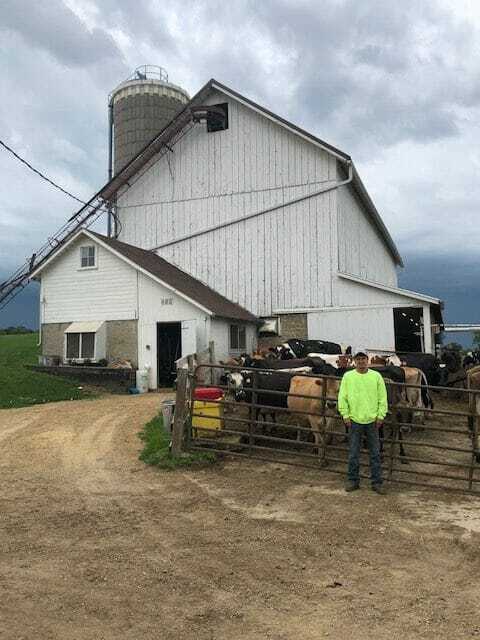
    IMG_2578He didn’t have cows. He didn’t have feed. He didn’t have equipment. But Darren Luchsinger had a dream of operating a dairy like his great grandfather and grandfather, so he went to work right after he graduated in December 2015 from Monticello High School in Monticello, Wisconsin.

    “I spent a lot of time with my grandparents on this farm, and I always enjoyed the cows,” says Darren, who says he feels blessed to live on the farm where his grandparents milked. The barn was empty for five years, and then Darren’s family purchased the farm about two years ago. “My grandpa always had Holsteins, so that’s what I started with. I’ve added some Jerseys to my herd to increase butter fat, which helps with the milk check.”

    Because his milk gets sold to family-owned and operated Klondike Cheese Company, components like butter fat are important. Another way Darren is working to increase the butter fat is by feeding high quality forage to his cows. He’s especially looking forward to harvesting his first field of Latham’s LH 9700 alfalfa, which was planted on April 28 with peas and oats.

    FullSizeRenderHis grandpa, Gene Luchsinger, enjoys spending time on the farm with Darren and helping do anything that’s related to crops or equipment at Luchland Farms (pronounced Luck-Land. He leaves all the cow care and milking responsibilities in Darren’s hands.

    In addition to his grandpa, Darren’s girlfriend helps take care of the calves. Another valuable hand is Annie the Red Heeler. Annie is responsible for bringing cows in from the pasture each morning and evening for milking.

    Darren’s short-term plans include growing his herd, which began with 50 cows and has grown to 78. He recently took on a Latham® Seeds dealership to help him reach his goal of buying more cows. He says the dealership also helps diversify his farm income, as well as provides a cost savings on the seed he needs to plant to grow feed for his cows. In fact, all the crops he planted this spring will be fed on his farm.

    “The Monticello FFA gave me lots of skills that I’m using,” says Darren, who participated in agronomy, dairy and soils judging. Skills gained in dairy judging are helping him evaluate his cows, and he’s raising all of his own stock. He just started an Angus beef herd with 15 head that he plans to sell direct.

    Image-1Although he’s working hard to make his dreams a reality, Darren also takes time to serve his community. He began serving as a firefighter in Monticello in high school and is in his third year. He said he came by it naturally because his parents were EMTs and now they’re both firefighters. In fact, his dad is the fire chief.

    When he’s not busying dairying or fighting fires, Darren enjoys golfing and hunting for deer or turkeys. He also enjoys grilling and real Wisconsin cheese.

    In honor of June Dairy Month and the summer grilling season, today we’re sharing a recipe for Brick Cheese Mexican Wrap. Also be sure to check out the Klondike Cheese Company’s website for unique recipes like the Harvarti Halftime Burger featuring dried cherries like those grown in Door County Wisconsin, and Odyssey® Feta Grilled Beef Filet with Creamed Corn.

    Shannon Latham

    June 15, 2018
    Agriculture, General, Industry News
  • Latham Hi‑Tech Seeds

    FB LIVE: Pros & Cons of Rolling

    Ask the Agronomist Feature Photo 01 1024x575 1024x575

    LIBSYN header 2-01


    Is rolling your fields the best option? Tune in to here the pros and cons of rolling.

    FB Live Link: https://www.facebook.com/LathamSeeds/videos/10156478876747138/

    Laura Cunningham

    June 14, 2018
    #AskTheAgronomist, Agronomics, Emergence, General
    Ask the Agronomist, From the Field, Rolling
  • Latham Hi‑Tech Seeds

    Alex Wellnitz Lives His Dairy Legacy in the Rolling Hills of Wisconsin

    IMG 2597

    Dairying was Alex Wellnitz’s destiny.

    IMG_2597The 27-year-old farmer enjoyed a carefree childhood on the Wellnitz family farm just one mile south of Orfordville, Wisconsin. The only son of Mark and Tina Wellnitz, and the third oldest of four children, Alex’s days were spent helping his parents raise crops and livestock. They worked hard, but they also spent time fishing and hunting in between morning and evening chores.

    While he was in high school, Alex was involved with 4-H and FFA. He showed dairy heifers, steers and crossbred hogs through 4-H. He also participated in FFA judging contests and enjoyed taking trips with the Parkview FFA to World Dairy Expo.

    “Dairy judging helped me learn what to look for in breeding stock. It taught me skills that I use to evaluate and manage my cows today,” says Alex.

    Life skills gained through 4-H and FFA, lessons learned while growing up on his family’s dairy farm, plus on-the-job training while working at Larson Acres all helped prepare Alex to take on the responsibility of managing his own acres and livestock at the age of 22.

    “Dairying was all that I ever wanted to do,” says Alex. “I was working for Larsons in Evansville when I got the call that my parents had been in a motorcycle accident. I drove home as fast as I could, and I’ve been here ever since. You learn to grow up fast when something like that happens.”

    Sadly, Mark Wellnitz passed away on Oct. 24, 2012. Three of his brothers helped guide Alex through the darkest days. “Uncle Tom gave me some good ideas. Uncle Phil helped me put in the crops for the first couple of years. Uncle Joe gave me a few pointers to make things go a little smoother.”

    IMG_2610The Wellnitz family is close, both literally and figuratively. Phil and Patti live just down the road from the farm that Alex’s parents, Mark and Tina, purchased in 1987. Tina and her daughter Angela live on the home place, and it’s where Alex milks cows twice daily. Tina and Angela also work off-farm at The Sassy Farms Quilt Shop, which they opened in 2012 with a friend of Tina’s. Angela’s twin sister, Krista, lives in Orfordville with her husband. Krista is an Animal Science professor at the University of Wisconsin – Platteville. Their youngest sister, Jessica, lives in nearby Viroqua and works at Westby Cooperative Creamery. Jessica’s husband farms and also operates a custom baling and wrapping business.

    The dairying tradition is strong in the rolling hills of Southwest Wisconsin. Living his legacy, Alex continues to sell his milk to Rolling Hills Dairy Producers Cooperative like his father did and like his Uncle Phil does. The dairy co-op has done away with volume premiums and is focusing more on milk components like butterfat. As a result, Alex is making some changes to his crop plan and his feed rations to raise crops that will help increase butterfat.

    Alex milks 47 cows, all are Holsteins but one. The lone Brown Swiss was bought as a gift for Alex’s girlfriend, Karina, who takes care of the calves in addition to working full time at Juda Grain in Brodhead, Wisc. Beatrice the Brown Swiss this spring gave birth to Burt the bull calf. Although he’s had offers for Burt, Alex isn’t sure they want to part with the beautiful brown-eyed creature.

    Step-wise growth is part of Alex’s plan. Most bull calves become dairy beef steers, which are then sold to a local market. His heifer to bull calf ratio is 4 to 1, which his helping herd numbers increase. Alex has 32 heifers that will soon be bred and then added to the milk line.

    “I’m really fortunate to do what I love. I look forward to working with my cows every day, so it doesn’t feel like a job. I like being my own boss,” says Alex, who still makes time to catch pan fish, hunt for deer and turkeys, and go snowmobiling around his 6 AM and 6 PM milking schedule.

    To help promote the Real® dairy products that he helps produce, today Alex is sharing a family favorite recipe for Éclair Cake. He says this recipe is his mom’s go-to dessert for any celebration and every holiday because it’s a favorite of her kids and grandkids.

    Shannon Latham

    June 8, 2018
    Desserts, General, Recipes
  • Latham Hi‑Tech Seeds

    FB Live: Volunteer Corn

    LIBSYN header 4 1024x576

    LIBSYN header 2-01

    Tune in to our 50th episode of Ask the Agronomist as we discuss the impacts of volunteer corn!

    Facebook Live Link: https://www.facebook.com/LathamSeeds/videos/10156461584057138/

    Laura Cunningham

    June 7, 2018
    #AskTheAgronomist, Agronomics, General, Weed Control
    50th episode, Ask the Agronomist, From the Field, volunteer corn
  • Latham Hi‑Tech Seeds

    FB Live: Volunteer Corn

    LIBSYN header 4

    LIBSYN header 2-01

    Tune in to our 50th episode of Ask the Agronomist as we discuss the impacts of volunteer corn!

    Facebook Live Link: https://www.facebook.com/LathamSeeds/videos/10156461584057138/

    Webspec Admin

    June 7, 2018
    #AskTheAgronomist, Agronomics, General, Weed Control
  • Latham Hi‑Tech Seeds

    Adjust Fertilizer Applications to Meet Crop Needs

    Feature Tech Tuesday 01

    Tech Tuesday Header-01

    As spring turns into early summer, our focus turns from getting the crop planted to keeping it clean and healthy. Mother Nature has made it challenging to put down timely applications of herbicides, fertilizer and micronutrients this year.

    Information gathered from several places helps us determine whether our growing crop will have enough food to reach its full yield potential:

    1. Pre-planting soil tests.
    Soil tests, taken in the fall or early spring, are used to see what is available for plants to uptake during the growing season.

    2. Fertilizer applied at planting time.
    A general broadcast application of N-P-K with or without micronutrients and a starter fertilizer is usually put down at planting time. Some planters also have the ability to apply micronutrients.

    3. Current field information.
    Random soil tests can verify if the nutrients previously applied were lost due to a weather event. These tests also indicate if there’s a proper balance of micro- and macronutrients. Some folks believe an early tissue test can reveal if micronutrients are lacking for early crop growth. I prefer to take tissue samples after a plant’s root system is totally developed to reflect the value of N-P-K.

    With this information, we can make fertilizer adjustments to balance the crop’s needs and adjust application based on anticipated corn yields. This allows us to apply what is needed without over applications. This saves money and helps avoid nutrient runoff and waste.

    Latham’s Seed-2-Soil® program can help with (1) nutrient management; (2) FieldXField TM crop planning; (3) seed treatments and (4) agronomics. Learn more at LathamSeeds.com or by calling 1.877.GO.LATHAM (1.877.465.2842).

    Webspec Admin

    June 5, 2018
    Agronomics, Fertility, General
  • Latham Hi‑Tech Seeds

    Beef is More than Business for NCBA President-Elect

    JenniferHoustonTPP

    JenniferHoustonTPPLivestock isn’t just her business. It’s her calling and her passion. Raising livestock is a way of life for Jennifer Houston of Sweetwater, Tennessee, who is the 2018 National Cattlemen’s Beef Association (NCBA) President-Elect.

    “I would like consumers to understand that producers care deeply about the animals we raise. We care about each animal’s welfare,” says Jennifer. “Producing a safe, wholesome product is top of mind. We feed what we raise to our own families, so I want consumers to feel good about feeding safe and wholesome beef to their children. Once consumers understand how hard we work to care for our livestock, it helps deepen their trust.”

    As in any relationship, it takes time to earn trust. Jennifer has spent a lifetime earning the trust of fellow producers and consumers alike. She says she was raised to advocate as her father was Director of Intergovernmental Affairs for the U.S. Department of Agriculture. Her father-in-law served as executive director of the Tennessee Livestock Association.

    Jennifer credits her involvement in 4-H livestock judging and as a member of the University of Tennessee livestock judging team for helping her develop the confidence needed to defend her beliefs and to state the reasons why she made her decisions. These experiences undoubtedly helped her develop strong public speaking skills.

    CattleHonornight 018Those speaking skills have been used to represent the beef industry since Jennifer graduated from college and married Mark Houston, whom she met while they were both majoring in Animal Science at the University of Tennessee. After graduating from college, Mark returned home to help with the family’s livestock auction business that his father had formed in 1962. A few years into their marriage, Jennifer left her job with the USDA and joined Mark in the East Tennessee Livestock Center where a regular sale is still held every Wednesday. Graded feeder calf and Holstein steers sell on Fridays. They also have about 27 special Friday sales each year and offer video sales for producers, who can sell in tractor-trailer load lots.

    In addition to the auction business, Jennifer and Mark also run stocker cattle and develop beef heifers.

    DSCN0242“I enjoyed showing cattle when I was growing up, and we really had a lot of fun attending shows as a family. My husband didn’t grow up showing, but he really embraced it with our children. Our son and daughter both showed commercial heifers, and it was fun to watch them build a herd,” recalls Jennifer. “There were days when it was 100 degrees in the shade with 90 percent humidity, but our kids had to go out and work with their heifers and steers. They had to find time to get their chores done, even when they had ball practice or games. They learned the importance of keeping their animals properly fed and watered. I believe working together really builds close families.”

    Jennifer has served as a tireless advocate for the beef industry while working in the family business, producing beef and raising a family. Jennifer credits her time management skills and work ethic to growing up on a cattle and hog farm. She feels called to serve agriculture and the beef industry that means so much to her.

    FamilyPic2017“Not everyone has the opportunity to be involved in industry organizations because of their situation or their inclination. That’s why it’s so important for those of us who are willing and able to get out and represent our farmer-rancher friends,” explains Jennifer. “I’m involved because I hope to make a difference for the better.”

    Jennifer has certainly made her mark throughout the years. In 1986, she became a member of the first Tennessee Beef Industry Council and has served twice as its chairman. Her national involvement began as she represented Tennessee on the Beef Industry Council of the National Livestock and Meat Board. She has been an NCBA board member since 1996, chairing the Foodservice, Advertising and New Product and Culinary Initiative committees. Jennifer has chaired the NCBA Policy Division. She also has served as chair of the Federation of State Beef Councils where she also served on the Beef Promotion Operating Committee and the Meat Export Federation executive committee. She served as Region II Vice-President and was a member of the NCBA executive committee from 1997 to 1999.

    At the state level, Jennifer has chaired the Tennessee Livestock Network. She served as president of the Tennessee Cattlewomen’s Association and served on the Tennessee Cattlemen’s Association executive committee. She also active in the Tennessee Livestock Marketing Association and serves on the University of Tennessee Regional Advisory Board.

    PhotoClerking“I’ve been involved with cattle my whole life, so it’s the only way of life I know,” says Jennifer. “Whether you raise crops or livestock, there’s a way to get involved at some level: locally, regionally, state, national. Agriculture needs you! And you get back so much more than you give.”

    Even if you don’t have time to get involved on an association board, Jennifer says you can advocate in so many ways: be active on social media, do interviews on radio and/or television, write articles, speak to Rotary or Kiwanis clubs or volunteer to speak in classrooms. Stories that resonate best with consumers are real-life examples of what happens on your farm or ranch.

    Consumer also connect with producers through food. Today Jennifer is sharing with us one of her family’s favorite recipes for pan-seared steak in honor of June Steak Month.

    Team Latham

    June 1, 2018
    Agriculture, General, Industry News
  • Latham Hi‑Tech Seeds

    In Memory of Tom Lizer

    Tom

    TOM LIZER Memoriam_F

    John Latham, President

    May 31, 2018
    Agriculture, General, Industry News
  • Latham Hi‑Tech Seeds

    Quick Steps to Slow Spread of Soybean Aphid Resistance

    Feature Tech Tuesday 01

    Tech Tuesday Header-01

    The number one soybean insect pest is growing across the Upper Midwest. Recent reports indicate some aphid populations are developing resistance to insecticides, especially pyrethroid products.

    While we may not be able to stop the spread of this resistance, we can certainly slow it down by using these best management practices:

    » Avoid spraying any insecticide if the economic threshold has not been reached. The accepted economic threshold is 250 aphids per plant in 80% of the field as long as the aphid population is increasing. This should not be confused with the injury threshold, which ranges from 600 to 700 aphids per plant. The economic threshold is designed to give farmers time to apply insecticide before the field reaches the injury threshold.

    » Use insecticides with different modes of action just like we use herbicides with different modes of action to help control resistant weeds. Some common examples of pyrethroid products include Warrior®, Mustang®, Asana®, Baythroid® and Pounce®, as well as a host of generic products. Lorsban® is an example of an organophosphate insecticide that may be used for aphid control.

    » Avoid adding insecticide to herbicide application just as “insurance” or to save a trip across the field, as this can easily lead to resistance problems.

    » When applying insecticides, good coverage is essential. Higher spray volumes and pressure help to move the product down into the soybean canopy.

    » As with many potential threats, scouting early and often is crucial to overall success! Soybean aphids can greatly increase in numbers if the weather is cooler than normal and if natural predators are not present.

    First identified in Wisconsin during the summer of 2000, soybean aphids are found in 21 states and three Canadian provinces. Besides the damage they do by sucking sap from plants, aphids also are vectors of several viruses that attack soybeans.

    Scouting for aphids is key for maintaining the health of your soybean crop now… and in the future. Do what you can now to keep numbers down and to avoid insecticide resistance from building.

    Webspec Admin

    April 10, 2018
    Agronomics, General, Insects
Previous Page
1 … 23 24 25 26 27 … 160
Next Page

Latham Hi‑Tech Seeds

131 180th Street | Alexander, IA 50420

(641) 692-3258

SIGNUP FOR OUR NEWSLETTER
  • Contact
  • Legal
  • Dealer Center
  • Seedware Login
  • Latham Gear

© 2025 Latham Hi‑Tech Seeds. All rights reserved. | Iowa Web Design by Webspec | Privacy Policy

Latham® Hi-Tech Seeds is a trademark of M.S. Technologies, L.L.C., 103 Avenue D, West Point, IA 52656.