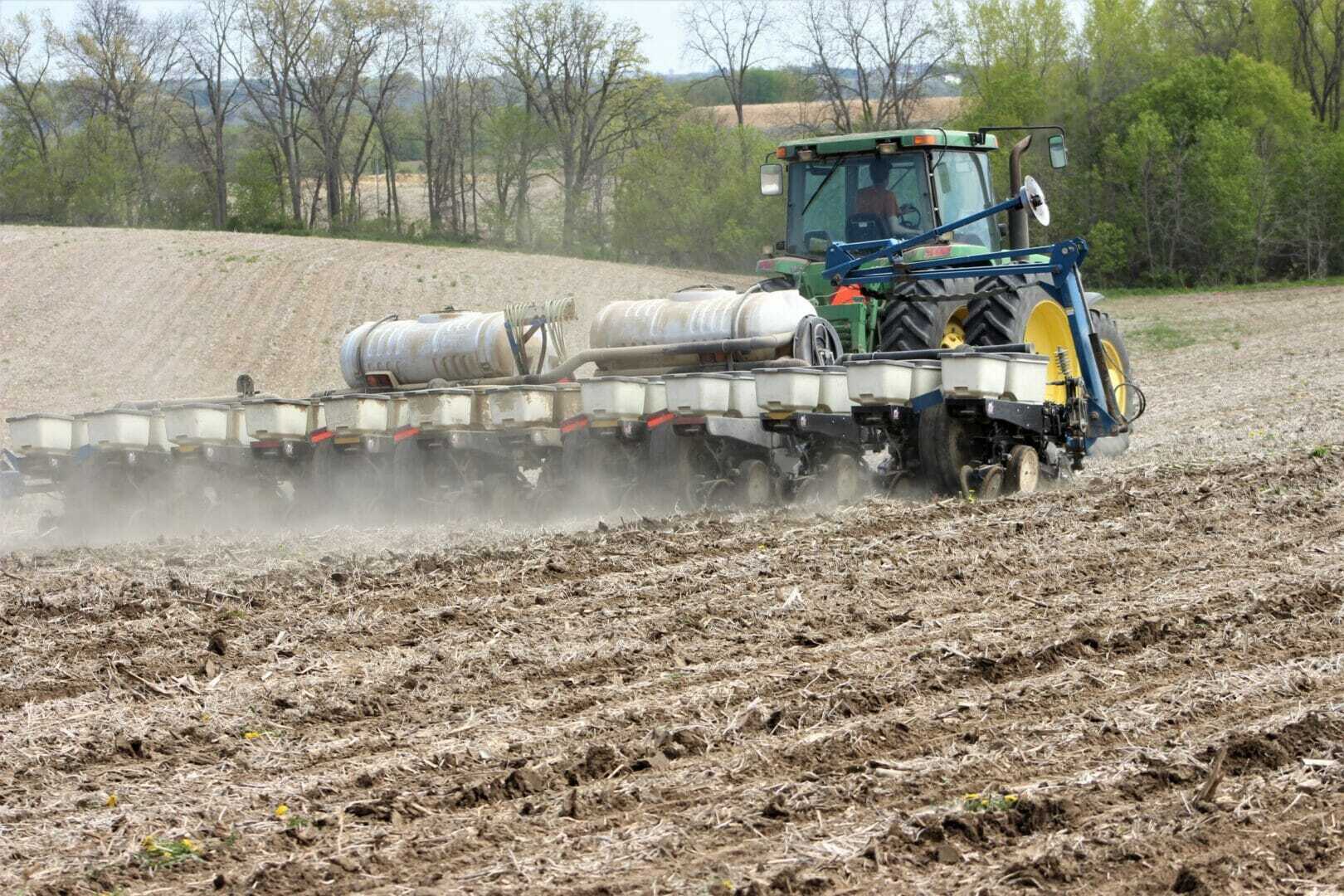
We have seen much variability across Latham Country this season. Tough planting weather in the North, drought in Central Iowa, too much moisture in parts of Minnesota and then the huge wind event in central Iowa. With all of that said, we continue to see some great corn crops developing across the area. The Latham corn hybrids look great where Mother Nature did not affect them negatively. Overall, we look forward to a great harvest.
You have put a lot of effort and capital into growing your 2020 corn crop. Maximize what you harvest this season by putting a harvesting plan together that will help you in every field. Below are some tips in putting that plan together.
Identify fields with potential problems:
Walk each of your fields and look for any problem areas where your corn may not be standing as well as expected
Note these fields and make them priorities for harvest
Remind yourself of hybrids planted in a field and their late season characteristics to aid in creating your harvest schedule
Check moisture regularly prior to harvest
Begin harvest at 25% moisture or slightly above in those problem fields
Best standing/disease free fields can be scheduled for end of harvest
Prepare equipment well
Spend time with your machinery in maintenance and proper settings
Be prepared to adjust equipment for the potential variability between fields
Check for field loss frequently
Build a one-square-foot frame and toss it on the ground in multiple areas that have been harvested (2 kernels in the square = 1 bu/A loss)
Check that you are fully shelling each ear (no grain left on cob)
These are just a few tips will help you make the most of your 2020 corn crop. Harvesting is always a good time to look to the future, as well. To maximize yields on your farm every year, each field should be managed for its specific capabilities. As you harvest, identify better and poorer performing areas; don’t just focus on poorer areas. Compare the two to see what is different and what may be causing the performance variability. Using the Latham Seeds Data Forward™ tool is a great way to get ahead on your 2021 management by field. It can help you identify water issues, nutrient issues, weed problems etc. Use this information along with hybrid recommendations from your Latham dealer to maximize your 2021 corn production.
CELEBRATE OCTOBER PUMPKIN MONTH WITH ENCHANTED ACRES
The gates to our magical pumpkin patch, Enchanted Acres, will be open every weekend from Sept. 25 through Oct. 25. Our hours are 9 AM to 5 PM every Friday and Saturday and 11 AM to 5 PM every Sunday.
Our humble beginnings started in 2012 with a rented tent where we hosted pumpkin painting workshops. Due to the worldwide COVID-19 pandemic, we are once again focusing on pumpkin decorating workshops and other simple pleasures, like Books in the Barn story time, for families and small groups. Each weekend we host unique experiences for people of all ages.
Stay up to date with workshops being offered on our Enchanted Acres’ Facebook page. Facebook is also where we share photos and videos of our adorable goats, including our mascot Nibbles and her young twins.
Our opening weekend was event-filled from goat yoga to chainsaw art carving demonstrations by Logs 4 Heroes to a visit from the cookie dough food truck. We also hosted a succulent planting workshop, and Sarah Morton Fitness of Hampton taught a fun goat yoga class in our pasture.
The Marketplace Café is open on Saturdays and Sundays, serving up popular Apple Orchard Panini and Pumpkin Patch Panini. Every weekend we also serve up homemade lunch specials, ranging from Hot Beef Sundaes to Chicken Tacos made from the chickens we raise.
Check out our Schedule of Events, and make plans to join us throughout the season. NOTE: Special workshops, including the 1 PM crafting sessions on Saturdays, require advanced registration. It’s our hope that a visit (or two or three!) to Enchanted Acres becomes an annual tradition.
We often post event updates throughout the season on Facebook, so be sure to “give us a like.” You can follow along with the fun all year long through Facebook and Instagram. In addition, we provide a complimentary quarterly newsletter to which you can subscribe by clicking here.
We look forward to seeing you see you soon at Enchanted Acres in Sheffield, Iowa, where memories grow! In the meantime, we’re helping you celebrate October as Pumpkin Month by sharing with you a few of our favorite recipes:
It’s that time of year when Latham Product Teams are looking at SuperStrip™ and other research plots. Our SuperStrip trials are replicated in several plots across multiple locations to help us determine which products to either advance or keep in our lineup.
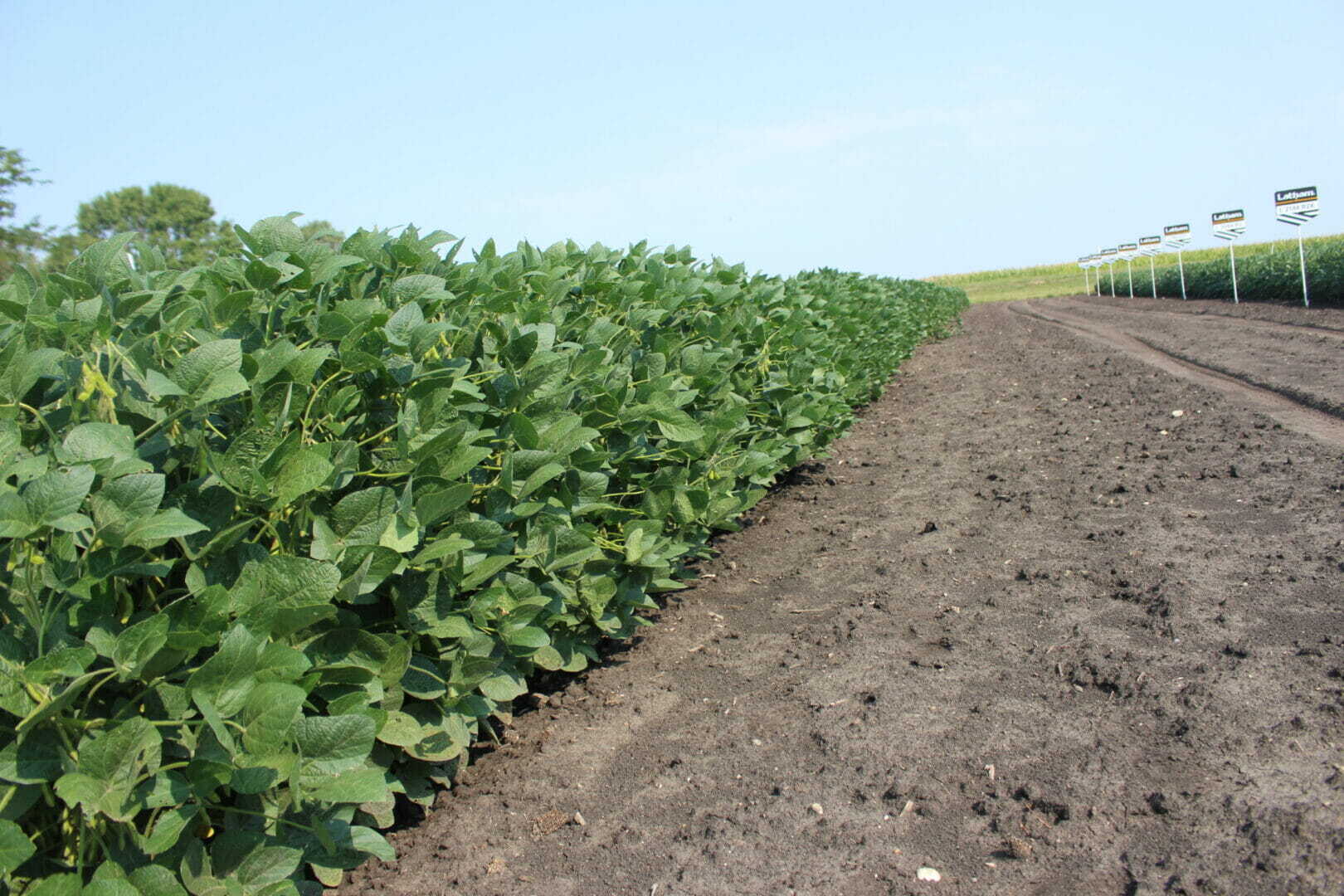
Below are a few things I am noticing in soybean fields as I travel across Latham Country:
Soybean Gall Midge: The larval stage of this relatively new insect pest can attack soybeans at the base of the plant, weaken it and cause it to break off at ground level. It was first reported in Nebraska in 2011 and South Dakota in 2015. For 2020, it was first spotted June 10 in Cass County, Nebraska, just east of Lincoln. Farmers in eastern Nebraska, southeast South Dakota, northwest Iowa and southwest Minnesota especially should be on the lookout for this pest. Focus on the edges of soybean fields and look for stunted and/or wilting plants that have a blackened area at the base of the stem. Peel back the outer layer of the stem and use a magnifying glass to see if you can find the white or light-orange colored larvae that look like maggots. State Extension personnel are requesting that all populations of Soybean Gall Midge be reported to them, so they can better track the spread of this devastating insect.
Soybean Aphid: The dry weather that most of Latham Country has experienced of late has slowed the infestation of this pest. I have seen very few aphids and none of the fields I’ve walked are even close to threshold for an application of insecticide. There have been, however, a few scattered reports of fields sprayed in south central Minnesota and western Wisconsin. Remember, research has proven that severe damage to soybean plants only comes when aphid levels are at or above 600 aphids per plant!This is significantly higher than the recommended economic threshold over the entire field of 250 aphids per plant at R5 or earlier with an actively increasing population. Don’t get fooled into thinking that if you estimate you have 300 aphids per plant at the above stage of growth that you have already lost significant yield. It just means that it is probably time to pull the trigger on an insecticide application if all the other factors are in line. Recent rains in some areas may increase the likelihood that Soybean Aphids will increase this year. Levels can change very quickly, so scout early and scout often!
Other notes: I expect we’ll see some scattered patches of Sudden Death Syndrome (SDS) and White Mold. Continue to scout your fields all the way to maturity, so you don’t have any big surprises come harvest. Although we planted soybean fields earlier than normal in 2020, I’m seeing pod fill begin at a slower pace than normal. I suspect the cold weather we had in mid-May combined with lack of rain in July and early August is to blame.
This year has certainly provided all of us with challenges. As always, we keep putting one foot ahead of the other. “We were made for this.” We soon will be accepting seed beans at our Alexander location, and that is always an exciting time of year. As we head into harvest, stay safe!
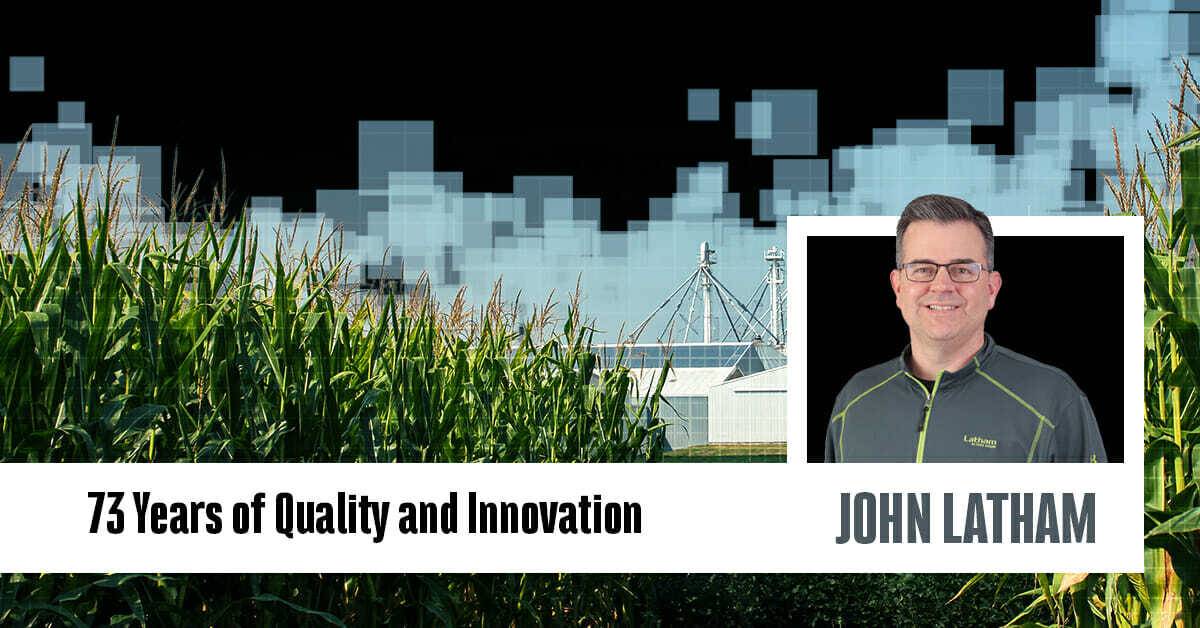
Join us for the first session of our 2020 Virtual Field Day as John Latham shares about our 73 years of quality and innovation. What does this mean for our dealers and customers across Latham Country? Tune in to find out! #LathamSeeds
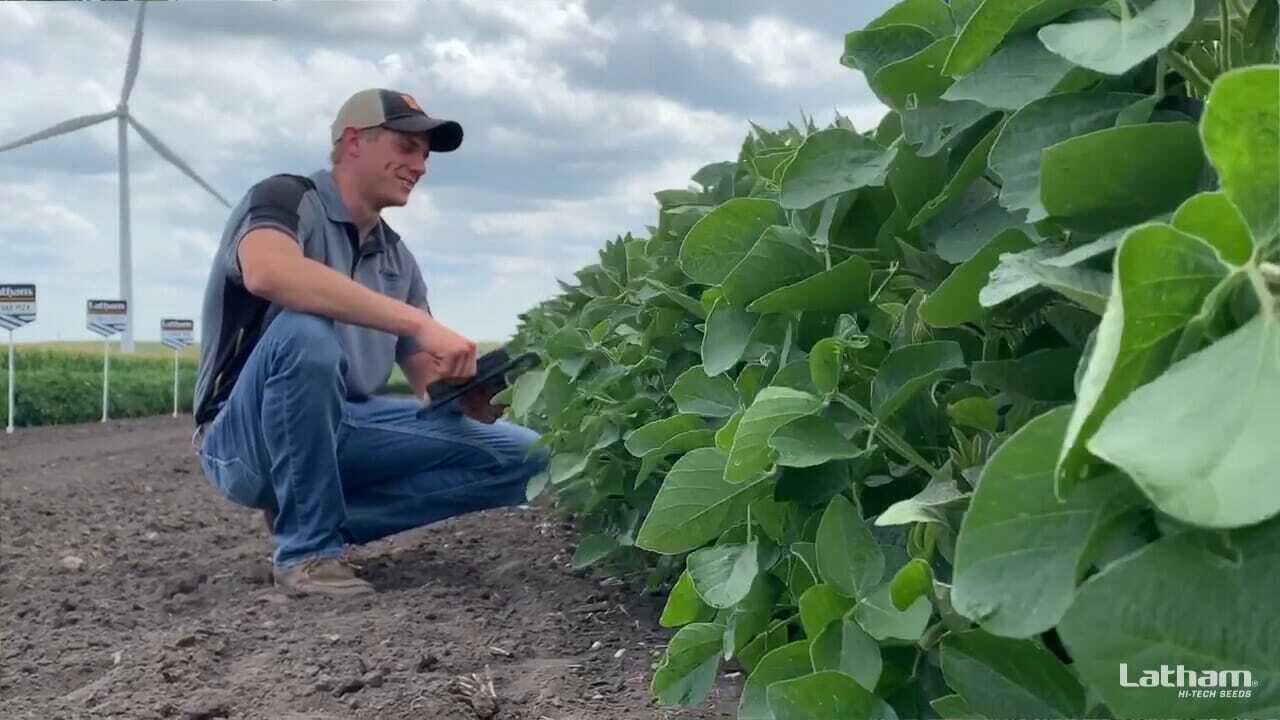
Iowa State University College of Agriculture and Life Sciences student, Evan Hansen, shares about his summer internship at Latham Hi‑Tech Seeds. As a Precision Ag Intern, Evan spent time working with our dealers and on our Data Forward app. Thank you for a great summer, Evan, we wish you the best of luck as you head into your final year at Iowa State University!
As a little girl sporting pig tails, Kilah (Hemesath) Watson looked forward to packing a lunch and climbing into the cab of the combine to spend the day with her father. Fall remains her favorite season of the year, and she still enjoys spending the day helping family members bring in the crop.
Kilah and her husband, Joel, farm alongside his parents, Brad and Michelle. Joel also provides a custom farming service such as drilling beans, rolling and side-dressing.
“When we are not in the heat of planting or harvest season, Joel spend summers hauling corn and beans and winters doing repair work,” says Kilah, who married Joel on February 2, 2019, in her beautiful hometown of Decorah in Northeast Iowa. “Whatever Joel and Brad decide to tackle on the farm, they take a strategic approach. Our family is focused on growing for and investing in the future.”
The Watson family invest in their farming operation a little bit each year. For example, this year’s investment is a new grain bin that will be ready for the 2020 harvest.
Joel and Kilah on the first day of Spring 2020.
“Joel’s favorite season is planting season since it’s a new beginning full of potential. My favorite season is harvest when everyone comes together to work toward a common goal. You can find Michelle and me in the field helping with field work each fall. I was also able to help with field work last spring, too, thanks to the Latham family helping their employees fulfill their own farming legacy by being flexible during busy seasons.”
Kilah started working at Latham Hi‑Tech Seeds during the summer of 2015 as a marketing intern and kept working part-time as an intern during her senior year at Iowa State University. Then she accepted Latham Seeds’ full-time offer and has been working as our marketing coordinator since May 2016 when she graduated from ISU. Kilah is responsible for several projects, but most of our dealers and customers recognize her as the warm, welcoming co-host of our weekly “Ask the Agronomist” video segments.
“My favorite part of my job is our weekly ‘Ask the Agronomist’ segments,” says Kilah. “I enjoy and sharing agronomy content throughout the year, and I enjoy sharing the story of independent and family-owned Latham Seeds. I am very thankful to work for a stable and growing company in an ever-changing industry.”
“We got Stella from the Southwest Iowa humane society. She is 3 years old. I think she is named after Stella Rose wine, and Joel thinks she’s named after Stella Artois beer. I guess you could say we both think she has a great name!” says Kilah.
Another part of the job that Kilah greatly enjoys is taking photos. If you have Instagram, be sure to follow her @kilahwatson. She captures the beauty of living and farming in rural North Iowa. She also enjoys tending to her flower garden. Joel enjoys working on old cars and is currently restoring a ’68 Impala.
She and Joel also volunteer with their church’s children and youth ministry, as well as the worship and creative arts team. Last August they took a mission trip with about 14 others to Peru where they shared their love of agriculture and knowledge that could help with the Peruvians’ farming endeavors.
“We had conversations about nutrient absorption, soil pH levels, plant spacing and plant competition,” said Kilah. “We find tremendous value in surrounding ourselves in a good community with people we can learn from and also teach to.”
Kilah and Joel also serve as members on the Cerro Gordo Farm Bureau board. They enjoy being voices in the ag industry and advocating on behalf of the farmer.
“Whether we are working together on the farm or at home, we love to dream about projects we can do next. We have spent the last year and a half pouring time and energy into our acreage and house to make it a home,” says Kilah.
Their first calf!
“There are a lot of things I enjoy about being married, but I would say that the best part is being able to live and work alongside someone I admire greatly,” adds Kilah. “Having a supportive partner with a positive attitude is a tremendous blessing. We have a joy doing life and finding fun in the small moments.”
The couple enjoys spending time with their three-year-old fur baby, Stella. With some “consistent encouraging,” Kilah was able to convince Joel they should add a bottle calf, which they just welcomed home last night.
“I have a feeling it won’t be the last calf we have,” says Kilah with a smile. “I am looking forward to seeing where this new adventure takes us!”
Speaking of adventures, the couple also enjoys raising a garden and trying new recipes with their fresh produce. Today Kilah is sharing with us one of her favorite recipes that uses delicious homegrown sweet corn.
Back row: Kevin, Rorke and daughter Kayla Murphy and Sandy Geske Front row: Son David, Gary, son Kyle, Averie, Katie and Carson Geske
It’s ironic how two people can grow up just five miles apart in rural North Dakota, yet never really cross paths for nearly two decades. But that’s exactly what happened to Gary Geske and his wife, Sandy. Today – as they have for the past 30 years – the Geskes live only a few miles from where both of their families farmed outside Enderlin, about 40 miles west of the Minnesota border just off Highway 46.
“All roads lead to home” as the saying goes. It’s no wonder that Gary’s career path has revolved around the farm. As a junior in high school, Gary bought a half section of ground from his great aunts and started farming. He continued to farm upon graduation and even worked his college schedule around the farming seasons.
“I enjoyed tearing motors and equipment apart to see how they work. Some of it even got put back together,” Gary says with a warm smile and a twinkle in his eye. His passion for motors led him to enroll in the Diesel Mechanics program at North Dakota State College in Wahpeton. He ran an engine rebuilding business out of the family’s farm shop, and he also was active in drag racing for six years.
Over the years, the Geske operation grew. Four families were involved at one time: Gary’s parents, Robert and Arlene; Gary and Sandy; Gary’s brother Bobby and his wife, Beth; Gary’s sister, Sherrie, and her husband, Darby Holub.
Gary left the family farming operation in 1990 to become a district sales manager for Keltgen Seed. He enjoyed working for the independent, family-owned company that was a real industry leader at the time. In 1995, Dow bought Mycogen and began merging companies. That was when Gary decided to pursue an opportunity at a machinery dealership.
After two years at the machinery dealership, Gary decided to return to the seed business with REA Hybrids of Aberdeen where his duties included managing the research plots and scoring hybrids. This research and production experience was valuable as Gary and Dan Lund started Quality Seed Genetics in 2001. Sandy handled most of the office duties, including newsletters and mailings, general bookkeeping and dealer communications. A few years later QSG started other profit centers like seed treating equipment, and Gary made the decision in 2009 to concentrate on the seed treater business.
After a two-year hiatus from the seed industry, Gary was ready to join the Latham team in 2011.
“Sandy and I had a chance to meet some of the Latham management team before I joined the company, and it was very evident then that the company revolves around teamwork,” says Gary. “I was impressed by the company’s access to the industry’s best genetics and technologies. I’m glad to now be part of the Product Development Team that helps move our product lineup forward. It’s so much fun meeting with Latham® dealers and helping them select the best products for their farmer customers.”
Whether it’s meeting with farmers to select the best hybrids for their operation or choosing hops for some homemade brew, Gary is sure to have a good time! He and Sandy value time spent with friends and family, including their three children: Kyle, Kayla and David.
David Geske & his fiancee Coty
Kyle farms with his uncle Bobby Geske on the home farm. Kyle’s wife, Katie, is a registered nurse at Sanford Hospital in Fargo. Kyle and Katie are the proud parents of 6½ year-old Averie and four-year-old Carson. David sells and services seed treating equipment, and his fiancée, Coty, is a CNA. The Geske’s daughter, Kayla, is employed at Blue Cross Blue Shield of North Dakota. Her husband, Kevin Murphy, is an assistant football coach at Minnesota State University Moorhead (MSUM). This week they welcomed their second son, Thomas Johnathan. They also are the proud parents of Rorke, who is 2½ years old.
Time spent with family and friends usually goes hand-in-hand with good meals. Today the Geskes are sharing some of their family’s favorite “quick and easy” meals.
SPECIAL SAUCE
Ingredients:
½ cup mayonnaise
2 T. French dressing
4 tsp. sweet pickle relish
1 T. finely minced onion
1 tsp. white vinegar
1 tsp. sugar
1/8 tsp. salt
Directions:
Combine and ingredients, stir well and spread on top of grilled burgers. Makes about ¾ cup.
COOK’S TIP: For added flavor, mix and chill several hours or overnight.
Young North Iowa Farmers Take Beef Herd to New Heights
Laura and Aaron Cunningham have been taking care of calves and helping with chores since they were young. The two grew up just five miles apart, but it wasn’t until their senior year of high school that they met in an ag class.
Laura Bottle Feeding Age 5
With sights set on careers in agriculture, Aaron set off for North Iowa Area Community College (NIACC) for a two-year degree in Ag Operations Management while Laura attended Iowa State University and majored in Agricultural Business. The couple married in 2010 and established SkyView Farms Inc.
Farming is family affair ripping with Dad and Brother
“One of the most common questions we’re asked is, ‘Where did you name SkyView Farms?’ Our farm name stems from Aaron’s love of flying,” says Laura. “When he’s not caring for the crops or feeding cattle, you’ll find Aaron in the clouds. We look forward to jetting out on new adventures.”
The Cunninghams care for a herd of Angus cow/calves and also feed out all the calves born on the farm each year. They began direct marketing their beef to end users and through local food hubs about seven years ago because it allows them to focus on producing a high-quality product to consumers who appreciate locally produced beef.
Laura had already booked locker appointments before the COVID-19 pandemic closed packing plants and created more demand than local lockers can handle. Her phone was ringing off the hook in March and April, so Laura helped connect consumers with fellow beef producers. She also helped producers who had been interested in direct sales understand what steps to take.
In addition to the SkyView Farms beef enterprise, the couple raises corn, soybeans, rye and alfalfa. They operate a custom application business, and a custom forage chopping and grain harvesting business. Laura also serves as marketing director for Latham Hi‑Tech Seeds where she started as a college marketing intern and has continued to accept new responsibilities for more than a decade.
Laura shares her love of agriculture by advocating online at SkyView Farms on Facebook and @SkyViewBeef on Twitter. She enjoys any opportunity to share agriculture in the classroom through virtual spring farm tours during calving season, or visiting STEM classrooms to talk about careers and technology in agriculture.
Recently, Aaron and Laura made a very special announcement that their “herd is expanding.” We couldn’t be more excited for them. The Latham Team looks forward to hosting a baby shower where we’ll celebrate the special occasion with beef, of course!
There’s a cut of beef to celebrate every occasion and every day of the week! It’s no surprise the Cunningham’s favorite recipes feature beef. It’s been a rainy week across the Upper Midwest, so Laura is sharing a fool-proof recipe for Beef Stew. She likes this recipe because it uses staple ingredients most people already would have on hand be it frozen, canned or fresh they will all work. It’s also a great way to bring out the flavor in some of the lower-priced cuts in your quarter beef.
Seeds absorb moisture within hours after planting and begin the germination process almost immediately. When corn seeds absorb water colder than 50°F, imbibitional chilling or cold shock may occur.
These three symptoms of cold chill may be evident at emergence, during the growing season and at harvest time:
Absorbing cold water causes the cell membranes to rupture and release fluids that provide food sources for soil pathogens. These can invade developing seedlings and dramatically harm the germination.
When a seed imbibes cold water, the early season vigor of young corn plants may be negatively impacted. Weak root systems with gnarled primary roots might result.
Wet soils drain kernels of their energy reserves, so seedlings that struggle for a week or more to emerge may have erratic emergence and uneven growth. Many of these fields experience disappointing yields at harvest due to reduced stands and decreased seedling vigor.
Call into the Latham® office and we will get you connected with one of our agronomists. Happy Spring!
Soybeans are most often associated with seeds that farmers plant or commodities they market. Soy is not often something those of us living in rural America associate with healthy, power-packed diets – unless we’re developing a livestock ration.
However, soybeans offer many nutritional benefits for human diets. Soy provides heart-healthy fat and is cholesterol-free. Soyfoods such as tofu and TSP, textured soy protein, or TVP, textured vegetable protein, are ideal for adapting recipes for chili, soups, spaghetti sauce, tacos, salad dressings and desserts.
“Soyfoods easily add protein to trendy foods,” says Linda Funk, executive director of The Soyfoods Council. “Enhance avocado toast or hummus by incorporating edamame. One cup of edamame contains 188 calories and offers approximately 18 grams of protein, as well as 8 grams of fiber. Shelled edamame can be blended with fresh avocado for guacamole or made into Edamame Hummus with added ingredients such as garlic, lemon juice and fresh herbs.”
A quarter cup of shelf-stable granules of TSP/TVP contains about 12 grams of protein. Use it to extend ground turkey or beef. Add TSP to chili, pasta sauces.
“At breakfast, combine TSP half-and-half with oatmeal to start your day in a trendy way,” adds Funk. “Fermented soybeans are made into a tender soybean cake called tempeh, which offers 15 grams of protein per 3-ounce serving. You can boost the protein level of a meal by adding tempeh to sandwiches, pizza or salads. Baste it with barbecue sauce and grill it for an easy entrée.”
Tofu is made from soymilk curds and is made firm using a coagulant, such as nigari flakes or calcium sulfate, which is the mineral used in craft brewing.
“Firm, water-packed tofu can be marinated in your favorite sauce. Then add it to curries, pasta dishes, or Asian noodle bowls,” says Funk. “Silken tofu is perfect for smoothies, soups, dips and desserts. A half-cup serving of tofu can provide approximately 10 grams of protein. Cut the fat and increase the protein in your favorite dips by substituting silken tofu for part of the mayonnaise when using salad dressing mixes.”
To help you incorporate soy into your diet, here are links to the most popular soy recipes from “The Field Position” blog:
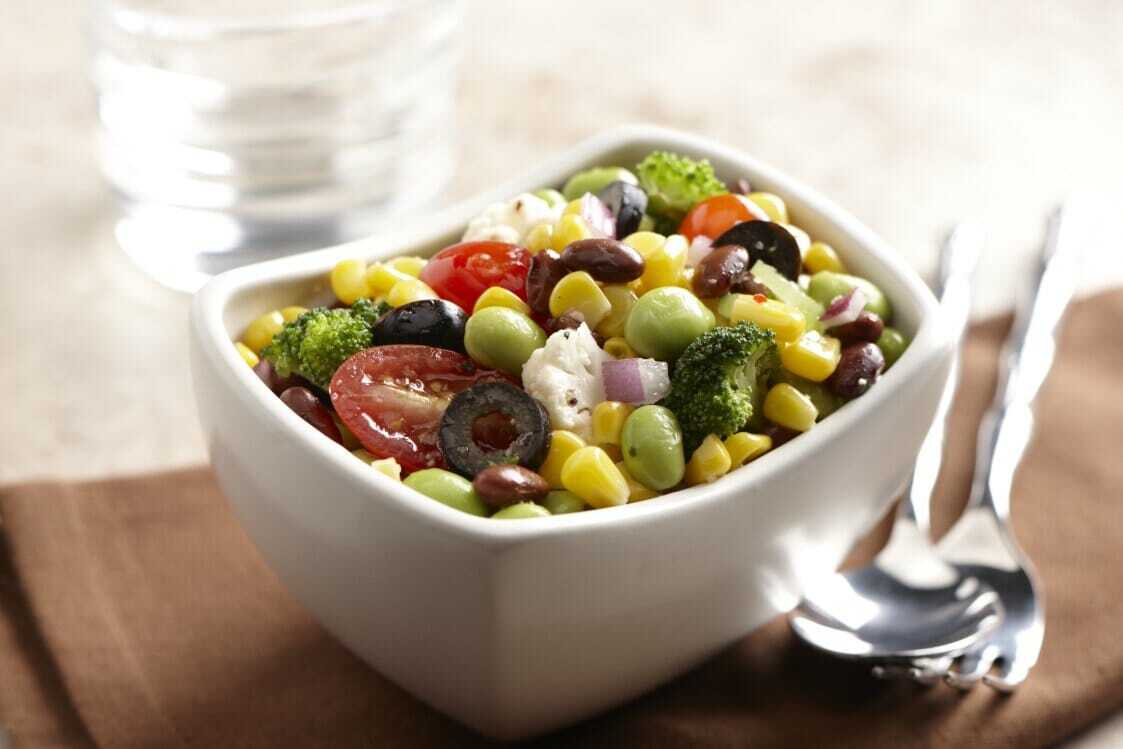
Today we’re sharing with you a recipe from The Soyfoods Council for Mexican Veggie Salad, which is complement to grilled meats and deli sandwiches. For more recipes, visit www.thesoyfoodscouncil.com. The Soyfoods Council’s website also includes nutrition information, cooking tips, and recent research about soyfoods and your health.

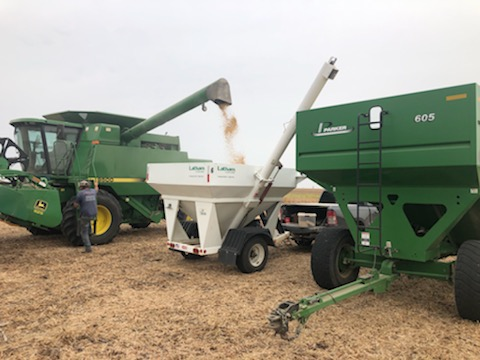
 We have seen much variability across Latham Country this season. Tough planting weather in the North, drought in Central Iowa, too much moisture in parts of Minnesota and then the huge wind event in central Iowa. With all of that said, we continue to see some great corn crops developing across the area. The Latham corn hybrids look great where Mother Nature did not affect them negatively. Overall, we look forward to a great harvest.